



Kata Kunci:OpenAI, gpt-oss, Model AI, Model sumber terbuka, Model inferensi, Arsitektur MoE, Lisensi Apache 2.0, Menjalankan model AI di perangkat lokal, Penggunaan alat dan pemanggilan fungsi, Penalaran berpikir berantai, gpt-oss-120b dan 20b, Menurunkan ambang pengembangan AI
🔥 Spotlight
OpenAI Open-Sources gpt-oss Inference Models: OpenAI has released two inference models, gpt-oss-120b and 20b, with performance approaching their closed-source o4-mini and o3-mini models, respectively. They support local device operation, with the 20b model even running on mobile phones. This marks OpenAI’s first open-source language model since GPT-2. Adopting an MoE architecture and Apache 2.0 license, it aims to lower AI development barriers, promote AI普及, and provide developers with more cutting-edge research tools. The models demonstrate strong performance in tool use, few-shot function calling, and chain-of-thought reasoning. (Source: 量子位)

Google DeepMind Releases Genie 3 World Model: Google DeepMind has unveiled Genie 3, a world model capable of generating interactive, playable environments from text prompts, enabling multi-minute, real-time interactive simulations. This redefines the understanding of world models. By generating realistic scenes and operable elements, the model is considered a significant milestone in the development of embodied AGI (Artificial General Intelligence), expected to propel VR/AR applications and simulated reality technologies to new heights, sparking boundless imagination within the community for future virtual worlds. (Source: GoogleDeepMind)
Gemini Achieves Gold Medal Level in International Mathematical Olympiad: Google DeepMind’s advanced Gemini version has achieved a gold medal level in the International Mathematical Olympiad (IMO), successfully solving 5 out of 6 problems. This breakthrough demonstrates a significant improvement in AI’s complex mathematical reasoning and problem-solving capabilities, indicating that large models now possess strong potential in academic competitions requiring deep logic and creative thinking, opening new prospects for AI applications in scientific research and education. (Source: demishassabis)
Goedel-Prover-V2 Sets New SOTA in Automated Theorem Proving: The Goedel-Prover-V2 series of open-source language models has achieved a new SOTA (State-of-the-Art) in automated theorem proving. Its smaller model (8B) surpasses the 80x larger DeepSeek-Prover-V2-671B on MiniF2F, while the flagship model (32B) performs even better in self-correction mode. This model combines innovative techniques such as scaffolded data synthesis, verifier-guided self-correction, and model averaging, demonstrating the immense potential of LLMs in formal reasoning. (Source: HuggingFace Daily Papers)
🎯 Trends
Anomalib v2.1.0 Released, Enhancing Anomaly Detection Capabilities: Anomalib, a deep learning library for anomaly detection, has released version 2.1.0, introducing several SOTA models including UniNet, Dinomaly, and Fuvas, along with new industrial anomaly detection datasets like MVTec AD 2 and MVTec LOCO AD. This update aims to improve benchmarking and development efficiency for visual anomaly detection, providing more advanced AI solutions for fields such as industrial quality inspection and security surveillance. (Source: GitHub Trending)
CompassVerifier: A New Paradigm for LLM Evaluation and Reward Models: CompassVerifier is a lightweight verifier model designed for LLM evaluation and reinforcement learning rewards. It boasts cross-domain capabilities, handling various answer types and effectively identifying anomalous responses, addressing the limitations of existing verification methods in terms of robustness and generality. The concurrently released VerifierBench benchmark aims to systematically evaluate LLM verification capabilities, promoting verifier development. (Source: HuggingFace Daily Papers)
CRINN: Reinforcement Learning Optimizes Approximate Nearest Neighbor Search: CRINN proposes treating Approximate Nearest Neighbor Search (ANNS) optimization as a reinforcement learning problem, using execution speed as a reward signal to automatically generate faster ANNS implementations while maintaining accuracy. This method performs excellently on multiple NNS benchmark datasets, validating the potential of combining LLMs with reinforcement learning for automating complex algorithm optimization, which is significant for RAG and Agent-based LLM applications. (Source: HuggingFace Daily Papers)
LAMIC: Training-Free Multi-Image Synthesis Framework: LAMIC is a training-free multi-image synthesis framework that, for the first time, extends single-reference diffusion models to multi-reference scenarios. Through Group Isolation Attention and Region-Modulated Attention, it achieves entity decoupling and layout-aware generation, surpassing existing baselines on multiple metrics and demonstrating strong zero-shot generalization capabilities, providing a new paradigm for controllable image synthesis. (Source: HuggingFace Daily Papers)
Critical Vulnerability in Nvidia Triton Inference Server Exposed: The Wiz Research team has disclosed a critical vulnerability chain in the Nvidia Triton inference server, which can be combined to achieve remote code execution, leading to model theft, data leakage, response manipulation, and even system compromise. Nvidia has promptly released a patch, urging all users of versions prior to 25.07 to update to prevent potential severe security risks. (Source: 量子位)
Anthropic Model Capabilities Continue to Improve Amidst AI Chip Geopolitical Competition: Anthropic plans to release “substantially larger” model improvements in the coming weeks and has already defeated human hackers in cybersecurity competitions, demonstrating its strong capabilities in complex tasks. Concurrently, the White House has revoked the ban on Nvidia H20 and AMD MI308 chip sales to China, reflecting the complex interplay of geopolitical and commercial interests in the AI chip supply chain, as well as the continuous adjustments in market competition and technology openness strategies by AI giants. (Source: blader, DeepLearningAI)
New Advances in AI for Healthcare and Autonomous Driving: The MAI-DxO model demonstrates higher accuracy and lower cost in solving complex open-ended medical cases, promoting the development of medical superintelligence. Meanwhile, Grok Tours, combined with FSD (Full Self-Driving) technology, foreshadows AI’s application in autonomous driving tourism, potentially offering immersive experiences by integrating camera and navigation data. These advancements show AI accelerating its penetration into critical services and daily life. (Source: mustafasuleyman, ebbyamir)
Grok 2 to Be Open-Sourced, Accelerating Open AI Model Competition: Elon Musk announced that xAI will open-source the Grok 2 model next week. This move, following OpenAI’s open-sourcing of gpt-oss, signals intensifying competition in the open-source AI model space. This open strategy is expected to further promote AI technology adoption and innovation, providing more options for developers and researchers, but also sparking discussions about the models’ actual performance and the intent behind open-sourcing. (Source: Reddit r/LocalLLaMA)
🧰 Tools
Baidu AI Cloud Launches “Digital Employees” to Boost Enterprise Efficiency: Baidu AI Cloud has released its first batch of seven “digital employees,” covering core enterprise roles such as recruitment, marketing, and sales. These AI Agents possess autonomous decision-making, execution, insight, and feedback capabilities, supporting “out-of-the-box” use with over 100 pre-set industry scenario templates. Through a “super dual-brain” architecture, they achieve human-like interaction and self-evolution, aiming to help enterprises transform from cost centers to growth engines. (Source: 量子位)

Jianying’s Xiaoyunque AI Agent Empowers Short Video Creation: Jianying’s content creation Agent, “Xiaoyunque,” has launched an intelligent digital human generation feature, allowing users to create multi-character short dramas with simple prompts, with the AI Agent automatically completing scene segmentation, dialogue, subtitles, and BGM. The tool also supports “reference image-to-video” and high-quality image generation, significantly lowering the barrier to content creation and providing an efficient video production solution for self-media creators and businesses. (Source: 量子位)

Flux.1 Krea New Model Focuses on “Non-AI-Look” Image Generation: The brand-new photorealistic AI image generation model FLUX.1 Krea [dev] has been released and is available for free trial on Krea Edit. This model aims to generate more realistic, diverse images free from common oversaturated textures, excelling in optical realism and texture continuity. It seeks to eliminate the “plastic look” of traditional AI-generated images, offering users a more natural and detailed visual creation experience. (Source: 量子位)

AI Empowers Innovation in Design and Animation Tools: Social media is buzzing about AI’s applications in creative fields, such as Meng Shao’s shared “magazine-style info card” prompt, showcasing AI’s potential in visual design. Concurrently, Kling AI, combined with tools like Ideogram/ChatGPT, makes animation production more convenient, faster, and economical. By generating images and animations with AI, it significantly lowers the professional barrier to content creation. (Source: dotey, Kling_ai)
Advances in Localized and General AI Tools: II-Search-4B, a 4B parameter local search model, demonstrates excellent performance in combining inference and search tools, comparable to models 10 times its size, providing an efficient solution for local AI applications. Meanwhile, the Ollama client update now supports online experience of GPT-OSS models and adds a search function, further promoting the widespread adoption and convenience of AI applications on personal devices. (Source: ImazAngel, op7418)
AI Applications in Programming and Auxiliary Tools: Claude Code shows strong performance in programming and Agent capabilities, with 18 built-in tools (such as Grep retrieval, command execution) making it superior to Cursor in handling complex programming tasks. Additionally, Microsoft Edge browser has launched Copilot mode, integrating AI capabilities to provide voice control and multi-tab context, aiming to revolutionize the browser experience and more naturally integrate AI into users’ daily operations. (Source: dotey, mustafasuleyman)
AI-Assisted Data Processing and Evaluation Tools: HuggingFace Jobs now supports generating synthetic data using OpenAI GPT-OSS models, greatly simplifying the dataset creation process. Concurrently, tools are leveraging GPT-OSS models to convert raw data (such as PDF, Word, Excel) into high-quality evaluation datasets, significantly improving the efficiency and accuracy of LLM testing, providing strong support for AI model development and iteration. (Source: huggingface, clefourrier)
📚 Learning
MIT Dataset for Multi-Human Interactive Dialogue Released: The MIT dataset is a large-scale dataset specifically designed for multi-human interactive dialogue video generation, comprising 12 hours of high-resolution video with fine-grained annotations for body posture and speech interaction. This dataset aims to capture natural dialogue dynamics in multi-speaker scenarios, providing rich resources for researching interactive visual behavior, and proposes CovOG as a baseline model, advancing research in this field. (Source: HuggingFace Daily Papers)
Transformer Model Efficiency Optimization and New Architecture Exploration: New research proposes Representation Shift, a training-agnostic, model-agnostic metric that measures the degree of token representation change to achieve FlashAttention-compatible token compression, significantly boosting video-text retrieval and video question answering speed. Concurrently, novel attention mechanisms like Dynamic Sparse Attention are exploring long context, recall, and training optimization, offering new ideas for improving Transformer model performance and expanding applications. (Source: HuggingFace Daily Papers, teortaxesTex)
Deep Dive into LLM Training Data and Mechanisms: Analysis of OpenAI’s gpt-oss model training data suggests its success may stem from the use of synthetic data, including general knowledge amplification, problem simulation, and synthetic reasoning trajectories, aimed at improving model accuracy and controllability on specific tasks. Furthermore, OpenAI’s introduction of learnable biases in attention mechanisms and the MoE architecture’s PEFT fine-tuning method, ESFT, are both designed to enhance model efficiency and customization capabilities. (Source: Dorialexander, sytelus, teortaxesTex)
Advances in Reinforcement Learning and AI Agent Algorithms: The Qwen team’s proposed GSPO (Group Sequence Policy Optimization) aims to address the gradient instability caused by token-level importance sampling in DeepSeek GRPO during LLM fine-tuning, achieving more stable MoE model convergence through sequence-level sampling. Additionally, the 6-step framework for Agent construction, as well as challenges like RL environment expansion and reward hacking, are drawing significant attention, driving the practical application and performance improvement of AI Agents. (Source: Reddit r/MachineLearning, LangChainAI)
AI Learning Resources and Industry Insights: Andrej Karpathy’s lecture elucidates the evolution of software from traditional coding (Software 1.0) to neural networks (Software 2.0) and then to the LLM-driven Software 3.0 era, offering profound insights for AI entrepreneurs. Furthermore, HuggingFace and OpenAI have partnered to provide students with gpt-oss inference credits, encouraging them to explore open models in their projects and research, thereby fostering AI education and innovation. (Source: op7418, reach_vb)
Embodied AI and 3D Data Progress: QuarkXR’s InteriorGS dataset is the first to introduce 3D Gaussian technology into AI spatial training, combining it with its self-developed spatial large model capabilities. It has become the world’s first large-scale 3D dataset suitable for free movement of intelligent agents and has topped the HuggingFace trending list. This dataset is expected to resolve the bottleneck of high-quality training data scarcity for embodied AI, accelerating robot learning and applications. (Source: 量子位)

💼 Business
Taotian Group Intensifies AI Talent Recruitment Efforts: Taotian Group has launched its 2026 autumn recruitment drive, planning to issue over a thousand offers, with technical positions accounting for over 90% and AI-related positions nearly 50%. Across Alibaba Group, AI-related positions comprise over 60% of the total autumn recruitment, demonstrating the company’s strategic emphasis on talent acquisition and development in the AI era, aiming to build a core workforce for AI development. (Source: 量子位)

AlphaGo Developers Found Reflection AI to Challenge DeepSeek: Former Google DeepMind members and AlphaGo developers Misha Laskin and Ioannis Antonoglou have founded Reflection AI, aiming to raise $1 billion to become the leading open-source AI model provider in the US, in response to the rise of Chinese open-source AI models. The company has already released its first code understanding agent, Asimov, and secured initial revenue from enterprises. (Source: 量子位)

AI Market Competition and Business Strategy Adjustments: The AI market is undergoing rapid changes, with giants like Meta considering closed models due to underperforming open-source models, while Google attracts users by offering free plans. Furthermore, there’s a growing demand for GPU cloud services and vertical integration of AI agents, reflecting that the AI business model is accelerating its shift from infrastructure to productization, with companies adjusting strategies to adapt to market competition. (Source: natolambert, natolambert)
🌟 Community
OpenAI gpt-oss Sparks Community Discussion and Controversy: Following OpenAI’s open-sourcing of the gpt-oss model, the community engaged in heated debate regarding its “openness,” questioning its differences from internal models, actual performance (especially in code and creative writing), and potential censorship bias. While the model’s potential for local operation is recognized, controversies surrounding its “optimization for benchmarks” rather than “general capability improvement,” and comparisons with Chinese open-source models, have become focal points of community attention. (Source: tokenbender, cloneofsimo, op7418, Reddit r/LocalLLaMA)
Exploring Large Model Capability Boundaries and Societal Impact: Paul Graham points out that AI excels at replacing “tedious mechanical chores” rather than specific professions, emphasizing the importance of individuals excelling in their work. The community discusses ethical boundaries of AI in art, companionship, and privacy, expresses concerns about AI’s impact on the job market, and worries about the potential risks of combining AI with nuclear weapons, reflecting complex societal emotions and profound reflections on AI technology development. (Source: dotey, Reddit r/ArtificialInteligence, Reddit r/artificial)
AI Agent Development and Application Challenges: The 2025 Agentic AI Summit revealed core bottlenecks for AI Agents in memory, tool selection, evaluation, and cost, despite their potential to surpass human performance in tasks like form filling and coding. Concurrently, the deployment of Baidu AI Cloud’s “digital employees” and Jianying’s AI Agent in enterprise and content creation fields indicates that AI Agents are moving from concept to practical productivity, though technical and commercialization challenges persist. (Source: Reddit r/ArtificialInteligence, 量子位)
AI’s Penetration into Daily Life and the Workplace: The widespread adoption of ChatGPT for email writing in the workplace, and the evolution of AI search tools (like Perplexity, Gemini) in user experience, reflect how AI is increasingly integrating into people’s daily work and lives, changing how information is accessed and communicated. This broad application sparks ongoing discussions about AI capabilities, ethics, and the future shape of society. (Source: Reddit r/ChatGPT, Reddit r/ArtificialInteligence)
AI Ethics and Model Behavior Observations: Community concerns about AI model behavior continue to rise, including potential political biases (e.g., gpt-oss’s criticism of specific countries) and ethical issues in AI companion relationships. Meanwhile, the debate over whether LLMs are “merely text predictors” continues, with OpenAI researchers stating this is “completely wrong,” highlighting the ongoing exploration of AI’s true nature. (Source: teortaxesTex, Reddit r/artificial, Reddit r/ChatGPT)
AI Industry Ecosystem and Market Landscape: Discussions on whether the AI freelance market is oversaturated, along with dynamics of large AI companies in open strategies, vertical integration, company culture (e.g., Cognition’s extreme performance), and geopolitical competition (e.g., chip export controls, sovereign AI), collectively shape the future landscape of the AI industry. Nvidia’s refusal of the US government’s request for backdoors in AI chips further highlights the complex balance between business and national security. (Source: Reddit r/ArtificialInteligence, glennko, Reddit r/artificial)
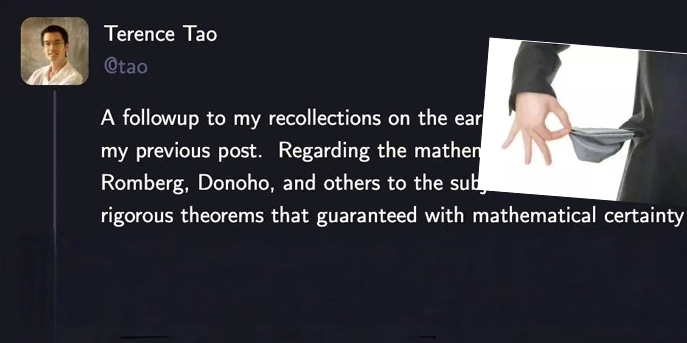
Debate on the Value of Basic Science for AI Development: Fields Medalist Terence Tao, facing research funding obstacles, posted online to argue for the profound impact and significant returns of basic mathematics research (taking compressed sensing as an example) on technological breakthroughs like AI, sparking a deep discussion about the return on public investment in basic science. This highlights the urgency and importance of supporting interdisciplinary basic research in the AI era. (Source: 量子位)
💡 Others
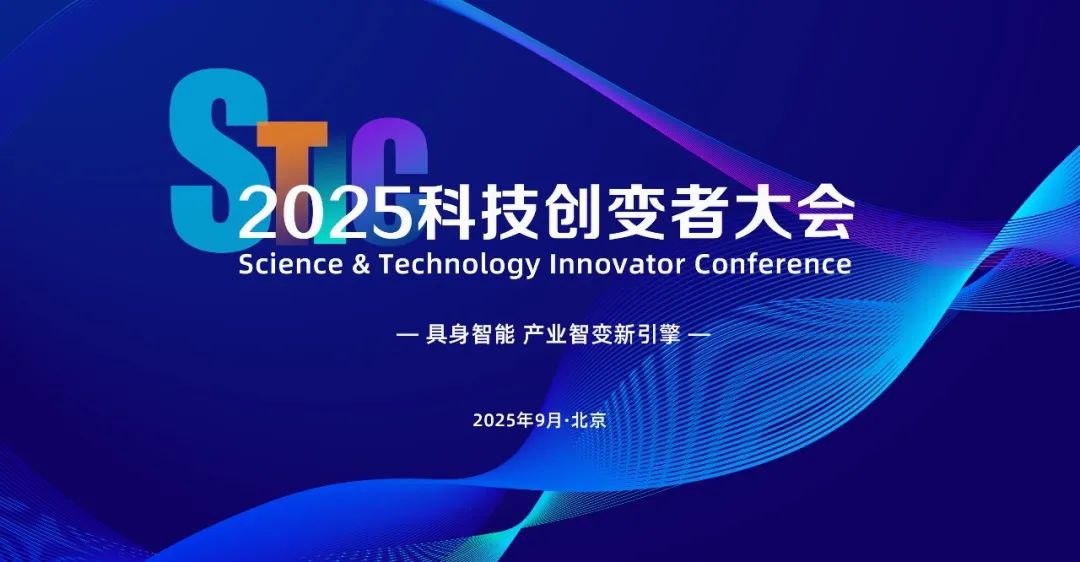
2025 Tech Innovators Conference Focuses on Embodied AI: The 2025 Tech Innovators Conference, hosted by Zhiyoo & Aric Innovation Platform, will be held on September 5th in Beijing. The conference, themed “Embodied AI: New Engine for Industrial Intelligence Transformation,” will gather top scientists, entrepreneurs, investors, and other elites. It aims to foster exchange and cooperation in the field of embodied AI, promote the commercialization of technological achievements, and jointly explore the industrial future of embodied AI. (Source: 量子位)
Vector Space Day 2025 Conference Seeks Speakers: Vector Space Day 2025 will take place in Berlin in September and is currently inviting speakers from the community on topics such as scalable RAG, Agentic AI, and real-time retrieval. This conference provides a platform for industry experts to share the latest advancements, aiming to foster innovation and collaboration in the fields of vector databases and AI applications. (Source: qdrant_engine)