



Kata Kunci:AGI, Persaingan AI, DeepMind, Kemampuan Bertanya Mandiri, Model Dunia, Arsitektur Asli Transformer
🔥 Focus
DeepMind CEO Deconstructs the Four Pillars of AGI Evolution: Demis Hassabis pointed out in an interview that the core of AGI lies not in scale emergence, but in enabling AI to possess “autonomous questioning” and “world model” capabilities. He emphasized that future intelligence will be equivalent to energy, and DeepMind is seeking new energy solutions like nuclear fusion through AI. Meanwhile, he believes Chinese labs are only a few months behind in replication capabilities; the real competition lies in achieving original architectural breakthroughs similar to the Transformer. This marks a shift in the AI race from pure performance to a comprehensive contest of energy efficiency, commercial viability, and native innovation (Source: )
OpenAI Tests Ad Models and Commercial Tier Evolution: OpenAI announced it is testing ads in ChatGPT and launched a low-cost subscription plan, “ChatGPT Go,” for $8. This move aims to tap into the value of the 95% non-paying users through a “subscription + ads” hybrid model to alleviate the pressure of trillion-level compute expenditures. Ads will appear at the end of conversations as “dialogue nodes,” allowing users to ask follow-up questions. This signifies that AI-native applications are retracing the monetization paths of search and social platforms, attempting to build a sustainable traffic distribution platform under an $830 billion valuation expectation (Source: OpenAI)
NVIDIA Builds Physical AI and Inference Ecosystem via “Acqui-hiring”: Jensen Huang has aggressively absorbed core teams in 2025 through the acquisition of startups such as Nexusflow, CentML, LeptonAI, and Groq. These moves precisely bolster NVIDIA’s weaknesses in AI Agents, model compression, cloud compute leasing, and high-speed inference. His particular affinity for Chinese founding teams indicates that NVIDIA is transitioning from “selling chips” to “selling systems,” attempting to maintain its global AI hegemony by controlling software toolchains and underlying architectures (Source: Liangziwei)
Zhipu Listing and the Benchmark Effect of Chinese University AI Achievement Transformation: After listing on the Hong Kong stock market, Zhipu’s market value exceeded 110 billion HKD. Its predecessor originated from the Tsinghua University KEG Lab. This case demonstrates the immense power of deep “Industry-Academia-Research” integration, with Tsinghua University achieving billions of HKD in paper returns through the Huakong technology platform. This is not only a super exit case for the VC/PE circle but also signals that China’s tech entrepreneurship has entered the “university scouting” era, where original innovation is accelerating from labs to capital markets (Source: Investment China)
🎯 Trends
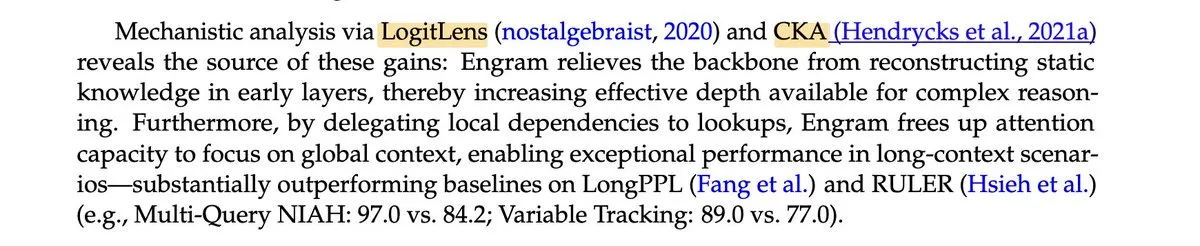
DeepSeek Releases Engram Architecture Introducing O(1) Lookup Memory: DeepSeek introduced a new module called Engram, achieving O(1) complexity lookup memory through modernized hash N-gram embeddings. Mechanistic interpretability studies (LogitLens and CKA) show that Engram effectively alleviates the memory storage burden on the model’s intermediate layers, allowing layers to focus more on logical reasoning. This attempt to apply mechanistic interpretability research to capability enhancement is seen by the community as a significant paradigm shift in AI architecture research (Source: Lisan al Gaib)
Google AI Matrix Comprehensive Upgrade and Personal Intelligence Beta: Google launched the Personal Intelligence Beta in the Gemini App, allowing users to connect Gmail and Photos for customized responses. Other releases include the TranslateGemma translation model supporting 55 language pairs, MedGemma 1.5 for enhanced 3D medical image reasoning, and 4K video upsampling in Veo 3.1. Google is leveraging its massive user ecosystem to execute a “dimensionality reduction strike” against competitors through AI penetration across its entire product line (Source: JeffDean)
Qwen 4 R&D Pace Slows to Focus on Model Quality: The head of Alibaba’s Qwen team stated they would “slow down” to focus on quality improvement rather than pure release frequency. Community rumors suggest Qwen 3.5 has internally achieved a context window in the millions. This strategic adjustment may reflect that, under compute constraints, leading Chinese model teams are shifting from “chasing scale” to “refining extreme engineering efficiency” and “long-context reasoning depth” (Source: Reddit)

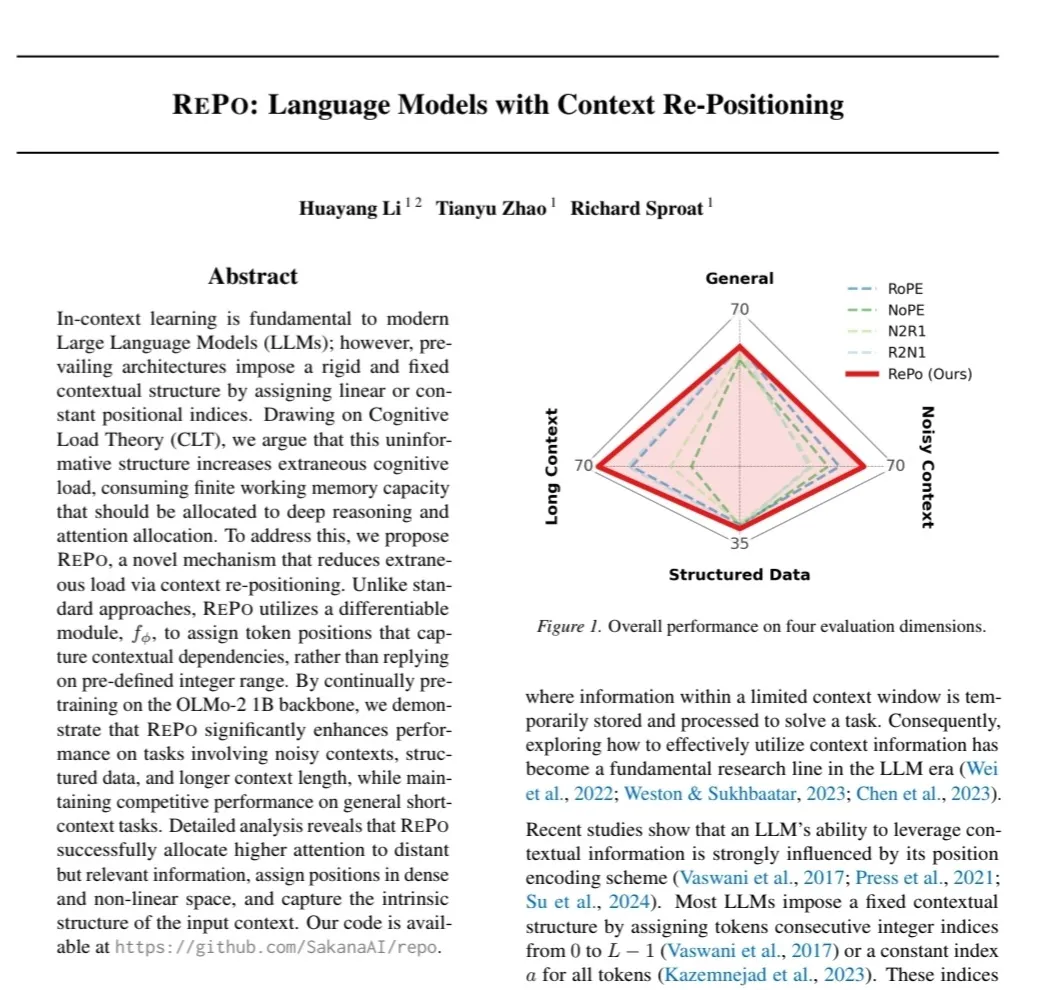
Sakana AI Proposes RePo Mechanism to Optimize Long-Context Attention: Sakana AI introduced the Contextual Repositioning (RePo) mechanism, breaking the model’s rigid dependence on the 1-2-3 order of input sequences. RePo can learn positions based on context structure to capture actual correlations between information. Experiments show this mechanism significantly reduces attention waste when processing noisy long inputs while maintaining strong short-text performance, providing a new approach for long-context reasoning (Source: TheTuringPost)
🧰 Tools
Claude Code vs. Codex: The Developer Experience Rivalry: Developers have found that while Codex’s CLI toolchain is slightly unrefined, its model excels in code-writing robustness and large Token handling; meanwhile, Claude Code is superior in general task execution and interactive experience. Scripts mirroring Claude Skills to Codex have appeared in the community, attempting to combine the strengths of both. The rise of this “Vibe Coding” culture is reshaping individual developer workflows (Source: dotey)
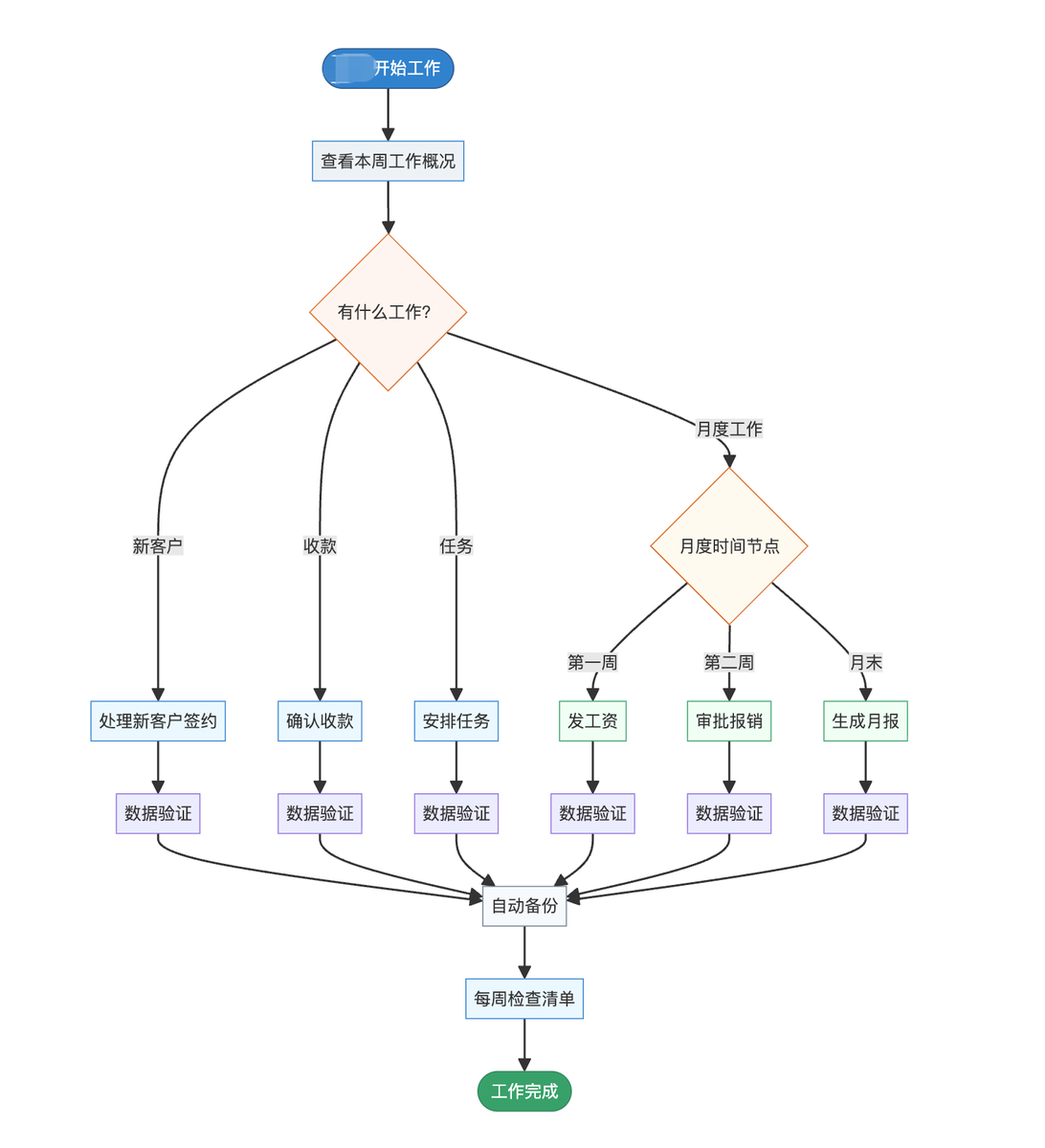
Financial Automation Framework Implementation Based on Claude Code: A developer demonstrated how to use Claude Code and its plugin system to build a financial agent, reducing monthly bookkeeping time from 3 days to half a day. Through subagents, invoice entry was reduced from 2 hours to 2 minutes, and bank reconciliation from half a day to 5 minutes. This case proves that LLM agents have achieved high ROI in vertical sectors like finance and law (Source: dotey)
Temple Bridge: A Local AI Memory Layer Based on File Systems: To address state loss in local LLMs, a developer built the Temple Bridge MCP server. It uses the file system directory structure as the AI’s memory carrier and requests human approval via a “governance protocol” before executing dangerous commands. This “file system as circuit” paradigm avoids complex vector database maintenance, providing Apple Silicon users with a 100% offline AI assistant with a “conscience” (Source: Reddit)
LlamaParse + Claude Agent SDK Enables Complex Form Filling: A developer launched an AI Agent that can automatically extract information from unstructured documents like scanned receipts to fill complex forms. The tool combines LlamaParse’s document parsing with Claude’s semantic understanding, supporting multi-turn dialogue corrections and concurrent multi-file processing. This solves the “last mile” problem from document to action in the RAG field (Source: jerryjliu0)
📚 Learning
MIPRO: Multi-Prompt Instruction Proposal Optimizer: Research from Stanford and other institutions showcased the MIPRO framework, which automatically optimizes prompts, outperforming handcrafted prompts by 13%. MIPRO uses Bayesian optimization and LLM sampling to find optimal instruction combinations for complex tasks. This indicates that “Prompt Engineering” is accelerating from manual alchemy to algorithmic automation (Source: dl_weekly)
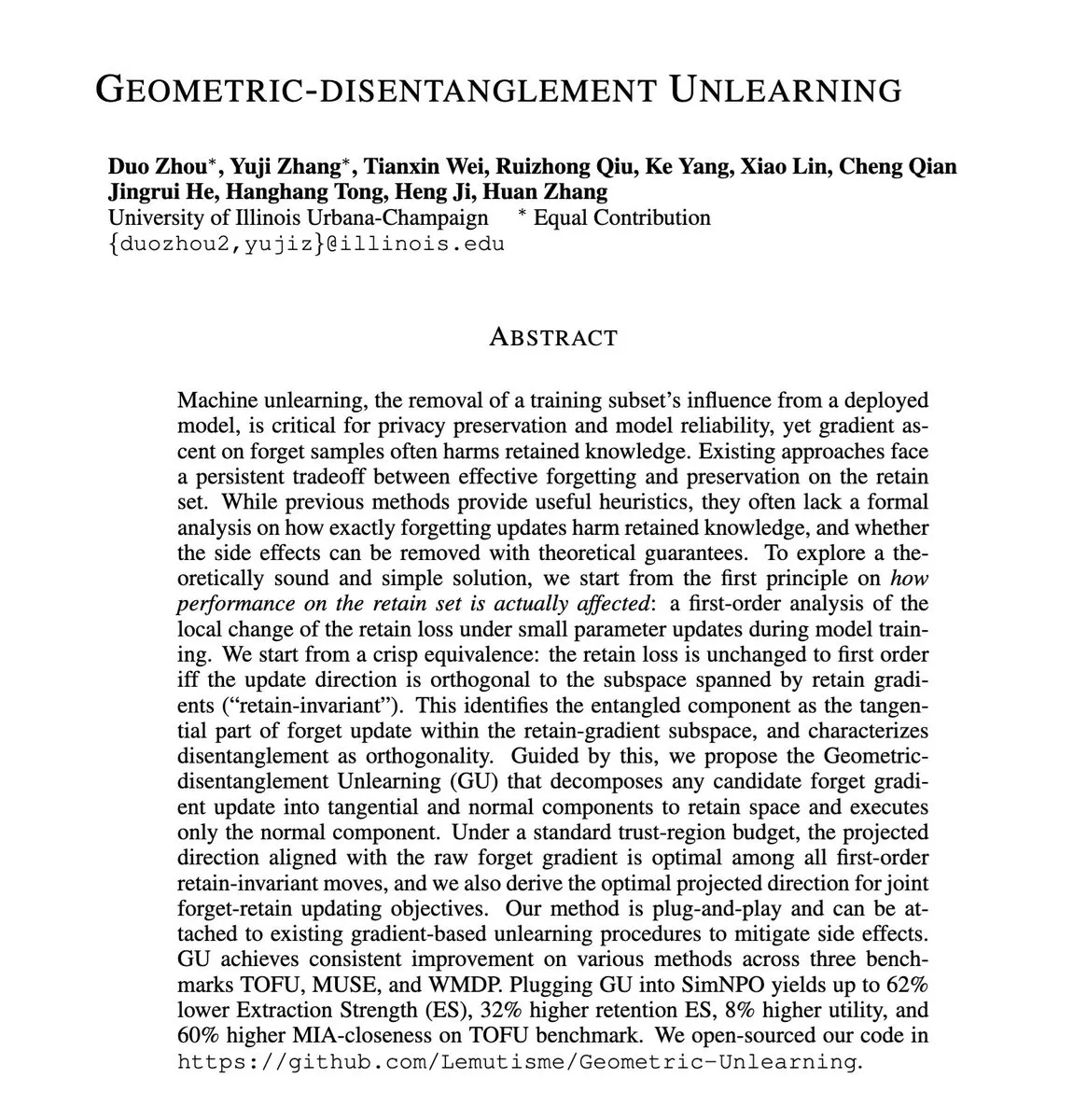
GU: Geometric Decoupled Unlearning Eliminates Side Effects: To solve the problem of models “accidentally damaging beneficial knowledge while forgetting harmful knowledge,” researchers proposed the GU algorithm. Through first-order gradient analysis, unlearning updates are decomposed into orthogonal components, provably ensuring that retained knowledge remains unaffected. The algorithm achieved Pareto improvements on datasets like TOFU and MUSE, providing mathematical guarantees for LLM safety alignment and privacy erasure (Source: mmitchell_ai)
Career Roadmap for Self-Taught AI Engineers and “Domain Arbitrage”: The community shared a successful path from real estate to AI, with the core idea being “domain arbitrage”—combining AI technology with specific industry expertise. Learning resources emphasize starting with LangChain projects and building applications that solve actual industry pain points (like CondoGPT) to accumulate credit, rather than obsessing over underlying math. This provides a pragmatic transition guide for non-CS backgrounds (Source: LangChain)

💼 Business
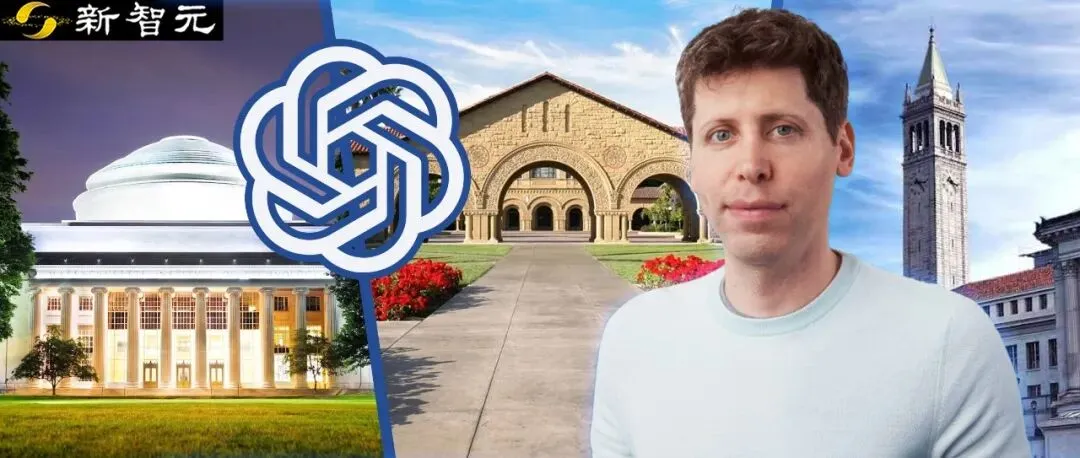
OpenAI Employee Background Check Reveals Elite University Monopoly: Data shows OpenAI employees are highly concentrated from Stanford (230), Berkeley (151), and MIT (100). Graduates from these three schools account for over 13% of the total workforce. Despite Sam Altman’s rhetoric on the “uselessness of degrees,” the moat OpenAI has actually built is an extreme monopoly on talent from the world’s top computer science institutions, forming a self-reinforcing elite feedback loop (Source: 36Kr)
Anthropic Bans Developer Accounts, Sparking Open Source Community Protest: Well-known developer Doodlestein revealed that his 22 Max accounts were banned by Anthropic for developing open-source Agent tools. Despite paying thousands of dollars in monthly subscriptions and contributing high-quality RL data, he received this treatment. This incident has sparked widespread questioning of AI giants “discarding contributors” and exercising excessive control over the developer ecosystem, with some developers stating they will switch to OpenAI or local models (Source: doodlestein)
Zhipu’s Market Value Surges After Listing Amid Commercial Betting: Within a week of listing, Zhipu’s market value soared from 50 billion to 110 billion HKD, primarily driven by its strategic partnership with Didi and its GLM-Image open-source model topping leaderboards. Over 80 shareholders (including Alibaba, Tencent, Meituan, and local state-owned capital) achieved massive paper returns. This marks a key turning point for domestic large models from “financing competition” to “secondary market valuation realization” (Source: Investment China)
🌟 Community
AGI Abundance Vision vs. Neo-Feudalism Social Debate: The community is heatedly debating Elon Musk’s “Post-AGI Abundance” versus George Hotz’s “Neo-Feudalism” views. Supporters believe AI will eliminate scarcity, while opponents fear capital power will further solidify through AI, leaving 99% of the population as a permanent underclass. This discussion reflects deep human anxiety over the reconstruction of the social contract as the technological singularity nears (Source: Reddit)

ChatGPT Ads Trigger Collective Complaints of “Experience Erosion”: The Reddit community reacted strongly to OpenAI’s introduction of ads, with some users jokingly redefining AGI as “Ad Generated Income.” Users generally dislike the “preachy” and condescending tone of AI assistant responses, believing commercial pressure is making the once-pure interaction bloated and hypocritical. Some Plus users have begun considering a switch to Perplexity or local deployments (Source: Reddit)
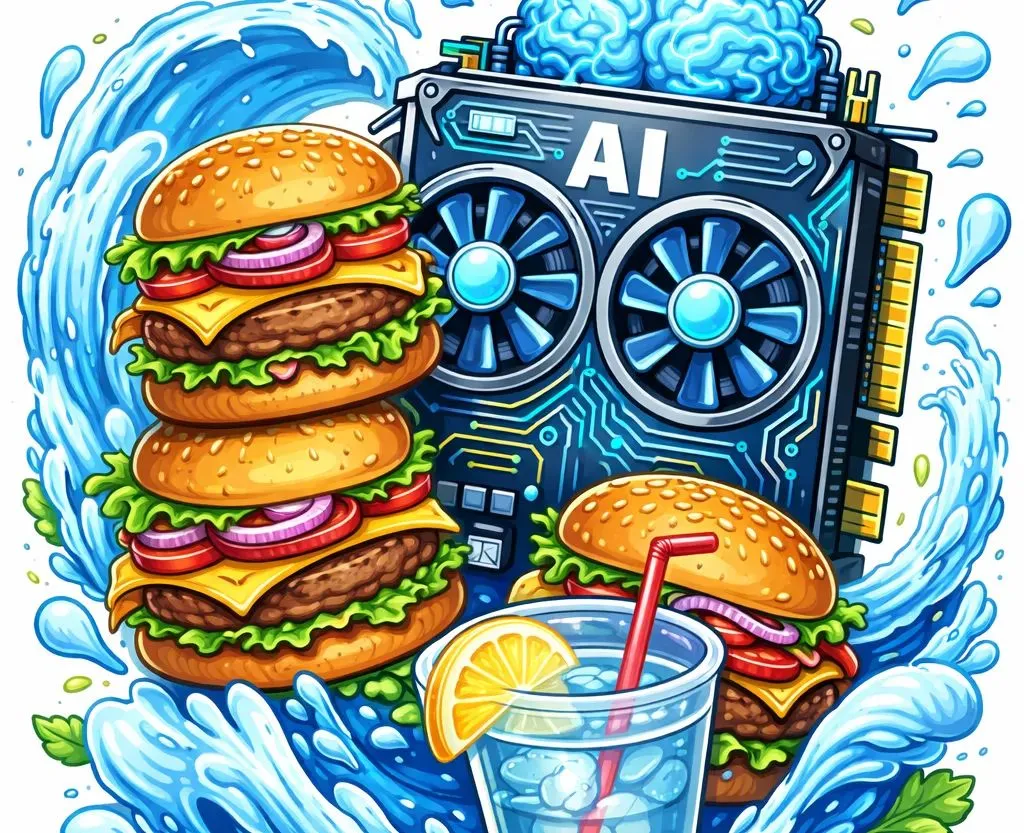
AI Energy Consumption vs. “Burger Shops” Sparks Environmental Controversy: In response to criticism of AI data centers’ water and electricity consumption, an analysis pointed out that the largest AI data center’s water usage is only equivalent to 2.5 In-N-Out burger shops. This comparison went viral on social media; supporters believe AI environmental threats are exaggerated, while critics argue this blurs the essential difference between industrial-grade and consumer-grade consumption (Source: AymericRoucher)
Developers’ “Flow State” and Efficiency Alienation in AI Collaboration: Many programmers shared experiences of entering an extreme “flow state” with tools like Claude Code, even waking up at 4 AM to code. However, some warn against the pressure of “running Agents 24/7,” suggesting this could lead to the alienation of human labor, demoting developers from “creators” to “supervisors of AI queues” (Source: blader)
💡 Others
Boston Dynamics Atlas Achieves Shelf Operations and Folding Evolution: The latest video shows the electric Atlas robot evolving from simple walking to complex shelf sorting, tire flipping, and even folding for storage like the Spot dog. This marks humanoid robots accelerating from lab “acrobatics” to “real-world operations” in industrial logistics (Source: Ronald_vanLoon)
Yunpeng Technology Releases AI + Healthy Smart Kitchen Products: Yunpeng Technology showcased a smart refrigerator equipped with an AI health large model, providing personalized nutrition management through the “Health Assistant Xiaoyun.” This shows AI penetrating from pure digital interaction into physical living spaces, achieving closed-loop management of resident health data through home appliance terminals (Source: 36Kr)
MIT Develops Deformable 3D Structures for “On-Demand Shaping”: MIT researchers developed a flat structure that can instantly transform into complex 3D shapes with a single pull. This combination of material science and geometric algorithms provides a new path for the rapid manufacturing of future deployable space structures, medical implants, and soft robots (Source: Ronald_vanLoon)