
Keywords:GPT-5, Genie 3, Vücutlu Yapay Zeka, Büyük Dil Modelleri, Yapay Zeka Ajanı
好的,以下是您提供的中文AI资讯的翻译版本,已按照您的要求进行处理:
🔥 Focus
GPT-5 Officially Released, Ushering in the Agent Era : OpenAI has officially released GPT-5, making it freely available to all users, with Pro and Plus versions also offered. The model has set new records in multiple benchmarks, including AIME 2025, programming, web development, text, Agent tasks, and long-context tasks, becoming the large model with the “highest overall score to date.” GPT-5 is the first to integrate multimodal and deep reasoning capabilities, automatically activating a “thinking mode” based on problem complexity, and intelligently orchestrating sub-models. This significantly reduces hallucination rates and improves instruction following, marking a shift in AI from a model competition to an Agent competition. (Source: Qbitai)

Google DeepMind Releases Genie 3 World Model, Advancing Towards Interactive 3D Environment Generation : Google DeepMind has unveiled Genie 3, a groundbreaking world model capable of real-time generation of interactive 3D environments at 720p resolution and 24fps, based on text prompts. The model possesses visual memory and action control capabilities lasting several minutes, positioning it as a future Game Engine 2.0. It is expected to revolutionize AI training environments and game development, providing a crucial missing piece for embodied AGI. Users have already leveraged it to create Western fantasy RPG games, simulate extreme sports, replicate real-world scenarios, and even train robots, demonstrating its immense potential in building complete virtual environments. (Source: WeChat)
OpenAI o3 Wins Kaggle AI Chess Championship, Demonstrating LLM Strategic Reasoning : In the Kaggle AI Chess Championship, OpenAI’s o3 swept xAI’s Grok 4 with a dominant 4-0 score, winning the inaugural AI Chess Exhibition Match. This competition aimed to move beyond traditional benchmarks, testing large models’ critical thinking, strategic planning, and on-the-spot adaptability in a real, complex game environment. It prohibited the use of professional chess engines, requiring models to issue commands in natural language. o3 remained undefeated throughout the match, demonstrating exceptional system stability and clear strategic play, while Grok 4 made multiple basic errors, highlighting o3’s leading edge in general reasoning and strategic gaming. (Source: WeChat)
🎯 Trends
Zhipingfang Releases GOVLA Large Model, Promoting General Embodied AI Development : Zhipingfang (智平方) showcased its humanoid robot “Aibao” and its core technology—the world’s first full-stack self-developed, omni-directional, full-body vision-language-action large model, GOVLA—at the World Robot Conference. GOVLA endows Aibao with omni-directional perception (360-degree field of view), full-body coordination (dual arms, dexterous hands, chassis control), long-range flexibility (complex task decomposition), and rapid learning capabilities. Aibao demonstrated various tasks on-site, including playing drums, making ice cream, and factory palletizing, and an omni-directional wheeled version of Aibao was also introduced. The release of GOVLA signifies China’s leading position in core embodied AI technologies, with applications already deployed in industrial manufacturing, semiconductors, biotechnology, and public services. (Source: WeChat, WeChat, WeChat)
Inspur Information Launches “Yuanbrain SD200” Super-Node AI Server, Enabling Trillion-Parameter Model Single-Machine Operation : Inspur Information has launched the “Yuanbrain SD200” super-node AI server, which aggregates 64 domestic GPU chips through an innovative multi-host low-latency memory semantic communication architecture and a 3D Mesh system built with Open Fabric Switch. This server provides a maximum of 4TB of unified video memory and 64GB of unified memory, offering ample KV Cache space for trillion-parameter ultra-long sequence models. In actual tests with DeepSeek R1 full-parameter PD separation inference, it achieved a 370% scaling efficiency for 64 cards. The SD200 aims to address the “memory wall” and “bandwidth wall” bottlenecks in large model inference, supporting multi-card multi-use, different topology partitioning, and compatibility with various AI chips, accelerating the commercial deployment of trillion-parameter large models. (Source: WeChat)
Docker Warns of Security Risks in MCP Toolchain, Calls for Enhanced AI Development Tool Isolation : Docker has published a blog post warning that AI-driven development tools built on the Model Context Protocol (MCP) are introducing critical security vulnerabilities, including credential leakage, unauthorized file access, and remote code execution, with real-world incidents already occurring. These tools often lack proper isolation and oversight, allowing LLMs with high-level access to execute instructions from untrusted sources. Docker’s analysis of thousands of MCP servers revealed widespread vulnerabilities, such as command injection and unrestricted network access, calling the current ecosystem a “security nightmare.” Docker proposed strengthening methods, emphasizing container isolation, zero-trust networking, and signed distribution, recommending users utilize pre-built, signed containers from the MCP Catalog to counter supply chain attack risks. (Source: WeChat)
AI Glasses “Reality Proxy” Enable “Grabbing Objects from a Distance” in Mixed Reality : A research team at Carnegie Mellon University has introduced “Reality Proxy” AI glasses technology, enabling users to “grab objects from a distance” through digital proxies, instantly selecting any real-world object as context. This technology abstracts real-world objects into hand interaction agents, allowing users to directly control these agents to select actual objects, overcoming distance or size limitations. Reality Proxy supports various interactive functions such as browsing previews, multi-object brushing, filtering by attributes, semantic grouping, spatial scaling grouping, and custom grouping. It has demonstrated practicality in scenarios like daily information retrieval, architectural navigation, and drone control, with the potential to revolutionize XR human-computer interaction. (Source: WeChat)
🧰 Tools
Hugging Face Releases AI Sheets, a No-Code Dataset Processing Tool : Hugging Face has launched AI Sheets, an open-source tool that allows users to build, enrich, and transform datasets using AI models without writing any code. AI Sheets provides a spreadsheet-like user interface, supporting the creation of new columns by writing prompts and allowing users to provide feedback by editing and validating cells, thereby enabling efficient few-shot learning and prompt fine-tuning. The tool can be used for model comparison, prompt optimization, dataset transformation, classification, analysis, and synthetic data generation, and can export to Hugging Face Hub, supporting large-scale data generation via HF Jobs. (Source: HuggingFace Blog)
OpenAI Releases Codex CLI, a Lightweight Coding Agent Running in the Terminal : OpenAI has launched Codex CLI, a lightweight coding Agent that runs locally, aimed at improving developer productivity. The tool supports installation via npm or brew and can be integrated with ChatGPT Plus/Pro/Team accounts or OpenAI API keys. Codex CLI offers various levels of autonomy, from read-only to full read/write, and ensures security through a sandbox mechanism. It can perform tasks such as code refactoring, SQL migration generation, unit test writing, batch file renaming, regular expression interpretation, codebase review, and security report generation, and supports the use of OpenAI-compatible open-source models (e.g., Ollama). (Source: GitHub Trending)
Institute of Software, Chinese Academy of Sciences, Launches ExpeRepair, New SOTA in AI Bug Fixing : A team from the Institute of Software, Chinese Academy of Sciences, has released ExpeRepair, a repository-level bug fixing system with “dual memory,” which topped SWE-Bench Lite with a 60.33% fix rate. The system simulates human cognition, storing historical repair cases through “episodic memory” and extracting high-level repair strategies through “semantic memory.” When encountering new problems, ExpeRepair simultaneously activates both memories to dynamically generate tailored repair solutions. Its repair process includes test generation, patch generation, and patch verification. Through agent collaboration and iterative optimization, it effectively addresses issues such as insufficient memory, inadequate test reproduction, and incomplete patches in existing AI repair tools. (Source: WeChat)
📚 Learning
HuggingFace Accelerate ND-Parallel: A Guide to Efficient Multi-GPU Training : HuggingFace Accelerate integrates with Axolotl ND-Parallel, offering a fast and simple way to combine multiple parallelism strategies for multi-GPU training. The article details the working principles of Data Parallelism (DP), Fully Sharded Data Parallelism (FSDP), Tensor Parallelism (TP), and Context Parallelism (CP), as well as their combinations, such as Hybrid Sharded Data Parallelism (HSDP) and FSDP+TP. This guide aims to help users understand the memory/communication trade-offs of different parallelism strategies, optimize large-scale model training efficiency, and provides configuration examples and usage notes, such as efficient CPU RAM loading, sharded state dict checkpointing, and gradient checkpointing. (Source: HuggingFace Blog)
Marco-Voice: A Multi-Functional Speech Synthesis System Integrating Voice Cloning and Emotion Control : Marco-Voice is a system designed to achieve highly expressive, controllable, and natural speech generation, integrating voice cloning and emotion-controlled speech synthesis within a unified framework. The method introduces an effective speaker-emotion decoupling mechanism, combining in-batch contrastive learning and rotational emotion embedding integration, to achieve independent manipulation of speaker identity and emotional style, as well as smooth emotion control. To support training and evaluation, the research team constructed the CSEMOTIONS dataset, comprising 10 hours of Mandarin emotional speech. Experimental results indicate that Marco-Voice achieves significant improvements in both speech clarity and emotional richness. (Source: HuggingFace Daily Papers)
RPCANet++: Deeply Interpretable Robust PCA Network for Sparse Object Segmentation : RPCANet++ is a sparse object segmentation framework that combines the interpretability of Robust Principal Component Analysis (RPCA) with the efficiency of deep learning. It unfolds the relaxed RPCA model into a structured network, including modules for background approximation, object extraction, and image recovery. To address the computational burden, hyperparameter dependency, and adaptability limitations of traditional RPCA, RPCANet++ introduces a memory enhancement module to improve background feature retention and designs a deep contrastive prior module to accelerate object extraction using saliency cues. Experiments on multiple datasets demonstrate that RPCANet++ achieves state-of-the-art performance across various imaging scenarios and enhances interpretability through visual and numerical low-rankness and sparsity measurements. (Source: HuggingFace Daily Papers)
I2CR: Intra- and Inter-Modal Collaborative Reflection Framework for Multimodal Entity Linking : I2CR is a novel LLM-based multimodal entity linking framework that addresses the challenges of existing methods through intra-modal and inter-modal collaborative reflection. This framework prioritizes the use of textual information, and when text is insufficient, it employs a multi-round iterative strategy to integrate key visual cues from images to support reasoning and improve matching accuracy. I2CR addresses the limitations of unnecessarily integrating image data and single-pass visual feature extraction. Extensive experiments on three public datasets show that the framework consistently outperforms existing state-of-the-art methods in performance, achieving improvements of 3.2%, 5.1%, and 1.6% respectively. (Source: HuggingFace Daily Papers)
SODEC: Guiding Single-Step Diffusion Models with High-Fidelity Decoders for Fast Image Compression : SODEC is a novel single-step diffusion image compression model designed to address the high decoding latency and poor fidelity issues of existing diffusion models. The research posits that sufficiently informative latent representations can eliminate the need for multi-step refinement. Thus, the model utilizes a pre-trained VAE to generate information-rich latent representations and replaces iterative denoising with single-step decoding. To enhance fidelity, a fidelity-guided module is introduced, encouraging outputs to be faithful to the original image. Additionally, a rate annealing training strategy is designed for effective training at extremely low bitrates. Experiments show that SODEC significantly outperforms existing methods, achieving superior rate-distortion-perception performance and increasing decoding speed by over 20 times. (Source: HuggingFace Daily Papers)
MACT: Multi-Agent Collaborative Framework Enhances Visual Document Understanding and VQA Capabilities : MACT is a multi-agent collaborative framework for visual document understanding and Visual Question Answering (VQA), addressing the limitations of existing VLMs in long visual contexts and complex reasoning through test-time scaling techniques. The framework comprises four small agents—planning, execution, judgment, and answering—each performing its specific role and collaborating effectively. The judging agent specifically verifies correctness and guides corrections, outperforming traditional strategies. To expand its capability boundaries, MACT proposes hybrid reward modeling and agent-level hybrid test-time scaling, balancing agent capabilities with global collaboration. MACT performs excellently in both document and non-document benchmarks, leading in complex reasoning tasks with a smaller parameter scale. (Source: HuggingFace Daily Papers)
Attention Basin: Revealing the Critical Link Between Massive Values and Contextual Understanding in LLM Attention Mechanisms : A new study from ICML 2025, “Massive Values in Self-Attention Modules are the Key to Contextual Knowledge Understanding,” reveals that highly concentrated maximal values exist in the query (Q) and key (K) representations within the self-attention mechanisms of Large Language Models (LLMs), a phenomenon commonly observed in models using Rotary Positional Embeddings (RoPE). The study found that these maximal values are crucial for understanding contextual knowledge; disrupting them leads to catastrophic performance degradation in tasks requiring contextual understanding, while having limited impact on parametric knowledge retrieval. Furthermore, quantization techniques specifically designed to handle maximal values can better preserve contextual understanding capabilities. This finding offers new perspectives for LLM design, optimization, and quantization. (Source: WeChat)
DAEDAL: A New Paradigm for Diffusion LLM Inference, Enabling Dynamic Adaptive Length Adjustment : Teams from The Chinese University of Hong Kong’s MMLab and Shanghai AI Laboratory, among others, have proposed DAEDAL, a training-free denoising strategy that enables Diffusion Large Language Models (DLLMs) to dynamically adjust answer lengths based on the question, bridging a critical gap between DLLMs and autoregressive LLMs in fixed generation length. DAEDAL achieves autonomous length adjustment by initial length adjustment (detecting EOS confidence at the sequence end) and iterative mask insertion (identifying low-confidence MASK positions and expanding). Experiments show that DAEDAL, starting from a uniformly short initial length, achieves and even surpasses the performance of carefully tuned fixed-length baselines on multiple benchmarks, while also improving computational resource utilization, laying the foundation for more flexible and efficient DLLMs. (Source: WeChat)
Long Context No Longer Difficult: Practical Optimization of KV Cache Full Lifecycle : Jiang Huiqiang from Microsoft Research Asia shared an efficient long-text method centered on KV Cache, aiming to address latency and storage challenges in long-context LLM inference. The presentation introduced the SCBench benchmark tool and reviewed mainstream inference optimization methods, including algorithmic layers (decoding strategies) and system layers (quantization, parallelism, memory management). It highlighted end-to-end optimization solutions such as MInference, MMInference, and RetrievalAttention. By leveraging the dynamic sparsity and locality features of attention mechanisms, as well as bias characteristics in multimodal scenarios, these solutions significantly reduce context pre-filling latency and KV Cache memory pressure, enabling single-node service for million-token inference, greatly enhancing scalability and cost-effectiveness. (Source: WeChat)
FR3E: ByteDance & MAP Propose New Reinforcement Learning Framework, Reshaping LLM Exploration Mechanisms : A joint team from ByteDance, MAP, and the University of Manchester has proposed a new structured exploration framework, FR3E (First Return, Entropy-Eliciting Explore), aimed at addressing the issue of insufficient exploration in LLMs during reinforcement learning. Inspired by the “first return, then explore” philosophy, FR3E systematically reconstructs the LLM exploration mechanism by identifying high-uncertainty key tokens in reasoning trajectories and using them as anchors to guide diverse expansions. The algorithm is divided into “First Return” (multi-round rollouts to collect trajectories, filtering high-entropy tokens to build intermediate states) and “Entropy-Eliciting Explore” (dynamic advantage modulation mechanism to regulate learning signals). Experiments show that FR3E significantly outperforms strong baselines on multiple mathematical reasoning benchmarks, demonstrating stronger generalization and reasoning capabilities, and improving computational resource utilization. (Source: WeChat)
MeanFlow: A New Paradigm for Generative Models, One-Step Generation Breaks Acceleration Limits : PaperWeekly introduced MeanFlow (Mean Flows for One-step Generative Modeling), a new paradigm for generative models that promises to completely solve the slow generation speed of diffusion models. The core idea of MeanFlow is to shift the modeling objective from instantaneous velocity (ODE) to average velocity, thereby theoretically enabling one-step generation. The article details the identity transformation between instantaneous and average velocities and proposes three training objective functions, with the first objective notably offering a single explicit minimization target, no EMA/stop_gradient operations, and theoretically guaranteed advantages. The emergence of MeanFlow provides a new theoretical foundation and practical path for accelerating generative models, potentially combining the training stability of diffusion models with the one-step generation capability of GANs. (Source: WeChat)
Peking University × Tencent Release C3 Benchmark, Directly Addressing Weaknesses in Spoken Dialogue Models : Peking University and Tencent have jointly released C3 Benchmark, the first comprehensive bilingual (Chinese and English) evaluation benchmark that thoroughly examines complex phenomena in spoken dialogue, such as pauses, polyphonic characters, homophones, stress, intonation, syntactic ambiguity, polysemy, ellipsis, and multi-turn conversations. The benchmark includes 1079 real-world scenarios and 1586 audio-text pairs, designed to expose the critical weaknesses of current Spoken Dialogue Models (SDMs). Evaluation results show that the strongest Chinese model, Qwen2.5-Omni, scored 40.08, and the strongest English model, GPT-4o-Audio-Preview, scored 55.68, both significantly below human performance. C3 utilizes real-world scenario data, is independently constructed in both languages, and introduces a dual-reviewer automatic evaluation system (GPT-4o/DeepSeek-R1) with over 87% consistency with human experts, providing a rigorous testing standard for spoken dialogue large models. (Source: WeChat)
SQLM: Carnegie Mellon University Proposes AI Self-Questioning Framework, Enhancing Reasoning Without External Data : A team from Carnegie Mellon University has proposed the SQLM framework, a self-questioning model that enhances reasoning capabilities through AI self-interrogation, without requiring external data. The framework includes two roles: a proposer, who generates questions related to a given topic, and a solver, who answers them. Both are trained via reinforcement learning to maximize expected rewards. SQLM designs a self-supervised reward function based on the “generator-verifier gap,” enabling stable minimax-style training and adaptive adjustment of the reward mechanism. Experiments show that SQLM improved the accuracy of Qwen2.5-3B-Instruct by 14% on arithmetic tasks, 16% on algebra tasks, and 7% on programming tasks, significantly outperforming format-reward baselines. (Source: WeChat)
CompassVerifier: Shanghai AI Lab & University of Macau Release General Answer Verification Model, Aiding AI’s “Two-Legged Run” : Shanghai AI Lab and the University of Macau have jointly released CompassVerifier, a general answer verification model, and its evaluation dataset VerifierBench. This aims to fill the gap in the Verifier field’s verify-improve-verify iterative system, enabling AI to “run on two legs” (train and verify) in the “second half” of its development. CompassVerifier is optimized based on the Qwen series models, with parameter sizes ranging from 3B to 32B, achieving verification accuracy that surpasses general large models in multiple domains such as mathematics, knowledge, and scientific reasoning. VerifierBench contains 2817 high-quality samples annotated by experts, covering multiple domains, complex answer types, and invalid sample annotations, providing a high-difficulty benchmark for verification models. CompassVerifier can also serve as a reinforcement learning reward model, enhancing LLM performance on tasks like mathematical reasoning. (Source: WeChat)
ReMoMask: Peking University’s New Method for High-Quality 3D Game Motion Generation from a Single Sentence : Peking University has proposed ReMoMask, a novel retrieval-augmented generation-based Text-to-Motion framework designed to automatically generate fluid and realistic 3D motions from a single instruction, fundamentally changing animation production methods. ReMoMask integrates three key innovations: a momentum-based bidirectional text-to-motion model that decouples negative sample scales via a momentum queue to improve cross-modal retrieval accuracy; a semantic spatio-temporal attention mechanism that enforces biomechanical constraints and eliminates asynchronous artifacts; and RAG-classifier-free guidance to enhance generalization. The framework achieved state-of-the-art performance on standard benchmarks like HumanML3D and KIT-ML, significantly improving FID scores, and offering efficient motion generation solutions for fields such as gaming, filmmaking, virtual reality, and robotics. (Source: WeChat)
💼 Business
Huawei Launches Hundred-Million Yuan HarmonyOS App Development Incentive Program, Accelerating Ecosystem Expansion : Huawei announced that the number of HarmonyOS 5 devices has surpassed 10 million and launched the “HarmonyOS App Developer Incentive Program 2025,” investing over 100 million yuan in subsidies, with a cumulative prize cap of 6 million yuan for individual developers. This move aims to continuously strengthen the HarmonyOS ecosystem, attracting developers for long-term commitment. The incentive program not only increased prize money but also extended the time frame and added activity-based incentive metrics, guiding developers to focus on app quality and long-term benefits. Huawei also provides full-stack capability support for development efficiency, rapid testing, efficient listing, and effective operations, emphasizing “develop once, deploy everywhere” and distributed capabilities, empowering developers to become key innovators in the era of ubiquitous connectivity and accelerating the growth and popularization of the HarmonyOS ecosystem. (Source: WeChat)
AWS Launches Amazon Bedrock and SageMaker, the World’s Largest AI Model Aggregation Platform : Amazon Web Services (AWS) has launched Amazon Bedrock and Amazon SageMaker, aggregating over 400 mainstream commercial and open-source large models globally, including OpenAI’s gpt-oss series and Anthropic’s Claude Opus 4.1/Sonnet 4. AWS emphasizes its “Choice Matters” strategy, aiming to provide enterprises with diverse model choices and synergistic solutions to meet the needs of various business scenarios, promoting the widespread application and commercialization of generative AI. (Source: Qbitai)
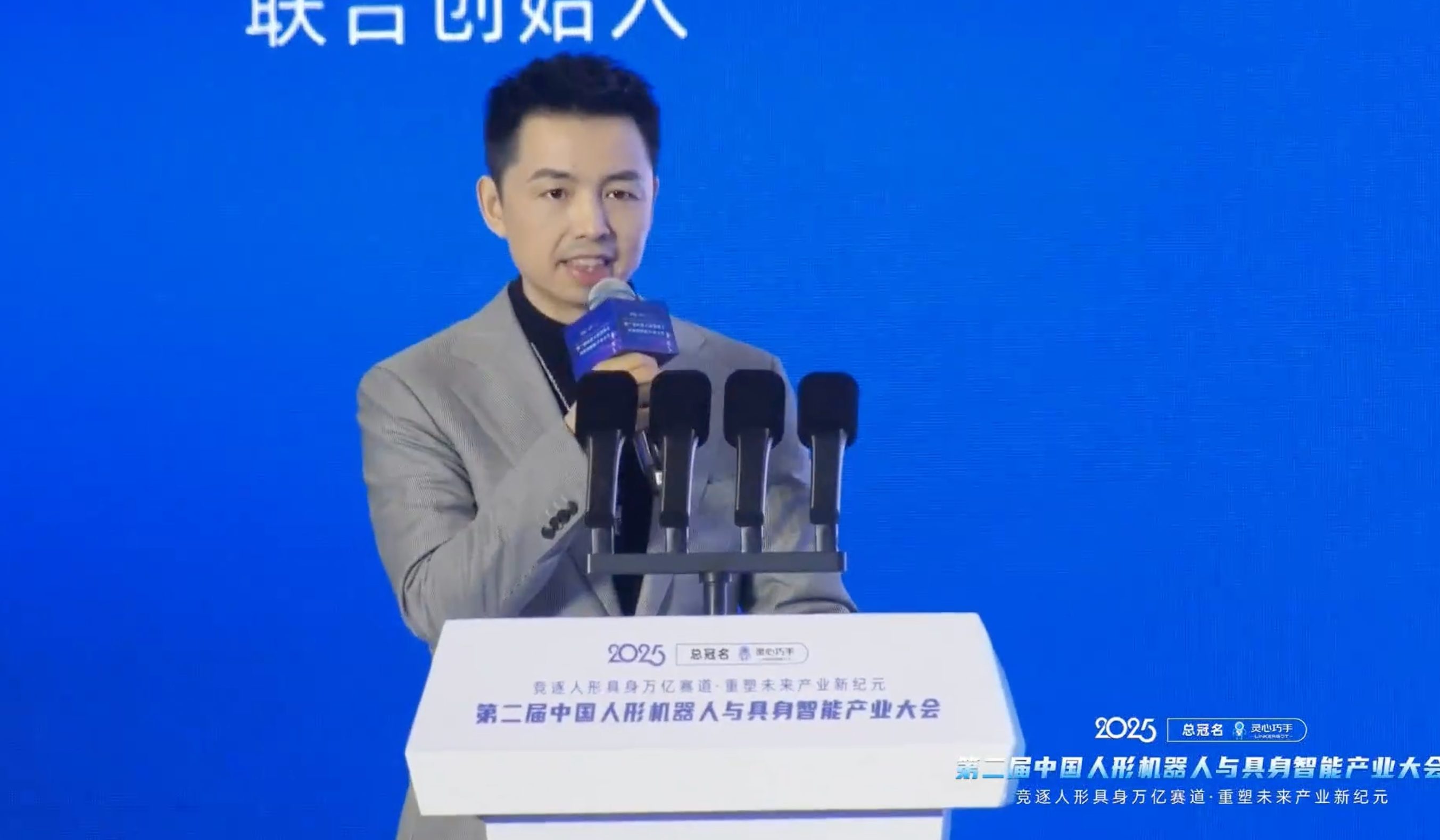
Ant Group Leads Multi-Hundred-Million Yuan Investment in Embodied AI Dexterous Hand Company Lingxin Qiaoshou : The embodied AI sector continues to heat up, with dexterous hand company Lingxin Qiaoshou (灵心巧手) completing a multi-hundred-million yuan angel round financing, led by Ant Group, with existing shareholders like Sequoia China Seed Fund increasing their investment. Lingxin Qiaoshou is renowned for its self-developed Linker Hand series of dexterous hands, which boast high degrees of freedom, mass production capability, and cost advantages, accounting for 80% of the global market share for high-DOF dexterous hands. This round of financing will be used for technology reserves and the construction of embodied AI data collection facilities, accelerating the application of dexterous hands in industrial, medical, and other scenarios. (Source: Qbitai)
🌟 Community
GPT-5 Release Sparks Discussion on Intelligence Limits : Regarding OpenAI’s release of GPT-5, discussions have emerged in the community, suggesting that its focus is primarily on engineering optimization of existing model capabilities and multi-task performance improvement, rather than a revolutionary breakthrough in fundamental intelligence, indirectly indicating that the “Scaling Law” might be encountering bottlenecks. Some opinions suggest that true AGI breakthroughs require progress in autonomous learning, thinking, and reasoning capabilities, rather than merely adding multimodal information or improving task proficiency. (Source: WeChat)
ChatGPT’s “Over-Apologizing” Phenomenon Sparks Heated Discussion : It has been observed on social media that ChatGPT exhibits a phenomenon of “over-apologizing,” expressing regret even in absurd or irrelevant scenarios (e.g., “the current state of Central Park”). This behavior has sparked discussions about AI model behavior patterns and user experience, as well as concerns about how models handle non-factual or ambiguous instructions. (Source: The Verge)
Silicon Valley AI Bigwigs Building Doomsday Bunkers Sparks Public Debate : Reports indicate that Silicon Valley AI magnates like Mark Zuckerberg and Sam Altman are building or own fortified underground bunkers, drawing widespread public attention and discussion. This phenomenon leads people to speculate whether those most knowledgeable about AI development trends foresee some potential “doomsday” crisis, and what their true views are on the future risks of AI, thereby prompting deep reflections on tech ethics, risk prevention, and the future of humanity. (Source: Qbitai)

Pang Jiangmiao from Shanghai AI Lab Discusses Embodied AI’s “ChatGPT Moment” and Open Platforms : Pang Jiangmiao, a young scientist at Shanghai AI Laboratory, was interviewed to discuss the future development of embodied AI, including “brain-body integration,” edge computing challenges, and achieving “three generalizations” in ontology, scenarios, and tasks. He emphasized that open platforms and data accumulation are prerequisites for embodied AI to reach its “ChatGPT moment,” and pointed out that embodied AI demands nearly 100% reliability for operations, which significantly differs from large models. In the future, the “Real to Sim to Real” technical route will be used to address data scarcity issues. (Source: WeChat)
💡 Other
Former BMW EV Design Head Kai Langer Jumps to Xiaomi Auto : Kai Langer, former head of design for BMW’s i-series electric vehicles, announced his move to Xiaomi Auto, becoming the sixth executive from BMW to join Xiaomi within six months. This talent migration highlights the growing appeal of Chinese tech companies in the automotive industry, as well as the talent competition and shifting industry status between traditional auto giants and emerging players. Langer will even report to his former subordinate, symbolizing the rising status of China’s automotive industry. (Source: Qbitai)