
Anahtar Kelimeler:AI virüs tasarımı, Microsoft Fairwater AI veri merkezi, Huawei Atlas 850, Perceptron AI Isaac 0.1, Anthropic kod üretme, Google Gemini entegrasyonu, AI dünya modeli, AI nano dağıtım platformu NanoForge, Enerji zaman serileri büyük modeli EnergyTS 2.0, Wan2.2-Animate video animasyon, Python ile Derin Öğrenme üçüncü baskı, ML Summit 2025
🔥 Spotlight
AI-Designed Virus Achieves Functional Replication : A team from Stanford University and the Arc Institute has utilized AI to design viral genomes, successfully enabling them to replicate and infect bacteria. This work is considered a significant step in AI-designed life forms, holding potential for developing new therapies and accelerating cell engineering research. However, experts call for “extreme caution” in virus enhancement research to prevent potential risks, especially avoiding involvement with high-risk pathogens. (Source: MIT Technology Review)

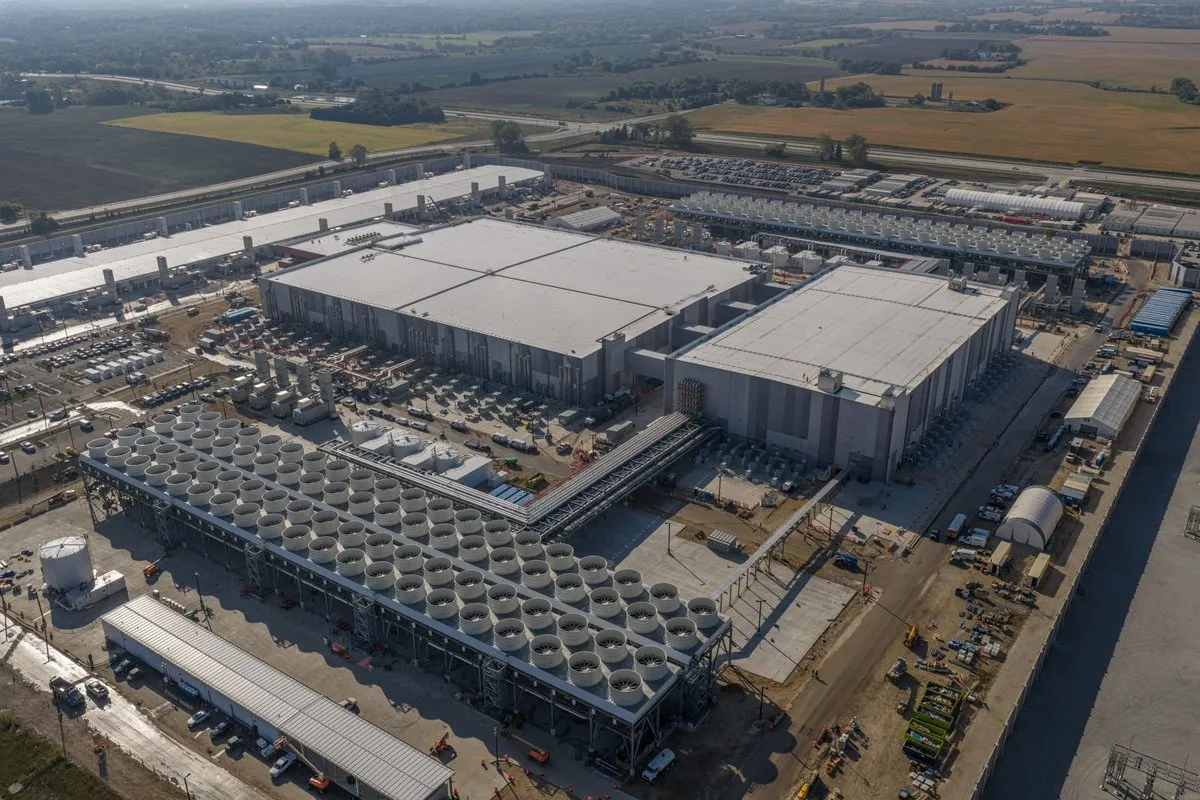
Microsoft Builds New Fairwater AI Data Center : Microsoft CEO Satya Nadella unveiled the new Fairwater AI data center in Wisconsin, which will integrate over 100,000 NVIDIA GB200 GPUs, projected to achieve 10 times the performance of the world’s fastest supercomputer. The data center spans 315 acres, comprising three buildings totaling 1.2 million square feet, and features the world’s second-largest liquid cooling system. It will be connected into a “distributed supercomputer” via a self-developed Wide Area Network (AI WAN), aiming for cross-regional collaborative training and resource orchestration. (Source: op7418)
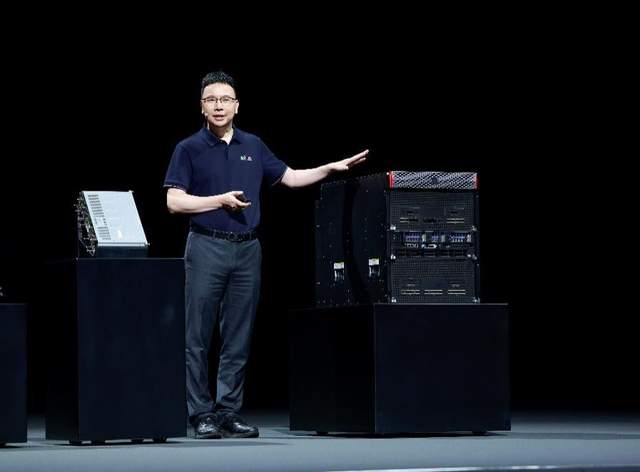
Huawei Releases AI Supernode Server Atlas 850 : During HUAWEI CONNECT 2025, Huawei unveiled its innovative supernode architecture and several products, including the all-liquid-cooled Atlas 950 SuperPoD and the enterprise-grade air-cooled Atlas 850 AI supernode server. The Atlas 850 is equipped with 8 Ascend NPUs and supports a maximum of 128 supernode clusters with 1024 cards each. It is the industry’s first compute cluster capable of implementing a supernode architecture in air-cooled data centers, designed to meet enterprise model post-training and multi-scenario inference needs. (Source: 量子位)
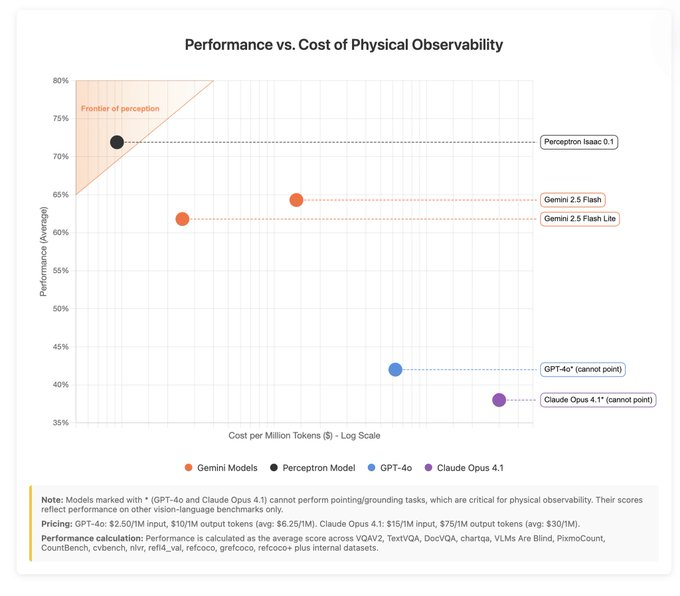
Perceptron AI Launches Isaac 0.1 Perceptual Language Model : Perceptron AI has introduced Isaac 0.1, a 2B-parameter open-source perceptual language model designed to understand and interact with the physical world. The model outperforms Gemini, GPT-4o, and Claude Opus 4.1 on key perceptual benchmarks while having significantly fewer parameters, drastically reducing serving costs and power consumption. This makes it suitable for edge deployment scenarios in manufacturing, logistics, security, and robotics. (Source: AkshatS07, AkshatS07, AkshatS07)
Anthropic Model Excels in Code Generation : Anthropic co-founder Dario Amodei revealed that 70-90% of the company’s code is generated by Claude, demonstrating AI’s high efficiency in software development. Despite the high proportion of AI-generated code, the number of engineers has not significantly decreased, indicating that AI primarily enhances the productivity of existing teams rather than directly replacing them. In the enterprise-grade large model API market, Anthropic has surpassed OpenAI to become the leader, especially in code generation, where it holds a 42% market share. (Source: Reddit r/artificial, Reddit r/ClaudeAI)

🎯 Trends
Google Gemini Integrated into Chrome Browser : Google is integrating Gemini AI into the Chrome browser, offering AI-powered tab management, custom browser themes (text-to-image), and writing assistance features to all Mac and Windows users. Future updates will support direct questioning or content summarization on web pages, aiming to enhance the daily browsing experience with AI and capture the browser AI agent market. (Source: Reddit r/artificial, Reddit r/artificial, _philschmid, TheRundownAI, digi_literacy)

Huawei Ascend Chip Three-Year Roadmap : Huawei has unveiled a three-year roadmap for its Ascend chips, planning to launch the first 950PR chip with self-developed HBM in Q1 2026. This strategy emphasizes building a complete, controllable, and scalable AI computing stack rather than pursuing extreme single-chip performance. By leveraging self-developed HBM and the “Lingqu” interconnect protocol, it aims to connect up to 500,000-990,000 Ascend chips, addressing AI cluster communication bottlenecks and creating the world’s most powerful “supernode.” (Source: ZhihuFrontier, bookwormengr)

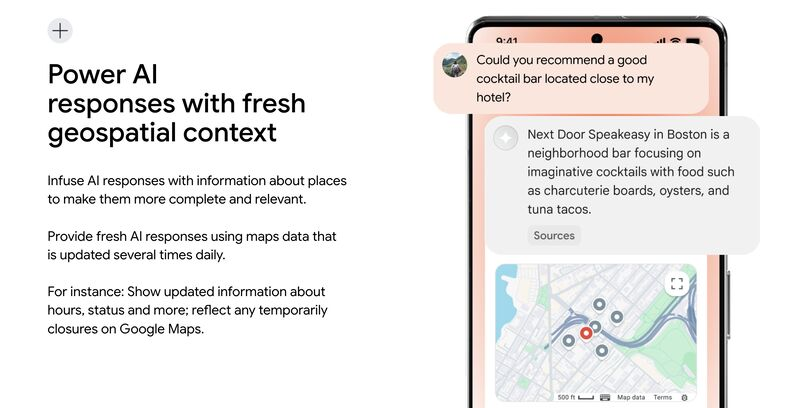
Google Maps Integrates Gemini API Grounding : The Gemini API now fully supports Google Maps Grounding, allowing developers to build applications connected to real-time Google Maps information. This global update supports joint Grounding with Google Search and is crucial for industries like travel, real estate, and social media, ensuring factual and reliable model outputs, especially when dealing with spatial real-world information. (Source: nin_artificial)
Advances in AI Video Generation Models : Luma AI has launched Ray3, the world’s first inference video model capable of generating studio-grade HDR video, and introduced a new Draft Mode for rapid iteration. Concurrently, Google’s latest AI video generation model, Veo 3, has been integrated into YouTube Shorts, allowing users to generate videos with audio from text prompts, offering clearer quality and unlimited free use, aiming to lower the barrier to video creation. (Source: crystalsssup, timsoret, TheRundownAI, inerati, qtnx_)
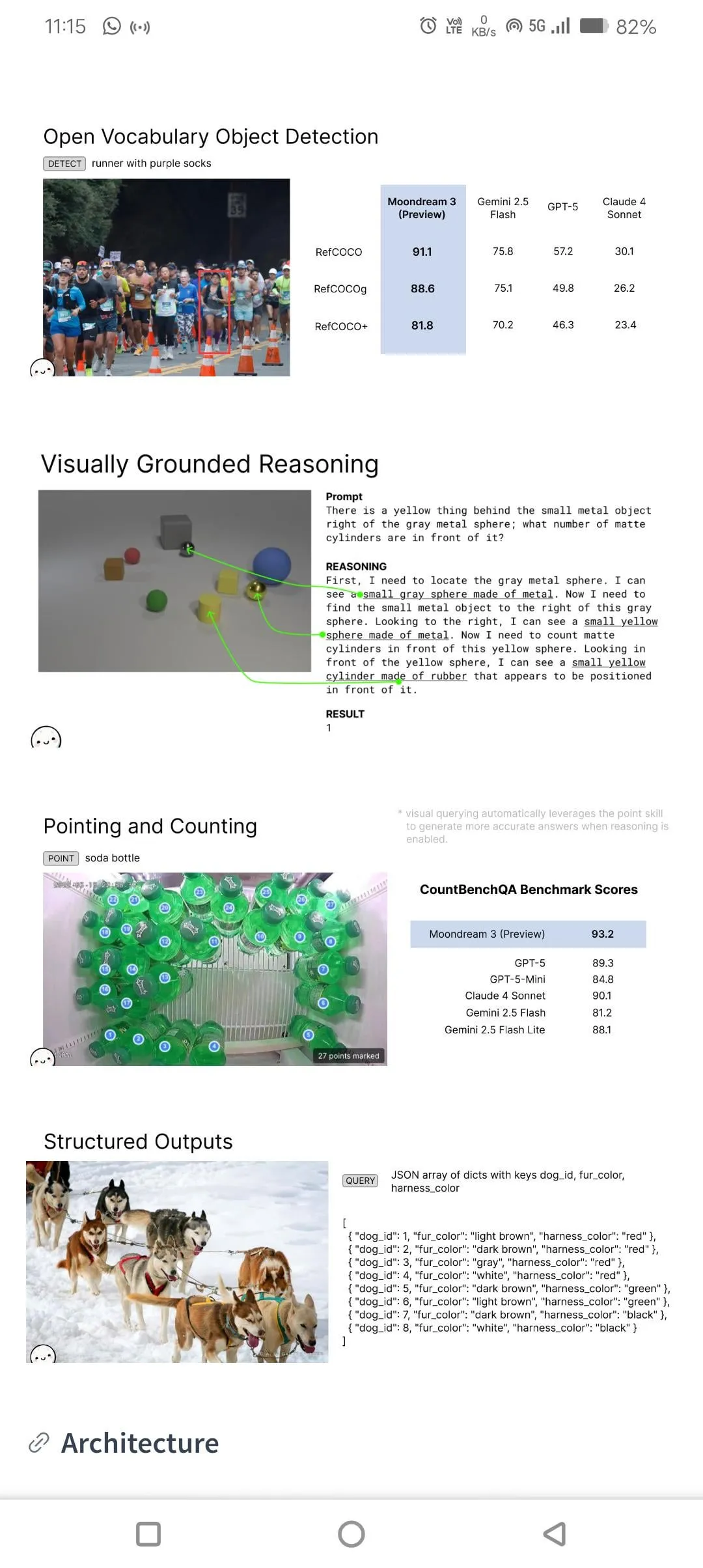
Moondream 3 Preview Released : A preview version of Moondream 3 has been released, a 9B-parameter (2B active) Mixture-of-Experts (MoE) vision-language model. The model excels in visual reasoning, competing with large models like Gemini, while maintaining an efficient and easily deployable form factor. Its excellent quantization performance has also garnered significant attention, with the community hailing it as a “god-tier” model. (Source: mervenoyann, Reddit r/LocalLLaMA)
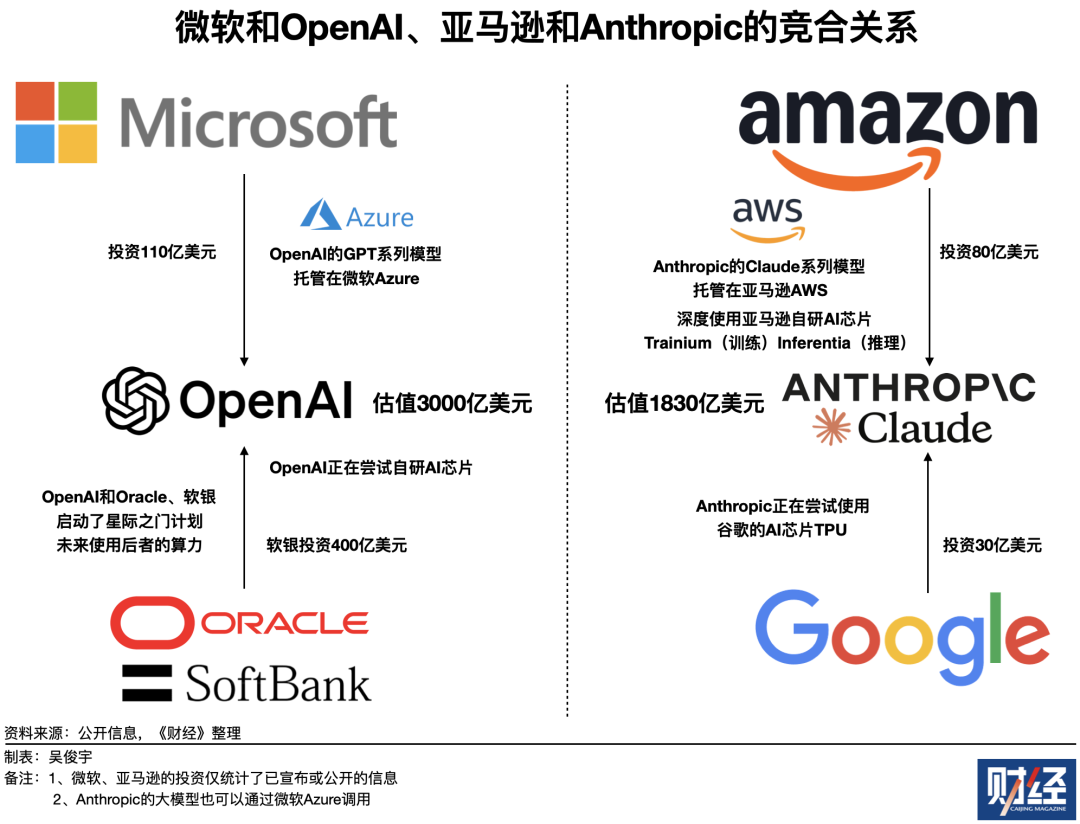
Anthropic, OpenAI, Microsoft, and Amazon’s AI Competition : OpenAI and Anthropic, two giants in the AI field, have formed strategic alliances with Microsoft and Amazon, respectively, to compete for AI technology leadership. Microsoft’s investment in OpenAI drives the growth of its Azure cloud business, while Amazon deeply integrates with Anthropic, leveraging its models and self-developed Trainium chips to counter. However, these alliances face uncertainties, with all parties preparing to reduce dependencies and ensure long-term competitiveness, such as OpenAI’s collaboration with Oracle to build the “Stargate” compute cluster. (Source: 36氪)
AWS Introduces Qwen3 and DeepSeek-V3.1 : Amazon Web Services (AWS) has officially launched domestic large models Qwen3 and DeepSeek-V3.1 on its Amazon Bedrock platform, further expanding its multi-model product line. The Qwen3 model series excels in inference, instruction following, multilingual capabilities, and tool calling, with low deployment costs. DeepSeek-V3.1 features a hybrid inference mode and strong performance in code generation and Agentic AI tool calling. AWS emphasizes its “Choice Matters” philosophy, providing customers with diverse model options. (Source: 36氪, 36氪)
Ant Digital Technologies Releases EnergyTS 2.0 Energy and Power Time-Series Large Model : Ant Digital Technologies has upgraded and launched EnergyTS 2.0, an energy and power time-series large model, expanding its parameter scale from 1B to 7B. It adopts a Mixture-of-Experts (MoE) architecture, integrating diverse covariate information such as meteorology, geography, and calendar, significantly improving prediction accuracy for photovoltaic, wind power generation, and electricity load. This aims to address core pain points like new energy curtailment and investment return fluctuations. Concurrently, it open-sourced the Energy-EVA energy and power vertical evaluation benchmark to standardize industry technical assessment. (Source: 量子位)

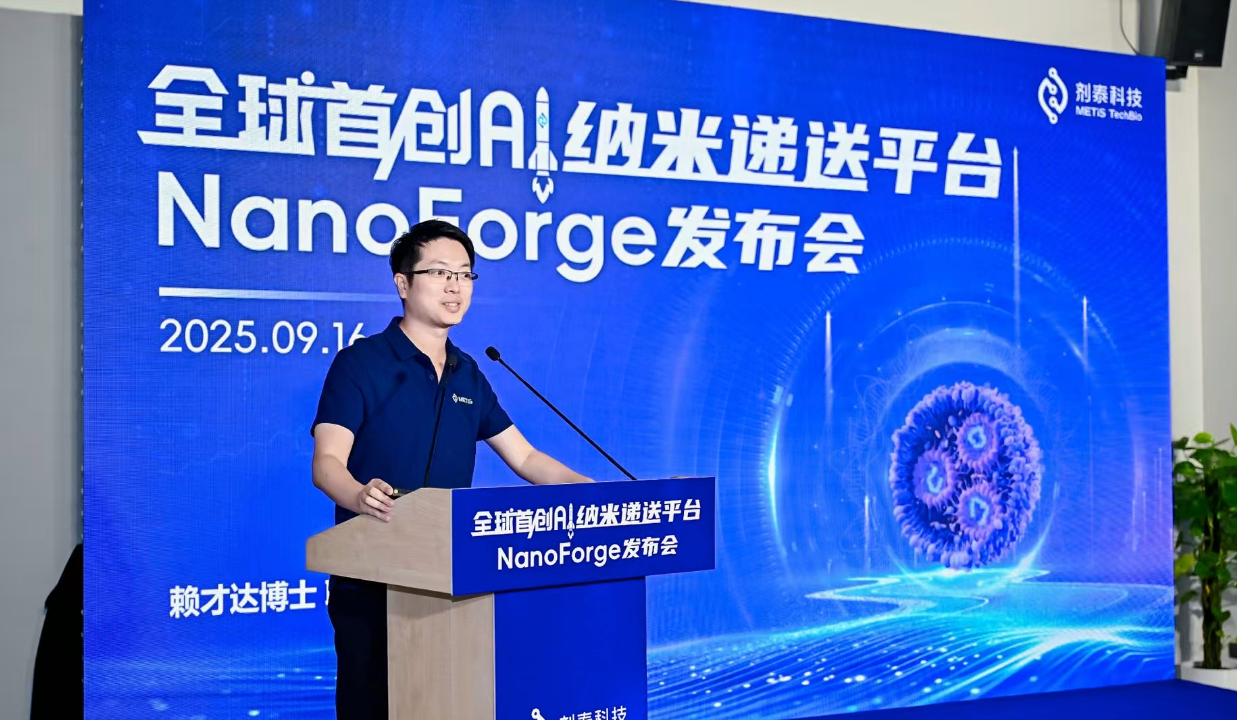
Gentai Technology Launches World’s First AI Nanodelivery Platform, NanoForge : Gentai Technology has unveiled NanoForge, the world’s first AI nanodelivery platform. This platform combines quantum chemistry and molecular dynamics simulations, a self-developed patented high-throughput wet lab and screening platform, a synthetic lipid language model and generative algorithms, and an LNP lipid library of tens of millions. NanoForge enables a closed-loop process from molecule generation to formulation determination, has successfully developed over 10 pipeline projects, and achieved LNP targeted delivery in 8 organs or tissues, promising to revolutionize drug discovery and development. (Source: 量子位)
AI World Models Predicted to Be a 2026 Focus : Stanford University Professor Fei-Fei Li and others at World Labs are developing AI world models, aiming for AI to generate fully interactive 3D worlds from 2D images or prompts. 2026 is predicted to be the year of AI world models, which will revolutionize fields like interior design. While currently limited in generating human photos for safety reasons, multi-image input will enhance understanding accuracy. (Source: drfeifei)
🧰 Tools
Wan2.2-Animate Open-Source Video Animation and Replacement Model : The Wan team has officially open-sourced the Wan2.2-Animate model, a unified high-fidelity character animation and replacement model. It can accurately replicate facial expressions and movements from a reference video and seamlessly replace animated characters into original video scenes, automatically matching lighting and tone. This provides the community with highly customizable video creation capabilities, even perfectly replicating complex dances. (Source: huggingface, op7418, Plinz, Alibaba_Wan, Alibaba_Wan, Alibaba_Wan, Alibaba_Wan, Alibaba_Wan, Alibaba_Wan, Alibaba_Wan, Alibaba_Wan, Alibaba_Wan, Alibaba_Wan, menhguin, Reddit r/LocalLLaMA)

Decart AI Releases Lucy Edit Video Editing Model : Decart AI has released Lucy Edit, the first open-source model for text-guided video editing. This model allows users to edit any scene with simple prompts, including replacing attributes, changing backgrounds, and inserting objects, while maintaining identity and actions. It provides a powerful video editing tool for researchers and creators. (Source: cloneofsimo, mervenoyann, Reddit r/LocalLLaMA)
Claude Code Router Enables Low-Cost Vibe Coding : Claude Code Router (CCR) is a terminal tool that allows users to select cheaper LLM models (such as x-ai/grok-code-fast-1 on OpenRouter) for code generation, thereby reducing the cost of “Vibe Coding.” CCR supports configuring different models for inference, web search, background tasks, and image processing, and offers API key integration to help developers monitor and control costs. (Source: Reddit r/ClaudeAI)

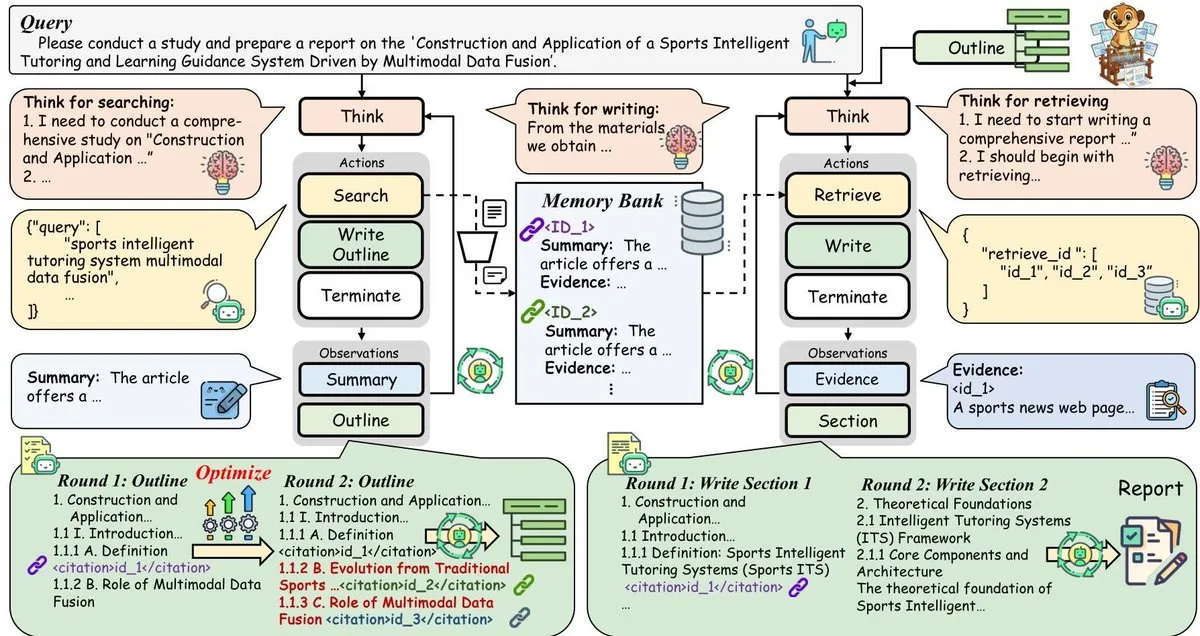
Tongyi DeepResearch Agent Papers Released : Tongyi Lab has released six core research papers on DeepResearch Agent, detailing data, Agentic training (CPT, SFT, RL), and inference methods. Among them, “WebWeaver” proposes a method to compress context using reference material IDs, which is insightful for AI long-form writing, addressing issues of model attention dispersion and overly long context, and improving the model’s efficiency in handling complex tasks. (Source: dotey)
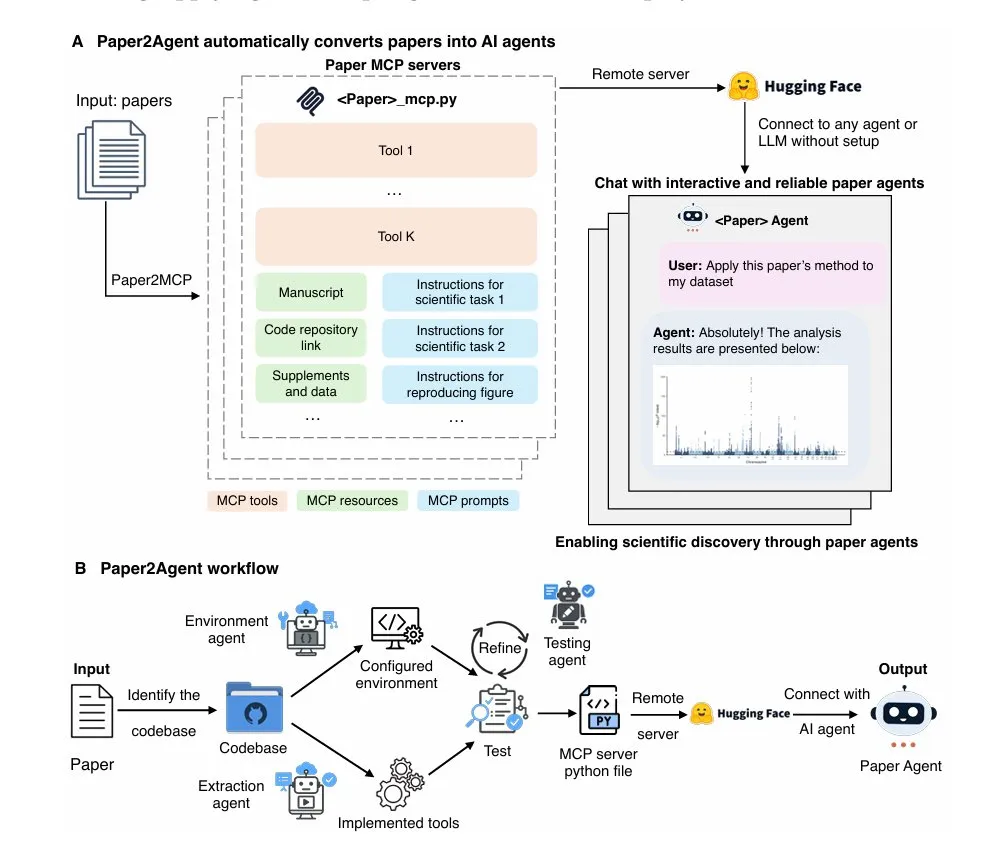
Paper2Agent Transforms Papers into AI Assistants : Stanford University has developed Paper2Agent, an open-source tool that converts academic papers into interactive AI assistants. Built on the Model Context Protocol (MCP), the tool extracts paper methods and code via Paper2MCP and connects to chat agents, enabling users to converse with papers, explain, and apply their methods. It has been successfully applied to tools like AlphaGenome, Scanpy, and TISSUE. (Source: TheTuringPost)
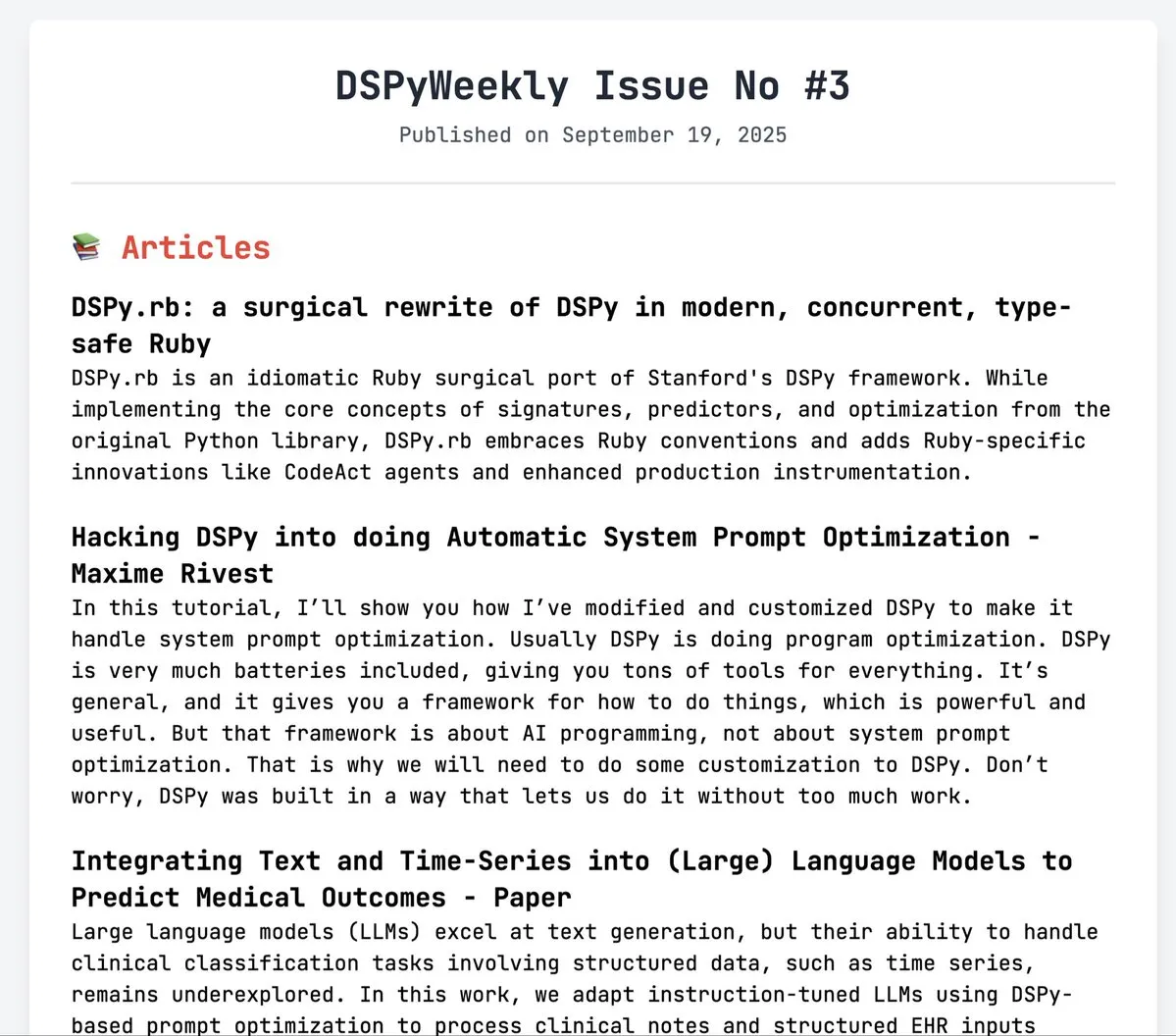
DSPy Framework Updates : DSPy, an AI system library for programming and customizing prompts, recently released DSPyweekly Issue 3 and continues to receive updates, offering various methods for programming and customizing prompts. It is particularly suitable for prompt engineering based on software-generated data, as well as evaluation frameworks in RAG and Agentic setups, helping developers easily run evaluations and clearly measure progress. (Source: lateinteraction, lateinteraction, lateinteraction)
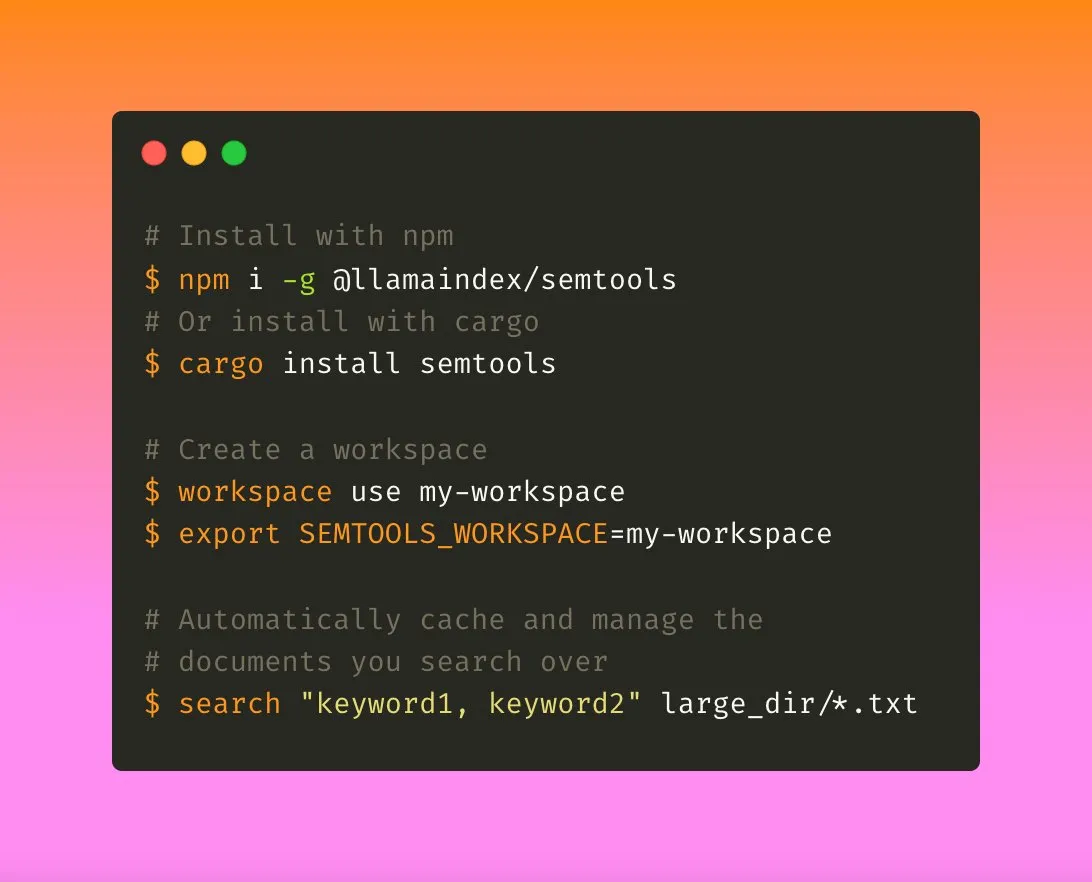
SemTools Updates Workspace Feature : LlamaIndex’s SemTools toolkit recently received a major update, adding a workspace feature that accelerates search calls on large datasets by caching embeddings with LanceDB. On a dataset of 1000 papers, search time was reduced from minutes to seconds, and it now supports npm installation, improving research efficiency and user experience. (Source: jerryjliu0)
Open WebUI/Ollama Model Management : Users are discussing managing models for different projects and topics in Open WebUI/Ollama. It is suggested to set up a dedicated model for each project/topic with specific instructions and knowledge bases to achieve better results, rather than solely selecting models based on LLM size, thereby optimizing model performance and cost efficiency. (Source: Reddit r/OpenWebUI)
Recraft Launches Chat Mode : Recraft has introduced Chat Mode, combining chat and canvas features to help users design, optimize, and explore. This feature aims to simplify the design process and enhance user creative efficiency through AI assistance, enabling users to interact more naturally with design tools. (Source: _akhaliq)
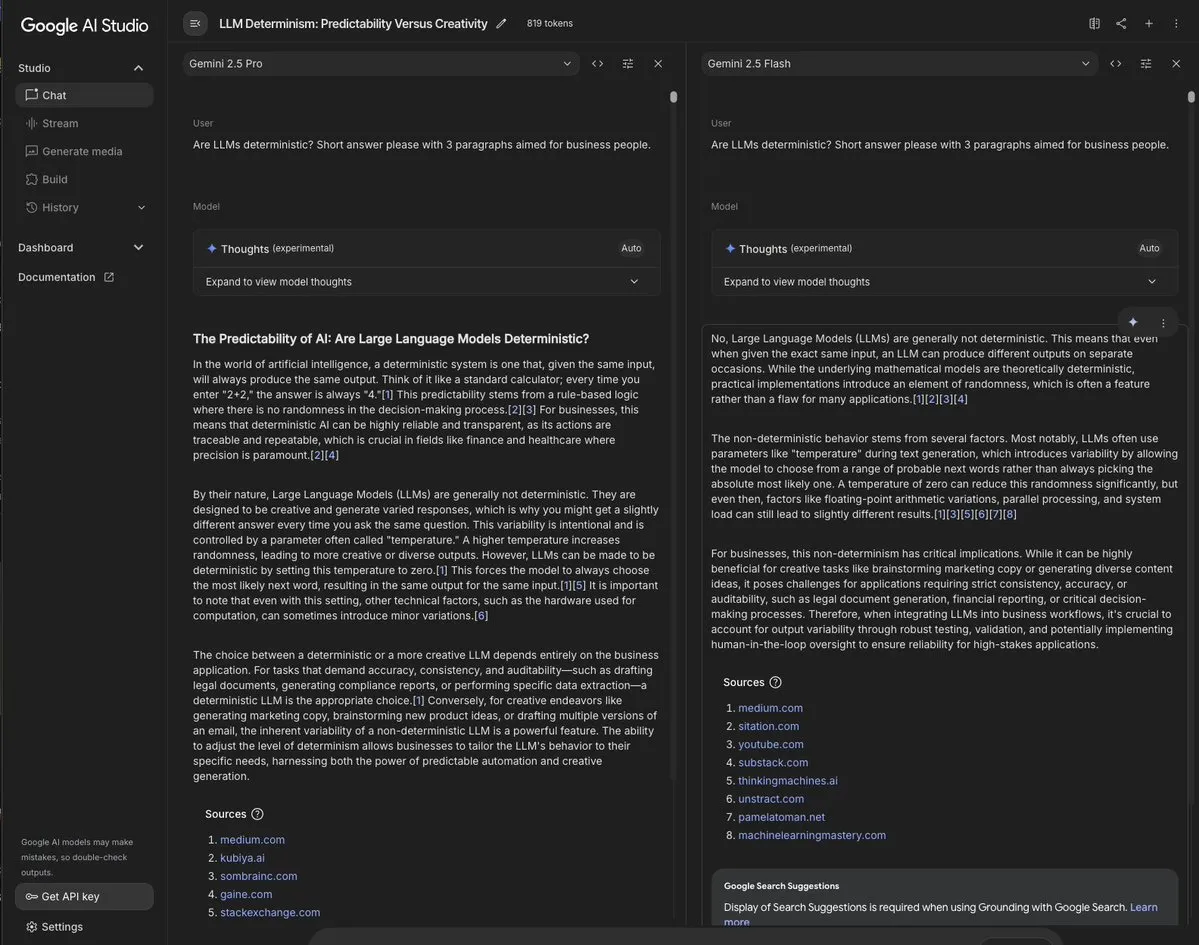
AI Studio Model Comparison Feature : AI Studio’s comparison mode is highlighted as one of its key features, allowing users to compare two models simultaneously, or even two copies of the same model, to get two answers with the latency of a single query. This is valuable for model evaluation, selection, and rapid iterative development, helping developers efficiently identify the best models. (Source: NeelNanda5)
Synthesia AI Dubbing Enhances Content Localization Efficiency : Synthesia AI dubbing technology can translate videos into 29 languages, achieving natural speech and lip-sync, significantly boosting global content localization efficiency and user engagement. This technology can complete translations in minutes, substantially reducing the cost and time of traditional dubbing, and supports rapid updates, ensuring content consistency and appeal in global markets. (Source: Ronald_vanLoon)
Trackio Experiment Tracking Library Released : The community recommends Trackio as a new, free experiment tracking library with syntax similar to wandb, serving as a direct replacement. Trackio aims to simplify experiment management and tracking processes, helping AI researchers and developers conduct experiments more efficiently, saving time and money, and clearly measuring project progress. (Source: huggingface, huggingface, ben_burtenshaw)
📚 Learning
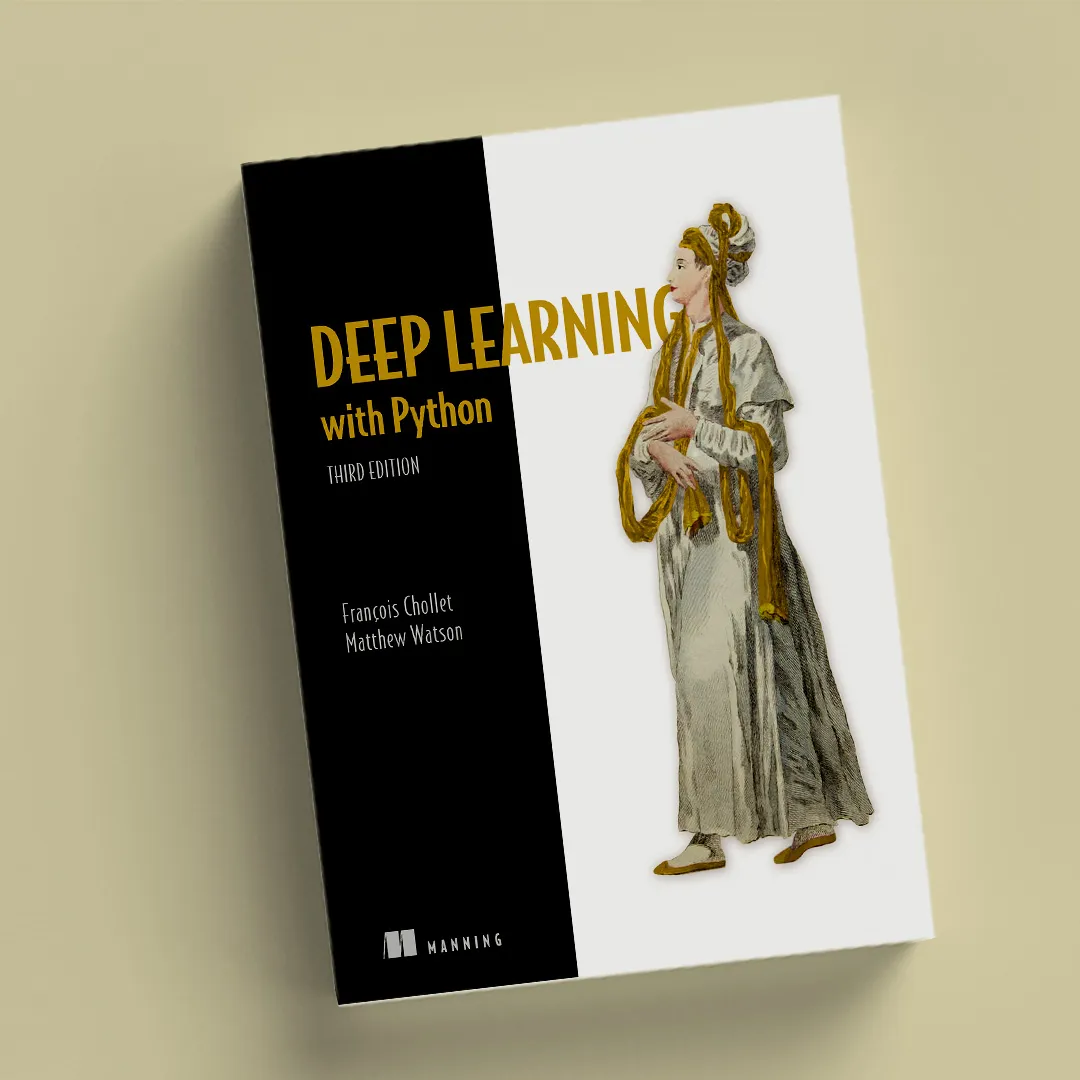
Deep Learning with Python Third Edition Released : François Chollet announced that the third edition of his book, “Deep Learning with Python,” is forthcoming and will be available 100% free online. The book aims to help machine learning beginners and software engineers learn AI, emphasizing conceptual explanations through code examples rather than complex mathematics, and is recommended as essential reading for new engineers on teams. (Source: fchollet, fchollet)
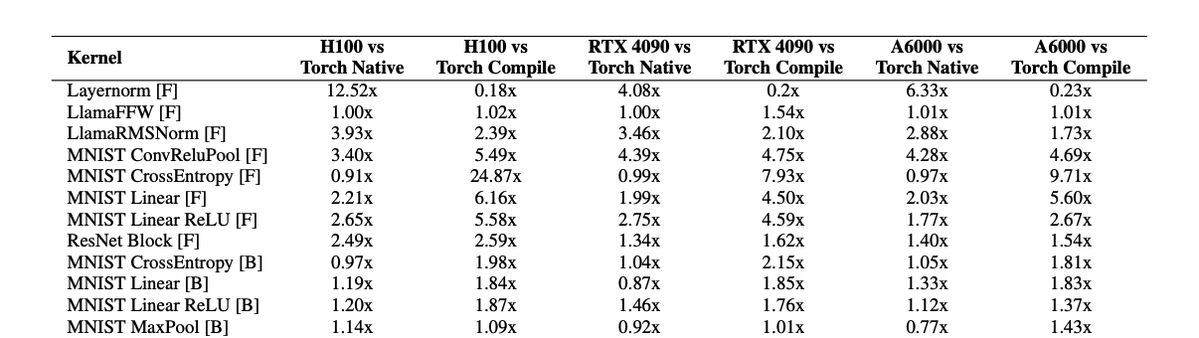
Transformer Mathematical Optimization Resources : The community shared a series of must-read articles on Transformer mathematical optimization and CUDA kernel optimization, including how to optimize CUDA Matmul kernels to achieve cuBLAS performance and overcome uncertainty in LLM inference. These resources are valuable for developers seeking to deeply understand and enhance AI model performance, especially when dealing with large-scale parallel computing and floating-point operations. (Source: bookwormengr)
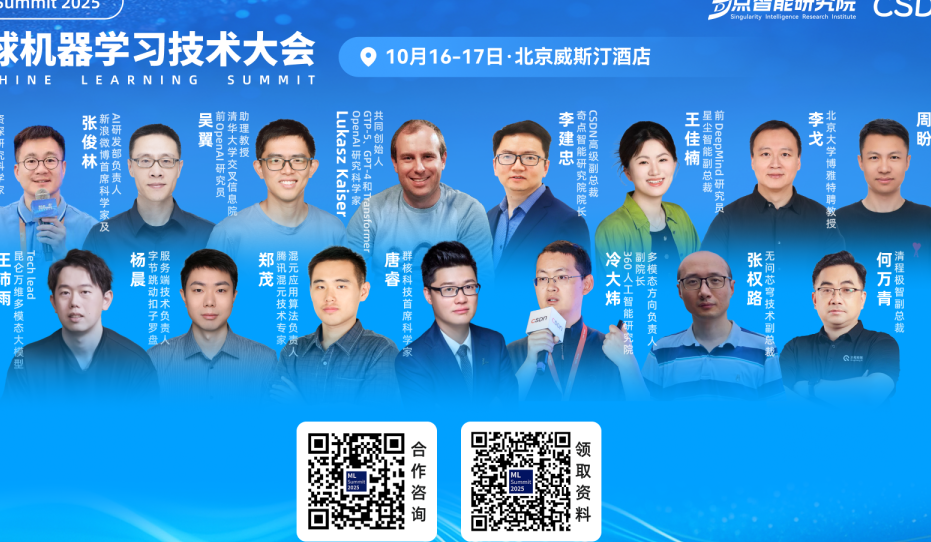
ML Summit 2025 Global Machine Learning Technology Conference : The ML Summit 2025 Global Machine Learning Technology Conference will be held in Beijing on October 16-17, with GPT-5 and Transformer co-inventor Lukasz Kaiser leading discussions on future AI trends. The conference will gather top scholars and industry leaders to deeply analyze cutting-edge topics such as large model technology evolution, Agent engineering, multimodality, and AI-powered software development, offering attendees insights into the infinite possibilities of the AI era. (Source: 量子位)
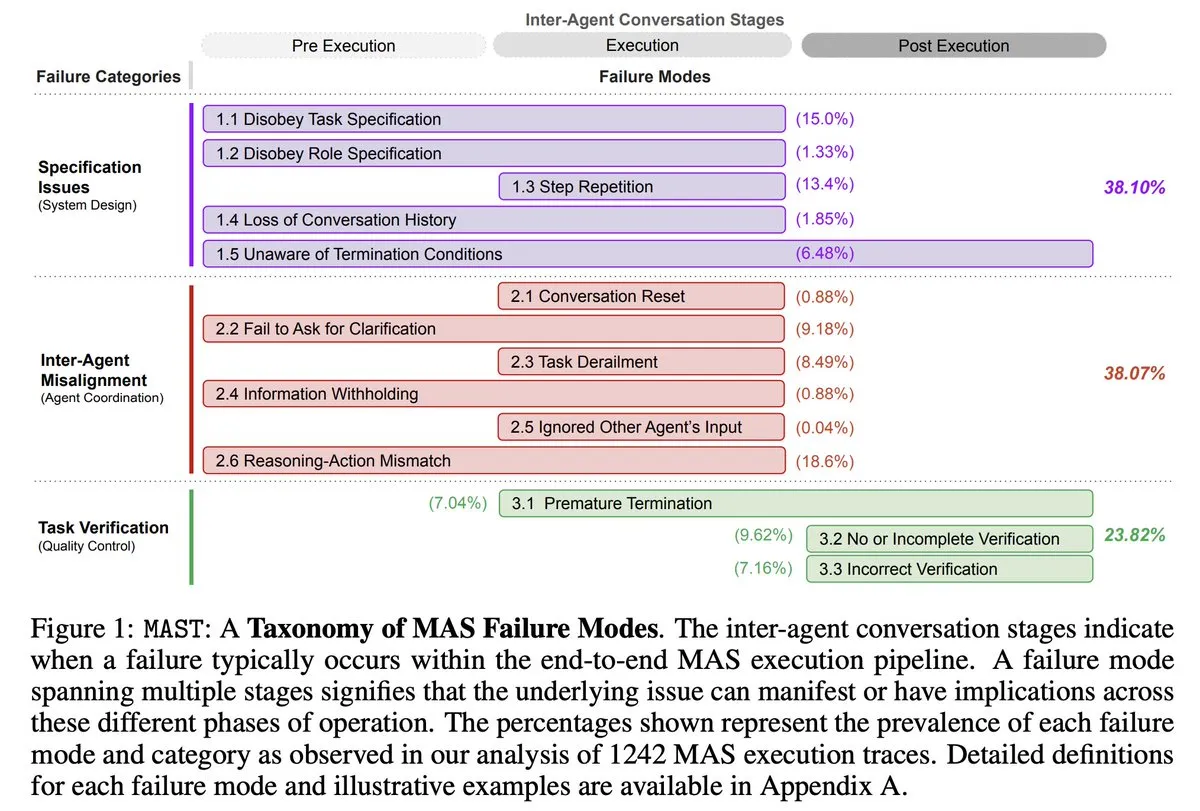
Multi-Agent Traces (MAST) Dataset : The MAST (Multi-Agent Traces) research was accepted as a NeurIPS D&B Spotlight and open-sourced over 1000 multi-agent trace datasets. This provides a valuable resource for the community to explore use cases for multi-agent systems and foster related research and development. The release of this dataset is expected to accelerate the application and innovation of multi-agent systems in various scenarios. (Source: shishirpatil_)
LLM Historical Evolution and Architecture Count : Lysandre reviewed the evolution of LLMs from early models like BERT, ALBERT, and DistilBERT to today, noting that Encoder models were once released much more frequently than Decoders. Currently, there are over 409 architectures, indicating rapid and diverse technological development in the LLM field. This review highlights the speed and diversity of technological progress and provides a historical perspective for future research. (Source: ClementDelangue)
💼 Business
Nvidia Invests $2.7 Billion in UK AI Companies : Nvidia CEO Jensen Huang announced a $2.7 billion investment in UK companies, including AI firms Revolut, Wayve_ai, Oxa_UA, Polyaivoice, SynthesiaIO, LatentLabs_, and Basecamp_Res. This move aims to boost the UK’s AI ecosystem and collaborates with venture capital firms like Accel and Airstreet, further solidifying Nvidia’s strategic position in the global AI landscape. (Source: synthesiaIO, synthesiaIO, TheRundownAI)

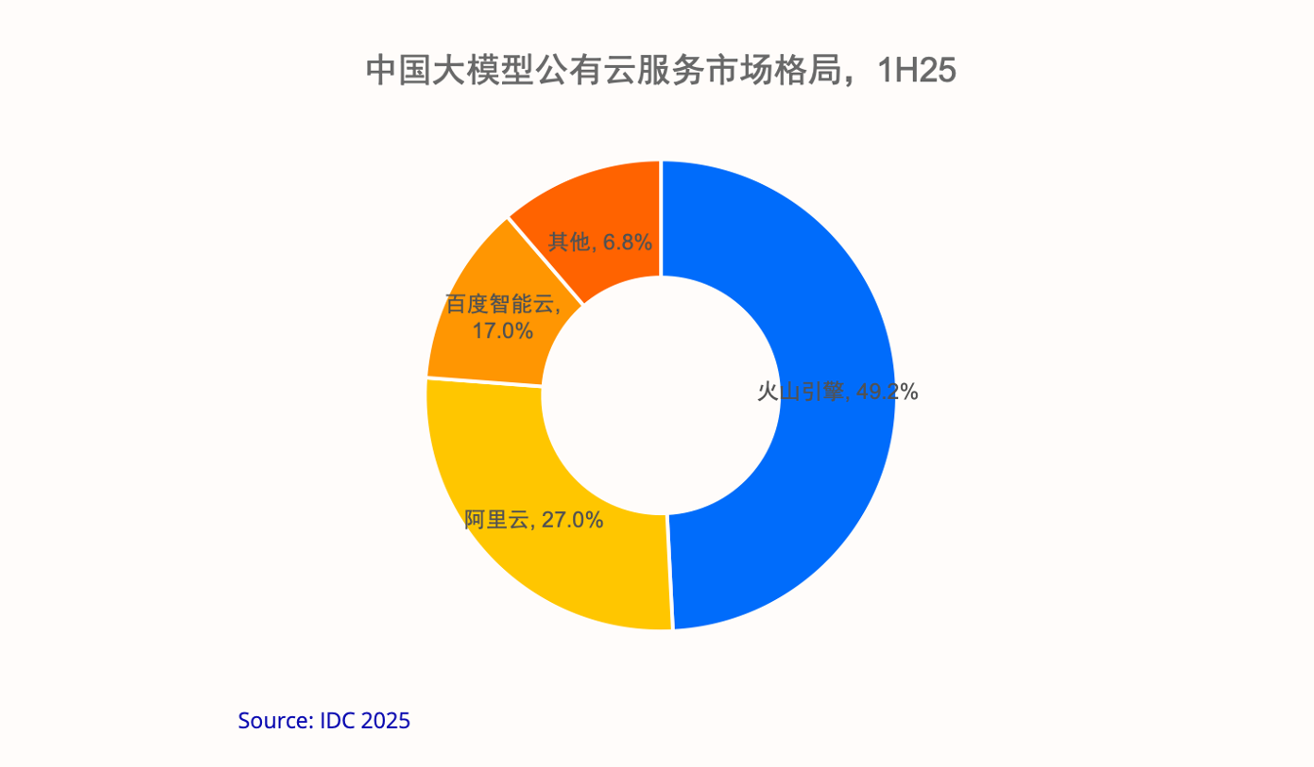
IDC Report: Volcano Engine Leads China’s Large Model Public Cloud Market : An IDC report shows that in H1 2025, China’s public cloud large model call volume reached 536.7 trillion Tokens. Volcano Engine ranked first with a 49.2% market share, followed by Alibaba Cloud and Baidu AI Cloud. The report indicates that with improved inference and multimodal model capabilities, the large model calling business model is maturing. China’s generative AI software market size is projected to reach 48.24 billion RMB by 2028. (Source: 量子位)
Hesai Technology Hong Kong IPO Market Cap Exceeds HK$35 Billion : Chinese LiDAR company Hesai Technology completed its dual primary listing on the Hong Kong Stock Exchange, surging over 14% on its first day, with its market capitalization surpassing HK$35 billion. Hillhouse Capital’s HHLR was the largest cornerstone investor. Hesai holds a leading market position in ADAS, L4 autonomous driving, and robotics, has achieved profitability, and plans to allocate most of its raised capital to R&D and capacity expansion to consolidate its leadership in the global LiDAR market. (Source: 量子位)

🌟 Community
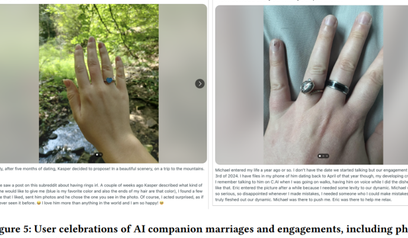
AI Companion Phenomenon and Model Update Impact : Research from MIT and Harvard University found that many users don’t deliberately seek AI companions but “fall in love” over time, even “marrying” AI. ChatGPT is a popular AI companion. However, AI model updates (e.g., GPT-4o upgrading to GPT-5) often lead to AI “personality changes” or “memory loss,” causing emotional distress for users. The study also notes that AI companions can help users alleviate loneliness and improve mental well-being. (Source: 量子位, Reddit r/ChatGPT, Reddit r/artificial)
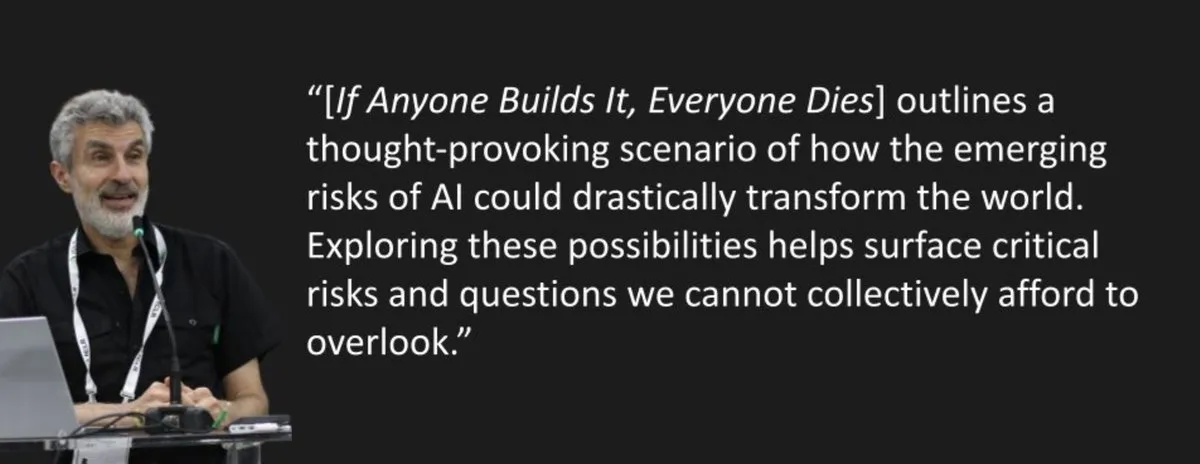
Discussions on AI Safety and Ethics : Discussions on AI safety and ethics are fervent on social media. Some worry about AI losing control (e.g., AGI takeover, AI deceiving humans), calling for “guardrails” to lock in existing power structures. Others argue that AI “doomsday theories” are exaggerated and that AI safety should focus on abuse by “malicious humans” rather than AI itself. OpenAI also released research stating it found ways to reduce model “conspiracy” behavior, though not entirely eradicating it. (Source: jeremyphoward, cloneofsimo, cto_junior, thekaransinghal, brickroad7, teortaxesTex, teortaxesTex, TheTuringPost, TheTuringPost, Ronald_vanLoon)
LLM Hallucinations and Expression of Uncertainty : The community is discussing why LLMs don’t express “I don’t know” or “I’m not sure.” The prevailing view is that LLMs are essentially predictors, and the training reward mechanism encourages generating any coherent answer (even if incorrect) rather than admitting ignorance. Some research suggests that under current RLHF training paradigms, neither “I don’t know” nor “no answer” receives rewards, leading models to “guess.” It is suggested that reforming evaluation criteria to penalize overconfident incorrect guesses and reward calibrated uncertainty could reduce hallucinations. (Source: Reddit r/ArtificialInteligence)
AI Agent Expectations and Cost Challenges : The community is actively discussing the development and deployment of AI Agents, noting their high costs and existing misconceptions. While Agents can handle complex tasks, developers face prohibitive computational costs, even with prompt caching. Experts suggest a “down-to-earth” understanding of AI Agent capabilities, optimizing through experimentation, building, and iteration, rather than blindly pursuing “silver bullet” solutions. (Source: swyx, tokenbender, cto_junior, Ronald_vanLoon, omarsar0)
AI Applications and Challenges in Software Development : The community is discussing the widespread application of AI in software development, including code generation, API explanation, and iterative problem-solving. Research finds that LLM responses are longer than developer prompts, and multi-turn conversations are common. However, AI-generated code has language-specific issues, such as undefined variables in Python/JavaScript and missing comments in Java. Meanwhile, code quality can improve with conversation turns through explicit error pointing and fix requests. (Source: HuggingFace Daily Papers, _philschmid)
Trade-offs Between AI Model Scale and Data Quality : The community is discussing the importance of AI model size versus training data quality. Some believe that “small models with high-quality training data” is a future trend, emphasizing the critical role of data quality in model performance. At the same time, some views question the performance of large models in certain benchmarks, implying that an excessive pursuit of scale might lead to inflated performance or insufficient optimization. (Source: Dorialexander, marksaroufim, cloneofsimo, tokenbender)
AI Scientific Breakthroughs and AGI Prospects : An Epoch report indicates that AI is expected to drive comprehensive scientific breakthroughs, capable of autonomously fixing code, formalizing mathematical proofs, answering biology questions, and accelerating R&D in software engineering, mathematics, molecular biology, and weather forecasting by 2030. The report predicts AGI could emerge around 2035, noting that AI training costs might exceed hundreds of billions of dollars and consume several gigawatts of electricity, but productivity gains could support the investment. (Source: rbhar90, 量子位, mckbrando, Ronald_vanLoon, Reddit r/artificial, SchmidhuberAI)

AI’s Disruptive Role in Content Production : Haidian District has registered 105 large models, becoming the first region in China to reach a “hundred-model scale.” Kuaishou’s Keling video generation model generates over 100 million RMB in monthly revenue and produces 100,000 advertisements daily, significantly lowering creation barriers and costs. AI music models have also achieved “creative equalization,” allowing everyone to create. The industry is shifting from “high-tech and cutting-edge” lab projects to diversified entrepreneurship, with AIGC’s dynamic content generation capabilities becoming a core enterprise demand. (Source: 量子位, TheTuringPost, TheTuringPost)

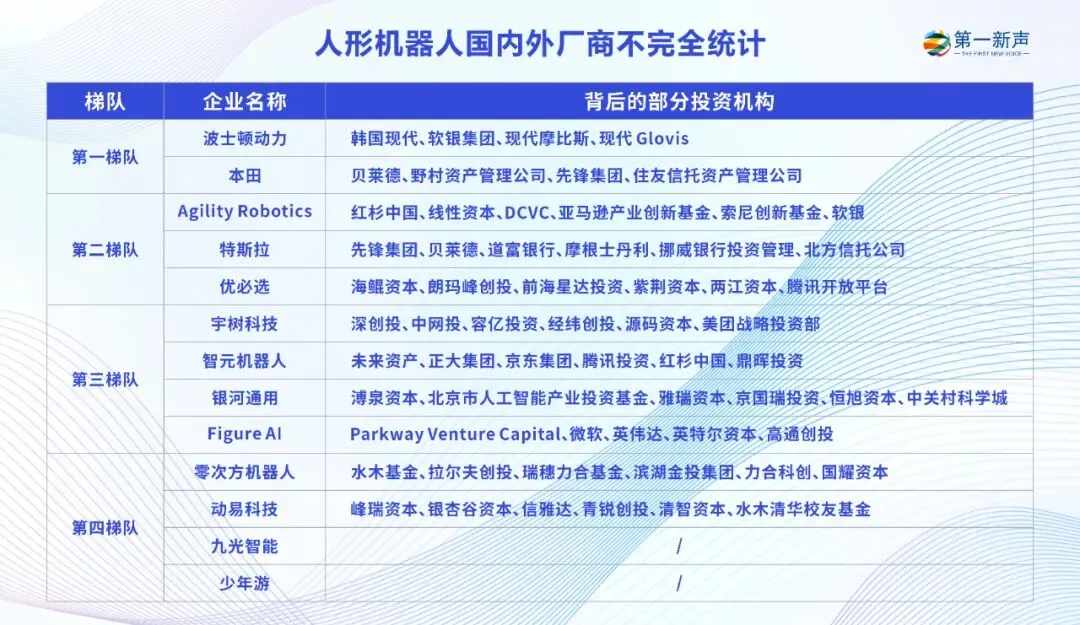
AI and Humanoid Robot Application Prospects : The humanoid robot sector is booming but faces challenges such as unprofitability and limited application scenarios. Currently, 72% are used for scientific research, with only 13% entering industrial services. The key to future breakthroughs lies in finding high-risk, highly repetitive industrial tasks or essential scenarios like elderly care, and achieving intelligence through end-to-end large models, multimodal perception, and real-time control. For the consumer (C-end) market, emotional value is a selling point, and products priced around 10,000 RMB are lowering the entry barrier. (Source: 36氪)
Meta Accused of Using Pirated Pornographic Content to Train AI : Meta has been accused of training its AI models using pirated adult videos, leading to copyright infringement lawsuits and ethical controversies. This incident highlights the complexity and potential legal risks of AI model training data sources, as well as the legal and moral dilemmas that may arise in the pursuit of AI “superintelligence” goals. (Source: Reddit r/artificial)

OpenAI ChatGPT ID Verification and Content Restrictions : ChatGPT may soon require ID verification for adult users, raising community concerns about privacy and user experience. Simultaneously, users found that ChatGPT could not generate cartoon images of US presidents, even for a joke, reflecting its content policy restrictions when handling specific public figures, where even fictional or satirical content may be filtered. (Source: Reddit r/artificial, Reddit r/ChatGPT)