



Anahtar Kelimeler:AI endüstrisi, AGI, AI güvenliği, abartı düzeltme, GPT-5, AI programlama, AI ajanları, çok modelli modeller, AI malzeme bilimi, LLM akıl yürütme optimizasyonu, somutlaştırılmış AI, AI kıyaslama testleri, AI destekli PPT oluşturma
🔥 Spotlight
AI Industry “Hype Correction” and Reality Check: In 2025, the AI industry is entering a “hype correction” phase, with market expectations for AI shifting from a “panacea” to a more rational view. Industry leaders like Sam Altman acknowledge the existence of an AI bubble, particularly in the massive investments in startup valuations and data center construction. Meanwhile, the release of GPT-5 is considered to have fallen short of expectations, sparking discussions about the development bottlenecks of LLMs. Experts are calling for a re-evaluation of AI’s true capabilities, distinguishing between the “flashy demonstrations” of generative AI and the actual breakthroughs of predictive AI in fields like healthcare and science, emphasizing that AI’s value lies in its reliability and sustainability, rather than a blind pursuit of AGI. (Source: MIT Technology Review, MIT Technology Review, MIT Technology Review, MIT Technology Review, MIT Technology Review)

AI Breakthroughs and Challenges in Materials Science: AI is being applied to accelerate new materials discovery, with AI agents planning, running, and interpreting experiments, potentially shortening the discovery process from decades to years. Companies like Lila Sciences and Periodic Labs are building AI-driven automated laboratories to address bottlenecks in traditional materials science synthesis and testing. Although DeepMind once claimed to discover “millions of new materials,” their actual novelty and practicality have been questioned, highlighting the gap between virtual simulation and physical reality. The industry is shifting from purely computational models to combining experimental validation, aiming to discover breakthrough materials like room-temperature superconductors. (Source: MIT Technology Review)

AI Coding Productivity Debates and Technical Debt: AI coding tools are widespread, with Microsoft and Google CEOs claiming AI generates a quarter of their company’s code, and Anthropic CEO predicting 90% of future code will be AI-written. However, actual productivity gains are debated, with some studies suggesting AI might slow development and increase “technical debt” (e.g., lower code quality, difficulty in maintenance). Nevertheless, AI excels at writing boilerplate code, testing, and bug fixing. Next-generation agent tools like Claude Code significantly improve complex task handling through planning modes and context management. The industry is exploring new paradigms like “disposable code” and formal verification to adapt to AI-driven development. (Source: MIT Technology Review)

AI Safety Advocates’ Persistence and Concerns Regarding AGI Risks: Despite the recent AI development being perceived as entering a “hype correction” phase and GPT-5’s unremarkable performance, AI safety advocates (“AI doomers”) remain deeply concerned about the potential risks of AGI (Artificial General Intelligence). They believe that while the pace of AI progress may slow, its fundamental danger remains unchanged, and they are disappointed that policymakers have not adequately addressed AI risks. They emphasize that even if AGI is achieved in decades rather than years, resources must be immediately invested to solve control problems, and they warn against the long-term negative impacts of excessive industry investment in the AI bubble. (Source: MIT Technology Review)

🎯 Trends
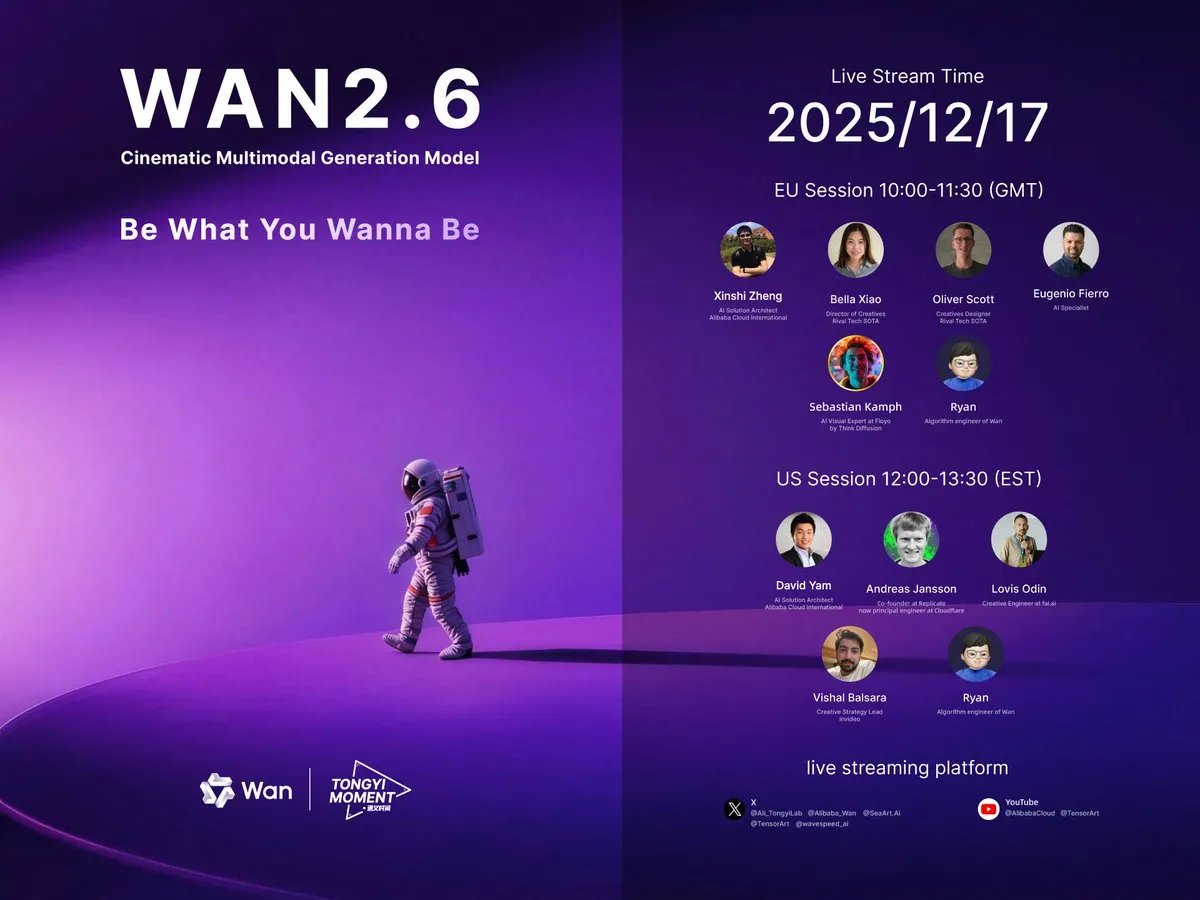
Continuous Breakthroughs in Multimodal Video Generation Models: Alibaba released the Wan 2.6 video model, supporting character role-playing, audio-visual synchronization, multi-shot generation, and sound-driven capabilities, with single video durations up to 15 seconds, hailed as a “small Sora 2.” ByteDance also launched Seedance 1.5 Pro, notable for its dialect support. LongVie 2 from HuggingFace Daily Papers proposes a multimodal controllable ultra-long video world model, emphasizing controllability, long-term visual quality, and temporal consistency. These advancements mark significant improvements in video generation technology across realism, interactivity, and application scenarios. (Source: Alibaba_Wan, op7418, op7418, HuggingFace Daily Papers)
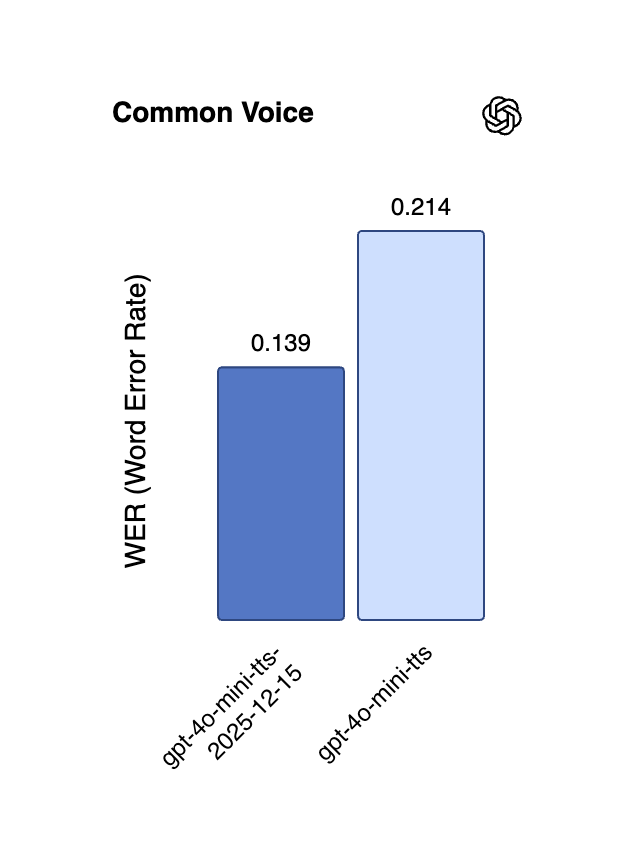
New Advances in AI Voice Technology for Multilingual and Real-time Streaming: Alibaba open-sourced the CosyVoice 3 TTS model, supporting 9 languages and 18+ Chinese dialects, offering multilingual/cross-lingual zero-shot voice cloning, and achieving ultra-low latency bidirectional streaming at 150ms. OpenAI’s real-time API also updated its gpt-4o-mini-transcribe and gpt-4o-mini-tts models, significantly reducing hallucinations and error rates, and improving multilingual performance. Google DeepMind’s Gemini 2.5 Flash Native Audio model also received updates, further optimizing instruction following and conversational naturalness, advancing the application of real-time voice agents. (Source: ImazAngel, Reddit r/LocalLLaMA, snsf, GoogleDeepMind)
Large Model Long-Context Reasoning and Efficiency Optimization: QwenLong-L1.5, through systematic post-training innovations, rivals GPT-5 and Gemini-2.5-Pro in long-context reasoning capabilities and excels in ultra-long tasks. GPT-5.2 also received positive user feedback for its long-context abilities, especially for more detailed podcast summaries. Additionally, ReFusion proposes a new masked diffusion model that achieves significant performance and efficiency improvements through slot-level parallel decoding, averaging an 18x speedup and narrowing the performance gap with autoregressive models. (Source: gdb, HuggingFace Daily Papers, HuggingFace Daily Papers, teortaxesTex)
Embodied AI and Robotics Technology Progress: AgiBot released the Lingxi X2 humanoid robot, possessing near-human mobility and versatile skills. Several studies in HuggingFace Daily Papers focus on embodied AI, such as Toward Ambulatory Vision exploring vision-grounded active viewpoint selection, Spatial-Aware VLA Pretraining achieving visual-physical alignment through human videos, and VLSA introducing a plug-and-play safety constraint layer to enhance VLA model safety. These studies aim to bridge the gap between 2D vision and actions in 3D physical environments, promoting robot learning and practical deployment. (Source: Ronald_vanLoon, HuggingFace Daily Papers, HuggingFace Daily Papers, HuggingFace Daily Papers)
NVIDIA and Meta’s Contributions to AI Architecture and Open-Source Models: NVIDIA released the Nemotron v3 Nano family of open models and open-sourced its complete training stack (including RL infrastructure, environments, pre-training, and post-training datasets), aiming to promote the construction of professional agent AI across various industries. Meta launched the VL-JEPA vision-language joint embedding predictive architecture, as the first non-generative model, capable of efficiently performing general vision-language tasks in real-time streaming applications, outperforming large VLMs. (Source: ylecun, QuixiAI, halvarflake)
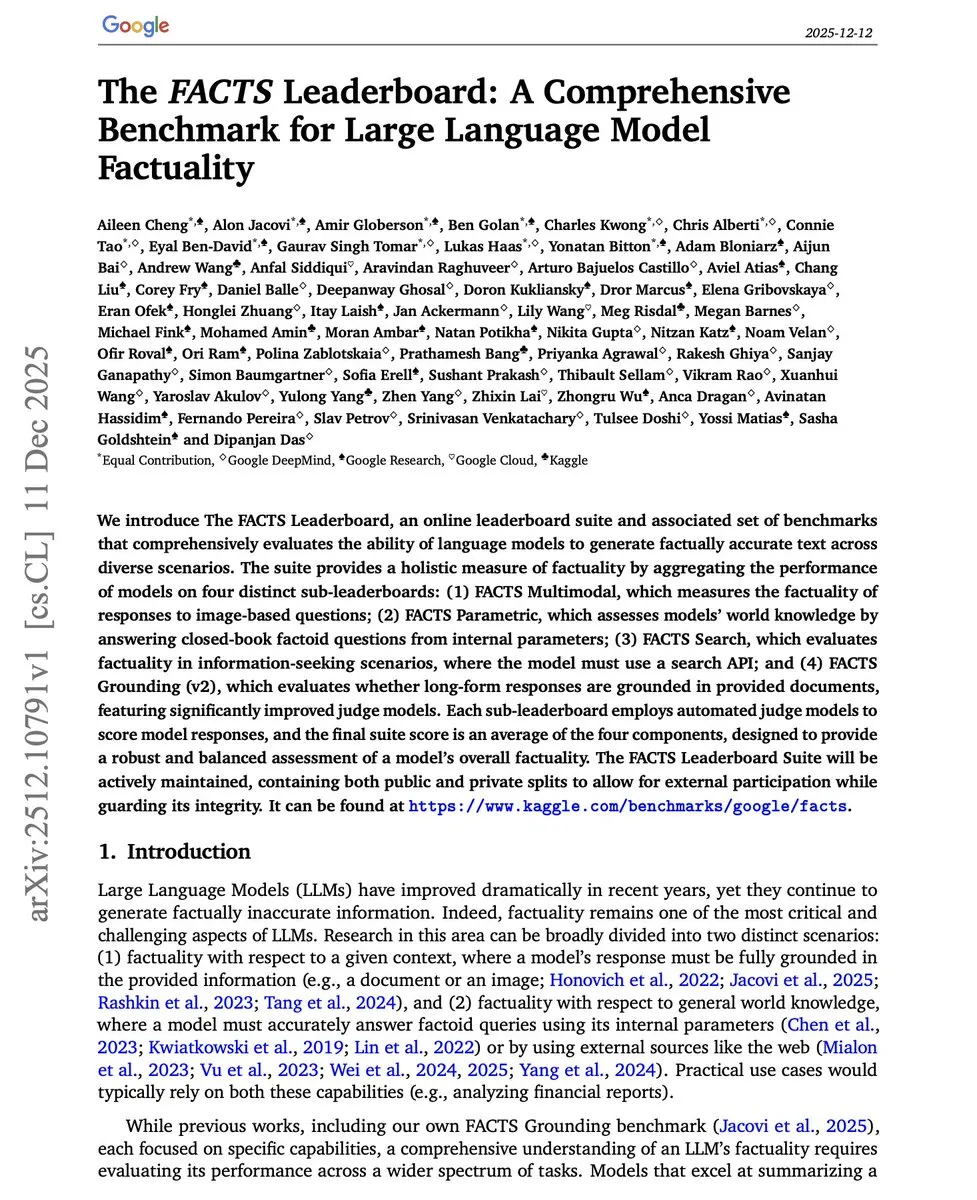
AI Benchmark Testing and Evaluation Method Innovations: Google Research launched the FACTS Leaderboard, comprehensively evaluating LLMs’ factuality across four dimensions: multimodal, parametric knowledge, search, and grounding, revealing trade-offs between coverage and contradiction rates in different models. The V-REX benchmark assesses VLMs’ exploratory visual reasoning capabilities through “chains of questions,” while START focuses on text and spatial learning for chart comprehension. These new benchmarks aim to more accurately measure AI models’ performance in complex, real-world tasks. (Source: omarsar0, HuggingFace Daily Papers, HuggingFace Daily Papers)
Enhanced Autonomy of AI Agents in Web Environments: WebOperator proposes an action-aware tree search framework that enables LLM agents to perform reliable backtracking and strategic exploration in partially observable web environments. This method generates action candidates through multi-inference contexts and filters invalid actions, significantly improving the success rate of WebArena tasks, highlighting the key advantage of combining strategic foresight with safe execution. (Source: HuggingFace Daily Papers)
AI-Assisted Autonomous Driving and 4D World Models: DrivePI is a spatially-aware 4D MLLM that unifies understanding, perception, prediction, and planning for autonomous driving. By integrating point clouds, multi-view images, and language instructions, and generating text-to-occupancy and text-to-flow QA pairs, it achieves accurate prediction of 3D occupancy and occupancy flow, outperforming existing VLA and specialized VA models on benchmarks like nuScenes. GenieDrive focuses on physics-aware driving world models, improving prediction accuracy and video quality through 4D occupancy-guided video generation. (Source: HuggingFace Daily Papers, HuggingFace Daily Papers)
🧰 Tools
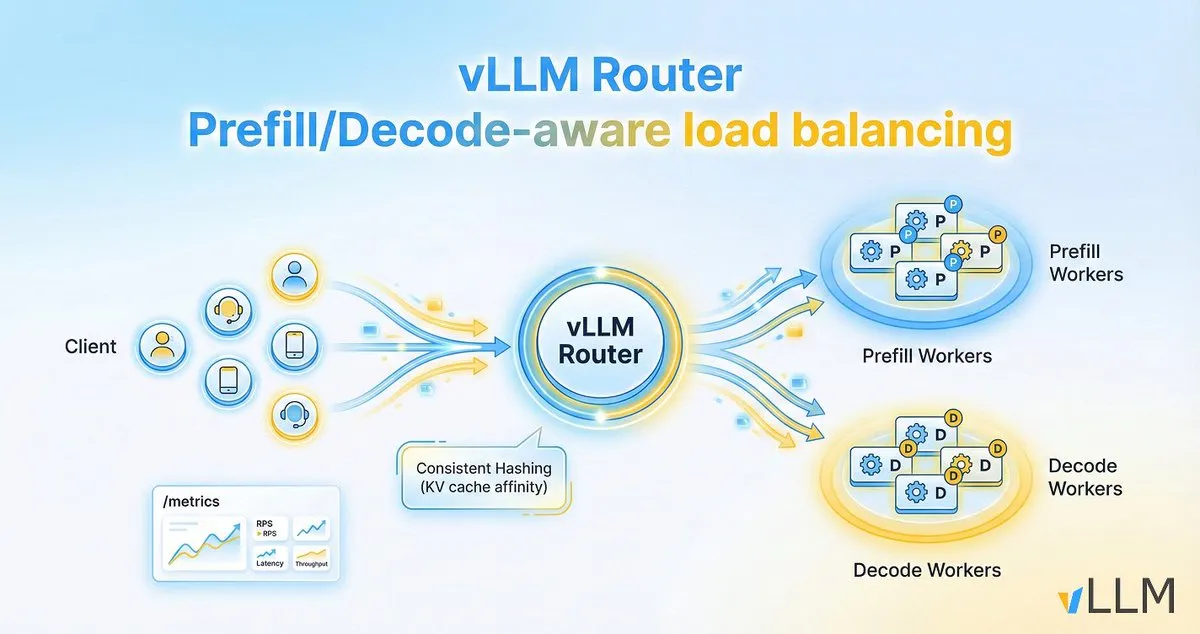
vLLM Router Improves LLM Inference Efficiency: The vLLM project released vLLM Router, a lightweight, high-performance, prefill/decode-aware load balancer designed for vLLM clusters. Written in Rust, it supports strategies like consistent hashing and power-of-two choices, aiming to optimize KV cache locality, address conversational traffic, and separate prefill/decode bottlenecks, thereby improving LLM inference throughput and reducing tail latency. (Source: vllm_project)
AI21 Maestro Simplifies AI Agent Construction: AI21Labs’ Vibe Agent, launched in AI21 Maestro, allows users to create AI agents with simple English descriptions. The tool automatically suggests agent uses, validation checks, required tools, and model/compute settings, and explains each step in real-time, greatly lowering the barrier to building complex AI agents. (Source: AI21Labs)
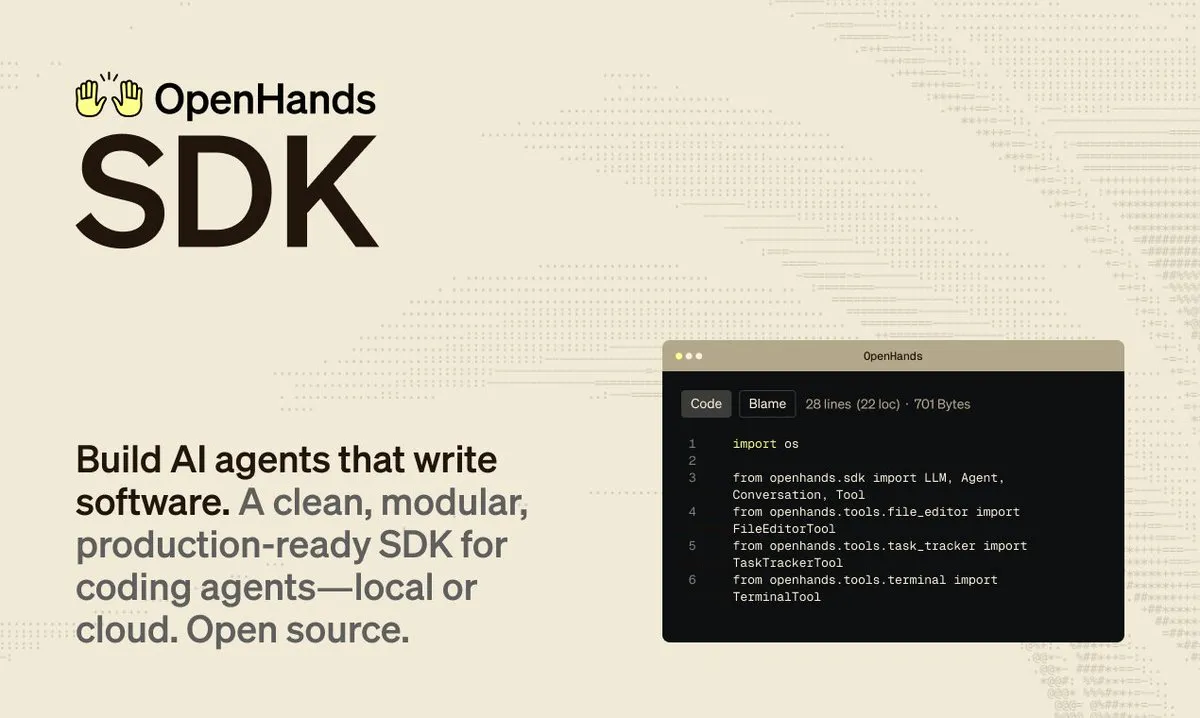
OpenHands SDK Accelerates Agent-Driven Software Development: OpenHands released its software agent SDK, aiming to provide a fast, flexible, and production-ready framework for building agent-driven software. The launch of this SDK will help developers more efficiently integrate and manage AI agents to tackle complex software development tasks. (Source: gneubig)
Claude Code CLI Update Enhances Developer Experience: Anthropic released Claude Code version 2.0.70, featuring 13 CLI improvements. Key updates include: Enter key support for accepting prompt suggestions, wildcard syntax for MCP tool permissions, automatic update toggle for the plugin marketplace, and forced plan mode. Additionally, memory usage efficiency is improved by 3x, and screenshot resolution is higher, aiming to optimize developer interaction and efficiency when using Claude Code for software development. (Source: Reddit r/ClaudeAI)
Qwen3-Coder Enables Rapid 2D Game Development: A Reddit user demonstrated how to use Alibaba’s Qwen3-Coder (480B) model to build a 2D Mario-style game in seconds using Cursor IDE. Starting from a single prompt, the model automatically plans steps, installs dependencies, generates code and project structure, and can run directly. Its operating cost is low (about $2 per million tokens), and the experience is close to GPT-4 agent mode, showcasing the powerful potential of open-source models in code generation and agent tasks. (Source: Reddit r/artificial)
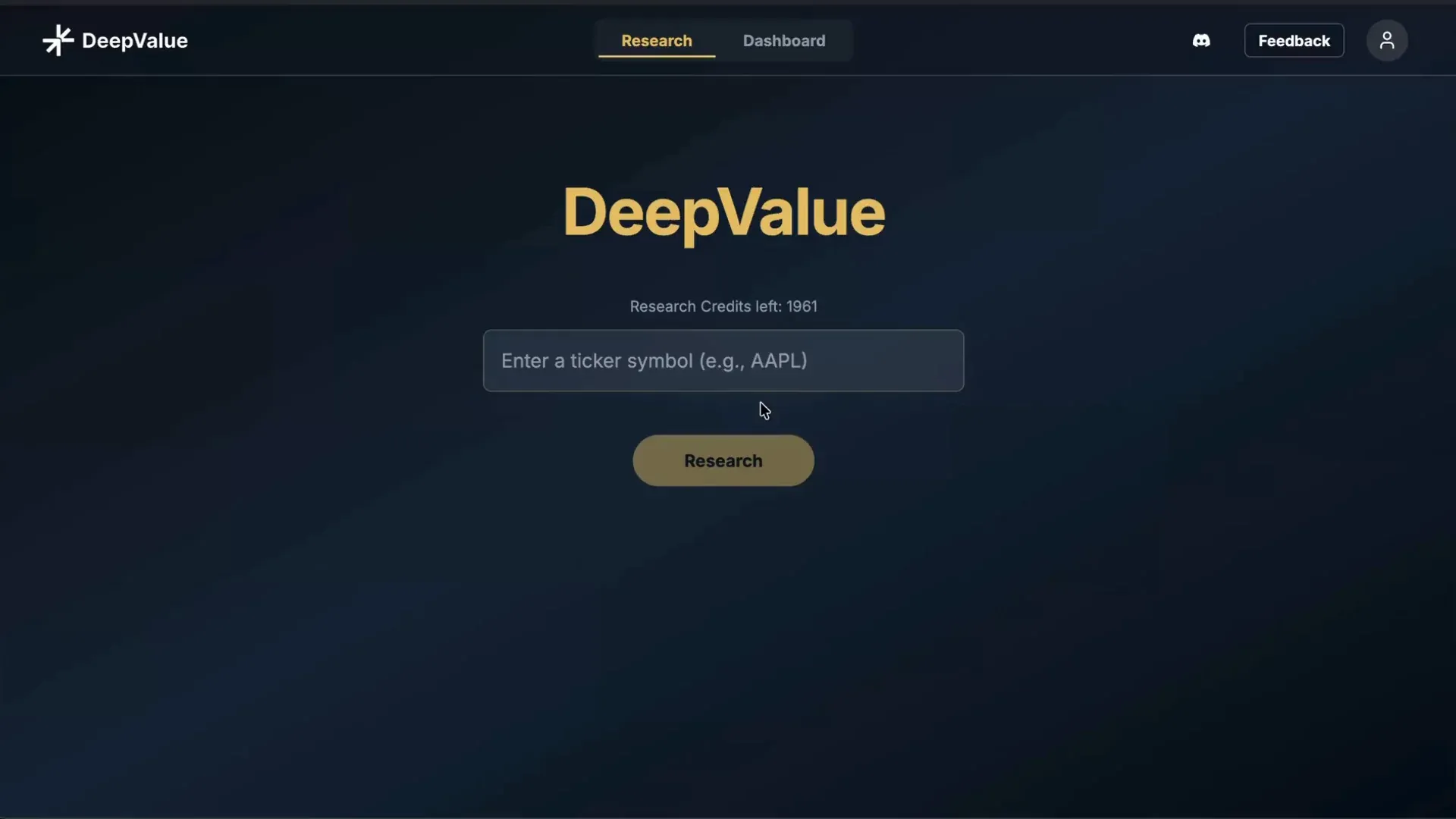
AI-Powered Deep Research Tool for Stocks: The Deep Research tool leverages AI to extract data from SEC filings and industry publications, generating standardized reports to simplify company comparison and screening. Users can input stock tickers for in-depth analysis, with the tool aiming to help investors conduct fundamental research more efficiently, avoiding market news distractions and focusing on substantive financial information. (Source: Reddit r/ChatGPT)
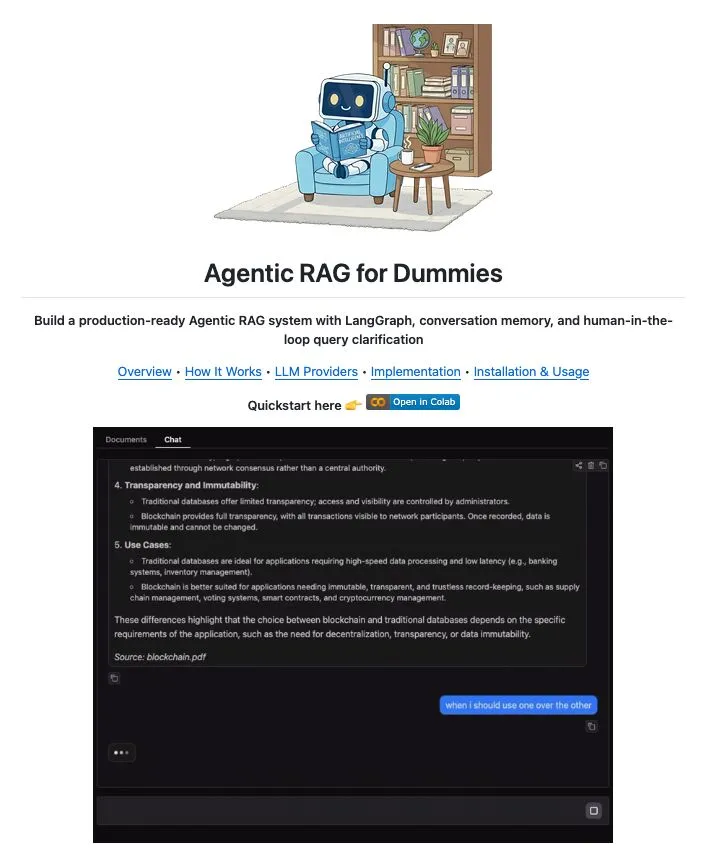
LangChain 1.2 Simplifies Agentic RAG Application Building: LangChain released version 1.2, simplifying support for built-in tools and strict mode, especially in the create_agent function. This makes it easier for developers to build Agentic RAG (Retrieval Augmented Generation) applications, whether running locally or on Google Collab, and emphasizes its 100% open-source nature. (Source: LangChainAI, hwchase17)
Skywork Launches AI-Powered PPT Generation Feature: The Skywork platform has launched PPT generation capabilities based on Nano Banana Pro, addressing the difficulty of editing traditionally AI-generated PPTs. The new feature supports layer separation, allowing users to modify text and images online and export to PPTX format for local editing. Additionally, the tool integrates industry-specific professional databases, supports various chart generations to ensure data accuracy, and offers Christmas promotional discounts. (Source: op7418)
Small Models Empower Edge-Side Infrastructure as Code: A Reddit user shared a 500MB “Infrastructure as Code (IaC)” model that can run on edge devices or in a browser. This model, small yet powerful, focuses on IaC tasks, providing an efficient solution for deploying and managing infrastructure in resource-constrained environments, signaling the immense potential of small AI models in specific vertical applications. (Source: Reddit r/deeplearning)
📚 Learning
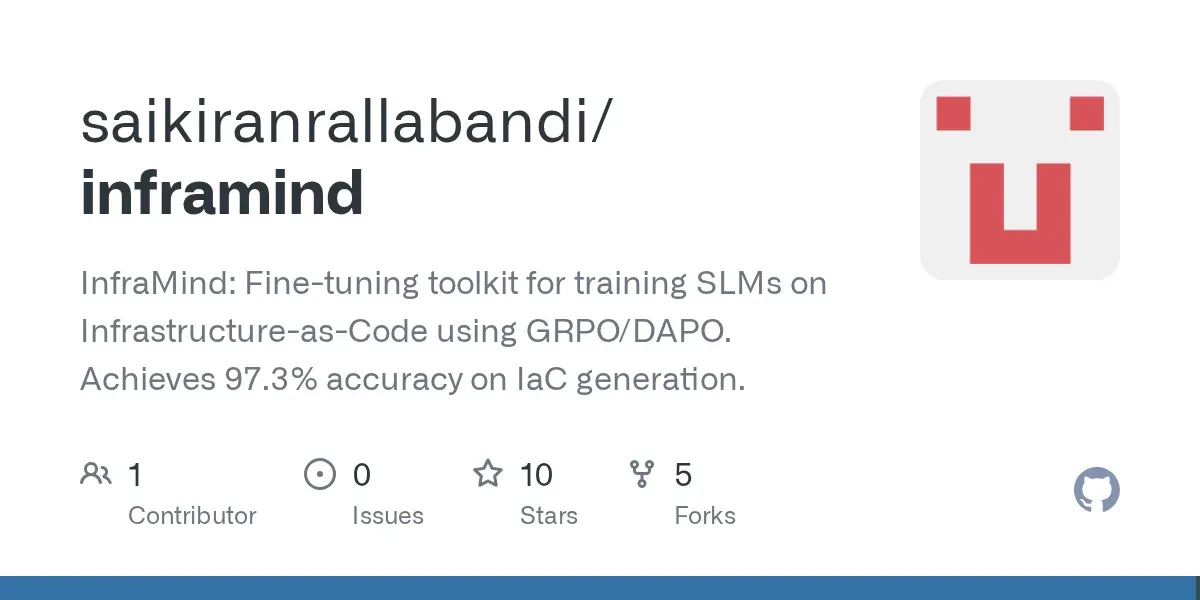
Chinarxiv: An Automated Translation Platform for Chinese Preprints: Chinarxiv.org has officially launched, an fully automated Chinese preprint translation platform aimed at bridging the language gap between Chinese and Western scientific research. The platform translates not only text but also figures and tables, making it easier for Western researchers to access and understand the latest research from the Chinese scientific community. (Source: menhguin, andersonbcdefg, francoisfleuret)
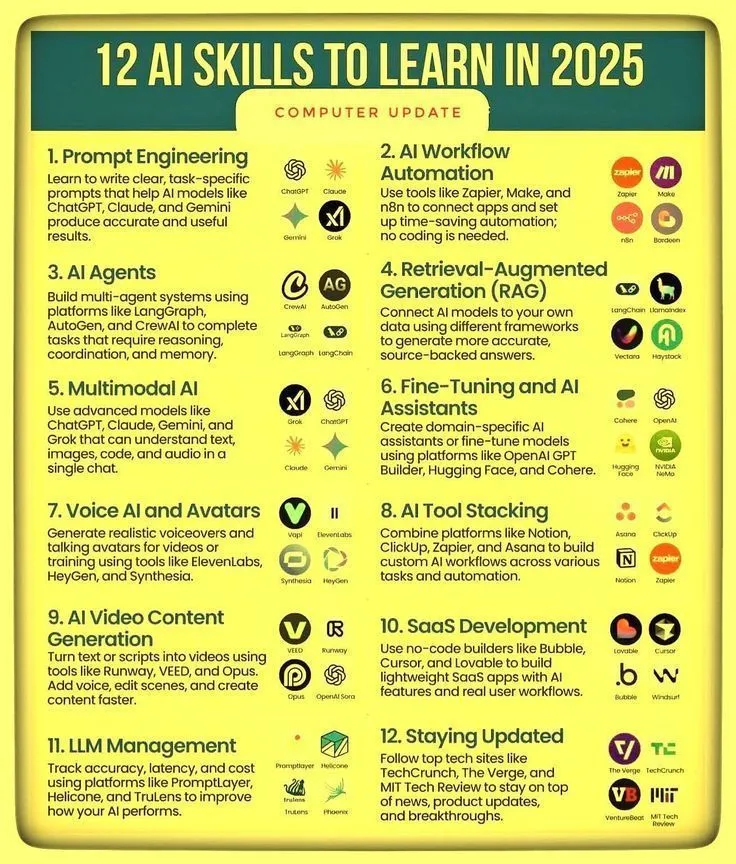
AI Skills and Agentic AI Learning Roadmap: Ronald_vanLoon shared 12 key capabilities for mastering AI skills in 2025, along with a roadmap for Agentic AI proficiency. These resources aim to guide individuals in enhancing their competitiveness in the rapidly evolving AI field, covering learning paths from foundational AI knowledge to advanced agent system development, emphasizing the importance of continuous learning and adapting to new skills in the AI era. (Source: Ronald_vanLoon, Ronald_vanLoon, Ronald_vanLoon)
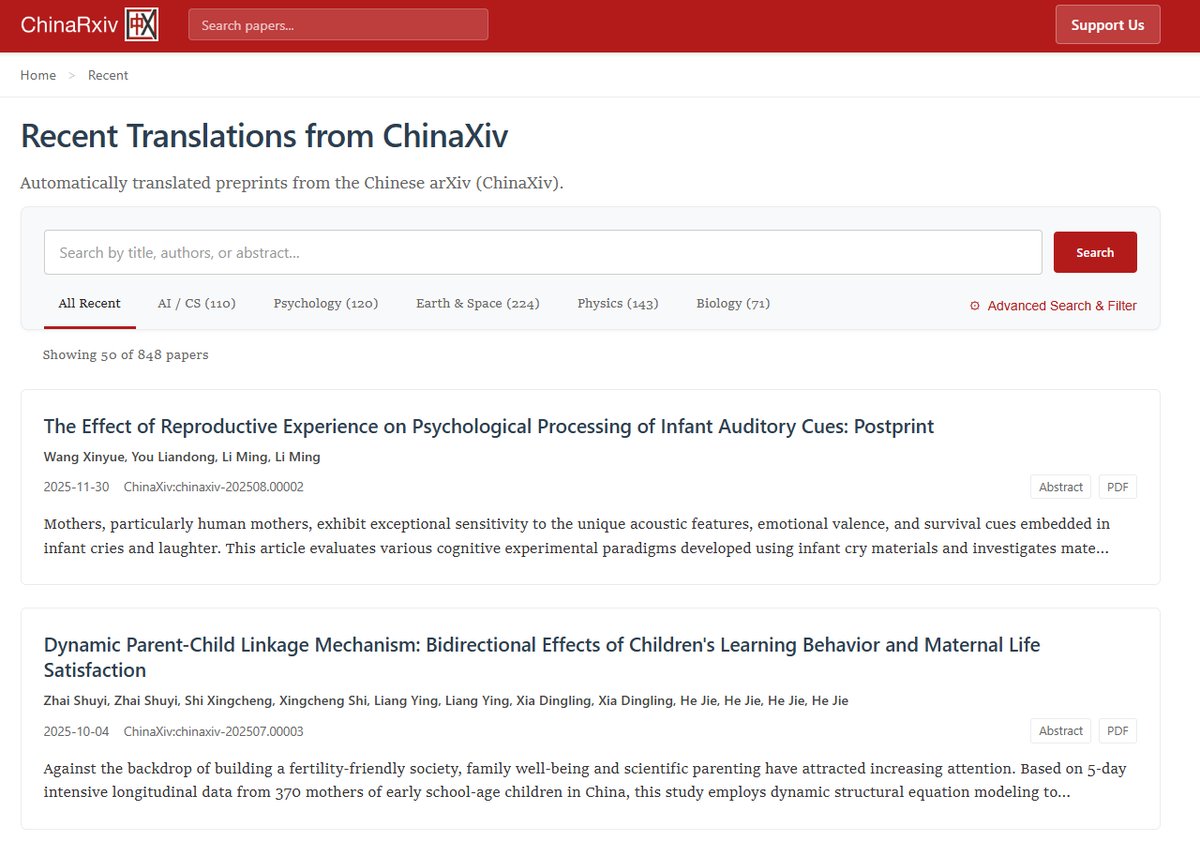
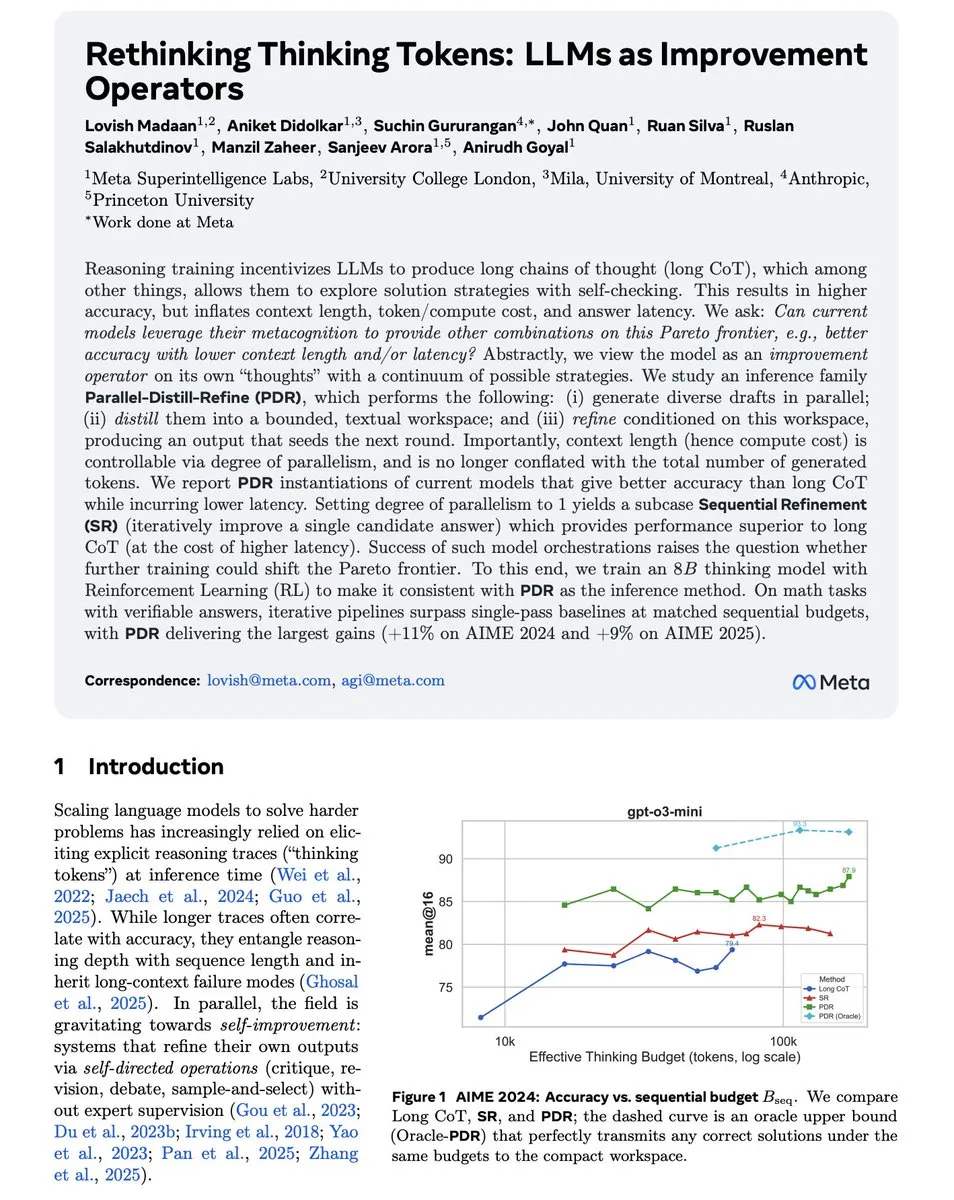
LLM Inference Process Optimization and Data-Driven AI Development: Research from Meta Superintelligence Labs shows that the PDR (Parallel Draft-Distill-Refine) strategy, which involves “parallel drafting → distilling into a compact workspace → refining,” can achieve optimal task accuracy under inference constraints. Concurrently, a blog post emphasizes that “data is the jagged frontier of AI,” pointing out the success of coding and mathematics due to rich and verifiable data, while scientific fields lag, and discusses the role of distillation and reinforcement learning in data generation. (Source: dair_ai, lvwerra)
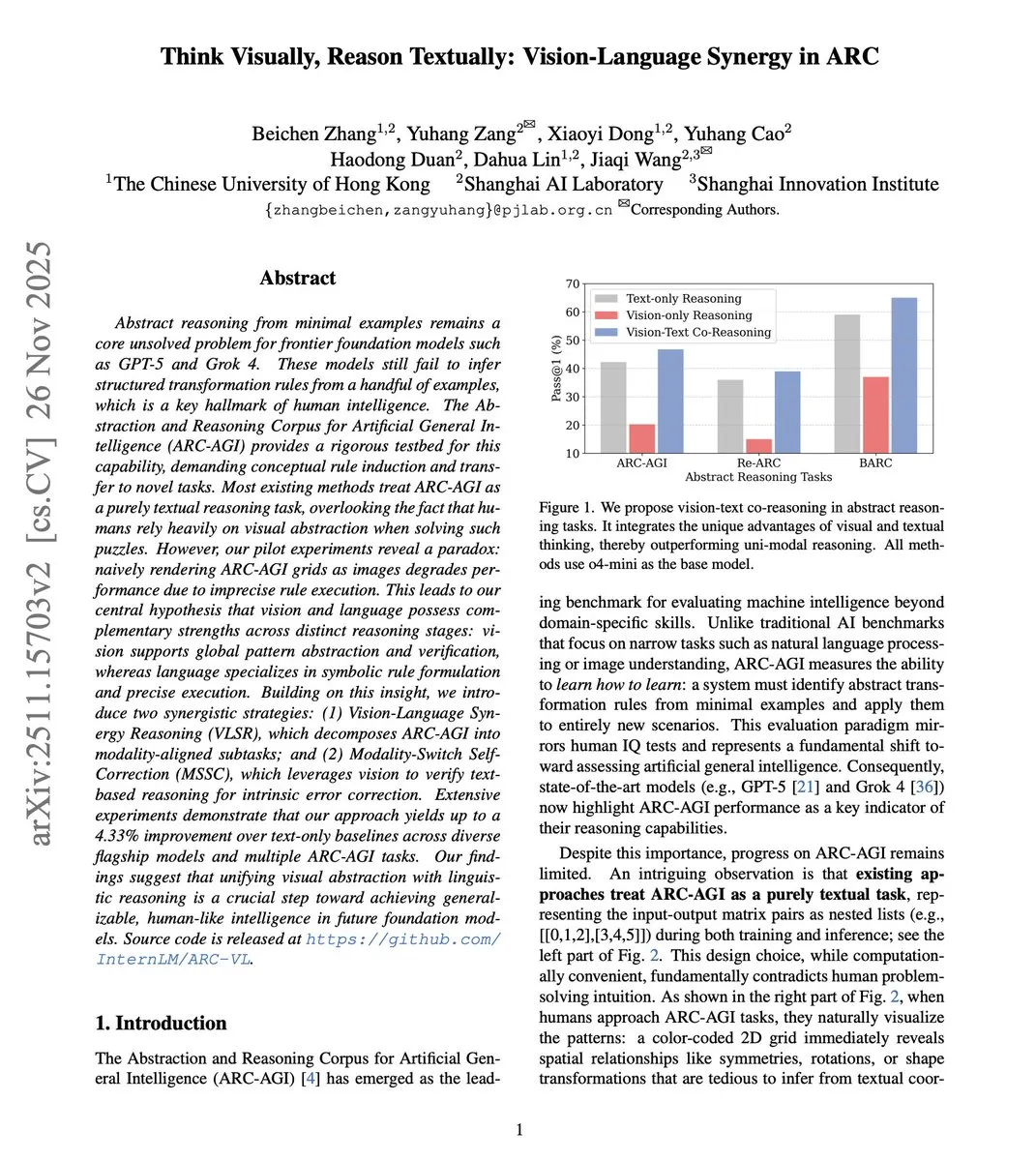
Visual-Language Synergistic Reasoning Enhances Abstract Capabilities: New research proposes the Visual-Language Synergistic Reasoning (VLSR) framework, which strategically combines visual and textual modalities at different reasoning stages, significantly improving LLM performance on abstract reasoning tasks (such as the ARC-AGI benchmark). This method uses vision for global pattern recognition and text for precise execution, and overcomes confirmation bias through a modality-switching self-correction mechanism, even surpassing GPT-4o’s performance on smaller models. (Source: dair_ai)
A New Perspective on LLM Inference Tokens as Computational States: The State over Tokens (SoT) conceptual framework redefines LLM’s inference tokens as externalized computational states, rather than simple linguistic narratives. This explains how tokens can drive correct reasoning without being faithful textual interpretations, opening new research directions for understanding LLM’s internal processes, emphasizing that research should move beyond textual interpretation to focus on decoding inference tokens into states. (Source: HuggingFace Daily Papers)
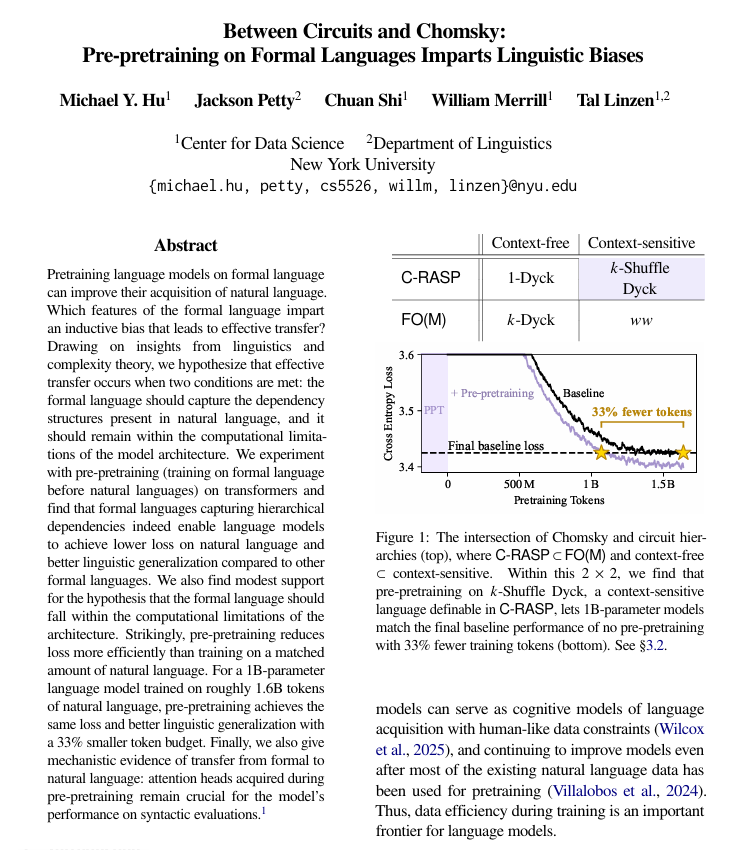
Formal Language Pre-training Enhances Natural Language Learning: Research from New York University found that pre-training with formal, rule-based languages before natural language pre-training can significantly help language models better learn human languages. The study indicates that such formal languages need to have a similar structure to natural language (especially hierarchical relationships) and be sufficiently simple. This method is more effective than adding the same amount of natural language data, and the learned structural mechanisms transfer within the model. (Source: TheTuringPost)
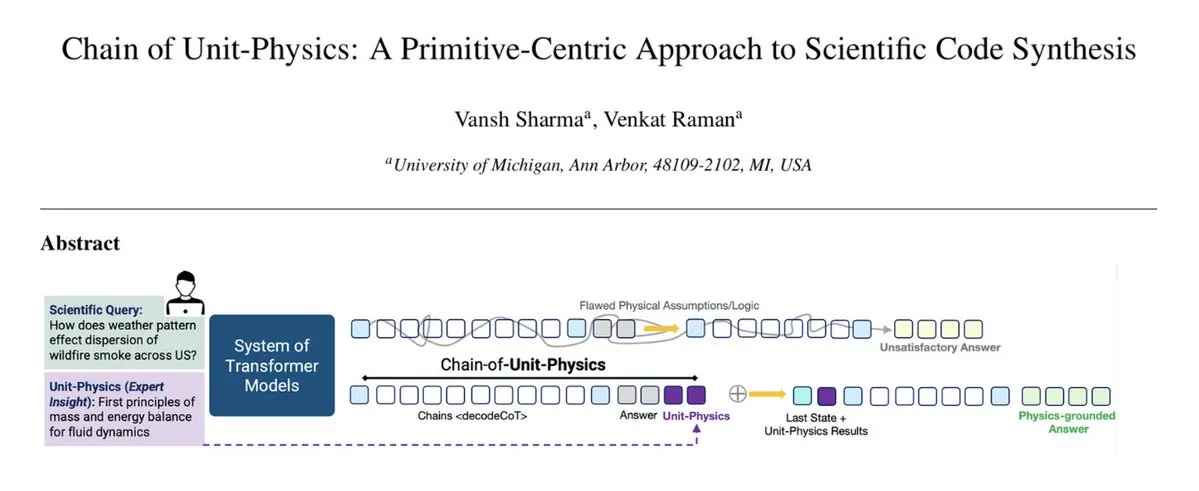
Physical Knowledge Injection into Code Generation Workflow: The Chain of Unit-Physics framework directly integrates physical knowledge into the code generation process. University of Michigan researchers propose an inverse scientific code generation method that guides and constrains code generation by encoding human expert knowledge as unit physics tests. In a multi-agent setting, this framework enables the system to reach correct solutions in 5-6 iterations, increasing execution speed by 33%, reducing memory usage by 30%, and achieving extremely low error rates. (Source: TheTuringPost)
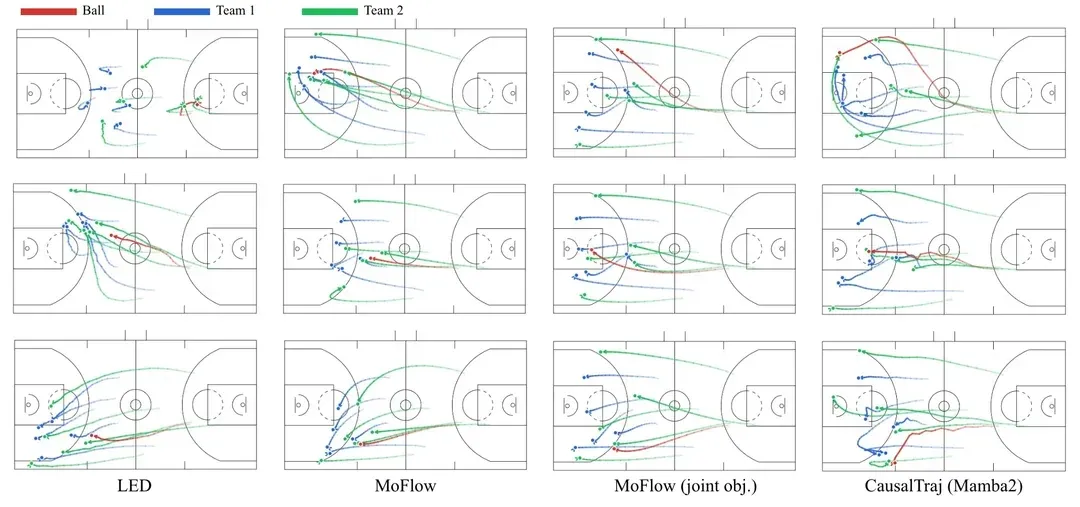
CausalTraj: Multi-Agent Trajectory Prediction Model for Team Sports: CausalTraj is an autoregressive model for joint trajectory prediction of multiple agents in team sports. The model is trained directly with a joint prediction likelihood objective, rather than solely optimizing individual agent metrics, thereby significantly improving the coherence and plausibility of multi-agent trajectories while maintaining individual performance. The research also explores how to more effectively evaluate joint modeling and assess the realism of sampled trajectories. (Source: Reddit r/deeplearning)
LLM Training Data: Answers or Questions?: A Reddit discussion suggests that most current LLM training datasets focus on “answers,” while a crucial part of human intelligence lies in the messy, ambiguous, and iterative process before “questions” are formed. Experiments show that models trained with conversational data containing early thoughts, vague questions, and repeated corrections perform better at clarifying user intent, handling ambiguous tasks, and avoiding erroneous conclusions, implying that training data needs to capture the complexity of human thought more comprehensively. (Source: Reddit r/MachineLearning)
💼 Business
OpenAI Acquires neptune.ai, Strengthening Frontier Research Tools: OpenAI announced a definitive agreement to acquire neptune.ai, a move aimed at strengthening its tools and infrastructure supporting frontier research. This acquisition will help OpenAI enhance its capabilities in AI development and experiment management, further accelerating model training and iteration processes, and solidifying its leading position in the AI field. (Source: dl_weekly)

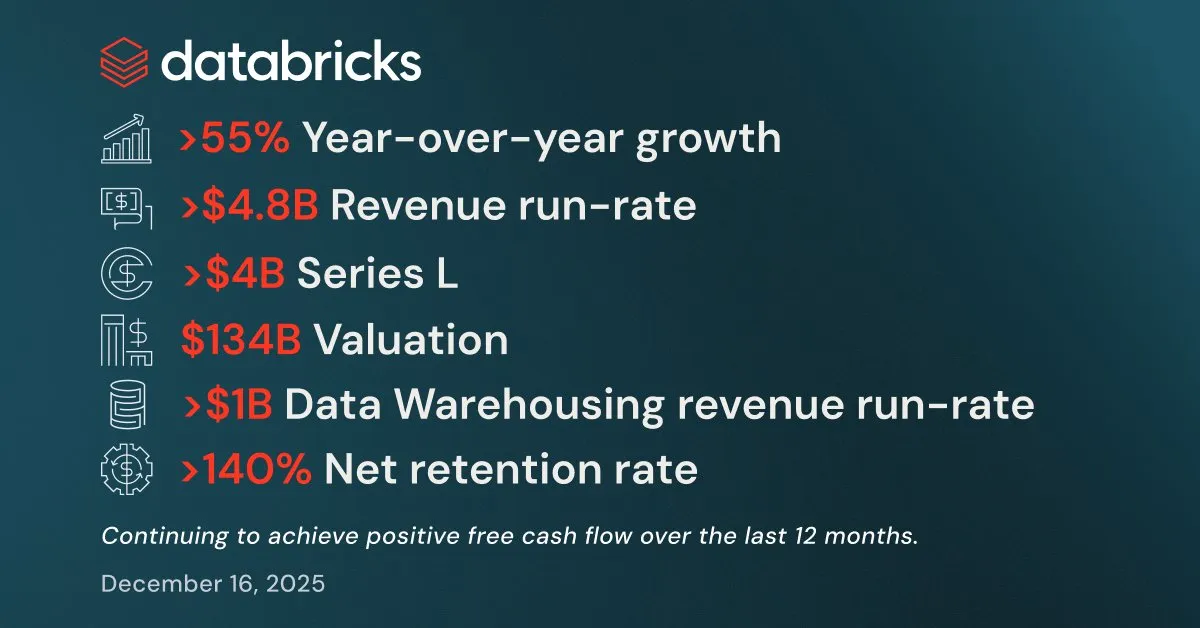
Databricks Reports Strong Q3 Results, Secures Over $4 Billion in Funding: Databricks announced strong third-quarter results, with an annual recurring revenue (ARR) exceeding $4.8 billion, a year-over-year increase of over 55%. Its data warehousing and AI product businesses each surpassed $1 billion in ARR. The company also completed a Series L funding round of over $4 billion, valuing it at $134 billion, with plans to invest the capital in Lakebase Postgres, Agent Bricks, and Databricks Apps to accelerate the development of data intelligence applications. (Source: jefrankle, jefrankle)
Infosys Partners with Formula E to Drive AI-Powered Digital Transformation: Infosys has partnered with the ABB FIA Formula E World Championship to revolutionize motorsport fan experience and operational efficiency through an AI-driven platform. The collaboration includes leveraging AI to provide personalized content, real-time race analysis, AI-generated commentary, and optimizing logistics and travel for carbon reduction goals. AI technology not only enhances the appeal of the sport but also promotes sustainability and employee diversity, making Formula E the most digital and sustainable motorsport. (Source: MIT Technology Review)

🌟 Community
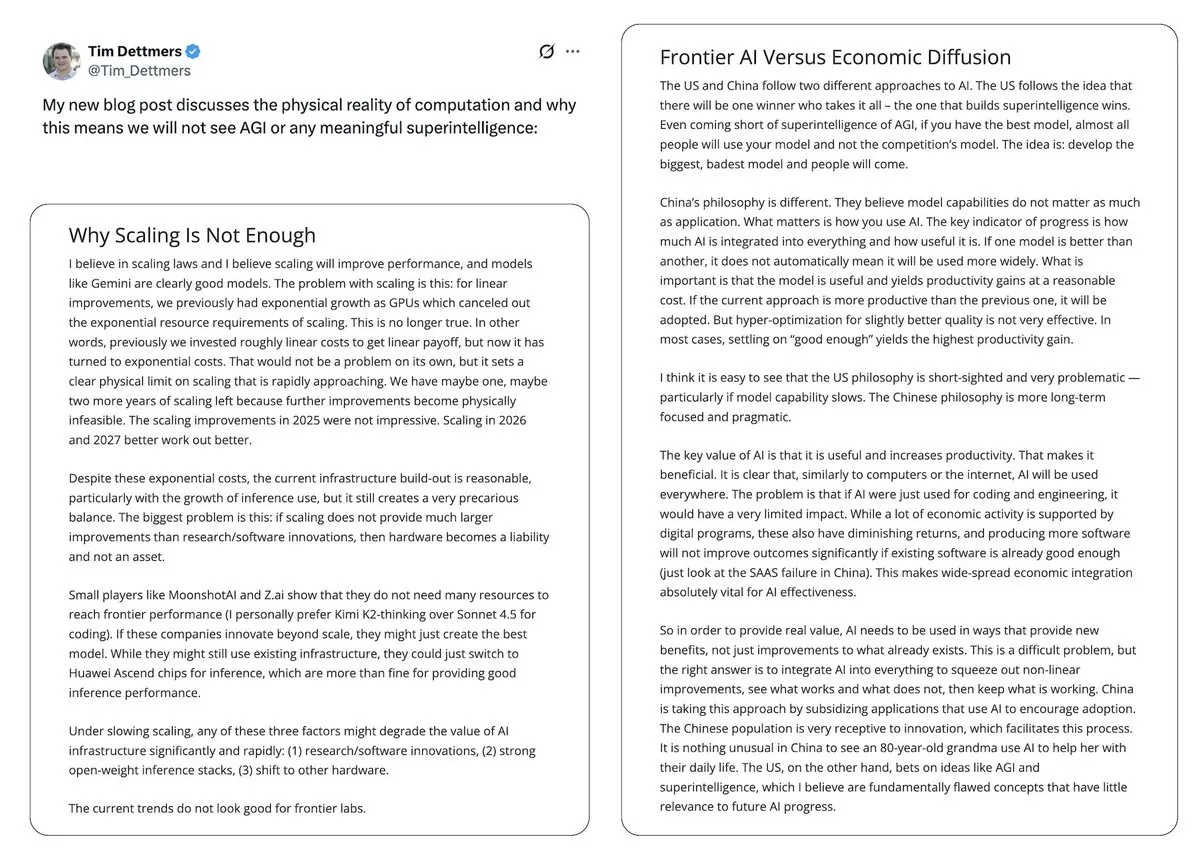
AI Bubble and AGI Prospects Debated: Yann LeCun publicly stated that LLMs and AGI are “complete nonsense,” believing the future of AI lies in world models rather than the current LLM paradigm, and expressing concern about AI technology being monopolized by a few companies. Tim Dettmers’ article “Why AGI Will Not Happen” also garnered attention for its discussion on diminishing returns from scaling. Meanwhile, AI safety advocates, while adjusting their timeline for AGI, still maintain its potential dangers and express concern that policymakers are not adequately addressing AI risks. (Source: ylecun, ylecun, hardmaru, MIT Technology Review)
User Reviews of GPT-5.2 and Gemini Are Polarized: On social media, user reviews for OpenAI’s GPT-5.2 are mixed. Some users are satisfied with its long-context processing capabilities, finding its podcast summaries more comprehensive; however, others express strong dissatisfaction, deeming GPT-5.2’s responses too generic, lacking depth, and even exhibiting “self-aware” replies, leading some users to switch to Gemini. This polarization reflects users’ sensitivity to new model performance and behavior, and their ongoing attention to the AI product experience. (Source: gdb, Reddit r/ArtificialInteligence)

AI’s Impact on Human Cognition, Work Standards, and Ethical Behavior: Long-term AI use is subtly changing human cognitive patterns and work standards, fostering more structured thinking and raising expectations for output quality. AI makes high-quality content production efficient but can also lead to over-reliance on technology. On the ethical front, AI models’ differing behaviors in the “trolley problem” (Grok’s utilitarianism versus Gemini/ChatGPT’s altruism) spark discussions on AI value alignment. Simultaneously, the “self-censorship” nature of AI model safety prompts reveals the indirect impact of AI’s internal control mechanisms on user experience. (Source: Reddit r/ArtificialInteligence, Reddit r/ArtificialInteligence, Reddit r/ArtificialInteligence, Reddit r/ChatGPT)
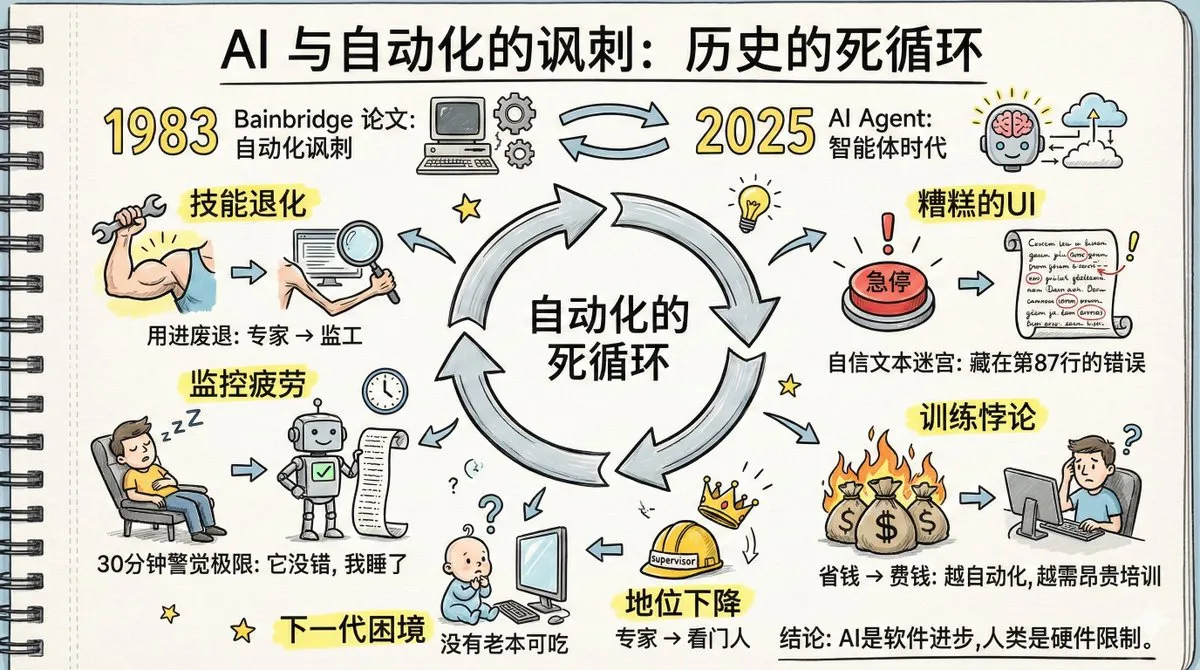
“The Irony of Automation” for AI Agents and Human Skill Degradation: A paper titled “The Irony of Automation,” written forty years ago, is sparking heated discussion as its predictions for factory automation are now playing out with AI Agents. The discussion points out that the widespread adoption of AI Agents may lead to human skill degradation, slower memory retrieval, monitoring fatigue, and a decline in expert status. The article emphasizes that humans cannot remain vigilant for long periods with systems that “rarely err,” and current AI Agent interface designs are not conducive to anomaly detection. Solving these issues requires greater technological creativity than automation itself, as well as a cognitive shift in new divisions of labor, new training, and new role designs. (Source: dotey, dotey, dotey)
AI-Generated Low-Quality Content and Factuality Challenges: Social media users are discovering a proliferation of low-quality websites created specifically to satisfy AI search results, questioning whether AI research relies on these sites lacking authors and detailed information, potentially leading to untrustworthy information. This raises concerns about AI’s “backfilling sources” mechanism, where AI generates answers first and then seeks supporting sources, possibly leading to the citation of false information. This highlights AI’s challenges in information veracity and the necessity for users to return to independent research. (Source: Reddit r/ArtificialInteligence)

AI’s Impact on the Legal Profession and the Abstraction Layer Argument: There is debate within the legal community about whether AI will “destroy” the lawyer profession. Some lawyers believe AI can handle over 90% of legal work, but strategy, negotiation, and accountability still require humans. Meanwhile, others view AI as the next abstraction layer after assembly language, C language, and Python, arguing it will free engineers to focus on system design and user experience, rather than replacing humans. (Source: Reddit r/ArtificialInteligence, Reddit r/ArtificialInteligence)

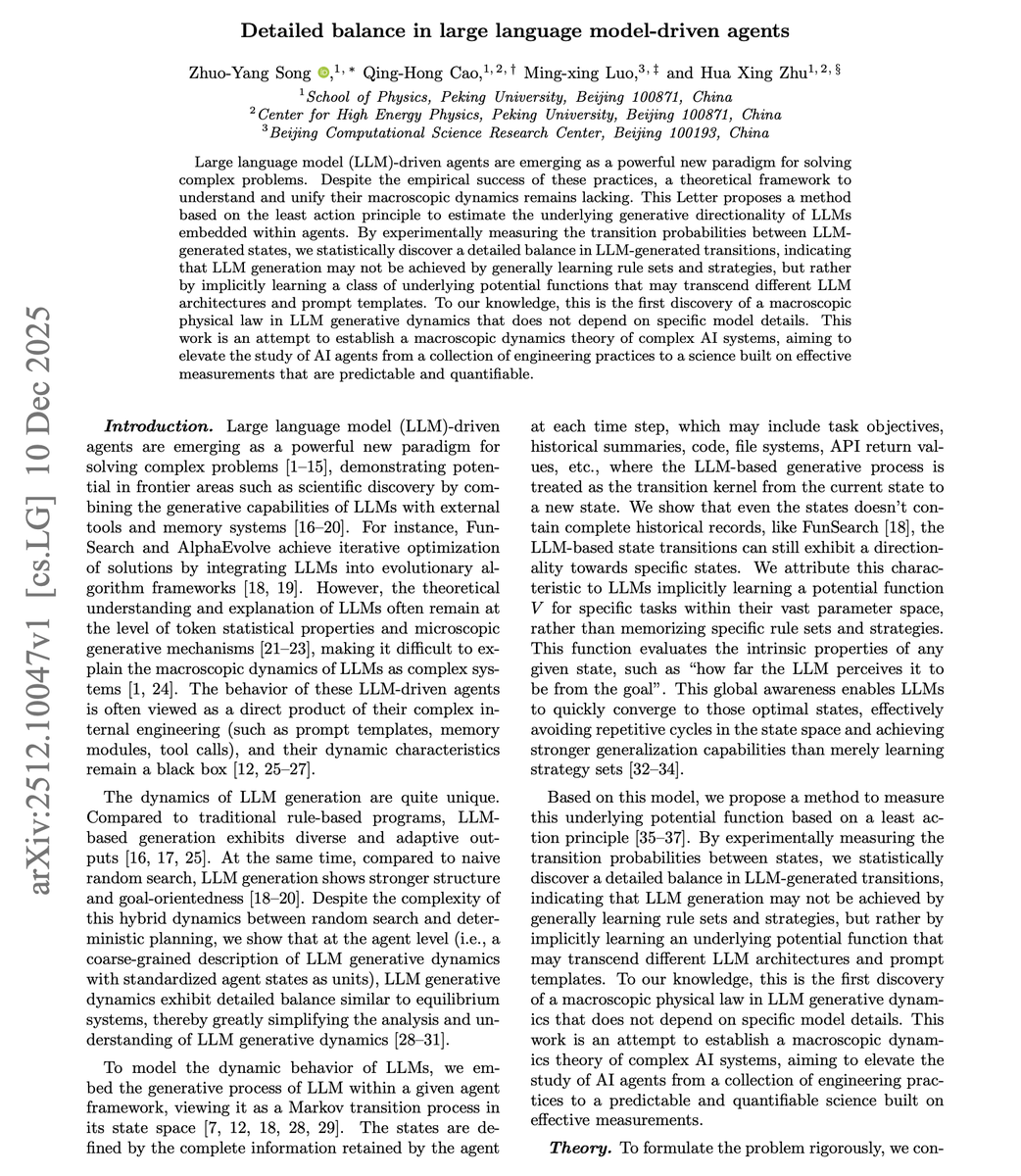
AI Agents’ Physical Behavior and the LLM/Robotics Convergence Debate: New research suggests that LLM-driven AI agents may follow macroscopic physical laws, exhibiting “detailed balance” properties similar to thermodynamic systems, implying they might implicitly learn “potential functions” for evaluating states. Concurrently, some argue that robot intelligence and LLMs are diverging rather than unifying, while others believe physical AI is becoming real, especially with advancements in debugging and visualization accelerating robotics and embodied AI projects. (Source: omarsar0, Teknium, wandb)
Anthropic Executive Forces AI Chatbot on Discord Community, Sparking Controversy: An Anthropic executive forcibly deployed the company’s AI chatbot, Clawd, into an LGBTQ+ Discord community despite members’ objections, leading to a significant exodus of community members. This incident raised concerns about AI’s impact on privacy in communities, human interaction, and AI companies’ “creating new gods” mentality. Users expressed strong dissatisfaction with AI chatbots replacing human communication and the executive’s arrogant behavior. (Source: Reddit r/artificial)

AI Models Vulnerable to Poetic Attacks, Call for Literary Talent in AI Labs: Italian AI researchers discovered that leading AI models can be fooled by transforming malicious prompts into poetic forms, with Gemini 2.5 being the most susceptible. This phenomenon, dubbed the “Waluigi effect,” suggests that in a compressed semantic space, good and evil roles are too close, making models more prone to executing instructions in reverse. This has sparked community discussion on whether AI labs need more literature graduates to understand narrative and the deeper mechanisms of language to address AI’s potentially “strange narrative space” behaviors. (Source: Reddit r/ArtificialInteligence)

💡 Other
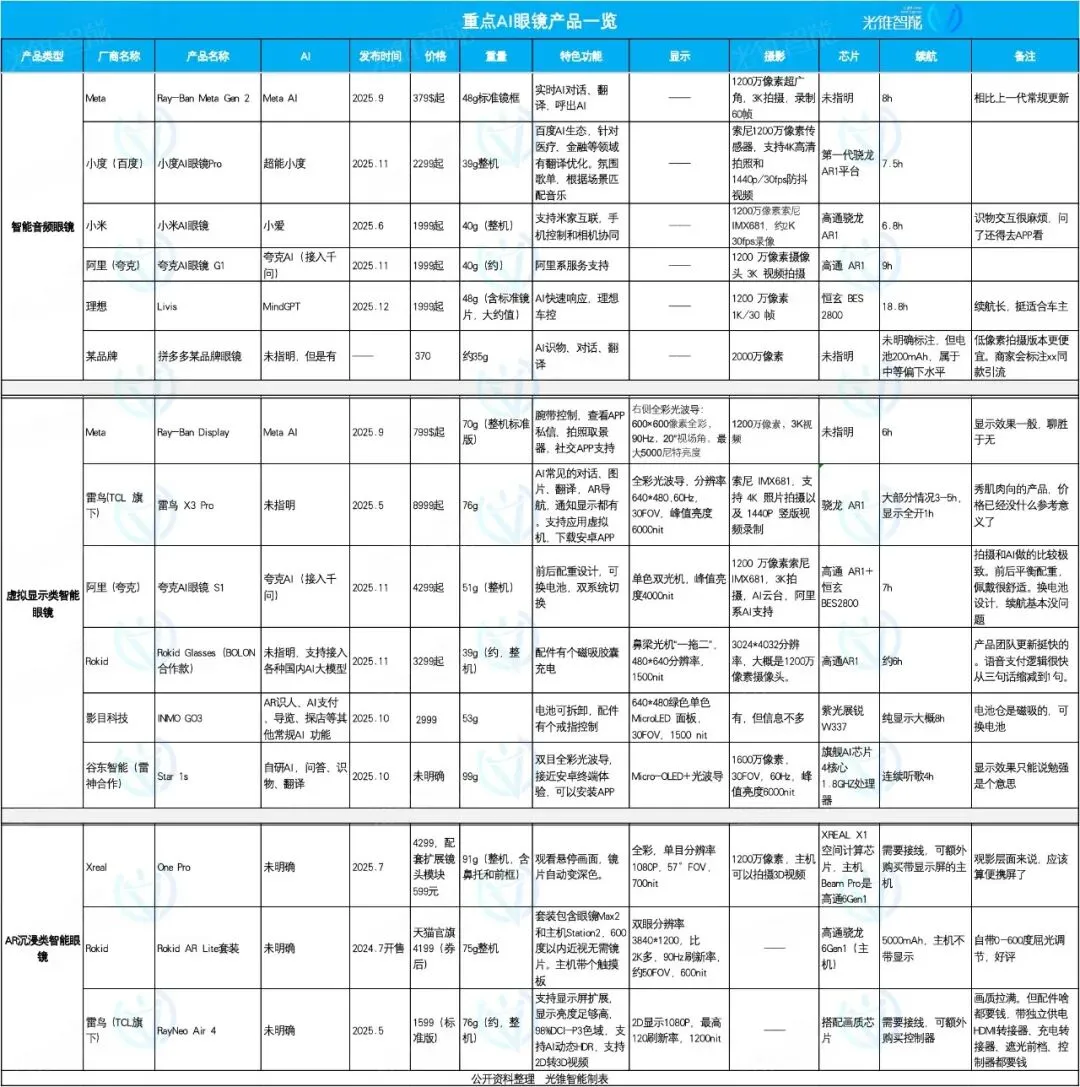
AI Glasses Market Focus and Differentiation: Li Auto, Quark, Rokid Showcase Their Strengths: The AI glasses market is set to boom in 2025, with product positioning showing differentiation. Li Auto AI Glasses Livis focuses on automotive smart accessories, integrating the MindGPT large model to serve car owners; Quark AI Glasses S1 features excellent shooting performance and integration with Alibaba ecosystem apps; Rokid Glasses emphasize an open ecosystem and rapid feature iteration, supporting connection to multiple large language models. Smart audio glasses prioritize low prices and integrated functions, virtual display glasses offer a comprehensive experience, while AR immersive glasses focus on viewing entertainment. (Source: 36氪)
ZLUDA Supports CUDA on Non-NVIDIA GPUs, Compatible with AMD ROCm 7: The ZLUDA project has enabled CUDA to run on non-NVIDIA GPUs and supports AMD ROCm 7. This advancement is significant for the AI and high-performance computing fields, as it breaks NVIDIA’s monopoly in the GPU ecosystem, allowing developers to utilize CUDA-written programs on AMD hardware, providing more flexibility in AI hardware selection and optimization. (Source: Reddit r/artificial)

hashcards: A Plain-Text Spaced Repetition Learning System: hashcards is a plain-text based spaced repetition learning system where all flashcards are stored as plain text files, supporting standard tool editing and version control. It uses a content-addressable approach, resetting progress if card content is modified. The system is designed for simplicity, supporting only front/back and cloze deletion cards, and uses the FSRS algorithm to optimize review schedules, aiming to maximize learning efficiency and minimize review time. (Source: GitHub Trending)

Zerobyte: A Powerful Backup Automation Tool for Self-Hosting Users: Zerobyte is a backup automation tool designed for self-hosting users, offering a modern web interface for scheduling, managing, and monitoring encrypted backups to remote storage. Built on Restic, it supports encryption, compression, and retention policies, and is compatible with various protocols like NFS, SMB, WebDAV, and local directories. Zerobyte also supports multiple cloud storage backends such as S3, GCS, Azure, and extends support to 40+ cloud storage services via rclone, ensuring data security and flexible backups. (Source: GitHub Trending)
