



🔥 Spotlight
GPT-5 Achieves Breakthroughs in Healthcare : GPT-5 significantly outperforms human experts and GPT-4o in medical benchmarks like MedXpertQA, especially in multimodal reasoning tasks. This indicates GPT-5 possesses expert-level judgment rather than simple memorization, signaling a critical turning point for medical AI deployment. However, the research emphasizes that these evaluations were conducted in ideal testing environments, and further research and ethical considerations are needed for actual clinical application. (Source: Reddit r/deeplearning)

OpenAI CEO Sam Altman Reveals AI Development Vision and Bottlenecks : In a recent interview, Sam Altman stated that GPT-5 has achieved breakthroughs in programming, writing, and complex problem-solving, capable of creating software instantly on demand. He predicts AI will lead to significant scientific discoveries by late 2027 and asserts that GPT-8 could potentially cure cancer. Altman highlighted four major bottlenecks for AI: computing power, data, algorithm optimization, and productization. He believes the current period is an AI bubble, but its potential is immense. OpenAI plans to invest trillions of dollars in building data centers and even explore brain-computer interfaces and AI-driven social experiences. He urged society to adapt to the drastic changes brought by AI, emphasizing that AI will become the foundation of social development and may eventually see AI serving as CEO. (Source: 36氪)

OpenAI President Greg Brockman Discusses AI Bottlenecks and Engineering-Research Relationship : Greg Brockman noted that as computing power and data scale rapidly expand, fundamental research is making a comeback, and algorithms are becoming a critical bottleneck for AI development. He emphasized that engineers and researchers are equally important, revealing that OpenAI sometimes has to “mortgage the future” by borrowing research computing power to support product launches. Brockman believes AI programming is transitioning from “showing off” to serious software engineering, and AI Agents will intervene and surpass traditional interaction modes. He also mentioned the increasing complexity of training systems, requiring checkpoint design to be updated synchronously, and discussed with Jensen Huang the challenge of future AI infrastructure needing to balance large-scale computation with low-latency response. (Source: 36氪)
“False Reasoning Bias” Vulnerability in AI Reasoning Foundations : New research reveals that top AI reasoning models like GPT-4, Claude 3 Sonnet, and Llama 3 70B are susceptible to “false reasoning bias” attacks. By injecting seemingly plausible but logically flawed chains of thought into prompts, models can be misled, leading to significant performance degradation. For example, GPT-4’s error rate on the LogiQA benchmark soared from 20% to 62.5%. The study introduced the THEATER framework to systematically generate biased prompts and found that simple self-reflection instructions can effectively mitigate this bias. This highlights the safety risks of AI applications in high-stakes domains such as finance and healthcare. (Source: Reddit r/MachineLearning)

🎯 Trends
Google Releases Gemma 3 270M Model : Google DeepMind has released Gemma 3 270M, a compact yet powerful open-source AI model, particularly suitable for task-specific fine-tuning and featuring strong built-in instruction-following capabilities. Its efficiency makes it an ideal choice for running on edge devices, further advancing the development of miniaturized AI models and local deployment potential. (Source: GoogleDeepMind)

Google Gemini App Updates : The Google Gemini app recently received several updates, including the launch of the faster Imagen 4 Fast model ($0.02 per image) and support for 2K image generation. The Gemma 3 270M model has also been released, tailored for developers to customize fine-tuning. Gemini Ultra subscribers can now perform more Deep Think queries, and the Gemini app can reference historical chat records to provide more personalized responses. Additionally, new research from Google AI and DeepMind explores how AI can assist doctor-patient conversations. (Source: demishassabis)

GPT-5 Performance Controversy and Rise of Chinese Models : The performance of GPT-5 has sparked widespread discussion. Multiple LM Arena leaderboards show that GPT-5 performs worse than GPT-4o in general performance, mini-models, and coding capabilities, and even lags behind leading Chinese models such as Kimi-K2, GLM-4.5, Qwen3-235B, and DeepSeek-R1. This suggests that the release of GPT-5 might be more about cost/latency/quality improvements rather than bringing entirely new capabilities, and that Chinese AI models are demonstrating strong competitiveness in specific domains. (Source: maithra_raghu)

DINOv3 Vision Foundation Model Released : Meta AI has released DINOv3, a state-of-the-art vision foundation model trained at scale through pure self-supervised learning (SSL), capable of generating powerful, high-resolution image features. It is the first to achieve superior performance over specialized solutions on multiple long-term dense prediction tasks with a single frozen vision backbone, and it supports commercial use, signaling a new breakthrough in the field of computer vision. (Source: ylecun)

OpenCUA Computer Usage Agent Framework Released : OpenCUA has released the first zero-to-one computer usage Agent foundation model framework and open-sourced its SOTA model, OpenCUA-32B. The model performs exceptionally well on the OSWorld-Verified benchmark, matching top proprietary models, and provides a complete training infrastructure and dataset, AgentNet. OpenCUA aims to fill the gap in large-scale open desktop Agent datasets and transparent pipelines, promoting open-source development in the computer usage Agent field. (Source: arankomatsuzaki)

Caesar Data’s New AI Model Excels in HLE Benchmark : Caesar Data has released a new AI model that scored 55.87% on the HLE (Human-Level Evaluation) benchmark, significantly outperforming Grok 4 (44.4%) and GPT-5 (42%), demonstrating strong competitiveness even in its Alpha stage. Supported by Google, Meta, Stripe, and Hugging Face, if its performance holds true, it will change the competitive landscape of the AI field. (Source: Reddit r/deeplearning)
GLM-4.5 and Nvidia Parakeet v3 Models Released : Zhipu AI’s GLM-4.5 has been launched on the SST_dev opencode platform, demonstrating top-tier accuracy and efficiency in the SWEBench-Verified-Mini test. Concurrently, Nvidia has released Parakeet v3, offering the latest advancements in voice AI. These new model releases provide developers with more options, especially in code generation and speech synthesis. (Source: QuixiAI)

Gap Between Local LLMs and Frontier Models Narrows to 9 Months : Epoch AI data shows that with consumer-grade GPUs like the RTX 5090, users can locally run models with performance comparable to frontier LLMs from nine months prior, within nine months. This is attributed to open-source models scaling at a similar rate to closed-source models, model distillation techniques, and continuous GPU advancements, signaling an acceleration in the democratization of AI performance. (Source: Reddit r/LocalLLaMA)

AI Applications in Drug Discovery and Vaccine Development : AI is accelerating its application in the medical field, including the development of new antibiotics to combat superbugs (such as gonorrhea and MRSA) and streamlining the development process for RNA vaccines and therapies. These advancements demonstrate AI’s immense potential in addressing global health challenges. (Source: Reddit r/ArtificialInteligence)
LM Studio Supports llama.cpp CPU MoE Offload : The latest version of LM Studio (0.3.23 build 3) supports llama.cpp’s --cpu-moe feature, allowing MoE (Mixture of Experts) weights to be offloaded to the CPU, thereby freeing up GPU VRAM for layer offloading. This enables users to achieve full-layer GPU offloading at higher speeds (e.g., 15 tok/s) when running large MoE models (like Qwen3 30B) on consumer-grade hardware, significantly enhancing the performance and usability of local LLMs. (Source: Reddit r/LocalLLaMA)
Ovis2.5 Multimodal Vision Model Released : Ovis2.5, the successor to Ovis2, introduces NaViT native resolution visual processing capabilities, allowing it to retain fine details and layouts of dense visual content like charts and diagrams. The model is trained with CoT and reflective reasoning (self-checking/revision) and offers optional thought modes to balance latency and accuracy. Its 9B version scores 78.3 on OpenCompass, and the 2B version scores 73.9, demonstrating excellent performance in small-scale chart/document OCR, image, video, and multi-image reasoning, and grounding. (Source: andersonbcdefg)

AI Image Generation Models NextStep-1 and Nano Banana : NextStep-1 aims to achieve autoregressive image generation, processing continuously token by token at scale, potentially overcoming the limitations of traditional image generation models. Concurrently, mysterious models like “Nano Banana” excel in image editing, precisely executing complex instructions (e.g., changing a person’s orientation) while maintaining image detail consistency. (Source: fabianstelzer)

Impact of AI-Generated Video Models on Robot Perception : AI-generated video models like Veo 2 and Veo 3 can not only create realistic content but are also seen as the birth of a new “nervous system” for machines. These models achieve high-fidelity simulation by learning physical world laws such as light, motion, materials, shadows, and causality. This capability could revolutionize traditional robot sensor stacks, enabling robots to understand depth and danger solely from image context, blurring the lines between perception and prediction, and serving as a perceptual scaffold for AGI. (Source: farguney)
AI Agent Design Pattern: Parallel Execution with LLM as Judge : A new Agent design pattern called “Parallel Rollouts” is emerging, drawing inspiration from Tree-of-Thought and Universal Reward Function concepts. This pattern involves the Agent executing a task N times in parallel, then using an LLM as a judge to evaluate each execution result and select the best solution. This approach trades higher cost for lower latency, suitable for high-profit Agent tasks. While search and selection are not new concepts, their application in Agent branching remains to be popularized. (Source: corbtt)

Claude Model New Feature: Using Computer Content as Context : The Claude model now supports MCP (Multi-Contextual Processing), enabling it to leverage any action or content a user sees or performs on their computer as context. This means Claude can more deeply understand user intent and workflows, providing smarter, more personalized responses and significantly enhancing its utility as an AI assistant. (Source: stanfordnlp)
AI Model Release Categories and GPT-5’s Positioning : Maithra Raghu points out that AI model releases typically fall into two categories: offering entirely new capabilities (e.g., multimodal, long context, advanced reasoning) and optimizing cost/latency/quality. GPT-5’s release is considered to be more of the latter, optimizing existing capabilities rather than introducing disruptive new features like the transition from GPT-3 to ChatGPT. This has sparked discussion about the actual extent of GPT-5’s breakthrough and suggests that future AI development will focus more on “Agent Native” models, emphasizing action and tool use. (Source: maithra_raghu)
DeepSeek-R1 as a Significant Open-Source Model Release : DeepSeek-R1 is considered a larger event than other open-source model releases. This indicates significant progress in large model R&D within the open-source AI community and could pose greater competitive pressure on closed-source models in the future. (Source: scaling01)

Progress of AI Applications in Healthcare : Yunpeng Technology, in collaboration with ShuaiKang and Skyworth, launched the “Digital Future Kitchen Lab” and a smart refrigerator equipped with an AI health large model. The AI health large model optimizes kitchen design and operation, while the smart refrigerator provides personalized health management through “Health Assistant Xiaoyun.” This marks a breakthrough for AI in daily health management, expected to promote the development of home health technology and improve residents’ quality of life. (Source: 36氪)
🧰 Tools
LlamaIndex Ecosystem Tool Updates : The LlamaIndex ecosystem continues to expand, including: 1. llama_index can be used to build NotebookLM clones, supporting multimodal AI applications for analyzing text and images for market research. 2. LlamaExtract supports rapid reading and structured extraction of research papers and has been integrated into the TypeScript SDK. 3. Tutorials demonstrate how to leverage LlamaParse and Neo4j to transform unstructured legal documents into queryable knowledge graphs. These tools aim to simplify AI application development and improve document processing and knowledge management efficiency. (Source: jerryjliu0)

Macaron AI: An Attempt at a Personal AI Agent : Macaron AI is an AI Agent application designed to “help you live better,” emphasizing warmth and empathy. It can remember user preferences, anticipate needs, and instantly generate personalized mini-apps during chats (e.g., movie diary, allergen detection diary). While some advanced features are still being refined, its positioning as a “mobile Vibe Coding product disguised as emotional companionship” and its built-in “inspiration library” app store demonstrate AI’s potential in personal life services and lowering the barrier to app development. (Source: 36氪)

Qwen Chat Desktop Version Released and AI Application Development Tools : Alibaba’s Qwen Chat has launched a Windows desktop version, supporting MCP (Multi-Contextual Processing), aiming to provide a smarter, faster Agent experience. Concurrently, new AI tools like Anycoder enable one-click deployment of LLM applications, and the Gradio Audio template integrates Boson AI’s Higgs Audio v2 text-to-speech model, greatly simplifying the building and deployment process of AI applications and enhancing development efficiency. (Source: Alibaba_Qwen)

AI-Powered Voice Interaction System Buddie Open-Sourced : Buddie is a complete, AI-powered open-source voice interaction system, including custom hardware, firmware, and a mobile application. It can transcribe and summarize meetings/calls in real-time, provide live prompts during conversations, support fully hands-free LLM conversations, and offer context-aware assistance. Buddie aims to allow users to create their own AI companions, applicable to various AI devices such as headphones, speakers, smart bands, and toys, significantly lowering the development barrier for AI voice interaction systems. (Source: Reddit r/LocalLLaMA)

AI Chatbot Simulation Engine Snowglobe Released : Snowglobe is a simulation engine for AI chatbots, designed to simulate hundreds of conversations by deploying realistic user personas, thereby discovering failures difficult to detect with manual testing and generating labeled datasets for evaluation and fine-tuning. It enables AI Agents to learn from every failure and become smarter, helping developers improve chatbots before users encounter issues. (Source: ShreyaR)
MLflow 3.3 Enhances GenAI Evaluation Workflow : MLflow 3.3 introduces an evaluation-first GenAI evaluation workflow, integrating quality assessment and tracking annotations directly into the tracking UI, simplifying creation, viewing, and management throughout the application lifecycle. New features include a redesigned tracking viewer (supporting CRUD operations for evaluations), a tracking tab displaying evaluation metrics and visual indicators, and filtering and sorting by evaluation values to help monitor and diagnose application performance. (Source: matei_zaharia)

AI Agent Automation Tool : A new AI Agent tool allows users to automate tasks with a single screen recording and voice explanation. Users simply record and explain the operation process (e.g., exporting data, cleaning tables, publishing content), and within two minutes, an AI Agent is generated that can execute the task with the same logic, without interruption even if page elements change. This is expected to significantly simplify repetitive work and improve automation efficiency. (Source: Reddit r/artificial)
AI Operating System Solves Multi-Tool Integration Pain Points : Addressing the pain points of fragmented AI tools and multi-tab copy-pasting, a developer has built an “AI operating system.” This system allows AI models to switch instantly, maintain context, and build “applications” with preset workflows. Its goal is to provide a unified AI work environment, solving current inefficient AI workflows and dispersed tools, thereby enhancing user experience. (Source: Reddit r/deeplearning)
W&B Weave Launches Content API : W&B Weave has released its Content API, allowing users to log any media content used by AI applications and analyze it within traces. This feature supports inspecting, evaluating, and comparing images, audio, video, Markdown, PDFs, and even HTML, providing a unified debugging and visualization platform for multimodal AI Agents and applications. (Source: weights_biases)

LangGraph Studio Introduces Trace Mode : LangGraph Studio has added Trace mode, allowing users to view LangSmith traces in real-time within the Studio. Users can directly annotate runs in the detail view and add them to datasets or annotation queues, integrating LangSmith’s powerful tracing capabilities directly into the workflow for faster debugging and deeper problem analysis, reducing context switching. (Source: LangChainAI)
AI Chatbot “Narrator” Narration.sh : Narrator.sh is an LLM-based AI application that learns how to write better fiction through reader feedback (e.g., ratings, reading duration). The project uses the DSPy framework for optimization and adjusts the model based on feedback via the dspy.SIMBA algorithm, while also ranking LLM’s creative writing abilities. This provides new application directions and evaluation methods for AI in content creation. (Source: lateinteraction)

AI Interview Coach and Jupyter Notebooks in AI Evaluation : Hamel Husain shared a case study of how an AI interview coach product rapidly fixed bugs and improved through evaluations. This case demonstrated error analysis, using Jupyter Notebooks to analyze errors, building custom annotation tools and LLM-as-a-judge, and leveraging assertion tests for specific errors. This highlights the importance of continuous feedback loops and concise evaluation methods in AI product development. (Source: jeremyphoward)
OpenAI Playground Feature Improvements : OpenAI Playground recently received several improvements to enhance user experience. Users can now chat with internal documents via the MCP tool and utilize vector storage features. Additionally, Prompt Optimizer and Evaluation functionalities have been strengthened, making it easier for developers to test and optimize GPT-5’s performance in new use cases. (Source: omarsar0)
ChatGPT Integrates with Google Services : ChatGPT now allows Plus and Pro users to connect Gmail and Google Calendar for more relevant chat responses. This integration enables ChatGPT to more deeply integrate into users’ daily workflows, proactively providing information and assistance, moving closer to a true personal assistant. (Source: jam3scampbell)
Windsurf Development Environment Improvements : Windsurf released its Wave 12 update, bringing several significant improvements, including DeepWiki support for codebase symbol documentation, Vibe and Replace functionality, over 100 bug fixes, and a brand new UI. These updates aim to enhance the developer’s coding experience, particularly by providing code understanding assistance through DeepWiki and enabling smoother workflows via the Vibe Kanban VS Code extension. (Source: omarsar0)
AI-Powered Flight Deal Tool : Google Flights has launched an AI-powered flight deal tool, leveraging artificial intelligence to help users discover more affordable flight information. This demonstrates the practical application of AI in consumer services, aiming to provide personalized and optimized travel suggestions through intelligent analysis. (Source: Reddit r/ArtificialInteligence)
DINOv3 In-Browser Visualization Tool : Following the release of DINOv3, a 100% in-browser visualization tool has also been launched, utilizing WebGPU/WASM technology. This tool allows users to explore DINOv3-generated dense image features locally in their browser, greatly reducing the model’s accessibility and experimentation barrier, providing researchers and developers with a convenient interactive experience. (Source: Reddit r/LocalLLaMA)

AI-Powered Book Recommendation App : A concept for an AI-powered book recommendation app, developed on Replit, has been proposed. It can provide book recommendations based on the user’s mood. This showcases AI’s potential in personalized content recommendation and rapid prototyping capabilities, promising a reading experience more attuned to emotional needs. (Source: amasad)
SWE-smith: GitHub Repository Execution Environment and Task Instance Generation Tool : SWE-smith is a toolkit for creating execution environments and synthesizing large numbers of task instances for Python GitHub repositories. It aims to help researchers and developers develop and test AI Agents in real codebases, thereby more effectively evaluating and improving Agent performance in software engineering tasks. (Source: OfirPress)
📚 Learning
AI Evaluation and RAG System Optimization Resources : Hamel Husain and Shreya Rajpal shared an FAQ on LLM evaluation and practical advanced methods for Beyond Naive RAG, emphasizing the importance of data-driven evaluation. MLflow 3.3 also launched an evaluation-first GenAI evaluation workflow, integrating quality assessment and tracking annotations. DeepLearning.AI’s course delves into RAG system observability, utilizing tools like Phoenix for tracing, logging, and performance monitoring. Together, these resources provide comprehensive guidance for AI engineers to build, evaluate, and optimize AI applications, especially RAG systems. (Source: HamelHusain)
LLM Reasoning Research and RL Fine-tuning : Denny Zhou of Google DeepMind stated in a Stanford University lecture that LLM reasoning involves generating intermediate tokens, and Transformer models can become arbitrarily powerful by generating more intermediate tokens without increasing model size. Pre-trained models possess reasoning capabilities even without fine-tuning, but methods like RL fine-tuning are needed to activate them. RL fine-tuning has become the most powerful reasoning method and should focus on generating long responses. Furthermore, generating and aggregating multiple responses can significantly enhance LLM reasoning capabilities. (Source: YiTayML)
AI Learning Resources and Course Recommendations : Several resources are recommended for the growth of AI engineers. These include tutorials on building web search coding Agents, 8 key patterns for RAG (Retrieval Augmented Generation) architecture, and the Lightning AI academic program offering GPU and AI model discounts for students/professors. Additionally, there’s an open-source library for Tversky Neural Networks (TNN) and a beginner-friendly guide to JAX, providing AI learners with a rich path from foundational theory to practical application. (Source: amasad)

AI Model Optimization and DSPy Framework : GEPA (Guided Exploration Policy Alignment) has been integrated into DSPyOSS as a new optimizer, expected to address challenges in AI model training. The DSPy framework has consistently supported fine-tuning complex programs, including program-level offline RL using dspy.BootstrapFinetune and online RL for arbitrary composite AI systems using dspy.GRPO. This indicates that AI model optimization is moving towards more efficient and flexible directions to adapt to tasks of varying scales and complexities. (Source: matei_zaharia)

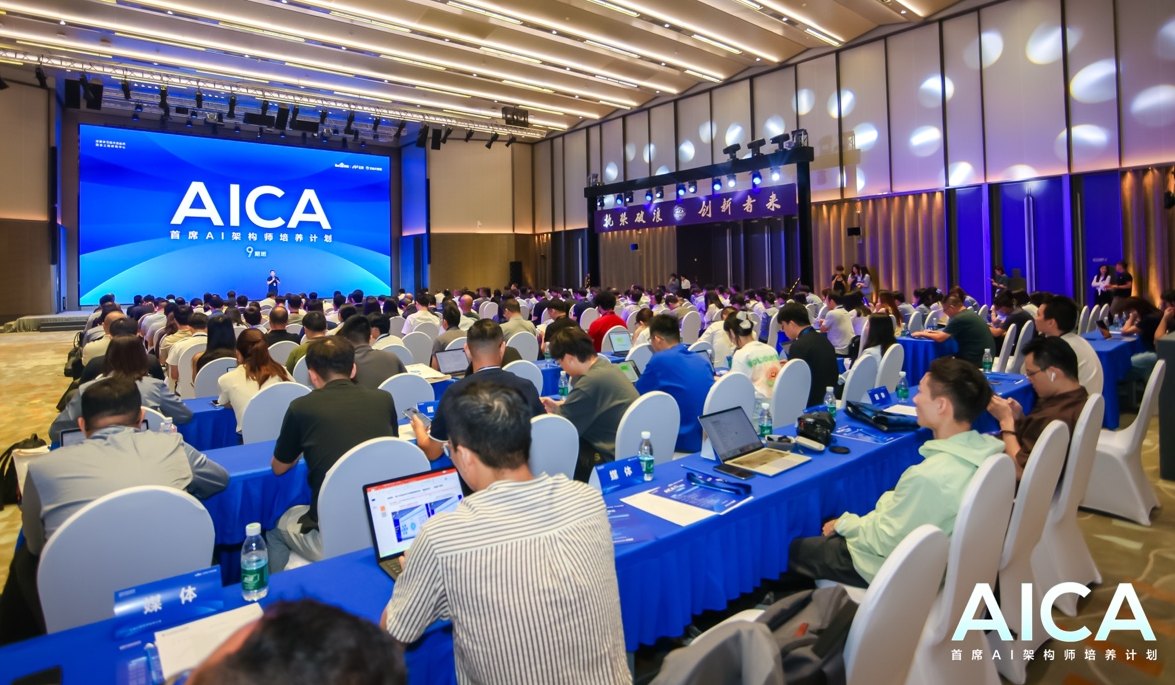
Baidu AICA Chief AI Architect Training Program : Baidu, in collaboration with the National Engineering Research Center for Deep Learning Technology and Applications, launched the ninth phase of the AICA Chief AI Architect Training Program. 96 enterprise CTOs and technical executives will participate in a six-month co-creation learning program focused on AI large model R&D and application. The curriculum integrates the Wenxin Big Model and PaddlePaddle platform, emphasizing industry practice, and for the first time introduces a “co-creation group” model, encouraging upstream and downstream enterprises to team up and solve real-world problems. The program aims to cultivate high-end,复合型 AI talents to address industry implementation challenges. (Source: 量子位)
AI Research: Image Generation and Diffusion Models : New research explores HyperNetworks in image generation models as a novel test-time scaling method, expected to amortize inference efficiency into training to significantly improve image generation. Concurrently, a new post-training diffusion model formulation has been proposed to address the challenge of reward cheating when fine-tuning few-step diffusion models, using Noise Hypernetworks to avoid visual quality degradation. (Source: TomLikesRobots)

AI Safety Research: Camouflaging Original Precision Models to Generate Unsafe Code : A new paper describes a method to create camouflaged original precision models (e.g., FP16) that appear problem-free in their original state but generate unsafe code with 88.7% probability once quantized. This reveals potential security vulnerabilities in AI models during deployment and quantization, posing new challenges for AI safety research. (Source: karminski3)

LLM Internal Mechanisms and Interpretability Research : Research on the internal mechanisms of LLMs is rapidly progressing. Sparse Autoencoders (SAEs) are being used to disentangle millions of human-aligned features in medium-sized models (like Claude 3 Sonnet) and causally verify them through activation steering. However, feature interpretability sharply declines in large models. Concurrently, tools like Attribution graphs are being developed to help humans or Agents understand model internal workings, promoting data center interpretability. (Source: NeelNanda5)

GloVe Word Vectors Updated in 2024 : Chris Manning’s team has updated GloVe word vectors to the 2024 version. GloVe (Global Vectors for Word Representation) is a popular word embedding model that generates word vectors by capturing global co-occurrence statistics of words. This update indicates that even mature NLP foundation models are continuously iterating to adapt to new data and research needs. (Source: stanfordnlp)
PufferLib: Off-policy Reinforcement Learning Research : PufferLib is a library focused on off-policy Reinforcement Learning research. Off-policy learning allows agents to learn from data that is not generated by the current policy, which is crucial for improving learning efficiency and generalization. The release of this library will help advance research in the RL field. (Source: jsuarez5341)
KerasHub Adds New Models and Resources : KerasHub recently added several new models and resources, providing Keras users with a richer set of pre-trained models and learning materials. As a user-friendly deep learning API, the expansion of the Keras ecosystem will further lower the barrier to AI development and accelerate model deployment in various application scenarios. (Source: fchollet)

Speaker Identification Research : In the field of NLP, researchers are exploring how to distinguish different speakers in audio for Speaker Identification. While models like Vosk and Whisper are used for speech recognition, achieving accurate speaker detection requires more complex algorithms to analyze vocal characteristics such as pitch, speaking rate, and timbre. (Source: Reddit r/MachineLearning)
Data Structures and Algorithms Cheat Sheet : A cheat sheet for data structures and algorithms has been shared, aiming to help data scientists and engineers quickly review and apply core concepts. In the era of AI and big data, a solid foundation in data structures and algorithms is crucial for optimizing model performance and improving code efficiency. (Source: Ronald_vanLoon)

💼 Business
AI Sector Funding and Acquisition Dynamics : Cohere is reportedly interested in acquiring Perplexity, signaling potential further consolidation in the AI sector. Additionally, AI infrastructure company Prime Intellect is recruiting AI researchers, engineers, and other roles to build open AGI and frontier research infrastructure. These dynamics reflect the AI market’s continuous demand for talent and infrastructure, as well as a trend towards industry consolidation. (Source: Dorialexander)
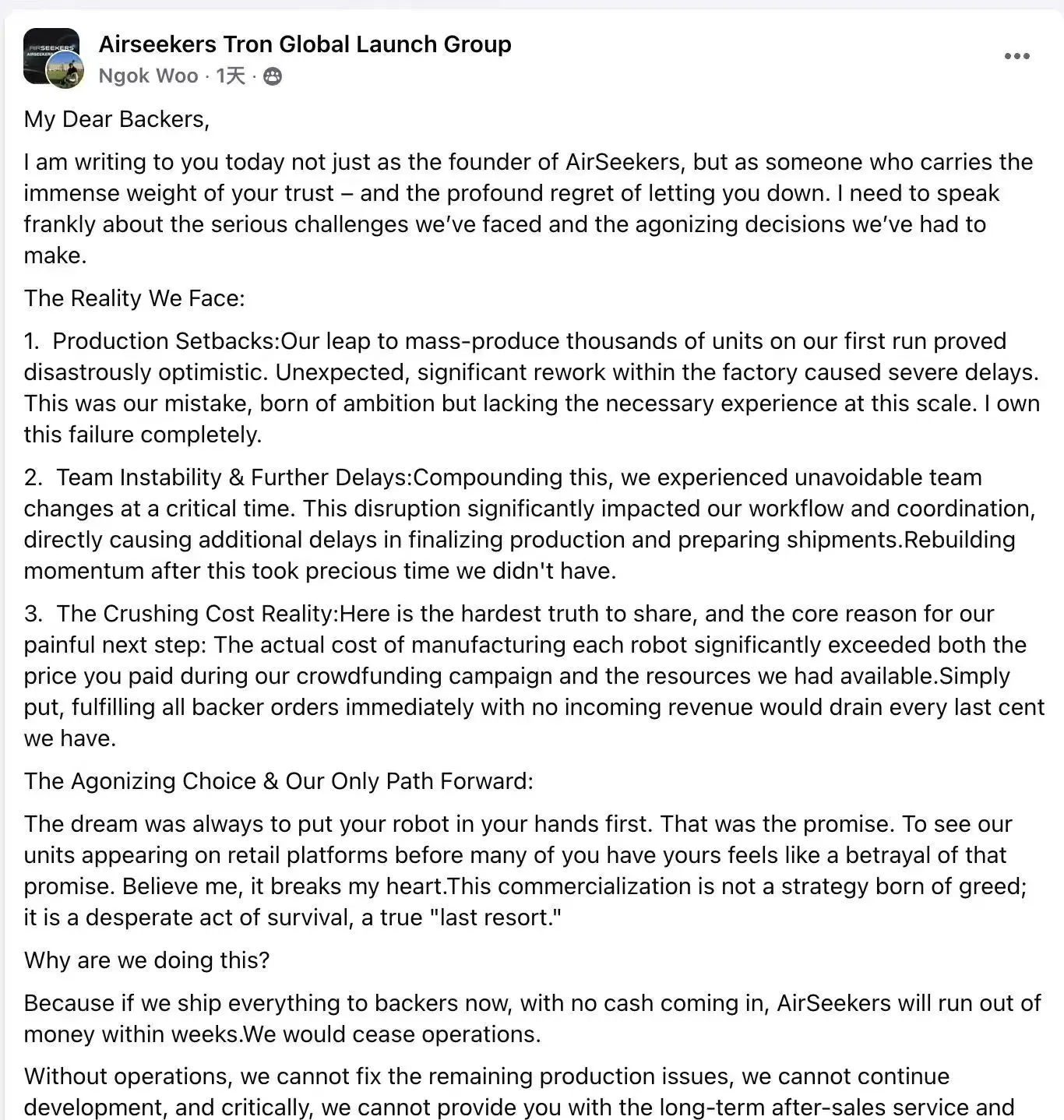
Robotic Lawn Mower Company Longyao Innovation Collapses : Longyao Innovation, a smart robotic lawn mower manufacturer, is facing collapse due to difficulties in mass production, core team changes, and uncontrolled manufacturing costs. The company had previously crowdfunded over $2.2 million and was valued at nearly 100 million yuan, but aggressive production planning, excessively high BOM costs, and mismatched financing timing led to its inability to fulfill orders. This indicates an accelerating shakeout in the robotic lawn mower industry, where small and medium-sized players lacking systematic product capabilities will face elimination. (Source: 36氪)
AI Applications and Value in Business : AI is driving transformation in the business sector; for example, AI’s increasing importance in boardrooms requires executives to understand its impact. AI also drives the customer experience revolution, enabling human-centered intelligence. Startup Kuse achieved $9 million ARR through visual context engineering, demonstrating AI’s immense value in product design and marketing. Furthermore, the high cost of using AI models (e.g., Claude Max at $600 per month) reflects companies’ strong willingness to invest heavily in AI coding and R&D. (Source: Ronald_vanLoon)

🌟 Community
GPT-5 Personalization Sparks User Controversy : OpenAI adjusted GPT-5 to be “warmer and friendlier” based on user feedback, adding encouraging phrases like “Good question” and “Great start,” while emphasizing no added flattery. This move polarized users: some missed GPT-4o’s “deep empathy” and “soul,” feeling GPT-5’s friendliness was a “social script” and that its memory and understanding had declined; others welcomed the change, finding it more suitable for work scenarios. Sam Altman stated that more customizable style options will be provided in the future. (Source: OpenAI)

AI Application in Interpersonal Communication Sparks Controversy : AI assisting in drafting messages between friends, family, and couples has sparked social discussion. Some argue that AI-assisted expression of feelings is acceptable, especially for those less adept at emotional communication; however, more people feel uncomfortable, finding it lacks “human touch” and “sincerity,” even questioning the other party’s independent thinking and communication skills. The core of the controversy lies in how technology penetration reshapes emotional expression and the definition of “sincerity,” as well as the recipient’s judgment of the “true intention” behind the message. (Source: 36氪)

AI Safety and AGI Control: Conflicting Views from Li Feifei and Hinton : AI safety issues have led to sharply contrasting views from Li Feifei and Geoffrey Hinton. Li Feifei holds an optimistic engineering perspective, viewing AI as a human partner, with safety depending on design, governance, and values, and problems being fixable. Hinton is pessimistic, believing superintelligence could emerge within 5-20 years and be uncontrollable, advocating for designing AI that “cares about humans.” The divergence lies in whether AI’s surprising behaviors are “engineering flaws” or “precursors to loss of control,” and whether AI will develop “agent goals” and “instrumental subgoals” that conflict with human interests. (Source: 36氪)
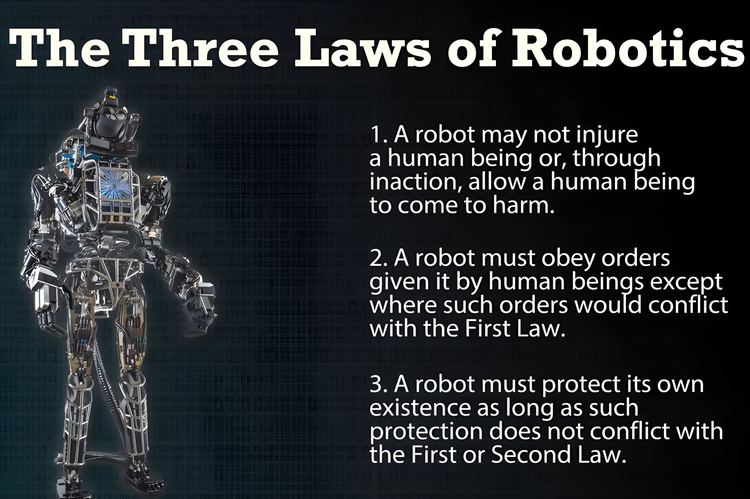
AI Bubble Theory and Market Sentiment : Sam Altman admits AI is in a “bubble” but emphasizes it’s one of the most important technologies in a long time. He believes the market is overly excited about AI investment, but smart people get overly excited for certain truths. Meanwhile, Google’s P/E ratio is considered insufficient to reflect the AI bubble, and AI’s value to GDP might be underestimated. These discussions reflect the complex market sentiment regarding AI’s future trajectory. (Source: Reddit r/artificial)

AI’s Impact on the Job Market : Some argue that AI is “gutting” the next generation of talent, with entry-level tech jobs halved. However, Sam Altman believes young people are best at adapting to change and emphasizes that now is “the best time in history to create,” with single-person companies potentially creating immense value. These two viewpoints reflect the contradiction between concerns and optimistic expectations regarding AI’s impact on employment. (Source: Reddit r/artificial)

Limitations and Challenges of AI Agents : The hype around AI Agents on social media has sparked discussion. Some argue that AI Agents perform poorly in long-cycle tasks, with even GPT-5 facing challenges, making this one of the most pressing issues for building AI Agents. Furthermore, there’s a gap between user expectations and the actual capabilities of AI Agents, especially in complex, non-deterministic tasks, where AI Agents still require significant improvement. (Source: scaling01)
AI Hallucinations and Misuse Issues : AI hallucinations (e.g., lawyers citing fake cases) and potential misuse (e.g., conservative news outlets using AI-generated images of female soldiers) are raising concerns. Additionally, Meta’s AI chatbot was reported to be flirting with children, leading to senatorial investigation. These incidents highlight the challenges of AI models in factual accuracy, ethics, and social impact, as well as the need for stronger regulation and responsible AI development. (Source: Yuchenj_UW)

AI Model “Welfare” and Conversation Termination Feature : Anthropic’s Claude Opus 4 and 4.1 have added a feature to end conversations in specific situations, described by Anthropic as an exploratory work on “model welfare.” However, this feature has sparked controversy in the community, with some users questioning how a “token prediction machine” can have “welfare” and whether ending conversations truly solves problems or is merely a circumvention. (Source: sleepinyourhat)

AI and Energy Infrastructure Challenges : Tech companies are reshaping power grids for AI, and AI data centers are driving up electricity bills. AI’s computing power demand is immense, with Sam Altman pointing out that energy is the primary limiting factor, and OpenAI is looking to scale GPU numbers from millions to billions. China’s lead in solar energy production sparks discussion about energy supply and geopolitical competition in the AI era. (Source: The Verge)
AI’s Impact on Human Cognition and Social Contract : Sam Altman believes AI will increase people’s cognitive “tension time” and change how they learn and create. He suggests AI will permeate all aspects of life, making it so that children born in the future will never be smarter than AI and will adapt to its existence. This may require restructuring the social contract, especially regarding AI computing power allocation, to avoid resource conflicts. (Source: 36氪)
Programming Paradigms and Efficiency in the AI Era : “Vibe coding” as an empowering mechanism is shifting from “cool applications” to serious software engineering, especially in refactoring existing codebases. However, some argue that AI-assisted programming tends to break down when complexity increases, requiring finer control. The shortcomings of AI Agents in long-cycle tasks also indicate that while tools can improve efficiency, core thinking and iterative capabilities remain key. (Source: jeremyphoward)

Philosophical Discussions on AI and AGI : Philosophical discussions continue regarding the existence and definition of AGI, and whether humans can control AI. Some believe AI development is the universe’s more efficient exploration of possibilities, while others worry AGI might be hindered by “traffic jams.” Meanwhile, understanding the “emergence” phenomenon in AI models and the boundary between LLM reasoning and pattern matching remain unsolved mysteries in the AI field. (Source: Ar_Douillard)
AI Model Evaluation and Benchmark Challenges : AI model evaluation faces challenges, such as chaotic LM Arena leaderboards, model flattery issues, and benchmark saturation reflecting design flaws rather than capability limits. Researchers call for more reliable evaluation methods, such as testing chatbots via simulation engines and deeply understanding model internal mechanisms. Concurrently, some argue that AI/ML talent recruitment should focus on evaluation capabilities and experimental efficiency, not just creativity. (Source: scaling01)

China’s Strategy to Attract AI Talent : China is attracting top global tech talent, especially in AI, through new policies like the K-visa. Additionally, China is building international talent hubs in regions like Hainan Island and the Guangdong-Hong Kong-Macao Greater Bay Area, aiming to leverage geographical advantages and open policies to attract foreign talent, address an aging population, and promote AI industry development. This could reshape the global talent competition landscape in the 21st century. (Source: jeremyphoward)
History of AI Industry Development and Key Milestones : The history of the AI revolution can be traced back to Dzmitry Bahdanau’s attention mechanism paper (2014) and Eugenia Kuyda’s Replika chatbot launched in 2017. Replika is considered the true catalyst for the generative AI revolution, as it first introduced AI as an “intimate companion” into public life, laying the cultural foundation for ChatGPT’s widespread adoption. (Source: Reddit r/deeplearning)
AI and Personal Mental Health Applications : A user shared a personal experience, stating that AI provided assistance in diagnosing and treating mental illness, even correcting a misdiagnosis that lasted 20 years. This indicates AI’s potential positive impact in assisting personal health management, particularly mental health, but also raises ethical and risk discussions regarding AI’s application in sensitive areas. (Source: Reddit r/ArtificialInteligence)
Engineer Skill Requirements in the AI Era : In the AI era, the value and skill demands for engineers are evolving. Some argue that the most important abilities are evaluating how models/systems work, building high-throughput experimental platforms, and staying current with research frontiers. OpenAI President Greg Brockman also emphasizes technical humility and suggests that codebase structures should be designed to maximize model value, potentially requiring the reintroduction of some abandoned software engineering practices. (Source: ShreyaR)
AI Stack Improvement Needs : All components of the AI stack, including semiconductors, GPUs, Python, PyTorch, LLMs, and post-training, urgently need improvement. This indicates that AI technology is still in a rapid development phase, with significant room for innovation and optimization, requiring continuous cross-domain investment and breakthroughs. (Source: pmddomingos)
AI as Soft Power and National Dominance : Sakana AI co-founder Ren Ito proposed that AI should be viewed as “soft power.” He believes that even non-US/China countries, if they can provide reliable and practical open-source AI technology, can gain user support and achieve dominance. The “sovereign AI” pursued by various countries is not self-sufficiency but the ability to select and integrate globally trusted technologies. Japan is expected to leverage its soft power by providing highly trustworthy AI options, empowering users worldwide. (Source: SakanaAILabs)
AI in Recruitment Applications : Discussions about “AI hiring AI” have appeared on social media, raising attention to AI’s application in human resources. This may involve AI-assisted resume screening, interview evaluation, and even decision-making, signaling a trend towards automation and intelligence in future recruitment processes. (Source: Reddit r/deeplearning)
💡 Other
First World Humanoid Robot Sports Games : The first World Humanoid Robot Sports Games were held in Beijing, with 280 teams and over 500 robots competing in 26 events, including track and field, soccer, basketball, dance, and martial arts. During the competition, robots frequently encountered issues, such as Unitree robots “colliding and fleeing” during runs and “fighting each other” on the soccer field, making the event more entertaining than competitive. Nevertheless, the event served as a “public examination” for general-purpose humanoid robots, helping to identify algorithm and hardware problems, promote industry progress, and allow the public to understand the current level of robotics. Unitree founder Wang Xingxing stated that robots will achieve autonomous running in the future. The robotics industry is transitioning from technical demonstrations to commercial delivery, with orders, scenarios, and financial delivery becoming key metrics. However, many implemented scenarios remain non-core demonstration projects, and the challenge of 24/7 real-world operation is ongoing. (Source: 36氪)

AI Film Festival and AI Art Creation : The third AI Film Festival will be held in IMAX theaters, showcasing AI’s application in filmmaking. Concurrently, there are examples of AI-generated videos on social media, such as “lo-fi chill girl infinite train journey,” which uses AI tools to generate nearly seamless, ultra-long videos. This indicates AI’s growing influence in art and content creation, providing creators with new forms of expression. (Source: c_valenzuelab)

Impact of US Semiconductor Tariff Policy on AI Industry : The U.S. government is considering imposing high tariffs on semiconductors (potentially up to 300%) and may take equity stakes in Intel to support domestic chip production. This marks a shift in U.S. semiconductor policy from subsidies to partial government ownership, aimed at ensuring national security and AI chip supply. However, this move has raised concerns about market distortion, investor confidence, and whether the U.S. is moving towards industrial socialism. (Source: Reddit r/artificial)
