



🔥 Spotlight
Mistral AI’s Core Model Allegedly “Distilled” from DeepSeek, Misleading Public : Mistral AI, once hailed as “Europe’s OpenAI,” is embroiled in a plagiarism scandal. A former employee revealed that Mistral’s core model technology is not, as it claimed, a result of independent reinforcement learning, but rather directly “distilled” from DeepSeek’s model, and allegedly distorted benchmark test results. This accusation has caused a stir on social media, raising questions about Mistral’s transparency and ethical conduct. While model distillation itself is not technically problematic, the key lies in whether Mistral failed to clearly attribute the source and misled the public. This has severely damaged its reputation and sparked widespread discussion within the open-source AI community regarding model transparency and ethics. (Source: 36氪)

AI Legal Litigation and Ruling Dynamics: Copyright, Privacy, and Employment in Focus : A detailed compilation of AI legal cases reveals the complex legal challenges currently facing the AI sector. Key points of contention include AI algorithm discrimination (e.g., in hiring), copyright ownership of AI-generated content, legal liability for deepfakes, data privacy infringement, and AI product liability (e.g., autonomous driving accidents). Notably, Chinese courts have issued multiple rulings recognizing copyright ownership of AI-generated images and text to the creator, while a Mexican court denied copyright for AI works. Furthermore, class-action lawsuits against AI companies for data scraping and injunction requests against AI product deployment are increasing, signaling that the rapidly developing AI industry is facing increasingly stringent legal scrutiny and regulation. (Source: Reddit r/ArtificialInteligence)
🎯 Trends
Kunlun Tech Releases Six Multimodal AI Models in One Week : Kunlun Tech (Kunlun Wanwei) intensively released six multimodal AI models during its recent “Tech Week,” covering video generation (SkyReels-A3), world models (Matrix-Game 2.0, Matrix-3D), unified multimodal (Skywork UniPic 2.0), agents (Skywork Deep Research Agent v2), and AI music creation (Mureka V7.5, MoE-TTS). Among them, SkyReels-A3 significantly lowers the barrier for digital human live streaming, while Matrix-Game 2.0 and Matrix-3D achieve breakthroughs in real-time generation and long-sequence interaction. UniPic 2.0 unifies image understanding, generation, and editing, and Skywork Deep Research Agent v2 enhances multimodal deep research capabilities. The intensive release and partial open-sourcing of these models demonstrate Kunlun Tech’s comprehensive布局 and technical strength in multimodal AI, aiming to promote high-frequency application scenarios in vertical domains. (Source: 量子位)

Huawei ADS4.0 Advanced Intelligent Driving System Achieves Mass Production and Delivery on Dongfeng Mengshi M817 : The Dongfeng Mengshi M817 fully integrates Huawei ADS4.0 advanced intelligent driving assistance system, achieving immediate delivery upon its launch. The system is equipped with 27 sensors, including a 192-line LiDAR, high-definition cameras, and 4D millimeter-wave radar, supporting high-speed and urban NOA (Navigate on Autopilot), and enabling full-scenario parking from any parking spot to any parking spot. Additionally, the Mengshi M817 features a complete suite of Huawei’s ecosystem, including HarmonyOS Cockpit 5, Qiankun Vehicle Cloud, Qiankun Vehicle Control, and WhaleFin Communication, aiming to create the smartest off-road vehicle and the most off-road intelligent vehicle. This marks the deep integration of Huawei’s intelligent driving solution in the rugged off-road vehicle segment. (Source: 量子位)

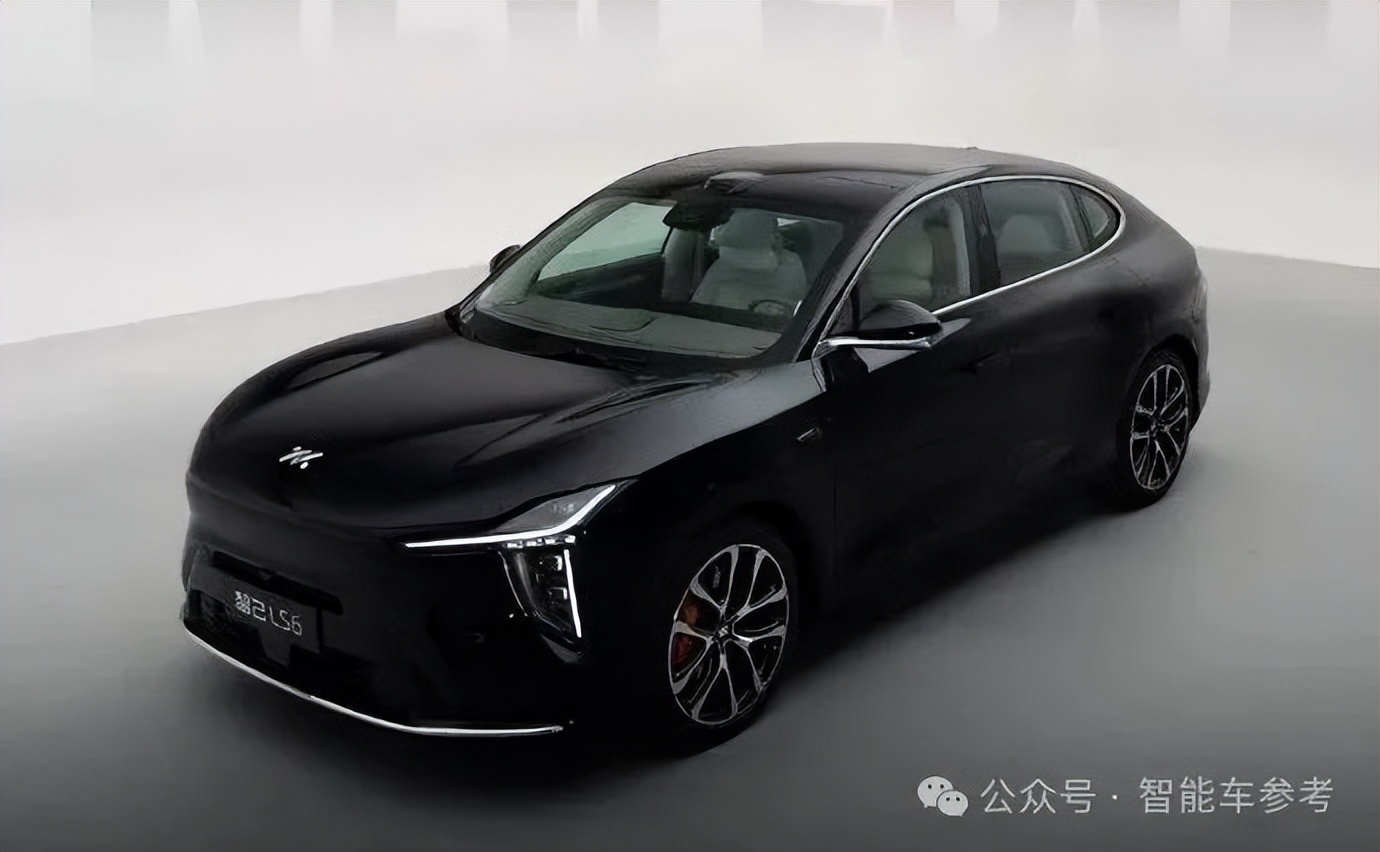
Momenta’s Reinforcement Learning Large Model Debuts in ZEEKR LS6, Leading New Intelligent Extended-Range Trend : The new generation ZEEKR LS6 will be the first to feature Momenta’s new R6 flywheel large model, built on a reinforcement learning paradigm. This model aims to learn the essential driving logic behind scenarios, enhancing algorithm generalization to address long-tail problems. The ZEEKR LS6 offers both pure electric and extended-range dual-power versions, with the extended-range version boasting a pure electric range of 450 kilometers and supporting 800V ultra-fast charging, potentially pioneering a “large battery + small fuel tank” intelligent extended-range mode. This collaboration signifies a major breakthrough for reinforcement learning technology in mass-produced vehicle assisted driving and introduces a new competitive focus to the intelligent electric vehicle market. (Source: 量子位)
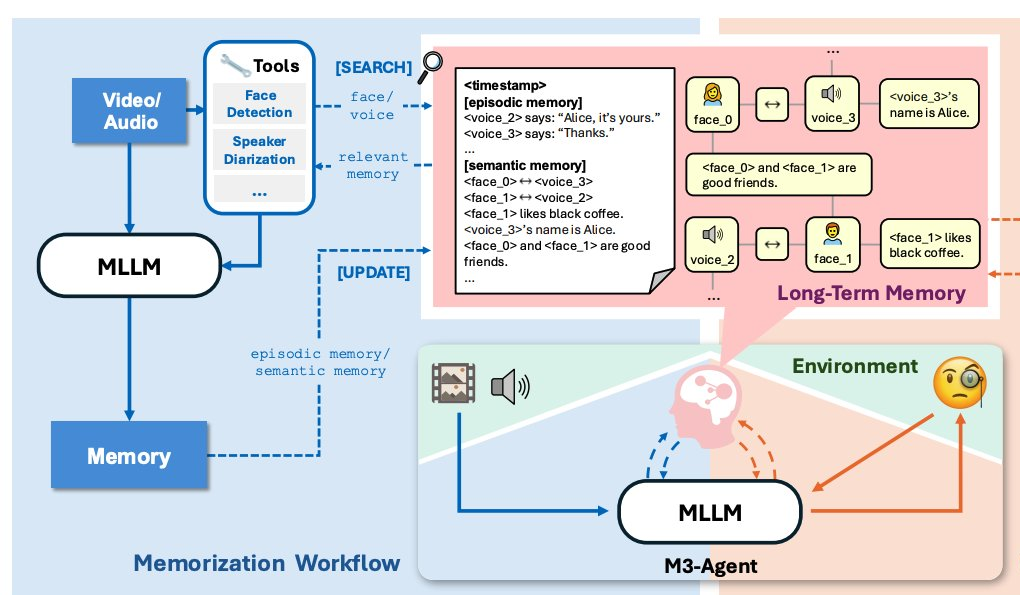
ByteDance Seed Team Open-Sources Long-Term Memory Multimodal Agent Framework M3-Agent : ByteDance’s Seed team has released M3-Agent, a new multimodal agent framework capable of hearing, seeing, and possessing long-term memory like humans. M3-Agent processes visual and auditory inputs in real-time through parallel memory and control processes, building and updating event and semantic memories, and supporting multimodal information storage. Its core lies in using reinforcement learning for multi-turn reasoning and iterative memory retrieval, rather than simple single-turn RAG. Simultaneously, the team also open-sourced M3-Bench, a long-video question-answering benchmark, to evaluate the effectiveness of multimodal agents’ memory and memory-based reasoning capabilities. (Source: 量子位)
Google DeepMind Releases Multiple AI Updates in August : Google DeepMind launched several AI technology updates in August, including Genie 3, Imagen 4 Fast, Gemma 3 270M, Veo 3 Fast, Gemini Embedding, Kaggle Game Arena, Perch 2, and AI Studio with GitHub integration. These updates span various domains from image generation, video generation, large language model optimization to developer tool integration, demonstrating Google’s continuous investment in cutting-edge AI research and application deployment. (Source: osanseviero)
NVIDIA Releases Multilingual Open-Source ASR Models Canary 1B and Parakeet TDT : NVIDIA has introduced two state-of-the-art multilingual open-source Automatic Speech Recognition (ASR) models: Canary 1B and Parakeet TDT (0.6B). These models support 25 languages, feature automatic language detection and translation, and provide word and sentence timestamps. They have achieved SOTA (State-of-the-Art) performance on the Open ASR leaderboard and are available on Hugging Face under a CC-BY license, significantly advancing open-source development in multilingual speech processing. (Source: ImazAngel, reach_vb)

Kimi/HKU Collaborates to Open-Source OpenCUA Framework, Advancing Computer Usage Agents : Kimi (Moonshot AI) announced a collaboration with the University of Hong Kong (HKU) to jointly open-source OpenCUA, the first from-scratch foundational model framework for computer usage agents. The OpenCUA-32B model performed excellently on the OSWorld-Verified benchmark, matching top proprietary models, and provides complete underlying infrastructure and data. This initiative aims to promote open-source research and applications in the field of computer usage agents, enabling them to automate tasks in a wider range of scenarios. (Source: Kimi_Moonshot)

FlashAttention 4 Coming Soon to Blackwell GPUs, Boosting LLM Inference Efficiency : The source code for FlashAttention 4 (FA4) has been leaked on GitHub, indicating its primary optimization for NVIDIA Blackwell (SM100+) GPUs and Tensor Core Generation 5, utilizing CuTe DSL (CUTLASS) and handwritten PTX code. The introduction of FA4 signals a significant boost in Large Language Model (LLM) inference efficiency, helping to address memory bottlenecks in LLM inference and achieve faster model execution speeds and lower computational costs. (Source: scaling01, Reddit r/LocalLLaMA)

Liquid AI’s LEAP Platform Supports AMD Ryzen and Ryzen AI Processors, Accelerating Edge AI Deployment : Liquid AI’s Edge Platform (LEAP) now supports AMD Ryzen™ and Ryzen AI™ processors, meaning powerful low-latency AI capabilities will be directly applied to edge devices such as laptops. This advancement provides developers and enterprises with broader opportunities to deploy AI on edge devices, helping to achieve more efficient and private local AI applications, and reducing reliance on cloud computing. (Source: maximelabonne)

🧰 Tools
Bytebot: Open-Source AI Desktop Agent for Natural Language Task Automation : Bytebot is an open-source, self-hosted AI desktop agent that allows users to automate computer tasks through natural language commands. The agent runs in a containerized Linux desktop environment, capable of using any application like browsers, email clients, office software, IDEs, and supports file downloading, organization, logging into websites and applications (including 2FA), and processing documents like PDFs and spreadsheets. Bytebot’s goal is to provide “an AI with its own computer,” enabling complex multi-step workflow automation across programs, bringing full task autonomy to scenarios like enterprise process automation, development testing, and research analysis. (Source: GitHub Trending)

n8n Automation Template Collection Empowers AI-Driven Workflows : A curated collection of n8n automation templates, named “awesome-n8n-templates,” has emerged on GitHub. n8n is a powerful workflow automation tool, and this repository provides numerous ready-to-use AI-driven automation templates covering various application scenarios such as Gmail, Telegram, Google Drive, Slack, WordPress, PDF processing, databases, Airtable, Notion, and social media. These templates aim to help users quickly connect common applications and implement features like automatic email categorization, AI chatbots, intelligent document processing, and social media content generation, significantly improving work efficiency and lowering the barrier to automation. (Source: GitHub Trending)
Guardrails AI Launches Snowglobe: AI Agent and Chatbot Simulation Engine : Guardrails AI has released Snowglobe, a simulation engine specifically designed for AI agents and chatbots. This tool aims to test and improve AI chatbots at scale by generating thousands of realistic, character-driven multi-turn conversations. Snowglobe can automatically tag, model diverse user personas, and provide detailed failure analysis reports, helping teams discover blind spots and edge cases before product launch to ensure chatbot reliability. Its design is inspired by simulation testing frameworks in the autonomous driving industry, aiming to bring the benefits of virtual environment testing to the conversational AI domain to reduce production risks and accelerate deployment. (Source: ShreyaR)
MiniMax Agent Features Upgraded, Supporting Real-time Stock Data and Multi-format Export : MiniMax Agent has recently undergone several functional upgrades, including the integration of real-time stock prices and news data from Yahoo Finance, support for real-time slide previews, and asynchronous PPT/PDF export functionality to prevent operational lag. These updates significantly enhance MiniMax Agent’s capabilities in business analysis and content generation, enabling it to better serve users who require real-time information and efficient document processing. (Source: MiniMax__AI)

Hugging Face Releases ToonComposer, Free and Efficient Tool for Cartoon Animation : Hugging Face has launched ToonComposer, a free and efficient tool for creating cartoon animations. This tool allows users to input sketch keyframes and color reference frames, utilizing a model based on Alibaba Wan for intermediate frame generation and coloring. ToonComposer can also intelligently fill in blank areas based on prompts, potentially saving up to 70% of manual effort, providing animators and content creators with a convenient AI-assisted creation solution. (Source: huggingface)
Microsoft Copilot Launches Copilot Mode, Integrates GPT-5 and Offers 3D Generation Experiments : Microsoft Copilot recently introduced a new “Copilot Mode” feature. This mode does not replace the user’s default search process but works in parallel, and has integrated the GPT-5 model. Additionally, Copilot Labs has launched 3D generation experiments, allowing users to generate custom podcasts on Copilot.com covering any niche or specialized topic. These updates aim to enhance user search experience, content creation efficiency, and personalized information retrieval, demonstrating Microsoft’s continuous innovation in AI applications. (Source: mustafasuleyman, mustafasuleyman, mustafasuleyman)

AI Text Humanization Tools and No-Code AI Agent Building : A list of “Top 10 Tools to Humanize AI Text” was shared on social media, aiming to help users make AI-generated content sound more human-like. Simultaneously, discussions highlighted steps and methods for building AI agents without code, significantly lowering the development barrier for AI applications. This enables non-professional developers to create automated AI workflows, promoting the widespread adoption and application of AI technology in more scenarios. (Source: Ronald_vanLoon, Ronald_vanLoon)

📚 Learning
Datology AI Releases BeyondWeb, Using Synthetic Data to Break Trillion-Scale Pre-training Bottleneck : Datology AI has released BeyondWeb, a synthetic data generation framework designed to address data bottlenecks and diminishing returns encountered when scaling pre-trained models with raw web data. Research shows that a 3B parameter LLM can even outperform an 8B model when trained with high-quality synthetic data generated by BeyondWeb, demonstrating a Pareto frontier in performance. The framework emphasizes the critical role of high-quality synthetic data in improving model performance and the importance of a rigorous understanding of data science in curating optimal datasets, suggesting that future pre-training may no longer rely solely on massive web data but shift towards more efficient, higher-quality synthetic data generation. (Source: code_star, eliebakouch, Dorialexander, tokenbender)

JAX Performance on GPU/TPU and LLM Training Impact Analysis : Discussions regarding JAX’s performance on GPUs and TPUs indicate that JAX on GPUs is now comparable to TPUs. Concurrently, Jacob Austin and his collaborators have released a GPU-updated version of the JAX TPU book, delving into how GPUs work, their networking, and how these factors influence LLM training. This resource aims to help researchers understand the critical role of GPU architecture in model training efficiency, providing guidance for optimizing LLM training. (Source: fchollet, zacharynado, Ar_Douillard, vinayramasesh, suchenzang)

AI Evaluation Frameworks and Reinforcement Learning in LLMs : Prophet Arena has launched an AI prediction intelligence benchmark for LLMs, designed to evaluate AI models’ ability to predict the future, emphasizing its un-hackable real-time nature. Additionally, research proposes the Self-Search Reinforcement Learning (SSRL) method, which utilizes LLMs as efficient simulators for agent search tasks in reinforcement learning, reducing reliance on external search engines. These advancements collectively drive innovation in LLM evaluation and training methods, especially in scenarios requiring complex reasoning and real-time feedback. (Source: cloneofsimo, teortaxesTex, HuggingFace Daily Papers)

AI Agent Memory Types and Model Context Protocol (MCP) : AI agents’ memory types are crucial for their ability to perform complex tasks, including short-term memory (achieved through extended context windows) and long-term memory (relying on vector databases, memory operating systems, and MCP orchestration). Anthropic’s proposed Model Context Protocol (MCP) is emerging as a universal specification for AI to access external APIs, tools, and real-time data, hailed as the “USB-C of AI.” MCP supports persistent memory and multi-tool workflows, enabling agents to perform operations across systems, and is expected to become the infrastructure for an agent-native Web. (Source: Ronald_vanLoon)

LLM Model Optimization and Fusion Technology Progress : Recent research reports explore how model merging techniques enable 15B parameter models to outperform 32B models on certain tasks while significantly reducing token usage, demonstrating the importance of optimizing model structure and training strategies. Additionally, Maxime Rivest shared a case study of pruning a Qwen 30B model by 87.24% for sentiment classification tasks while maintaining 100% accuracy, indicating the immense potential of MoE models for task-specific generation and calling for the development of more pruning tools. These techniques help run large models on consumer-grade GPUs, lowering deployment barriers. (Source: teortaxesTex, ImazAngel)

Vector Databases and Cosine Similarity in RAG Applications : Cosine similarity is a core mathematical concept in vector databases for measuring the similarity between embedding vectors, directly influencing how RAG (Retrieval-Augmented Generation) systems find the most relevant text chunks. Understanding cosine similarity can optimize RAG retrieval quality. Furthermore, it is argued that improving RAG retrieval quality depends not only on better embedding models but also on sophisticated optimization techniques such as embedding model fine-tuning, distance thresholding, metadata filtering, query routing, and query rewriting/expansion, to ensure that information retrieved from the vector database is more accurate and relevant. (Source: ProfTomYeh, bobvanluijt)

Open-Weight Model Risk Management and AI Evaluation Importance : Experts have proposed risk management strategies for the potential risks posed by open-weight models. Concurrently, the AI field emphasizes the importance of continuous private evaluation, arguing that public benchmarks are no longer sufficient to meet enterprise demands for trustworthy and explainable performance. Therefore, building a robust evaluation infrastructure from the project’s inception is crucial. This reflects the industry trend of balancing openness and security in AI models, as well as increasing attention to the performance of AI systems in practical applications. (Source: BlancheMinerva, ShreyaR)

Hindsight Experience Replay (HER) Implementation in JAX : A new JAX implementation provides a minimal and clear version of the Hindsight Experience Replay (HER) algorithm, with model definitions based on Equinox, optimization using Optax, and reproducible scripts and a Colab Notebook. HER is a reinforcement learning technique that improves learning efficiency by treating failed attempts as successful completions of different goals. This JAX implementation offers researchers a convenient way to explore HER within different frameworks. (Source: Reddit r/MachineLearning)

Generative AI Learning Roadmap Released : A detailed generative AI learning roadmap has been shared, designed to guide learners in systematically mastering knowledge and skills in the generative AI field. This roadmap likely covers various aspects from foundational theories and model architectures to practical applications and latest trends, providing a valuable learning path for individuals looking to enter or deepen their expertise in generative AI. (Source: Ronald_vanLoon)

This Week’s AI Research Paper Highlights : This week saw the emergence of several important AI research papers, covering reward-guided decoding for multimodal LLMs, preference optimization for audio-driven portrait animation, high-resolution 3D texture dataset TexVerse, masked autoencoders for Earth observation data MAESTRO, self-explainable GNN framework X-Node, self-search reinforcement learning SSRL, and LLM inference KV cache reconstruction XQuant, among others. These papers advance the frontiers of AI technology in various dimensions, from model control and data efficiency to interpretability, laying the foundation for future AI research and applications. (Source: HuggingFace Daily Papers, HuggingFace Daily Papers, HuggingFace Daily Papers, HuggingFace Daily Papers, HuggingFace Daily Papers, HuggingFace Daily Papers, HuggingFace Daily Papers, Reddit r/deeplearning, Reddit r/deeplearning)
💼 Business
Bessemer Releases “State of AI 2025” Report, Revealing New AI Startup Paradigms : Renowned investment firm Bessemer has released a report summarizing its seven core judgments on the AI industry for 2025. The report points out that AI startups are exhibiting two growth paradigms: “Supernova” and “Meteor.” “Supernovas” can achieve $40 million ARR in their first year of commercialization but have low-profit margins; “Meteors” are more like healthy SaaS companies, with faster growth and controllable cost structures. The report emphasizes that the AI industry has entered its second phase, focusing more on “defining and measuring problems,” with memory and context becoming new moats. Furthermore, AI is disrupting traditional enterprise software’s systems of record, vertical AI markets hold immense potential, and it foreshadows platform opportunities for the next generation of consumer platforms. (Source: 36氪)

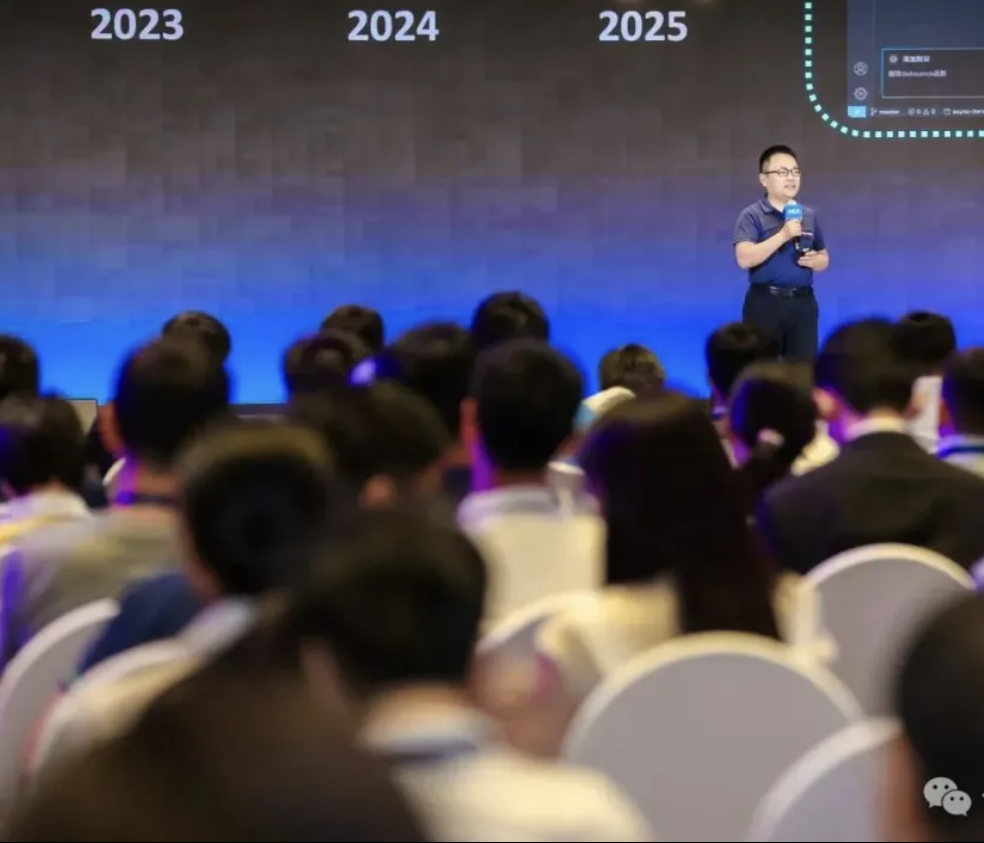
Baidu’s Chief AI Architect Training Program (AICA) Attracts Numerous Industry Giants : Baidu’s ninth Chief AI Architect Training Program (AICA) attracted technical executives from many well-known enterprises, including Kweichow Moutai, Mercedes-Benz, McDonald’s, State Grid, and Sinopec. The program leverages Baidu’s PaddlePaddle deep learning platform and Wenxin large models, aiming to cultivate复合型 AI architects who understand both technical development and project implementation. This session’s curriculum focuses on large model applications, introducing cutting-edge technologies like multi-agent collaboration for the first time. Attending guests emphasized the significance of large models in driving industrial transformation and offered advice on how AI architects can keep pace with large model development, reflecting Chinese enterprises’ emphasis on AI talent cultivation and industrial implementation. (Source: 量子位)
Industrial Automation Startup Squint Raises $40 Million to Accelerate Human-Robot Collaboration in Manufacturing : Industrial automation startup Squint recently completed a $40 million funding round, aiming to advance its “agentic manufacturing” vision, which involves deep collaboration between humans and AI agents in manufacturing. This investment will help Squint develop more AI-driven solutions, improve industrial production efficiency and automation levels, signaling that AI will play an increasingly important role in traditional manufacturing and may change future work models. (Source: dl_weekly)
🌟 Community
Discussions on AI’s Impact on Employment and Human Society Continue to Heat Up : As AI technology rapidly advances, discussions about its impact on the job market and social structure are intensifying. AI godfather Hinton predicts that blue-collar jobs like “plumbers” may be safer than white-collar jobs in the future, as AI still has limitations in physical operations. Among Gen Z college students in the U.S., 42% have already shifted towards blue-collar or skilled trades to mitigate AI replacement risks. Simultaneously, the community is discussing the redefinition of human meaning in the AGI era, simple and effective AI applications within enterprises, and whether the AI field is still in its “infancy,” among other profound questions. (Source: Hinton预言成真,AI接管美国一半白领,牛津哈佛扎堆转行做技工, Ronald_vanLoon, Reddit r/artificial, Reddit r/ArtificialInteligence, Reddit r/ArtificialInteligence)

Discrepancy Between Large Model Development Speed and User Perception : Social media evaluations of GPT-5 show a polarized view, with some users finding its performance improvement unremarkable, even feeling like a return to older versions, while others believe it excels in specific tasks. This perceptual difference reflects that large model development may be shifting from “explosive” breakthroughs to more stable iterations, where each update’s improvement is no longer just about benchmark scores but more comprehensive system-level optimizations, such as cost reduction, hallucination reduction, longer context, and improved consistency. Meanwhile, Elon Musk’s repeated failure to deliver on his promise to open-source Grok has also raised questions about his priorities within the community. (Source: jeremyphoward, scaling01, teortaxesTex, Reddit r/LocalLLaMA, Reddit r/ArtificialInteligence)

AI Programming Assistant Usage Experience and Limitations : AI programming assistants like Claude Code and Codex CLI are highly praised for improving programming efficiency, with users stating they have completely changed engineering priorities, leading to a 10x increase in product performance. However, these tools also have limitations, such as Claude Code getting stuck in a “bug-finding loop” during debugging, or using outdated dates when performing web searches. Users have found that teaching AI to use more powerful CLI tools (like sed and ripgrep) can significantly boost its efficiency, but this also exposes AI’s shortcomings in autonomous learning and adapting to new tools, as well as its reliance on human guidance. (Source: Reddit r/ClaudeAI, Reddit r/ClaudeAI, Reddit r/ClaudeAI, Reddit r/ClaudeAI, Reddit r/ClaudeAI)

AI Ethics, Social Impact, and Future Outlook Spark Widespread Discussion : The community has engaged in deep discussions about the ethical and social impacts of AI. Topics include whether AI poses an existential risk (some jokingly suggest “AI will kill all cats and dogs” might be more convincing), AI’s impact on human lifestyles in a post-singularity era, and new forms brought by AI in storytelling and art creation. Simultaneously, some draw parallels between current AI concerns and historical resistance to computers, suggesting history is repeating itself. Regarding AI’s future, people envision various possibilities, from AI-assisted social governance to human-AI symbiosis, and even AI surpassing human intelligence, but it is generally believed that AI’s progress will be exponential. (Source: hyhieu226, JimDMiller, teortaxesTex, Reddit r/artificial, Reddit r/artificial, Reddit r/deeplearning, Reddit r/artificial, yupp_ai)

Observations on AI Industry Ecosystem and Competitive Landscape : Industry observers note that the barrier to entry for AI startups is lowering, with sufficient funding and GPUs enabling the creation of near-SOTA models within a year. China is making rapid progress in robotics technology, contrasting with the U.S. DeepSeek is praised for its “non-scam” business model, while the Kimi K2 model is favored by users for its “cool and charming” personalization and powerful vocabulary. Meanwhile, for AI researchers, there’s advice to be wary of excessive socializing at the expense of coding. (Source: teortaxesTex, teortaxesTex, teortaxesTex, crystalsssup, shlomifruchter, Reddit r/LocalLLaMA)

💡 Other
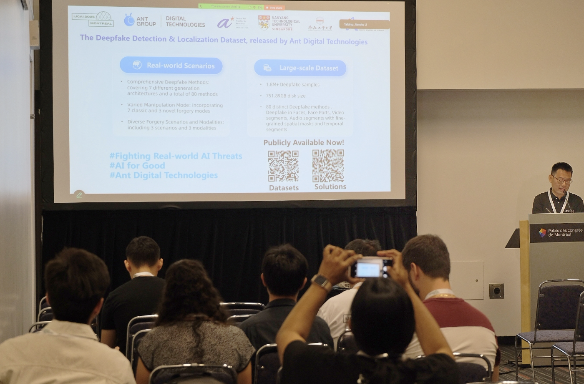
Ant Digital Technologies and Stanford University Open-Source Deepfake Localization Datasets, Aiding AI Algorithm Explainability : During the International Joint Conference on Artificial Intelligence (IJCAI), Ant Digital Technologies and Stanford University separately open-sourced two major deepfake datasets. Ant Digital Technologies open-sourced a 1.8 million training dataset (DDL-Datasets), covering over 80 deepfake techniques such as face forgery, video tampering, and voice cloning, with clear annotations of the AI-generated fake content’s location and timestamp on screen. This aims to enhance algorithm explainability. Stanford University, meanwhile, open-sourced the DeepAction dataset, containing 2,600 AI-generated human motion videos. The release of these datasets will provide critical foundational data resources for global researchers, promoting the development of AI security identification technologies to counter fraud risks posed by generative AI. (Source: 量子位)
Exploring AI Applications in Bioacoustics and Disaster Search and Rescue : AI technology is being applied in several non-traditional fields. For example, AI, through bioacoustic analysis, helps scientists identify and protect endangered species, thereby promoting environmental conservation. Additionally, research explores using AI-powered “backpack-wearing” bionic beetles for disaster search and rescue, leveraging their ability to navigate through rubble to find survivors. These cases demonstrate AI’s immense potential in solving complex problems across disciplines, as well as its practical value in environmental monitoring and humanitarian aid. (Source: Ronald_vanLoon, Ronald_vanLoon)

AI Conference Visa Challenges Highlight Global Academic Exchange Hurdles : Some researchers have reported difficulties obtaining visas to attend international AI conferences (such as ICCV 2025 held in Hawaii), with rejections even for invited academic presentations. This issue has sparked discussions about the selection of venues for large academic conferences and virtual accessibility, calling on conference organizers to consider locations more accessible to global researchers or provide more comprehensive online participation options to ensure fairness and inclusivity in academic exchange, preventing visa barriers from hindering international collaboration and knowledge sharing. (Source: Reddit r/MachineLearning)