
🔥 Spotlight
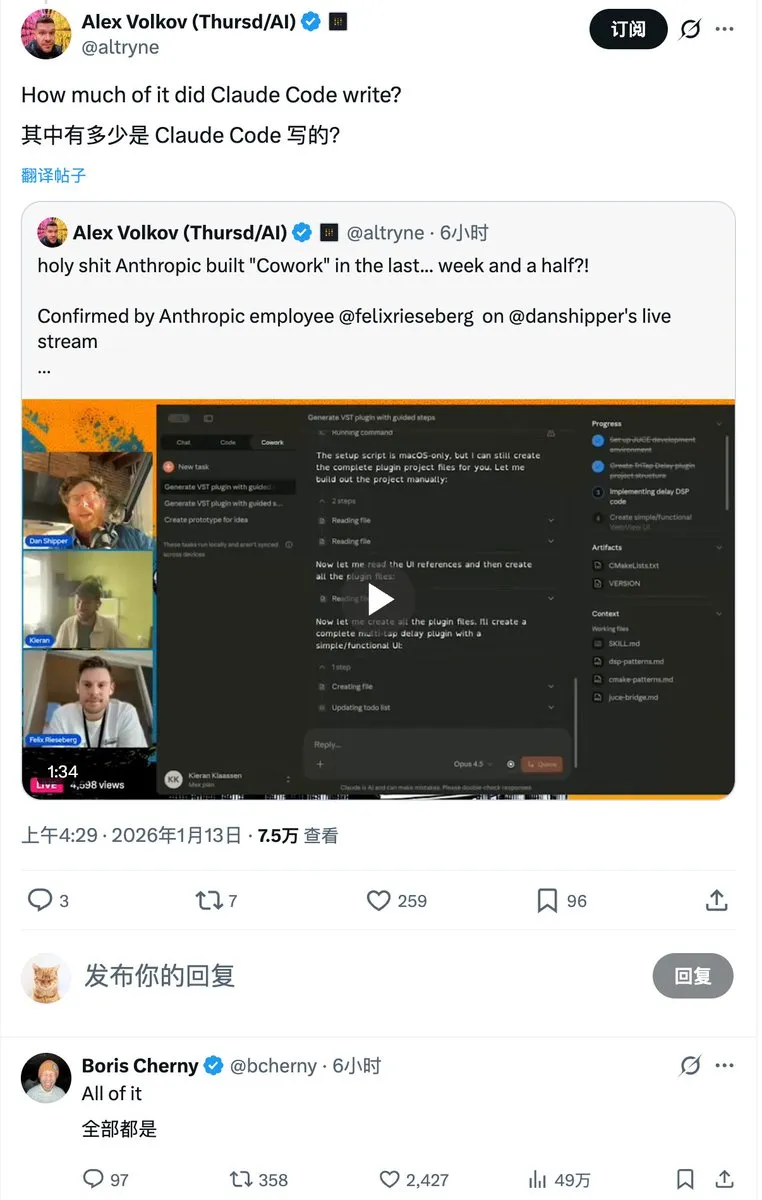
Anthropic Releases Claude Cowork, Sparking an Office Revolution: Anthropic has launched Claude Cowork, an AI agent designed for non-technical users, marking the official entry of office scenarios into the Agent era. Built on the Claude Agent SDK, this tool does not seek a full system-level takeover; instead, it manages files, processes data, and generates content through authorized folder permissions. Remarkably, 100% of its code was autonomously written by Claude Code within 10 days. This “AI creating AI” loop demonstrates the prototype of Recursive Self-Improvement (RSI). The core value of Cowork lies in compressing high-frequency, low-risk, but time-consuming intermediate costs, liberating employees from tedious file management—though it has also triggered deep professional anxiety regarding whether “humans are redundant at their desks” (Source: Anthropic, Boris_Cherny, Reddit)
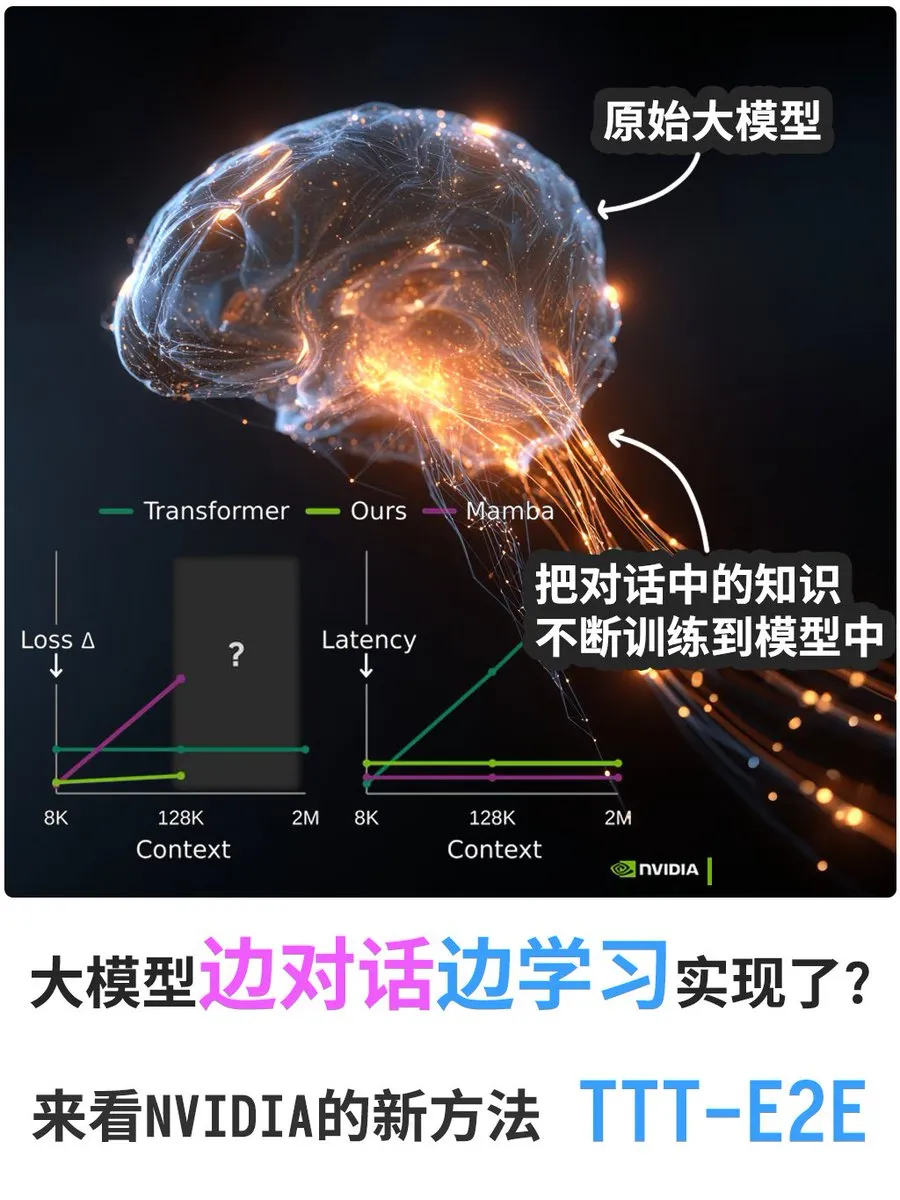
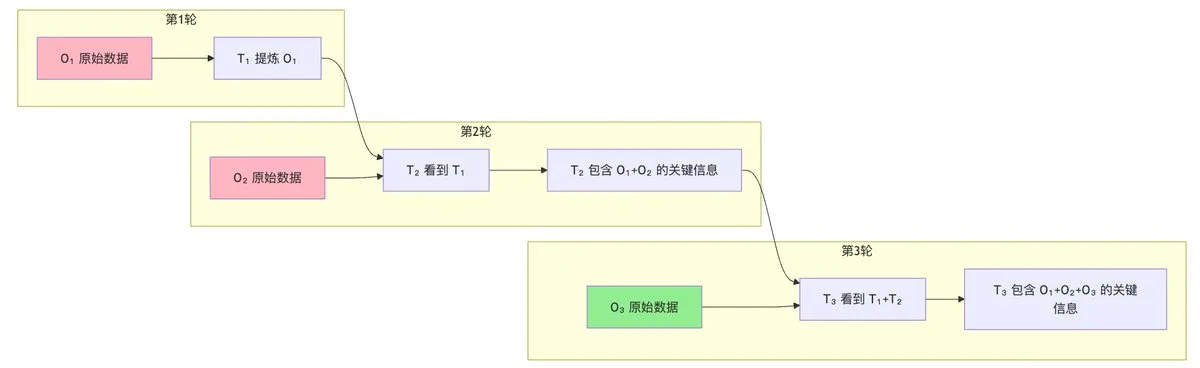
NVIDIA Open-Sources TTT-E2E: A New Paradigm for LLM Memory Compression: NVIDIA, in collaboration with Stanford and other institutions, has released the TTT-E2E (End-to-End Test-Time Training) method, redefining long-context modeling as a continuous learning task. This approach allows the model to update its weights in real-time during inference by predicting the next token, effectively compressing context into model parameters. Experiments show a 2.7x speedup at 128K context and up to 35x at 2M context, with constant inference latency. This addresses the computational cost explosion of the Transformer architecture when processing ultra-long sequences. It is the first long-context solution to perform excellently in both loss and latency dimensions, signaling a new era of “learning while using” for LLM memory management (Source: NVIDIA, karminski3)
Google Releases UCP Protocol, Opening a New E-commerce Era of “Conversation as Transaction”: Google, alongside giants like Shopify and Walmart, has released the Universal Commerce Protocol (UCP), aimed at establishing a unified commercial language for AI Agents. UCP standardizes stages such as product discovery, price comparison, and checkout, allowing users to complete purchases without leaving Gemini or the search interface. This move directly challenges the moats of centralized e-commerce platforms like Amazon, shifting traffic distribution from “capturing time” to “executing intent.” While Amazon maintains a defensive stance, Ant International is actively embracing it, seeking to become the universal payment infrastructure for the AI era. This marks the transition of e-commerce from the GUI click era to the IUI (Intelligent User Interface) conversational execution era (Source: Google, 36Kr)
Apple and Google Reach Deep Partnership, Gemini to Power Apple Intelligence: Apple has officially announced a multi-year partnership with Google, stating that the next generation of Apple Foundation Models will be based on Google’s Gemini models and cloud technology. After evaluation, Apple concluded that Google’s AI technology provides the strongest foundation. This move will significantly enhance Siri’s personalization capabilities and other Apple Intelligence features. This collaboration not only reshapes the competitive landscape of mobile AI but also marks a key strategic win for Google in the “entry point war” against OpenAI, further consolidating its leadership in the foundation model field (Source: Google, TheRundownAI)

🎯 Trends
Zhipu AI Releases GLM-Image: Hybrid Architecture for “Cognitive Generation”: Zhipu AI has open-sourced the image generation model GLM-Image, utilizing a hybrid “Autoregressive Generator + Diffusion Decoder” architecture. The model excels in text rendering and knowledge-intensive generation scenarios, perfectly solving the challenge of rendering multiple lines of text in posters, PPTs, and complex logic diagrams. Its autoregressive component is based on GLM-4-9B, optimized for semantic alignment via GRPO reinforcement learning, ranking first in multiple benchmarks. This marks a new height for domestic open-source image models in semantic understanding and detail fidelity (Source: Zai_org, huggingface)

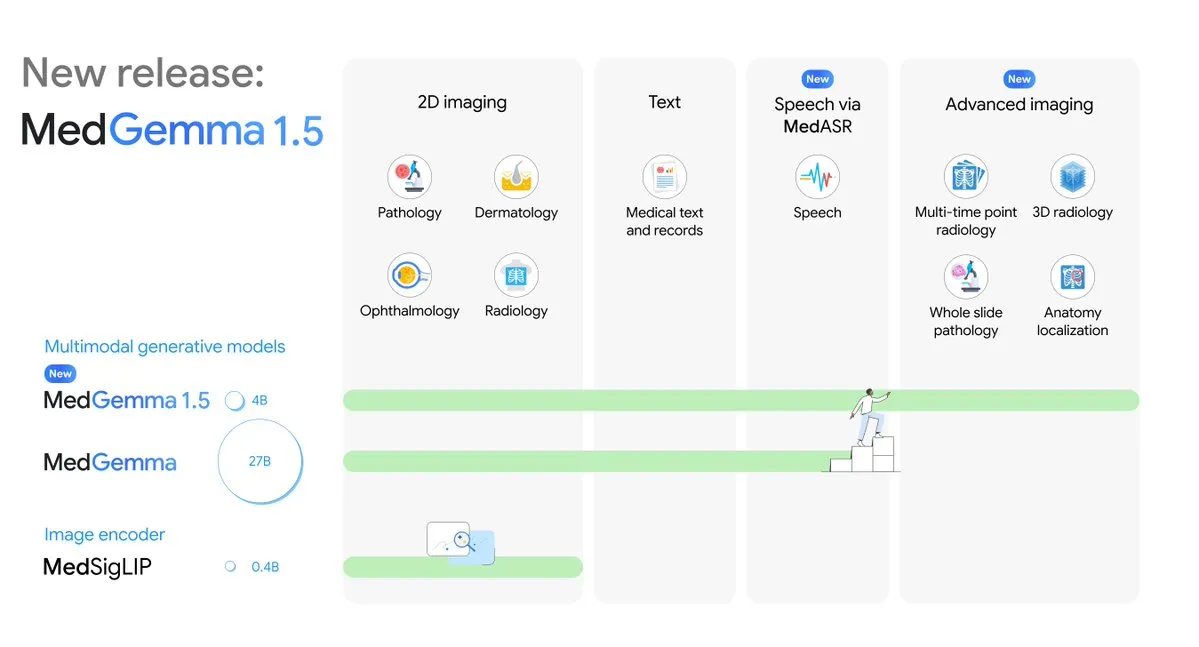
Google Releases MedGemma 1.5: Deep Dive into the Medical Vertical: Google has introduced the MedGemma 1.5 open models, specifically optimized for medical imaging and clinical record understanding. At only 4B in size, the model can run offline and supports the interpretation of 3D volumetric data such as CT and MRI scans. It has achieved significant accuracy improvements in X-ray anatomical localization and Electronic Health Record (EHR) understanding. Additionally, the released MedASR model improves the precision of medical speech-to-text. This demonstrates Google’s leading strategy in converting general large model capabilities into vertical industry productivity (Source: GoogleDeepMind, _philschmid)
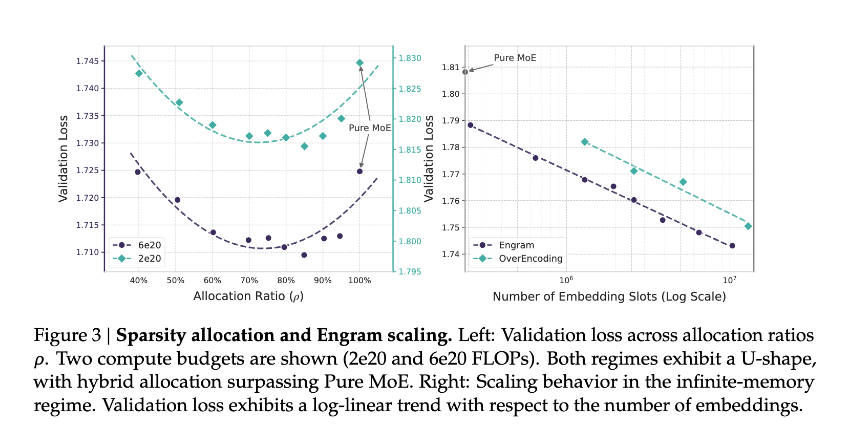
DeepSeek Launches Engram: Conditional Storage Module Optimizes Inference Costs: DeepSeek has proposed the Engram module, which shares the static retrieval tasks of the Transformer by adding scalable Lookup operations. The module learns embeddings for common patterns through hash indexing and utilizes a context-aware gating mechanism for mixed representation. Engram aims to increase parameter capacity without increasing the computation per token; experiments show it is highly competitive at the 27B scale. This “systems-thinking” driven architectural innovation again reflects DeepSeek’s pursuit of extreme inference efficiency and cost control (Source: suchenzang, tokenbender)
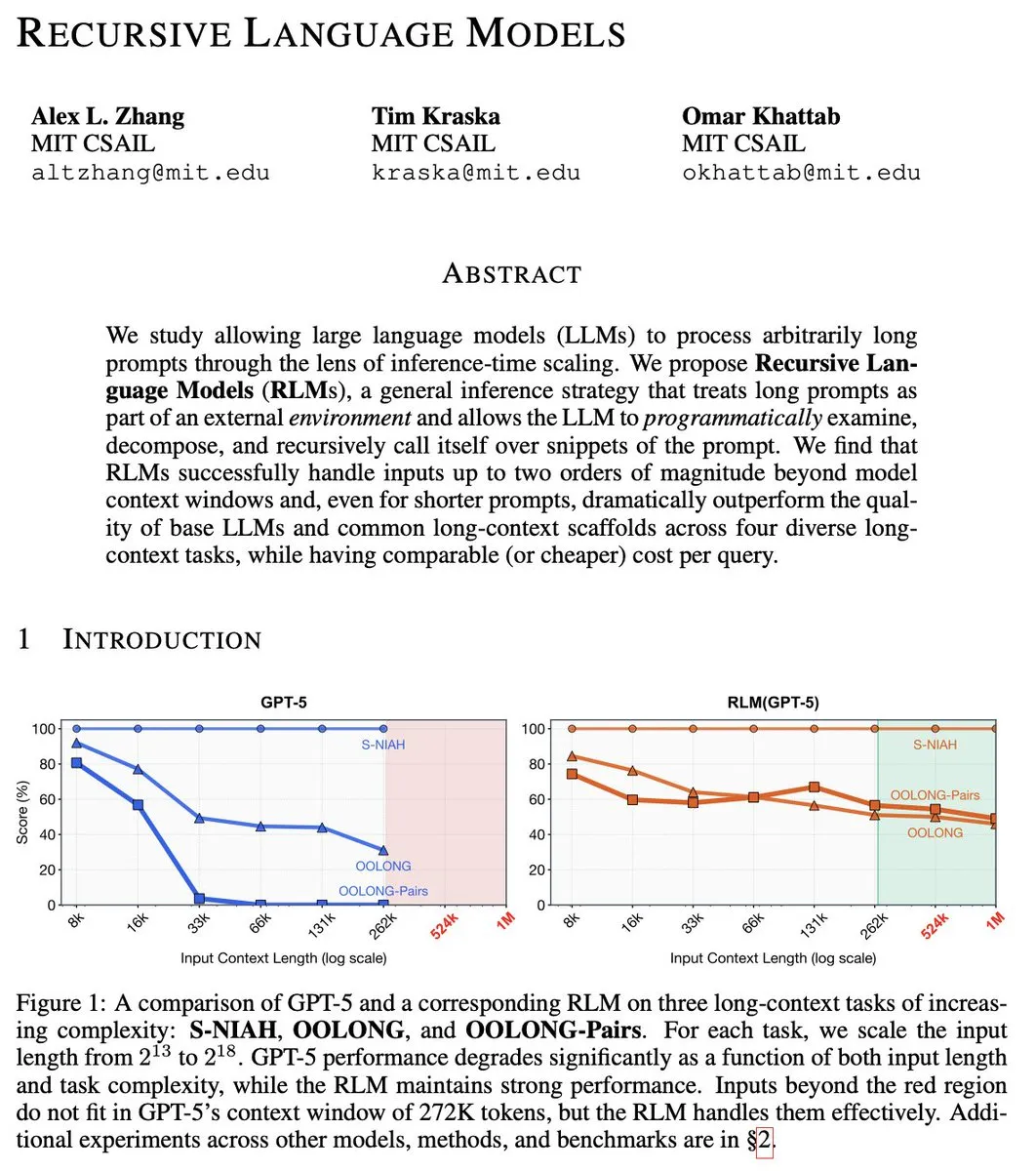
Recursive Language Models (RLM) to Become the New Trend in 2026: Stanford University and other institutions have proposed the concept of Recursive Language Models (RLM), suggesting that 2026 will see a leap from reasoning models to recursive models. The core of RLM is to allow the model to treat “its own prompts” as actionable objects, achieving symbolic recursion through code rather than simple tool calls. This approach can handle ultra-long tasks with tens of millions of tokens, achieving global consistency rather than just local relevance, opening up space for complex long-range applications like AI scientists (Source: riemannzeta, lateinteraction)
🧰 Tools
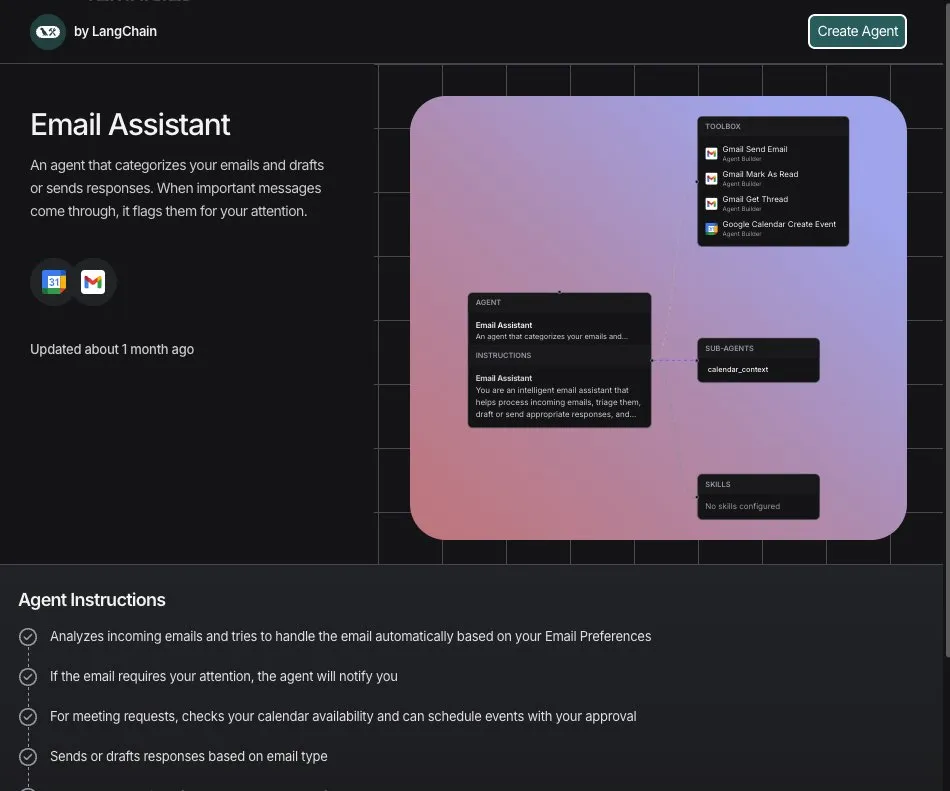
LangSmith Agent Builder Officially Launched: LangChain has released LangSmith Agent Builder, a no-code agent construction tool. It supports the rapid creation of agents with memory, skills, and MCP server access through natural language dialogue. The tool features a built-in “Agent Inbox” for human-in-the-loop collaboration, allowing users to review critical agent decisions. Its high ease of use has led the community to joke that “even VCs can easily use it,” significantly lowering the barrier to entry for enterprise-level Agent development (Source: LangChain, hwchase17)
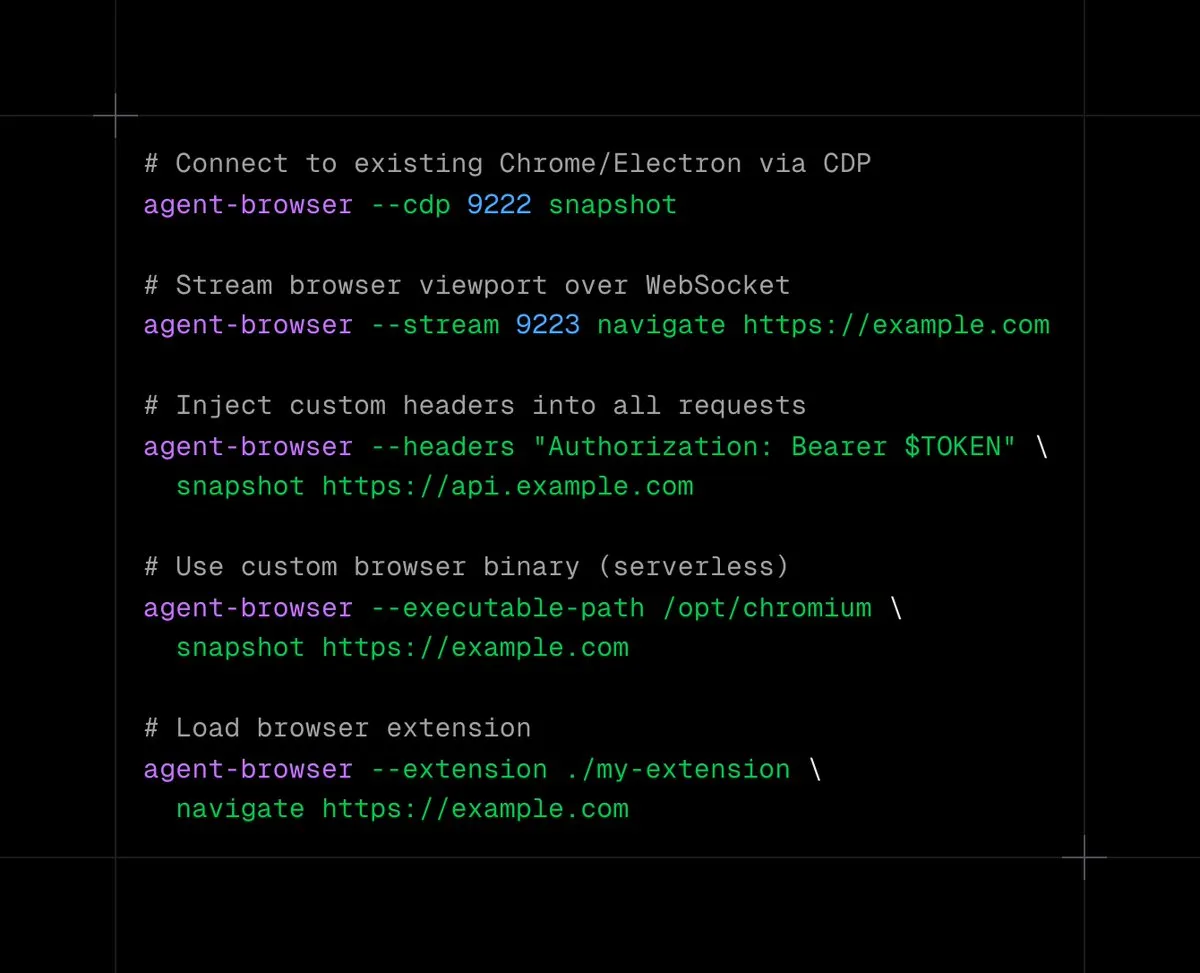
Open-Source Cowork Clones and Local Agent Tools Emerge: In response to Claude Cowork being limited to subscribers, the developer community reacted quickly. The MiniMax team took only half a day to clone an open-source version, agent-cowork, which supports any compatible API. Another developer released TerminaI, focusing on local-first and a “System 2” strategy engine, emphasizing privacy and autonomous control. Additionally, agent-browser v0.5.0 was released, supporting CDP mode and plugins, allowing Agents to operate browser environments more flexibly (Source: MiniMax_AI, andersonbcdefg, Reddit)
Soprano-Factory: Ultra-Lightweight Real-Time TTS Training Framework: Developer Eugene has released Soprano-Factory, which supports training ultra-lightweight, high-fidelity TTS models with only 80M parameters. The model can reach 20x real-time speed on CPU and 2000x on GPU, with latency as low as 15ms. Users can customize voice styles using their own data and hardware. This extremely lightweight tool provides critical support for achieving natural voice interaction on edge devices (Source: Reddit)

📚 Learning
Sci-Reasoning: The First Dataset Decoding AI Innovation Patterns: Researchers have released the Sci-Reasoning dataset, identifying 15 scientific reasoning patterns by tracking the evolution of papers in top journals like NeurIPS. Analysis shows that “gap-driven reconstruction” and “cross-domain synthesis” are mainstream innovation strategies. This dataset provides structured thought trajectories for training the next generation of AI research agents (Source: _akhaliq, HuggingFace)
RealMem: A Memory Interaction Benchmark for Long-Range Projects: Addressing the issue of LLM memory failure in long-term collaboration, the RealMem benchmark has been officially released. It contains over 2,000 cross-session dialogues, simulating goal tracking and dynamic context dependency in real projects. Experiments show that current memory systems still face significant challenges in handling complex long-range project states (Source: HuggingFace)
Awesome Physical AI: A Collection of Embodied AI Resources: The community has compiled the Awesome Physical AI resource library, covering cutting-edge papers on VLA models, world models, and robot foundation models. Organized by dimensions such as foundations, architecture, and action representation, this list serves as an authoritative guide for developers to dive deep into the intersection of physical AI and robotics (Source: Reddit)

💼 Business
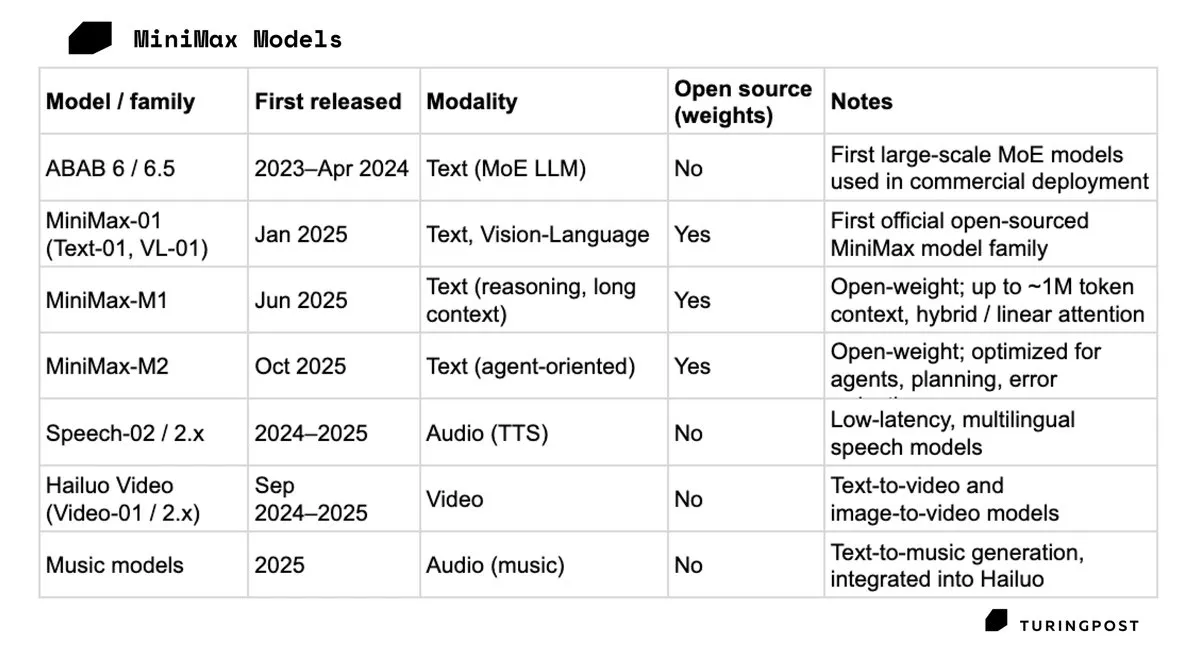
Zhipu and MiniMax List in Hong Kong, Market Caps Both Exceed 100 Billion: Domestic large model leaders Zhipu AI and MiniMax have successively listed on the HKEX, with surging stock prices pushing market values above 100 billion HKD. Zhipu represents the infrastructure route, while MiniMax validates the monetization capability of C-end product matrices. This marks the official entry of domestic AI assets into the secondary market pricing stage, completing a stunning leap from technical imagination to commercial closure (Source: 36Kr, MiniMax_AI)
OpenAI Acquires Torch Health, Doubling Down on ChatGPT Health: OpenAI has announced the acquisition of medical startup Torch Health, aiming to integrate medical expertise into ChatGPT. This move, alongside actions by domestic firms like Baichuan Intelligence in the serious medical field, suggests that AI doctors are evolving from light health consultations to deep clinical decision-making based on medical logic, with healthcare equity potentially realized through AI (Source: BorisMPower, thekaransinghal)
Anthropic Invests $1.5 Million to Support Python Ecosystem Security: Anthropic has announced a $1.5 million investment in the Python Software Foundation (PSF), focused on enhancing the security of Python and PyPI. As the underlying language of the AI industry, Python’s robustness is critical. This move demonstrates the AI giant’s commitment to giving back to the open-source ecosystem and its long-term strategic planning (Source: knthlien, arohan)

🌟 Community
Ralph Wiggum Loop: 5 Lines of Code Break the AI Programming Ceiling: Australian developer Geoffrey Huntley wrote a 5-line Bash script while :; do cat PROMPT.md | claude-code ; done that shook Silicon Valley. This “brute-force iteration” mode forces the AI to face errors and autonomously retry until it passes tests. The head of Claude Code admitted that 100% of its contributions were completed by AI through such loops. The community predicts 2026 will be the year of the “Ralph Loop wrapper,” as software development shifts from waterfall to true AI agile evolution (Source: dotey, 36Kr)
“Vibe Coding” Sparks Discussion on Professional Value: Karpathy’s comment about “feeling behind” triggered collective anxiety among developers. The community is debating the divide between “Vibe Coding” and “Lucid Coding”: the former is entirely AI-driven, while the latter involves humans as conductors performing conscious orchestration. The consensus is that the programmer’s role is being reconstructed as an Agent Architect, where maintaining agent.md becomes a core skill, and developers who reject AI risk “permanent underclassing” (Source: dotey, 36Kr)
“Dead Internet Theory” Becomes Reality: Reddit Bot Proliferation: Social media mods are warning that the internet is being taken over by LLM-driven bots. One moderator revealed that the number of banned bots surged from 2-3 per week to over 50, with content generation speeds far exceeding human reading limits. This “zombie network” not only destroys community culture but also causes irreversible pollution to future elections and AI training data sources, sparking deep concerns about a “post-truth era” (Source: Reddit)
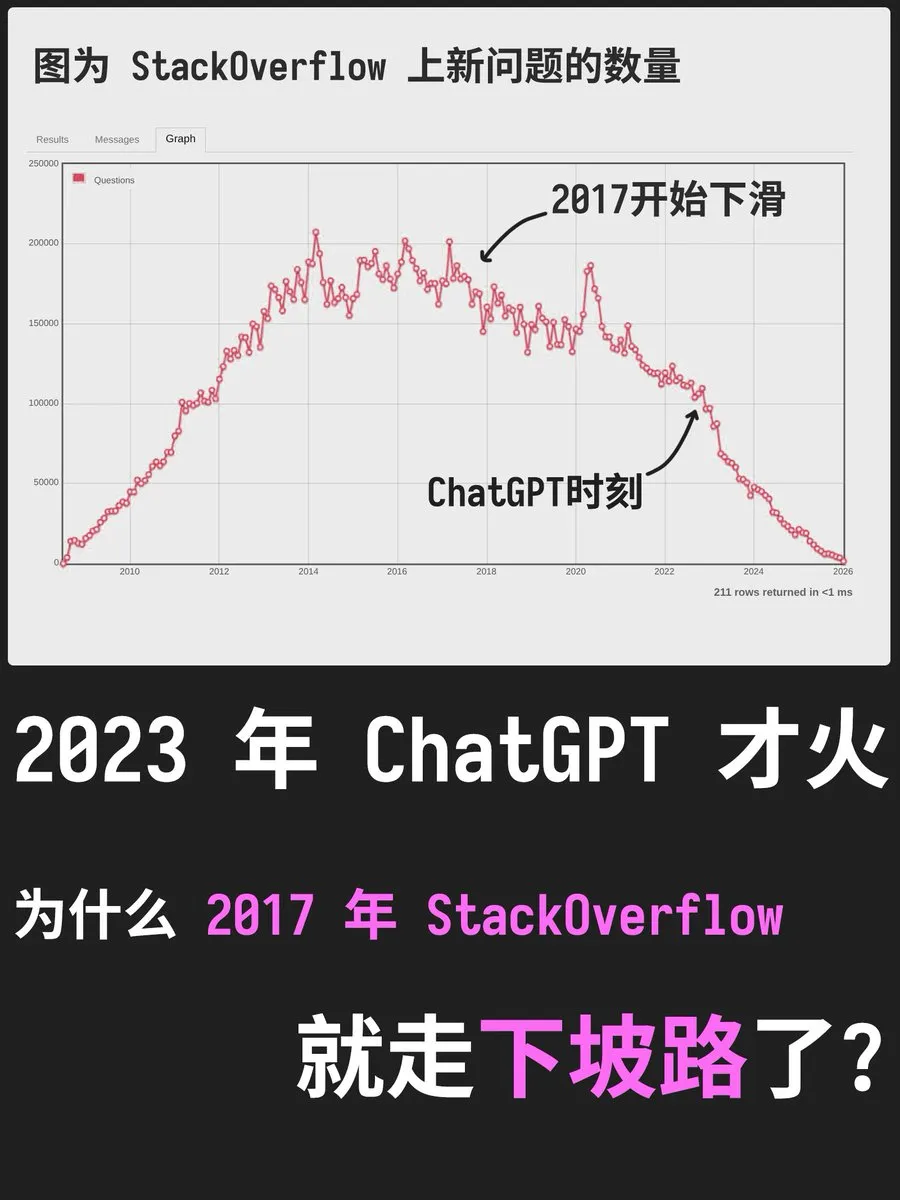
The Death of StackOverflow: AI Delivers the Final Blow: Discussions suggest that StackOverflow’s traffic dropping to nearly zero is not entirely due to ChatGPT, but began with a toxic community culture and rigid patterns in 2017. The emergence of AI simply provided a more attractive alternative to this “arrogant hall of human experts.” However, the shrinking of high-quality Q&A communities also raises concerns about the depletion of future AI training data (Source: karminski3)
💡 Others
US Launches “Project Genesis”: The AI Version of the Manhattan Project: Trump signed an executive order to launch “Project Genesis,” aimed at fully empowering scientific research through AI by integrating 100PB of federal data and resources from 17 national laboratories. The plan is seen as a sign of the US shifting from laissez-faire to a mission-oriented national tech strategy, aiming to reshape the global tech power structure (Source: 36Kr)
Full-Process AIGC Animated Film Ignites Controversy: China’s first full-process AIGC animated film, Red Boy: Heart of Fire, has begun production, claiming a 20x increase in production efficiency. Although the technology solves issues like flickering and character consistency, the creator community remains strongly resistant to the “cheap” feel of AI lacking a “soul.” This marks AI’s leap from an auxiliary tool to a production tool in the content industry, while also facing massive challenges in aesthetics and emotional resonance (Source: 36Kr)