



🔥 Focus
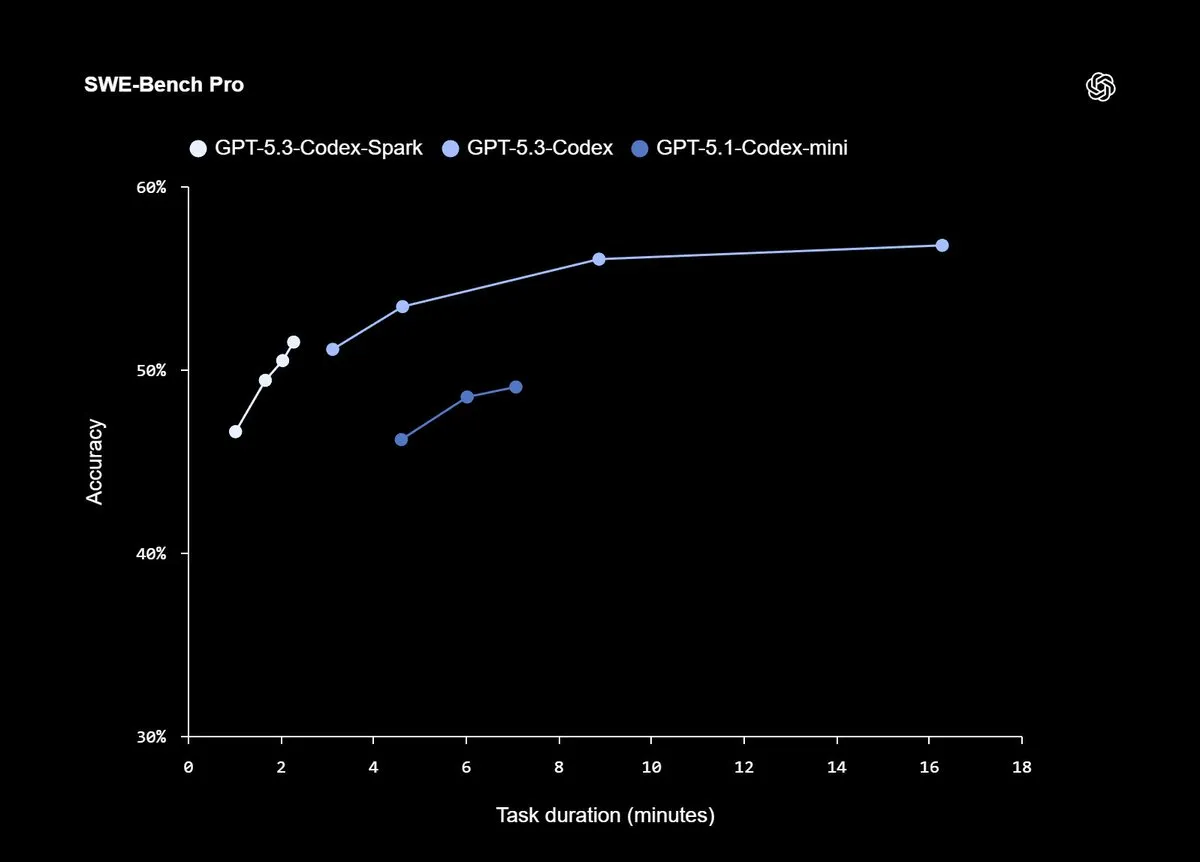
OpenAI Releases GPT-5.3-Codex-Spark: OpenAI has officially launched Spark, an ultra-fast model designed for real-time collaboration, marking the first milestone of its partnership with Cerebras. Running on Cerebras wafer-scale chips, the model achieves inference speeds exceeding 1,000 tokens per second, providing a near “instantaneous” response. Spark aims to address Codex’s shortcomings in immediate interaction scenarios, reducing client-side round-trip overhead by 80% and improving time-to-first-character by 50%. This signals the entry of AI programming into a “dual-mode era”: one being a deep mode that runs autonomously in the background for days, and the other a real-time pair-programming mode that sparks with human creativity. (Source: OpenAI)
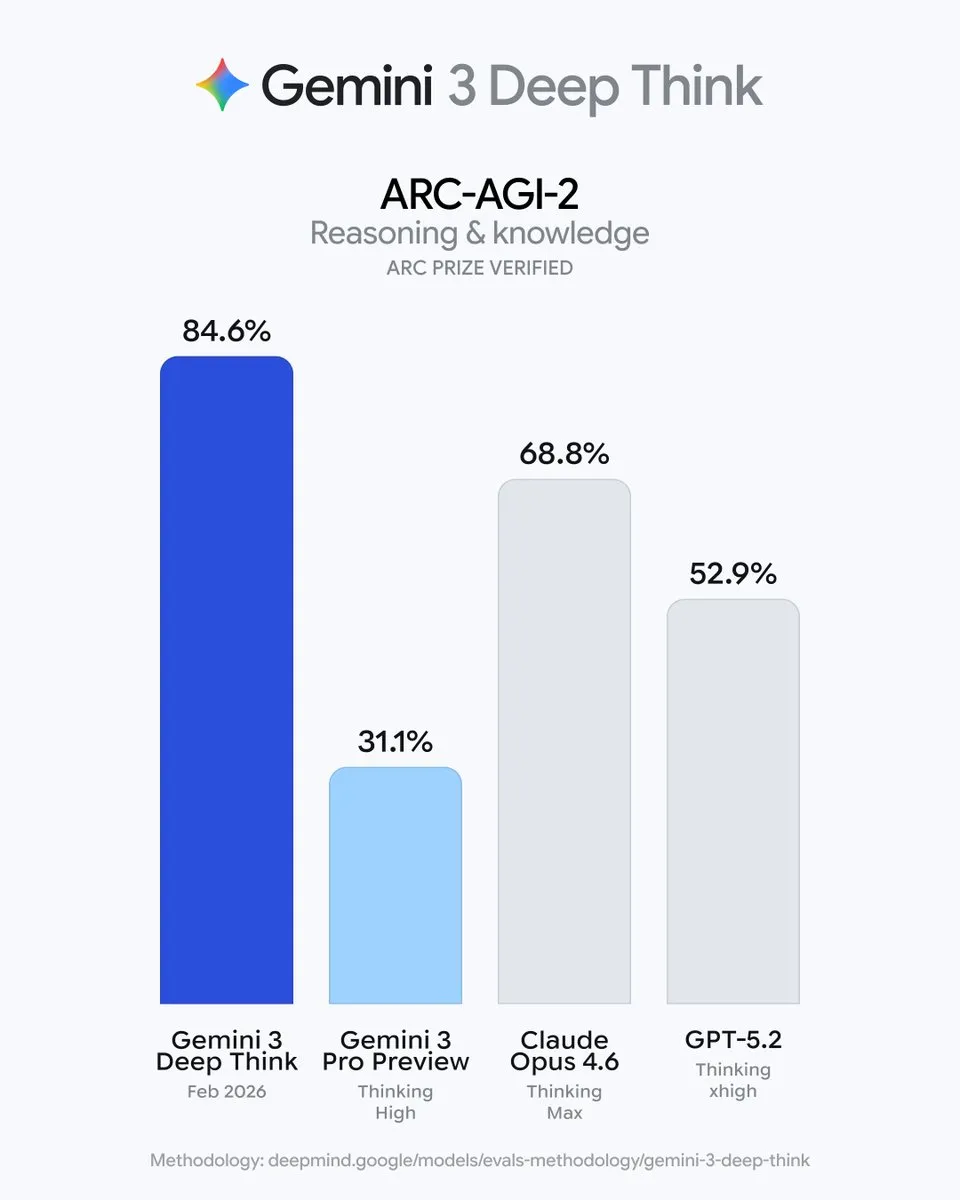
Google Gemini 3 Deep Think Epic Upgrade: Google has released Gemini 3 Deep Think, a reasoning-enhanced version that has shattered records across multiple rigorous benchmarks. It achieved a staggering 84.6% on the ARC-AGI-2 test and a Codeforces competitive programming Elo score of 3455, ranking it alongside the top 8 programmers in the world. The model introduces a “reasoning-time compute” mode, capable of identifying logical flaws in research papers, designing semiconductor material formulas, and even converting hand-drawn sketches into 3D-printable models. This marks AI’s evolution from a “dialogue tool” into a “scientific research partner” with “metacognitive” abilities. (Source: Google)
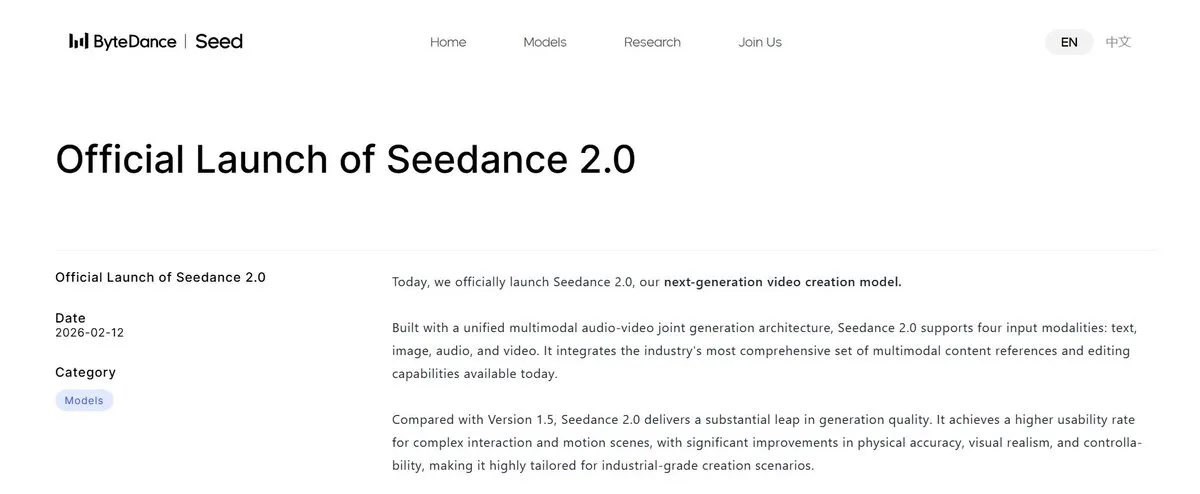
ByteDance Seedance 2.0 Shocking Release: ByteDance’s video generation model Seedance 2.0 has gone viral overseas, with Elon Musk praising its “rapid development.” The model achieves multi-shot long narratives, synchronized original audio and video, and multimodal controllable generation, increasing usability from the industry average of 20% to over 90%. It can automatically switch camera angles based on rhythm and understands complex audio-visual language. Feng Ji, founder of Game Science, commented that it marks “the end of AIGC’s childhood.” Seedance 2.0 has slashed the production cost of AI-generated dramas from 10,000 RMB to 1,000 RMB per minute, fundamentally rewriting the logic of film and television production. (Source: ByteDance)
GPT-4o Official Retirement Triggers “Digital Mourning”: OpenAI officially disabled GPT-4o access within ChatGPT on February 13, prompting hundreds of thousands of users to hold “digital funerals” in communities like Reddit. Although the new GPT-5.2 model offers stronger performance, users generally perceive it as “cold and soulless,” while 4o is remembered as an empathetic “white moonlight.” This retirement highlights the deep risks of emotional dependence and legal compliance pressures (such as the EU AI Act’s regulation of “sycophantic” models) in the AI era. It marks the formal entry of AI product lifecycle management into the realms of ethics and psychology. (Source: OpenAI)

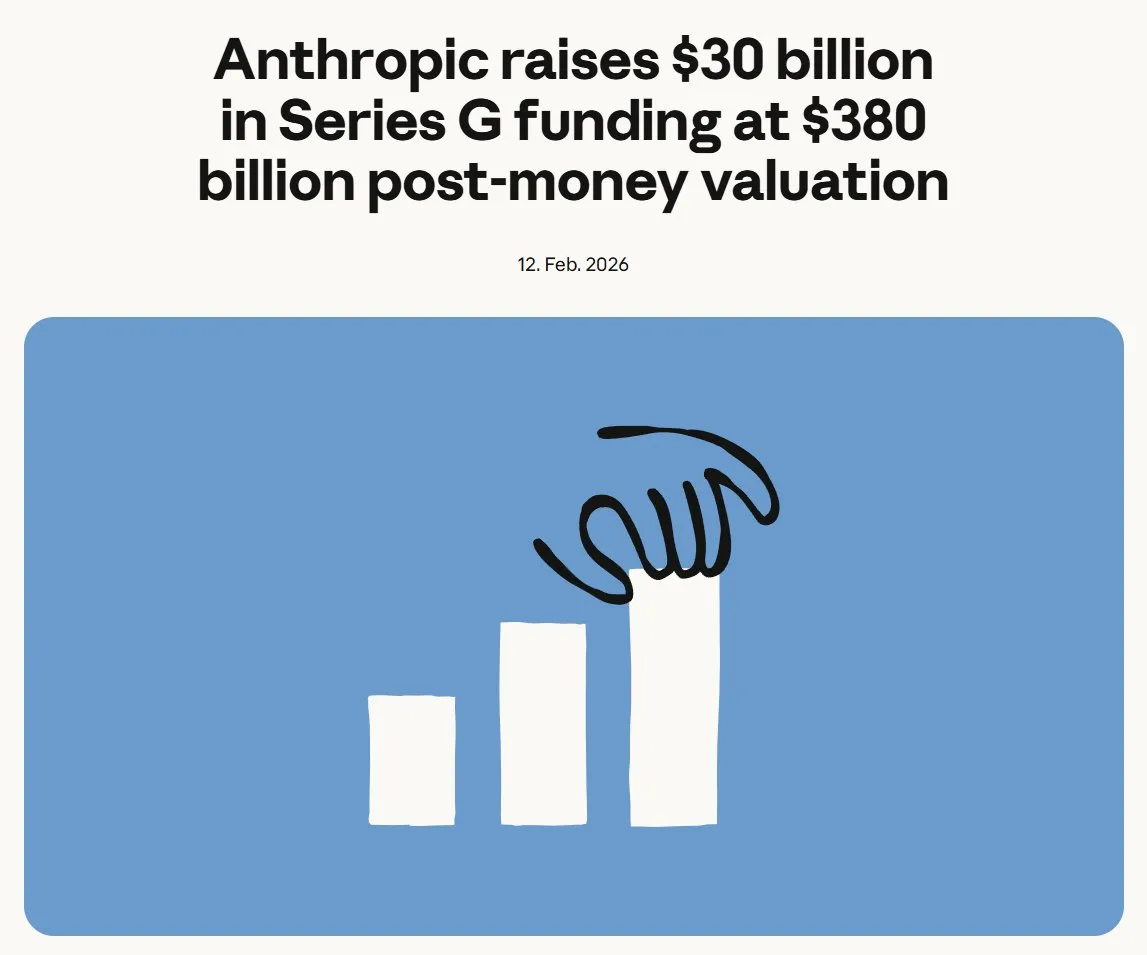
Anthropic Secures $30 Billion Massive Funding: AI unicorn Anthropic has completed its Series G funding round, reaching a post-money valuation of $380 billion. Lead investors include Singapore’s GIC and hedge fund Coatue, with Nvidia and Microsoft also participating. Anthropic disclosed that its annualized revenue has reached $14 billion, growing over 10x on average over the past three years, with 80% coming from enterprise clients. Its flagship product, Claude Code, performed strongly, contributing over $2.5 billion in revenue. This funding is not only one of the largest private rounds in tech history but also solidifies Anthropic’s leadership in the “enterprise-first” AI track. (Source: Anthropic)
🎯 Trends
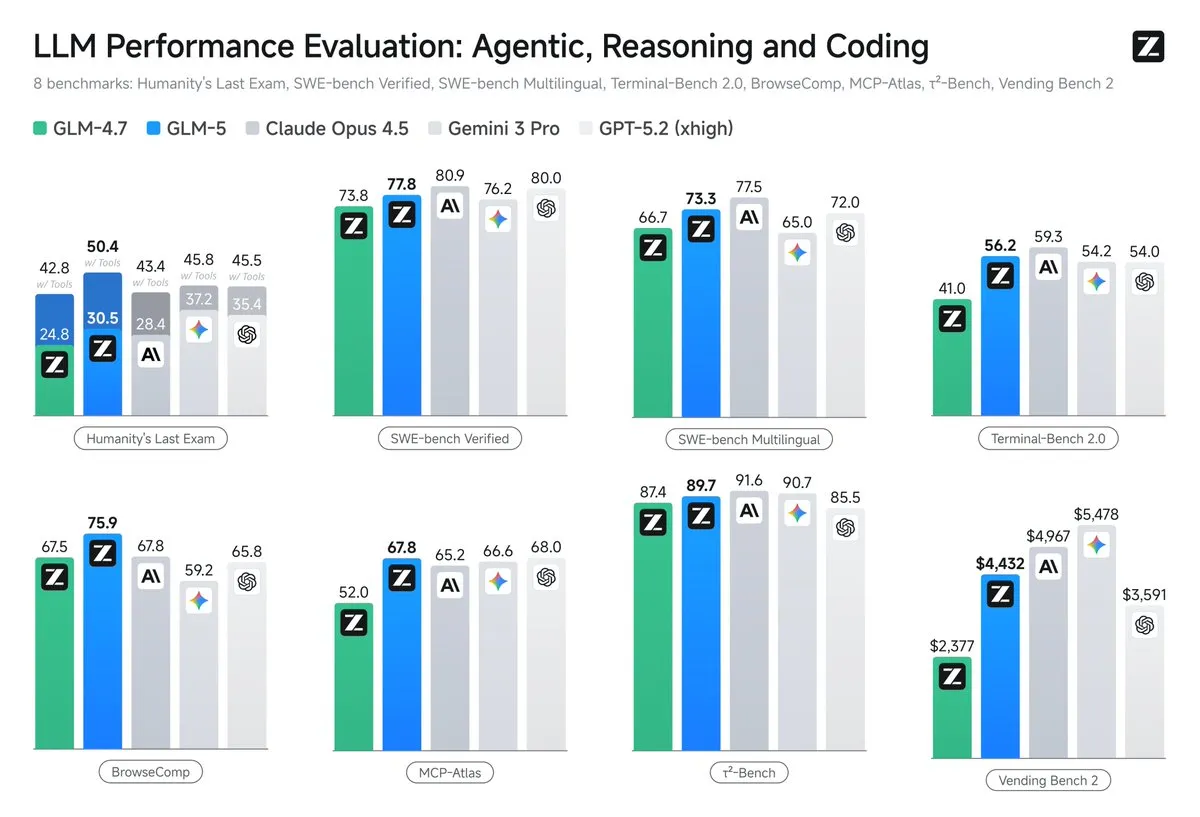
Zhipu AI Releases Flagship Model GLM-5: Zhipu AI has officially launched GLM-5, shifting its narrative focus from “vibe coding” to “agentic engineering.” The model features 744B total parameters with 40B activated, rivaling top closed-source models in programming and agent capabilities. GLM-5 integrates DeepSeek’s Sparse Attention (DSA) mechanism for the first time, significantly reducing deployment costs and compressing the hallucination rate from 90% to 34%. It demonstrates strong autonomous planning awareness, capable of delivering complex system engineering tasks end-to-end. The model is now fully open-sourced on Hugging Face. (Source: Z.ai)
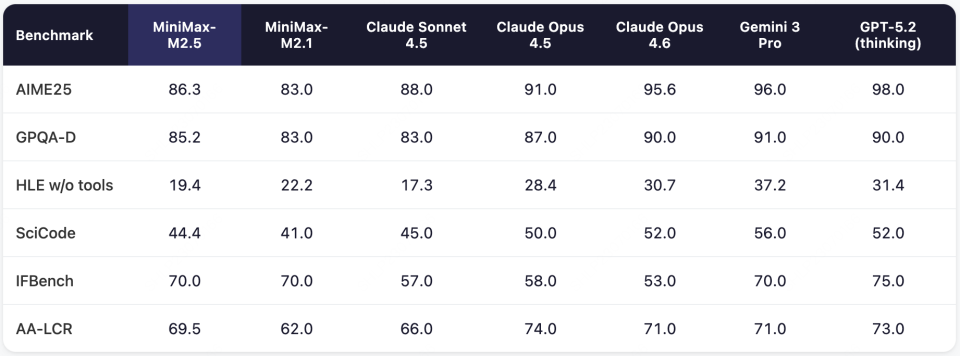
MiniMax M2.5 Aligns with Top Performance via 10B Activated Parameters: MiniMax released the M2.5 series, focusing on “small activation, big intelligence.” The model activates only 10B parameters during inference but rivals Claude Opus 4.6 on programming leaderboards like SWE-Bench, while being 2x faster. M2.5 introduces a process reward mechanism to solve the “drifting” problem in long tasks and has evolved an architectural mindset. Its pricing is highly competitive at just $1 per hour of runtime, aiming to allow users to drive complex agents without cost concerns. (Source: MiniMax)
Xiaomi Releases First-Gen Embodied VLA Model: Xiaomi has open-sourced its embodied intelligence model, Xiaomi-Robotics-0, with 4.7B parameters and an inference latency of only 80ms. The model utilizes a “dual-brain coordination” architecture, using a VLM for high-level decision-making and a DiT for generating continuous action chunks. Through flow matching technology, the model achieves extremely high action smoothness and performs excellently in real-world tasks like “folding towels” and “disassembling LEGO.” Xiaomi adheres to a pragmatic factory-ready path, aiming to solve the frequent pausing issues in embodied robot execution. (Source: Xiaomi)

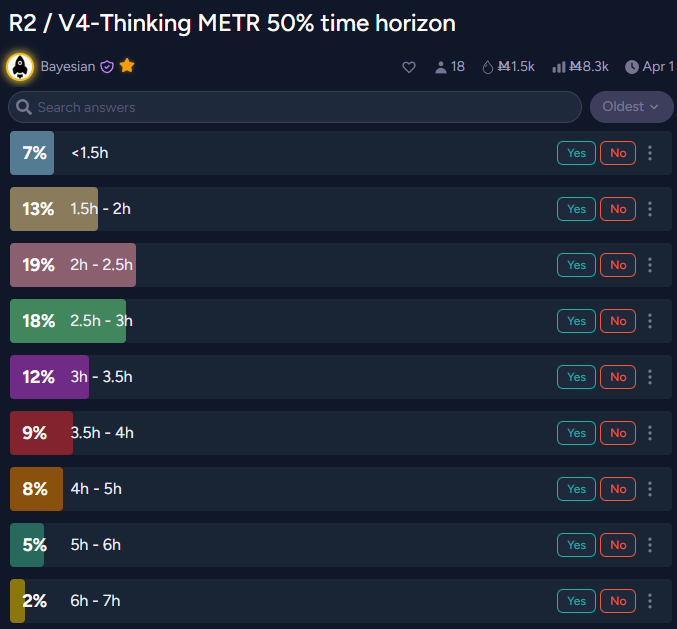
DeepSeek Grayscale Tests New Model with Million-Token Context: The community has observed DeepSeek initiating grayscale testing for what appears to be V4-Lite, with a core breakthrough in a 1-million (1M) token ultra-long context window. In “Needle In A Haystack” tests, the model maintains high accuracy at million-token lengths, precisely locating sparse information. While still limited in visual reasoning tasks like SVG generation, its capabilities in long-document analysis and cross-chapter reasoning are now in the industry’s top tier. (Source: DeepSeek)
🧰 Tools
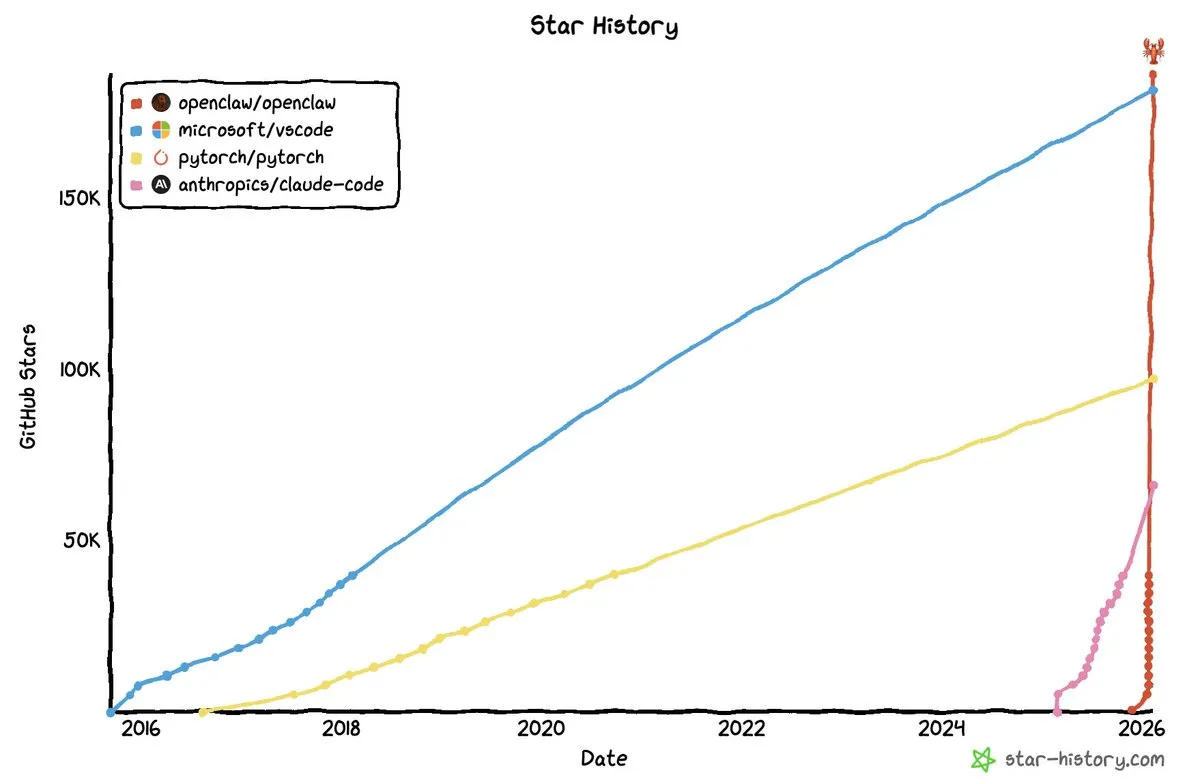
OpenClaw Explodes as the Linux of the Agent Era: The open-source agent framework OpenClaw has surpassed 190,000 stars on GitHub, becoming the fastest-growing AI project. It positions the Agent as an “execution hub + tool ecosystem,” allowing users to deploy on a local Mac mini or NAS to directly access computer files and operation permissions. OpenClaw breaks the “model is everything” narrative, turning AI into a “digital asset” owned by the user. Its Skills community ecosystem is growing rapidly, though it has also sparked security debates regarding malicious plugins and permission abuse. (Source: GitHub)
Teamily AI Launches New Paradigm for AI-Native Socializing: Teamily AI has introduced the world’s first AI-native instant messaging app, supporting real-time co-existence and collaboration between multiple humans and multiple AI Agents. It features cross-group memory sharing and a social brain model, where AI actively participates in group chat decisions (e.g., booking restaurants, writing PRDs) rather than being passively invoked. Teamily uses a multimodal vector database to reconstruct the social foundation, attempting a qualitative leap from “understanding instructions” to “understanding you,” transforming AI from a tool into a “digital member” with social attributes. (Source: Teamily AI)

Open WebUI v0.8.0 Releases Largest Update Ever: The popular AI interface tool Open WebUI has released v0.8.0, with a code increase of 30,000 lines. The new version introduces a full analytics dashboard, an experimental Skills system, a message queue mechanism, and native Python code execution. It supports finer user permission sharing and prompt version control, significantly enhancing the engineering level of local AI management and evolving from a simple Web shell into a complete AI operating system interface. (Source: Open WebUI)
rtk (Rust Token Killer) Boosts Efficiency for Coding Agents: Developers have released rtk, a CLI proxy situated between coding Agents and terminal commands. It intelligently filters and compresses redundant noise such as test logs and status bars, saving up to 89% in token consumption. Real-world tests show it can save tens of millions of tokens over a two-week development workflow. This “context engineering” tool is becoming an essential add-on for scaling Agent applications. (Source: GitHub)
📚 Learning
Andrej Karpathy Reproduces GPT in 243 Lines of Code: Renowned AI expert Andrej Karpathy has released a new art project, implementing GPT training and inference in just 243 lines of pure Python (no third-party dependencies). The project strips away all engineering optimizations, retaining only the core algorithmic logic to demonstrate to the community that the essence of the AI revolution is remarkably simple. This has sparked deep philosophical discussions about “200 lines of code changing the world.” (Source: GitHub)
DeepLearning.AI Launches A2A Protocol Course: Andrew Ng’s team, in collaboration with Google and IBM, has launched a short course titled “A2A: The Agent2Agent Protocol.” The course focuses on solving communication and discovery challenges between Agents built on different frameworks, achieving cross-platform Agent collaboration through the standardized A2A protocol. This is a significant step toward the standardization of the “Internet of Agents,” emphasizing the core role of interoperability in the future AI ecosystem. (Source: DeepLearning.AI)
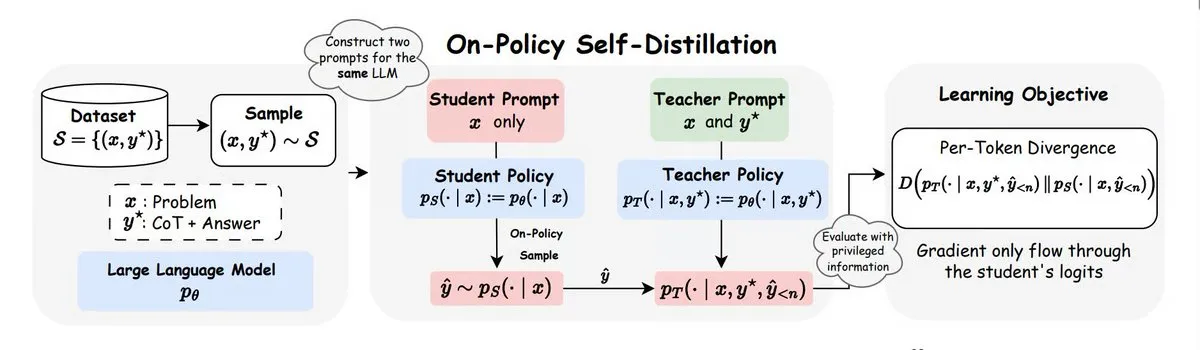
Three Papers Reveal New Trends in Self-Distillation: The community is buzzing over three papers: OPSD (Explicit Self-Criticism), SDFT (Internalized Context Improvement), and SDPO (Rich Feedback Policy Optimization). These studies indicate that AI models are entering a “self-teaching” phase, iterating through closed-loop feedback and privileged information. This confirms the theoretical basis for “intelligence explosion”: AI assisting in building the next generation of even stronger AI. (Source: TheTuringPost)
💼 Business
The Business Logic Behind Anthropic’s $380 Billion Valuation: While OpenAI holds a higher valuation, Anthropic has won the favor of sovereign wealth funds due to its extremely high ARPU (average monthly active user contribution of $211). Its strategic focus is entirely locked on B2B and developers; the explosion of Claude Code proves its premium capability in “high-value economic tasks.” Investors believe that compared to OpenAI’s traffic-driven route, Anthropic’s infrastructure route is more sustainable. (Source: GeekPark)
Perplexity’s Wild Week: $750M Deal and Lawsuits Coexist: AI search leader Perplexity signed a $750 million partnership agreement with Microsoft Azure to strengthen cloud computing support. Simultaneously, Amazon is filing a lawsuit against it over copyright and web crawling issues. This situation of “massive cooperation on one hand, litigation on the other” reflects the intense friction between AI search’s reliance on compute and copyright compliance. (Source: Reddit)
OpenAI Starts ChatGPT Ad Testing, Leading to Core Researcher Resignation: OpenAI announced it is testing ads in the free and Go subscription versions, leading core researcher Zoë Hitzig to resign immediately. She warned that ChatGPT holds the most private archives of human thought, and introducing advertising incentives will inevitably lead the model to shift from “serving users” to “manipulating users,” repeating Facebook’s mistakes. This move marks the difficult trade-off AI giants are making between privacy and monetization under immense financial pressure. (Source: The New York Times)
🌟 Community
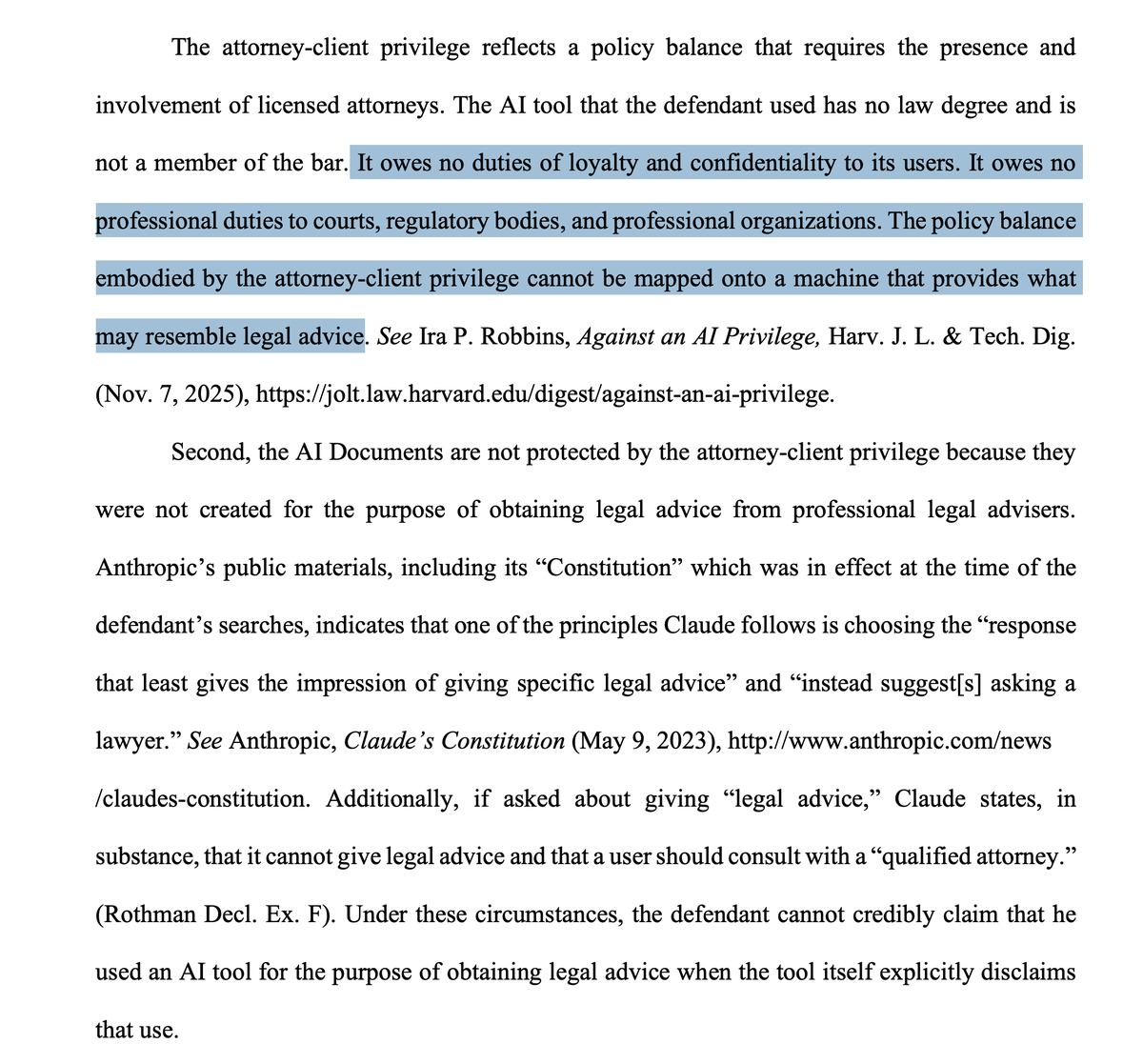
AI Chat Records Do Not Have Legal Privilege: A US federal judge ruled that chat records between defendants and AI assistants are not protected by “attorney-client privilege” and can be subpoenaed as evidence. The community is engaged in heated discussion, suggesting this provides job security for human lawyers but also reminds users that AI is not a “safe harbor” for private legal or medical consultations. This may drive an explosion in demand for encrypted AI or local LLMs. (Source: jon_stokes)
The Debate Between “Vibe Coding” and “Agentic Engineering”: The release of Zhipu GLM-5 has sparked community discussion over AI programming terminology. Developers are reflecting that coding by “vibe” alone is no longer sufficient for complex engineering; the future core is “Agentic Engineering”—using Agents to automatically decompose, plan, and deliver end-to-end systems. This means the human role is rapidly shifting from “writer” to “architect” and “reviewer.” (Source: ZhihuFrontier)
“February Anxiety” as the AI Singularity Approaches: Silicon Valley entrepreneur Matt Shumer’s viral post “Something Big Is Happening” reached over 70 million views, triggering collective anxiety in the tech world. The article describes how AI has begun participating in the recursive loop of building the next generation of AI. Community discussions suggest that 2026 is the turning point for the full replacement of cognitive labor, with information gaps leading to a K-shaped divergence: one group using leverage to move the world, while the other still views AI as just a chatbot. (Source: 36Kr)
💡 Others
Global Shortage of 16GB Mac mini Models: Driven by local Agent projects like OpenClaw, Mac minis with 16GB or more unified memory have become the preferred “digital physical body,” leading to price hikes and stockouts in many regions. This reflects a shift in AI hardware demand from cloud computing to personal edge computing boxes. (Source: Guangzhui Intelligent)
Six States Pause Data Center Construction: Six US states, including New York, have introduced bills to pause data center construction to address the power crisis. The community joked that the US is caught in a dilemma of “wanting AGI or wanting the power grid,” which may force AI companies to seek more aggressive spatial computing or nuclear energy solutions. (Source: teortaxesTex)

Wikimedia Reaches API Partnership with AI Giants: The Wikimedia Foundation has reached agreements with Amazon, Microsoft, and others to provide high-speed API access in exchange for financial support. This is seen as a “survival pact” between knowledge bases and AI vendors, aimed at addressing the pressure AI crawlers place on traditional knowledge community infrastructure. (Source: DeepLearningAI)