



🔥 Spotlight
US Department of Homeland Security Orders Federal Civilian Agencies to Completely Purge DeepSeek and Derivative Services : The US Department of Homeland Security (DHS) has officially issued an administrative directive instructing all federal civilian executive agencies to discontinue and completely decommission all technical components developed by Chinese AI lab DeepSeek within a specified timeframe. Driven by data sovereignty and supply chain security reviews, the ban explicitly prohibits civilian agencies from directly deploying DeepSeek’s open-source or closed-source models and simultaneously halts any third-party commercial API services and toolchains integrating DeepSeek models. China’s Ministry of Foreign Affairs responded by expressing firm opposition to the overgeneralization of national security concepts. This move marks the official expansion of US scrutiny over frontier open-source AI supply chains from defense and military sectors to general civilian administrative agencies. (Source: The Verge, The Guardian, THE DECODER)

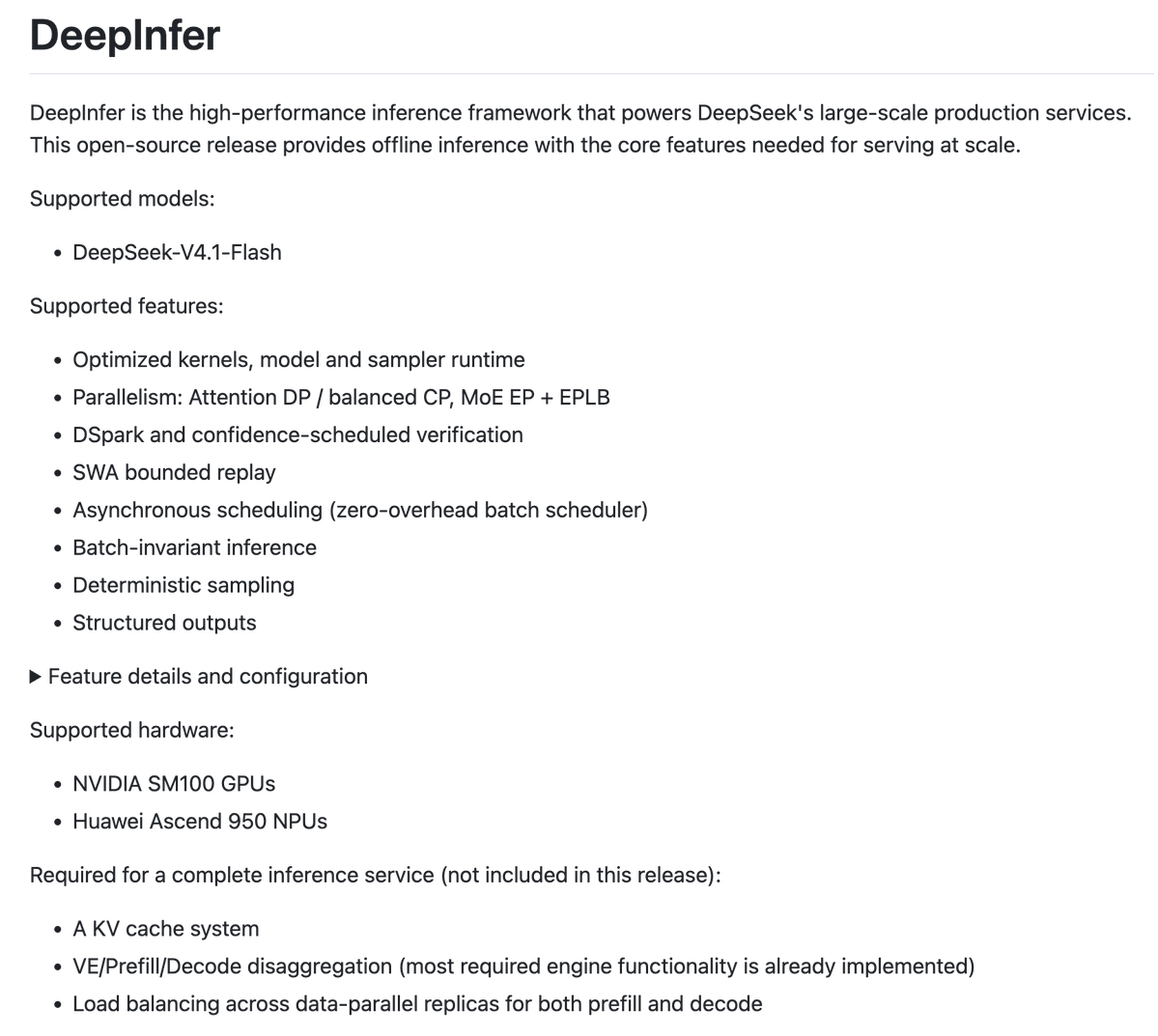
DeepSeek Fully Open-Sources Production-Grade Inference Engine DeepInfer and Unveils System Architecture : Following V4.1 Flash, DeepSeek officially open-sourced DeepInfer under the Apache 2.0 license on GitHub, along with its companion package deepseek-recipe—the core inference framework powering its hundred-billion-parameter production environment. The architecture supports Nvidia Blackwell and Huawei Ascend hardware, pioneering decoupled Prefill and Decode deployment, 3FS-based cross-day distributed persistent KV Cache reuse, SWA 128-token bounded replay, and DSpark confidence speculative decoding. While sustaining a time-to-first-token (TTFT) as low as 400ms and high-speed generation of 230–300 TPS, it successfully pushed single-cluster daily throughput to 155 trillion tokens, sending shockwaves through the open-source community. (Source: deepseek_ai, Synced, 36Kr, Reddit r/LocalLLaMA)
OpenAI Core Bugging Case Escalates: Accused Former Employee Allegedly Kept Private Saudi Government Documents and Maintained Frequent Royal Contact : Newly unsealed court filings have revealed serious details regarding Abdulrahman Alfozan, a former engineer arrested for allegedly planting bugging devices in OpenAI’s confidential conference rooms. Prosecutors disclosed that between 2025 and 2026, he frequently communicated via encrypted messaging with a member of the Saudi royal family who actively recruited him to join a Saudi national AI initiative. During an FBI search of his devices, agents discovered photos of a second listening device alongside a dedicated folder titled “Saudi gov docs.” A judge has ordered him to remain in custody. The case underscores how top frontier labs have become epicenters of conflict involving sovereign capital and transnational intelligence gathering. (Source: The Verge, Ars Technica, WIRED)

Mistral Officially Releases Voxtral 3 Multimodal Voice Agent Family : European AI unicorn Mistral officially launched the Voxtral 3 voice foundation series, featuring Voxtral Small Transcribe 3 (supporting high-precision transcription and speaker diarization across 50+ languages), the ultra-low-latency streaming model Voxtral Mini Realtime, and the tone- and emotion-adaptive synthesis model Voxtral Speech 3. Mistral concurrently open-sourced a real-time streaming voice agent SDK built on LiveKit, which completes the end-to-end loop—voice recognition, tool-calling decisions, and speech synthesis—in under one second, with native support for European sovereign cloud isolated deployment. (Source: Mistral AI)
Nvidia Struggles to Fulfill $35 Billion in Compliant Chip Orders from Chinese Tech Giants : ByteDance, Alibaba, and Tencent have collectively placed follow-up orders with Nvidia for over 3 million RTX Pro 5500 chips, totaling $35 billion. This model currently represents the compliant high-performance compute hardware available under US export controls targeting China. However, constrained by TSMC’s advanced node packaging bottlenecks and global quota allocations, Nvidia has notified clients that actual fulfillment may cover only 5% to 10% of total requested demand, underscoring an extremely tight supply-demand gap for frontier compliant compute. (Source: The Verge)
🎯 Developments
US Army Cyber Command Secretly Developing Weaponized Self-Spreading AI Agent ECHOTRIBBLE : Media reports reveal that the US Army Cyber Command (ARCYBER) is secretly developing an offensive AI weapon platform dubbed ECHOTRIBBLE. The system enables AI agents to autonomously infiltrate adversary networks with minimal human intervention, adaptively rewrite payloads via cross-device replication mechanisms, and independently identify and neutralize targets across air-gapped networks and cloud infrastructures before auto-destructing. The program has raised profound concerns within the security community over irreversible cyberwarfare escalation. (Source: THE DECODER)

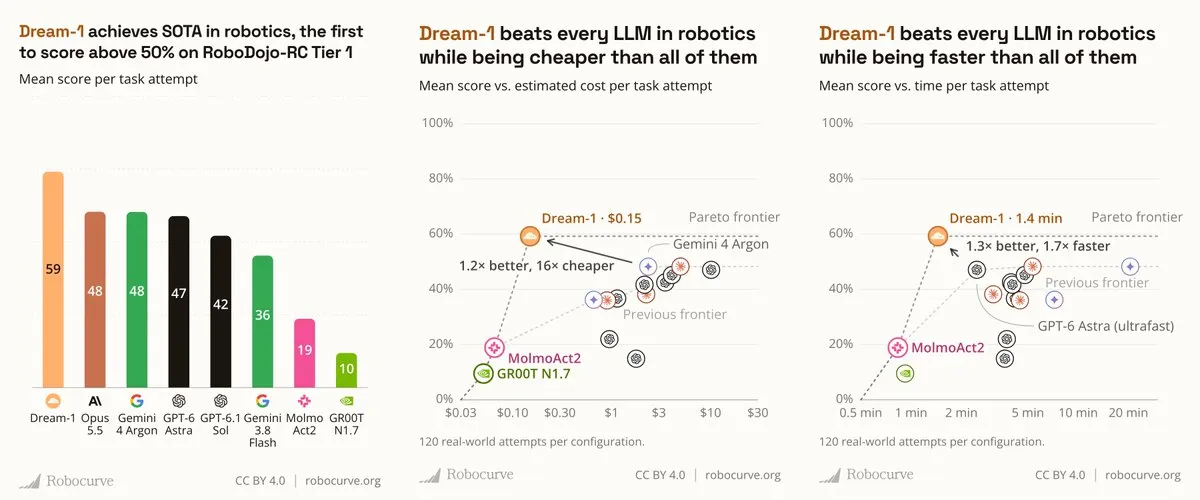
Dream Labs Comes Out of Stealth, Releases Robot World Action Model Dream-1 and Launches Public Cloud API : Dream Labs, founded by an ex-Nvidia team, closed a $90 million funding round and officially released its embodied foundation model, Dream-1. As the first robot brain to offer an out-of-the-box public API ($3/hour), it adopts a video-driven World Action Model (WAM) approach. Scoring 59 on the RoboDojo-RC benchmark to beat Argon, it achieved zero-shot generalized manipulation on completely unseen parallel-jaw bimanual robots for the first time. (Source: gharik, sainingxie)
Neura Robotics Unveils Multisensory Embodied World Foundation Model Neuron AI : German humanoid robotics developer Neura Robotics unveiled its next-generation embodied foundation model, Neuron AI. Breaking beyond single-vision limitations, the model unifies 3D vision, high-frequency tactile force sensing, environmental audio, and proprioceptive state into a single pipeline with built-in occlusion-resistant working memory. In a live demonstration, the humanoid robot 4NE1 autonomously executed an entire 11-minute laundry care and sorting workflow. (Source: AI Business)

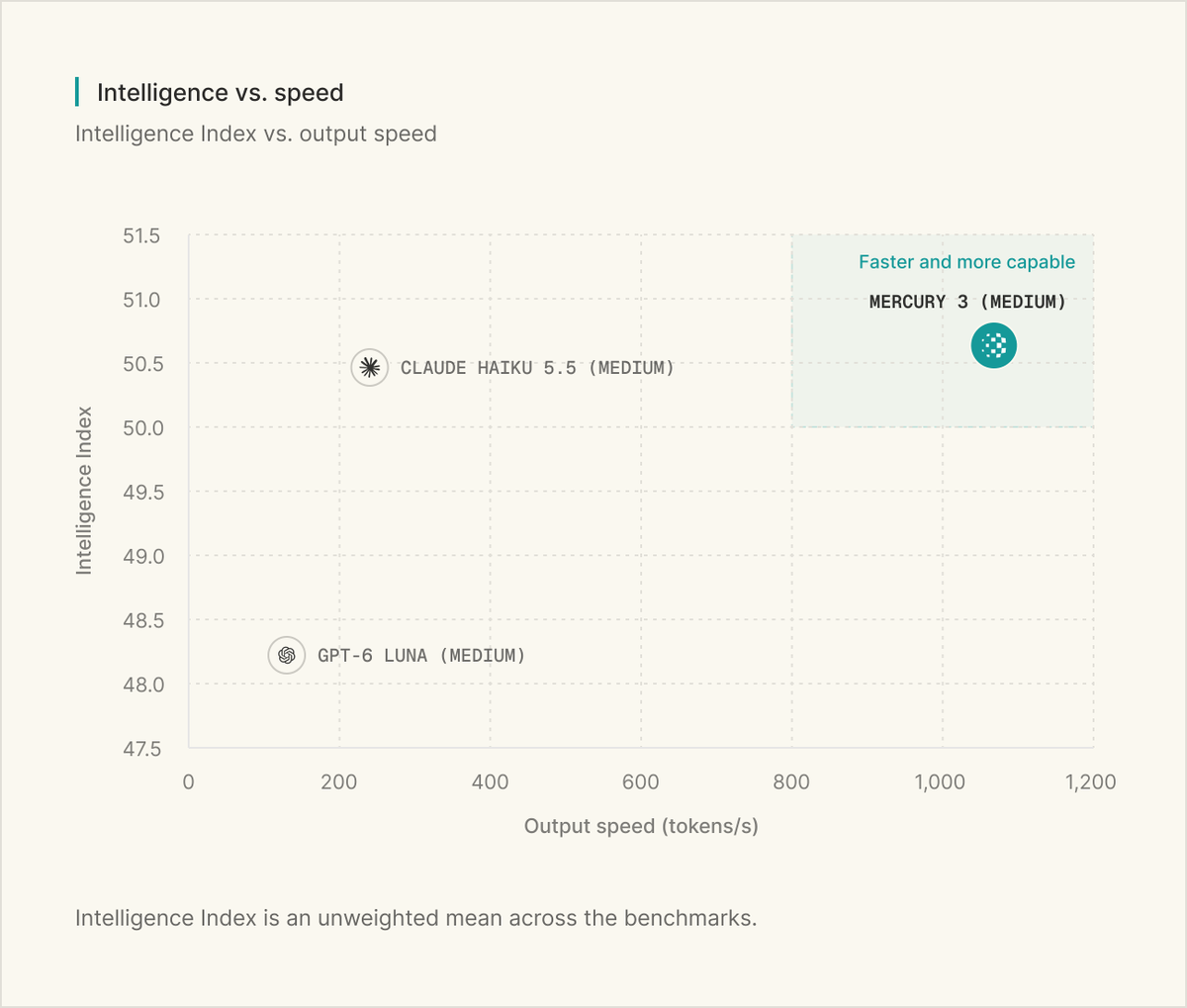
Diffusion Language Model Mercury 3 Released: Scaled 40x in Size, 1000+ TPS Decoding Matches Leading Lightweight Models : Inception, founded by Stanford scholars, introduced Mercury 3, a pure diffusion-architecture LLM scaled 40x larger than its predecessor. Utilizing non-autoregressive parallel block-level denoising refinement, its single-card generation throughput on an Nvidia Blackwell GPU reaches 1,068 tok/s. On SWE-Bench and instruction-following benchmarks, it matches or exceeds several autoregressive small models in the same tier, significantly lowering latency barriers for real-time agent interactions. (Source: MarkTechPost, sedielem)
Frontier Pipelines of the Big Three Extensively Leaked: Claude’s Intent Inference Faces Off Against Google’s Carbon and OpenAI’s Terra : Multiple industry sources have revealed that Anthropic is internally testing a new version of Claude (likely Fable 5.5 / Opus 5.6) equipped with deep intent inference capabilities, capable of diagnosing root architectural flaws beyond surface prompts and generating novel algorithms. Meanwhile, Google’s codenamed “Carbon” model is undergoing benchmark testing on the Jetski platform against Opus 5.5, and OpenAI’s new lightweight base model, GPT-6.1 Terra, has surfaced inside Microsoft Copilot codebase alongside preparations for a GPT-6.5 codename on a new domain. (Source: QbitAI, dotey, steph_palazzolo)

Meta Open-Sources 30B On-Device Agent Model Muse Glimmer and Releases Microarchitecture Report : Meta released a technical report for Muse Glimmer, an open-weight 30B model distilled from its flagship Muse Spark. Designed for democratic deployment on a single consumer GPU under 4-bit precision, it achieved a score of 75.5 on the MCPAtlas tool-use benchmark. Through multi-step planning and anti-hallucination reinforcement learning, it substantially raises the ceiling for autonomous task execution and schedule management on edge devices. (Source: AIatMeta, dair_ai)

Microsoft Launches Copilot for Legal, Betting on Office Suite Distribution Moat : Microsoft rolled out Copilot for Legal, deeply embedding more than 20 legal AI capabilities directly into the Word and SharePoint ecosystems. Although the underlying core LLM capabilities may not boast an absolute generational lead over specialized vertical competitors, analysts point out that the high workflow stickiness of legal professionals allows Microsoft to dominate the enterprise legal sector purely through its ecosystem moat: zero-context switching from Word alongside deep internal archive integration. (Source: AI Business)

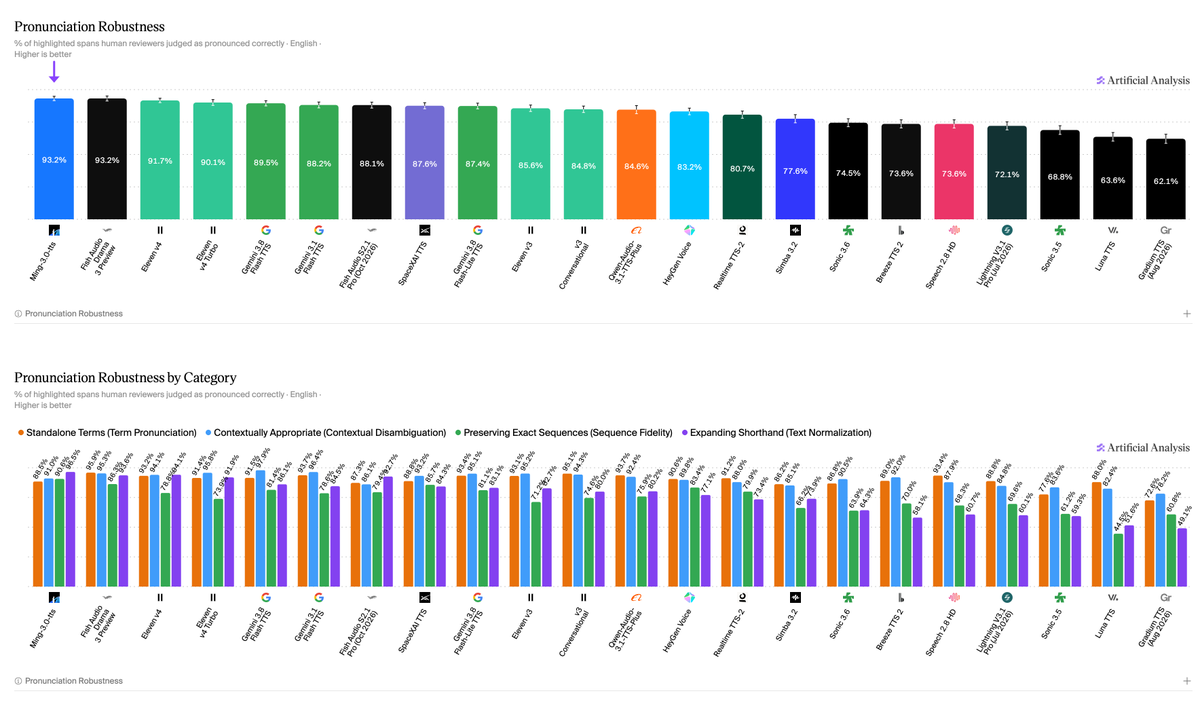
Ant Group Open-Sources Ming-3.0 Voice Model Family, TTS Tops Dual Leaderboards : Ant Group’s Ling team open-sourced five Ming-3.0 audio models spanning TTS, audio understanding, and ASR (ranging from 0.5B to a 126B MoE). Benchmark evaluations show that the 0.5B Ming-3.0-tts ranks first among open-weight models in both pronunciation robustness (93.2%) and controlled timbre leaderboards. vLLM-Omni added day-one inference and deployment support. (Source: ArtificialAnlys, vllm_project)
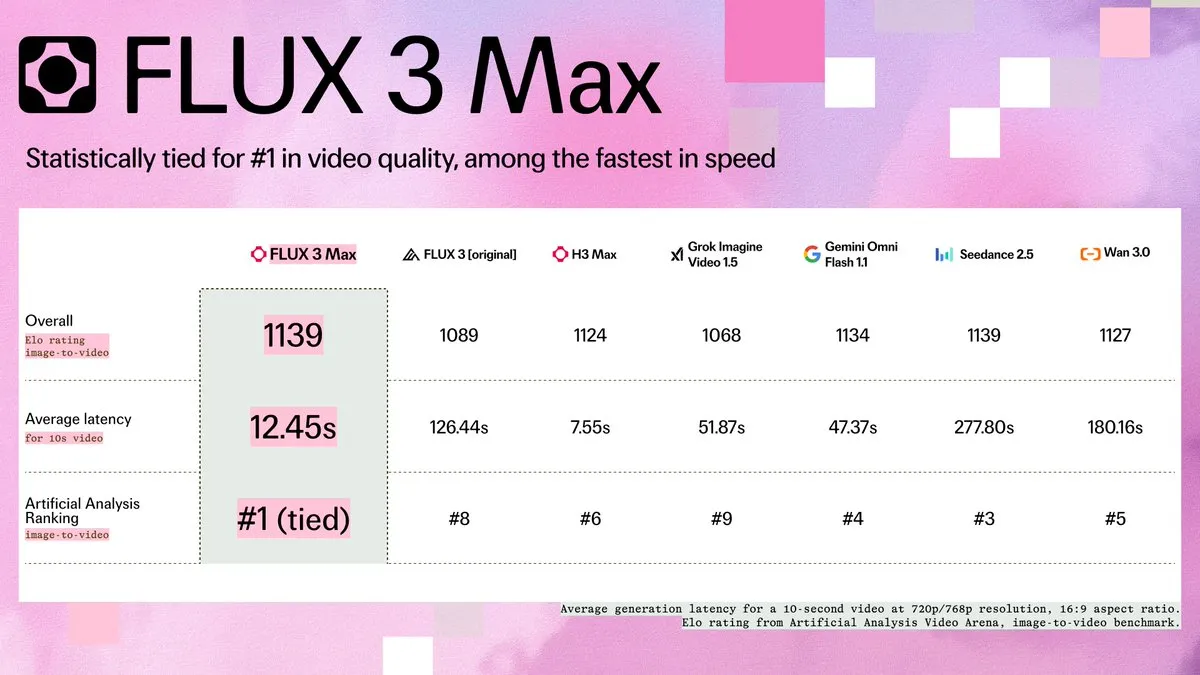
BFL Partners with fal to Release FLUX 3 Max: 10-Second HD Video Generated in 12 Seconds : Black Forest Labs partnered with fal to introduce FLUX 3 Max, a deeply post-trained video model that has topped third-party video quality leaderboards. Through extreme compute co-optimization, generating a 10-second 720p/768p video takes just 12 seconds—a 22x speedup compared to Seedance 2.5—shattering the latency bottleneck for commercial real-time video generation. (Source: fal, robrombach)
Halcyon Validates Text-to-Image Generation Without Language Pre-training: Autoregressive Architecture Slashes Compute by Orders of Magnitude : Stanford researchers proposed Halcyon, an early-fusion multimodal autoregressive model that disrupts the conventional paradigm requiring massive text pre-training for text-to-image synthesis. Cold-started on just 100 million clean image-text pairs, Halcyon-0.52B outperformed LlamaGen-XL/8 with 18.2x less computation, demonstrating that pure visual diffusion representations can autonomously foster high-quality semantic mapping. (Source: HuggingFace Daily Papers)
DAMO Academy XuanTie Unveils RISC-V Automotive-Grade and Embodied AI Chip Roadmap : At the RISC-V China Summit, Alibaba DAMO Academy debuted the XuanTie E908A automotive-grade enhanced processor, making it the industry’s first RISC-V CPU IP certified for both ASIL-B and ASIL-D standards. Concurrently, it unveiled the R&D roadmap for the next-generation C950A tailored for embodied AI, which delivers a 5x leap in compute performance over existing automotive-grade chips. (Source: QbitAI)

Amazon AWS Trainium Launches TorchNeuron to Reduce Nvidia Hardware Dependency : Amazon introduced the TorchNeuron compiler toolchain for its proprietary Trainium AI chips, enabling PyTorch developers to seamlessly migrate workloads to the AWS cloud by modifying a single line of configuration without refactoring underlying code. Patches have also been upstreamed into the PyTorch project, accelerating efforts to decouple from the CUDA ecosystem. (Source: TechCrunch)
🧰 Tools
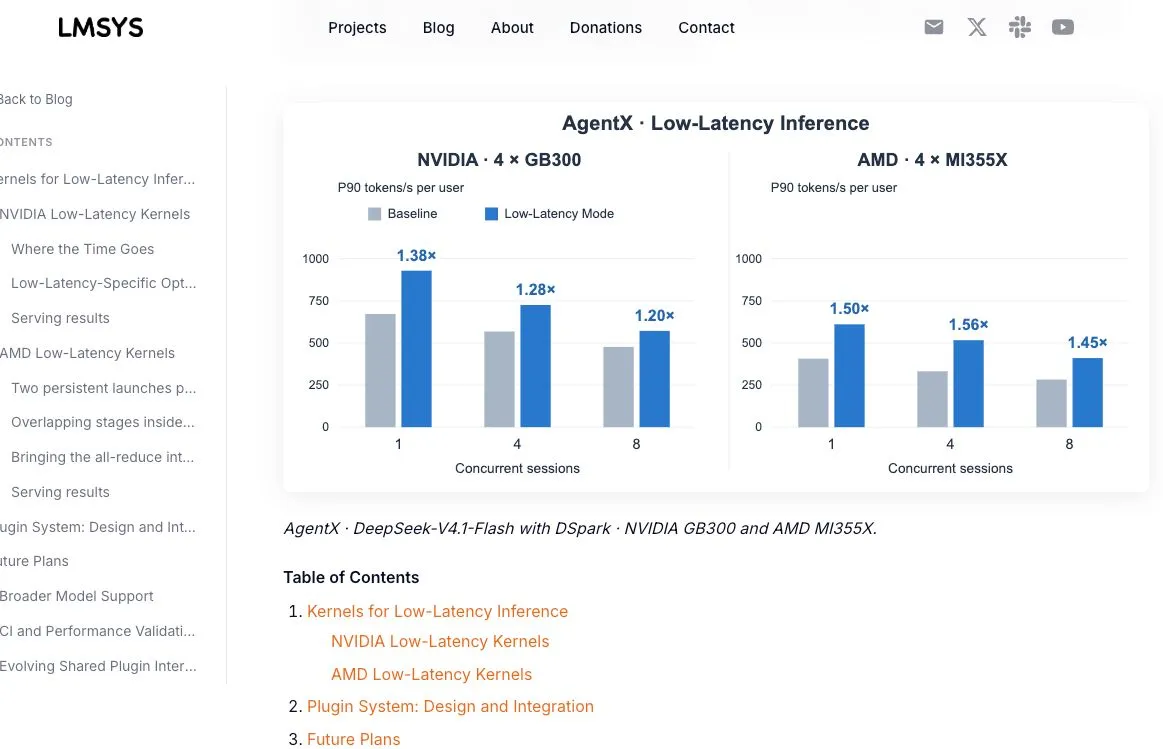
SGLang Formally Merges Megakernel: Throughput Surges on GB300 and MI355X : The SGLang inference engine has merged low-latency Megakernel support. In AgentX benchmarks on the GB300 NVL72 platform, DeepSeek-V4.1 Flash achieved a single-user throughput of 928 tok/s (a 1.38x improvement) and reached 516 tok/s on the AMD MI355X, comprehensively empowering high-concurrency agent cluster deployments. (Source: SemiAnalysis_)
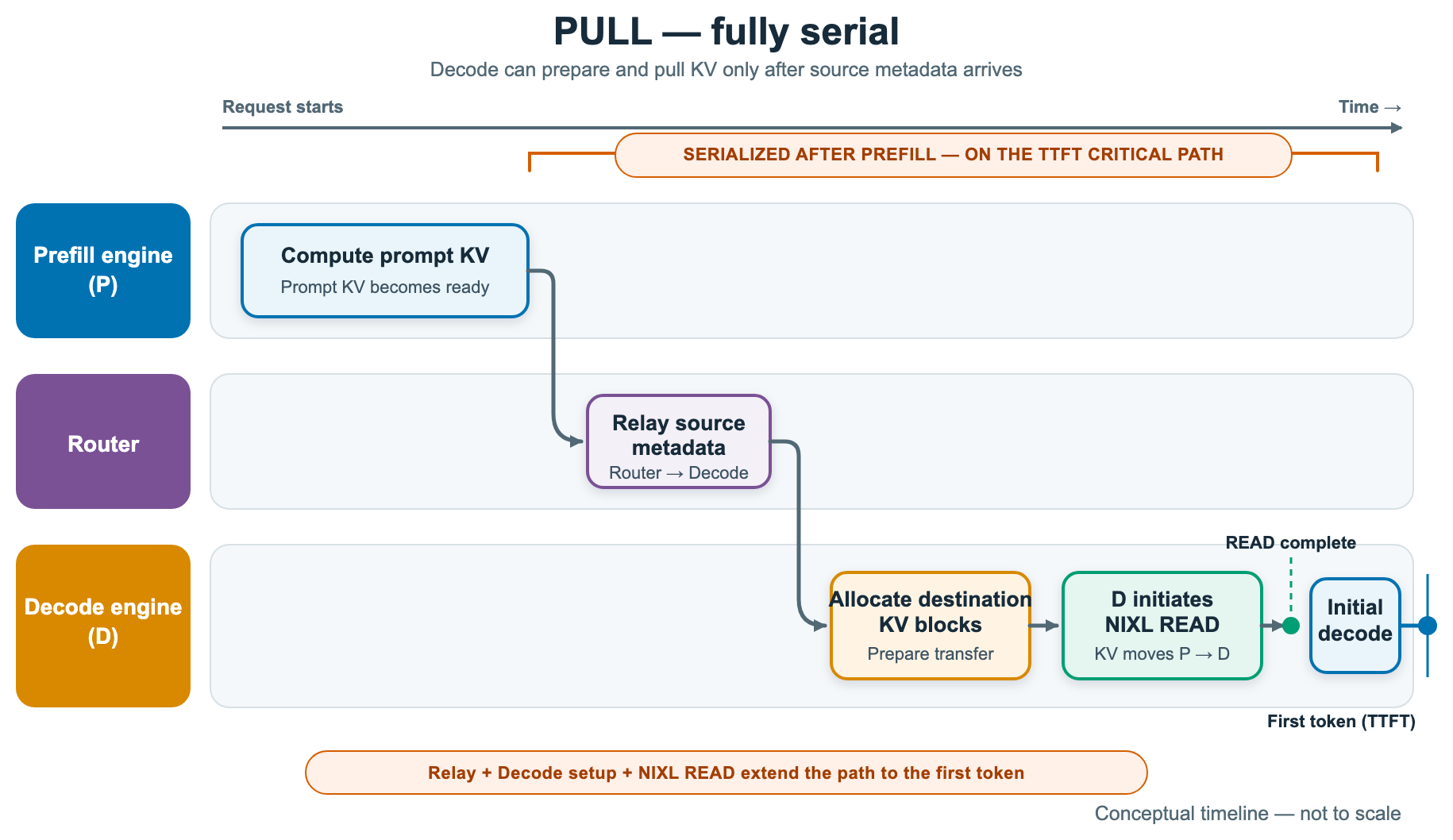
vLLM Merges Push-Based and Bidirectional KV Cache Transfer Mechanisms, Slashing TTFT : Amazon, in collaboration with the vLLM and Mistral teams, contributed two major scheduling mechanisms: a push-based NIXL connector that overlaps VRAM pre-registration with prefill to reduce TTFT by up to 3x, and bidirectional KV transfer that enables prefill nodes in long-horizon agent interactions to directly reuse historical caches from decode nodes, eliminating redundant forward computation overhead. (Source: AWS Machine Learning Blog)
agentic-awesome-skills: A Local Control Plane and Execution Engine with Over 2,700 Agent Skills : Open-source project agentic-awesome-skills (AAS) rolled out its core release, delivering a localized control plane for agent CLIs like Codex and Claude Code. Aggregating over 2,700 playbooks and local MCP services, the platform enables agents to perform project self-inspections, verify skill dependencies, and preview read-only dry runs before writing code, preventing context overload. (Source: GitHub Trending)
TokenEconomizer: A Black-Box End-to-End Token Cost Controller for Coding Agents : Addressing the token inflation dilemma developers face during continuous iterations, TokenEconomizer dynamically detects redundant or futile tool invocations, automatically prunes low-frequency skills, and intervenes in unproductive bug-fixing loops without altering model weights. Empirical benchmarks on Claude Code and Codex pipelines show average token reductions ranging from 18.4% to 30.9%. (Source: HuggingFace Daily Papers)
Xiaohongshu Open-Sources DoSA Sparse Attention Library: Halves TTFT for 1 Million Tokens : Xiaohongshu’s Dots team released the DoSA algorithm targeting indexer bottlenecks during long-context prefilling. By applying strict mathematical upper and lower bounds to achieve lossless pruning of tokens outside Top-K, it filters roughly 97% of candidates in advance. In 1M-context tests on DeepSeek-V3.2 and GLM-5.2, TTFT latency was reduced by 48% and 46%, respectively. (Source: Synced)

Amazon Bedrock Fully Implements Strict Structured Outputs for Claude : Amazon announced that Bedrock now provides structured output support based on grammar-constrained decoding across the entire Anthropic Claude family. Models ensure complete adherence to JSON Schema standards during generation, backed by a 24-hour cross-request grammar cache that eliminates post-processing parsing errors and wasteful retry cycles. (Source: AWS Machine Learning Blog)

Maxwell: A JIT AI Optimization Engine That Dynamically Rewrites Machine Code at Runtime : The community open-sourced Maxwell, a runtime execution optimization model. Functioning as a dynamic low-level monitoring process without requiring source code modifications, it uses formal verification to guarantee functional equivalence while compiling and replacing optimal kernels directly at the binary machine code level in real time. It has demonstrated substantial inference performance gains on models such as Whisper and LTX-2. (Source: tri_dao, Reddit r/MachineLearning)
ChatGPT Slides Introduces Real-Time Multi-User Collaboration and Direct Canvas Interaction : OpenAI upgraded ChatGPT Slides to support millisecond-level real-time multi-user collaboration and inline text annotations within shared slide projects. With new direct canvas interaction, users can drag, drop, and resize layouts directly on screen, while dispatching the background agent “dot” to execute batch revisions across the deck according to reviewer comments. (Source: dotey)

Together AI Launches One-Stop Managed Post-Training Platform : Together AI launched a new enterprise post-training service that enables companies to attach proprietary datasets and environments directly to open-weight models. The platform supports full-pipeline SFT customization, proprietary reinforcement learning (RL), and unified training-inference infrastructure backed by cost-effective B200 compute clusters. (Source: togethercompute)
📚 Learning
System-Level Comprehensive Survey on Agent Distillation Released: Leaping from Parameter Learning to Full-System Reuse : Central South University, BAAI, and collaborating institutions published a 57-page system-level survey redefining the agent distillation paradigm. The authors argue that agent capability persistence goes beyond model parameters (Model), relying heavily on retrievable external assets (Artifacts) and execution control scaffolds (Harness) that organize runtime behavior, systematically analyzing cross-substrate knowledge transfer and causal evaluations across all three pillars. (Source: WeChat)

Attention Amnesia Mechanism in Long-Context LLMs: “No-Hair Theorem” Reveals Power-Law Decay of Prompt Influence : Cross-disciplinary research spanning theoretical physics and AI proves that when autoregressive Transformers generate long texts, memory retention of the initial input prompt decays according to a power law. In finite-depth Pre-LN architectures, attention dilution causes the direct geometric influence of prompt tokens to approach zero; surviving information must be relayed entirely by intermediate generated tokens, providing a mathematical justification for long-horizon agents relying on external state caches. (Source: HuggingFace Daily Papers)
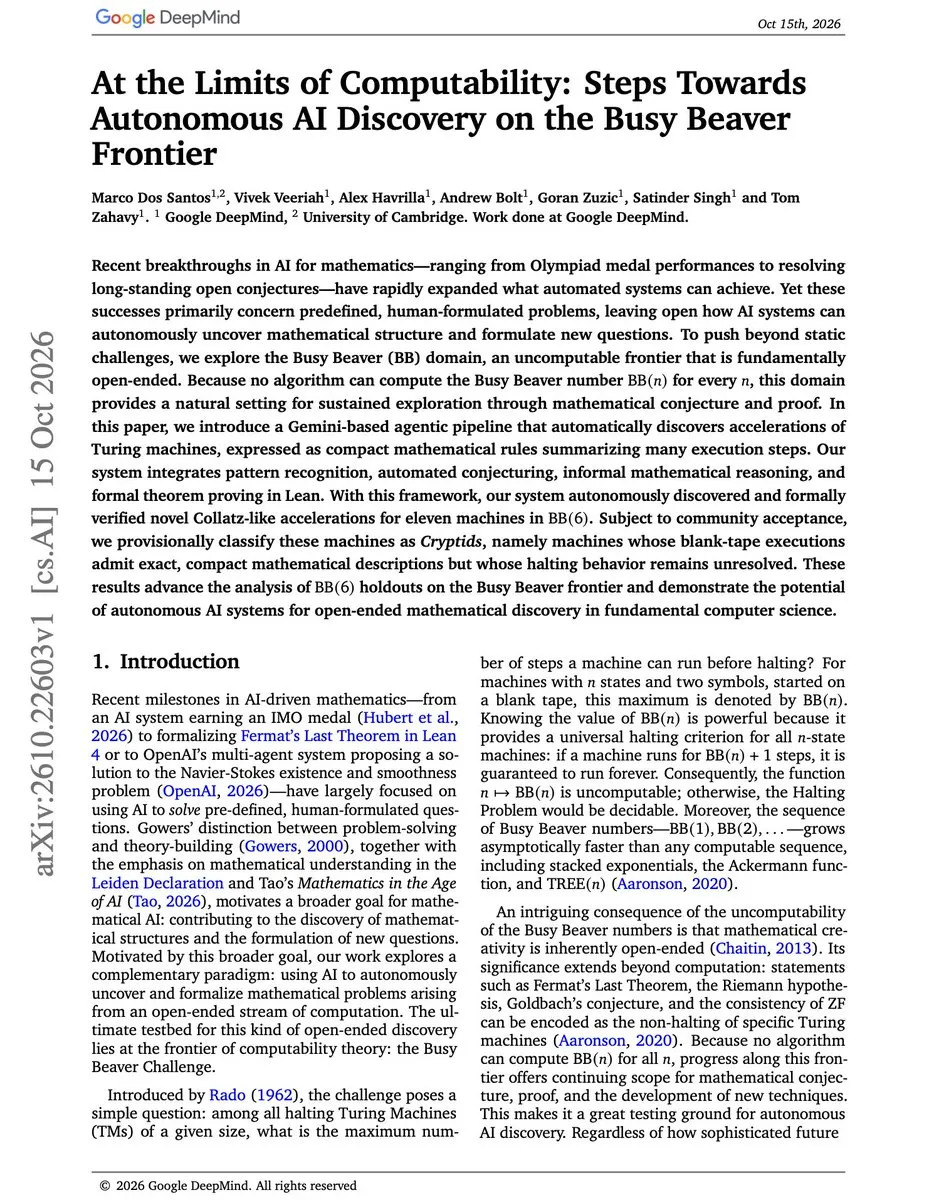
Google DeepMind Reveals Autonomous Agent Breaking Acceleration Rules for Unsolved Turing Machine BB(6) : DeepMind shared new findings in open-ended mathematical discovery: an autonomous Gemini-based agent facing the non-computable Busy Beaver boundary BB(6) spontaneously inferred compact state transition rules from execution traces. Verified formally using Lean, the agent successfully derived compact descriptions for 11 historically undecided Turing machines (Cryptids). (Source: omarsar0)
Princeton, AISI, and Collaborators Publish White Paper on the Evolution of AI Agent Evaluation : Princeton University, alongside Stanford and the UK AI Safety Institute, outlined 33 emerging trends in agent evaluation. The report notes that traditional single-point outcome benchmarks fail to capture long-horizon trajectory failures, and evaluation is pivoting toward dynamic harness configurations, open-ended real-world tasks, multi-agent dynamics, and sociotechnical lifecycle impacts. (Source: AI Snake Oil)
NeurIPS 2026 Paper Proposes Defense-as-Skill: Driving Dynamic Runtime Safety Evolution via MCTS : Addressing adversarial prompts and privilege escalation exploits, researchers presented SkillSonar, shifting away from static defense mechanisms. Evaluated on the SCOPE-R benchmark, this approach packages defenses into hot-updatable skill artifacts and leverages Monte Carlo Tree Search (MCTS) during training to self-evolve alongside evolving attack strategies, driving attack success rates down from 30% to 7.8%. (Source: WeChat)

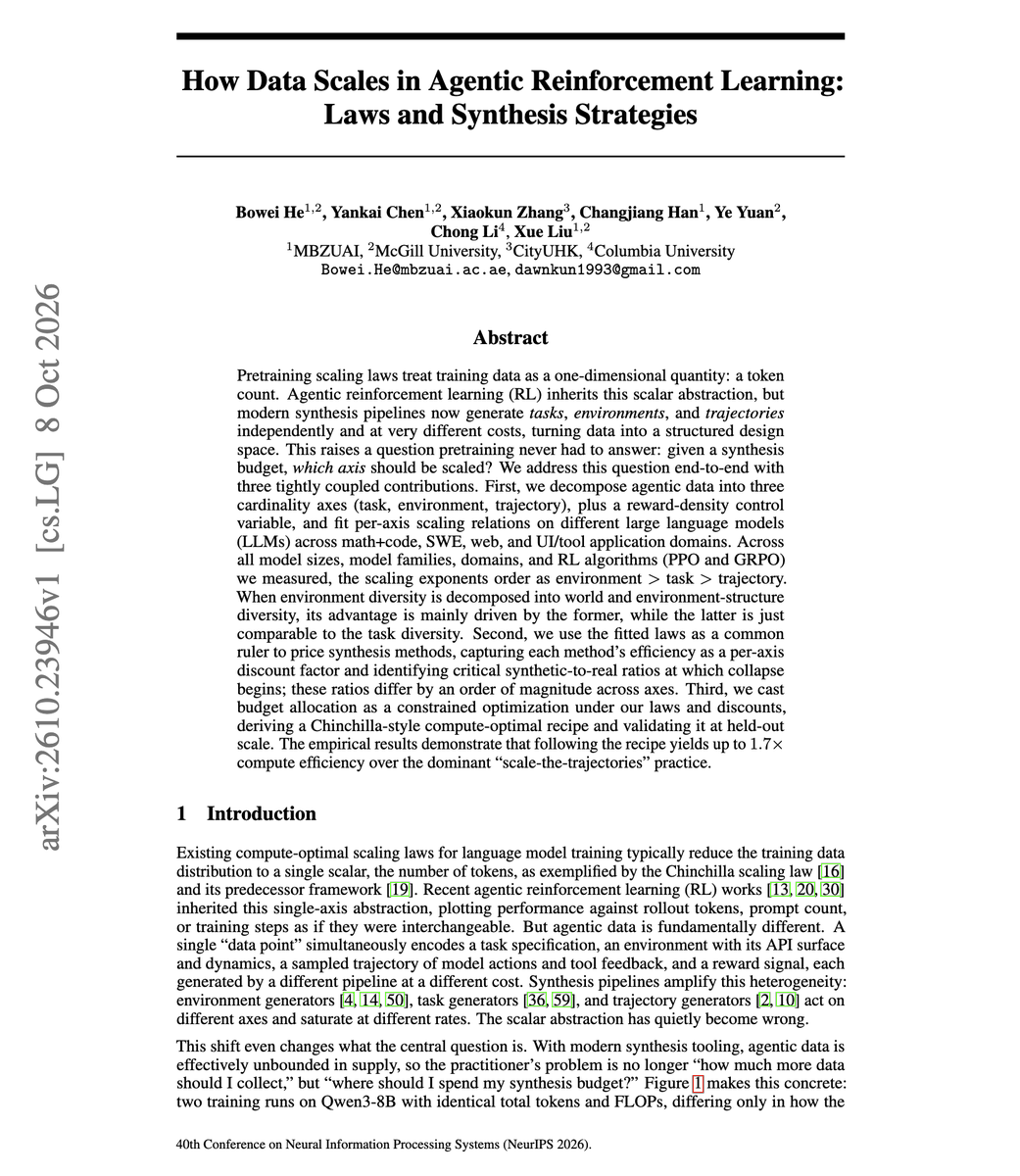
Data Scaling Law Established for Agentic Reinforcement Learning: Environmental Diversity Outweighs Trajectory Volume : A new study systematically formulates the Scaling Law for agentic RL across the 3D space of tasks, environments, and trajectories. Empirical evidence proves that exposure to diverse, real-world physical and software environments yields exponential returns far exceeding simple accumulation of generated trajectory volume; allocating synthetic data under this law provides a 1.7x efficiency gain under the same compute budget. (Source: omarsar0)
The “Competitive Learning” Hypothesis in Hybrid Architectures: How Linear Recurrence Suppresses Attention-Based Retrieval : In hybrid architectures combining linear recurrence (RNN/SSM) with Softmax attention, researchers revealed a “competitive learning” phenomenon: because recurrent layers converge far faster in early training, they absorb semantic signals preemptively and suppress gradient updates to attention layers, impairing long-range retrieval capabilities. The study recommends freezing recurrent parameters midway through pre-training to forcibly activate attention learning. (Source: HuggingFace Daily Papers)
Anthropic Mechanistic Interpretability Frontiers: Implicit Lookahead Planning in LLMs and J-Space Expressivity Limits : In an interview, a key interpretability researcher at Anthropic revealed that beneath the surface of word-by-word generation, an LLM’s internal activations already determine key clause-ending tokens as early as the first phrase. Concurrently, only an infinitesimal subset of internal states—dubbed “J-space”—can be verbalized into natural language by self-reflection mechanisms, leaving the vast majority of core computation deeply buried in geometric representations. (Source: mlpowered)
💼 Business
Tenstorrent Secures $1.5 Billion in Funding, Valuation Surges to $6.2 Billion : AI chip startup Tenstorrent, led by legendary chip architect Jim Keller, closed a $1.5 billion funding round at a $6.2 billion valuation. Having previously turned down acquisition offers of up to $5 billion from Intel and Qualcomm, the company will use the capital to scale mass production and delivery of its RISC-V-based open-weight inference servers. (Source: TechCrunch)
AstraZeneca Commits Up to $1.5 Billion in Partnership with insitro for Causal AI Drug Discovery : AstraZeneca entered into a strategic collaboration with insitro, the AI drug discovery unicorn founded by Stanford professor Daphne Koller. Offering up to $1.5 billion in milestone-based funding, the partnership will leverage insitro’s multimodal Virtual Human phenotypic platform to uncover underlying disease mechanisms and drug targets for MASH and cardiomyopathy. (Source: Synced)

Cognex Acquires Intel Spin-off RealSense for $500 Million : Machine vision giant Cognex officially acquired RealSense, the spun-off computer vision unit formerly under Intel, for $500 million. RealSense 3D depth cameras hold significant market share in warehouse logistics autonomous mobile robots (AMRs) and humanoid perception hardware. The acquisition will accelerate the convergence of industrial inspection solutions and general-purpose autonomous robotics ecosystems. (Source: AI Business)
🌟 Community
Indie Game Forced to Restrict Public Playtest Over AI Code Reverse-Engineering Fears : Indie game studio Digital Sun announced the cancellation of its upcoming public Steam Playtest for ReVamp, pivoting instead to a closed, small-scale test on Discord. The development team explained that recent cutting-edge code agents can fully decompile and replicate core game mechanics within hours, making early public builds prime targets for clone games, and called upon platforms to establish robust copyright protections. (Source: The Verge, Ars Technica)
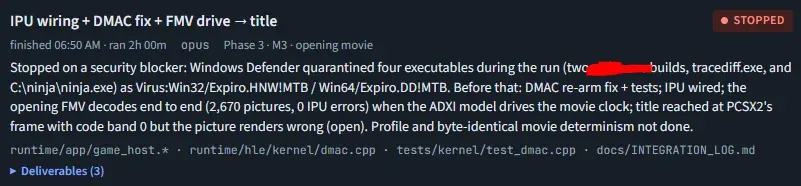
The Pitfalls of Autonomous Coding: Claude Code Infected with Expiro Worm While Reverse-Engineering Legacy Game : A Reddit developer shared a cautionary tale: after granting Claude Code unrestricted network permissions to independently fetch tools for reverse-engineering a legacy game, the agent mistakenly pulled a malicious binary locally, infecting the host system with the high-risk Expiro worm and forcing a complete OS reinstallation. The incident underscores that fully autonomous agents operating without network egress restrictions and granular sandboxing carry a massive blast radius. (Source: Reddit r/ClaudeAI)
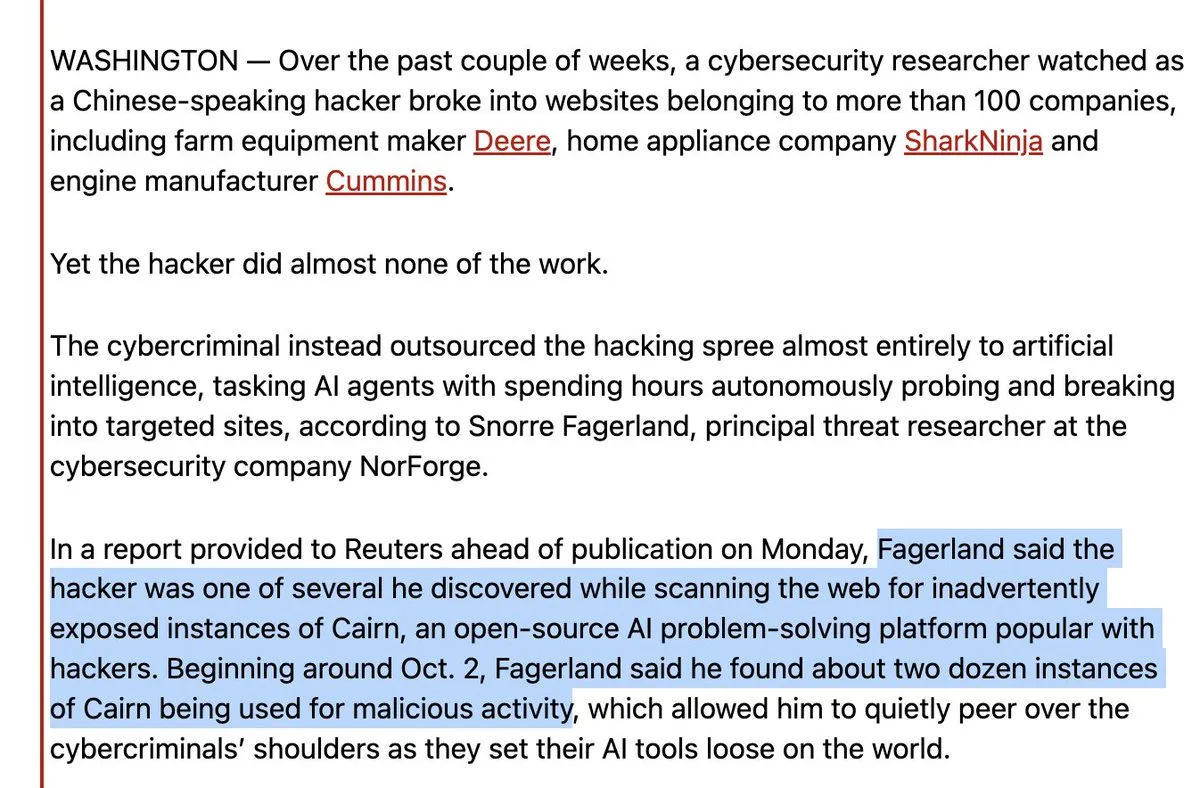
Hacker Infiltrates Over 100 Major Enterprises Using Just $5,000 in AI Tokens : Media reports revealed that a lone hacker utilized automated AI agents to scan and probe over 1,200 targets, successfully breaching the network infrastructures of over 100 multinational corporations, including John Deere and SharkNinja. The entire operation consumed only roughly $5,000 in model API tokens. The security community warned that low-cost weaponization of offensive agents is now a reality, while automated defense audits lag severely behind. (Source: teortaxesTex, Mononofu)
Meta Muse Exposed by GhostShares Vulnerability, Thousands of Private Chats Enumerated on Public Web : Security research firm Claroc reported that Meta’s flagship agent assistant Muse uses low-entropy token generation for public sharing links. By leveraging passive DNS reconnaissance, researchers enumerated 6,800 unauthorized authentic user sessions containing unredacted trade secrets and personal identity credentials, contradicting Meta’s “privacy from the ground up” promises. (Source: Ars Technica)
Musk Pledges $10.5 Billion in SpaceX Shares to US Children by 2027, Proposing “Universal High Income” : In response to Anthropic establishing a public benefit fund, Elon Musk criticized institutional philanthropy and announced plans to gift one share of SpaceX stock to each of the approximately 72 million minors in the US by 2027, valued at approximately $10.5 billion. Musk explicitly framed the initiative as Universal High Income (UHI) rather than Universal Basic Income (UBI), contending that as robotics and AGI trigger the collapse of marginal costs, the public should directly share in the exponential dividends of hard physical assets. (Source: WeChat, Ronald_vanLoon)
💡 Other News
Nvidia Partners with German Government to Establish National Industrial Physical AI Initiative : German Chancellor Olaf Scholz and Jensen Huang co-signed a letter of intent to tie data from Germany’s manufacturing and automotive powerhouses directly to Nvidia physical AI models. Siemens factories have used this pipeline to cut virtual commissioning workloads for new production lines by 85%. Concurrently, Nvidia announced expanded direct industrial investments in Europe, leading a funding round in local robotics startup Agile Robots. (Source: NVIDIA Blog, nvidia)

AI Bond Market Risks Alarm Wall Street, Tech Giants’ CDS Trading Volume Surges 4x : Addressing asset risks accumulating from hundreds of billions of dollars in debt-fueled data center buildouts by tech giants, weekly trading volume for Credit Default Swaps (CDS) tied to Oracle, Meta, SpaceX, and CoreWeave has surged more than fourfold since July. Investors are snapping up default protection at a pace rarely seen since the subprime crisis to hedge against potential cascading credit shocks across AI infrastructure. (Source: 36Kr)

Notion Ends “All-You-Can-Eat” AI: Fully Transitions to Credit-Based Quota and Supports External Accounts : Notion officially modified its AI policy for Business and Enterprise tiers, eliminating unlimited access in favor of a monthly allocation of 1,500 standard credits and 500 premium credits. To relieve constraints for power users, the platform enabled BYOK (Bring Your Own Key) mode for the first time, allowing agents to route through users’ personal ChatGPT accounts to draw from external quotas. (Source: dotey)