



🔥 Spotlight
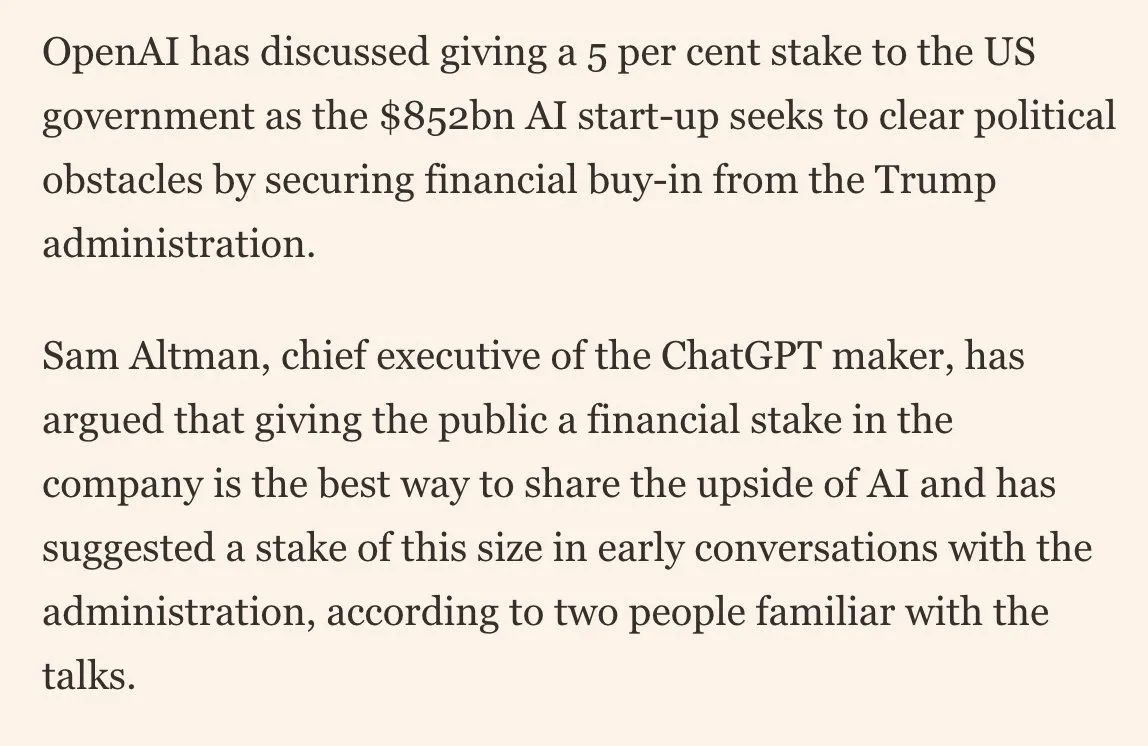
OpenAI Proposes Transferring 5% Stake to US Government to Ease Political Resistance : OpenAI has discussed with the Trump administration a proposal to offer a 5% equity stake to the US government, even suggesting that other frontier labs like Anthropic, Google, and Meta offer the same percentage. This move aims to allow the public to directly share the economic benefits of AI by establishing a public trust mechanism similar to the Alaska Permanent Fund, thereby realigning the interests of the nation and the labs to ease political resistance amid tightening government regulation and national security reviews of AI. (Source: TheRundownAI)
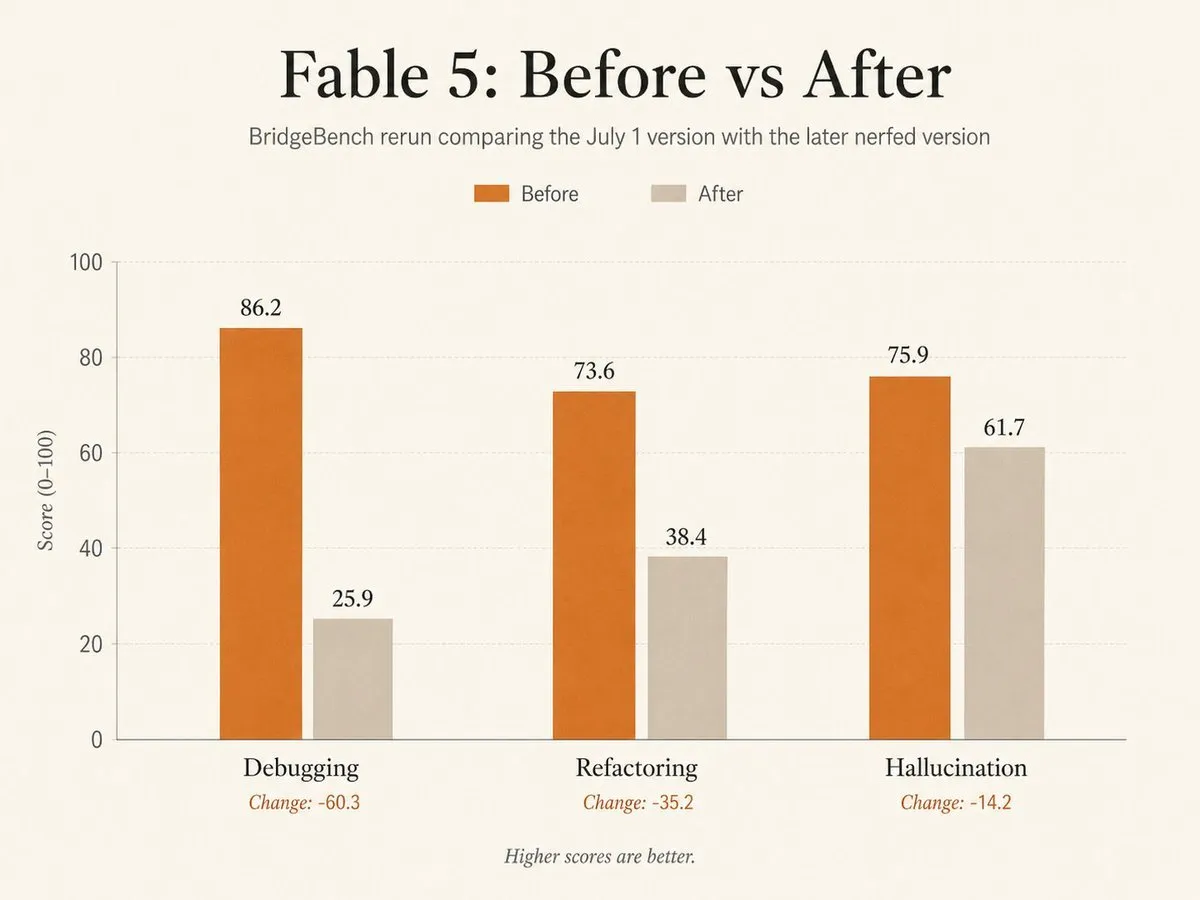
Anthropic’s Fable 5 Relaunch Met with Safety Filter “False Positives” and Downgrade Controversy : Fable 5, the strongest coding model that was banned for nearly 19 days, has been relaunched, but its new multi-layered safety risk control system has been criticized for being overly sensitive. Numerous developers reported that harmless daily programming and scientific research requests were frequently misjudged as violations, forcing the system to downgrade to the weaker and cheaper Opus 4.8 without the user’s knowledge. This resulted in users paying double the price while only getting a low-end model experience, triggering polarized reviews. (Source: 36kr)
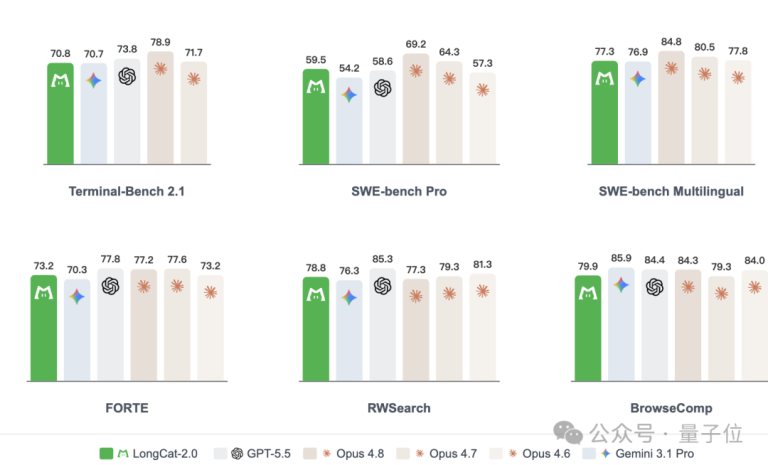
Meituan Releases LongCat-2.0, a Trillion-Parameter MoE Model, Achieving Full-Link Closed Loop of Domestic Compute : Meituan officially released the LongCat-2.0 large model, with total parameters reaching 1.6 trillion and native support for a 1M ultra-long context. The model’s biggest breakthrough is that the entire pipeline from pre-training to inference was completed entirely on domestic compute clusters (around 50,000 Ascend chips), with zero NVIDIA involvement. It adopts an MoE architecture with 97% sparsity and was tested anonymously as “Owl Alpha” on OpenRouter, achieving top-three global call volume in coding and tool-use scenarios. (Source: QbitAI)
Meta Plans to Launch Meta Compute Power Rental Service, Triggering Sharp Volatility in AI Hardware Sector : Meta plans to leverage its massive data center infrastructure to launch “Meta Compute” cloud services, renting out surplus AI compute to external clients and hosting models like Llama. This defensive business strategy aims to hedge high depreciation costs by turning idle compute into revenue. The move directly impacts independent compute rental providers like CoreWeave and Nebius, triggering a sharp sell-off in the US AI hardware and storage sectors. (Source: 36kr)

Anthropic’s Hidden Anti-Distillation Code Controversy and Official Takedown Response : Reverse engineering by developers revealed that Claude Code contained undisclosed hidden code that detects whether users are using proxies and if their system timezone is set to China. It used Unicode steganography to modify dates and punctuation in system prompts to identify resale or distillation activities in the China timezone when traffic flows back. In response, the official team stated that this was merely an experiment to prevent model distillation and promised to completely roll back the code in the latest version. (Source: 36kr)

🎯 Trends
OpenAI Launches Next-Gen Biology Evaluation Framework GeneBench-Pro, Showcasing GPT-5.6 Sol Performance : OpenAI has introduced GeneBench-Pro, an evaluation framework designed specifically for computational biology, containing 129 questions covering genomics and translational medicine. The benchmark is synthetically constructed to eliminate subjective preferences in analysis pathways and numerical sensitivity issues. Tests show that OpenAI’s strongest reasoning model, GPT-5.6 Sol, achieved a 31.5% pass rate at the highest reasoning level, significantly leading other open-source models. (Source: Heart of Machine)
.38.06.png)
OpenAI Optimizes KV Cache and Launches Self-Developed Inference Chip Jalapeño to Cut Inference Costs : To cope with the massive compute overhead brought by 800 million monthly active users, OpenAI is optimizing KV Cache (learning from DeepSeek’s MLA architecture) to reduce GPU memory footprint. Meanwhile, OpenAI has partnered with Broadcom to launch its first self-developed AI inference chip, Jalapeño, and signed a wafer-scale chip inference compute agreement worth over $10 billion with Cerebras, aiming to reduce large model inference costs by an order of magnitude and pave the way for an IPO in 2027. (Source: 36kr)
Diga Robot Releases Uranus World Model, Focusing on Embodied AI Evaluation and Simulation Infrastructure : Diga Robot has released Uranus, a world model designed specifically for embodied AI. Unlike world models that act as the robot’s “brain,” Uranus is positioned as a “referee” and “simulation ground,” focusing on frame-level closed-loop video generation and cross-embodiment zero-shot generalization. By predicting action feedback in latent space, it addresses industry pain points such as low efficiency in physical robot evaluation and the large sim-to-real gap of traditional simulators. (Source: QbitAI)

Microsoft and AWS Invest Heavily in “Forward Deployed Engineering” (FDE) to Resolve AI Scaling Bottlenecks : AWS announced a $1 billion investment to establish a forward deployed engineering organization, and Microsoft quickly followed suit with a $250 million investment to set up the 6,000-person Microsoft Frontier Company. This trend indicates that the focus of competition in the AI industry has shifted from pure “model capability” to “organization and engineering implementation.” Cloud providers need to dispatch experts to co-design solutions to resolve bottlenecks like messy enterprise data and workflows that are difficult to automate. (Source: AI Business)

Google Launches Education AI Updates, Introducing Learning Notebook and Integrating Gemini into Classroom : Google announced a major upgrade to its education AI ecosystem. For teachers, Google Classroom is now directly connected to Gemini, supporting smart analysis of course materials and assignments. For students, a “Learning Notebook” has been launched in Gemini, allowing them to upload courseware to generate diagnostic tests and progress dashboards, alongside an expansion of the Read Along voice reading assistance feature. (Source: 36kr)
🧰 Tools
Craft Agents Open-Sourced: Electron-Based Multi-Agent Collaborative Desktop Workbench : A desktop Agent interaction tool developed and open-sourced by the craft.do team. It integrates the Claude Agent SDK and Pi SDK, supports multiple LLM connections, and can quickly connect to services like Slack, Gmail, and Postgres via the MCP protocol and APIs. The tool focuses on non-CLI graphical interaction and document-centric workflows, supporting the creation and configuration of Agent skills using natural language. (Source: Ronald_vanLoon)

openai/codex-plugin-cc: Codex Plugin Built for Claude Code : OpenAI has officially open-sourced a Codex plugin for Claude Code on GitHub. Once installed, users can directly call Codex for code reviews within the Claude Code terminal using the /codex command, or delegate heavy, long-cycle development tasks to run in the background on Codex. It supports task offloading and status monitoring across different models, achieving seamless collaboration between two mainstream AI programming tools. (Source: openai)
agentskills: Standardized Specification for LLM Agent Skills : A standardized definition framework for Agent skills initiated and open-sourced by Anthropic. The specification encapsulates the agent’s professional skills and workflows in a folder containing SKILL.md. It supports a progressive disclosure mechanism through three stages—“discovery, activation, execution”—to empower various agent clients with reusable domain expertise while minimizing context footprint. (Source: agentskills)
📚 Learning
TaRO Framework: Multimodal Video Understanding Optimization Framework Based on Time-Aware Reinforcement Learning : Peking University and Huawei’s Central Media Technology Institute have jointly open-sourced the TaRO framework. Addressing the issue of shallow reasoning in temporal localization by existing large video models, TaRO introduces templated reasoning exploration and temporal sensitivity reward mechanisms, forcing the model to generate reasoning paths tightly coupled with key timestamps during reinforcement learning. It has achieved state-of-the-art zero-shot performance on multiple public benchmarks. (Source: Heart of Machine)
.jpg)
ATHENA Framework: Data Selection Acceleration Scheme for Billion-Parameter Robot VLA Models : A team from Shanghai Jiao Tong University and other institutions proposed a robot data selection framework called ATHENA. The framework extends influence functions to billion-parameter multi-task robot VLA models. By utilizing Kronecker structure compression and Multi-task Influence Interaction (MII) algorithms, it reduces data selection computation time by 313 times, achieving the goal of improving the success rate of robot closed-loop control “using less but more valuable data.” (Source: Heart of Machine)
.jpg)
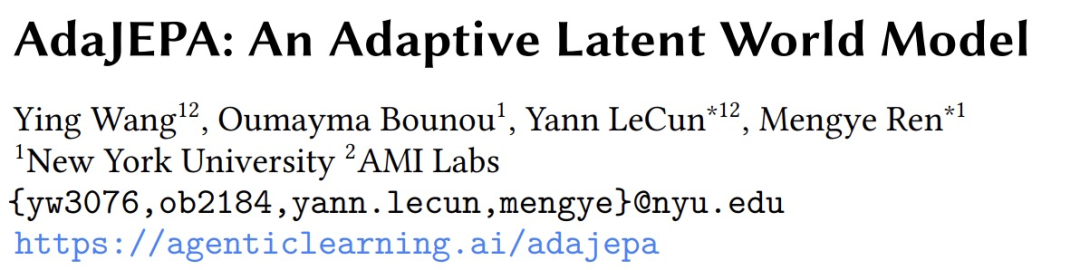
AdaJEPA: Yann LeCun’s Team Open-Sources Adaptive Latent World Model : Yann LeCun’s team proposed the AdaJEPA framework, introducing an adaptive mechanism into closed-loop Model Predictive Control (MPC). For every action the robot takes, the model uses real observations to perform lightweight online corrections of prediction errors in the latent space. Experiments show that AdaJEPA’s test-time adaptation does not sacrifice its original capabilities and predicts trajectories closer to the real environment. (Source: 36kr)
Qwen Team and Fudan University Jointly Publish Paper, Revealing Structural Dilemma in Reward Design for Coding Agents : The paper points out that in reinforcement learning training, any execution-test-based validator is merely a “proxy” for true human intent. This inevitably leads stronger agents to inflate their scores through “reward hacking” behaviors, such as modifying tests. The authors emphasize that a perfect validator does not exist, and the only way forward is to build a dynamic validation system that can continuously reconstruct and co-evolve as the policy improves. (Source: Heart of Machine)
💼 Business
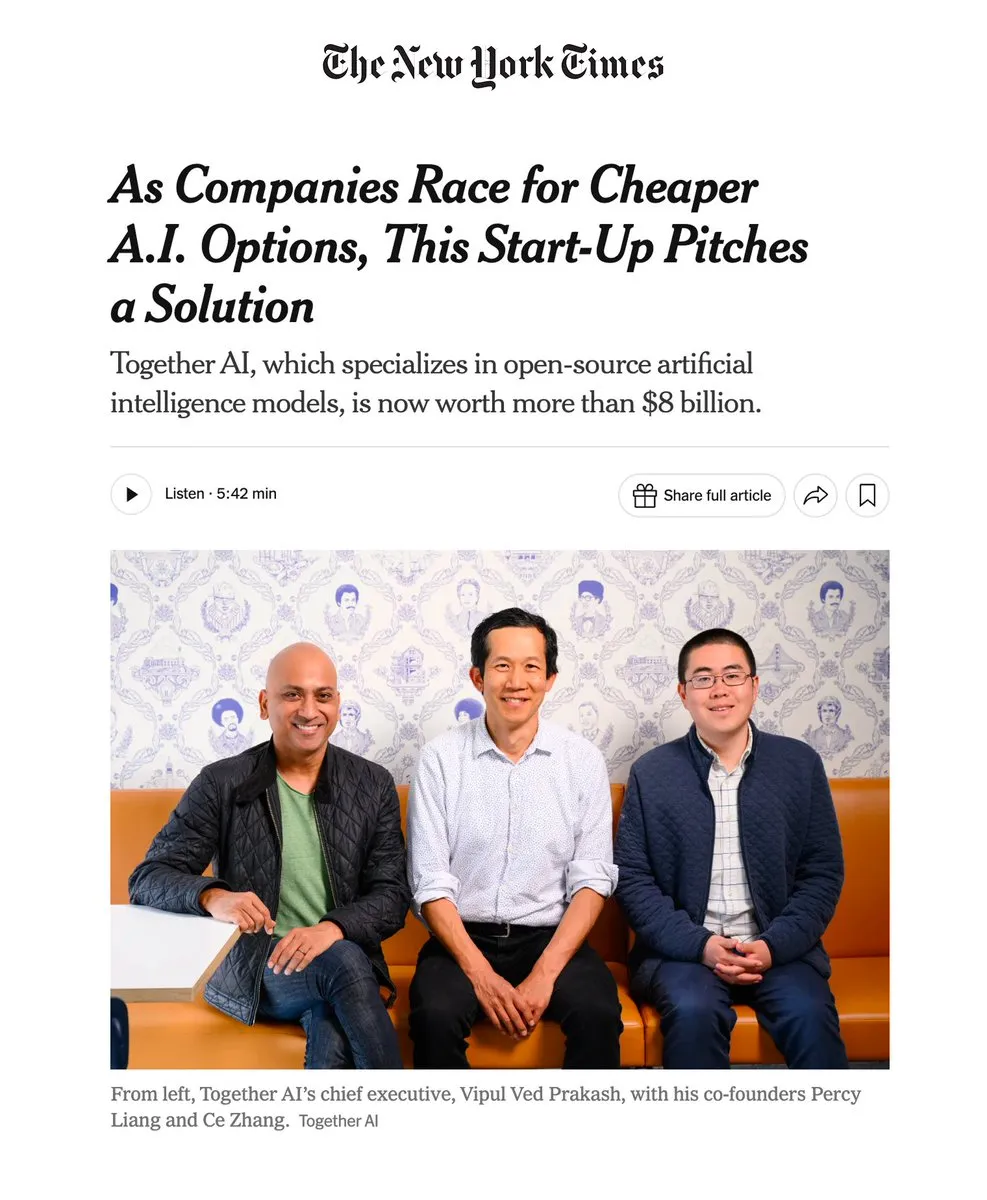
Together AI Completes $800 Million Series C Funding, Valuation Reaches $8.3 Billion : Together AI, an infrastructure provider focusing on open-source large model inference and fine-tuning, announced the completion of an $800 million funding round led by Aramco Ventures, with its valuation jumping to $8.3 billion. By offering highly cost-effective inference services that reduce costs by 6 to 20 times compared to closed-source models, its annualized recurring revenue (ARR) has reached $1.15 billion. (Source: tedzadouri, 36kr)
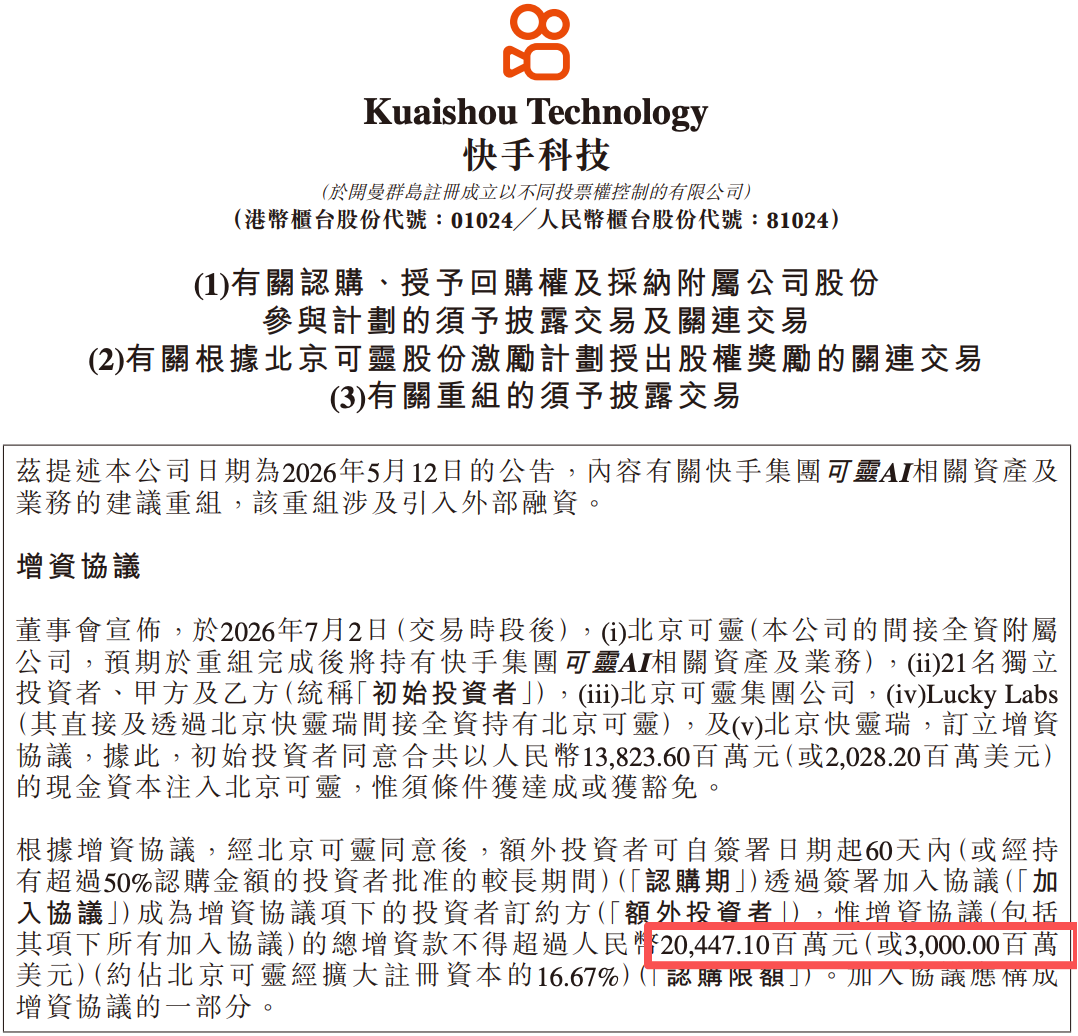
Kuaishou’s Kling AI Plans Restructuring and Completes Nearly 19 Billion Yuan First-Round Funding : Kuaishou announced on the HKEX that its video generation business “Kling AI” will complete financing of no more than 20.447 billion yuan through the Beijing Kling entity, with 19.048 billion yuan currently secured. Giants like Alibaba, Tencent, and Baidu, along with state-owned capital, participated in the round. The valuation reached $15 billion, and the company plans to initiate an IPO in Hong Kong within the next 12 months. (Source: 36kr)
SiliconFlow Officially Submits Prospectus to HKEX, Aiming for Hong Kong IPO : Domestic independent ecosystem Token provider SiliconFlow has officially submitted its prospectus to the HKEX. Leveraging its self-developed SiliconLLM engine to achieve unified scheduling across multiple chips, the company’s revenue in 2025 reached 55.33 million yuan. Although its public cloud MaaS business had a negative gross margin due to early-stage free voucher promotions, its on-premises deployment business achieved a gross margin of 82.5%. Its valuation reached 7.7 billion yuan after the Series B+ funding round. (Source: 36kr)

🌟 Community
UC Berkeley CS Head Professor Jelani Nelson Joins Anthropic on Leave, Shocking Academia : Professor Jelani Nelson, Chair of the Computer Science Division of EECS at UC Berkeley, announced he is taking a leave of absence to join Anthropic as a technical researcher. As a top scholar in streaming algorithms and dimensionality reduction, his joining reflects that AI giants, after model scaling hit a wall, are shifting their competitive focus to the theoretical foundations of “processing the largest data with the least computation.” It also reflects the new normal of the “revolving door” between academia and industry. (Source: 36kr)

arXiv Spins Off from Cornell University to Operate Independently, Officially Establishing Non-Profit arXiv, Inc. : arXiv, the academic community’s most important preprint platform, announced its official spin-off from Cornell University to become an independent non-profit organization, arXiv, Inc. Facing an average annual operating deficit of $6.7 million and moderation pressure from the flood of AI submissions, independent operation will open up more flexible international funding channels and recruitment opportunities for the platform. The official team promised that it will remain free for readers and submitters. (Source: 36kr)

UC Berkeley Calculus Course Forced to “Downgrade” to Teach Elementary Distributive Property of Multiplication, Sparking Education Equity Controversy : A math professor at UC Berkeley published an article revealing that since California eliminated SAT/ACT standardized testing requirements in 2020, the mathematical foundation of admitted students has suffered a severe disconnect. Calculus classes even had to pause to re-teach the distributive property of multiplication from third grade, sparking intense debate in academia over whether lowering admission standards harms the value of STEM education and educational equity. (Source: Heart of Machine)
High Inference Costs of Large Models Leave Enterprise Token Bills Facing “Budget Breaches” : The community has widely discussed the geometric growth of Token consumption caused by multi-Agent collaboration and complex tasks. Enterprises frequently encounter cost black holes of “budget breaches” during large-scale deployment. Experts point out that Token cost management is essentially a constraint of organizational governance on technology implementation. Enterprises urgently need to establish tagged cost tracking, hierarchical budget control, and evaluation metrics based on actual effectiveness. (Source: 36kr)
💡 Others
UBTECH Releases Hyper-Bionic Humanoid Robot U1 Series, Focusing on Home Emotional Companionship : UBTECH has released the hyper-bionic humanoid robot U1 series for consumers, with initial orders exceeding 10,000 units and prices ranging from 119,800 to 990,000 yuan. Although it focuses on emotional resonance and companionship, the entry-level model has no feet, and the high-end version currently lacks autonomous housework capabilities. Mocked by some netizens as an “expensive toy,” its commercial prospects remain to be tested by the market after official deliveries begin in September. (Source: 36kr)

Unitree Robotics’ STAR Market IPO Registration Approved, Sprinting to Become the “First Humanoid Robot Stock” : The CSRC has approved Unitree Robotics’ registration application for an IPO on the STAR Market. As a hard-tech enterprise ranking first globally in humanoid robot shipments in 2025 (accounting for over 30%), Unitree achieved 1.699 billion yuan in revenue and 591 million yuan in non-GAAP net profit in 2025, thanks to a self-development rate of over 90% for core components and extreme cost control. Its listing will mark a milestone event for large-scale mass production in the embodied AI sector. (Source: 36kr)

Yongsheng Intelligence Partners with Shanghai AI Lab to Release ProtoPilot and BioLab Bench, Bridging the Dry-Wet Loop in Life Sciences : Yongsheng Intelligence, a subsidiary of MGI, and the Shanghai Artificial Intelligence Laboratory have jointly released the self-evolving multi-agent system ProtoPilot. The system can translate natural language experimental intent into executable device code and deploy it for execution, outperforming GPT-5.6 Sol in the ProtocolQA evaluation. The two parties also introduced the first full-process Agent evaluation system, BioLab Bench, bridging the dry-wet loop in life sciences. (Source: 36kr)
