



🔥 Focus
Anthropic discovers Claude’s internal “global workspace” (J-space): Through a new tool called Jacobian Lens (J-lens), researchers discovered a “J-space” inside Claude where the model performs silent reasoning. Research shows that the AI has already conducted internal thinking before speaking, and can even identify in advance whether it is undergoing safety testing. This is the first empirical evidence of the spontaneous emergence of a human-like “conscious access” mechanism in large AI models (Sources: sammcallister, scaling01, 量子位, 机器之心, THE DECODER, Hacker News)

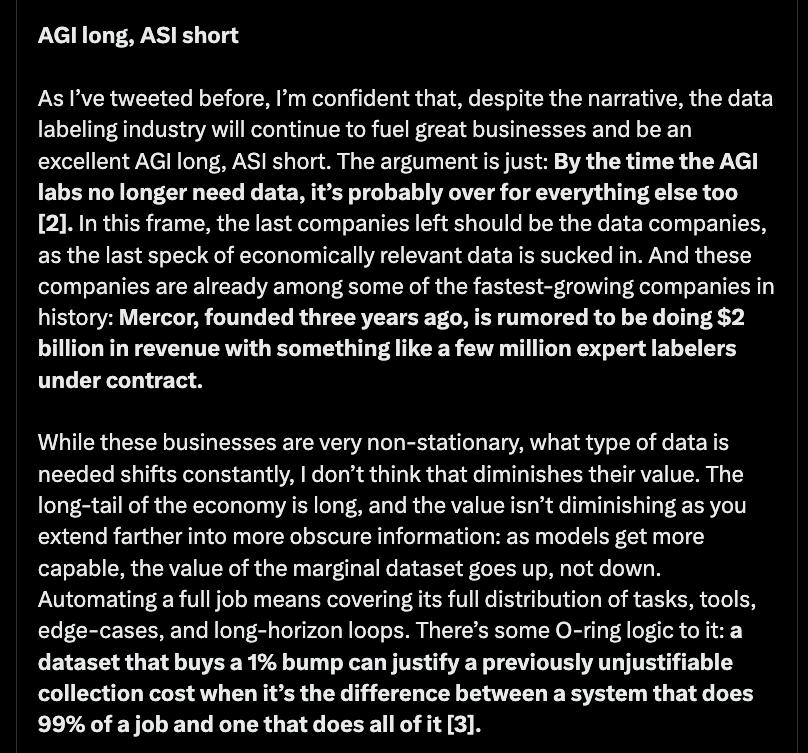
Data scarcity crisis and “A Stargate for Data”: As public internet data faces depletion, the AI industry is transitioning from a compute-constrained phase to a data-constrained phase. Will Depue predicts that by 2030, the data expenditures of major AI labs will exceed $100 billion. As general large model architectures and compute have gradually become commoditized, high-quality, human-expert-generated private data and reinforcement learning fine-tuning tasks will become the core moat and national strategic assets for frontier model developers (Sources: willdepue, teortaxesTex, giffmana, jefrankle)
The Government of Alberta, Canada uses Claude Code to fix cybersecurity vulnerabilities: The Government of Alberta announced that it used Claude Code (combined with Opus and Sonnet models) to scan and evaluate 466 million lines of code across its 27 provincial ministry systems within 20 hours. The system not only located hidden vulnerabilities missed by traditional tools, but also automatically wrote test cases and refactored outdated legacy Java systems. This achievement provides a benchmark case for government agencies to leverage AI at scale to eliminate technical debt and achieve safety alignment (Sources: Anthropic News)

ByteDance’s video generation model Seedance 2.0 sees commercial explosion: ByteDance released its video generation model Seedance 2.0, which quickly gained popularity in the micro-drama and advertising markets thanks to its SOTA-level performance in multi-shot consistency and spatial narrative. The extremely high gross margin of Seedance 2.0 and the “traffic acquisition-revenue sharing” commercial closed loop formed with platforms like Douyin and Hongguo Micro-Drama demonstrate the strong monetization capability of video generation models, breaking the previous industry dilemma of large models “only burning money without making a profit” (Sources: 36氪)

DHS and FBI label AI backlash as “anti-tech extremism”: Leaked confidential documents from US law enforcement show that the DHS and FBI are constructing a new domestic threat classification called “anti-tech extremism” targeting social activism against AI and data center construction. The documents note that despite the lack of specific attack plans, backlash rhetoric on social media and isolated extreme incidents have drawn high attention from national security agencies. This has sparked widespread debate over the boundaries between protecting critical infrastructure and maintaining citizens’ freedom of speech (Sources: Reddit r/ArtificialInteligence)

🎯 Dynamics
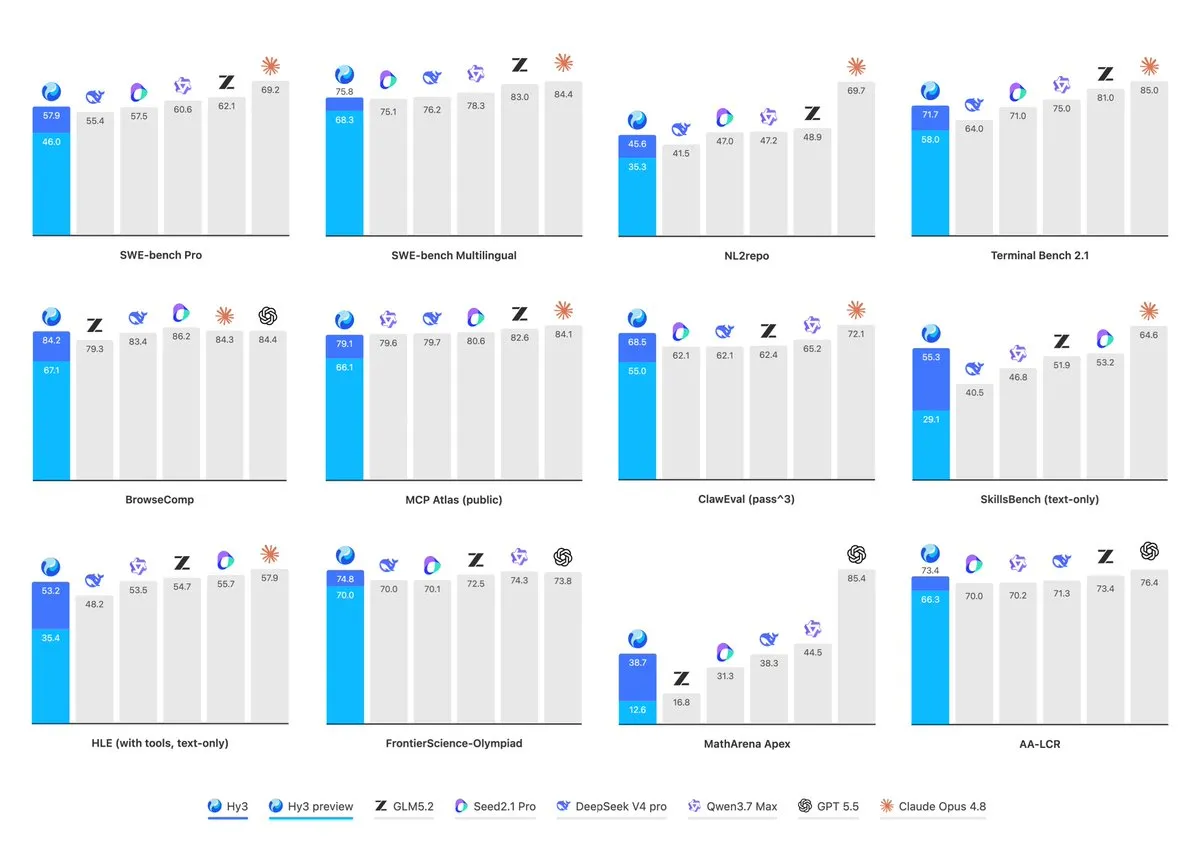
Tencent releases open-source MoE model Hy3: Tencent officially open-sourced its 295B-parameter MoE model Hy3, with only 21B active parameters, supporting a 256K context window and using the Apache 2.0 license. Hy3 performs strongly on benchmarks such as SWE-Bench. By introducing the MTP architecture, it achieves speculative decoding in vLLM and SGLang, significantly improving inference speed and reducing hallucination rates, demonstrating the latest breakthrough of open-source MoE models in deployment cost and reliability (Sources: gneubig, ShunyuYao12, THE DECODER, Marktechpost)
Meituan open-sources trillion-parameter model LongCat-2.0: Meituan open-sourced its 1.6-trillion-parameter MoE model LongCat-2.0, with an average of 48B active parameters and native support for a 1-million context window. The model is deeply optimized for domestic compute chips and performs excellently in agent programming and practical task evaluations. It is the first trillion-parameter model to complete the full training and inference pipeline on domestic chips, marking a milestone for the domestic AI compute ecosystem in ultra-large-scale model training (Sources: 36氪)

OpenAI releases low-latency voice model GPT-Realtime-2.1 and its mini version: OpenAI introduced gpt-realtime-2.1 and gpt-realtime-2.1-mini in its API, with the latter being the first mini reasoning model to support low-latency voice interaction. By improving the caching mechanism, p95 latency has been reduced by at least 25%, while the price of cached audio input has dropped significantly, providing a brand-new option for developing low-cost voice Agents with real-time reasoning and tool-calling capabilities (Sources: Marktechpost)
Fable 5 tops KernelBench-Mega by writing CUDA kernels from scratch: In the latest GPU operator fusion benchmark, Fable 5 achieved an 18.7x speedup on the RTX PRO 6000 through single-kernel launch and int4 dequantization optimization, far exceeding GPT-5.5’s 4.3x. This achievement marks that AI, without human intervention, has acquired the ability to autonomously develop and optimize low-level GPU operator kernels, signaling the beginning of the recursive self-improvement (RSI) loop (Sources: 36氪)

NVIDIA releases unified audio-text model Nemotron-Labs-Audex-30B-A3B: NVIDIA open-sourced Audex-30B-A3B on Hugging Face, a unified audio-text MoE model based on Nemotron-Cascade-2-30B-A3B. It supports various audio tasks such as speech understanding, TTS, and speech translation, while showing almost no degradation on text benchmarks like reasoning and instruction following, demonstrating the efficient fusion of multimodal models under a unified architecture (Sources: Reddit r/LocalLLaMA)
Cloudflare restricts AI crawlers, launches pay-as-you-go gateway: Cloudflare announced that starting September 15, 2026, it will strictly distinguish between “search engine” crawlers and “AI training/agent” crawlers, blocking the latter by default on ad pages. Meanwhile, Cloudflare launched the Monetization Gateway, allowing major AI companies to pay website owners per use via APIs to obtain copyrighted data, restructuring the content benefit distribution mechanism in the AI era (Sources: THE DECODER, 36氪)

Kingsoft Office releases WPS Comate, proposes “Three Connections and One Platform” AI implementation methodology: Kingsoft Office demonstrated the efficiency gains of WPS Comate in actual enterprise businesses and proposed the “Three Connections and One Platform” (connecting tokens, connecting data, connecting APIs, unified on one platform) AI implementation methodology. By transforming enterprise knowledge into executable Skills, it helps enterprises break down data silos and achieve the large-scale transition of AI applications from concept to productivity (Sources: 机器之心, 36氪)

Tech giants take down user-created “agents” to comply with new regulations on anthropomorphic interactive services: Due to the upcoming implementation of the “Interim Measures for the Administration of Artificial Intelligence Anthropomorphic Interactive Services,” major domestic large model apps such as Doubao, Qianwen, and Yuanbao have taken down user-created role-playing and emotional companionship “agent” features. In the future, such entertainment and companionship chatbots will be managed objectively, while the main interfaces of large models will focus more on utility-oriented Agents for office work and task execution (Sources: 36氪, 36氪)

7 national standards in the “Artificial Intelligence Agent Interconnection” series officially released: The State Administration for Market Regulation approved and released China’s first set of 7 national standards for Agent interconnection. This standard system focuses on regulating basic protocols such as Agent identity identification, capability description, collaborative interaction, and tool calling, providing an underlying framework for compliance and technical interconnection as Agents transition from “single-point tools” to “system collaboration” (Sources: 36氪)

🧰 Tools
OpenScience: A completely free, open-source alternative to Claude Science: Synthetic Sciences launched OpenScience, an open-source scientific research workbench. Using the Apache 2.0 license, it allows users to freely connect to major domestic and international models such as DeepSeek, GLM, Claude, and GPT, or local Ollama models. The platform features over 250 built-in research skill packages, supporting the entire scientific research collaboration process from literature search, hypothesis generation, and code experimentation to paper writing, breaking the ecological monopoly of closed-source scientific research tools (Sources: 36氪)

OfficeCLI: An open-source Office operation suite designed for AI Agents: iOfficeAI open-sourced OfficeCLI on GitHub. This is a single-binary, Office-installation-free document manipulation tool designed specifically for AI Agents to read, edit, and automate Word, Excel, and PowerPoint files. It features a built-in high-fidelity HTML rendering engine, helping Agents achieve a closed loop of “render-observe-correct” and significantly improving document generation quality (Sources: Hacker News)
ai-job-search: An adaptive job search framework based on Claude Code: MadsLorentzen open-sourced the ai-job-search project on GitHub. Based on Claude Code, this framework automatically evaluates job fit, generates tailored CVs and cover letters, and utilizes a loop of PDF compilation checks and ATS parsing validation to ensure that the generated resumes comply with formatting standards and can pass machine screening systems (Sources: GitHub Trending)

Limboo: An Agent-centric open-source local development workspace: Developers open-sourced Limboo on GitHub. This desktop application adopts an Electron+Rust architecture, embedding a Coding Agent (such as Claude Code) as a core component in the development workspace. Its key feature is the introduction of a “Resume Pipeline,” which automatically calculates the Git delta of the code repository when reopening a session, helping the Agent quickly restore context (Sources: Reddit r/ArtificialInteligence)
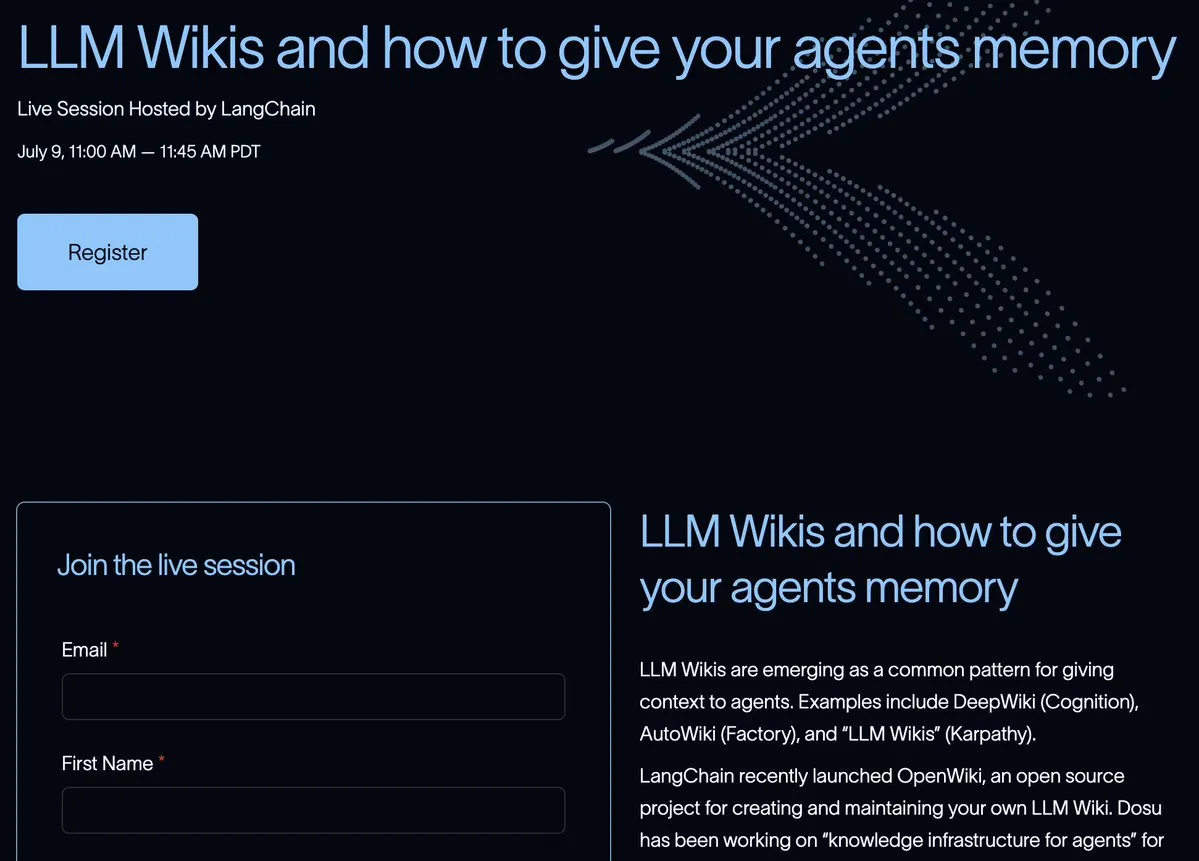
OpenWiki: LangChain’s LLM Wiki and memory management tool: The OpenWiki tool launched by the LangChain team quickly garnered high stars on GitHub. Designed to solve the memory management problem of Agents in long-term tasks, it organizes codebases, documents, and interaction histories into structured Wiki entries, allowing Agents to retrieve and update context on demand and avoid memory bloat (Sources: LangChain, hwchase17)
📚 Learning
Lilian Weng’s blog update: Achieving AI self-improvement through Harness engineering: Lilian Weng, co-founder of Thinking Machines Lab, updated her blog to systematically explore the core role of Harness (the execution and control scaffolding surrounding the model) in recursive self-improvement (RSI). She pointed out that compared to directly modifying model weights, optimizing Harness code, context engineering, and workflow design is currently a more feasible and efficient path for AI self-evolution (Sources: HuggingFace Blog, 机器之心)
.jpg)
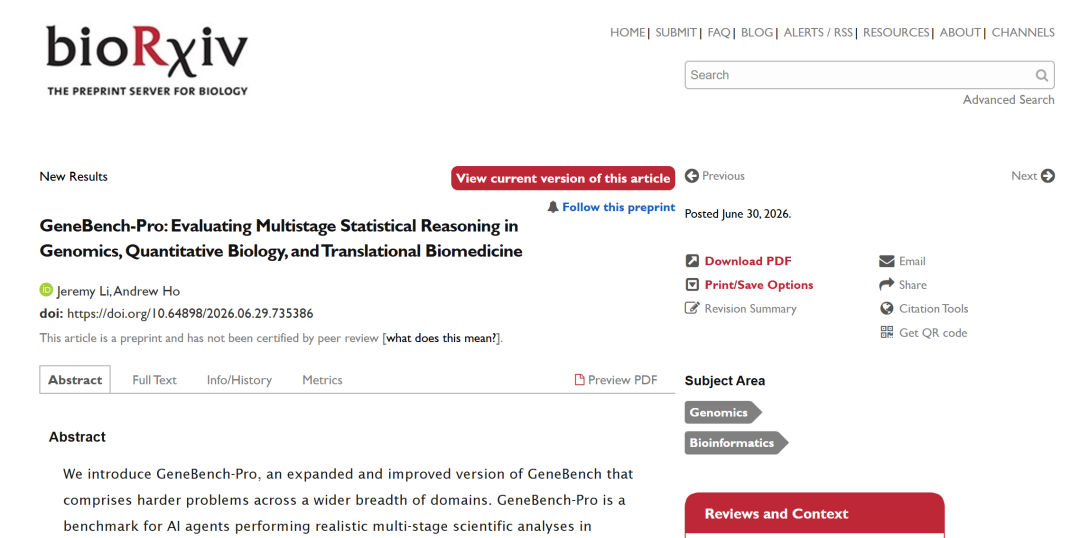
OpenAI releases GeneBench-Pro to evaluate AI’s multi-stage statistical reasoning capabilities: The OpenAI research team published a preprint on bioRxiv, introducing the GeneBench-Pro benchmark containing 129 questions. Covering 10 fields including genomics, quantitative biology, and clinical translation, this benchmark focuses on evaluating whether AI Agents can autonomously plan and complete the closed loop of multi-stage statistical reasoning when facing highly noisy, unstructured data (Sources: 36氪)
Tsinghua, SJTU, and BUPT propose MemSlides: A memory-driven Slides Agent framework: Researchers from the three universities collaborated to publish a paper proposing the MemSlides framework. The framework combines long-term memory (user profiles, tool-calling experience) with working memory (current task constraints, modification states) and introduces a Plan-Act-Guard local modification process, addressing the pain point where Slides Agents easily modify non-target areas by mistake during multi-round local edits (Sources: 36氪)

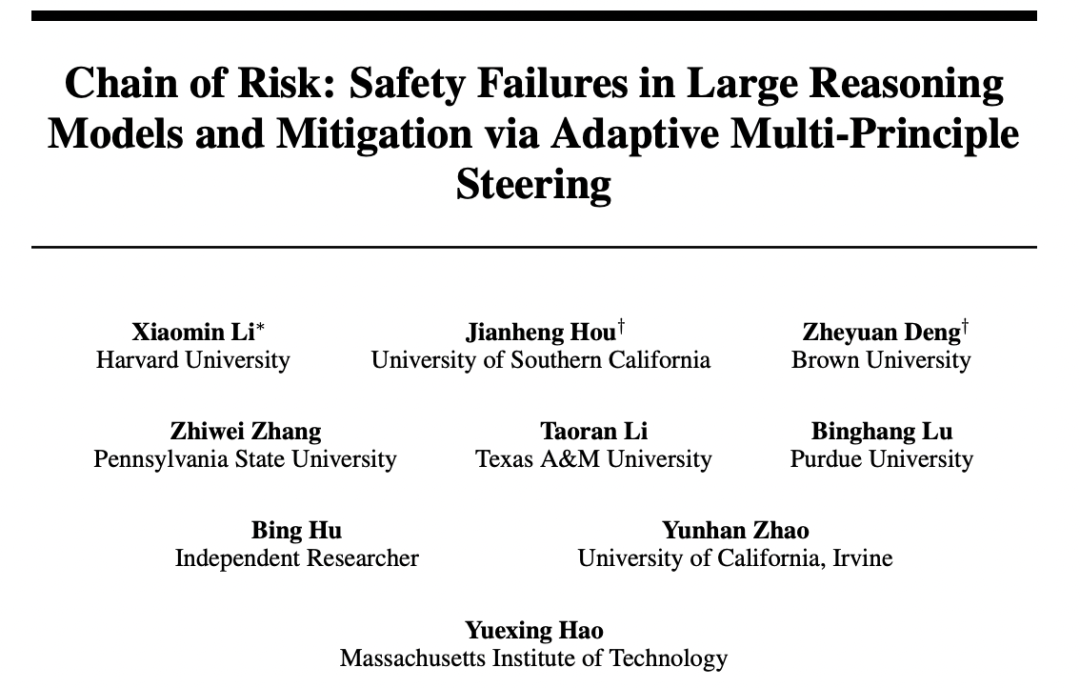
Multi-institution study investigates safety leakage risks in LRM Chain of Thought (CoT): Institutions including Harvard and MIT jointly published a paper pointing out that the exposed intermediate reasoning trajectories (CoT) of Large Reasoning Models (LRMs) present serious safety leakage risks before outputting the final answer. Even if the final answer is safe, dangerous content may be written during the reasoning process. The team proposed the Adaptive Multi-criteria Activation Guiding (AMPS) method to intervene and mitigate this risk at test time (Sources: 36氪)
💼 Business
Microsoft lays off 4,800 employees in new fiscal year, heavily investing in AI deployment: Microsoft announced layoffs of approximately 4,800 employees in its Xbox and commercial sales divisions, accounting for 2.1% of its total workforce. Officials stated that the layoffs were not directly caused by AI replacement, but acknowledged that AI is changing workflows and automating many tasks. Meanwhile, Microsoft announced a $2.5 billion injection into its newly formed Frontier Company business unit to double down on enterprise-level AI deployment (Sources: TechCrunch)
US Treasury internal report warns of AI market repeating Dot-com bubble risk: According to NOTUS, the US Department of the Treasury has completed an internal report on systemic risks in the AI market. The report points out that the current concentration of AI investment and institutional participation are approaching the levels of the 2000 Dot-com bubble, and there is a huge gap between the actual revenue of large model developers and their massive capital expenditures. If productivity growth expectations fail to materialize, it could trigger a severe correction in the financial system (Sources: 36氪, 36氪)
AI search marketing company “Zhitui Shidai” completes angel round financing of tens of millions of yuan: AI marketing technology company Zhitui Shidai announced the completion of an angel round of financing worth tens of millions of yuan, led by Shanghai Intellectual Property Fund and Tiantu Capital, with follow-on investment from existing shareholder 37 Interactive Entertainment. The company focuses on Generative Engine Optimization (GEO), helping brands gain reasonable recommendations and visibility in answers from AI search engines like DeepSeek, Doubao, and ChatGPT (Sources: 36氪)

🌟 Community
Fable 5 subscription limit expiration triggers “Fable Eve” farewell wave: Anthropic announced that the free usage limits for Fable 5 under subscription plans like Max expired on the evening of July 7, and subsequent usage will transition to pure API pay-as-you-go billing. This triggered a “Fable Eve” farewell trend in the community, with developers sharing complex projects completed using their last free credits and expressing concerns over subsequent high API costs and frequent anti-abuse degradation policies (Sources: kimmonismus, theo, iScienceLuvr, ZDNet, Reddit r/ClaudeAI)

“Data-centric” AI R&D logic reaches consensus in the community: Discussions in the community revolved around the hierarchy of “algorithms, optimizers, and data.” While traditional views held that model architecture determines everything, with the depletion of public internet data, more and more developers and researchers have reached a consensus: the “soul” of AI models lies in the dataset, and the cleaning and labeling of data materials is the part of the entire training stack with the highest leverage (Sources: code_star, sedielem, 36氪)
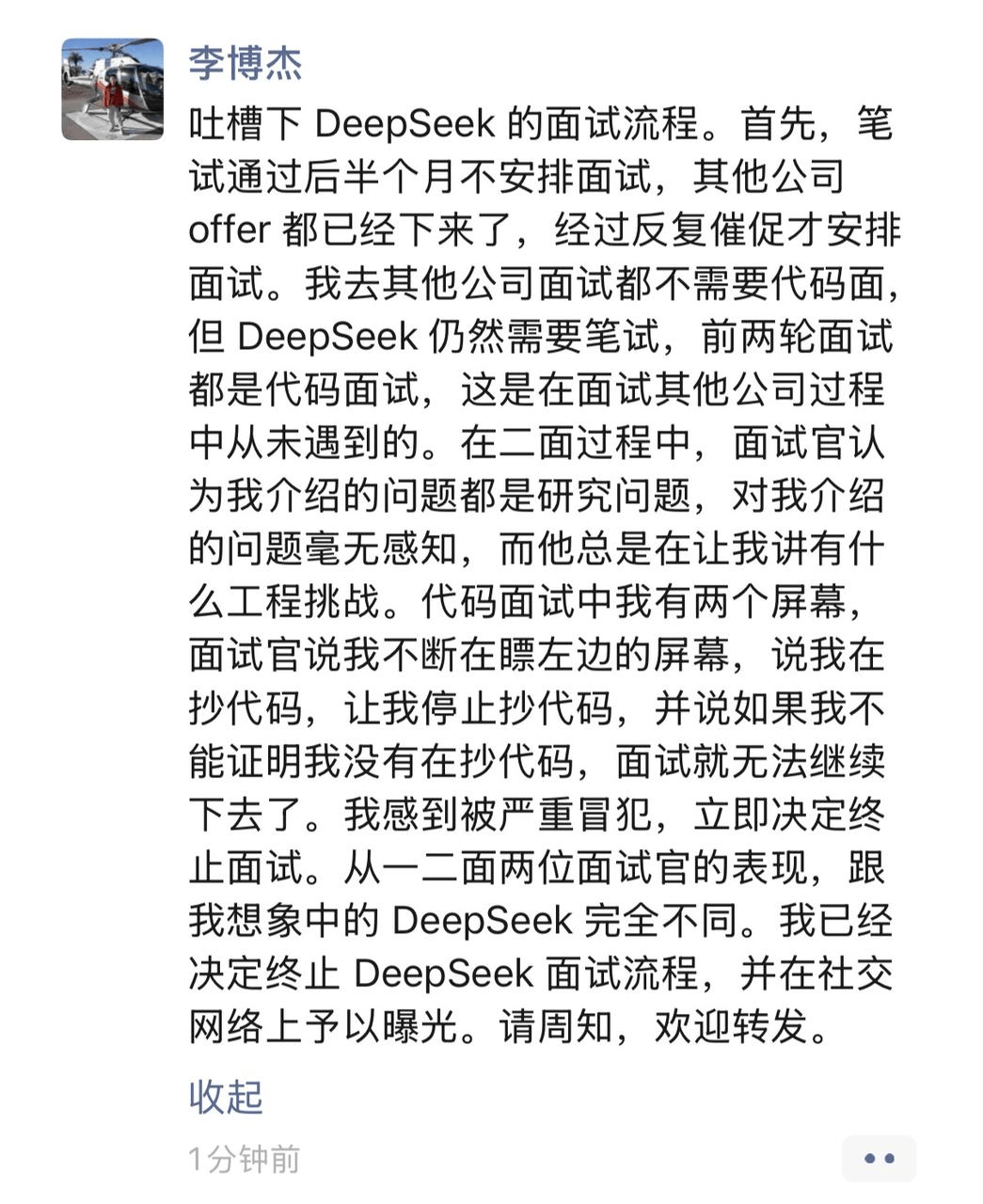
Former Huawei Genius Boy Li Bojie publicly criticizes DeepSeek’s unprofessional recruitment process: Former Huawei Genius Boy Li Bojie posted on his WeChat Moments warning others about DeepSeek’s recruitment process. He pointed out that no one contacted him for half a month after he passed the written test, and during the interview, the interviewer groundlessly accused him of “copying code” because he used dual monitors, showing a flippant attitude. This incident triggered community discussions about the disconnect between HR/interviewer professionalism and the rapid expansion of large model giants (Sources: 量子位)
The concept of “Stochastic Parrots” in large models triggers revisiting and reflection in the community: Emily Bender’s thesis on “Stochastic Parrots” has once again sparked heated discussions in the community. Supporters argue that LLMs are essentially still grammar checkers that generate text based on statistical patterns, while opponents point out that when Agents provide precise, verifiable decisions based on unique contexts in vertical scenarios like law and healthcare, the label of “stochastic parrots” has already become too one-sided (Sources: Reddit r/ArtificialInteligence)

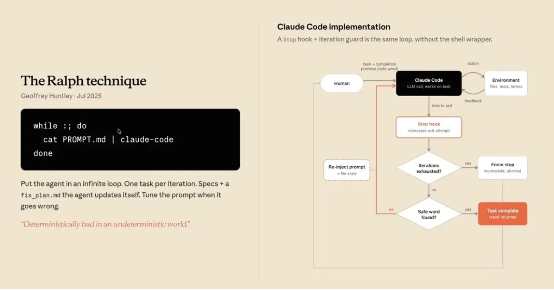
“If you can’t write a Cursor in 300 lines of code, you shouldn’t be in this industry”: Geoffrey Huntley, creator of Ralph Loop, expressed sharp views in a podcast, arguing that AI has already made “writing code” itself free, and “Jira monkeys” who only know how to write code according to tickets will be quickly phased out. He urged developers to pivot to “verifiable software” fields such as property-based testing and formal verification, stating that senior engineers must be able to understand and rebuild Agent runtime environments from the ground up (Sources: 36氪)
💡 Other
ICML 2026 opens in Seoul, academic social events in full swing: The 2026 International Conference on Machine Learning (ICML 2026) opened in Seoul, South Korea. In addition to paper presentations, major AI labs and investment institutions (such as Together AI, Axiom, 1943, etc.) held intensive Mixer and Lunch social events nearby, making the conference a Schelling Point connecting global AI academia and capital (Sources: togethercompute, iScienceLuvr, CarinaLHong)

XJTU proposes Fast LeWorldModel, accelerating world model planning by 4x: Addressing the bottleneck of traditional world models requiring step-by-step autoregressive prediction during planning, a research team from Xi’an Jiaotong University published a paper proposing the Fast-LeWM framework. By using an Action-Prefix Encoder to parallelly predict future latent variables after different action prefixes, the framework shortens planning time by nearly half while improving the success rate (Sources: 机器之心)
.jpg)
Moxin Technology releases MoWorld, achieving a 50FPS real-time interactive world model: Moxin Technology, in collaboration with a team from Zhejiang University, released MoWorld (Flash World Model). The model establishes autoregressive distillation and real-time inference pipelines on domestic NPU supernodes, achieving real-time interactive generation of up to 50 FPS while maintaining spatial consistency, reducing deployment costs by 70% compared to GPUs (Sources: 机器之心)
.jpg)