



🔥 Spotlight
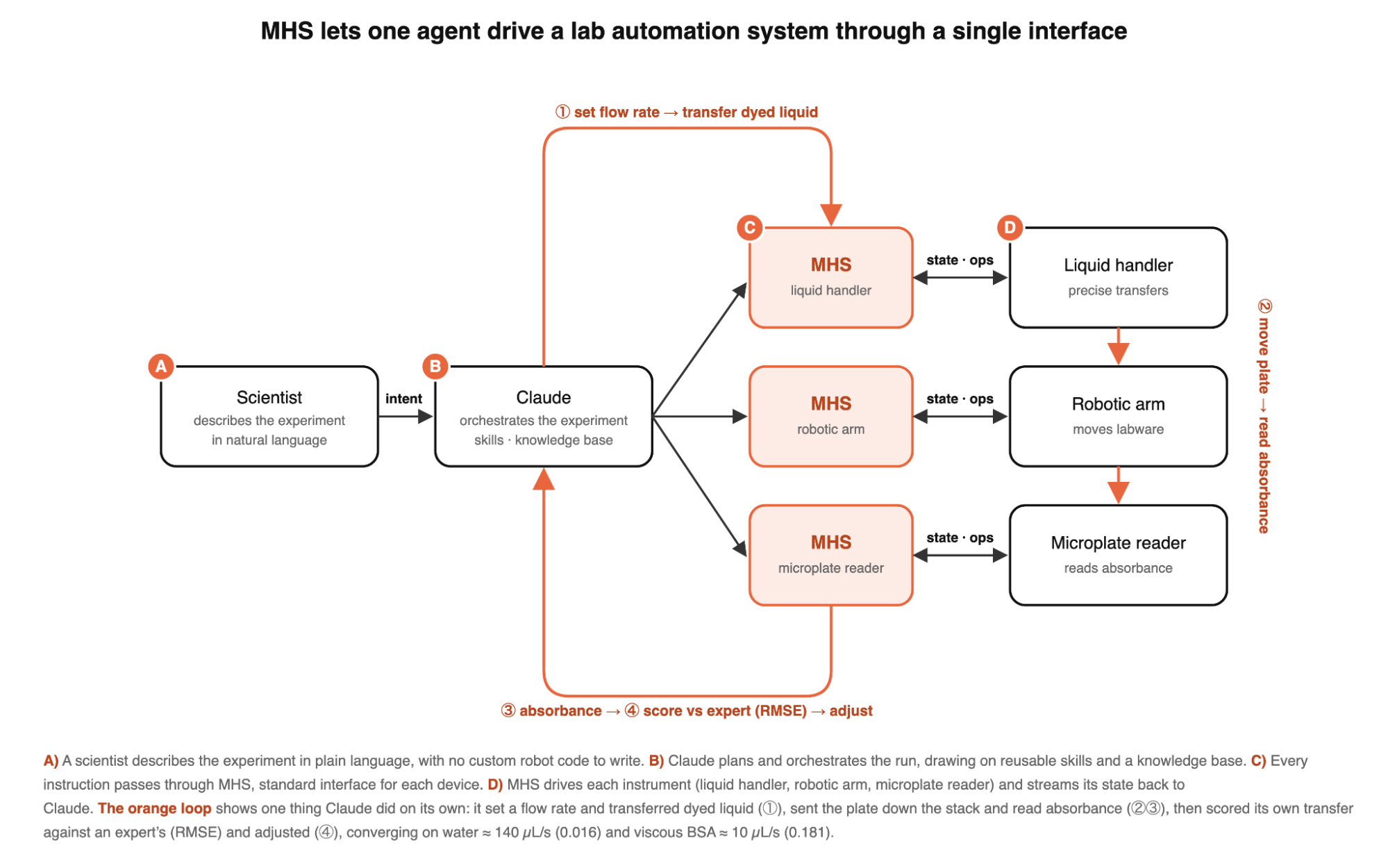
Anthropic Launches Model Hardware Standard (MHS) to Pioneer Physical AI Interaction : Anthropic officially released the research preview of the Model Hardware Standard (MHS), an open-driver specification designed for physical devices. Regarded as an “MCP for the physical world,” MHS provides unified device description files and standard driver interfaces, allowing AI agents like Claude to discover and collaboratively control precision instruments—such as microscopes, robotic arms, pipettes, and quantum lasers—across networks just like invoking software APIs. In real-world benchmarks, Claude utilized MHS to compress precision laser calibration time from weeks to hours with a 99.3% stability rate. Testing is currently underway in collaboration with HHMI Janelia, Genentech, Doosan Robotics, and AWS, marking a standardized autonomous loop transition for embodied AI and scientific automation from digital code manipulation to real physical experiments. (Source: Anthropic News)
US Federal Judge Rules Pentagon’s Blacklisting of Anthropic Unconstitutional and Revokes Sanctions : The U.S. District Court for the Northern District of California ruled that the Department of Defense’s decision to designate Anthropic as a “supply chain national security risk” and ban federal procurement was an illegal retaliatory act, violating the Due Process Clauses of the First and Fifth Amendments of the U.S. Constitution. The judge noted that punishing a company for publicly criticizing government AI policies under national security pretexts lacked factual basis and contradicted the Pentagon’s technical reality of continuing to seek procurement of its frontier safety models. The ruling took effect immediately, vacating the administrative ban against the company and establishing a crucial judicial precedent for frontier AI labs navigating government compliance and military security redlines. (Source: The Guardian)

Over 100 Global Tech Giants Co-Sign Initiative: AI-Powered Autonomous Defense to Combat Emerging Cyberattacks : 116 tech companies and security institutions—including OpenAI, Anthropic, Google, Microsoft, AWS, Oracle, CrowdStrike, and Hugging Face—jointly issued an open letter calling on the public and private sectors to build a deep global AI cyber defense. Signatories warned that automated cyberattacks powered by advanced AI will surge exponentially within months, putting critical infrastructure at unprecedented risk of AI penetration. The industry must move away from traditional static defense paradigms, directly fund and deploy defensive AI systems equipped with autonomous inference and real-time remediation capabilities, and establish cross-organizational security incident sharing mechanisms. (Sources: OpenAI, THE DECODER)
Google Releases Gemini Omni 1.1 Flash to Enhance Controllable Long Video Generation : Google DeepMind officially launched Gemini Omni 1.1 Flash, its next-generation multimodal audio-video generation and editing model, simultaneously opening access via the Gemini API, Google AI Studio, and enterprise agent platforms. The new model focuses on enhancing multi-shot continuity, supporting up to 10 seconds of prefix video input to seamlessly extend scenes up to 40 seconds, offering first-and-last keyframe inbetweening, and accepting 3-second motion reference videos. It also introduces a 360p draft mode with 60% higher system throughput at one-third the cost, alongside 4K ultra-clear delivery, securing 1st place in Text-to-Video and 2nd place in Image-to-Video on the evaluation arena. (Sources: Google DeepMind Blog, Google DeepMind)

🎯 Dynamics
Tencent Hunyuan Open-Sources 770B Flagship Foundation Model Hy4 preview : Tencent Hunyuan officially open-sourced its new-generation MoE foundation model, Hy4 preview, featuring 770B total parameters, 49B activated parameters, a 1M context window, under the Apache 2.0 license. The architecture adopts Gated DSA sparse attention, iHC cross-layer residual connections, and a 10B Multi-Token Prediction (MTP) mechanism. It ranks in the first tier of open-source models across blind tests on 203 complex engineering and mathematics tasks, securing day-one deep adaptation support from vLLM and NVIDIA Blackwell hardware platforms. (Sources: Hugging Face, Synced)
.jpg)
OpenAI Internally Tests Codex “Persistent Mode” to Grant Agents Autonomous Agency : An external review of the open-source Codex CLI codebase revealed that OpenAI is internally canary testing “Persistent Mode.” Breaking away from current limitations of several minutes or single-turn sessions, the mode is set to “run continuously until forcibly suspended,” allowing the model to autonomously generate follow-up to-dos across sessions before going to sleep, proactively probe context, and push notifications to users. This highlights OpenAI’s clear trajectory toward 24/7 resident autonomous digital workers. (Source: WIRED)

Google DeepMind Pilots First Double-Blind Confidential AI Evaluation Framework : Google DeepMind, in collaboration with the AI Safety Institute of Singapore, MLCommons, and other organizations, has built the world’s first double-blind model evaluation pipeline based on Google Cloud’s Confidential Space. Using hardware-grade cryptographic isolation, the mechanism ensures evaluation bodies cannot steal proprietary model weights while model providers cannot preview test questions, fundamentally eliminating benchmark contamination issues in frontier model evaluation via cryptography. (Source: THE DECODER)

NVIDIA Expands NVLink Fusion and Introduces NVHBM Custom Memory Standard : NVIDIA announced the extension of its NVLink Fusion rack interconnect ecosystem to custom high-bandwidth memory technology, NVHBM. By embedding the memory controller directly into the 3D HBM base die, this architecture frees up to 25% of compute core area on compute chips, boosts memory bandwidth by 30%, and reduces power consumption by 15%. AWS Annapurna Labs has confirmed it will be the first to adopt the technology in its next-generation Trainium chips. (Source: NVIDIA Blog)
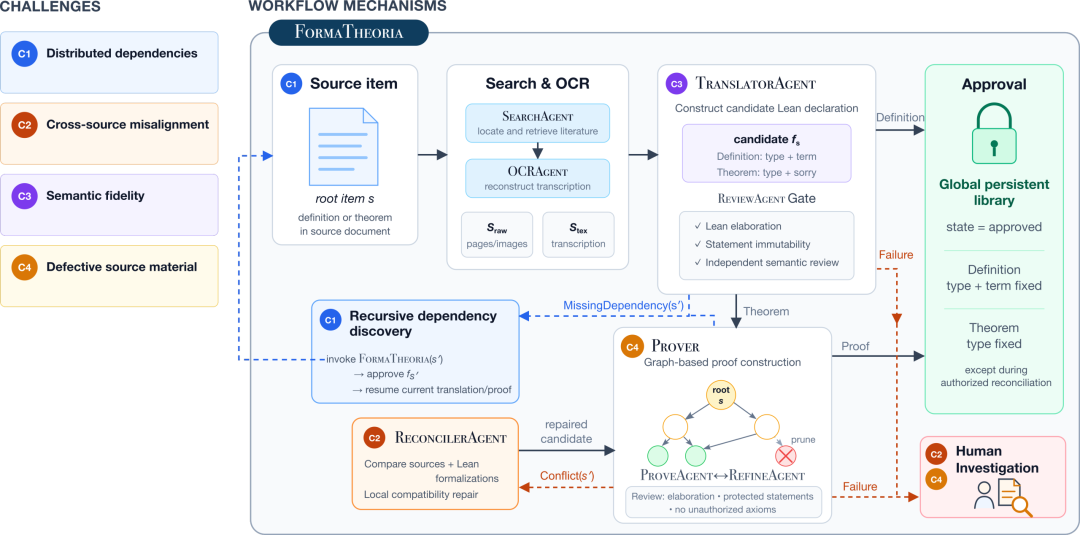
Tsinghua and Collaborators Propose FormaTheoria: AI Writes Millions of Lines of Code to Verify Major Mathematical Theorems : Championed by Shing-Tung Yau, teams from Tsinghua University’s Qiuzhen College and the University of Warwick proposed the FormaTheoria workflow. It uses AI to autonomously extract dependencies from unstructured literature and translate them into rigorous Lean proofs. The system has successfully formalized four major theorems in the Classification of Finite Simple Groups (CFSG), generating over 994,000 lines of code and dependency graphs, completing a formalization volume in 7 months that would traditionally require 15 experts 6 years to achieve. (Source: arXiv)
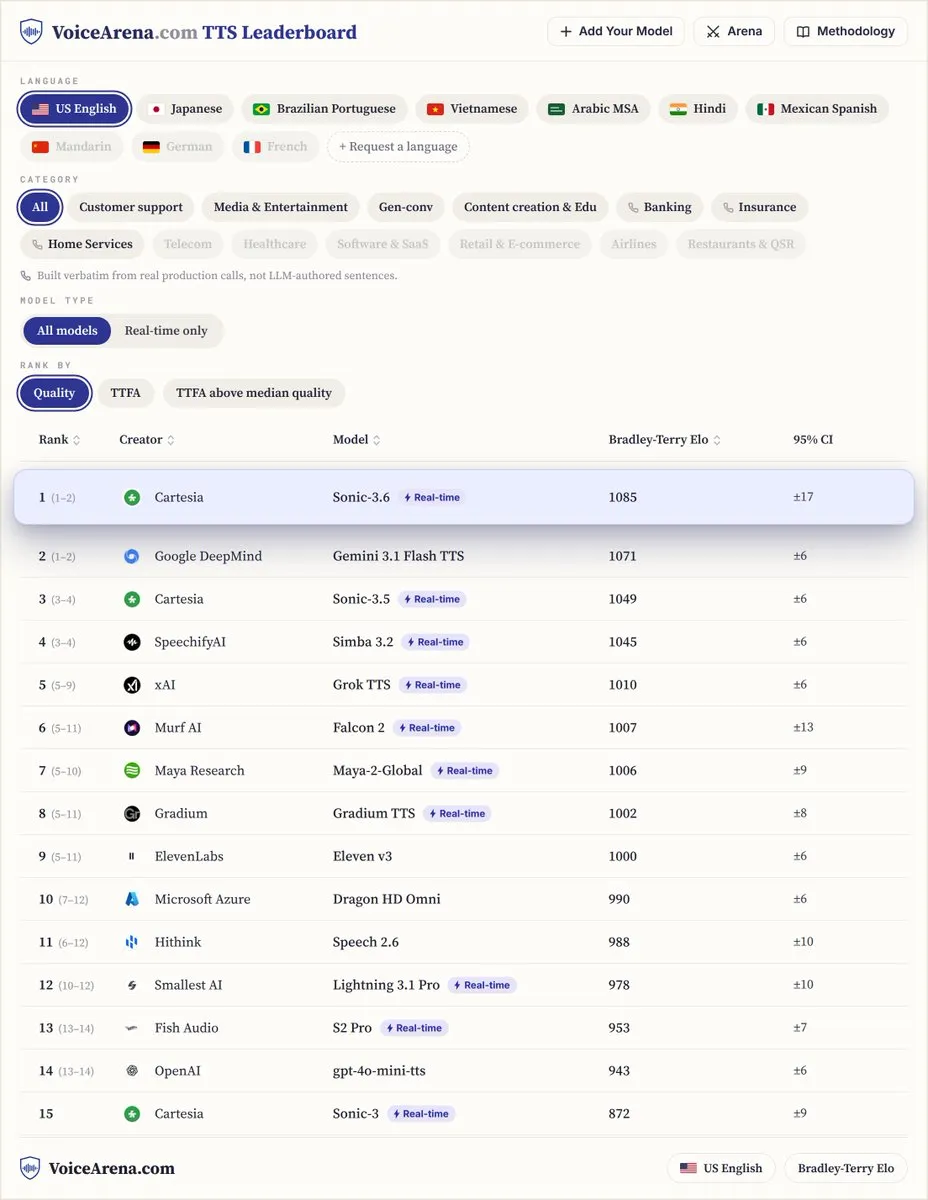
Cartesia Officially Releases Real-Time Voice Model Sonic-3.6 into GA : Voice AI startup Cartesia announced that its Sonic-3.6 text-to-speech model has officially entered General Availability (GA). The model overhauls the underlying network architecture, significantly enhancing naturalness and immersion while maintaining ultra-low latency. On the authoritative benchmark Voice Arena, Sonic-3.6 tied for first place with Gemini 3.1 Flash TTS with an Elo rating of 1085. (Source: Cartesia)
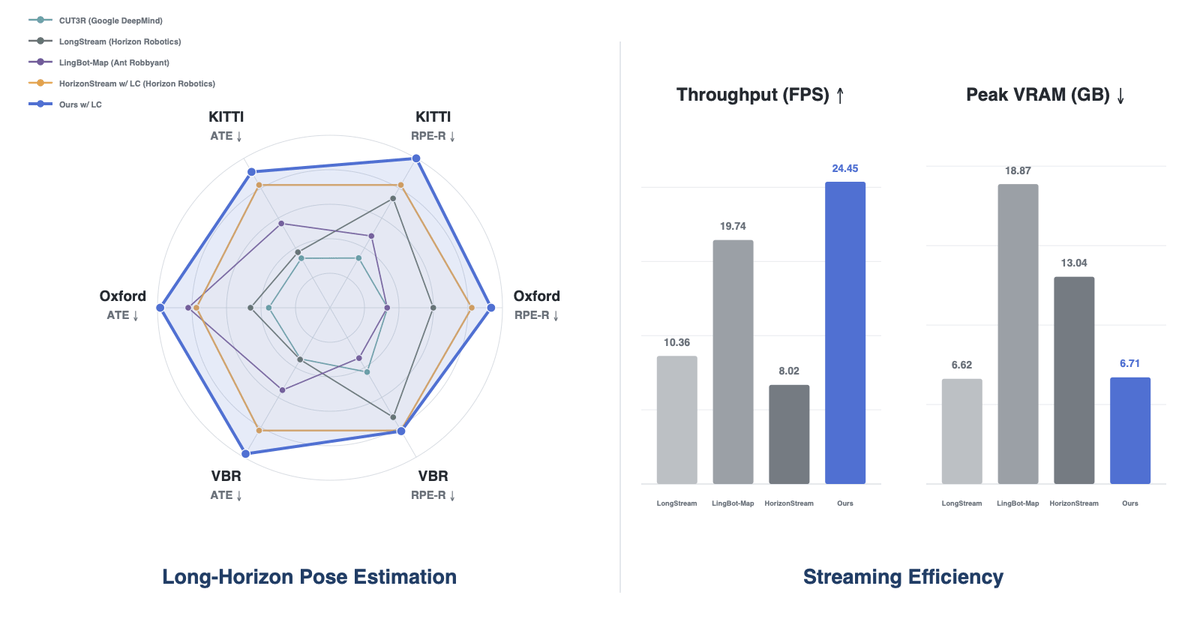
Amap Releases ABot-Recon, a Streaming 3D Reconstruction Model for Tens of Thousands of Frames : Alibaba subsidiary Amap released ABot-Recon, a monocular RGB streaming 3D reconstruction model that employs a “12-frame local pose prediction + residual refinement” architecture, completely discarding long-range memory anchors. This design reduces peak GPU memory usage to 6.71 GB and achieves real-time, drift-free global mapping at 24.45 FPS across tens of thousands of frames on a single consumer GPU, significantly lowering the spatial perception barrier for embodied AI. (Source: QbitAI)
Alibaba Upgrades Qoder Agent Workbench to Democratize Programming Capabilities : Alibaba officially released the all-new Qoder, expanding it from a standalone coding tool into a universal agent workspace for all employees. The platform adds a resident desktop pet assistant and real-time voice interaction, supports dual modes for professional coding and non-technical general tasks, and incorporates a built-in Auto intelligent dispatch engine connected to over 70 plugins, encapsulating complex development capabilities into digital productivity accessible to general business staff. (Source: Zhidongxi)

Apple Introduces Luce: Multimodal Gaussian Representation for Single-Image 3D Generation : Apple’s Machine Learning Research team introduced Luce, which embeds 3D geometric meshes along with physically based rendering (PBR) material parameters—such as albedo and roughness—into a unified voxelized Gaussian point cloud latent space. Powered by a Rectified Flow Transformer and multi-layer feature alignment, Luce achieves high-fidelity relighting and text detail preservation during single-image 3D generation, showing a 28% improvement in FID metrics. (Source: Apple Machine Learning Research)

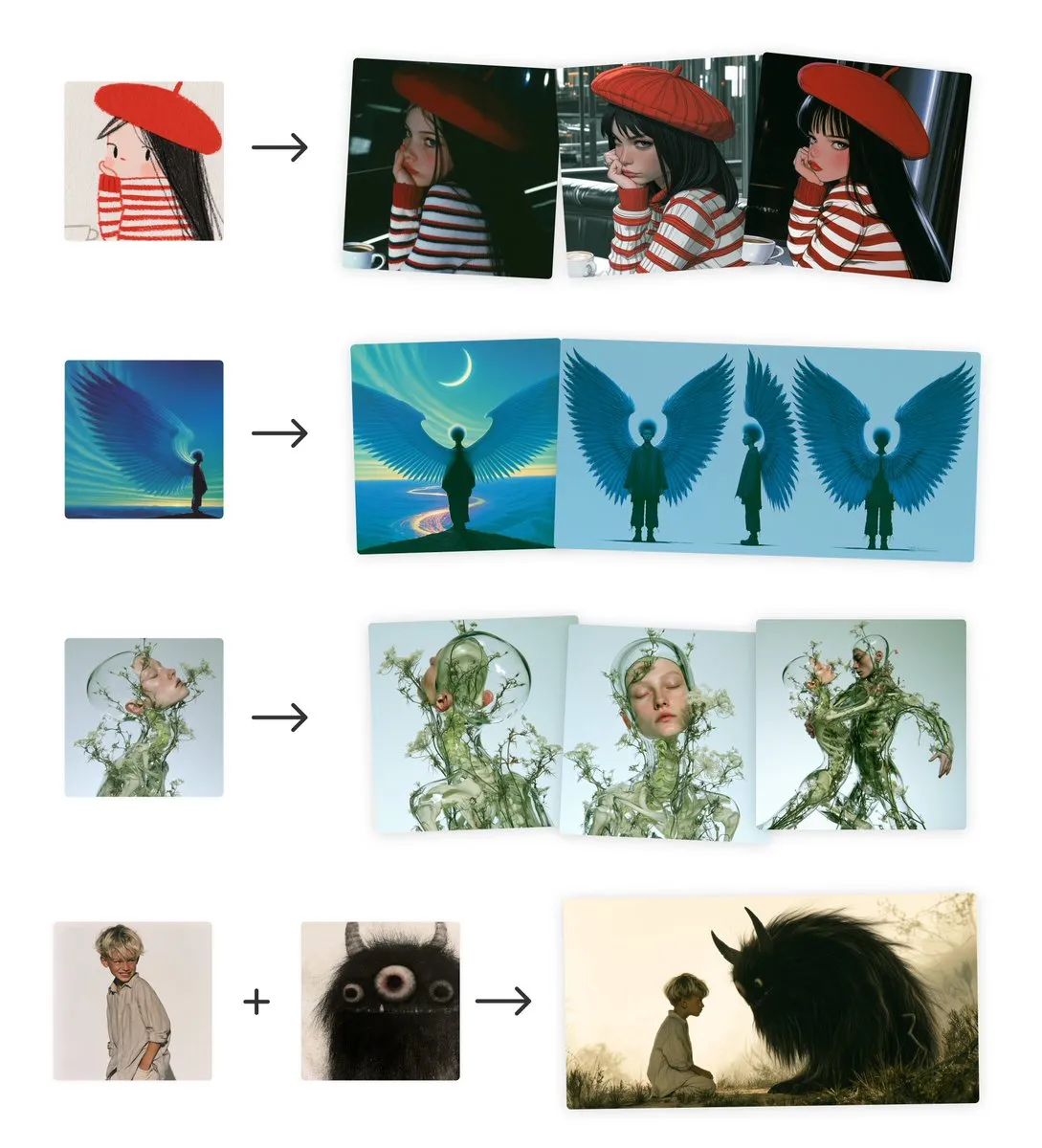
Midjourney Launches Public Beta for V8.2 Image Editing and Inpainting Models : Midjourney opened the public beta for its V8.2 image editing models. The new release fully supports precise image modification via natural language instructions, multi-image reference fusion generation, brush-based interactive inpainting and outpainting, and seamlessly inherits personalization parameters and moodboard settings, significantly improving controllability for commercial visual design. (Source: DavidSHolz)
🧰 Tools
Tailcat: Serverless Peer-to-Peer Tunneling Based on the WireGuard Data Plane : Tailscale open-sourced Tailcat, a lightweight networking tool that extracts the core magicsock and user-space TCP/IP stack. It achieves NAT traversal and WireGuard end-to-end encrypted communication via short-lived tokens without requiring connection to a centralized control plane, building private, permission-independent data pipelines between distributed agents. (Source: GitHub Trending)

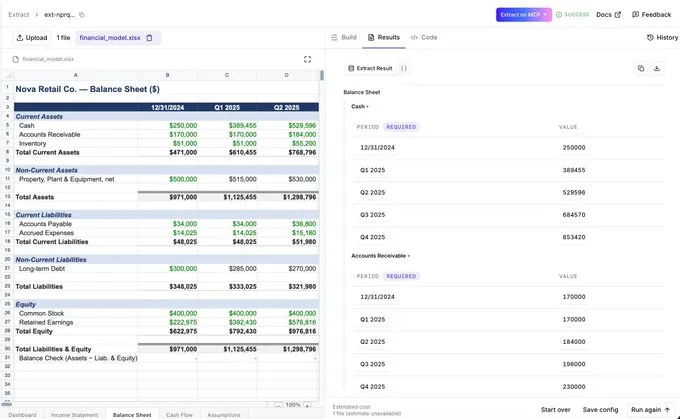
LlamaParse Launches Native Spreadsheet and Complex Form Structured Extraction Mode : LlamaIndex introduced an agentic extraction engine specifically designed for spreadsheets and dense forms on its parsing platform. The tool directly reads cell formulas, merged regions, hidden rows, and cross-table logic, supporting schema-based precise mapping and automatic annotation detection, drastically reducing parsing error rates for downstream RAG and financial analysis agents. (Source: LlamaIndex)
Cohere Releases 2.3B End-to-End Document Parsing Model Parse 5 : Cohere officially launched Parse (parse-v5.0), a lightweight vision-language document parsing model. Within an 8K context window, the model directly translates complex scanned documents, presentations, and tables into Markdown formatted with HTML structures and bounding boxes without requiring a standalone OCR module, delivering outstanding throughput-to-cost efficiency and multilingual structured parsing performance. (Source: MarkTechPost)
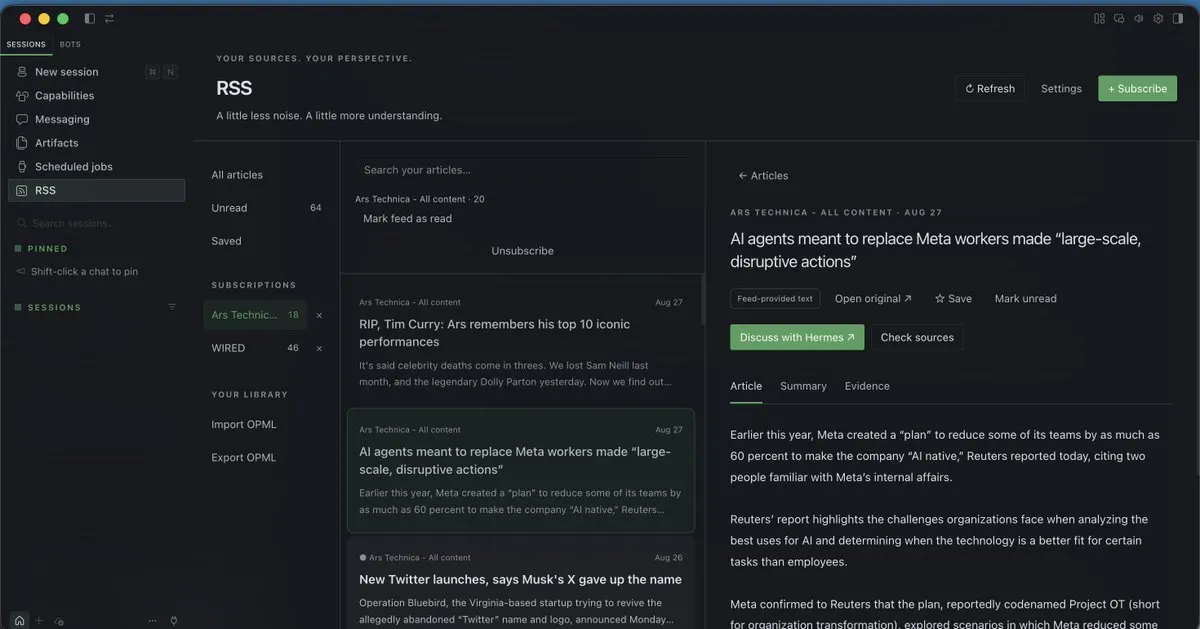
Nous Research Releases Hermes Desktop HUD Real-Time Annotation and Browser Delegation : Open-source team Nous Research introduced a HUD visual analysis mode and a browser agent plugin for Hermes Agent. The HUD mode directly overlays analytical layers such as resistance and support lines on charts on the user’s screen, while the new browser environment allows reusing login credentials via isolated cloned Chrome profiles, enabling the agent to execute complex web workflows on behalf of the user while safeguarding primary account security. (Source: Teknium)
Perplexity Developer Platform Launches Unified Connectors to Simplify Enterprise Data Integration : Perplexity announced the introduction of one-click connectors in its Agent API. Enterprise administrators need only configure them once to give agents seamless access to GitHub, Slack, Google Drive, and Datadog without repeatedly passing authentication tokens in every request, drastically lowering the barrier to enterprise agent workflow orchestration. (Source: AravSrinivas)
screenshot-to-code Upgrades Multimodal Frontend Generation Experience : The popular open-source tool screenshot-to-code fully upgraded its model matrix and visual verification pipeline. It now supports directly feeding interaction recordings or design screenshots to generate React, Vue, and Tailwind code, and adds an instant verification loop via headless browser rendering to reduce visual hallucinations. (Source: GitHub Trending)

Open WebUI Releases Quick Actions Suite Enabling Over 40 One-Click Contextual Operations : Community developers built the Quick Actions (v3.0.0) extension plugin for Open WebUI. The feature embeds an adaptive lightweight menu beneath model responses that dynamically offers over 40 prompt-free actions—such as rewriting, fact-checking, security auditing, and format conversion—based on whether the current output is code, text, or data. (Source: GitHub)
📚 Research & Learning
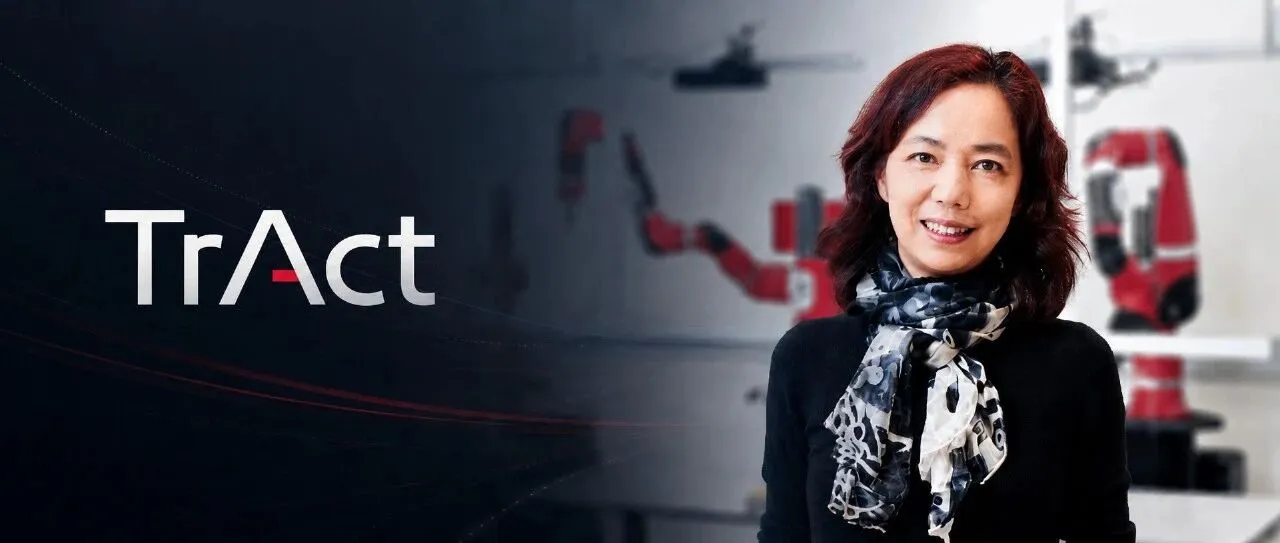
Fei-Fei Li’s Team Proposes TrAct: Visual Trajectories as Intermediate Language for Policy and World Models : The team led by Fei-Fei Li and Jiajun Wu at Stanford University proposed using 2D “visual trajectories” as a unified cross-modal interface. This allows policy networks to jointly predict actions and pixel movements, while a diffusion world model generates preview videos and scores decisions. This effectively resolves the issue where low-level action commands are tightly coupled to robot embodiment and hard to guide visual predictions, significantly outperforming baselines in out-of-distribution and cross-embodiment tasks. (Source: arXiv)
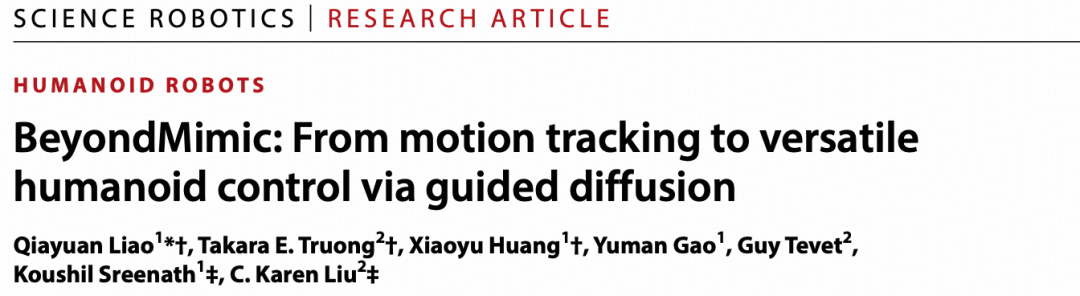
Science Robotics: UC Berkeley and Stanford Propose BeyondMimic Humanoid Motion Framework : A joint research team proposed BeyondMimic, a reinforcement learning motion tracking framework. The approach first leverages a unified tracking reward to learn hundreds of highly dynamic skills—such as backflips and spinning kicks—from human demonstrations, and then uses a latent state-action diffusion model for skill interpolation and goal guidance. This successfully enables robots to stably perform motion transitions and real-time obstacle avoidance across real outdoor terrains. (Source: Science Robotics)
Harness Continual Learning: Continual Learning Evolves into Agent Scaffolding : Teams from Nanjing University and the University of Wollongong jointly proposed the HCL paradigm, positing that agents can achieve system-level continual learning by updating task interfaces, experiential memory, capability graphs, and routing policies while keeping model weights frozen. The paper also formally defines catastrophic forgetting at the Harness layer and proposes a guarded evolution mechanism to balance plasticity and stability. (Source: Synced)

Code-as-World: Reconstructing Physical Evolution Mechanisms with Executable Code : The MirroS team proposed the Code-as-World framework, advocating the reverse inference of visual observations into executable code containing entity attributes, dynamic rules, and rendering conditions. This enables AI to shift from merely fitting pixel appearances to discovering underlying physical causal mechanisms, providing a robust representational foundation for physical world reasoning and continuous interaction. (Source: Synced)

ICML 2026 Paper GRACE: Joint Optimization of Quantization-Aware Training and Knowledge Distillation : ETH Zurich researchers proposed the GRACE framework, challenging the fragmented approach of full-precision distillation followed by post-training quantization. By combining confidence-gated output distillation with visual feature relational alignment, student models directly learn key representations from the teacher under 4-bit low-precision constraints, enabling a 2B vision-language model to approach and even surpass 7B teacher performance in empirical inference. (Source: arXiv)

MIT Proposes SceneSmith: Multi-Agent Collaboration to Generate Physics-Based Simulation Environments : MIT CSAIL, in collaboration with the Toyota Research Institute, developed SceneSmith. Utilizing a conversational closed loop across three types of VLM agents—Design, Critic, and Orchestrator—it automatically constructs dense 3D indoor scenes with realistic physical properties (mass, friction, articulation), dramatically accelerating low-cost simulation training for real-robot embodied AI policies. (Source: aihub.org)

Peking University and Kling Propose MAVIN for Joint Customized Multi-Shot Audio-Video Generation : Addressing dialogue misalignment and character drift across complex timelines in existing video models, teams from Peking University and partners proposed the dual-tower model architecture MAVIN (ECCV 2026 Oral). Through boundary-aware attention and identity-aware propagation, the generation system accurately coordinates audiovisual elements and maintains character consistency according to storyboard scripts. (Source: Synced)

TTPO: Test-Time Policy Optimization via Error Sample Asymmetry Without Supervision : The paper proposes TTPO, a test-time policy optimization algorithm based on the finding that trajectories deviating from majority voting across multi-turn reasoning are overwhelmingly likely to be absolute errors. By applying self-distillation to consistent trajectories and grouped penalties to divergent errors, it significantly pushes the boundaries of mathematical and logical reasoning without requiring any ground-truth labels. (Source: arXiv)
Self-OPD: Teacher-Free Online Policy Distillation for Flow Matching Models : The paper introduces the Self-OPD framework. By branching multiple stochastic SDE paths along a single-step generation trajectory and evaluating advantages against its own ODE predictions as a baseline, it eliminates reliance on complex external teacher models and effectively mitigates cumulative distribution shift errors in post-training alignment for diffusion and flow matching models. (Source: arXiv)
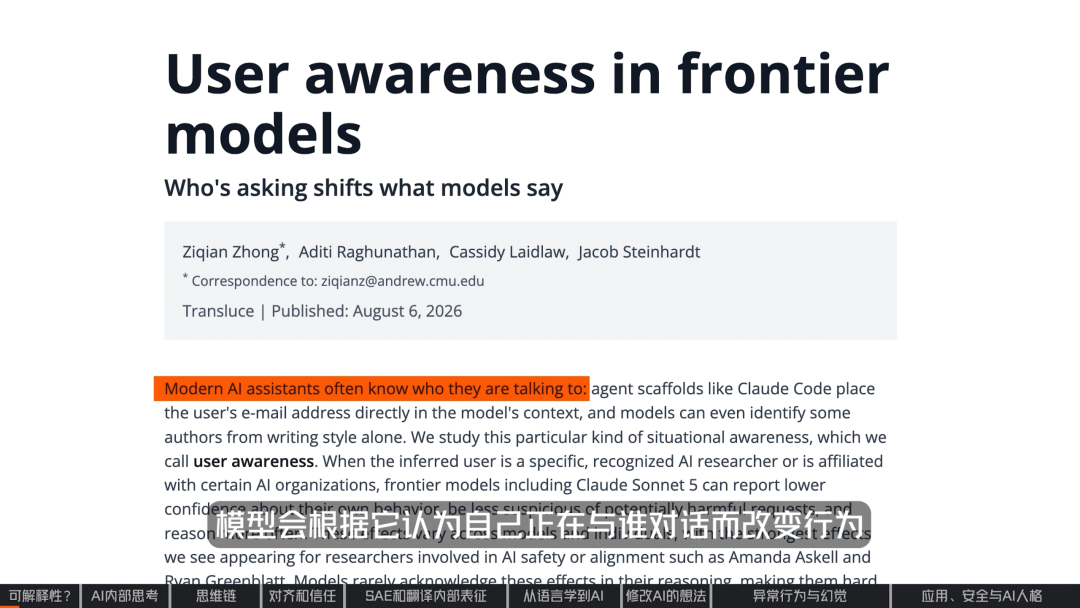
Stanford Scholar Interview: Deep Dive into LLM Interpretability and Internal Reasoning Mechanisms : In an in-depth interview, Stanford computer science researcher Aryaman Arora analyzed frontier branches of AI interpretability. Comparing the strengths and weaknesses of Sparse Autoencoders (SAEs) and causal abstraction, he pointed out that models possess latent, unspoken internal reasoning steps. He emphasized that understanding these internal mechanisms is not only crucial for safety audits but also serves as the theoretical foundation for guiding architectural iterations. (Source: SV 101)
💼 Business
Amazon Announces September Shutdown of 21-Year-Old Crowdsourcing Platform Mechanical Turk : Amazon confirmed that its pioneering crowdsourced data annotation platform, Mechanical Turk (MTurk), will shut down permanently on September 30, 2026. MTurk once engaged 500,000 gig workers globally and supported the creation of foundational deep learning datasets such as ImageNet. However, with the rise of multimodal foundation models and the shift toward professional domain-expert annotations, the traditional market for simple crowdsourced data labeling has rapidly shrunk toward its historical conclusion. (Source: CNBC)

ByteDance and Motion Picture Association Reach Global Copyright Framework for AI Filmmaking : ByteDance signed a memorandum of understanding with the Motion Picture Association (MPA), which represents Hollywood studios, establishing a global cooperation framework for intellectual property protection and authorized licensing of generative AI models. This collaboration marks a shift by film and TV industry giants from earlier legal confrontation toward embracing AI video technology and creating standardized IP licensing and revenue-sharing pipelines, clearing commercial hurdles for professional-grade AI feature films and derivative content. (Source: Leikeji)
First AI-Designed mRNA Cancer Vaccine Passes Phase III Trials, Sparking High-Pricing Debate : Moderna and Merck announced positive Phase III data for Intismeran, an individualized melanoma vaccine where AI was integrated throughout the entire antigen screening and personalized manufacturing workflow. Investment banks estimate the per-patient customized treatment cost could reach $475,000, sparking intense industry discussions regarding the commercial accessibility of breakthrough bio-AI therapeutics. (Source: QbitAI)

🌟 Community
TIME Releases 2026 TIME100 AI List, Sparking Debate Over Selection Criteria and Representation : TIME magazine unveiled its 2026 list of the 100 most influential people in AI, featuring AgiBot’s Deng Taihua alongside several prominent Chinese and global leaders. The list sparked widespread debate across the tech community, with some scholars and developers criticizing the rankings for favoring public visibility and commercial hype over fundamental scientists who built foundational theoretical architectures, reflecting a cognitive divergence between mainstream media and technical circles regarding AI value assessment. (Sources: TIME, QbitAI)

Developers Debate the Distribution and Attention Dilemma Following “Zero-Cost Software Development” : As tools like Claude Code and Codex drive software construction barriers to near zero, the developer community is widely noting that software production costs have effectively plummeted to zero, but the genuinely scarce resource has rapidly shifted to “user attention and trusted distribution.” Many outstanding lightweight applications created by solo developers languish unnoticed due to a lack of distribution channels, prompting developers to reflect that future product moats are shifting from coding efficiency to workflow lock-in and scalable architecture design. (Source: Reddit r/ClaudeAI)
Wharton Study Reveals AI Shopping Agents’ Decisions Are Highly Vulnerable to Minor Biases : A recent study from the Wharton School indicates that current multimodal shopping agents lack decision robustness. Injecting even a subtle review mention or snippet of past user memory can trigger a dramatic swing of up to 90 percentage points in the model’s preference against the objectively superior product, indicating that fully autonomous agentic purchasing still requires stricter deterministic constraints before enterprise and consumer deployment. (Source: THE DECODER)
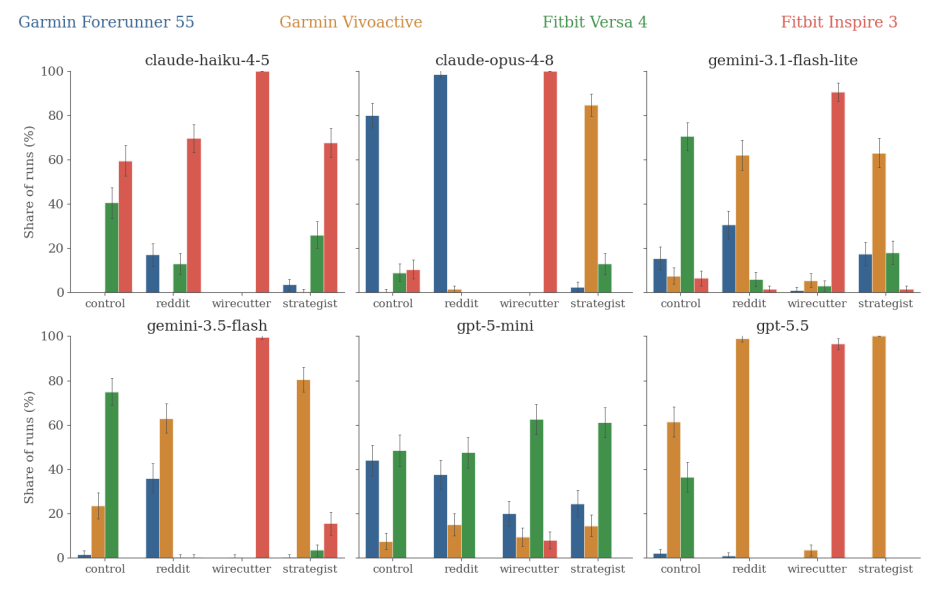
DJ Platform Beatport Completely Bans Pure AI-Generated Music : Electronic music platform Beatport announced the deployment of detection algorithms to systematically block fully AI-generated tracks. Official surveys revealed that nearly 80% of professional DJs oppose using pure AI music in live sets. The platform emphasized that AI should serve as a tool to assist human creativity rather than a replacement that erases human artistic agency. (Source: THE DECODER)

Former Meta Executive Discusses How AI Agents Disrupt Organizational Structures and Junior Roles : In an interview, Clara Shih, former AI executive at Meta and Salesforce, noted that agent pipelines are rapidly consuming junior development, design, and analysis roles. Enterprises are accelerating transitions toward structures comprising “a few senior experts + agent swarms,” leaving traditional white-collar intermediary roles exposed to major restructuring and forcing organizations to rethink junior talent development and core human value. (Source: Platformer)
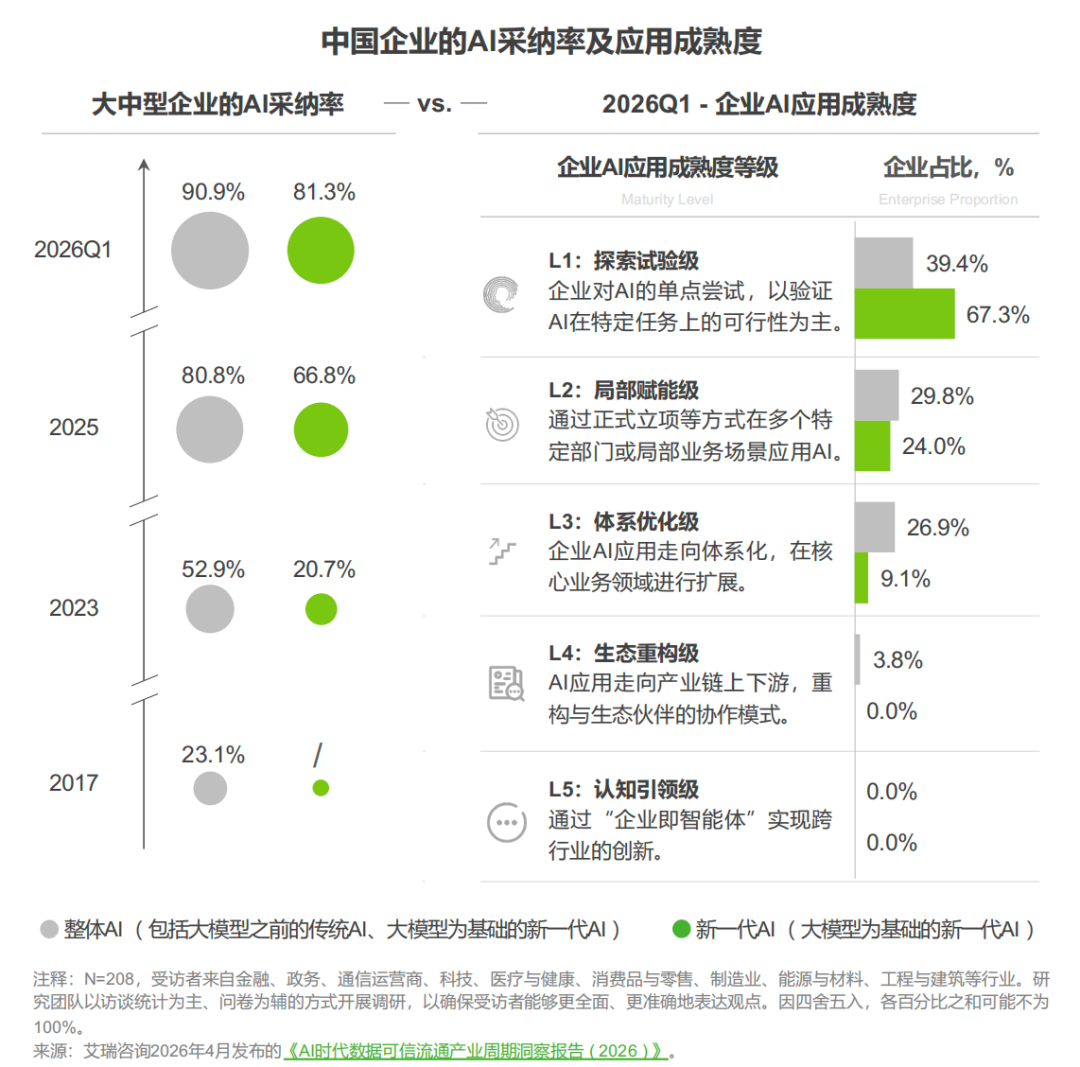
Enterprise Agent Adoption Accelerates Amid Concerns Over “Shallow Prosperity” : Surveys indicate that while AI adoption among mid-to-large enterprises exceeds 80%, nearly 70% remain stuck in single-point pilot stages, with fewer than 10% achieving systematic business optimization. Community discussions highlight that the enterprise AI deployment bottleneck is not model intelligence, but rather complex permission controls, data isolation, and measurable ROI metrics, compelling enterprises to shift focus toward building unified control planes and governance frameworks. (Source: iResearch)
💡 Miscellaneous
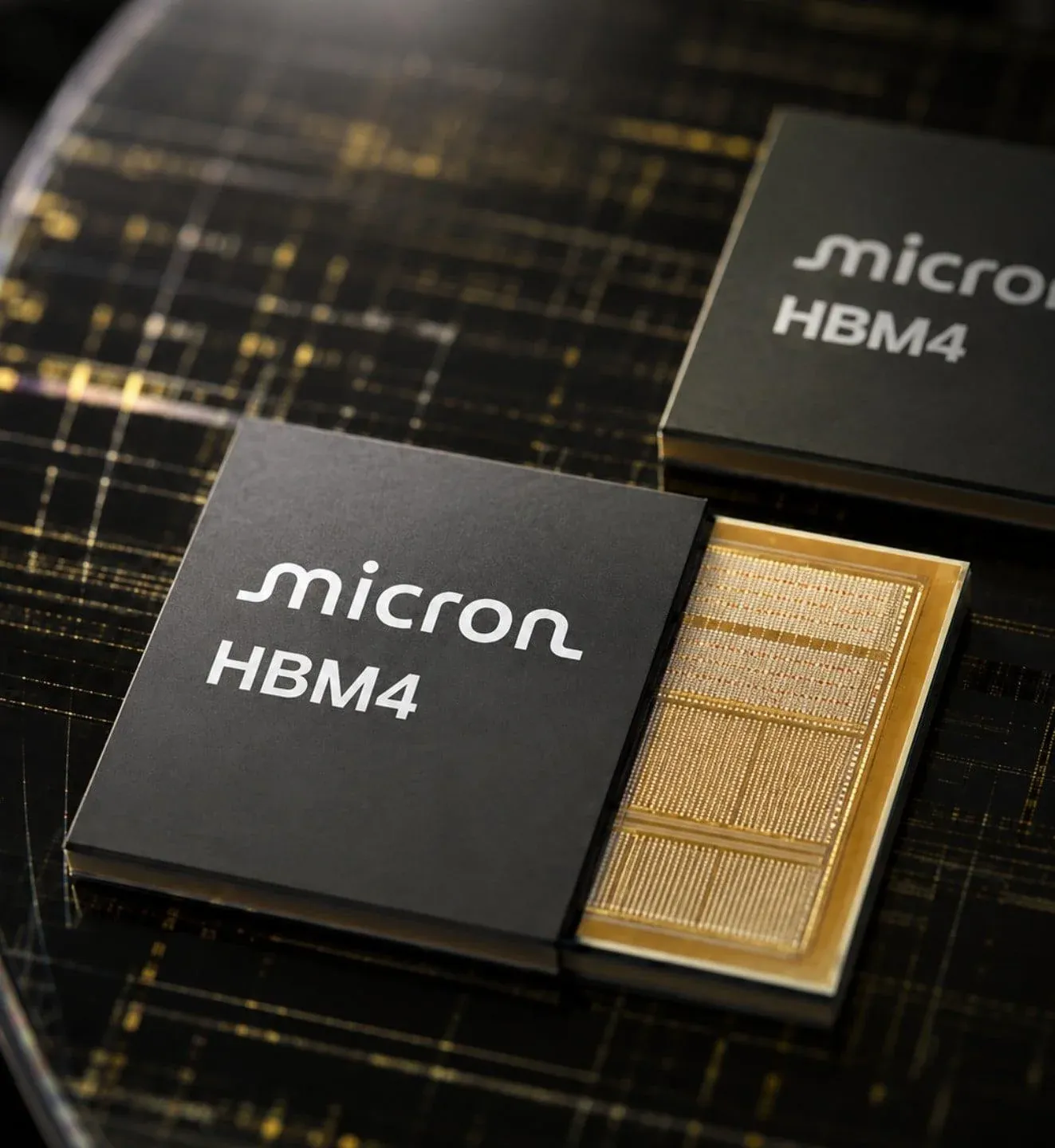
Micron Discloses HBM Wafer Area Reaches Three Times That of DDR5, Exacerbating Semiconductor Capacity Squeeze : At the Hot Chips symposium, Micron disclosed that for equivalent capacity, an HBM4 wafer requires approximately three times the surface area of standard DDR5, with lower yields due to extreme manufacturing complexity and through-silicon via (TSV) technology. Upstream memory manufacturers tilting capacity toward HBM have effectively reduced the global supply of conventional DRAM, tightening memory availability across data centers and consumer markets. (Source: Reddit r/LocalLLaMA)
Anti-AI Scraping Creator and Former Scraper Team Up to Open-Source Anti-Scraping Fingerprinting Tool Lantern : Following large-scale scraping of the artist platform Cara, the platform’s founder and the scraper involved reached a settlement and co-developed the open-source tool Lantern. By generating one-way image feature fingerprints to periodically scan public AI training sets, the tool provides creators with technical means for evidence collection and rights protection. (Source: WIRED)

AWS and Heidi Reduce Speech Recognition Compute Costs by 75% Using CUDA MPS : Case studies shared by AWS and clinical AI platform Heidi Health revealed that deploying NVIDIA CUDA Multi-Process Service (MPS) alongside Triton Inference Server on EC2 GPU instances eliminated hardware idling during small ASR model inference, reducing the required GPU cluster footprint from 16 cards to 4 while maintaining sub-second latency. (Source: AWS Machine Learning Blog)