



Anahtar Kelimeler:AGI, Yapay Zeka Rekabeti, Yapay Zeka Ticarileştirme, Somutlaşmış Yapay Zeka, Ajan Tabanlı Yapay Zeka, Uç Cihaz Yapay Zekası
🔥 Spotlight
Davos Summit Dialogue: AGI Timeline and the New US-China Competition Landscape
Anthropic CEO Dario Amodei and Google DeepMind CEO Demis Hassabis delivered striking predictions about AI’s future at the Davos Forum. Amodei believes cognitive capabilities double every 4-12 months, with AGI potentially achievable within 1-2 years, warning that 50% of entry-level white-collar jobs may vanish by 2030. Hassabis adopted a more cautious stance, estimating a 50% probability of AGI by 2030 but emphasizing that the benchmark should be “the ability to formulate scientific hypotheses.” Both expressed reservations about Chinese models like DeepSeek’s benchmark performance, citing potential over-optimization, with the real gap lying in frontier innovation and chip export restrictions. Amodei notably likened high-end chip exports to China to “selling nuclear weapons to North Korea.” (Sources: dotey, dotey)
OpenAI in “Code Red”: Massive Losses and Commercialization Struggles
Facing Google Gemini 3’s strong counteroffensive, OpenAI has entered a “Code Red” state internally. Despite ChatGPT’s annual revenue run rate surpassing $20 billion, projected losses for 2026 could reach $14 billion, with long-term infrastructure debt pressure at $1.4 trillion. To fill this financial void, OpenAI has pragmatically announced ads alongside ChatGPT answers, targeting $110 billion in ad revenue by 2030. Concurrently, the continued departure of core team members (e.g., Ilya, Mira) and legal battles with Musk mark a painful transition from “technological idealism” to “traffic monetization logic” for this $500 billion-valued giant. (Sources: 36Kr, Yuchenj_UW, Reddit)
Content Distribution Rights Reversal: Wikipedia Ends AI’s “Free Ride” Era
Amazon, Meta, Microsoft, Mistral AI, and Perplexity have joined the “Wikimedia Enterprise Partner Program,” paying for structured real-time Wikipedia data access. This shift signals AI firms’ recognition that relying solely on web scraping carries legal risks and risks degrading content ecosystems (by reducing volunteer contributions), thereby losing high-quality training data. With RLHF still dominant, AI cannot yet achieve “data-free self-evolution,” making paid data access a more cost-effective choice than algorithm development. Wikipedia’s victory offers a crucial blueprint for content platforms in the AI era. (Source: 36Kr)
🎯 Trends
The Dawn of Embodied Intelligence and Physical AI
Robotics is experiencing its “AlphaFold moment.” Google DeepMind predicts breakthroughs in physical intelligence within 18-24 months, currently integrating Gemini into Boston Dynamics’ Atlas. Meanwhile, the Pentagon launched a $10 billion “Anduril Game” drone swarm challenge for decentralized autonomous coordination. Chinese firms like Lingxi (AGIBOT) and Beijing startup TARS are releasing products showcasing potential from precision manufacturing to home services. Hardware bottlenecks (especially dexterous manipulators) remain key challenges, but full-stack integration hints at scalable deployment. (Sources: dotey, Ronald_vanLoon, Reddit)
Agentic AI: Paradigm Shift from “Conversational” to “Task-Driven”
2026 is seen as the year of Agent-scale adoption. Podium’s AI employees achieved $100M ARR in under 24 months, proving AI’s value in replacing repetitive labor. AI21 Labs advocates “Boring AI,” prioritizing data consistency and workflow efficiency over humor. Technically, frameworks like MCP-SIM enable self-improving multi-agent loops with physical simulation and error correction. This evolution from single-dialogue to complex task agents is reshaping SaaS and enterprise service fundamentals. (Sources: hwchase17, AI21Labs, omarsar0)
Small Models Strike Back: The Rise of Edge AI
StepFun’s 10B-parameter open-source model STEP3-VL outperformed giants like GPT-5.2 and Gemini 3 Pro in multimodal benchmarks, showcasing computational efficiency. AMD’s Ryzen AI Halo mini-PC supports hundreds of GB unified memory, signaling a shift toward “local large-model” computing. Qwen 2.5 1.5B even learned to play Snake and Flappy Bird via RL, demonstrating math reasoning transfer. This “smaller models, localized compute” trend challenges cloud AI’s dominance. (Sources: Reddit, kylebrussell, paul_cal)
🧰 Tools
Claude Code Ecosystem & Vibe Coding Productivity Suite
Claude Code is evolving into the ultimate programming tool. Developers released GrepAI, slashing input tokens by 97% via local semantic search, reducing API costs. Compound Engineering’s plugin introduces a “plan-execute-review-refine” loop for continuous code optimization. For 3D web dev, Threejs Skills enables scene, shader, and animation control without bloated context. These tools mark “vibe coding’s” shift from hobbyist to professional engineering. (Sources: Reddit, EveryInc, qnguyen3)
vLLM v0.14.0: Memory Optimization & Multi-Platform Support
The latest vLLM introduces --max-model-len auto, adjusting context length based on available VRAM to eliminate OOM errors. It now supports ROCm Python wheels and Docker for AMD GPU users. Benchmarks show near-doubled throughput for Qwen3-VL-32B on four 2080Ti cards. Despite deprecating some quantization methods like HQQ, its efficiency cements vLLM as the top local LLM framework. (Sources: vllm_project, Reddit)
Personalized AI: From Health Data to UI Generation
Anthropic’s Claude Health Data Connector securely integrates Apple Health/Android Health Connect for personalized analysis (without training). Tambo AI’s React generative UI SDK lets AI render components via natural dialogue. Kimi Slides excels in vertical applications, auto-generating supermarket shelf plans per P&G standards. These tools transform LLMs’ general capabilities into specialized solutions. (Sources: Reddit, tambo-ai, crystalsssup)
📚 Learning
Microsoft’s Data Science for Beginners Course
Microsoft open-sourced a 10-week, 20-lesson data science primer on GitHub. Project-driven and covering ethics, statistics, Python, and cloud AI deployment, each lesson includes quizzes, assignments, and sketchnotes in 50+ languages—ideal for AI newcomers. (Source: GitHub)

Stanford AI Podcast Series
Stanford NLP Lab launched AI Bites, distilling complex courses like CS124 (NLP) and CS221 (AI Principles) into digestible audio. Weekly updates cater to time-constrained learners seeking elite academic frameworks. (Source: stanfordnlp)
Research Spotlight: Gradient Filtering & Reasoning Distillation
Two papers are trending: 1) ID_AA_Carmack-endorsed Gradient Alignment Filtering (GAF) improves generalization by pruning high-cosine-distance gradients; 2) Rank-Surprisal Ratio (RSR) measures reasoning trajectory quality, showing stronger teacher models don’t always yield better students—highlighting “adaptive teaching” in distillation. (Sources: ID_AA_Carmack, HF Daily)
💼 Business
Humans& Funding Controversy: Capital vs. “Vibe”
The $480M-funded AI lab Humans& faced backlash for vague “money and ethos” announcements lacking technical substance. Analysts note 2026’s market demands deliverables over slogans like “human-centric.” (Source: swyx)
Lingyi’s Premium Acquisition of Liminda: Betting on AI Server Liquid Cooling
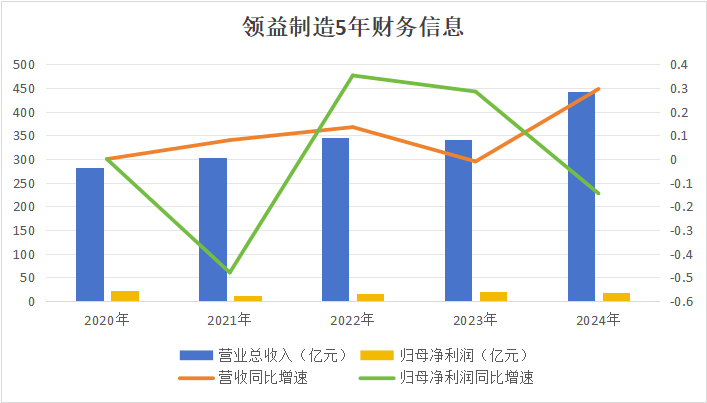
Former “Apple supply chain” leader Lingyi plans to acquire Liminda (Nvidia’s cooling supplier) for ¥875M at a 34x premium, pivoting from consumer electronics to AI hardware—capitalizing on Rubin platform’s cooling demand. (Source: 36Kr)
Isomorphic Labs & J&J’s AI Drug Discovery Pact
Google DeepMind’s Isomorphic Labs partnered with Johnson & Johnson to target historically “undruggable” diseases via AI design engines, advancing digital biology’s role in cutting preclinical costs. (Source: demishassabis)
🌟 Community
Vibe Coding: Hallucination vs. Reality
Debates rage over “vibe coding.” Proponents like Amodei predict AI automating most software engineering within a year; critics like espricewright highlight candidates unable to write basic code due to AI over-reliance. Consensus: AI boosts efficiency, but “vibe coders” lack fundamentals for deep troubleshooting. (Sources: espricewright, Suhail)
LocalLLaMA Alert: Beware Malicious Open-Source Repos
Users warn of AI-generated fake accounts promoting backdoored GitHub repos. These accounts often emerge post-specific dates, using ChatGPT jargon to distribute harmful tools—echoing ComfyUI’s past vulnerabilities. Strict code audits are urged. (Source: Reddit)
Prompt Engineering: Boardroom Simulation Protocol
A “Council of 3” technique simulates debates among a PM, lead engineer, and CFO, with a “CEO” deciding—avoiding AI’s tunnel vision by surfacing technical debt and cost risks, elevating AI from text generator to critical thinker. (Source: Reddit)
💡 Misc
Waymo’s “Instant Match” Edge
San Francisco tests show Waymo outperforms Uber/Lyft in peak-hour matching speed, as autonomous fleets eliminate driver rejections and offer precise ETAs. Despite highway limits, its reliability sets new ride-hailing standards. (Source: iScienceLuvr)
OpenAI & Gates Foundation’s Africa Health Initiative
The $50M Horizon 1000 project supports 1,000 African clinics via AI-enhanced decision-making for primary care leaders, showcasing tech’s role in global health equity. (Source: openai)
AssetOpsBench: Industrial Agents’ “Truth Test”
IBM Research’s AssetOpsBench is the first benchmark for industrial asset lifecycle management Agents. Even top models like GPT-4.1 struggle (<85% success) on sensor diagnostics and cross-agent task prioritization, exposing current Agents’ fragility. (Source: HuggingFace)