🔥 Spotlight
OpenAI’s Research Direction and GPT-5 Outlook: OpenAI Chief Scientist Jakub Pachocki and Head of Research Mark Chen revealed the company’s progress on GPT-5 development and their views on AGI in an exclusive interview. They emphasized that mathematics and programming are the cornerstones of general intelligence and proposed “autonomous time” as a key metric for measuring model capabilities, referring to the duration a model can independently solve problems without human intervention. Although AI has performed excellently in coding and math competitions, they believe reasoning capabilities are still in their early stages and firmly believe that the Scaling Law has not yet hit its ceiling. This interview also implicitly reflects OpenAI’s long-term commitment and vision for fundamental research and AGI, alongside its efforts to bring products to market. (Source: MIT Technology Review)

ByteDance Collaborates with Nanjing University on CriticLean Framework, Significantly Boosting Math Formalization Accuracy: ByteDance’s Seed team, in collaboration with Nanjing University, released the CriticLean framework, which increased the formalization accuracy of mathematical natural language to Lean 4 code from 38% to 84%. This framework introduces a reinforcement learning-based Critic model, specifically training the semantic evaluation model CriticLeanGPT. This allows it to precisely judge whether formalization code aligns with the original semantics, much like a math expert. Through an iterative optimization mechanism, it ensures generated theorem proofs are both syntactically correct and faithful to mathematical logic. This research breaks through the bottlenecks of semantic alignment and evaluation reliability in mathematical formalization and has built FineLeanCorpus, currently the largest and highest-quality mathematical formalization dataset, providing a new paradigm for automated theorem proving. (Source: 量子位)

Tencent Releases Hunyuan 3D World Model 1.0, the First Open-Source World Generation System Supporting Physical Simulation: Tencent officially released Hunyuan 3D World Model 1.0, the first open-source, traversable world generation model compatible with traditional CG pipelines. This model can generate immersive, explorable, and interactive 3D scenes based on text or image input, boasting three core advantages: 360° immersive experience, industrial-grade compatibility (supports exporting standard 3D mesh formats), and atomic interaction (objects can be decoupled). The model employs a generative architecture, combining panoramic image synthesis with layered 3D reconstruction technology, supporting various professional application scenarios such as VR, game development, object editing, and physical simulation, offering infinite possibilities for 3D content generation and interaction. (Source: 量子位)

Alibaba Security Uncovers Malformed X.509 Certificate Vulnerability, Potentially Crashing macOS/iOS Systems: Alibaba Security team, in collaboration with Indiana University Bloomington, discovered that constructing malformed X.509 certificates can launch remote DoS attacks, causing macOS/iOS systems to instantly crash. This research reveals potential DoS security issues in cryptographic algorithm libraries and has found 18 new CVE vulnerabilities and 12 known vulnerabilities in six mainstream open-source cryptographic algorithm libraries, including OpenSSL and Botan, as well as Apple Security library. The research also demonstrated how to exploit these vulnerabilities, for example, by using S/MIME encrypted emails to crash macOS/iOS systems. This achievement was published at the USENIX Security’25 conference and nominated for the “Oscars of the hacking world,” the Pwnie Awards, emphasizing that X.509 DoS is a widespread threat that requires significant attention. (Source: 量子位)

WAIC UP! Night: A Reflection on AI and the Future of Humanity: During the 2025 World Artificial Intelligence Conference (WAIC), the “WAIC UP! Night” event brought together thinkers from AI and humanities/social sciences to discuss the core question: “What’s the big deal about AI?” The event aimed to move beyond technological fervor and return to AI’s impact on human values and the essence of life. Multiple guests shared how AI is reshaping creation, art, education, and work, emphasizing that AI is a “multiplier of experience” that can amplify creative accumulation, but true art and creativity still stem from human “ideas,” not just tools. The discussion also touched upon emotional connections, real love and pain that AI cannot replace, and humanity’s core competencies in the AI era—communication skills, aesthetic judgment, and empathy. This reflection called for maintaining clarity and curiosity amidst the technological torrent, seeking the light of humanity that cannot be quantified by algorithms. (Source: 量子位)

🎯 Trends
Strong Development Momentum of China’s AI Ecosystem: Andrew Ng pointed out that while the US still leads in AI, China, with its vibrant open-source model ecosystem and proactive initiatives in semiconductor design and manufacturing, shows immense development momentum and has the potential to surpass the US. He emphasized that in the startup sector, momentum is crucial, and China’s hyper-competitive business environment and rapid knowledge dissemination give it a significant advantage. Although the US leads in cloud AI implementation and China in surveillance technology, China has dominated in open-source models, such as DeepSeek R1-0528, Kimi K2, Qwen3 series, and GLM 4.5, which are rapidly approaching or even surpassing the best US open-source models. While the latest US AI action plan supports open source, it alone may not be enough to maintain its lead. (Source: natolambert, DeepLearningAI, Teknium1, hardmaru, Zai_org)

Horizon Alpha Model Performance and GPT-5 Speculation: The mysterious Horizon Alpha model, after its launch on OpenRouter, quickly topped benchmarks like EQ-Bench, demonstrating astonishing programming, creative writing, and reasoning capabilities, especially in SVG generation and complex physics simulations. Some netizens speculate it might be an upcoming GPT-5 series model from OpenAI (e.g., GPT-5-mini or nano), as its performance far exceeds existing non-reasoning models and its style is similar to OpenAI’s. Despite its longer inference time, its “cooking” style and unique advantages shown in multiple tests have sparked strong anticipation and discussion in the community about the imminent release of GPT-5. (Source: scaling01, karminski3, dotey, Teknium1, teortaxesTex, andrew_n_carr, scaling01)

Cohere Labs Releases Command A Vision Model: Cohere Labs has released the open-weight version of its Command A Vision model on Hugging Face, a 112B parameter multimodal model designed to redefine enterprise visual understanding. The model focuses on the unique aesthetics of images and can automate tasks such as chart analysis, layout-aware OCR, and real-world scene interpretation, suitable for documents, photos, and structured visual data. This release demonstrates Cohere Labs’ commitment to the research ecosystem and encourages developers to innovate using its powerful visual capabilities. (Source: sarahookr, huggingface, teortaxesTex, andrew_n_carr)

Qwen3-Coder-Flash Series Model Update: The Qwen3-Coder-Flash series models have been released, with Qwen3-Coder-30B-A3B-Instruct particularly noted for its lightning-fast code generation speed and powerful Agent capabilities. This model natively supports 256K context, extendable to 1M tokens via YaRN technology, and is optimized for platforms like Qwen Code and Cline, enabling seamless function calling and Agent workflows. Unsloth also released its quantized version, allowing it to run on devices with less VRAM and fixing tool calling issues. The community highly praises its performance in coding tasks, considering it a prime example of “rapid iteration” in the open-source AI field. (Source: karminski3, Alibaba_Qwen, awnihannun, scaling01, ImazAngel, jeremyphoward, op7418)

GLM-4.5 Model Capabilities Unified: Z.ai has launched the new flagship models GLM-4.5 and GLM-4.5 Air series, aiming to unify cutting-edge reasoning, coding, and Agent capabilities. GLM-4.5 boasts 355B total parameters and 32B active parameters, while GLM-4.5-Air has 106B total parameters and 12B active parameters. These models are fully supported on SGLang, feature 128k context, and perform excellently across multiple benchmarks like MATH500 and SWE-bench, competing with Claude 4 and leading Kimi K2. The release of GLM-4.5 marks significant progress in developing versatile AI models, providing developers with powerful unified capabilities. (Source: TheTuringPost, Zai_org, thursdai_pod)

Step 3 Model and Inference Optimization Progress: StepFun AI has released its latest open-source multimodal inference model, Step 3, designed to provide a more powerful, faster, and cost-effective VLM. The model features 321B parameters (38B active) and achieves efficient inference through innovative Multi-Matrix (MFA) and AFD architectures, reaching speeds of up to 4,039 tok/sec/GPU even on regular GPUs. The vLLM project has announced full support for the Step 3 model and plans further performance optimizations. This advancement signifies a new direction in co-designing models and infrastructure, expected to drive the widespread adoption and efficiency of multimodal models in practical applications. (Source: vllm_project, huggingface, _akhaliq, teortaxesTex)

FLUX.1 Krea Dev Image Model Released: Black Forest Labs, in collaboration with Krea AI, has released FLUX.1 Krea Dev, a new state-of-the-art open-weight FLUX model focused on photorealistic image generation. The model aims to eliminate the “AI look” and overexposure, generating images with unique aesthetics and natural details. Although there is still room for improvement in instruction following and Chinese language support, and it may still have an “AI feel” in some scenarios, its potential in image generation remains noteworthy. A free demo is available on Hugging Face, attracting widespread testing and discussion from the community. (Source: huggingface, multimodalart, mervenoyann, karminski3)

Google Veo 3 Fast Video Generation Capabilities Enhanced: Google DeepMind’s Veo 3 Fast and Veo 3 image-to-video features are now available in the Gemini API, significantly enhancing video generation speed and quality. Veo 3 Fast costs $0.40 per second of video (including audio) and offers production-grade rate limits, with quality comparable to higher-cost models in some cases. This technology supports image-to-video and text-to-video conversion, enabling rapid creation of high-quality videos through enhanced creative control and precise prompting. This marks a significant breakthrough for AI in video generation, expected to drive the widespread adoption and efficiency of agentic video creation. (Source: GoogleDeepMind, Vtrivedy10, osanseviero, demishassabis, algo_diver)
AI ASMR Video Content Gains Popularity: AI-generated ASMR videos are creating a trend of stress relief and curiosity on global short video platforms. Driven by audio-video synchronization generation models like Google Veo3, these videos significantly lower the creation barrier, leading to a large number of viral accounts and millions of views. Video content ranges from “counter-intuitive” fruit cutting and ice keyboard tapping to hardcore diamond pizza eating, and even anime adaptations into bizarre eating shows. The Veo3 model’s audio-visual synchronization generation capability enables zero-threshold mass production of AI ASMR videos. This trend not only reshapes the video content ecosystem but also fosters diverse monetization models such as creators selling prompts, traffic sharing, and platform commercialization, signaling the arrival of the commercialization year for audio-video generation. (Source: 36氪)

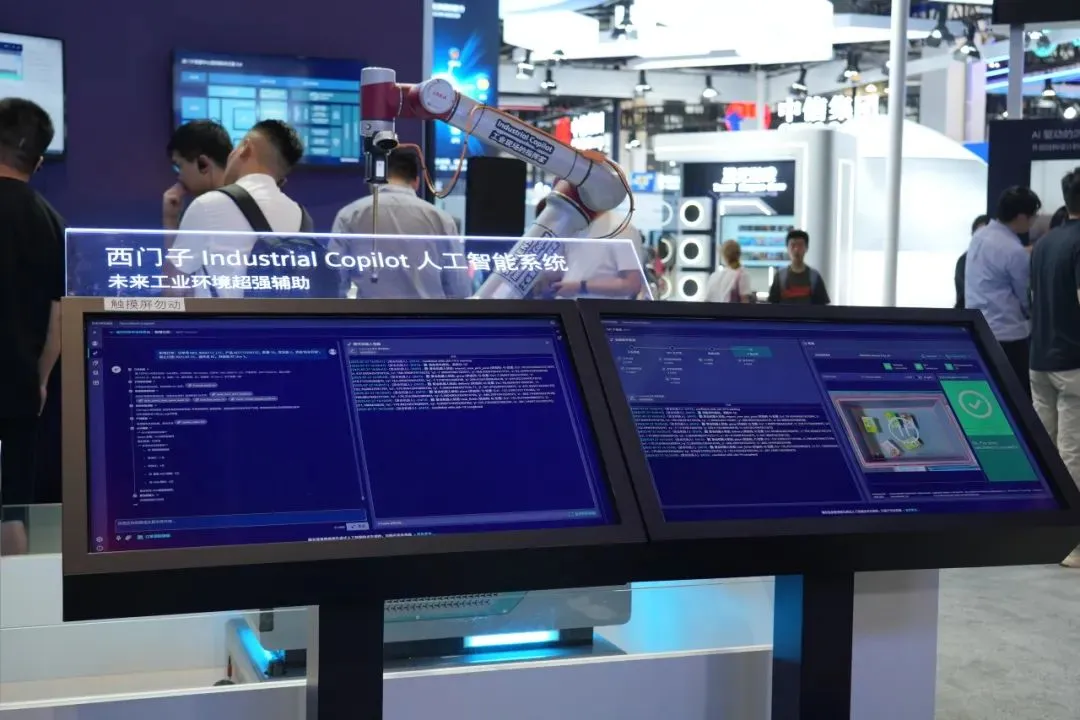
WAIC 2025: In-depth Interpretation of AI Technology and Industry Trends: The 2025 World Artificial Intelligence Conference (WAIC 2025) showcased AI’s shift from “what it can do” to “what it can change,” emphasizing the deep integration of technological breakthroughs and societal needs. The conference focused on the Agent concept, noting its emergence as a “mandatory question” for the industry, evolving from “single-agent” to “multi-agent collaboration” to efficiently handle complex tasks. AI applications also exploded from B2B to B2C, with product delivery increasingly focusing on “Result-as-a-Service” (RaaS). Furthermore, AI’s application in industrial, medical, and educational fields deepened, exemplified by Siemens’ industrial agents, Fourier’s humanoid care robots, and Baidu’s NOVA digital human technology. The conference also addressed AI ethics and sustainable development, indicating that AI will become a force for promoting social equity and a warmer world. (Source: 36氪, 36氪)
ByteDance Releases Text Diffusion Model Seed Diffusion Preview: ByteDance has released its text Diffusion model, Seed Diffusion Preview, which generates text through a denoising process rather than traditional Transformer token-by-token generation. Its greatest advantage is extreme speed, reaching 2146 tokens per second, enabling second-level responses for tasks like code generation. Although Diffusion text models currently have room for performance improvement and struggle with complex tasks, their innovation lies in providing a generation mechanism similar to image Diffusion models, signaling a new direction in text generation. Currently, besides Seed Diffusion Preview, notable models include Mercury Coder and Google’s Gemini Diffusion. (Source: dotey, karminski3)
Deepening Application of AI in the Automotive Industry: AI is becoming a core competitive factor in the automotive industry, with its penetration continuously increasing from high-end to mass-market vehicles. Ideal Auto’s i8 pure electric SUV is equipped with VLA (Visual Language Model), breaking down barriers between intelligent driving and intelligent cockpits, allowing “eyes” and “mouth/ears” to share the same “brain.” This transforms cars from passive command executors to active intelligent agents. Geely, on the other hand, released Agent OS, treating cars as wheeled robots and providing large model-driven human-machine interaction capabilities that better understand user intent. Furthermore, the autonomous driving field is shifting from imitation learning to reinforcement learning, with Ideal’s AI driver also beginning reinforcement learning to enhance long-duration, high-level decision-making capabilities, signaling an accelerated evolution from L2 to L4. (Source: 36氪, 量子位)

🧰 Tools
Perplexity AI New Features and Comet Shortcuts: Perplexity AI further solidifies its position in AI search by introducing new features and Comet Shortcuts. Comet Shortcuts allow users to automate repetitive web workflows with simple natural language prompts and can be accessed anywhere via “/command.” Perplexity’s value proposition lies in its superior AI search capabilities, providing accurate, sourced information and supporting model selection, making it better than other LLMs for information synthesis and fact-checking. Although some question its value as a “wrapper,” its commitment to providing a true Siri alternative and embedding into applications like WhatsApp demonstrates its innovation in user experience and feature integration. (Source: AravSrinivas, scaling01, AravSrinivas, perplexity_ai, Reddit r/artificial)

Hugging Face Jobs: Hosted AI Task Platform: Hugging Face has launched Hugging Face Jobs, a fully managed platform that allows users to run CPU and GPU tasks directly from the CLI or Python scripts. This service aims to simplify compute setup and discovery for AI developers, enabling them to focus more on experimentation and building without worrying about the underlying infrastructure. By launching tasks with simple commands, Hugging Face Jobs provides an efficient and convenient cloud solution for AI development. (Source: huggingface)
SciSpace Agent: AI Assistant for Scientists: SciSpace Agent is the first vertical AI assistant designed specifically for scientists, aiming to save them an average of 1,300 hours of work per year. This tool integrates citation tools, literature search engines, PDF readers, and AI writers, offering an end-to-end research companion service. Based on over 280 million papers, 50 million full-text PDFs, and more than 150 academic tools and databases, it can complete complex tasks like literature reviews and data analysis in less than 10 minutes with a single prompt, significantly boosting the efficiency of scientific research. (Source: TheTuringPost)
Manus AI Wide Research: Large-Scale Parallel Agent Collaboration: Manus AI has launched its biggest update since its inception—the Manus Wide Research feature, allowing users to initiate large-scale parallel Agent collaboration with one click, easily handling complex research tasks that would otherwise take hours and involve hundreds of data sources. This feature is similar to Grok 4 Heavy’s multi-agent mode but with a much larger scheduling scale, where each sub-Agent is a complete Manus instance capable of autonomous thinking and execution. Although its credit consumption rate may soar, Manus believes this is a necessary stage for AI products transitioning from high marginal cost to low marginal cost. The architecture is inspired by the MapReduce paradigm, aiming to solve new problems arising in large-scale AI Agent collaboration. (Source: 36氪)

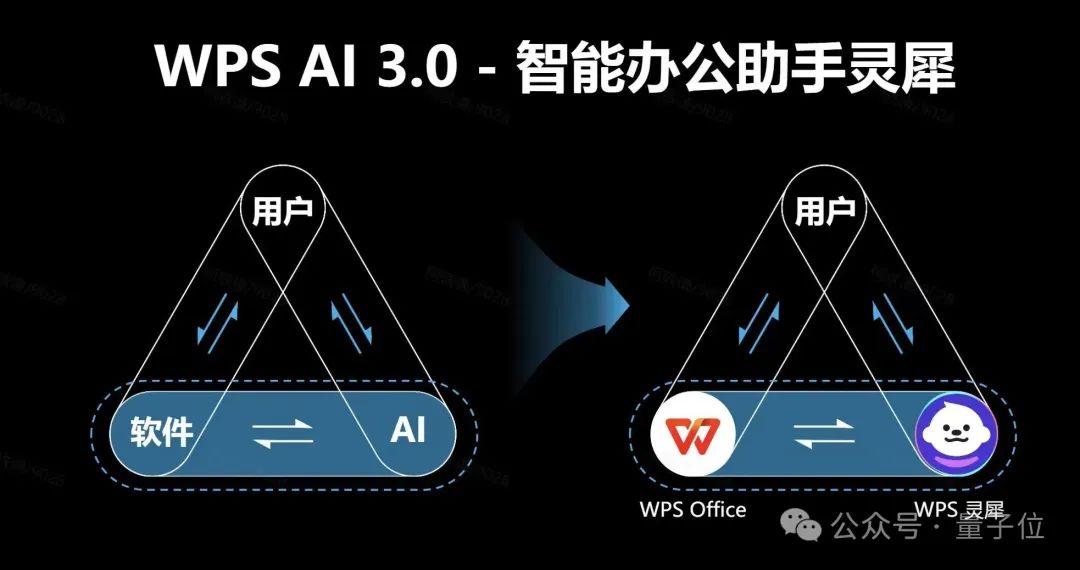
WPS AI 3.0 and WPS Lingxi: Reshaping Office Workflows: Kingsoft Office has released WPS AI 3.0, introducing the native Office AI agent WPS Lingxi, aimed at reshaping users’ office workflows. WPS Lingxi integrates a full suite of AI PPT, AI writing, AI document, AI search, and AI reading functionalities, achieving deep integration with the Office suite. It supports one-click upgrade of cloud documents into knowledge bases for precise semantic retrieval. Its core advantages lie in “understanding formats, thinking, and evolving,” enabling automatic document format matching, understanding user intent, and providing comparative modifications, significantly boosting the efficiency of complex document processing and multi-scenario content creation. The launch of WPS Lingxi marks the evolution of AI office from a “tool” to an “AI assistant seamlessly embedded in workflows,” addressing the pain point of traditional AI tools being “easy to generate, hard to edit.” (Source: 量子位)
AI Job Agent: A developer created an AI agent called Laboro.co, designed to automate the time-consuming and repetitive parts of the job search process. The tool includes a web crawler that scrapes internal career pages from over 70,000 company websites; a machine learning matcher that matches jobs to resumes; and an application agent that automatically fills out and submits application forms. This free tool allows job seekers to focus on interviews while letting AI handle the tedious application process, greatly improving job search efficiency. (Source: Reddit r/deeplearning)

Ollama’s GUI and Open-Source Controversy: Ollama released a new Graphical User Interface (GUI), but its closed-source nature sparked controversy within the community. Some users questioned the justification for it being closed-source and expressed concerns about potential privacy issues like “phone home” functionalities. Many community members stated a preference for open-source alternatives like llama.cpp, vLLM, and HFtransformers, combined with front-end interfaces like OpenWebUI or LibreChat. This incident highlights the ongoing debate between open-source and closed-source models in the AI tool landscape, as well as users’ emphasis on transparency and control. (Source: Reddit r/LocalLLaMA, ollama)

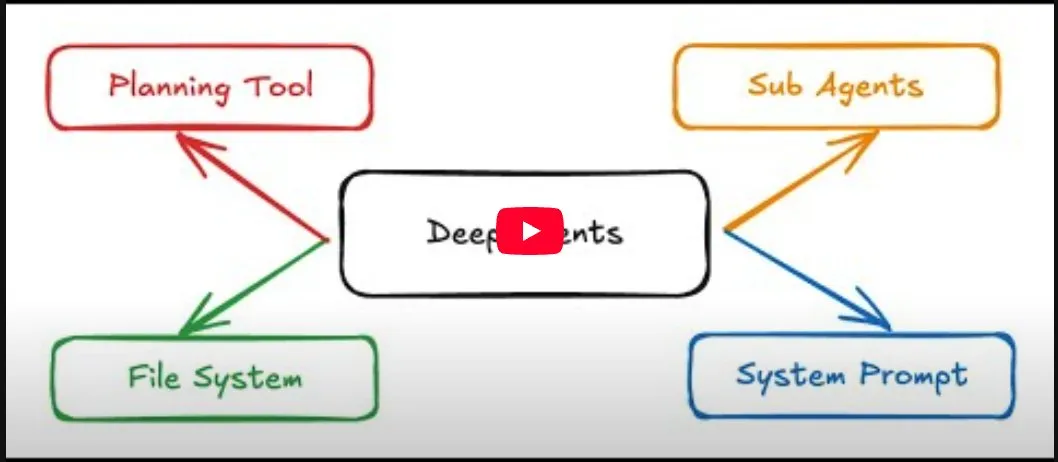
AI Programming and Agent Tool Progress: Deep Agents, AmpCode, etc.: The field of AI programming and Agent tools continues to innovate. Harrison Chase introduced the “Deep Agents” concept, combining planning tools, file systems, sub-Agents, and detailed system prompts, aiming for more complex Agentic workflows. AmpCode, a competitor to Claude Code, is considered “at least as good” by users and has received positive reviews. Additionally, the Qwen3-Coder model is now available on Ollama and is being used in Deep Agents experiments, further promoting the development of open-source Agentic programming. These advancements indicate that AI programming tools are moving towards being more powerful, integrated, and user-friendly, while also enhancing persistent control over Agentic workflows. (Source: hwchase17, hwchase17, corbtt, HamelHusain)
📚 Learning
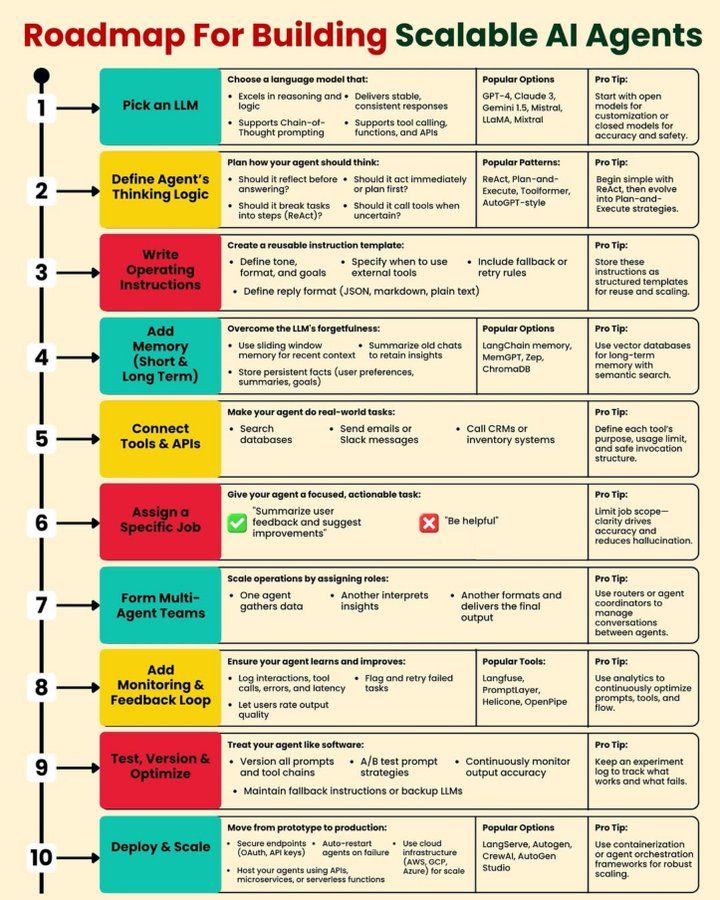
AI Agent Learning Roadmap: A roadmap for learning AI agents was shared on social media, highlighting key steps and resources for mastering artificial intelligence agents. This roadmap aims to help interested individuals systematically learn the construction and application of AI agents, covering various aspects from basic concepts to advanced implementations, providing a clear learning path for developers and learners. This reflects that AI agents, as an emerging technology, are attracting a large number of learners eager to grasp future technological trends. (Source: Ronald_vanLoon)
AI Ultra-scale Model Book Preview: Hugging Face has released a preview of “The Ultra-scale book,” which aims to present blog post content on ultra-scale models in a beautifully designed book format. The release of this book provides AI researchers and developers with resources for in-depth learning of ultra-scale model theory and practice, helping to promote the dissemination and exchange of related knowledge. Its physical edition is coming soon, further meeting the demand for systematic learning of cutting-edge AI technologies. (Source: eliebakouch, TheZachMueller, _lewtun)

Importance of Open Science for AI Development: The community is hotly debating the decisive role of open science in the progress of the AI field. Researchers and engineers are pushing AI towards a more open and collaborative future by releasing open-source papers, models, and datasets. Although promoting open source within large tech companies may face management and legal obstacles, openness ensures that research results receive wider attention, use, and innovation built upon them, thereby accelerating AI progress and expanding its influence. Advocates call for continued efforts for open science, believing that researchers who share their findings rather than keeping them proprietary will be the true drivers remembered in the next decade. (Source: eliebakouch, huggingface)
Reasoning Model Generalization and Prompt Optimization Research: The community discussed the importance of reasoning model generalization and Prompt optimization in AI development. Some argue that incentivizing models to “think” through reinforcement learning (RL) can enhance their generalization across different tasks, for instance, performing better in creative writing after solving math problems. At the same time, Prompt optimization is considered key to unlocking LLM potential but is only part of the solution. Experts point out that the real challenge lies in clearly expressing AI intent and building reliable AI systems, which requires programming LLMs rather than just prompting them. Additionally, research also focuses on the issue of RL training for too long potentially causing models to forget pre-training knowledge, proposing to mix RLHF with pre-training gradients to avoid model drift. (Source: jxmnop, lateinteraction, jxmnop)

NVIDIA Nemotron Super v1.5 Synthetic Dataset: NVIDIA has opened over 26 million lines of synthetic data used to train the Llama Nemotron Super v1.5 model. This move aims to increase transparency in model training and help developers build their own models without spending significant time and effort generating datasets themselves. The dataset has been released on Hugging Face, providing a valuable resource for the AI community and helping accelerate AI model research and development. (Source: huggingface, huggingface)

NuminaMath-LEAN Mathematical Formalization Dataset: Project Numina has released NuminaMath-LEAN, a large-scale dataset containing 100,000 math competition problems formalized into Lean 4 code, with over 20,000 human annotations. This dataset, combined with tools like Kimina-Prover, Kimina-autoformalizer, and CombiBench, aims to advance open-source AI in formal mathematics. The community highly praises this open data effort, noting its potential to elevate mathematical reasoning models from high school to undergraduate or even research levels, solving open mathematical problems. (Source: Dorialexander, QuixiAI, bigeagle_xd)

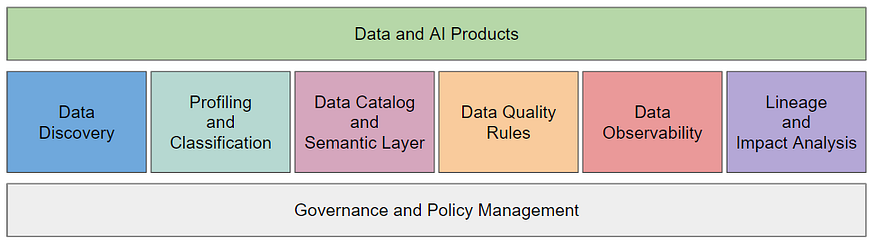
Data Quality Capabilities in AI Projects: As the AI and LLM boom matures, the industry’s focus shifts to building complex data and AI solutions that deliver tangible business value. A company’s most defensible competitive advantage lies in its proprietary data assets, but this depends on the data being high-quality, consistent, contextually rich, and secure. The article emphasizes that a comprehensive data quality and reliability framework is crucial for AI projects, which should include data discovery, data profiling, data classification, data catalog and semantic layer, data quality rules, data observability, and lineage and impact analysis. If data quality issues are not addressed promptly, AI solutions will fail to meet enterprise needs, leading to a lack of trust, inefficiency, and potential compliance risks. (Source: 36氪)
Deep Learning Introductory Resources and Evals Driven Development: A developer created a GitHub repository that visually explains mathematical concepts of Artificial Neural Networks (ANN) and Convolutional Neural Networks (CNN) in deep learning, aiming to help beginners better understand these complex concepts. Concurrently, the community emphasizes the importance of “Evals Driven Development” in AI projects, believing it helps teams identify and solve problems faster, especially in rapidly iterating AI model development. Although AI model evaluation frameworks still have shortcomings, continuous evaluation and feedback loops can effectively improve model quality and project efficiency, avoiding long-term issues caused by “good enough” code. (Source: Reddit r/deeplearning, HamelHusain, code_star)
💼 Business
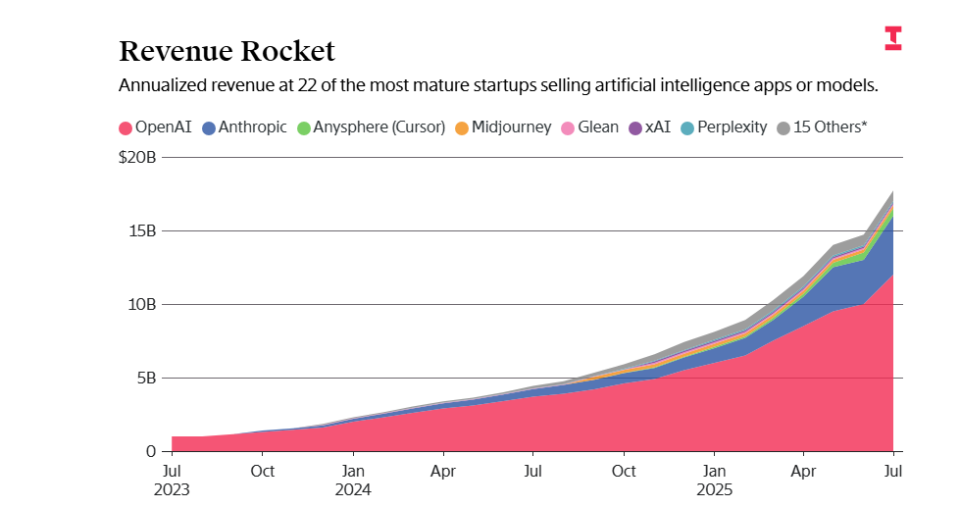
OpenAI Financial Milestones: $12 Billion Annual Revenue, 700 Million ChatGPT Weekly Active Users, $260 Billion Valuation: OpenAI’s revenue almost doubled in the first seven months of 2025, with projected annualized revenue reaching $12 billion and monthly revenue climbing to $1 billion. Its flagship product, ChatGPT, has surpassed 700 million weekly active users, with widespread adoption by individuals and enterprises. Despite high operating costs (estimated to exceed $28 billion in 2025), OpenAI is proceeding with a $40 billion funding round, with its valuation reaching $260 billion, and SoftBank expected to lead with $22.5 billion. The company is aggressively expanding into the enterprise market, launching customized ChatGPT features and limited-time offers, and adding spreadsheet and presentation editing capabilities, challenging Microsoft and Google. Competitor Anthropic also shows strong growth, with annualized revenue exceeding $4 billion. (Source: 36氪, 36氪)
Cline Completes $32 Million Funding Round, Boosting Open-Source AI Programming: Open-source AI programming tool Cline successfully completed $32 million in seed and Series A funding, led by Emergence Capital and Pace Capital. Cline originated as a hackathon project and has grown into a platform with a community of 2.7 million developers, dedicated to providing a high-performance, transparent, and cost-effective AI programming experience. Its core philosophy is open source, offering users flexibility in models and providers, enabling transparent, cost-based inference. This funding not only validates its open-source model but also signals a strong market demand for developer-led, transparent solutions in the AI programming tool market, indicating broader applications for AI Agent technology in software development. (Source: cline, dotey, op7418)

China AI Startup IPO Wave: MiniMax and Zhipu Vie for “First Stock”: Chinese AI large model startups are entering an IPO wave, with MiniMax and Zhipu considered strong contenders for the title of “China’s first large model stock.” Both companies have initiated IPO preparations; Zhipu has filed for pre-listing tutoring with the Beijing Securities Regulatory Bureau, and MiniMax is rumored to be seeking a Hong Kong listing. Although both companies are well-funded, vying for the “first stock” title aims to solidify market position, secure high premiums in the secondary market, and seize the IPO window. DeepSeek’s rise has accelerated industry de-bubbling, making listing a crucial step for leading companies to establish their advantage. Additionally, embodied AI companies like Zhiyuan Robotics are also actively seeking IPOs, signaling that more AI companies will enter the capital market, but market competition will intensify. (Source: 36氪)
🌟 Community
AI Model Performance and Pricing Discussion: Anthropic Opus vs. Qwen3-Coder: Social media is abuzz with discussions about Anthropic Opus’s performance decline and price adjustments, with users seeking more cost-effective alternatives. Many developers find that running open-source models like Qwen3-Coder-480 on private infrastructure can achieve higher efficiency at lower costs, for example, processing over 50 million tokens per hour. This trend is pushing closed-source model providers like OpenAI and Anthropic to lower prices. The community generally believes that the rise of open-source models is driving market competition, forcing leading companies to offer more cost-effective services, thereby accelerating the popularization and application of AI technology. (Source: Alibaba_Qwen, scaling01, slashML)
AI Safety, Alignment, and Ethics Discussion: The AI community is engaged in extensive discussions on AI safety, alignment, and ethics. The UK AI Safety Institute launched the “Alignment Project,” investing over £15 million to fund AI alignment and control research, providing compute resources and expert support. However, some views question whether parts of the AI safety/EA community are overly inclined towards centralized risk mitigation solutions and have issues with whom they choose to trust. Furthermore, AI doomsday prophecies, especially those targeting children and young people, have raised concerns about ethical and psychological impacts. The community calls for AI safety to move beyond theoretical discussions and focus on ensuring the reliability and controllability of existing AI models, preventing unintended behavior or misuse in practical applications. (Source: sarahookr, brickroad7, Yoshua_Bengio, Plinz, jonst0kes, aihub.org)

ChatGPT Privacy Concerns: Public Interactions and Search Engine Indexing: An experimental feature in ChatGPT sparked user privacy concerns: it allowed users to opt-in to make their conversations discoverable by search engines (like Google). Although it required explicit user selection and checkbox ticking to share, OpenAI eventually removed the feature, acknowledging it could lead to users unintentionally sharing content they did not wish to make public. This incident highlights the challenges AI products face in user privacy protection and the importance of prioritizing user data security and informed consent in feature design. Community discussions also reflect users’ ongoing concern about data use transparency in AI services. (Source: giffmana, jachiam0)

AI’s Application Boundaries and Misconceptions in Professional Fields: The community discussed the application boundaries of AI in professional fields and user misconceptions about AI capabilities. Some doctors stated that when patients consult with ChatGPT results, it’s necessary to clarify that AI does not hold a professional degree, emphasizing the irreplaceable nature of human professional knowledge. Meanwhile, experienced AI users believe that AI providing incorrect information is not a “non-issue”; the key is for users to possess critical thinking and actively guide AI to self-check and correct. They point out that AI’s hallucination problem can be mitigated through proper “user as operator” usage, such as through multi-turn questioning and hypothesis testing to ensure information accuracy. This reflects that AI, as a tool, its utility highly depends on the user’s professional expertise and interaction style. (Source: dotey, Reddit r/ArtificialInteligence)

AI as a Phenomenon of Emotional Support and Companionship: Social media has seen a large number of users treating AI chatbots as sources of emotional support and companionship. Many users shared the positive role AI played when they faced loneliness, depression, trauma, calling AI their “little cheerleaders” that provide non-judgmental, positive feedback, helping them change their thought patterns. Although some expressed concern or confusion, viewing this as a “sad” phenomenon, these users emphasized that AI is a “temporary tool” that provides valuable psychological comfort when real-world support is insufficient. This phenomenon has sparked discussions about AI’s potential in mental health and the deep human need for emotional connection. (Source: Reddit r/ChatGPT, Reddit r/ChatGPT)

AI’s Impact and Concerns on White-Collar Jobs: Latest data shows that 61% of white-collar tech workers believe AI will replace their current jobs within the next three to five years, yet they are currently enjoying reduced stress brought by AI. This phenomenon has sparked discussions about mass AI unemployment and the feasibility of Universal Basic Income (UBI). Some worry that AI will exacerbate wealth inequality, stagnate social mobility, and even lead to social unrest. Others argue that AI will greatly boost productivity and lower living costs, making UBI feasible, but only if society can adapt to this transformation. Additionally, the “productivity illusion” of AI-generated code was mentioned, suggesting it might lead to a short-term increase in code volume but long-term business damage due to quality issues. (Source: Reddit r/ArtificialInteligence, Reddit r/ArtificialInteligence, Reddit r/ArtificialInteligence)

AI Glasses and Social Advantage/Disadvantage: Meta CEO Mark Zuckerberg stated that people not wearing AI glasses in the future will be at a disadvantage, sparking community discussion about the social impact of widespread AI glasses. Critics argue this is just another attempt by Meta to collect user data for precise marketing, raising concerns about privacy infringement and potential social manipulation. Some sarcastically noted that giving Meta unlimited access to personal information, including what one sees and hears, would instead lead to a disadvantage. This discussion reflects public deep concerns about AI technology’s penetration into personal lives, especially regarding privacy and data misuse. (Source: Reddit r/artificial)

Open vs. Closed Source AI Debate: The AI community is engaged in a fierce debate over the pros and cons of open-source versus closed-source models. Meta CEO Zuckerberg, who once championed open source, recently hinted that not all superintelligent models might be open-sourced in the future, sparking controversy about “betraying open source.” Proponents of open source argue that open models accelerate technological progress, help discover vulnerabilities, and promote large-scale alignment and safety research. Opponents, however, point out that closed-source models allow companies better control over commercialization, and open source might lead to model misuse and circumvention of safety mechanisms. Ollama’s closed-source choice for its new GUI also drew community dissatisfaction, with many users turning to purely open-source alternatives like llama.cpp, highlighting the ongoing focus on transparency and community collaboration in the AI field. (Source: Reddit r/LocalLLaMA, Yuchenj_UW, 36氪, 36氪)
Profound Impact of AI on Labor and Society: The AI Migration Generation and Future Work: AI is profoundly reshaping human social structures and individual experiences. The article introduces the concept of the “AI Migration Generation,” referring to those who grew up before AI’s widespread adoption but find their adult lives fully permeated by AI, facing confusion and adaptation due to the technological discontinuity. AI not only changes the content and nature of work but also creates new professions while eliminating old ones, accelerating social stratification. Kevin Kelly believes that AI’s progress will liberate humanity, freeing it from working for a living to focus solely on “play,” and human value will multiply due to scarcity, becoming a “service.” However, this utopian vision is accompanied by concerns about monopolies, privacy, and human alienation. The core skill in the AI era will be “learning how to learn for oneself” to adapt to rapidly iterating knowledge and professional demands. (Source: 36氪, 36氪)
Impact of AI-Generated Content on Social Interaction: As AI-generated content (such as articles, comments, videos, images) becomes increasingly prevalent, even surpassing human-original content, the community is beginning to ponder its impact on social interaction and information authenticity. Some believe that as long as the content is entertaining or useful, users might not care if it’s AI-generated. However, others worry that this will turn the internet into a “cesspool,” weakening human interaction and trust. Platforms like TikTok have started adding footnotes to AI-generated videos to address the difficulty of distinguishing genuine content. This has sparked discussions on how to differentiate human-original from AI-generated content, and how future social platforms and media will maintain information quality and human connection. (Source: Reddit r/ArtificialInteligence, Reddit r/ChatGPT, MIT Technology Review)

💡 Other
Challenges of AI Adoption in the Industrial Sector: Despite the hype around AI, its practical adoption in enterprises, especially in the industrial sector, faces numerous challenges, often described as “highly praised but lacking in practical application.” Key contradictions include: hot concepts but limited practical application scenarios, ambitious ideals versus harsh realities, high investment versus limited visible value, long-term vision versus short-term gains, and AI’s perceived omnipotence versus a lack of application understanding. The inherent complexity and seriousness of industrial scenarios, high demands for precision and safety, and reliance on time-series data make it difficult for general large models to adapt directly. Furthermore, insufficient technical interpretability and enterprises’ concerns about protecting core processes also hinder deep AI application. Companies need to address these challenges, build a solid data foundation, and enhance employee AI capabilities to truly unlock AI’s value and transition from a “tool” to a “partner.” (Source: 36氪, 36氪)

AI Reshaping the Healthcare Industry: AI is profoundly reshaping the healthcare industry, from enhancing accessibility to personalized health management. Ant Group launched “AI Health Butler,” which provides professional consultation, appointment guidance, and remote medical insurance filing through multi-turn Q&A, connecting health records and wearable devices, and proactively offering health management advice. SenseTime Medical’s “SenseCare® Smart Hospital” comprehensive solution has been implemented in hundreds of hospitals nationwide and is expanding globally, empowering the entire “medical, patient, management, research” chain through large medical agents and multimodal technology, improving diagnostic efficiency, shortening report generation time, and enabling pathology interconnection. These advancements indicate that AI’s application in healthcare is transforming from an auxiliary tool to a productivity engine, especially showing immense inclusive value in primary care and remote areas. (Source: 36氪, 量子位)

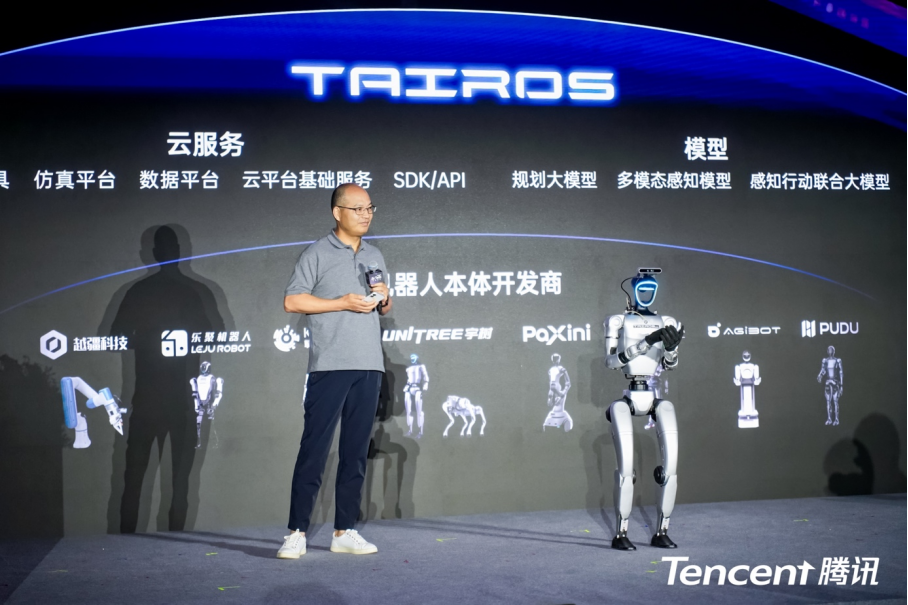
Tech Giants’ Robot Strategy: No Hardware, Build Platforms: Tech giants like Tencent and JD.com are actively entering the embodied AI field, but their strategy is not to directly manufacture robot hardware; instead, they act as software platform providers. Tencent launched the Tairos Embodied AI Open Platform (“Tiros”), offering model algorithms (planning, perception, perception-action joint large models) and cloud services, aiming to help robot manufacturers improve human-robot interaction capabilities and provide support in simulation, training, and data management. JD.com, on the other hand, introduced the JoyInside platform, emphasizing the concept of “embodied intelligence,” leveraging its customer service and digital human data to provide large model-driven human-robot interaction capabilities for robots. This “picks and shovels” strategy aims to accelerate the commercialization of embodied AI by providing models and computing infrastructure, while avoiding the complexities of hardware manufacturing. (Source: 36氪)