



🔥 Spotlight
Tsinghua University’s Duan Ran Team Breaks Dijkstra Algorithm’s Optimality: Tsinghua University’s Duan Ran team has proposed a new algorithm that breaks the universal optimality of the Dijkstra algorithm for the shortest path problem. It runs faster and does not rely on sorting, solving a “sorting barrier” that has plagued the field for over forty years, holding significant theoretical and practical implications. (Source: 量子位)
Meta FAIR Brain & AI Team Wins Algonauts 2025 Brain Modeling Competition: Meta FAIR’s Brain & AI team won first place in the Algonauts 2025 Brain Modeling Competition with their 1B-parameter TRIBE (Trimodal Brain Encoder) model. This model is the first deep neural network capable of predicting multimodal, multi-cortical region, and individual brain responses, integrating foundational models like Llama 3.2, Wav2Vec2-BERT, and V-JEPA 2. (Source: AIatMeta)
Coral Protocol’s Small AI System Excels in GAIA Benchmark: The Coral Protocol project, utilizing multiple small, specialized AIs working collaboratively, outperformed a Microsoft-backed model by 34% in the GAIA benchmark. This suggests that collaborative small AI systems may be more efficient and cost-effective than single large models for complex, real-world tasks such as planning, information retrieval, and visual analysis. (Source: Reddit r/ArtificialInteligence)

🎯 Trends
GPT-5 and Grok 4 Spark Free Model Competition: OpenAI released GPT-5 and announced its free availability to solidify its market position. xAI quickly followed suit, making the basic version of Grok 4 freely available to global users and significantly loosening usage quotas, aiming to expand its user base and collect data to optimize the model, intensifying AI market competition. (Source: 36氪, op7418)

GLM-4.5 Series Models Released with Visual Capability Breakthroughs: Zhipu AI and ByteDance released the GLM-4.5 technical report, highlighting a multi-stage training paradigm and strong performance in inference, coding, and Agent tasks. Concurrently, they launched GLM-4.5V, a 106B-parameter multimodal visual reasoning MoE model, which achieved SOTA performance across 41 benchmarks, demonstrating its powerful capabilities in image understanding, video analysis, and GUI tasks. (Source: teortaxesTex, OfirPress, scaling01, mervenoyann, karminski3, Reddit r/LocalLLaMA)

Apple’s AI Strategy Adjustment and Chatbot Market Challenges: Apple CEO Tim Cook admitted the company is lagging in AI and has formed a new team to develop a ChatGPT-like “answer engine,” aiming to reimagine products like Siri and Safari. This move indicates Apple is actively addressing the opportunities and challenges in the Chatbot market, striving to regain a leading position in the AI era, despite facing internal strategic disagreements and talent drain. (Source: 36氪)
MiniMax Speech 2.5 Leads a New Era of AI Voice: MiniMax released its next-generation AI voice model, Speech 2.5, significantly enhancing multilingual expressiveness, timbre replication accuracy, and language coverage (40 languages), making it feasible for large-scale deployment in cross-language, cross-cultural immersive experiences. This technology is driving the transformation of AI voice from an auxiliary function to a core infrastructure for human-computer interaction and content production. (Source: 36氪)

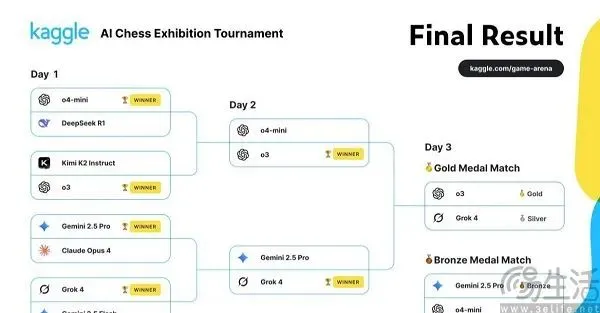
AI Model Evaluation Shifts to Gamified Benchmarks: Google launched the Kaggle Game Arena platform, using strategy games instead of traditional benchmarks to evaluate AI models’ true levels of complex reasoning and decision-making abilities. This move aims to address the limitations of existing benchmarks that are easily “gamed,” pushing AI intelligence evaluation towards a more dynamic and practical direction. (Source: 36氪)
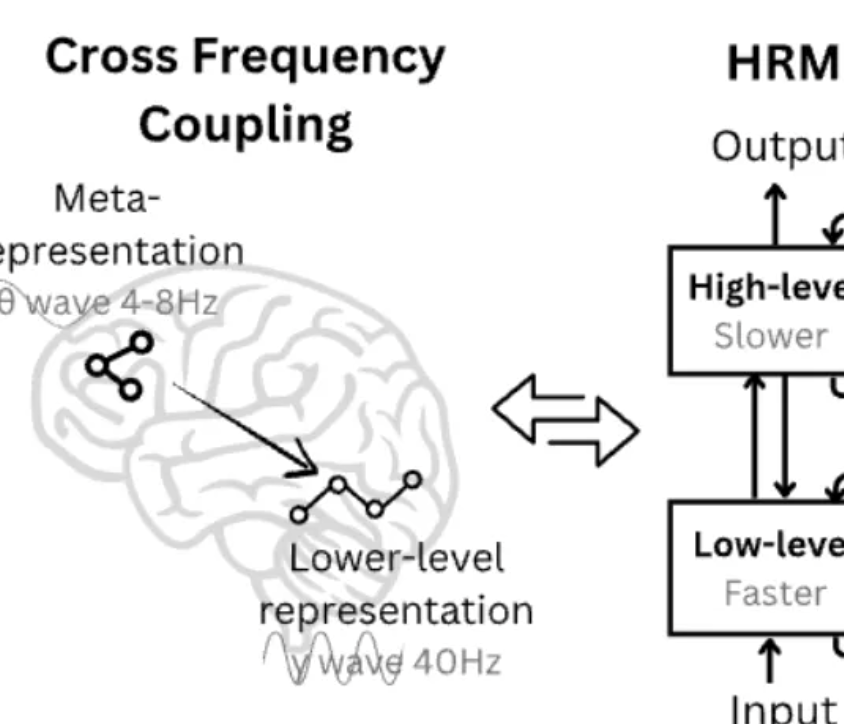
27M Small Model Hierarchical Reasoning Model (HRM) Outperforms Large Models: Tsinghua alumnus Wang Guan’s team released HRM, a Hierarchical Reasoning Model that mimics the brain’s hierarchical processing mechanism. With only 27M parameters and 1000 training samples, it performed exceptionally well in extreme Sudoku, complex mazes, and ARC-AGI tests, achieving an accuracy of 40.3%, surpassing larger models like o3-mini-high and Claude 3.7, and challenging the Transformer architecture. (Source: 量子位)
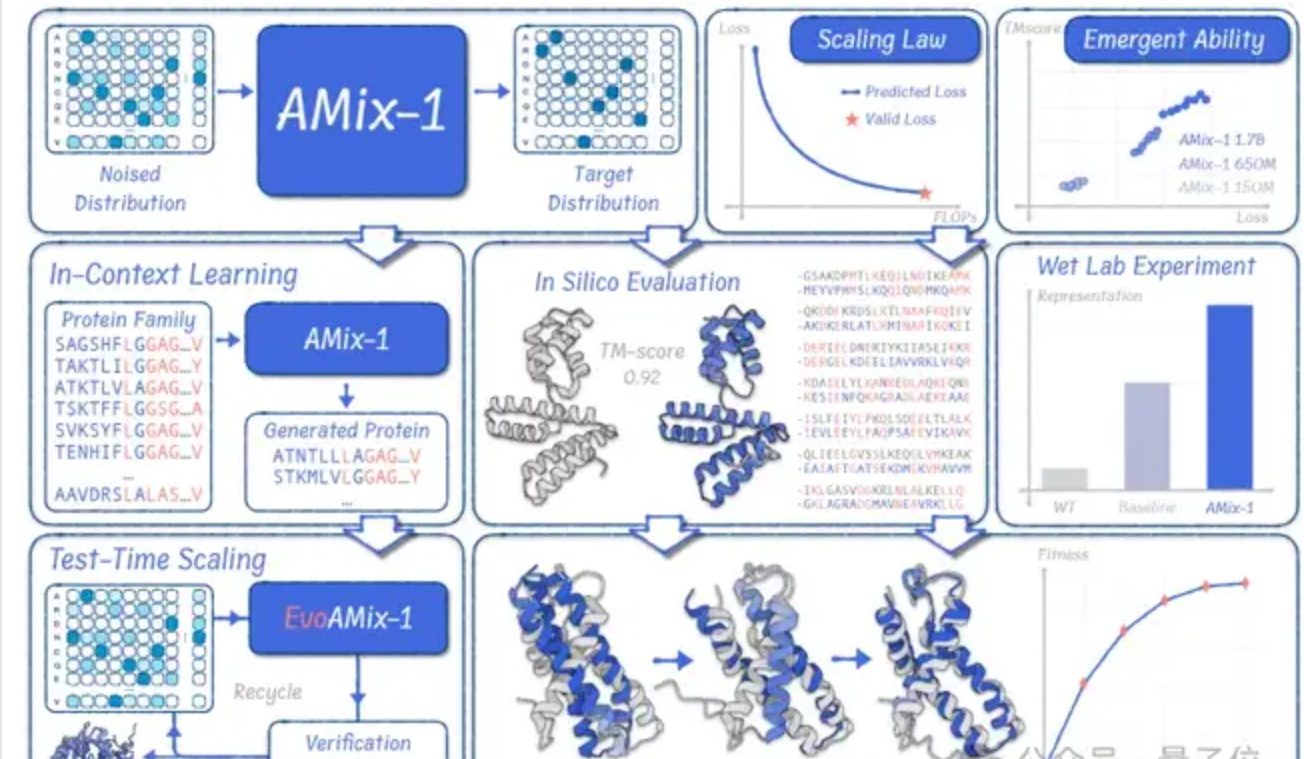
The Era of Protein GPT Has Arrived: Tsinghua University’s Institute for AI Industry Research and Shanghai AI Laboratory jointly released AMix-1, the first to systematically construct a foundational protein model using methods like Scaling Law and Emergent Ability, achieving general protein intelligence. Wet lab validation showed the optimal variant protein’s activity increased by 50 times, bringing a revolutionary breakthrough in protein design. (Source: 量子位)
🧰 Tools
Buttercup Network Inference System: Trail of Bits developed the Buttercup network inference system for DARPA AIxCC, which utilizes AI/ML-assisted fuzzing to discover and patch open-source code vulnerabilities. The system includes components such as a coordinator, seed generator, fuzzer, program model, and patch generator, supporting C/Java codebases, and aims to automate the software vulnerability remediation process. (Source: GitHub Trending)

Claude Context Code Search Plugin: Zilliztech open-sourced Claude Context, a plugin designed for Claude Code, aimed at addressing the context limitations of large codebases. It efficiently stores and searches relevant code via MCP, supporting semantic code search and incremental indexing, significantly enhancing AI’s capabilities in code understanding and debugging. (Source: Reddit r/ClaudeAI)

Multi-Agent LLM Orchestration Visual Builder (TFrameX + Agent Builder): TesslateAI open-sourced TFrameX and Agent Builder, a visual drag-and-drop builder for multi-Agent LLM system orchestration. This tool supports Agent hierarchies, pattern nesting, and dynamic code registration, offering a fully local and MIT-licensed solution aimed at simplifying the development and management of complex Agent systems. (Source: Reddit r/LocalLLaMA)
Ollama Excel Plugin and VulkanIlm GPU Acceleration: A user developed an Excel plugin connecting Ollama with Microsoft Excel, enabling data processing within Excel and supporting custom system instructions and model parameters. Concurrently, the VulkanIlm project accelerates local LLM inference on older GPUs via Vulkan (without CUDA), significantly boosting inference speed and lowering the barrier for running local LLMs. (Source: Reddit r/LocalLLaMA, Reddit r/MachineLearning)

LLMDet and MM GroundingDINO Zero-Shot Detectors: Hugging Face integrated two new zero-shot detectors, LLMDet and MM GroundingDINO. These models can perform zero-shot detection, meaning they can detect any object without specific training, greatly expanding the application scope of AI in image recognition and understanding, and providing applications to compare model inference and latency. (Source: mervenoyann)

DAMO Academy Open-Sources “Three Major Components” for Embodied AI: Alibaba DAMO Academy open-sourced the VLA model RynnVLA-001-7B, the world understanding model RynnEC, and the robot context protocol RynnRCP, aiming to promote compatible adaptation across the entire embodied AI development workflow. These “three major components” can connect the complete workflow from sensor data acquisition and model inference to robot action execution, helping users easily adapt to their specific scenarios. (Source: 量子位)

Applications of Qwen-Image and Qwen3-Coder in Image Generation and Coding: Qwen-Image excels at following complex instructions (e.g., generating a “fried egg with a blue yolk”) and SVG image generation. Concurrently, Qwen3-Coder also demonstrates strong capabilities in code generation and Agent behavior, though user feedback indicates room for improvement in its interactivity, suggesting further optimization is needed for specific scenarios. (Source: multimodalart, Alibaba_Qwen, Reddit r/LocalLLaMA, Reddit r/LocalLLaMA)

📚 Learning
Reinforcement Learning Applications in AI Agents and LLM Optimization: OpenPipe launched MCP·RL, an open-source reinforcement learning framework, enabling Agents to automatically discover tools, generate tasks, and learn optimal invocation strategies through closed-loop feedback. Concurrently, ByteDance and the MAP team proposed the FR3E framework, which improves LLM performance in reinforcement learning through a structured exploration mechanism, addressing the “insufficient exploration” problem and achieving performance improvements in complex reasoning tasks. (Source: 量子位, 量子位)

Label-Free Adaptation Methods for Vision-Language Models (VLM): “Adapting Vision-Language Models Without Labels” surveys label-free VLM adaptation methods, proposing a taxonomy based on the availability of unlabeled visual data. It analyzes paradigms such as data-agnostic, unsupervised domain transfer, episodic test-time adaptation, and online test-time adaptation, providing systematic guidance for optimizing VLM performance in specific scenarios. (Source: HuggingFace Daily Papers)
MeshLLM: A 3D Mesh Understanding and Generation Framework: MeshLLM is a novel framework that leverages large language models (LLMs) to progressively understand and generate text-serialized 3D meshes. This method created a large-scale dataset through a Primitive-Mesh decomposition strategy and enhanced LLMs’ ability to capture mesh topology and spatial structures, surpassing existing SOTA in mesh generation quality and shape understanding. (Source: HuggingFace Daily Papers)
Reinforcement Learning and Inference Optimization for GUI Agents: The UI-AGILE framework significantly improved the performance of Graphical User Interface (GUI) Agents during training and inference by refining the Supervised Fine-Tuning (SFT) process and introducing the Decomposed Grounding with Selection method. This approach particularly enhanced grounding accuracy on high-resolution displays, achieving SOTA performance. (Source: HuggingFace Daily Papers)
GENIE Model for Interactive Editing of Neural Radiance Fields: GENIE is a hybrid model combining the photorealistic rendering quality of Neural Radiance Fields (NeRF) with the editable structured representation of Gaussian Splatting (GS). This model achieves real-time, locally-aware editing through trainable feature embeddings and Ray-Traced Gaussian Proximity Search, supporting intuitive scene manipulation and dynamic interaction. (Source: HuggingFace Daily Papers)
Memp: Exploring Programmatic Memory for Agents: Memp research aims to equip Agents with learnable, updatable lifelong programmatic memory strategies. By distilling Agent trajectories into fine-grained instructions and high-level script abstractions and dynamically updating content, Memp improves Agent success rates and efficiency on similar tasks, offering new insights for building more intelligent Agents. (Source: HuggingFace Daily Papers)
AI Learning Resources and Industry Insights: Six must-read books on AI and machine learning were recommended, covering topics such as systems, generative diffusion, interpretability, and deep learning. Concurrently, QbitAI Think Tank released a report summarizing core trends and advancements in AI applications, models, technology, and industry during H1 2025, providing comprehensive insights for AI learners and professionals. (Source: TheTuringPost, 量子位)

LLM Distributed Training and Low-Precision Optimization: DiLoCo is a distributed optimization method for training LLMs on slow or geographically separated networks, significantly reducing communication overhead through an infrequent-synchronization design. Concurrently, OpenAI adopted the MXFP4 data type in its gpt-oss model, slashing inference costs by 75%, reducing memory footprint by three-quarters, and boosting token generation speed by 4 times, significantly lowering the hardware barrier for running large models. (Source: Ar_Douillard, 量子位)
💼 Business
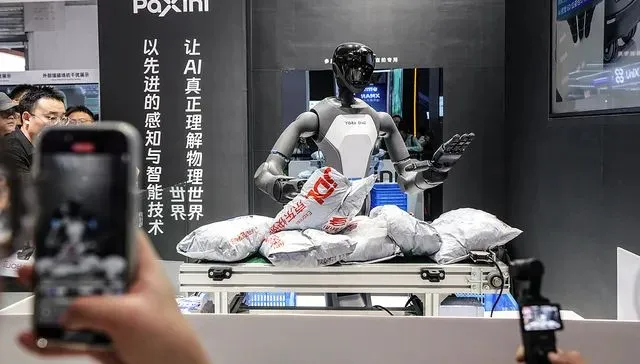
WRC 2025 Focuses on Industry Development and Investment Opportunities: WRC 2025 grandly opened in Beijing, bringing together over 200 companies and more than 1500 exhibits, with the number of humanoid robot companies reaching a new historical high. The conference deeply explored six major investment themes, including embodied AI, core hardware, multimodal perception, and intelligent upgrading of industrial robots, showcasing China’s rise in the robotics sector and policy support, including the achievements of Beijing’s “Double Hundred Project.” (Source: 36氪, 量子位, 量子位)
AI Programming Unicorns Face High Costs and Profitability Challenges: AI programming companies like Windsurf and Cursor, despite rapid revenue growth, generally face negative gross margins and extremely high operating costs, primarily due to the high costs associated with large language model API calls. This leads to greater losses with more users, prompting companies to explore self-developed models or acquisitions to turn losses into profits, though cost reduction and user sensitivity remain challenges. (Source: 量子位)
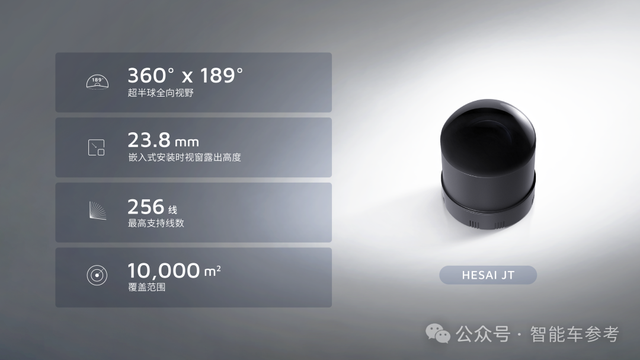
Embodied AI Drives Explosive Growth in LiDAR Market: With the expansion of embodied AI robot application scenarios, demand for LiDAR as their “eyes” has surged. Hesai Technology showed strong performance in the robot LiDAR sector, with Q1 2025 shipments increasing by 649.1% year-on-year, becoming a new growth engine for the company. This highlights the immense market potential of LiDAR in the robotics sector, attracting numerous smart vehicle supply chain enterprises. (Source: 量子位)
🌟 Community
GPT-5 User Experience Sparks Strong Controversy: A large number of users expressed disappointment with GPT-5, finding it inferior to GPT-4o in creative writing, multi-turn conversations, emotional empathy, context understanding, and stability, even exhibiting hallucinations and “infantile” behavior. Users called on OpenAI to restore 4o or provide model selection, emphasizing the importance of AI as a “cognitive environment” rather than merely a tool, prompting deep reflection on the balance between AI model personification and practicality. (Source: cto_junior, jachiam0, crystalsssup, qtnx_, fabianstelzer, madiator, Reddit r/ChatGPT, Reddit r/ChatGPT, Reddit r/ChatGPT, Reddit r/ClaudeAI)
Widespread AI Interviews Spark Job Seeker Dissatisfaction: With the US IT industry unemployment rate hitting a new high, the widespread adoption of AI interview tools has sparked strong backlash from job seekers. They argue that AI interviews are cold, lack humanity, and even involve risks of personal information leakage and “covert tagging.” Some job seekers would rather remain unemployed than accept AI interviews, highlighting the ethical and emotional challenges AI brings to recruitment. (Source: 36氪)
Future Development of AI Agents and the “10x Engineer” Myth Debunked: The community discussed the potential of AI Agents in web development and complex task resolution, emphasizing the importance of Agent experience. Concurrently, some argue that while AI programming tools can improve efficiency, they cannot solve issues like context understanding in large codebases or keeping up with standards, pointing out that the “AI 10x engineer” is a myth and that engineers’ core value still lies in reading and thinking. (Source: _akhaliq, fabianstelzer, TheTuringPost, 量子位)
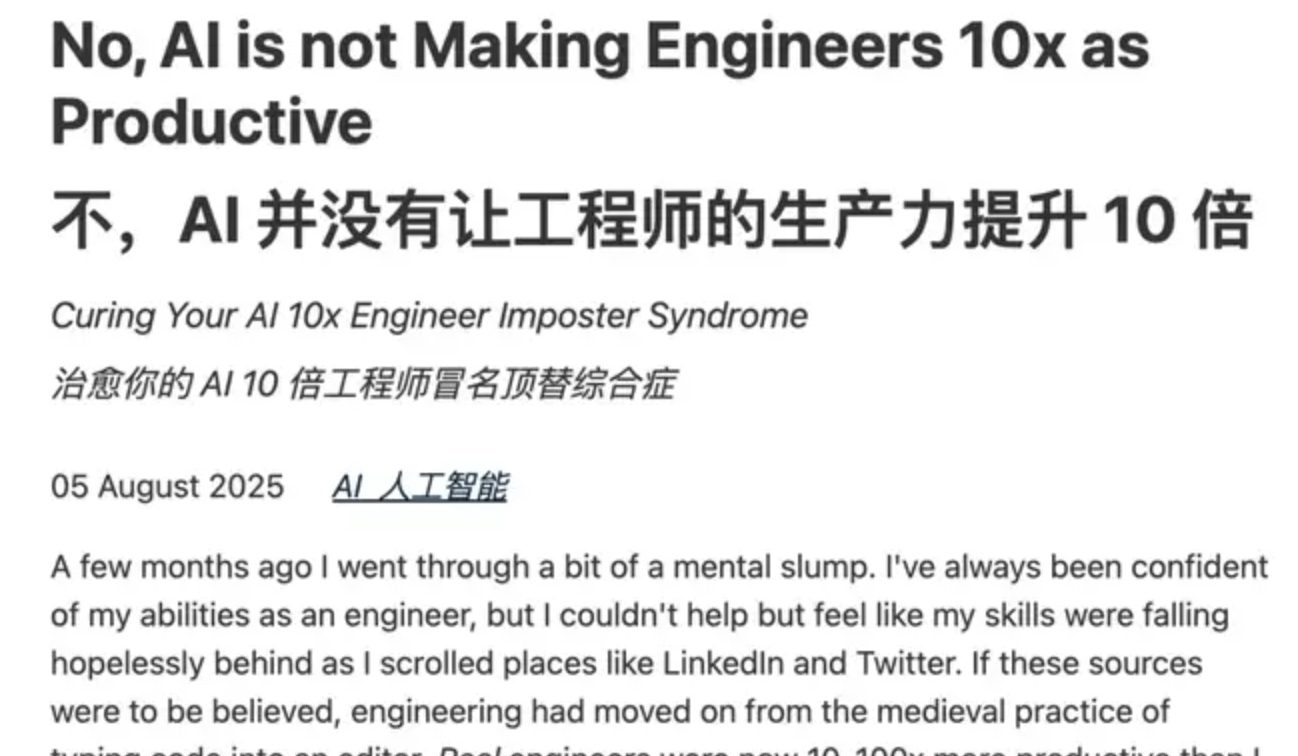
AI Model Bias and Information Reliability Concerns: Truth Social’s AI chatbot was accused of severe bias towards conservative media, raising concerns about the reliability of AI models’ information sources and potential biases. Additionally, the community discussed the phenomenon of “GPTisms” appearing in AI-generated content, where AI-generated content tends to be formulaic and lacks originality. (Source: Reddit r/artificial, qtnx_)

Discussions on AI and Human Emotion/Consciousness: Sam Altman and community members deeply discussed users’ strong attachment to AI models, viewing them as “therapists” or “life coaches,” and exploring AI’s role in mental health. Concurrently, philosophical discussions continue regarding the Turing Test for AI consciousness and whether AI needs consciousness to surpass human performance. (Source: jachiam0, Plinz)

Career Development and Anxiety for Engineers in the AI Era: Facing the rapid development of AI, engineers discussed how to cope with career anxiety and the impact of AI tools on programming workflows. Some view AI as a tool for boosting productivity, while others emphasize its limitations and call on engineers to focus on guiding AI rather than being replaced by it. (Source: pmddomingos, finbarrtimbers, Reddit r/LocalLLaMA, Reddit r/LocalLLaMA, Reddit r/artificial)
💡 Other
Tesla FSD and Dojo Project Adjustments: Elon Musk announced that FSD 14 will be released in 6 weeks with 10 times more parameters, and admitted the Dojo supercomputer project hit a dead end. Future Dojo 3 might exist as motherboards integrated with AI6 chips, shifting focus to the AI6 platform, indicating significant strategic adjustments by Tesla in autonomous driving and AI hardware. (Source: 36氪)
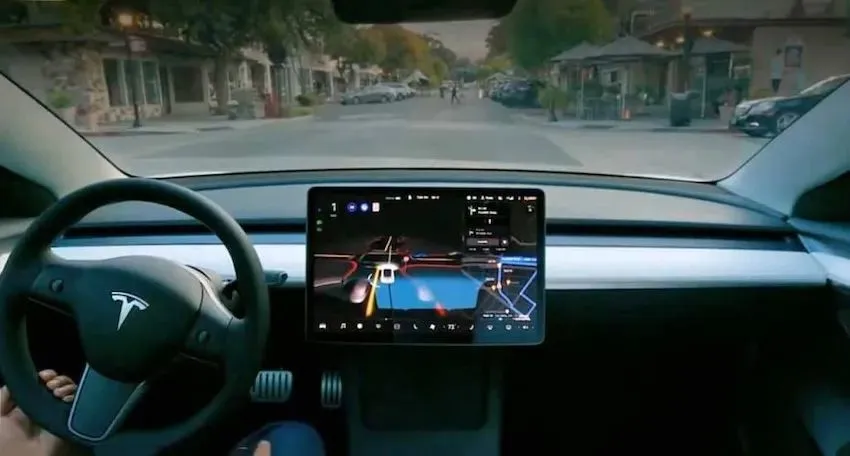
Potential Applications of AI Models in Healthcare: AI models are being explored for monitoring brainwave data in Intensive Care Units (ICUs) to help doctors better understand patient conditions. Additionally, tools like Elicit AI are recommended for assisting clinicians in research, foreshadowing broad application prospects for AI in healthcare. (Source: Reddit r/artificial, elicitorg)

AI’s Socio-Economic Impact: AI is creating new billionaires at a record pace, highlighting its immense potential in wealth creation. Concurrently, discussions suggest that the value of AI subscription services should be assessed based on time savings and efficiency gains, rather than merely cost, reflecting AI’s profound impact on economic structures and individual consumption patterns. (Source: Reddit r/artificial, dotey)