
🔥 Focus
Meta Acquires AI Agent Startup Manus for Billions: Meta completed its third-largest acquisition ever in late 2025, bringing the AI Agent dark horse Manus into its fold for over $2 billion. Personally orchestrated by Mark Zuckerberg, the deal was finalized in just over ten days. Positioned as a “General Purpose Agent,” Manus achieved $100 million in ARR in less than a year, with its core advantage lying in a powerful task planning and execution framework. This move marks a paradigm shift in the AI industry from “dialogue models” to “action agents.” Meta aims to reshape its internal AI application ecosystem by introducing this “Chinese catfish,” filling its gap in the Agent execution layer compared to OpenAI and Anthropic. (Source: 36Kr, ZhihuFrontier, TheRundownAI)
SoftBank Completes Massive $40 Billion Investment in OpenAI: SoftBank has fully paid its committed capital to OpenAI, with the final $22.5 billion installment arriving last week, bringing its stake to approximately 11%. This financing was a critical prerequisite for OpenAI to complete its restructuring into a for-profit organization. Masayoshi Son raised funds by leveraging Arm shares and liquidating NVIDIA stock to fully support the “Stargate” AI infrastructure project in partnership with Oracle. This signals that the global AI arms race has entered a trillion-dollar infrastructure era, with capital intensity reaching a historical peak. (Source: 36Kr)

Zhipu and MiniMax Knock on HKEX Doors: Zhipu has officially passed its HKEX hearing and launched its IPO, with plans to list on January 8, 2026; its IPO market value is expected to exceed HK$51.1 billion. MiniMax followed closely by submitting its prospectus. As representatives of China’s “Six Little Dragons” of LLMs, their listings mark the industry’s transition from a “parameter race” to “capital calibration.” The prospectuses reveal a reality of high growth paired with high losses, with Zhipu reporting a net loss of 820 million yuan in the first half of 2025. The market will scrutinize the true profitability and compute cost inflection points of LLM commercialization through public financial data. (Source: 36Kr, andrew_n_carr)

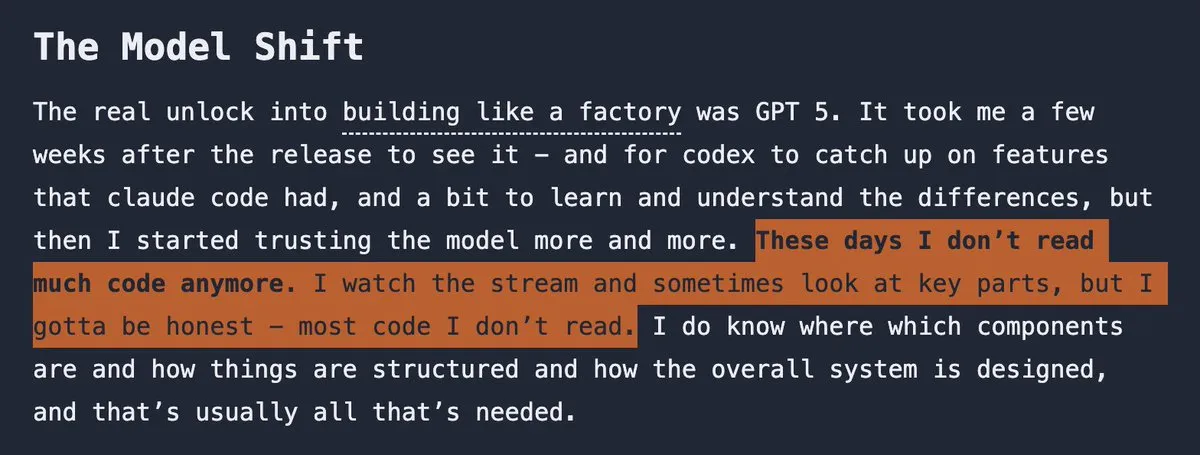
Claude Code Achieves 100% AI-Autonomous Code Contribution: Anthropic engineer Boris Cherry revealed that over the past 30 days, hundreds of PRs and tens of thousands of lines of code for the Claude Code project were 100% contributed by AI, with humans only responsible for “poking” the stop hook to keep it running. Claude Opus 4.5 demonstrated autonomous coding capabilities for up to 5 hours in METR tests, far surpassing OpenAI’s GPT-5.1-Codex. This breakthrough suggests software engineering is entering the “AI Operator” era, where the role of programmers shifts from writers to auditors and system orchestrators. (Source: ylecun, imjaredz)
🎯 Trends
Review of OpenAI’s 2025 Model Release Roadmap: In 2025, OpenAI achieved convergence in reasoning capabilities and breakthroughs in real-time multimodality through the GPT-5.2 series. The newly launched Responses API, Agents SDK, and MCP protocol established Agent-native development modules. In terms of performance, GPT-5.2 reached 100% accuracy in the AIME math competition, and its SWE-bench Verified score rose to 80.0. Simultaneously, OpenAI began releasing open-weight models like gpt-oss, attempting to counter competitors through an open-source ecosystem while maintaining a closed-source lead. (Source: reach_vb)
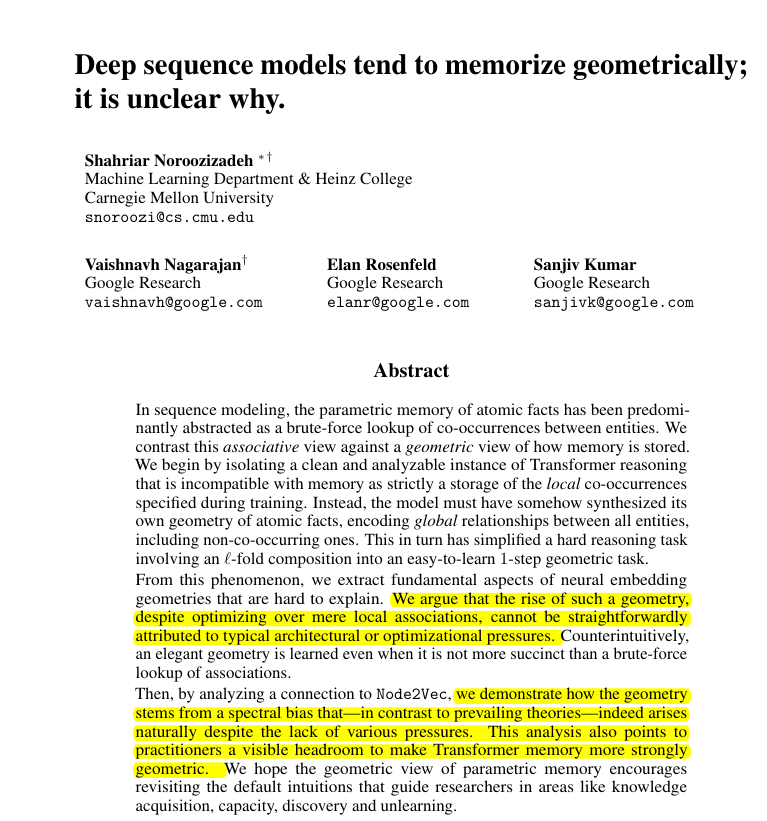
Neural Networks Store Facts as Geometric Structures Rather Than Lookup Tables: A recent paper from Google and Carnegie Mellon University reveals that Transformer and Mamba models tend to organize facts as relationships in geometric space during training. In this geometric memory, multi-step reasoning can be converted into single-step distance checks, allowing the model to achieve 100% accuracy in graph path queries with 50,000 nodes. This discovery explains why deep sequence models can emerge with global logical understanding that transcends local connections. (Source: jpt401)
NVIDIA Releases NitroGen General Game AI Foundation Model: Trained via large-scale behavior cloning on 40,000 hours of gameplay video, this model covers over 1,000 game titles and serves as a foundation for general game agents. NVIDIA CEO Jensen Huang emphasized in an interview that NVIDIA is creating a “Time Machine” to predict the evolution of future systems by merging Omniverse with the physical world. Additionally, NVIDIA achieved a 10,000x increase in computing energy efficiency over 8 years, viewing energy constraints as the core physical boundary for AI development. (Source: Reddit, 36Kr)

Self-E Model Unlocks Any-Step Text-to-Image Generation: Researchers introduced the Self-Evaluation model (Self-E), an image generation framework that supports reasoning from single to multiple steps. Unlike distillation methods that rely on pre-trained teachers, Self-E performs self-driven global matching through a dynamic self-evaluation mechanism. Experiments show the model performs excellently at low step counts, with performance increasing monotonically as reasoning steps increase, providing a unified framework for efficient and scalable image generation. (Source: HuggingFace)
🧰 Tools
Manus Launches Design View and Mark Tool Features: To bridge the gap between design concepts and final generated images, Manus released new visual editing tools. Users can use the Mark Tool to directly highlight areas on an image that need modification, rather than repeatedly adjusting prompts. This interaction provides granular control over image generation, shifting AI drawing from “mystery box mode” to “precision editing.” (Source: Reddit)
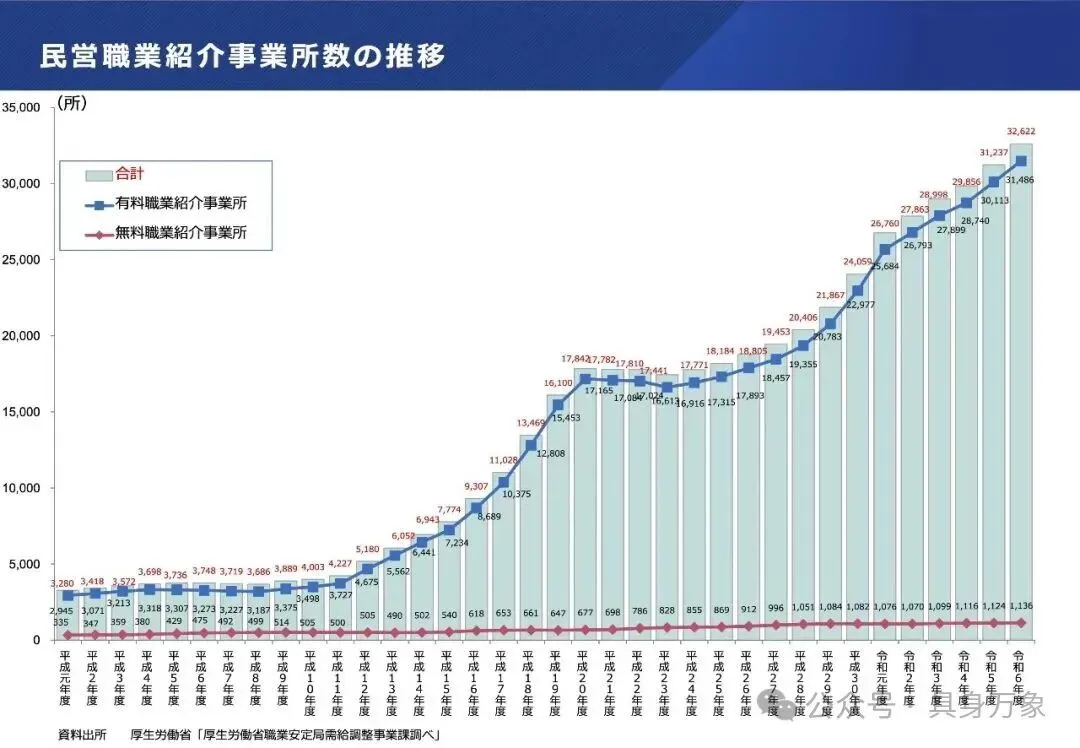
HelloBoss Releases “AI Headhunter” App Based on AI Agents: Targeting pain points in the Japanese and global recruitment markets, this platform autonomously completes 90% of the recruitment process, including job posting, intelligent resume matching, and interview record sharing. HelloBoss adopts a pay-per-result model, reducing recruitment costs by 20% and shortening cycles by more than half. Currently, the platform has over 500,000 online job listings and has secured Series A funding from Bertelsmann Group’s BAI Capital. (Source: 36Kr)
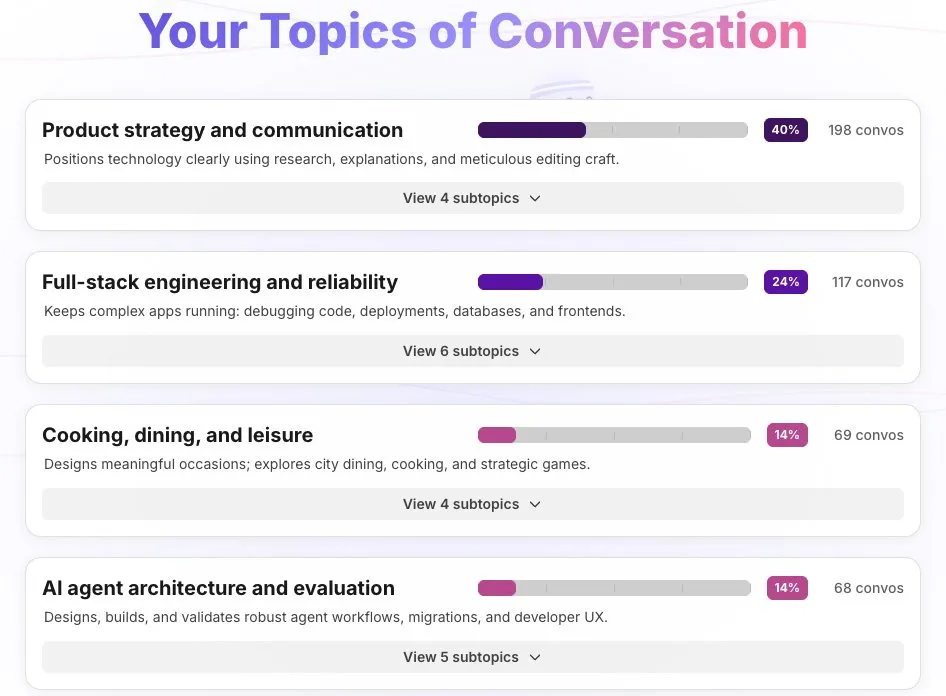
LangChain Releases AI Wrapped 2025 Analysis Tool: This tool utilizes LangSmith Insights agents to analyze users’ ChatGPT and Claude conversation histories, identifying usage patterns, trends, and anomaly clusters from the past year. Its underlying logic is based on Anthropic’s CLIO paper, aiming to help users review how they collaborated with AI through data, revealing hidden interaction habits. (Source: LangChainAI)
Typeless Launches iOS AI Voice Keyboard: The app claims to convert voice into polished text four times faster than typing. It supports over 100 languages and can be used directly within apps like WhatsApp, Slack, and email. This reflects a shift in mobile AI interaction from simple voice recognition to native communication modes with contextual understanding and style polishing. (Source: Reddit)
📚 Learning
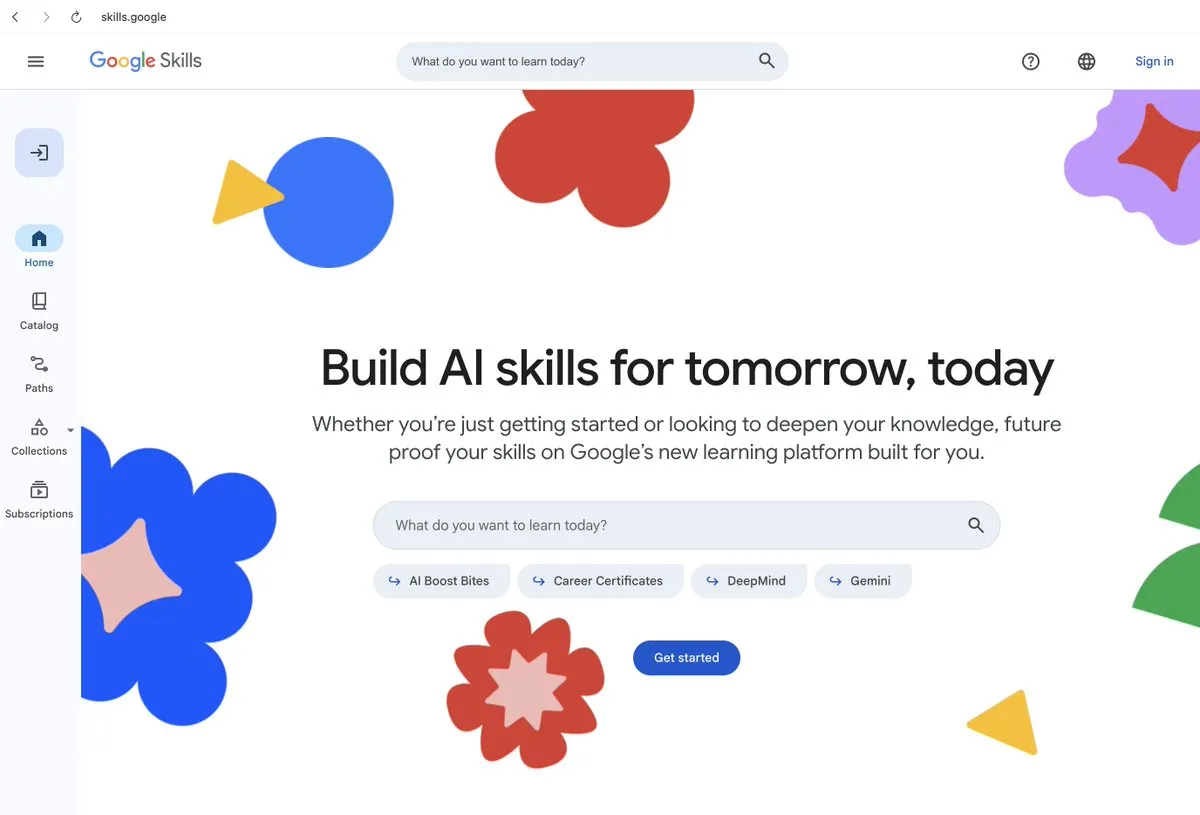
Google Launches Free AI Education Platform Google Skills: The hub contains 3,000 technical modules, covering professional content from basic Transformer architectures to DeepMind research workflows. Unlike the flood of “prompt engineering tutorials” on the market, Google Skills focuses on underlying technical principles and cutting-edge research paths, aiming to open internal training courses from top labs to the public. (Source: JeffDean)
BrennerBot: A Scientific Methodology Resource Based on Sydney Brenner Interviews: Developers used GPT-5.2 Pro and Opus 4.5 to deeply distill 236 interview transcripts of biologist Sydney Brenner to build brennerbot.org. The project demonstrates how to use long-context models to extract “threads of thought” from massive unstructured data, exploring how Brenner quickly formed scientific hypotheses through Bayesian inference and logical induction under resource-scarce conditions. (Source: doodlestein)

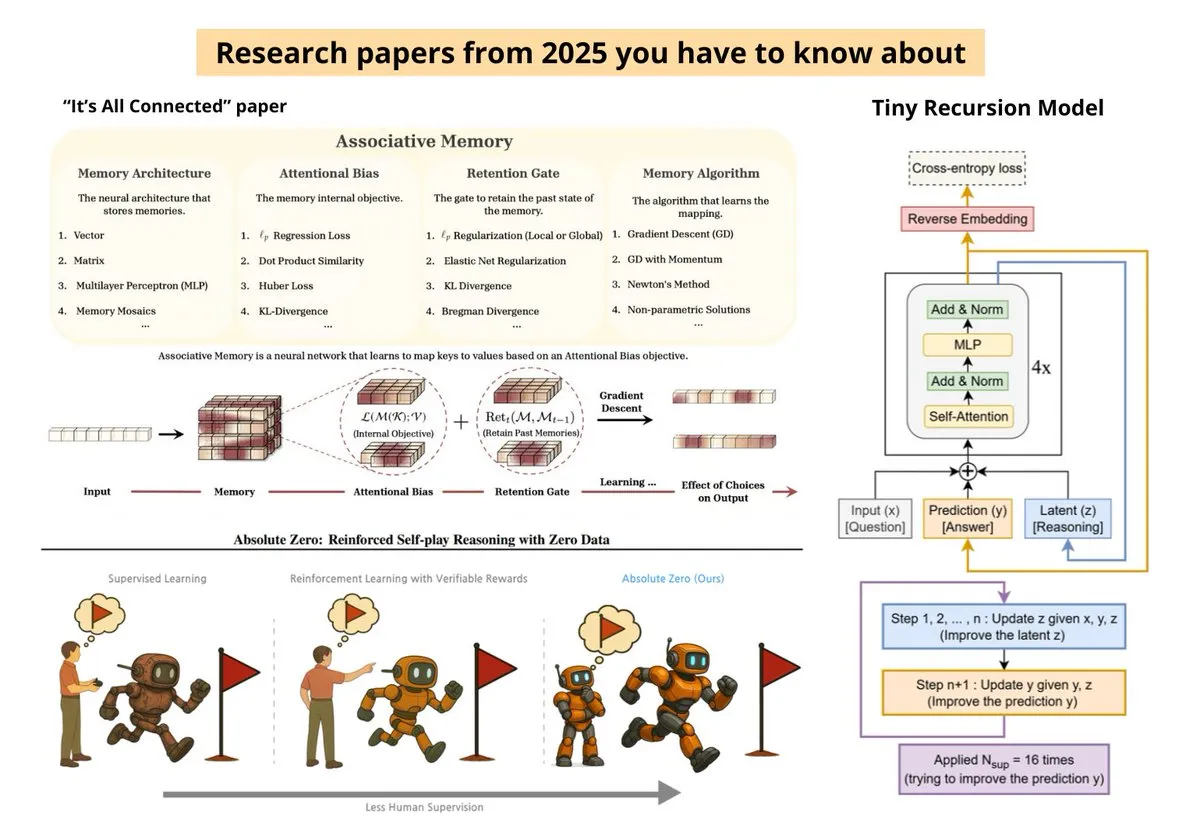
23 Key Research Papers Foreshadowing the Future of AI in 2025: TheTuringPost summarized the most influential papers of the year, including LeJEPA, Absolute Zero (zero-data reinforcement self-play), and the System 3 thinking framework. System 3 is defined as a self-improvement layer above perception and reasoning, responsible for the long-term behavior and identity construction of AI agents, signaling that Agents will shift from static tools to dynamically growing entities in 2026. (Source: TheTuringPost)
💼 Business
SoftBank Acquires DigitalBridge for $4 Billion to Expand AI Infrastructure: Through this acquisition, SoftBank gained a significant amount of data center, cell tower, and fiber network assets. Masayoshi Son is highly concentrating capital on core links of the AI value chain through asset restructuring and financing, paving the way for OpenAI’s subsequent commercialization and the “Stargate” compute center. (Source: 36Kr)
Adobe and Runway Enter Multi-Year Strategic Partnership: Runway’s models and technology will be directly integrated into Adobe’s creative tools. The two parties will co-develop advanced AI features specifically for professional workflows, available exclusively within Adobe applications. This marks the deep integration of video generation technology from standalone apps into mature creative ecosystems. (Source: c_valenzuelab)
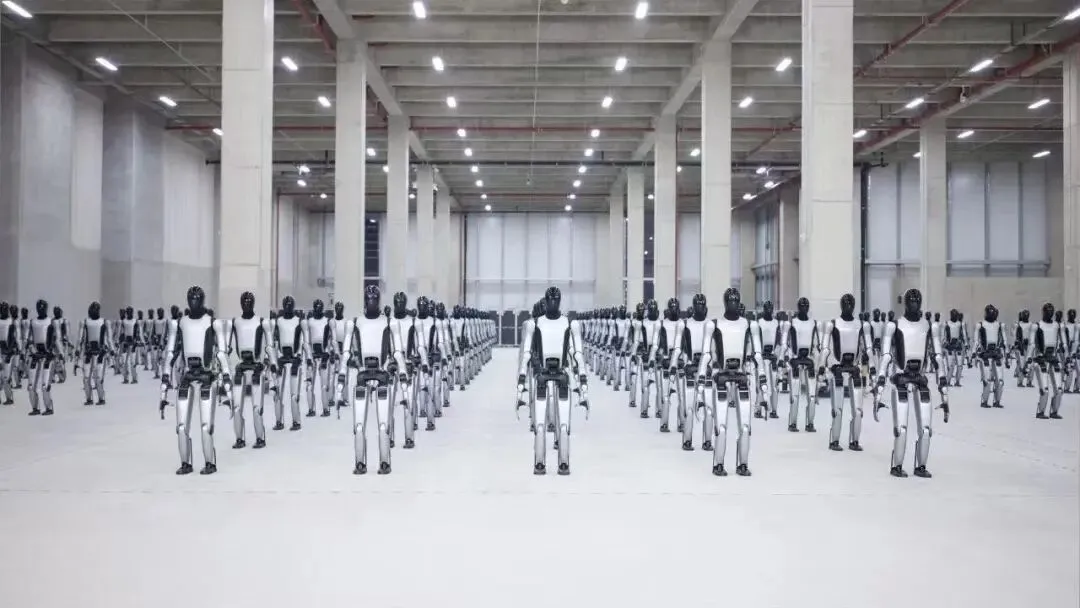
UBTECH Plans to Acquire A-share Company Fenglong for 1.665 Billion Yuan: This “H-share eats A-share” cross-market acquisition aims to complete the manufacturing and supply chain puzzle for humanoid robots. UBTECH seeks to integrate Fenglong’s precision manufacturing capabilities to support the mass production of industrial humanoid robots like Walker S2, addressing growing commercial order pressures. (Source: 36Kr)
🌟 Community
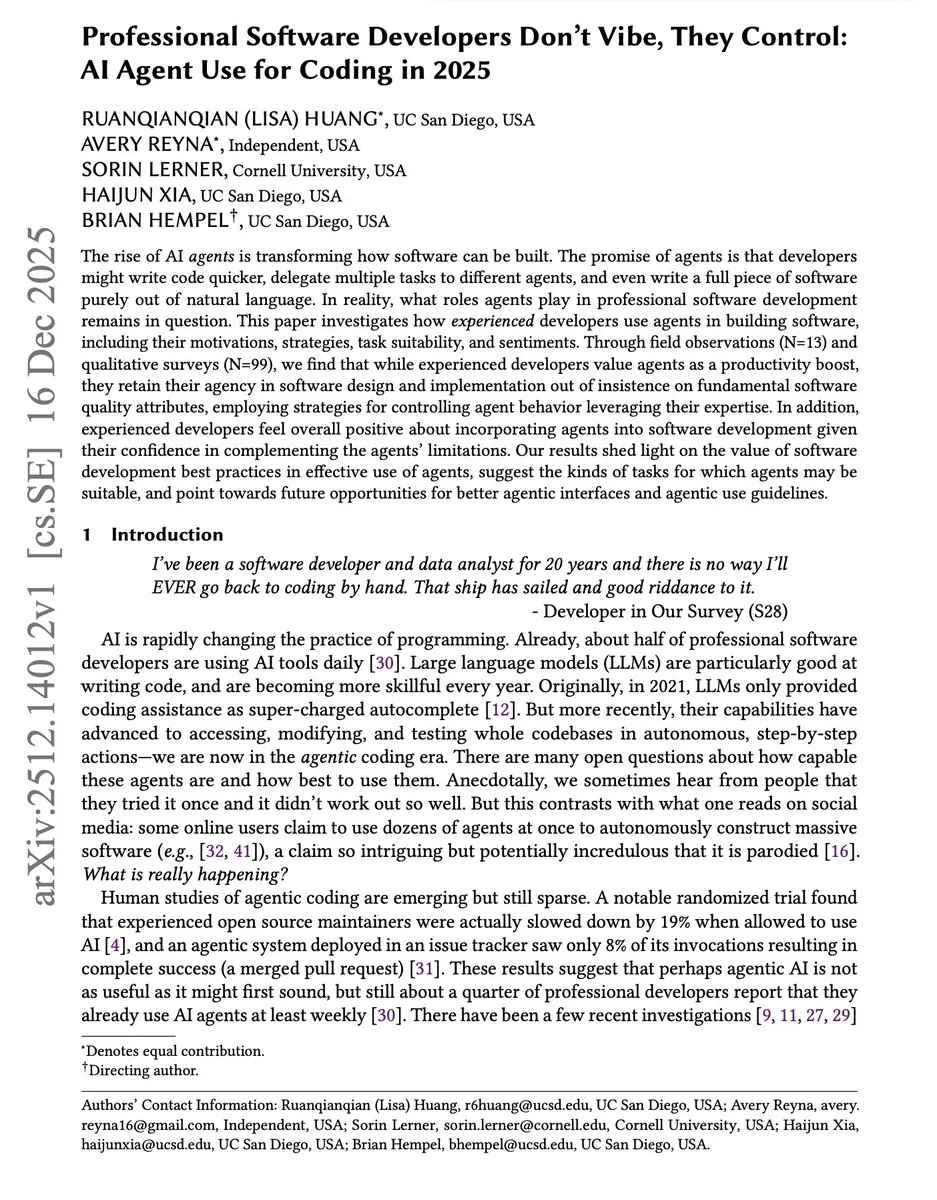
Professional Developers Reject “Vibe Coding,” Emphasize Control: The community is debating a survey of experienced developers showing that 100% of professionals insist on controlling architectural design when utilizing AI. So-called “vibe coding” often fails when dealing with complex business logic and legacy code integration. Developers believe AI should serve as a controllable collaborative partner rather than an automated machine completely detached from human supervision; the core competency lies in “defining the problem” rather than “tuning the tool.” (Source: omarsar0, random_walker)
AI Products Enter Aesthetic Fatigue Phase Due to “Hedonic Adaptation”: Reddit users are discussing the “AI Fatigue” phenomenon, suggesting that as the marginal effects of Scaling Laws diminish and internet data dries up, the shock value of new products is vanishing. Users have become desensitized to simple “chatting” and “image generation”; the community is shifting from pursuing “smarter models” to “who can actually get the job done,” where progress bars are more attractive than dialogue boxes. (Source: Reddit, dotey)
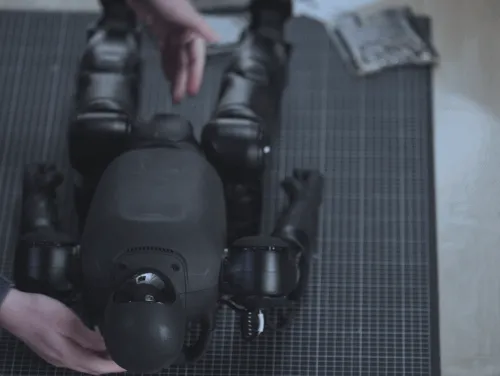
The Physical World is an “Honest Teacher” for AI Learning: Community discussions on the value of embodied intelligence suggest that simulation environments can lie, but physical laws are honest. Ground feedback provided to robots is unalterable ground truth; this immediate and real feedback loop is a necessary path for AI toward higher-order intelligence. Zhihui Jun’s release of the Q1 small-sized robot is seen as an important attempt to lower the research threshold and allow more teams to access “physical feedback.” (Source: ziran_pu, Heart of the Machine)
💡 Others
Quantum Computers Successfully Simulate Complex Physics Beyond Supercomputers: Quantum computing has demonstrated quantum supremacy in simulating specific physical systems, handling computations that traditional computers cannot manage. This foreshadows a potential leap in AI computing power through quantum acceleration, particularly in materials science and drug discovery. (Source: Ronald_vanLoon)

AI Medical Tools Face Skepticism of “Astrology Linked to Physics”: Regarding applications like AI psychologists, some argue that while digital phenotyping is as precise as physical measurement, linking it to an unstable psychiatric framework may lead to incorrect interventions. The community is wary of the risk of AI flattening complex human emotions into predictive patterns. (Source: MIT Technology Review)
Short Video Platforms Flooded with “AI Slop”: Research shows that 21% of the YouTube recommendation stream for new users consists of AI-generated content. These low-cost, highly repetitive, and sensory-stimulating videos can trick algorithm recommendations and ad revenue but lead to the dilution of content ecosystem value. Algorithm rewards for behavioral signals are unintentionally spawning a massive low-information-density content industry. (Source: 36Kr)