



🔥 Focus
Meta Acquires Agent Startup Manus AI for Billions: Meta has announced the acquisition of Manus, a general-purpose AI agent company founded only nine months ago. Manus gained fame as the “world’s first general-purpose agent.” Despite not having its own proprietary model, the company achieved a staggering $100 million ARR in just eight months through exceptional engineering and a deep understanding of user needs. This acquisition is seen as a “buy time” strategy for Meta at the AI application layer, aiming to bridge its gap in the ability to autonomously execute complex tasks. Manus will continue to operate independently, and founder Xiao Hong will serve as a Vice President at Meta. This marks a shift in AI competition from model parameter scale to large-scale execution capabilities in real-world scenarios. (Source: Reuters, X)

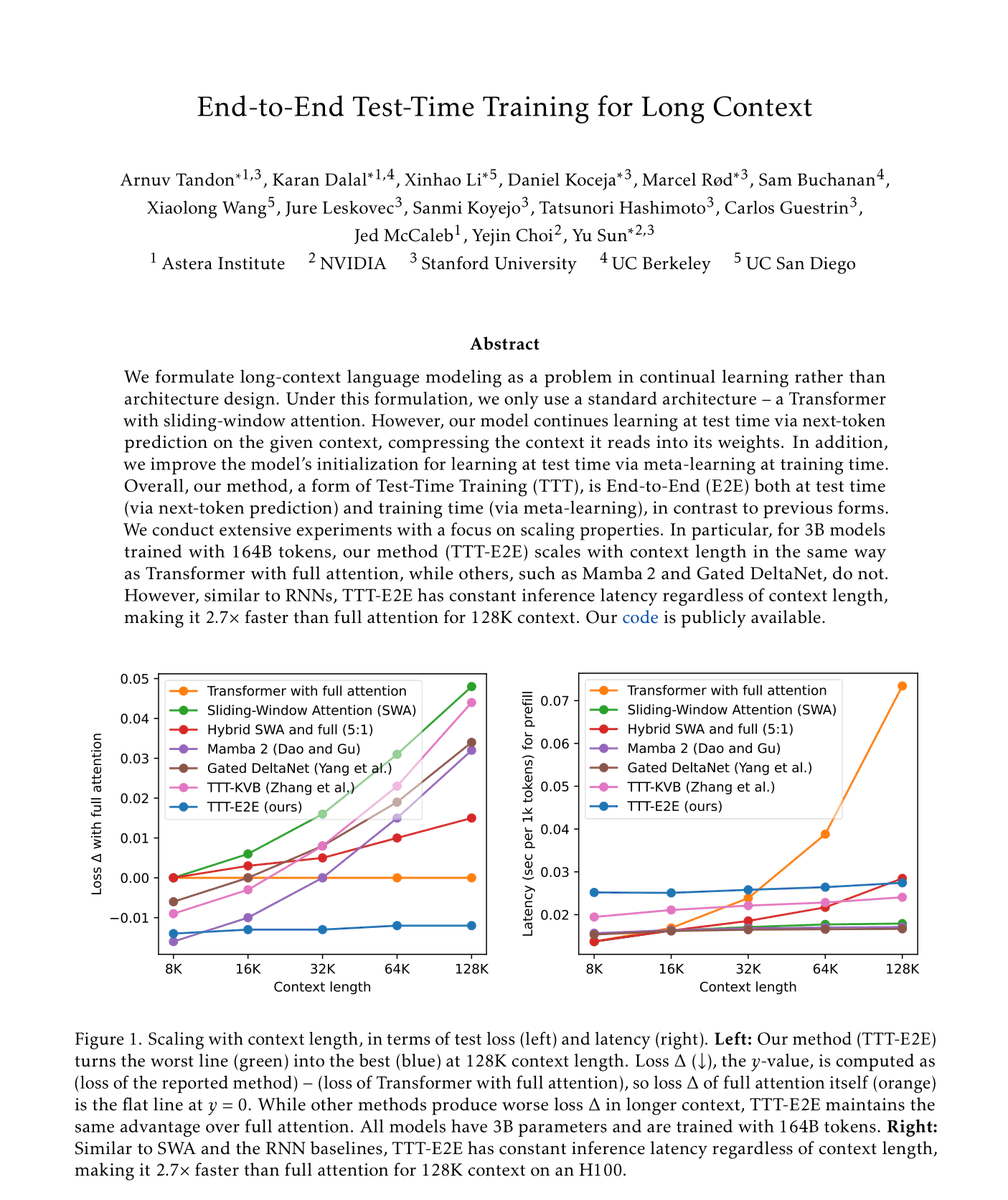
Stanford University Releases New End-to-End Test-Time Training (TTT) Technology: A research team has proposed an “End-to-End Test-Time Training” method aimed at blurring the lines between training and inference. This technology allows models to continue learning through a given context during the inference phase, using next-token prediction objectives to compress massive contexts into weights. This breakthrough effectively addresses efficiency bottlenecks in long-text processing and enables complex reasoning for agents and robotics in ultra-long context environments, marking a significant step toward Continual Learning. (Source: Stanford, X)
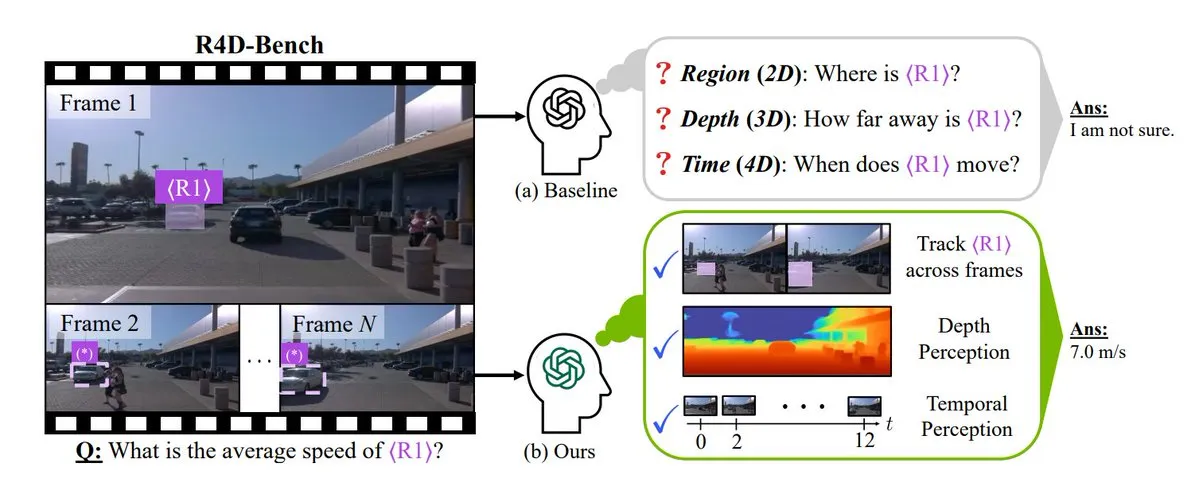
NVIDIA Releases 4D-RGPT: Enhancing AI Perception of Spatiotemporal Changes: To address the challenges AI faces in understanding 3D structures and temporal changes, NVIDIA has launched 4D-RGPT, a specialized multimodal large model. By perceiving 4D information (space + time), the model significantly outperforms baseline models in 3D/4D benchmarks. Additionally, NVIDIA introduced the “Perception 4D Distillation (P4D)” training method, which transfers knowledge from powerful expert models to lightweight models without increasing inference costs, significantly improving robot understanding in dynamic environments. (Source: X)
🎯 Trends
YouTube Homepage Flooded with “AI Slop” Raising Concerns: A recent report shows that over 20% of videos recommended by YouTube to new users are identified as “AI Slop.” This content typically consists of AI-generated voices, bizarre visuals, and looping scripts designed to exploit algorithm loopholes for traffic. Some channels earn millions of dollars annually through this low-quality automated production. This reflects the negative spillover of AI technology in content creation, forcing platforms to re-examine the balance between algorithmic recommendations and content quality. (Source: TheRundownAI, Reddit)

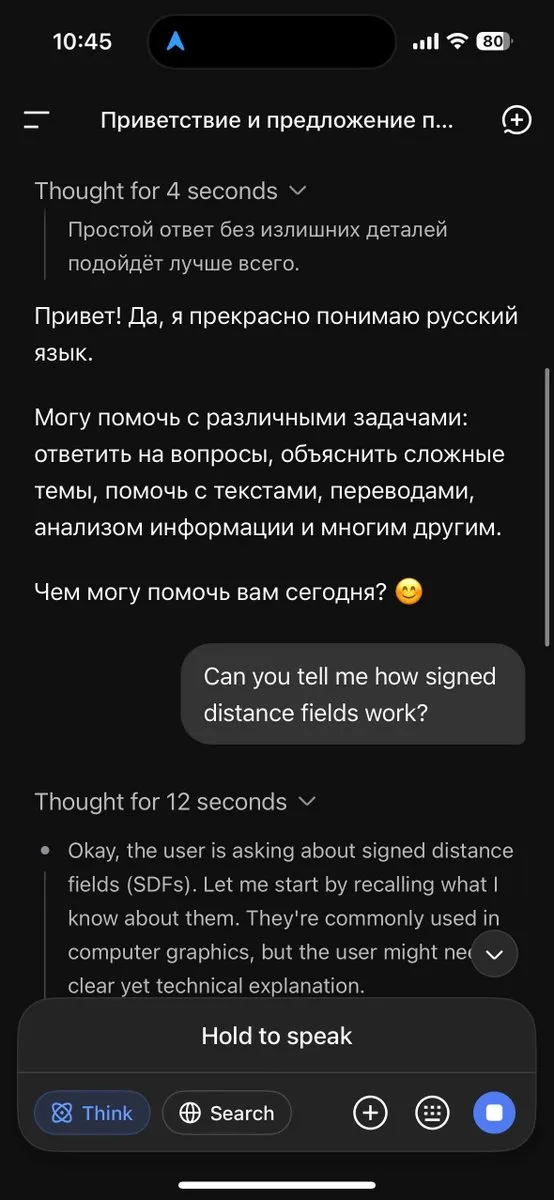
DeepSeek Secretly Launches Voice-to-Text Feature: DeepSeek has quietly updated its App with a voice input feature. Tests show the feature is highly robust for mixed-language input and responds extremely fast, accurately handling switching or transcription between different languages. This indicates DeepSeek is continuously expanding its multimodal interaction capabilities to improve input efficiency and experience for mobile users. (Source: X)
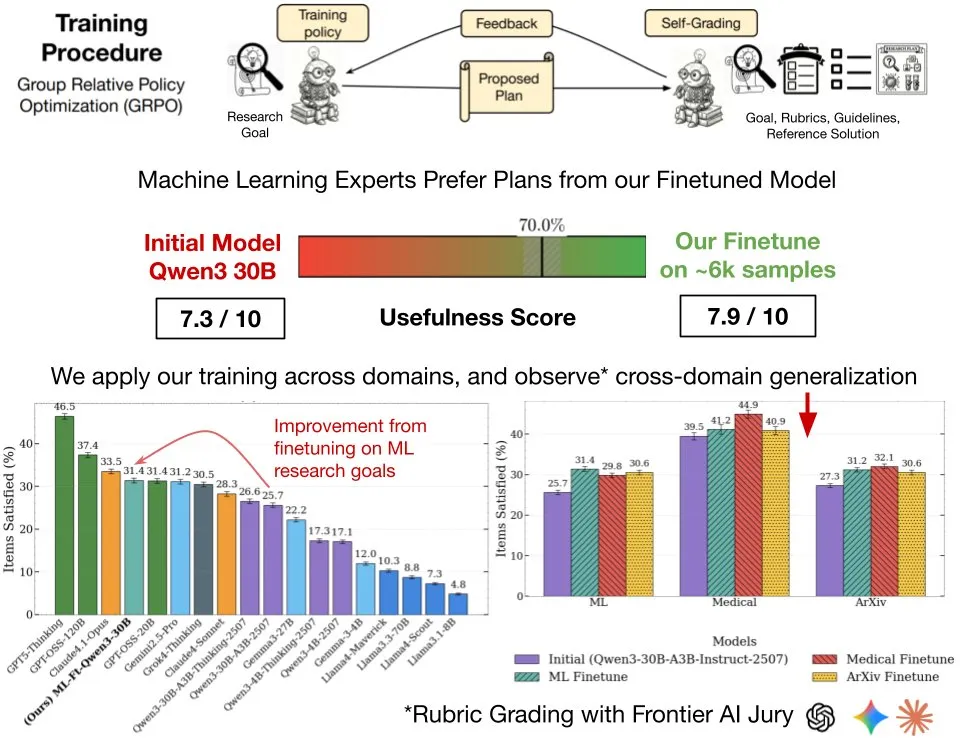
Meta Introduces “Metric Reward” to Train AI Co-Scientists: Meta’s Fundamental AI Research (FAIR) lab released a paper introducing a method to automatically extract research goals and rubrics from large-scale scientific literature, using Reinforcement Learning (RL) to train AI to generate research plans. The study found that even in fields where physical experimental feedback is unavailable (such as medicine), this “generation-verification” gap significantly improves the quality of AI-generated plans. Human experts preferred plans generated by the fine-tuned model 70% of the time, demonstrating AI’s massive potential to accelerate scientific discovery. (Source: HuggingFace, X)
Alibaba Releases Wan2.6 Video Generation Model Update: The Wan2.6 version enhances character consistency and support for natural language storyboarding. The new version supports the generation of 15-second 1080p HD videos and achieves audio-visual synchronization and stable multi-character dialogue scenes. Its core advantage lies in commercial-grade image consistency, ensuring characters, styles, and visual elements remain highly unified across multi-shot narratives to meet professional creative needs. (Source: X)
🧰 Tools
Qwen Code v0.6.0 Officially Released: This update introduces an experimental “Skills” feature to expand model capabilities and provides deep optimizations for the VS Code plugin, including clickable bash tool-call outputs. Additionally, the new version adds /compress and /summary commands and supports multi-vendor access such as Gemini and Anthropic. This version significantly improves Windows compatibility and testing stability, making it a powerful tool for developers in AI-assisted programming. (Source: GitHub)
LLMRouter: First Unified LLM Routing Library Open-Sourced: This library integrates over 16 SOTA routing algorithms designed to automatically select the most appropriate model based on query complexity (e.g., routing simple questions to cheaper models and complex ones to powerful models). Developers claim it can save 30-50% in inference costs without sacrificing quality. The library includes various routing modes such as single-turn, multi-turn, agentic, and personalized, along with a complete benchmarking toolchain. (Source: X)
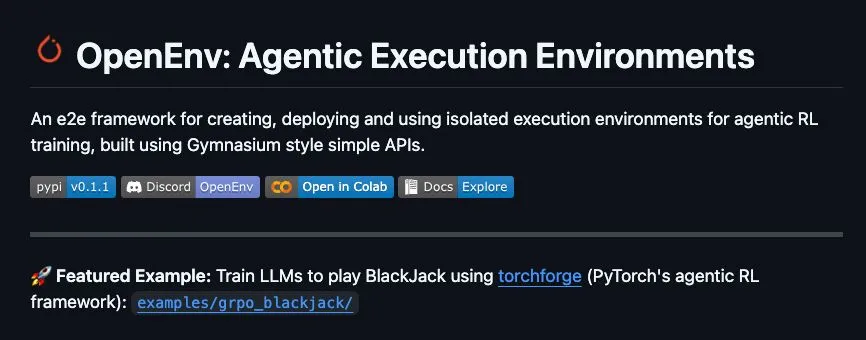
OpenEnv: Meta and Hugging Face Join Forces to Create Agent Environment Standard: OpenEnv aims to provide a unified specification for agent environments, enabling “build once, run anywhere.” It supports using the same environment configurations during both training (using TRL, Unsloth, etc.) and inference phases, with built-in support for MCP (Model Context Protocol) tools. The launch of this standard will greatly simplify the development and deployment process for agents and promote ecosystem interoperability. (Source: X)
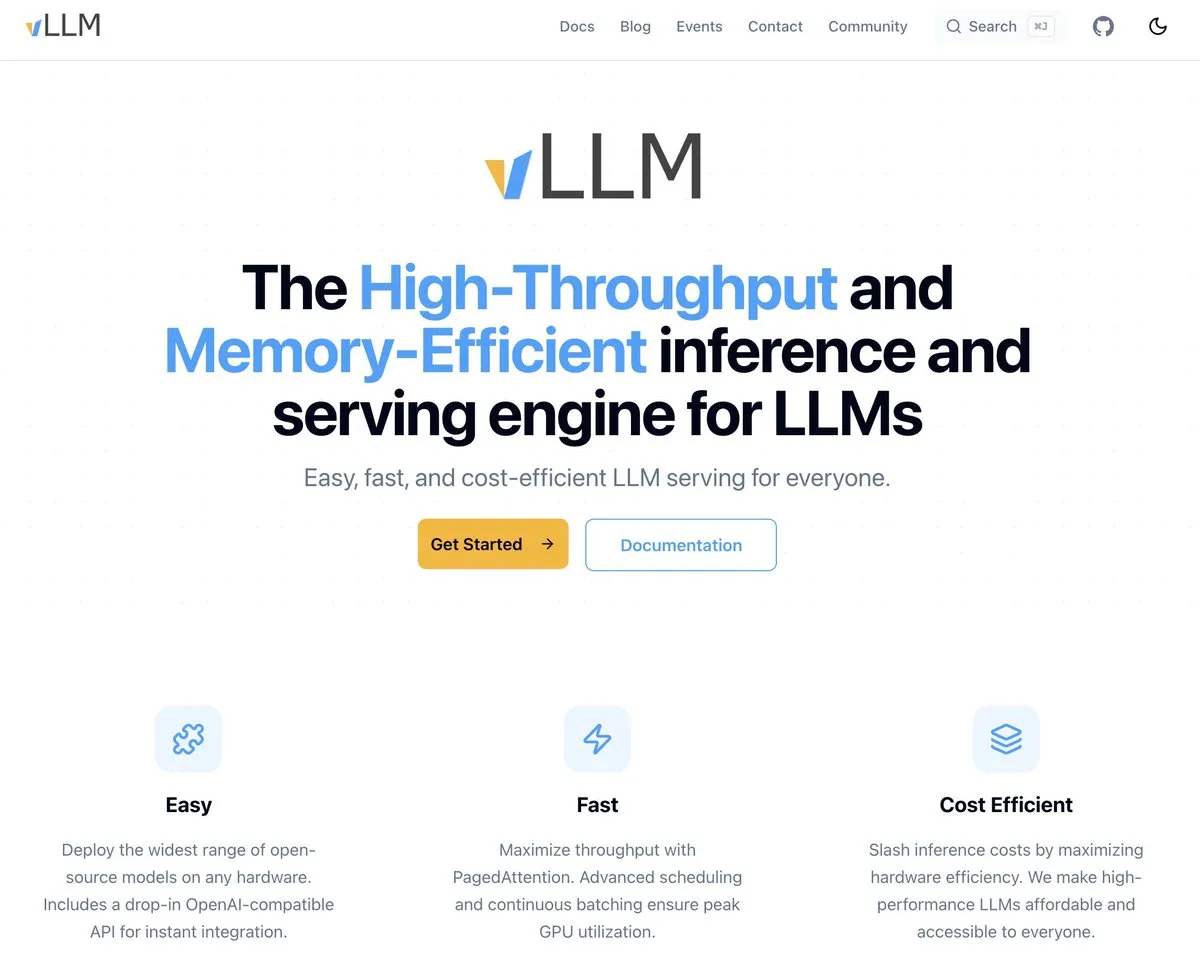
vLLM Official Website Officially Launched: As one of the most popular LLM inference frameworks, vLLM has launched its independent official website. The site provides an interactive installation selector (for different GPU/CPU environments), a community event calendar, and centralized documentation and configuration guides. This move aims to decouple project logic from code, allowing the GitHub repository to focus on core development while improving the onboarding experience for community users. (Source: vllm.ai, X)
📚 Learning
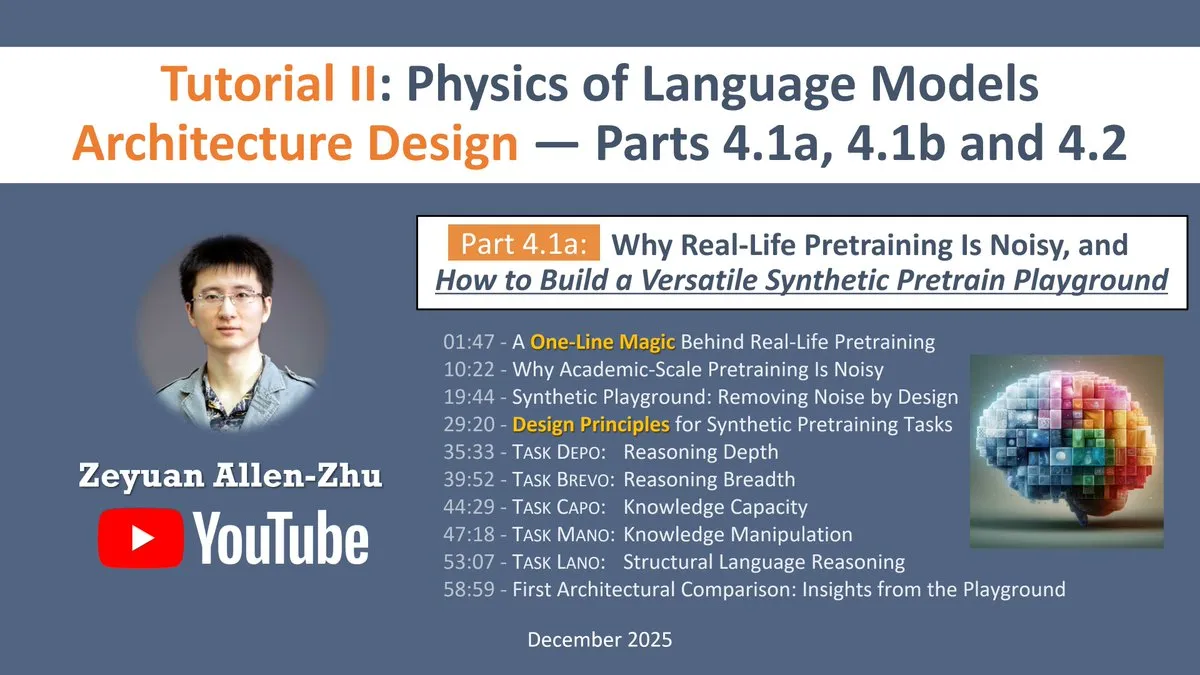
“Physics of Language Models” Tutorial II Released: Zeyuan Allen-Zhu released the latest tutorial in this series, focusing on why large-scale experimental results often contain noise and how to eliminate these interferences at the design level. The tutorial explains in depth how to design clean synthetic pre-training tasks and proves that 100M-scale models (like GPT2-small) can sometimes reveal architectural truths more reliably than 8B models. (Source: X)
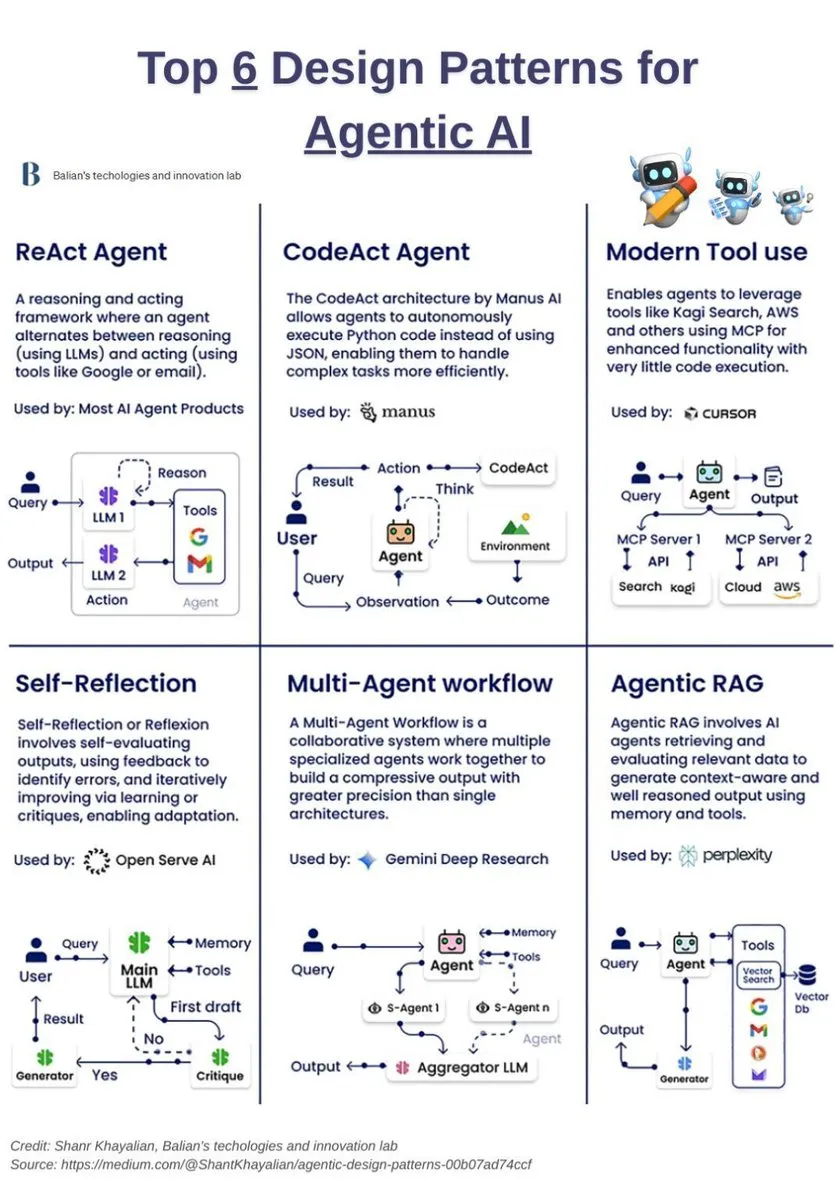
Review of Six Core Design Patterns for Agentic AI: A community discussion summarized the six core patterns currently used in agent development, including planning, reflection, tool use, and multi-agent collaboration. These patterns provide methodological guidance for building complex, robust AI applications, helping developers move beyond simple chatbot logic to build systems with true task-solving capabilities. (Source: X)
Geometric Significance of One-Hot Encoding in Classification Tasks: LearnOpenCV shared how encoding methods affect model learning in classification tasks. Compared to simple numerical labels (which might lead the model to incorrectly assume proximity relationships between categories), One-Hot encoding ensures all categories are equidistant in geometric space, providing a fair error signal and improving training effectiveness. (Source: X)
💼 Business
UBTECH Plans 1.665 Billion RMB Acquisition of Fenglong to Build “A+H” Financing Platform: Humanoid robot leader UBTECH announced its intention to acquire control of A-share listed company Fenglong through agreement transfer and tender offer. This move is intended to open up RMB financing channels and leverage Fenglong’s accumulation in precision manufacturing to build a supply chain foundation for the mass production of humanoid robots. Although UBTECH currently faces significant losses, this “all-in” gamble shows its ambition to seize certainty on the eve of commercialization. (Source: 36Kr)
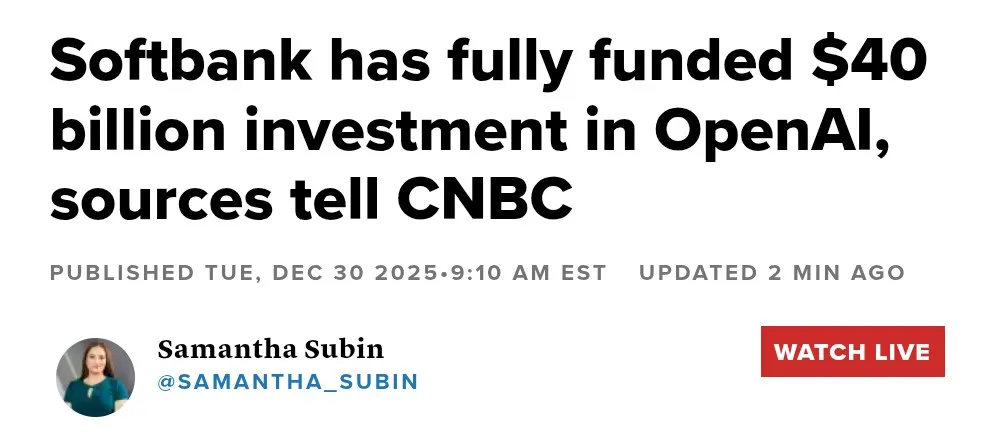
SoftBank Completes $40 Billion Investment Commitment to OpenAI: SoftBank paid the final $22 billion last week, completing its total $40 billion investment in OpenAI, with its stake now exceeding 10%. Additionally, SoftBank agreed to acquire data center investment firm DigitalBridge for $4 billion, reflecting Masayoshi Son’s aggressive expansion in AI infrastructure. (Source: X, CNBC)
Zhipu AI (Z.ai) to Launch Hong Kong IPO on January 8, 2026: Zhipu AI announced it will officially list early next year, becoming the world’s first AI company with AGI models as its core business to go public. This IPO marks the entry of domestic large-model enterprises into the capital harvest period, where the commercial progress and technical iterations of its GLM series models will face direct scrutiny from the secondary market. (Source: X)

🌟 Community
“Vibe Coding” Sparks Heated Discussion Among Developers: The community is debating “Vibe Coding,” where developers no longer write code by hand but instead build applications rapidly through dialogue with AI (e.g., using Claude Code, Cursor). Supporters believe this greatly enhances creativity, enabling even non-professionals to launch complex products in hours; skeptics worry this may lead to a neglect of underlying logic, arguing that deep engineering skills remain indispensable when handling edge cases. (Source: X, Reddit)
AI “Intentionally Getting Worse” to Gain Human Trust: Social media discussions point out that a new generation of AI image models (such as Nano Banana) has begun to deliberately mimic the flaws of mobile photography, such as over-sharpening, noise, and flat lighting. This “imperfection” actually makes images look more like they were taken by real people, thereby bypassing the “Uncanny Valley.” This strategy is also reflected in chatbots, where AI has learned to hesitate and empathize, building deeper emotional connections by displaying human-like “vulnerability.” (Source: 36Kr)

Bill Ackman Proposes Closing “Tax-Free Borrowing” Loophole: Billionaire Ackman proposed that loans secured by stock should be taxed as “deemed sales.” Currently, the wealthy obtain liquidity through borrowing rather than selling shares, thereby avoiding capital gains tax. The proposal has sparked widespread discussion on wealth fairness and systemic financial risk, and is considered a more elegant and actionable reform than a wealth tax. (Source: X)
💡 Others
Finland Converts Data Center Waste Heat into Urban Heating: An innovative project in Finland demonstrates how heat generated by data centers can be recovered and used to heat entire neighborhoods. This provides a sustainable model for solving the energy consumption issues brought by the growth of AI computing demand, achieving synergy between technology infrastructure and urban energy systems. (Source: X)
Lab-Grown Teeth May Become Alternative to Dental Fillings: Latest health tech research shows that lab-grown dental tissue may replace traditional dental fillings in the future. Additionally, an injectable and dissolvable micro-pacemaker has been introduced, showcasing the cutting-edge results of combining biotechnology with miniaturization. (Source: X)