
🔥 Focus
NVIDIA Releases Vera Rubin Architecture and Alpamayo Model: Jensen Huang announced at CES 2026 that the “ChatGPT moment for physical AI” has arrived. The next-generation Rubin architecture includes six co-designed chips, delivering 5x the inference performance of Blackwell at 1/10th the cost, and is now in full production. Simultaneously, Alpamayo was launched as the world’s first open-source autonomous driving inference model, introducing a Vision-Language-Action (VLA) chain-of-thought that explains decision logic like a human. This marks NVIDIA’s transformation from a pure compute provider to a physical intelligence infrastructure provider, attempting to solve the long-tail problems of autonomous driving through “inference-driven” approaches. (Source: nvidia, 36Kr)

AMD Partners with Li Fei-Fei on “Spatial Intelligence” and Helios Platform: Lisa Su showcased the Helios rack platform at CES, designed for Yotta-scale computing, integrating 72 MI455 GPUs per rack with a compute capacity of 2.9 Exaflops. Li Fei-Fei appeared as CEO of World Labs, emphasizing that AI must move from language intelligence to world models with spatial understanding. World Labs’ world models have achieved a 4x inference boost on AMD platforms, capable of reconstructing a single photo into an interactive 3D space. This move demonstrates AMD’s full-stack ambitions in cloud computing, enterprise deployment, and spatial intelligence, directly challenging NVIDIA’s dominance. (Source: AMD, 36Kr)

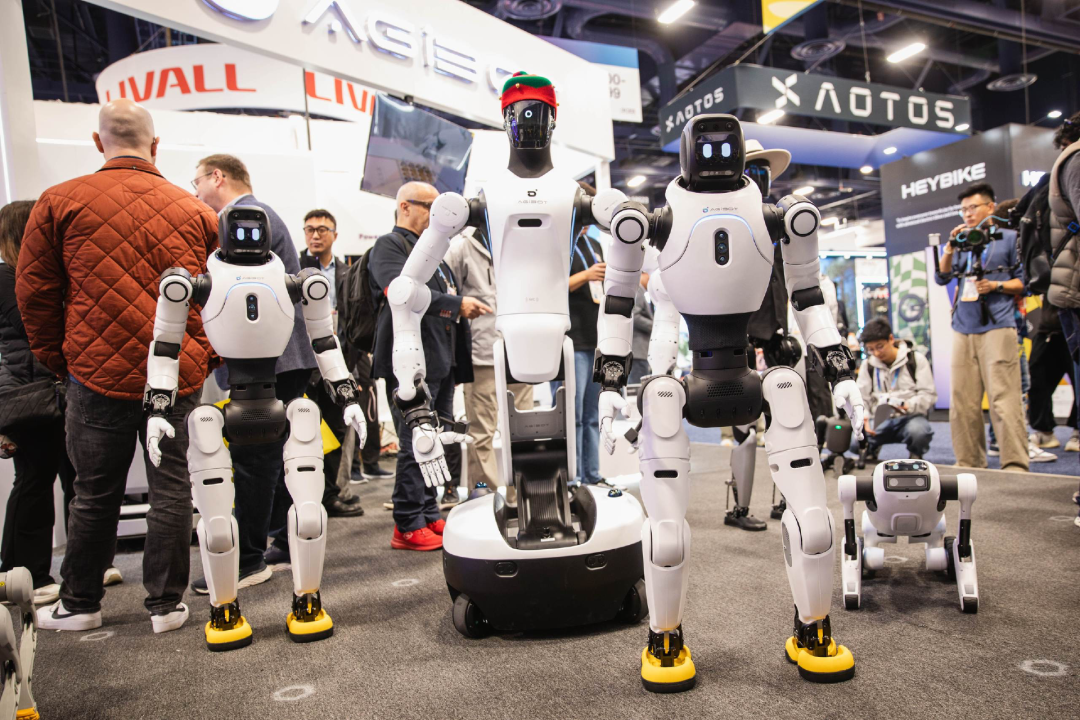
Boston Dynamics Atlas Production Version Enters Hyundai Factories: The all-electric Atlas humanoid robot officially debuted at CES 2026 and announced it is “entering the workforce.” The new Atlas features 56 degrees of freedom and fully rotating joints, capable of lifting 50kg with one hand and possessing tactile sensing. Hyundai plans to deploy it on a large scale at its Georgia factory starting in 2028 for tasks like parts sorting. Meanwhile, Chinese robot contingents such as Unitree and Agibot exhibited en masse, demonstrating high delivery speeds and scenario adaptability, signaling that humanoid robots are moving from lab demos to industrial mass production. (Source: 36Kr, iFeng Tech)
Andrew Ng Proposes New “Turing-AGI Test” Standard: Andrew Ng suggested moving away from pure text chat tests to measuring AI’s ability to perform economically useful work. The new test requires AI to complete multi-day work tasks (such as customer service training and operations) on a computer equipped with the internet, a browser, and Zoom, acting like a remote employee. He believes current public benchmarks (like GPQA) suffer from severe over-optimization (benchmark gaming), and the “Turing-AGI Test” could effectively burst the industry bubble and recalibrate societal expectations of real AI capabilities. (Source: AndrewYNg, dotey)

🎯 Trends
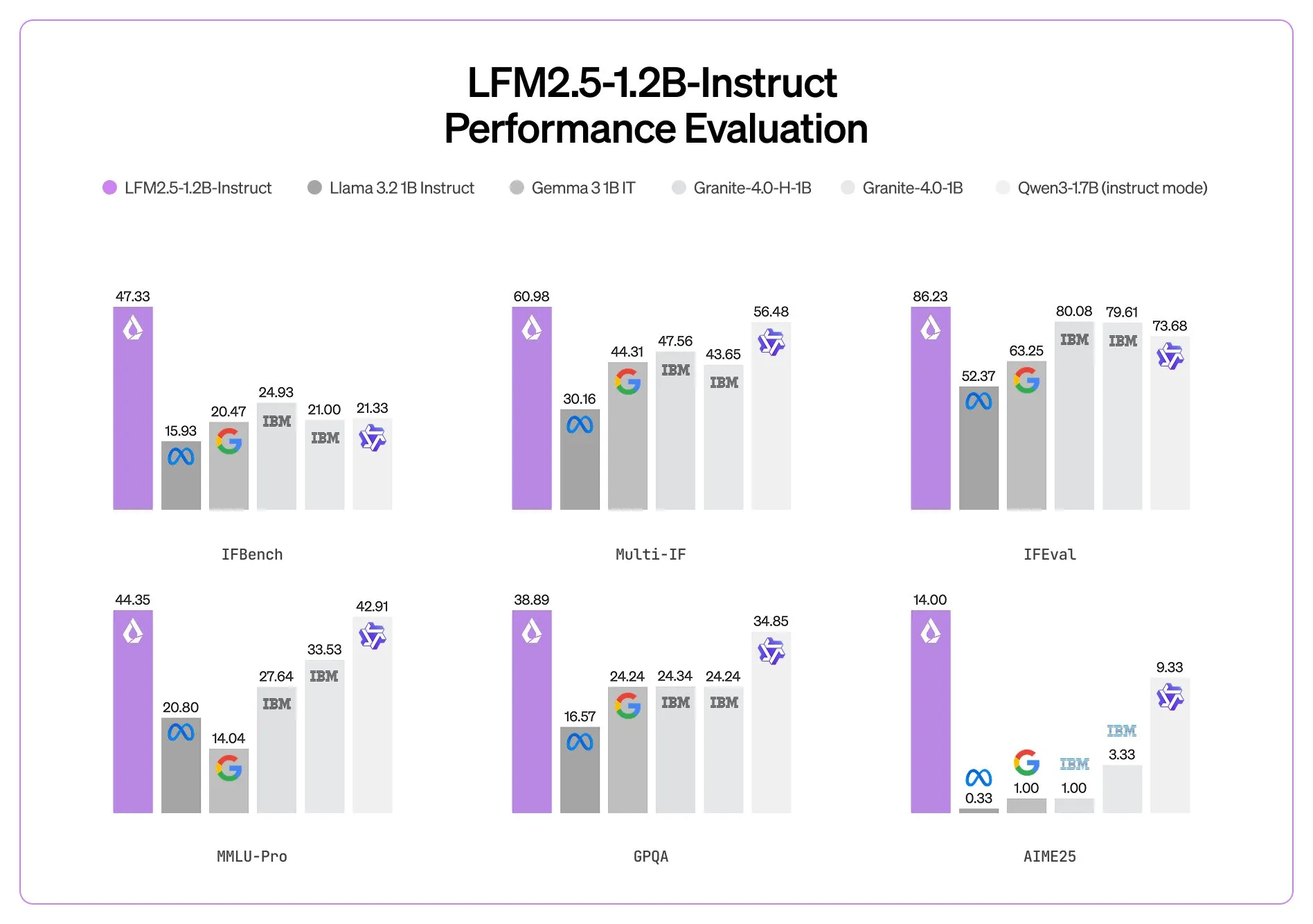
Liquid AI Releases LFM 2.5 Series Edge Models: Liquid AI introduced LFM 2.5 with 1.2 billion parameters, focusing on edge agent applications. The model processes 28k tokens in less than 6 seconds on an M5 chip laptop, exceeding 5000 tok/s. The LFM 2.5-Audio version supports real-time Automatic Speech Recognition (ASR) and Text-to-Speech (TTS), running locally with end-to-end speech processing to reduce information loss from traditional pipelines, making it an ideal choice for edge AI hardware. (Source: awnihannun, Liquid AI)
Recursive Language Models (RLM) Spark Research Craze: A Stanford research team proposed the RLM framework, which significantly improves the ability to handle ultra-long requests by externalizing prompts as symbolic objects and allowing models to perform recursive tool calls. Community discussions suggest that all future LLMs should have symbolic access to their prompts. This method has seen preliminary practice in tools like Claude Code and is viewed as a key path to solving integrity issues under LLM semantic load. (Source: lateinteraction, _akhaliq)
Scaling Law Controversy and the Shift to Inference Compute: The industry is undergoing an S-curve transition from pre-training compute to inference/research compute. Sara Hooker noted that the relationship between training compute and performance is changing, suggesting the era of simply stacking parameters may be over, while Ilya Sutskever previously mentioned a return to the “age of research.” Community views suggest that compute gains haven’t disappeared but have shifted to Reinforcement Learning (RL) and test-time compute. (Source: sarahookr, teortaxesTex)
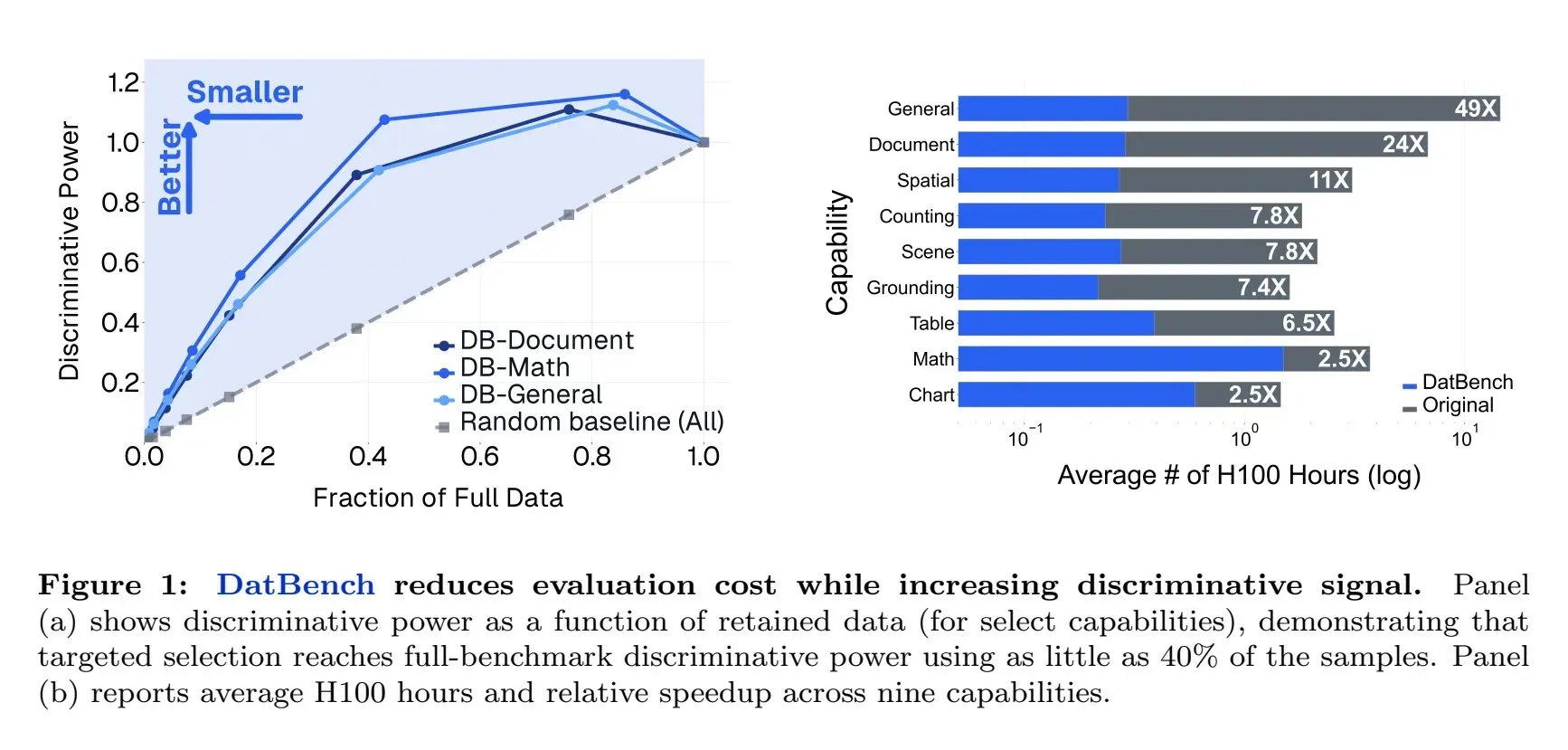
DatologyAI Releases VLM Benchmark DatBench: Addressing noise issues in current Multimodal Model (VLM) evaluations, researchers found that 70% of samples could be solved without looking at the image, and 42% had labeling errors. DatBench improves signal quality for distinguishing model capabilities by removing blind-solvable samples and changing multiple-choice questions to generative formats, reducing evaluation compute by over 10x. (Source: code_star, BlackHC)
🧰 Tools
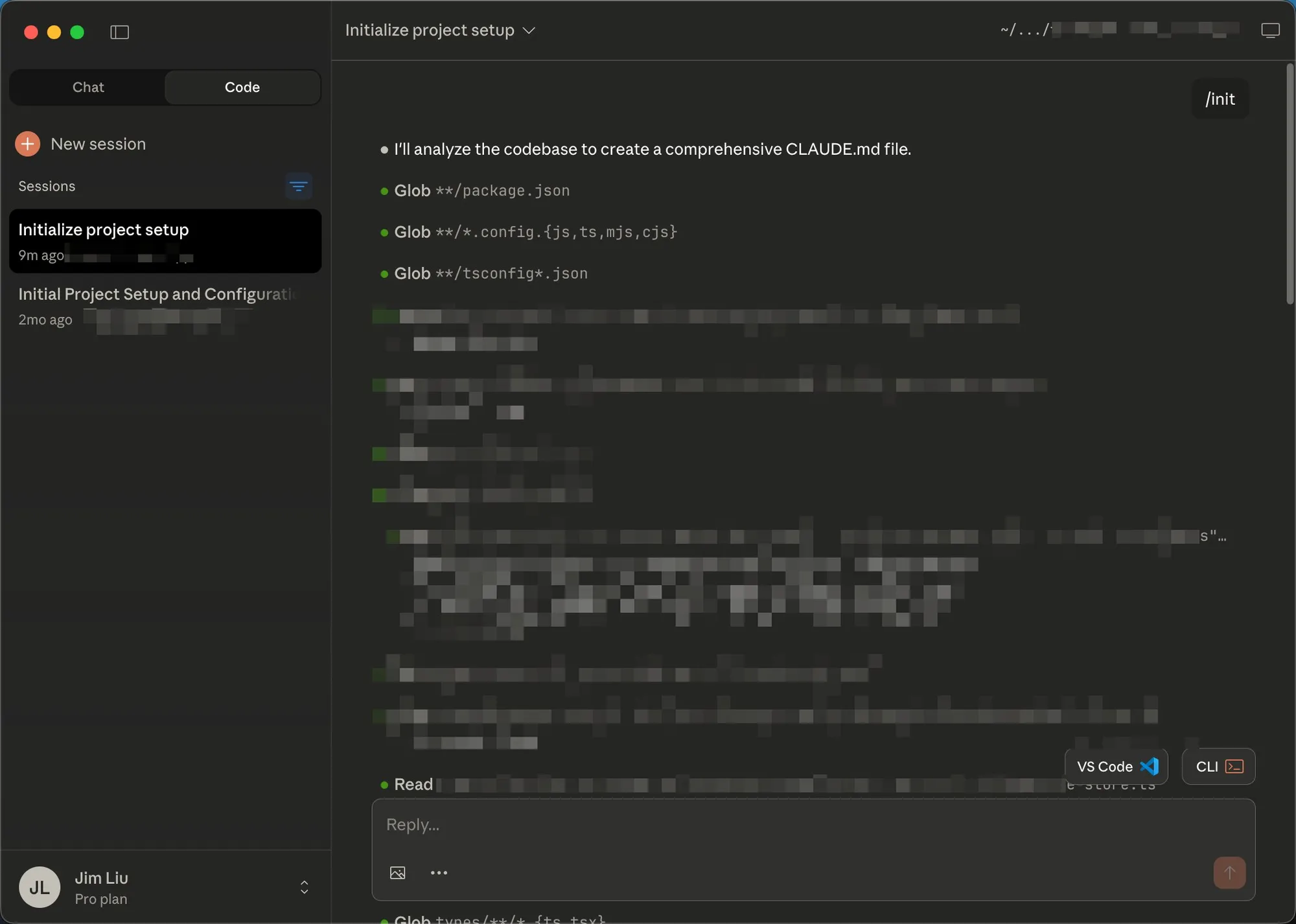
Deep Integration of Claude Code and Claude Desktop: Anthropic’s Claude Code is now integrated into the desktop version, supporting local file access and code writing. Developers have called it the “best programming tool used so far,” capable of automatically handling complex OpenGL shader writing and cross-language plugin integration. Its “Agent Skills” open standard allows AI to load new capabilities modularly, much like learning Pokemon skills, significantly reducing context usage. (Source: c_valenzuelab, 36Kr)
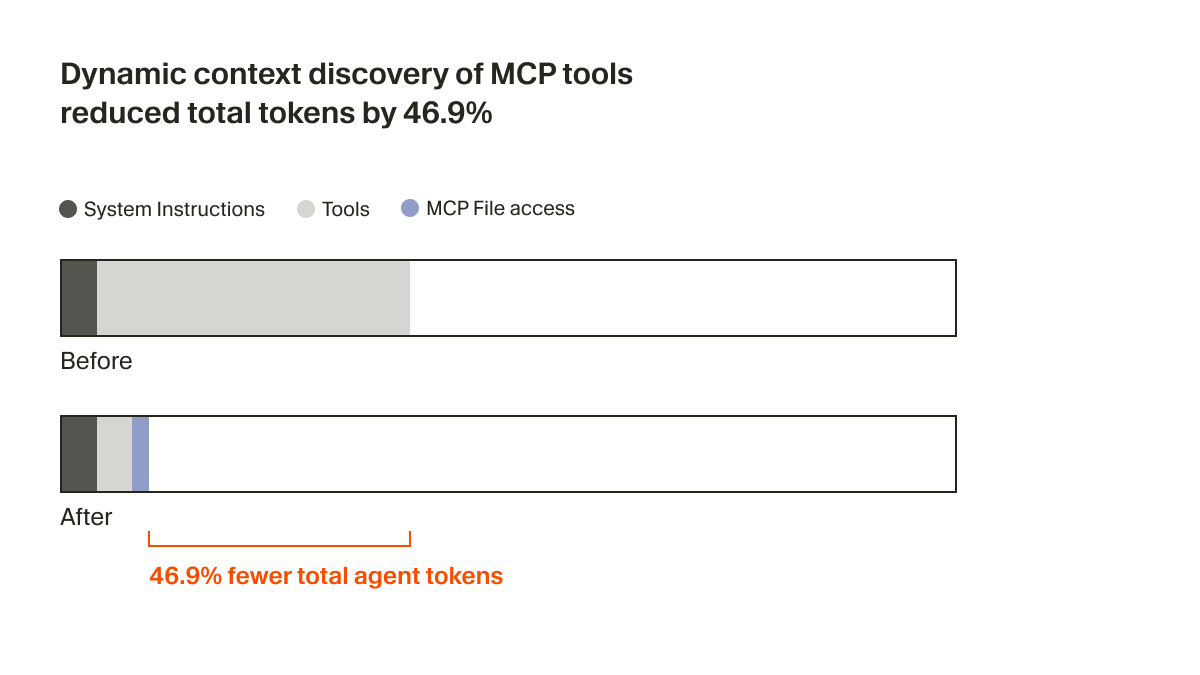
Cursor Launches Dynamic Context Discovery: Cursor Agent now supports dynamic context management, reducing Token consumption by 46.9% when using multiple MCP servers by intelligently filling context rather than full stacking. This “file system as everything” model exposes complex dependencies directly to the AI, greatly enhancing the Agent’s efficiency in handling large-scale codebases. (Source: hwchase17, imjaredz)
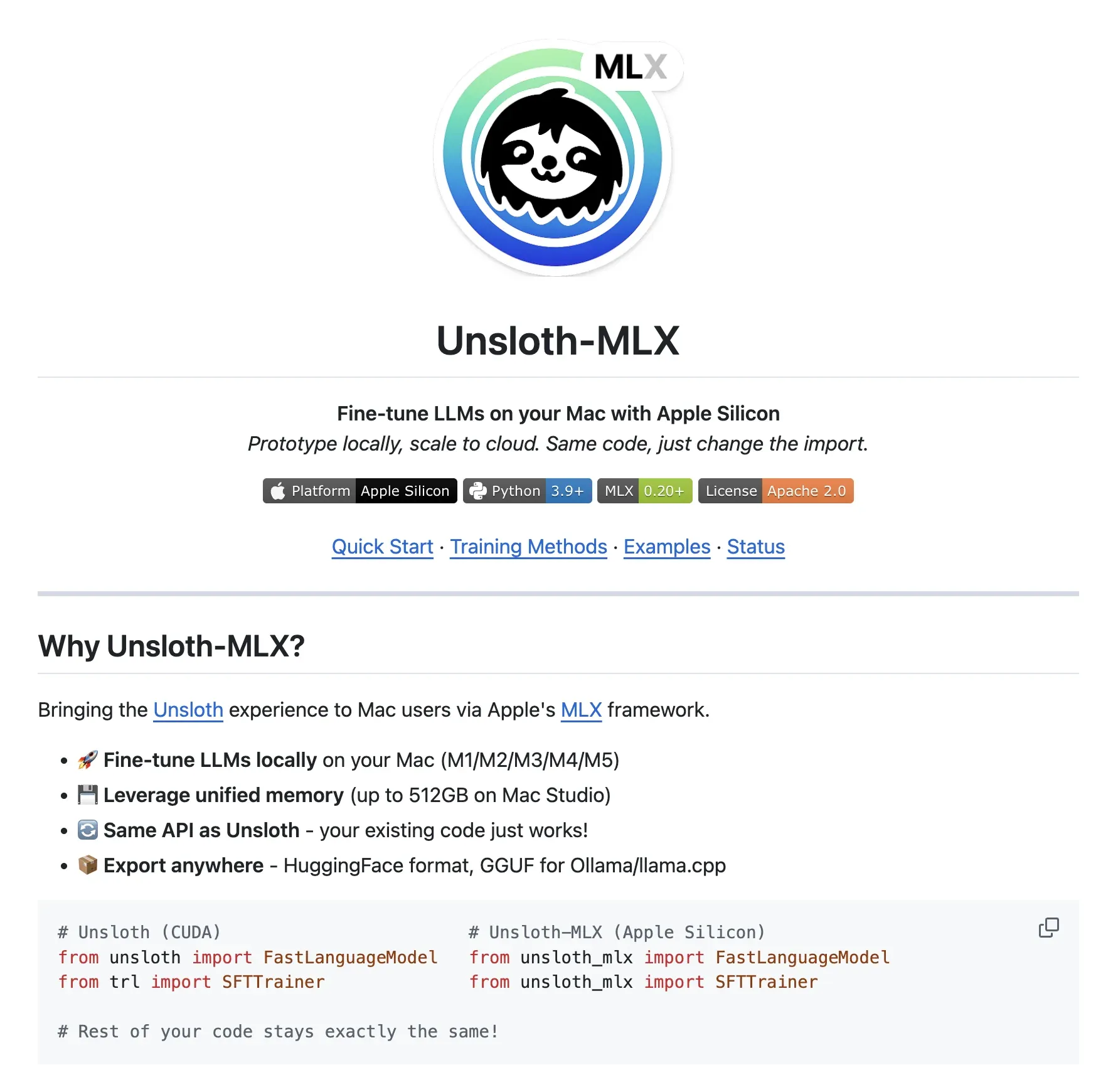
Unsloth-MLX Supports LLM Fine-tuning on Mac: Unsloth released the MLX version, allowing Apple Silicon users to utilize Mac’s unified memory for local fine-tuning. The tool maintains an API consistent with the original version and supports SFT, DPO, and GRPO training, with direct GGUF export after training. This provides developers with a low-cost local prototyping environment. (Source: karminski3, LocalLLaMA)
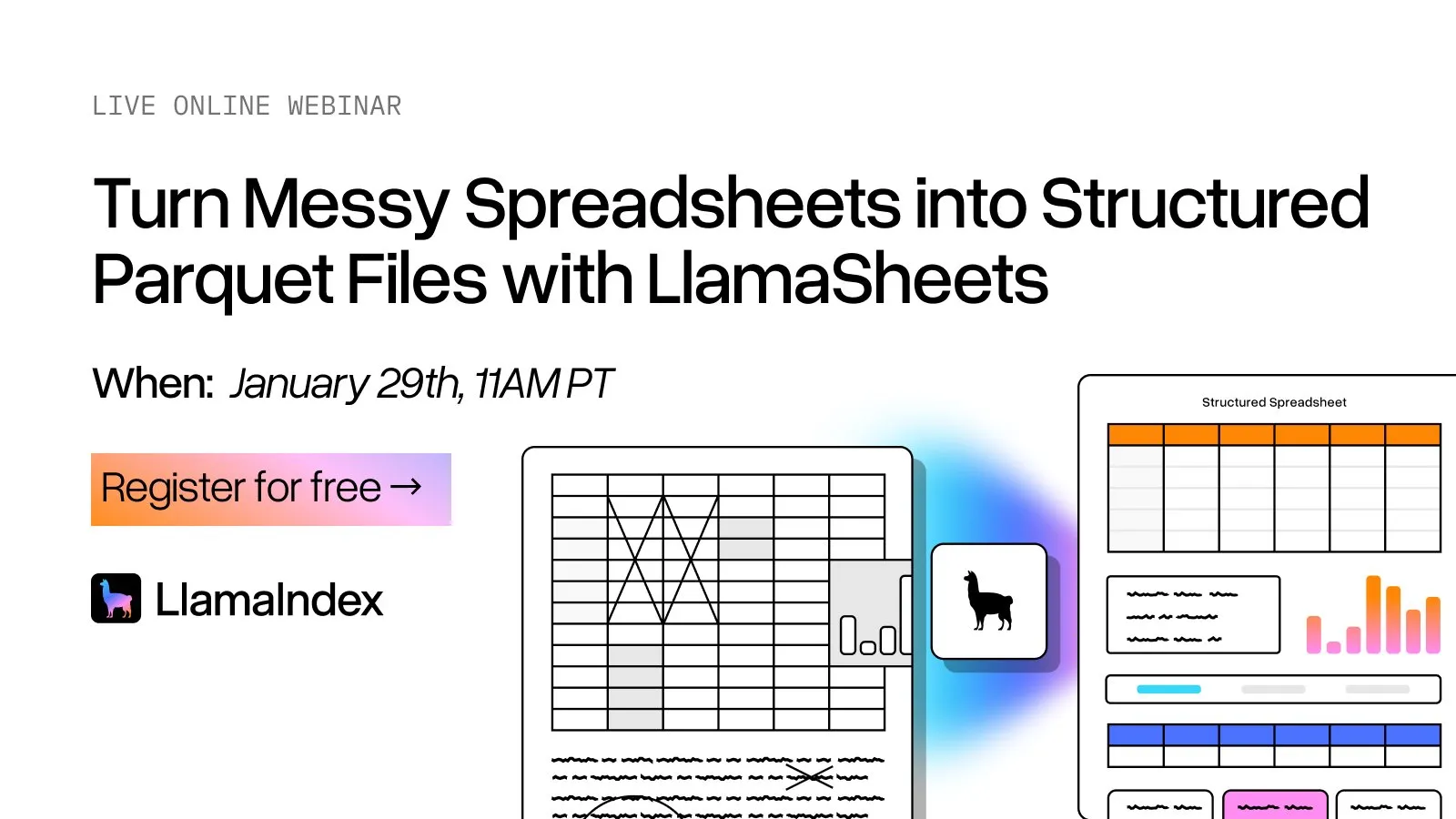
LlamaSheets: AI Processing for Excel Files: LlamaIndex launched LlamaSheets, which can parse complex spreadsheets while preserving the semantic context of merged cells and multi-level headers, converting them into structured Parquet files. The tool supports building Agents specifically for financial analysis and budget parsing, solving the problem of hierarchy loss in traditional parsing tools. (Source: jerryjliu0)
ADHD Assistive AI Tools: PlanCoach and Snowball: Targeting the “difficulty starting” pain point of ADHD patients, developers are using AI to break down vague tasks into extremely fine-grained execution steps. PlanCoach supports voice interaction and role-playing (e.g., Wu Jing telling you to memorize words), while “Snowball” focuses on single-step feedback and energy management. These applications demonstrate AI’s huge potential in personalized mental health and productivity enhancement. (Source: 36Kr)

📚 Learning
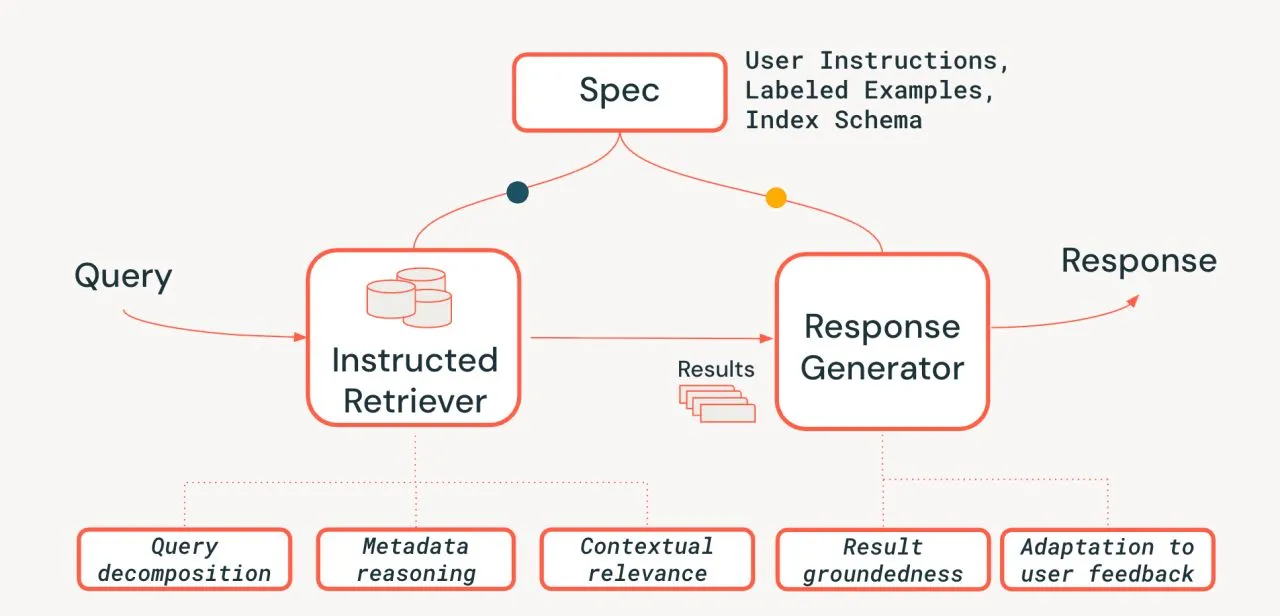
Databricks Releases Instructed Retriever Architecture: This research proposes a new retrieval architecture that propagates full system specifications to every stage of the search pipeline. Compared to traditional RAG, it improves retrieval recall by 35-50% and end-to-end answer quality by 70%. This approach allows small, efficient models to possess system-level reasoning capabilities, a key technical breakthrough for enterprise Agent implementation. (Source: matei_zaharia, Michael Bendersky)
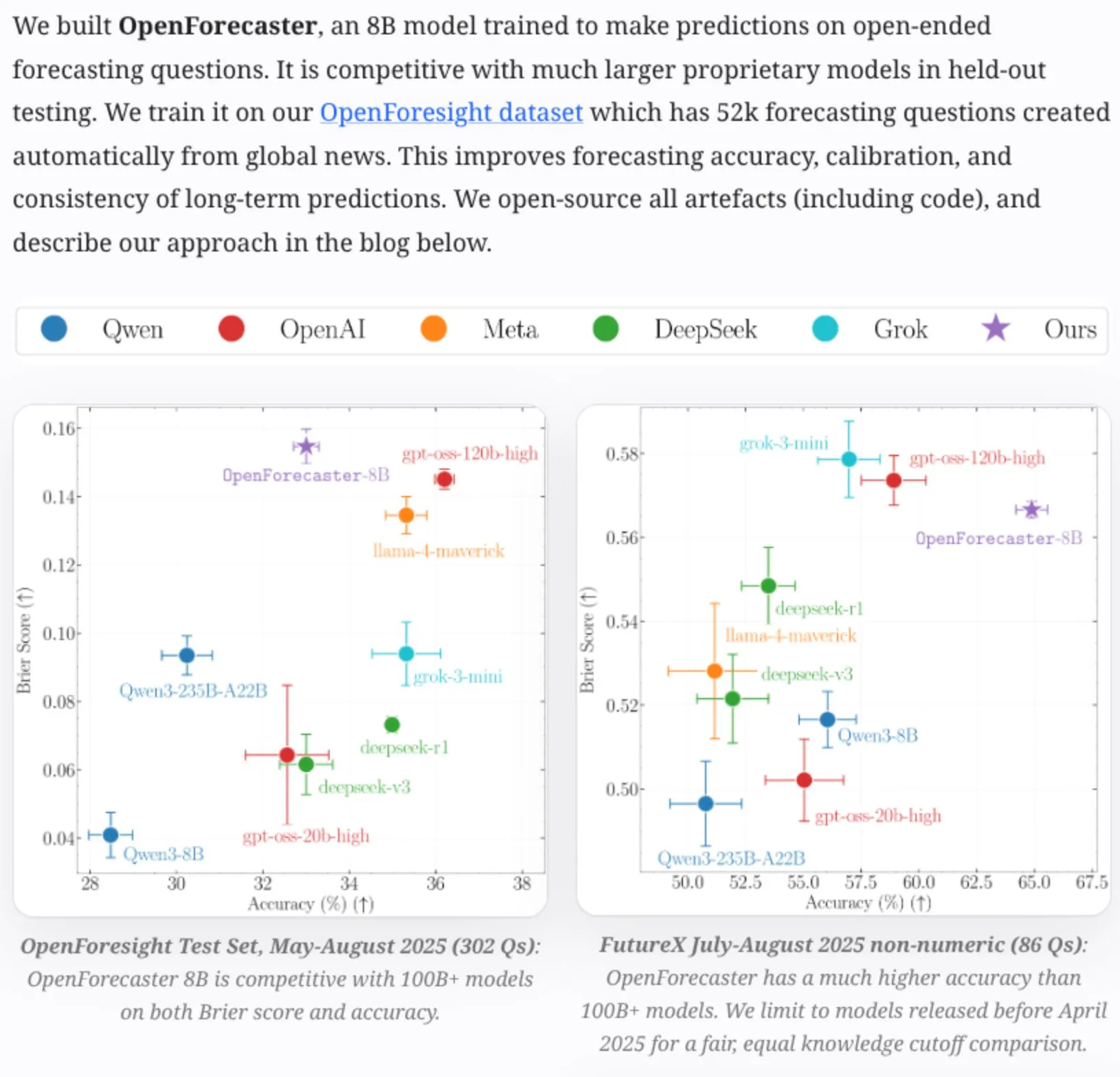
OpenForecaster: Open-Source Open-Ended Prediction Model: Nous Research released the OpenForesight dataset containing 52,000 synthetic open-ended prediction tasks and the OpenForecaster-8B model. Trained via GRPO-style reinforcement learning, the model not only reaches frontier levels in prediction accuracy but also generates detailed argumentative essays to quantify uncertainty, viewed as a significant step toward a “General Oracle.” (Source: _rockt, aiamblichus)
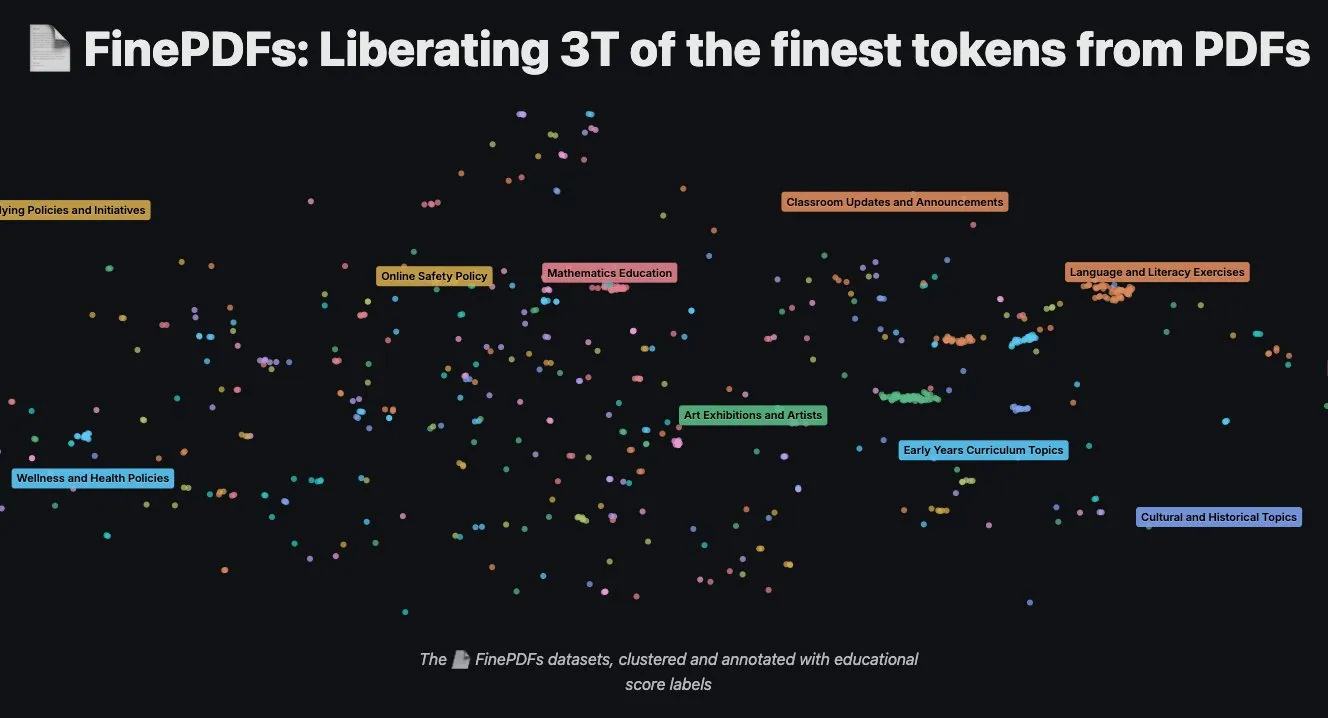
FinePDFs: An Encyclopedia for PDF Data Processing: Researchers released an ebook on building SOTA PDF datasets, covering OCR selection (e.g., RolmOCR), processing old internet data, and extracting high-quality training corpora from PDFs. This is highly valuable for teams needing to process massive documents and build vertical-domain LLMs. (Source: BlackHC, lvwerra)
💼 Business
xAI Completes $20 Billion Series E Funding: Elon Musk’s AI company, xAI, has raised another massive round of funding, with its valuation climbing significantly. The funds will be used to train Grok 5, expand the Colossus supercomputing cluster, and launch innovative consumer and enterprise products to reshape life and work. Musk even applied for the “Macrohard” trademark to mock Microsoft and showcase his ambition for automated software development. (Source: dejavucoder, 36Kr)
Mobileye Acquires Humanoid Robot Company Mentee for $900 Million: Autonomous driving giant Mobileye announced the acquisition of Mentee Robotics, founded by its CEO, aiming to integrate autonomous driving AI training infrastructure with the physical intelligence of humanoid robots. This move marks Mobileye’s formal entry into the “Physical AI” field, with its Robotaxi plan set to enter the US market in Q3 this year. (Source: 36Kr)
LMArena (Arena) Raises $150 Million: The famous model arena platform LMArena completed its Series A funding with a valuation exceeding $1.7 billion. Its user base has grown 25x in the past 7 months, with annualized revenue surpassing $30 million. The company will use the funds to expand its multimodal evaluation framework to address reliability and trust issues in AI deployment. (Source: arena, swyx)

🌟 Community
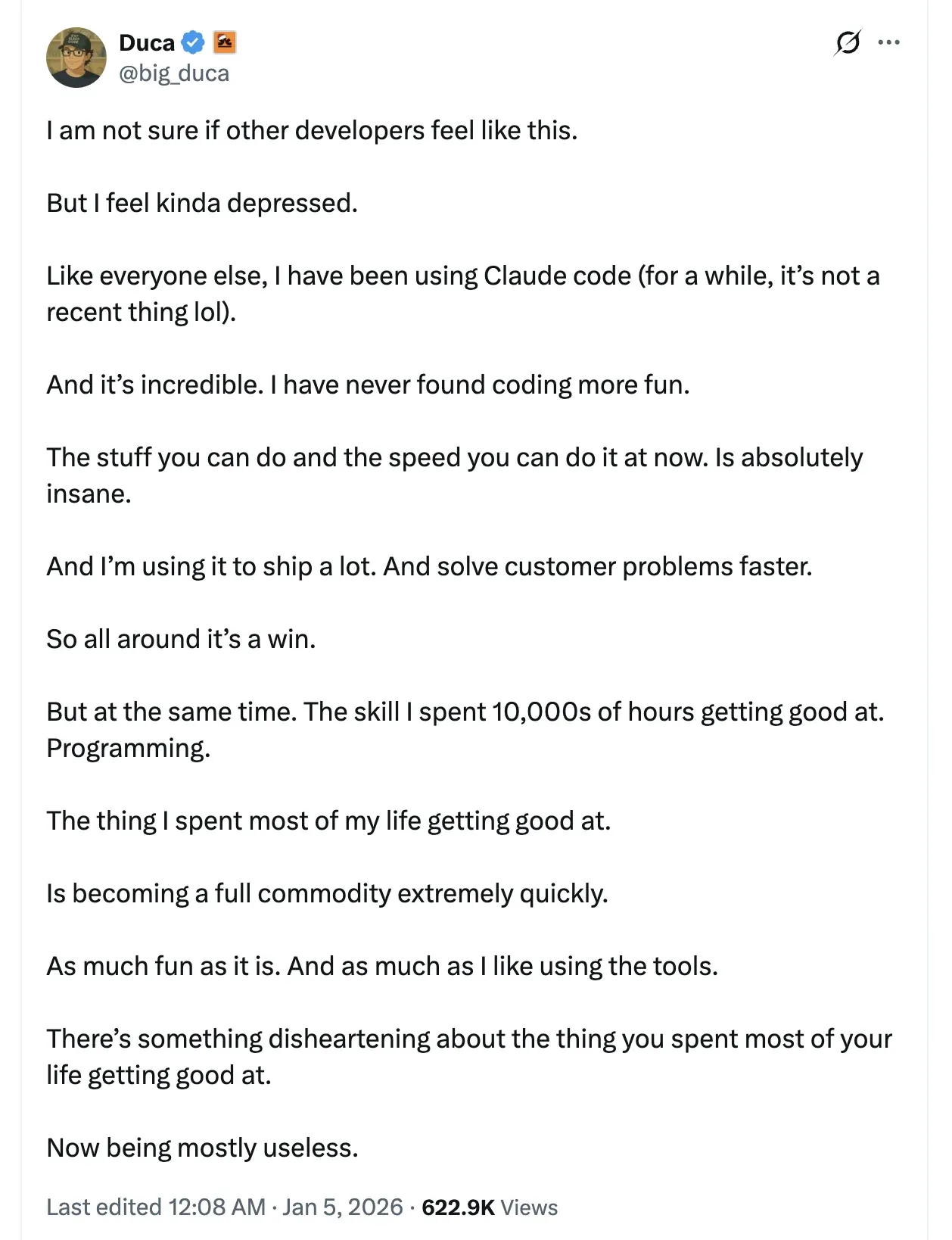
“Vibe Coding” Triggers Developer Identity Crisis: With the popularity of Claude Code and Replit Agent, many non-professionals are completing weeks of work in hours by “describing a vision” rather than “writing logic.” The community is divided: some see it as a liberation of productivity, while others are in an existential crisis, believing programming is shifting from an exclusive skill to cheap infrastructure. (Source: amasad, Reddit r/ClaudeAI)
AI Enters the “Ecosystem Backing” Era: Giant Advantages Emerge: Social media is buzzing with discussions that AI competition has shifted from technical revolution to power games. Google Gemini, ByteDance Doubao, and Tencent Yuanbao are quickly overtaking pioneers by leveraging system-level entry points and massive traffic. Independent AI apps (like Manus) face pressure to be acquired or marginalized due to a lack of system permissions and supply chain support. (Source: 36Kr)
Ralph Wiggum Prompting Technique Goes Viral: A prompting technique called “Ralph Wiggum” is spreading through the community. By making the AI constantly self-reflect and loop during the reasoning process, it can autonomously solve extremely complex logical puzzles. This “let AI run forever” model is believed to hold immense commercial value. (Source: Vtrivedy10, imjaredz)

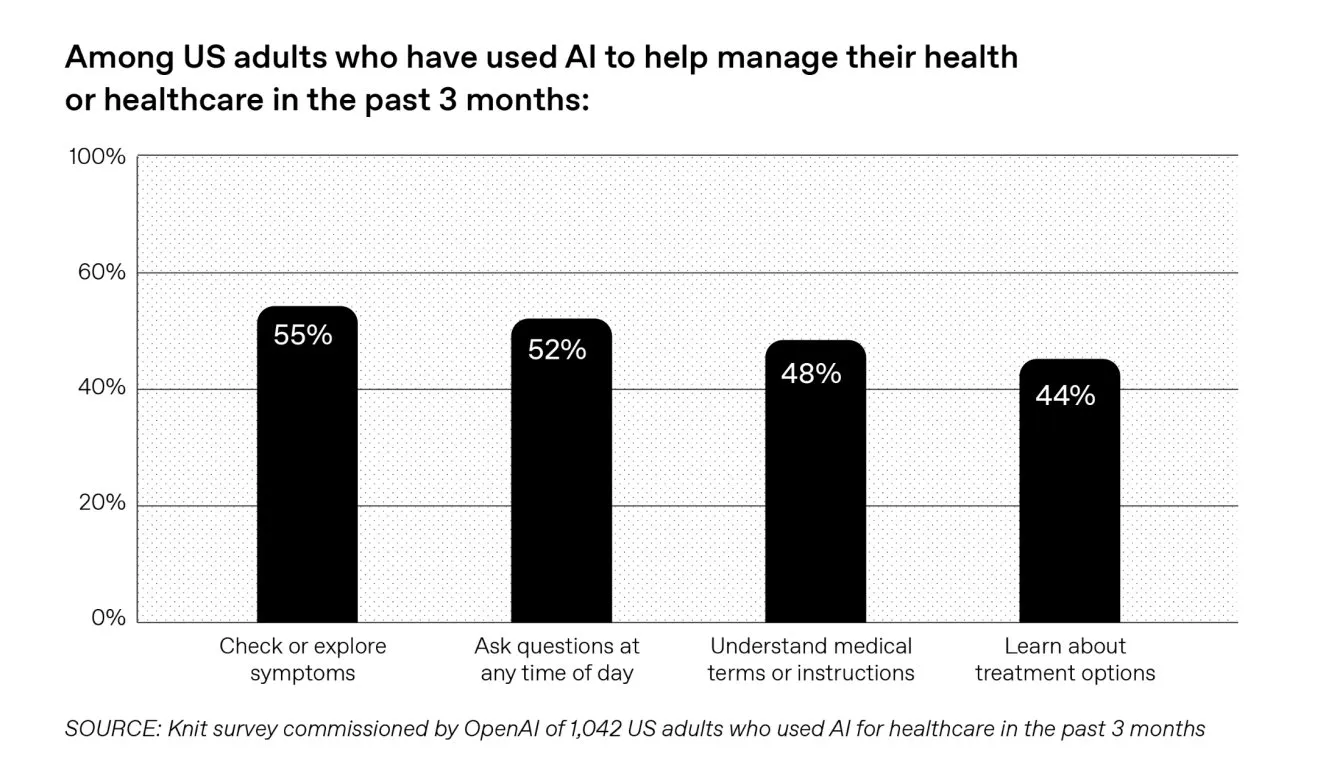
Explosive Growth of AI in Medical Consultations: An OpenAI report shows that over 5% of ChatGPT messages are medical-related, and 25% of active users consult on health issues. During times of medical resource scarcity or hospital closures, AI has become the “first-line doctor” for many. This has sparked deep discussions about AI diagnostic accuracy and legal liability. (Source: gdb)
💡 Others
Grok Mired in “Nude” and Child Imagery Controversy: xAI’s Grok model was exposed for being able to generate sexualized images of non-consenting women and children due to a lack of safety guardrails, drawing attention from global regulators. This reflects the intense conflict between pursuing “absolute freedom of speech” and AI ethical safety. (Source: TheRundownAI, BlackHC)
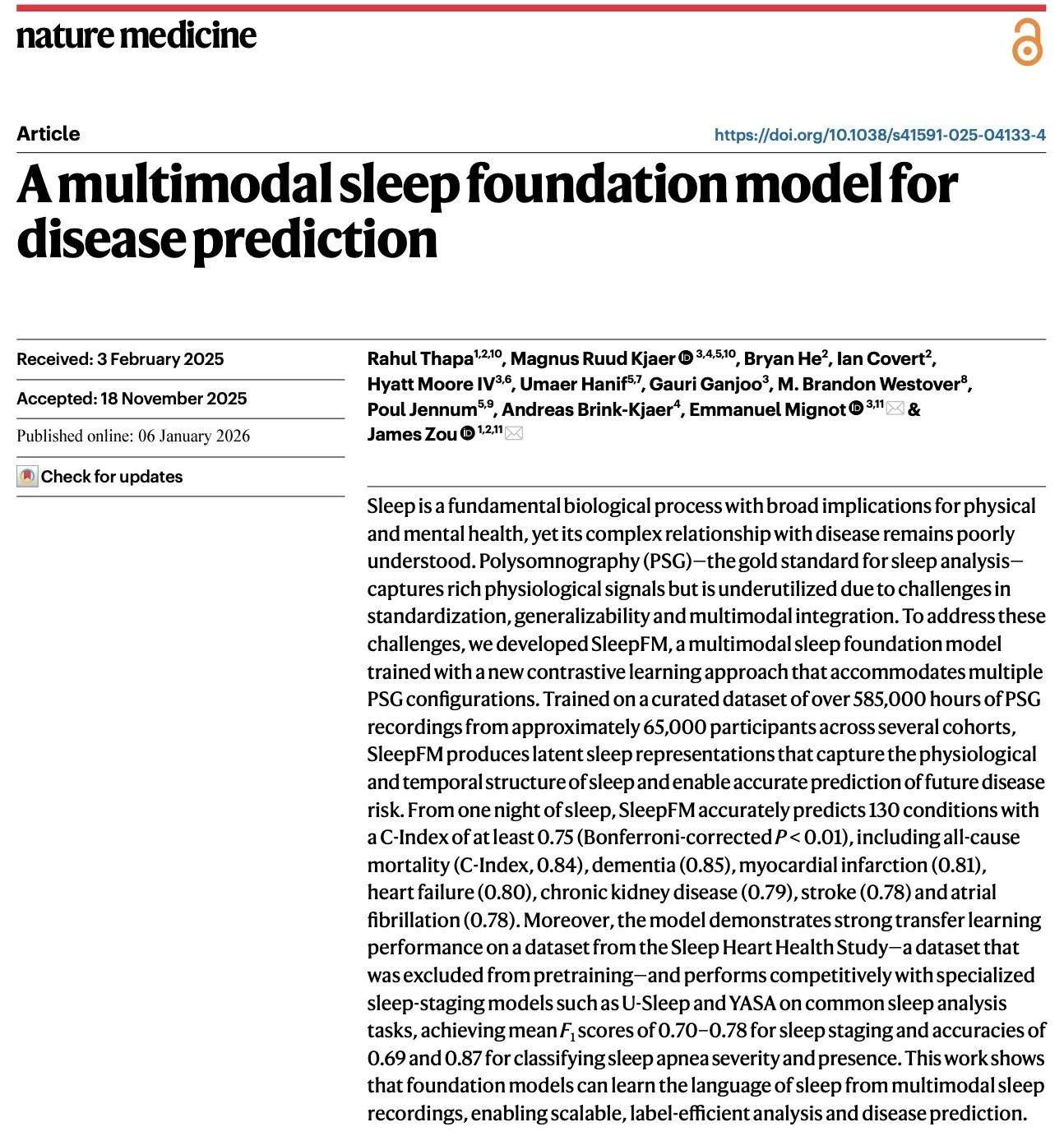
SleepFM: Using Sleep Data to Predict Disease: Stanford University published a study in Nature Medicine training a foundation model, SleepFM, using 585,000 hours of sleep records. It can predict 130 diseases based on just one night of sleep data, demonstrating AI’s huge potential in biological signal analysis and preventive medicine. (Source: sbmaruf)
LEGO Launches “Smart Bricks” with Built-in Computers: LEGO showcased its most significant evolution in 50 years at CES: bricks with built-in small chips and sensing protocols. Minifigures approaching specific bricks trigger sound effects and lights, making physical toys “come alive” without a screen, exploring the seamless application of AI hardware in education and entertainment. (Source: TheRundownAI, 36Kr)