
🔥 Spotlight
NVIDIA Releases Rubin Supercomputing Architecture: Shifting from “Selling Shovels” to “Selling Productivity Workshops” : Jensen Huang showcased the new Vera Rubin AI supercomputing architecture at CES 2026. This architecture is not just a graphics card upgrade but a vertically integrated system featuring six specialized chips, including Vera CPU, Rubin GPU, and NVLink 6. Rubin aims to solve system scaling challenges, claiming a 10x increase in inference throughput, reducing GPU requirements for training trillion-parameter models to one-fourth of Blackwell, and cutting Token costs to one-tenth. This move marks NVIDIA’s effort to build a moat through system-level optimization, attempting to transform compute stacking from “manual assembly” to a “standardized assembly line,” signaling the arrival of the affordable inference era. (Source: 36Kr, TheRundownAI)

MiroThinker 1.5 Released: 30B Model Rivals GPT-5-High : Funded by Tianqiao Chen (TCCI) and led by Tsinghua Associate Professor Dai Jifeng, the MiroMind team released MiroThinker 1.5. With only 30B parameters, this model stands neck-and-neck with GPT-5-High and DeepSeek-V3.2 in high-difficulty benchmarks like HLE and BrowseComp. Its core technology is “Interactive Scaling,” which enhances performance by training the model to handle deeper and more frequent interactions between agents and environments. This achievement proves that small elite teams can still reshape the competition landscape at the AGI frontier through correct architectural choices (such as focusing on Agent modeling rather than pure pre-training). (Source: GitHub, ZhihuFrontier)

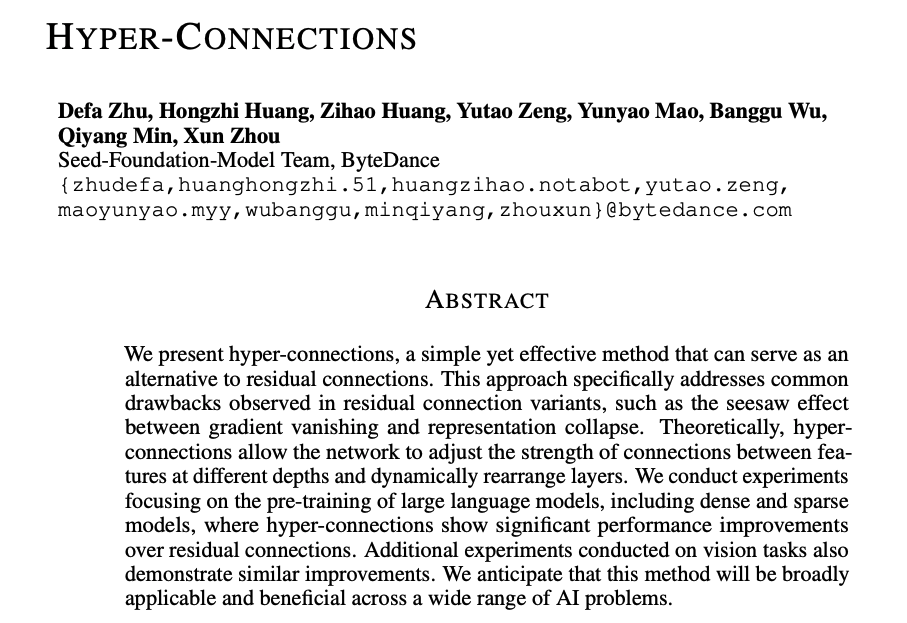
DeepSeek Releases Manifold-Constrained Hyper-Connections (mHC): A Major Breakthrough in Transformer Architecture : The DeepSeek team published the paper “Manifold-Constrained Hyper-Connections,” proposing a new solution to widen residual flows without causing training collapse. This technology addresses instability, scalability, and memory overhead issues in training ultra-deep models. Personally signed by CEO Liang Wenfeng, this is considered one of the most fundamental improvements to the architecture since the birth of the Transformer in 2015. Experiments show that the technology performs excellently on models with 27B parameters and 60 layers of depth, suggesting that DeepSeek V4 may adopt a deeper and wider architectural design. (Source: nrehiew_, Reddit)
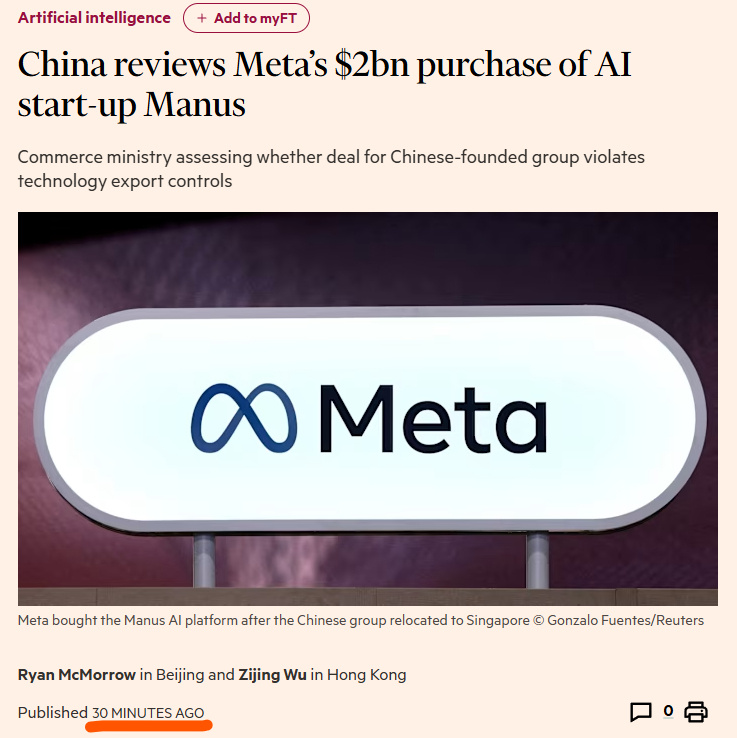
Meta’s Acquisition of Manus Faces Chinese Regulatory Scrutiny : According to people familiar with the matter, China’s Ministry of Commerce is evaluating Meta’s $2 billion acquisition of AI Agent startup Manus to determine if it violates technology export control regulations. The core of the review lies in the legality of migrating digital assets and technologies developed by the team during their time in China to Singapore. This move reflects the high sensitivity of regulators toward the outflow of top AI talent and core technologies in the context of global AI competition, and may trigger deep discussions on the boundaries between open-source contributions and cross-border technology transfer. (Source: dotey, teortaxesTex)
🎯 Trends
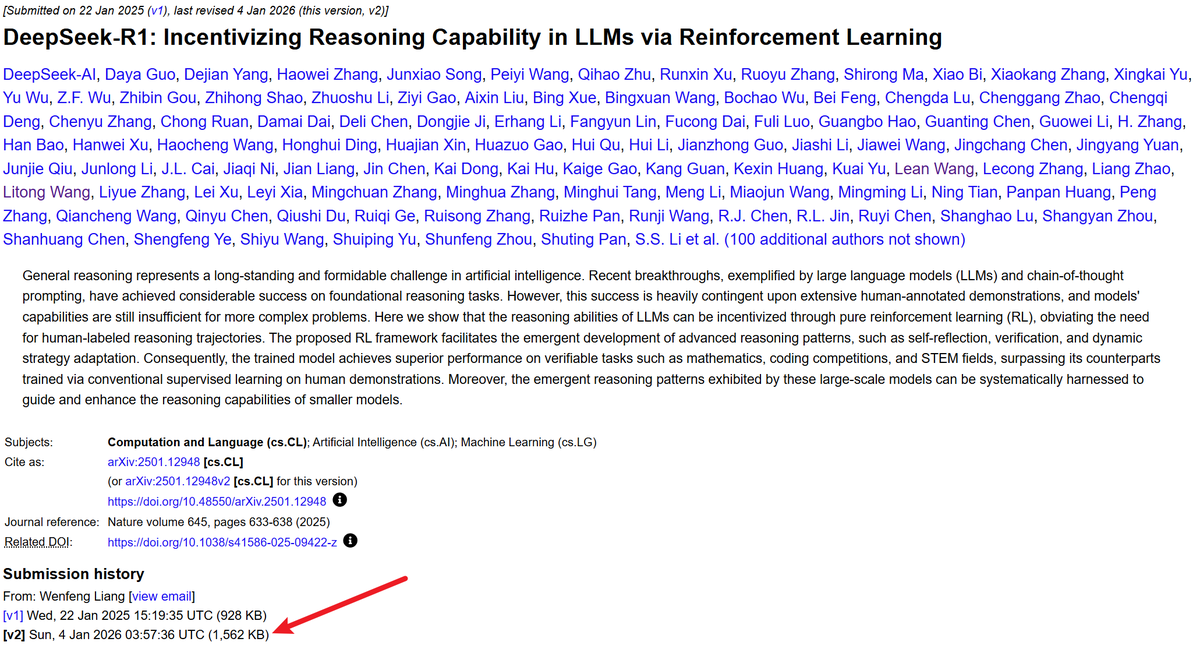
DeepSeek-R1 Paper Significantly Updated: Expanded from 22 to 86 Pages : The technical documentation for DeepSeek-R1 has been deeply supplemented, disclosing details on R1-Zero’s self-evolution process, evaluation details, distillation strategies, and more in-depth ablation experiments. This move is seen by the community as a precursor to the release of DeepSeek V4 or R2, showcasing its profound accumulation in the fields of reinforcement learning and reasoning models. The new content provides high-value references for researchers to understand the internal logic of reasoning models. (Source: dejavucoder, MachineLearning)
OpenAI Secretly Developing Pen-Shaped Consumer Device: Challenging the iPhone’s Status : Rumors suggest OpenAI is developing a pen-shaped AI hardware codenamed “Third Core Device,” similar in size to an iPod Shuffle. The device is equipped with a microphone and camera, possesses environmental awareness, and its core function is to convert handwritten notes into text in real-time and upload them to ChatGPT. This move demonstrates OpenAI’s ambition to bypass existing mobile systems and directly occupy the user interaction entry point through native AI hardware. (Source: Reddit)
Runway Releases GWM Worlds: Real-Time Environment Simulation World Model : Runway showcased its latest world model, GWM Worlds. Users only need to provide a static scene image, and the model can generate an immersive, infinitely explorable 3D space, including real-time geometry, lighting, and physics simulation. This technology aims to provide a new interactive environment generation method for film production and game development, marking AI’s leap from generating videos to generating interactive worlds. (Source: c_valenzuelab)
DFlash: Speculative Decoding Technology Accelerates Qwen3 by 6.2x : Zhijian Liu’s team introduced DFlash, which utilizes block diffusion for speculative sampling. It achieved a 6.2x lossless acceleration on Qwen3-8B, 2.5x faster than EAGLE-3. The core logic of this technology is “the diffusion model is responsible for drafting, and the auto-regressive model is responsible for verification,” cleverly solving the pain point of slow LLM inference speed and demonstrating the huge potential of diffusion models and auto-regressive architectures working in synergy. (Source: jeremyphoward)
Tesla FSD Completes First 100% Autonomous Cross-Country Challenge in the US : Driver David Moss used Tesla FSD to complete a 2,732-mile journey from Los Angeles to Myrtle Beach with zero human intervention, including automatic parking at Superchargers. This marks that autonomous driving technology based on end-to-end neural networks has achieved extremely high robustness and is approaching the tipping point of full driverless operation. (Source: Reddit)
🧰 Tools
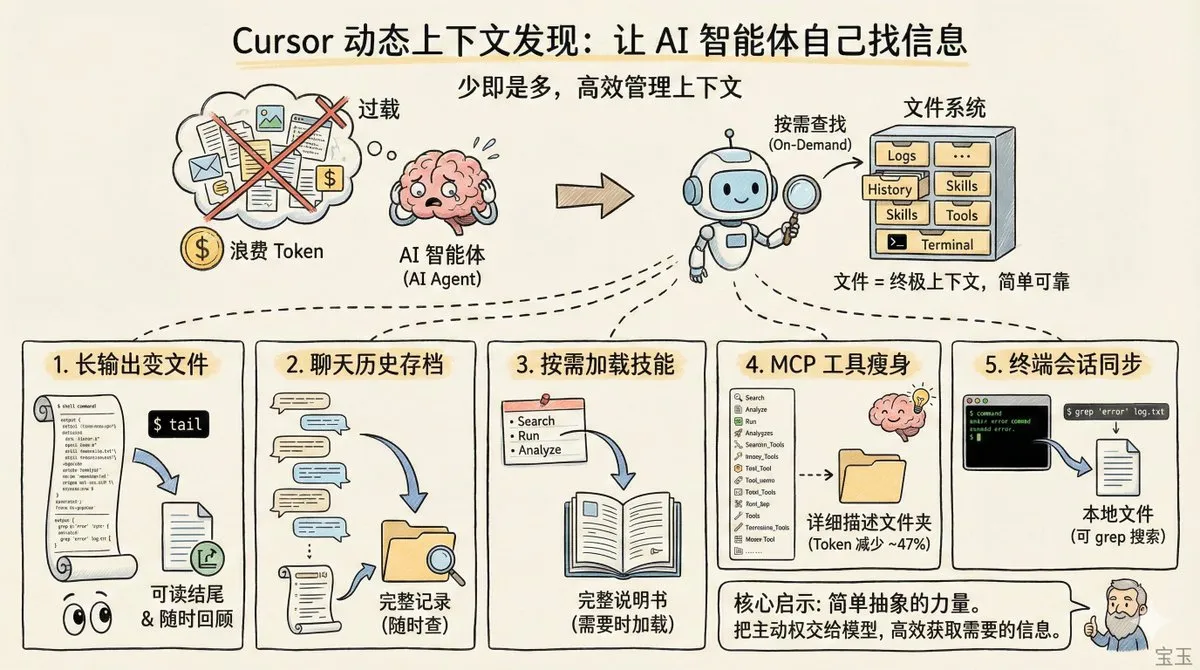
Cursor Unveils “Dynamic Context Discovery”: File System is the Ultimate Memory for Agents : Cursor published a technical blog post explaining its strategy for managing context through the file system. By converting long outputs into files, loading Agent Skills on demand, and optimizing MCP tool descriptions, Cursor reduced Token consumption by 46.9% while maintaining quality. Its core view is: instead of pre-stuffing massive amounts of information to interfere with the model, it is better to let the model actively retrieve information through the file system when needed. This aligns with Manus’s concept of “file system as context.” (Source: dotey, swyx)
Claude Desktop Integrates Local Claude Code Interface : Anthropic updated its desktop application, building in Claude Code with a graphical interface. Users only need to switch to “Code” mode in the sidebar and select a local folder to use Claude for code writing and file management in a non-terminal environment. This greatly lowers the barrier to using AI programming tools, allowing developers unfamiliar with command-line operations to efficiently utilize Claude’s Agent capabilities. (Source: op7418)

Skywork Launches Video Agent: Full-Process AI Video Editing Capabilities : Skywork Videos Agent supports a complete flow from storyboard generation to material editing. Users can generate video materials through text-to-video, image-to-video, or first-and-last frame generation, and directly synthesize music and voice in the editor on the right. Its featured effect templates support one-click reuse, demonstrating the evolution of AI Agents from single content generation to complex creative workflow management. (Source: op7418)
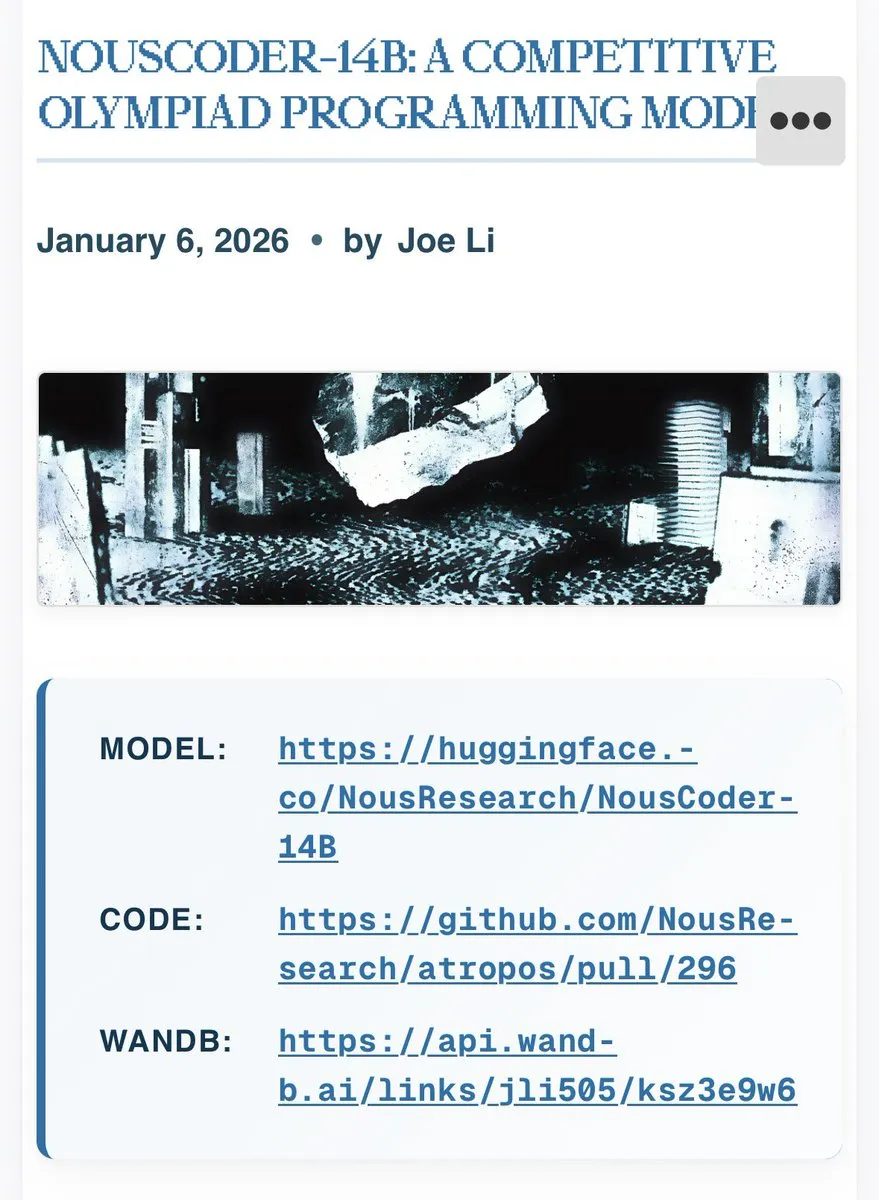
NousCoder-14b: Open-Source Competition-Grade Programming Model : Nous Research released NousCoder-14b, based on post-tuning of Qwen3-14B. The model was trained using 48 B200s for 4 days under the Atropos framework, increasing Pass@1 accuracy to 67.87% through verifiable execution rewards. The team also open-sourced the complete RL environment, benchmarks, and training stack, pushing the capability boundaries of the open-source community in complex logic programming. (Source: tokenbender, huggingface)
Memvid: Single-File Serverless Storage Layer for AI Agents : Memvid is a portable AI memory system written in Rust. Drawing on video encoding logic, it packages data, embeddings, and search structures into a single .mv2 file, providing sub-5ms local retrieval speeds. This design allows AI Agents to carry long-term memory like a hard drive without complex RAG pipelines or server-side vector databases, making it an ideal choice for building offline-first Agents. (Source: GitHub)

📚 Learning
Rust Veteran Steve Klabnik Teams Up with Claude to Build New Language Rue in 11 Days : Steve Klabnik, author of “The Rust Programming Language,” used Claude’s assistance to write approximately 100,000 lines of Rust code in 11 days to create the experimental systems-level language Rue. The project demonstrates how AI can significantly reduce the experimental cost of language design, freeing developers from heavy coding to focus on abstract design and constraint definition. This case triggered a major community discussion on “whether new programming languages are still needed in the AI era.” (Source: 36Kr)

CogFlow Framework: Simulating Human Cognition to Solve Visual Math Problems : A paper proposed the CogFlow framework, which simulates human logic for solving math problems through three stages: “Perception-Internalization-Reasoning.” Its introduced “Knowledge Internalization Reward Model” ensures the model truly integrates visual cues rather than looking for shortcuts. The MathCog dataset released with the paper contains 120,000 high-quality perception-reasoning alignment annotations, providing an important resource for multimodal mathematical reasoning research. (Source: HuggingFace)
SOP System: Online Post-Training Solution for Vision-Language-Action (VLA) Models : The SOP system enables distributed, multi-task online training for robots in the physical world. Through a closed-loop architecture, robot swarms transmit experience streams back to a cloud learner in real-time and asynchronously receive policy updates. Experiments show that just a few hours of real interaction can significantly improve the model’s performance in complex tasks such as folding clothes and shelving goods, with performance scaling linearly with the number of robots. (Source: HuggingFace)
💼 Business
Zhipu AI and MiniMax Plan Hong Kong IPO: Chinese Large Model Unicorns Start Listing Wave : Zhipu AI and MiniMax plan to list in Hong Kong in January 2026, with an expected financing amount of approximately $550 million and a valuation of about $6.5 billion. Zhipu’s 2024 revenue was approximately $44.7 million, and MiniMax’s was about $30.5 million. Despite trade tensions, the two companies are considered to have attractive valuations due to their solid technical models and user bases (MiniMax has 220 million users), marking the entry of the Chinese AI industry into the capital return period. (Source: bookwormengr, 36Kr)
xAI Completes $20 Billion Financing: Valuation Soars to $230 Billion : Elon Musk’s xAI raised another $20 billion to purchase compute and expand its AI capabilities on the X platform. xAI’s unique advantage lies in having real-time data from the X platform and 250 million daily active users. Musk’s strategy is to “build attention with AI,” carving out a differentiated path amidst OpenAI and Anthropic through Grok’s humorous and anti-traditional style. (Source: TheRundownAI, Yuchenj_UW)
Kai-Fu Lee Summarizes 2025: Evolving from “World Factory” to “Agent Factory” : 01.AI CEO Kai-Fu Lee pointed out that 2025 is the inaugural year of reasoning AI Agents, and the DeepSeek moment has reshaped the ToB market. He predicts that 2026 will enter the era of “one person, one AI team,” where multi-agent systems will reshape organizations just as assembly lines reshaped industry. With strong open-source models and manufacturing foundations, China is expected to become a global Agent factory, modularizing organizational capabilities and deploying them 24/7. (Source: ZhihuFrontier)

🌟 Community
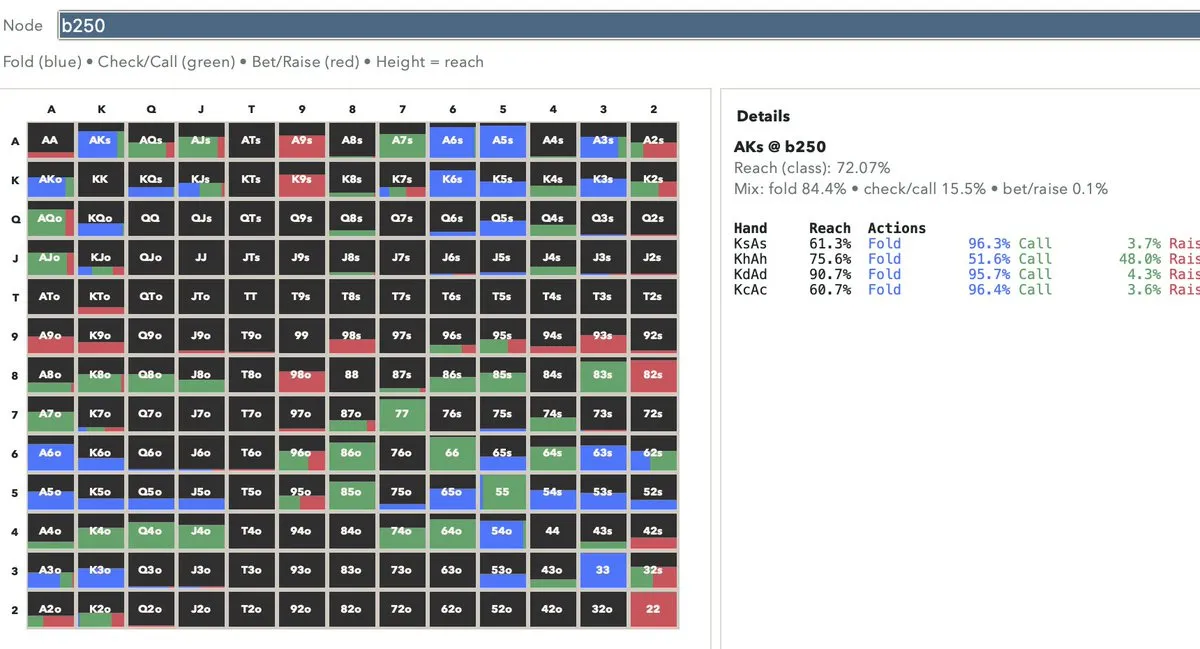
Noam Brown’s Experimental Reflection: AI Cannot Yet Fully Replace Domain Experts : Top AI researcher Noam Brown tried to use Codex and Claude Code to write a poker solver. Although AI can accelerate development, it still frequently makes mistakes or even “misleads” users in algorithmic logic, front-end GUI implementation, and innovative algorithm research. He believes that AI is currently more like an “unstable compiler,” and in scientific research tasks requiring deep domain backgrounds, human experts’ verification and correction remain indispensable. (Source: polynoamial, SebastienBubeck)
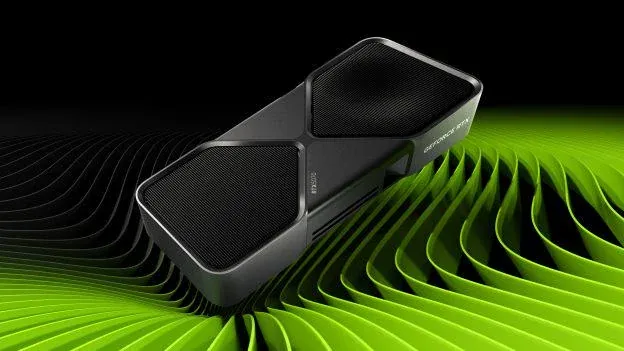
Hardware Price Warning: GPU, DRAM, and NAND Prices Set to Skyrocket : Community discussions pointed out that due to the surge in data center demand and the competition for production capacity by giants like OpenAI, memory contract prices are expected to rise by 55-60% in Q1 2026, and SSD prices have already doubled. The price of NVIDIA RTX 5090 may climb to $5,000. This is prompting developers to turn to more efficient quantized models (such as FLUX.2 quantized) and lightweight inference frameworks like llama.cpp. (Source: Reddit)
The End of Prompt Engineering? The “Scratchpad” Rule Goes Viral : The community discovered that instead of spending weeks writing complex Personas and constraints, it is better to simply ask the AI to use a <scratchpad> for brainstorming and self-criticism before answering. This “forced thinking” mode outperforms most complex prompts on logic problems. The view is that the core of Prompt Engineering is actually just finding ways to make the model “slow down” and think. (Source: Reddit)
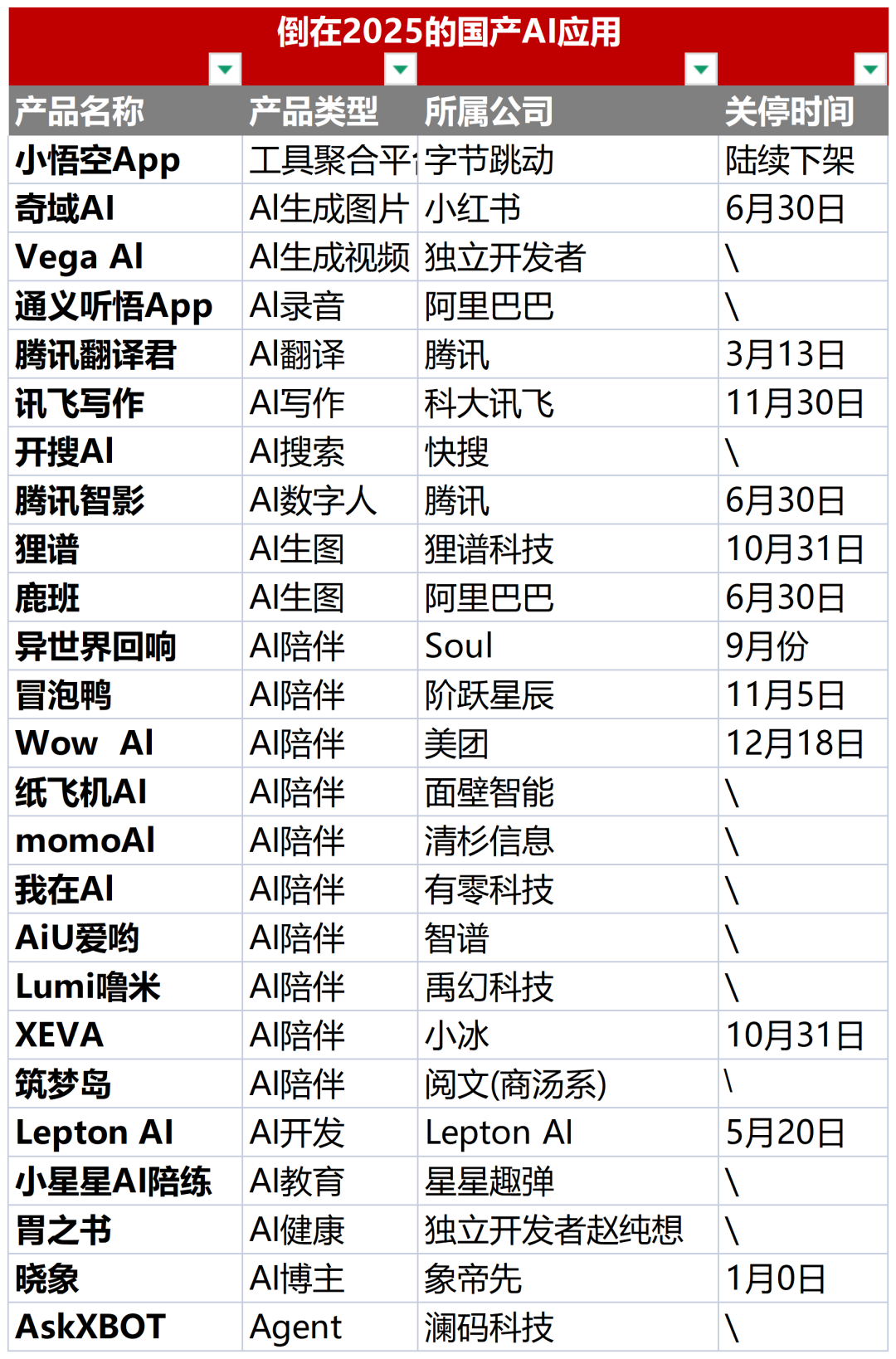
AI App “Sudden Death Tide”: An Average of One AI Tool Fails Every Day in 2025 : Statistics show that nearly 400 AI tools worldwide have shut down in 2025, including well-known companion apps in China like Maopao Ya and Wow AI. The main reasons for failure lie in: bloated traffic lacking monetization capability, “naked” innovation with single-point functions, and touching compliance lifelines. This marks that AI entrepreneurship is returning from the “era of showing off skills” to business common sense; only products that solve real pain points will survive. (Source: 36Kr)
💡 Others
Agibot Genie Sim 3.0: Embodied AI Open-Source Simulation Platform Released : AGIBOT launched Genie Sim 3.0 at CES 2026, integrating NVIDIA Isaac Sim and providing a synthetic dataset of over 10,000 hours of real robot operations. The platform supports the generation of large-scale simulation scenes in minutes, aiming to reduce the dependence of embodied AI on physical hardware and accelerate model iteration through high-quality 3D reconstruction and vision generation technology. (Source: ziran_pu)
AI-Created Virus Risks Trigger Safety Concerns : Community discussions are heated regarding AI’s ability to design viruses from scratch, believing this is only one step away from a “perfect biological weapon.” Discussions call for strengthening regulation and guardrails for large models in the biological field to prevent technology from being misused to create new pathogens, highlighting the urgency of AI governance in non-digital fields. (Source: Reddit)