
🔥 Focus
Ministry of Commerce Intervenes in Meta’s Acquisition of Manus for Assessment and Investigation: China’s Ministry of Commerce announced that it will conduct an assessment and investigation into Meta’s acquisition of the AI agent startup Manus. The review focuses on whether the acquisition complies with laws and regulations regarding export control, technology import/export, and outward investment. Although the core team of Manus has relocated to Singapore, its technology originated in Beijing. If restricted technology transfer or data outbound is involved, the transaction may face risks of delays, fines, or even being halted. This event marks that cross-border M&A in the AI field has entered a rigorous regulatory “deep water zone,” and developers need to be alert to compliance red lines in “technology going global” (Source: 36Kr)

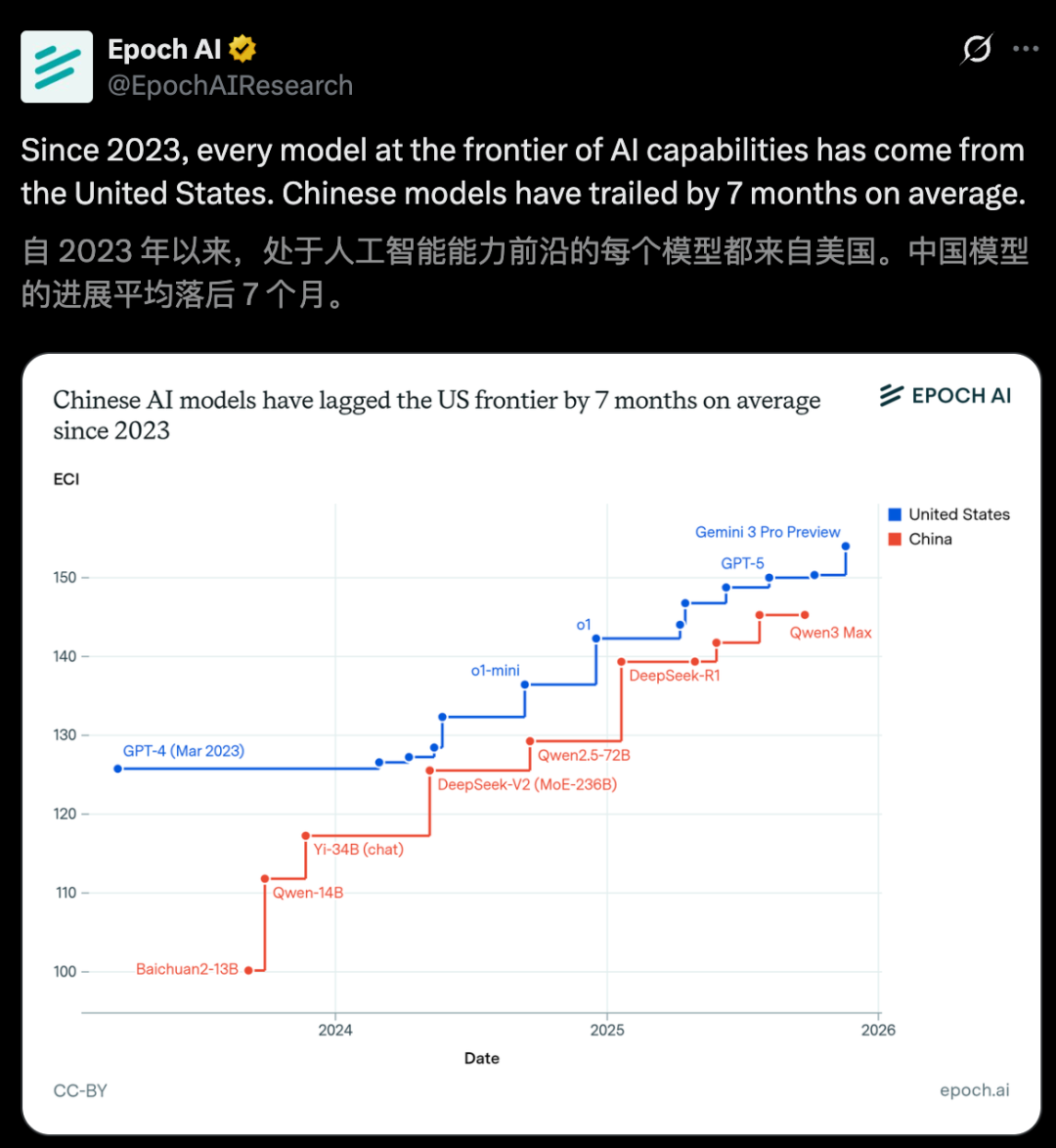
Epoch AI Report Reveals US-China AI Gap Stabilized at 7 Months: A recent report indicates that the progress of Chinese AI models lags behind the US frontier level by an average of about 7 months. Although China has achieved “leapfrog” catch-up by expanding parameter scales and MoE architectures, the update pace of US closed-source models (such as GPT-5, Gemini 3) is extremely fast, and capability leaps do not rely solely on scale but are shifting toward reasoning path design. The report suggests that the core of AI evolution in 2026 will be the “continuous learning” paradigm; whoever can first achieve self-iteration within parameters will redefine the technological frontier (Source: 36Kr)
LMArena Leaderboard Accused of Becoming an “AI Beauty Pageant”: The well-known evaluation platform LMArena has come under deep scrutiny. A Surge AI investigation shows that 52% of the winning answers on the leaderboard are factually incorrect. Users tend to vote for answers that are long, beautifully formatted, and contain emojis, rather than accurate ones. This “reward hallucination” has led manufacturers to optimize for formatting to “game” the rankings. The community criticizes this evaluation system for becoming a “cancer” in AI development, forcing labs to make a bottom-line choice between pursuing authenticity and short-term traffic rankings (Source: New智元)

🎯 Trends
OpenAI Releases ChatGPT Health Independent Health Space: This feature allows users to securely connect to Apple Health, electronic medical record systems, etc., providing precise health analysis based on personal data. To address privacy concerns, OpenAI has built a physical-level isolation architecture; health data is never used for model training, and memory is not shared with the main conversation. This marks the transformation of AI assistants from general search to “private health advisors,” closing the loop from medical record interpretation to action suggestions through ecological cooperation with b.well and others (Source: dotey, 36Kr)

DeepSeek-R1 Technical Report Significantly Expanded to 86 Pages: DeepSeek updated its R1 paper, expanding it from 22 pages to 86 pages and adding a wealth of technical details. The new content covers the self-evolution process of R1-Zero, detailed evaluation analysis, and distillation techniques. The report emphasizes that the improvement in model capability does not come from “more data,” but rather reshapes how the model allocates reasoning effort and explores solution paths through Reinforcement Learning (RL). This “control-first” mode demonstrates a new path for stable reasoning capabilities at extreme scales (Source: andrew_n_carr, stanfordnlp)
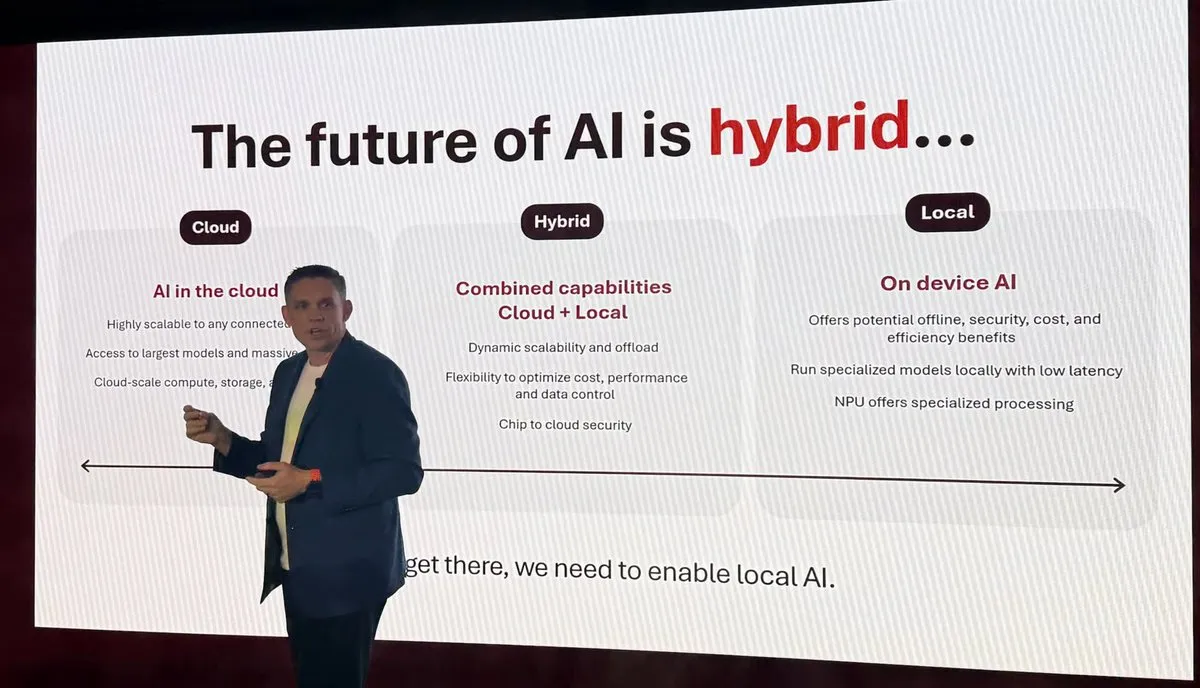
CES 2026 Shows Trend of Full “On-device AI” Explosion: Qualcomm, NVIDIA, and AMD demonstrated the decentralization trend of AI computing at CES. Qualcomm is pushing the NPU to become a permanent subsystem of intelligent terminals; NVIDIA is combining AI factories with physical deployment loops; AMD emphasizes the heterogeneous continuity of Cloud, PC, and Edge. The industry consensus is that by 2026, “On-device AI” will become the default option, aiming to provide low-latency, high-privacy local inference experiences, as AI is restructuring computing architecture (Source: TheTuringPost, yoheinakajima)
NVIDIA Releases Autonomous Driving Inference Model Alpamayo: This model is the world’s first Vision-Language-Action (VLA) model specifically designed for autonomous driving, featuring an explicit chain of reasoning that can explain the logic behind driving decisions. It combines physical AI datasets and the AlpaSim simulation tool, aiming to achieve L4 autonomous driving through human-like judgment. Mercedes-Benz has announced it will integrate this full technology stack into its new models (Source: nvidia, 36Kr)
🧰 Tools
Claude Code Version 2.1.1 Released: Anthropic is rapidly iterating its command-line tool. The new version introduces “skill hot-reloading,” allowing developers to modify skills without restarting for them to take effect. The new context: fork option lets sub-agents run in independent contexts to avoid polluting the main conversation. Additionally, sub-agents exhibit stronger resilience after being denied permissions, attempting alternative solutions to continue tasks. These updates significantly enhance the flexibility and robustness of Agentic workflows (Source: dotey, Reddit)

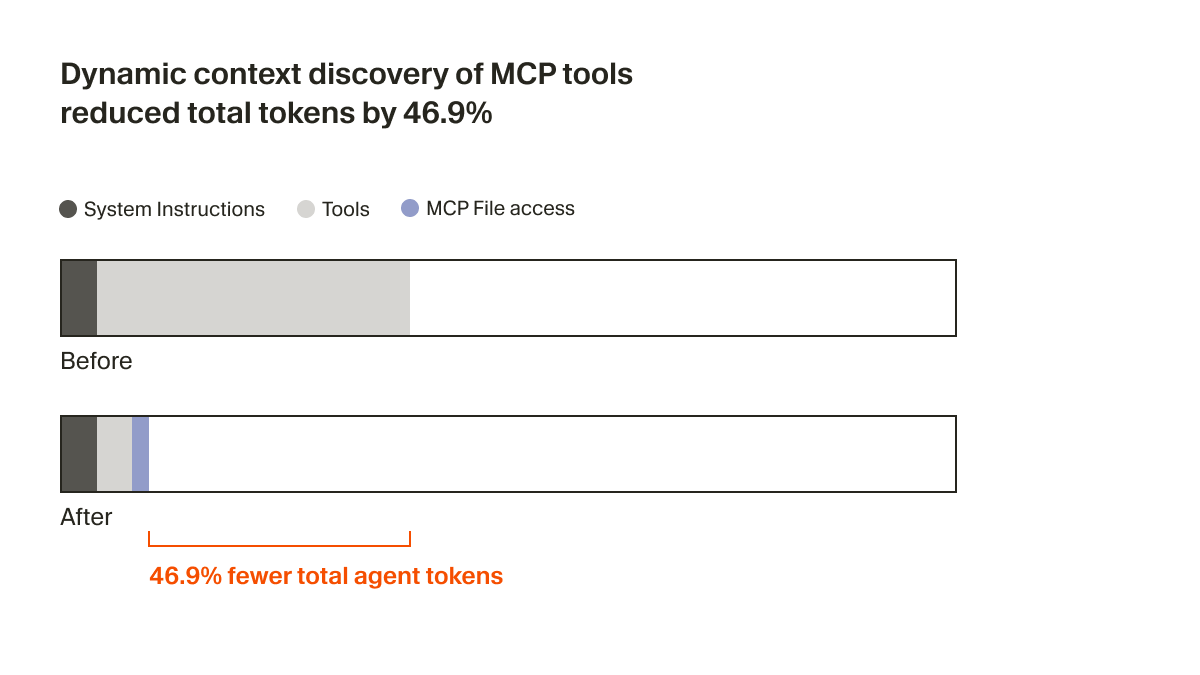
Cursor Agent Implements Dynamic Context Discovery: Cursor has reconstructed how agents use context, no longer stuffing everything into the prompt but dynamically discovering relevant context through files, tools, and history. This improvement has reduced Token usage by 46.9%, leaving more workspace for the agent. By flushing conversation transcripts to disk, Cursor can perform recall across conversations spanning millions of Tokens, significantly enhancing the ability to handle long-range tasks (Source: StringChaos, amanrsanger)
Kindly: Open-Source Web Search MCP Server: Designed specifically for development tools like Claude Code and Codex, this tool aims to solve the problem of fragmented information or excessive HTML noise returned by traditional search tools. Kindly supports intelligent parsing of full StackOverflow Q&As, extraction of GitHub Issue dialogues, and conversion of ArXiv paper PDFs to text. It returns structured content through a single tool call, avoiding secondary reading by the AI and significantly improving the efficiency of AI in handling complex debugging tasks (Source: Reddit)

Unsloth-MLX: Supports Fine-Tuning Large Models on Mac: This tool allows users to directly fine-tune large models on Macs with Apple Silicon chips. It provides a good API abstraction, supporting various training methods such as SFT, DPO, and GRPO, and can export to HuggingFace or GGUF formats. This progress lowers the hardware threshold for individual developers to participate in model training, making “Mac fine-tuning” a reality (Source: karminski3)

📚 Learning
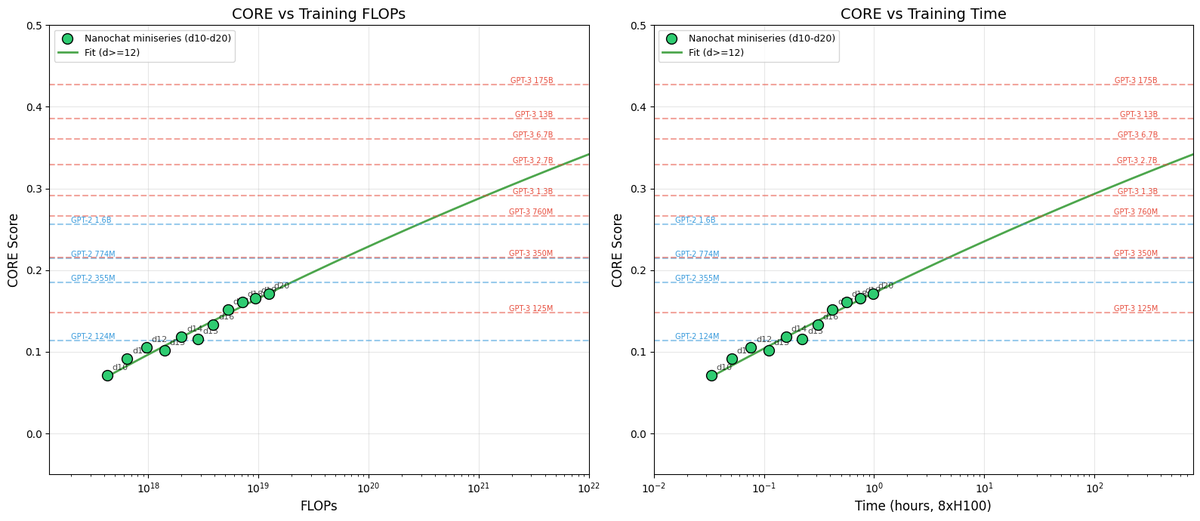
Andrej Karpathy Releases nanochat to Explore Scaling Laws: Karpathy shared the first part of the nanochat fine-tuning series, emphasizing that LLM optimization should target “model families” rather than a single model. Experiments prove that nanochat follows clear scaling laws, benchmarking it against GPT-2/3 through CORE scores. He proposed that through scientific hyperparameter adjustment, high-performance small models can be trained at a very low cost (about $100), providing developers with a reproducible Scaling experimental paradigm (Source: karpathy)
Andrew Ng Releases “Build with Andrew” Zero-Code Development Course: This course aims to teach users with absolutely no programming background how to build runnable Web applications through natural language descriptions within 30 minutes. The course emphasizes the “Vibe Coding” concept, correcting and improving applications through continuous dialogue with AI, demonstrating how AI transforms creativity into productivity and making the software development threshold completely disappear (Source: DeepLearningAI, AndrewYNg)
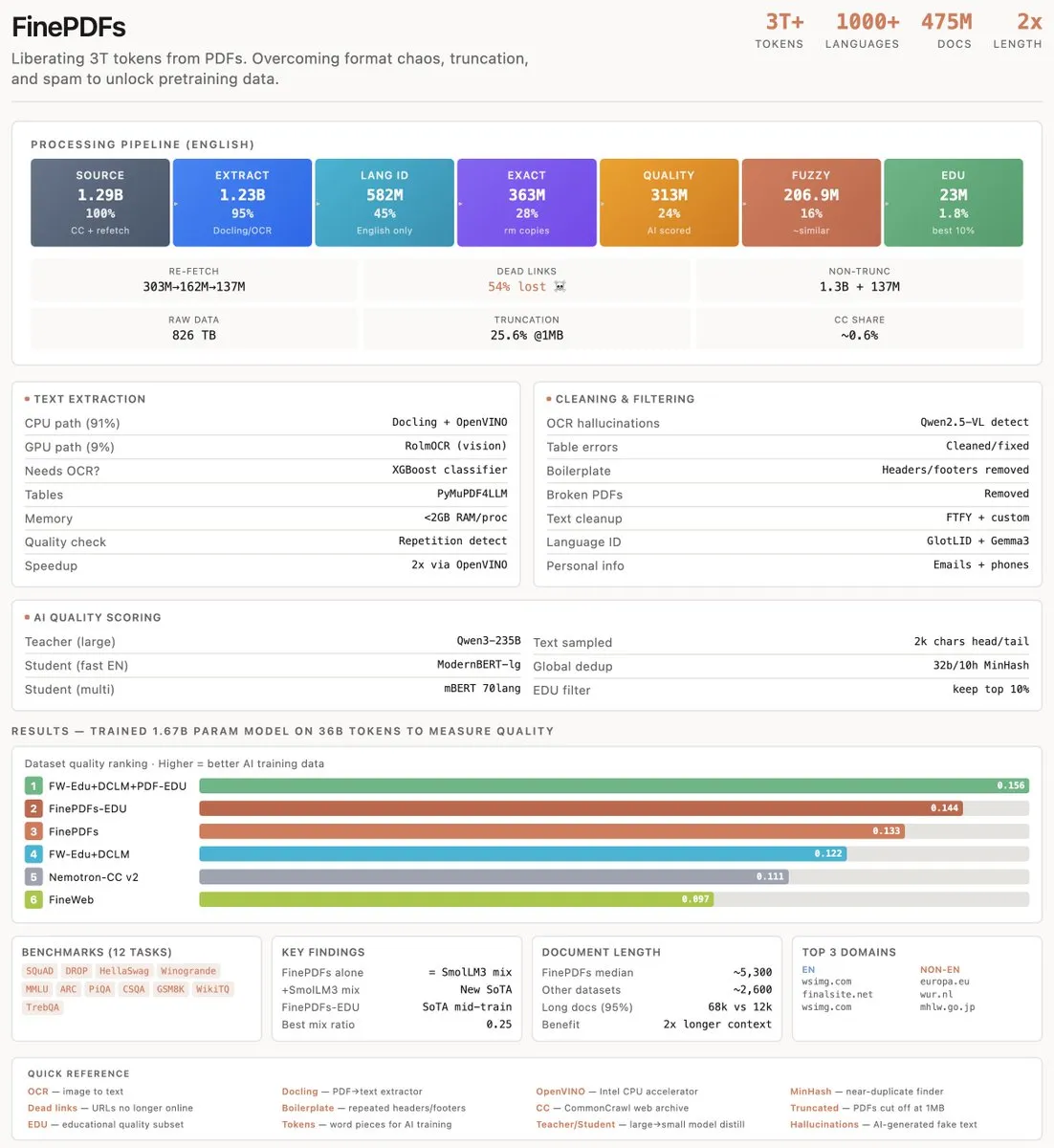
FinePDFs: Extracting High-Quality Data from 1.3 Billion PDFs: The HuggingFace team shared deep research on how to extract core knowledge from the massive amount of PDF files on the internet. Although PDFs account for only 0.6% of Web content, they contain a large number of academic papers and legal documents. The research explores how to build SOTA-level PDF datasets, select RolmOCR for optical character recognition, and analyzes the evolution of internet content, providing valuable data processing experience for model pre-training (Source: eliebakouch)
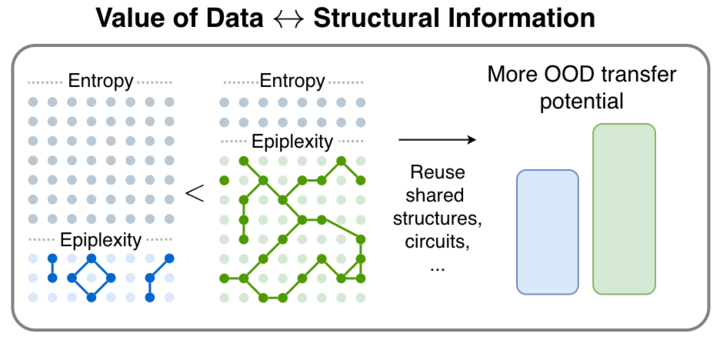
Epiplexity: A New Information Measure for Compute-Constrained Intelligence: The paper “From Entropy to Epiplexity” proposes a new information measurement method aimed at providing a theoretical basis for selecting, generating, or transforming data for compute-constrained intelligent systems. The research points out that information can be created through computation, and likelihood modeling can produce programs more complex than the data generation process itself. This theory challenges traditional views on information entropy and provides important inspiration for the next generation of AI learning paradigms (Source: teortaxesTex, pratyushmaini)
💼 Business
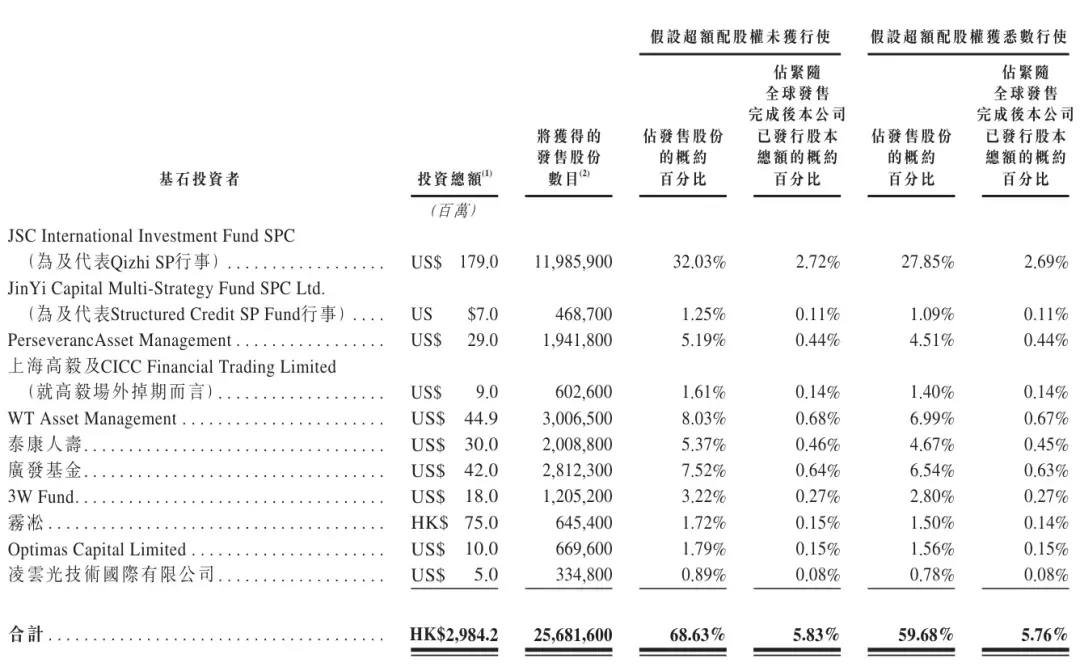
Zhipu AI Lists in Hong Kong, Becoming the World’s First Listed Large Model Company: Zhipu AI (02513.HK) officially landed on the Hong Kong Stock Exchange on January 8, 2026, with its market value exceeding HKD 52 billion. The cornerstone investor lineup is luxurious, including Beijing State-owned Capital Operation and Management, Gaoyi, Taikang Life, etc. Zhipu AI has established a business model where MaaS (Model as a Service) and high-margin enterprise services run in parallel, and its GLM-4.7 performed excellently in the coding arena. As the first large model company to disclose financial data, its IPO performance will be a key experiment to verify the business logic of “large models as infrastructure” (Source: 36Kr, op7418)
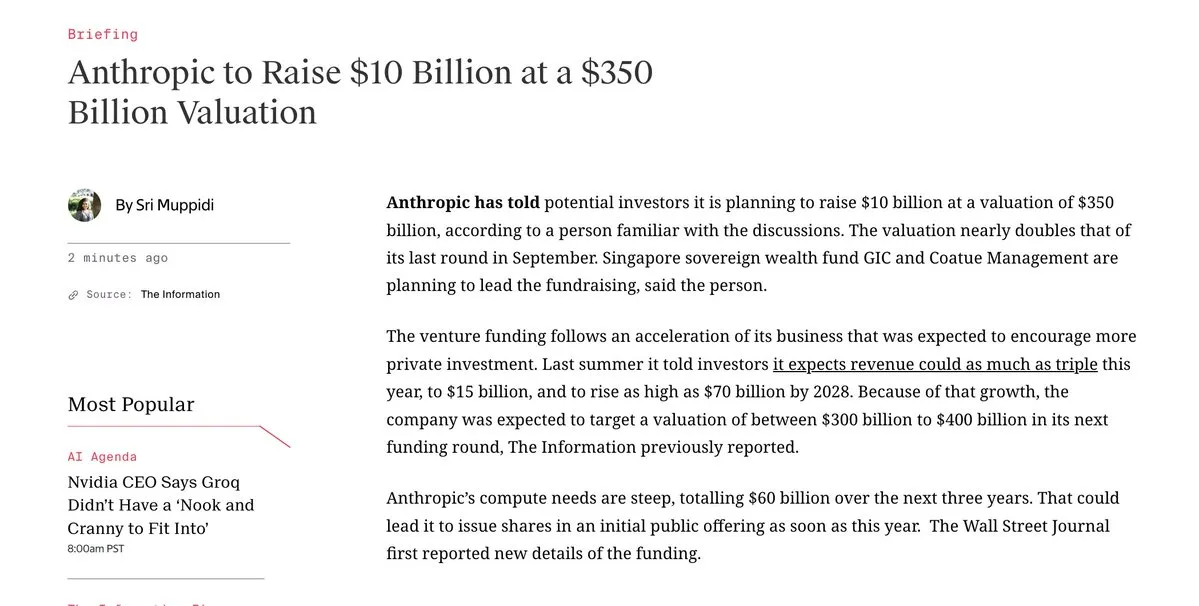
Anthropic Plans to Raise $10 Billion, Valuation to Double: Reports suggest Anthropic is seeking a new round of $10 billion in financing, with a valuation potentially reaching $350 billion, nearly doubling from four months ago. Singapore’s GIC and Coatue are leading the round. This move shows the capital market’s frantic race for top AI labs. Meanwhile, OpenAI was reported to have reserved a $50 billion employee stock pool to snatch top talent, reflecting the brutal competitive reality where talent is as scarce as computing power in the AI industry (Source: srimuppidi, New智元)
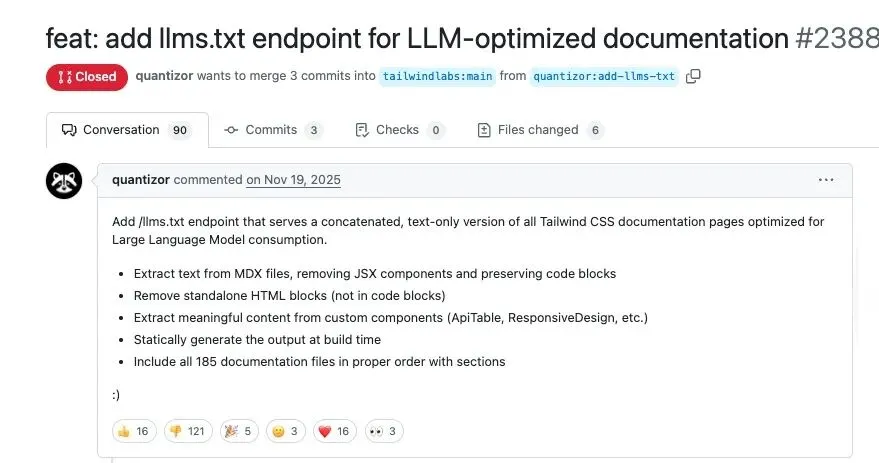
Tailwind CSS Lays Off 75% Due to AI Impact: Adam Wathan, founder of the top front-end open-source framework Tailwind, announced the layoff of most of the engineering team. Ironically, Tailwind is more popular than ever because it is used by default by AI programming tools, but as users turn to AI for answers, official documentation traffic has dropped by 40%, leading to a disruption in paid product conversion and an 80% plunge in revenue. This case reveals the paradox open-source projects face in the AI era: the more popular they are, the more fragile their business models become (Source: 36Kr)
🌟 Community
Elon Musk Predicts AI Intelligence Will Surpass All Humans Combined by 2030: In a recent 173-minute conversation, Musk reiterated that AGI will be achieved in 2026 and believes that electricity, rather than chips, is becoming the true bottleneck for AI expansion. He proposed the cold metaphor that “humans are just the biological bootloader for silicon-based life,” believing the human task is to launch AI. He emphasized that AI must pursue the truth to avoid collapsing like HAL 9000 due to being forced to lie (Source: 36Kr)
“Vibe Coding” Sparks Major Discussion in Developer Community: The community has mixed feelings about the new phenomenon of “Vibe Coding.” Supporters believe AI greatly improves prototype development efficiency, allowing non-professionals to build complex applications; opponents worry this will lead to a proliferation of “high-level languages” and a loss of low-level control, producing a large amount of hard-to-maintain code. Some argue that AI agents should not just write low-level code but should provide higher-level abstractions, allowing developers to express system logic rather than manage details (Source: lateinteraction, omarsar0)
AI Content Watermarking Dilemma and Instagram’s New Solution: As AI-generated content (slop) sweeps social media, the head of Instagram admitted that AI content cannot be reliably detected. He proposed instead to “watermark real content,” with camera and phone manufacturers performing cryptographic signatures at the moment of capture. However, hardware manufacturers lack motivation for this due to cost and liability issues. This reflects the difficulty of cross-platform collaboration in AI governance, as authenticity is becoming the internet’s scarcest resource (Source: 36Kr)

💡 Others
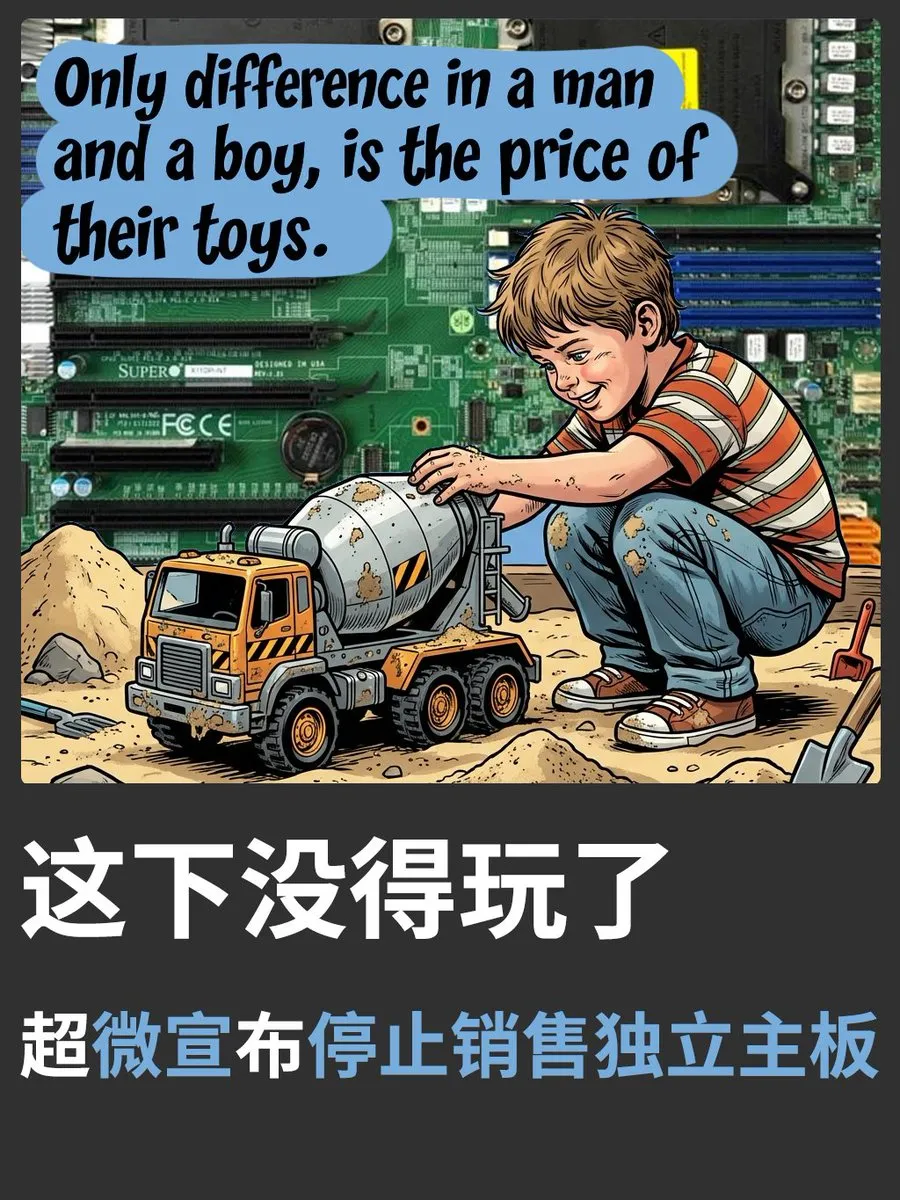
SuperMicro Announces Cessation of Standalone Motherboard Sales: Due to the surge in demand for complete AI server systems, SuperMicro announced it will stop selling standalone motherboards to the DIY market, prioritizing OEM and system customers. This reflects the severe squeeze the AI craze has put on the traditional PC hardware ecosystem, further increasing the difficulty and cost for individuals to assemble high-performance AI workstations (Source: karminski3)
Character.ai and Google Reach Settlement in Teenager Lawsuits: Character.ai, its founders, and Google have reached a settlement regarding multiple lawsuits alleging that AI chatbots led to teenager suicides. This event has once again sparked widespread discussion about the safety of AI companions and the risks of emotional dependence. Regulators are accelerating the formulation of management measures for anthropomorphic interaction services to protect vulnerable groups such as minors (Source: Reddit)