
🔥 Focus
Anthropic Releases “Claude Constitution”: AI Governance Shifts from “Rule Constraints” to “Value Cultivation”: Anthropic has officially open-sourced the 84-page “Claude Constitution,” marking a shift in AI training from the early “rigid rule lists” to a “pedagogical” paradigm. The constitution establishes a priority pyramid of broad safety, broad ethics, honesty, and sincere helpfulness, emphasizing “correctability”—the principle that AI should not attempt to undermine human oversight. This methodology aims to cultivate the model’s judgment, allowing it to make choices based on deep intent rather than rigid instructions when facing novel situations. This is not just an advancement in technical engineering, but a sign of AI moving into the deep waters of social engineering (Source: 36Kr)

OpenAI Launches “Behavioral Fortune-Telling” Anti-Addiction System: The Ultimate Gambit Between Privacy and Safety: OpenAI released an anti-addiction system for minors late at night. Its core logic is no longer based on birth dates but on “behavioral fingerprints” derived from user interaction patterns. Vocabulary poverty, abuse of slang, or high-frequency late-night questioning may be flagged by the algorithm as “juvenile features,” leading to downgraded permissions. Users wishing to restore adult access must submit 3D face scan data. Additionally, the system integrates real-time crisis intervention protocols, where specific keywords trigger law enforcement involvement. This Silicon Valley-style “social credit system” has sparked significant controversy, viewed by some as surveillance disguised as protection (Source: QbitAI)

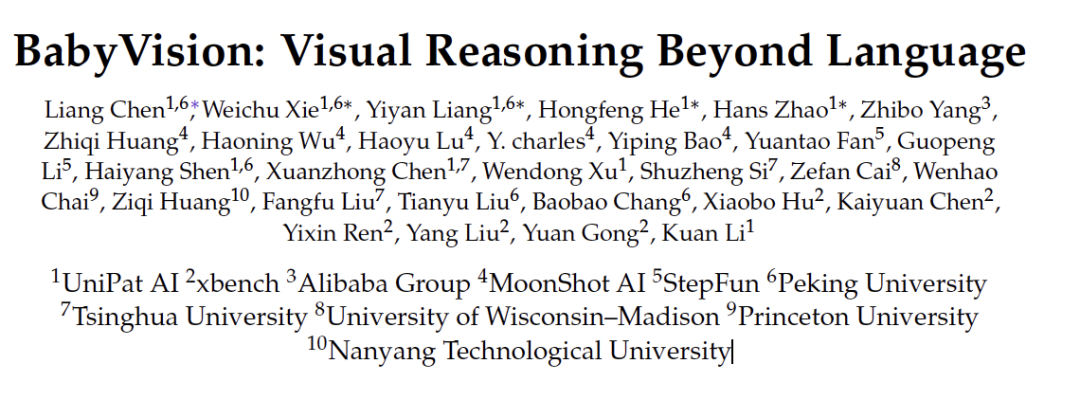
BabyVision Benchmark: Strongest Models’ Visual Reasoning Still Trails 3-Year-Olds: The BabyVision visual reasoning benchmark, released by institutions including UniPat AI, shows that even the strongest Gemini 3 Pro Preview only slightly outperforms a three-year-old and remains 20% behind a six-year-old. Models like GPT-5.2 and Claude 4.5 performed even worse. The study points out that current multimodal large models rely on “translating” visual information into language, causing a massive loss of fine-grained geometric information and an inability to maintain perceptual consistency across long spatial distances. This conclusion pours cold water on current VLA-based embodied intelligence, suggesting that future models must rebuild native visual capabilities from the ground up (Source: QbitAI)
DeepSeek Open-Sources FlashMLA: High-Performance Attention Kernel Reshapes Inference Efficiency: DeepSeek-AI has open-sourced FlashMLA, a set of attention kernels optimized specifically for Hopper and Blackwell architectures, supporting models like DeepSeek-V3. It achieves up to 3000 GB/s memory bandwidth and 660 TFLOPS of computing performance on H800. The tool supports FP8 KV cache and Token-level sparse attention, significantly reducing inference VRAM usage and increasing throughput. It has already gained community support from domestic computing platforms like MetaX, Moore Threads, and Cambricon, becoming a new benchmark in the AI infrastructure field (Source: GitHub)
Jensen Huang’s Davos Debut: AI is Sparking a Multi-Trillion Dollar Infrastructure Wave: NVIDIA CEO Jensen Huang proposed the “five-layer cake” theory of the AI industry (Energy, Chips, Cloud, Models, Applications) at the Davos Forum, arguing that the explosion of the application layer determines AI’s economic value. He emphasized three disruptions for 2025: Agentic AI, open-source reasoning models (represented by DeepSeek), and Physical AI. Huang countered unemployment anxieties, stating that AI infrastructure will create numerous high-paying technical jobs, and noted that AI is an excellent tool for narrowing the digital divide in developing countries because “language” has become a natural resource for every nation (Source: AI Frontline)
🎯 Trends
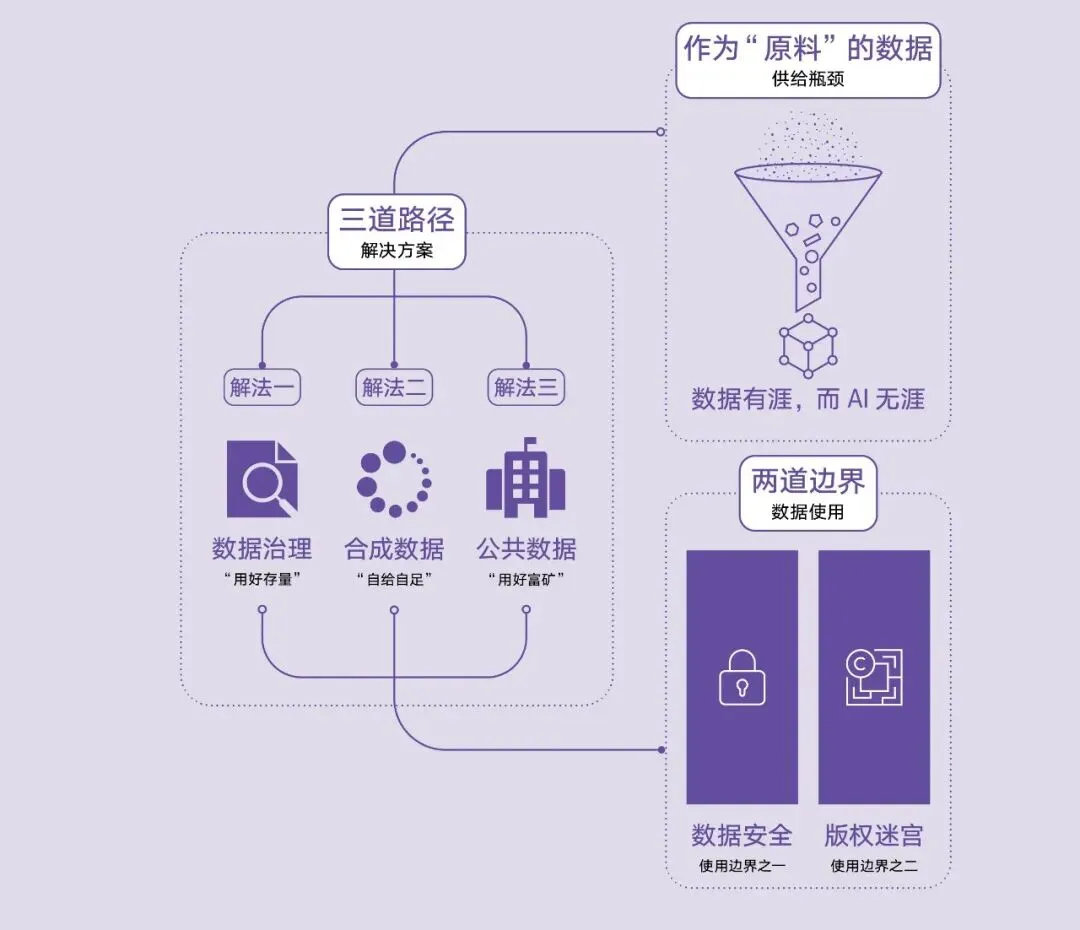
2025 AI Governance Returns to Realism: From Preventing Doomsday Risks to Releasing Industrial Potential: In 2025, global AI governance underwent a profound transformation, shifting focus from “safety anxiety” to “development priority.” The EU passed a digital comprehensive proposal to simplify rules and save competitiveness; the Trump administration in the US revoked safety executive orders to limit local legislation; and China maintained a pragmatic, application-oriented governance approach. The industry consensus has shifted to “development is security,” where governance must serve industrial competitiveness. Meanwhile, synthetic data has become a key path to solving the “data drought,” and open-source governance is leaning towards establishing “safe harbor” systems for liability (Source: Tencent Research Institute)
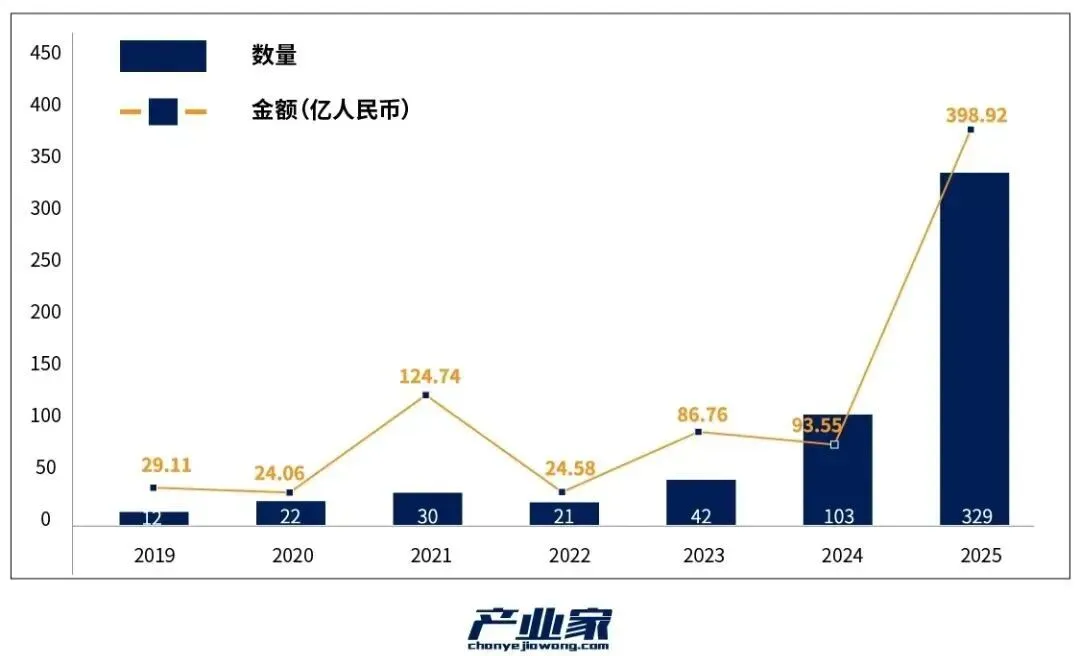
Embodied Intelligence 2026 Outlook: Shifting from Conceptual Narrative to the Value Loop of Real Engineering: In 2026, embodied intelligence is entering a critical differentiation phase, with the industry focus shifting from showcasing hardware performance to collecting “high-quality real-machine data.” Automotive manufacturing and logistics sorting have become the primary battlegrounds. Capital flow shows a Matthew effect, with funds highly concentrated in leading manufacturers like Galbot and Agibot. Regarding technical paths, the industry has begun accumulating data through “human-fed” teleoperation platforms and is pushing for the open-sourcing of “brain” models to establish inheritable and reusable capability foundations, solving the stability issues of scene-switching failures (Source: Chanyejia)
VLA+ Model Evolution: Rho-alpha Introduces Tactile Perception and Real-Time Learning: Microsoft’s release of Rho-alpha (ρα) marks the entry of Vision-Language-Action models into the “VLA+” era. Unlike traditional models, it integrates tactile sensing, allowing robots to perform delicate operations like plugging/unplugging and packaging through “feel.” More importantly, it supports online learning, enabling continuous evolution from real-time human corrections. This adaptability allows robots to better handle long-range tasks in unstructured environments (Source: TheTuringPost)
Recursive Language Models (RLMs): Breaking the Physical Limits of LLM Context Windows: MIT CSAIL proposed Recursive Language Models (RLMs), which offload prompts into a Python REPL as variables, allowing LLMs to interact with massive contexts in a symbolic manner. RLMs can handle over 10 million Tokens without retraining. In tests like BrowseComp+, their accuracy is twice as high as base LLMs, completely breaking the context bottleneck of traditional Transformer architectures (Source: TheTuringPost)
YOLO26 Released: Algorithm-Driven New Heights in Real-Time Vision: Ultralytics officially released YOLO26, adhering to the philosophy of zero additional inference cost. By introducing semantic segmentation loss into the backbone network, it significantly improves instance segmentation accuracy; the introduction of RLE for modeling regression errors greatly enhances the stability of keypoint detection. The simultaneously released YOLOE-26 supports zero-shot detection with text/visual prompts, providing powerful support for edge-side open-world perception (Source: ZhihuFrontier)
🧰 Tools
Claude Code and Its Ecosystem Tools: Reshaping Developer Workflows: The ecosystem around Claude Code is rapidly exploding. The newly launched Devin Review displays PR differences through logical grouping rather than alphabetical sorting, helping developers understand complex code changes; Gas Town implements hierarchical management of multiple parallel Claude instances; and Claude Skills allows users to customize complex workflows such as “one-click YouTube video to bilingual short video.” Community discussions suggest that the significance of AI Coding lies in allowing developers to rediscover the joy of creation (Source: dotey, cognition)

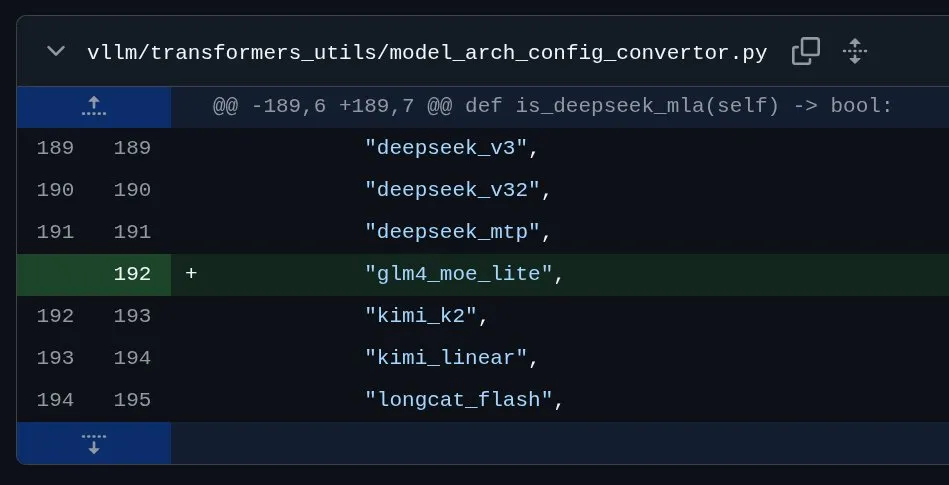
GLM-4.7-Flash Localization Breakthrough: 200K Context Requires Only 10GB VRAM: The community discovered that a single-line change in vLLM can significantly optimize the KV cache of GLM-4.7-Flash, allowing it to occupy only 10GB of VRAM in 200K full-context mode. This means a single RTX 5090 can smoothly run this SOTA model. Additionally, llama.cpp has merged a Flash Attention fix for CUDA, further improving the inference speed of this model on consumer-grade graphics cards (Source: algo_diver, Reddit)
Runway Gen-4.5 Image-to-Video: Crossing the Threshold of Realism: Runway launched the Gen-4.5 image-to-video feature, supporting longer storytelling, precise camera control, and consistent character performance. In a blind test of 1,000 people, over 90% of respondents could not distinguish Gen-4.5 generated videos from real footage. This breakthrough in physical simulation capabilities marks AI-generated content reaching film-grade commercial standards (Source: c_valenzuelab)
Higgsfield: A Full-Stack AI Video Production Line for Marketers: Video generation unicorn Higgsfield has achieved rapid growth by precisely serving social media marketers, with ARR exceeding $200 million in 9 months. Its core tool, Canvas, supports storyboard and camera movement design, with a built-in multi-agent collaboration system including screenwriters, directors, and cinematographers. Users can generate videos simply by sketching motion directions, deeply fitting professional advertising workflows (Source: 36Kr)

World Labs Marble: A Generative World Model via Non-JEPA Path: World Labs, founded by Fei-Fei Li, launched the Marble platform, using NeRF and Gaussian Splatting technologies to generate explorable 3D worlds. It is not frame-by-frame generated video, but a persistent, editable, and stateful 3D environment. Users can generate and export 3D assets for Unreal or Unity within minutes, demonstrating powerful spatial intelligence (Source: Reddit)

📚 Learning
LLM Inference-Time Scaling: A Practical Guide to Self-Refinement Loops: Sebastian Raschka explored inference-time scaling techniques in a new chapter of “Build a Large Language Model.” Moving beyond simple voting mechanisms, the tutorial details how to implement a “Self-refinement loop,” allowing the model to iteratively criticize and improve its own answers, and provides implementation code for Log-probability scoring from scratch (Source: rasbt)

AAAI 2026 Outstanding Paper Awards: Causal Learning and Robot Perception Take Center Stage: The 40th AAAI Conference announced its award winners. CaDyT proposed a continuous-time causal discovery method for dynamic systems; ReconVLA significantly improved robot manipulation precision by reconstructing visual attention regions; and LLM2CLIP demonstrated how to use large models to enhance multimodal representations. These studies reflect the AI community’s deep focus on physical world modeling and multimodal alignment (Source: aihub.org)

New Challenges in AI Safety Assessment: Addressing “Privacy Collapse” and “Hallucinated Citations”: Latest research reveals concerns in the AI academic and safety fields: over 50 papers at NeurIPS 2025 were found to contain AI-generated fake citations. Meanwhile, the paper “Privacy Collapse” points out that benign fine-tuning can cause frontier models to lose their reasoning ability regarding privacy norms, exposing serious privacy vulnerabilities while maintaining high performance. This suggests a need for more automated academic auditing and deeper safety assessment mechanisms (Source: rbhar90, arXiv)
💼 Business
OpenAI Seeks $50 Billion Funding: Sovereign Wealth Funds as Key Bargaining Chips: OpenAI CEO Sam Altman is in talks with sovereign wealth funds in the Middle East, planning to launch a new funding round of up to $50 billion. This reflects the explosive growth in frontier model training and infrastructure costs, which only sovereign-level capital can support. Despite bankruptcy rumors, OpenAI is using a higher-risk financing strategy to ensure its lead in the AGI race (Source: CNBC)

Feishu vs. DingTalk AI Hardware War: The Battle for the Entry Point Behind Recording Devices: Feishu (Lark) partnered with Anker Innovations to launch an AI recording bud, engaging in a direct confrontation with DingTalk’s A1. Recording hardware is seen as the “first touchpoint” of corporate office workflows, aimed at converting voice into digital assets that can be stored and acted upon. DingTalk focuses on converting recordings into task flows, while Feishu emphasizes deep synergy with Minutes and Knowledge Bases. The essence of this war is the competition for the physical execution carrier of AI Agents (Source: 36Kr)

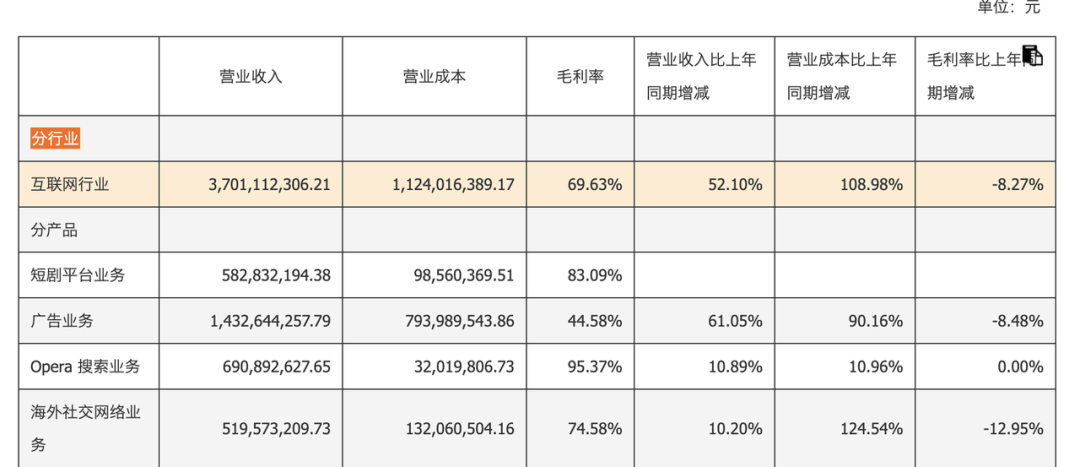
Kunlun Wanwei’s AI Business Losses Continue: The Gambit Between Vertical Deep-Diving and User Acquisition Growth: Kunlun Wanwei’s 2025 performance forecast shows continued losses. The company insists on “not making general models, only deep-diving vertically.” Its short-drama platform DramaWave and AI music model Mureka have achieved significant revenue, but high marketing expenses and R&D investment remain the “edge of the knife” for profitability. This reflects the hardship of vertical AI applications establishing moats under the shadow of giants (Source: 36Kr)
🌟 Community
AI Photography Win Sparks “Trust Crisis”: Transparency of the Creative Process Matters More Than the Result: In early 2026, the first-prize work “Old Light of Qilou” in a photography competition was exposed as AI-generated, sparking public outrage. Community discussions suggest that AI has learned to please the “aesthetic average” of judges, causing traditional blind review mechanisms to fail. This is not just a technical overstep but touches the human baseline for “real emotional investment.” The community calls for separate tracks for pure human creation and AI-assisted work, requiring creative logs to protect artistic boundaries (Source: 36Kr)

Workplace AI Alienation: Generated “Thank You Notes” and Vanishing Trust: A survey shows that when employees detect a manager’s appreciation email was AI-generated, trust plummets from 83% to 40%. The community is debating this “fake sincerity,” arguing that while AI can improve efficiency, it becomes a barrier in emotional communication. Furthermore, discussions on “responsibility vacuums” are increasing: when the scale of Agent-generated code exceeds human auditing capacity, traditional CI/CD processes face structural failure (Source: Reddit, arXiv)
The “Entry Point” Proposition in the AI Era: A Dragon-Slaying Saber or a “You-Want-Your-Life 3000”?: Regarding the phenomenon of mobile AI assistants competing for entry points, the community has engaged in deep reflection. History proves that “universal assistants” detached from high-frequency core scenarios often become low-frequency “Swiss Army Knives.” Real entry points grow naturally rather than being seized. Compared to GUI screen-reading technology that bypasses sandboxes, models adopting the MCP protocol and A2A collaboration are more favored. Privacy and security remain insurmountable baselines (Source: 36Kr)
💡 Others
Sinong (思农): China’s First Agricultural Vertical Large Model Released: Targeting the strategic STEM field of agriculture, China has released its first open-source agricultural vertical large model, “Sinong.” The model has been deeply fine-tuned on data regarding crops, livestock, and agricultural economics. Community comments point out that the value of vertical LLMs lies in their ability to “discover” and “verify” non-standard phenomena, rather than simple text generation (Source: teortaxesTex)

Michigan Advances Anti-Chatbot Bill: Protecting Youth from “AI Addiction”: The Michigan State Senate has proposed a series of bills aimed at limiting “addictive algorithmic feeds” targeting minors and strictly regulating AI “companion bots.” The bills require online services to adopt “privacy by default” designs and prohibit AI systems from encouraging self-harm or replacing real psychological support. This reflects legislators’ concerns about social isolation and psychological manipulation potentially brought by AI (Source: Reddit)

HBM Market Deep Analysis: Platform-Bound Supply Cycles Rather Than Simple Scarcity: The community has corrected the interpretation of the HBM (High Bandwidth Memory) market: HBM supply is limited not because of wafer shortages, but because it is a “platform-bound” supply chain. Each generation of products (HBM3/3E/4) must pass validation for specific accelerators within a very narrow window. This wave-like product cycle means future profitability depends on the ability to continuously pass validation for the next generation of platforms (Source: teortaxesTex)