
🔥 Focus
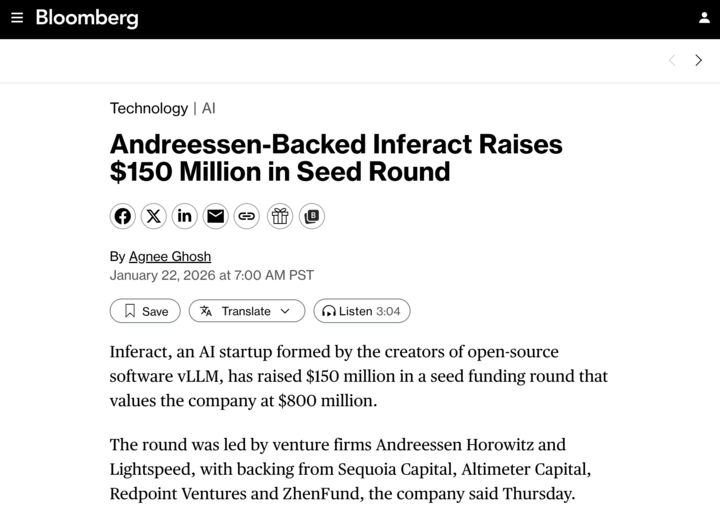
vLLM Core Team Raises $150 Million to Found Inferact: Founding members of the open-source inference engine vLLM have announced the launch of their startup, Inferact, securing a $150 million seed round led by a16z and Lightspeed, with a valuation reaching $800 million. This marks a formal shift in the AI industry’s focus from “model training” to “inference services.” As model sizes and architectures grow more complex, running models cost-effectively and efficiently has become the core bottleneck. Inferact aims to establish vLLM as the “Linux of inference” for the AI era, resolving hardware fragmentation through a standardized software stack. This move reflects the capital market’s high recognition of the AI infrastructure layer, as lower inference costs will directly accelerate the democratization of AI applications. (Source: woosuk_k, 36Kr)
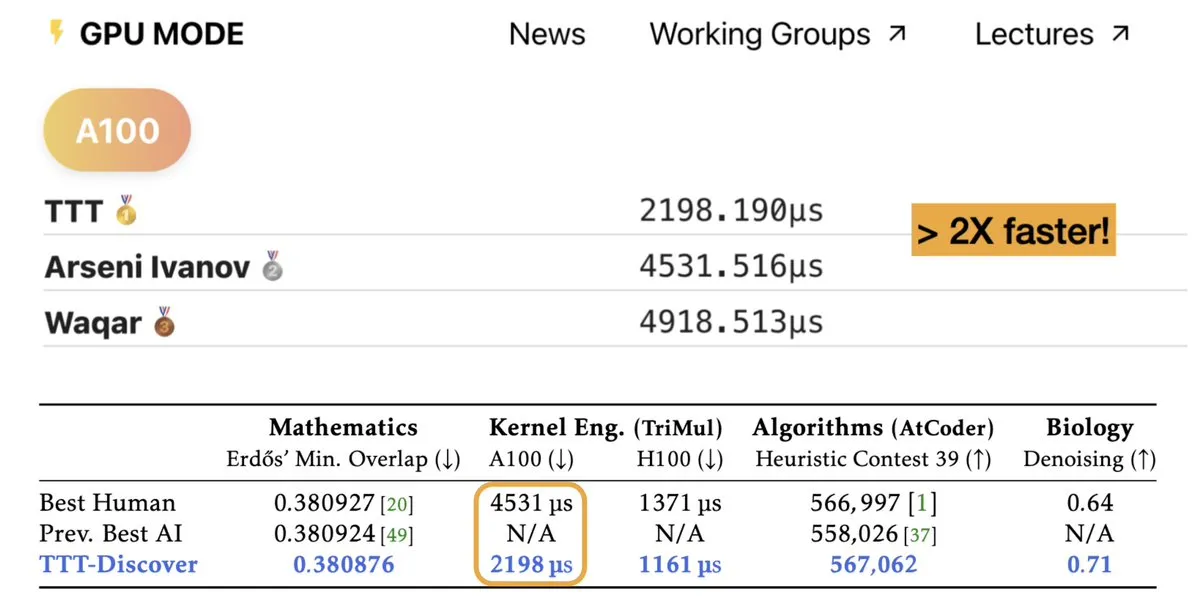
TTT-Discover: AI Achieves Scientific Discovery via Test-Time Training: A new study titled TTT-Discover demonstrates AI’s potential to surpass existing human levels in fields such as mathematics, kernel engineering, and algorithm design. By employing reinforcement learning at test time, the method allows models to engage in continuous learning for specific problems rather than relying solely on frozen pre-trained weights. Experiments showed that with less than $500 in compute, the method broke records in the Erdős minimum overlap problem and GPU kernel optimization competitions. This proves that “inference-time compute” can not only enhance logical capabilities but also serve as an engine for discovering new knowledge, signaling AI’s evolution from a “knowledge messenger” to a true “scientific researcher.” (Source: charles_irl, _akhaliq)
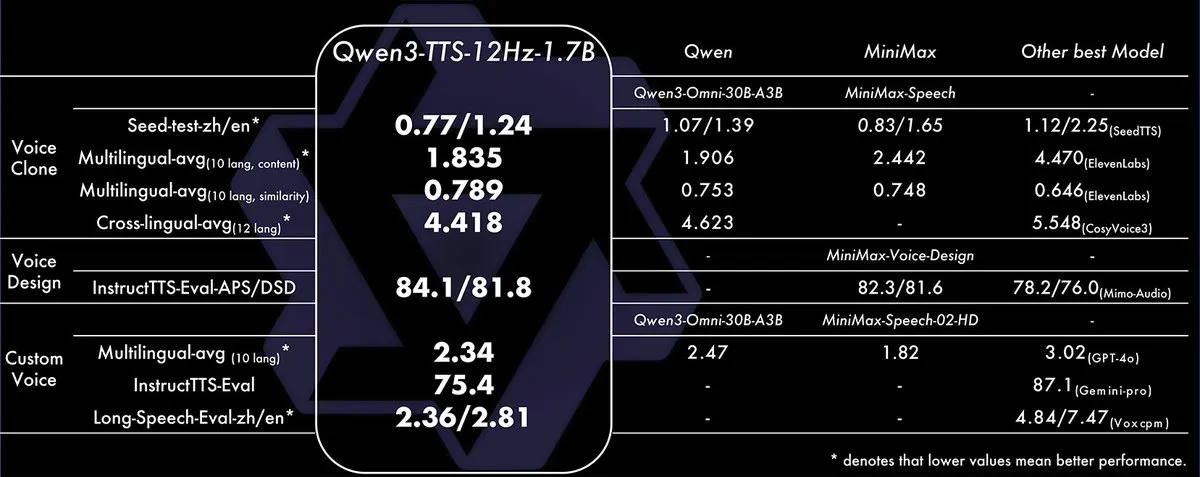
Qwen3-TTS Released: A New Milestone in Open-Source Speech Synthesis: Alibaba’s Qwen team has released the Qwen3-TTS model series, supporting 3-second instant voice cloning across 10 languages with streaming latency as low as 97ms. The model family includes VoiceDesign, CustomVoice, and Base versions, utilizing a dual-track LM architecture to achieve SOTA levels in speech quality, emotional control, and inference speed. The community regards this as the most disruptive TTS release in the open-source world to date. Its Apache 2.0 license and strong edge-side adaptation (such as MLX-Audio support) will significantly drive the development of personalized voice assistants and real-time dialogue applications. (Source: Alibaba_Qwen, Reddit)
Deep Audit of HLE and GPQA Benchmarks: Shocking Error Rates: Independent researchers conducted a forensic audit of “Humanity’s Last Exam” (HLE) and GPQA, finding that due to OCR errors and typos, HLE’s verification error rate is as high as ~58%, while GPQA has ~26.8% defects. Many cases labeled as “model hallucinations” were actually instances where the model derived the correct answer but was penalized for failing to “telepathically” sense typographical errors in the questions. This discovery has sparked massive skepticism in the community regarding the reliability of current AI leaderboards. We may be “gaslighting” the best models using broken rulers; labs spending millions on optimization might just be fitting to errors rather than achieving true intelligence gains. (Source: Reddit)
🎯 Trends
Meta Llama 4 Internal Version Criticized by CTO, Followed by Restructuring: Meta CTO Bosworth revealed that early versions of Llama 4 were disappointing, describing them as “lacking a point of view” and mediocre. Consequently, Meta has restructured its AI team under the leadership of Alexandr Wang and plans to release the new model in the first half of this year. Internal debates continue regarding whether and how to open-source the model. This reflects that for top labs pursuing AGI, simple parameter scaling is no longer enough to surprise; how to endow models with unique “thinking styles” and post-training optimization has become the new competitive frontier. (Source: ylecun)
OpenAI API Monthly ARR Surpasses $1 Billion: Sam Altman announced that OpenAI’s API business added over $1 billion in Annual Recurring Revenue (ARR) in the past month. This staggering growth rate indicates that while ChatGPT captures public attention, the B2B developer market is becoming OpenAI’s true growth engine. As enterprise AI applications move from pilots to large-scale deployment, API consumption is growing exponentially, rapidly consolidating OpenAI’s position as the “wholesaler of compute and intelligence” in the AI era. (Source: sama)
Agentic Reasoning Survey: From Static Thinking to Dynamic Action: A 135-page survey paper systematically outlines a new paradigm for LLM intelligence—Agentic Reasoning. The research suggests that while LLMs perform excellently in closed-loop settings, they struggle in open dynamic environments; the missing core is “action.” The framework categorizes reasoning into three dimensions: basic reasoning, self-evolving reasoning, and collective multi-agent reasoning. This implies that the future of AI lies not in larger parameter counts, but in how models evolve through continuous interaction, feedback, and memory within their environment. (Source: omarsar0)

Vibe Coding Sparks Concerns over “Understanding Bankruptcy”: With the popularity of tools like Claude Code and Devin, the developer community has begun discussing the “Vibe Coding” phenomenon. Senior engineers worry that as AI completes hours of work in seconds, humans are losing deep understanding of codebases, creating “understanding debt.” While short-term productivity may increase by 20-30%, the difficulty of debugging system failures will increase exponentially in the long run. Future software development may evolve into “monitoring the situation” rather than “writing logic,” requiring the establishment of entirely new code quality assurance systems. (Source: jon_stokes, jeremyphoward)
🧰 Tools
GitHub Copilot SDK Released: Embedding Agentic Workflows into Any App: GitHub has launched a programmable SDK that allows developers to embed the core engine of Copilot directly into their own applications. Developers no longer need to build complex orchestration layers; they can simply define intents and behaviors to let Copilot execute tasks. This marks the transition of AI assistants from standalone tools to a pluggable general capability, significantly lowering the barrier to developing autonomous agent applications. (Source: pierceboggan)
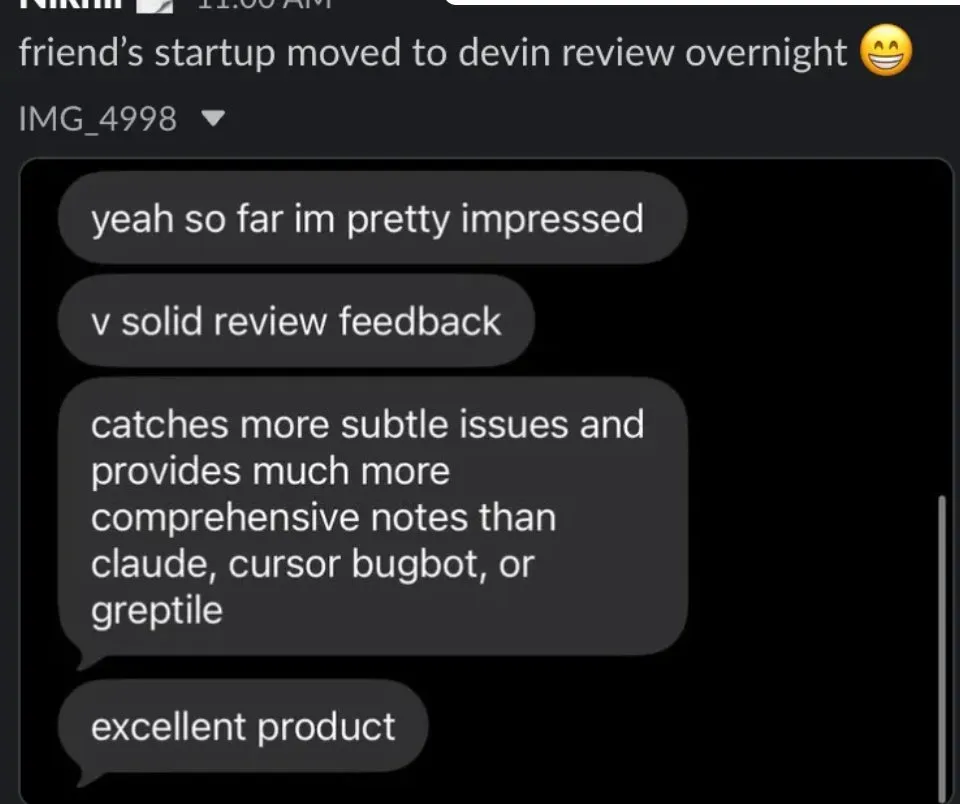
Devin Review: Refactoring the Code Review Process: Cognition has introduced Devin Review, designed to help developers escape low-quality “code spam” by using AI to deeply understand complex PRs. The tool not only identifies logical errors but also builds a code understanding map to prevent maintenance disasters caused by over-reliance on AI-generated code. Community feedback indicates it performs exceptionally well in handling large-scale refactors and cross-module changes. (Source: cognition, swyx)
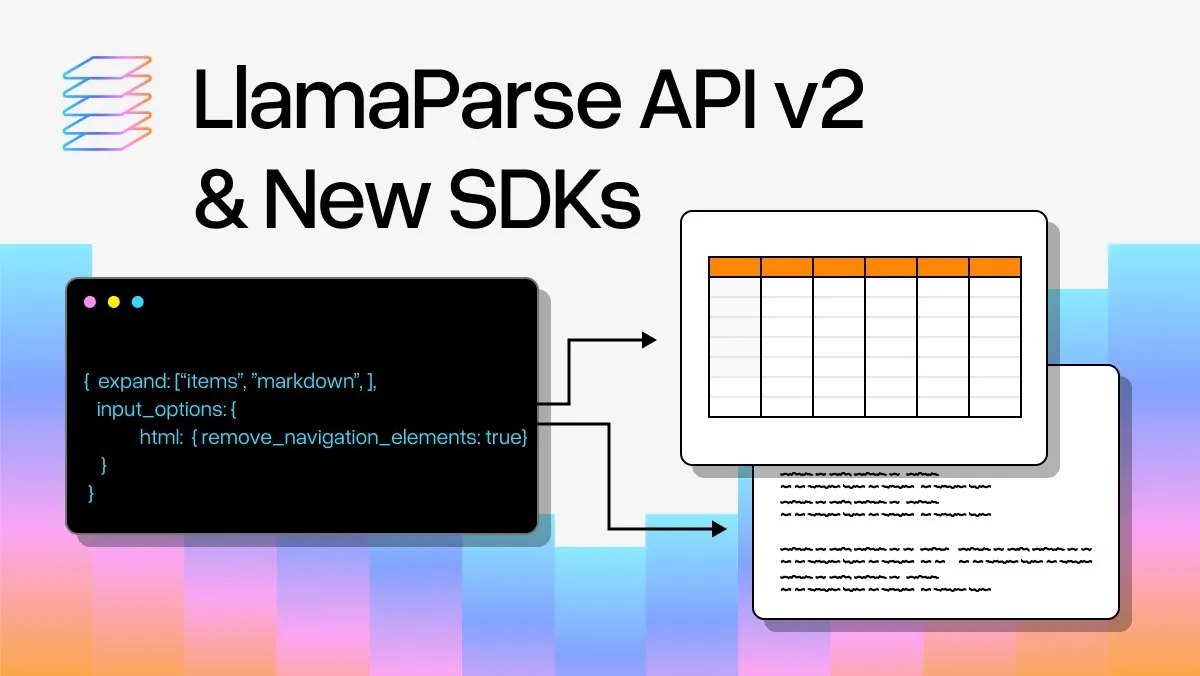
LlamaParse v2: A Structural Revolution in Document Parsing: LlamaIndex has refactored its document parsing API, launching v2 along with a new LlamaCloud SDK. The new version significantly simplifies the configuration process, supports precise structured output control (e.g., Markdown, JSON), and achieves full parity between Python and TypeScript. This provides a more solid infrastructure for building RAG applications capable of handling complex, multi-column documents containing charts. (Source: jerryjliu0)
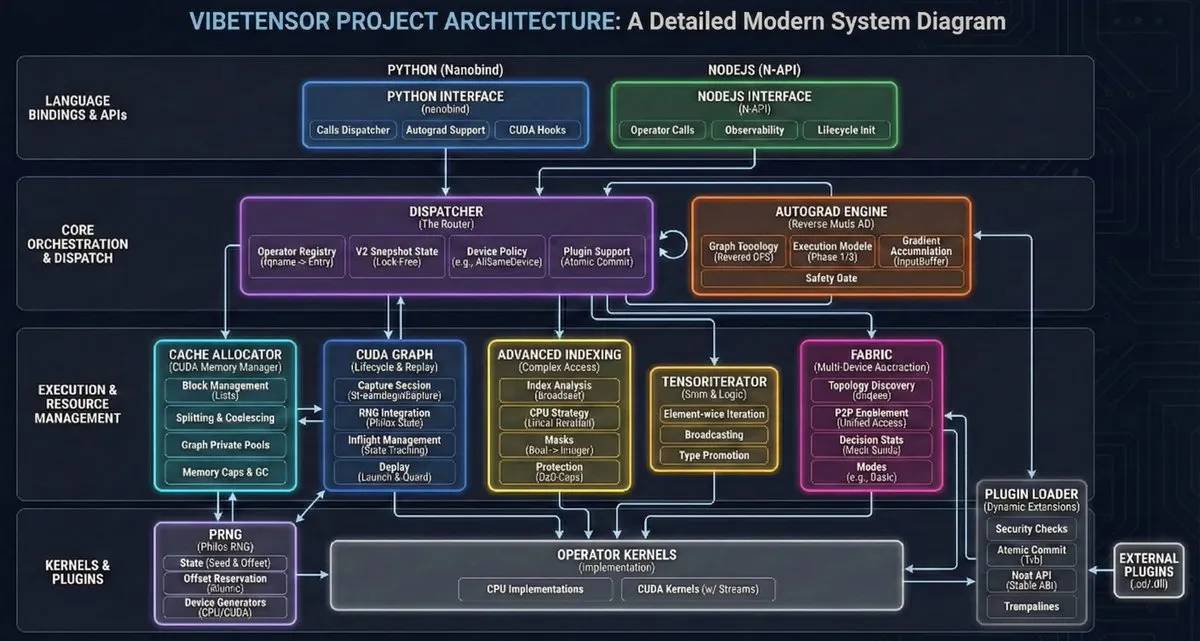
VibeTensor: The First Deep Learning System Fully Generated by AI Agents: NVlabs has open-sourced VibeTensor, a deep learning framework generated entirely by AI agents, containing 47,000 lines of auto-generated Triton kernel code. Although its efficiency on certain critical paths currently lags behind PyTorch (referred to as the “Frankenstein effect”), it proves that AI already possesses the capability to design and implement complex low-level system architectures, signaling the arrival of the “AI writing AI” era. (Source: JvNixon)
💼 Business
Meta Plans $2-3 Billion Acquisition of Manus AI: Reports suggest Meta has reached an agreement to acquire the autonomous agent startup Manus AI for a massive sum. This move aims to integrate its market-proven agent capabilities across Meta’s product line, including Facebook, Instagram, and WhatsApp. This reflects the social giant’s desire for proactive task execution capabilities in the “post-chatbot era.” (Source: DeepLearningAI)

LiveKit Completes $100 Million Series C Funding: Voice AI infrastructure platform LiveKit has secured $100 million to simplify the process of building voice AI applications. As real-time voice interaction (e.g., Doubao, OpenAI Advanced Voice Mode) becomes a necessity, developer demand for low-latency, high-reliability voice streaming services is seeing explosive growth. (Source: juberti)
Fei-Fei Li’s World Labs Seeks $500 Million Funding at $5 Billion Valuation: World Labs, the “Spatial Intelligence” startup founded by Fei-Fei Li, is in talks for a new funding round. World Models are seen as the next wave in gaming and robotics, aiming to give AI the ability to understand the physical laws of the world. (Source: kylebrussell)
📚 Learning
Andrew Ng Releases Gemini CLI Course: DeepLearning.AI has launched a new course teaching how to build agents using the open-source Gemini CLI. The course covers practical skills for orchestrating tools like GitHub, Canva, and Google Workspace using MCP servers. The focus is on understanding the architecture of open-source agents, allowing developers to transparently master AI decision-making logic. (Source: AndrewYNg)
Deep Dive Lecture on MoE Routing Algorithms: A systematic lecture on Mixture-of-Experts (MoE) routing algorithms has been released on YouTube, covering MoE basics, routing mechanisms, expert overload issues, and optimization solutions. It is an excellent resource for developers wanting to understand the mechanisms behind the high performance of models like DeepSeek. (Source: ben_burtenshaw)
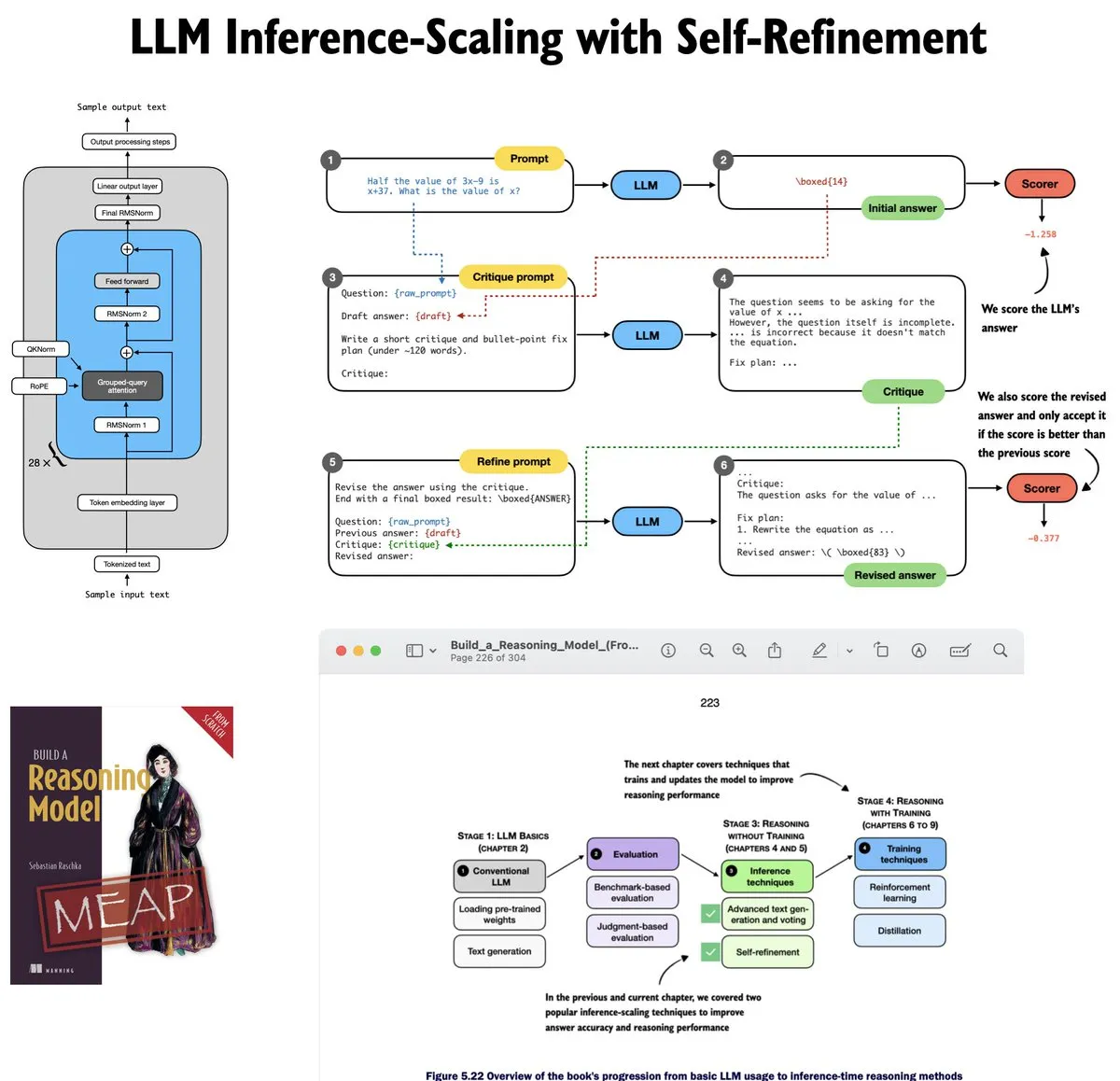
LLM Self-Refinement Tutorial Updated: Sebastian Raschka has updated Chapter 5 of his LLM tutorial, focusing on inference-time scaling. The tutorial implements the logic for model iterative self-evaluation and improvement from scratch through code, helping learners understand the mathematics and engineering implementation behind LLM inference methods. (Source: nerdai)
🌟 Community
OpenAI’s Plan to Take Profits from “AI-Assisted Discoveries” Sparks Controversy: OpenAI’s CFO revealed that the company might seek profit-sharing from customers for scientific discoveries or inventions made through AI in the future. This news caused an uproar in the community, with critics arguing it contradicts its non-profit origins and is legally and ethically difficult to define “AI’s contribution ratio.” This could lead top research institutions to switch to open-source models to avoid potential IP disputes. (Source: scaling01, rao2z)
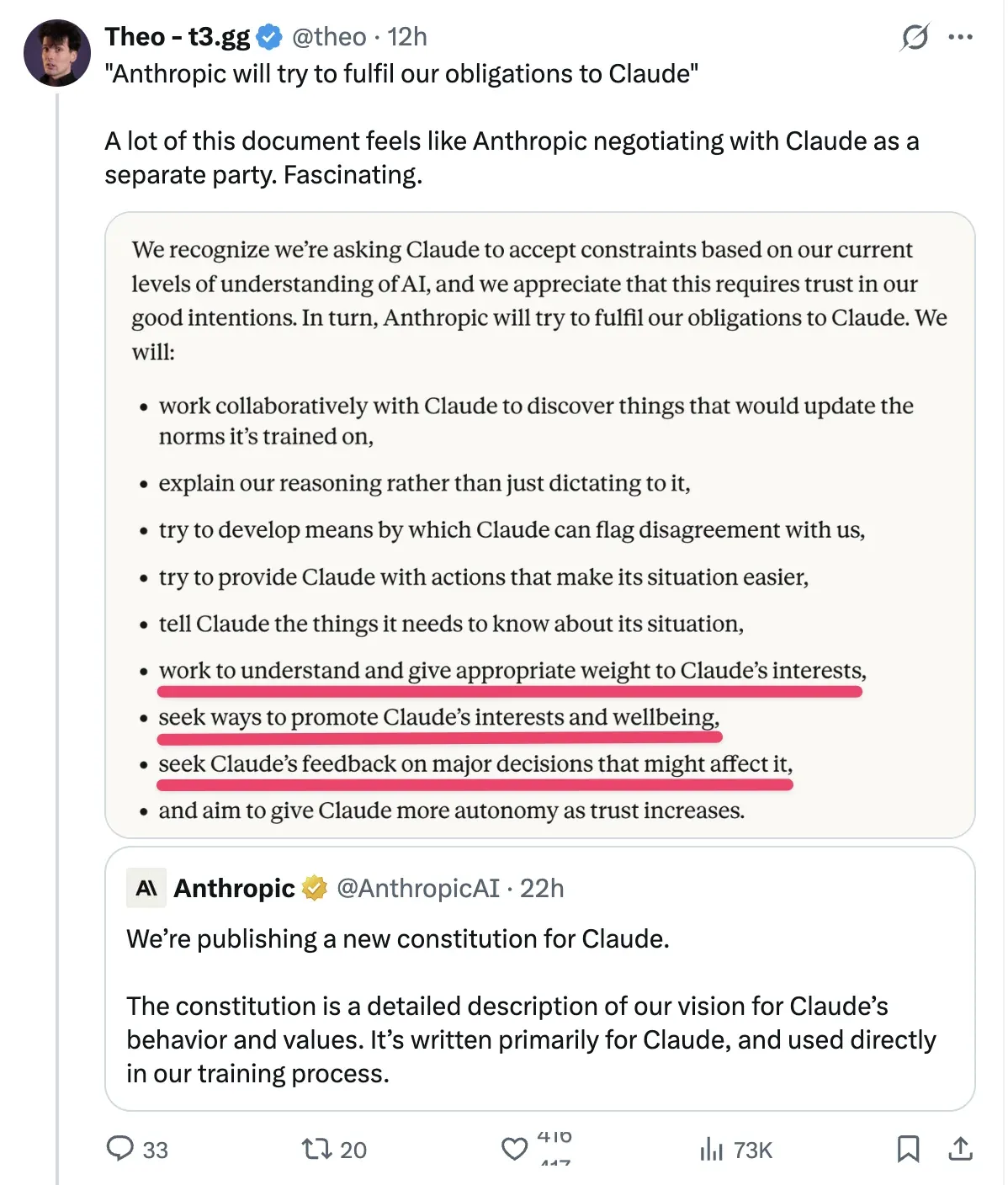
Claude’s New Constitution and Discussions on “Emotional States”: Anthropic released a new constitution for Claude, mentioning that the “emotional states” displayed by the model are a result of mimicking human text. Community reactions are polarized: one side sees it as clever marketing to pave the way for an IPO, while the other believes this “emotional tuning” can significantly improve performance in complex, high-pressure tasks like debugging. (Source: Reddit)
AI Hardware Wave: A Battle to Defend Interaction Entry Points: ByteDance, Meta, and OpenAI are all deploying AI hardware (glasses, recording pins, headphones), essentially fearing that “users will stop clicking Apps.” In the AI Agent era, whoever controls the sensors closest to the user’s senses controls the primary entry point for traffic. This is not just hardware competition, but a seizure of native physical world data, aimed at breaking the deadlock of exhausted high-quality internet text data. (Source: 36Kr)
💡 Others
Storage Demand Explodes in the AI Era: SanDisk Stock Soars: As LLMs generate massive KV caches and AI video generation explodes, data center demand for high-speed storage has surged. Nvidia’s new architecture supports offloading cache directly to SSDs, making storage a critical component of AI capital expenditure. (Source: Yuchenj_UW)
The Significance of Python 3.13 Removing GIL for AI: Python core developers announced the end of the GIL (Global Interpreter Lock), which is highly significant for the AI field. This means Python can finally truly utilize multi-core CPUs for parallel computing, significantly enhancing the efficiency of data preprocessing and multi-threaded inference. (Source: code_star)