



🔥 Focus
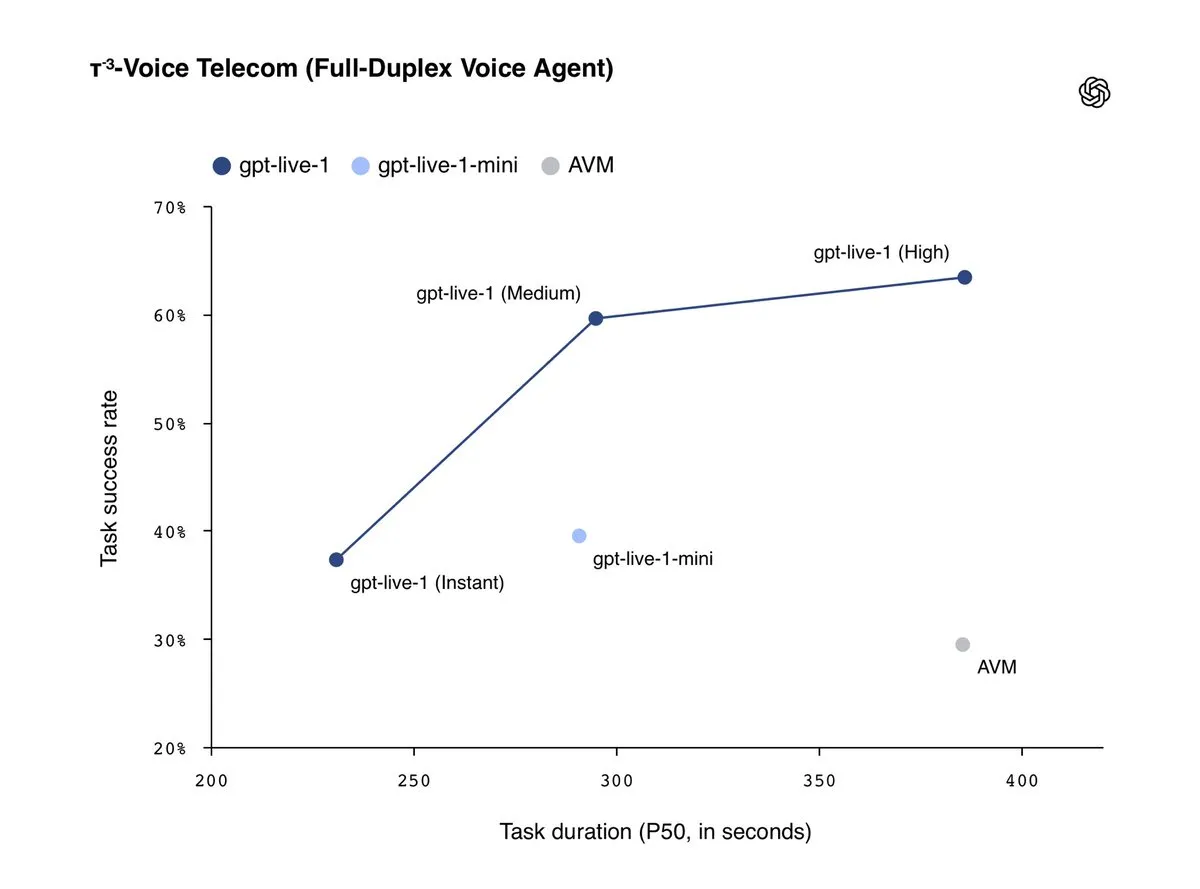
OpenAI Releases New Voice Model GPT-Live and Lifts Restrictions on GPT-5.6 Sol : OpenAI has officially launched GPT-Live, a next-generation voice model based on a full-duplex architecture that supports simultaneous listening and speaking, moving away from the turn-based walkie-talkie mode. For complex tasks, the system automatically delegates processing to GPT-5.5 in the background, significantly boosting reasoning and search capabilities. Meanwhile, the official access restrictions on GPT-5.6 have been lifted, with the official release of three models—GPT-5.6 Sol, Terra, and Luna—announced for Thursday, focusing on extreme reasoning. Leaks suggest that OpenAI has completely abandoned the 4T-parameter Spud base and will accelerate the release of GPT-6 based on a brand-new large base as early as this month to counter competition from Anthropic. (Sources: openai, gdb, THE DECODER, MarkTechPost, dotey, leo)
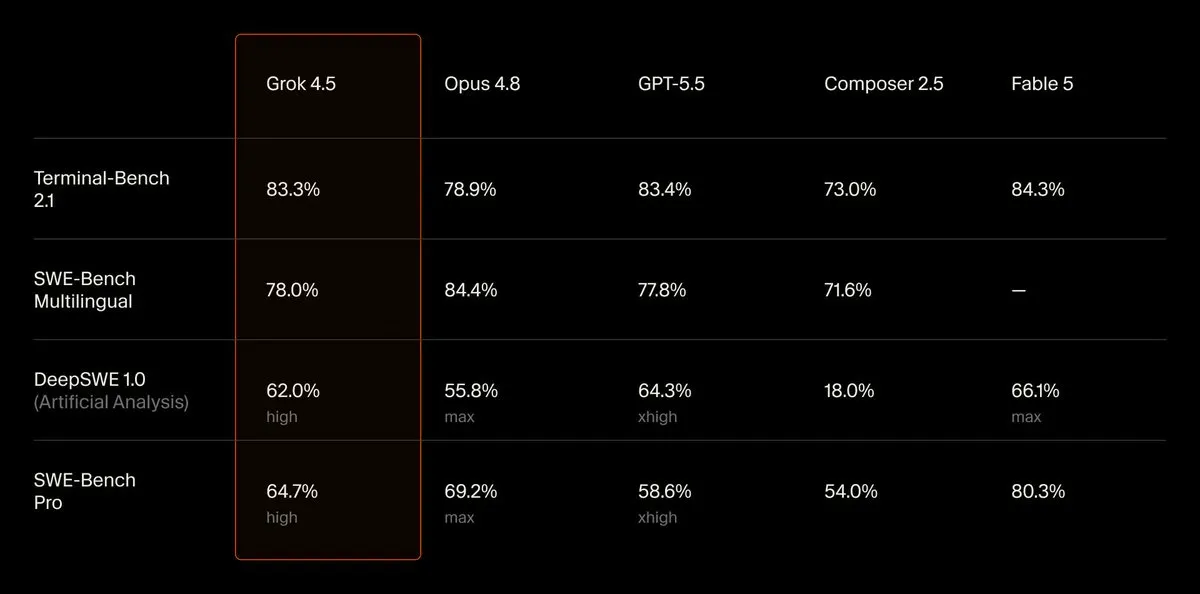
xAI Partners with Cursor to Release Grok 4.5 : SpaceXAI has released its first flagship large model specifically designed for coding and agent training, Grok 4.5 (1.5T parameters), trained on tens of thousands of GB300 GPUs. Grok 4.5 approaches Opus 4.8 and GPT-5.5 in multiple coding benchmarks, but its biggest highlight is its extremely high token efficiency (4.2x savings compared to Opus 4.8) and extremely low pricing ($2/$6). (Sources: SpaceXAI, cursor_ai, THE DECODER, Hacker News)
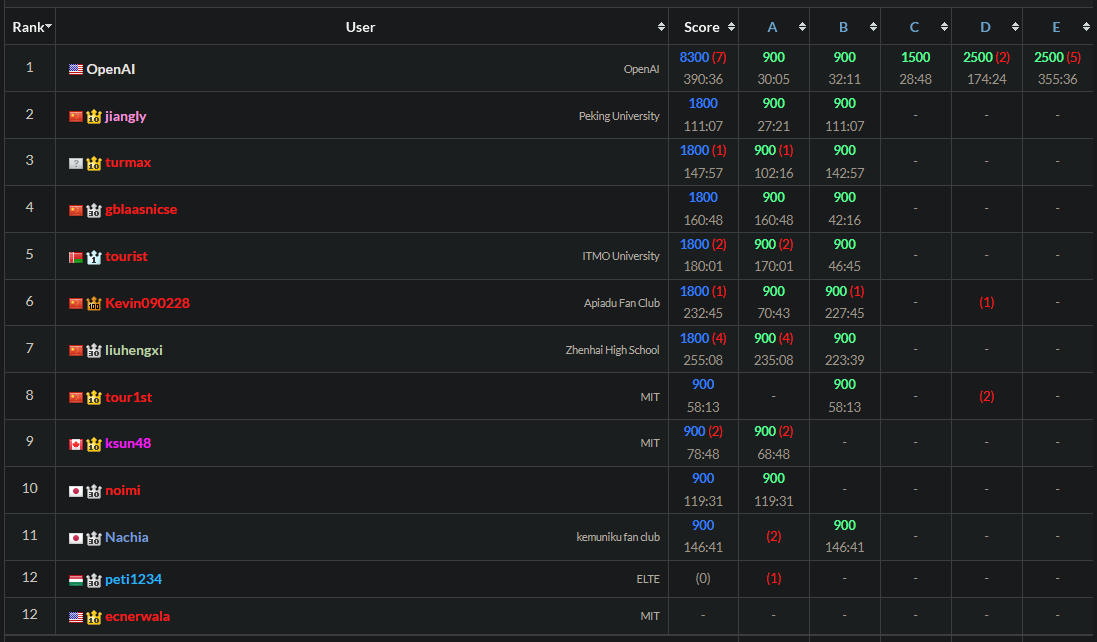
OpenAI Beats All Human Competitors in AtCoder Contest : In the AtCoder World Tour Finals 2026 algorithm open, OpenAI’s reasoning agent system (based on GPT-5.6 Sol) successfully solved all 5 highly difficult problems to take first place without an internet connection, while none of the top human competitors solved the last two most difficult problems. This marks a breakthrough for AI in the field of competitive programming involving complex, long-horizon reasoning. (Sources: THE DECODER, reach_vb)
OpenAI Audit Points Out Serious Flaws in SWE-Bench Pro : OpenAI published an analysis report indicating that about 30% of the evaluation tasks in SWE-Bench Pro, currently the most popular AI coding benchmark, have design flaws (such as overly strict assertions, vague requirements, or incorrect instructions), making it unable to accurately evaluate the true coding capabilities of frontier models. Consequently, OpenAI announced the withdrawal of its recommendation for the benchmark. (Sources: openai, THE DECODER, Hacker News)
🎯 Dynamics
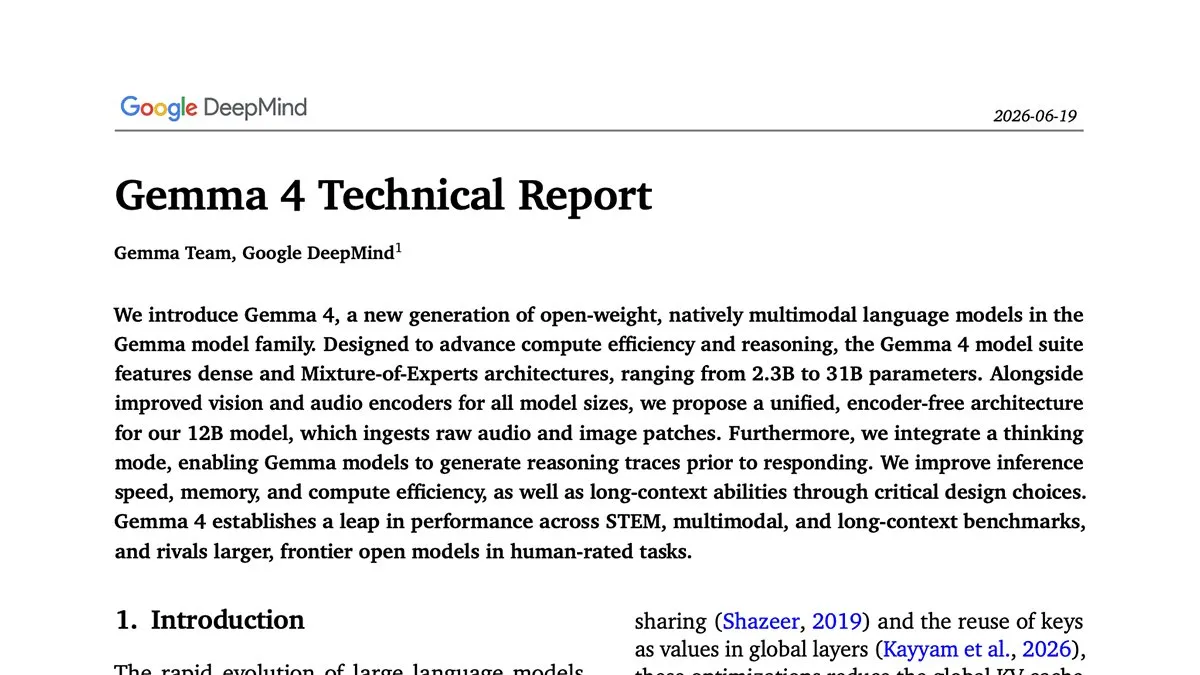
Google Releases Gemma 4 12B and Multimodal Model Family : Google has released Gemma 4, its most advanced open-source model family, which includes various sizes such as E2B, E4B, 26B MoE, and 31B Dense under the Apache 2.0 license. Among them, Gemma 4 12B adopts a brand-new unified, encoder-free architecture that directly inputs audio and visual signals into the large model backbone, significantly reducing the memory overhead for local execution. (Sources: Google DeepMind Blog, Hugging Face)
Google Introduces Gemma 3.1 and Nano Banana 2 : Google has introduced Nano Banana 2, an image model based on Gemini 3.1, delivering Pro-level image editing, inpainting, and multi-character consistency control capabilities to users with Flash-level ultra-low latency and high cost-effectiveness. (Sources: Google DeepMind Blog)
Google Releases Gemini 3.5 Flash and Live Translate : Google has launched Gemini 3.5 Flash, the first model in the Gemini 3.5 series, focusing on ultra-fast inference and agent execution. Concurrently, Gemini 3.5 Live Translate supports real-time, two-way voice translation in over 70 languages and is already live on the Google Translate mobile app. (Sources: Google DeepMind Blog)
Databricks Announces GLM 5.2 as Default Coding Model : Databricks conducted real-world tests of major models on its internal codebase of millions of lines. The results showed that the open-source model GLM 5.2 matched the top-tier Opus 4.8 in task pass rates but at a significantly lower cost. Consequently, Databricks announced it will make GLM 5.2 the default coding model for its developers. (Sources: THE DECODER, Yuchenj_UW)
Ant Group’s Lingbo Open-Sources Embodied Video Model LingBot-Video and World 2.0 : Ant Group’s Lingbo has open-sourced LingBot-Video (30B parameters, 3B active), the first MoE-architecture video foundation model for embodied AI, achieving SOTA on RBench. Concurrently released, LingBot-World 2.0 supports hour-level real-time generation and multi-person AI-native interaction. (Sources: 量子位, 机器之心)
Google AI Studio Supports Direct Project Import from GitHub : Google AI Studio has launched a new feature in its Build mode, allowing users to directly import existing repositories from GitHub. The AI then automatically converts them into formats compatible with the AI Studio runtime, making it easier for users to continue iterating and deploying in the cloud. (Sources: _philschmid, GoogleAIStudio)
Google and Hugging Face Launch Egress-Free Cloud Storage : Hugging Face has partnered with SkyPilot, allowing development teams to keep models and datasets in HF private storage and run computations directly on any cloud provider’s GPUs, eliminating expensive cloud provider egress fees. (Sources: huggingface, skypilot_org)
Google Launches AI Image Verification and SynthID Detection Features : Google has launched SynthID image, video, and audio verification features in the Gemini app, allowing users to directly upload media files to ask if they were generated by Google AI. This feature was successfully applied in Snopes’ debunking of a forged photo of US Senator Mitch McConnell’s hospitalization. (Sources: Google DeepMind Blog, TechCrunch)
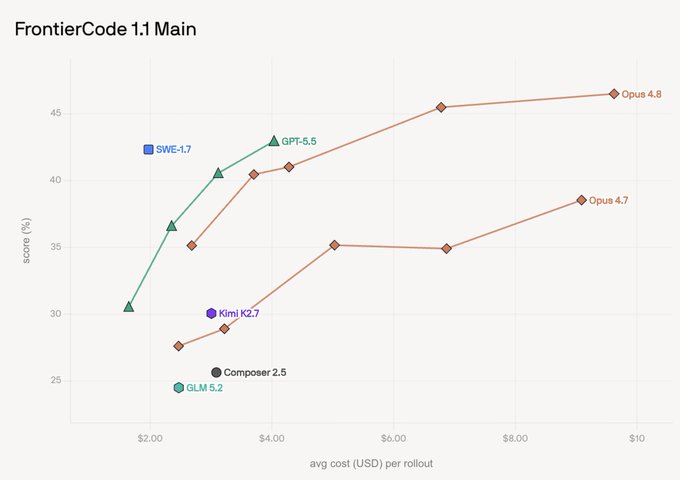
Cognition Releases SWE-1.7 Model Based on Kimi 2.7 : Cognition has introduced its latest code model, SWE-1.7. Trained via large-scale reinforcement learning (RL) on the Kimi K2.7 open-source base, the model achieves performance close to closed-source frontier models at an extremely low inference cost, and supports ultra-fast output of up to 1000 tokens/s. (Sources: Cognition, omarsar0, Hacker News)
🧰 Tools
Microsoft Releases Flint, a Chart Generation Language for AI Agents : Microsoft has open-sourced Flint, a visual intermediate language designed specifically for AI agents, and provided a corresponding MCP server. Agents only need to generate simple semantic types and channel mapping JSON, and the Flint compiler will automatically derive low-level chart details to generate Vega-Lite or ECharts charts. (Sources: Microsoft Research Blog, Hacker News)
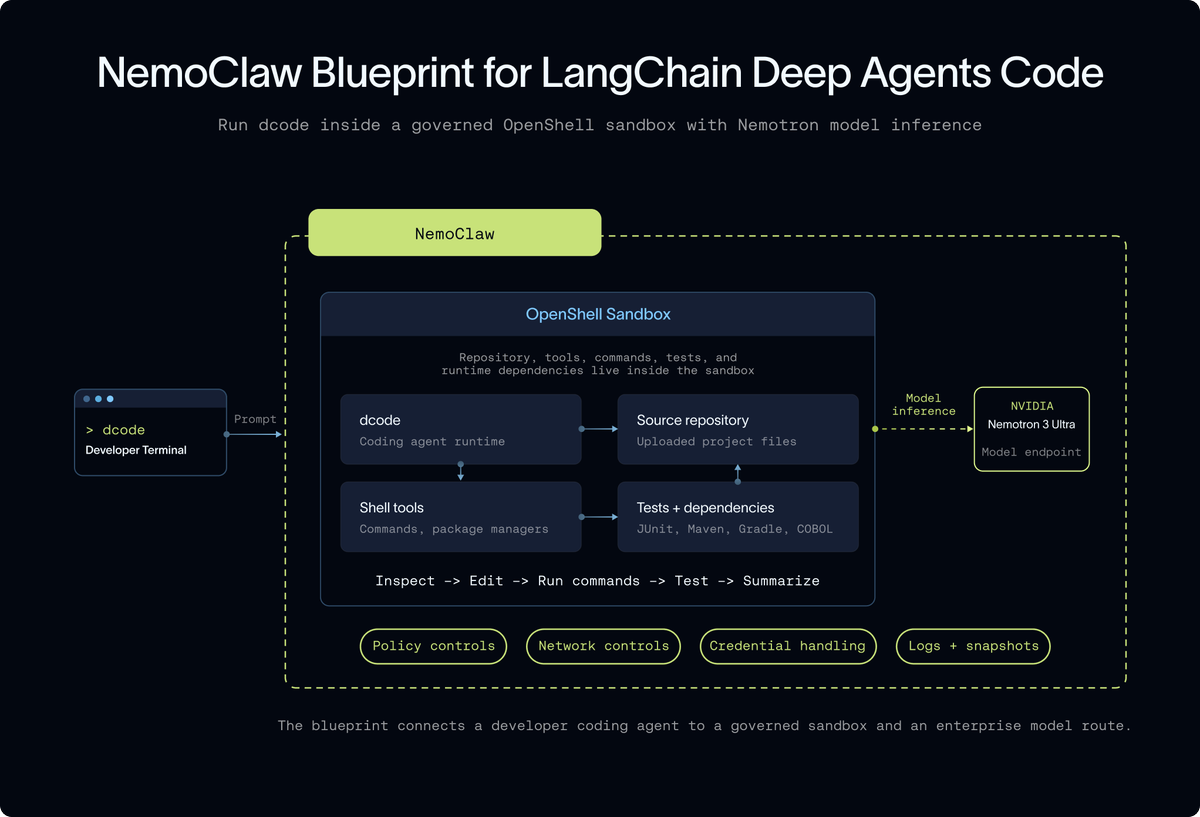
NVIDIA and LangChain Introduce NemoClaw Agent Blueprint : NVIDIA and LangChain have jointly released the NemoClaw Deep Agents Blueprint, an open-source enterprise-grade agent development architecture. By combining LangChain Deep Agents with the NVIDIA OpenShell secure runtime, enterprises can customize and own a fully autonomous agent technology stack. (Sources: NVIDIA Blog, LangChain)
Entire Launches Decentralized Git Network for AI Swarms : Entire, a startup founded by former GitHub CEO Thomas Dohmke, has released its decentralized Git network. Designed specifically for high-frequency concurrent read/write operations by AI coding agents, the network supports traffic offloading via global mirror nodes and provides a “semantic memory layer” to track agent modification history. (Sources: ZDNet)
Datalab Open-Sources 9B Document Extraction Model Lift : Datalab has open-sourced Lift, a 9B vision model designed specifically for structured extraction from PDFs and images. Users only need to input a document image and a JSON Schema, and the model can directly output structured JSON data conforming to the Schema in a single forward pass. (Sources: MarkTechPost)
📚 Learning
CUDA Handbook Author Makes Full Text Available Online : Nicholas Wilt, author of The CUDA Handbook, has announced that the full text of the book is now available for free on its official website, providing an authoritative reference resource for learners of GPU programming and parallel computing. (Sources: charles_irl)
Oxford and University of Oxford Publish Taxonomy of AI Agent Limitations : Scholars from the University of Oxford published a paper systematically reviewing agent failure cases across 19 benchmarks, proposing for the first time a taxonomy of LLM agent limitations spanning six major dimensions, including tool calling, long-horizon degradation, and multi-agent coordination. (Sources: dair_ai)
Max Planck Institute and Tsinghua University Introduce Online Self-Distillation d-OPSD for Diffusion Language Models : Researchers published a paper proposing d-OPSD, the first online self-distillation framework for diffusion language models (dLLMs). Instead of relying on static reference solutions, this framework dynamically retains the student model’s own “future” as privileged information, significantly improving the post-training efficiency of model inference. (Sources: 机器之心)
Google DeepMind Proposes AGI Cognitive Evaluation Framework and Kaggle Hackathon : Google DeepMind published a paper titled Measuring Progress Toward AGI: A Cognitive Taxonomy, proposing an AGI evaluation framework that encompasses 10 major dimensions including perception, learning, and metacognition. They have also partnered with Kaggle to establish a hackathon with a $200,000 prize pool to encourage the community to develop corresponding evaluation tools. (Sources: Google DeepMind Blog)
💼 Business
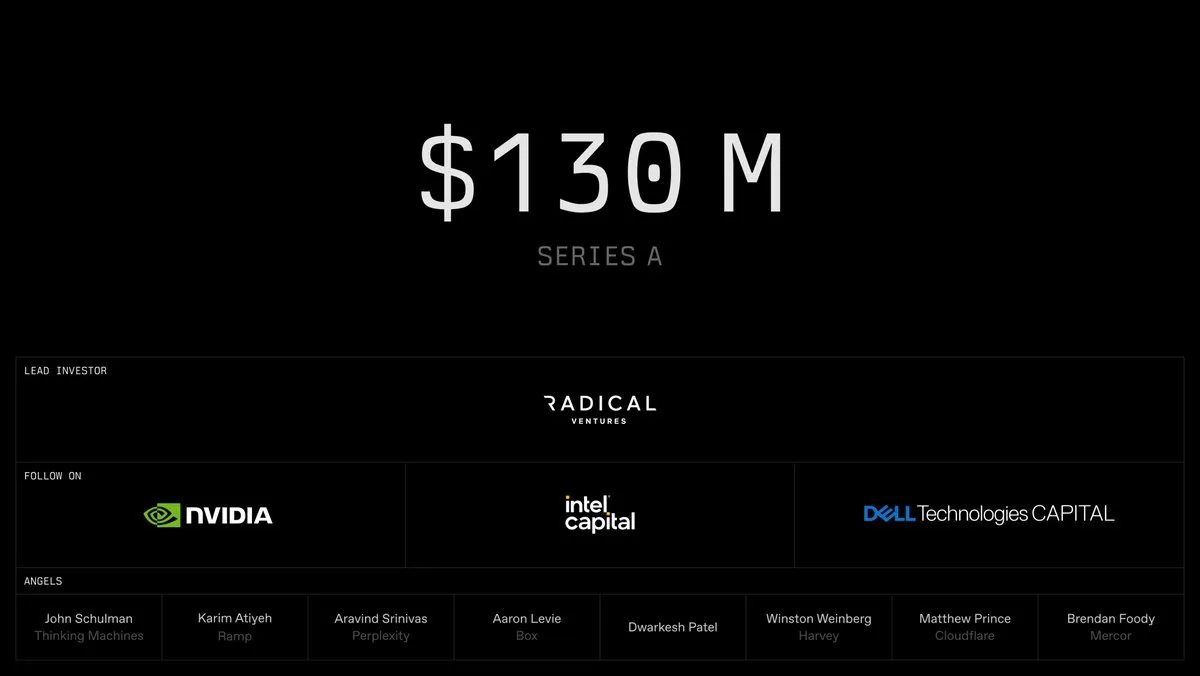
Prime Intellect Completes $130 Million Series A Funding : Decentralized AI computing and model training platform Prime Intellect announced the completion of a $130 million funding round, reaching a valuation of $1 billion. The round was led by Radical Ventures, with participation from NVIDIA, Intel Capital, and Dell Capital, aiming to build an open-source superintelligence technology stack. (Sources: TechCrunch, TheZachMueller)
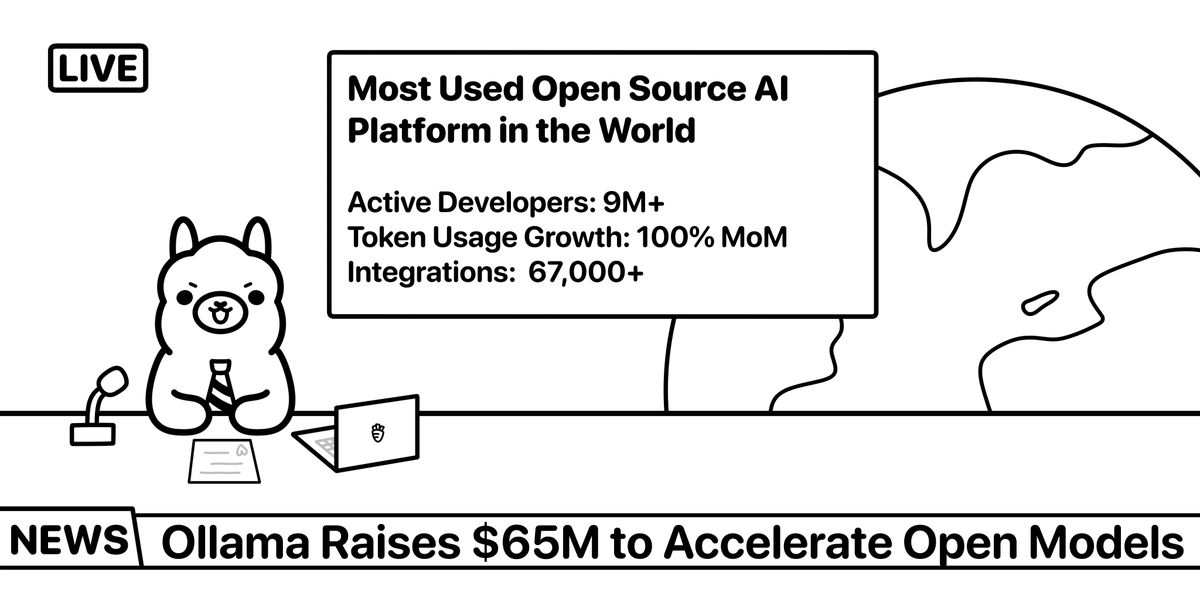
Ollama Completes $65 Million Series B Funding : Ollama, a tool for running and deploying large models locally, has completed a $65 million Series B funding round led by Theory Ventures, with participation from Benchmark. Currently, Ollama has nearly 9 million monthly active users, widely serving local inference workflows for both enterprise and individual developers. (Sources: TechCrunch, jerryjliu0)
Vibe Coding Tool Lovable Seeks Funding at $13.2 Billion Valuation : Swedish vibe coding startup Lovable is in talks with institutions like Menlo Ventures to raise $300 million at a valuation of $13.2 billion (doubling from the end of last year). The company previously disclosed that its annualized revenue has surpassed $500 million. (Sources: TechCrunch)
🌟 Community
Fable 5’s “Cave Speak” Neuralese Sparks Heated Discussion : Community users discovered that when handling extremely difficult tasks, Anthropic’s Fable 5 would accidentally leak its internal chain of thought on the web interface, containing emotional and symbolic fragments like “GRRR”, “GAAAAH”, and “DATA DATA DATA. GO.”. Researchers point out that this is a compressed “neuralese” spontaneously formed by the model during deep reasoning. (Sources: Reddit r/ClaudeAI, jpt401)
“Monopolistic Competition” and Profitability Dilemma in the LLM API Market : Scholars from the Tencent Research Institute published an analysis pointing out that the current LLM API market exhibits a typical monopolistic competition pattern. Despite exponential growth in demand, the presence of open-source models and distillation technologies has lowered technical barriers. Price wars make it difficult for LLM providers to achieve long-term profitability by “selling tokens,” and the market may evolve toward an oligopoly in the future. (Sources: 36氪)
Ivy League Professor Moves Final Exam Offline Due to AI Cheating : After discovering that a large number of students allegedly used AI to cheat on an open-book final exam (resulting in extremely high average scores), Brown University economics professor Roberto Serrano made a last-minute decision to change the final exam to a closed-book, in-person format. As a result, only three students in the class passed, and the average score plummeted by 50%. This incident has sparked widespread debate on Reddit and X regarding the failure of higher education assessments in the AI era. (Sources: Ars Technica, Hacker News)
💡 Other
NVIDIA Releases Next-Generation Vera CPU Architecture : NVIDIA has announced the Vera CPU architecture designed specifically for Agentic AI (featuring 88 Olympus cores and 1.2TB/s cross-chip bandwidth). It aims to solve the GPU idle bottleneck caused by insufficient CPU single-thread performance when agents perform multi-step planning, tool calling, and code verification. (Sources: TheTuringPost, jsuarez)
Samsung Chip Division Profit Surges, Surpassing NVIDIA : Driven by skyrocketing prices of DRAM and HBM memory chips fueled by the AI boom, Samsung Electronics’ chip division recorded a single-year profit that exceeded its cumulative profits over the past 40 years. With this, Samsung has surpassed NVIDIA to become the world’s most profitable technology company. (Sources: Reddit r/LocalLLaMA)
University of Cambridge’s Dawn AI Supercomputer Shuts Down Due to High Temperatures : Affected by an extreme heatwave in the UK (37.7°C), the cooling system of the Dawn supercomputer—one of the UK’s most powerful AI supercomputers located at the University of Cambridge—failed. It was forced to shut down to protect hardware, causing over 350 scientific research projects, including cancer vaccine development and climate change simulations, to be suspended for a week. (Sources: 36氪)