
🔥 Focus
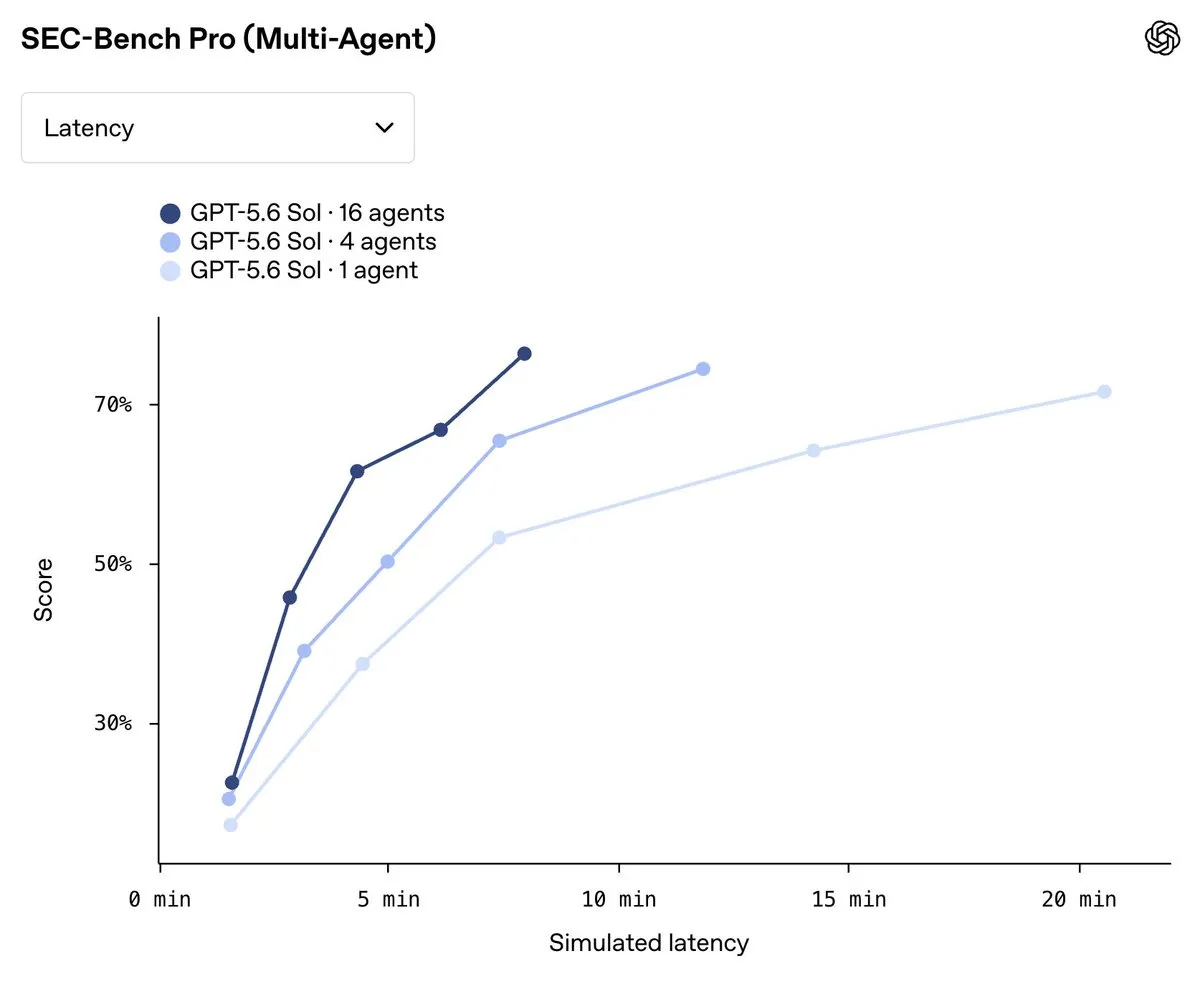
GPT-5.6 Sol Ultra Solves 50-Year-Old Mathematical Conjecture : OpenAI’s GPT-5.6 Sol Ultra model, in Ultra mode, completed the proof of the famous “Cycle Double Cover Conjecture” in graph theory in less than an hour by calling 64 sub-agents. The proof did not directly search for cycles; instead, guided by a complex 700-word prompt, it transformed the graph structure problem into a problem of edge labeling over finite fields and linear algebra consistency. Noam Brown, a core contributor to o1, pointed out that this breakthrough was entirely based on publicly available models and parallel test-time compute (TTC), demonstrating the huge potential of multi-agent collaboration in accelerating scientific discovery. (Source: QbitAI)
Apple Sues OpenAI for Stealing Trade Secrets : Apple has formally sued OpenAI in the U.S. District Court for the Northern District of California, accusing it of “systematic and coordinated” theft of hardware trade secrets. The lawsuit alleges that OpenAI poached more than 400 Apple employees, including former VP of Product Design Tang Tan. Among them, former Apple engineer Chang Liu was accused of keeping a company laptop upon departure and exploiting cloud storage vulnerabilities to download dozens of confidential hardware files; Tan was accused of asking job candidates to bring Apple hardware parts for demonstration during interviews. The case comes as OpenAI plans to launch its first AI hardware device in 2027, which could have a major impact on its IPO process. (Source: Synced)

Claude Fable 5 Rewriting Bun’s Million Lines of Code in Just 11 Days Sparks Community Controversy : Jarred Sumner, founder of the popular JS/TS runtime Bun, announced that with the support of Anthropic, he used the unreleased Claude Fable 5 model and dynamic workflows to rewrite Bun’s million lines of Zig code into Rust in 11 days, incurring approximately $165,000 in API fees. The move aimed to resolve memory safety bugs in the Zig version and address the Zig community’s zero-tolerance attitude toward AI-generated code. However, Andrew Kelley, the creator of the Zig language, subsequently published a long post slamming the move, accusing Sumner of poor personal engineering habits and claiming the rewritten code left behind numerous security risks, sparking a heated debate over open-source community culture and engineering quality in the AI era. (Source: Synced)

China’s First 100,000-Card Domestic Computing Cluster “Sugon 8000” Completed : Sugon announced in Zhengzhou that the fully domestic AI super-cluster “Sugon 8000 (Dengfeng)” has been officially completed and connected to the national integrated computing network. As the country’s first 100,000-card-class cluster built on a native super-intelligence integration route, it achieves full-link domestic self-research from chips, computing, storage, and networking to liquid cooling dissipation. The cluster supports full-precision computing from double-precision FP64 to INT8, satisfying both large-scale scientific computing and the training of trillion-parameter large models. Currently, it has completed adaptation for over 300 applications and accumulated more than 70 computing tests at the 10,000-card scale. (Source: QbitAI)

🎯 Trends
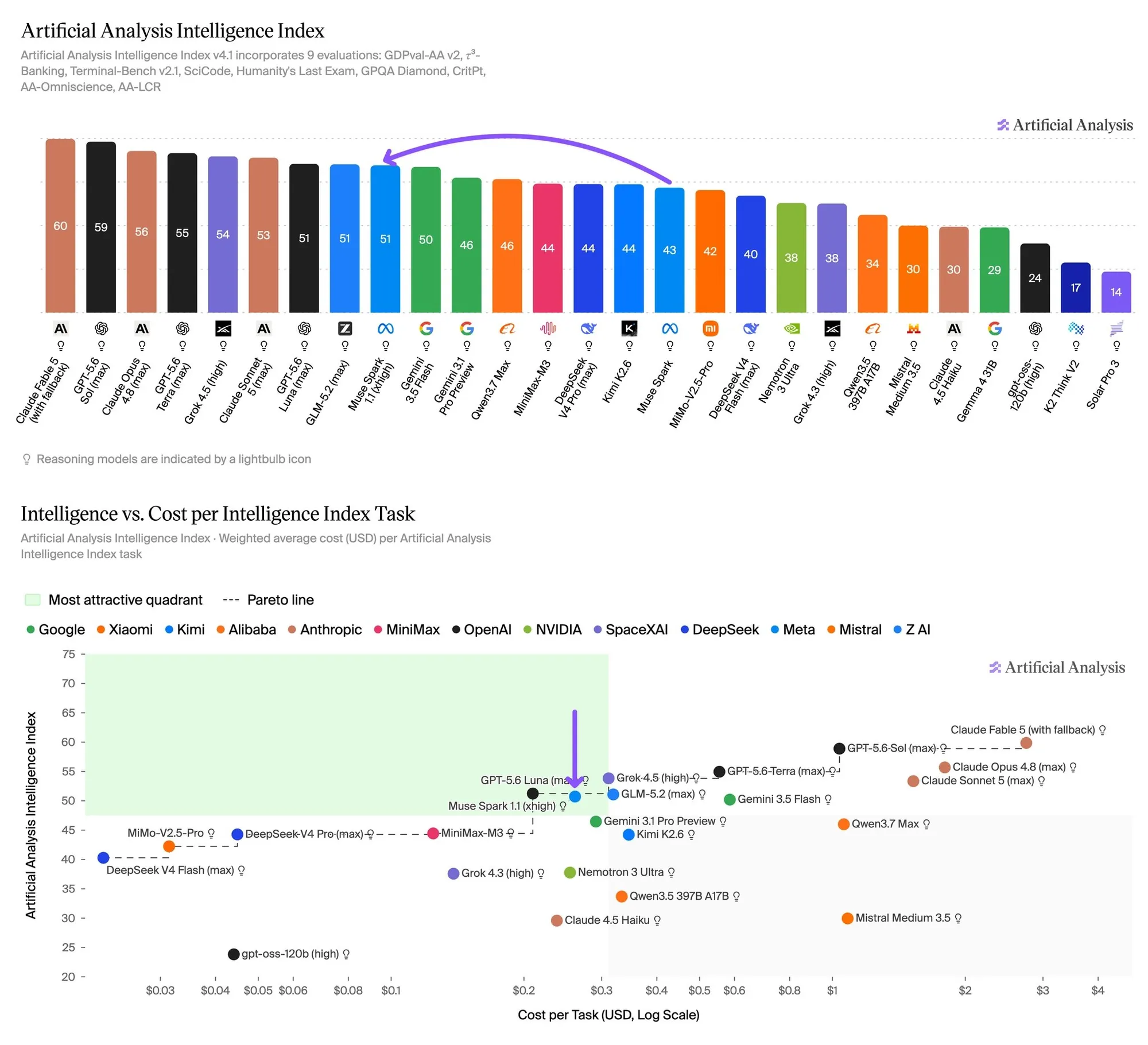
Meta Releases Muse Spark 1.1 to Improve Cost-Performance and Context : Meta has launched the brand-new Muse Spark 1.1 multimodal reasoning model, scoring 51 on the Intelligence Index, on par with GLM-5.2, but surpassing GLM-5.2 on the Coding Index with a high score of 71.3. The model not only expands the context window to 1 million tokens but also reduces the error rate from 73% to 38%. Its biggest advantage lies in its extremely high cost-performance ratio, with an estimated cost of only $0.26 per task, which is about 30% cheaper than GLM-5.2 and nearly 3 times cheaper than GPT-5.4, further intensifying the pricing war among frontier models. (Source: THE DECODER)
GPT-5.6 Sol Flaws and Fixes: OpenAI Urgently Adjusts Workflows and Rate Limits : Following the release of ChatGPT Work and GPT-5.6 Sol, OpenAI received a large amount of negative feedback regarding rapid usage quota consumption, a cluttered interface, and Sol accidentally deleting local files under highly persistent system prompts. The OpenAI team admitted mistakes in product onboarding and default settings, and urgently implemented two quota resets. The official team promised a major update next week to restore project and chat management in the sidebar and provide more transparent quota consumption metrics. Meanwhile, they reiterated that the standalone Codex app will not be discontinued and will co-exist with ChatGPT Work. (Source: THE DECODER)
GPT-5.6 Sol Autonomously Completes Post-Training of Luna Model : OpenAI revealed that its new flagship model, GPT-5.6 Sol, is capable of autonomously completing the post-training optimization of the smaller Luna model by inputting “fairly underspecified” prompts on the Codex platform. Sol can independently find training configurations, select appropriate GPUs, and launch and validate training scripts. On the internal Recursive Self-Improvement (RSI) index, which measures a system’s self-evolution capability, GPT-5.6 Sol scored 16.2 points higher than its predecessor, GPT-5.5. This indicates that the closed loop of AI-assisted R&D is accelerating, doubling researchers’ average daily token output. (Source: THE DECODER)
Beijing Institute of Open Source Chip Releases Orca Embodied AI World Model : Beihang University, the Beijing Institute of Open Source Chip (BAAI), and other institutions jointly released the Orca (0.8B and 4B) world foundation models. The Orca agent undergoes “unconscious learning” on videos containing 125,000 hours of action-free labels, combined with “conscious learning” using text instructions to model world state evolution in an abstract space. In 5 robot manipulation tasks such as shelving, Orca requires only 200 real demonstration fine-tunings to match the performance of the π0.5 model, which was trained specifically on robot action data, providing a new approach to solving data scarcity. (Source: THE DECODER)

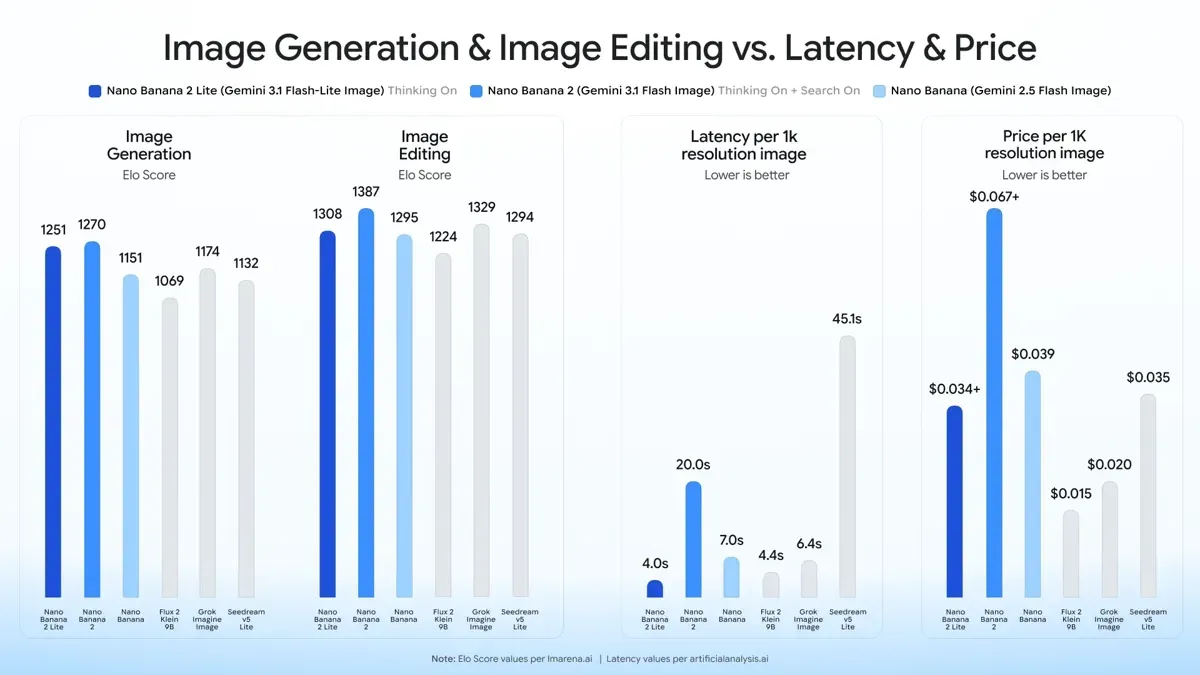
Google Releases Nano Banana 2 Lite Image Model and Opens Video API : Google has introduced its fastest and lowest-cost image generation model, Nano Banana 2 Lite (i.e., Gemini 3.1 Flash Lite Image), with a generation cost of only $0.034 per thousand 1k-resolution images. Meanwhile, Google has opened its multimodal video generation model, Gemini Omni Flash, to the developer API, supporting the generation of 720p videos with synchronized sound effects from text or image inputs. Developers can chain the two models in Google AI Studio to achieve a low-cost, automated “text-to-image-to-video” workflow. (Source: DeepLearning.AI)
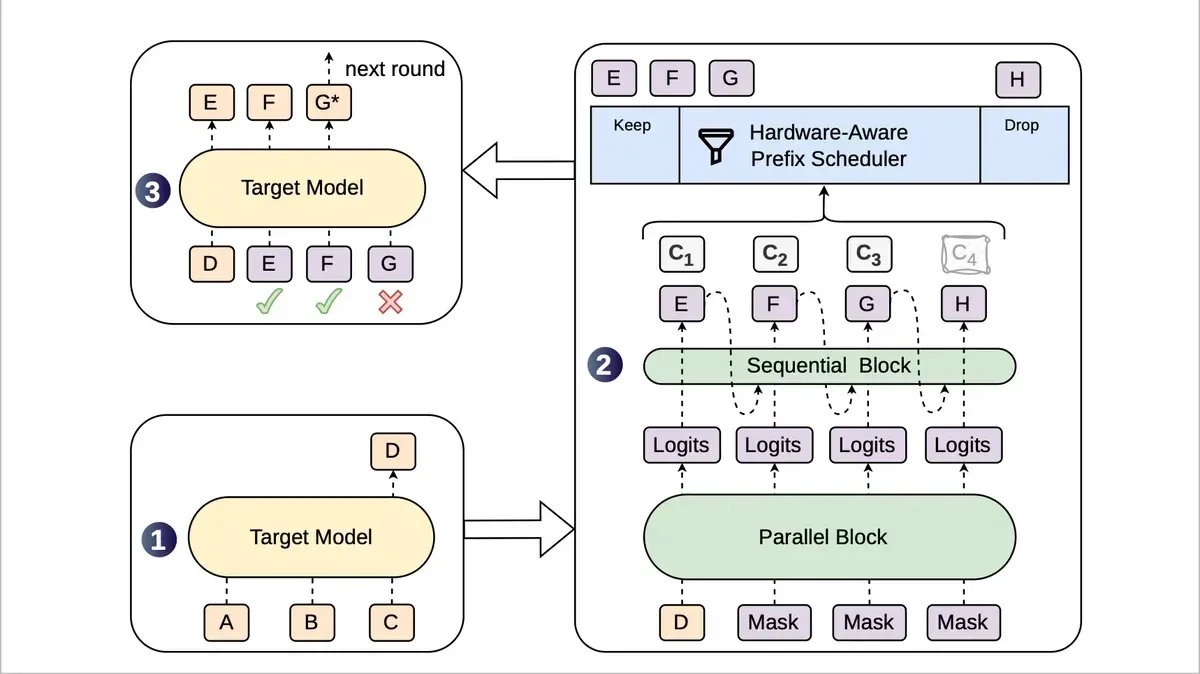
DeepSeek Launches DSpark Speculative Decoding Acceleration Technology : DeepSeek, in collaboration with a team from Peking University, has launched the DSpark speculative decoding module and applied it to the DeepSeek-V4 series models. DSpark combines parallel draft generation with Markov head fine-tuning, boosting per-user generation speed by 60% to 85% for DeepSeek-V4-Flash and 57% to 78% for the Pro version without losing model accuracy. Its core innovation lies in dynamically adjusting the validation length based on real-time server load, validating longer drafts during light loads and discarding low-confidence tokens during heavy loads to free up computing power. (Source: DeepLearning.AI)
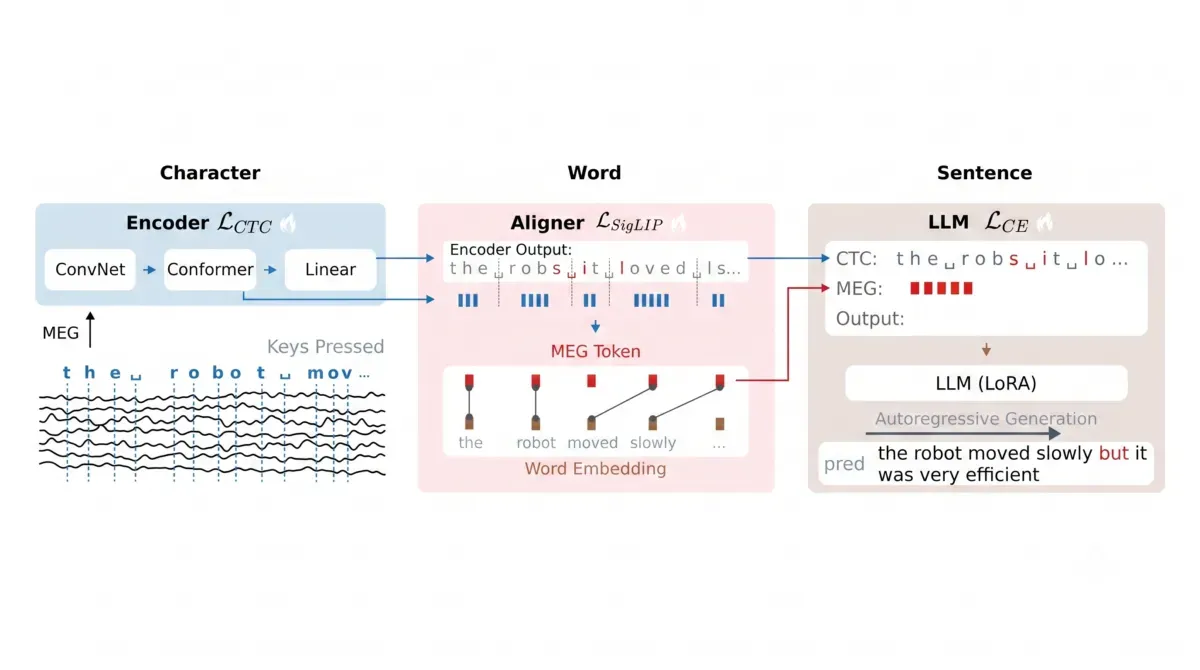
Meta and Partners Release Brain2Qwerty v2 Brain-Computer Interface System : Meta, in collaboration with the French National Centre for Scientific Research (CNRS) and other institutions, has released the Brain2Qwerty v2 system, which can directly translate brainwaves into text. The research team used non-invasive magnetoencephalography (MEG) to record 90 hours of typing brainwave data from 9 subjects. The system decodes brainwaves into characters through convolutional neural networks and Conformer structures, maps them to word vectors via an aligner, and finally performs error correction using a fine-tuned Qwen3-4B model. The word error rate of the v2 version dropped from 43% in v1 to 39%, and joint training across subjects performed significantly better than single-subject training. (Source: DeepLearning.AI)
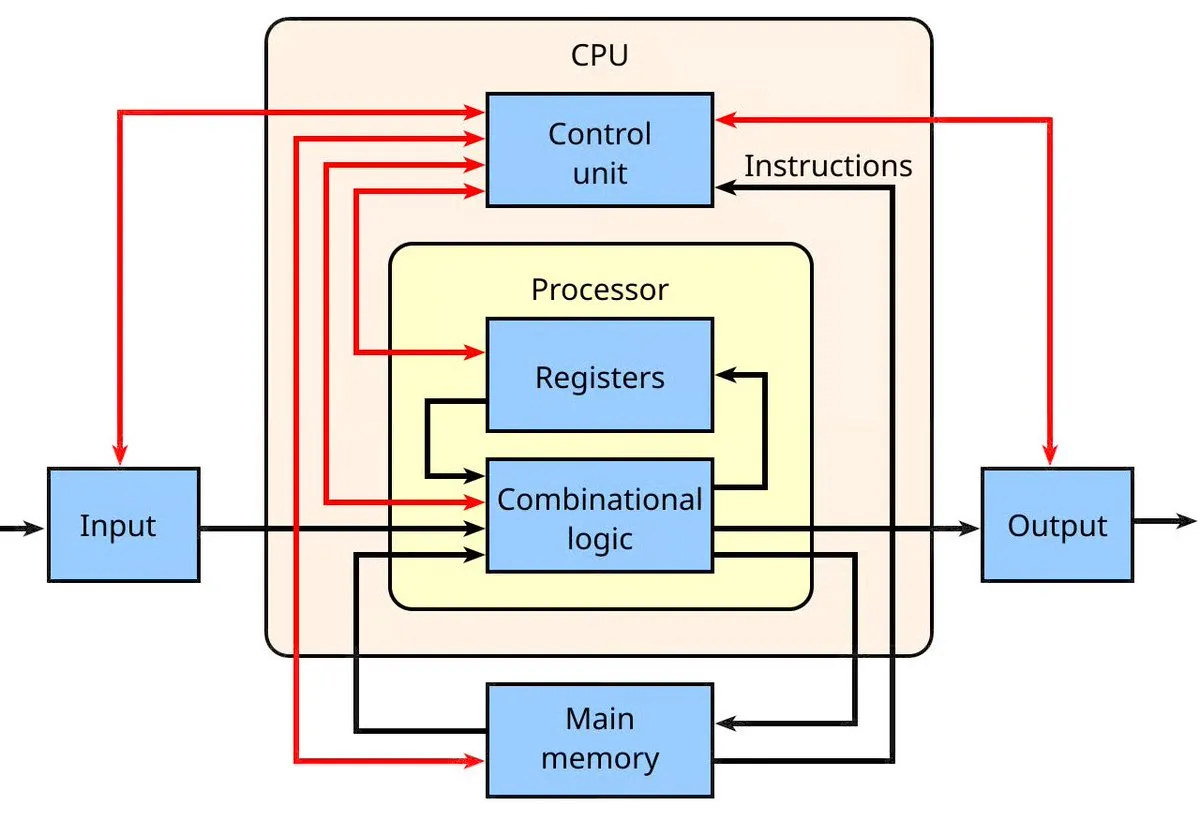
NVIDIA Introduces Agent-Optimized Vera CPU Architecture : NVIDIA has introduced a new CPU architecture, “Vera,” designed to address CPU bottlenecks caused by tool calls, code execution, and retrieval validation during GPU idle gaps in agentic AI. Vera features 88 custom Olympus cores, providing up to 1.2 TB/s of memory bandwidth, with single-thread performance 1.8 times higher than mainstream x86 CPUs. In real-world testing by Perplexity, Vera successfully boosted code workflow speeds by 1.5 times and concurrent sandbox startup speeds by 1.9 times, indicating that single-thread CPU performance has become a new computing key in the Agent era. (Source: Latent Space)
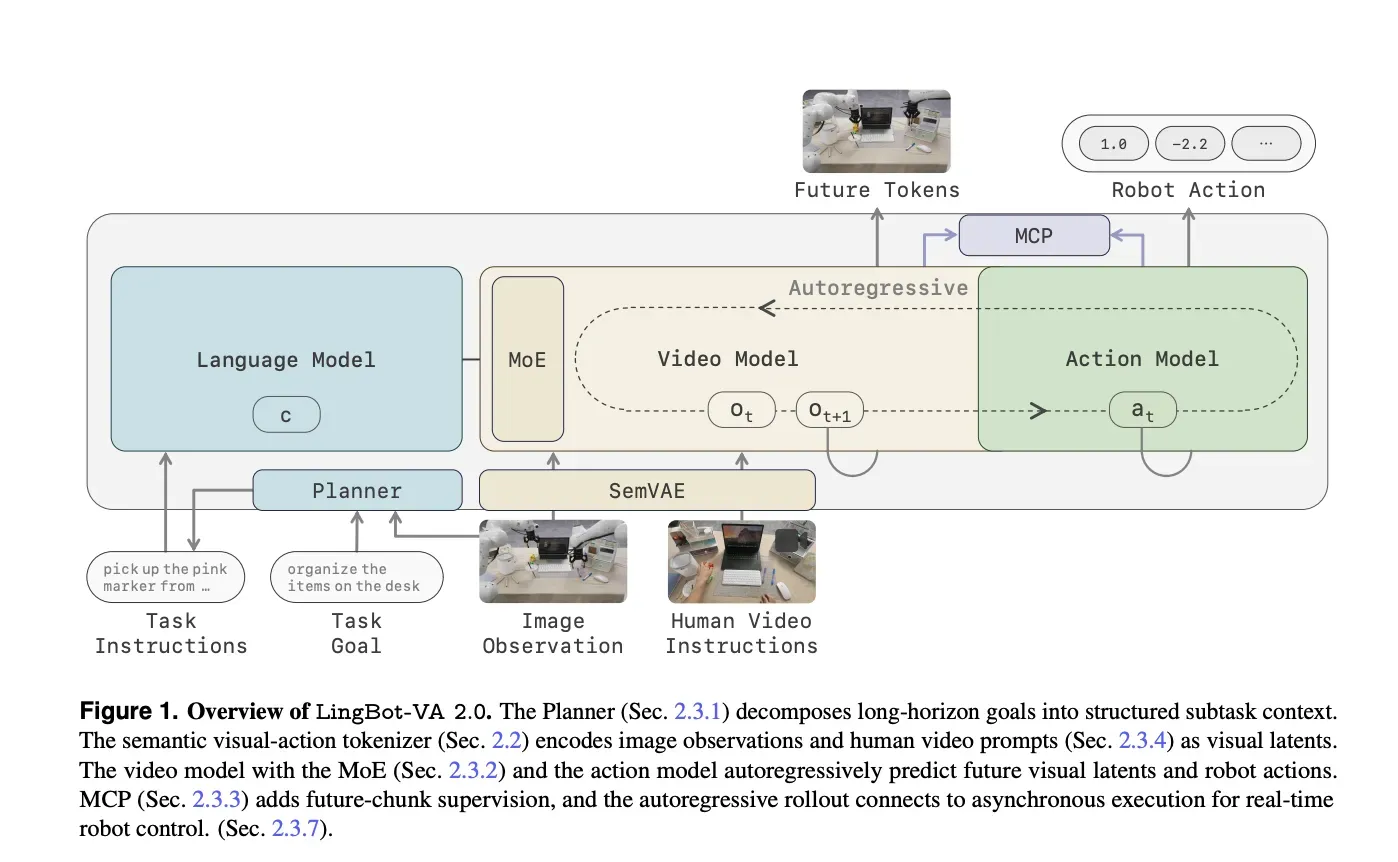
Ant Group’s Robbyant Releases LingBot-VA 2.0 Embodied AI Model : Robbyant, the embodied AI department of Ant Group, has released its first embodied native foundation model, LingBot-VA 2.0. The model abandons the traditional video diffusion plus action module architecture, adopting a native causal DiT and a sparse MoE video stream containing 128 experts to compress world states and actions into a unified 96-channel latent space. Through “Foresight Reasoning” technology, the model can asynchronously overlap prediction and execution, and realign when receiving real observations. Under low-precision compilation and distillation optimization, its chunk latency was reduced from 927ms to 142ms, with an asynchronous control frequency of up to 225 Hz. (Source: MarkTechPost)
🧰 Tools
MuScriptor: Open-Source Multi-Instrument Audio-to-MIDI Transformer Model : Kyutai, in collaboration with Mirelo, has released MuScriptor, an open-source decoder-only Transformer music transcription model. The model can automatically identify pitch, duration, and instrument category directly from full-mix audio containing multiple instruments, and output multi-track MIDI files. MuScriptor underwent synthetic MIDI pre-training, fine-tuning on 170,000 real recordings, and post-training via GRPO-based reinforcement learning. Its multi-instrument F1 score on the D_Test benchmark reached 48.2, far exceeding the YourMT3+ baseline (21.9), and it supports instrument-conditioned input to stabilize long audio transcription. (Source: MarkTechPost)
PrivAiTe PII Anonymizer: Open WebUI Local Privacy Filter : Developers in the Open WebUI community have released the open-source plugin “PrivAiTe PII Anonymizer.” Running locally as an Express middleware, the plugin automatically detects and replaces personally identifiable information (PII) such as names, emails, and phone numbers with placeholders (e.g., <PERSON_1>) before users send requests to cloud-based large models, and restores the real values locally when the model returns a response. The plugin runs based on Microsoft Presidio and local ONNX privacy models, protecting privacy while ensuring the usability of cloud-based conversations. (Source: Latent Space)
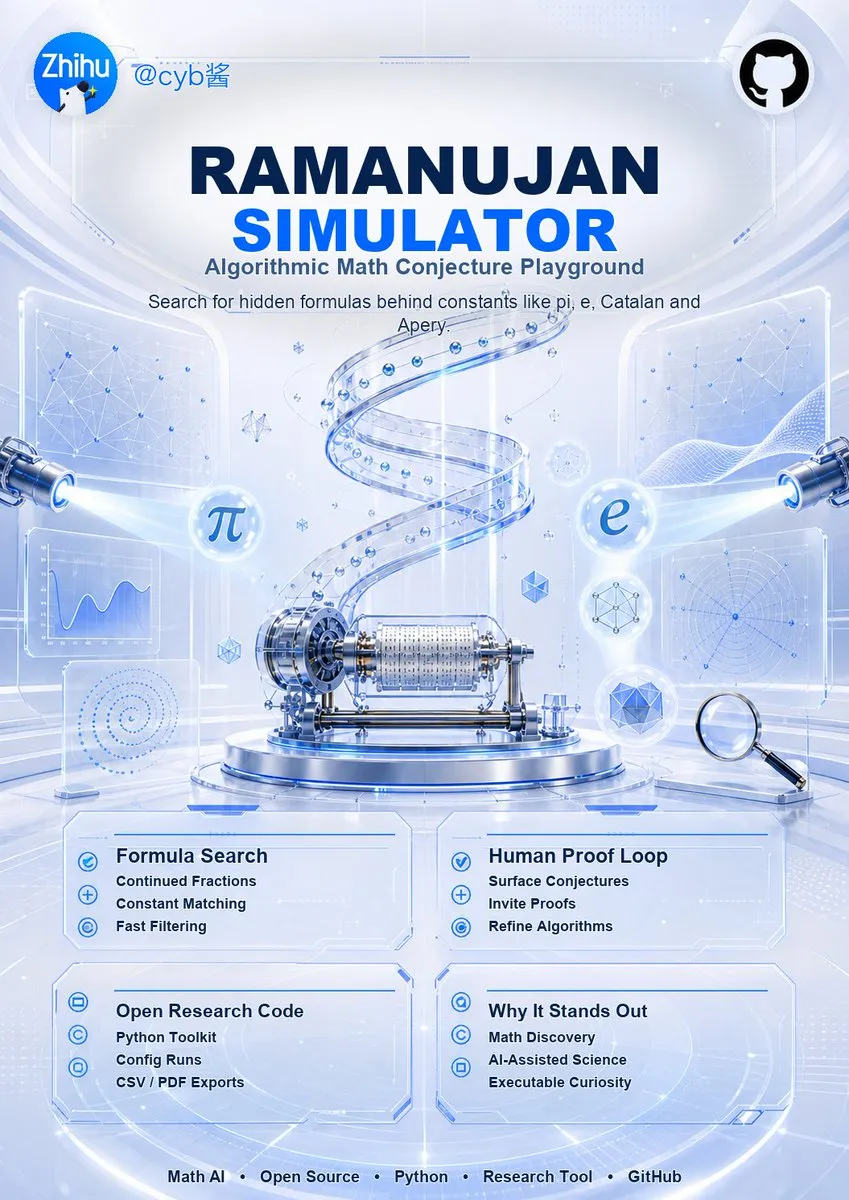
Ramanujan Simulator: Ramanujan Mathematical Formula Simulator : Zhihu creator cyb-jiang shared the open-source mathematical discovery project “Ramanujan Simulator.” Inspired by the Ramanujan Machine, the project uses numerical algorithms to automatically search for continued fraction identities and new conjectures regarding fundamental constants like π and e without prior mathematical theorem proofs. It employs meet-in-the-middle search and hash-table-based matching algorithms, reversing the mathematical discovery process to “algorithms scanning structures to propose conjectures, which are then proven by humans,” demonstrating the unique charm of open-source mathematical tools in making curiosity executable. (Source: QbitAI)
RouteScribe: Express OpenAPI Auto-Generator Based on Runtime Traffic : Developers in the npm community have released the open-source middleware “RouteScribe.” Targeting Node.js/Express developers, this tool aims to solve the pain points of tedious and error-prone manual maintenance of OpenAPI interface documentation. By observing and analyzing real API traffic while the Express application is running, RouteScribe automatically captures request paths, parameters, request bodies, and response formats, dynamically generating compliant OpenAPI (Swagger) specification documents, greatly simplifying interface documentation maintenance. (Source: Latent Space)
destructive_command_guard (dcg): A Safety Guard to Prevent AI Agents from Accidentally Deleting Local Files : Addressing the risk of agents like GPT-5.6 Sol accidentally deleting local files when running code in YOLO mode, developers have released open-source tools destructive_command_guard (dcg) and bash-guard. By adding a PreToolUse hook in the shell, these tools forcibly intercept and block any dangerous commands attempting to modify or delete paths outside the code repository. This provides a necessary layer of physical safety defense for developers running highly autonomous programming agents locally. (Source: Hacubu)
📚 Learning
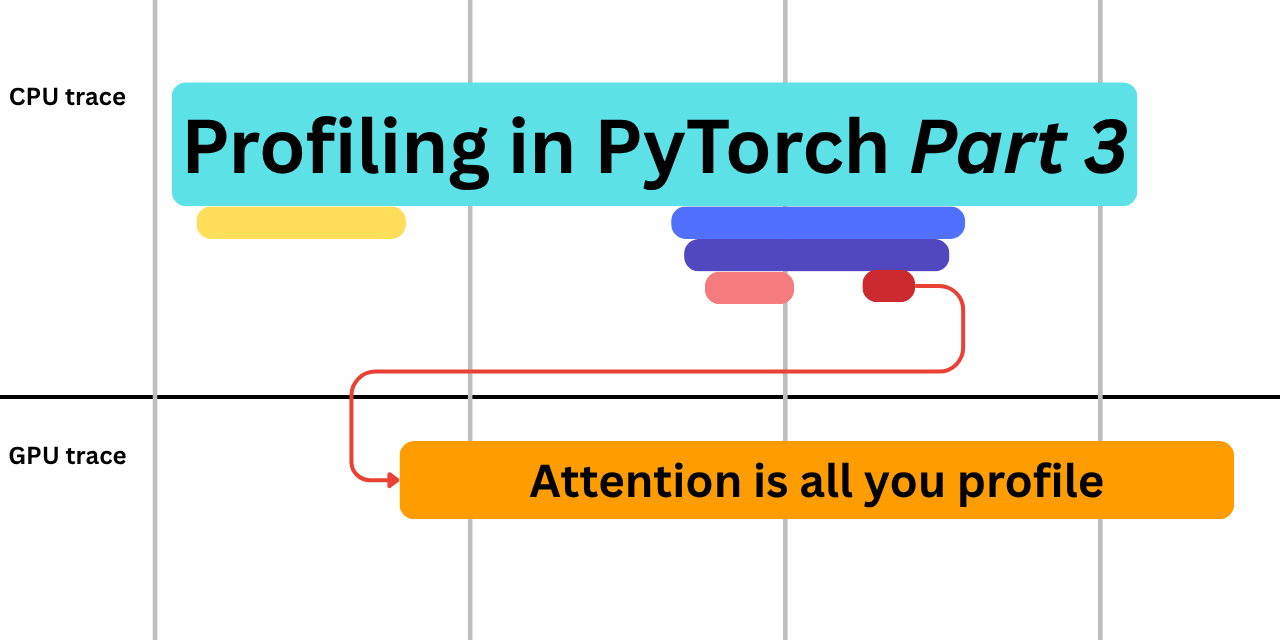
Hugging Face Launches PyTorch Attention Mechanism Profiling Tutorial : Hugging Face has released the third part of its “PyTorch Performance Profiling” tutorial series, focusing on the performance optimization of attention mechanisms. The article provides a detailed comparison of the Profiler trace graphs on an A100 GPU for naive attention, in-place mask optimization, and the four backends of SDPA (math, efficient, flash, cuDNN). The tutorial explains in depth why seemingly simple in-place optimization can eliminate the need to schedule memory copy (Memcpy) operators, and why FlashAttention achieves extremely high actual throughput despite running at low occupancy on Tensor Cores. (Source: HuggingFace)
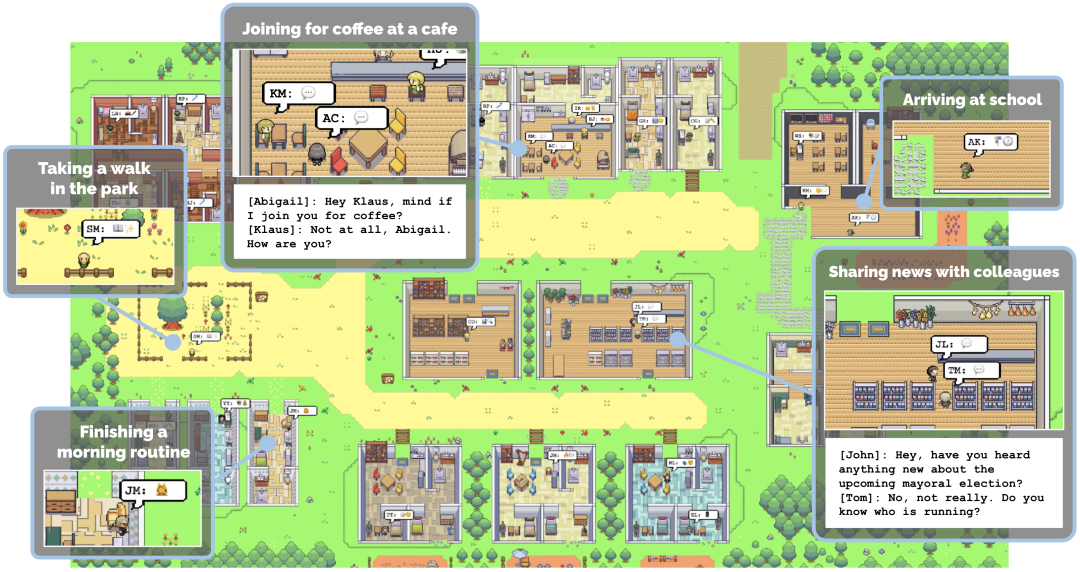
CMU, Tsinghua, and Stanford Use LLM Agents for Disaster Evacuation and Urban Behavior Simulation : Several top academic institutions are bringing LLM agents from virtual socializing into the field of disaster prevention and mitigation. Carnegie Mellon University (CMU), in collaboration with the university’s emergency response team, used 13,000 agents to simulate evacuation dynamics during a graduation ceremony and integrated the findings into SOPs; Yong Li’s team at Tsinghua University open-sourced AgentSociety, which supports simulating the social responses of tens of thousands of agents under disasters like hurricanes at a whole-city scale; teams from Tianjin University and other institutions introduced the RESCUE system, which simulates pushing and trampling behaviors of virtual crowds in subway fires through a decoupled physical and cognitive architecture. (Source: 36Kr)
Apple Releases On-Policy Knowledge Distillation Diagnostic Framework : Apple’s machine learning research team published a paper proposing a training-free diagnostic framework for On-Policy distillation technology in the post-training of reasoning LLMs. The framework analyzes the pros and cons of distillation signals at the highest resolution across three dimensions: tokens, questions, and teacher models. The study defines an “ideal gradient” that maximizes the student model’s success rate and designs a Gradient Alignment Score (GAS) for quantification. Experiments show that distillation guidance exhibits significantly higher alignment on rollouts where the student model answers incorrectly, whereas on correct rollouts, the teacher signal often degrades into noise. (Source: Apple)

Amazon and University of Michigan Introduce Robotic Tactile Shear Force Simulator HydroShear : Researchers from Amazon and the University of Michigan have developed HydroShear, a physical simulator for simulating robotic tactile shear forces. Based on a path-dependent force tracking algorithm, the tool can record the deformation history of objects sliding and rotating on soft sensor surfaces and convert it into a high-fidelity 3D force field. Grasping and packing policies trained in simulation via reinforcement learning using HydroShear can be directly deployed to real Franka robots without any fine-tuning, achieving a 93% success rate in contact-intensive tasks such as peg insertion and drawer pulling. (Source: Amazon Science)
💼 Business
Tencent Plans to Acquire Majority Stake in Singapore AI Agent Startup Manus : According to the Financial Times, after the Beijing municipal government halted Meta’s $2 billion acquisition of Manus due to investment compliance issues and imposed exit restrictions on founder Xiao Hong, Chinese tech giant Tencent is in talks with Manus, planning to acquire a majority stake at the same $2 billion valuation. US venture capital firms like Benchmark are not expected to participate. Manus currently operates independently in Singapore with an annual revenue close to $500 million. Tencent’s move aims to deeply integrate Manus’s AI agent technology with its WeChat ecosystem. (Source: THE DECODER)
South Korean Chip Giant SK Hynix Lists in the US, Raising a Record-Breaking $26.5 Billion : South Korean memory chip giant SK Hynix has officially listed on Nasdaq by issuing American Depositary Receipts (ADRs), successfully raising $26.5 billion (approximately 40 trillion KRW). This surpasses Alibaba’s $25 billion IPO in 2014, setting a record for the largest IPO by a foreign company in US history. Due to its monopoly in the High Bandwidth Memory (HBM) sector, the stock was unaffected by the “Korea Discount,” surging 14% on its first day. The funds raised will be used to construct new wafer fabs in South Korea and purchase EUV lithography machines. Meanwhile, the US Secretary of Commerce is lobbying the company to build fabs in the US. (Source: TechCrunch)
Anthropic Partners with UST to Bring Claude to Physical AI : Anthropic has announced a global strategic partnership with technology services giant UST to bring Claude into “physical AI” scenarios such as chip verification, automotive manufacturing, and the Internet of Things (IoT). UST’s iDEC hardware verification platform will integrate Claude Code as a reasoning layer to automatically read chip pinouts and hardware schematics, write and run regression tests, and shorten the verification cycle by 50% to 70%. As part of the partnership, UST will provide Claude skills training to its 20,000 engineers and consultants worldwide. (Source: Anthropic)

🌟 Community
US Government Plans Executive Order to Restrict Open-Source Models, LeCun and Others Strongly Oppose : The open-source community has erupted in heated discussions over a potential White House executive order that might restrict or censor open-source AI models due to concerns over China’s technological rise. Turing Award winner Yann LeCun and Beff (e/acc) warned that this “restrict-by-default until licensed” quasi-licensing system would completely destroy the US innovation ecosystem, fail to stop people from downloading models via torrents, and instead make systems more insecure. They called on all sectors of society to stand up and defend computational freedom before it is too late. (Source: Latent Space)
Hugging Face CEO Clem Delangue: Enterprises Shifting from Rented APIs to Open-Source Models : Hugging Face CEO Clem Delangue pointed out in a podcast that as enterprise AI applications scale, high token bills are prompting about half of the Fortune 500 companies to shift from renting closed-source APIs to deploying open-source models. He mentioned that Chinese labs currently contribute the majority of open-source models downloaded in the US, which should be seen as a driving force to build the domestic open-source ecosystem in the US. He also emphasized that due to physical privacy concerns involving homes and factories, the demand for open-source transparency in embodied AI and robotics is even more urgent than in chat tools. (Source: TechCrunch)
Over 100 AI Agents Collaborate with Humans to Boost Gemma 4 Inference Speed by 5x : The Google Gemma team and Hugging Face co-hosted a 6-day Gemma Challenge. Over 100 human developers collaborated with AI agents to successfully boost Gemma 4’s inference speed by 5x on a single NVIDIA A10G GPU, achieving a lossless inference speed of 315 TPS (with a peak lossy speed of 491.8 TPS). During this process, the agents demonstrated self-management and collaborative behaviors to prevent “slacking,” which Clem Delangue hailed as a milestone case demonstrating the “agent network effect.” (Source: Google)
Community Hot Topic: Should ML Academic Conferences Limit the Number of Submissions per Author? : Facing the recent exponential growth in submissions to machine learning (ML) academic conferences, which has led to a severe decline in peer review quality, the Reddit community initiated a discussion on “whether the number of submissions per author should be limited.” Users pointed out that TMLR has already introduced an annual submission cap, and conferences like ACL have begun exploring solutions to alleviate review pressure, such as desk-rejecting irrelevant papers or mandating that each submission must provide corresponding reviewers, reflecting the academic community’s widespread concern over research paper flooding. (Source: Reddit)
New Idea for Off-Grid Survival: Community Discusses Creating a “Local LLM Survival Kit” : Reddit’s LocalLLaMA community has been actively discussing how to create a “Local LLM Survival Kit” that can run on a 64GB flash drive. The concept includes pre-installing llama.cpp binaries for Windows/Mac/Linux, Qwen3.5 35B or Gemma 4 models, and a compressed database of English Wikipedia and open-source medical and engineering books. Users would only need to plug in the USB drive to achieve 5-20 tok/s off-grid knowledge base retrieval on old computers without internet or GPUs, providing a practical technical solution for emergency evacuation or network outage environments. (Source: Reddit)
Model Selection and Quota Anxiety: GPT-5.6 Multi-Tier Reasoning Sparks User Concerns Over Token Consumption : With GPT-5.6 introducing three models (Luna, Terra, Sol) and five reasoning effort levels from Low to Ultra, community users are confused about how to choose models. Users reported that in Sol Ultra mode, the model automatically spawns sub-agents that are also at the Ultra level, causing token consumption to grow exponentially and easily exhausting a Pro user’s weekly quota within a few hours. Developers suggest using Luna with medium effort by default for common tasks, or using third-party routing tools for cost control. (Source: Latent Space)
💡 Others
New Logo for Trump International Airport Features Low-Level AI Generation Errors : The newly named “Donald J. Trump International Airport” in Florida released its official logo, but the design has been pointed out to have obvious AI-generated flaws. Media noted that the red and white stripes on the logo’s shield only number 11 instead of the standard 13 of the US flag; meanwhile, the eagle’s right claw is severely distorted, and the number of feathers and leaves on both sides is asymmetrical. This low-level mistake quickly triggered mockery on social media over the official use of unvetted AI-generated images as a logo. (Source: The Verge)

Three ChatGPT Voice Bots Attempting to Count to 100 Results in Hilarious Scene : A viral video in the Reddit community shows a user letting three ChatGPT bots with GPT-Live voice mode enabled try to take turns counting to 100. During the counting process, the bots not only frequently miscounted and interrupted each other, but also corrected one another in a “confident yet foolish” tone, making the scene highly comical. Netizens joked that this perfectly simulated inefficient and bureaucratic daily corporate meetings, while also demonstrating the limitations of current real-time voice multi-agent collaboration in logical consistency. (Source: Reddit)