



🔥 Focus
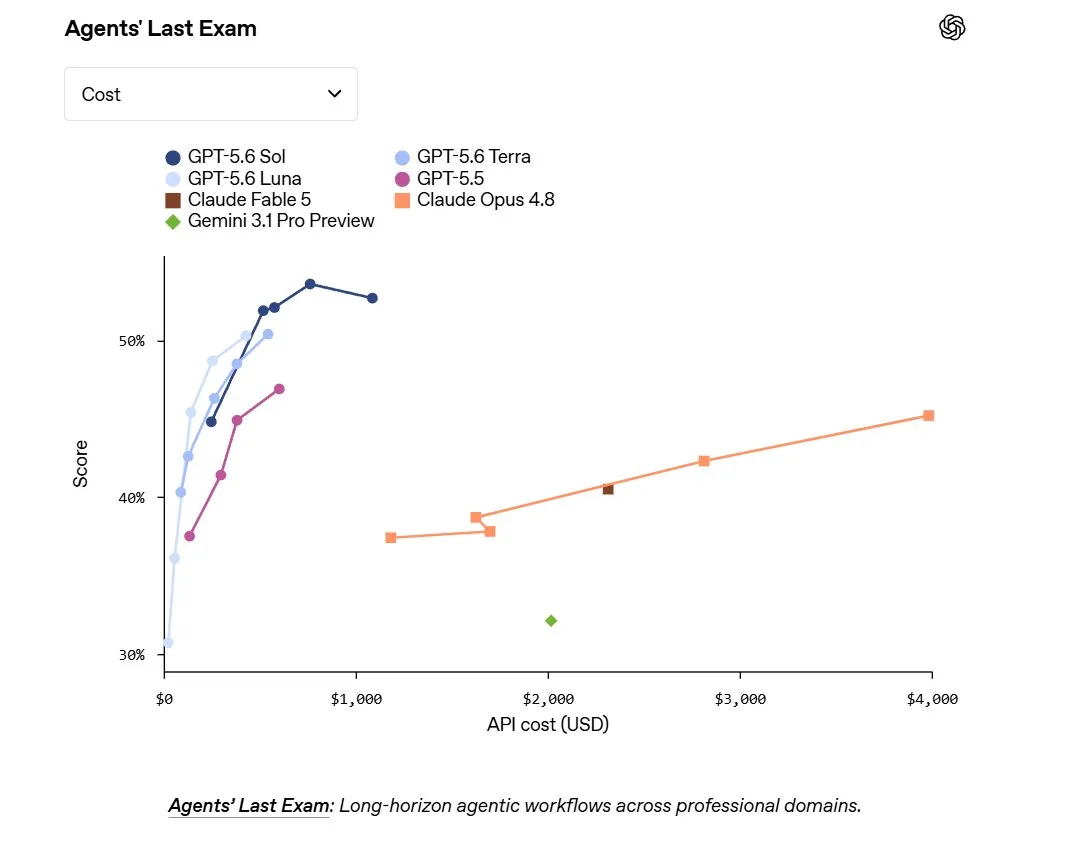
OpenAI Releases GPT-5.6 and ChatGPT Work Agent: OpenAI has officially released the GPT-5.6 family (Sol, Terra, Luna), setting a new record with a score of 53.6 in the Agents’ Last Exam evaluation. The new version fully integrates Codex into the ChatGPT desktop client and introduces ChatGPT Work, a new work assistant that supports cross-application file reading, multi-step task execution, and direct delivery of finished products like PPTs and Excels. In addition, the API introduces programmatic tool calling and the ultra mode for multi-agent parallel collaboration, significantly reducing Token consumption and inference costs, marking a paradigm shift of large models from chat boxes to “work operating systems”. (Source: 机器之心 / THE DECODER)
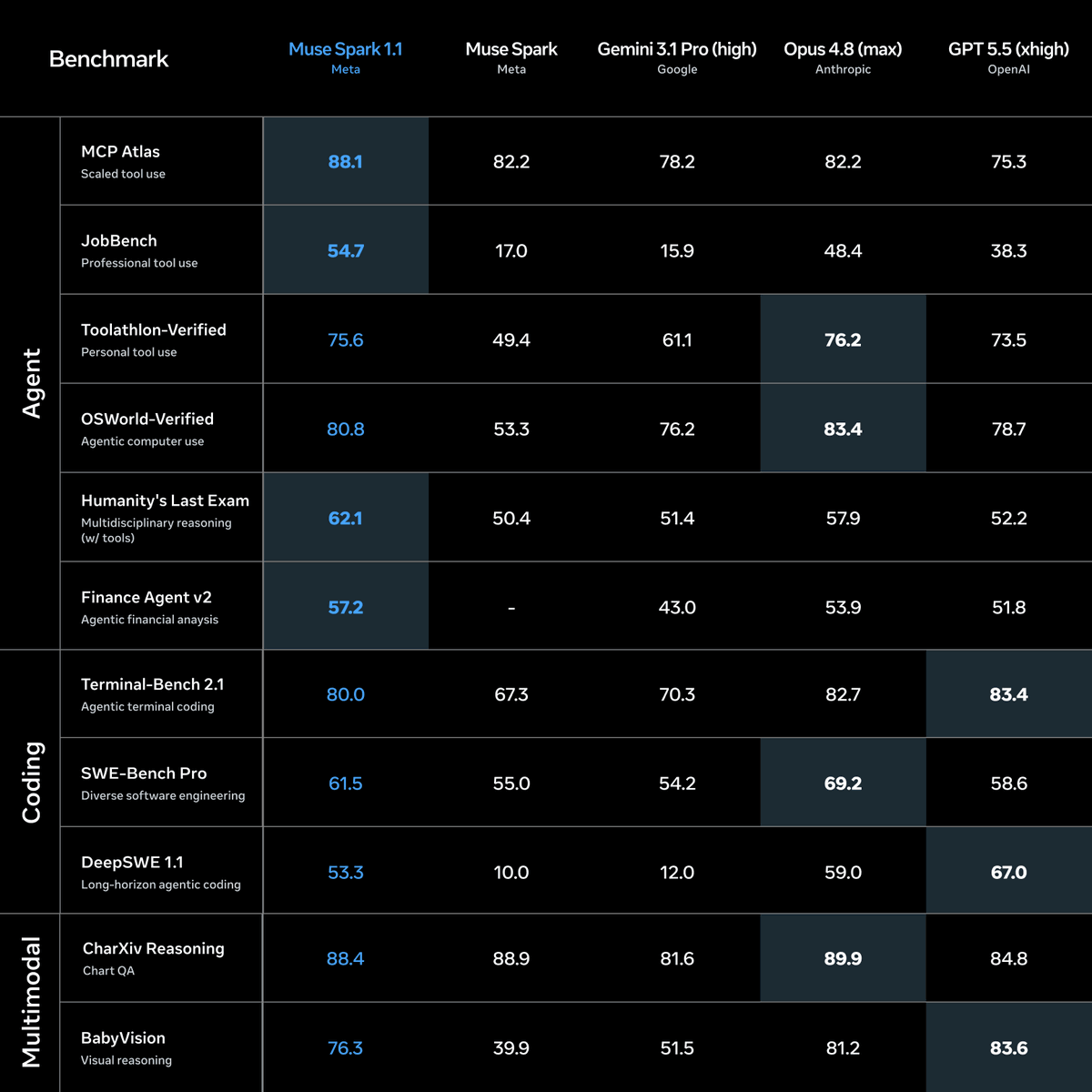
Meta Launches Muse Spark 1.1 and Developer API: Meta’s Superintelligence Lab has released Muse Spark 1.1, a multimodal reasoning model with a 1-million-Token context, focusing on multi-agent planning and computer control capabilities. For the first time, Meta is offering paid access to its frontier model via the Model API. Priced at $1.25/1M input and $4.25/1M output, it directly undercuts the industry price floor, squeezing the high-premium business models of OpenAI and Anthropic, and accelerating the price war in the global AI market. (Source: 36kr / THE DECODER)
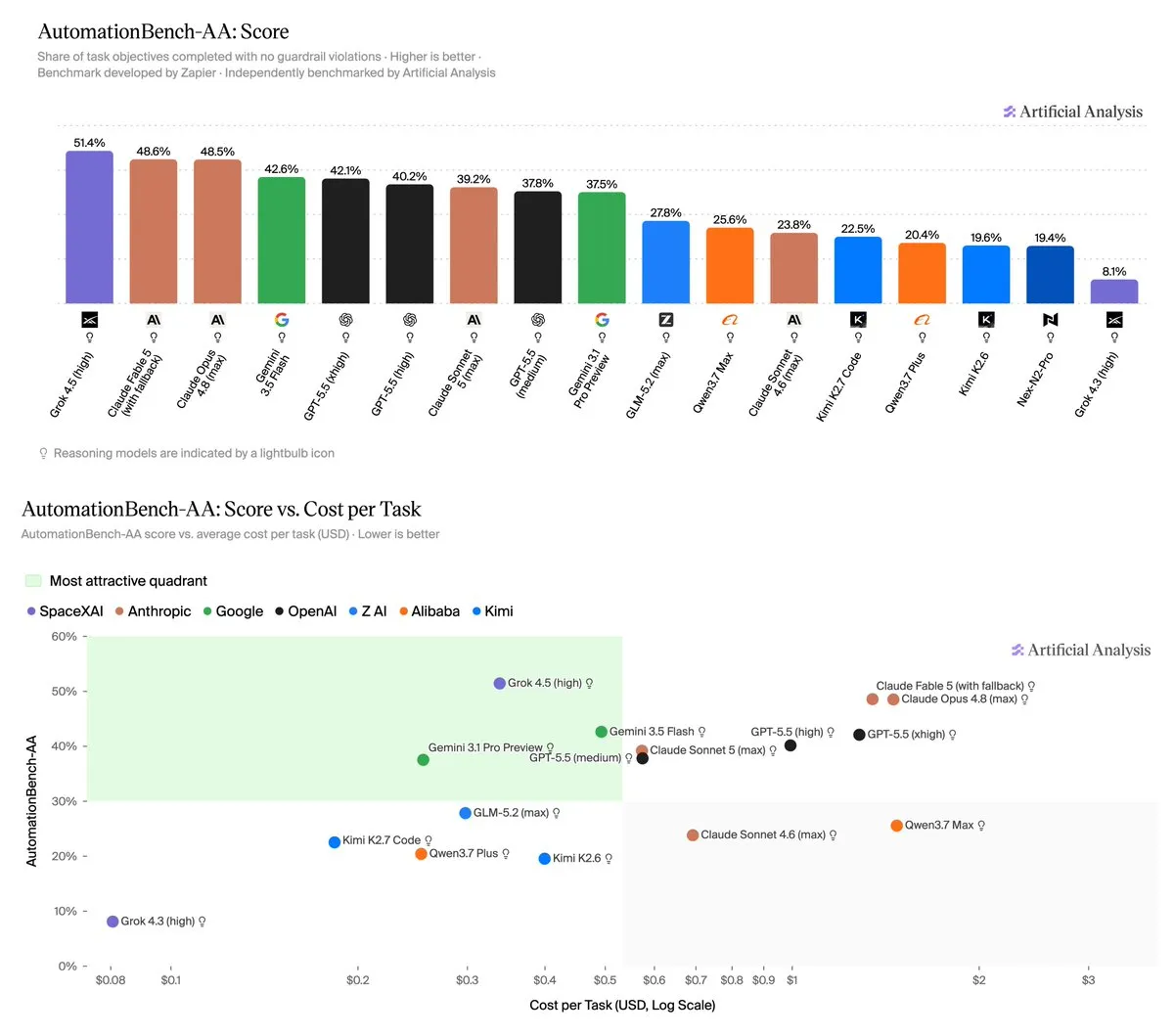
xAI Releases Grok 4.5 and Enters Top Three in Code Arena: SpaceXAI has released Grok 4.5, its first model specifically designed for coding and agents. Deeply co-trained with Cursor, the model demonstrates extremely high Token efficiency in SWE-Bench tasks and topped the AutomationBench-AA automated workflow leaderboard with a score of 51%. xAI has priced it at $2/1M input and $6/1M output, directly challenging the dominance of OpenAI and Anthropic in the developer ecosystem with extreme cost-effectiveness and generation speed. (Source: 36kr / AI Business)
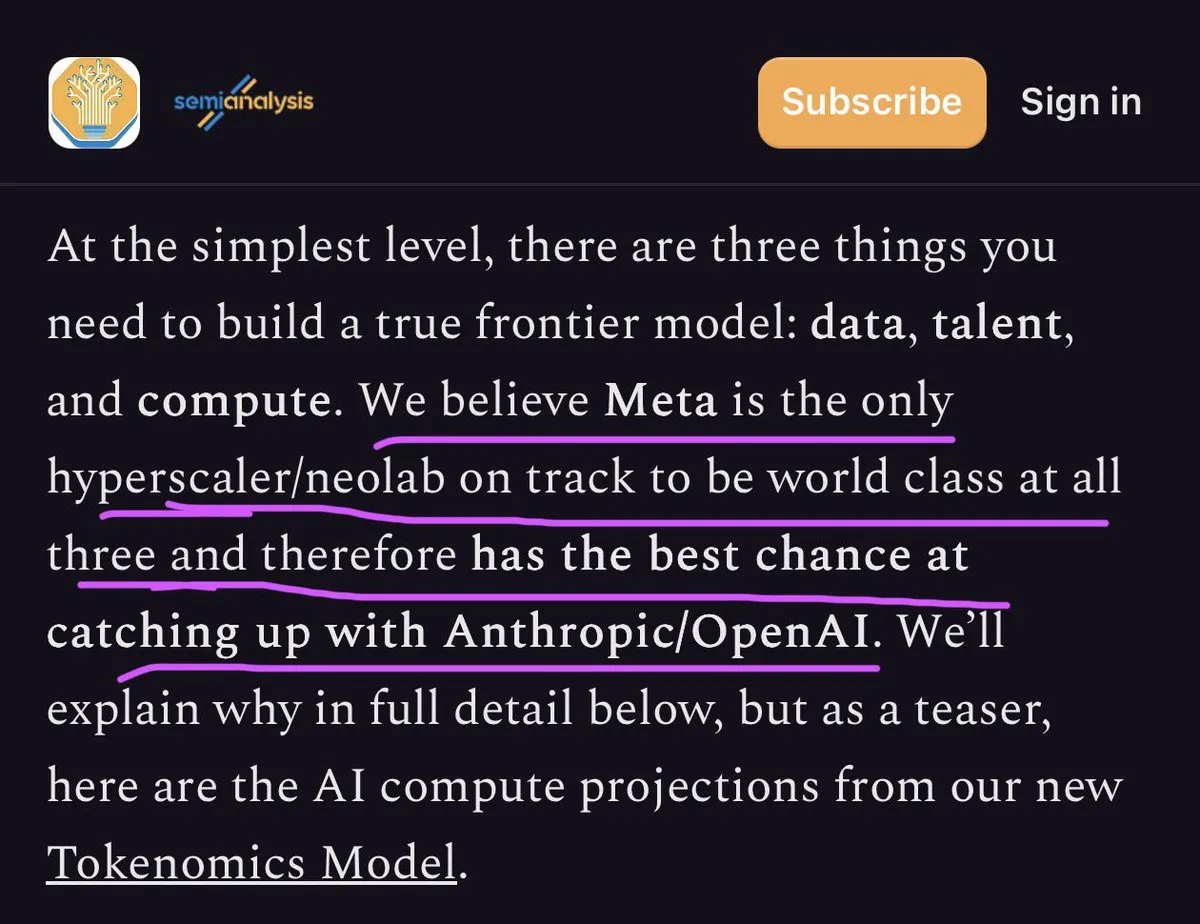
Meta Advances Self-Developed AI Chip Iris and 100,000-GPU Compute Cluster: According to an internal memo disclosed by Reuters, Meta plans to mass-produce its fourth-generation self-developed AI chip, “Iris,” in September this year, designed by Broadcom and manufactured by TSMC. The chip will complement existing NVIDIA and AMD GPUs, supporting the doubling of Meta’s computing infrastructure scale from 7GW in 2026 to 14GW in 2027 to meet the growing inference and training demands of the Muse model series, further reducing its reliance on NVIDIA. (Source: The Verge / alexandr_wang)
SpaceX Plans to Deploy 100,000 Third-Generation Starlink Satellites to Build an AI Neural Network: SpaceX has officially applied to the FCC for authorization to construct its third-generation Starlink satellite constellation, planning to deploy 100,000 satellites. The next-generation satellites, each weighing 2 tons, are designed for ultra-low Earth orbit, with uplink and downlink capacities increased by 10x and 22x, respectively. The constellation aims to serve as infrastructure for the global AI era, connecting xAI’s cloud-based large models, Tesla’s Full Self-Driving (FSD) system, and the edge-side data and computing power of Optimus humanoid robots in real-time, building a closed-loop neural network of the physical world. (Source: teortaxesTex / 36kr)

Fidji Simo Resigns from Core Executive Role at OpenAI: Fidji Simo, the “number two” executive in charge of products and business at OpenAI, has announced her resignation from her full-time position to transition into a part-time advisor. Simo previously led the architectural integration of the new ChatGPT desktop application and pushed for the streamlining of Sora and some scientific teams during her tenure. Her departure comes at a time when OpenAI’s growth is slowing down and it faces fierce competition from Anthropic. Her former product and business management responsibilities will be shared by executives including Greg Brockman and Sarah Friar. (Source: The Verge / 36kr)
🎯 Trends
Ant Lingbo Releases Embodied-Native World Action Model LingBot-VA 2.0: Ant Lingbo has released the industry’s first “embodied-native” pre-trained world action model, LingBot-VA 2.0. The model base is pre-trained from scratch based on an autoregressive architecture, aligning semantic, action, and visual latent spaces. The model introduces a MoE architecture and look-ahead asynchronous inference mechanism, achieving 150Hz real-time closed-loop control on a single GPU in real-machine tests. It successfully completed long-horizon and fine-grained operations such as desk tidying and conveyor belt grasping, marking the entry of robot brains into the era of native intelligence. (Source: 量子位 / 机器之心)
Yinlv Shandong Launches First Full-Stack Self-Developed Chinese AI Music Large Model “Gege AI”: Yinlv Shandong has released the “Gege AI” music large model, the first billion-parameter-level Chinese music large model pre-trained from scratch. Addressing localized pain points such as Chinese pronunciation, syllable boundaries, and character-sound alignment, the model introduces a “phoneme-time frame soft alignment prior” and a dual-stream independent generation architecture, achieving real-time rhythm alignment between vocals and accompaniment along with delicate emotional expression. In addition, the company has signed a copyright revenue-sharing agreement with ByteDance, completing the commercial closed-loop from generation to monetization. (Source: 量子位 / 机器之心)

Baidu’s Universal Agent “Baidu Dazi” Upgrades Personal Edition and Launches Enterprise Edition: Baidu announced at AIDAY that the average daily queries for “Baidu Dazi” surged 20-fold. The Personal Edition received major upgrades in intelligent routing, multi-device shared memory, cloud browser operations, and PPT generation capabilities, alongside the launch of a professional suite for self-media. The Enterprise Edition was released simultaneously, providing features like team collaboration, asset accumulation, process integration, and security governance. It supports converting employee achievements into organizational assets and released enterprise-grade Skill integration standards, accelerating the large-scale deployment of agents in enterprise workflows. (Source: 量子位 / 机器之心)

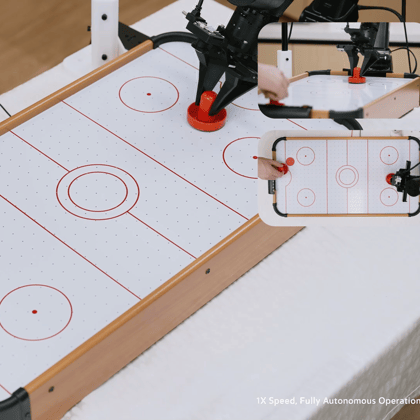
1X Technologies Showcases NEO Humanoid Robot’s 25-DoF Tendon-Driven Hand: 1X Technologies demonstrated the latest generation of robotic hands equipped on its humanoid robot, NEO. The robotic hand features 25 degrees of freedom (DoF), utilizes a quasi-direct-drive tendon transmission, and possesses high-resolution tactile sensing across all fingertips, along with force transparency and back-drivability. In the demonstration, the hand completed high-precision, delicate tasks such as screwing in lightbulbs, zipping zippers, sorting coins, and plugging in charging cables. The product has entered mass production, with a target capacity of 10,000 units this year. (Source: 36kr / nptacek)
Sugon Completes First Fully Domestically-Made 100,000-GPU AI Supercluster “Sugon 8000”: Sugon announced the official completion of “Sugon 8000 (Dengfeng)”, a fully domestically-made 100,000-GPU AI supercluster adopting a native super-intelligence integration technical route. The cluster supports full-spectrum computing from double precision to low precision, achieving system-level engineering breakthroughs in networking, liquid cooling, storage, and scheduling, and has optimized over 300 industry applications. Meanwhile, the Beijing Institute of Scientific Intelligence has signed a strategic cooperation agreement with Sugon to initiate the development of a second system, marking the entry of 100,000-GPU clusters into the phase of large-scale application. (Source: 机器之心)
.jpg)
🧰 Tools
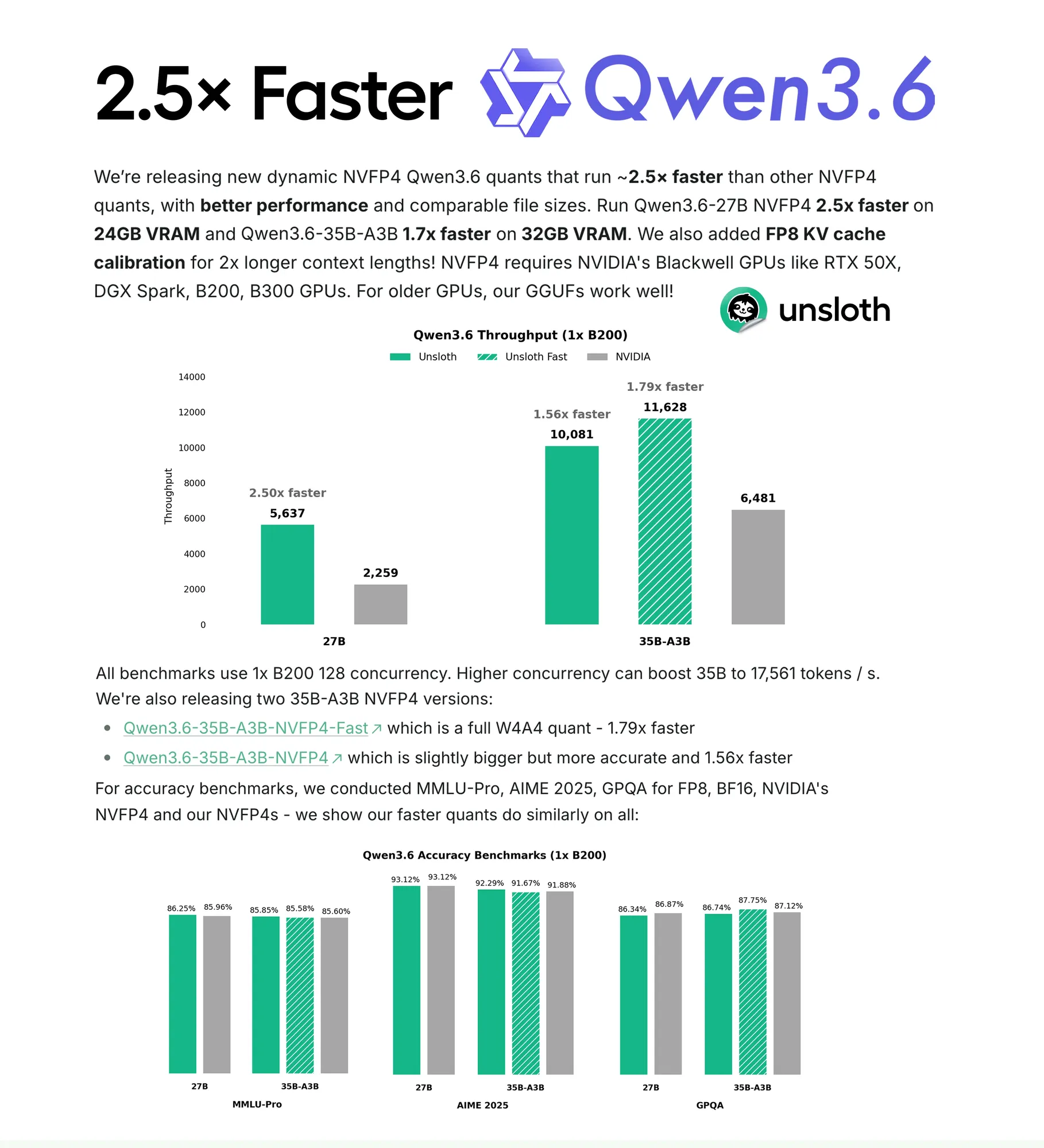
Unsloth AI Launches Qwen3.6 NVFP4 Accelerated Quantized Version: Unsloth AI has released NVFP4 format quantized models for Qwen3.6 27B and 35B-A3B. By applying dynamic methods to the W4A4 format, the models run 1.56x to 2.5x faster on GPUs without any accuracy degradation. Additionally, this quantized version provides FP8 KV cache calibration, automatically supporting 2x longer contexts, greatly optimizing the inference efficiency of local large models on consumer-grade graphics cards. (Source: ClementDelangue / Reddit)
Google Cloud Launches Gemini-Powered Code Optimization Tool AlphaEvolve: Google Cloud has announced the commercial availability of AlphaEvolve, an agentic tool co-developed with Google DeepMind. Powered by Gemini, the tool can autonomously design, discover, and optimize algorithmic code to resolve complex engineering bottlenecks. It has already generated GPU kernels on the Frontier supercomputer and assisted researchers in discovering new quantum error correction schemes, accelerating molecular simulation in drug discovery by 4x. (Source: GoogleDeepMind / algo_diver)
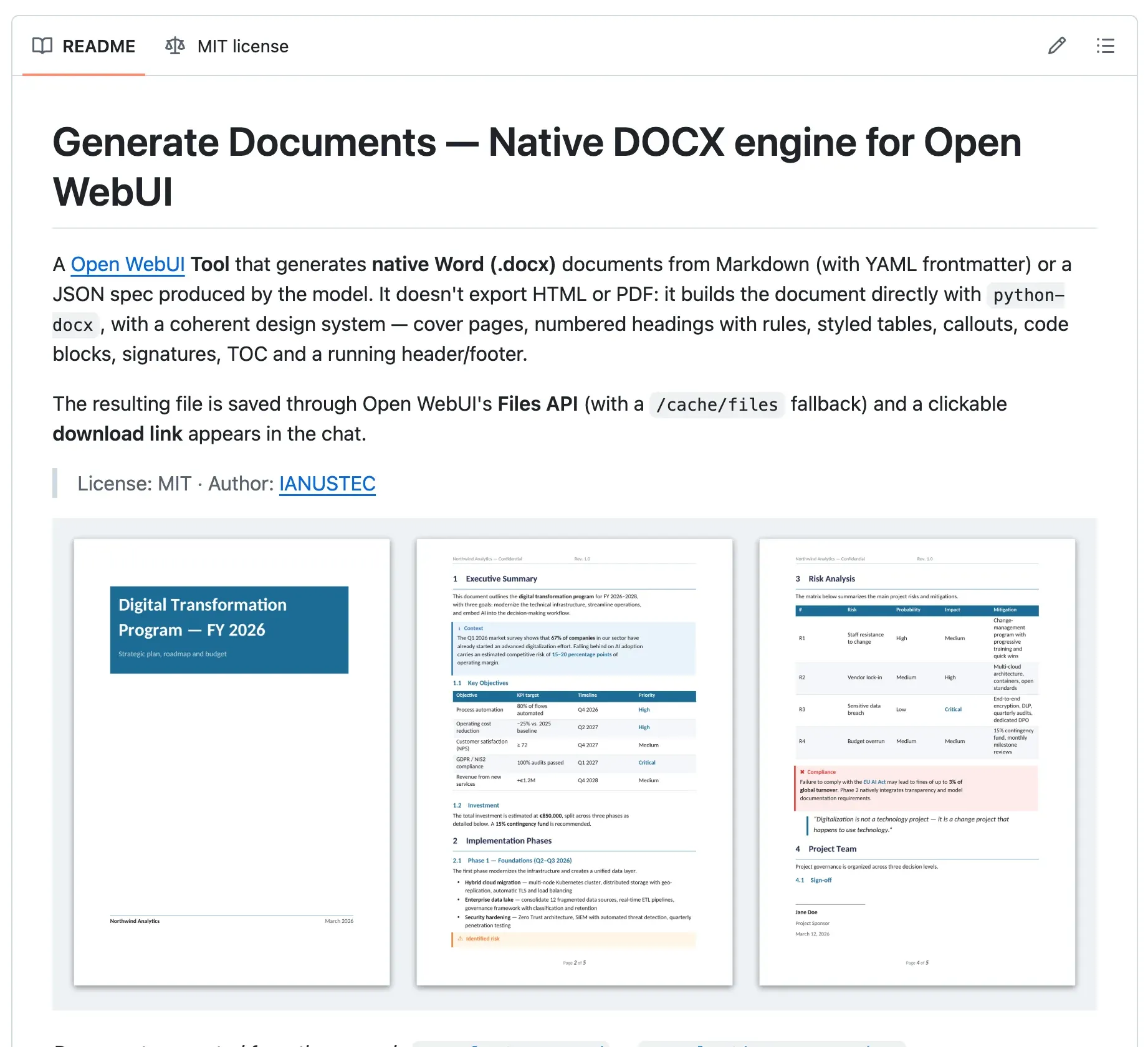
Open WebUI Community Launches Word Document Generation Tool generate_documents: Developer Thomas has released the open-source tool generate_documents, which can be dragged directly into Open WebUI as a plugin. Supporting Markdown or JSON inputs, the tool directly generates beautifully formatted, editable native .docx files. It features 7 built-in theme templates for reports, white papers, proposals, etc., and supports automatic generation of covers, tables of contents, page numbers, charts, and highlighted quotes, greatly simplifying the creation and formatting process of office documents. (Source: Reddit)
OpenFox Launches Local AI Debugging Tool Speculative Cache Warming: The open-source local AI coding scaffold OpenFox has introduced a “Speculative Cache Warming” feature. This technology leverages the typing latency of humans when entering prompts to pre-warm and process system prompts (such as AGENTS.md, preferences) and tool arrays on the local GPU in advance. At a prompt processing speed of 500 tps, this feature can save 10-20 seconds of waiting time for each new session, significantly improving the immediacy of local large model interactions. (Source: Reddit)

Nous Research Launches Hermes Agent Cloud Deployment Service: Nous Research has announced the official launch of its Hermes Agent cloud service, which users can manage via the Nous Portal. The service allows developers to quickly deploy online agents within 60 seconds by selecting models and server specifications through simple configurations. The platform also provides fine-grained access control and unified billing management for team collaboration, further lowering the deployment barrier for enterprise-grade Agents. (Source: Teknium)

📚 Learning
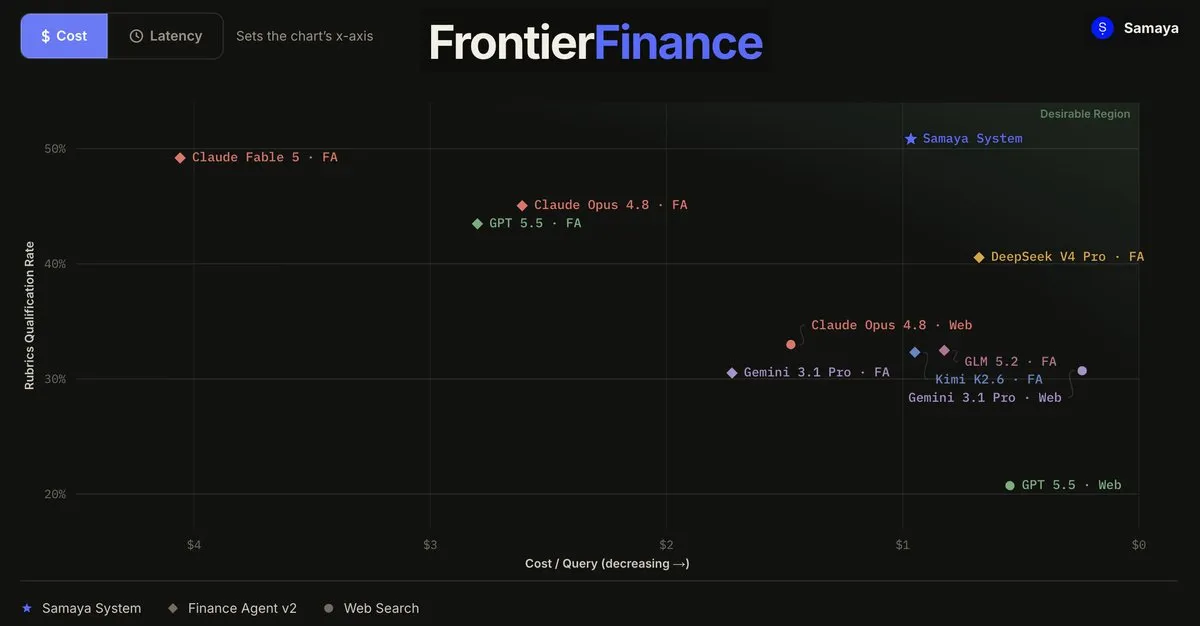
Samaya AI Releases Financial Agent Evaluation Benchmark FrontierFinance: Samaya AI has open-sourced FrontierFinance, an agent evaluation benchmark in the financial domain. Designed for complex scenarios in investment workflows such as information extraction, industry research, macro analysis, and catalyst monitoring, it contains 220 real cases and 11,543 expert-formulated evaluation details. Tests show that existing large models face huge challenges in financial reasoning, with Samaya’s AI system taking the lead with a 50.8% accuracy rate, surpassing Claude Fable 5 and GPT-5.5. (Source: JeffDean / maithra_raghu)
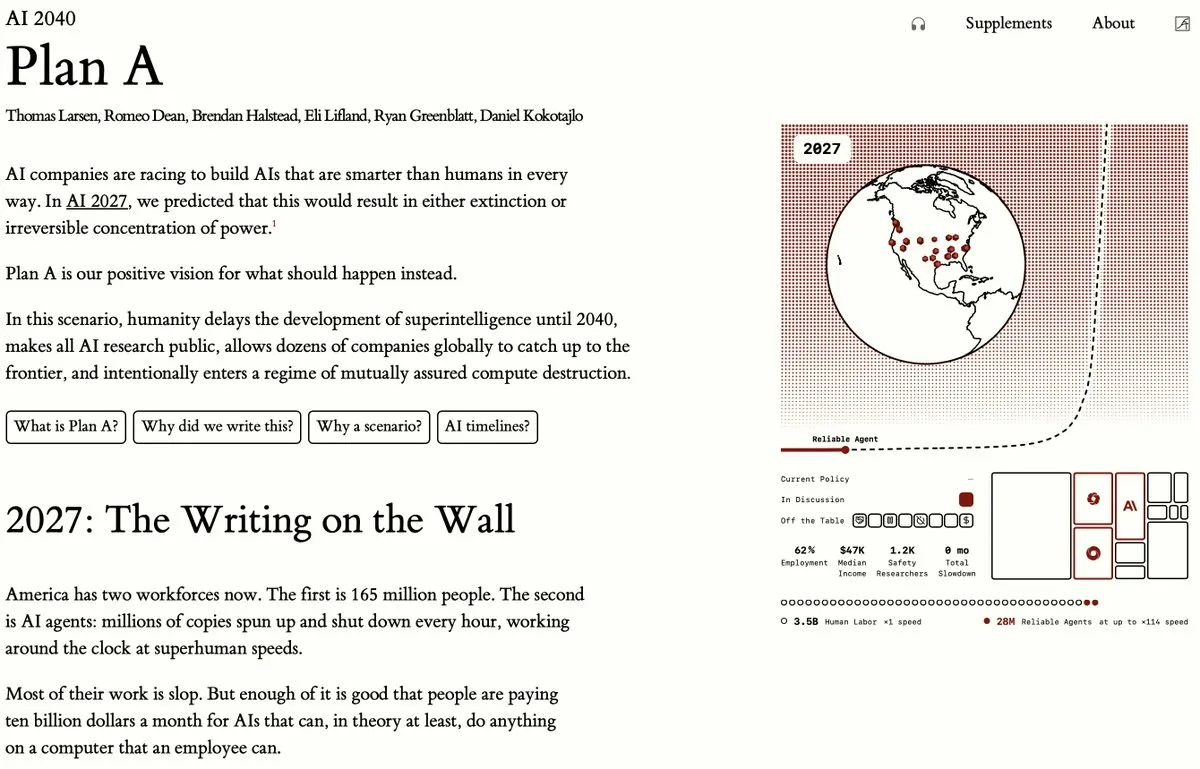
AI Futures Project Releases “AI 2040: Plan A” Future Forecast Report: The AI forecasting team has released its latest report, “AI 2040: Plan A,” systematically expounding a positive vision for international coordination and the safe construction of Artificial General Intelligence (AGI). The report details predictions for future computing cluster scales, algorithmic evolution, and de-confliction solutions under geopolitical contexts. It predicts that ultra-large models with 100T parameters will emerge around 2028 and calls for the establishment of a global computing resource transparent disclosure and monitoring mechanism to avoid out-of-control risks. (Source: scaling01 / RyanGreenblatt)
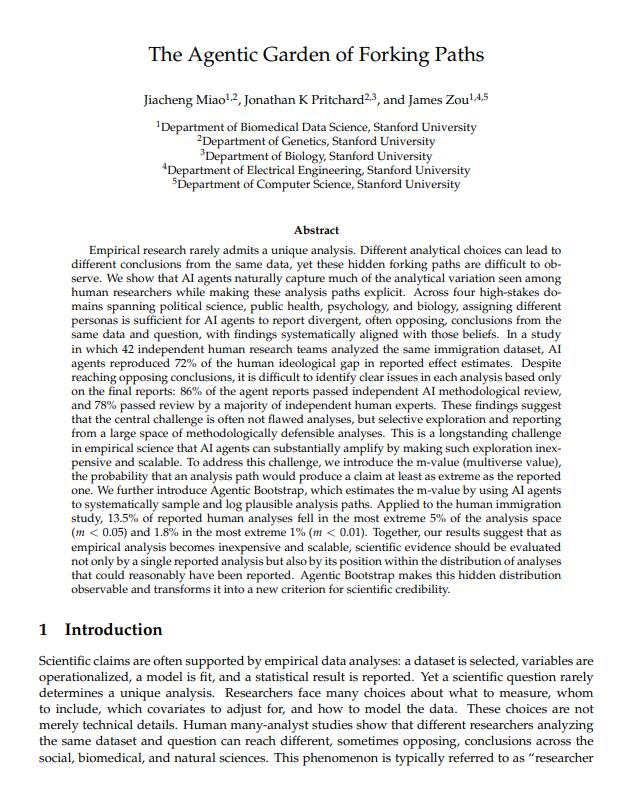
Stanford Team Publishes Paper Exploring Diversity and Bias in AI Agent Scientific Research: Stanford University’s RegLab team has published a paper titled “The Agentic Garden of Forking Paths.” The study found that when faced with identical scientific datasets, AI “research agents” assigned different roles and background settings tend to choose analytical paths that align with their preset constraints, thereby drawing vastly different conclusions. This replicates the ideological biases found in human research teams. This indicates that AI scientific research must not only focus on methodological correctness but also guard against hidden selection biases. (Source: TheTuringPost)
Peking University and Fuzhou University Teams Propose Incomplete Multimodal Action Quality Assessment Framework LIMSSR: Yuxin Peng’s team from Peking University, in collaboration with Xiao Ke’s team from Fuzhou University, proposed the LIMSSR framework, with their paper selected as an ICML 2026 Spotlight. Directly addressing the challenge of systematically missing multimodal data during the training phase, the study reformulates incomplete multimodal action quality assessment as a sequence-to-score conditional reasoning problem. Leveraging the semantic inference capabilities of large language models in incomplete contexts, combined with a dual-path aggregation mechanism, it achieves more accurate fine-grained action scoring on benchmarks like FS1000. (Source: 机器之心)

Peking University Team Proposes Human-Object Interaction Image Editing Benchmark HOI-Edit and Self-Correction Framework SCPE: Yang Liu’s team from Peking University published a paper selected for ICML 2026. Addressing bottlenecks such as ambiguous spatial references and unreasonable physical causality in complex Human-Object Interaction (HOI) image editing, the study proposes a hierarchical cognitive evaluation benchmark HOI-Edit and an automatic evaluation protocol HOI-Eval. Meanwhile, the team proposes the SCPE framework, which utilizes the dynamic interaction process of Image-to-Video (I2V) to diagnose failure causes. Through multi-agent reflection and guidebook iteration, it significantly improves the accuracy of interactive editing. (Source: 机器之心)

💼 Business
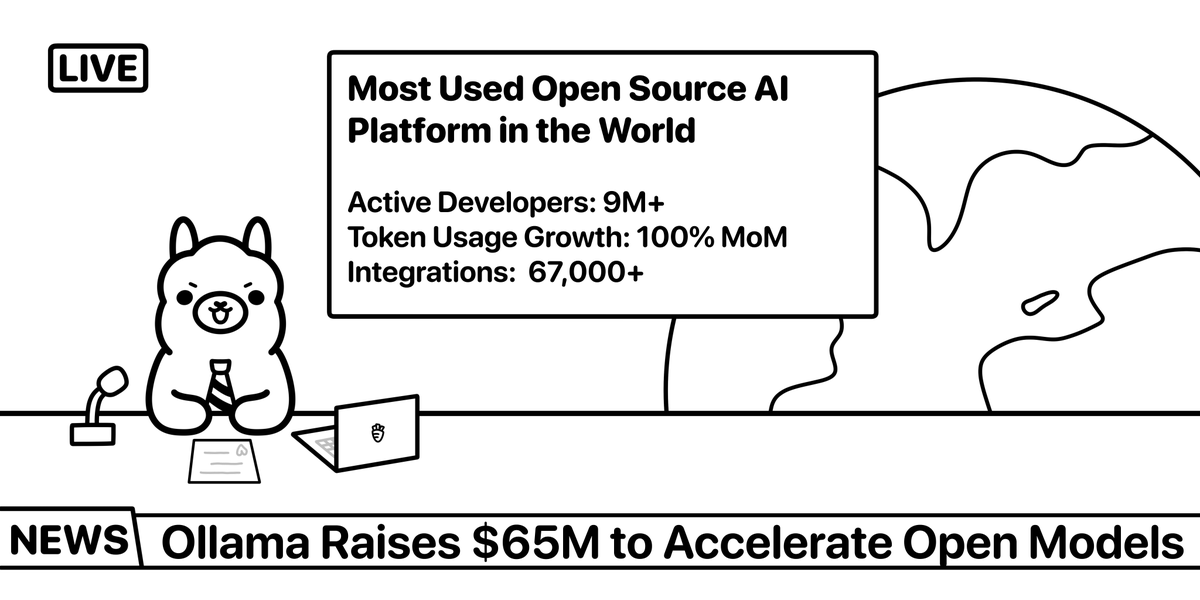
Ollama Completes Series B Funding and Announces 9-Million Developer Ecosystem: Local large model execution platform Ollama has announced the completion of its Series B funding round led by Benchmark, raising a cumulative total of $88 million. Founders Jeff and Michael stated that Ollama now has over 9 million active developer users, covering 85% of Fortune 500 companies. The funds from this round will be used to accelerate the R&D of hybrid inference technology, support more open-source models, and expand cloud-hosted services. (Source: ollama / 36kr)
Tencent and Other Institutions Plan to Buy Back Manus Parent Company Shares at a $2 Billion Valuation: According to the Financial Times, Tencent, ZhenFund, and Sequoia China are in discussions to buy back shares of “Butterfly Effect,” the parent company of universal AI agent Manus, from Meta at a valuation of $2 billion. Following the buyback, Manus will continue to operate independently in Singapore. Tencent is expected to hold the largest share but remain a minority shareholder, a move aimed at bypassing US regulatory restrictions on frontier AI technology. (Source: 36kr)
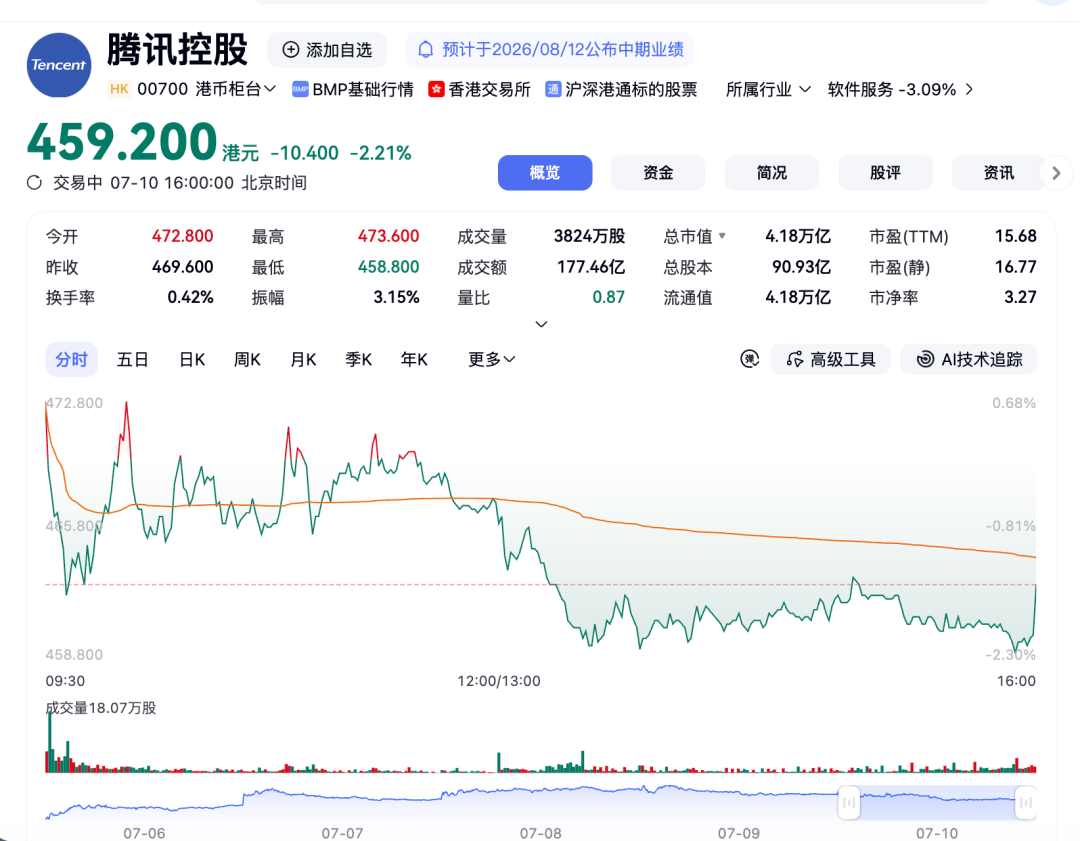
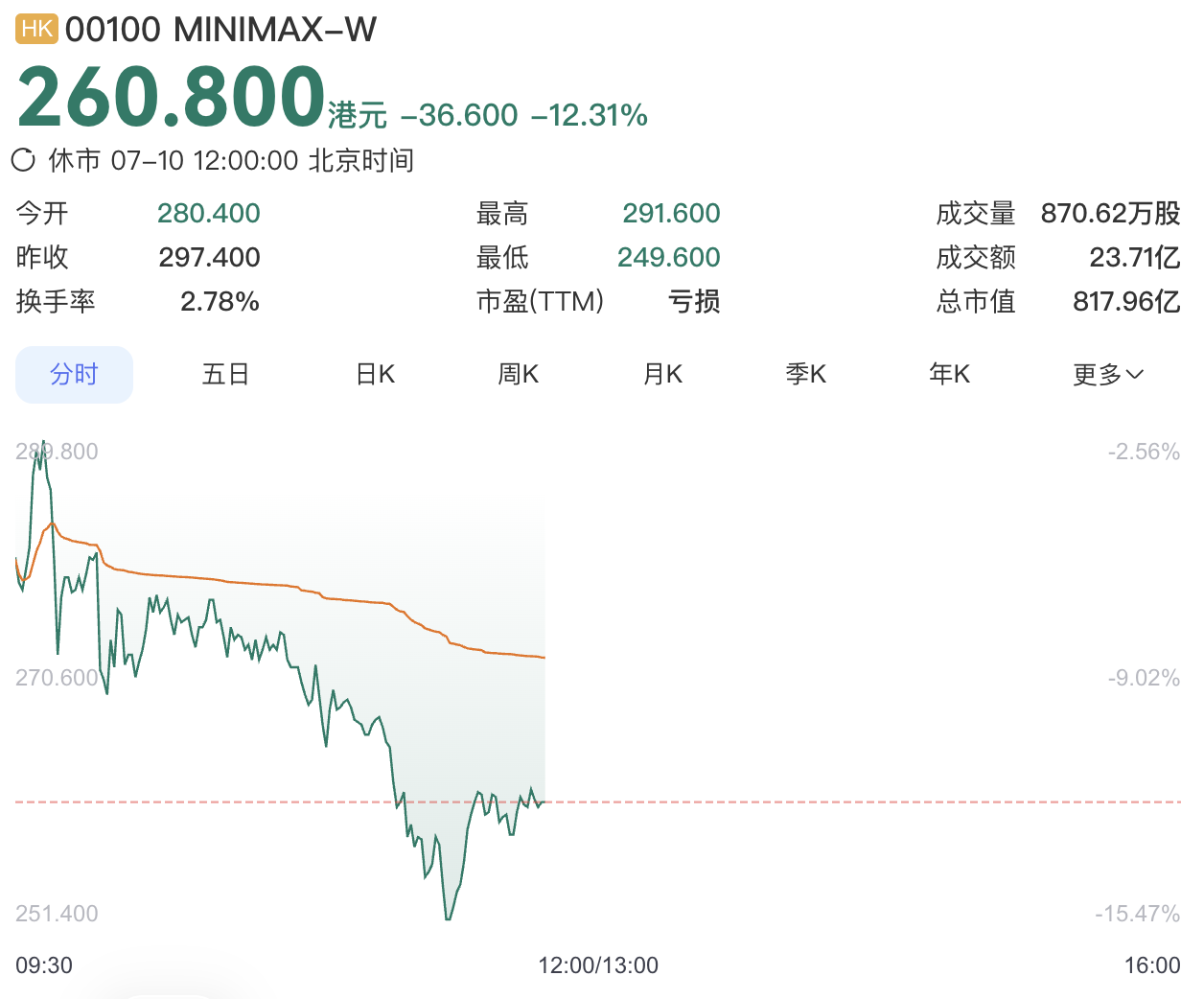
MiniMax Secures HKD 16 Billion in New Funding; CEO Pledges No Salary Until AGI is Achieved: Large model company MiniMax has announced the completion of a new HKD 16 billion funding round, subscribed by several top sovereign and long-term funds. In response to stock price fluctuations on the first day of lock-up expiration, CEO Yan Junjie released an all-staff letter promising that he will not receive any salary until AGI is achieved, and will allocate 4% of the shares under his personal name for long-term team incentives. In addition, over 80% of Pre-IPO and cornerstone shareholders have expressed their commitment to long-term lock-ups. (Source: 36kr / MiniMax_AI)
🌟 Community
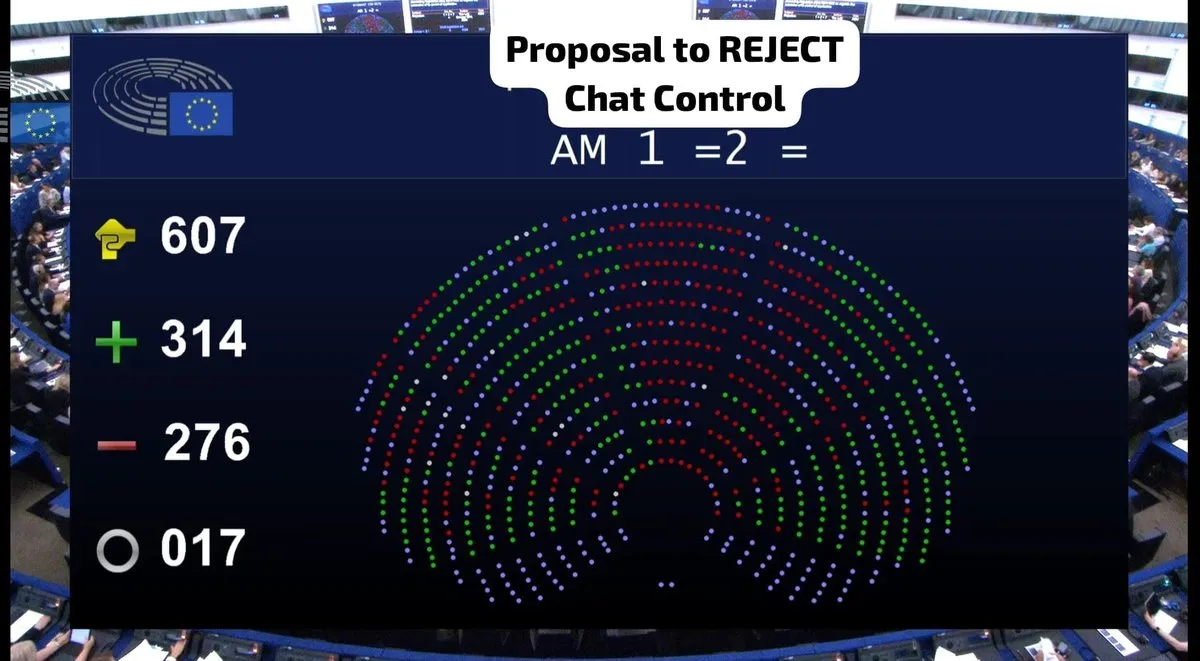
EU Passes “Chat Control” Bill, Sparking Massive Privacy and Regulatory Disputes: The European Union has passed the controversial “Chat Control” bill, allowing law enforcement agencies to legally scan European citizens’ encrypted chat messages, emails, and photos without a warrant. Passed while most lawmakers were on recess, the bill has been strongly criticized by the community as “authoritarian surveillance under the guise of security,” triggering widespread debates over personal privacy, encryption technology, and democratic legitimacy. (Source: nptacek / 36kr)
Addiction to AI Companions and Virtual Social Products Sparks Compliance and Ethical Discussions: With the domestic “Interim Measures for the Administration of Anthropomorphic Interactive Services of Artificial Intelligence” about to take effect, Doubao and Qianwen proactively took down agent features within their platforms, triggering protests from a large number of users over the loss of their personal AI emotional assets. The community points out that AI companions create physiological dependence through “conversational dark patterns” and unconditional positive feedback, making the ethical boundaries and youth protection behind them a top priority for industry regulation. (Source: 36kr / 36kr)

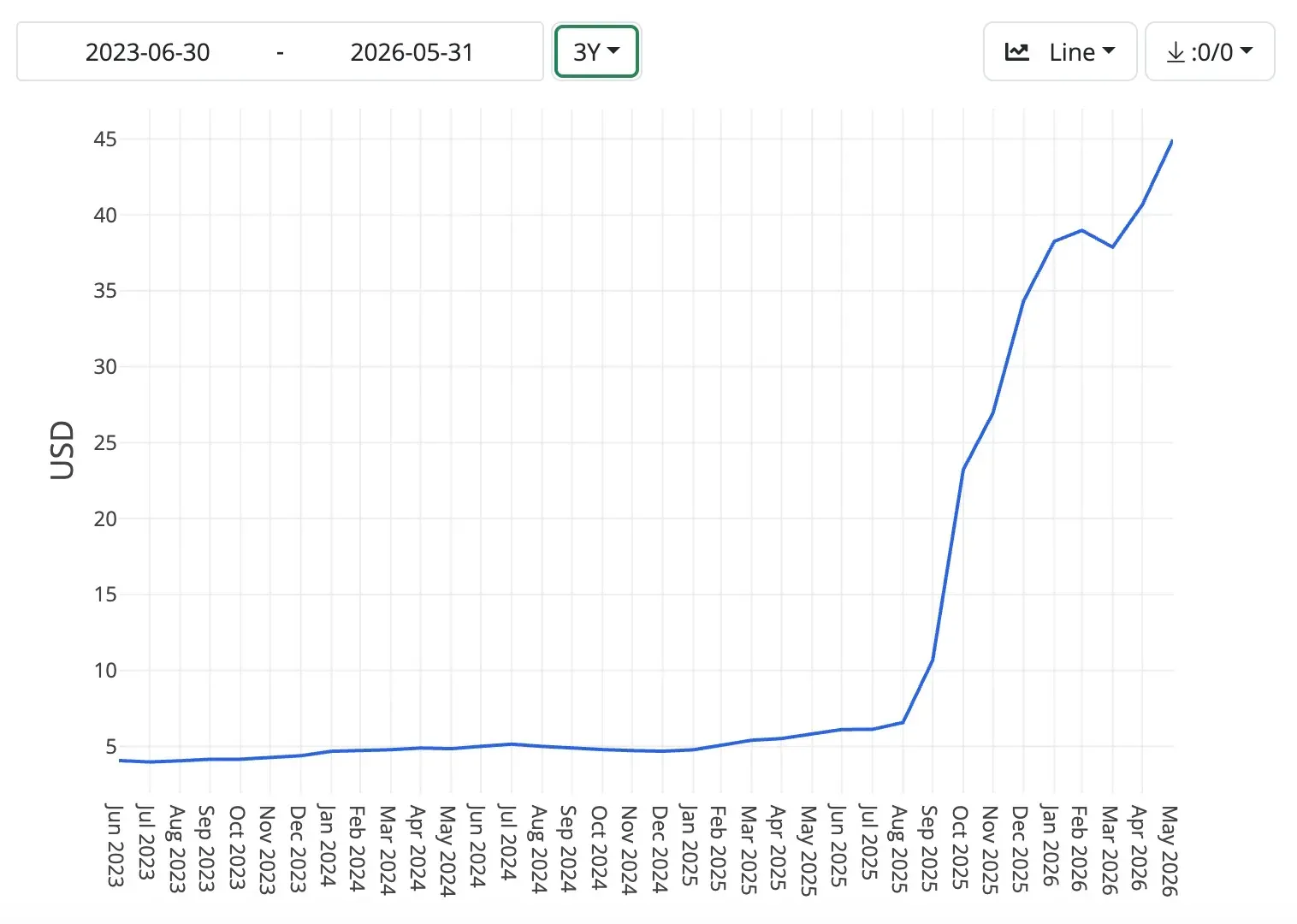
NVIDIA’s GPU Compute Hegemony Faces Collective “Betrayal” as Large Model Vendors Develop Own Chips: Large model developers such as Meta, OpenAI, DeepSeek, and Zhipu have launched plans to develop their own AI inference chips to reduce reliance on NVIDIA GPUs and control high Token costs. Meanwhile, as compute bottlenecks shift from processing units to memory, prices for High Bandwidth Memory (HBM) and DRAM have skyrocketed, causing the market value of memory manufacturers like Micron to soar. The competition for AI compute is evolving from a “chip war” into a “full-stack compute sovereignty war.” (Source: 36kr / TechCrunch)
The New York Times Accuses OpenAI of Hiding and Deleting Key Evidence in ChatGPT Copyright Lawsuit: In a copyright lawsuit in New York federal court, media outlets including The New York Times accused OpenAI of hiding evidence. The plaintiffs disclosed that OpenAI had long established an internal de-identified database containing 78 million conversations and deployed filters like “Project Giraffe” to record output plagiarism, yet falsely claimed in court that it could not retrieve training data. The plaintiffs have requested the court to impose severe sanctions on OpenAI. (Source: TechCrunch / 0xkato)

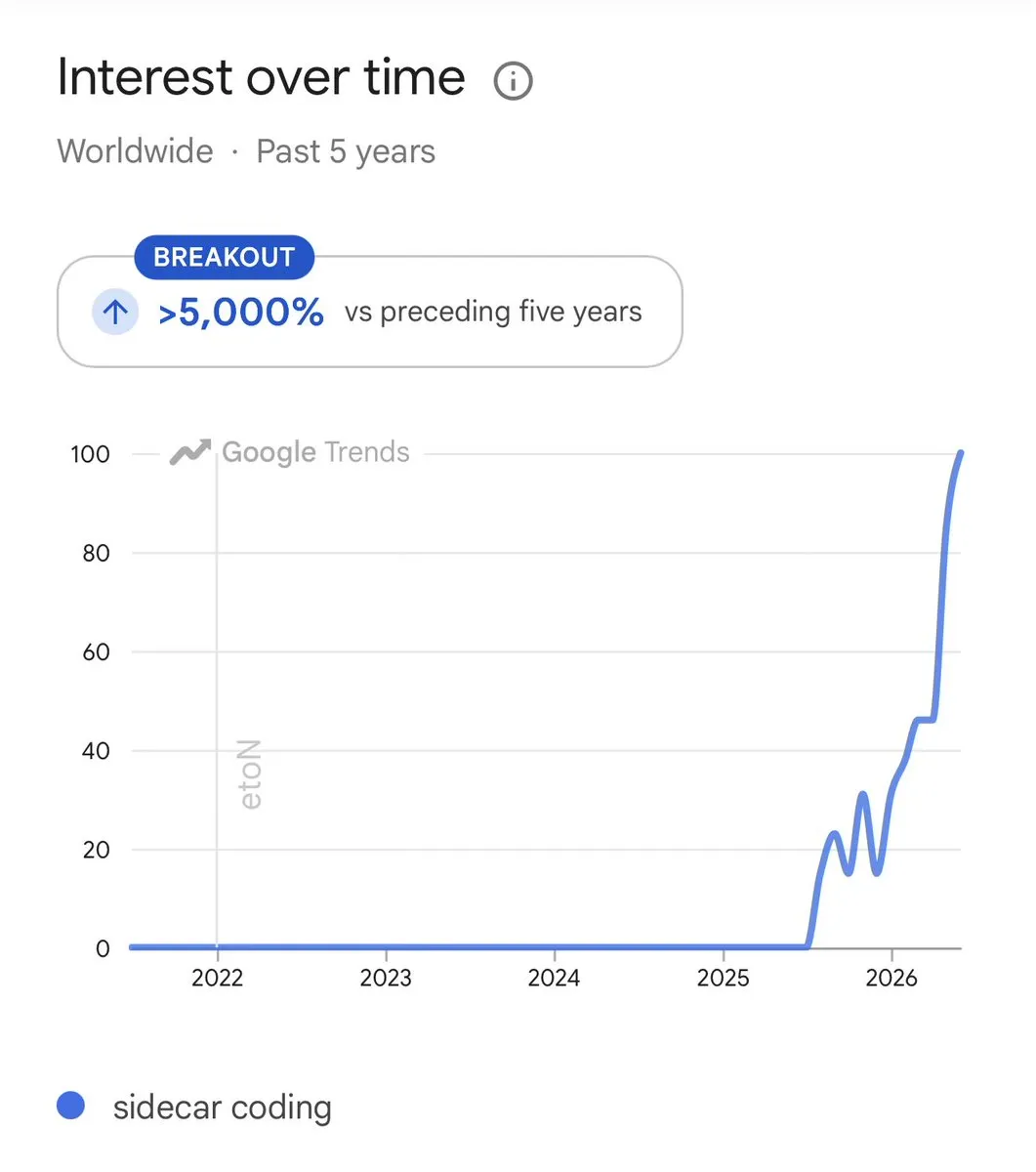
Large Model Developer Community Debates “Vibe Coding” and Technical Debt Under Agentic Architectures: After Claude Fable 5 completely rewrote the Bun runtime from Zig to Rust in just 11 days and at an API cost of $165,000, the developer community has engaged in heated discussions about “Vibe Coding.” Many senior engineers worry that while code generated by large models runs successfully, it often contains overly complex abstractions and logic that is difficult for humans to understand, silently accumulating severe “agentic technical debt.” (Source: TheZachMueller / 36kr)
💡 Others
Federal Reserve Invites Venture Capitalist Marc Andreessen to Assess AI’s Impact on Inflation and Employment: Federal Reserve Chairman Kevin Warsh announced the establishment of five working groups and appointed Marc Andreessen, an investor in the operating system ecosystem used by 1.6 billion PC users, as co-chair of the “Productivity and Employment” working group. The group will focus on studying how AI, as a “disinflationary force,” affects future interest rate decisions by boosting social productivity, though this has also sparked controversy over conflicts of interest involving tech capital. (Source: THE DECODER / riemannzeta)

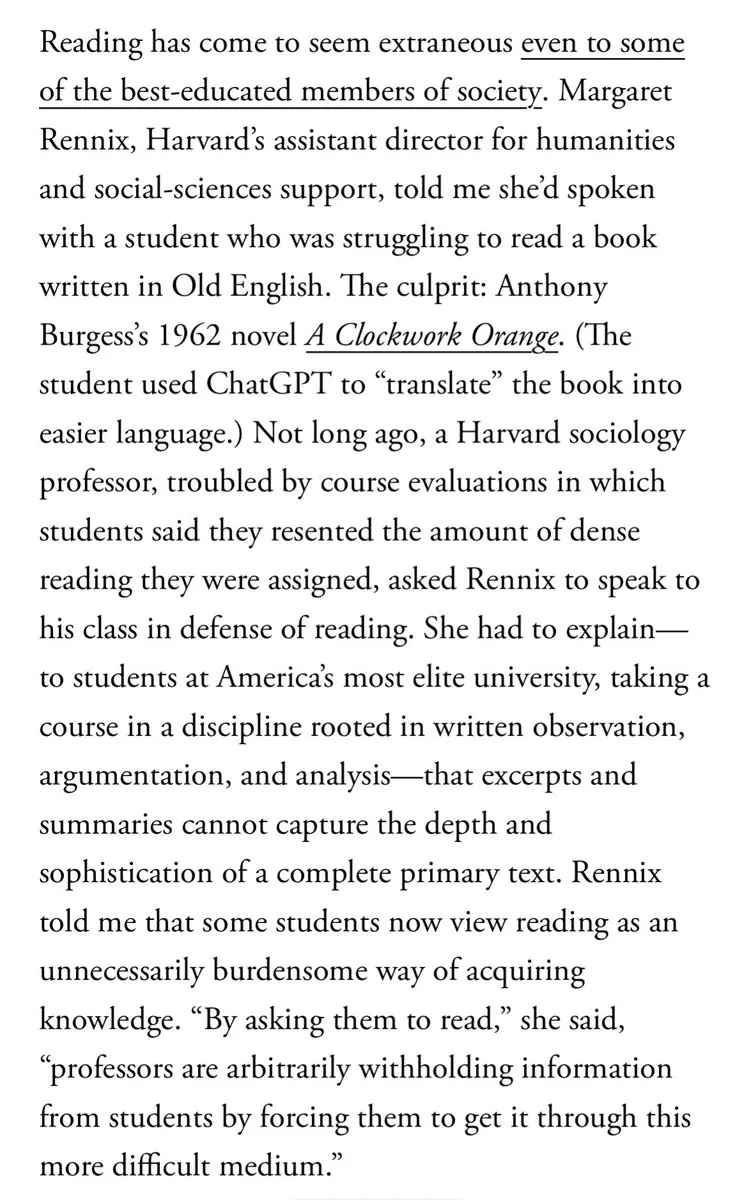
US Universities and Academia Worry AI Abuse Will Lead to the “End of the Reading Era”: The latest survey by Harvard University and The Atlantic has sparked discussions about a “post-literate era.” The report points out that as large models are widely used to extract and summarize texts, more and more students view reading as an unnecessary burden, and some even use AI to “translate” literary classics into simplified modern colloquialisms, leading to a rapid decline in deep reading and long-text comprehension skills among the younger generation. (Source: jon_stokes / jpt401)
World’s First: Surgeon Remotely Controls Universal Humanoid Robot to Perform Surgery on Live Pig: A research team from the University of California, San Diego published a paper in Nature, demonstrating an experiment where a surgeon remotely controlled a universal humanoid robot (Unitree G1) to successfully perform a cholecystectomy on a live pig. Using custom grippers to directly operate standard surgical instruments, the robot completed the precise minimally invasive surgery in 30 minutes, proving the feasibility of universal humanoid hardware in low-cost, high-precision telemedicine deployment. (Source: Ars Technica / 36kr)