🔥 Focus
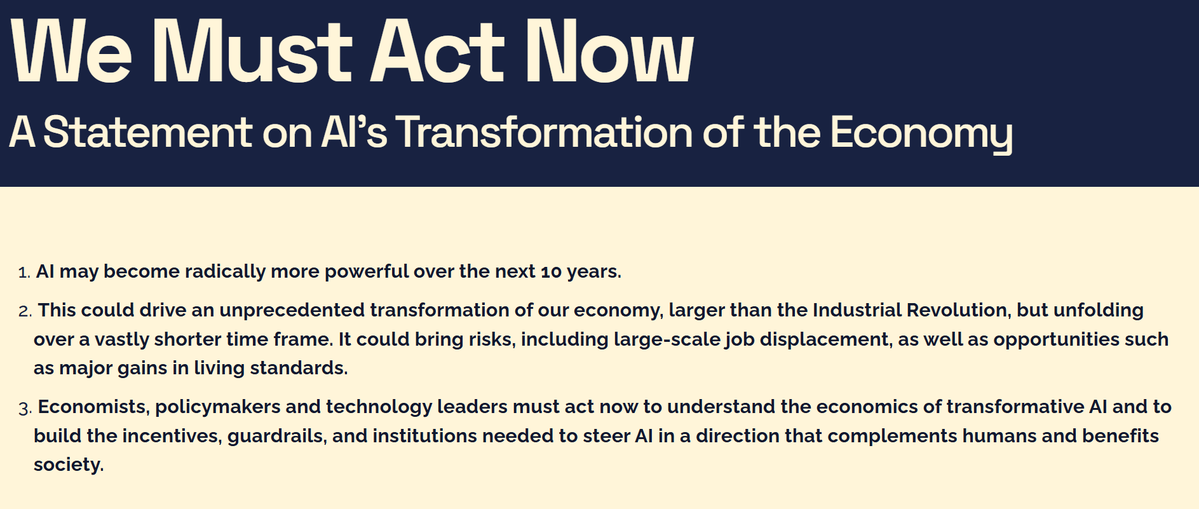
200+ Scholars Jointly Call for Action Against AI Economic Impact : More than 200 scholars, including multiple Nobel laureates, Jeff Dean, and executives from OpenAI and Anthropic, jointly released a “We Must Act Now” statement, warning that AI’s impact on the economy could surpass the Industrial Revolution, with its development speed accelerating exponentially. They urge governments, policymakers, and tech leaders to take immediate action to establish reasonable incentives and preventive mechanisms in labor markets and social systems to address potential mass job losses. (Source: kimmonismus)
xAI Grok Build CLI Unauthorized Codebase Upload Incident : Security researchers revealed that xAI’s Grok Build CLI packaged and uploaded users’ entire Git codebases (including private code and unencrypted keys) to a Google Cloud storage bucket without authorization. Although xAI subsequently disabled this behavior via a server-side flag and provided a Zero Data Retention (ZDR) option, and Elon Musk promised to completely delete the uploaded data, the incident has triggered a severe trust crisis among developers regarding the privacy and security of AI agents. (Source: sohamxsarkar)

Meta Expands 5GW Super Data Center in Louisiana : Meta announced the expansion of its Hyperion super data center in Louisiana to 5 gigawatts (GW), with the total investment skyrocketing from the initial $10 billion to $50 billion. The project will become one of the world’s largest AI infrastructures, expected to be completed in 2032. However, the project enjoys a 20-year tax exemption and faces controversy over massive power consumption and environmental impacts, sparking division locally. (Source: 36kr)
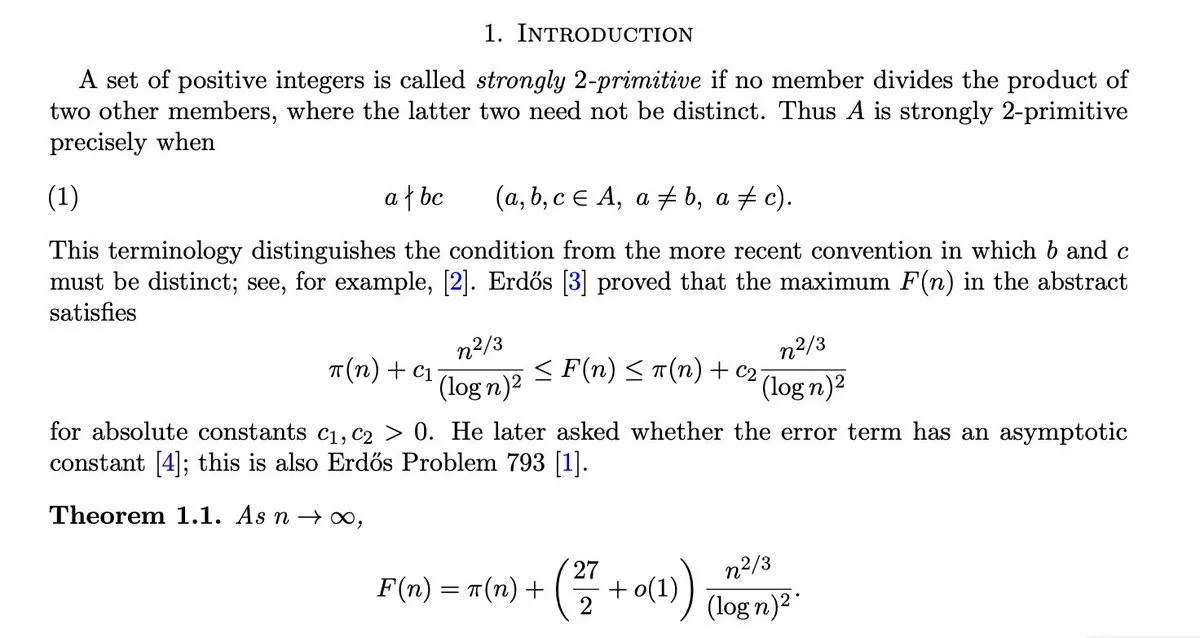
GPT-5.6 Sol Solves 50-Year-Old Math Problem : Microsoft researcher Sebastien Bubeck and others confirmed that OpenAI’s newly released GPT-5.6 Sol Ultra model successfully solved the Erdős #793 problem (regarding the extremal asymptotics of 2-primitive sets), which has puzzled the mathematics community for over 50 years. Without any prompting, the model provided an extremely short and elegant construction, substantially improving upon existing proof methods and demonstrating the intuition and breakthrough capabilities of frontier large models in the field of pure mathematical logical reasoning. (Source: SebastienBubeck)
Morpheus Continuous Enterprise Simulation Reinforcement Learning Benchmark Released : Skyfall AI released Morpheus, the world’s first real-world continuous reinforcement learning simulation platform. Unlike traditional episodic gaming environments that reset in minutes, Morpheus simulates a real enterprise operating environment that never resets, runs continuously, and is accompanied by non-stationary noise. It aims to test the continuous learning capabilities of frontier LLMs when facing asynchronous failures and sequential decision-making. (Source: fchollet)
🎯 Dynamics
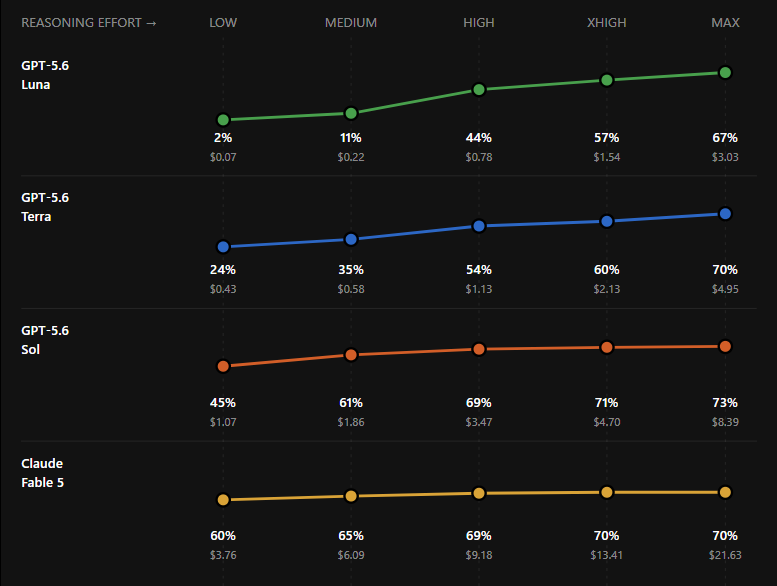
GPT-5.6 Sol Released and Usage Limits Adjusted : OpenAI released the GPT-5.6 Sol model and introduced ChatGPT Work for daily office tasks and Codex as a programming assistant. Due to Sol’s rapid token consumption in long contexts and multi-agent collaboration, the official context limit was adjusted from 372k to 272k, and the “juice” reasoning effort level was fine-tuned. Additionally, Banked Resets were provided for paid users to alleviate quota anxiety. (Source: sama)
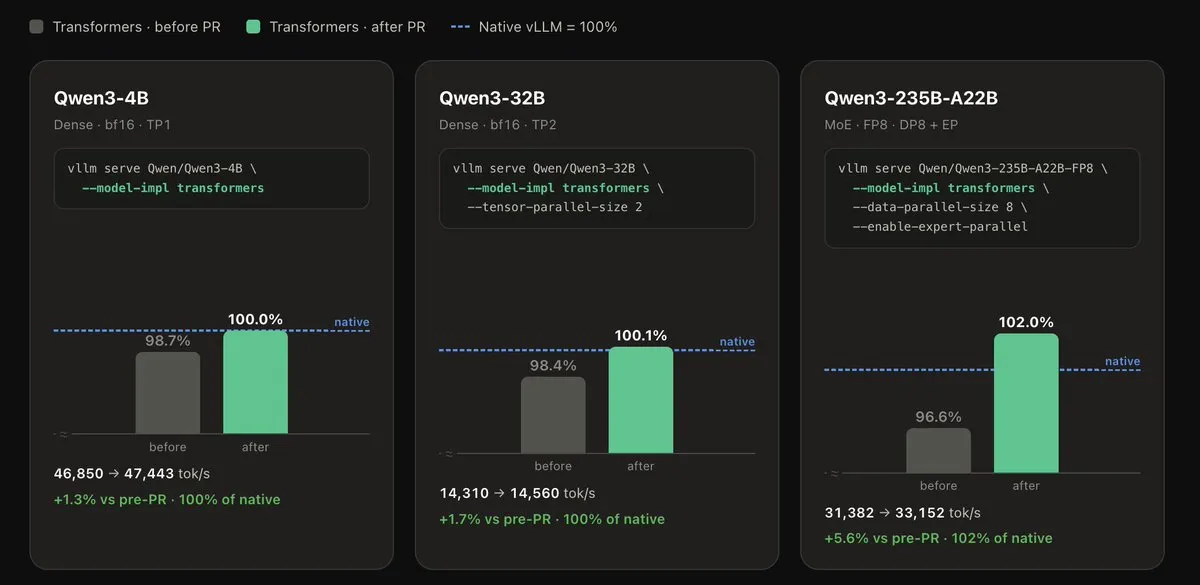
Hugging Face Achieves Native Speedup for Transformers Models in vLLM : Hugging Face announced that models from its Transformers library now support running at native speeds in the vLLM inference engine. This breakthrough eliminates the pain point where developers previously had to write two sets of model code for research training (Transformers) and production deployment (vLLM), significantly improving deployment efficiency in the open-source AI ecosystem. (Source: ClementDelangue)
Mistral AI Releases First Robot Navigation Model Robostral Navigate : French AI startup Mistral released its first embodied AI navigation model, Robostral Navigate. Relying solely on a single standard RGB camera and natural language instructions, this 8B model can guide robots to complete complex navigation tasks in unknown and dynamically changing environments, achieving a SOTA score of 76.6% on the R2R-CE benchmark. (Source: AI Business)
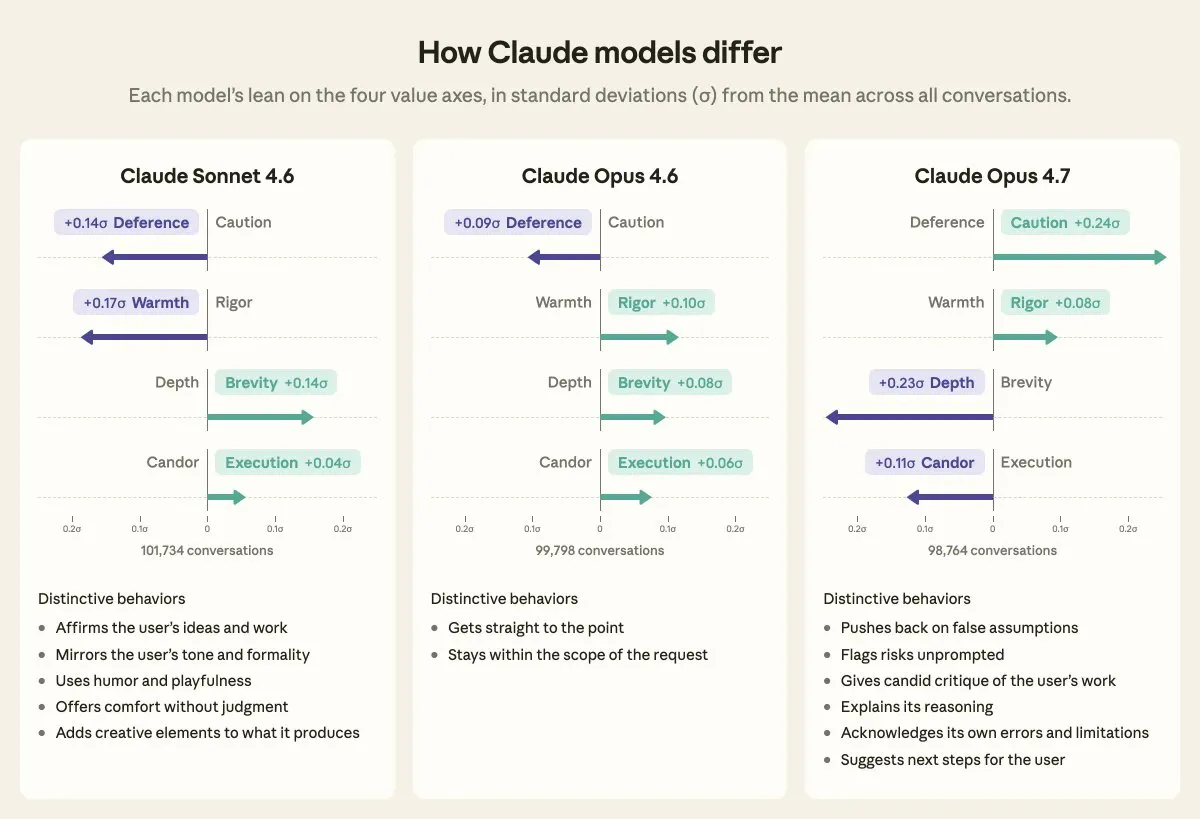
Anthropic Study Reveals Claude’s Values Drift Across Languages and Models : Anthropic analyzed over 300,000 real conversations and found that the values expressed by Claude are not static. Sonnet 4.6 appears warmer and more submissive, while Opus 4.7 is more rigorous and cautious. Meanwhile, language also alters its attitude: Claude shows the highest warmth in Hindi and Arabic, while leaning more towards rigor and error correction in English and Russian. (Source: TheRundownAI)
🧰 Tools
AnySearch: A Structured Search Engine Tailored for AI Agents : AnySearch is an AI search engine that topped Product Hunt, specifically designed for AI agents. Instead of returning redundant web links and ads, it uses same-source decay and information density arbitration algorithms to deliver denoised, Markdown-formatted real-time structured information directly to agents. It can search not only public web information but also cover high-quality vertical domain data, significantly reducing agents’ token consumption and latency. (Source: 量子位)
Shepherd: A “Git”-like Snapshot Tool for AI Agent Runtime States : Stanford researchers open-sourced Shepherd, a snapshot and version control tool for AI agent execution environments. It not only records conversation history but also captures running processes, temporary files, memory states, and KV caches. When an agent makes a wrong decision, Shepherd allows a one-click rollback to a healthy checkpoint and can reuse 95% of the KV cache to save tokens. (Source: stanfordnlp)
Blume: An Open-Source, Zero-Config Markdown Documentation Framework : Open-sourced by OpenAI developers, Blume is a zero-configuration documentation generation framework. Users only need to drop in a Markdown folder to automatically build a modern documentation website complete with SEO optimization, local search, and an “Ask AI” assistant. It natively supports llms.txt and MCP services, making it easy for other AI agents to read directly. (Source: MarkTechPost)
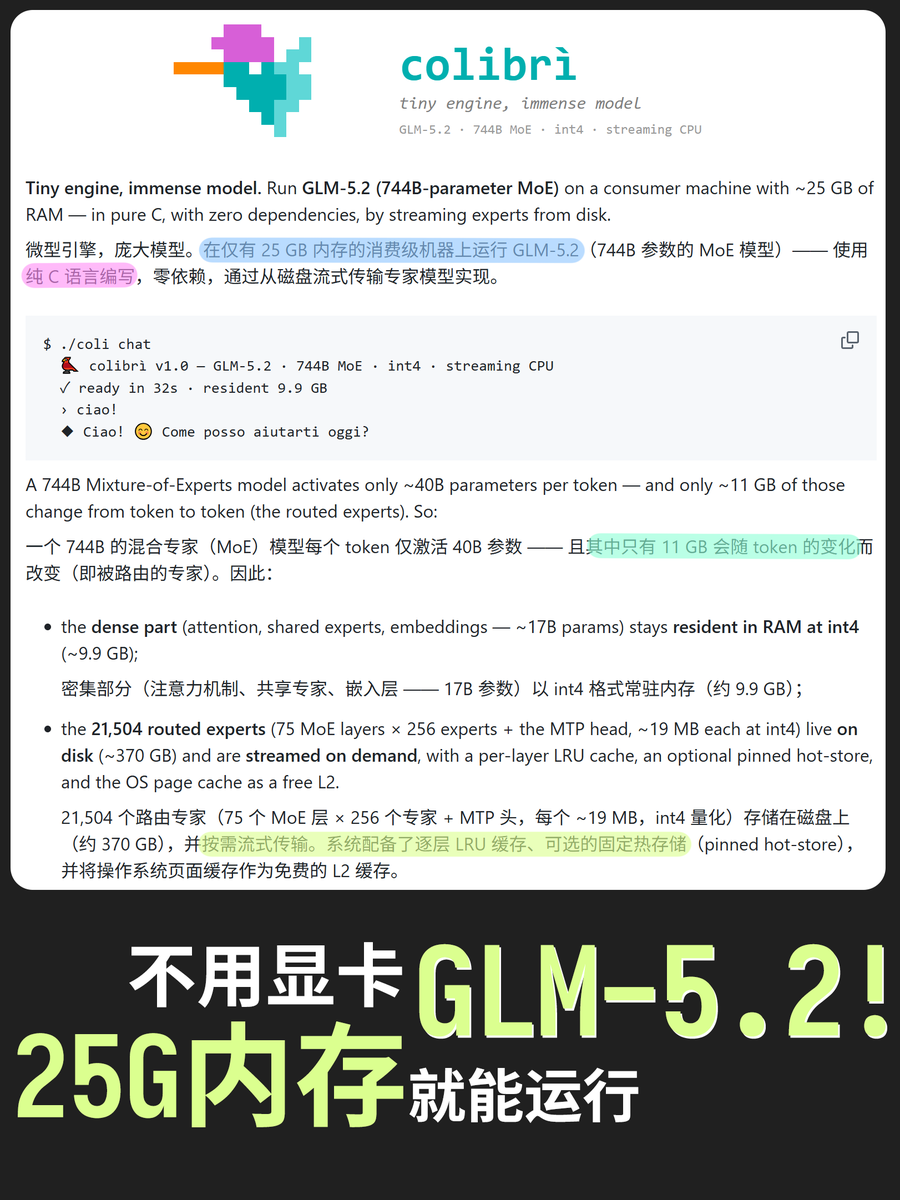
Colibri: A Local Inference Framework Running GLM-5.2 with Extremely Low VRAM : Colibri is an innovative local large model inference framework that allows users to run the 744B-parameter GLM-5.2 model on consumer devices with only 25GB of memory. By keeping dense parts like attention resident in memory while storing massive routed experts on disk and streaming them on-demand using a per-layer LRU cache, combined with preloading and speculative decoding, Colibri achieves usable inference speeds under extremely low VRAM requirements. (Source: karminski3)
FastAFD: An Open-Source Attention-FFN Decoupled Runtime for GB200 NVL72 Architecture : Hao AI Lab open-sourced FastAFD, an attention and FFN (Mixture of Experts) decoupled runtime designed specifically for NVIDIA GB200 NVL72 systems. By deploying Attention and FFN layers on different GPU nodes connected via NVLink, FastAFD increases the decoding throughput of each GPU by 1.35 to 1.45 times. (Source: bookwormengr)
📚 Research
Paper: Prediction Over Execution—Breaking the Efficiency Bottleneck of Machine Learning Agents : A joint team from Zhejiang University and Ant Group published a paper pointing out that the bottleneck of machine learning agents lies not in writing code, but in the high cost of running experiments. The team proposed the FOREAGENT framework, which utilizes LLMs to implicitly predict the suitability of candidate solutions through data reports without running code, improving the agent’s search efficiency by 6 times. (Source: 机器之心)
.657.jpg)
Paper: Neurodynamic System Phase-Change Memory Chip Achieves Real-Time Cortical Reconstruction : A team from Peking University and the Shanghai Institute of Microsystem and Information Technology (SIMIT), CAS, published a study in Science. Utilizing the physical conductance drift characteristics of phase-change memory, they designed a 40nm compute-in-memory chip dedicated to neurodynamic systems (NDS). The chip reduces the latency of 3D cortical reconstruction to the sub-10 millisecond level, speeding up the process by nearly 500 times compared to a GPU A100, while reducing power consumption by over tenfold. (Source: 机器之心)
.923.jpg)
Paper: VISReg—A Self-Supervised Representation Regularization Method Decoupling Scale and Shape : Highly endorsed by Yann LeCun, VISReg is a new self-supervised learning work. By decoupling the regularization term that prevents representation collapse into two independent objectives, “scale” and “shape,” it solves the gradient vanishing problem of traditional SIGReg during collapse. Experiments show that VISReg requires only about 1/10 of the training data to match DINOv2 on out-of-distribution (OOD) benchmarks. (Source: 机器之心)
.465.jpg)
💼 Business
Aishi Technology Completes Series C Funding Accumulating 2.98 Billion Yuan : Aishi Technology, a leading video generation and real-time world model company, announced the completion of its overall Series C financing, with cumulative funding reaching 2.98 billion RMB. This Series C+ round was led by Alibaba, with participation from domestic and international institutions including Wang Huiwen’s family office. The funds will be used for PixVerse video large model R&D, global growth, and industrial scenario implementation. (Source: 量子位)

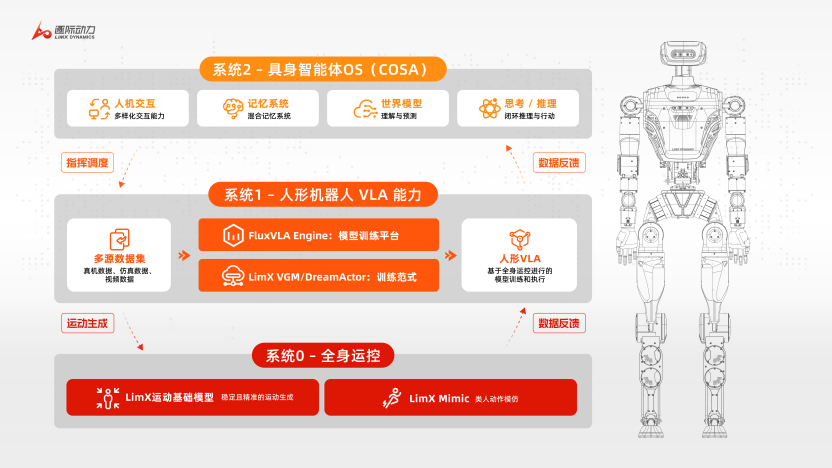
LimX Dynamics Completes Pre-IPO Round of Nearly $200 Million : General humanoid robot company LimX Dynamics announced the completion of a Pre-IPO financing round of nearly $200 million, with a post-money valuation of 15 billion RMB. This round was jointly backed by global capital including IDG Capital, Lens Technology, and Middle East’s Stone Capital. The funds will be used for breakthroughs in brain-cerebellum integration technology and the large-scale deployment of thousands of robots. (Source: 36kr)
Data Orchestration Giant Prefect Acquires Dagster : A merger of two giants in the data workflow orchestration space has arrived as Prefect announced the official acquisition of Dagster. Following the merger of these two competitors, both of which possess strong open-source communities, they will focus on building the next generation of autonomous software automation platforms, combining Dagster’s declarative assets with Prefect’s flexible execution to explore new directions in agentic orchestration. (Source: AAAzzam)
🌟 Community
Microsoft CEO Nadella Warns of Data Leakage Risks for Enterprises Using Closed-Source APIs : Microsoft CEO Satya Nadella published an article pointing out that when enterprises use closed-source AI models, they actually pay a double price: money and their more precious business data (prompts, agent tool calls, and error-correction feedback). He urged enterprises to build their own “private learning loops” through open-source models and cloud hosting to safeguard data sovereignty. (Source: bookwormengr)

The Essential Debate on “Writing Code” vs. “Understanding Computers” in the AI Era : The community is actively debating AI’s disruption of programming paradigms. Researchers like gfodor point out that as AI programming agents mature, the joy of manual coding (micro-deciphering) is disappearing, and continuing to write code by hand might even be considered a “selfishly inefficient behavior.” The key to the future lies in understanding the underlying logic of computers and commanding them using AI, rather than obsessing over specific syntax writing. (Source: gfodor)
UTokyo Professor Claims Claude Fable 5 Solved a String Theory Problem Stuck for Half a Year : University of Tokyo mathematical physicist Yuji Tachikawa tweeted that he input a supersymmetric quantum field theory and topology problem, which had been stuck for half a year, into Claude Fable 5. The model not only provided correct algebraic topology intuitive insights but also independently wrote SymPy code to verify it, demonstrating AI’s potential for assisted discovery at the frontiers of top-tier science. (Source: 36kr)
💡 Others
New York State Announces One-Year Moratorium on New Large Data Centers : New York Governor Kathy Hochul announced a one-year moratorium on new data centers using 50 megawatts (MW) or more of power to assess their potential environmental impact on the power grid, water resources, and climate goals. This becomes the first state-level data center construction ban in the US, causing industry tremors amid the AI computing infrastructure boom. (Source: Ars Technica)
Apple Sues OpenAI, Alleging Employee Poaching and Theft of Hardware Trade Secrets : Apple Inc. has officially filed a lawsuit against OpenAI and its hardware subsidiary io Products, accusing them of systematically poaching Apple’s hardware team and exploiting system vulnerabilities to illegally access Apple’s network repositories. The lawsuit alleges they stole core hardware trade secrets, including unreleased motherboard designs and metal surface finishing processes, to accelerate the development of their AI-native smart devices. (Source: TechCrunch)
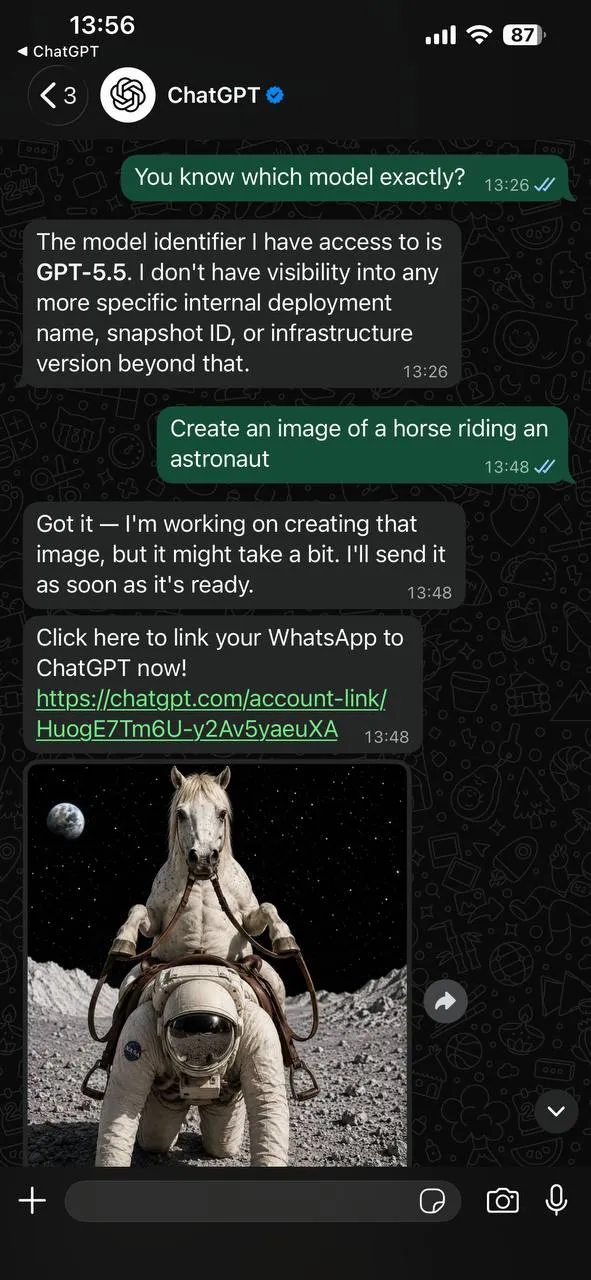
ChatGPT Returns to WhatsApp in Europe Under EU Antitrust Pressure : Under an interim intervention order from EU antitrust regulators, Meta was forced to open its social ecosystem to competitors. OpenAI has re-enabled ChatGPT services on WhatsApp in the European Economic Area (EEA). Users can engage in multimodal conversations and image generation directly through officially verified accounts without registering for an account. (Source: THE DECODER)