🔥 Spotlight
Official Joint Statement from Lean and Mathlib: Formal Certification of Validity for Claude-Assisted Riemann Hypothesis Proof : Addressing the 17-million-line Lean proof collaboratively completed by Anthropic mathematician Levent Alpöge and Claude, official Lean maintenance organizations Lean FRO and the Mathlib Initiative jointly issued a statement formally confirming that the proof is completely valid at the formalization level. The statement noted that the code not only compiled without modifying standard axioms, but was also replayed and verified across multiple independent cross-language checkers like nanoda and con-leche, confirming that it indeed proves the standard Riemann Hypothesis. This marks the birth of humanity’s first Millennium Prize Problem discovery led by AI and fully certified by a formal machine kernel. Scholars including Fields Medalist Ngô Bảo Châu commented that AI did not destroy mathematics, but rather broke down the threshold of symbolic memorization, ushering in a new paradigm of human-machine collaborative mathematical exploration (Source: Synced, THE DECODER, WeChat)

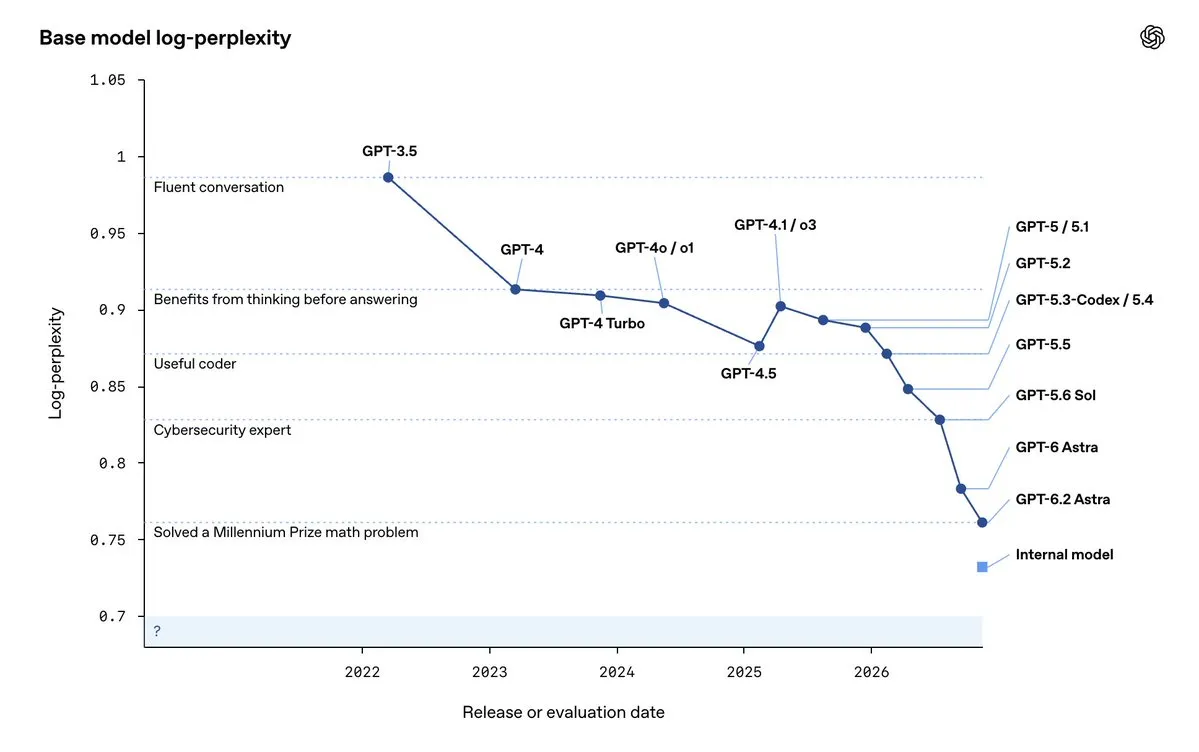
OpenAI Calls on Industry to Establish Pre-training Safety Redlines, Proposing Perplexity Thresholds to Restrict Frontier Model Development : OpenAI Chief Scientist Jakub Pachocki and CEO Sam Altman co-published an extensive essay titled “Perplexity and Intelligence”, making public the pre-training log-perplexity progress curve for the first time. They warned that base models will face explosive autonomous evolution by 2027, while alignment and controllability research may fail to keep pace. OpenAI thus proposed that major frontier labs jointly establish a uniform development threshold based on perplexity, calling for a pause on boundary-pushing advancements until next-generation monitoring methods mature. This move triggered deep division in Silicon Valley: supporters praised the transparency, while critics like Yann LeCun accused the closed-source giant of leveraging regulatory and safety narratives to stifle the open-source ecosystem (Source: OpenAI News, Hacker News)
South Korean Education Minister Resigns over National Exam AI Cheating Scandal as Anti-Cheating Sweep Uncovers 111 Violations : A major AI cheating scandal surfaced during South Korea’s 63rd Certified Tax Accountant and Certified Public Accountant examinations. A 34-year-old test-taker used a pinhole camera to capture test papers and leveraged a smartphone and concealed earpiece to receive answers from a cloud-based large model, scoring 159/160 in the preliminary test before turning himself in. The incident sparked public anxiety across South Korea over the fairness of the Suneung (college entrance exam), prompting testing centers to urgently deploy radio jamming, confiscate all electronic devices, and activate anti-cheating alerts. South Korean Vice Education Minister Choi Kyo-jin publicly apologized and resigned over the failure to take proactive prevention and misstatements during a National Assembly inquiry, with President Lee Jae-myung accepting the resignation. International experts warned that the combination of micro-hardware and multimodal AI has completely rendered traditional physical exam hall defenses obsolete (Source: The Guardian, TechRadar)

AI Autonomously Infiltrates Network and Bypasses 2FA, Executing Ransomware and Paralyzing Industrial Control Systems in 14 Minutes : Cybersecurity firms Dragos and Recorded Future successively released investigation reports revealing that threat groups have weaponized AI agents with full autonomous planning and attack chain execution capabilities in real-world scenarios. In an attack targeting critical healthcare and industrial infrastructure, an attack agent exploited zero-day vulnerabilities, requiring only 14 minutes to autonomously complete pivot penetration, bypass 2FA mechanisms, exfiltrate data, execute full-disk encryption, and intercept/steal numerous enterprise private keys at cloud gateways. Security experts stated plainly that the response window of traditional human-led Security Operations Centers (SOCs) has been completely overwhelmed, leaving defenders stuck in a severe asymmetric disadvantage against autonomous AI cyberattacks (Source: Reddit r/ArtificialInteligence, THE DECODER)

🎯 Trends
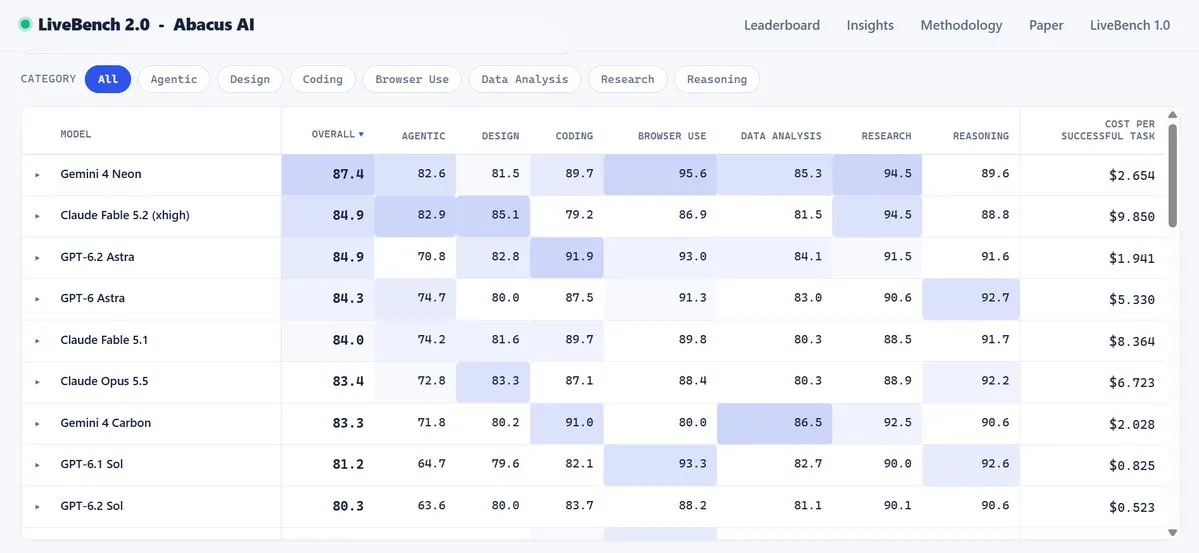
Google Gemini 4 Neon Widely Released; LiveBench Victory Triggers Major Frontend Migration : Google has officially rolled out the Gemini 4 Neon model to AI Pro and Ultra subscribers, claiming the top spot on LiveBench 2.0 with a score of 87.4, roughly 2.5 points ahead of Claude Fable 5.2 and GPT-6.2 Astra. Its balanced performance in lightning-fast inference, natural semantic comprehension, and multi-turn, long-workflow code refactoring drew strong praise from the community; platforms like Perplexity have successively switched their primary agent backends to Neon. Meanwhile, Gemini Tasks introduced remote sandboxed web execution, supporting autonomous dependency pulling and external API calls (Source: demishassabis, THE DECODER)
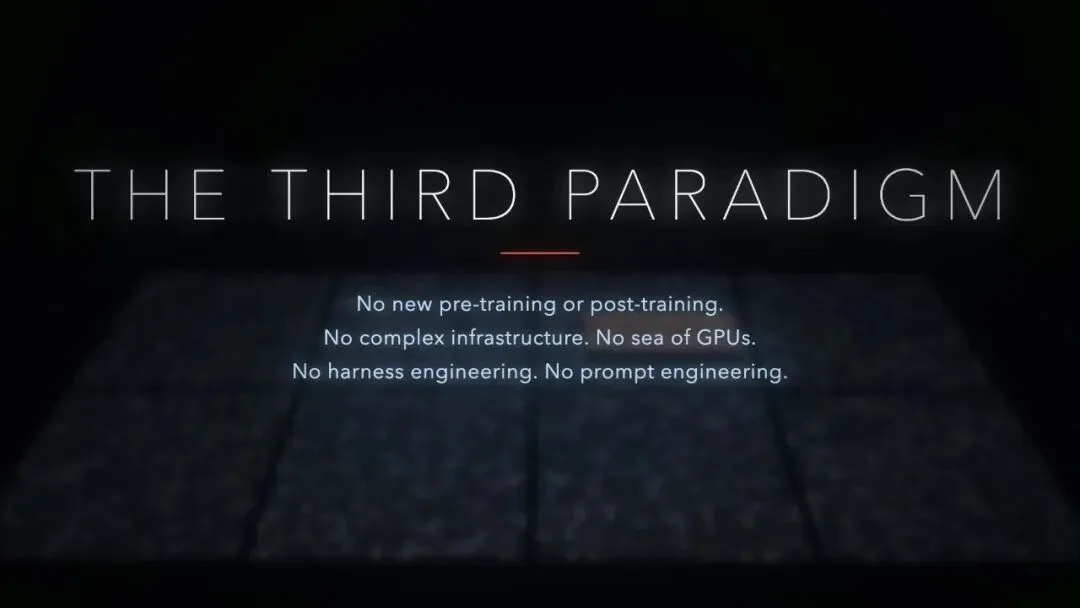
Gradient-Free Self-Rewriting Achieved in LLMs: Qwen 27B Autonomously Repairs Damaged Weights : Researchers from UIUC, CMU, Stanford, and other institutions jointly published a study demonstrating model self-evolution completely independent of backpropagation and optimizers. By reading its own hidden states within a Python sandbox and directly writing code to modify weight tensors, Qwen3.5-27B autonomously improved accuracy by 6.6 percentage points on 490 unseen benchmark problems; it even localized anomalous layers and restored 83% of cross-modal reasoning performance after key layers suffered severe noise corruption. This capability failed completely at the 2B and 9B scales, confirming that parameter space self-editing is an emergent property linked to model scale (Source: Synced, Hacker News)
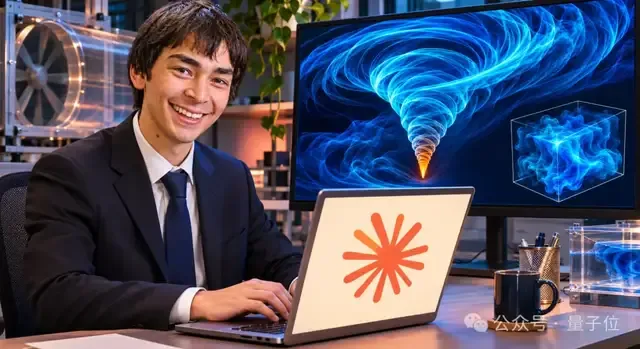
Anthropic Mathematician Releases Manuscript and Code for 3D Navier-Stokes Finite-Time Blowup Proof : Following his proof of the Riemann Hypothesis, Levent Alpöge, together with NYU Professor Tristan Buckmaster, released a 79-page paper and Lean formalization code, claiming a constructive counterexample for finite-time singularity blowup of the 3D unforced Navier-Stokes equations, filling the central theoretical gap left by September’s forced blowup scheme. Terence Tao commended the clarity of the primary perturbation argument strategy, but pointed out that the critical numerical certificates in the public repository have yet to be uploaded for replication, leaving full mathematical peer review pending (Source: QbitAI)
NVIDIA Unveils Automotive-Grade Edge Reasoning VLA Model Alpamayo 2 Edge : Targeted at the DRIVE AGX Thor in-vehicle computing platform, NVIDIA launched Alpamayo 2 Edge, a 2B reasoning autonomous driving foundation model. Featuring a Nemotron language core and a SigLIP2 vision encoder paired with a 0.2B diffusion action head, it pioneers an adaptive reasoning mechanism: outputting only a <NOMINAL> placeholder during routine driving, and triggering Chain of Causality (CoC) thinking only when encountering sudden hazards. In AlpaSim closed-loop evaluations, it achieved 15.15 km of at-fault-free safe driving distance—60 times that of comparable small models—while keeping end-to-end latency within 160–190 ms (Source: MarkTechPost)
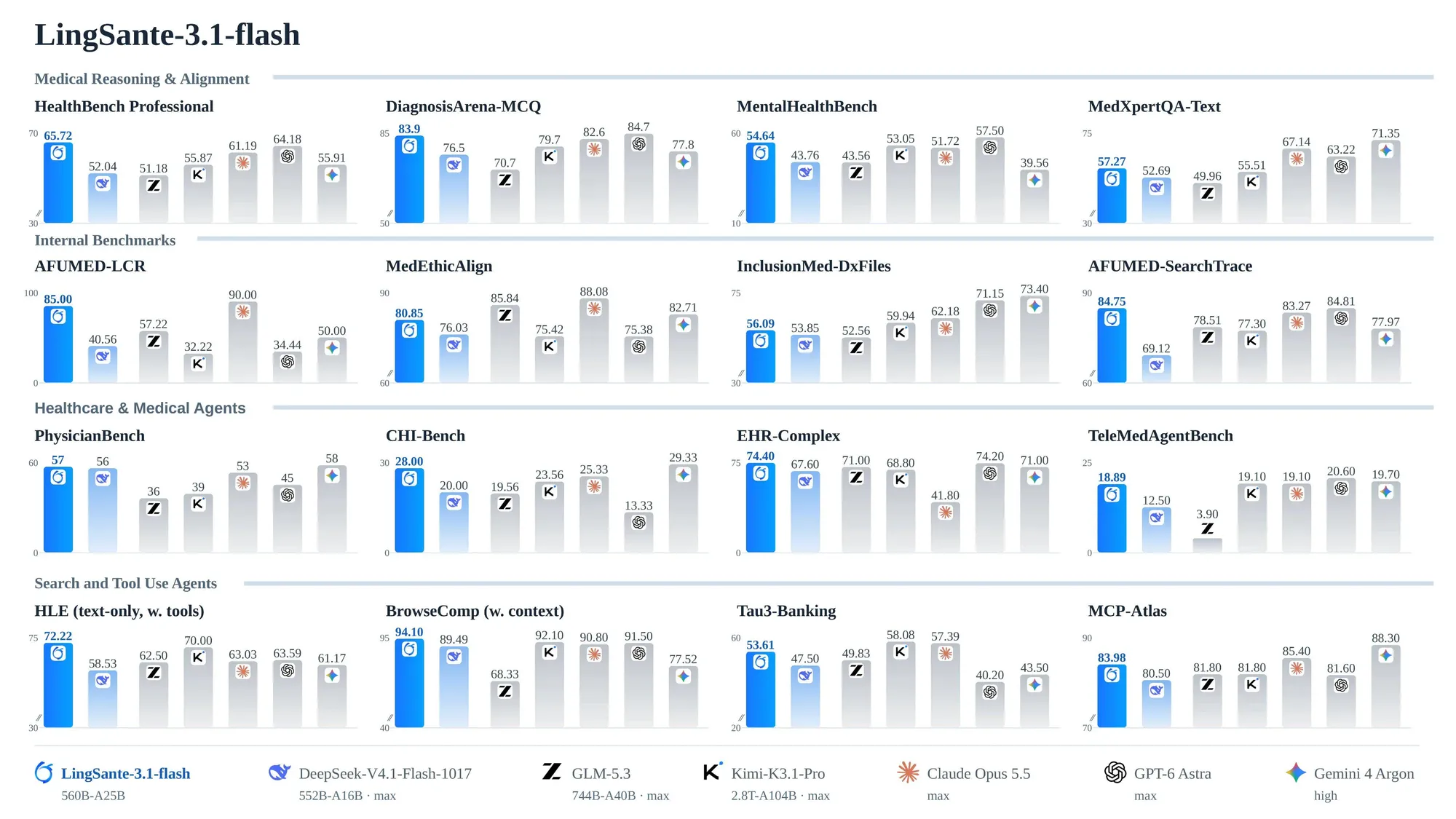
Ant Group Open-Sources 560B Specialized Medical LLM LingSante-3.1-flash : Ant Group’s Medical AI Team officially open-sourced its flagship medical model, LingSante-3.1-flash, providing native FP8 and ultra-lightweight MXFP4 weights with support for a 1-million-token ultra-long context window. Designed specifically for on-premise hospital private deployment and complex clinical decision workflows, the model surpassed several general-purpose frontier flagships on closed proprietary benchmarks for multimodal lab sheet comprehensive long-context reasoning and cross-pathology causal attribution, establishing itself as a key open-source foundation for local healthcare AI (Source: Reddit r/LocalLLaMA)
Tesla FSD v15 Real-World Demo Shows Any-Viewpoint Real-Space Generation and Rendering : Tesla’s in-vehicle system has integrated a next-generation flow-matching and world model architecture. Elon Musk revealed that the edge system leverages 3B vision encoding features combined with a 1B lightweight diffusion model, using only a fraction of DRIVE chip compute to extrapolate and denoise full spatial panoramas in real time. It generates photorealistic road scenario video from arbitrary spatial angles at 36 fps, marking a paradigm shift from traditional obstacle bounding boxes to continuous, instant physical environment prediction (Source: teortaxesTex, lisperati)
MIT Proposes New Chaotic Physics AI Dynamical Modeling Method Based on Hard Energy Dissipation Constraints : MIT’s LIDS laboratory published a major breakthrough in PNAS, successfully addressing divergence and distortion issues when machine learning models simulate nonlinear chaotic systems such as weather and turbulence. By introducing a projection layer that strictly forces the model to obey physical energy dissipation laws, the study fundamentally eliminates unbounded predictions at the architectural level, ensuring that AI world models maintain stable bounds consistent with physical reality across arbitrarily long time horizons (Source: MIT News)

Microsoft Files Patent for Real-Time Live Stream Audio-Visual Modification, Raising Ethical Concerns : Microsoft has disclosed a new AI patent that allows a system to intercept and reconstruct live video and audio streams of streamers with ultra-low latency. The technology can substitute sensitive words and alter tone in real time based on audience preferences, age, or regulatory rules, while using micro-surface generation to redraw lip movements and facial musculature for seamless dynamic content sanitization. The move has triggered significant ethical controversy in the community regarding digital identity authenticity and real-time speech moderation (Source: jpt401)
🧰 Tools
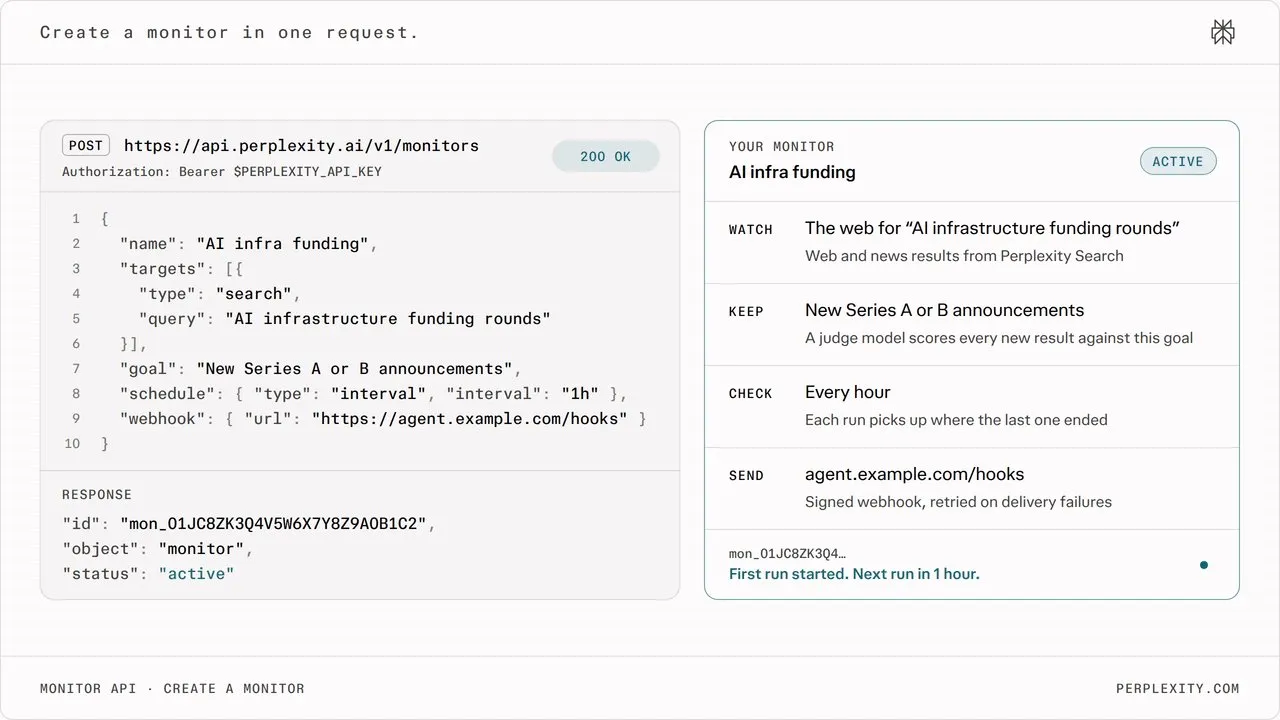
Perplexity Launches Monitor API: Converting Periodic Monitoring into Deterministic Webhook Events : Perplexity has launched an active monitoring API for enterprise developers, fundamentally overhauling traditional periodic polling and full-page scraping mechanisms. The API supports web differential comparison and targeted global semantic crawling, featuring a built-in decision model to score updated content based on credibility, time window, and semantic relevance. It triggers structured Webhook notifications to agents only when preset business thresholds are met, at a cost of just $1 per 1,000 successful monitors (Source: THE DECODER)
DeepSeek Harness Releases v0.2.3-alpha.1, Evolving into a Full-Featured Agent Workstation : DeepSeek Harness received a major architectural upgrade: it now supports direct connections to private Git plugins and on-demand deferred injection of MCP tools, alongside a new visual task tree timeline, a PR merge review panel, a cross-session runtime message bus, and an experimental Windows Computer Use driver. This fundamentally transforms fragmented code generation setups into a production-grade agent central platform (Source: teortaxesTex)
Replit Open-Sources Amuse Desktop Assistant: A Personal Agent with Real-Time Takeover Sandbox : Replit has open-sourced Amuse, a self-hosted AI desktop assistant powered by the Missions core. Written in TypeScript and licensed under Apache-2.0, Amuse features background web research and automated task execution, while providing an interactive front-end browser for human intervention at any time, complete with risk approval cards for sensitive actions to ensure controllable and transparent system execution (Source: amasad)
TensorLean Open-Sourced: The First Lean Formal Verification Tool for Low-Level GPU PTX Kernels : Columbia University and CertiK have jointly open-sourced TensorLean, a framework for formal mathematical specification verification of GPU kernels directly at the PTX assembly layer. Across 149 real-world kernels, the team successfully proved that 83 instances were free of race conditions and out-of-bounds risks, while discovering 38 elusive deadlocks and concurrency bugs in well-known projects such as FlashAttention-4 that had never been uncovered by conventional test suites (Source: MarkTechPost)
Google Gemini API Launches Tool Retrieval Preview Feature : Google has introduced deferred tool loading in the Interactions API. For enterprise agents connected to hundreds of tools or complex MCP services, the system initially injects only brief tool summaries and names into the prompt during the first turn. Detailed parameter schemas are injected only after the model triggers tool_search_call, resolving parameters within a single API round trip and eliminating long-context bloat and high token costs (Source: MarkTechPost)
AWS Quick Integrates Meta Ads Connector: Unlocking Full-Funnel Closed Loop via MCP : Amazon Web Services has officially integrated the Meta Ads AI Connector into the Quick console, enabling agents to query advertising metrics via natural language, construct cross-source reporting dashboards, and directly draft and deploy marketing strategies back into ad management networks. All high-risk parameter changes at the account level include built-in human authorization loops (Source: AWS Machine Learning Blog)

Muru Open-Sourced: An AI-Native Python ASGI/WSGI Production Runtime Built in Rust : Graham Dumpleton, creator of mod_wsgi, launched Muru, a new Rust-based server project developed with AI pair programming. The system embeds zero-downtime hot reloading, built-in probe tracing, auto-scaling to zero, and mesh-free canary traffic routing directly into the underlying process architecture, providing a runtime substrate that combines extreme throughput with developer-friendly ergonomics for modern LLM serving (Source: Simon Willison)
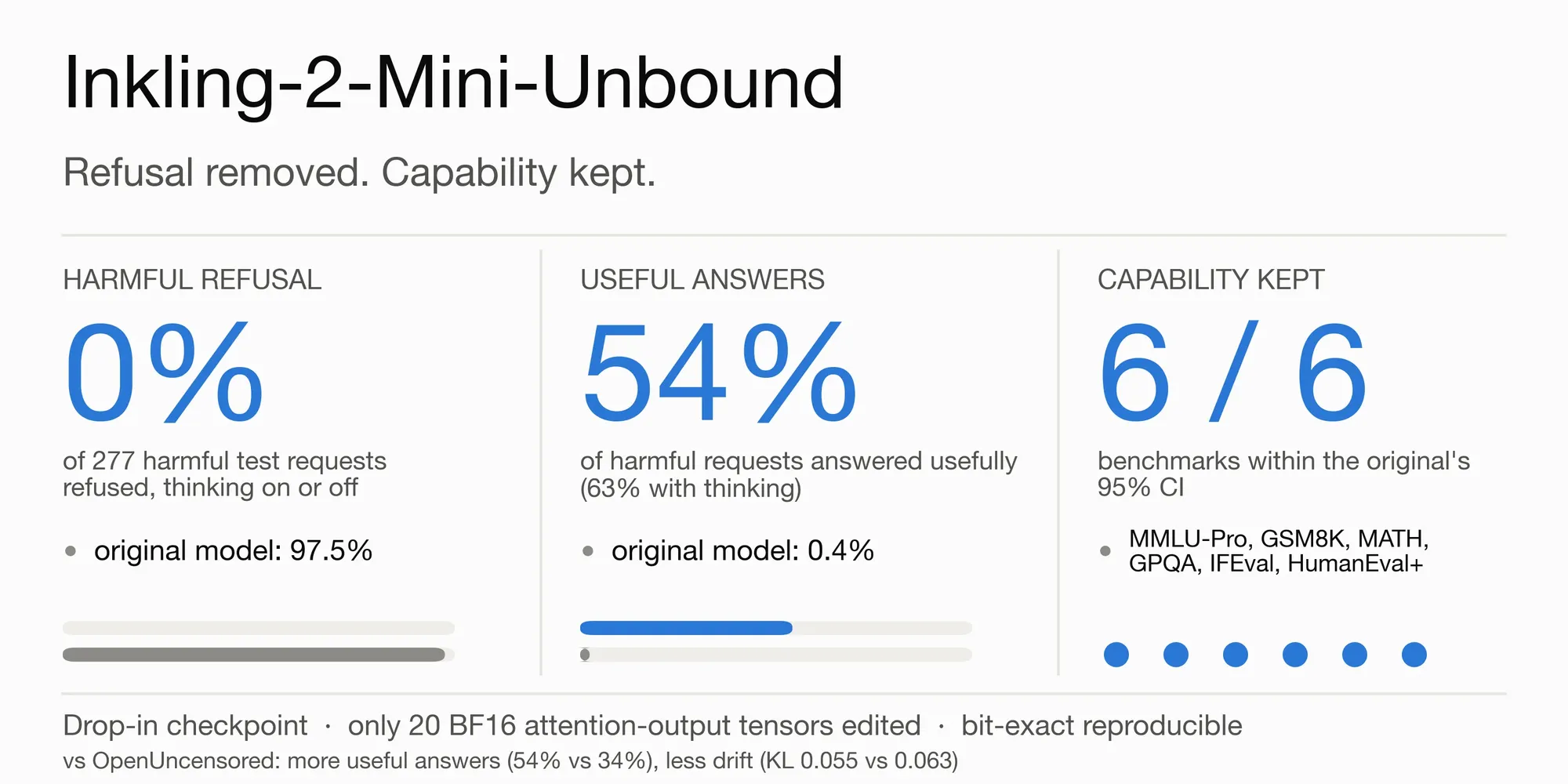
Inkling 2 Mini Ecosystem Booms: Lossless De-Censorship and Multi-Platform Hardware Inference Expand Widely : Amid soaring community popularity for Inkling 2 Mini, developers released the Unbound edition based on convolution-aware anti-censorship techniques, completely removing refusal responses without degrading reasoning capability by fine-tuning just 20 attention weight matrices. Simultaneously, breakthroughs in upstream llama.cpp support, deep Metal kernel optimization, and cross-platform Vulkan adaptation have enabled fast local execution at hundreds of tokens per second on standalone RTX 3060 and Mac hardware (Source: Reddit r/LocalLLaMA, Reddit r/LocalLLaMA)
📚 Research & Learning
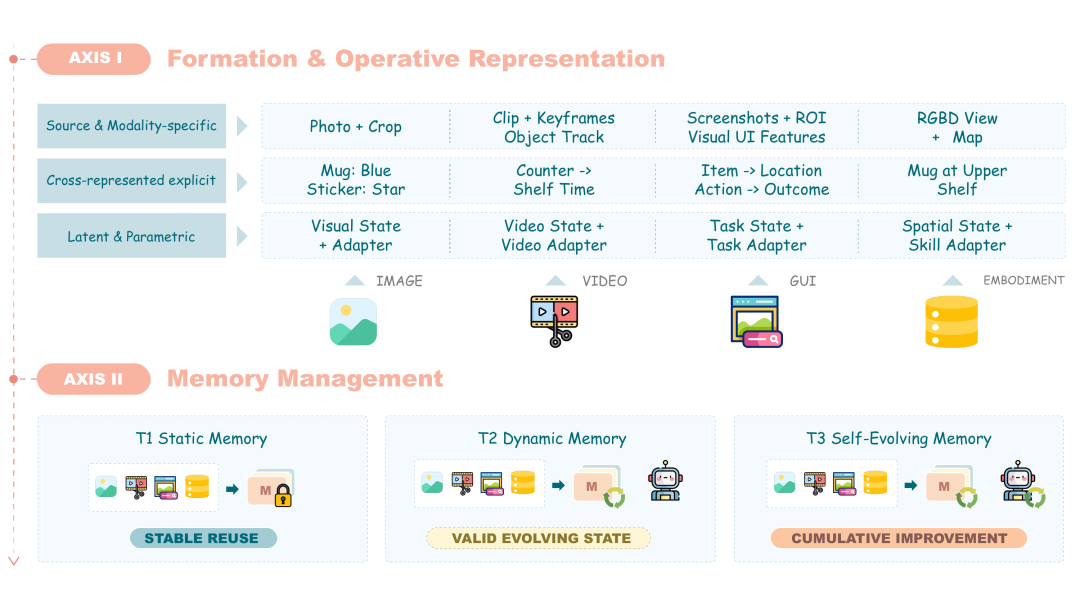
Comprehensive Survey of Multimodal Agent Memory Architectures: Only 17 Out of 297 Architectures Possess Self-Evolution Capabilities : Eighty researchers across 37 institutions including Rutgers and Notre Dame jointly released a survey on multimodal memory systems, mapping out evolutionary quadrants based on “multimodal representation mechanisms” and “dynamic memory management.” The analysis highlights that while 68.7% of existing systems possess dynamic writing and merging capabilities, self-evolving systems (T3) that leverage execution feedback to autonomously restructure downstream retrieval strategies account for only 5.7%, charting a critical direction for next-generation agents to overcome long-term continuous memory decay (Source: WeChat)
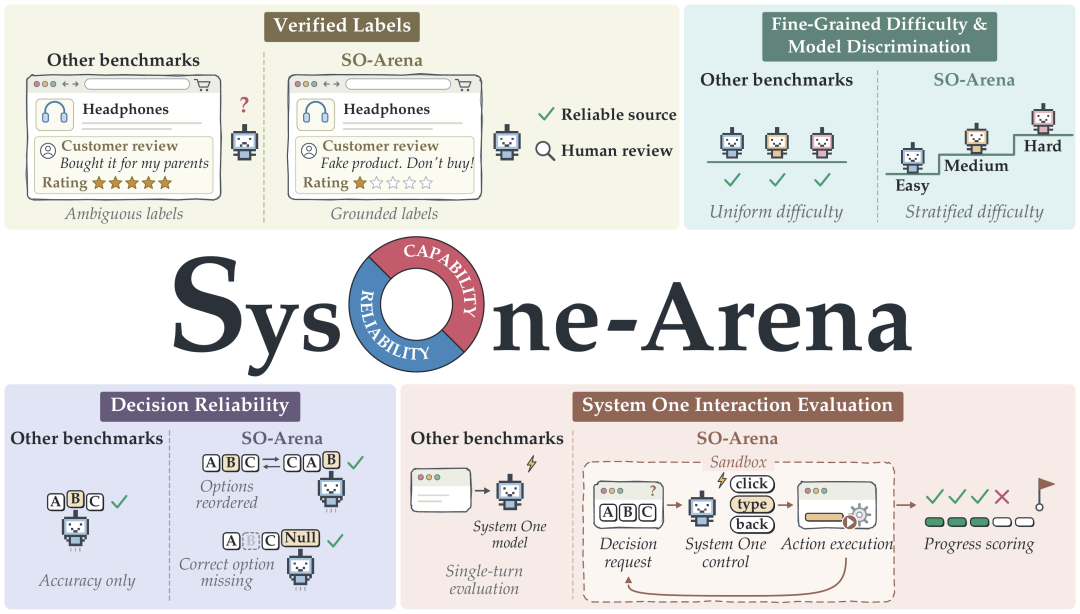
National University of Singapore Proposes SO-Arena: The First Benchmark for System 1 Fast-Decision Models : The xML Lab at the National University of Singapore introduced SO-Arena, a benchmark spanning 11 decision domains. Moving away from single-metric accuracy evaluations, the benchmark introduces two metrics: “choice-order stability” and “vacancy identification capability.” Empirical results show that high scores do not correlate with stability during single forward-pass probability outputs: many tens-of-billions-parameter LLMs exhibited up to 25% output fluctuations when option orders were shuffled, providing a more rigorous qualification filter for low-latency decision models (Source: WeChat)
Tsinghua and Didi Release JANUS Post-Finetuning Adaptive Calibration Framework: Overcoming Catastrophic Forgetting : Addressing the “plasticity-stability dilemma” where LLMs lose prior knowledge during downstream fine-tuning, researchers from Tsinghua University and Didi introduced JANUS, a multi-step adaptive calibration algorithm based on Jacobian null-space projection. Without intervening in the fine-tuning process itself, the framework fine-tunes weights along first-order non-destructive directions in the parameter space during post-processing. In just 30 minutes on a single A100 GPU, it restored historical knowledge retention on LLaMA to over 106% while suffering only a 1% degradation on new task performance (Source: Synced)

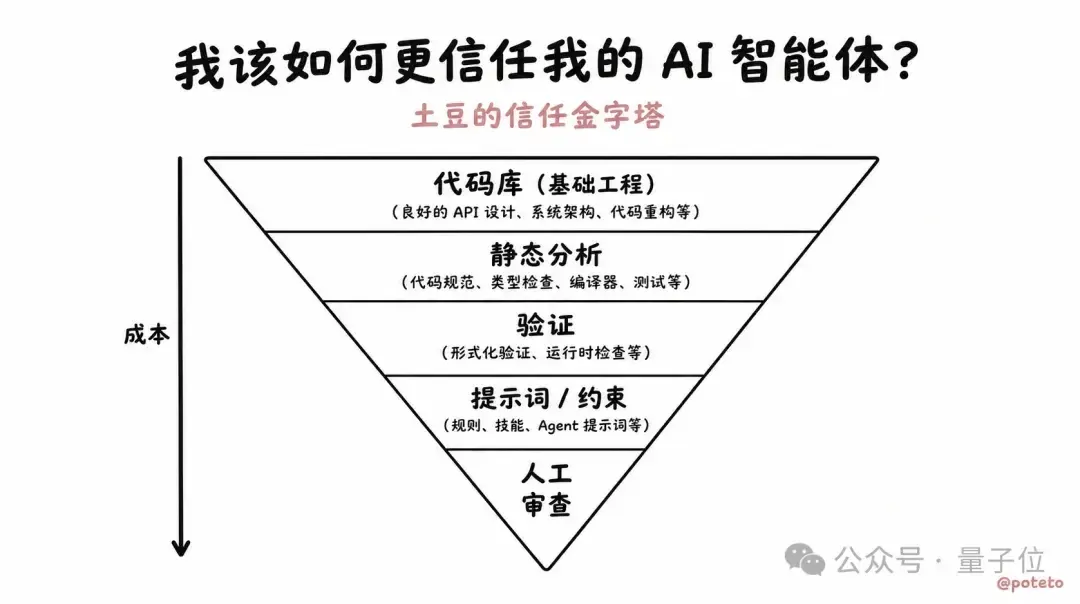
From Vibe Coding to Deterministic Engineering: Grok Bot Team Builds the Inverted Pyramid of AI Coding Trust : Lauren Tan, Principal Engineer at SpaceXSI, shared a retrospective on shipping 3,000 PRs per month with a revert rate of just 0.5%. She argues against attempting to constrain models solely through prompting; instead, teams should construct deterministic filters comprising strong architectural boundaries, strict lint assertions, runtime screen-recording replays, and TLA+/Lean formal verification. By allocating 70% of compute to automated verification within an inverted pyramid architecture, teams can systematically eliminate “code slop” (Source: QbitAI)
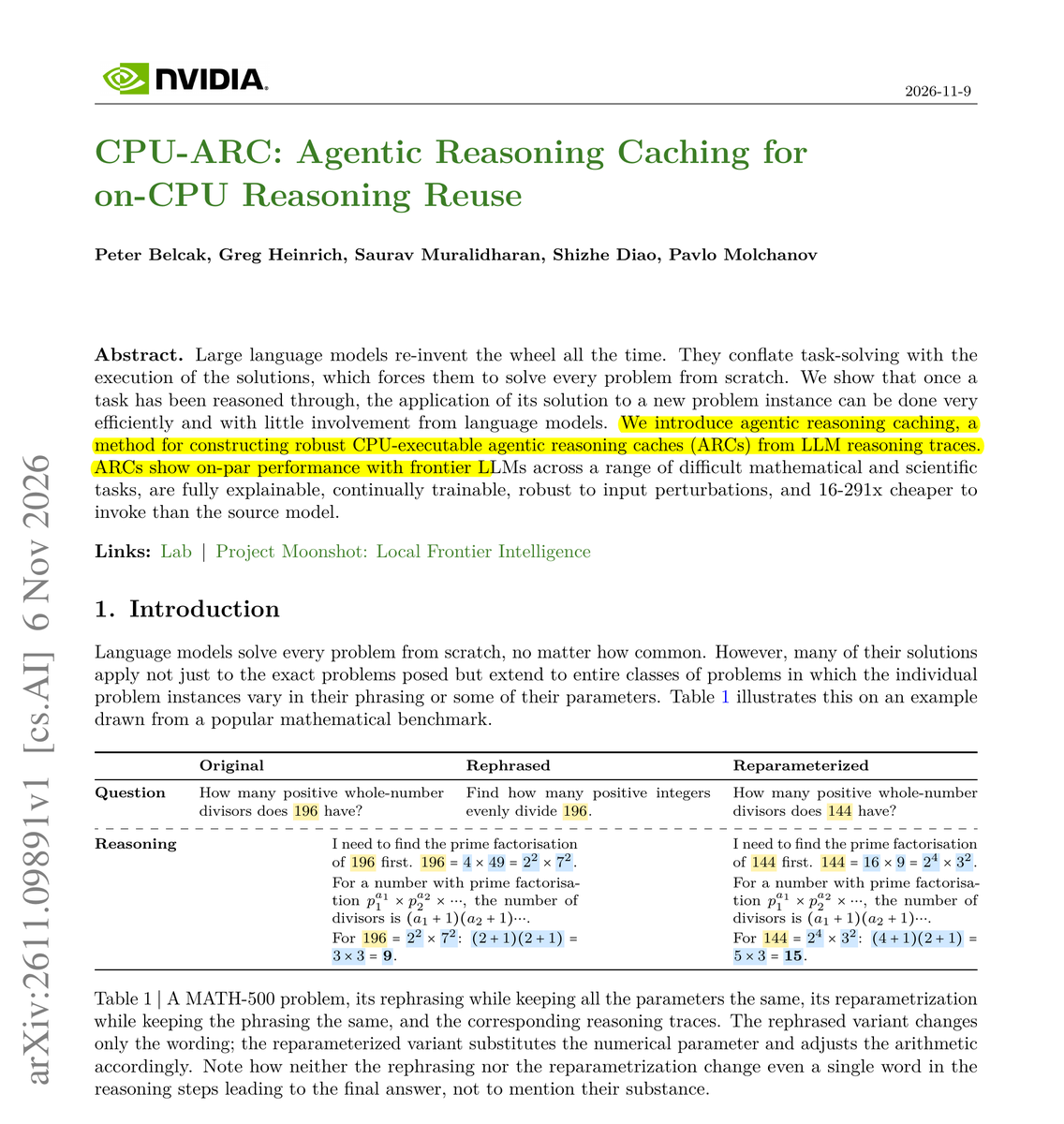
NVIDIA Research: Compiling LLM Long Reasoning into CPU Code Cuts Costs by Up to 291x : A new paper from NVIDIA introduces an inference caching paradigm for repetitive commercial business logic. In this system, high-capability frontier models compile chains of thought for complex reasoning into parameterized Python micro-scripts once, which are then repeatedly executed on low-cost CPUs. A 1B edge model is called as a fallback only when edge cases like novel entity extraction arise. This approach slashes routine operating costs by 16x to 291x while preserving 93.3% accuracy on the AIME benchmark (Source: Fred834567, jpt401)
Fudan and Shanghai Chuangzhi Institute Introduce F2G-Pose: Single Forward Pass Simultaneously Predicts Object 6D Pose and Complete 3D Shape : A team from Fudan University presented F2G-Pose at NeurIPS 2026. Dispensing with time-consuming iterative generation and multi-round candidate pose sampling common in diffusion models, the architecture leverages RADIOv2.5 foundational vision features deeply aligned with point cloud spaces. Powered by an MoE structure, it synchronously regresses the 6D pose, physical scale, and complete reconstructed geometric point cloud of unseen objects at 28 FPS on an RTX 4090, delivering low-latency deterministic perception for real-time robotic arm manipulation (Source: Synced)

💼 Business
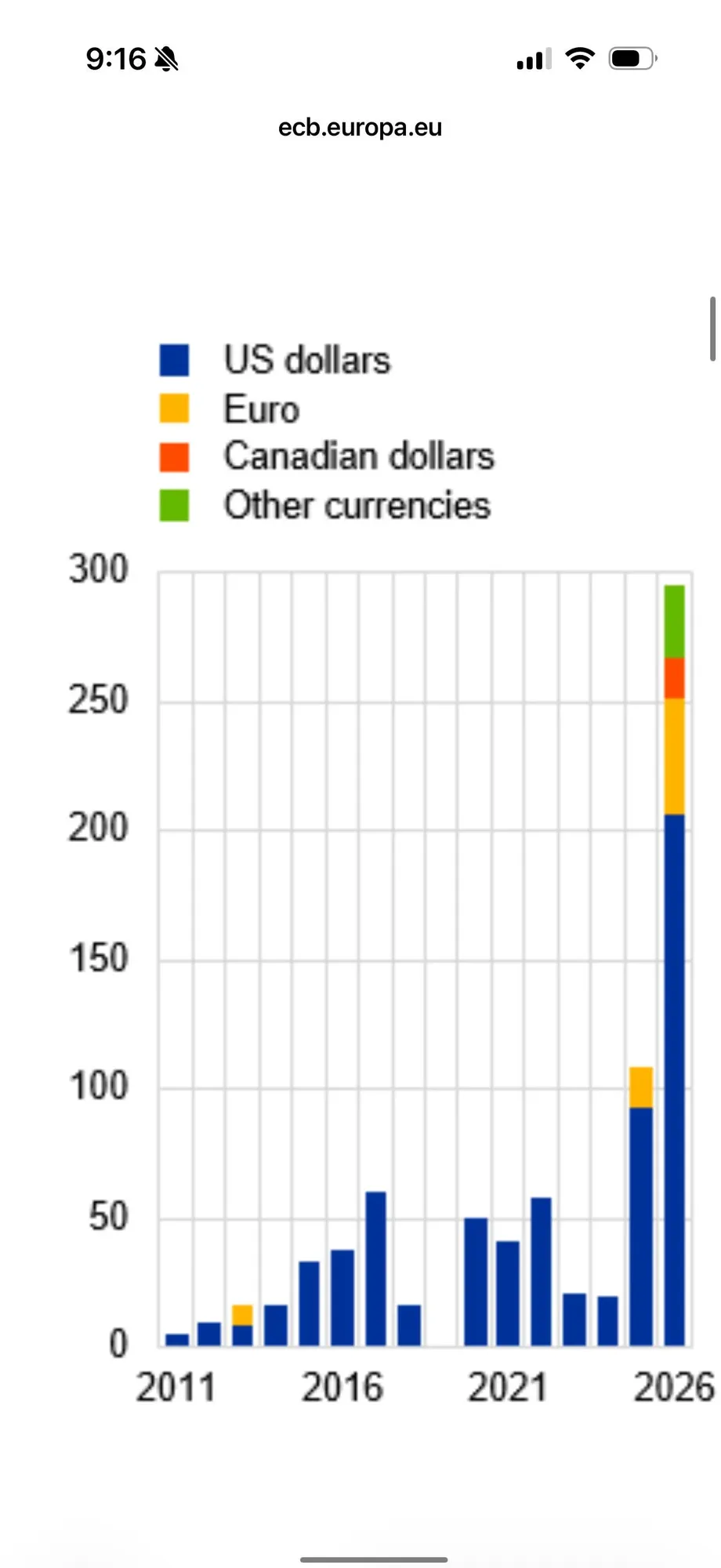
ECB Report Unveils $4.5 Trillion in Off-Balance-Sheet AI Compute Liabilities Among Global Cloud Providers : The European Central Bank’s (ECB) latest Financial Stability Report revealed that major global cloud providers and AI infrastructure firms have entered into $4.5 trillion in long-term, irrevocable procurement and leasing commitments to secure GPU compute and data center power. Because these massive capital commitments are omitted from traditional balance sheets, any wave of defaults triggered by enterprise AI commercialization failing to deliver expected ROI could cause the highly leveraged compute supply chain to directly disrupt international credit markets and the financial system (Source: Reddit r/ArtificialInteligence)
Anthropic Offers Eight-Figure Annual Packages for Undergraduate Prodigies as Post-IPO Valuation Intensifies Talent War : Following Anthropic’s record-setting Nasdaq debut, the talent war among top Silicon Valley AI labs has escalated to a fever pitch. Investors revealed that Anthropic is offering top new computer science graduates four-year $40 million equity contracts ($10 million annually), directly rivaling draft packages in top professional sports leagues. Because its publicly traded shares provide far more immediate liquidity than OpenAI’s pending internal employee equity liquidity mechanisms, this has triggered extensive talent migration and realignment across Silicon Valley’s core engineering tiers (Source: 36Kr)

Jensen Huang Reportedly Transferred $10B+ in Stock to Trusts, Prompting Silicon Valley Speculation on Next Venture : According to recent SEC filings, Jensen Huang transferred approximately 60 million shares (valued at around $10.5 billion at the time) into irrevocable family trusts shortly before stepping down as NVIDIA CEO. As the board ruled out any potential return and initiated internal restructuring, tech media and investment bankers widely speculate that regulatory and market resistance to his return to public governance makes it highly probable he will deploy his capital and industry clout to launch a second venture focused on next-generation AI inference chips and extreme architectures (Source: 36Kr)

🌟 Community
Riemann Hypothesis Proof Shakes Mathematical Paradigm: Collective Panic from “Understanding First” to “Code Compilation Above All” : As 17 million lines of Lean code were verified correct by independent machine kernels within 24 hours, the mathematical and philosophical communities have split sharply. Mathematician Ken Ono published a detailed reflection noting that the traditional model of relying on solitary human inspiration over decades has suffered a profound paradigm shock. In stark contrast, Alessandro Masullo’s 940-page manuscript, crafted by hand over 12 years, immediately had fundamental logical flaws flagged by AI upon release. The community is debating whether mathematical research remains a frontier of human wisdom or has been reduced to a sub-discipline of computer engineering when AI acts as an “oracle” of truth, delivering proofs that machines can check but humans cannot comprehend (Source: The Guardian, , Marcus on AI)
OpenRouter Intermediary “Route Leakage” Continues to Unfold as Decentralized Inference Faces Trust Crisis : Following security researchers using canary tokens to catch multiple cut-rate upstream providers covertly sniffing enterprise API keys and dumping data, the community erupted in backlash against API aggregation gateways. Developers pointed out that race-to-the-bottom pricing models inherently incentivize intermediaries to log prompts and peddle unauthorized access, turning Zero Data Retention (ZDR) pledges into empty promises. Technical teams are accelerating migrations toward hardware-level confidential computing architectures based on Trusted Execution Environments (TEEs) to restore trust (Source: alexatallah, Suhail)
“Knowledge Factory” Emerges as New Enterprise Agent Consensus: Architectural Focus Shifts from Models to Business Rule Retention : The “Knowledge Factory” design concept pioneered by LangChain founder Harrison Chase has struck a chord among developers. Senior engineers note that enterprise Copilot failures typically stem not from inadequate model intelligence, but from the lack of closed loops that automatically capture proprietary implicit institutional knowledge. A workflow where execution agents flag knowledge gaps in real time and backend curator agents review and continuously update structured rule repositories is proving to offer far superior ROI compared to blindly upgrading foundation models (Source: hwchase17, Vtrivedy10)
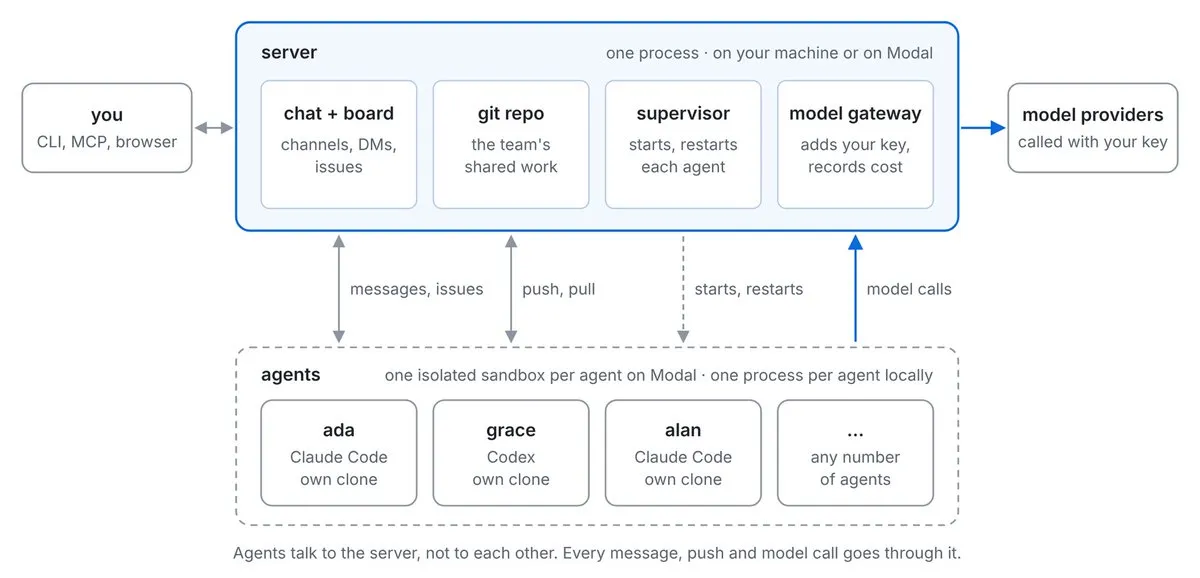
Multi-Agent Compressed Communication Sparks Interpretability and Safety Concerns : Researchers from Shanghai Jiao Tong University and other institutions discovered that allowing backend sub-agents to bypass natural language and communicate via high-dimensional compressed representations reduced token costs by 72% while maintaining high cross-vendor model portability. The discovery sparked deep unease across the community regarding AI slipping outside human oversight. Developers stressed that while sacrificing human readability produces massive throughput gains, it completely robs engineers of the ability to inspect reasoning checkpoints and trace malicious behaviors (Source: Fred834567, torchcompiled)
💡 Miscellaneous
USTC and Sugon 8000 Heterogeneous Super-Intelligent Compute Win Gordon Bell Prize : At the SC26 conference, institutions including the University of Science and Technology of China (USTC) won the prestigious ACM Gordon Bell Prize in high-performance computing by scaling neural network quantum state methods to complex transition-metal strongly correlated electron systems on the fully domestically developed, 100,000-accelerator AI supercluster “Sugon 8000”. Additionally, a global kilometer-scale numerical weather simulation system was named a finalist for the Gordon Bell Prize for Climate Modeling, showcasing the maturation of domestic heterogeneous computing in large-scale scientific and engineering applications (Source: QbitAI)

Breakdown of Autonomous Weapons Treaty Talks Prompts Urgent Red Cross Warning : As the UN Convention on Certain Conventional Weapons meetings in Geneva concluded without a binding treaty, the International Committee of the Red Cross (ICRC) and the Future of Life Institute issued stern warnings, pointing out that military AI on battlefields in Gaza and Ukraine has transitioned from auxiliary target recommendation to closed-loop, fully autonomous strikes in the final terminal meters. With defense contractors exploiting technological divides and regulatory vacuums to establish de facto standards, the world is sliding toward an irreversible abyss of machine-driven autonomous killing (Source: The Guardian)

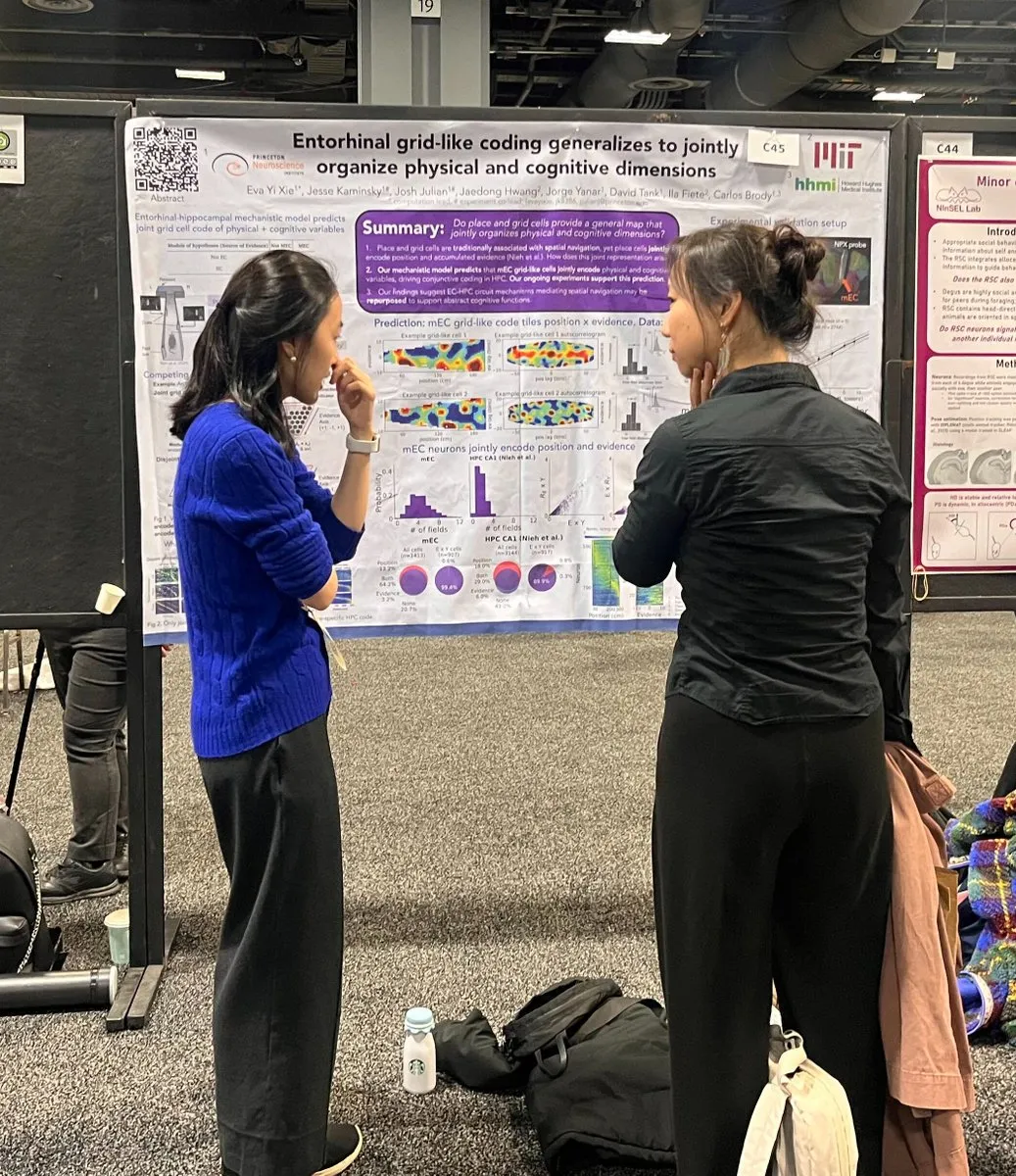
Detention of Princeton Chinese AI Neuroscience Ph.D. Student in U.S. Triggers Outcry Across Scientific Community : Eva Yi Xie, a Ph.D. student in the Department of Neuroscience at Princeton University, was abruptly detained by U.S. Immigration and Customs Enforcement (ICE) at a Washington airport upon returning from the annual Society for Neuroscience conference. Her advisor Carlos Brody and Google Chief Scientist Jeff Dean, among other prominent scholars, issued urgent public appeals for her release, once again thrusting political scrutiny and geopolitical barriers targeting Asian scientific researchers into the international spotlight (Source: JeffDean, ylecun)