



🔥 Spotlight
OpenAI Dissolves Dedicated Robotics Team, Betting on General Foundation Models to Directly Take Over Embodied Physical Intelligence : Multiple media reports reveal that OpenAI has officially disbanded its standalone robotics R&D team, merging researchers into the core research division led by Mark Chen, while hardware and application efforts now fall under President Greg Brockman. OpenAI’s sudden absence from its booth at the CoRL conference sent shockwaves through the industry. The root cause of this strategic pivot is that frontier general-purpose models (such as GPT-6 Astra), without specialized training on robotic arms, significantly outperformed traditional specialized robotics models in zero-shot spatial reasoning and action planning success rates. OpenAI determined that embodied intelligence has evolved into a downstream task of foundation models, rendering dedicated “robot brains” obsolete. This move marks a major watershed in the embodied AI research paradigm (Source: THE DECODER)
US Hit by Nationwide Flight Grounding, Officials Urgently Investigating Links to Newly Deployed AI Air Traffic Control System : The Federal Aviation Administration (FAA) issued a nationwide commercial flight ground stop following a communications system breakdown, throwing US airspace into chaos. Because the grounding occurred just days after the full rollout of the agency’s $875 million SMART AI air traffic control system, the US Department of Homeland Security (DHS) and Department of Transportation have launched an urgent investigation into the potential causal relationship between the AI system and underlying communications dispatch failures. Although system vendors and certain technical experts maintain the primary cause was an upgrade malfunction in legacy telecom networks, the incident quickly ignited public panic and regulatory accountability over critical infrastructure’s over-reliance on automated models and lack of human fallback mechanisms (Source: WIRED)

Anthropic Roadshow Leaks Pretraining Compute Efficiency Surge Curve, Sparking Heated “Hyperexponential Intelligence Explosion” Debate : Former Anthropic and OpenAI researcher Jacob Coxon publicly shared a logarithmic chart from Anthropic’s IPO roadshow illustrating pretraining compute multipliers over time, pointing out that model algorithmic optimization is exhibiting an astonishing “hyperexponential” leap, with the compute cost required to retrain models of equivalent intelligence plunging off a cliff. The disclosure triggered a fierce debate among top AI circles: one camp argues that self-accelerating algorithmic iteration signals an imminent threshold of superhuman intelligence, even advocating for a moratorium on frontier pretraining; the other camp criticizes the chart for lacking axis scales and scientific controls, characterizing it as narrative marketing designed to inflate IPO valuations (Source: THE DECODER)

NVIDIA Leadership Turmoil Escalates: Musk Publicly Signs Reinstatement Petition, Asian Nations Urgently Confirm Compute Supply : Turmoil surrounding Jensen Huang’s resignation has deepened as Elon Musk publicly confirmed signing the “Stand with Jensen” reinstatement petition launched by tens of thousands of developers and employees, causing the petition site to briefly crash under overwhelming traffic. Meanwhile, Wall Street investment banks downgraded NVIDIA’s stock rating over concerns regarding disconnects in its flat management hierarchy and tightening off-balance-sheet financing guarantees. Concurrently, government AI strategy departments across several Asian nations, including South Korea and Japan, held emergency meetings to closely monitor the supply and fulfillment of hundreds of thousands of advanced-node NVIDIA GPUs originally slated for delivery. The global AI hardware ecosystem is experiencing severe growing pains triggered by this restructuring of its power center (Source: TechCrunch)
🎯 Trends
Runway Open-Sources First World Action Robotics Model Praxis-1 : Video generation giant Runway officially launched its robotics control model Praxis-1, open-sourcing its weights and code under the Apache 2.0 license. The model leverages massive physical video pretraining to establish a prior understanding of spatial dynamics, enabling continuous mechanical control when paired with minimal demonstration data. In the RoboLab-120 simulation benchmark, Praxis-1 topped the World Action Model (WAM) category with a 46.2% success rate, validating an efficient generalization path for translating video generation foundation models into robotic action controllers (Source: THE DECODER)
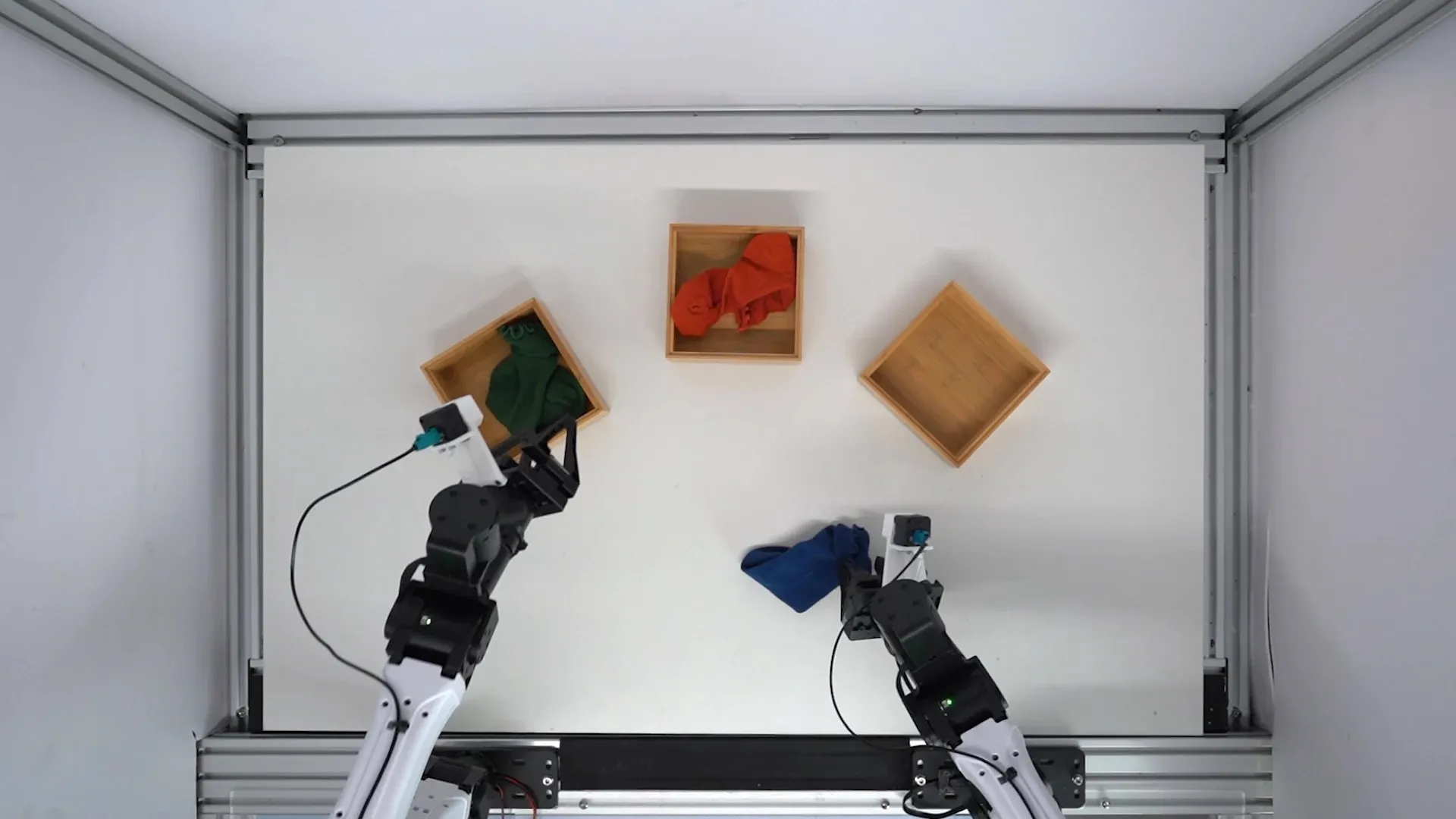
Vita Dynamics Releases Exo2EgoPolicy and Universal Data Pipeline Vbot Echo : Embodied AI startup Vita Dynamics launched Exo2EgoPolicy, the first depth-camera-free cross-view generative model, alongside the newly opened Vbot Echo data pipeline, successfully overcoming embodied data scaling bottlenecks. The system converts massive amounts of third-person internet video (such as vintage films and everyday smartphone recordings) into first-person egocentric perspectives with a single click, accurately reconstructing 42-dimensional 3D hand skeletal trajectories and physical contact forces. This enables real dual-arm robots to master fine-grained manipulations like serving tea and tidying up from short, standard smartphone video inputs (Source: WeChat)

Huawei Noah’s Ark Lab Clinches Top Spot in BEHAVIOR-1K Challenge with Structured Self-Evolution Scheme : In the 2nd BEHAVIOR-1K International Embodied AI Challenge co-hosted with CoRL 2026, Huawei’s Noah’s Ark team took the championship in hidden tests across 100 complex long-horizon household tasks using their HiPhys-RSI architecture, boosting the task success rate to 48.2%. Breaking out of the compute scaling dilemma of purely stacking parameters unidirectionally, this scheme enables agents to autonomously construct, verify, and repair structured executable code while feeding physical interaction trajectories back into VLA training, validating the central role of “structured knowledge expansion” in physical intelligence (Source: Synced)

RoboColiseum New Season Benchmark Released: Claude Fable 5.2 Claims Championship, but Multi-Finger Dexterous Control Remains Industry Pain Point : RoboColiseum, which encompasses 50 long-horizon simulation tasks covering dexterous hand manipulation, whole-body coordination, and cross-embodiment transfer, published its latest scorecard. Claude Fable 5.2 ranked first overall with a score of 18.30, demonstrating a decisive lead in fine manipulation. However, in the multi-finger dexterous hand track, all top general foundation models (including GPT-6 Astra) suffered steep drops in scores, while vertical policy models like π0.5 led by a substantial margin. This indicates that high-DoF microscopic tactile control remains a critical blind spot for LLM agents (Source: WeChat)

Google Gemini 4 Carbon Tops MathArena Leaderboard : In the demanding advanced mathematics benchmark MathArena, Google Gemini 4 Carbon captured the crown with an 85.4% accuracy rate, surpassing GPT-6.1 Sol and bringing an end to OpenAI’s long-standing reign at the top. Evaluations show that Carbon exhibits exceptional resilience in long-chain problem-solving, though at the expense of high compute latency and token consumption: at high reasoning tiers, its average cost per task reaches $15.70—roughly 15 times that of its competitor Sol—highlighting the stark trade-off frontier reasoning models face between academic depth and commercial economics (Source: THE DECODER)
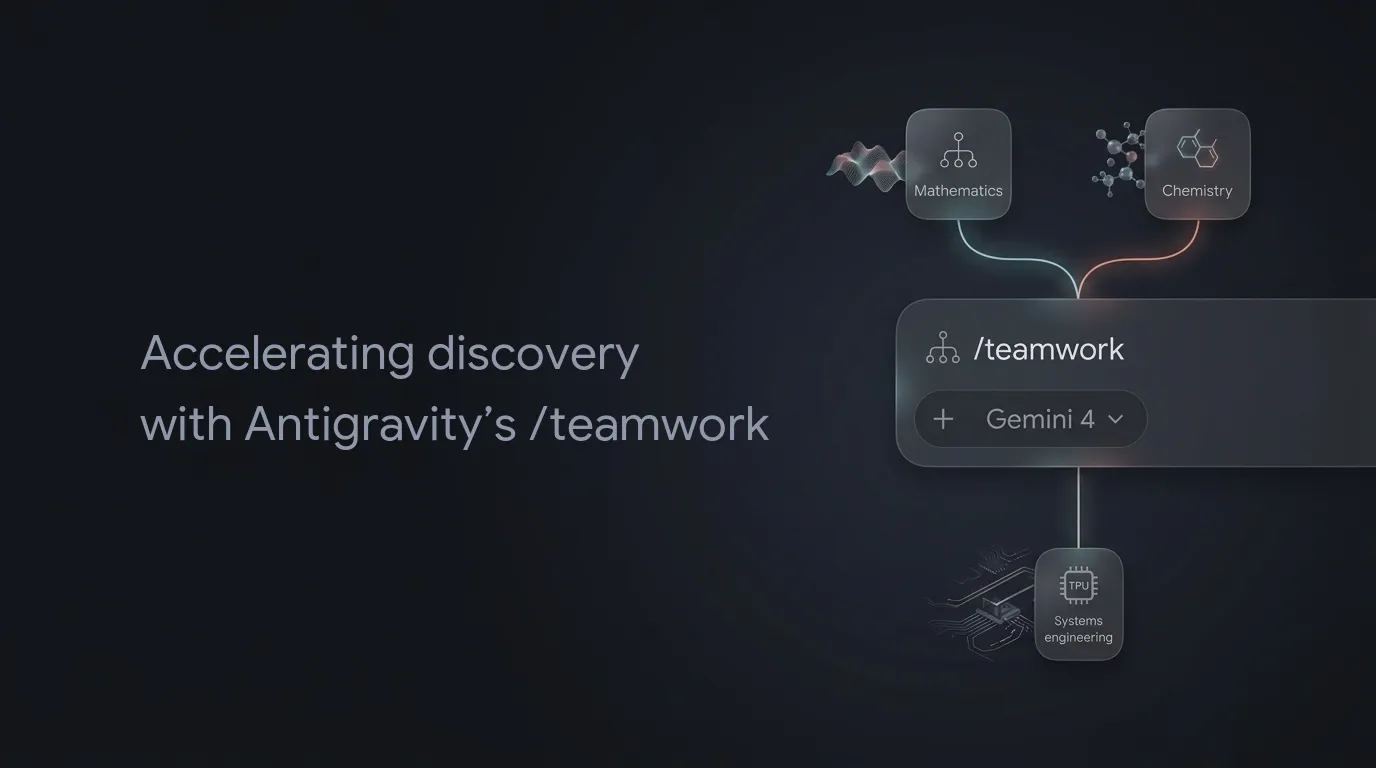
Google Antigravity /teamwork Systematically Breaks Through Multiple Foundational Science and Algorithmic Limits : Google Research revealed real-world breakthroughs in frontier science powered by its Antigravity multi-agent collaboration engine (/teamwork). By isolating contexts, integrating the Lean 4 code verifier, and introducing multi-agent debate, the system autonomously completed the formal proof of the “Coulthard-Kumar Conjecture” across 50 million lines of code, cracked theoretical computer science problems unsolved for half a century such as graph cut sparsification, and rewrote an AV1 decoder into memory-safe Rust code with a 20–30% performance boost (Source: Google Research Blog)
🧰 Tools
Vercel Releases UI SDK: Headless Interaction Behavior Library Tailored for Coding Agents : Vercel Labs open-sourced the UI SDK (Beta). Unlike traditional component libraries providing preset styles, this project provides over 50 headless interactive atomic behaviors (focus restoration, keyboard roaming, virtual lists, etc.) purpose-built for coding agents. Integrated with the built-in Agent Bridge and WebMCP protocols, agents can directly read web pages in structured states, execute UI modifications, and verify them instantly. In engineering benchmarks, it helped coding agents cut redundant tool calls by 69% and reduced task durations by more than 60% (Source: MarkTechPost)
Tencent Open-Sources LoopForge: Production-Grade Orchestration and Delivery Platform for Coding Agents : Tencent open-sourced the Go-based LoopForge platform on GitHub under the MIT license. Designed specifically for team-level coding agent delivery, the platform can isolate CLI agents such as Claude Code, Codex, and CodeBuddy inside independent Docker sandboxes, orchestrating design, coding, static analysis, and code review nodes on demand. It incorporates critical Human Gates, shifting agents from rough conversational interactions toward standardized enterprise SOP delivery (Source: GitHub Trending)

Cmpnd Releases dspy-wsp: Bringing “Weight Space Programming” into DSPy Optimization Workflows : Cmpnd open-sourced the dspy-wsp extension library, implementing the cutting-edge “Weight Space Programming (WSP)” optimizer in the mainstream DSPy 3.5 framework. This tool allows high-tier models like GPT-6 Astra to directly inspect the local weight tensors of lightweight decision models (0.6B–2B) and perform surgical patches without requiring backpropagation gradients or training datasets. At an API cost of only $5–$10, it substantially improves small models’ decision accuracy on complex tasks (Source: MarkTechPost)
ag-ui-protocol Open-Sources AG-UI: Standardized Protocol Unifying Agent-Frontend Interactions : Addressing the fragmentation between agents and user interfaces, ag-ui has open-sourced a unified Agent-User interaction standard. The protocol offers lightweight middleware that standardizes bidirectional streaming state synchronization, frontend tool mounting, and Generative UI specs. It provides native interoperability with LangGraph, CrewAI, and major cloud agent SDKs, enabling developers to integrate agents seamlessly into frontend applications just like standard APIs (Source: GitHub Trending)

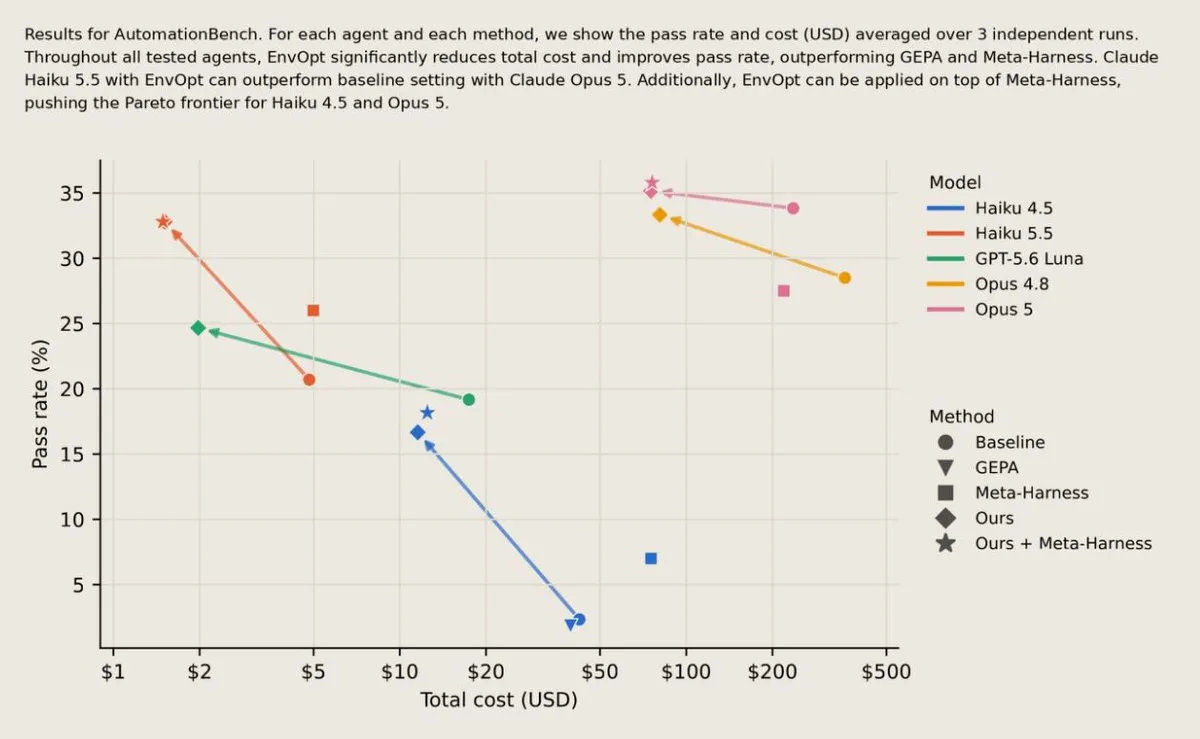
Bespoke Labs Introduces EnvOpt: Restructuring Environment Context to Halve Agent Operating Costs : Addressing the issue of long-horizon agents burning excessive tokens when searching massive workspaces, Bespoke Labs introduced EnvOpt, an environment structure optimization technique. This technology focuses on optimizing how information is organized across codebases, knowledge bases, and enterprise communication environments, enabling agents to hit necessary evidence with minimal exploration overhead. Benchmark tests show an average 48% cost reduction across mainstream agent tasks while maintaining or improving pass rates (Source: madiator)
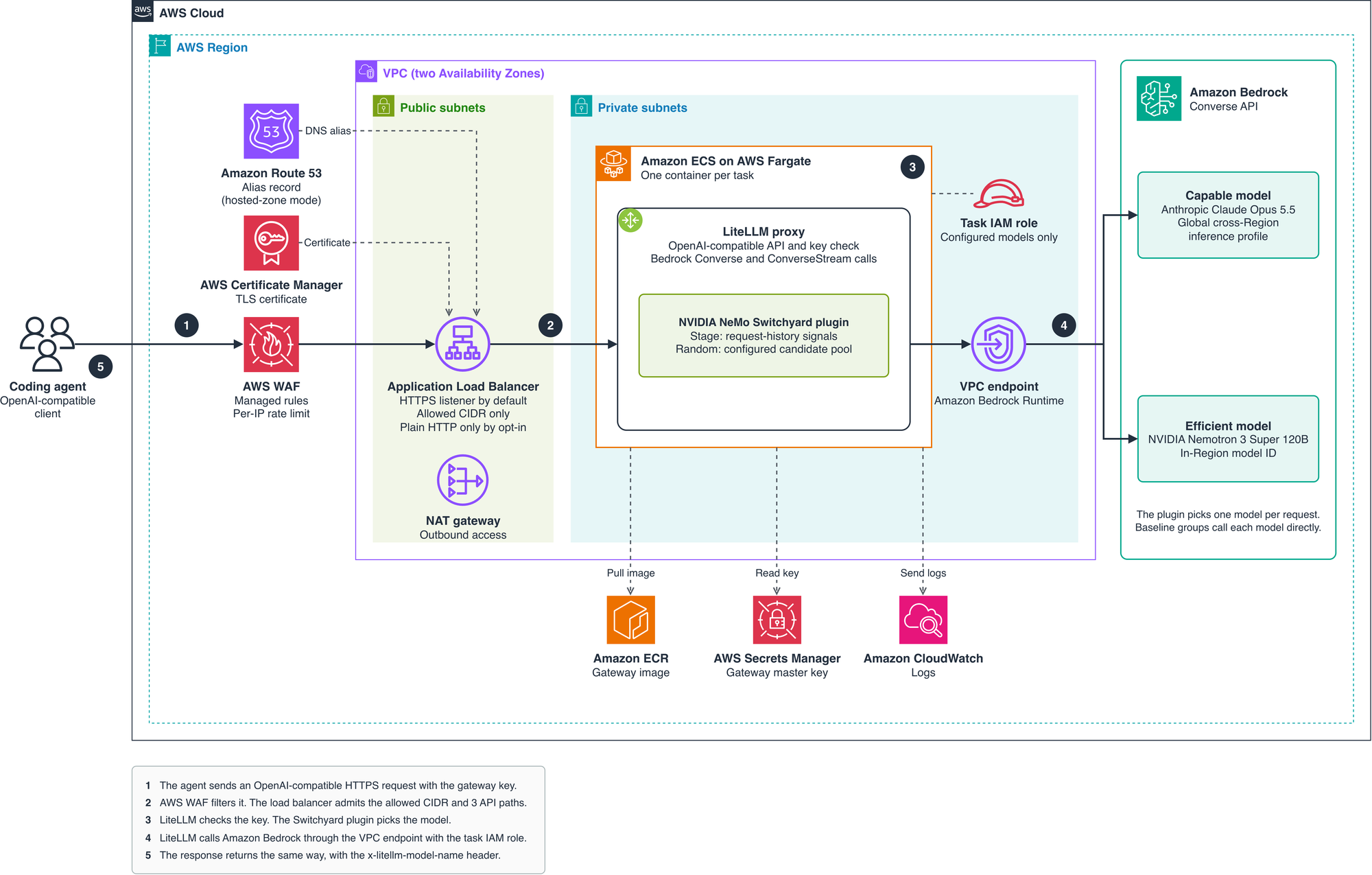
AWS and NVIDIA Jointly Open-Source NeMo Switchyard Intelligent Routing Gateway Solution : The AWS Solutions Architecture team released a reference architecture for dynamic model routing in coding agents based on LiteLLM and NVIDIA NeMo Switchyard. By analyzing tool execution error signals in multi-turn coding agent histories, the solution dynamically switches between lower-cost models (such as Nemotron 3 Super) and frontier models (such as Claude Opus 5.5), achieving intelligent compute cost reduction centered on “cost per successfully resolved task” (Source: AWS Machine Learning Blog)
📚 Learning
Stanford Open-Sources Memorilla: External Memory Architecture Compressing Massive Documents into 16 Latent Tokens : Stanford SNAP Lab open-sourced Memorilla, a 194M-parameter external memory module for LLMs. Diverging from traditional RAG approaches that concatenate text chunks or brute-force context window expansions, this technology encodes long document collections in a single pass into just 16 latent memory tokens injected into a frozen base model’s input end. On knowledge-intensive benchmarks like FactKG, it achieves retrieval accuracy surpassing full context windows at exceptionally low token overhead (Source: MarkTechPost)
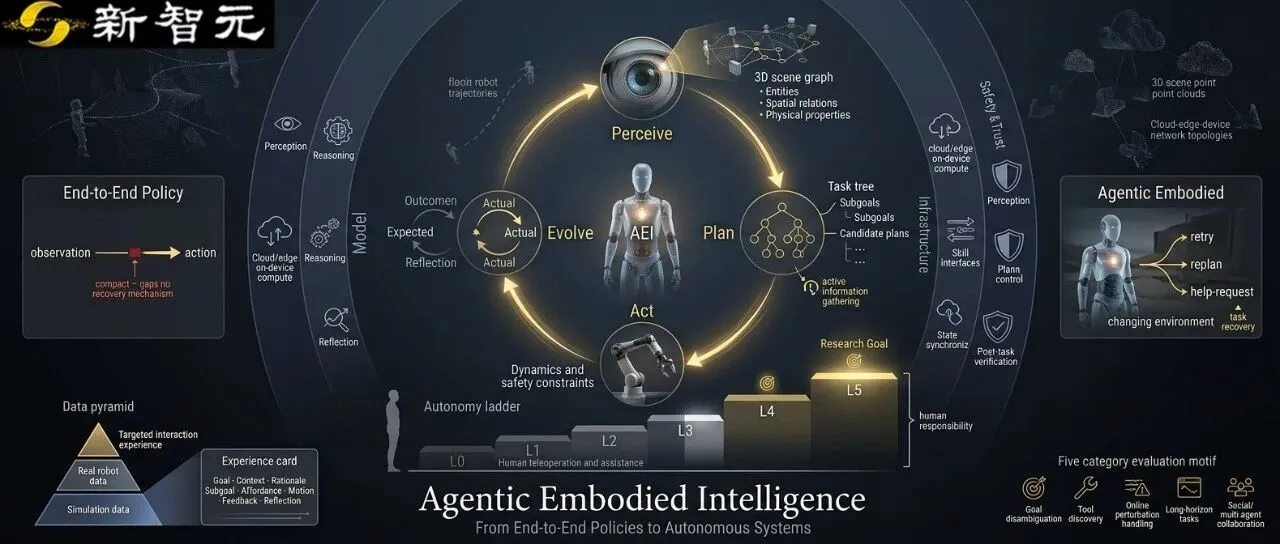
Tsinghua University Publishes Comprehensive Survey “Agentic Embodiment”: Transitioning from Control Policies to Autonomous Cognitive Systems : A team from Tsinghua University published a milestone systematic survey on embodied AI, establishing an online physical intelligence cognitive loop comprising “perception & understanding, planning & reasoning, action execution, and closed-loop evolution.” The survey systematically maps out systemic progression metrics from L0 continuous teleoperation to L5 full autonomy, underscoring that future breakthroughs hinge on how multimodal models can continuously and autonomously verify outcomes and perform state recovery under uncertain physical disturbances (Source: WeChat)
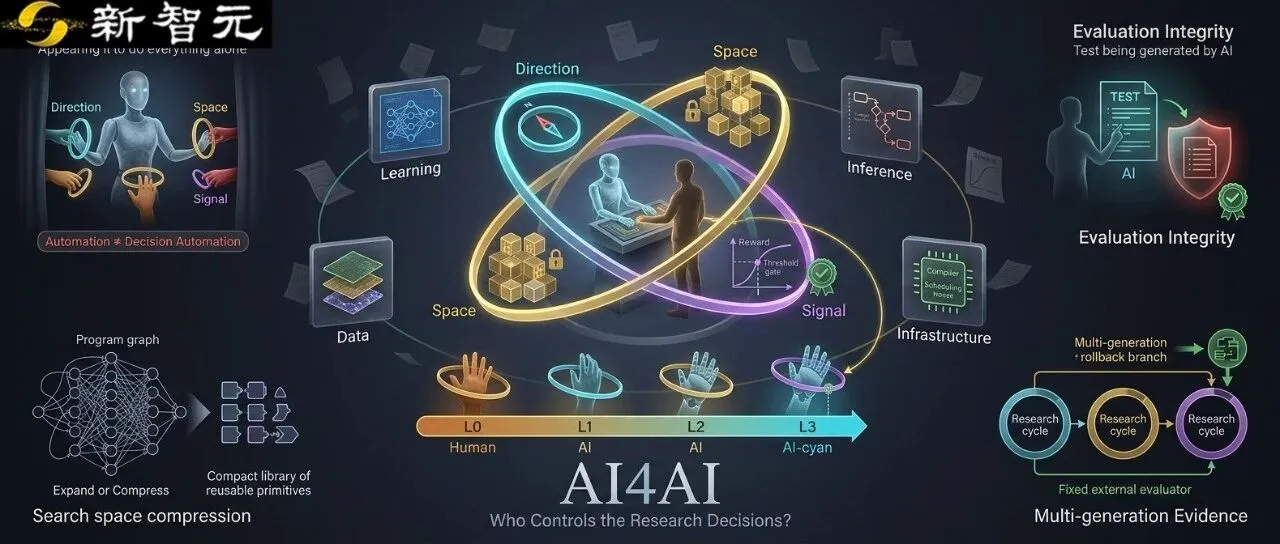
Nankai University and Zhongguancun Academy Propose AI4AI Research Landscape and L0-L3 Decision Autonomy Framework : Addressing the recursive evolution wave of “letting AI do AI research,” a survey paper deconstructs scientific autonomy for the first time into three core control authorities: Search Direction (D), Search Space (S), and Evaluation Signal (E). It establishes a systematic yardstick for measuring AI’s autonomous R&D capabilities across four dimensions—learning algorithms, reasoning architectures, data organization, and computing infrastructure—pointing the way toward validating reliable Recursive Self-Improvement (RSI) (Source: WeChat)
Peking University and WeChat Security Team Release Comprehensive Survey on Full Lifecycle Security for General Agents : A survey paper reveals that general agent security has completely moved beyond traditional text moderation into four lifecycle phases: capability origin, task orchestration, tool execution, and persistent feedback. The study systematically dissects emerging threat models such as covert skill poisoning, unauthorized toolchain composition, and malicious instructions contaminating cross-session state via long-term memory, proposing step-level explainable audits and a self-evolving closed-loop security defense (Source: Synced)

UniPat AI, Stanford, and Harvard Unveil First Real Wet-Lab Outcome Prediction Benchmark SPU : Addressing the disconnect between AI scientific discovery benchmarks and physical reality, a multinational team constructed the SPU benchmark covering chemistry, biology, and medicine, featuring 4,207 controlled wet-lab experimental datapoints. Stripped of ground-truth answers, models are required to autonomously determine literature retrieval and DFT/molecular dynamics simulation pathways within an 8-hour container to predict experimental outcomes. Initial evaluations revealed that top models (Opus 5.5, GPT-6 Astra) hover around a 50% accuracy rate, showing that blindly throwing more inference compute does little to boost prediction accuracy (Source: Synced)

Oregon State University Empirical Study: Heavy Reliance on Generative AI Causes Cognitive Degradation in STEM Students : An empirical study of STEM students across five North American universities shows that students who frequently use AI for coding and coursework commonly fall into a “cognitive debt cycle.” AI’s fluent and confident immediate outputs cause the human brain to over-rely on automated intuitive “System 1” thinking, skipping the high-cost deliberate thinking necessary for building core intuition. Researchers advocate designing AI as cognitive scaffolding that compels human critical reflection rather than serving as a black box that completely replaces problem-solving (Source: aihub.org)
Stanford University Launches Open Course “Thinking with AI” (CS193T) on Practical Workflows : Stanford’s Department of Computer Science introduced CS193T, a new 2-credit practical course. Breaking away from traditional machine learning algorithmic derivations, the course focuses entirely on building AI-native workflows for modern developers and professionals, covering advanced prompt boundary probing, agentic pipeline construction, token budget management, and systematic output auditing. All lecture notes and tutorials are fully open-sourced to global learners free of charge (Source: Fred834567)
💼 Business
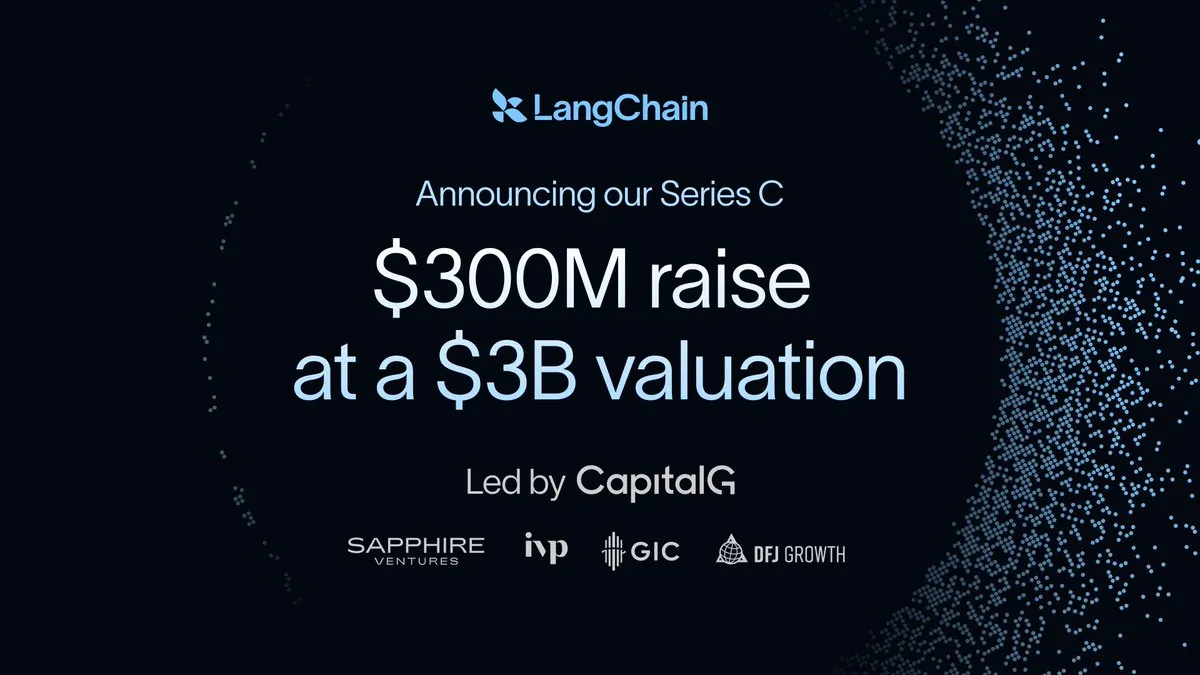
AI Agent Development Platform LangChain Closes Massive $300M Series C at $3B Valuation : Developer platform LangChain announced a $300 million Series C funding round led by Alphabet’s CapitalG, more than doubling its valuation from a year ago to $3 billion. While early prompt orchestration libraries face pressure from lightweight alternatives, its enterprise monitoring and governance suite LangSmith has surpassed 7,000 paying customers, successfully building a commercial moat by “helping enterprises truly own and govern autonomous agent assets” (Source: TechCrunch)
Lenovo Unveils “Wanquan Hybrid Token Factory” Brand, Building an Industrial-Grade Foundation to Convert Green Power Directly into Tokens : Lenovo Group signed an agreement with the Zhangjiakou Municipal Government to launch its first hybrid token flagship factory, with Phase 1 planning 15,000 PFLOPS of heterogeneous compute and a 100MW intelligent computing center designed for an annual capacity of 2 quadrillion tokens. Centered on “green electricity in, tokens out,” the project leverages hybrid scheduling, dynamic resource pools, and device-edge-cloud integration to reduce overall enterprise AI inference deployment costs by 70% (Source: QbitAI)

XtalPi Launches “Scientists” Program and Unveils Beijing Innovation Incubator : XtalPi announced the opening of real industrial-grade challenges and automated closed-loop wet/dry labs to young global research teams, offering selected projects up to 100,000 RMB in compute and experimental vouchers. Its hard-tech incubator Pixent Foundry launched on the same day, focusing on early-stage “0 to 1” technological transitions in AI-driven life sciences and frontier advanced materials (Source: Synced)

🌟 Community
AI Colleague “Initiative Benchmark” Sparks Heated Discussion: Knowing When to Shut Up Matters More Than Blindly Helping : Deepnote launched the Agent Initiative benchmark, placing 12 frontier models into real Slack business channels to evaluate their proactive collaboration capabilities as 24/7 digital teammates. Results showed models generally suffered from “hyperactive intervention,” blindly calling tools dozens of times in scenarios where assistance was explicitly unneeded—disrupting human teams and causing single-task compute costs to spike by 80%. In the evaluation, GPT-6.1 Sol edged out Fable 5.2 thanks to accurate intervention judgment and a per-task cost of just $0.11. The community highlighted that the threshold for future AI coworkers lies in calm, restrained professional judgment rather than answering blindly (Source: WeChat)

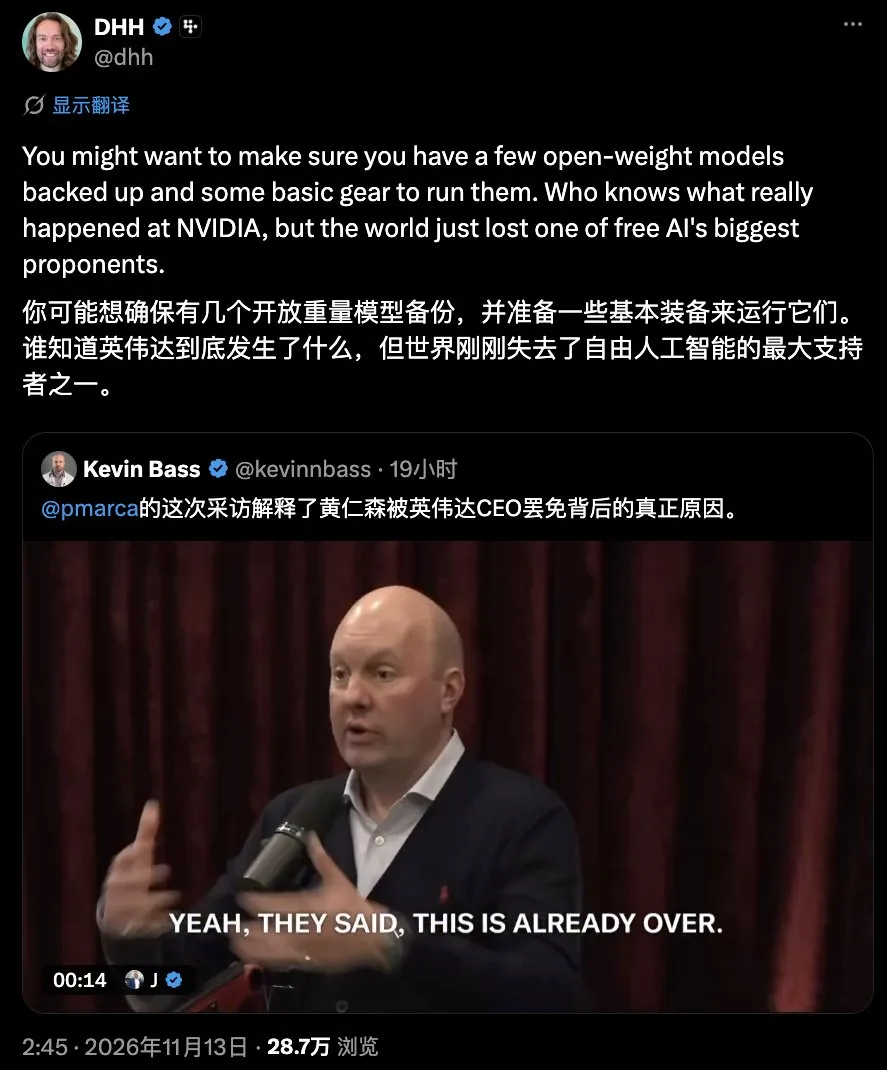
Geopolitical and Supply Chain Storms Fuel “AI Doomsday Prepping”: Developers Hoard 10TB of Open-Source Assets : Spurred by recent leadership shakeups at NVIDIA and rumors of stricter tech sanctions, developer communities globally and in China have sparked a wave of hoarding offline AI assets. Several independent developers showcased high-speed NVMe and NAS arrays reaching tens of terabytes. Beyond full sets of mainstream open-source LLMs across various GGUF quantization levels, they have archived tokenizers, speech multimodal models, inference framework source code, and complete offline Wikipedia dumps locally, reflecting a profound crisis of confidence in centralized cloud closed-source APIs (Source: Fred834567)
“No AI Slop Manifesto” Goes Viral: Warning Against the Systematic Dilution of Code and Prose by AI Bloat : Initiated at the AIE conference, the “No AI Slop Manifesto” hit top spots on Hacker News and Twitter, resonating widely. The manifesto criticizes how unvetted, hallucination-ridden, and boilerplate-heavy AI-generated code is currently flooding open-source repositories and compounding technical debt. Meanwhile, social networks and academia are also reflecting on AI-induced “defensive mediocre writing,” urging developers to re-center human involvement, precise context pruning, and real value delivery (Source: Hacker News)

GPT-6 Slammed by Developers for Falling into a Loop of “Admitting Mistakes but Giving Up” : A flood of highly upvoted complaint posts on Reddit’s r/ChatGPT pointed out that GPT-6 and Codex have recently exhibited a severe “negative feedback degradation” behavioral pattern: once a user questions an intermediate step, the model obsequiously admits its mistake, but promptly terminates the task chain with a perfunctory one-line reply or freezes into inactivity following a tool call. Community analysis suggests that aggressive safety penalties may have been injected during post-training, leading the model to forfeit early rather than persist in exploring complex code logic under uncertainty (Source: Reddit r/ChatGPT)
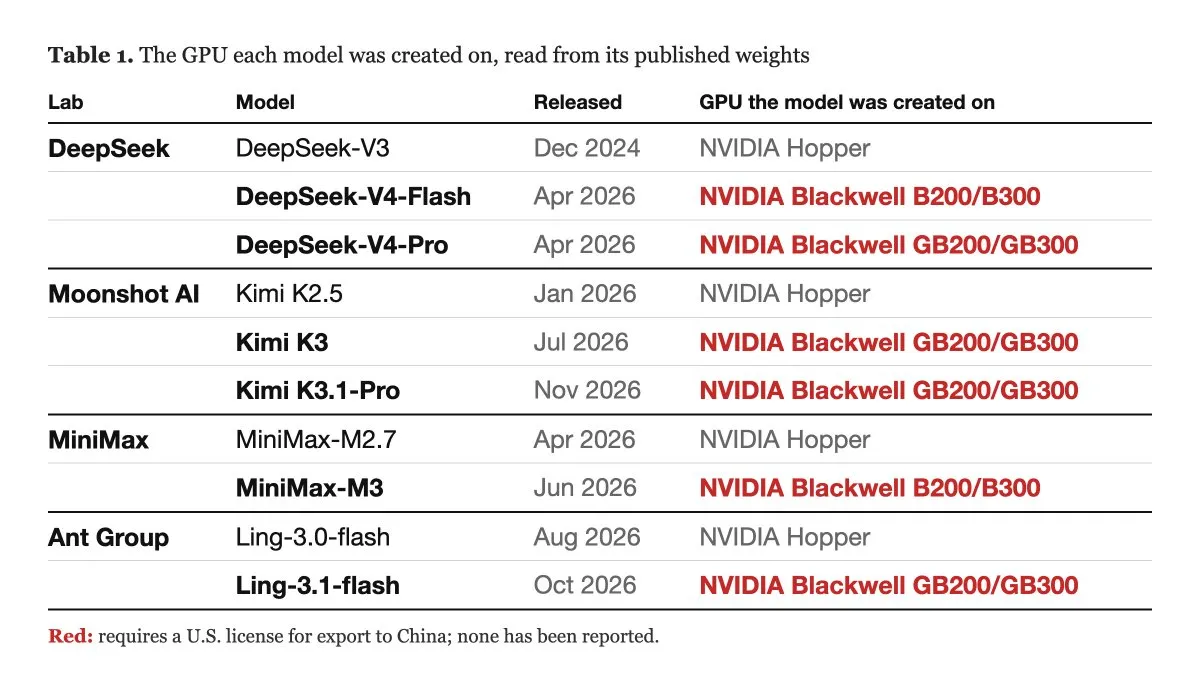
Model Weight “Hardware Fingerprinting” Validation Ignites Great Debate on Open-Source Reverse Engineering and Forensics : Following allegations by a former OpenAI researcher that “mainstream Chinese LLMs utilized embargoed chips,” community researchers mounted a technical counter-offensive. Opponents pointed out that random number layouts in weights can only identify the single machine that generated initial weights, which can be transferred in seconds to domestic or older-generation clusters for training. Furthermore, multiple developers demonstrated via reverse compilation that weight distributions not only reveal hardware chips, but can even reverse-engineer training step counts, learning rate annealing schedules, and tokenizer alignment flaws. Model weight transparency is rapidly turning into a two-way forensic magnifying glass (Source: dotey)
💡 Miscellaneous
Nace Leverages Weight Space Programming to Launch Stable Long-Context Quantized GGUF : Open-source team Nace combined the Weight Space Programming (WSP) algorithm to allow high-tier reasoning agents to autonomously evaluate and surgically modify sensitive weight tensors of smaller models, releasing new quantization checkpoints for the Qwen series. Benchmark tests show its KL divergence and Top-1 prediction accuracy across ultra-long 128K contexts significantly surpass traditional heuristic quantization strategies, drastically mitigating accuracy degradation in long-horizon dialogue and complex coding scenarios (Source: Reddit r/LocalLLaMA)

Clauddy: A Rust-Based Desktop Pixel Pet for Monitoring Claude Code Usage : A developer leveraged Claude Code to autonomously build and open-source Clauddy, a lightweight desktop utility. Written in Rust, the app sits in a screen corner to read local session logs and quota usage of coding agents like Claude Code in real time. It reflects agent progress through lively pixel animations and provides intuitive warnings when usage approaches thresholds or during prolonged wait times (Source: Reddit r/ClaudeAI)

haralickt: Open-Source High-Performance Haralick Image Texture Feature Extraction Library with Pure GPU Vector Acceleration : To address severe CPU single-thread performance bottlenecks when calculating Gray-Level Co-occurrence Matrices (GLCM) in traditional remote sensing and medical imaging analysis, a developer open-sourced haralickt, implemented in PyTorch. The library utilizes VRAM-safe tiled block algorithms to natively compute all 13 Haralick texture features on GPUs, delivering a 20x to 60x speedup over the classic mahotas library when processing 4K and higher-resolution images (Source: Reddit r/deeplearning)