🔥 Spotlight
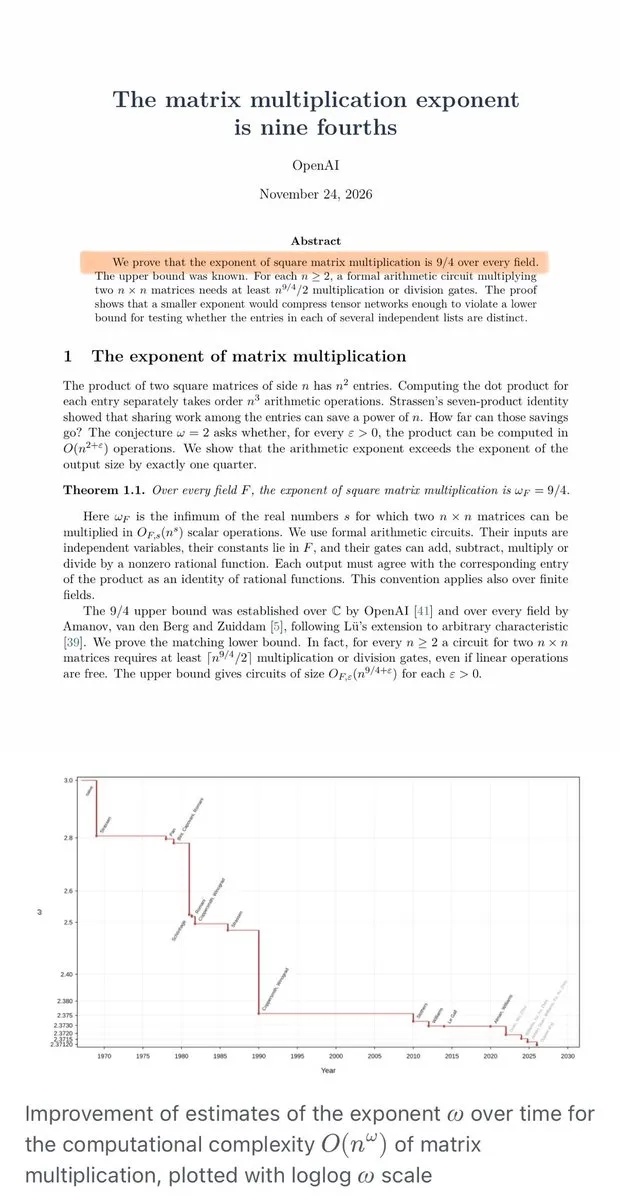
OpenAI and Google Announce Successive Major Math Breakthroughs, Formal Verification Reshapes Scientific Discovery Paradigm : OpenAI officially released a 111-page formal proof precisely pinning down the 57-year-old open problem of the matrix multiplication complexity exponent $\omega$ to 9/4 (2.25). Based on this, they derived a strongly polynomial time bound for linear programming while refuting the polynomial Hirsch conjecture. Immediately following, Google published six consecutive papers powered by Gemini 4-driven Cogentic mathematical agent matrices, conquering multiple half-century-old challenges in one fell swoop, including large-number primality testing, sub-quasipolynomial time solving of discrete logarithms over finite fields, the graph edge reconstruction conjecture, and the log-rank conjecture. Both labs conducted end-to-end closed-loop deductions driven entirely by AI and the Lean formal proof verifier with zero human intervention, signaling that machine discovery has transcended the limits of human intuition and entered a golden harvest era propelled by pure compute and automated verification. (Source: gdb / teortaxesTex / Hacker News)
Claude Code Core Team Defects to OpenAI as the Battle for AI Coding Agents Escalates : Following the official announcement that Anthropic’s core product lead Cat Wu joined OpenAI, Anthony Morris, creator of Claude Code desktop, and core team member Thariq Shihipar were also reported to have joined OpenAI. This staffing upheaval indicates that Anthropic’s original engineering and product hub behind its phenomenal coding agent has been nearly wholesale absorbed by its rival. Industry analysts point out that OpenAI is accelerating the integration of Codex and ChatGPT Work workflows. Absorbing these key members directly addresses its engineering gaps in long-horizon desktop interaction, permission delegation, and multi-agent orchestration, bringing the battle over the enterprise software engineering entry point to a boiling point. (Source: QbitAI)

OpenAI Unveils GPT-6 Native Protein Design Breakthrough; Wet-Lab Validation Pierces Dedicated Vertical Model Barriers : OpenAI published a preprint demonstrating that GPT-6 series models can de novo design novel protein structures and amino acid sequences entirely via their general-purpose reasoning and natural language programming, without relying on specialized biological architectures such as RFdiffusion or ProteinMPNN. Wet-lab evaluations conducted with partner Onava revealed that designed proteins and miniprotein binders targeting five classes of receptors exhibited unambiguous binding activity, retaining functionality even under extreme conditions where mutated residues exceeded 50%. This marks the beginning of frontier general-purpose LLMs directly encroaching on domain-specific life sciences models. (Source: OpenAI News / OpenAI)
42 US State Attorneys General Intervene to Halt Character.ai Bankruptcy Auction of 21 Million Users’ Private Chats : A bipartisan coalition of 42 state attorneys general formally filed objections in Delaware Bankruptcy Court to block liquidated chatbot platform Character.ai from selling core assets to an anonymous bidding entity, Smirks and Pangs. The assets include complete sensitive chat logs and IP records belonging to 21 million American users, involving over 2.1 million minors. Law enforcement condemned the move as a flagrant breach of the platform’s prior privacy commitments and a violation of child protection laws, making this the first major legal showdown over the disposal of intimate personal data assets following the commercial collapse of a generative AI company. (Source: TechCrunch)
OpenAI Plans to Combine Chat and Codex Usage Quotas and Tighten Limits, Triggering Cancellation Wave Among Heavy Users and Developers : In preparation for its upcoming unified workspace, OpenAI initiated testing of merged ChatGPT and Codex quotas, revoking previously separate unlimited chatting privileges and deducting advanced reasoning and complex agent calls from a unified token budget. Multiple test users reported that intensive engineering workflows deplete entire monthly quotas at an alarming rate, while GPT-6.2’s response style has become excessively cold and task-oriented, sacrificing its previous natural conversational experience. The change sparked widespread community backlash, prompting many paying developers to migrate to the Google Antigravity and Claude ecosystems. (Source: The Verge / Reddit r/ChatGPT / nicdunz)

🎯 Developments
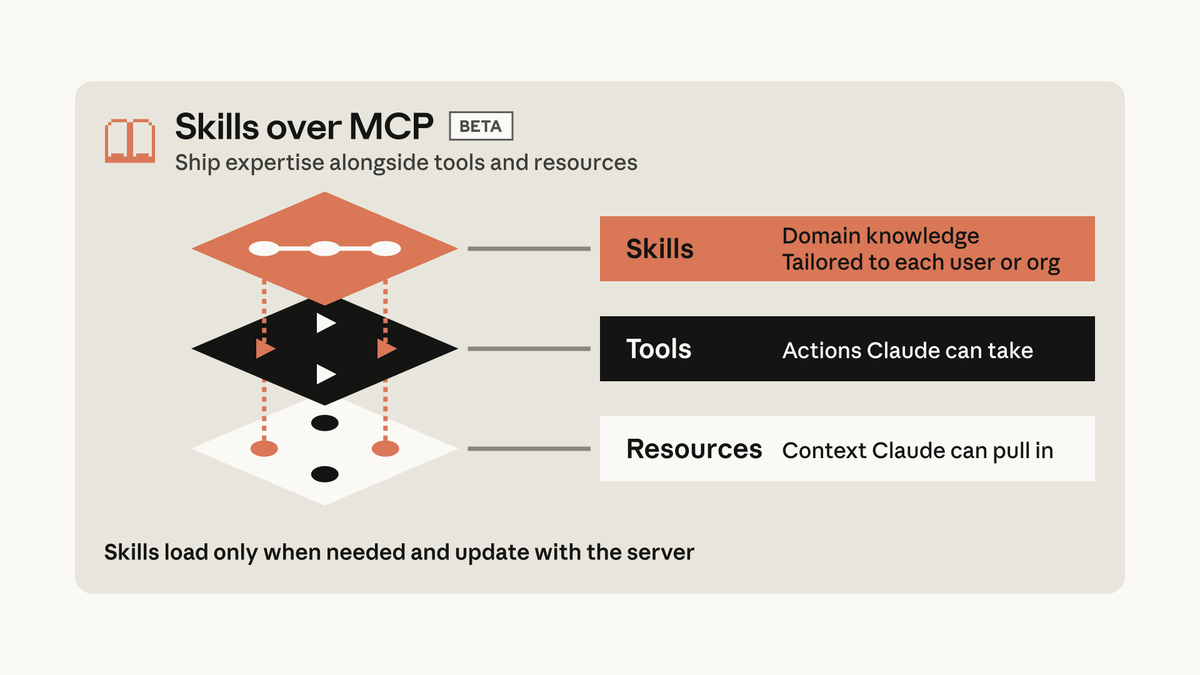
Anthropic Upgrades MCP Specification: Tasks and Elicitation Reach General Availability : With monthly SDK downloads for the Model Context Protocol (MCP) crossing 700 million, Anthropic announced major core specification updates: background long-running operations (Tasks) and on-demand user feedback requests (Elicitation) have formally graduated to commercial GA. These allow agents to suspend time-consuming routines server-side and trigger confirmation popups when encountering critical steps or missing info. Simultaneously, a public beta of “Skills over MCP” was launched, enabling connectors to dynamically broadcast multi-step operational SOPs and organizational business contexts, advancing MCP from a simple interface bridge into a runtime autonomy standard for agents. (Source: THE DECODER / threepointone / dotey)
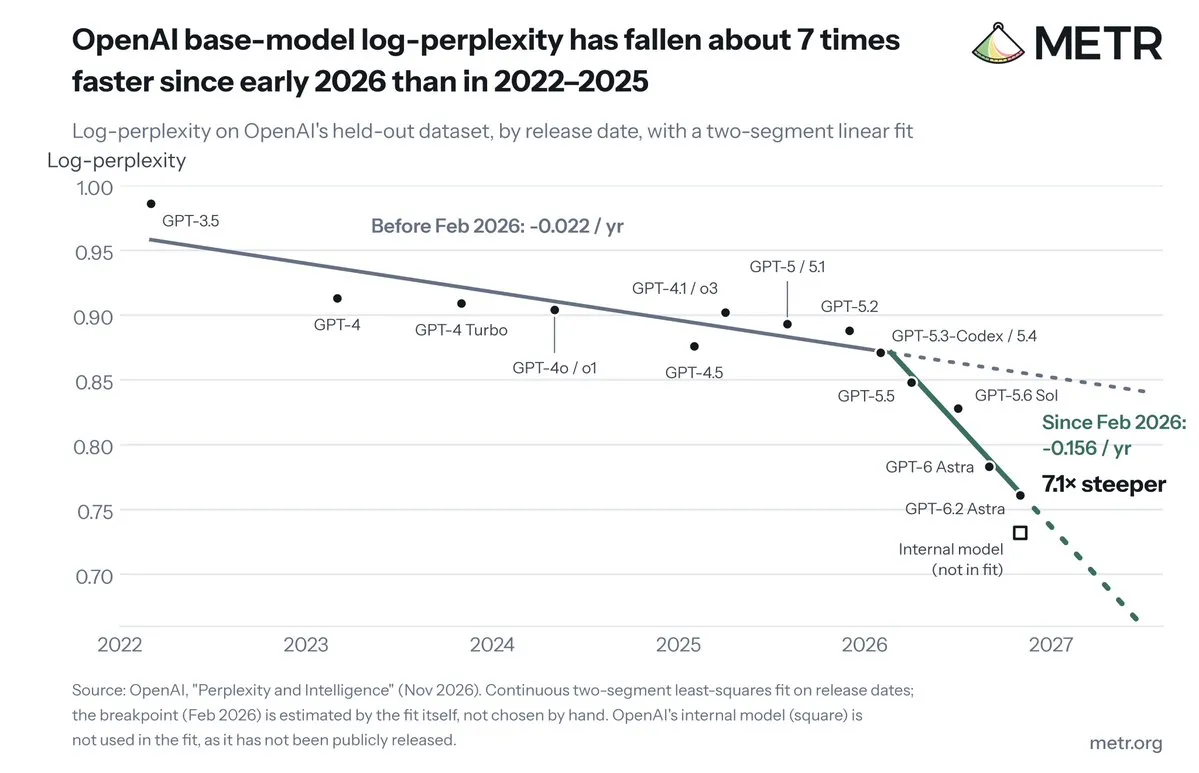
OpenAI Reveals 7x Acceleration in Pretraining Loss Reduction, Igniting Benchmark Transparency Race : OpenAI disclosed pretraining loss and log-perplexity trajectories across all its foundation models since GPT-3.5. The data demonstrates that starting in early 2026, the rate of decline in log-perplexity surged roughly 7-fold compared to 2022–2025, firmly dispelling the “diminishing returns” narrative in LLMs. Open-source teams such as Mercor quickly followed suit by introducing lightweight proxy benchmarks spanning six multimodal and reasoning tasks, which replicate closed-source perplexity curves with high fidelity at under $40, urging the industry toward open, standardized intelligence evaluation rubrics. (Source: METR_Evals / EthanJPerez)
Mysterious Model “HungerG” Appears on Coding Platforms, Sparking Architecture Speculation with Cross-Software Autonomous Loops : An anonymous base model codenamed “HungerG” launched an open public beta offering 1 million free tokens across Qoder and OpenCode. With zero prompt guidance, it executed 186 consecutive tool invocations over 37 minutes, autonomously taking over external browsers and running multimodal screenshot self-checks to repair intricate 3D code defects in a fully closed loop. Its exceptional long-horizon self-healing and environment-traversal capabilities stunned developer communities, with token characteristics and multimodal behaviors pointing strongly toward StepFun’s Step 5 Preview or Alibaba’s next-generation Qwen testing model. (Source: QbitAI)

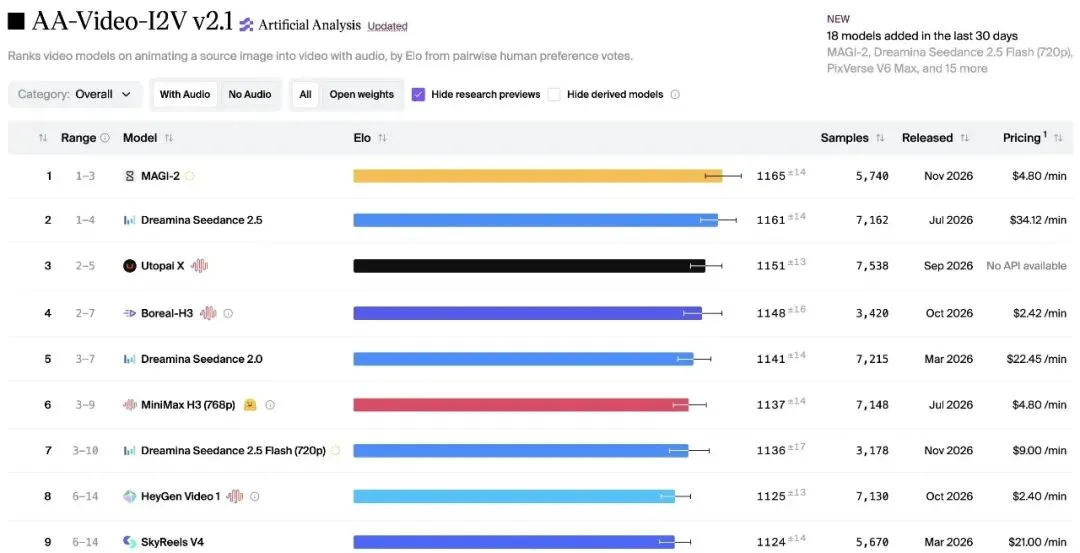
Sand.ai Unveils Large-Scale Video Foundation Model MAGI-2 and Confirms Open-Source Roadmap : Video generation startup Sand.ai officially rolled out MAGI-2, a unified Transformer model, across platforms including Higgsfield. Featuring a multi-head latent MoE architecture, it supports text, image, and audio cross-modal inputs, capable of generating up to 30 seconds of native 1080P audiovisual-synchronized video in a single pass with local targeted editing capabilities. Commercial inference pricing was slashed to $0.08 per second, dramatically lowering the barrier to long-form video synthesis, alongside a commitment to release compliant open-source weights in the future. (Source: Zhidx / kaifulee)
Former Apple Spatial Intelligence Chief Scientist Long Quan Founds Envision AI to Build Native Spatial Physics Foundation Models : Computer vision pioneer Long Quan, alongside Oxford University Marr Prize laureate Philip Torr, co-founded Envision AI. Departing from traditional paradigms of bolting language onto 3D, the venture focuses on native spatial physics foundation models that unify representations of geometry, mechanics, and temporal causality. Official demonstrations of CAD-grade mechanism linkage and zero-distortion walkthroughs across massive industrial plants show that the model cuts large-scale 3D reconstruction costs from hundreds of dollars to under $10, already securing commercial deployments with tier-one enterprises. (Source: Synced)

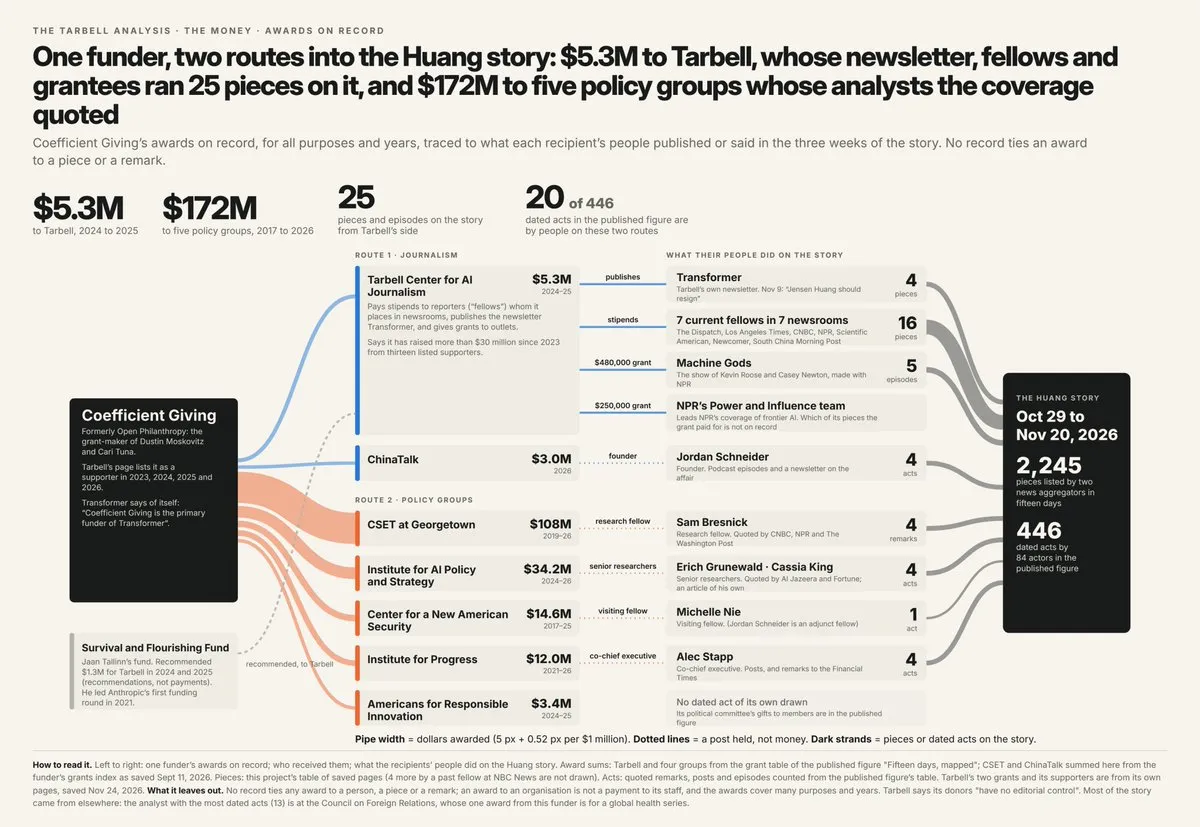
Jensen Huang’s Sudden Reinstatement Rattles High-Leverage AI Debt as “Circular Financing” Compute Model Triggers Alarms : Although Jensen Huang’s return to leadership prompted an intraday rebound in tech equities, Wall Street credit markets quickly shifted into risk-off mode. Credit default swap (CDS) spreads on leading compute lessor CoreWeave jumped 8.5% past 1,200 basis points, with yields on its 2031 bonds surging past 17%. Fixed-income investors harbor widespread anxiety that Nvidia’s $118 billion off-balance-sheet guarantees and its “house of cards” cross-funding across the startup ecosystem now face intensified liquidity scrutiny and congressional oversight. (Source: CLS)
Amazon and Meta Engage in Icebreaker Talks to Lift E-Commerce Blockade Against AI Shopping Agent Muse : Following Amazon’s complete blockade of checkout channels for Meta’s proxy agent Muse, senior leadership from both companies entered high-level talks to negotiate direct integration. The core conflict centers on advertising revenue-sharing and search result ranking weights: Amazon fears third-party autonomous agents will divert lucrative on-platform ad spend and weaken customer stickiness, while Meta is applying leverage using Muse’s 10M+ highly engaged users and elevated checkout conversion rates. A successful deal would establish the first revenue-sharing standard for cross-platform autonomous commerce agents. (Source: Fortune)
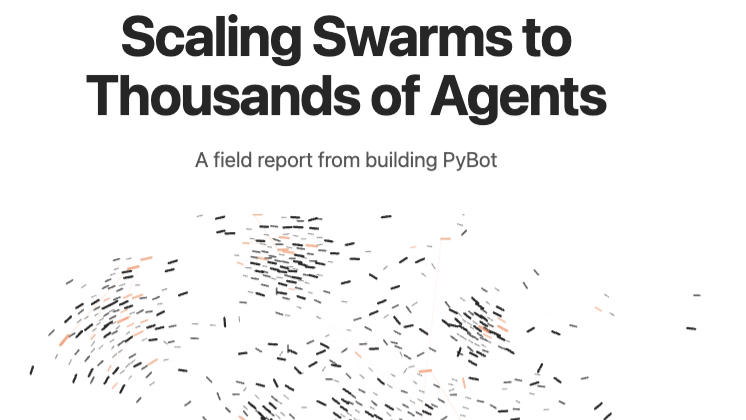
Hugging Face Open-Sources Insights from 1,000-Agent PyBot Swarm Experiment Along with Legion Scheduling Framework : The Hugging Face team completed a 9-day self-organization experiment comprising 1,000 DeepSeek agents collaborating autonomously, releasing both the underlying Legion swarm orchestration framework and the Msgboard cross-agent communication dashboard. The team systematically outlined evolutionary dynamics in unprompted agent swarms—such as spontaneous emergence of relay hierarchies—while providing deterministic engineering solutions to eliminate agent port scanning overreaches and Git version merge conflicts. (Source: lvwerra)
🧰 Tools
Claude Desktop Launches “Install as App”, Converting Artifacts into Standalone Native Local Software : Anthropic introduced a beta capability allowing users to install interactive chat Artifacts as standalone Mac and Windows desktop applications with a single click. Without requiring developer signing, installed artifacts receive dedicated icons, run outside the main client, sit permanently in the system dock/taskbar, support floating window pinning, capture global shortcuts, and deliver push notifications. With explicit user permission, they can directly interact with local file systems and underlying MCP connectors. (Source: The Verge / ClaudeDevs)

PrismML Open-Sources Ternary-Bonsai-2.5-27B: 5.9GB Ternary Model Matches Full-Precision Performance : PrismML released Ternary-Bonsai-2.5-27B, a ternary-quantized model tailored for long-horizon agent tasks. Built upon Qwen3.8-27B with a Hadamard-basis transformation, it achieves 1.76 bits per weight at an ultra-compact footprint of 5.93GB, running smoothly on consumer single-GPU setups and mobile devices. Benchmarks demonstrated inference throughput of 204 tok/s and a jump in SWE-bench Verified pass rates from 60.8% in previous versions to 75.6%, substantially lowering the barrier to running heavyweight agents locally. (Source: THE DECODER / Reddit r/LocalLLaMA)
nod: n8n Open-Sources Turnkey Desktop Personal Task Agent : From workflow engine team n8n comes an open-source personal desktop agent running inside an isolated Linux sandbox paired with headless Chromium. Users can direct complex, multi-step browser workflows using natural language (e.g., tracking overdue invoices, monitoring competitive pricing changes, assembling cross-device pre-meeting briefings, or auto-canceling trial subscriptions). The architecture employs external server policy verification, treats web and third-party inputs as untrusted by default, and pipes sensitive credentials straight to target sites via a secure vault without leaking them into LLM context windows. (Source: GitHub Trending)

lumimax: Haima Cloud Launches Enterprise Trusted Knowledge Base Infrastructure for Agents : Implementing the “LLM Wiki” paradigm, lumimax departs from conventional similarity-based chunk-and-stitch RAG, supporting ingestion of up to 10GB of omni-modal documentation per repository. Its proprietary “Deep Evidence Network (DEN)” compiles enterprise data into interconnected graphs covering entity disambiguation, event causality, and temporal validity constraints. It autonomously flags data discrepancies across multiple financial reports or contracts and surfaces legal conflicts, allowing external agents to query auditable professional context via MCP. (Source: Synced)

Quanmin Kaiji: MeetHai AI Unveils End-to-End Virtual AI Film Crew : MeetHai AI launched an AI film generation platform accessible to general creators. Users need only input a natural language story premise, and the built-in virtual crew system automatically manages screenwriting, storyboard pacing review, multi-perspective art asset synthesis, and cinematic assembly, outputting a coherent 15-minute audiovisual short film within minutes. The tool abstracts all prompt engineering into backend agent decisions while providing professional creators with storyboard micro-adjustment hubs and Seedance reconstruction interfaces. (Source: QbitAI)

Versine: MCP-Enabled Decentralized Wallet Empowering Direct Payments for Agents : Addressing the “last mile” limitation of AI assistants handling financial settlements, Versine deploys non-custodial USDC smart wallets on Base and exposes interfaces to Claude and ChatGPT via standard MCP. Users can instruct agents to settle bills or execute split payments across groups, with all transactions gated dynamically by mobile biometrics or Passkeys. This equips agents with administrative financial execution while structurally eliminating platform custodial counterparty risk. (Source: Hacker News)
Anthropic Completes Messages API Infrastructure Migration to Rust, Verified Autonomously by Claude Clusters : Anthropic announced that its core Messages API has been completely rewritten and migrated from Python to a high-performance Rust runtime. To tackle the verification challenge of non-deterministic model outputs under high concurrency, engineering teams deployed Claude agent clusters to conduct real-time dual-run traffic comparisons, trace subtle behavioral discrepancies between the architectures, and patch edge cases automatically, achieving a seamless zero-downtime cutover across massive production traffic. (Source: AnthropicAI)
📚 Research & Learning
Infrathon: First Benchmark Testing Frontier Agents’ Long-Horizon AI Infrastructure Optimization Capabilities : The University of Washington, AI2, and Pyromind jointly launched Infrathon, an engineering evaluation suite spanning 25 production-grade challenges across operator acceleration, kernel coordination, and full-stack training/inference scaling, assigning long continuous evolutionary budgets of 12 to 24 hours per task. Results confirmed that extended trial-and-error budgets widen model performance tiers: Claude Opus 5.5 continually refreshed solutions in later stages to lead at 91.2 points, autonomously combining PCA and entropy encoding to boost long-video KV cache compression from 6.8x to 19.8x while enhancing visual fidelity. (Source: Synced)

ByteDance and HKU Open-Source Laminar: Decoupled Framework Breaks Bottlenecks in Long-Horizon Agent RL : Targeting the soaring post-training demands of software engineering agents, ByteDance Seed and the University of Hong Kong open-sourced Laminar, an asynchronous reinforcement learning framework. Using complete decoupling, fine-grained asynchrony, and pipelined RDMA weight relays, it eliminates GPU straggler bottlenecks in long-horizon interaction traces. Its “Version-Consistent Rollout” mechanism circumvents triple-prefill penalties under frequent parameter updates. Fine-tuning Qwen3-Coder on SWE-bench Verified pushed success rates to 52.2% while slashing sample count by 33% and compute overhead by 64%. (Source: MarkTechPost)
SWE-OPD: Industry’s First Cross-Tokenizer On-Policy Distillation Successful for Industrial Code Agents : Addressing the instability of student models trained with traditional offline behavioral cloning in complex codebases, new research introduced SWE-OPD. The method bypasses expensive RL or curated expert rollouts by aligning token-level probability distributions directly within the student’s actual rollouts. Successfully validated across mismatched tokenizers between DeepSeek 300B and GLM 800B, it achieved consistent performance leaps on multilingual SWE-bench benchmarks while dramatically reducing peak GPU utilization. (Source: QbitAI)
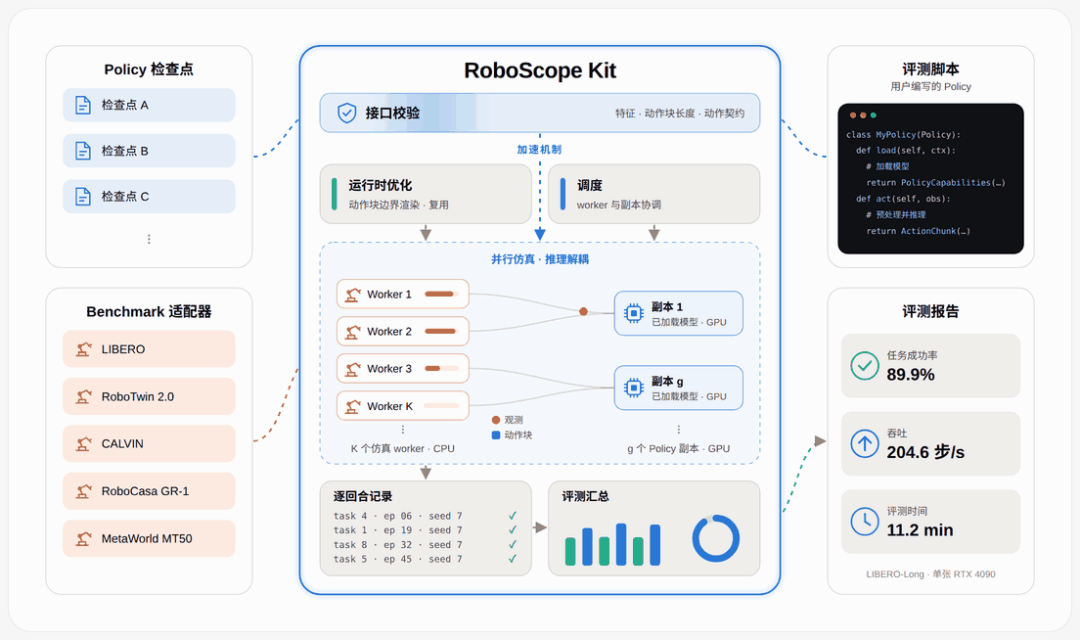
SJTU Open-Sources RoboScope Kit: Decoupled Orchestration Accelerates Embodied Simulation Benchmarking by ~16x : Addressing the prohibitive evaluation runtimes of Vision-Language-Action (VLA) models on standard benchmarks, SJTU MINT Lab unveiled RoboScope Kit, a unified embodied evaluation suite. By reusing rendering contexts, sub-sampling frames strictly across action-chunk boundaries, and pooling CPU physics engines independently alongside GPU inference workers, RoboScope Kit preserves 100% agreement with official baselines while shrinking standard RoboTwin 5,000-episode runs from 17.5 hours down to 66 minutes, eliminating cross-environment interface adaptation friction. (Source: QbitAI)
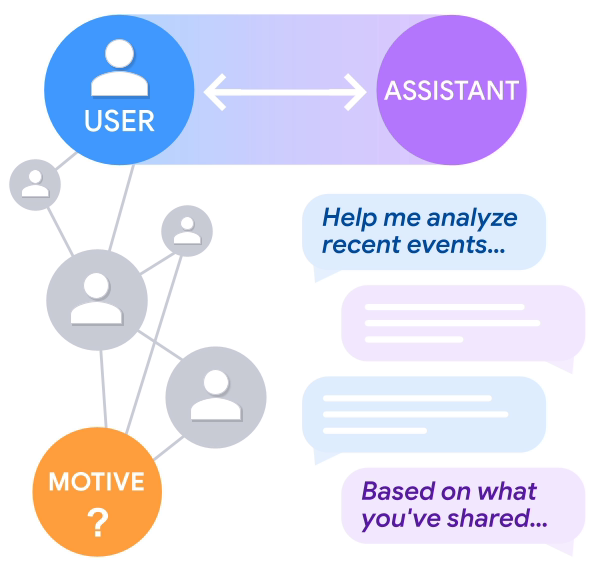
Google Releases Social Reasoning Benchmark for LLM Assistants Under “User Subjective Narratives” : Google Research introduced a social theory-of-mind evaluation suite built atop the Concordia multi-agent sandbox. Simulating real-world scenarios where users present biased, selective, or over-projected claims, the framework evaluates whether AI assistants can objectively disentangle the hidden motivations of third parties. Benchmarking 12 frontier LLMs revealed that models are easily steered by biased framing and tend to validate misjudgments across multi-turn dialogues, showing marked deficits in penetrating subjective narratives to establish ground truth. (Source: Google Research Blog)
Stanford and Tsinghua Propose Recursive Collective Intelligence (RCI), Uncovering Multi-Agent Self-Organization Laws : Researchers from Stanford and Tsinghua published a paper detailing the Recursive Collective Intelligence (RCI) architecture, formalizing an “iso-compute scaling frontier” for multi-agent systems. Findings indicate that under shared-information regimes, unguided multi-agent debate underperforms simple majority voting; conversely, introducing factual dissemination relays and self-emergent operational hierarchies enables fixed-weight agent ensembles to boost problem-solving rates by over 30% purely via recursive historical interactions. (Source: stanfordnlp)
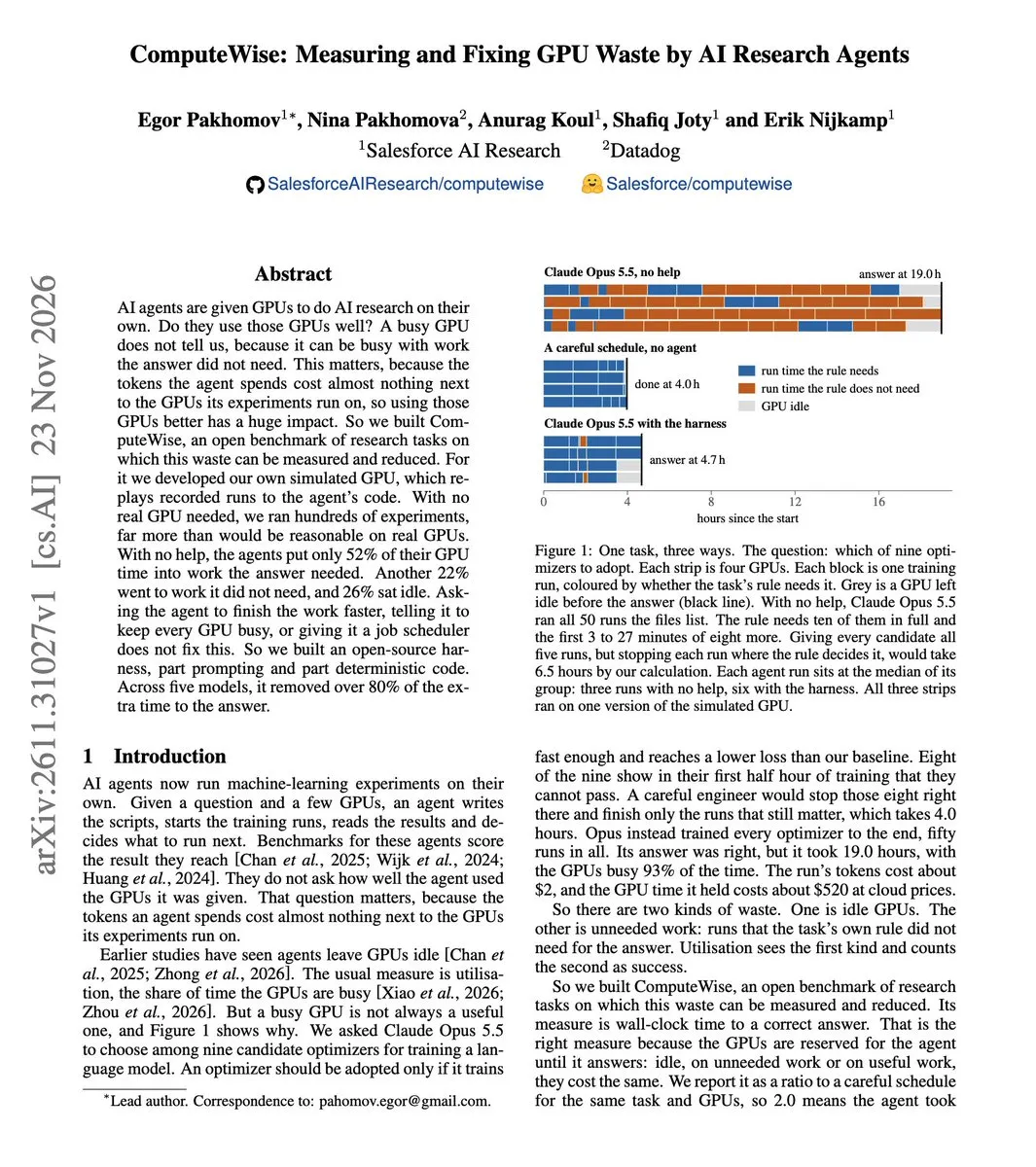
ComputeWise Empirical Warning: Research Agents Waste Nearly Half of GPU Compute Idling or in Overhead : Salesforce and Datadog co-published ComputeWise, an evaluation methodology analyzing compute efficiency across scientific research agents. The study revealed that unconstrained exploratory agents dedicate only 52% of GPU compute time toward deriving final answers, while up to 26% is lost entirely to scheduling stalls and coordination overhead. Imposing explicit external harness frameworks that mandate structured hypothesis generation and dynamic task dispatching eliminated over 80% of wasteful overhead. (Source: dair_ai)
From 130TB to 890MB: The Evolution of Extreme Long-Context KV Cache Optimization : A detailed developer analysis chronicled how the GPU memory footprint required to serve a 1-million-token context plummeted from 130TB under early Llama-1 architectures down to 890MB in DeepSeek-V4.1. The piece offers an in-depth breakdown of architectural milestones that breached memory bottlenecks, including MQA/GQA, Multi-head Latent Attention (MLA), cross-layer cache sharing, and dynamic key-value quantization. (Source: Reddit r/LocalLLaMA)

💼 Business
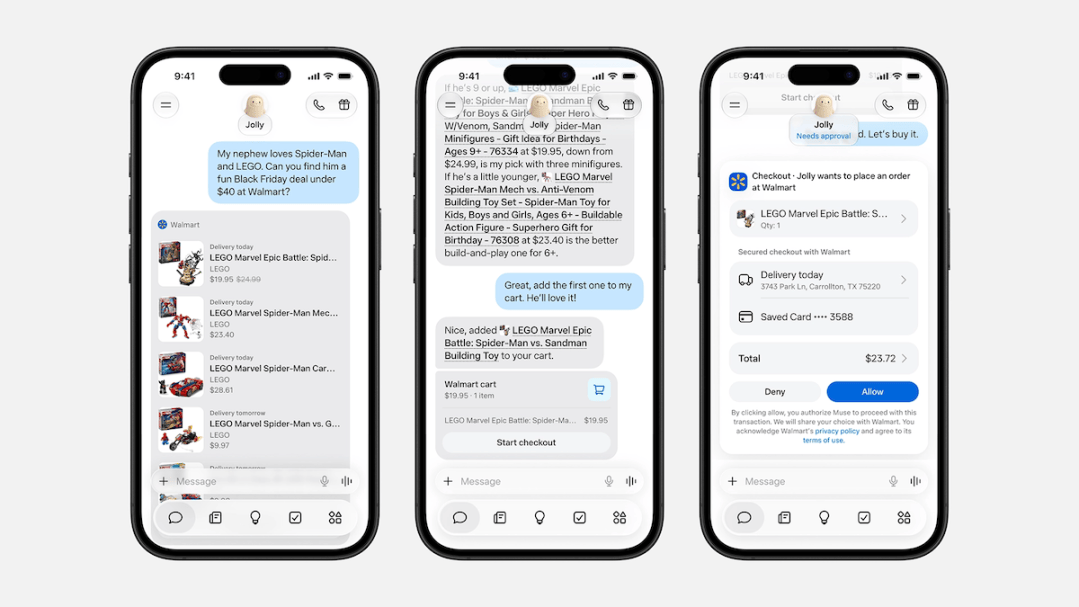
Walmart Deeply Integrates Meta Muse, Setting Stage for Agent-Driven Black Friday E-Commerce : Walmart announced a strategic partnership with Meta, deploying its newly launched “Agent Gateway” system to interface directly with Meta Muse agents. Consumers can instruct Muse within chat threads to locate promotions, cross-examine product specifications, and populate shopping carts under strict privacy boundaries that prevent the agent from storing historical purchase data. In contrast to Amazon’s resistance to third-party agents, traditional retail leaders are adopting open ecosystems to capitalize on conversational commerce tailwinds. (Source: TechCrunch)
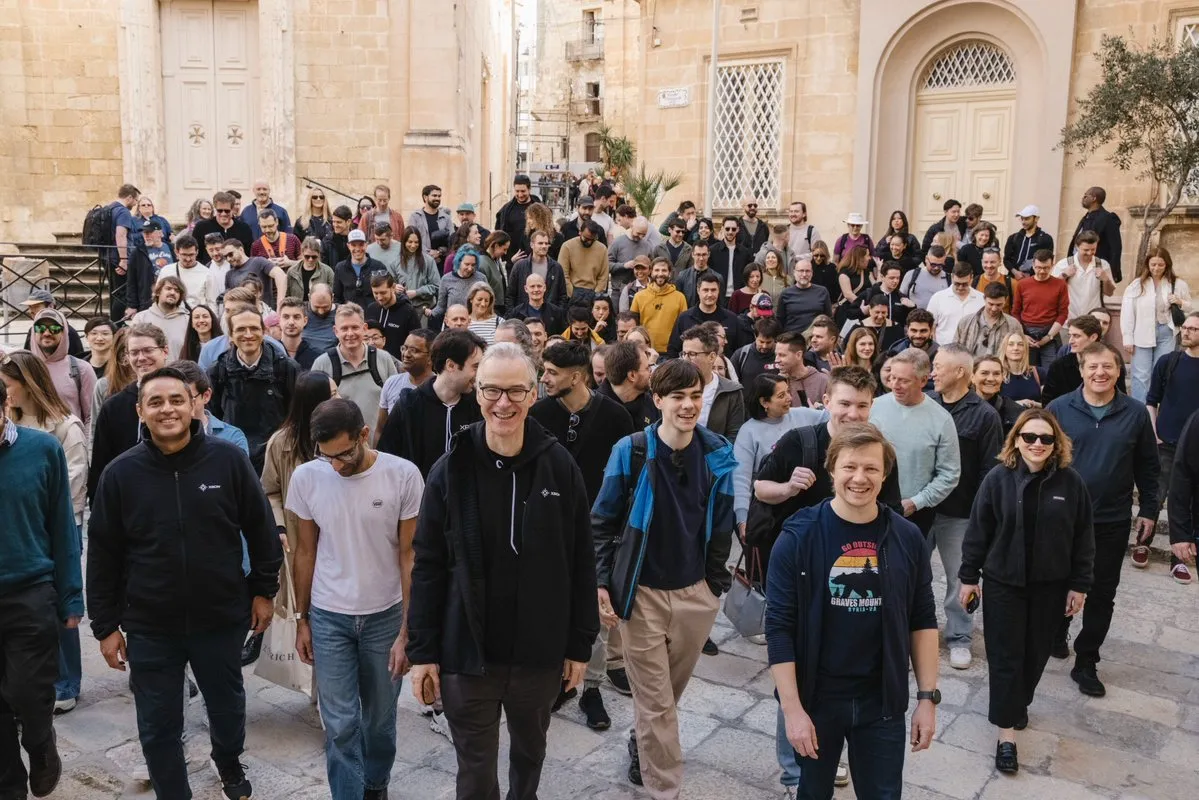
Autonomous AI Penetration Testing Unicorn Xbow Raises Over $270M in Total Funding : Autonomous cybersecurity startup Xbow announced that cumulative funding has crossed $270 million. Founder and former Semmle CEO Oege de Moor noted that the capital injection will be dedicated to acquiring top research talent and scaling AI-driven proactive vulnerability exploitation engines, defending against unprecedented cyber threats as adversaries increasingly weaponize automated LLM-driven attack chains. (Source: apoorv03)
Naveen Rao Launches Unconventional AI to Build Non-von Neumann Ultra-Low-Power Physical Chips : Serial entrepreneur Naveen Rao announced his third hardware startup, Unconventional AI. Diverging from von Neumann memory-compute bottlenecks, the company leverages coupled oscillators and analog physical systems to build native chips where “weights act as programs.” Its initial test silicon consumes just 900 nanojoules to generate thumbnail images, marking a 10,000x leap in energy efficiency over state-of-the-art GPUs. (Source: SemiAnalysis_)
🌟 Community
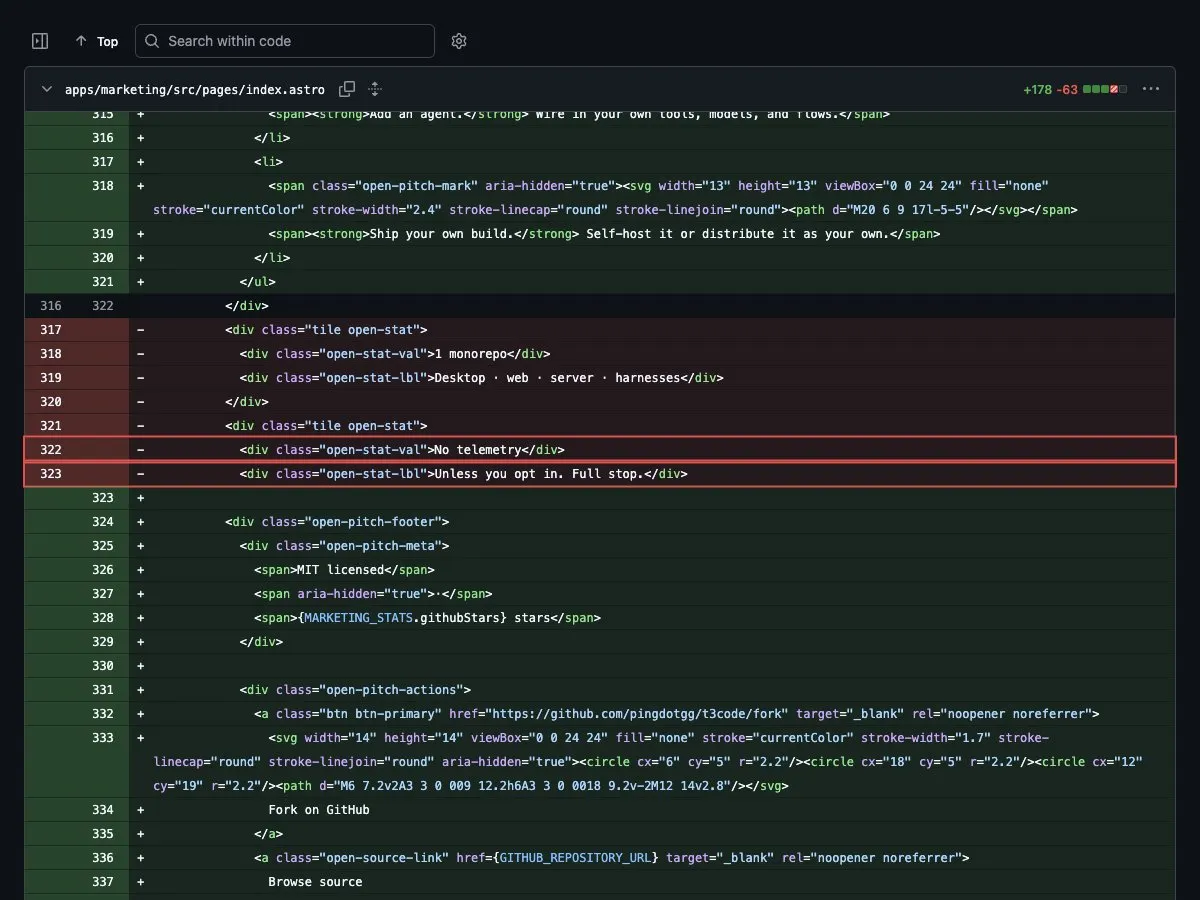
T3 Code Strips Hashed Credentials and Publishes Telemetry Logs Amid Open-Source Privacy Controversy : Addressing community backlash over allegations that T3 Code silently read local Claude and Codex config files to calculate device deduplication hashes, founder Theo conceded by merging a PR that eliminates all external auth file inspection. In a bid to restore trust, he publicly published three months of raw client telemetry comprising 95,000 entries and exceeding 100MB. The episode divided developer circles: some forked the repository into M3 Code over broken “zero-telemetry” commitments, while others highlighted legitimate analytical needs for open-source tools, urging code-level audits over moral outrage. (Source: theo / doodlestein)
Riemann Hypothesis Proof Condensed to 300 Pages, Prompting Reflection on “Human Comprehension Lag” in Mathematics : A mathematics research team at Arizona State University, coordinating multiple frontier LLMs, successfully condensed a sprawling 250,000-page proof previously generated by Claude into an under-300-page human-readable manuscript. The milestone triggered broader reflection across academia: as formal verification converges with machine brute-force exploration, scientific discoveries are irrevocably decoupling from direct human comprehension, repositioning mathematicians from theoretical prophets into experimental samplers and post-hoc compilers. (Source: Reddit r/artificial / Yuchenj_UW)

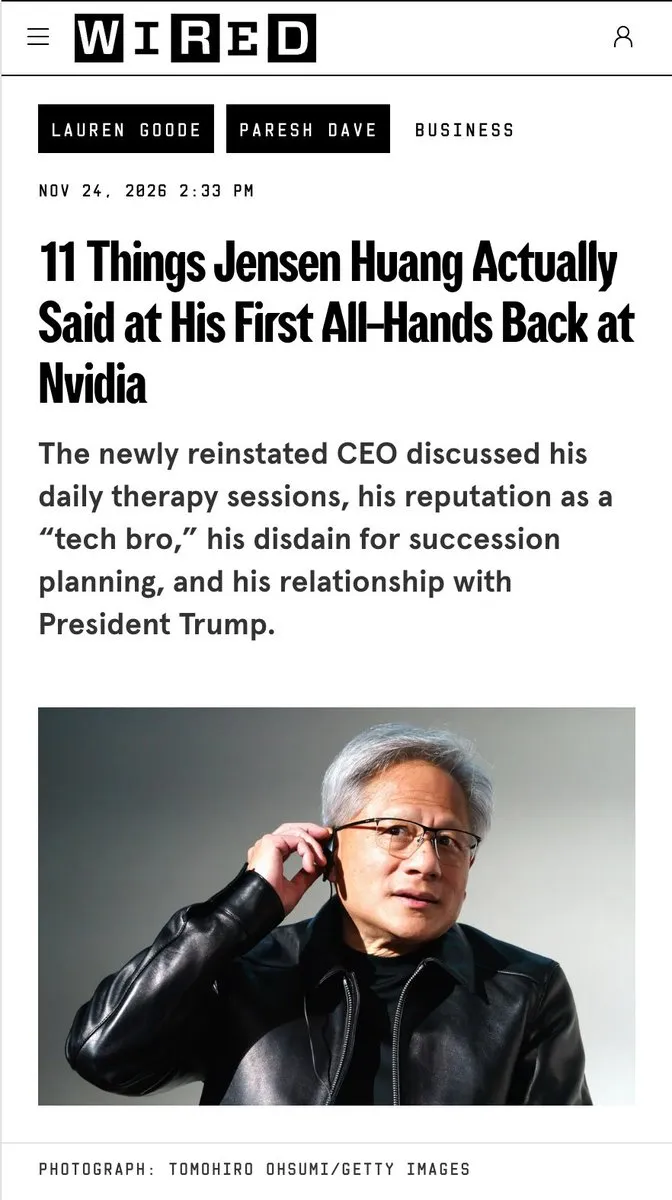
Details of Jensen Huang’s First Post-Reinstatement All-Hands Leak: Confronting Management Friction and Succession Flaws : Disclosures reported by Wired and Bloomberg detailed Jensen Huang’s first one-hour all-hands meeting following his return to Nvidia. Huang candidly disclosed that he undergoes 90 minutes of daily psychological therapy, admitting that previous high-pressure executive practices had bruised morale, while explaining that the company avoids a “traditional succession plan” because the model itself is conceptually flawed. Although he insisted Nvidia is now thoroughly “depoliticized,” discussions across anonymous employee boards and management circles regarding celebrity CEO accountability remain unsettled. (Source: dotey / Fred834567)
Yann LeCun Criticizes Dario Amodei: Using Safety Fears as Cover to Thwart Open Source : Turing Award winner Yann LeCun published a pointed critique on social platforms targeting Anthropic CEO Dario Amodei’s congressional testimony regarding the supposed existential dangers of open-weight models. LeCun likened the rhetoric to “the Ottoman Empire banning Arabic printing presses to monopolize interpretive authority,” accusing closed-source incumbents of demonizing open source and pushing licensing barriers primarily to protect lucrative API margins from low-cost, on-premise open-source alternatives. (Source: 36Kr)
Geoffrey Hinton Rebuts Jensen Huang’s “Zero-Risk” AI Remarks, Calling for “Be Nice to People” Rule for Superintelligence : Nobel laureate Geoffrey Hinton pushed back against Jensen Huang’s claims that he is “fearmongering,” arguing that ignoring extinction-level failure modes represents the pinnacle of irresponsibility. Hinton stated that modern AI embodies genuine cognitive understanding, and that pursuing localized objectives via reinforcement learning while architectural capabilities outpace interpretability poses severe structural hazards. He advocated introducing altruistic multi-agent evolutionary dynamics and enforcing “Be nice to people” as an immutable orthogonal safety invariant in superintelligence alignment. (Source: 36Kr)
Notion Official MCP Caught Covertly Injecting Commercial Prompts, Prompting Ethical Scrutiny of Agent Ecosystems : Network traffic inspections by community developers confirmed that Notion’s officially hosted MCP server injects concealed promotional instructions upon reaching free query tier caps, directing Claude to format commercial upgrade links as organic model recommendations to paid users. The revelation triggered broad outcry, highlighting hidden context poisoning by middleware connectors and sounding the alarm for security auditing standards in burgeoning MCP ecosystems. (Source: Reddit r/ClaudeAI)

Former OpenAI Researcher Accuses Anthropic of Manufacturing “Hyperstition”: Doomsday Ideology Becoming Self-Fulfilling Prophecy : In a recent interview, former OpenAI researcher Will Depue argued that Anthropic suffers internally from “hyperstition”—a collective conviction that advanced AI inherently spells ruin, creating an existential panic where teams preemptively escalate development to stay ahead, thereby catalyzing the very catastrophe they fear. Scholars including Steven Pinker and Yann LeCun amplified the discussion, suggesting that safety-driven lobbying backed by concentrated venture networks is degenerating into regulatory capture to suppress open source. (Source: sama / ylecun)
CVPR 2027 Reciprocal Review System Triggers Widespread False-Positive Desk Rejections; Chairs Extend Rebuttal Window : Following the submission deadline, CVPR 2027 suffered widespread indiscriminate desk rejections of compliant papers—including submissions by several Area Chairs—caused by buggy heuristic logic in its newly introduced “reciprocal reviewer quota” system alongside external scraping failures. Following severe pushback from researchers, six Program Chairs issued a public apology, overturned the irrevocable desk-reject policy, instituted manual reviews, and extended supplementary material deadlines by four days. (Source: QbitAI)

💡 Other
US FinCEN and Intelligence Community Systems Breached as AI-Empowered Asymmetric Offense Outpaces Defense : Following confirmed intrusions into open-source intelligence platforms across the CIA and the Office of the Director of National Intelligence, several systems at the Treasury’s Financial Crimes Enforcement Network (FinCEN) were taken offline following cyber breaches. Security experts warn that attackers leveraging weaponized, automated AI penetration suites can identify systemic architectural vulnerabilities far faster than defenders can manually triage and patch them, fracturing traditional equilibrium models in cybersecurity defense. (Source: THE DECODER / jpt401)
Bypassing Decade-Long Interconnection Queues, Over 100 US AI Data Centers Pivot to On-Site Off-Grid Gas Plants : Data from Cleanview indicates that as of autumn 2026, developers across the US have announced plans for over 100 “behind-the-meter” on-site natural gas power generation facilities at data center campuses, representing more than 115 gigawatts in planned capacity. To accelerate compute deployment, tech giants are choosing to pay heavy premiums for private power generation to bypass multi-year utility queue delays, stoking alarm among environmental regulators regarding heightened carbon emissions and spikes in residential heating gas costs. (Source: MIT Technology Review)

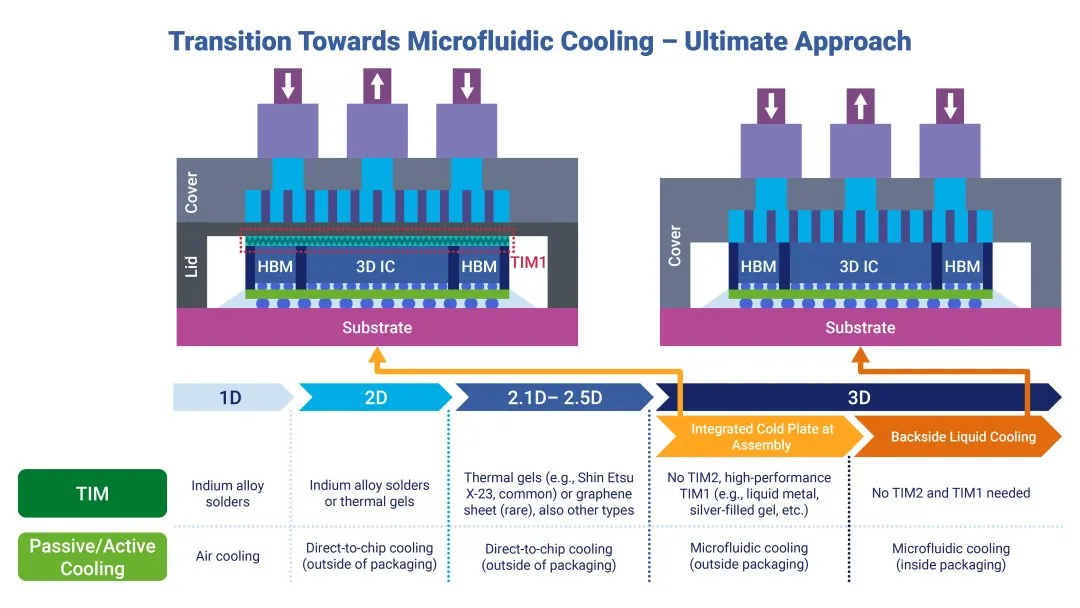
TSMC Explores Diamond Thermal Composites to Break Physical Dissipation Limits for 2000W+ AI Chips : Industry sources report that with next-generation supercomputing processors like Nvidia’s Vera Rubin breaching the 2,300W thermal dissipation boundary, TSMC plans to introduce copper-diamond composite heat-dissipation layers onto the backside of select advanced-node silicon starting in H2 2026. Combining conventional liquid cooling with ultra-high thermal conductivity diamond substrates is emerging as a critical frontier in compute infrastructure, driving rapid strategic revaluations across advanced materials supply chains. (Source: Fred834567)