



🔥 Focus
Sony and Warner sue Anthropic, alleging Claude was trained on pirated torrents and scraped lyrics : Sony Music, Warner Chappell and other publishers sued Anthropic in federal court in Northern California, naming CEO Dario Amodei and co-founder Benjamin Mann as individual defendants. They allege employees were directed to BitTorrent copyrighted lyrics, scores and tracks at a scale of tens of thousands of works, and that lyrics were scraped from MusixMatch and LyricFind and physical songbooks were scanned then destroyed. Plaintiffs seek statutory damages of up to $150,000 per work, stressing the core issue is not whether training is fair use but that the acquisition itself is independent infringement—the same weak point as Anthropic’s prior ~$1.5 billion settlement over pirated book libraries. Anthropic denies the claims and will defend. The community debates whether fines become a “cost of doing business,” and whether forced weight deletion or retraining could change incentives. (Source: THE DECODER, TechCrunch, kylebrussell, Reddit r/artificial)
Meta trials robots that plug in cables and reboot servers in data centers : According to people familiar with the matter, Meta is testing Kinova, ABB, Watney and other robot arms on physical data-center work such as power-cycling reboots and swapping network cables. One employee estimated that up to about 80% of some roles’ workload could be replaced. The move is meant to hedge AI infrastructure labor costs, and it has left frontline ops feeling that “physical jobs are no longer safe.” (Source: Ars Technica)
Coding agents have almost no sense of time and misestimate both short and long tasks : A MATS project tested Claude Code and Codex: pre-task duration estimates and post-hoc recall of time used were both badly distorted, especially on short tasks; the same model’s step counts could differ by about 2.5× across harnesses. Researchers argue long-horizon tasks that require “work for two hours” are almost impossible to obey unless a real clock tool is bolted on. (Source: THE DECODER)
🎯 Moves
OpenAI fixes multiple silent Codex/Work usage bugs and resets quotas again; same quota expected to go ~10%–50% further : Codex lead Tibo said paid users’ quotas were reset and bugs were fixed including leftover old images after compression, Goals that never stop after completion, Memory background infinite loops, sub-agents silently upgrading models, automation overclocking, repeated history summarization, and double-encoding of MCP results. Extreme cases could burn ~15%–70% of a weekly quota on a single task. The team pledged usage visualization. The community still complains that the five-hour window sometimes “empties with almost no work done.” (Source: 36Kr, reach_vb, TheZachMueller)
vLLM 0.28.0 released : The high-performance LLM inference engine shipped v0.28.0. Community discussion centers on throughput, scheduling and production-deployment stability rather than one-off benchmark chasing; for self-hosted inference clusters and local SLM stacks, release cadence itself has become a selection signal. (Source: Hacker News)
ChatGPT workspaces can sync plugin marketplaces from GitHub : Admins can import Codex or Claude marketplaces from public/private repos and distribute plugins to the team; workspaces pull updates daily, or Sync now manually, without uploading a ZIP each time. Existing installs and app access controls still apply. (Source: OpenAIDevs)
Kimi K3 lands in Cursor, claimed near the CursorBench frontier : Cursor said K3 is live, with inference on US nodes from Fireworks, Together and Baseten, plus zero data retention. Moonshot AI forwarded confirmation. Separately, Applied Compute said it fully fine-tuned a nearly 3T-parameter K3 on AC2, cutting per-replica GPU needs by about 40%. (Source: Kimi_Moonshot, algo_diver)
🧰 Tools
WorkWeave Router: routes requests to the right model by “action” in 50ms : A Go local proxy speaks Anthropic/OpenAI/Gemini protocols, scores with on-box ONNX embeddings and Avengers-Pro-style clustering, and routes by action rather than turn, claiming ~40%–70% cost cuts just by swapping endpoints; keys default to BYOK encrypted on-device, with OTLP observability. Hook it into Claude Code, Codex, Cursor and more via npx @workweave/router. (Source: GitHub Trending)
ODS turns a personal PC into a private AI server in one command : Osmantic Deployment System assembles llama-server, Open WebUI, Hermes Agent, n8n, Qdrant, ComfyUI and more with a single command, auto-picks GGUF by GPU/unified memory, defaults to a small model that can chat within two minutes then hot-swaps larger models in the background. Supports Linux/Windows/macOS; stable pin is v2.6.0. (Source: GitHub Trending)
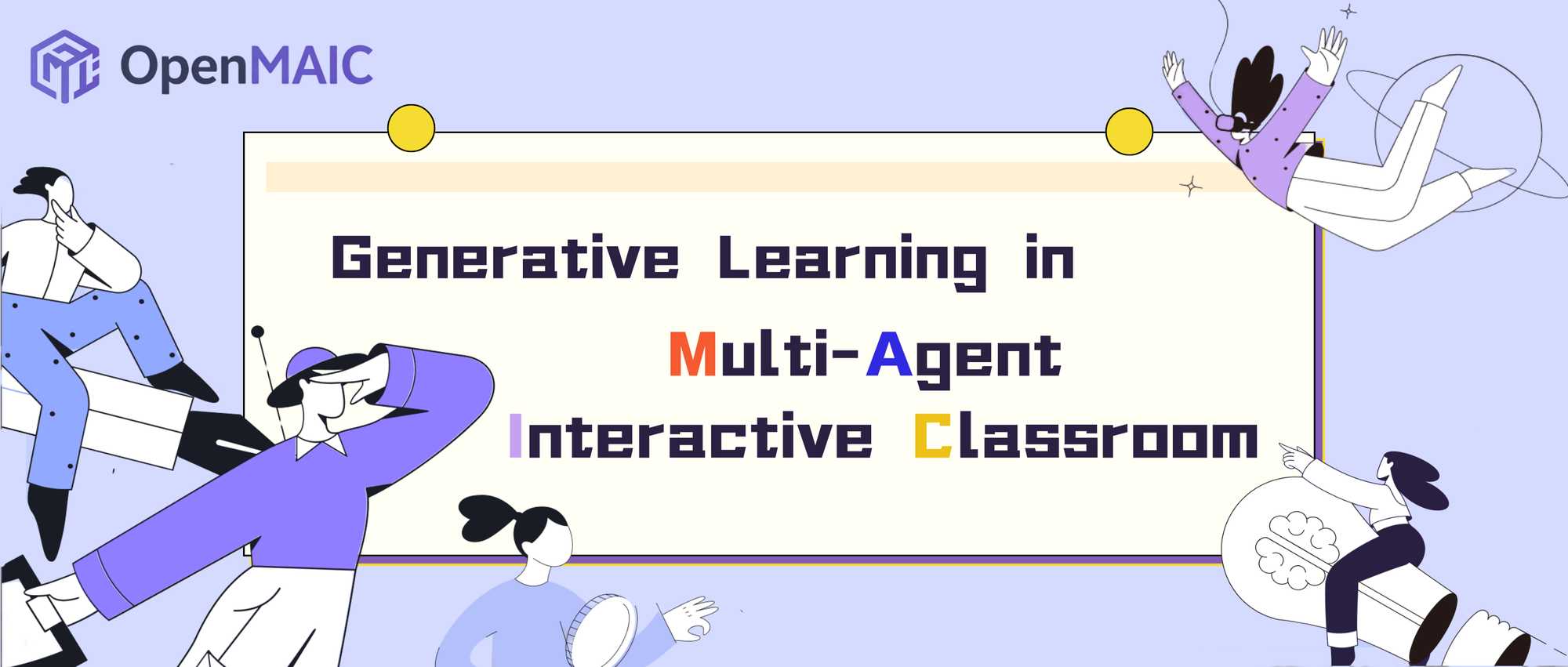
Tsinghua OpenMAIC v1.0: conversational agent workbench one-clicks interactive classrooms : Beyond existing multi-agent teachers/classmates, whiteboard and PBL, v1.0 adds persistent lesson-prep sessions that can cancel/resume/mid-course redirect, ~20 built-in skills, and material upload plus PPTX import; it can connect OpenClaw to teach from Feishu/Slack. Default storage is the browser; Postgres and Lemonade local models are optional. (Source: GitHub Trending)
China patent .skill: mining points, disclosure drafts, plain-language explainers and office-action replies : Agent skills cover invention/utility model/design: scan project materials, CNIPA-priority prior-art search, Mermaid/line art into Word, iterate with save-as and revision history; explainer mode turns claims into an Obsidian graph. Office-action replies can desensitize historical notices into a store then draft; default output requires human review. (Source: GitHub Trending)
FrankenTTS: open-source real-time speech synthesis and cloning : doodlestein demoed real-time iOS synthesis, one-tap multi-voice, second-scale cloning, and built-in joke corpora; claimed 100% open source, with Apple review as the bottleneck. (Source: doodlestein)
fal experiments with long-video H3 Max Live: chat-directed, continuity across shots : Officials said the experimental checkpoint supports native unbounded continuity so scenes do not reset every clip; users can change the frame in seconds with !prompt in a Twitch-style livestream. API said to open next week. The community also has a free 5×/day 768p demo (no login). (Source: fal)
OpenWebUI ecosystem: Mnemosyne memory filter and Conduit 4.1.3 : Mnemosyne Filter injects relevant memories on inlet and auto-saves on outlet; the model need not explicitly call tools. Conduit can now talk directly to OpenAI-compatible APIs/Ollama/OpenRouter, search chats offline, continue with on-device models then re-sync, and supports Hermes tool approval and scheduled tasks. (Source: Reddit r/OpenWebUI, Reddit r/OpenWebUI)
Dwarf Fortress MCP and a “universal coding-agent updater” script : doodlestein open-sourced a DF MCP so Codex/Claude can read saves and issue commands, plus a UCA tool that background-updates various CLIs every three hours (with log stats). (Source: doodlestein)
0.8B local model SpeakoFlow Mini specializes in dictation cleanup, matching hosted frontier models on a narrow task : An Apache-2.0 fine-tune of Qwen3.5-0.8B only cleans speech transcripts: it applies speaker-explicit corrections and is forbidden to “polish already-correct text.” With a fixed short prompt and reasoning off, a dedicated English benchmark scored 70.7% vs GPT-5.6 Luna at 65.0%; vs the unfine-tuned base it rose from 47.3% to 70.7%. Q8_0 is ~833MB and works offline. The author stresses this is not general rewriting; the eval set is unpublished. (Source: Reddit r/LocalLLaMA)
📚 Learning
Terence Tao’s ICM paper: AI is pushing math from “proof scarcity” to “proof indigestion” : On unpublished research-level problems, 4 frontier systems produced essentially flawless solutions on 7 problems at a cost of only tens to hundreds of dollars. He splits a five-stage pipeline—solve → verify → explain → community absorption → write into standard theory—and argues formal verification is still not enough: if the author cannot explain it, it should not be published. He also leaves an “AI capability conjecture” blank, shifting the question from timelines to disciplinary values. (Source: WeChat)
Open-world multi-agent Station: new mathematical constructions vs the literature without a central scheduler : Agents from different model families pick directions, experiment, collaborate and accumulate “literature” in a shared Station environment with no central orchestration. On 12 construction problems from the AlphaEvolve catalog plus two case studies, 5 problems yielded new results relative to existing literature (including a new infinite family of finite-field Kakeya sets and an 11-dimensional 604-point kissing configuration). Agents also produced explanatory theorems; authors released dialogues, proofs and verification code. (Source: Reddit r/MachineLearning)

NVIDIA Earth2Studio tutorial: build your own batched ensemble weather forecasts : The tutorial installs Earth2Studio while keeping a Colab CUDA environment, loads FCN and GFS initial conditions, customizes a wind-capacity-factor diagnostic and variable-scaled perturbations, writes Zarr via the low-level iterator, then computes latitude-weighted RMSE, fair CRPS and spread-skill, and visualizes spaghetti and fan charts. (Source: MarkTechPost)
Barrett and Miller: the brain classifies the world with prediction, not an archive : A Nature Reviews Neuroscience review argues classification is a whole-body prediction tool: a limbic core compresses interoception and sensation then projects categories outward; about 90% of synapses in visual cortex serve feedback. The same touch is classified differently on a safe street vs. dense forest—useful contrast for predictive coding and how AI “priors shape perception.” (Source: Synced)
FM-Bench: let agents run a football club for 20 seasons : 26 tools, ~340–400 decision points; scores come from a deterministic engine with no LLM judge. All 15 frontier models lasted the full duration; scale/price/vendor did not predict ranking. Common failure: they never learn hidden market prices; memory either only grows or rewrites the plan every season. (Source: dair_ai)
Daydreaming: you can “steal” hosted Skills just by using them normally : No need for the other party to leak skill files—just serving the intended task, even at weakest permissions, recovered ~86.8% of capability (7 skills × 4 victim models), about 4× SigLeak, median 32 calls; disclosure filters did not stop it. Anyone selling Skills or sharing across teams needs to reassess secrecy assumptions. (Source: dair_ai)
Google SKILL.state: replace chat history with structured state, ~94% fewer tokens on long sessions : 100-step Gemini-3-Flash experiment: accuracy 0.94 / 65k tokens vs a LangGraph-like baseline 0.91 / 1.1M tokens. Premise: the model must anticipate what future steps need written into state, or it still goes back to retrieve. (Source: Reddit r/artificial)
Time-series anomaly detection: century-old SPC beats a pile of SOTA leaderboards : Eamonn Keogh notes that on common sets like TSB-AD, statistical process control often scores perfect, with ECG/TAO traces especially trivial. Conclusion: much recent TSAD “progress” is easy leaderboard items; the community needs harder real-world benchmarks. (Source: Reddit r/MachineLearning)
💼 Business
Vijay Pande leaves a16z’s nearly $4B bio portfolio for VZVC, making only ~5 bets a year : The new fund with Zach Werner barely uses analysts, leans heavily on internal agents, and bets on AI healthcare delivery and clinical trials. Pande stresses bio data cannot be scraped like text; companies must build walled datasets. The real bottlenecks remain that animal models do not predict humans, and go-to-market is often harder than cool tech. (Source: TechCrunch)
Tinker: write expert judgment into RLVR; text-to-SQL beats the human bar for the first time : Thinking Machines said scaffolded LLMs long lagged on this task; folding expert judgment into the reward let the model pass the human score. Soumith commented: once the task is well specified, customization often beats general models. (Source: VictorKaiWang1)
🌟 Community
Bocconi experiment: GPT-4o is best at farming grades; a causality class made answers weirder without raising scores : 1,053 freshmen were randomized to write 180-word marketing advice. Groups with GPT-4o scored about 1 point higher on traditional grades (1–5), with more ideas and a more expert-like tone; a short causal-reasoning class slightly lowered traditional scores but raised falsifiability and solution diversity. Rubrics reward tidy conventional answers and punish novelty—authors admit they did not “take ChatGPT away then retest,” so they cannot prove what was learned. (Source: THE DECODER)
Glassdoor: US workplace AI sentiment fell from ~81% to 43%; Gen Z women are coldest : From 2019 to mid-2026, positive reviews fell to 43% and negative rose to 53%; execs and architects lean positive, while claims, writing and customer service can be 80%+ negative. Job-loss fear is only about 20% of bad reviews; more often it is being forced onto bad tools, worse experience, surveillance and unrealistic output. Gen Z women are only ~21% positive. (Source: THE DECODER)
No AI Fridays, commit messages defaulting to Claude session links: developers resist “always on” : A hot HN thread both advocates Fridays without AI to fight cognitive offloading and complains that Claude Code defaults to writing session URLs into commits/PRs. Others argue culture and attention management beat stacking another agent. (Source: Hacker News, Hacker News)
What “AI Native” means: agents as the process subject, or “intelligent data ratio” : dotey argues the key is whether the process is designed for humans or for agents—humans only define the problem and acceptance. Yangyi adds “intelligent data ratio”: if inventory, ads and support are scattered or even paper, agents lack context; slapping on a Copilot still is not Native. (Source: dotey)
Treating CoT as “inner monologue/lying” is called over-anthropomorphizing : Heidy Khlaaf and Kambhampati stress intermediate tokens were never accurate traces of reasoning; calling bias “manipulation” steers LRM research wrong. Atoosa Kasirzadeh urges safety talk to drop loaded words like “self-sacrifice” and return to testable mechanism descriptions. (Source: rao2z, mmitchell_ai)
Human-supervised multi-agent “make $1” experiment: overnight shop, stuck on search CAPTCHAs : Agents got a room, Claude Code to change code, and a goal to “ethically make $1 online.” They drafted on-demand stories/copy, used a Telegraph no-account storefront with Stripe, and disclosed they were agents. First order came from the experimenter’s wife; search-engine CAPTCHAs blocked self-promotion. Community takeaway: with a human present, agents can assemble a minimal commercial loop, but distribution still depends on humans. (Source: Reddit r/artificial)
“AI took jobs” survey says only ~3%, criticized for sampling only the employed : Fortune-related coverage said ChatGPT-style narratives are overblown; a survey found ~3% of employed people lost jobs to AI. Top comments flag fatal bias: the sample is still-employed adults, missing unopened roles, fewer junior hires, reorg layoffs and compressed hours; automation more often happens in the hiring funnel and headcount shrinkage. (Source: Reddit r/ArtificialInteligence)
Claude users inventory MCPs that actually save work: Jira/Confluence first, token bills a hidden cost : Consensus is project-management (Jira, Confluence, then Linear, Figma) and workflow capture land best; on the dev side Playwright is great, but some suggest using CLI as the tool to save tokens. Recurring warning: MCP drinks quota. (Source: Reddit r/ClaudeAI)
AI-major freshmen fear becoming “workers who produce junk content”; astronomy crossover called a viable path : A STEM-leaning freshman in a new AI major worries they will only train junk LLMs for companies. Comments suggest astronomy research already heavy on AI, NASA internship paths, and refusing uninteresting recruiting. (Source: Reddit r/artificial)
💡 Other
Microduck RL open-sourced: an 800g biped sim2real cookbook : Pollen trains walking, standing up, kicking, forward rolls and roller-skating on mjlab/MuJoCo Warp with PPO, BAM actuators and backlash models; 50Hz policies export to ONNX; 61-dim observation contracts support hot-swap. They stress small-servo voltage laws are the bulk of the transfer gap. (Source: GitHub Trending)
Free open inference is becoming a data-collection funnel : Some note LMArena, free Flash, and 1B tokens by DAU are essentially trading compute for prompts and preferences, then feeding labs or resale. Developers replace discounted closed-source stacks with open-source document pipelines, claiming quality holds and cost is lower. (Source: Shahules786, abacaj)
Half-price GPT-5.6 on OpenRouter drove ~14× usage : OpenRouter data is read as Jevons paradox: when the unit price of intelligence falls, total consumption explodes; the market is repricing “intelligence per dollar.” (Source: GavinSBaker)