



🔥 Focus
xAI Releases Grok 4.6 and Introduces Grok Bot Agent : xAI has officially released the Grok 4.6 model, supporting a 500K context window and multimodal inputs. The model scored 61 on the AA Intelligence Index, matching GPT-5.6 Sol, and ranked second on the real-world work evaluation GDPVal-AA v2 with an Elo of 1753. Its API is priced at $2 per million input tokens and $6 per million output tokens, which is over 60% cheaper than competitors. The simultaneously launched Grok Bot supports multi-agent collaboration and independent cloud execution, allowing it to automatically log into third-party applications and learn user workflows. (Source: xAI)

DeepSeek V4 Pro Official Version Launched and Harness Framework Open-Sourced : DeepSeek has released the official version of V4 Pro (0813), featuring a 1.6T parameter MoE architecture and supporting a 1M context window and image inputs. Its Agent capabilities have leaped significantly, with its score on the DeepSWE benchmark skyrocketing from 12.8 in the preview version to 62.7. Meanwhile, the official team has open-sourced the DeepSeek Harness v0.1 agent framework based on the Cordis microkernel, which supports the flexible assembly of models, tools, and sandboxes as plugins. (Source: DeepSeek)
.jpg)
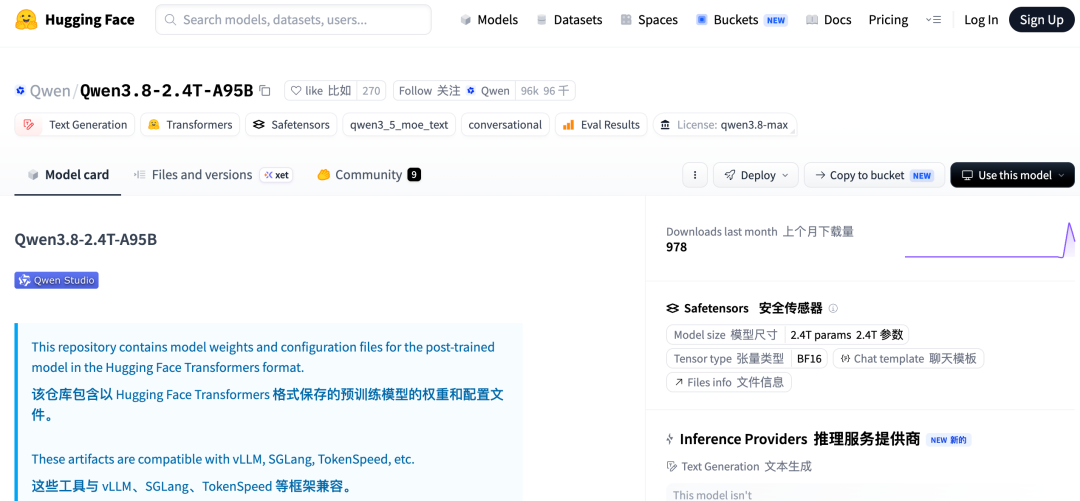
Alibaba Open-Sources 2.4-Trillion-Parameter Large Model Qwen3.8-Max : Alibaba’s Qwen team has open-sourced the model weights of Qwen3.8-2.4T-A95B (Qwen3.8-Max), which features 95B active parameters and native support for a 262K context window. The model scored 93 on PaperBench and performed exceptionally well on agent tasks such as OSWorld. Unsloth utilized 1-bit quantization technology to compress its size by 91% to 397GB, making local deployment possible. (Source: Hugging Face)
Google DeepMind Introduces Sign Language-to-Text Model SL2T : Google DeepMind has released the sign language-to-text model SL2T, which is now live in Gboard and Live Transcribe on Pixel 11. The model achieved a high zero-shot score of 70 BLEURT on the FLEURS-ASL translation benchmark. To protect privacy, the system uses MediaPipe Holistic to extract human pose coordinates locally, sending only geometric data to the cloud to complete real-time translation from ASL to English. (Source: Google DeepMind)

SSI’s First TTT-Based Reasoning Model Leaked : Community leaks suggest that SSI, founded by Ilya Sutskever, is developing a small reasoning engine based on Test-Time Training (TTT). During inference, the model can update part of its weights in real-time via gradient descent to adapt to out-of-distribution data. This allows it to break free from the limitations of static context windows and achieve sample-efficient continuous learning, competing with much larger models. (Source: X)
🎯 Dynamics
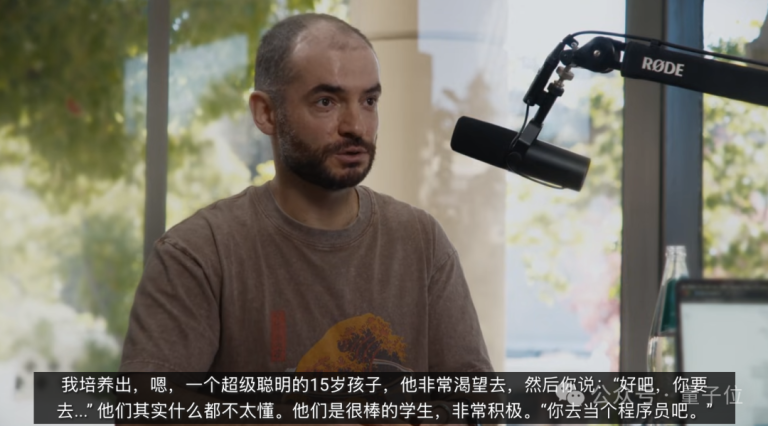
Dyna Robotics Releases Dyna-2 Model Pre-trained on Million-Hour Egocentric Videos : Dyna Robotics has released Dyna-2, a world action model for robotic manipulation. Pre-trained on over 1 million hours of human egocentric videos, the model has for the first time validated the cross-embodiment generalization capability of Scaling Laws on unseen robot data. Experiments show that co-training joint video prediction and action denoising is key to achieving generalization. (Source: Dyna Robotics)
Xiaohongshu and SJTU Open-Source Continuous Autoregressive Text-to-Speech Model dots.tts : The model features 2 billion parameters and directly models speech chunk-by-chunk in a continuous latent space in an autoregressive manner, avoiding the information loss caused by discrete acoustic tokens. On the Seed-TTS-Eval benchmark, its average speaker similarity and content accuracy both achieved SOTA, and it supports streaming output and dual-stream interactive modes. (Source: JiQizhixin)
.jpg)
Microsoft Releases MAI-Code-1.1-Flash and Slashes Prices : Microsoft has updated its coding model and released MAI-Code-1.1-Flash, optimizing token consumption for CLI and agent tasks. Meanwhile, Microsoft has cut API prices on GitHub by 75% ($0.2 per million input tokens, $1.2 per million output tokens) in an effort to remain competitive in the programming market dominated by Anthropic. (Source: AI Business)

Alibaba Safety Team Releases Multimodal Safety Foundation Model Yuvion VL : Alibaba’s Safety Team has introduced the Yuvion VL model series, focusing on AI and content safety. The model introduces the Confused Contrastive Fine-Tuning (C2FT) contrastive learning framework to dynamically mine easily confused hard negative samples. Evaluations show that its 8B version outperforms commercial large models like GPT-5.4, which has 50 times more parameters, on multiple safety tasks. (Source: arXiv)
Oxford and NUS Propose “Mind World Model” MWM Framework : A joint research team has proposed the Mind World Modeling (MWM) framework, advocating for the integration of mental variables such as an agent’s beliefs, goals, and emotions into the global world state. Tests on the reference system MENTIS show that, compared to purely physical world models, explicitly modeling mental states significantly improves the F1 score for predicting human decision-making. (Source: arXiv)
.jpg)
Peking University and Collaborators Propose ContactSeek, a Gene Editor Optimization Framework Based on AF3 Contact Probability : A joint research team published a paper in Nature, proposing ContactSeek, an AI framework that utilizes contact probability (CP) predicted by AlphaFold3 to optimize the specificity of gene editors. The framework successfully identified key contact residues in the interaction between Cas proteins and DNA/RNA, designing high-fidelity base editor variants. (Source: Nature)
.jpg)
LiteLLM Suffers Massive Supply Chain Attack Leading to Terabytes of Credentials Leaked : Security agencies disclosed that the open-source AI development tool LiteLLM suffered a supply chain attack in March. Through a malicious version on the official PyPI repository, hackers stole cloud keys, API tokens, and SSH private keys from 2,500 enterprises, including Microsoft, Amazon, and Salesforce, within 40 minutes, leaking up to 195TB of data. (Source: Ars Technica)
Apple in Talks to Pay News Publishers to Improve Siri’s AI-Powered News Service : According to reports, Apple is in talks with several major news publishers, proposing to pay them when Siri uses their news content to answer user questions or generate summaries. The move aims to acquire compliant, real-time, high-quality data to enhance Siri’s smart assistant experience. (Source: The Wall Street Journal)
Google Launches Pixel 11 Series with Fully Upgraded Gemini AI Features : Google unveiled the Pixel 11 series smartphones at the Made by Google ‘26 event. Powered by the Tensor G6 processor, the new devices feature deep integration with Gemini. New features include real-time ASL sign language-to-text translation, Rambler voice input that understands colloquial expressions, and health data integration with the Pixel Watch 5. (Source: TechCrunch)

iFLYTEK Releases Enterprise Service Agent Matrix Covering Seven Core Scenarios : iFLYTEK has launched an agent matrix covering seven major scenarios, including intelligent management, process IT, and supply chain transactions, driving enterprise AI from “performing single-point actions” to “delivering business outcomes.” Products include a compliance audit agent supporting procurement supervision and the SparkOS agent featuring hyper-realistic interaction. (Source: QbitAI)

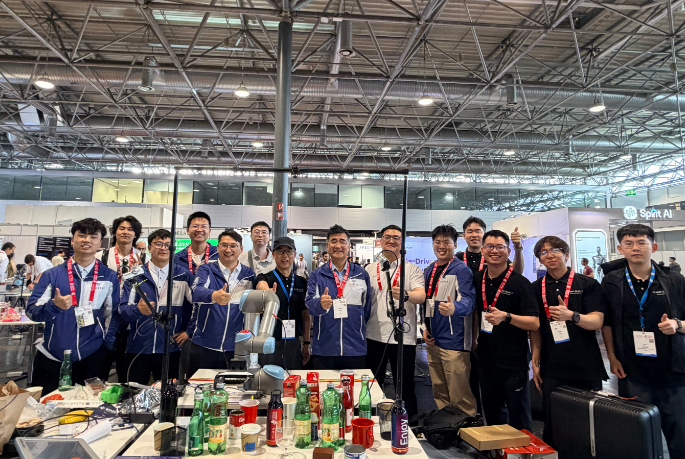
Former ByteDance Robotics Head Kong Tao Joins Xiaomi to Lead Embodied AI and Application Department : Kong Tao, the former head of ByteDance’s robotics team, has recently joined Xiaomi to lead the newly established “Embodied AI and Application Department.” Xiaomi’s real physical scenarios in its “Human x Car x Home” ecosystem, such as smart car manufacturing, are believed to be the key factors attracting the Tsinghua computer science PhD to join. (Source: 36Kr)
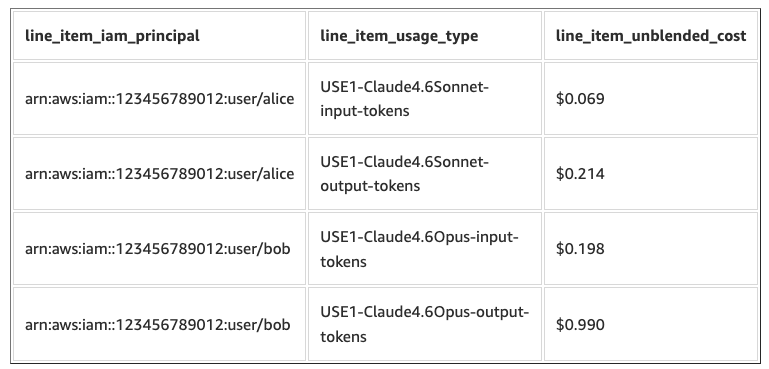
Canva Cuts Revenue Growth Forecast by One-Third Due to High AI Compute Costs : Design software unicorn Canva has lowered its expected revenue growth rate to 20%. CEO Melanie Perkins revealed that user demand for AI features far exceeded expectations, leading to a surge in compute costs. The company has decided to slow down the rollout of some AI features and rebuild its underlying architecture to reduce the token cost per task. (Source: Reddit)

🧰 Tools
LlamaIndex Releases ExtractBench and LlamaExtract Agentic Plus : LlamaIndex has launched ExtractBench, an evaluation dataset for enterprise document information extraction. Addressing the recall collapse of frontier VLMs in long-document extraction, they introduced LlamaExtract Agentic Plus, which processes long documents iteratively in segments, achieving a 96.1% F1 score in long-list extraction tasks. (Source: LlamaIndex)
OpenAI Launches ChatGPT Work Enterprise Workspace and Sites Webpage Generation Tool : The tool seamlessly integrates enterprise documents in Google Drive, financial performance in NetSuite, and team discussions in Slack. Users can automatically complete complex quarterly financial audits and predictive data analysis via natural language instructions, and generate interactive Sites data dashboards with one click. (Source: OpenAI)
Automattic’s Relationship Management Tool Mesh Lands on Android : Personal relationship management and CRM tool Mesh (formerly Clay) has launched its Android version. The app supports split-screen and pop-up views, and can link with multi-platform messaging software like Beeper. Its built-in Nexus AI allows users to query industry experts or contacts in specific cities within their network using natural language. (Source: TechCrunch)

📚 Learning
DeepLearning.AI and JetBrains Launch Short Course “AI Coding Workflows: From Cloud to Local” : Taught by JetBrains Developer Advocate Paul Everitt, this course guides students in building Python applications in cloud, hybrid, and fully local environments. The course covers how to decompose tasks using sub-agents, reduce costs through model routing, and configure open-source coding agents locally. (Source: DeepLearning.AI)
IIT Bombay and Adobe Research Propose PTP Method for Reverse-Extracting LLM Prompts : A joint research team published a paper introducing a reverse extraction method called Prior Token Prediction (PTP). By training a reverse model on the synthetic outputs of the target LLM, this method can reconstruct the system prompts and user private data of large models with extremely high fidelity, without requiring access to model weights. (Source: arXiv)

OpenMOSS Team Open-Sources WCM (World Critic Model) for Embodied RL Control : A joint research team has open-sourced the WCM framework. Addressing the partial observability issue in robot control, WCM estimates state values while predicting the latent state of the next moment after executing an action. Experiments show that introducing future state prediction significantly improves the efficiency of VLA models in real-robot reinforcement learning. (Source: arXiv)
.jpg)
Open-Source Dataset OpenWALDO Aims to Provide Safe and Transparent AI Training Data Sources : Addressing the lack of transparency in training data for open-source models, CentOS founder Gregory Kurtzer has launched the OpenWALDO project. The project aims to establish a fully public, auditable AI training dataset, which currently contains 167.3 billion reference tokens sourced from public domain literature and academic papers. (Source: The Register)
💼 Business
No-Code Software Development Platform Lovable Raises $400 Million in Series C : Swedish “visual programming” startup Lovable announced the completion of a $400 million Series C funding round, led by Menlo Ventures with participation from Tencent and others, doubling its valuation to $13.3 billion in seven months. The company’s ARR has reached $600 million, allowing users to complete the entire process from application concept to live operation directly on the platform. (Source: TechCrunch)

Thrive Holdings Raises $2 Billion to Drive OpenAI Model Adoption in Traditional Industries : Thrive Holdings, a private equity firm focused on AI adoption, announced it has raised $2 billion in new funding, bringing its valuation to $12 billion. The company optimizes workflows by acquiring traditional businesses in accounting, IT, and other sectors, and directly embedding OpenAI models. The new funds will be used to expand into new businesses such as physical asset monitoring. (Source: TechCrunch)
IBM and Together AI Sign $240 Million Nvidia Blackwell Cluster Leasing Agreement : IBM and Together AI have signed a multi-year partnership agreement valued at $240 million. Together AI will deploy an AI compute cluster containing 2,000 Nvidia B300 (Blackwell) chips on IBM Cloud to provide efficient cloud inference services for open-source large models such as DeepSeek and Kimi. (Source: IBM)
🌟 Community
Community Discusses Fable 5’s Low Commercial Adoption and the Ceiling of Enterprise AI Spending : Data from financial service provider Ramp shows that Fable 5 accounted for only 11.4% of enterprise spending on Anthropic models in its first month of release. Analysis suggests that the high pricing of $50 per million output tokens has hit the ceiling of enterprise AI spending. Without quantifiable ROI, enterprises are turning to more cost-effective open-source or medium-to-lightweight models. (Source: Ramp)

Developers Debate the Boundary Between “Harnesses” and Model Capabilities in AI Coding Tools : Following Opus 5’s success in passing ARC-AGI-3 by autonomously writing 269 programs, developers discussed that as model reasoning capabilities strengthen, over-engineered prompts and complex external Agent frameworks (harnesses) instead become “ropes” that restrict the model’s potential. Minimalist environment interfaces are the future trend. (Source: 36Kr)
Royal Statistical Society AI Working Group Calls for Statistical Principles in AI Regulation : The Royal Statistical Society published a report pointing out that because AI models dynamically evolve with their environment after deployment, traditional static compliance reviews cannot effectively mitigate risks. The working group calls on regulators to establish statistical evaluation capabilities to continuously audit the behavior of AI agents in real-world business scenarios. (Source: RSS)
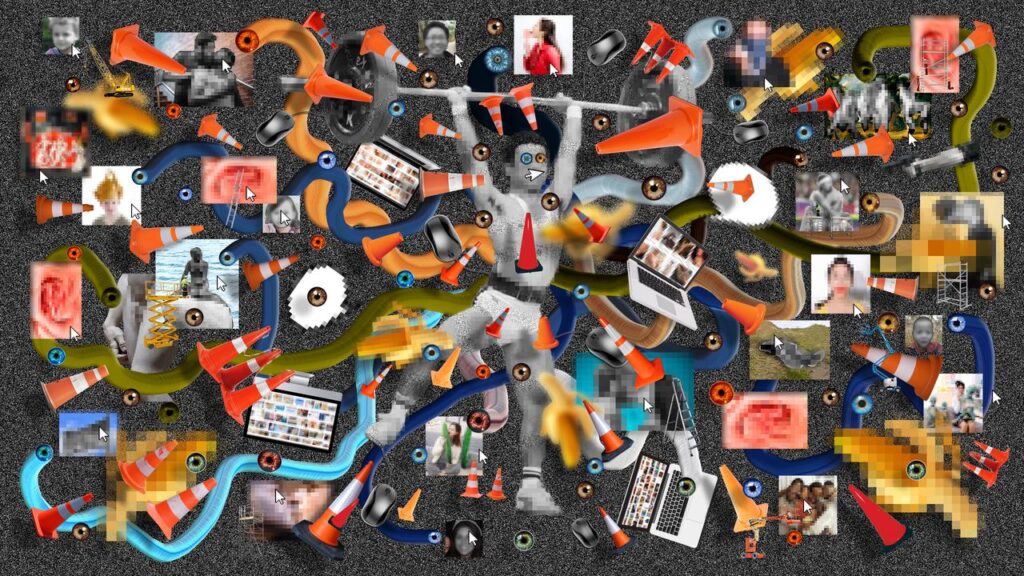
AI Hallucination Causes Agricultural Losses, Sparking Discussion on the Boundaries of Automated Decision-Making : The community is actively discussing an incident where 25 acres of crops were destroyed due to following AI advice. An AI application incorrectly recommended a chemical agent that kills both weeds and crops. Netizens pointed out that in decisions involving the physical world, blindly trusting automated AI recommendations without human verification can lead to severe consequences. (Source: X)
💡 Others
Kellanova Leverages Siemens Digital Twin Technology to Optimize Potato Chip Production Line : Snack giant Kellanova has invested $5 million to deploy a real-time digital twin system for mashed potatoes at its Polish factory. Sensors collect 200 data points per millisecond and feed them into a machine learning model to automatically fine-tune the recipe, reducing production line waste by 13% and energy consumption by 7%. (Source: X)
Unitree Robotics IPO Attracts Nearly 10 Million Subscribers, Setting Record Low Success Rate on STAR Market : Unitree Robotics’ A-share IPO online subscription exceeded 9.78 million accounts, with a success rate of only 0.018%, setting a record low in the history of the STAR Market. The issuance market value reached 61 billion RMB. Additionally, AI company DeepSeek has been confirmed to participate in the placement as a strategic investor, and the two parties will conduct joint R&D around embodied AI and large models. (Source: 36Kr)

Suno Partners with BMG, but Digital Watermarking Sparks Creator Concerns : Music generation platform Suno announced a global partnership with BMG to place human creators at the center of the AI music ecosystem. However, Suno’s mandatory addition of irreversible digital watermarks to audio tracks has triggered a community backlash, with creators worried it will become a tool for record labels and platforms to monitor copyrights and take down content. (Source: Suno)