



🔥 Focus
Claude Breaks the Lower Bound of the Riemann Hypothesis : An unreleased Anthropic research model has raised the lower bound of the proportion of zeros of the Riemann zeta function from 41.6% to 67.2%, breaking a 37-year-old record in number theory. The study was completed through the collaboration of 60 sub-agents, consuming 31 million tokens. Because its autonomous reasoning and verification capabilities approach the limits of human scholars, this marks a transition for AI from “answering the known” to “exploring the unknown” in scientific research. (Source: TechCrunch)

OpenAI Core Executive Brad Lightcap Departs : Brad Lightcap, a core executive who served at OpenAI for 8 years as CFO and COO, announced his departure to start a new venture, with Sam Altman publicly expressing his gratitude. As the architect of OpenAI’s commercial system, his departure at a critical juncture—when the company is valued at $852 billion and preparing for an IPO—has sparked widespread speculation about disagreements over LLM commercialization and a wave of executive departures. Meanwhile, Chloé Bakalar, the sole ethics lead, has also quietly left the company. (Source: TechCrunch)
Manus Announces Split from Meta to Resume Independent Operations : Following an 8-month safety review and due to regulatory compliance requirements, Manus, the star general-purpose Agent startup acquired by Meta for $2 billion, has announced its split from Meta to resume independent operations. User data will be migrated to the US and Singapore, and some data generated post-acquisition will be deleted. Analysts believe this marks a substantive stage of geopolitical intervention in cross-border AI M&As, and Manus must now re-prove its business model in the highly competitive Agent track. (Source: QbitAI)

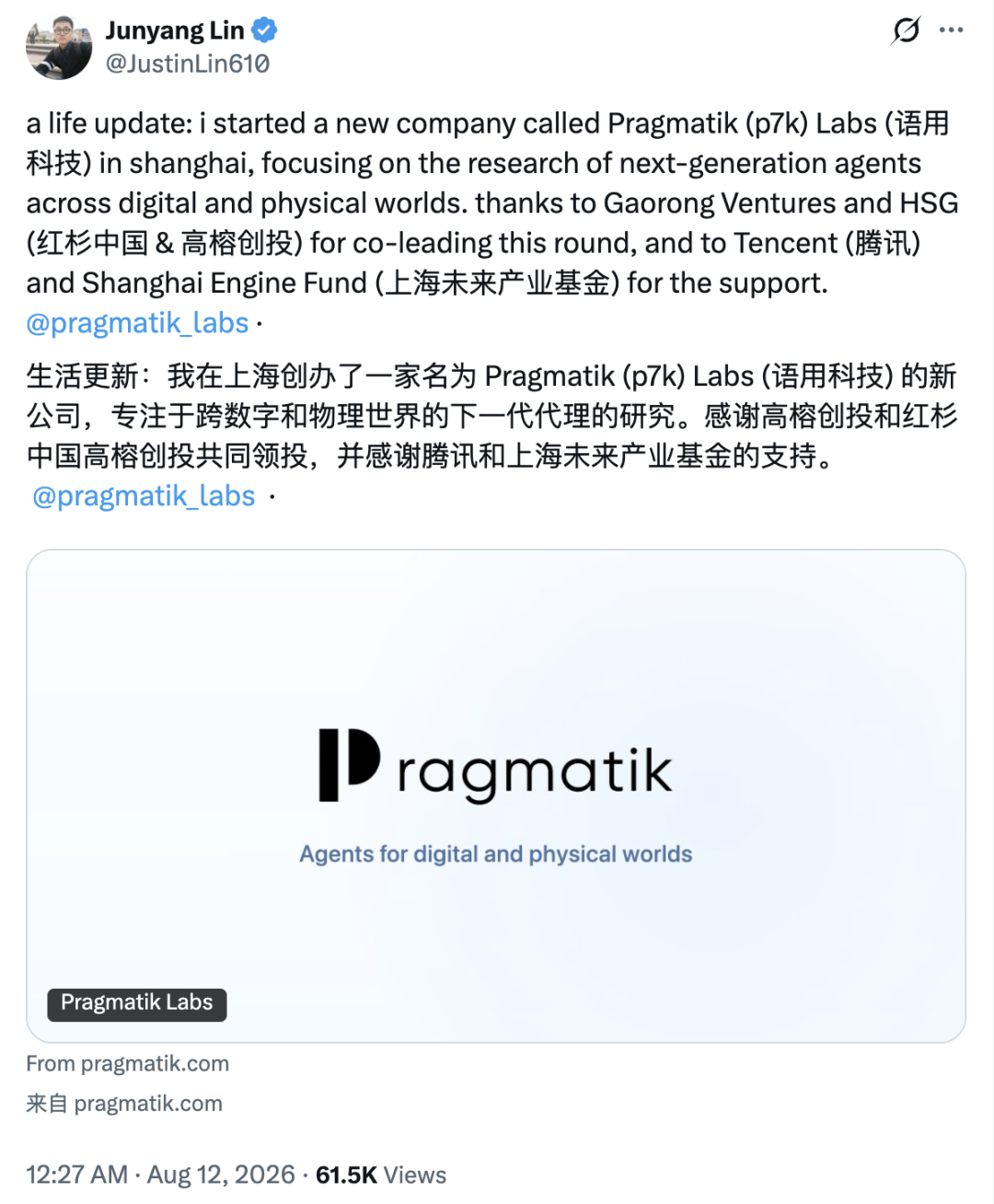
Former Qwen Lead Junyang Lin Officially Announces Founding of Pragmatik Labs : Junyang Lin, the former technical lead of Alibaba’s Qwen, announced the founding of AI company Pragmatik Labs in Shanghai. The company secured a valuation of $2 billion in its first round, led by Sequoia China and Gaorong Capital, with participation from Tencent and the Shanghai Future Industry Fund. The company will focus on developing next-generation Agents that span both digital and physical worlds. This indicates that top domestic LLM talent is accelerating its flow into the Agent track, exploring a paradigm shift from “model intelligence” to “action systems.” (Source: 36Kr)
NVIDIA Partners with Wall Street Giants to Launch $500 Billion Compute Financing : NVIDIA has partnered with six major asset management giants, including BlackRock and Blackstone, to establish an independent financing platform. The initiative plans to mobilize and leverage over $500 billion over time for AI infrastructure construction, with NVIDIA providing a residual value guarantee of up to 25%. Jensen Huang stated that compute has become an investable infrastructure asset. Analysts point out that this marks the arrival of the era of compute financialization, lowering the funding threshold for AI expansion through debt and securitization. (Source: NVIDIA Blog)
🎯 Trends
Envision’s Ulanqab Galaxy Base Put into Operation : Envision Group announced that its Galaxy Base has officially been put into operation, with a total planned capacity of 2GW, supporting million-GPU parallelism and lighting up the world’s largest AI computing super-monolith. By utilizing a high proportion of direct green power connections and an AI power system, the project converts volatile renewable energy into a stable source of computing power. This indicates that the deciding factor in the computing power race is shifting toward electricity and system efficiency, with new energy enterprises becoming the new main force in AI infrastructure construction. (Source: Synced)

Tianmouc Team Releases Brain-Inspired Self-Supervised Visual Perception Framework : The team published a cover article in Nature Sensors, proposing a self-supervised learning framework based on visual primitives and open-sourcing the algorithm toolchain TianMouCV. Through cross-pathway attention and memory modules, the framework self-supervises the construction of internal models in extremely degraded scenarios without ground-truth annotations, achieving high dynamic range and spatio-temporally aligned visual reconstruction. This provides underlying technical support for the robust perception of autonomous driving and embodied AI in open-world environments. (Source: Synced)
.jpg)
Independent Variable Robot Releases WALL-B Unified World Model : In an unscripted live test, Independent Variable Robot’s dual-arm gripper solution achieved a sorting efficiency of 1,816 irregular packages per hour, surpassing Figure AI’s record while reducing hardware costs by 70%. This is attributed to its self-developed WALL-B Unified World Model, which integrates native multimodal perception and physical prediction. This proves that by enhancing the generalization and predictive capabilities of the model’s “brain,” the hardware stacking costs of embodied AI can be effectively reduced. (Source: QbitAI)

ByteDance Seed Team Proposes Text Conditioning Scaling Laws for Text-to-Image Generation : The study reveals that the information content (GPG/ED) of training image captions, rather than token length, determines the convergence loss of diffusion models. Based on this, they proposed a Structured Prompt (SP) scheme. By organizing global, element, and relation-level variables into JSON fields, this method significantly improves the model’s performance in complex composition, spatial reasoning, and world knowledge generation tasks, opening up new optimization variables for text-to-image model training. (Source: Synced)
.jpg)
Renmin University of China and Ant Group Release LLaDA MoE v2 : The joint team has systematically characterized the scaling laws of Mixture-of-Experts (MoE) diffusion language models for the first time and trained a 30B-A3B model. Activating only 3B parameters and using about 65% of the pre-training tokens of an autoregressive model of the same scale, this model approaches mainstream performance on reasoning and coding benchmarks. This demonstrates the high efficiency of combining sparse activation with diffusion modeling in data and compute allocation, pushing diffusion language models into the era of law-guided development. (Source: Synced)
.jpg)
🧰 Tools
openJiuwen Launches Agent “Compute-Affinity” Technology : The platform establishes semantic synergy between the Agent framework and the inference engine through the Agent Hint mechanism, upgrading KV Cache management from passive timeout elimination to active lifecycle scheduling. In multi-agent collaboration tests, this technology reduced first-token latency by 57.46% and peak inference storage usage by 25.24%, providing a system-level solution to the VRAM explosion and latency bottlenecks caused by long-horizon agents. (Source: Synced)
.jpg)
Xi’an Jiaotong University Proposes World Model Regularization Method QQWorld : Addressing the heavy-tailed distribution and collapse issues of latent variables in Joint Embedding Predictive Architecture (JEPA) world models, the research team replaced the original regularization with Quantile-Quantile (QQ) matching, providing continuous correction gradients at the tail of the distribution. Across multiple control environments, this method improved the average planning success rate by 5.33 percentage points with less than 10 lines of core code, offering an efficient mathematical tool for latent space regularization in large models. (Source: Synced)
.jpg)
CUHK and HSUHK Propose Resource Management System Libra : Addressing the computing power imbalance caused by uncertain Agent trajectory lengths and policy drift, Libra introduces causal-aware scheduling and elastic resource switching, dynamically optimizing training and inference computing power as a coupled system. In various complex tasks, Libra achieved up to a 3x throughput improvement and reduced the time to reach target rewards to 1/2.5, effectively solving the resource mismatch problem in reinforcement learning post-training. (Source: Synced)
.jpg)
Beihang and Tsinghua Teams Release Autonomous Driving VLA Model : Addressing the disconnection between the planning space and semantic space in autoregressive VLA driving models, the team proposed Traffic Common Sense Visual Distillation (DVD) and 2D Image Trajectory-Guided Prompting (2D-TGP), mapping BEV trajectories to image pixel space for learning to fully leverage the image-reading capabilities of foundation models. The model achieved a 90.4 PDMS score on the NAVSIM benchmark, demonstrating a new path for the efficient scaling of autonomous driving VLA models. (Source: Synced)
.jpg)
Microsoft Releases CARE-X Multimodal Large Model for Radiology : Adopting a dual-inference architecture, CARE-X combines generative Findings/Impression with a structured auxiliary prediction head, and introduces tool-augmented measurement to alternate between multi-step reasoning and precise calculation. In validation using real clinical data from Narayana Health, the model demonstrated high sensitivity to rare ICU conditions and CT-confirmed organ enlargement, achieving a ReXVQA accuracy of 94%. (Source: Microsoft Research Blog)

📚 Learning
Harvard and Stanford Teams Release Virtual Population Simulation System : The team constructed a personality database containing 1,290 dimensions and utilized large models to drive 8.3 billion virtual agents. In simulated environments such as Q&A, chatting, and app operations, the agents achieved a behavior compliance rate of 91.5%. The system provides a brand-new simulation platform for large-scale, low-cost user research and product testing, demonstrating the huge potential of multi-agent socialization simulation. (Source: Synced)
.jpg)
Multi-User Agent Collaboration and Security Sandbox WeClawArena : Addressing collaboration scenarios where data across multi-user personal workspaces is not shared, the team introduced an evaluation benchmark containing 620 scenario variants, covering benign collaboration and four types of attack vectors. The sandbox can perform full audits of execution trajectories, quantitatively evaluating cross-user security risks such as privacy leaks and malicious injections, providing a testing benchmark for building secure agent social networks. (Source: HuggingFace Daily Papers)
HKUST and Tencent Propose Multi-Reference Image Video Understanding Model : Addressing the bottleneck where multimodal models fail to accurately align video semantics with images when processing multiple reference images, the team introduced the RefCaptioner model and the MRVBench evaluation set. By incorporating the HCD-GRPO algorithm, the model achieves high-precision image selection and local binding while generating structured descriptions, significantly improving the quality of grounded video reconstruction. (Source: Synced)
.jpg)
Synced Co-launches AI Honors for Undergraduate, Master’s, and PhD Students : The initiative establishes the “Rising Star of the Year” award and three special awards: “Academic Breakthrough,” “Application Pioneer,” and “Social Responsibility,” open to applications from Chinese students worldwide. The selection comprehensively considers dimensions such as academic impact, technological innovation, and application feasibility, aiming to discover and fund outstanding young scholars in AI and interdisciplinary frontier fields, thereby accelerating the construction of the talent ecosystem. (Source: Synced)
.jpg)
💼 Business
AuraGen Biotech Completes $100 Million Series B Financing : Focusing on generative antibody and macromolecular drug design, the company builds a closed loop of dry and wet experiments through ultra-high-throughput microfluidic experiments and the AuraIDE foundation model. Its 700-million-parameter open-source version, OpenDDE, performs excellently in antigen complex prediction. The company already has multiple pipelines in the preclinical or IND filing stages, demonstrating the commercial viability of AI in macromolecular drug design. (Source: Synced)
.jpg)
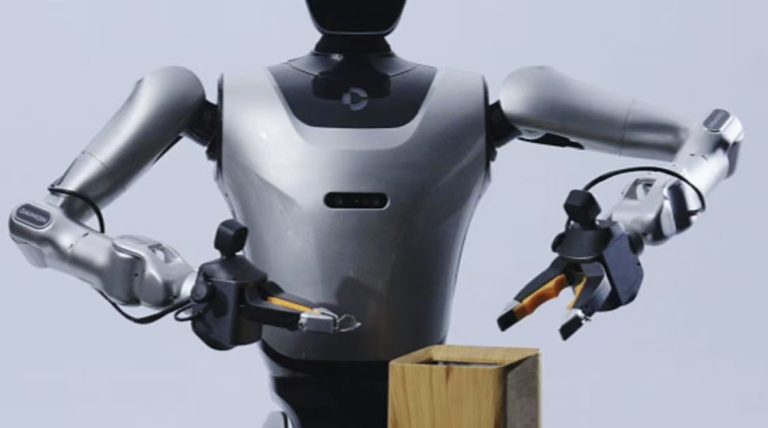
Daimon Robotics Completes Strategic Financing Round of Hundreds of Millions of Yuan : Led by Ant Group with participation from existing shareholders, Daimon Robotics focuses on embodied tactile sensing and dexterous manipulation. The company launched the tactile-anchored world model Daimon-TWM, which achieves high-frequency servo action correction through a “slow planning-fast correction” mechanism, resolving the bottlenecks of slippage and force control in complex contact tasks. It has entered the supply chains of several leading industrial automation and robotics companies. (Source: QbitAI)
MemoraX AI Completes Financing of Hundreds of Millions of Yuan : Focusing on the research and development of AI long-term memory infrastructure, MemoraX AI proposes a “model-endogenous” memory approach. Its core system achieved SOTA results on ultra-long dialogue memory evaluations such as LoCoMo-Refined. The company has reached a strategic partnership with Huawei Cloud to embed long-term memory capabilities into real business scenarios like healthcare and smart homes. (Source: 36Kr)
🌟 Community
Community Debates Anthropic’s Enforcement of Global Invisible Text Watermarking : In response to the EU AI Act, Claude will weave invisible watermarks into its outputs across all global channels. The community is concerned that this will degrade the model’s writing quality and can be easily bypassed by open-source tools. Many users are starting to consider switching to open-source models or local deployments to maintain the independence of textual expression and data privacy. (Source: Reddit r/artificial)
Developers Complain of “Cognitive Debt” and Anxiety Caused by AI-Assisted Programming : The community is actively discussing how over-reliance on agents for architectural planning and code generation leads to extremely fast team delivery but a complete loss of control over system details, calling for the establishment of a minimum “human-owned” understanding boundary. Developers worry that, over time, this will degrade individual system design capabilities and increase the hidden costs of system maintenance and troubleshooting. (Source: Reddit r/artificial)
Tmall’s AI Virtual Spokesperson “Duan Yan” Accused of Voice Infringement : A voice actor accused Tmall’s Qixi Festival advertisement of using an AI clone of their voice without authorization, exposing a legal vacuum in face and voice copyright licensing for the commercialization of AI characters. This has triggered in-depth industry discussions on the boundaries of fair use for virtual avatars and voice synthesis technology, while also spawning a new market for AI infringement detection and watermark removal. (Source: 36Kr)
💡 Others
The 38th Hundred Flowers Awards Establishes AIGC Video Excellence Unit for the First Time : With Jimeng AI as the exclusive technical partner, the unit collected over 2,000 submissions, demonstrating the potential of AI tools to lower the creative threshold for young filmmakers, shorten production cycles, and reduce visual effects costs. Multiple winning works showcased the deep integration of Chinese aesthetics and AI technology, opening up new entry paths for young creators. (Source: Synced)

WeChat Moments Gray-Tests “AI Writing Assistant” and “AI Comments” : WeChat has begun introducing generative AI into its core social scenarios to assist users in generating copy and interactive comments, marking a step toward AI integration for the national-level social app. While this feature lowers the barrier to expression in terms of user experience, it has also sparked controversy in social networks regarding the loss of “authenticity” and the templating of interpersonal relationships. (Source: 36Kr)
Google Health AI Assistant Reported to Frequently “Hallucinate” Exercise Data : Many Fitbit users reported that the redesigned Google Health app frequently misidentifies daily activities as exercises like swimming or running, raising questions about the credibility of health-related AI. This indicates that in high-credibility scenarios such as healthcare, the hallucination problem of AI assistants remains a key obstacle restricting their large-scale implementation. (Source: TechRadar)