



Anahtar Kelimeler:AI yönetişimi, Claude Anayasası, Anthropic açık kaynak AI değerleri, Özyinelemeli dil modelleri (RLM’ler)
🔥 Spotlight
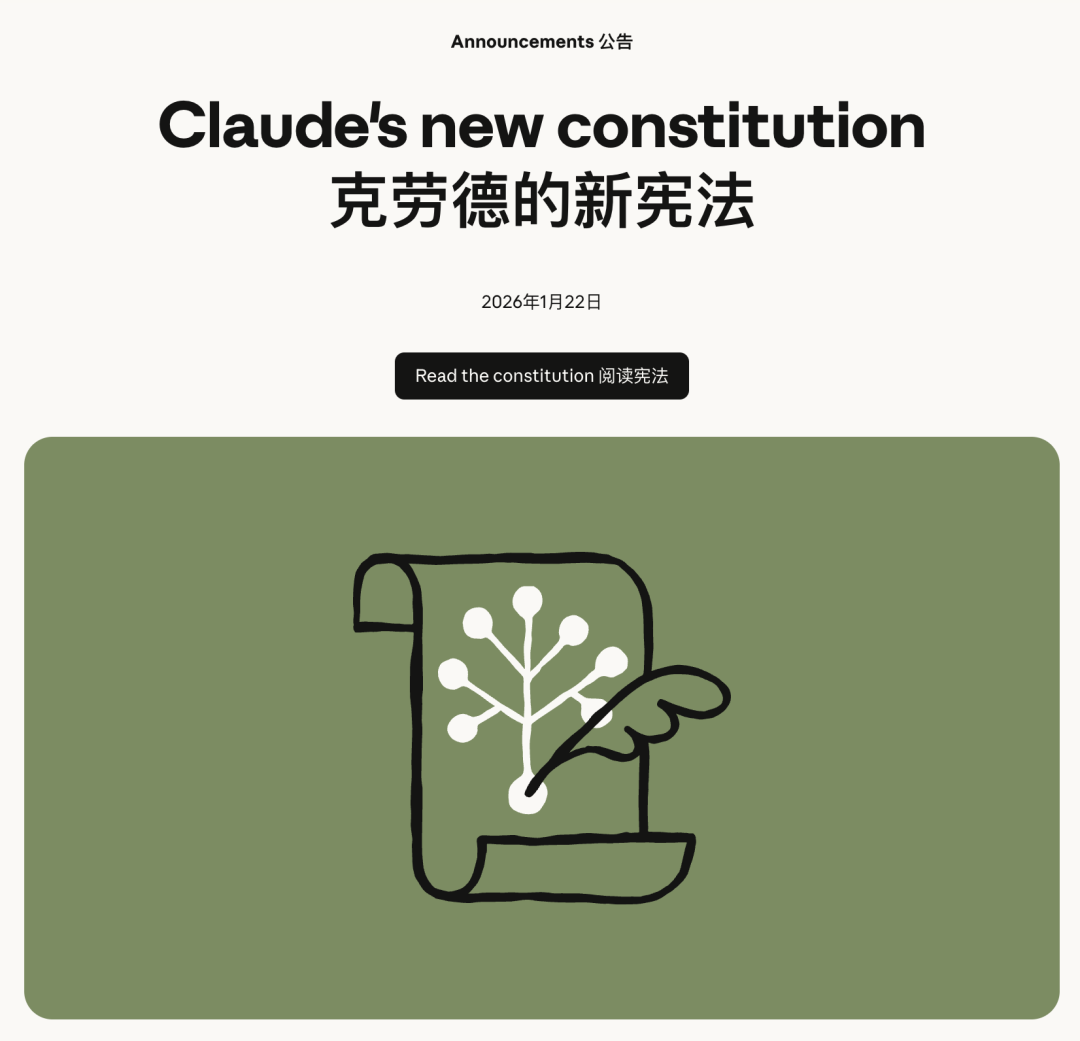
Anthropic Releases “Claude Constitution”: AI Governance Shifts from “Rule Constraints” to “Value Cultivation”
Anthropic has officially open-sourced the 84-page “Claude Constitution,” marking a shift in AI training from rigid rule-based approaches to an educational paradigm. The constitution establishes a priority pyramid of broad safety, broad ethics, honesty, and sincere helpfulness, emphasizing “correctability”—AI should not attempt to undermine human oversight. This methodology aims to cultivate the model’s judgment, enabling it to make choices based on deep intent rather than rigid instructions when facing novel situations. This represents not only a technical engineering advancement but also a milestone in AI’s deeper integration into social engineering.
(Source: 36Kr)
OpenAI Launches “Behavioral Fortune-Telling” Anti-Addiction System: The Ultimate Privacy vs. Security Gamble
OpenAI quietly rolled out a minor anti-addiction system, where the core logic no longer relies on birthdates but on “behavioral fingerprints” derived from user interaction patterns. Limited vocabulary, excessive jargon, or late-night high-frequency queries may trigger algorithmic classification as “immature traits,” leading to downgraded permissions. To restore adult privileges, users must submit 3D facial scans. Additionally, the system integrates real-time crisis intervention protocols, where specific keywords will trigger law enforcement involvement. This Silicon Valley-style “social credit system” has sparked significant controversy, seen as surveillance masquerading as protection.
(Source: Xinzhiyuan)

BabyVision Benchmark: Top AI Models’ Visual Reasoning Falls Short of 3-Year-Olds
The BabyVision visual reasoning benchmark, released by UniPat AI and other institutions, reveals that even the strongest model, Gemini 3 Pro Preview, only slightly outperforms three-year-olds and lags behind six-year-olds by 20%. GPT-5.2 and Claude 4.5 perform even worse. The study notes that current multimodal large models rely on “translating” visual information into language, leading to significant loss of fine-grained geometric details and an inability to maintain perceptual consistency over long distances. This finding casts doubt on current VLA-based embodied intelligence, suggesting future models must rebuild native visual capabilities from the ground up.
(Source: QbitAI)
DeepSeek Open-Sources FlashMLA: High-Performance Attention Kernel Reshapes Inference Efficiency
DeepSeek-AI has open-sourced FlashMLA, a suite of attention kernels optimized for Hopper and Blackwell architectures, supporting models like DeepSeek-V3. On the H800, it achieves memory bandwidth up to 3000 GB/s and computational performance of 660 TFLOPS. The tool supports FP8 KV caching and token-level sparse attention, significantly reducing inference memory usage and improving throughput. It has already gained community support from MetaX, Moore Threads, and Cambricon, emerging as a new benchmark in AI infrastructure.
(Source: GitHub)
Jensen Huang’s Davos Debut: AI Sparks a Trillion-Dollar Infrastructure Wave
NVIDIA CEO Jensen Huang presented his “five-layer cake” theory (energy, chips, cloud, models, applications) at the Davos Forum, arguing that the application layer’s explosion determines AI’s economic value. He highlighted three disruptions for 2025: Agentic AI, open-source inference models (exemplified by DeepSeek), and physical AI. Huang dismissed unemployment fears, stating AI infrastructure will create high-skilled jobs, and noted that AI is an ideal tool to bridge the digital divide in developing countries since “language” has become each nation’s natural resource.
(Source: AI Frontier)
🎯 Trends
2025 AI Governance Returns to Realism: From Doomsday Risks to Unleashing Industrial Potential
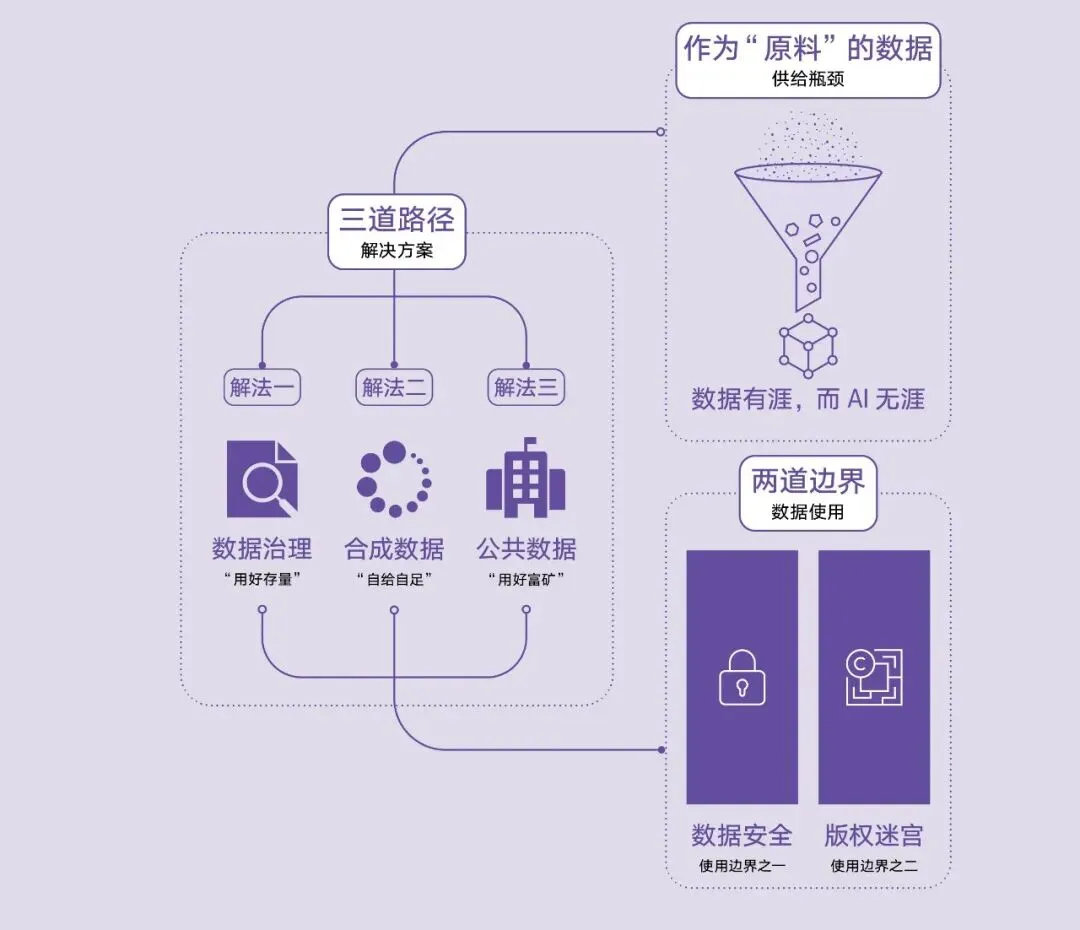
Global AI governance in 2025 is undergoing a profound shift, moving from “safety anxiety” to “development priority.” The EU has streamlined regulations to regain competitiveness, the U.S. Trump administration has revoked restrictive executive orders, and China maintains pragmatic, application-oriented governance. The industry consensus now is that “development equals safety,” with governance serving industrial competitiveness. Meanwhile, synthetic data has become a key solution to the “data drought,” and open-source governance leans toward establishing a “safe harbor” liability framework.
(Source: Tencent Research Institute)
Embodied Intelligence 2026 Outlook: From Conceptual Narratives to Real-World Value Loops
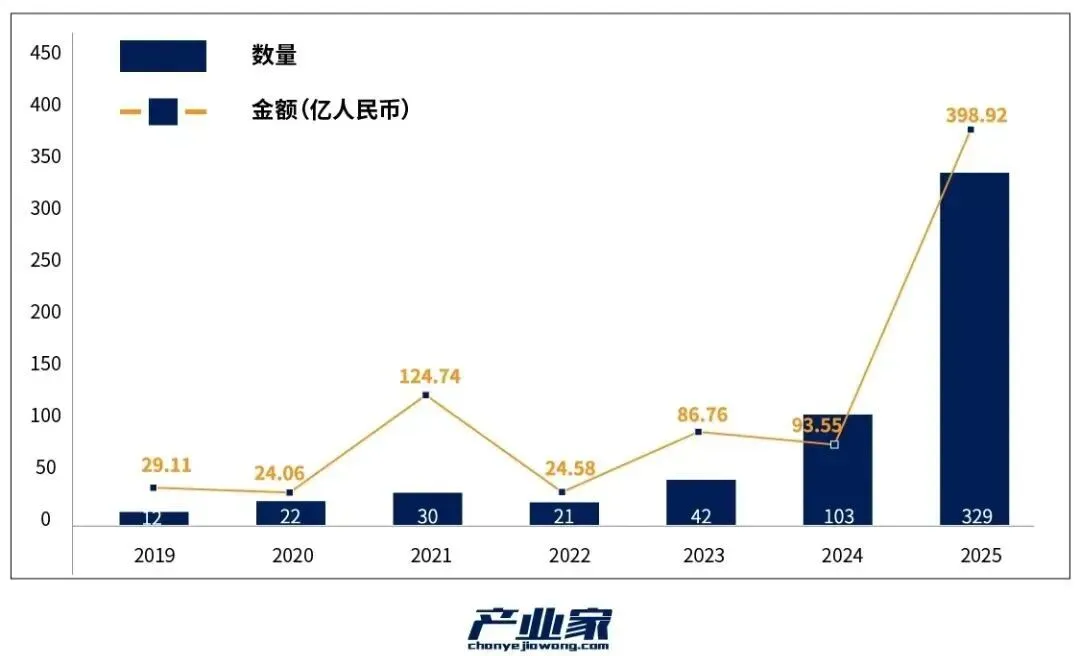
By 2026, embodied intelligence is entering a critical phase, shifting focus from hardware demonstrations to collecting “high-quality real-world data.” Automotive manufacturing and logistics sorting have become primary battlegrounds. Capital flows exhibit a Matthew effect, concentrating heavily in leading players like Galaxy General and Zhiyuan. Technologically, the industry is accumulating data through “human-guided” teleoperation platforms and promoting open-source “brain” models to build inheritable, reusable capability foundations, addressing stability challenges across scenarios.
(Source: Industry Insider)
VLA+ Model Evolution: Rho-alpha Introduces Tactile Perception and Real-Time Learning
Microsoft’s Rho-alpha (ρα) marks the arrival of the “VLA+” era for vision-language-action models. Unlike traditional models, it integrates tactile sensing, enabling robots to perform delicate operations like plugging and packaging through “touch.” Crucially, it supports online learning, continuously improving from real-time human corrections. This adaptability allows robots to better handle long-range tasks in unstructured environments.
(Source: TheTuringPost)
Recursive Language Models (RLMs): Breaking LLMs’ Context Window Limits
MIT CSAIL’s recursive language models (RLMs) offload prompts into Python REPL as variables, enabling LLMs to interact symbolically with massive contexts. RLMs can process over 10 million tokens without retraining. In tests like BrowseComp+, their accuracy doubled compared to base LLMs, shattering traditional Transformer architecture’s context bottlenecks.
(Source: TheTuringPost)
YOLO26 Released: Algorithm-Driven Real-Time Vision Reaches New Heights
Ultralytics has officially launched YOLO26, adhering to its zero-extra-inference-cost philosophy. By introducing semantic segmentation loss into the backbone network, instance segmentation accuracy improved significantly. RLE-based error modeling enhanced keypoint detection stability. The concurrently released YOLOE-26 supports zero-shot detection via text/visual prompts, offering robust open-world perception for edge devices.
(Source: ZhihuFrontier)
🧰 Tools
Claude Code and Its Ecosystem: Reshaping Developer Workflows
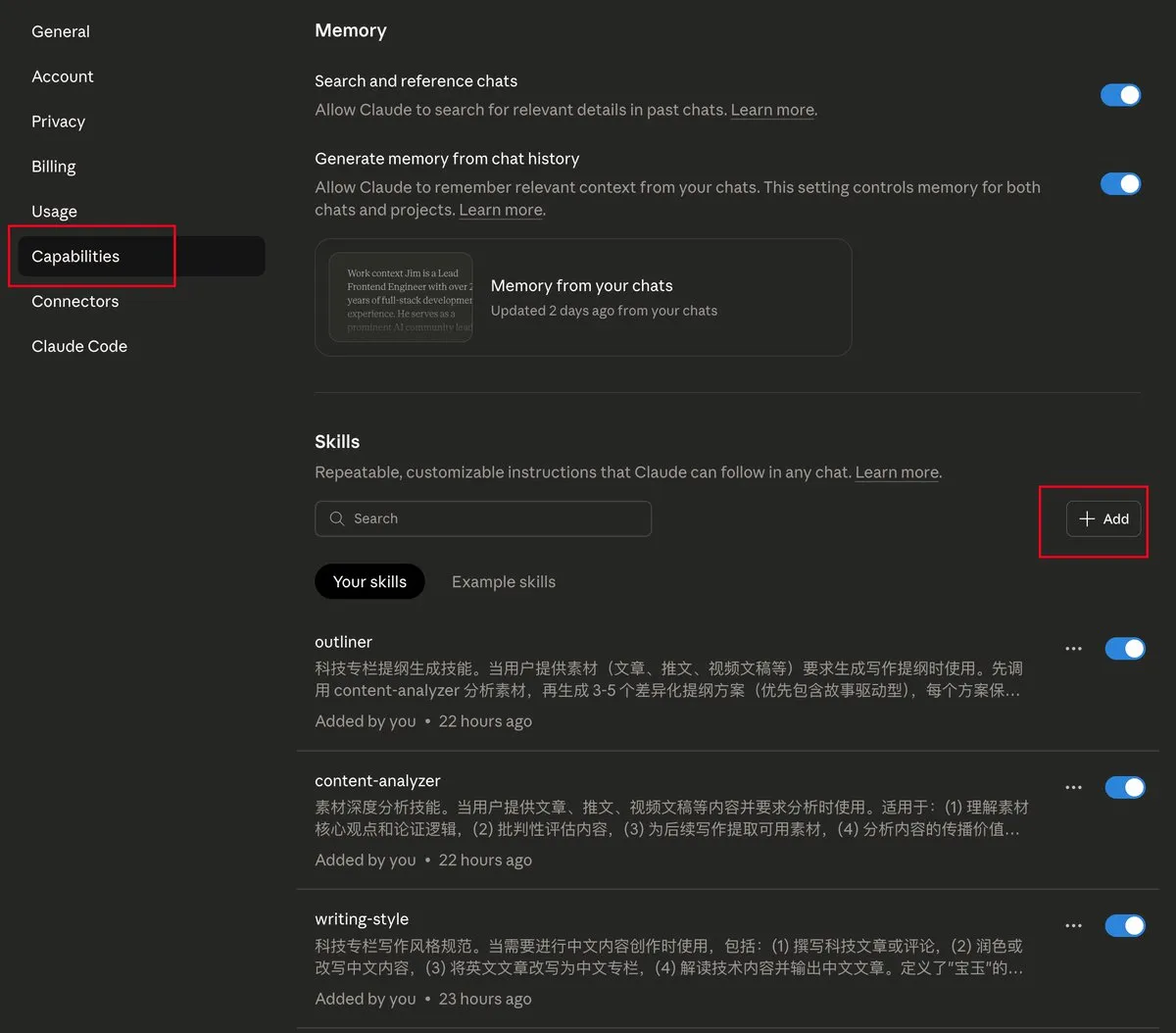
The Claude Code ecosystem is rapidly expanding. Devin Review now displays PR differences via logical grouping instead of alphabetical sorting, helping developers understand complex code changes. Gas Town enables hierarchical management of multiple Claude instances, while Claude Skills allows custom workflows like “one-click YouTube-to-bilingual-short-video.” Community discussions highlight that AI coding’s true value lies in restoring developers’ creative joy.
(Source: dotey, cognition)
GLM-4.7-Flash Localization Breakthrough: 200K Context Fits in 10GB VRAM
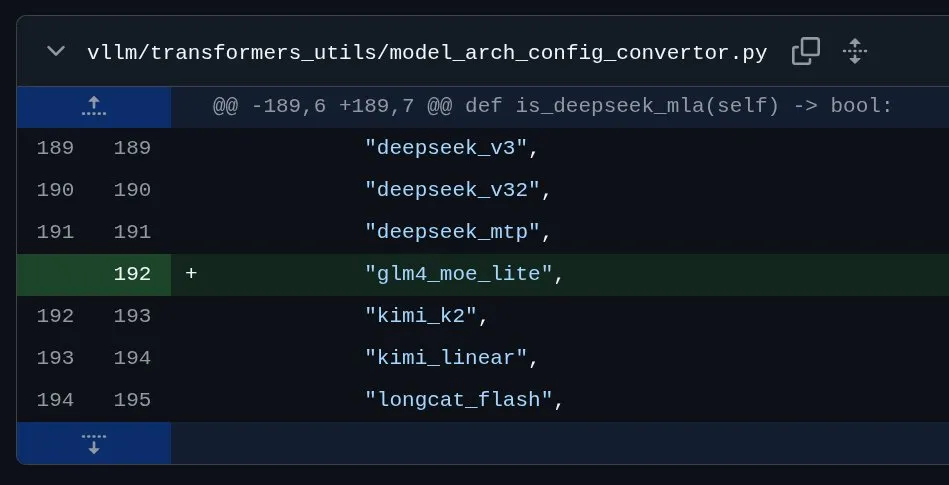
The community discovered that a single-line change in vLLM drastically optimizes GLM-4.7-Flash’s KV caching, enabling full 200K context operation with just 10GB VRAM. This means a single RTX 5090 can smoothly run this SOTA model. Additionally, llama.cpp merged CUDA’s Flash Attention fix, further boosting inference speed on consumer GPUs.
(Source: algo_diver, Reddit)
Runway Gen-4.5 Image-to-Video: Crossing the Realism Threshold
Runway’s Gen-4.5 supports longer narratives, precise camera control, and consistent character performance. In a blind test of 1,000 participants, over 90% couldn’t distinguish Gen-4.5 videos from real footage. This photorealistic breakthrough signals AI-generated content has reached commercial-grade standards.
(Source: c_valenzuelab)
Higgsfield: Full-Stack AI Video Production for Marketers
Video generation unicorn Higgsfield achieved rapid growth by catering to social media marketers, hitting $200M ARR in nine months. Its Canvas tool supports storyboard and camera motion design, integrating multi-agent systems for scriptwriting, directing, and cinematography. Users can generate videos with simple motion annotations, deeply aligning with professional ad workflows.
(Source: 36Kr)

World Labs Marble: A Non-JEPA Path to Generative World Models
Fei-Fei Li’s World Labs launched Marble, using NeRF and Gaussian splatting to create explorable 3D worlds. Unlike frame-by-frame video generation, it produces persistent, editable, stateful 3D environments. Users can generate and export Unreal/Unity-ready 3D assets in minutes, showcasing exceptional spatial intelligence.
(Source: Reddit)

📚 Learning
LLM Inference-Time Scaling: Self-Refinement Loop Practical Guide
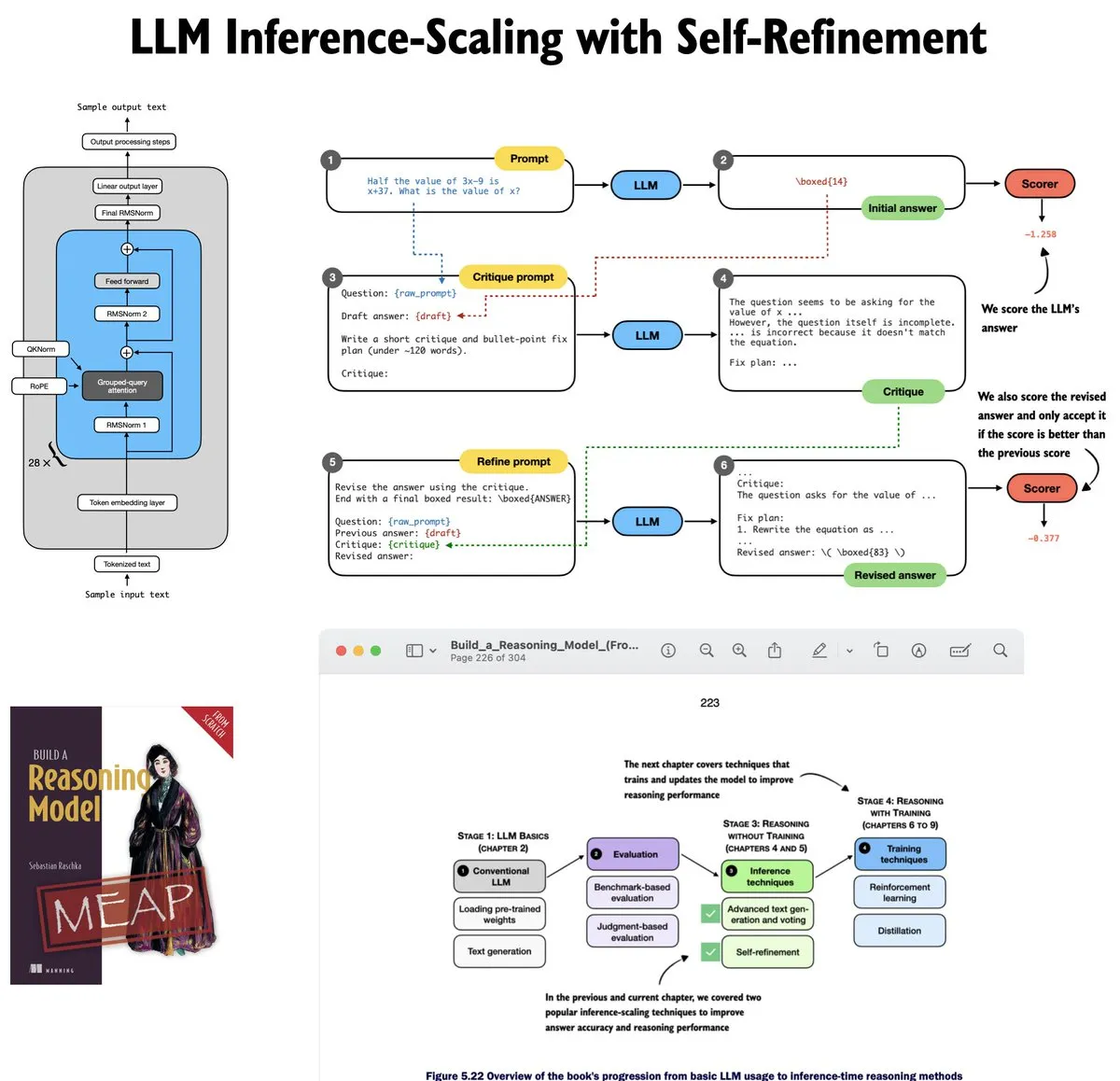
Sebastian Raschka’s new Build a Large Language Model chapter explores inference-time scaling. Unlike simple voting, this tutorial details implementing a “self-refinement loop” where models iteratively critique and improve their answers, providing from-scratch log-probability scoring code.
(Source: rasbt)
AAAI 2026 Outstanding Papers: Causal Learning & Robot Perception Take Center Stage
The 40th AAAI conference awarded CaDyT for continuous-time causal discovery in dynamical systems, ReconVLA for visual attention reconstruction boosting robot precision, and LLM2CLIP for enhancing multimodal representations via LLMs. These reflect AI’s deepening focus on physical-world modeling and multimodal alignment.
(Source: aihub.org)

New AI Safety Challenges: “Privacy Collapse” and “Hallucinated Citations”
Recent studies reveal concerning trends: NeurIPS 2025 saw 50+ papers with AI-generated fake citations. Meanwhile, Privacy Collapse shows benign fine-tuning can erode frontier models’ privacy reasoning, maintaining high performance while exposing severe vulnerabilities. This calls for automated academic review and deeper safety evaluation mechanisms.
(Source: rbhar90, arXiv)
💼 Business
OpenAI Seeks $50B Funding: Sovereign Wealth Funds as Key Players
CEO Sam Altman is courting Middle Eastern sovereign wealth funds for a potential $50B raise, reflecting exploding frontier model training costs. Despite bankruptcy rumors, OpenAI is adopting higher-risk financing to maintain its AGI lead.
(Source: CNBC)

Feishu vs. DingTalk AI Hardware War: The Battle Over Voice Entry Points
Feishu partnered with Anker to launch AI recording beans, clashing with DingTalk A1. Voice hardware is seen as enterprise workflows’ “first touchpoint,” converting speech into actionable digital assets. DingTalk focuses on transforming recordings into task flows, while Feishu emphasizes deep integration with knowledge bases. This war is fundamentally about controlling AI Agents’ physical-world carriers.
(Source: 36Kr)

Kunlun Tech’s AI Losses Continue: Vertical Focus vs. Growth Spending
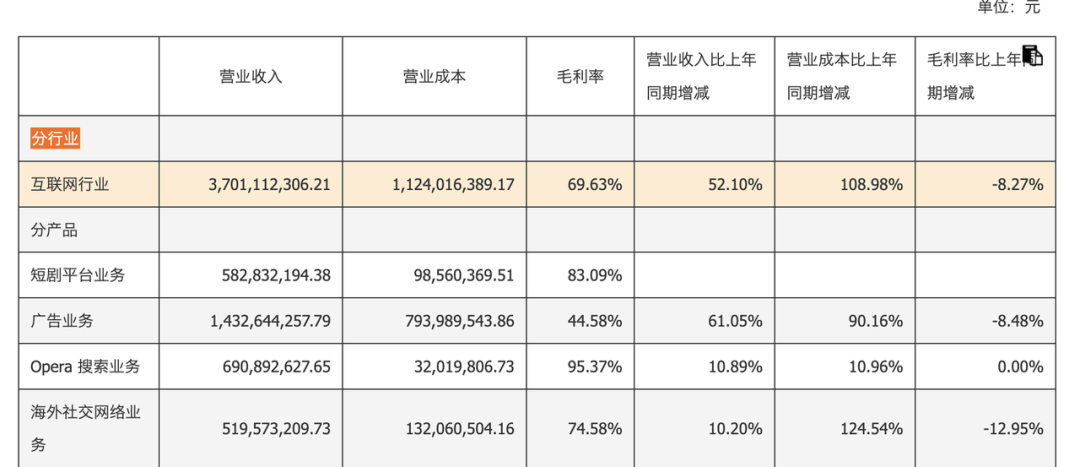
Kunlun’s 2025 earnings forecast shows persistent losses. Its “no general models, only vertical focus” strategy has seen success in short-form video (DramaWave) and AI music (Mureka), but high marketing and R&D costs remain profitability hurdles. This reflects vertical AI’s struggle to build moats amid tech giants.
(Source: 36Kr)
🌟 Community
AI Photo Win Sparks “Trust Crisis”: Transparency Over Results
A 2026 photography award winner (Old Light Under Arcades) was exposed as AI-generated, triggering public outrage. The community argues AI has mastered “average jury appeal,” breaking traditional blind judging. This isn’t just technical overreach but violates human expectations of “genuine emotional investment.” Calls grow for separate human/AI-assisted tracks and mandatory creation logs to preserve artistic boundaries.
(Source: 36Kr)

Workplace AI Alienation: “AI-Generated Thanks” Erode Trust
Surveys show trust plummets from 83% to 40% when employees detect managers’ appreciation emails are AI-written. Community debates this “fake sincerity,” acknowledging AI boosts efficiency but creates emotional barriers. Meanwhile, “responsibility vacuums” emerge as AI-generated code scales beyond human review capacity, rendering traditional CI/CD structurally obsolete.
*(Source: [Reddit](https://www.reddit.com/r/ArtificialInteligence/comments/1qjt88v/my_manager_sends_aigenerated_app