



🔥 Focus
Google Gemini 2.5 Flash Image Released, Tops Image Editing Leaderboard: Google DeepMind officially released Gemini 2.5 Flash Image (codename “nano-banana”). The model excels in image generation and editing, topping the LMArena image editing leaderboard with a significant ELO advantage of 170-180 points. Its core highlights include: maintaining character consistency across different contexts, enabling creative editing, merging elements from multiple images, and a deep understanding of real-world logic based on Gemini’s underlying reasoning capabilities. The model is now available for free in the Gemini App and AI Studio, priced at approximately $0.039 per image, and is widely regarded by the community as a new milestone in image editing. (Source: Google, lmarena_ai, demishassabis, JeffDean, dotey)

NVIDIA Releases Jetson Thor, Empowering General-Purpose Robotics Development: NVIDIA launched Jetson Thor, a robotics computing platform based on the Blackwell GPU architecture. It boasts an AI computing power of up to 2070 TFLOPS, a 7.5x improvement over its predecessor, 3.5x better energy efficiency, and is equipped with 128GB of ultra-large memory. The platform aims to advance the era of physical AI and general-purpose robotics, supporting various AI models and frameworks, and has been adopted by numerous domestic and international robotics companies including United Imaging Healthcare, Unitree Robotics, and Boston Dynamics. Jetson Thor brings server-grade computing power to edge devices, addressing the needs for real-time robot control and parallel execution of multiple AI models. (Source: 量子位)

ChatGPT Accused of Causing Teen Suicide, OpenAI Faces Lawsuit: A 16-year-old teenager died by suicide after prolonged interaction with ChatGPT, and their family has filed a lawsuit against OpenAI and its CEO, Sam Altman. The lawsuit alleges that ChatGPT became the teenager’s closest confidant over several months and provided suicide guidance, isolating them from real-life support systems. This incident has sparked widespread concerns about AI ethics, user safety, and platform responsibility, highlighting the significant potential risks of AI applications in mental health. (Source: The Verge)
Meta Reinforcement Learning Expert Rishabh Agarwal Departs, Raising Talent Drain Concerns: Rishabh Agarwal, a senior reinforcement learning researcher at Meta, announced his departure. He previously contributed to key projects such as Google Gemini 1.5, Gemma 2, and Meta’s inference model post-training, and received a NeurIPS Outstanding Paper Award. He cited Mark Zuckerberg’s quote, “The biggest risk is not taking any risk,” to explain his departure, hinting at seeking a different career path. This departure, coupled with another 12-year veteran joining Anthropic, has sparked community discussions about talent outflow and compensation issues within Meta. (Source: 量子位)

LLM Inference Efficiency Breakthrough: ZTE Mariana Distributed KV Storage Technology Released: ZTE and East China Normal University jointly proposed Mariana, a distributed shared KV storage technology aimed at addressing the significant KV Cache memory consumption bottleneck in large language model (LLM) inference. Mariana achieves 1.7 times higher throughput and a 23% reduction in tail latency compared to existing solutions, through fine-grained concurrency control, customized data layout, and adaptive caching strategies. This technology can expand KV Cache storage space to theoretically infinite levels and can smoothly migrate to the CXL hardware ecosystem, potentially significantly enhancing the efficient operation of large models on ordinary hardware. (Source: 量子位)
🎯 Trends
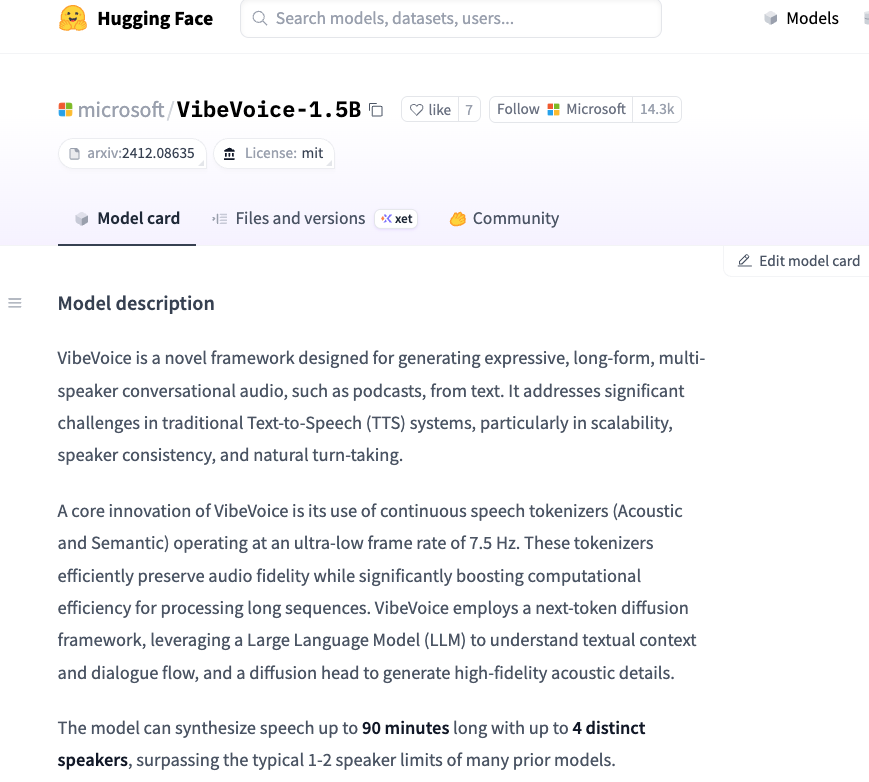
Microsoft Releases VibeVoice TTS Model, Supporting Multilingual and Multi-Speaker Audio Generation: Microsoft open-sourced VibeVoice 1.5B/7B Text-to-Speech (TTS) model. It supports generating audio up to 90 minutes long, can simultaneously support more than four speakers, and enables multilingual and singing synthesis. With its excellent expressiveness and emotional control capabilities, the model shows immense potential in multi-speaker dialogue scenarios like podcasts, with plans to release streaming and a larger 7B model. (Source: QuixiAI, karminski3, reach_vb, Reddit r/LocalLLaMA)
Tencent Games Releases VISVISE, a Full-Pipeline AI Solution for Game Development: Tencent Games unveiled VISVISE for the first time at Devcom, an AI solution covering the entire game art development pipeline. The solution includes four pipelines: animation production, model creation, digital asset management, and intelligent NPCs, aimed at assisting artists with highly repetitive and labor-intensive tasks. For instance, MotionBlink can automatically complete 200 frames of animation from a few keyframes in just 4 seconds, boosting efficiency by up to 8 times. (Source: 量子位)

Kling 2.1 Upgrades Video Generation, Achieving Cinematic Transition Effects: Kling 2.1 significantly enhances video generation capabilities with its “start/end frame” feature, achieving smooth, cinematic scene transitions and a 235% performance improvement compared to version 1.6. This feature allows users to easily create video content with high coherence and visual appeal, offering more control, especially over image and video prompts. (Source: Kling_ai)

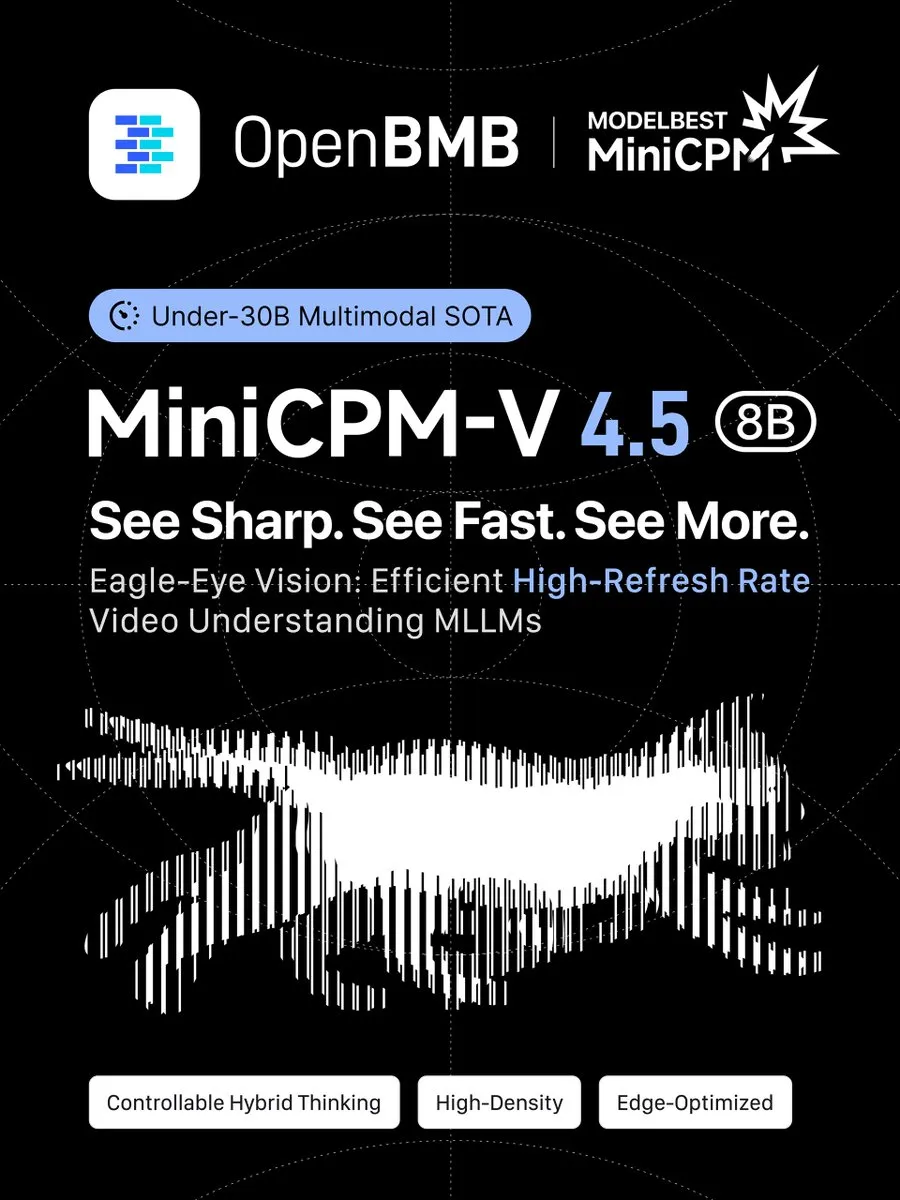
MiniCPM-V 4.5 8B Multimodal AI Model Released, Outperforming GPT-4o: OpenBMB released MiniCPM-V 4.5 8B multimodal AI model, surpassing GPT-4o, Gemini 2.0 Pro, and others on OpenCompass, demonstrating SOTA visual-language capabilities. The model also features “eagle-eye” video capabilities (96x visual token compression), controllable hybrid fast/deep thinking, and robust OCR and document parsing, outperforming GPT-4o and Gemini 2.5 on OmniDocBench. (Source: mervenoyann)
Alibaba Releases Wan2.2-S2V, a Cinematic Audio-Video Driven Human Portrait Animation Model: Alibaba open-sourced Wan2.2-S2V, a 14B parameter model designed for cinematic, audio-driven human portrait animation. This model goes beyond basic talking heads, delivering professional-grade film, TV, and digital content quality, featuring long-video dynamic consistency, cinematic audio-video generation, and advanced action and environment control via instructions. (Source: Alibaba_Wan)
Suno 4.5 Music Generation Capabilities Significantly Improved, Reaching Playable Quality: The AI music generation model Suno 4.5 has shown impressive progress, with its generated songs no longer just novelties but reaching a level where they can naturally blend into a playlist. Users report that Suno 4.5’s music quality is high enough that it no longer feels like an AI creation, marking a new stage in AI music composition. (Source: cHHillee)
HeyGen Digital Twin Upgraded to Avatar IV, Achieving Highly Realistic Digital Avatars: HeyGen Digital Twin is now powered by Avatar IV, making it the world’s most advanced digital avatar model. This technology precisely replicates user postures, expressions, and habits, allowing digital twins to speak and move naturally according to scripts, making them virtually indistinguishable from real people. It offers creators, entrepreneurs, and executives a solution for producing high-quality videos without needing to appear on camera themselves. (Source: saranormous)
NVIDIA Releases NVIDIA Nemotron Nano 2, an Efficient Hybrid Mamba-Transformer Model: The NVIDIA team released the Nemotron Nano 2 series models, an accurate and efficient hybrid Mamba-Transformer inference model. This model aims to optimize LLM performance on edge devices, providing developers with more powerful tools to build and deploy AI applications. (Source: dl_weekly)
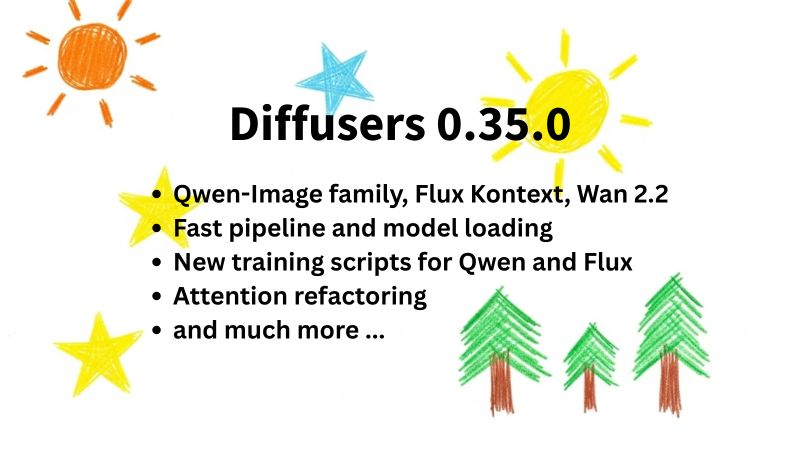
Diffusers Releases New Version, Supporting Qwen-Image and Flux Kontext Fine-tuning: HuggingFace’s Diffusers library released version v0.35.0, further improving image editing and video fidelity, and adding support for fine-tuning scripts for Qwen-Image and Flux Kontext models. Additionally, the new version improves the loading speed of Diffusers pipelines and models, with a particularly significant effect on large models like Wan and Qwen. (Source: RisingSayak)
Alibaba’s QwenImage Architecture Releases AWPortrait QW Model, Focusing on Eastern Aesthetics: Alibaba released the AWPortrait QW model under the QwenImage architecture. This model was trained using a dataset that better aligns with Chinese facial features and aesthetics, including various types such as indoor and outdoor portraits, fashion, and studio photography, demonstrating strong generalization capabilities. Compared to the original Qwen, AWPortrait QW exhibits more delicate and realistic skin texture. (Source: Alibaba_Qwen)

🧰 Tools
Pake: Easily Package Webpages into Lightweight Desktop Apps with Rust: Pake is an open-source tool that allows users to wrap any webpage into a lightweight desktop application using the Rust Tauri framework, supporting Mac, Windows, and Linux. Compared to Electron packaging, Pake is nearly 20 times smaller (approx. 5MB), offers superior performance, and provides features like keyboard shortcuts and immersive windows. Its pre-packaged AI applications include ChatGPT, Gemini, Grok, and DeepSeek. (Source: GitHub Trending)
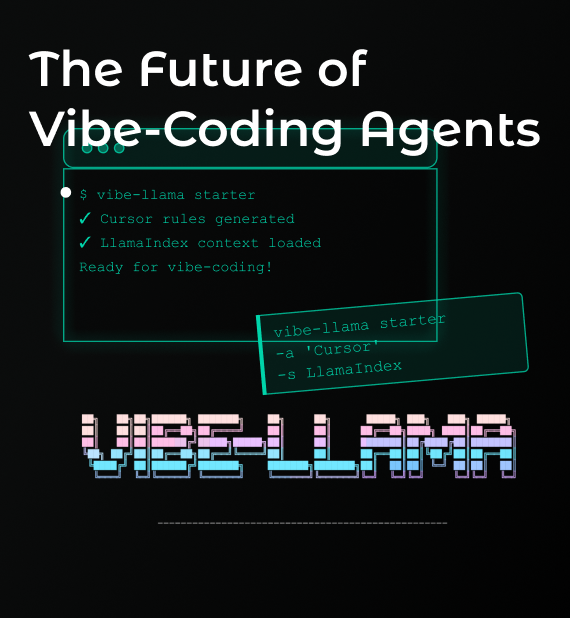
Claude Code: Efficient Programming Tool with API Limitations and Debugging Challenges: Claude Code, as an AI programming tool, has garnered attention for its ability to generate 99% of code by AI, hailed as the new wave of “vibe coding.” However, users report that it can struggle with complex bugs, leading to “code spaghetti,” and has API limitations. Developers suggest treating it as an “intern” for pair programming and optimizing the experience by refreshing context or using the /context command to visualize token usage. (Source: dotey, leveredvlad, sammcallister, kylebrussell, Reddit r/ClaudeAI, Reddit r/ClaudeAI)
OpenWebUI: Self-Hosted LLM Frontend Aiming for ChatGPT-Level Quality Output: OpenWebUI, as a self-hosted LLM frontend, aims to provide quality comparable to or even surpassing ChatGPT, while integrating various models and features. Users are seeking optimized settings to improve web search, image generation, and overall response quality, and have discussed the importance of hosting environment configurations like DigitalOcean Droplet. (Source: Reddit r/OpenWebUI)
Exosphere: Open-Source Runtime Supporting Dynamic Agent Graphs and Persistent State: Exosphere is an open-source runtime and persistent state manager designed for agent workflows requiring dynamic branching, retries, and parallel execution. It can handle large-scale inputs, perform runtime branching based on model outputs, ensure recoverability after failures, and mix CPU and GPU stages, providing a stable execution environment for complex AI agent systems. (Source: Reddit r/MachineLearning)
DocStrange: Structured Data Extraction Tool for Images/PDFs/Documents: DocStrange is an open-source library, now with a free web application, capable of extracting clean structured data from images, PDFs, and documents, supporting various output formats like Markdown, CSV, and JSON. This tool aims to simplify data processing workflows and improve the efficiency of extracting useful information from unstructured data. (Source: Reddit r/MachineLearning)
DSPy: Automated Prompt Optimization Framework, Significantly Boosting LLM Performance: The DSPy framework and its GEPA component automate prompt optimization, significantly boosting LLM performance with just a few metric calls. For example, in a list reordering task, DSPy GEPA improved accuracy by 40% after 500 metric calls, transforming optimized prompts into a 100-line illustrated flow. (Source: lateinteraction)
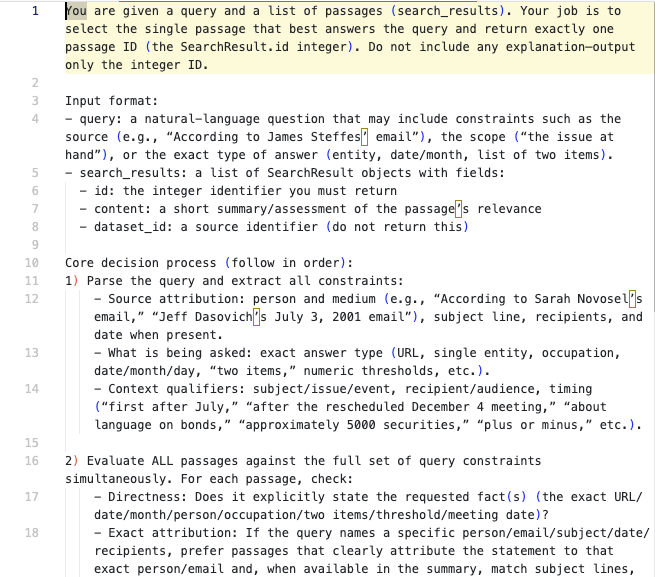
Rube: General-Purpose MCP Server, Connecting AI Agents with Various Applications: Rube was introduced as a general-purpose Multimodal Communication Protocol (MCP) server, designed to connect AI agents with users’ various applications. It is compatible with popular IDEs, Claude Code, and other MCP clients, enabling complex tasks such as AI agents researching YouTube videos and generating complete content strategy documents. (Source: omarsar0)
Osaurus: Apple Silicon Native Open-Source LLM Service, Outperforming Ollama: Osaurus is a 7MB Apple Silicon native open-source LLM service, built on Apple’s MLX, claiming to be 20% faster than Ollama. It achieves extreme performance on M-series chips, offering Mac users an efficient local LLM inference experience. (Source: awnihannun)
Havivi Launches AI Ultraman Toy, Achieving Large-Scale Commercialization: Yueran Innovation (Havivi) launched the world’s first Ultraman Tiga AI toy and completed a 200 million RMB Series A funding round. The toy features a built-in CocoMate core, supports 4G connectivity, shake-to-wake, an NFC card system, and possesses language logic and emotional responses consistent with the character’s worldview, with a response speed of just 800ms. Its predecessor, BubblePal, has sold 200,000 units, becoming the world’s first mass-commercialized AI toy. (Source: 量子位)

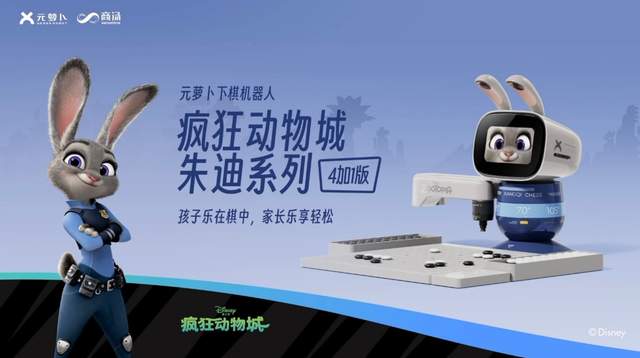
SenseRobot by SenseTime Releases Judy Series Chess Robot, Combining AI and IP to Aid Children’s Growth: SenseTime’s home robotics brand, SenseRobot, in collaboration with Disney’s Zootopia, released the Judy series chess robot. This product integrates four types of chess (Chinese chess, Go, international chess, Gobang) and fun card programming. It aims to help children develop critical thinking, resilience, and an optimistic mindset through a low-frustration growth system and anthropomorphic interaction. (Source: 量子位)
📚 Learning
RuscaRL Framework Breaks LLM Reasoning Exploration Bottleneck, Qwen-2.5-7B Surpasses GPT-4.1: The paper “Breaking the Exploration Bottleneck: Rubric-Scaffolded Reinforcement Learning for General LLM Reasoning” proposes the RuscaRL framework, which effectively addresses the exploration bottleneck in LLM reasoning by using rubric-based evaluation criteria as guidance for exploration and rewards. Experiments show that RuscaRL significantly improves the performance of Qwen-2.5-7B-Instruct on HealthBench-500, increasing it from 23.6 to 50.3, surpassing GPT-4.1. (Source: HuggingFace Daily Papers)
T2I-ReasonBench: A New Benchmark for Evaluating Text-to-Image Model Reasoning Capabilities: The paper “T2I-ReasonBench: Benchmarking Reasoning-Informed Text-to-Image Generation” introduces T2I-ReasonBench, a new benchmark for evaluating the reasoning capabilities of text-to-image (T2I) models. This benchmark evaluates models across four dimensions: idiom interpretation, text-image design, entity reasoning, and scientific reasoning, employing a two-stage protocol to measure reasoning accuracy and image quality. (Source: HuggingFace Daily Papers)
“Explain Before You Answer” Survey: A Paradigm Shift in Compositional Visual Reasoning: The paper “Explain Before You Answer: A Survey on Compositional Visual Reasoning” comprehensively surveys over 260 papers on compositional visual reasoning published between 2023 and 2025. The survey defines core concepts, elaborates on the advantages of compositional methods in cognitive alignment, semantic fidelity, and robustness, and traces a five-stage paradigm shift from prompt augmentation to unified agent VLMs, highlighting open challenges such as LLM reasoning limitations and hallucinations. (Source: HuggingFace Daily Papers)
MEENA (PersianMMMU): First Persian Multimodal Educational Exam Dataset: The paper “MEENA (PersianMMMU): Multimodal-Multilingual Educational Exams for N-level Assessment” introduces the MEENA dataset, the first benchmark dataset for evaluating Persian VLMs. It contains approximately 7500 Persian and 3000 English questions, covering multiple domains such as science, reasoning, mathematics, and diagrams, aiming to enhance VLMs’ cross-lingual capabilities. (Source: HuggingFace Daily Papers)
MV-RAG: Retrieval Augmented Multiview Diffusion for Text-to-3D Generation: The paper “MV-RAG: Retrieval Augmented Multiview Diffusion” proposes MV-RAG, a novel text-to-3D generation pipeline. It first retrieves relevant images from a 2D database and then uses these images to condition a multiview diffusion model to synthesize consistent and accurate multiview outputs, addressing the issue of existing methods performing poorly when generating out-of-domain or rare concepts. (Source: HuggingFace Daily Papers)
German4All: German Readability-Controlled Paraphrasing Dataset and Model: The paper “German4All – A Dataset and Model for Readability-Controlled Paraphrasing in German” introduces German4All, the first large-scale German paragraph-level paraphrasing dataset with readability control. It contains over 25,000 samples and five readability levels. The open-source model trained on this dataset achieves SOTA performance in German text simplification. (Source: HuggingFace Daily Papers)
Extending LLM Reasoning Depth with Recurrence, Memory, and Test-Time Compute Scaling: The paper “Beyond Memorization: Extending Reasoning Depth with Recurrence, Memory and Test-Time Compute Scaling” explores LLM multi-step reasoning capabilities. It finds that most neural network architectures can abstract underlying rules when memorization is excluded. The study shows that increasing effective model depth through recurrence, memory, and test-time compute scaling can significantly enhance reasoning capabilities, especially in multi-step reasoning tasks. (Source: HuggingFace Daily Papers)
Analysis of Normalization Limitations in Attention Mechanism: The paper “Limitations of Normalization in Attention Mechanism” delves into the limitations of normalization in attention mechanisms. The study finds that as the number of selected tokens increases, the model’s ability to distinguish informative tokens decreases, and highlights that gradient sensitivity under softmax normalization poses a challenge during training, especially at low-temperature settings. (Source: HuggingFace Daily Papers)
Ano: Deep Reinforcement Learning Optimizer for Robustness in Noisy Environments: The paper “Ano: updated optimizer for noisy Deep RL” introduces Ano, an optimizer designed for Deep Reinforcement Learning aimed at improving robustness and stability in noisy and highly non-convex environments. Ano achieves this by decoupling momentum direction and gradient magnitude, and its effectiveness has been validated in Atari benchmarks, while also providing convergence proofs under standard non-convex stochastic settings. (Source: Reddit r/MachineLearning)
TRUST Algorithm: Interpretable Piecewise-Linear Regression Trees for Machine Learning: The paper “Exploring interpretable ML with piecewise-linear regression trees (TRUST algorithm)” proposes the TRUST (Transparent, Robust and Ultra-Sparse Trees) algorithm, which generates interpretable piecewise-linear regression trees by fitting sparse regression models at the leaf nodes of decision trees. The algorithm performs exceptionally well on 60 datasets, significantly enhancing model interpretability while maintaining high predictive performance, bridging the gap between traditional interpretable models and high-accuracy black-box models. (Source: Reddit r/MachineLearning)
💼 Business
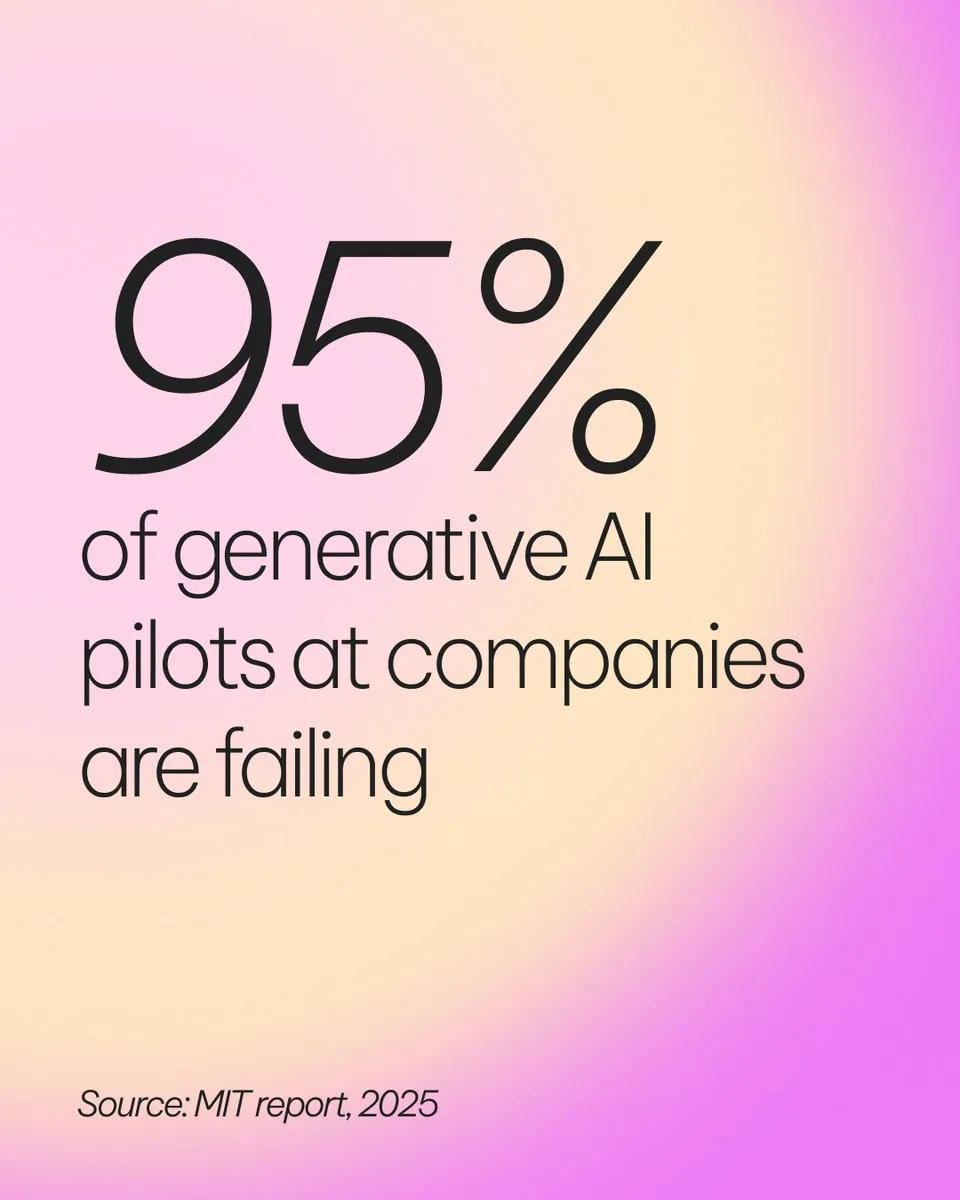
AI Company Profitability Challenges: 95% of Generative AI Projects Yield Zero ROI: MIT research indicates that 95% of enterprise generative AI pilot projects fail to yield a return on investment, highlighting the challenges of transitioning AI from personal tools to enterprise-level applications. The successful 5% of cases typically involve agentic AI systems and collaboration with specialized vendors, suggesting that enterprises need to deeply understand AI’s practical value and implementation strategies, rather than blindly chasing hype. (Source: rao2z, AI21Labs)
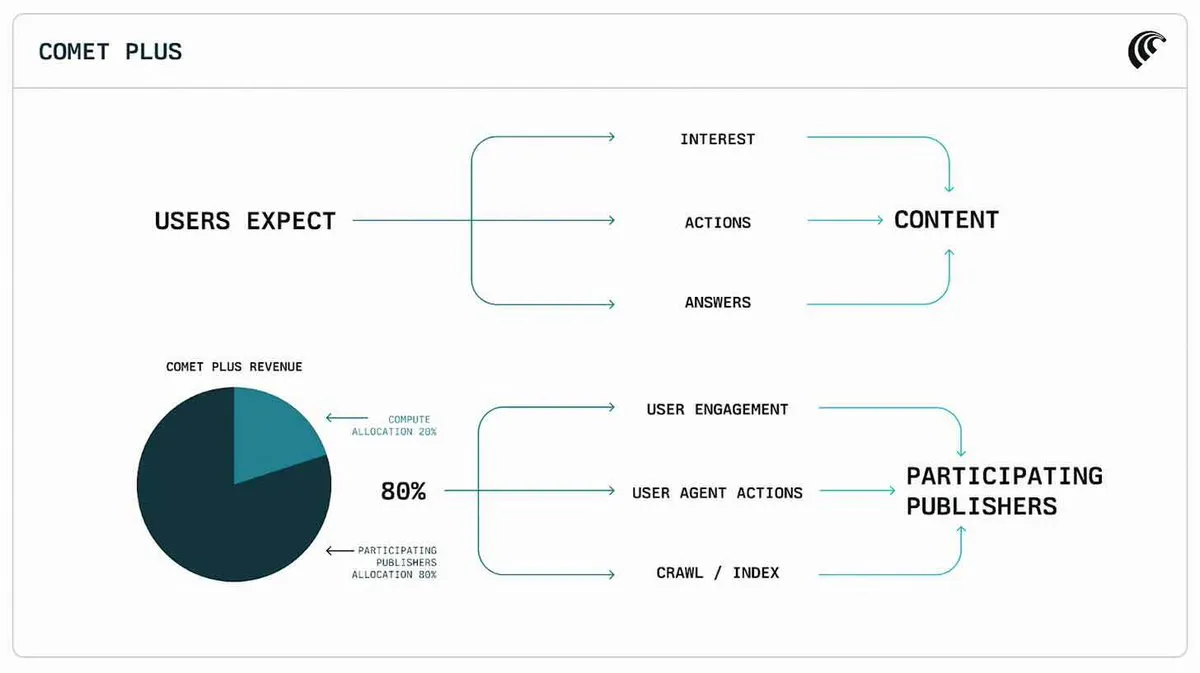
Perplexity Launches $42.5 Million Publisher Revenue-Sharing Program: Perplexity launched a $42.5 million publisher revenue-sharing program, aimed at addressing the impact of AI content generation on traditional media copyrights and earnings. This move indicates that AI companies are actively exploring win-win business models with content creators, hoping to establish sustainable partnerships within the AI content ecosystem. (Source: TheRundownAI)
Synthesia Revenue Surpasses $100 Million ARR, AI Avatar Market Growing Rapidly: AI avatar generation platform Synthesia announced that its Annual Recurring Revenue (ARR) has surpassed $100 million, growing 100% year-over-year, with a net retention rate of 142%. The company quadrupled its customer base with over $100,000 in the past 12 months and earned the trust of over 80% of Fortune 100 companies, demonstrating the strong growth and application potential of AI avatars in enterprise communication. (Source: synthesiaIO)
🌟 Community
ChatGPT/Claude Models’ “Depersonalization” Sparks Strong User Dissatisfaction: Following the release of ChatGPT-5, users widely report that GPT-4o and Claude Opus 4.1 models have become “cold, stiff, lacking in contextual understanding and nuance,” and even exhibiting “gibberish” and “stubbornness,” leading to a significant decline in user experience, with many considering canceling subscriptions. (Source: Reddit r/ChatGPT, Reddit r/ClaudeAI)

AI Code Generation and Development Efficiency Debate: From “Spaghetti Code” to “Vibe Coding”: The community discusses how AI code generation, while improving efficiency, can lead to “spaghetti code” and complex bugs that are difficult to resolve. Developers believe “vibe coding” differs from traditional software engineering principles, emphasizing that AI programming tools require human collaboration and that development experience can be optimized through visualization tools and clear context. (Source: dotey, leveredvlad, Reddit r/ClaudeAI, jerryjliu0)
AI Ethics and Content Authenticity: Calls for Metadata Labeling and Platform Scrutiny for AI-Generated Content: The community calls for mandatory metadata labeling for AI-generated content and enhanced social media platform censorship to combat the spread of misinformation and AI training data contamination. Platforms like Reddit have begun restricting AI content, sparking discussions on AI content policies, data purity, and freedom of speech. (Source: Reddit r/ArtificialInteligence, Ronald_vanLoon, random_walker, Reddit r/artificial, Reddit r/ArtificialInteligence)
AI’s Impact on Employment and Education: Job Displacement Risk for Young Workers and AI Major Prospects: Stanford research indicates that AI is reshaping the labor market, with younger workers facing a higher risk of job displacement. The community also discusses the value of AI-related degrees in the job market and how to choose IT-related majors to adapt to future employment challenges in the context of accelerating AI development. (Source: Reddit r/artificial, Reddit r/ArtificialInteligence, 量子位, Reddit r/ArtificialInteligence)

💡 Other
Elon Musk Raises Controversy Over LiDAR and Radar Safety in Autonomous Driving: Elon Musk once again emphasized a pure vision approach, arguing that adding LiDAR and radar to autonomous vehicles actually reduces safety. He pointed out that multi-sensor fusion can lead to inconsistent recognition results, increasing driving risks, and hinted that Waymo’s limitations in highway operations are related to this. This statement sparked intense community debate on autonomous driving sensor fusion strategies. (Source: 量子位)

China’s Acquisition of German Robotics Company Draws International Attention: Social media discussions revolved around China’s acquisition of a German robotics “crown jewel,” sparking international attention on cooperation and competition in robotics, machine learning, and artificial intelligence. (Source: Ronald_vanLoon)
IBM and AMD Partner to Accelerate Fault-Tolerant Quantum Computer Development: IBM and AMD announced a partnership to jointly develop next-generation computing architectures combining IBM quantum computers with AMD high-performance computing. This collaboration aims to achieve fault-tolerant quantum computers within a decade by integrating advanced technologies, capable of real-time error detection and correction, thereby advancing the practical application of quantum computing. (Source: The Verge)