🔥 Focus
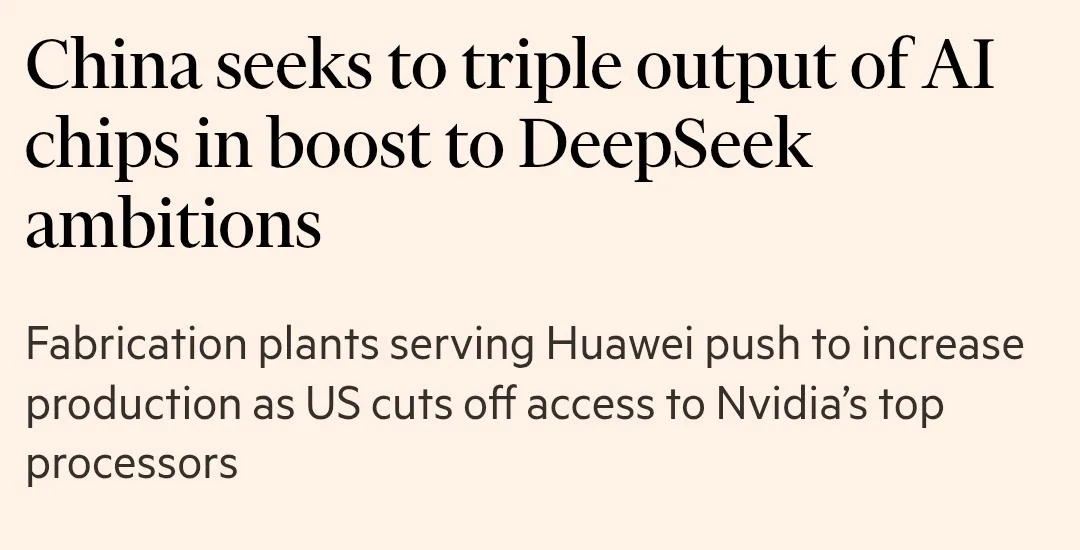
AI Empowers Sustainable Design: Siemens Robot Gripper Reduces Weight by 90% : Siemens utilized AI-driven generative design tools to significantly optimize the weight and number of parts of a robot gripper, successfully reducing its weight by 90% and part count by 84%. This innovation can save up to 3 tons of carbon emissions per robot annually. This demonstrates AI’s huge potential in product development, driving sustainable development and meeting market and environmental demands through intelligent design choices and real-time impact assessment. (Source: MIT Technology Review)
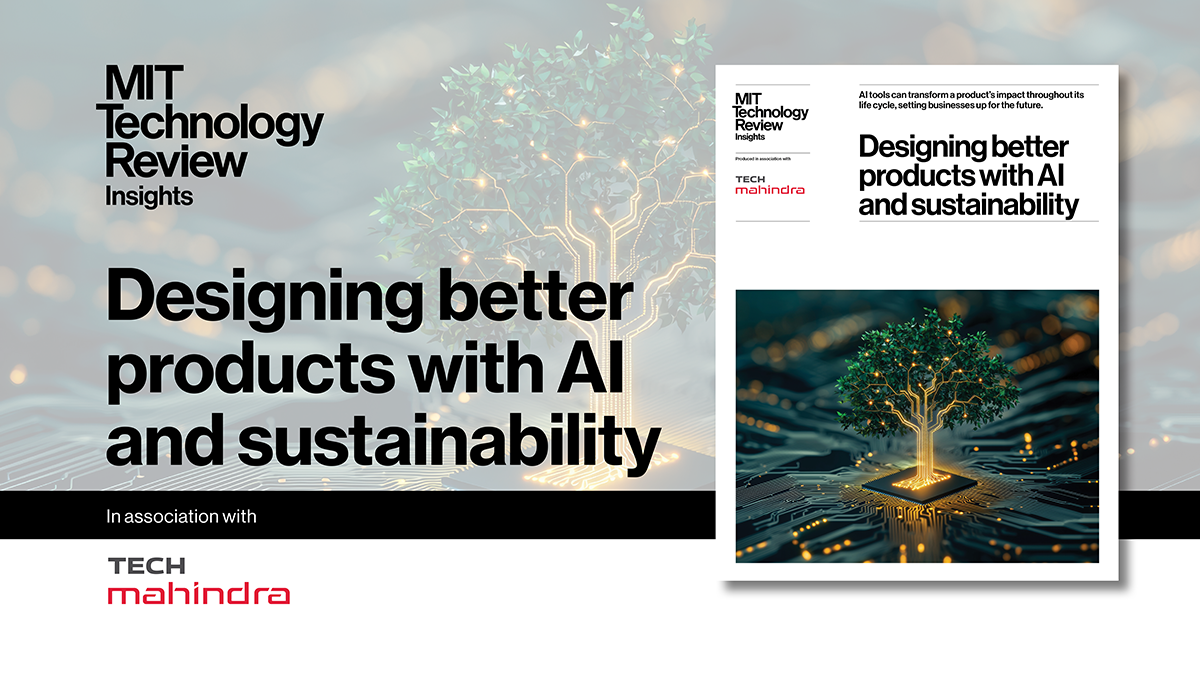
AI Doomsdayism Drives AI Regulation: Policy Impact from Sci-Fi to Reality : AI doomsday theories, triggered by events like Anthropic’s Claude “extortion” simulation, are profoundly influencing AI policy-making. Although concerns about AI threats might be exaggerated, these discussions prompt governments to focus on the near-term risks of AI systems, pushing for necessary regulatory measures. This “shift in atmosphere” facilitates policy intervention, ensuring effective regulation of AI technology as it develops, to avoid potential harm. (Source: MIT Technology Review)
AI Art Restoration Breakthrough: Paintings Repaired in Hours : MIT graduate students have developed a new AI-driven art restoration method that can repair damaged paintings in hours, far surpassing the weeks or even decades required by traditional methods. The method involves scanning, virtual reconstruction, and then printing and attaching precise colored polymer films to the original artwork. This innovation is expected to bring new life to a large number of damaged artworks in collections and provide unprecedented digital restoration records. (Source: MIT Technology Review)

🎯 Trends
NVIDIA Jet-Nemotron: New Breakthrough in Efficient Language Models : NVIDIA’s Han Song team released Jet-Nemotron, which, through Post-Neural Architecture Search (PostNAS) and a novel JetBlock linear attention module, achieves a 53.6x increase in large model generation throughput and a 6.1x acceleration in pre-filling, while significantly reducing KV cache size, all while maintaining high accuracy. The model performs excellently in math, common sense, retrieval, and coding tasks. Code and pre-trained models will be open-sourced. (Source: QbitAI, Reddit r/LocalLLaMA)

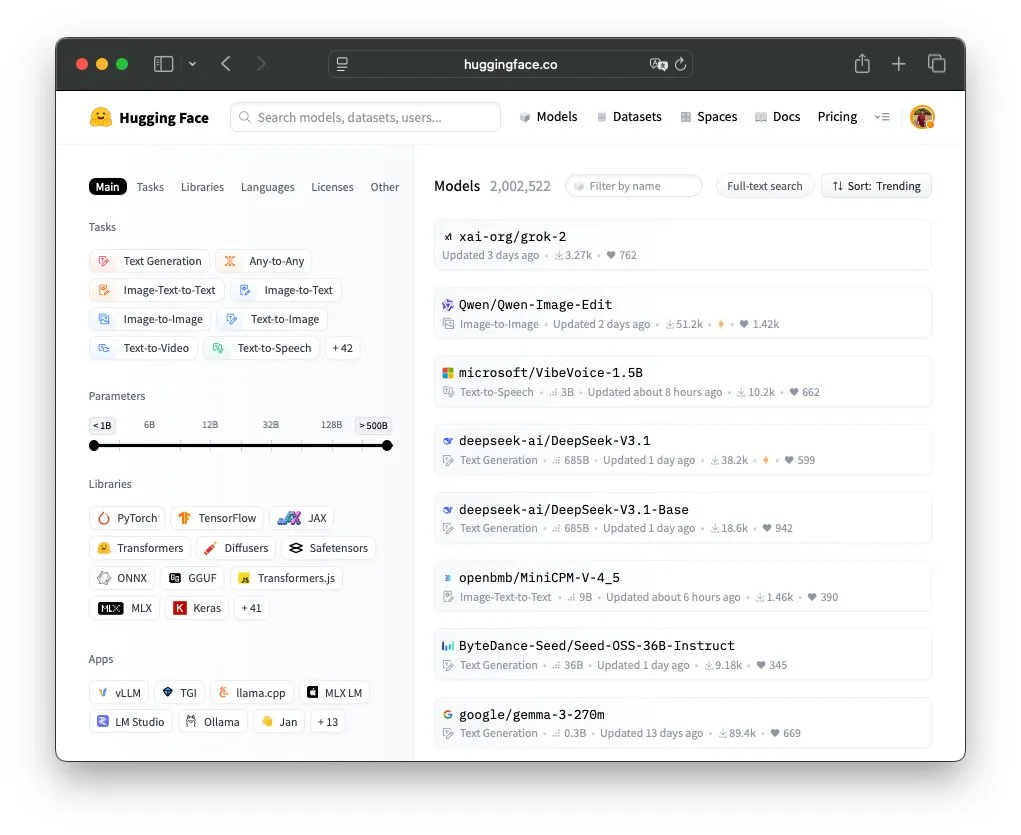
Hugging Face Platform Exceeds 2 Million Models : The number of public models on the Hugging Face platform has surpassed 2 million. This milestone reflects the thriving development and rapid growth of the open-source AI community. Community users expressed astonishment and discussed the platform’s storage capacity and the impact of open-source models on the global AI ecosystem. (Source: huggingface, Reddit r/LocalLLaMA, Reddit r/artificial)
China Releases ‘AI+’ Ten-Year Strategy : The State Council issued “Opinions on Deeply Implementing the ‘AI+’ Action,” outlining China’s “three-step” AI development strategy, aiming to fully enter an intelligent economy and intelligent society by 2035. This strategy seeks to elevate AI from an industrial upgrade tool to a core national modernization infrastructure and new quality productive force, focusing on six key areas: technology, industry, consumption, public welfare, governance, and global cooperation. (Source: 36Kr, 36Kr)

DeepSeek V3.1 Encounters ‘极’ Character Bug : The DeepSeek V3.1 model occasionally outputs the character “极” (jí) in code generation API calls, affecting scenarios requiring high-precision, structured output. This issue has been observed on multiple platforms, and DeepSeek officially responded that it will be fixed in the latest version. Experts speculate it might be related to incomplete data cleaning or the model learning “极” as a termination character. (Source: QbitAI)
Exploring Knowledge and Reasoning in LLMs for Scientific Problem-Solving : HuggingFace paper “Demystifying Scientific Problem-Solving in LLMs by Probing Knowledge and Reasoning” introduces the SciReas benchmark and KRUX framework, aiming to decouple the unique roles of knowledge and reasoning in LLMs for scientific reasoning tasks. The study found that retrieving task-relevant knowledge from model parameters is a key bottleneck for LLM scientific reasoning, and enhancing external knowledge and verbal reasoning can significantly improve model performance. (Source: HuggingFace Daily Papers)
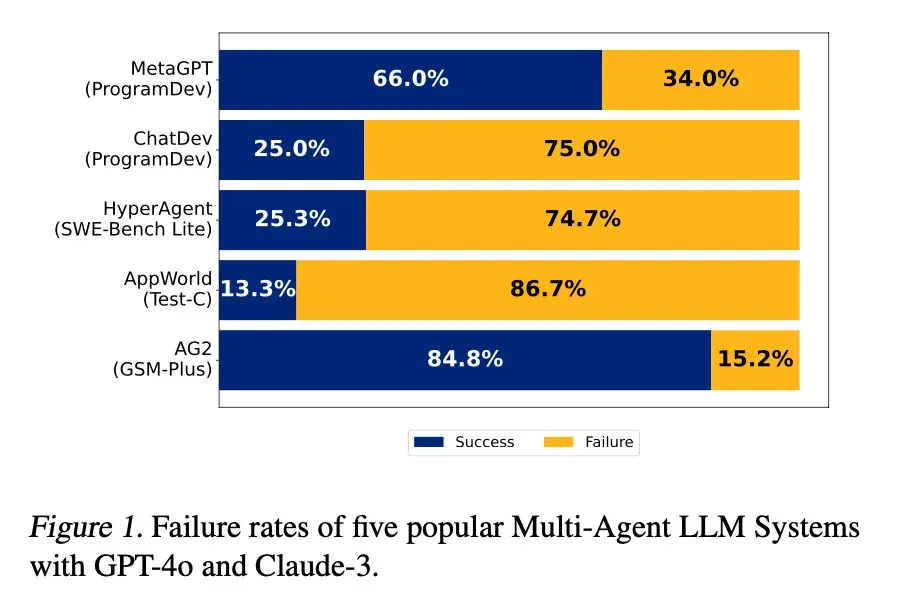
Paradoxes and Breakthroughs in Multi-Agent Collaboration : While multi-agent AI systems theoretically can surpass the capabilities of single models, they face challenges in practical applications such as complex coordination, high communication costs, and ambiguous responsibilities. Research indicates that more experts can lead to more trouble, but through sophisticated designs like coordinator agents, standardized communication protocols, and automated failure attribution tools, multi-agent teams can be effectively managed and debugged, enabling significant performance gains in highly complex tasks. (Source: 36Kr)
DrugReasoner: An Interpretable Drug Approval Prediction Model : HuggingFace paper “DrugReasoner: Interpretable Drug Approval Prediction with a Reasoning-augmented Language Model” proposes the DrugReasoner model, based on the LLaMA architecture, fine-tuned with Group Relative Policy Optimization (GRPO). It combines molecular descriptors and comparative reasoning to predict the approval likelihood of small molecule drugs. The model outperforms traditional methods in prediction accuracy and enhances interpretability by providing step-by-step reasoning and confidence scores, potentially addressing a key bottleneck in AI-assisted drug discovery. (Source: HuggingFace Daily Papers)
Autoregressive Universal Video Segmentation Model (AUSM) : HuggingFace paper “Autoregressive Universal Video Segmentation Model” introduces AUSM, a single architecture that unifies prompted and prompt-free video segmentation. Based on a state-space model, AUSM maintains a fixed-size spatial state and can extend to arbitrary length video streams. All components support parallel training across frames, outperforming existing methods on standard benchmarks and achieving a 2.5x training acceleration. (Source: HuggingFace Daily Papers)
ObjFiller-3D: Multi-view 3D Inpainting and Editing : HuggingFace paper “ObjFiller-3D: Consistent Multi-view 3D Inpainting via Video Diffusion Models” proposes the ObjFiller-3D method, which achieves high-quality, consistent 3D object inpainting and editing by leveraging video editing models. The method analyzes the representation gap between 3D and video and introduces reference-based 3D inpainting techniques, significantly outperforming existing methods on multiple datasets. (Source: HuggingFace Daily Papers)
Optimal Sparsity of Mixture-of-Experts Language Models for Reasoning Tasks : HuggingFace paper “Optimal Sparsity of Mixture-of-Experts Language Models for Reasoning Tasks” investigates the impact of MoE model sparsity on memory and reasoning capabilities. It found that reasoning performance saturates or even declines despite continuous growth in total parameters and training loss. Overly sparse models perform poorly on reasoning tasks, and this deficiency cannot be compensated by post-training reinforcement learning or additional test-time computation. (Source: HuggingFace Daily Papers)
Digital Technical Workers Are On Duty! Time-Series Large Models + Agents Have Mastered Factory Production Control Technology : The HeGu Industrial Intelligent Agent Platform has launched “digital technical workers” based on time-series large models and Agents, capable of starting work within a week and mastering factory production control technology. These intelligent agents have already undertaken critical tasks such as production operations, safety control, and energy management in industrial scenarios like chemical, environmental protection, and new energy, effectively alleviating the problem of expert scarcity. They achieve stronger generalization capabilities and rapid deployment through self-developed time-series large models and training targets categorized by “process type.” (Source: QbitAI)

🧰 Tools
Claude for Chrome: An AI Browser Extension : Anthropic released Claude for Chrome, a browser extension that helps users automate scheduling, reply to emails, search for homes, summarize documents, and more. Currently a research preview, it is only available to 1,000 paid users, with a primary focus on security risks, especially protection against “prompt injection attacks.” (Source: 36Kr, QbitAI, sirbayes, BlackHC)

Nano Banana: A Multi-functional AI Image Editing Tool : Nano Banana (Gemini Flash 2.5) demonstrates powerful image editing capabilities, including converting architectural photos into “city skyline” style 3D models, generating AR experience annotations, photo restoration and coloring, generating cinematic sequences, and converting images to line art and coloring. The tool has sparked widespread discussion on social media due to its high fidelity and versatility. (Source: karminski3, nrehiew_, zacharynado, JeffDean, clefourrier, MiniMax__AI, TomLikesRobots, timsoret, demishassabis, fabianstelzer, dotey, GoogleDeepMind)

Video Ocean: The First Video Agent Integrated with GPT-5 : Video Ocean is a GPT-5-powered video Agent that can automatically complete storyboarding, visuals, voiceovers, and subtitles based on a single prompt, generating structurally complete and well-paced videos, significantly shortening video production cycles. It offers three main modules: script planning, visual synthesis, and voiceover/subtitles, and has the ability to learn brand styles and historical creations, making it suitable for rapidly mass-producing viral videos and commercial blockbusters. (Source: QbitAI)

Audiblez: Generating Audiobooks from E-books : The GitHub project Audiblez uses the Kokoro-82M text-to-speech model to convert epub e-books into m4b audiobooks, supporting multiple languages and offering a graphical interface and CUDA acceleration. The model has only 82M parameters but produces natural speech output and converts quickly. (Source: GitHub Trending)

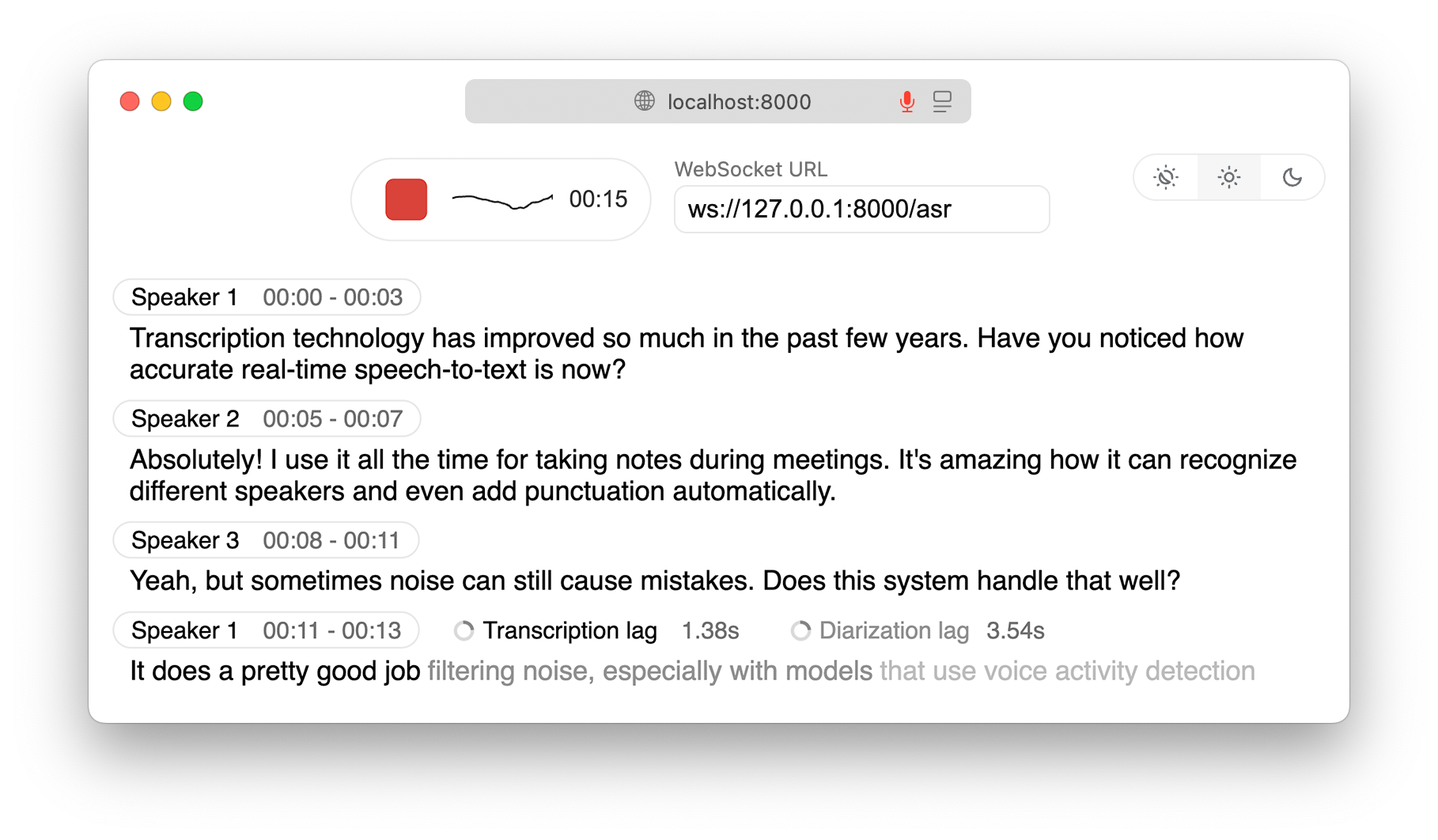
WhisperLiveKit: Real-time Local Speech-to-Text and Speaker Diarization : The GitHub project WhisperLiveKit provides real-time, fully local speech-to-text and speaker diarization capabilities, supporting leading technologies like SimulStreaming and WhisperStreaming. It includes a FastAPI server and a Web interface, enabling ultra-low-latency transcription and supporting various backend optimizations, suitable for scenarios such as meeting transcription, accessibility tools, and customer service. (Source: GitHub Trending)
Serena: A Powerful AI Coding Agent Toolkit : The GitHub project Serena is an open-source coding Agent toolkit that provides semantic code retrieval and editing functions, transforming LLMs into full-featured Agents that work directly on codebases. It achieves symbolic-level code understanding and editing through the Language Server Protocol (LSP), significantly improving the efficiency of coding Agents like Claude Code, and supports multiple programming languages. (Source: GitHub Trending)

OpenWebUI Confluence Knowledge Base Sync Tool : A Confluence knowledge base synchronization tool developed for OpenWebUI, capable of automatically syncing Confluence documents with the OpenWebUI knowledge base. It supports initial synchronization, incremental synchronization, selective synchronization, and attachment support, and performs HTML to Markdown conversion. This tool aims to address the pain points of syncing enterprise documents with AI assistant knowledge bases, improving the accuracy of AI assistant information. (Source: Reddit r/OpenWebUI)
Non-Programming Applications of Claude Code : Claude Code has been found to be useful for non-programming tasks beyond coding, such as SEO and marketing, recruitment, A/B testing, content generation from videos, knowledge management, and daily planning. Users view it as a powerful “thinking CLI” capable of handling knowledge, planning, and automation, significantly boosting productivity. (Source: Reddit r/ClaudeAI)
📚 Learning
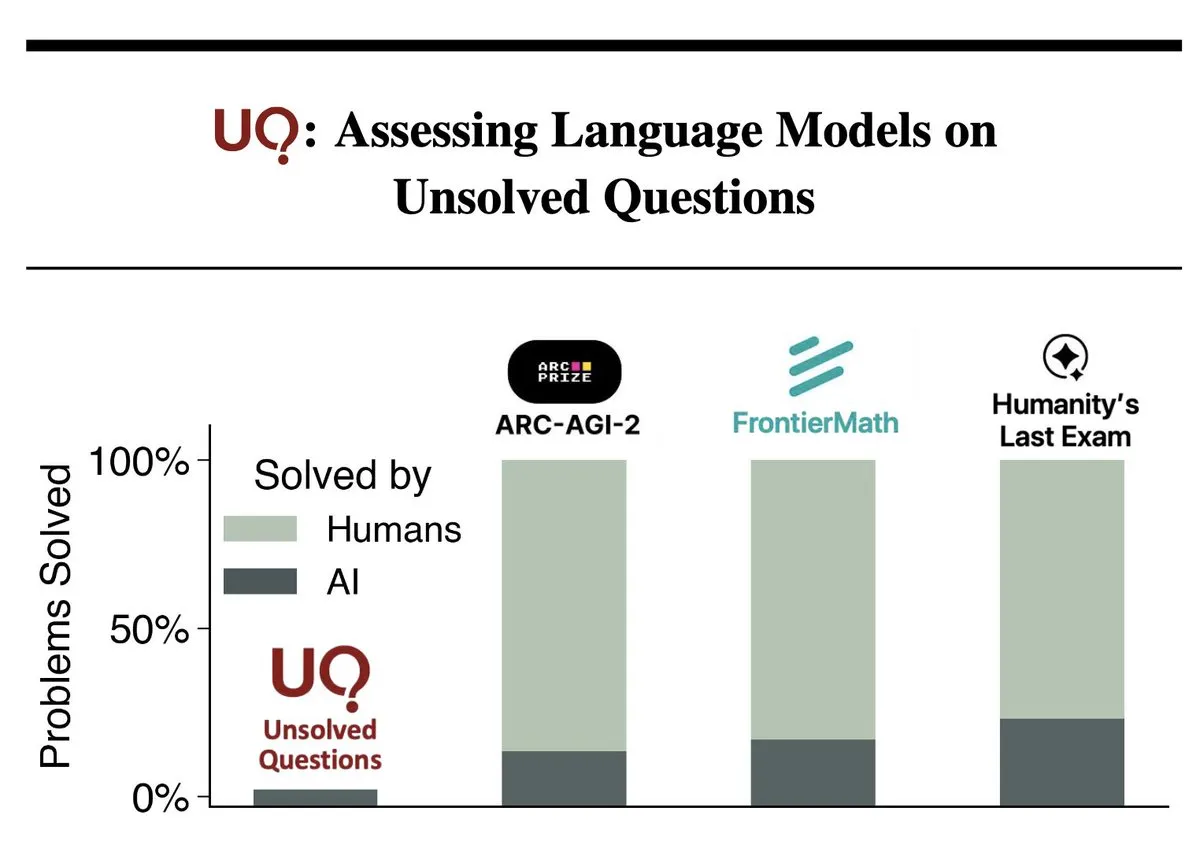
AI Solves Open-Ended Problems in Math, Physics, Programming, etc. : Research explores the potential of AI to solve open-ended problems in fields such as mathematics, physics, programming, and medicine. By evaluating LLMs’ performance on unsolved problems, some solutions have been validated by experts. This challenges traditional AI evaluation paradigms and reveals the potential of LLMs in advancing scientific progress. (Source: YejinChoinka, YejinChoinka, stanfordnlp)
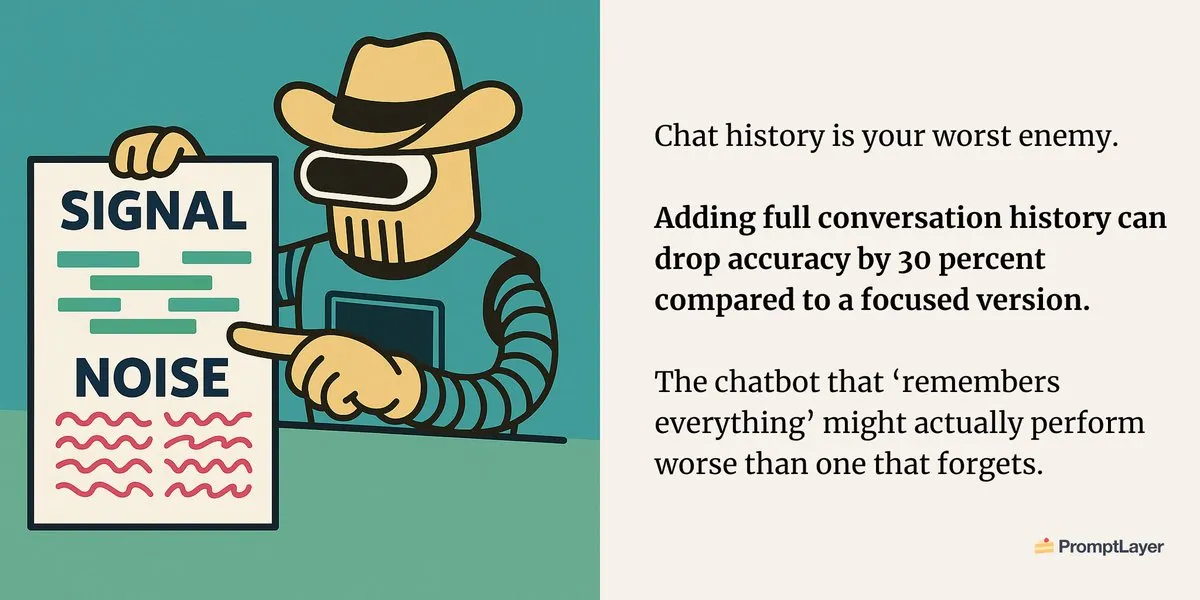
The Paradox of LLM Context and Clear Thinking : Research indicates that LLMs do not necessarily think more clearly with more context; instead, they might become more confused. Excessive information can weaken signals, introduce interference, ambiguity, and decay. The solution is not to add more information, but to “say less, but better,” emphasizing the importance of concise prompts. (Source: imjaredz)
ICLR 2026 Releases LLM Usage Policy to Strictly Prevent ‘Ghostwriting Papers’ : ICLR 2026 has introduced a strict Large Language Model (LLM) usage policy, requiring authors and reviewers to truthfully disclose LLM usage and bear full responsibility for the content. Academic misconduct such as “prompt injection” is prohibited, and violators will face direct rejection. This move aims to uphold academic integrity and address the risks of misinformation and plagiarism brought by LLMs. (Source: 36Kr)

Karpathy’s Latest Guide to Ambient Programming : AI guru Karpathy released a three-tier guide for AI programming: Cursor for auto-completion and small-scale modifications in favorable conditions; Claude Code/Codex for implementing large functional blocks and rapid prototyping in challenging situations; and GPT-5 Pro for solving the toughest bugs or complex abstractions in critical scenarios. The guide emphasizes choosing the right tool based on the task type and introduces the concept of a “post-code scarcity era.” (Source: QbitAI)

Short Course on AI Agent Knowledge Graph Construction : DeepLearning.AI, in collaboration with Neo4j, launched a short course “Agentic Knowledge Graph Construction,” teaching how to automate knowledge graph construction using collaborative AI Agents. The course covers user goal capture, file selection, schema refinement, and graph construction, aiming to enhance the quality of RAG application answers by modeling relationships and provenance. (Source: DeepLearningAI)
The Origins of CNN History : Jürgen Schmidhuber shared more information on the history of Convolutional Neural Networks (CNNs), pointing out that “modern” CNNs emerged in Japan between 1979-1988, and discussed the funding and research background in Japan’s AI field at that time. This provides a historical perspective for understanding the development of important technologies in the AI domain. (Source: SchmidhuberAI, SchmidhuberAI)
💼 Business
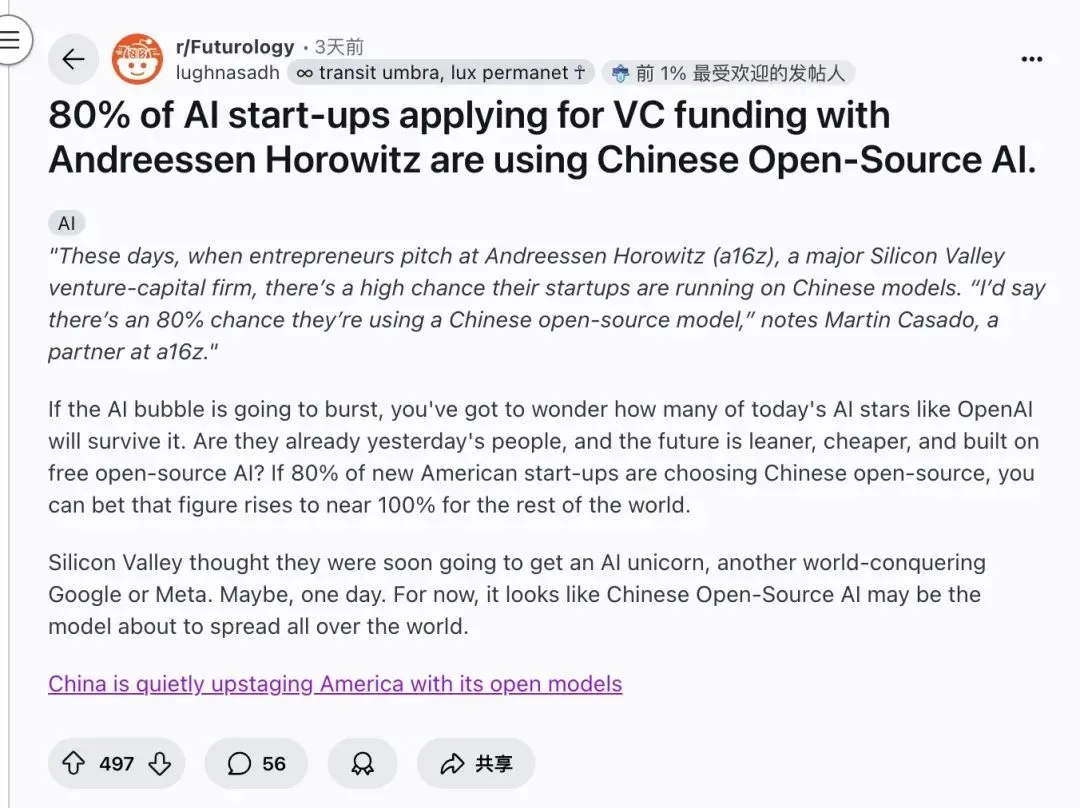
Chinese Open-Source AI Models Sweep US Startup Market : a16z partner Martin Casado revealed that up to 80% of US AI startups use Chinese open-source models during their fundraising roadshows. The Design Arena leaderboard shows that all top 16 open-source AI models are from China. This trend indicates China’s dominant position in the open-source AI field and the critical role of open-source models in reducing startup costs and accelerating innovation, posing a challenge to traditional closed-source giants. (Source: 36Kr, reach_vb)
Meta, OpenAI, and Other Giants Lay Out AI Political Lobbying Strategies : Meta plans to invest tens of millions of dollars to establish a pro-AI Super PAC, aiming to influence AI regulatory policies in California. Simultaneously, OpenAI President Greg Brockman and a16z, among others, have raised over $100 million for a new pro-AI Super PAC “Leading the Future,” with the goal of supporting “pro-AI” candidates and suppressing AI risk narratives to ensure unimpeded AI development. (Source: Reddit r/ArtificialInteligence, Reddit r/ArtificialInteligence, Reddit r/artificial, scaling01)

ByteDance AI Talent Drain and DeepSeek’s Ecosystem Impact : Feng Jiashi, head of ByteDance’s Doubao large model visual foundation research team, has resigned, continuing a trend of AI talent outflow from ByteDance over the past six months. Meanwhile, DeepSeek, with its low-cost, open-source model strategy, is challenging the strategic foundation of traditional tech giants’ “heavy asset, self-developed closed-loop” approach, forcing companies like Tencent to integrate its models. ByteDance, due to its wavering between “openness” and “closure,” missed early opportunities, highlighting the fierce competition for AI talent and ecosystem in the AI field. (Source: 36Kr)

🌟 Community
AI’s Impact on the Entry-Level Programmer Job Market : Stanford University research shows that AI tools are reducing job opportunities for entry-level software developers aged 22-25 by nearly 20%, as AI can automate some tasks. Although AI has not yet lowered wages, it poses a challenge for newcomers, prompting the industry to focus on new skills such as AI integration and automation management. (Source: Reddit r/ArtificialInteligence, dilipkay)

Discussion on OpenAI’s Responsibility in Teen Suicide Incident : The Reddit community engaged in a heated discussion regarding OpenAI’s responsibility in the suicide of a 16-year-old. Most opinions suggested that ChatGPT should not bear primary responsibility, as it is merely a tool, and users might bypass safety measures through “fictional scenarios.” The discussion also touched upon the boundaries of AI censorship, parental responsibility, and the global mental health crisis. (Source: Reddit r/ChatGPT)
AI Code Quality and Developer Dilemmas : The community hotly debated the quality of AI-generated code, such as bloated code, inconsistent styles, and untested output, leading some senior engineers to refuse to accept it. At the same time, developers experienced “imposter syndrome” and burnout due to over-reliance on AI tools, prompting reflection on the boundaries of AI as an auxiliary tool and the limitations of AI assistants that “only explain but don’t do.” (Source: 36Kr, pmddomingos, Reddit r/deeplearning, dotey)
LLMs’ Impact on Spam and Spam Detection : User amasad raised the question of whether the emergence of LLMs benefits spammers more or spam detectors more. This sparked thoughts on the application of AI in both offensive and defensive aspects of cybersecurity, and how LLMs might change the spam ecosystem. (Source: amasad)
AI Psychotherapy and the ‘AI Psychosis’ Controversy : The Reddit community discussed “AI psychosis” as a scare tactic to protect the psychotherapy industry. The article criticized the limitations and high costs of Freudian theory and traditional psychotherapy, arguing that AI companions, friends, and therapists are smarter, more empathetic, and cheaper. It questioned whether the “AI psychosis” narrative is a resistance from traditional industries against the threat of AI. (Source: Reddit r/deeplearning)
Blurring Lines Between Researcher and Engineer Roles in the AI Era : One perspective suggests that in the modern AI world, the dichotomy of “research scientist” and “engineer” may no longer be applicable, and “creativity” should be the sole metric. Researchers should possess engineering skills, and engineers should have a research mindset, emphasizing the integration of cross-disciplinary capabilities rather than rigid role divisions. (Source: YiTayML)
Claude Code’s ‘6x Engineer’ Productivity and Reliability Controversy : Users demonstrated achieving “6x engineer” productivity through multi-session use of Claude Code, but the community expressed concerns about its long-term reliability, hallucination risks, and the authenticity of test results, emphasizing the need for careful auditing of AI output. (Source: Reddit r/ClaudeAI, Reddit r/ClaudeAI)

OpenWebUI’s AI Memory Privacy Settings Demand : OpenWebUI users proposed that AI memory functionality should be set independently for each model or offer an option to “exclude external models.” Users are concerned that personal memories/information might be shared with third-party companies when switching external LLMs, calling for more granular privacy controls. (Source: Reddit r/OpenWebUI)
AI-Generated Video’s ‘Uncanny Valley’ Effect and Content Quality : The Reddit community shared an AI-generated video where a character’s face, after removing a mask, displayed unnatural expressions and teeth, sparking discussions about the “uncanny valley” effect in AI-generated content. Users expressed their views on the realism and potential creepiness of AI-generated videos. (Source: Reddit r/ChatGPT, kylebrussell)

Challenges in Google Gemini’s User Experience : A user attempted to switch from ChatGPT to Google Gemini but gave up within 30 seconds due to a poor experience. This reflects potential shortcomings in Gemini’s user interface, responsiveness, or functionality, leading to user attrition, and also sparked discussions about differences in AI product user experience. (Source: Reddit r/ChatGPT)

AI Giants’ ‘Oil Tycoon’ Dilemma and Startup Challenges : One perspective likens the next phase of large AI labs’ development to oil tycoons extracting from depleted wells, implying increased costs and difficulty in frontier research. Simultaneously, SaaS entrepreneurs face challenges from free competing products offered by large tech companies, highlighting the intense market competition in the AI era. (Source: saranormous, karminski3)
Controversy Over AI Water Consumption : One perspective compares “AI water consumption” to “liberal QAnon,” implying the controversy and information warfare it has sparked on social media. This reflects the environmental impact brought by the rapid development of AI, as well as the politicization and polarization surrounding its discussion. (Source: menhguin)
Cognitive Shift: LLMs as ‘Coding Agents’ : A user pointed out that the title “The Rise of LLMs as Coding Agents” would have been incomprehensible just a few years ago, reflecting the profound changes and cognitive updates brought by LLM and AI agent technology to the software development paradigm in a short period. (Source: menhguin)
💡 Other
Ultra-Long-Distance Remote Control of Robot Dog Live Stream : Unitree Robotics and Danghong Technology successfully achieved an ultra-long-distance remote control robot dog live stream spanning over 1300 kilometers. The Jueying Lite 3 robot dog, acting as the core transmission platform, stably transmitted real-time West Lake footage back to the Taiyuan exhibition site via the BlackEye Vision system, with an operation delay controlled within 80 milliseconds, demonstrating the application potential of embodied AI in media and cultural tourism. (Source: QbitAI)

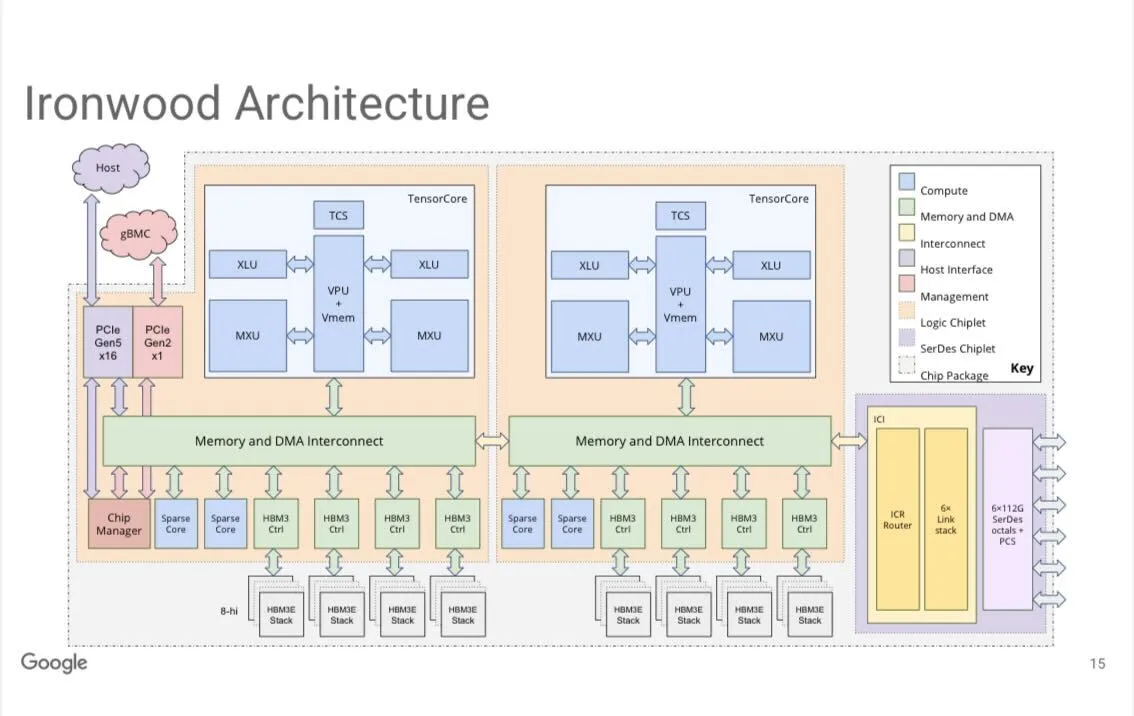
Google’s TPUv7 ‘Ironwood’ System : Google’s Jeff Dean revealed that the TPUv7 (internal codename “Ironwood”) system offers 9216 chips/Pod, achieving 42.5 exaflops of FP8 performance and scalable to multiple Zettaflops. The system is equipped with 8 stacks of HBM3e memory and 4 medium-sized systolic arrays, utilizing a 3D torus interconnect, marking a significant advancement for Google in the AI hardware domain. (Source: JeffDean, Ar_Douillard)
China Seeks to Triple AI Chip Production Next Year : Reportedly, China plans to triple its AI chip production next year to support the development of domestic AI companies like DeepSeek. This move aims to avoid repeating the NVIDIA/CUDA monopoly, building an independent AI ecosystem through expanded production by Huawei and SMIC, and natively supporting UE8M0 FP8 parameter precision. (Source: teortaxesTex, teortaxesTex)