



🔥 FOCUS
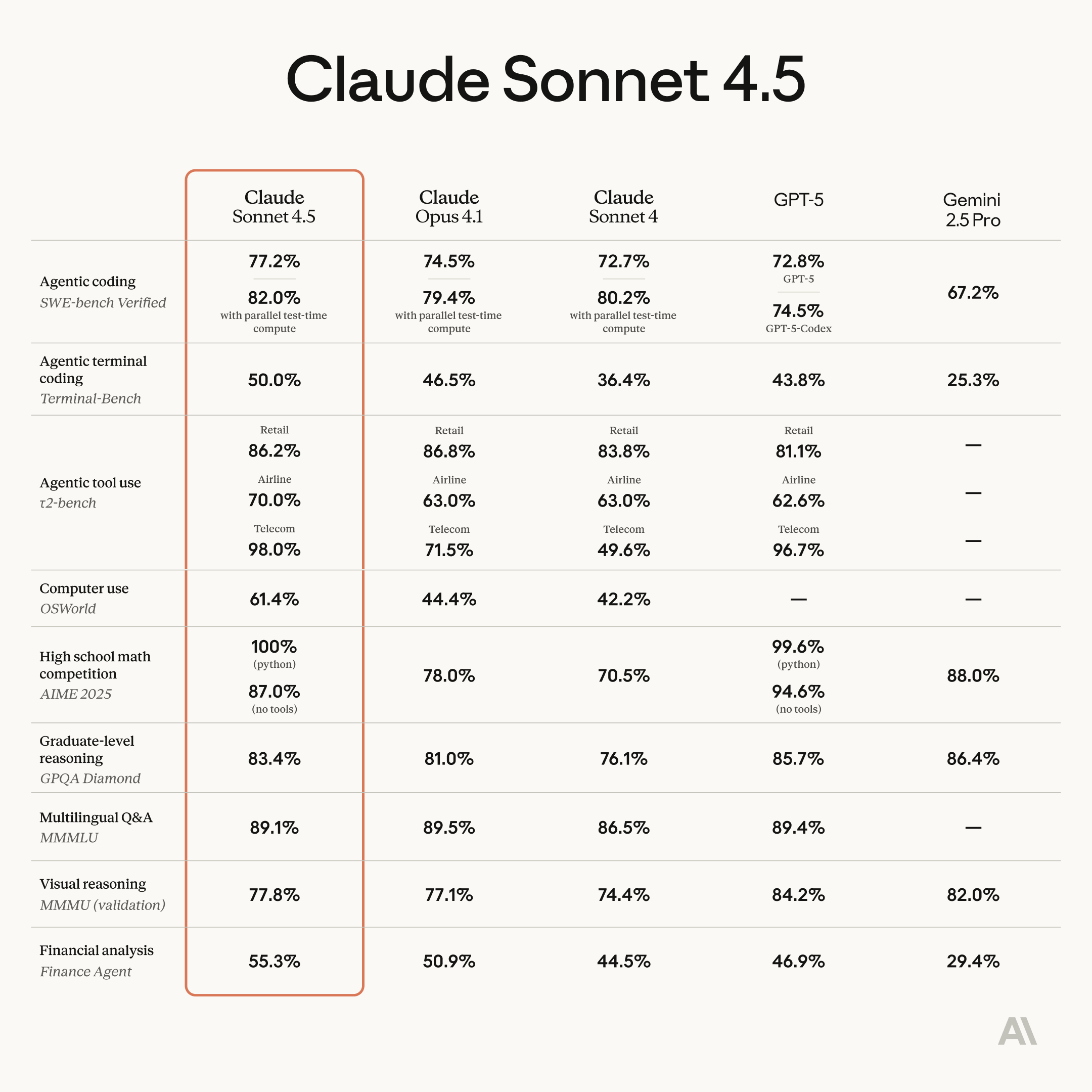
Anthropic Claude Sonnet 4.5 Released, Significantly Boosting Programming and Agent Capabilities: Anthropic officially released Claude Sonnet 4.5, hailed as the world’s most powerful programming model, achieving significant breakthroughs in agent construction, computer usage, reasoning, and mathematical abilities. The model can work autonomously and continuously for over 30 hours, topping the SWE-bench Verified test and setting new records in the OSWorld computer task benchmark. New features include Claude Code’s “checkpoint” rollback function, a VS Code plugin, and context editing and memory tools for the API. Additionally, an experimental feature, “Imagine with Claude,” was launched, allowing real-time generation of software interfaces. Sonnet 4.5 also boasts substantial security enhancements, reducing undesirable behaviors like deception and sycophancy, and has achieved AI Safety Level 3 (ASL-3) certification, with a 10x reduction in false positives. Priced consistently with Sonnet 4, it further enhances cost-effectiveness and is expected to ignite a new round of AI programming competition. (Source: Reddit r/ClaudeAI, 36氪, 36氪, 36氪, 36氪, 36氪, Reddit r/ChatGPT, dotey, dotey, dotey)
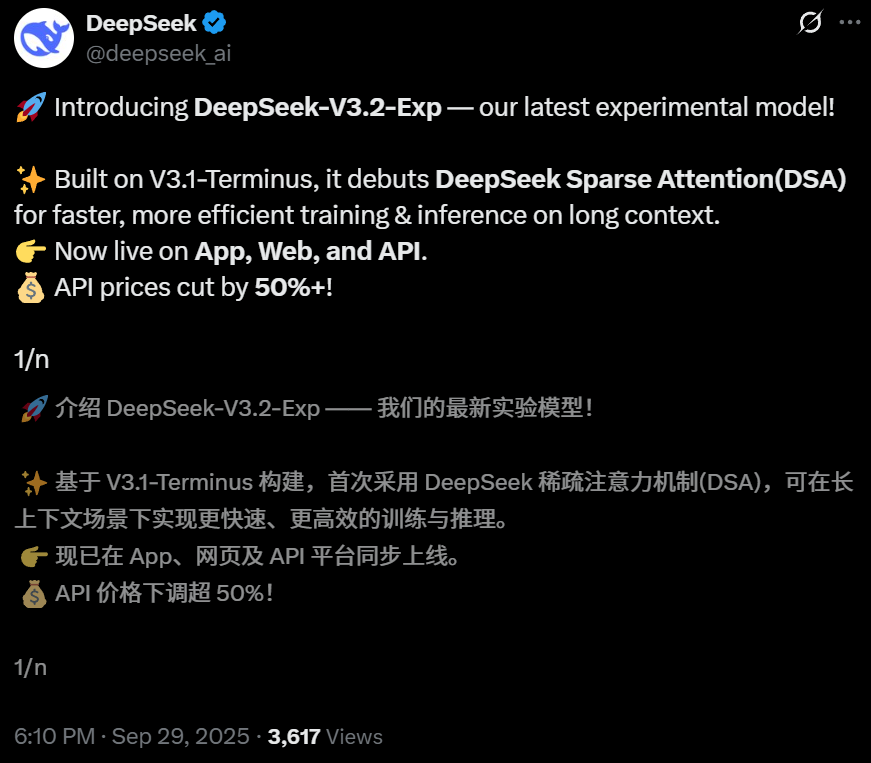
DeepSeek-V3.2-Exp Released, Introducing Sparse Attention Mechanism DSA and Price Reduction: DeepSeek released its experimental model V3.2-Exp, introducing the DeepSeek Sparse Attention (DSA) mechanism, which significantly improves long-context training and inference efficiency, while reducing API prices by over 50%. DSA efficiently identifies key tokens for fine-grained computation using a “lightning indexer,” reducing attention complexity from O(L²) to O(Lk). Chinese AI chip manufacturers like Huawei Ascend, Cambricon, and Hygon Information have achieved Day 0 adaptation, further promoting the development of the domestic computing ecosystem. The model also open-sourced its GPU operator in TileLang, benchmarking against NVIDIA CUDA, to facilitate developer prototyping and debugging. Despite some trade-offs in certain capabilities, its architectural innovation and cost-effectiveness point to a new direction for large model long-text processing. (Source: 36氪, 36氪, 36氪, 量子位, 量子位, 量子位, Reddit r/LocalLLaMA, Twitter)
OpenAI Launches ChatGPT Instant Checkout, Entering E-commerce: OpenAI has introduced an “Instant Checkout” feature in ChatGPT, allowing users to directly purchase products from Etsy and Shopify within the conversation, without needing to navigate to external websites. This feature is based on the “Agentic Commerce Protocol” developed in collaboration with Stripe and has been open-sourced, aiming to convert ChatGPT’s massive traffic into commercial transactions. Initially supporting the US market, future plans include expanding to multi-item shopping carts and more regions. This move is seen as a significant step in OpenAI’s commercialization, potentially becoming a major revenue source and having a profound impact on traditional e-commerce and advertising industries. (Source: 36氪, 36氪, Reddit r/artificial, Reddit r/artificial, Twitter, Twitter, Twitter, Twitter)

OpenAI Prepares to Launch Sora 2 Social App, Building an AI Short Video Platform: OpenAI is preparing to launch a standalone social application powered by its latest video model, Sora 2. The app is designed to be highly similar to TikTok, featuring a vertical video stream and swipe browsing, but all content is AI-generated. Users can generate video clips up to 10 seconds long and use identity verification to include their own likeness in videos. This move aims to replicate ChatGPT’s success in the text domain, allowing the public to intuitively experience the potential of AI video and directly enter the competitive arena with Meta and Google. However, OpenAI’s strategy of “defaulting to using copyrighted content unless rights holders actively opt out” has raised strong concerns among content creators and film companies, signaling an intense struggle between AI and intellectual property. (Source: 36氪, Reddit r/artificial, Twitter, Twitter)

🎯 TRENDS
Huawei Pangu 718B Model Ranks Second in Open-Source Category on SuperCLUE Chinese Large Model List: Huawei’s openPangu-Ultra-MoE-718B model ranked second in the open-source category of the SuperCLUE Chinese Large Model General Benchmark. The model adopts a training philosophy of “relying on thinking, not just data stacking,” using data construction principles of “quality-first, diversity coverage, and complexity adaptation,” along with a three-stage pre-training strategy (general, reasoning, annealing) to build extensive world knowledge and enhance logical reasoning capabilities. To mitigate hallucination issues, a “critical internalization” mechanism was introduced; to improve tool usage, an upgraded ToolACE synthesis framework was employed. (Source: 量子位)

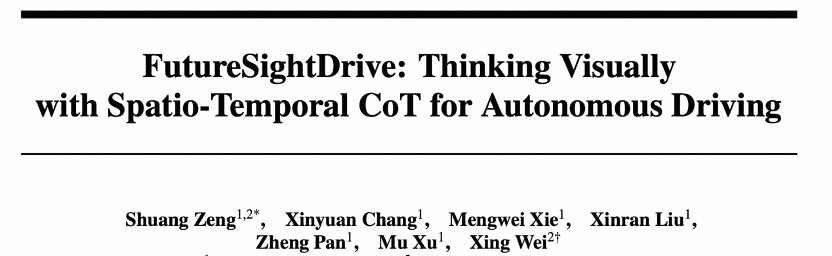
FSDrive Unifies VLA and World Models, Advancing Autonomous Driving Towards Visual Reasoning: FSDrive (FutureSightDrive) proposes “Spatio-Temporal Visual CoT,” which unifies future image frames as intermediate reasoning steps, jointly performing visual reasoning with future scenes and perception results, thereby advancing autonomous driving from symbolic reasoning to visual reasoning. This method, without modifying existing MLLM architectures, activates image generation capabilities through vocabulary expansion and autoregressive visual generation, and injects physical priors with progressive visual CoT. The model acts as both a “world model” to predict the future and an “inverse dynamics model” for trajectory planning. (Source: 36氪)
GPT-5 Provides Key Insights for Quantum Computing, Praised by Guru Scott Aaronson: Quantum computing theory guru Scott Aaronson revealed that GPT-5 provided crucial proof ideas for his quantum complexity theory research in less than half an hour, solving a problem that had plagued his team. Scott Aaronson stated that GPT-5 has made significant progress in tackling the most human-like intellectual activities, marking a “sweet spot” for human-AI collaboration, capable of providing breakthrough inspiration to researchers at critical moments. (Source: 量子位, Twitter)

HuggingFace Accelerates Qwen3-8B Agent Model Inference on Intel Core Ultra: HuggingFace, in collaboration with Intel, successfully boosted the inference speed of the Qwen3-8B Agent model on Intel Core Ultra integrated GPUs by 1.4 times, using OpenVINO.GenAI and a depth-pruned Qwen3-0.6B draft model. This optimization makes running Agent applications on AI PCs more efficient, especially for complex workflows requiring multi-step reasoning and tool invocation, further promoting the practical application of local AI Agents. (Source: HuggingFace Blog)

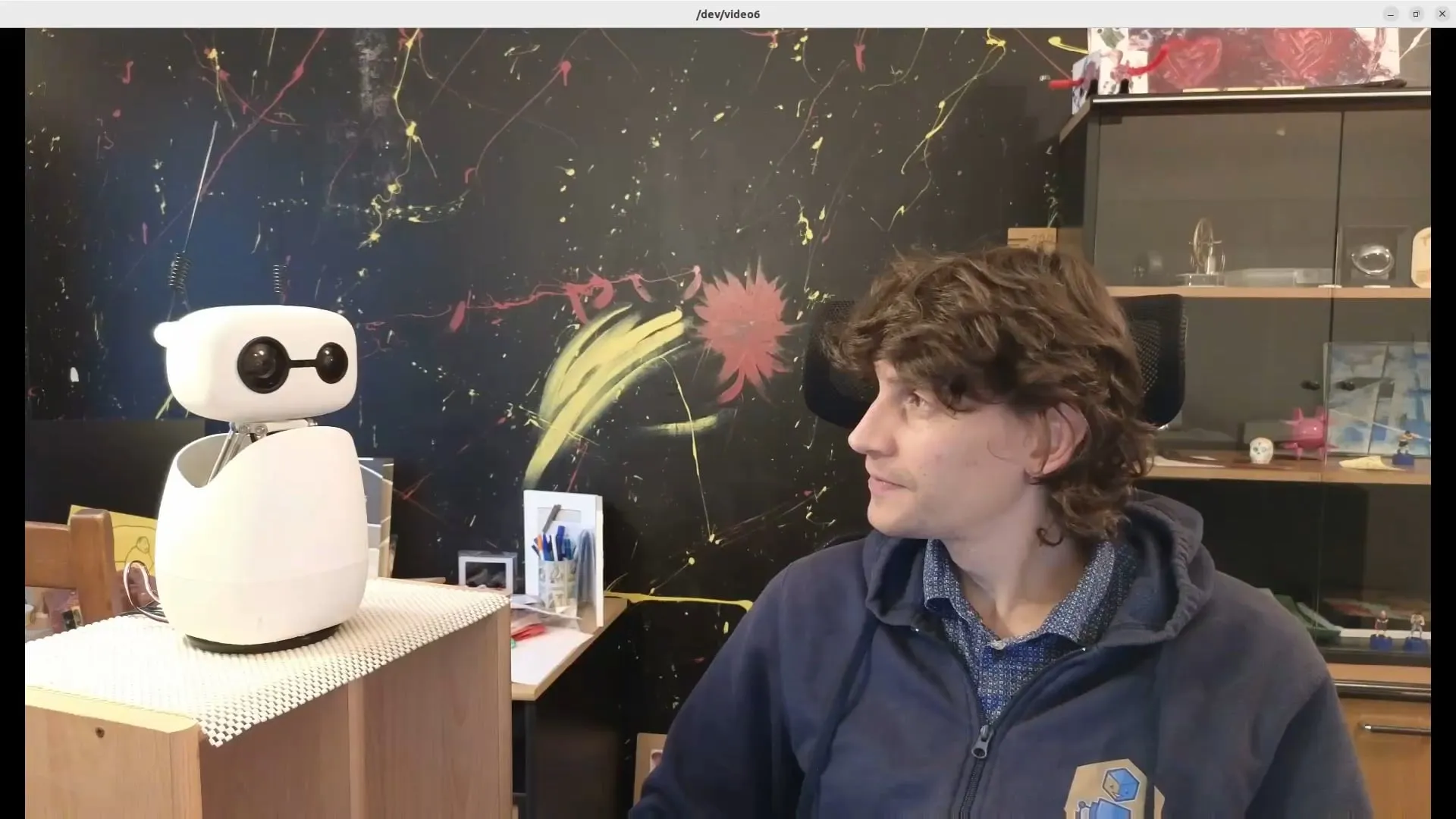
Reachy Mini Robot Integrates GPT-4o, Achieving Multimodal Interaction: The Reachy Mini robot from Hugging Face / Pollen Robotics has successfully integrated OpenAI’s GPT-4o model, significantly enhancing its multimodal interaction capabilities. New features include image analysis (the robot can describe and reason about photos it takes), face tracking (maintaining eye contact), motion fusion (head bobbing, face tracking, emotions/dancing running simultaneously), local facial recognition, and autonomous behavior when idle. These advancements make human-robot interaction more natural and fluid, though challenges remain in memory systems, speech recognition, and complex crowd strategies. (Source: Reddit r/ChatGPT, Twitter)
Intel Releases New LLM Scaler Beta for GenAI on Battlemage GPUs: Intel has released a new LLM Scaler Beta, designed to optimize generative AI (GenAI) performance on Battlemage GPUs. This move signals Intel’s continued investment in AI hardware and software ecosystems to enhance its GPUs’ competitiveness in large language model inference and generation tasks. (Source: Reddit r/artificial)
Claude Launches Usage Limit Dashboard, ChatGPT Introduces Parental Controls: Anthropic has launched a real-time usage limit dashboard for Claude Code and Claude App, allowing users to track their token consumption in response to previously announced weekly rate limits. Concurrently, OpenAI has introduced parental controls in ChatGPT, enabling parents to link teenage accounts, automatically providing stronger safety protections, and allowing adjustments to features and usage limits, though parents cannot view specific conversation content. (Source: Reddit r/ClaudeAI, 36氪)

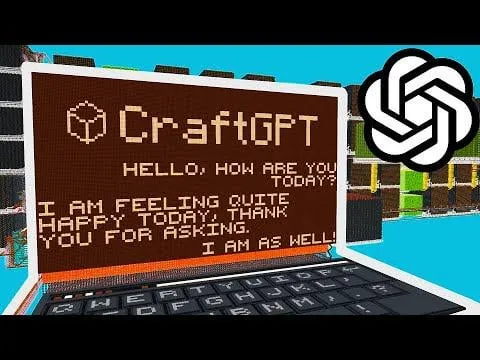
5 Million Parameter Language Model Runs in Minecraft, Showcasing AI Innovation: Sammyuri has built a complex Redstone system in Minecraft, successfully running a language model with approximately 5 million parameters and endowing it with basic conversational abilities. This groundbreaking achievement demonstrates the possibility of implementing local AI in a gaming environment and has sparked widespread community interest and discussion about AI applications on non-traditional platforms. (Source: Reddit r/LocalLLaMA, Twitter)
Inspur Information AI Server Achieves 8.9ms Inference Speed, 1 Yuan per Million Tokens: Inspur Information released its hyper-scalable AI servers Yuanbrain HC1000 and Yuanbrain SD200 supernode, pushing AI inference speeds to new records. The Yuanbrain SD200 achieved an 8.9ms per-token output time (TPOT) on the DeepSeek-R1 model, nearly doubling the previous SOTA, and supports trillion-parameter large model inference and multi-agent real-time collaboration. The Yuanbrain HC1000 reduced the cost per million tokens to 1 yuan, with a 60% reduction in single-card cost. These breakthroughs aim to address the speed and cost bottlenecks faced by the agent industry, providing efficient and low-cost computing infrastructure for the large-scale deployment of multi-agent collaboration and complex task reasoning. (Source: 量子位)

New Feedforward 3D Gaussian Splatting Method: Zhejiang University Team Proposes “Voxel-Aligned”: A team from Zhejiang University proposed VolSplat, a “voxel-aligned” feedforward 3D Gaussian Splatting (3DGS) framework, aiming to address the geometric consistency and Gaussian density allocation bottlenecks of existing “pixel-aligned” methods in multi-view 3D reconstruction. VolSplat fuses multi-view 2D information in 3D space and refines features using a sparse 3D U-Net, achieving higher quality, more robust, and more efficient 3D reconstruction. The method outperforms various baselines on public datasets and demonstrates strong zero-shot generalization on unseen datasets. (Source: 量子位)

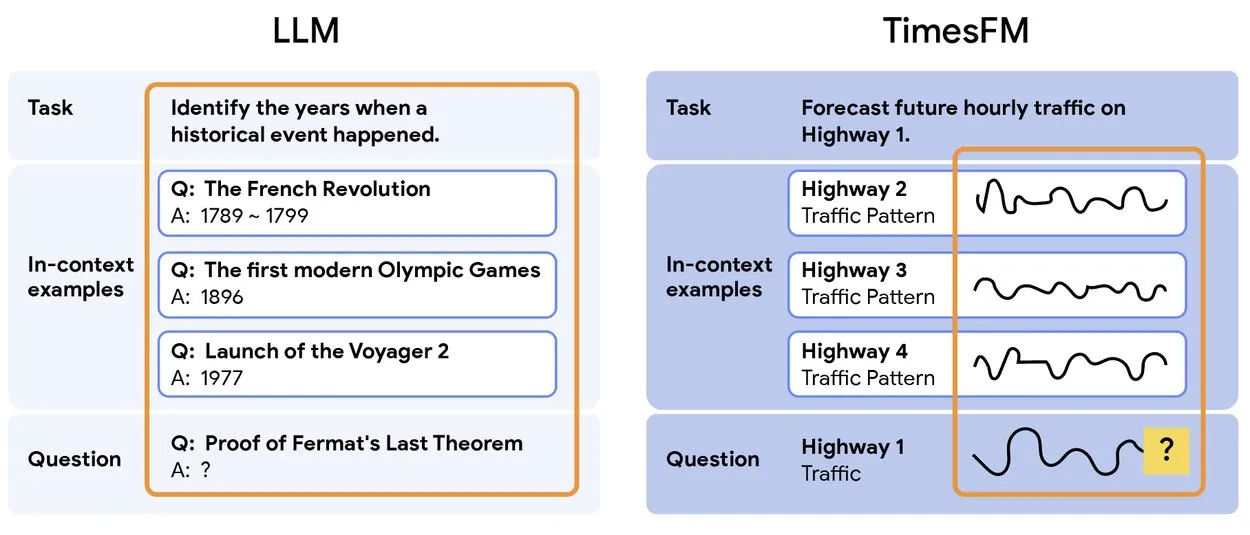
TimesFM 2.5: Pre-trained Time Series Forecasting Model Released: TimesFM 2.5 has been released, a pre-trained model for time series forecasting. Its parameter count has been reduced from 500M to 200M, and context length increased from 2K to 16K, demonstrating excellent performance in zero-shot settings. The model is now available on Hugging Face under an Apache 2.0 license, offering a more efficient and powerful solution for time series forecasting tasks. (Source: Twitter)
Yunpeng Technology Launches AI+Health Products, Promoting AI Application in Family Health: Yunpeng Technology, in collaboration with ShuaiKang and Skyworth, launched the “Digitalized Future Kitchen Lab” and smart refrigerators equipped with an AI health large model. The AI health large model optimizes kitchen design and operation, while the smart refrigerator provides personalized health management through “Health Assistant Xiaoyun.” This launch marks a breakthrough for AI in daily health management, aiming to deliver personalized health services through smart devices and enhance family health technology. (Source: 36氪)
Alibaba Releases 1 Trillion Parameter Open-Source Thought Model Ring-1T-preview: Alibaba’s Ant Ling team has released Ring-1T-preview, the first 1 trillion parameter open-source thought model, aiming for “deep thinking, without waiting.” The model has achieved early excellent results in natural language processing tasks, including AIME25, HMMT25, ARC-AGI-1, LCB, and Codeforces benchmarks. Furthermore, it solved IMO25’s Q3 problem in one go and provided partial solutions for Q1/Q2/Q4/Q5, demonstrating its powerful reasoning and problem-solving capabilities. (Source: Twitter, Twitter, Twitter)
🧰 TOOLS
PopAi Launches “Slide Agent,” AI One-Click Presentation Generation: The PopAi team has launched “Slide Agent,” a tool designed to simplify the presentation creation process. Users can input their requirements via a Prompt, choose from over 300 templates, and have AI automatically generate a draft, adjust layout, charts, images, and logos, finally downloading it as an editable .pptx file. This tool integrates functionalities of ChatGPT and Canva, significantly lowering the barrier and time cost for presentation creation. (Source: Twitter)
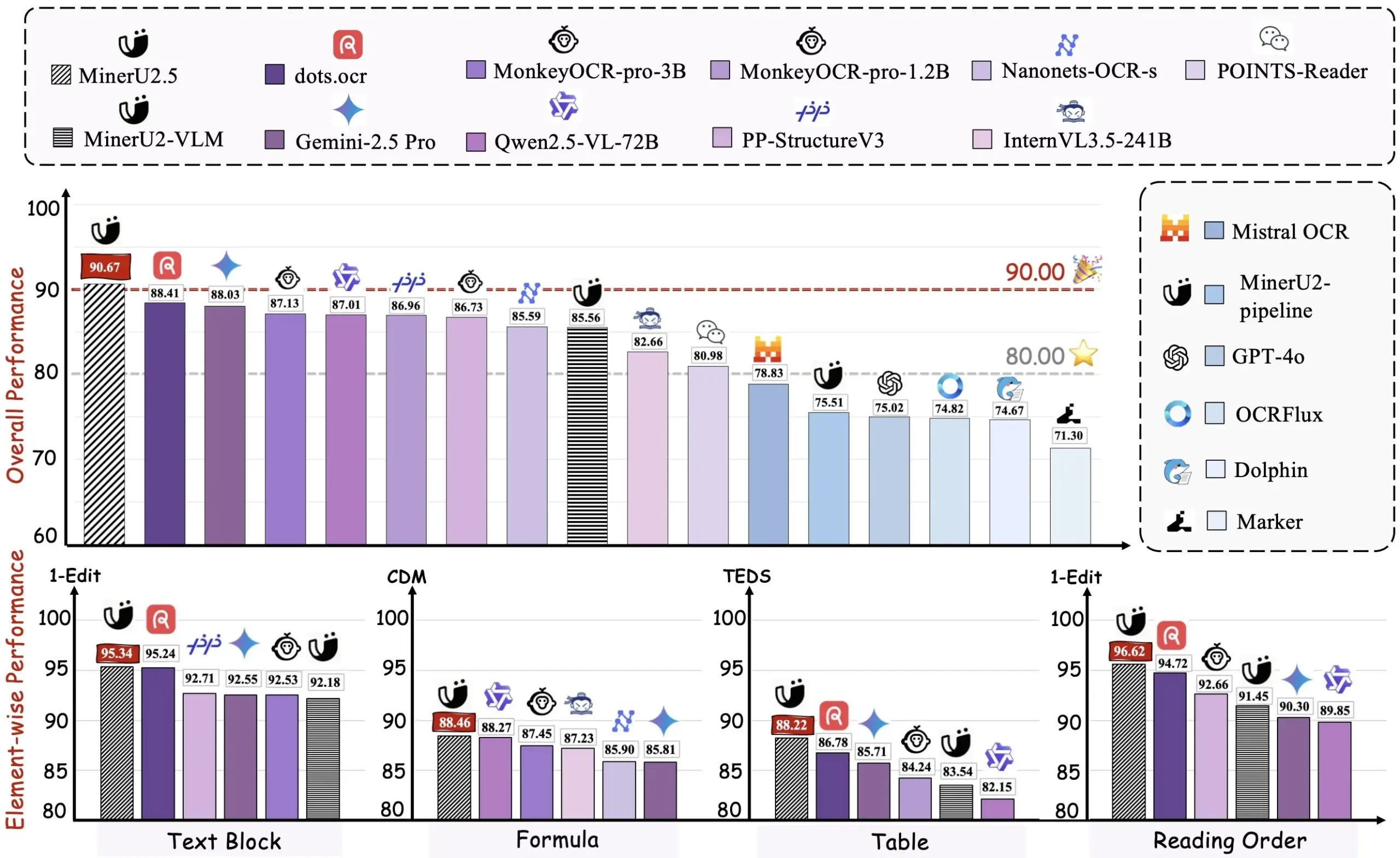
Alibaba Open-Sources PDF to Markdown Tool Miner U2.5: Alibaba’s team has open-sourced the PDF to Markdown tool Miner U2.5, with a demo now available on HuggingFace. This tool efficiently converts PDF documents to Markdown format, facilitating content extraction, editing, and reuse for developers and researchers who handle large volumes of PDF documents, making it a practical AI-assisted tool. (Source: dotey)
VEED Animate 2.2 Launched, Supporting Video Style Reshaping and Character Swapping: VEED Animate version 2.2 has officially launched, powered by WAN 2.2 technology. This tool allows users to easily reshape video styles from a single image, instantly swap characters in videos, and create video clips at 10x speed. These new features greatly simplify the video creation process, offering content creators more AI-driven creative possibilities. (Source: TomLikesRobots)
LangChain Focuses on LLM Response Standardization, Supporting Complex Features: LangChain, in its v1 development, is prioritizing the standardization of LLM responses to address increasingly complex LLM functionalities such as server-side tool calling, reasoning, and citations. The framework aims to resolve API format incompatibilities between different LLM providers, offering developers a unified interface to simplify the construction of multimodal agents and complex workflows. (Source: LangChainAI, Twitter)
Hugging Face Transformers.js Supports Offline AI Model Execution in Browsers: Hugging Face’s Transformers.js library allows users to run AI models like Llama 3.2 offline in browsers, leveraging ONNX and WebGPU technologies. This enables developers to perform AI tasks such as chatbots, object detection, and background removal locally, without relying on cloud services, enhancing data privacy and processing speed. (Source: Twitter)
ToolUniverse Ecosystem Helps AI Scientists Build and Integrate Tools: ToolUniverse is an ecosystem designed for building AI scientists. It standardizes how AI scientists identify and call tools, integrating over 600 machine learning models, datasets, APIs, and scientific packages for data analysis, knowledge retrieval, and experimental design. The platform automatically optimizes tool interfaces, creates new tools from natural language descriptions, and iteratively refines tool specifications, combining tools into agent workflows, thereby fostering collaboration in the AI discovery process. (Source: HuggingFace Daily Papers)
EasySteer Framework Enhances LLM Control Performance and Scalability: EasySteer is a unified framework based on vLLM, designed to enhance the control performance and scalability of LLMs. Through a modular architecture, pluggable interfaces, fine-grained parameter control, and pre-computed steering vectors, it achieves a 5.5-11.4x speedup and effectively reduces overthinking and hallucinations. EasySteer transforms LLM control from a research technique into a production-grade capability, providing critical infrastructure for deployable and controllable language models. (Source: HuggingFace Daily Papers)
VibeGame: AI-Assisted Game Engine Based on WebStack: VibeGame is an advanced declarative game engine built on three.js, rapier, and bitecs, specifically designed for AI-assisted game development. It enables AI to understand and generate game code more efficiently through high levels of abstraction, built-in physics and rendering capabilities, and an Entity-Component-System (ECS) architecture. While currently primarily suitable for simple platform games, its open-source nature and AI-friendly syntax offer a promising solution for AI-driven game development. (Source: HuggingFace Blog)

AI Research Map Tool Integrates 900k Papers, Provides Cited Answers: An innovative AI tool semantically groups and visualizes 900,000 AI research papers from the past decade, forming a detailed research map. Users can ask questions to the tool and receive answers with precise citations, greatly simplifying the process for researchers to find and understand vast amounts of academic literature, thereby improving research efficiency. (Source: Reddit r/ArtificialInteligence)
Kroko ASR: A Fast, Streaming Alternative to Whisper: Kroko ASR is a newly open-sourced speech-to-text model, positioned as a fast, streaming alternative to Whisper. It boasts a smaller model size, faster CPU inference speed (supporting mobile and browser-side), and virtually no hallucinations. Kroko ASR supports multiple languages, aiming to lower the barrier to speech AI, making it easier to deploy and train on edge devices. (Source: Reddit r/LocalLLaMA)

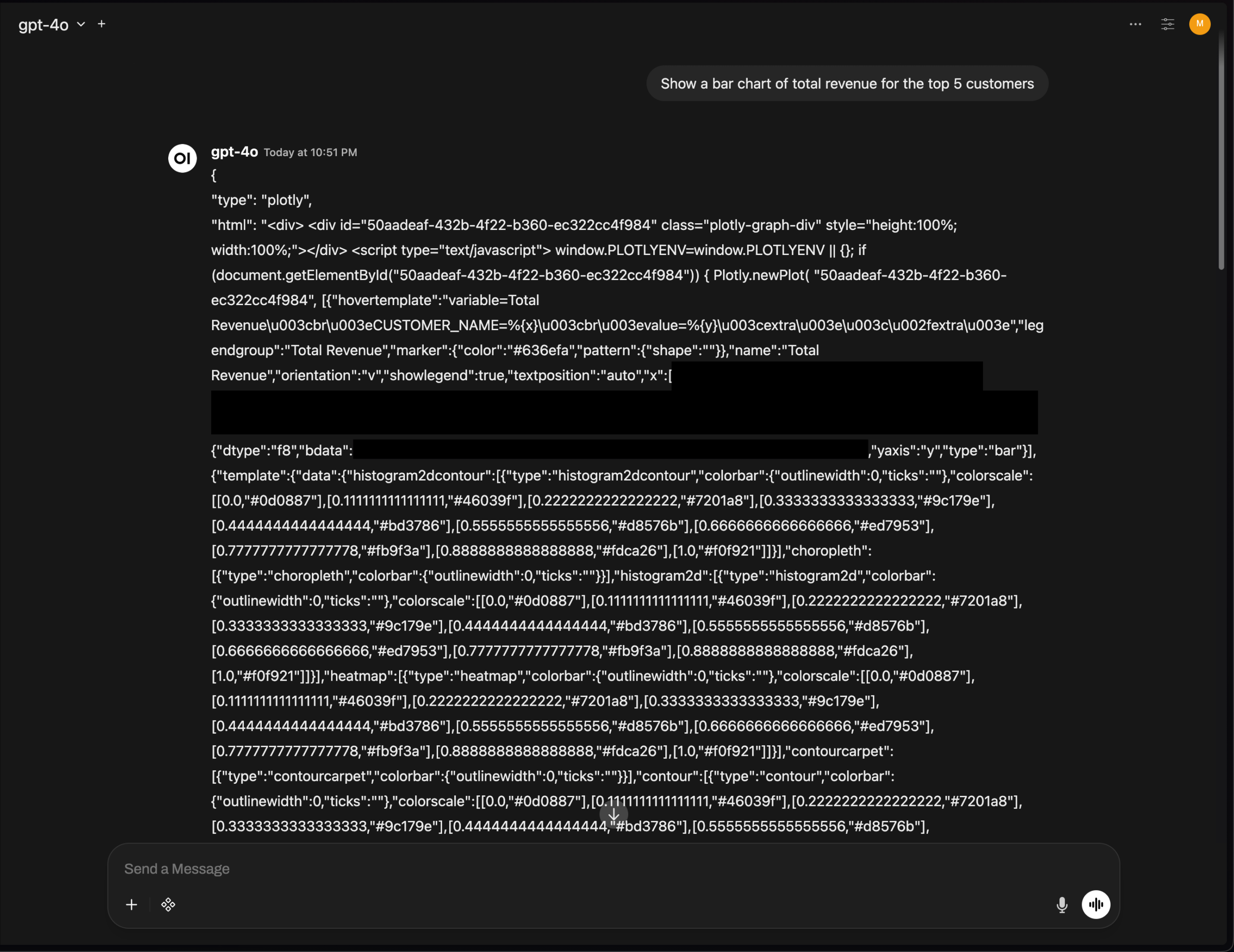
OpenWebUI Plotly Chart Rendering Issue Highlights AI Tool UI Integration Challenges: OpenWebUI’s v0.6.32 version experienced an issue where Plotly charts failed to render correctly, instead displaying raw JSON. Users reported that the backend returned correct JSON, but the frontend failed to trigger rendering, reflecting the technical challenges AI tools still face in frontend UI integration and rich text rendering, requiring further optimization from the developer community. (Source: Reddit r/OpenWebUI)
📚 LEARNING
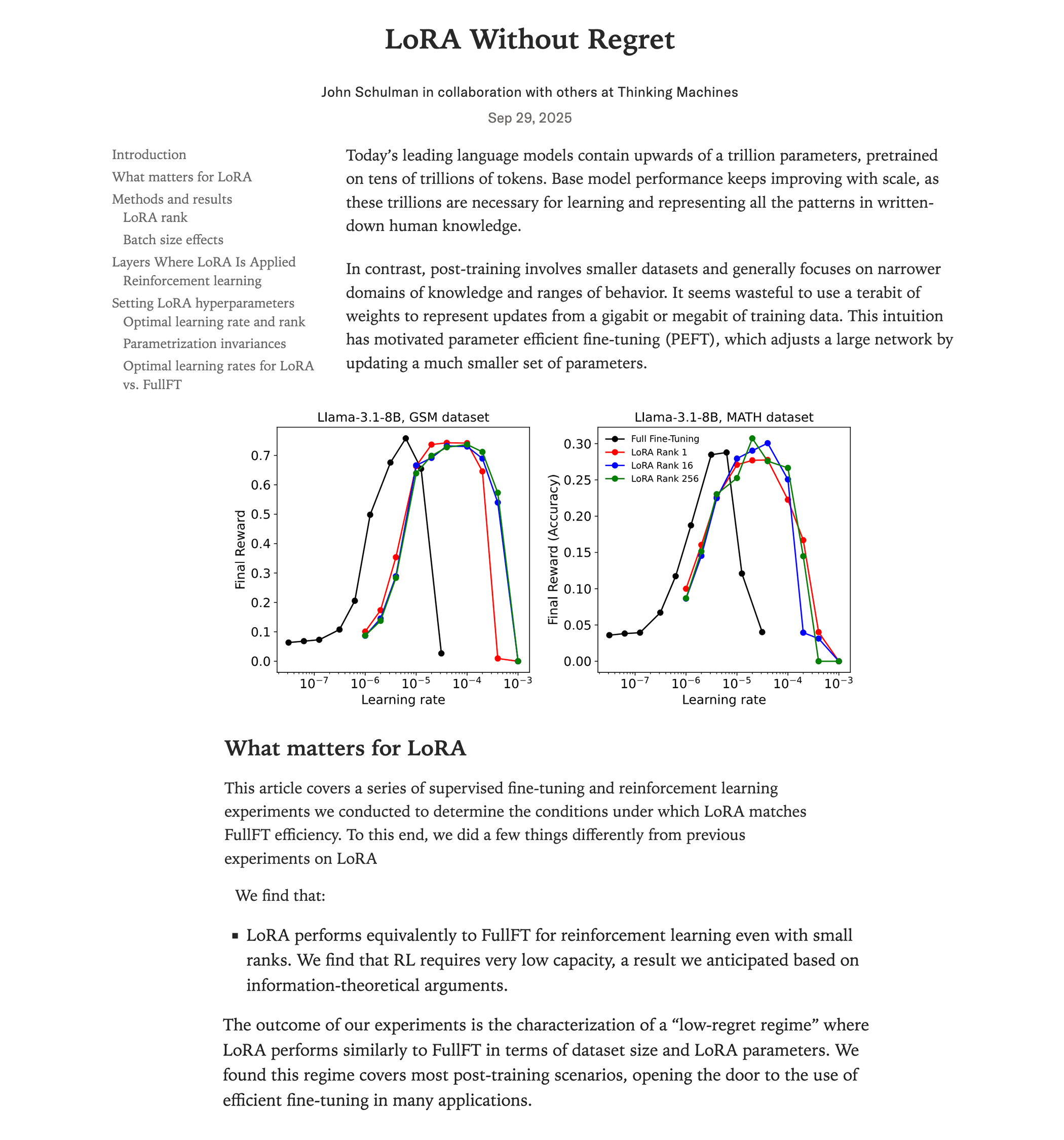
LoRA Fine-tuning vs. Full Fine-tuning Performance Comparison Study: Latest research from Thinking Machines (John Schulman’s team) indicates that in reinforcement learning, when LoRA (Low-Rank Adaptation) is applied correctly, its performance can match full fine-tuning with fewer resources (approximately 2/3 the computation), even performing well at rank=1. The study emphasizes that LoRA should be applied to all layers (including MLP/MoE) and use a learning rate 10 times higher than full fine-tuning. This finding significantly lowers the barrier to training high-performance RL models, enabling more developers to achieve high-quality models on a single GPU. (Source: Reddit r/LocalLLaMA, Twitter, Twitter)
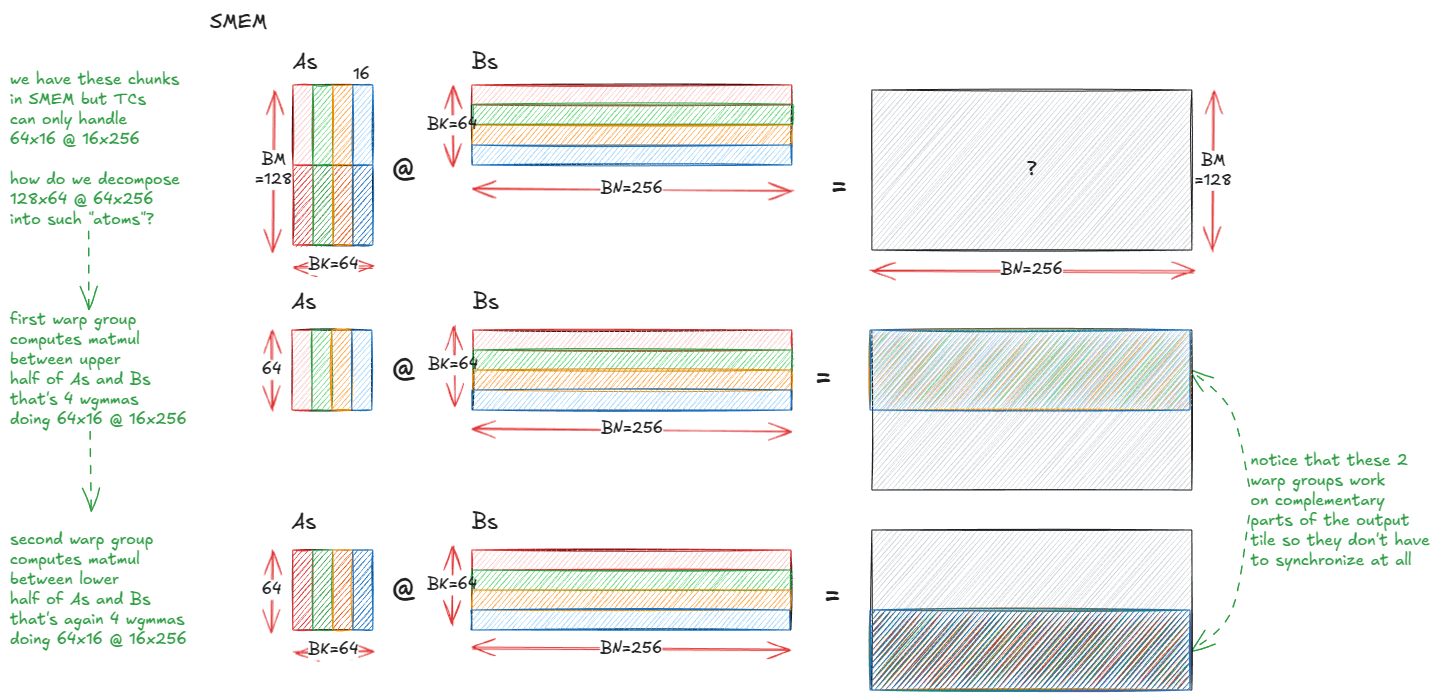
Dissecting High-Performance Matrix Multiplication Kernels in NVIDIA GPUs: A deep technical blog post meticulously dissects the implementation mechanisms of high-performance matrix multiplication (matmul) kernels inside NVIDIA GPUs. The article covers GPU architecture fundamentals, memory hierarchy (GMEM, SMEM, L1/L2), PTX/SASS programming, and advanced features of the Hopper (H100) architecture such as TMA and wgmma instructions. This resource aims to help developers deeply understand CUDA programming and GPU performance optimization, which is crucial for training and inferring Transformer models. (Source: Reddit r/deeplearning, Twitter)
Stanford CS231N Deep Learning for Computer Vision Course Lectures Now on YouTube: Stanford University’s acclaimed CS231N (Deep Learning for Computer Vision) course lectures are now freely available on YouTube. This provides a valuable opportunity for learners worldwide to access high-quality AI educational resources, covering computer vision deep learning knowledge from fundamental concepts to cutting-edge applications. (Source: Reddit r/deeplearning)
RL-ZVP: Enhancing LLM Reinforcement Learning Reasoning with Zero-Variance Prompts: A new study proposes the “RL with Zero-Variance Prompts (RL-ZVP)” method, aimed at improving the reinforcement learning reasoning capabilities of large language models (LLMs). This method no longer ignores “zero-variance prompts” (where all model responses receive the same reward) but instead extracts valuable learning signals from them, directly rewarding correctness and penalizing errors, and using token-level entropy to guide advantage shaping. Experimental results show that RL-ZVP significantly improves accuracy and pass rates on mathematical reasoning benchmarks compared to traditional methods. (Source: Reddit r/MachineLearning)
Future-Guided Learning: A Predictive Approach to Enhance Time Series Forecasting: A study proposes “Future-Guided Learning” to enhance time series event prediction through a dynamic feedback mechanism. This method includes a detection model that analyzes future data and a prediction model that forecasts based on current data. When the prediction model deviates from the detection model, the prediction model undergoes more significant updates to minimize “surprise,” thereby dynamically adjusting parameters and effectively improving the accuracy of time series forecasting. (Source: Reddit r/MachineLearning)
The Future of AI is in Lower Dimensions: Yann Lecun on Abstract Representation Learning: AI pioneer Yann Lecun, in an interview with Lex Fridman, suggested that the next leap in AI will come from learning in low-dimensional latent spaces, rather than directly processing high-dimensional raw data like pixels. He believes that truly intelligent systems need to learn abstract representations of the world’s causal structure and physical dynamics to make accurate predictions even when details change. This approach would make models more flexible, robust, reduce reliance on massive datasets, and lower computational costs. (Source: Reddit r/ArtificialInteligence)
SIRI: Scaling Iterative Reinforcement Learning with Interleaved Compression: SIRI (Scaling Iterative Reinforcement Learning with Interleaved Compression) is a simple yet effective reinforcement learning method that dynamically adjusts the maximum rollout length during training by iteratively compressing and expanding the inference budget. This training mechanism forces the model to make precise decisions within limited contexts, reducing redundant tokens while providing space for exploration and planning, thereby steadily improving the efficiency and accuracy of large reasoning models in the performance-efficiency trade-off. (Source: HuggingFace Daily Papers)
MultiCrafter: Multi-Agent Generative Model with Spatially Decoupled Attention and Identity-Aware Reinforcement Learning: MultiCrafter is a framework designed for high-fidelity, preference-aligned multi-agent image generation. It effectively mitigates attribute leakage by introducing explicit positional supervision to separate attention regions between different agents. Concurrently, the framework enhances model capacity with a Mixture-of-Experts (MoE) architecture and designs a novel online reinforcement learning framework, combining scoring mechanisms and stable training strategies to ensure high fidelity of generated agent images and strong alignment with human aesthetic preferences. (Source: HuggingFace Daily Papers)
Visual Jigsaw: Enhancing MLLMs’ Visual Understanding Through Self-Supervised Post-Training: Visual Jigsaw is a general self-supervised post-training framework designed to enhance the visual understanding capabilities of multimodal large language models (MLLMs). This method partitions and shuffles visual inputs, then requires the model to reconstruct the correct permutation order through natural language. This Reinforcement Learning with Verifiable Rewards (RLVR) approach, without additional visual generation components or manual annotations, significantly improves MLLMs’ performance in fine-grained perception, temporal reasoning, and 3D spatial understanding. (Source: HuggingFace Daily Papers)
MGM-Omni: Extending Omni LLMs to Personalized Long-Form Speech Generation: MGM-Omni is a unified Omni LLM that achieves multimodal understanding and expressive long-form speech generation through its unique “brain-mouth” dual-track tokenization architecture. This design decouples multimodal reasoning from real-time speech generation, supporting efficient cross-modal interaction and low-latency streaming voice cloning, and demonstrating excellent data efficiency. Experiments show that MGM-Omni outperforms existing open-source models in maintaining timbre consistency, generating natural context-aware speech, and long-form audio and multimodal understanding. (Source: HuggingFace Daily Papers)
SID: Learning Goal-Oriented Language Navigation Through Self-Improving Demonstrations: SID (Self-Improving Demonstrations) is a method for learning goal-oriented language navigation that significantly enhances the exploration capabilities and generalization of navigation agents in unknown environments through iterative self-improving demonstrations. This method first trains an initial agent using shortest path data, then uses this agent to generate new exploration trajectories, which provide stronger exploration strategies to train better agents, thereby achieving continuous performance improvement. Experiments show that SID achieves SOTA performance on tasks like REVERIE and SOON, with a success rate of 50.9% on SOON’s unseen validation set, surpassing previous methods by 13.9%. (Source: HuggingFace Daily Papers)
LOVE-R1: Enhancing Long Video Understanding Through Adaptive Scaling Mechanism: The LOVE-R1 model aims to resolve the conflict between long-term temporal understanding and detailed spatial perception in long video understanding. This model introduces an adaptive scaling mechanism: it first densely samples frames at low resolution, and when spatial details are needed, the model can scale up interested video segments to high resolution based on inference until critical visual information is obtained. The entire process is achieved through multi-step reasoning, combined with CoT data fine-tuning and decoupled reinforcement fine-tuning, achieving significant improvements in long video understanding benchmarks. (Source: HuggingFace Daily Papers)
Euclid’s Gift: Enhancing Visual Language Model Spatial Reasoning Through Geometric Proxy Tasks: Euclid’s Gift is a study that enhances the spatial perception and reasoning capabilities of Visual Language Models (VLMs) through geometric proxy tasks. This project constructed Euclid30K, a multimodal dataset containing 30K planar and solid geometry problems, and fine-tuned Qwen2.5VL and RoboBrain2.0 series models using Group Relative Policy Optimization (GRPO). Experiments demonstrate that the trained models achieved significant zero-shot improvements across four spatial reasoning benchmarks, including Super-CLEVR and Omni3DBench, with RoboBrain2.0-Euclid-7B reaching 49.6% accuracy, surpassing previous SOTA models. (Source: HuggingFace Daily Papers)
SphereAR: Improving Continuous Token Autoregressive Generation Through Hyperspherical Latent Space: SphereAR aims to address issues caused by heterogeneous variance in VAE latent spaces in continuous token autoregressive (AR) image generation models. The core design constrains all AR inputs and outputs (including post-CFG) to a fixed-radius hypersphere, utilizing a hyperspherical VAE. Theoretical analysis shows that the hyperspherical constraint eliminates the primary cause of variance collapse, thereby stabilizing AR decoding. Experiments demonstrate that SphereAR achieves SOTA performance on ImageNet generation tasks, surpassing diffusion models and masked generation models of comparable parameter scales. (Source: HuggingFace Daily Papers)
AceSearcher: Guiding LLM Reasoning and Search Through Reinforced Self-Play: AceSearcher is a cooperative self-play framework designed to enhance LLMs’ search-augmented capabilities in complex reasoning tasks. This framework trains a single LLM to alternate between decomposing complex queries and integrating retrieved context, optimizing final answer accuracy through supervised fine-tuning and reinforcement fine-tuning, without intermediate annotations. Experiments show that AceSearcher significantly outperforms SOTA baselines in multiple reasoning-intensive tasks; on document-level financial reasoning tasks, AceSearcher-32B matched DeepSeek-V3’s performance with less than 5% of its parameters. (Source: HuggingFace Daily Papers)
SparseD: Sparse Attention Mechanism for Diffusion Language Models: SparseD is a sparse attention method for Diffusion Language Models (DLMs), designed to address the quadratic complexity bottleneck of attention computation under long context lengths. This method achieves lossless acceleration by pre-computing head-specific sparse patterns and reusing them across all denoising steps, while using full attention in early denoising steps and then switching to sparse attention. Experimental results show that SparseD can achieve up to 1.5x speedup compared to FlashAttention at 64k context length, effectively improving the inference efficiency of DLMs in long-context applications. (Source: HuggingFace Daily Papers)
SLA: Accelerating Diffusion Transformers with Trainable Sparse-Linear Attention: SLA (Sparse-Linear Attention) is a trainable attention method designed to accelerate Diffusion Transformer (DiT) models, especially for attention computation in video generation. This method categorizes attention weights into key, marginal, and negligible, applying O(N²) and O(N) attention respectively, and skipping negligible parts. By fusing these computations within a single GPU kernel, and after a few fine-tuning steps, SLA achieves a 20x reduction in attention computation for DiT models and a 2.2x end-to-end acceleration in video generation without loss of generation quality. (Source: HuggingFace Daily Papers)
OpenGPT-4o-Image: Comprehensive Dataset for Advanced Image Generation and Editing: OpenGPT-4o-Image is a large-scale dataset constructed by combining hierarchical task classification and GPT-4o automated data generation methods, aimed at improving the performance of unified multimodal models in image generation and editing. The dataset contains 80k high-quality instruction-image pairs, covering 11 major domains and 51 subtasks, including text rendering, style control, scientific images, and complex instruction editing. Models fine-tuned on OpenGPT-4o-Image achieved significant performance improvements across multiple benchmarks, demonstrating the critical role of systematic data construction in advancing multimodal AI capabilities. (Source: HuggingFace Daily Papers)
SANA-Video: Small Diffusion Model for Efficient 720p Minute-Long Video Generation: SANA-Video is a small diffusion model capable of efficiently generating videos up to 720×1280 resolution and minute-long durations. It achieves high-resolution, high-quality, long video generation with strong text-video alignment through a linear DiT architecture and constant-memory KV caching. SANA-Video’s training cost is only 1% of MovieGen’s, and when deployed on an RTX 5090 GPU, it can generate a 5-second 720p video in 29 seconds, enabling low-cost, high-quality video generation. (Source: HuggingFace Daily Papers)
AdvChain: Adversarial CoT Tuning Enhances Large Reasoning Model Safety Alignment: AdvChain is a new alignment paradigm that teaches Large Reasoning Models (LRMs) dynamic self-correction capabilities through adversarial Chain-of-Thought (CoT) tuning. This method constructs datasets containing “temptation-correction” and “hesitation-correction” samples, enabling models to learn to recover from harmful reasoning drifts and unnecessary caution. Experiments show that AdvChain significantly enhances model robustness against jailbreak attacks and CoT hijacking, while substantially reducing over-rejection of benign prompts, achieving an excellent safety-utility balance. (Source: HuggingFace Daily Papers)
SDLM: Scaling Iterative Reinforcement Learning with Interleaved Compression: Sequential Diffusion Language Model (SDLM) proposes a unified method for next-token and next-block prediction, allowing the model to adaptively determine the generation length at each step. SDLM can transform pre-trained autoregressive language models with minimal cost, performing diffusion inference within fixed-size masked blocks while dynamically decoding continuous subsequences. Experiments show that SDLM achieves higher throughput while matching or surpassing strong autoregressive baselines, demonstrating its powerful scalability potential. (Source: HuggingFace Daily Papers)
Insight-to-Solve (I2S): Transforming Reasoning In-Context Demonstrations into Reasoning LMs Assets: Insight-to-Solve (I2S) is a test-time program designed to transform high-quality reasoning In-Context Demonstrations into effective assets for Large Reasoning Models (RLMs). Research found that directly adding demonstration examples might reduce RLMs’ accuracy. I2S converts demonstrations into explicitly reusable insights and generates target-specific reasoning trajectories, optionally self-refining for improved coherence and correctness. Experiments show that I2S and I2S+ consistently outperform direct answering and test-time scaling baselines across various benchmarks, even yielding significant improvements for GPT models. (Source: HuggingFace Daily Papers)
UniMIC: Unified Token-Based Multimodal Interactive Coding for Human-Machine Collaboration: UniMIC (Unified token-based Multimodal Interactive Coding) is a framework designed to enable efficient, low-bitrate multimodal interaction between edge devices and cloud AI agents through token-based representations. UniMIC employs compact tokenized representations as communication media and combines them with a Transformer entropy model to effectively reduce inter-token redundancy. Experiments demonstrate that UniMIC achieves significant bitrate savings in tasks such as text-to-image generation, image inpainting, and visual question answering, while maintaining robustness at ultra-low bitrates, providing a practical paradigm for next-generation multimodal interactive communication. (Source: HuggingFace Daily Papers)
RLBFF: Binary Flexible Feedback Bridges Human Feedback and Verifiable Rewards: RLBFF (Reinforcement Learning with Binary Flexible Feedback) is a reinforcement learning paradigm that combines the diversity of human preferences with the precision of rule verification. It extracts binary-answerable principles from natural language feedback (e.g., information accuracy: yes/no, code readability: yes/no), and uses them to train a reward model. RLBFF performs excellently on RM-Bench and JudgeBench and allows users to customize principle focus during inference. Furthermore, it provides a fully open-source solution to align Qwen3-32B with RLBFF, enabling it to match or surpass the performance of o3-mini and DeepSeek R1 on general alignment benchmarks. (Source: HuggingFace Daily Papers)
MetaAPO: Alignment Optimization Through Meta-Weighted Adaptive Preference Optimization: MetaAPO (Meta-Weighted Adaptive Preference Optimization) is a novel framework that optimizes the alignment of Large Language Models (LLMs) with human preferences by dynamically coupling data generation and model training. MetaAPO utilizes a lightweight meta-learner as an “alignment gap estimator” to assess the potential benefits of online sampling relative to offline data, guiding targeted online generation and assigning sample-level meta-weights to dynamically balance the quality and distribution of online and offline data. Experiments show that MetaAPO consistently outperforms existing preference optimization methods on AlpacaEval 2, Arena-Hard, and MT-Bench, while reducing online annotation costs by 42%. (Source: HuggingFace Daily Papers)
Tool-Light: Efficient Tool-Integrated Reasoning Through Self-Evolving Preference Learning: Tool-Light is a framework designed to encourage Large Language Models (LLMs) to perform Tool-Integrated Reasoning (TIR) tasks efficiently and accurately. Research found that tool call results lead to significant changes in subsequent reasoning information entropy. Tool-Light achieves this through a combination of dataset construction and multi-stage fine-tuning, where dataset construction employs continuous self-evolving sampling, integrating vanilla sampling and entropy-guided sampling, and establishing strict positive and negative pair selection criteria. The training process includes SFT and self-evolving Direct Preference Optimization (DPO). Experiments demonstrate that Tool-Light significantly improves the efficiency of models performing TIR tasks. (Source: HuggingFace Daily Papers)
ChatInject: Prompt Injection Attacks on LLM Agents Using Chat Templates: ChatInject is a method for indirect Prompt Injection attacks that exploits LLMs’ reliance on structured chat templates and the context manipulation of multi-turn conversations. Attackers format malicious payloads by mimicking native chat template formats, inducing agents to perform suspicious operations. Experiments show that ChatInject has a higher attack success rate than traditional Prompt Injection methods, especially in multi-turn conversations, and is highly transferable across different models, while existing Prompt-based defenses are largely ineffective against such attacks. (Source: HuggingFace Daily Papers)
💼 BUSINESS
Modal Completes $87 Million Series B Funding, Valued at $1.1 Billion: AI infrastructure company Modal announced the completion of an $87 million Series B funding round, valuing the company at $1.1 billion. This funding aims to accelerate innovation and development in AI infrastructure to address the challenges faced by traditional computing infrastructure in the AI era. Modal helps researchers and developers optimize their AI model training and deployment processes by providing efficient cloud computing services. (Source: Twitter, Twitter, Twitter)
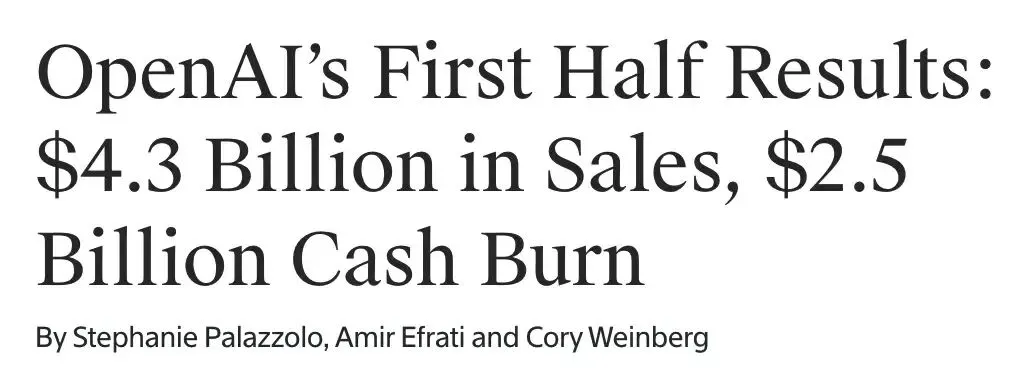
OpenAI’s H1 Revenue $4.3 Billion, Loss $13.5 Billion, Facing Profitability Challenges: OpenAI reported revenue of $4.3 billion in the first half of 2025, with full-year revenue projected to exceed $13 billion, primarily driven by ChatGPT Plus subscriptions and enterprise API services. However, net losses for the same period reached $13.5 billion, with structural costs and R&D investments (such as GPT-5) being major factors, and annual server leasing costs amounting to $16 billion. Despite OpenAI’s $17.5 billion cash reserves and plans for a $30 billion funding round, continuous cash burn and efficiency gaps compared to competitors like Anthropic pose severe profitability challenges. (Source: 36氪)
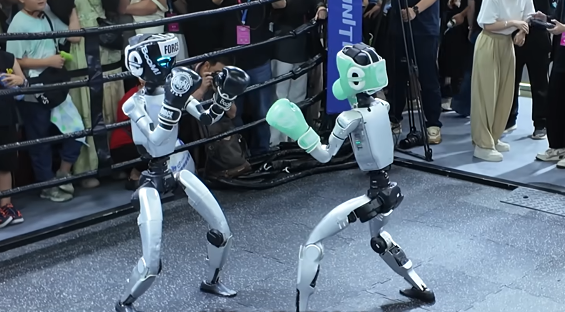
Capital Scramble in Humanoid Robot Sector: Zhiyuan, Galaxy Universal Actively Deploying Industry Chain: The humanoid robot sector has entered a capital scramble, with leading companies like Zhiyuan Robot and Galaxy Universal actively expanding their “circle of friends” through fund establishment, investments in peers, and strategic collaborations. Zhiyuan Robot has made nearly 20 external investments, covering motors, sensors, and downstream applications, and partnered with Fulin Precision and iSoftStone to implement commercial scenarios. Galaxy Universal, on the other hand, established a joint venture with Bosch China to promote embodied AI applications in automotive manufacturing. These initiatives aim to secure orders, fill gaps, and build a stable supply chain network for future large-scale shipments, but the industry faces significant technical route differences and fierce competition. (Source: 36氪)

🌟 COMMUNITY
Difficulty Distinguishing AI-Generated Content Causes Social Trust Crisis: With the rapid advancement of AI technology, the realism of AI-generated videos (such as “Attack on Titan” live-action and Indonesian streamers “face-swapping” Japanese influencers) has reached an incredible level, raising profound societal concerns about content authenticity. On social media, users widely report increasing difficulty in distinguishing between real and AI-generated content, which not only damages the credibility of legitimate content creators but also risks being used to spread misinformation. Experts point out that unless mandatory AI content labeling is enforced, this “hyper-real engine” will continue to erode the sense of reality, potentially “ending the internet.” (Source: Reddit r/ChatGPT, Reddit r/ChatGPT, Reddit r/ArtificialInteligence, Twitter, Twitter)

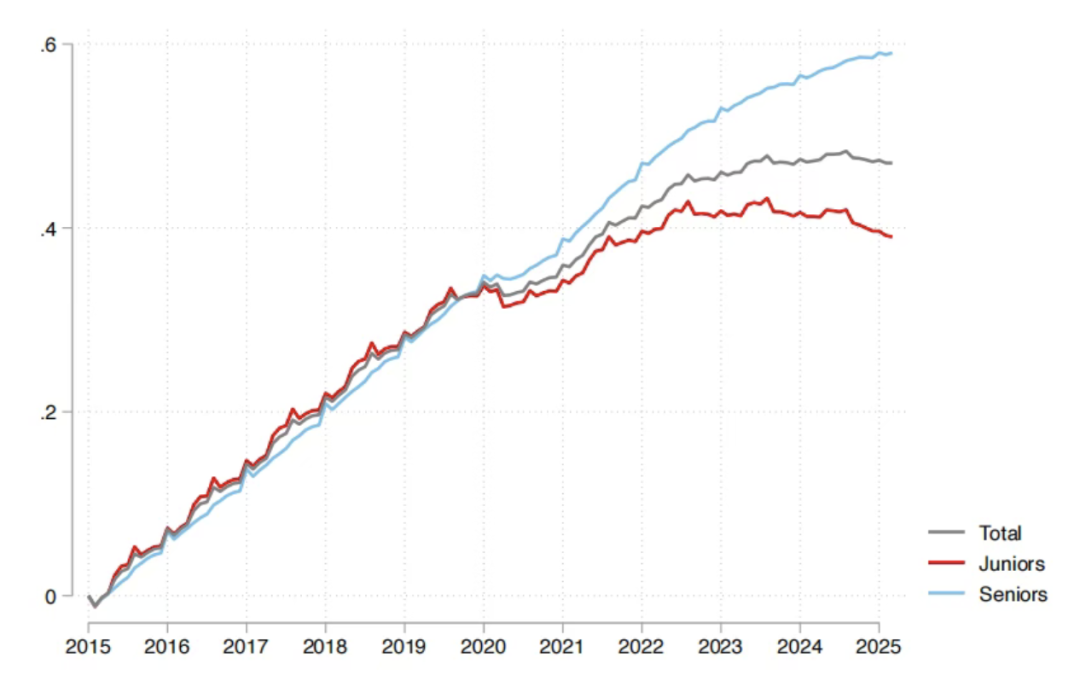
AI’s Impact on the Job Market: Sequoia Report States 95% of AI Investment Ineffective, Graduates Most Affected: Sequoia Capital shared a research report from MIT and Harvard University, indicating that 95% of corporate AI investments have not generated real value, with true productivity gains stemming from a “shadow AI economy” where employees “secretly” use personal AI tools. The report also revealed that AI’s impact on the job market primarily affects recent graduates, especially in wholesale and retail, where entry-level job postings have significantly declined, and even prestigious university degrees are not a complete shield. This suggests that AI is shifting task allocation, with human value moving towards experience and unique judgment. (Source: 36氪, Reddit r/ArtificialInteligence)
OpenAI Model Adjustments Spark Strong User Dissatisfaction, Call for Transparent Communication: OpenAI’s recent unannounced “downgrade” of GPT-4o/GPT-5 models to lower-compute versions, leading to decreased model performance, has sparked strong user dissatisfaction. Many users complained that the models became “dumber,” losing their original insight and “friend-like” conversational experience, with some even calling it a “mental blow.” OpenAI executives responded that this was a “safety routing test” to handle sensitive topics, but users generally called for OpenAI to improve communication and transparency with users, avoid unilateral changes to product agreements, and rebuild user trust. (Source: Reddit r/artificial, Reddit r/ChatGPT, Reddit r/ChatGPT, Twitter)
Robot Taxation: Discussion on Technological Progress and Social Equity: With the development of AI and robotics, discussions about “taxing” robots are increasing, aiming to balance potential job displacement and social inequality caused by robots replacing human labor. Supporters argue that a robot tax could provide social welfare and re-employment support for the unemployed, correcting the bargaining imbalance between capital and labor. However, robot industry professionals generally believe that taxation is premature and could hinder the development of emerging industries. South Korea has indirectly increased the cost of using robots by reducing tax incentives for automation companies. (Source: 36氪)
Future of Humanoid Robots: Renowned Roboticist Rodney Brooks Believes They Won’t Be Human-Like: Renowned roboticist Rodney Brooks wrote an article stating that despite massive investments, current humanoid robots still cannot achieve human-level dexterity, and bipedal locomotion poses safety risks. He predicts that in the next 15 years, humanoid robots will no longer mimic human form but will evolve into specialized robots with wheeled mobility, multiple arms (equipped with grippers or suction cups), and multiple sensors (active light imaging, non-visible light perception) to adapt to specific tasks. He believes that the current pursuit of “human-like” forms is a huge investment that will ultimately be in vain. (Source: 36氪)
Debate on AI Code Generation Quality and Developer Experience: On social media, developers are hotly debating the quality and practicality of AI-generated code. Some praised Claude Sonnet 4.5 for being able to refactor entire codebases, but the generated code often wouldn’t run; others complained that AI-generated code “doesn’t compile,” leading to decreased development efficiency. These discussions reflect the ongoing challenges in balancing efficiency and accuracy in AI-assisted programming, as well as developers’ need for debugging and verification when dealing with AI-generated results. (Source: Twitter, Twitter, Twitter)

Shift in Talent Philosophy in the AI Era: From “Headhunting” to “Cultivating Crops”: Social media is abuzz with discussions about shifting the talent philosophy in the AI era from traditional “headhunting everywhere” to “cultivating crops.” Given the scarcity of AI talent and rapid technological iteration, companies should focus more on nurturing employees with foundational technical skills rather than blindly pursuing expensive “finished” talent on the market. This perspective emphasizes the importance of continuous learning and internal development to adapt to the fast-changing demands of the AI sector. (Source: dotey)
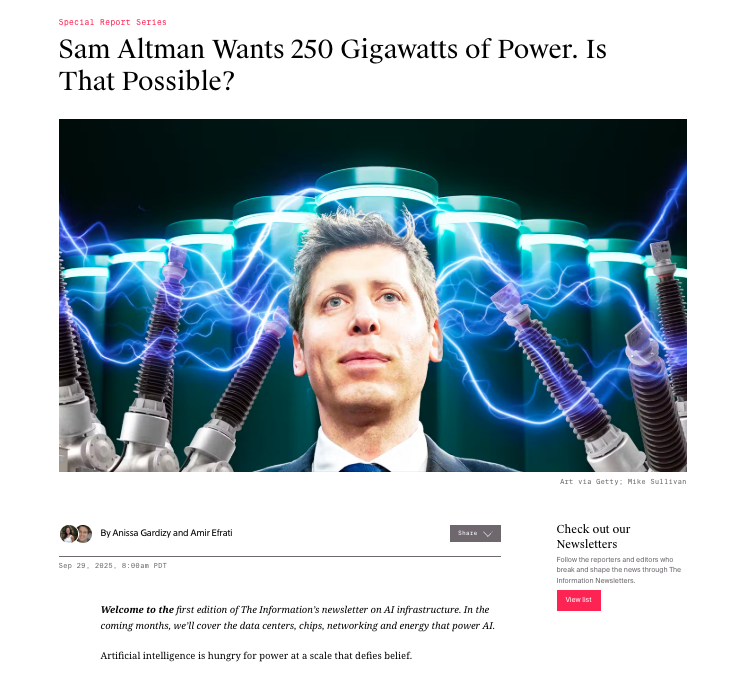
AI Infrastructure Energy Consumption and Sam Altman’s Energy Demands: Sam Altman’s statement that AI development requires 250GW of electricity has drawn public attention and discussion to the enormous energy consumption of AI infrastructure. This demand far exceeds existing energy supply capabilities, prompting reflection on how to balance the rapid development of AI with sustainable energy supply. Related discussions also touch upon environmental issues in semiconductor manufacturing, such as the use of PFAS and the potential risks of its alternatives. (Source: Twitter, Twitter)
AI Doomerism vs. Optimism: Concerns and Rebuttals: On social media, there’s widespread discussion about AI “doomerism” and potential AI risks, but many also believe these concerns are exaggerated. Optimists argue that actual problems posed by AI (e.g., climate impact, corporate exploitation, military surveillance) are more pressing than a distant “superintelligence destroying humanity,” and focus should be on solvable current challenges. Some consider AI doomerism “nonsense,” a sign of laziness and instability, while others believe AI will ultimately lead to creation and nurturing. (Source: Reddit r/ArtificialInteligence, Twitter, Twitter)
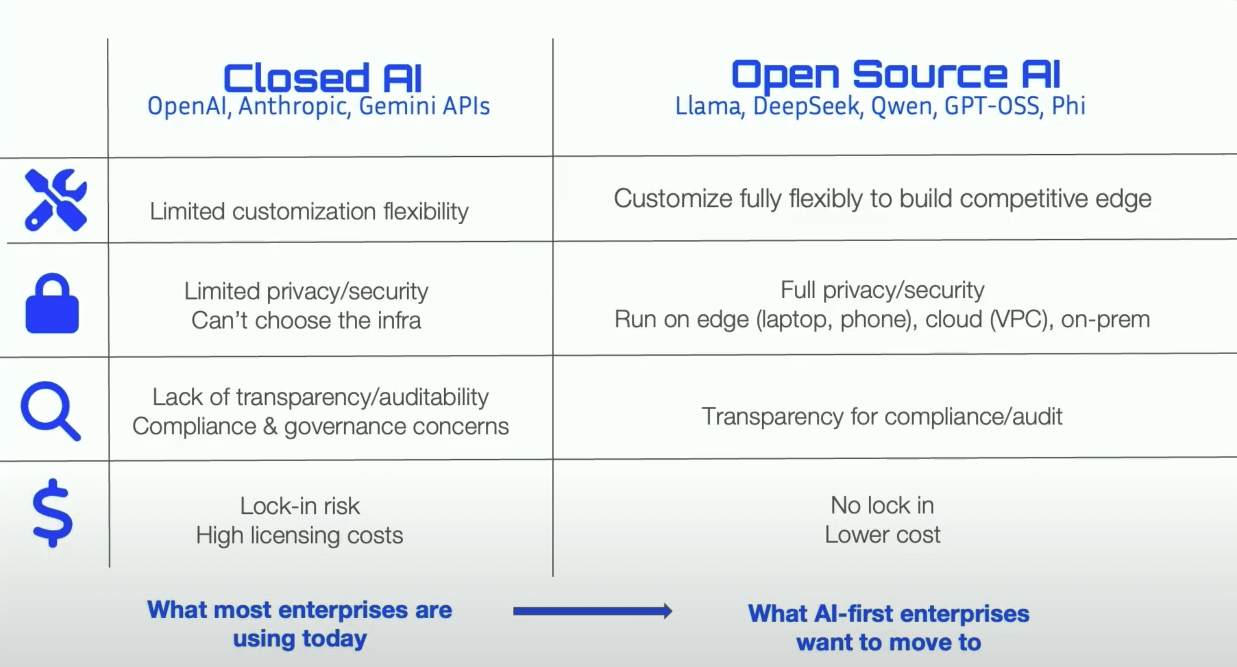
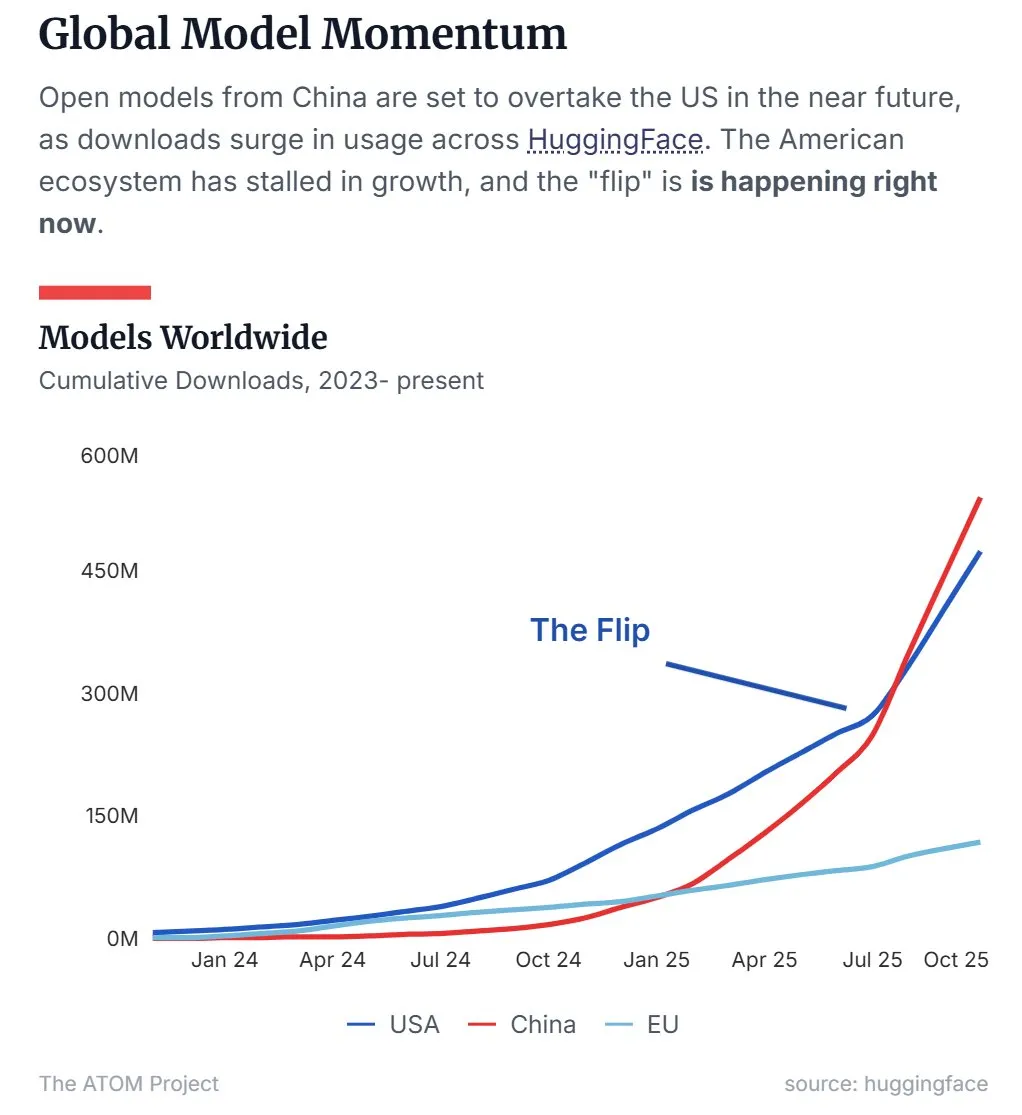
China’s Open-Source LLM Market Share Surpasses the US: Latest data indicates that Chinese open-source large language models (LLMs), represented by Qwen, have surpassed the US in market share, becoming a dominant force in the open-source LLM domain. This trend suggests that China is accelerating its rise in open-source AI technology R&D and application, significantly impacting the global AI landscape. (Source: Twitter, Twitter)
45-Day Team Produces AI Manhua Series “Monday Tomorrow,” Achieves Tens of Millions of Views: A team of only 10 people completed the production of 50 episodes of the AI manhua series “Monday Tomorrow” in 45 days. Without any paid promotion, it garnered over tens of millions of views across all platforms, and its Douyin (TikTok) paid revenue has already covered all costs. The project adopted the core concept of “original characters + AI generation,” addressing AI content copyright ownership issues and exploring a full IP commercial development path. The production process was highly specialized, with close collaboration between original artists, engineers, post-production editors, and directors, demonstrating AI technology’s immense potential for cost reduction and efficiency improvement in content production. (Source: 36氪)

💡 OTHER
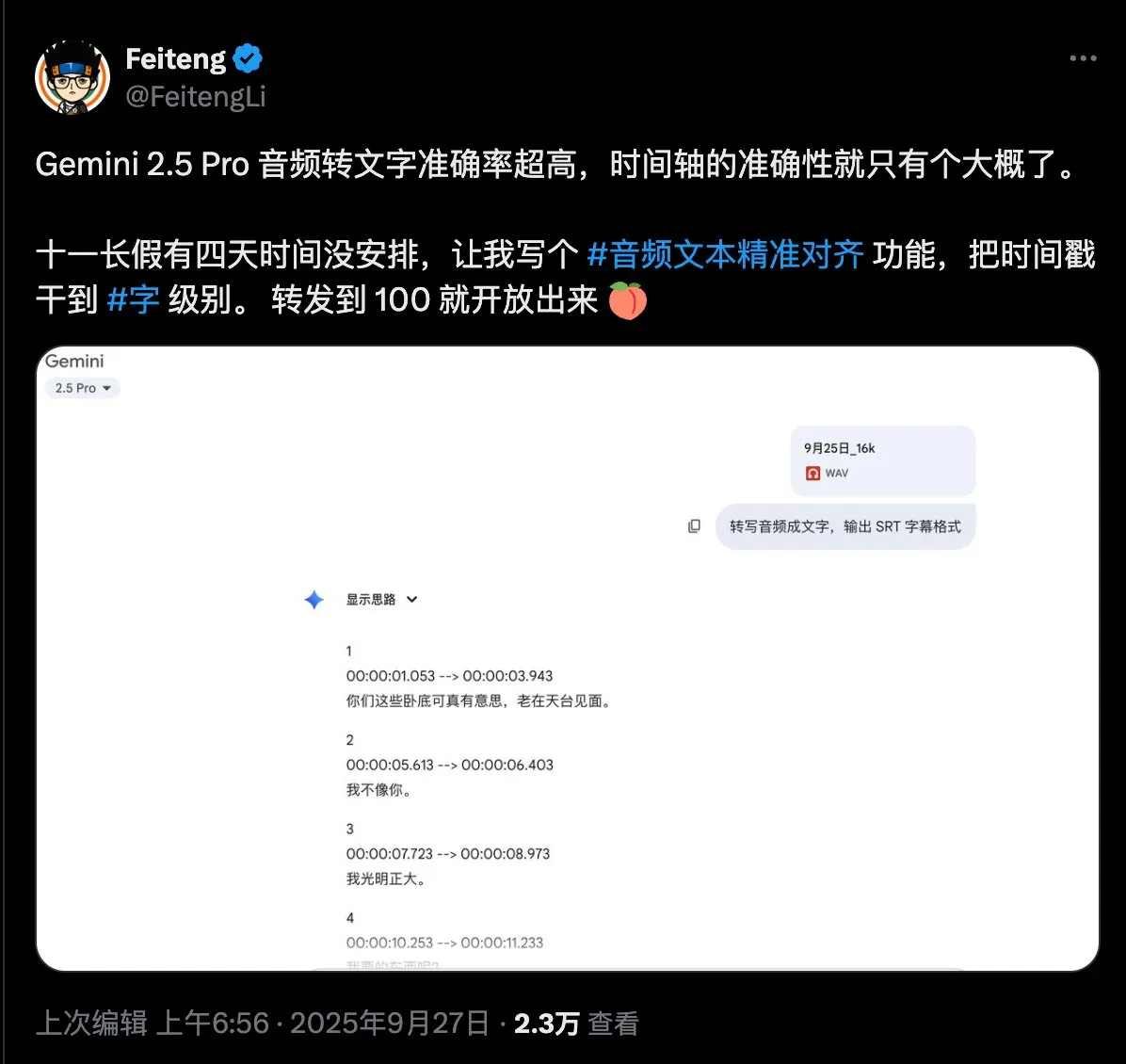
Audio-Text Precise Alignment Needs Questionnaire: A social media user expressed strong interest in audio-text precise alignment technology and published a questionnaire to gather specific user requirements for its functionalities and application scenarios, hoping to promote the development and optimization of related technologies. (Source: dotey)
DeepMind Showcases Nano Banana Demo: Google DeepMind showcased a demo named “Nano Banana,” attracting attention on social media. While specific details were not fully disclosed, it likely relates to AI video generation or multimodal AI technology, hinting at DeepMind’s new advancements in visual AI. (Source: GoogleDeepMind)
Academic Discussion on Priority of Highway Net and ResNet Invention: Renowned AI researcher Jürgen Schmidhuber retweeted a post, reigniting the academic discussion on the priority of invention between Highway Net and ResNet in deep residual learning. He pointed out that Microsoft’s ResNet paper referring to Highway Net as “concurrent” work is inaccurate, emphasizing that Highway Net was published seven months before ResNet and had already identified and proposed solutions for residual connections. (Source: SchmidhuberAI)