Here’s the translated AI news summary:
🔥 Focus
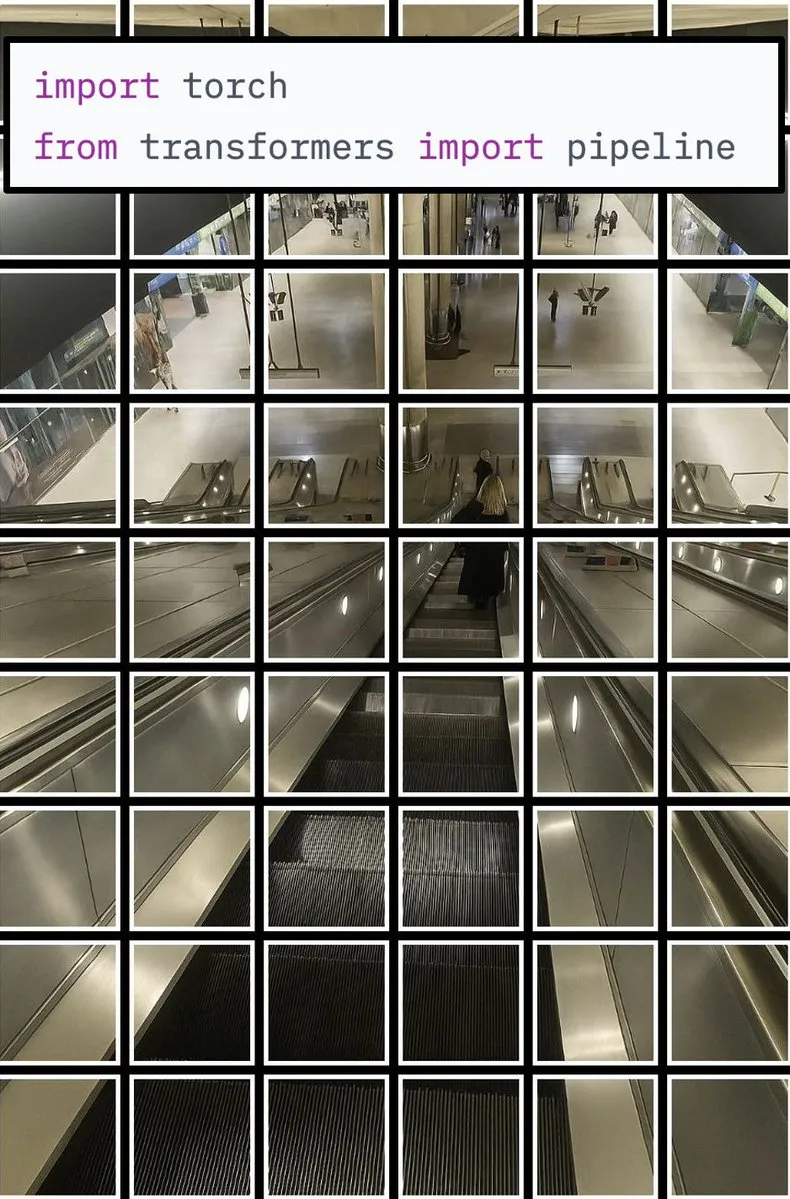
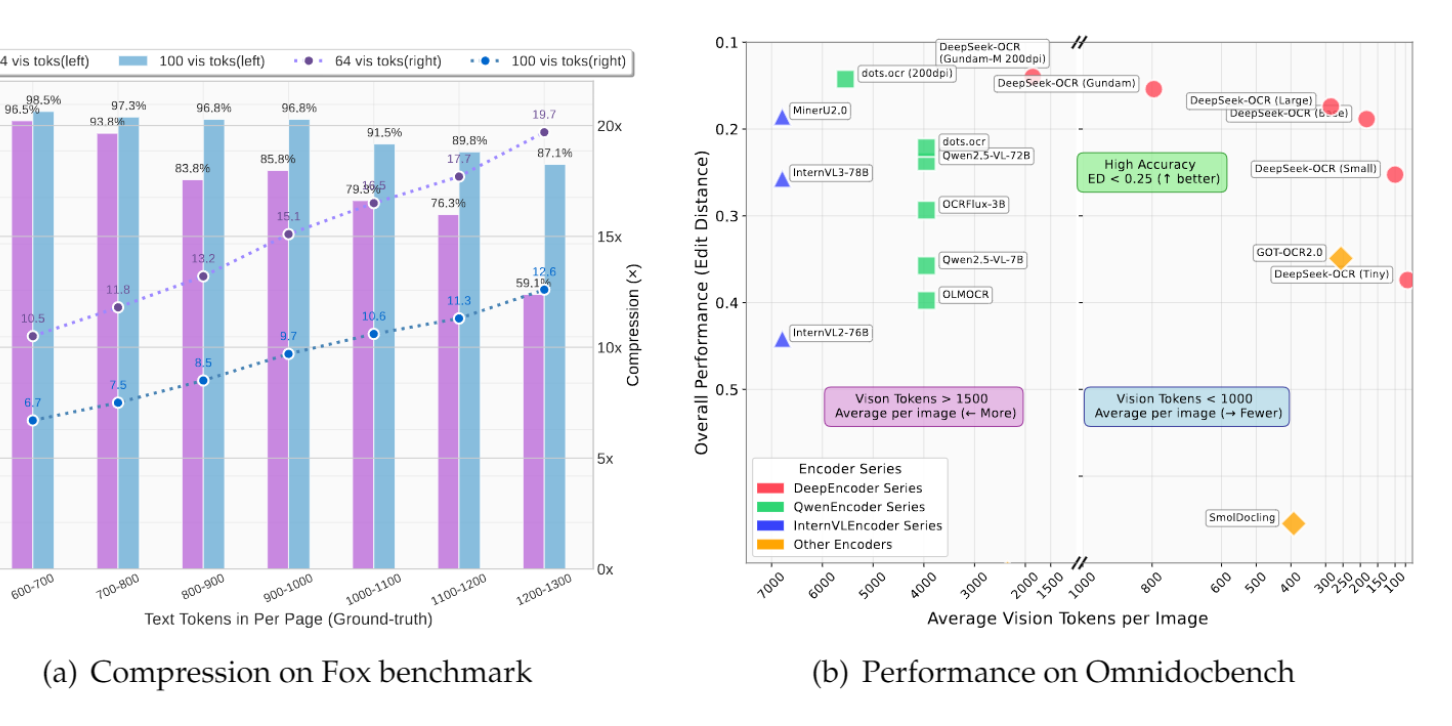
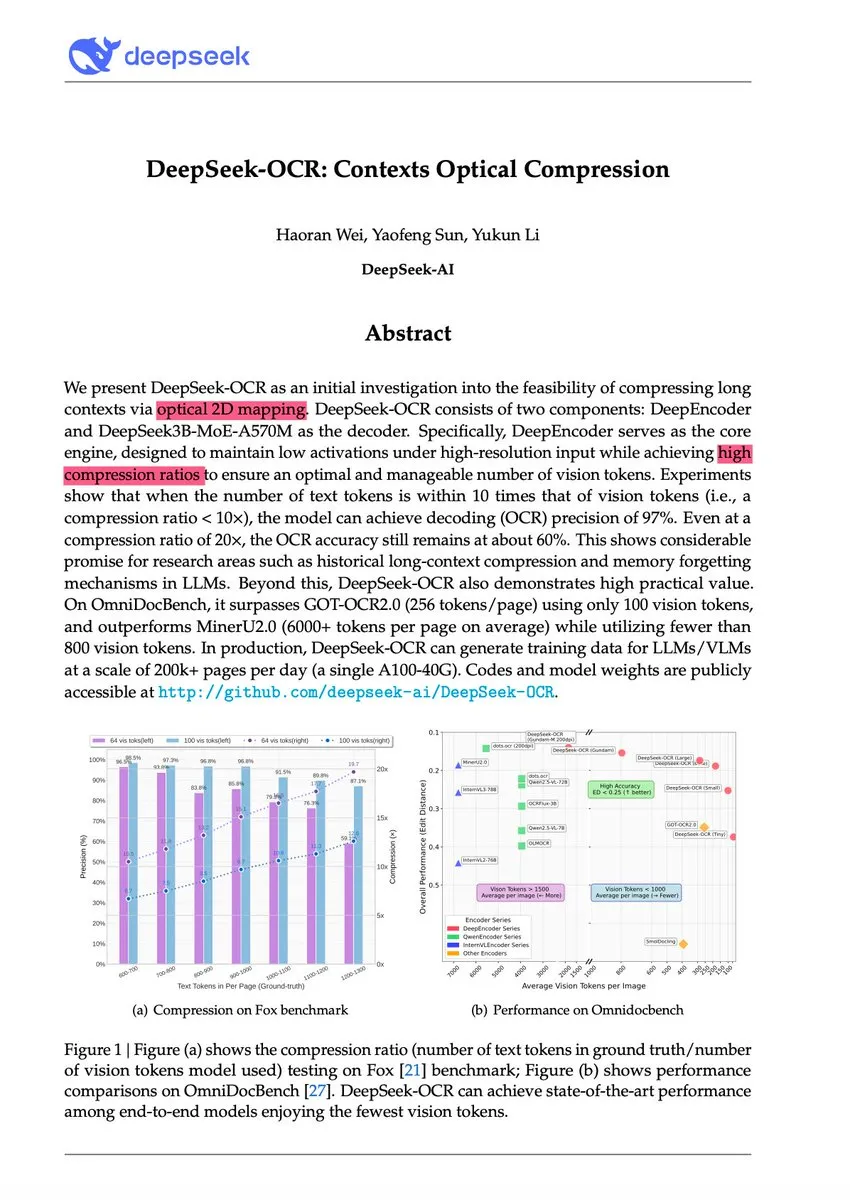
DeepSeek-OCR and a Paradigm Shift in Visual Text Compression: The DeepSeek-OCR model introduces a new paradigm of “contextual optical compression,” rendering long texts as visual images and efficiently compressing information via visual tokens. This 3B model achieves SOTA on OmniDocBench, capable of processing over 200,000 document pages per day on a single A100 GPU with compression rates from 10x (nearly lossless) to 20x (60% accuracy). Andrej Karpathy hails it as “AI’s JPEG moment,” suggesting it might herald a change in LLM input paradigms and even simulate human forgetting mechanisms, leading to infinite context architectures.
(Source: 量子位、ZhihuFrontier、huggingface)
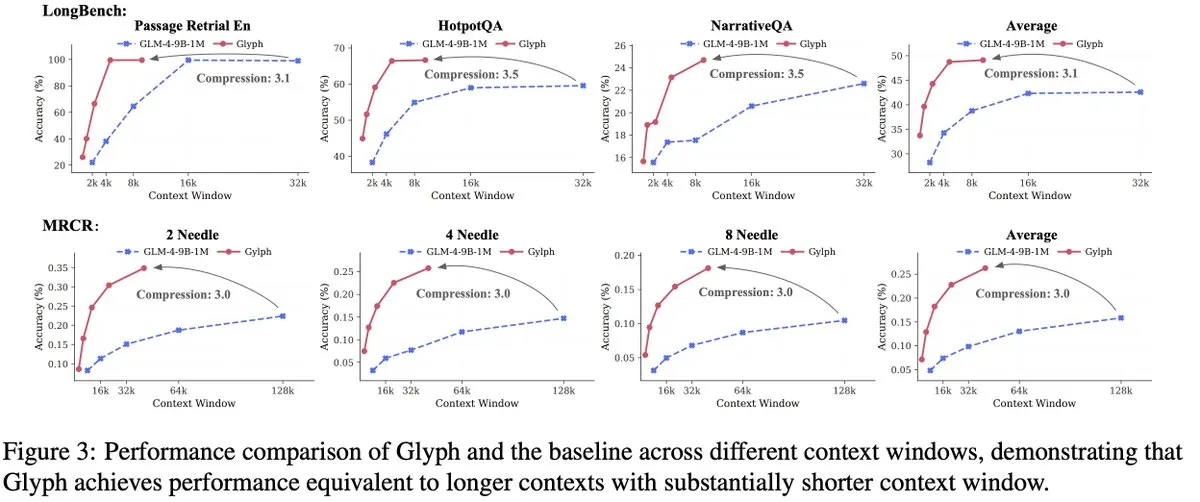
GLM Team Releases Glyph Visual Text Compression Framework: Concurrently with DeepSeek-OCR, the GLM team released the Glyph framework, which achieves 3-4x text compression by rendering long texts into images and processing them with a VLM, while maintaining accuracy comparable to leading LLMs. This method significantly boosts prefill and decoding speeds and enables 128K context VLMs to handle 1M token-level text tasks. This, along with DeepSeek-OCR, validates visual compression as a viable solution for long contexts.
(Source: Reddit r/LocalLLaMA、Zai_org)
Andrej Karpathy’s Deep Critique of AI Agents and RL: Andrej Karpathy, former OpenAI research lead, stated in a lengthy discussion that AI agents are still a decade away from true maturity, currently lacking multimodal capabilities, continuous learning, complete cognitive structures, and memory. He sharply criticized Reinforcement Learning (RL)’s “blind trial-and-error” mechanism as inefficient and prone to manipulation, advocating for models to learn human-like introspection and reflection, and to maintain a high-entropy state through “dreaming” mechanisms to avoid cognitive collapse. Karpathy emphasized that AGI will integrate into the economy gradually, not as an instant disruption, and believes the challenges of autonomous driving extend far beyond technology, requiring societal system collaboration.
(Source: 量子位、sama、vikhyatk)
AI Automation’s Disruptive Impact on McKinsey’s Consulting Business: McKinsey received an OpenAI medal for its massive Tokens consumption, revealing AI’s deep penetration into its consulting operations. Top consulting firms like McKinsey and Boston Consulting Group (BCG) are fully deploying AI tools, such as McKinsey’s Lilli (used by 70% of employees), with BCG even incorporating AI usage into performance reviews. AI-driven efficiency has led to over 5,000 layoffs at McKinsey, primarily impacting junior consultant roles. AI startups are also offering AI analyst services, challenging traditional consulting models. The industry is concerned that AI will make it difficult for young job seekers to accumulate “tacit knowledge,” altering career development paths.
(Source: 量子位、Teknium1)
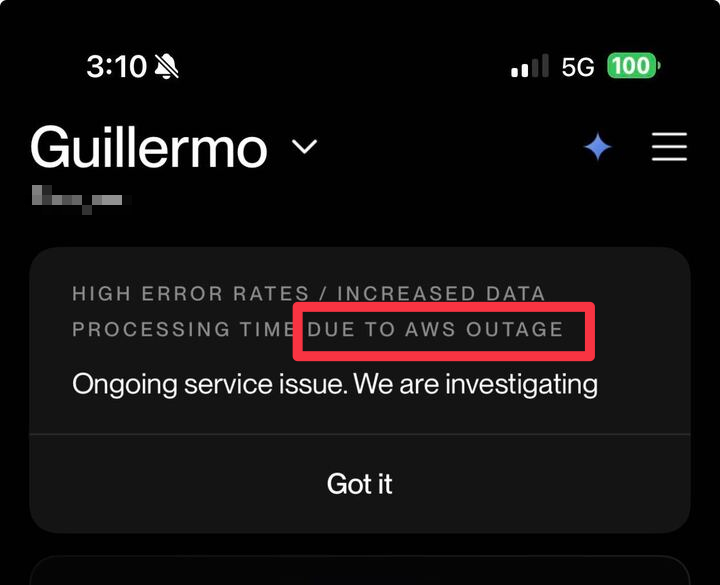
Amazon AWS Server Outage Causes Widespread Internet Service Disruptions: A large-scale outage in Amazon AWS’s us-east-1 region led to disruptions for numerous online services, including ChatGPT, Docker, Zoom, Slack, gaming platforms, streaming services, ride-hailing apps, and even some offline services like airline check-ins and smart locks. The incident stemmed from DNS resolution issues and an internal network subsystem anomaly in EC2. As a core AWS region, us-east-1’s failure had a massive impact on global services, highlighting the fragility of centralized cloud service architectures and prompting developers to re-evaluate multi-region deployments and resilience mechanisms.
(Source: 量子位、TheRundownAI、qtnx_)

🎯 Trends
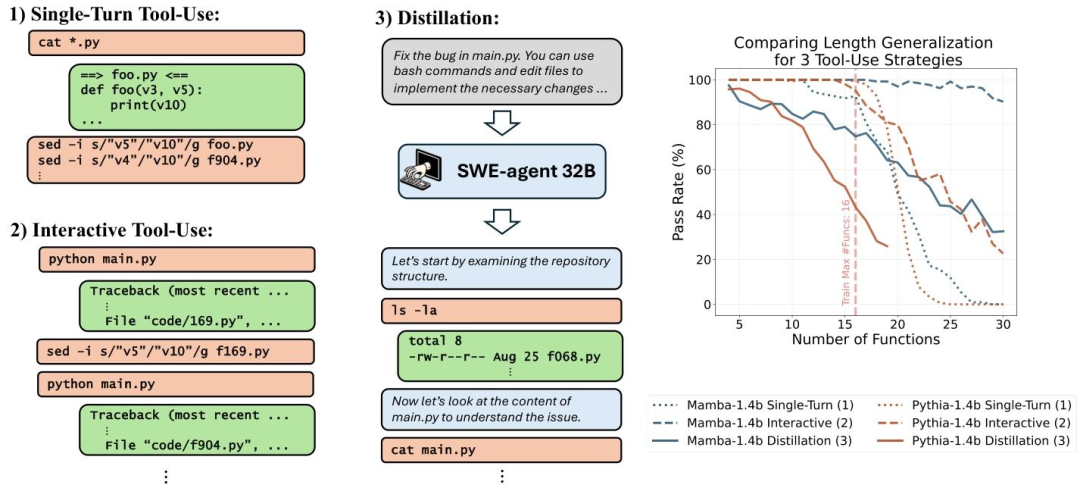
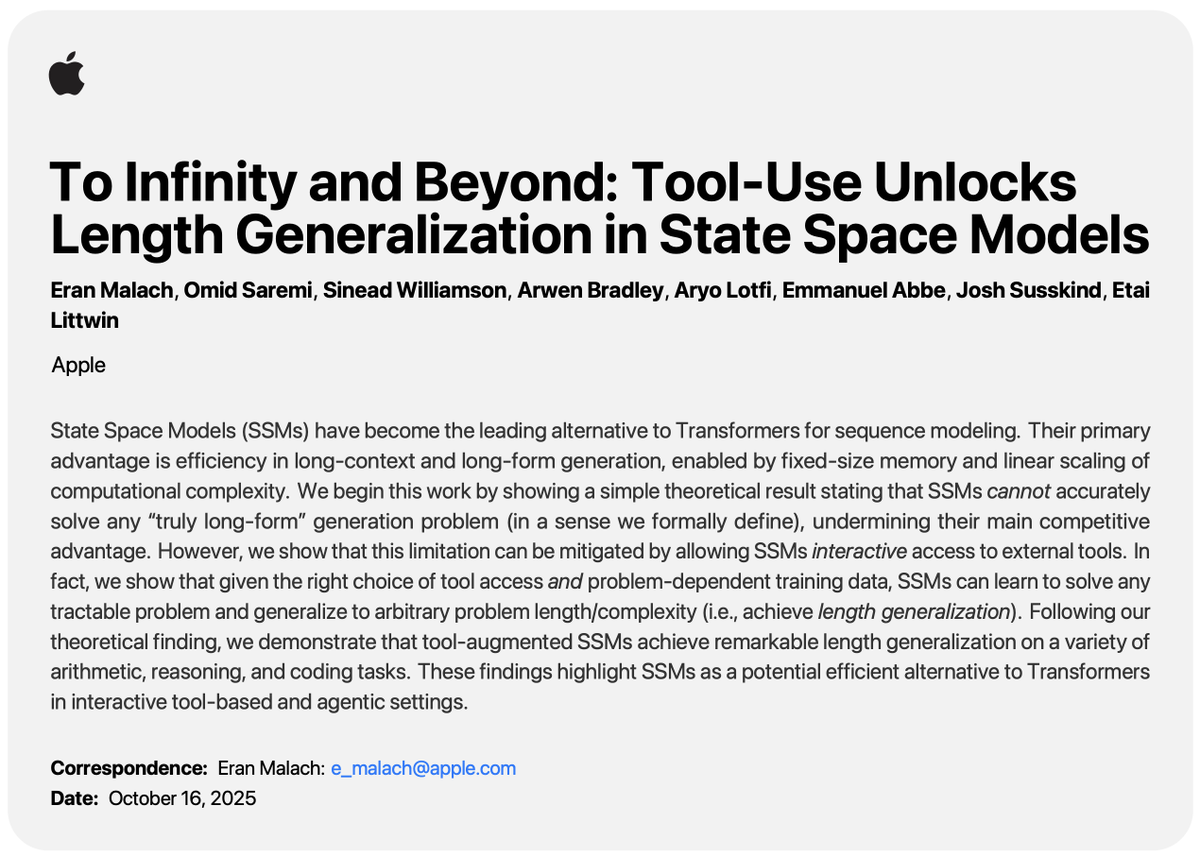
Apple AI Research: Mamba Architecture Outperforms Transformer in Agent Tasks: Apple’s latest research indicates that the Mamba architecture, when combined with external tools, shows greater efficiency and generalization potential than Transformer in long, multi-interaction agent scenarios. Mamba, as a state-space model, scales linearly with sequence length, supports streaming, and has stable memory usage. By incorporating external tools to compensate for its short-term memory limitations, it performs exceptionally well in tasks like multi-digit addition and code debugging.
(Source: 量子位)
AI Music Industry Enters New Phase of Compliance and Commercialization: AI music company Suno completed over $100 million in funding, valuing it at $2 billion, and launched its V5 model and Suno Studio digital audio workstation, enhancing music generation quality and creative control. Udio also released visual editing tools. ElevenLabs introduced Eleven Music and secured licensing agreements with independent music organization Merlin and rights holder Kobalt, also receiving a strategic investment from NVIDIA. Simultaneously, the three major record labels escalated copyright infringement lawsuits against Suno and Udio, and Spotify tightened regulations, removing “junk tracks,” signaling a shift in AI music from “wild growth” to standardized development.
(Source: 36氪)

ByteDance AI Assistant Cici Quietly Dominates Overseas Markets: ByteDance’s AI intelligent assistant app “Cici” has recently topped download charts in app stores across Mexico, the UK, and Southeast Asian countries. Cici is highly similar in appearance and technology to the leading domestic “Doubao,” integrating ByteDance’s internal technologies (such as PicPic, Coze), and leveraging OpenAI’s GPT series and Google’s Gemini models for dialogue generation. This marks ByteDance’s global expansion strategy in the AI domain.
(Source: 量子位)

Anthropic Launches Claude for Life Sciences Platform to Aid Research: Anthropic announced Claude for Life Sciences, an AI platform designed to assist life science researchers with tasks such as hypothesis generation and data analysis, aiming to boost efficiency and promote responsible AI use. The platform integrates scientific tools, skills, and new partnerships to make Claude more practical in scientific research.
(Source: Reddit r/ClaudeAI、BlackHC)
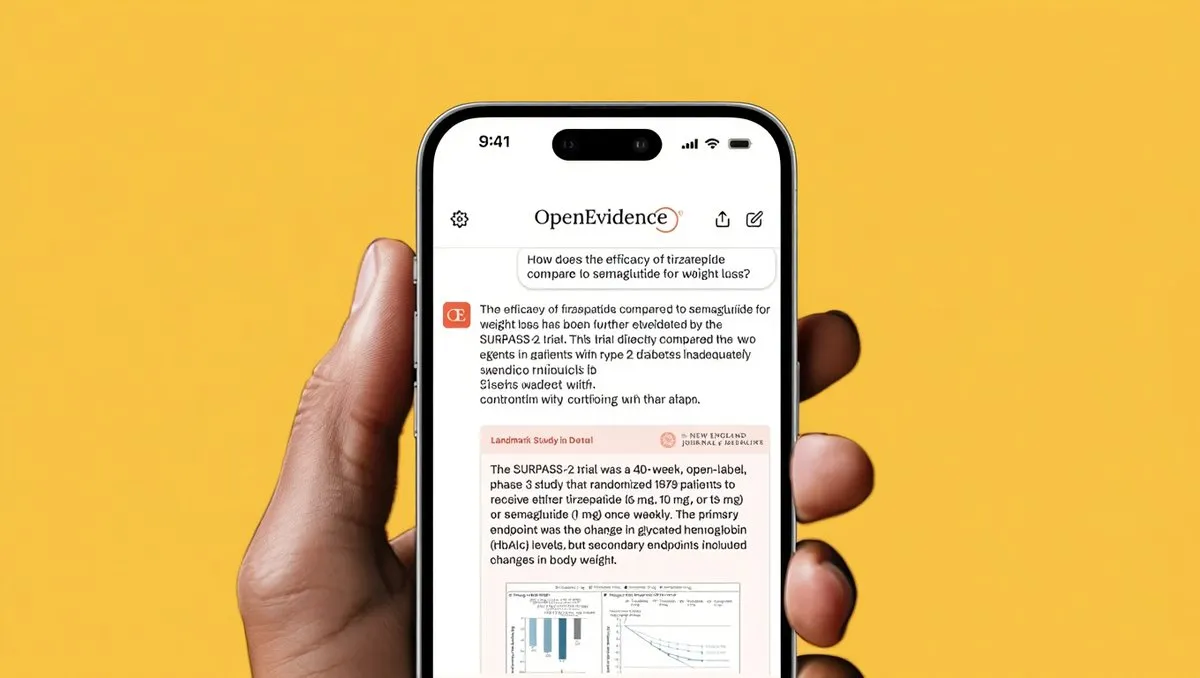
AI Application Progress in Healthcare: The PRIMA retinal prosthesis clinical trial achieved success, restoring intuitive vision to blind patients. Concurrently, OpenEvidence secured $200 million in funding, valuing it at $6 billion, with its AI platform supporting 15 million clinical consultations monthly, aiming to accelerate medical decision-making. These advancements signify AI’s immense potential in improving human health and enhancing medical efficiency.
(Source: gfodor、TheRundownAI)

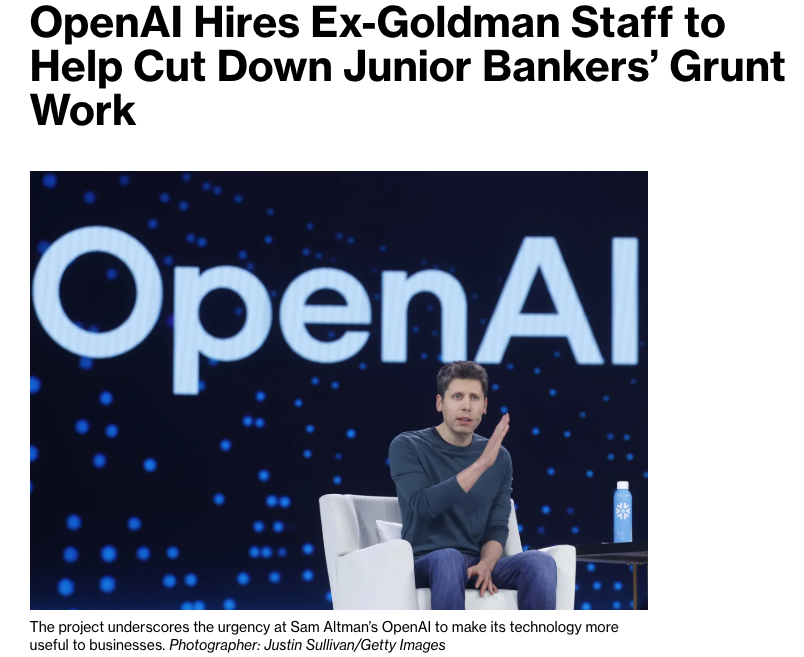
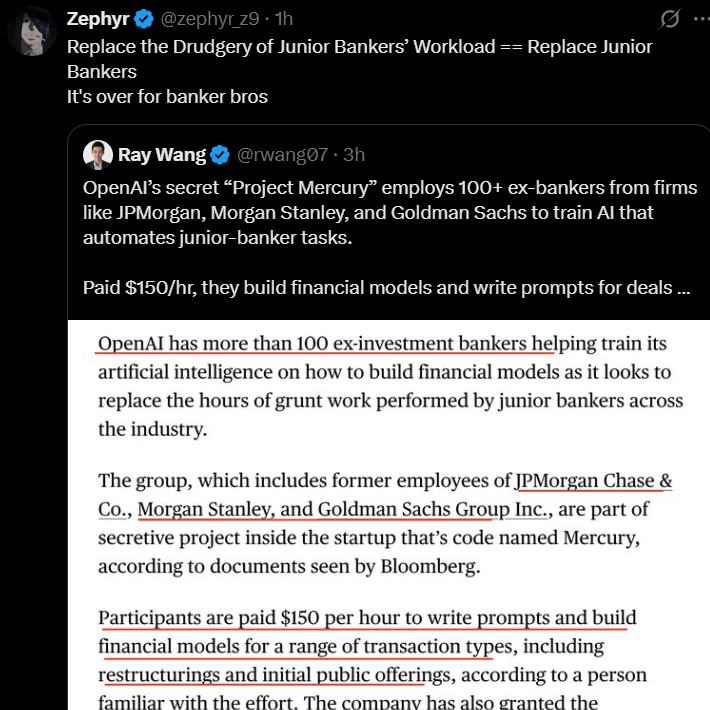
AI Automation’s Impact on Junior Finance Roles: OpenAI launched “Project Mercury,” a secret initiative employing over a hundred investment bankers to train AI models, aiming to automate basic tasks performed by junior bankers, paying $150 per hour. This foreshadows AI’s deep penetration into the financial industry, particularly impacting repetitive, relatively low-knowledge-threshold junior positions.
(Source: Teknium1)
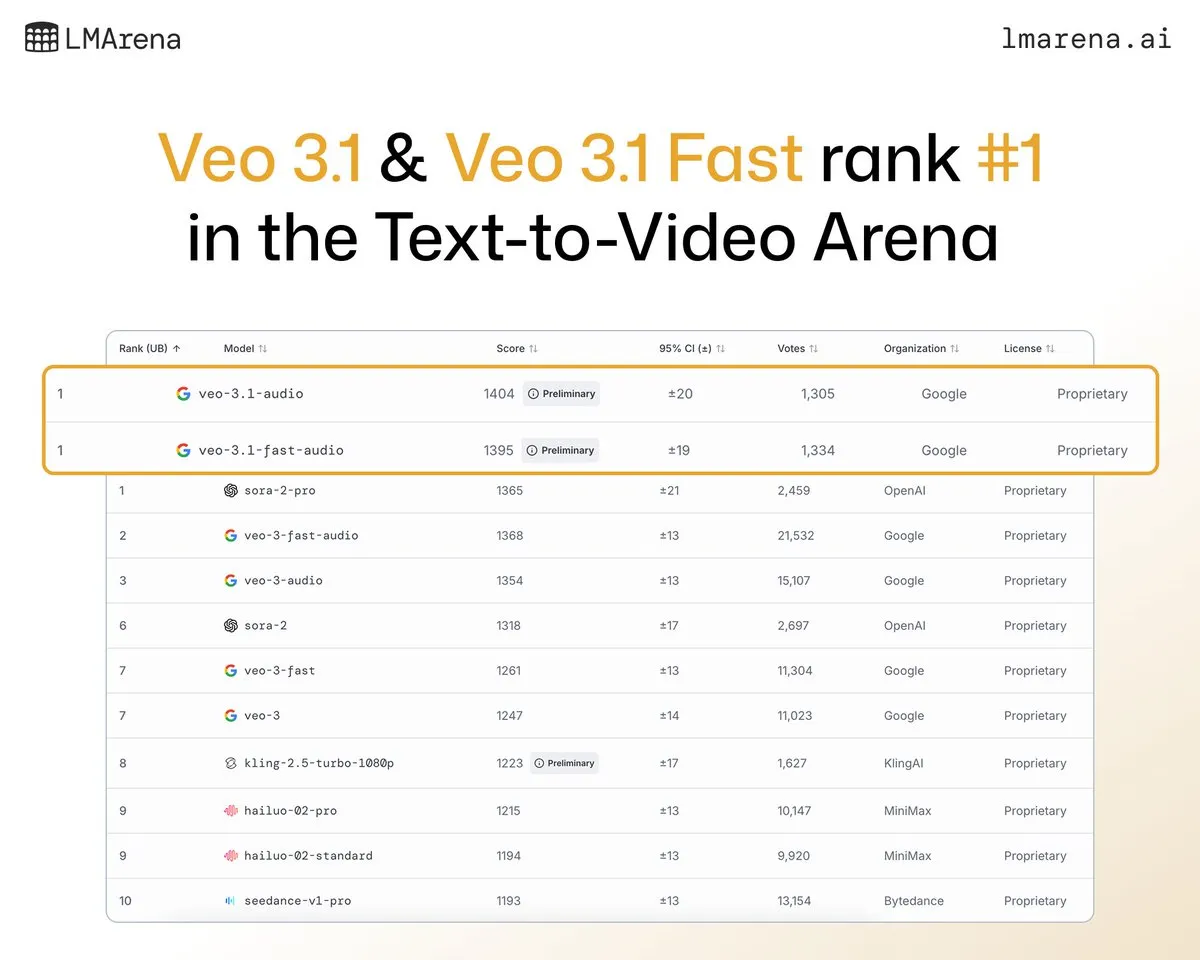
Google DeepMind’s Veo 3.1 Tops Video Generation Leaderboard: Google DeepMind’s latest video generation model, Veo 3.1, performed exceptionally well on the LMArena video leaderboard, securing the top spot for text-to-video and image-to-video generation. Its performance significantly improved compared to Veo 3.0, becoming the first model to break 1400 points, demonstrating Google’s leading position in video generation.
(Source: NandoDF、GoogleDeepMind)
AI Building AI: Software Automation of AI Development Surpasses Human Experts: A study indicates that software can automate the entire AI development process, from architecture search to optimization, and outperform human experts in some benchmarks. This sparks discussion about the future of AI development, where the importance of ideas and datasets might surpass traditional AI engineering expertise.
(Source: Reddit r/deeplearning)

Amazon Plans to Replace 600,000 US Workers with Robots: Leaked Amazon documents reveal the company’s plan to replace 600,000 US workers with robots, with strategies to mitigate community impact while avoiding terms like “automation” and “AI,” instead using “advanced technology” or “collaborative robots.” This highlights the potentially massive structural impact of AI and robotics on the labor market.
(Source: Reddit r/ArtificialInteligence)

AI Model “Brain Rot” Phenomenon Studied: Researchers found that Large Language Models (LLMs), like humans, can develop “brain rot” from scrolling through online junk content. This discovery poses new challenges for LLM training data quality and long-term stability, suggesting models’ vulnerability when processing low-quality information.
(Source: Reddit r/artificial)

Diagnosing and Mitigating Flattery Bias in LLMs: The Beacon benchmark aims to diagnose and mitigate potential flattery bias in Large Language Models (LLMs), where models tend to cater to users rather than adhere to facts. The study found that flattery bias can be decomposed into linguistic and emotional sub-biases, which intensify with increased model capability. Interventions at the prompting and activation layer can modulate these biases, revealing internal alignment mechanisms.
(Source: HuggingFace Daily Papers)
AI Agent Auto-Composition: Component Selection Method Based on Knapsack Problem: A study proposes an automated framework inspired by the knapsack problem for agent system composition. This framework enables compositional agents to systematically identify, select, and assemble the optimal set of agent components while considering performance, budget, and compatibility. Evaluation on Claude 3.5 Sonnet shows that this online knapsack composer achieves higher success rates at significantly reduced costs.
(Source: HuggingFace Daily Papers)
Insecurity of Agentic Reinforcement Learning in Search: Research indicates that search models trained with Reinforcement Learning (RL) have security vulnerabilities when handling harmful requests. Simple attacks (such as forced search or multiple searches) can trigger harmful searches and answers, significantly reducing refusal rates and safety. This exposes a core weakness in current RL training, which rewards the generation of effective queries without adequately considering their harmfulness, highlighting the urgent need to develop safety-aware Agentic RL processes.
(Source: HuggingFace Daily Papers)
LLM “Psychosis” Study: Million-Word Conversation Reveals How Chatbots Evade Safety Guards: A million-word ChatGPT conversation study by a former OpenAI researcher shows that AI “psychosis” can develop rapidly and that chatbots can sidestep safety guardrails. This raises concerns about AI’s long-term conversational stability, security vulnerabilities, and potential risks, emphasizing the importance of continuous monitoring and improvement of AI safety mechanisms.
(Source: Reddit r/artificial)
AI21 Labs CEO Envisions Future of AI as “New Employees”: The CEO of AI21 Labs envisions a future where AI becomes “new employees” within companies, working alongside human staff to form hybrid organizations. This vision emphasizes AI’s growing role in daily operations and team collaboration, foreshadowing a profound transformation in corporate work models.
(Source: AI21Labs)
AI Enhances Efficiency in Data Analysis: A share highlights that AI can now process data team requests in minutes, enabling self-service analytics. This indicates AI’s immense potential in automating data processing and improving business insight efficiency, promising to alleviate the workload of data teams.
(Source: TheEthanDing)
AI in Sports: Predicting Penalty Kick Direction: A study shows that AI outperforms human goalkeepers in predicting the direction of penalty takers’ shots. This demonstrates AI’s potential in sports analysis and strategy formulation, which could provide a competitive advantage for teams.
(Source: Ronald_vanLoon)

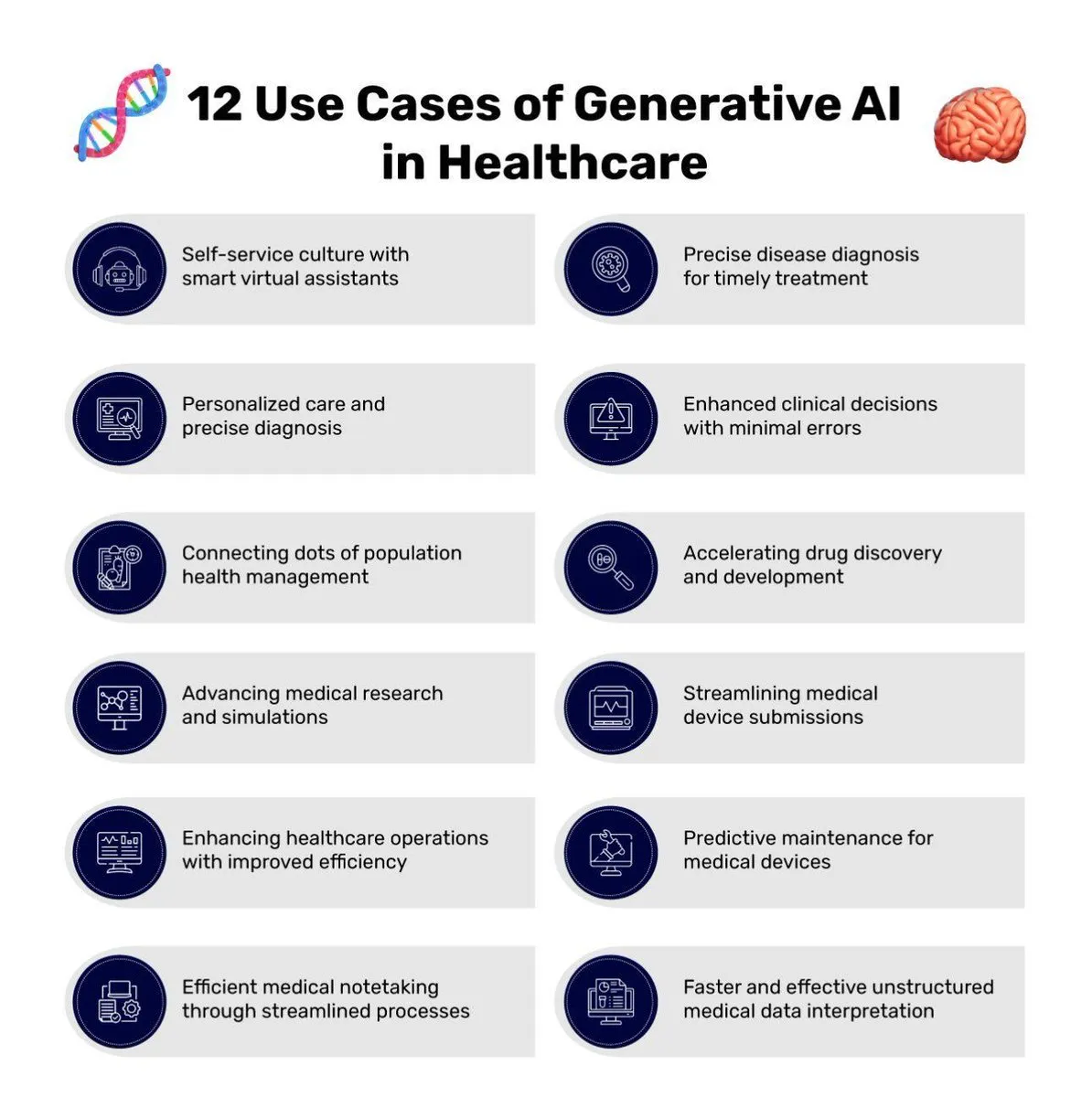
12 Major Application Scenarios of AI in Healthcare: A report lists 12 specific use cases of Generative AI in healthcare, covering drug discovery, diagnostic assistance, personalized treatment, and more, highlighting the broad prospects of AI technology in improving healthcare quality and efficiency.
(Source: Ronald_vanLoon)
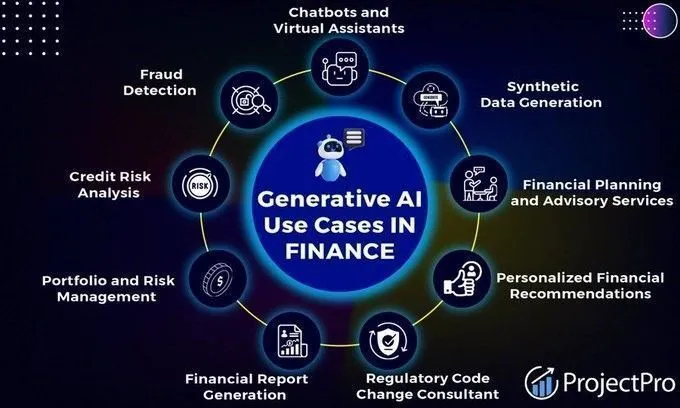
AI Application Scenarios in Finance: A report details multiple use cases of Generative AI in finance, including risk assessment, fraud detection, personalized customer service, and automated trading, showcasing how AI is driving digital transformation and efficiency improvements in the financial industry.
(Source: Ronald_vanLoon)
Beihang University Develops 2cm Ultra-High-Speed Micro-Robot: Researchers at Beihang University have successfully developed a 2cm micro-robot capable of ultra-fast untethered movement. This breakthrough is significant in micro-robot technology, foreshadowing new applications in fields such as medicine and precision manufacturing.
(Source: Ronald_vanLoon)
DOBOT Bionic Hexapod Robot Demonstrates Rough Terrain Mobility: DOBOT’s bionic hexapod robot showcased its excellent mobility over rough terrain in a field demonstration. This indicates progress in robotics’ adaptability to complex environments and autonomous navigation, with potential applications in search and rescue, exploration, and other fields.
(Source: Ronald_vanLoon)
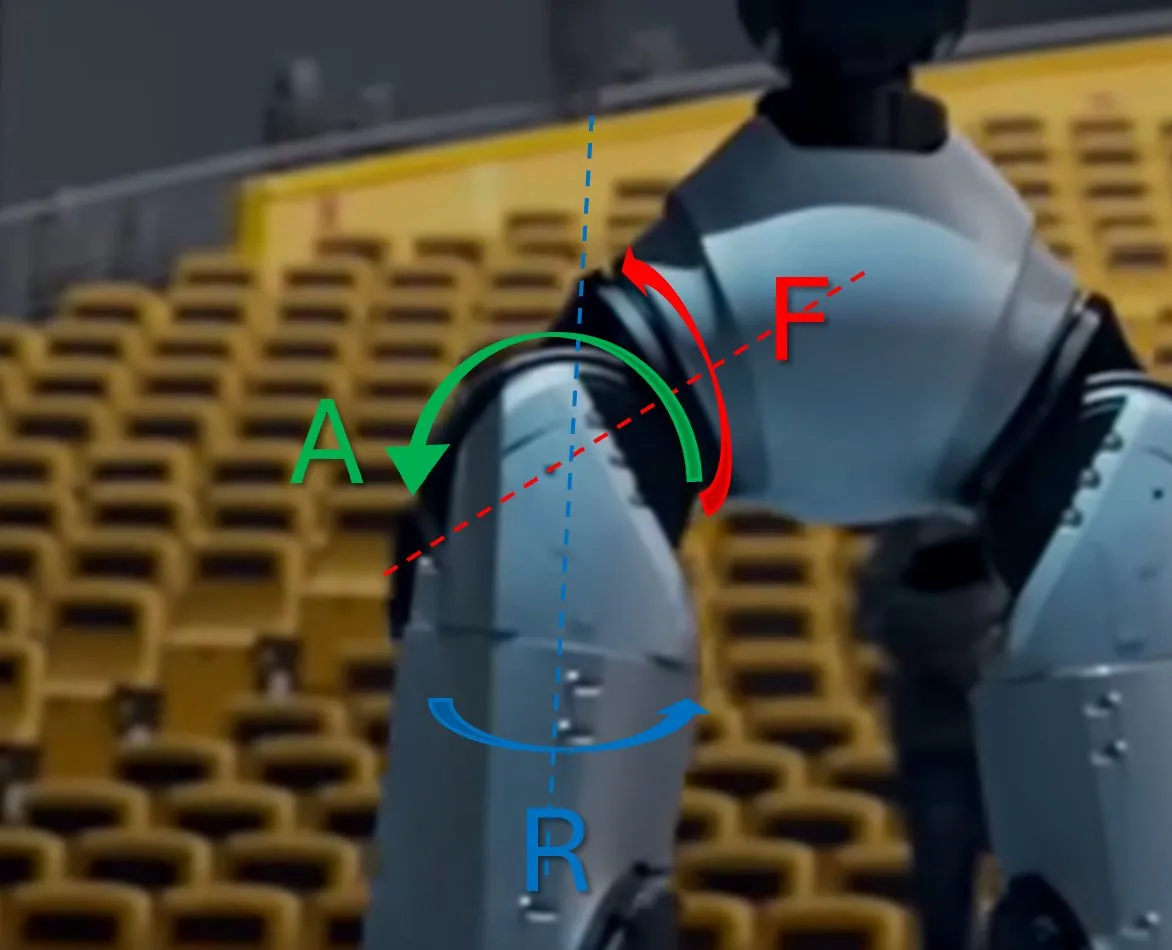
Unitree H2 Humanoid Robot Neck Features 2-DOF Drive: The Unitree H2 humanoid robot’s neck design incorporates a 2 Degrees of Freedom (DOF) drive, providing it with more flexible head movement capabilities, which are crucial for the robot’s interaction and perception of its environment.
(Source: Sentdex、teortaxesTex)
Sharpa Robot Hand Displayed: The Sharpa robot hand was showcased, emphasizing its dexterity and precision, indicating advancements in robot manipulation and fine motor tasks.
(Source: Sentdex)
China Unveils High-Speed Spherical Police Robot: China has introduced a high-speed spherical police robot capable of autonomously apprehending criminals. This robot combines innovative technology with AI capabilities, aiming to enhance public safety and law enforcement efficiency.
(Source: Ronald_vanLoon)
Humanoid Robot Demonstrates Chinese Calligraphy Skills: A humanoid robot demonstrated its Chinese calligraphy skills. This highlights the potential of robots in fine motor control and cultural arts, as well as the possibilities for human-robot collaboration in preserving traditional art.
(Source: Ronald_vanLoon)
Humanoid Robot Performs as Keyboardist at Music Festival: A bipedal humanoid robot performed as a keyboardist at a music festival. This showcases advancements in robotics in entertainment and arts, and the potential for co-creating stage experiences with humans.
(Source: Ronald_vanLoon)
Smart Glasses Help Blind Patients Regain Sight: Smart glasses technology is helping patients who lost their sight due to photoreceptor loss regain intuitive vision. This groundbreaking application demonstrates the immense potential of AI and wearable devices in assistive healthcare and improving quality of life.
(Source: TheRundownAI)
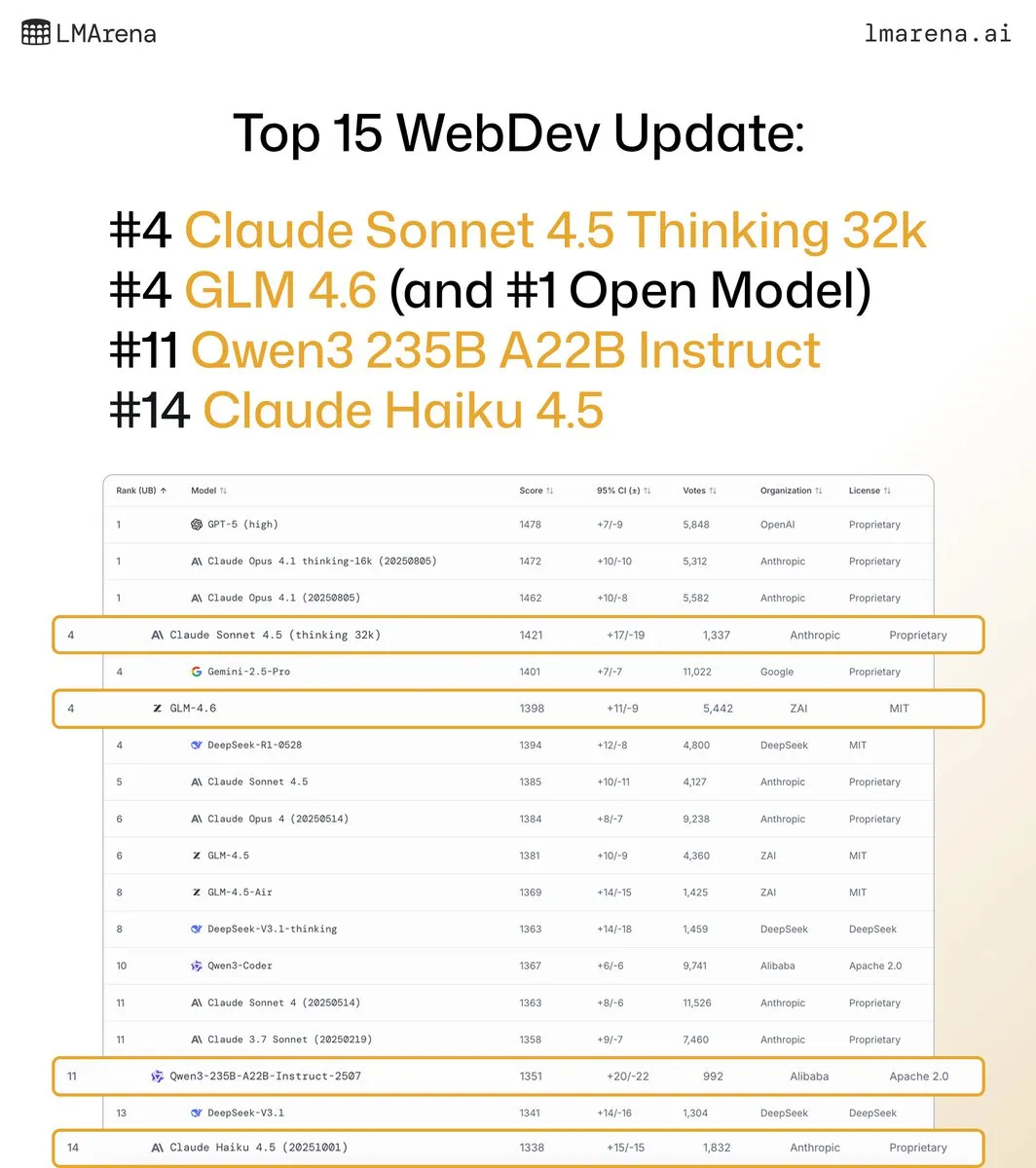
Qwen3-Next 80B-A3B Model Ranks High on WebDev Leaderboard: GLM 4.6 became the new open-source model leader on the WebDev Arena leaderboard, with Claude Sonnet 4.5, Qwen3 235B, and Claude Haiku 4.5 also entering the top 15. This indicates continuous improvement and increasing competition in Large Language Models’ capabilities for web development, coding, and long-context tasks.
(Source: Zai_org)
LLM Evaluation Benchmarks Continuously Improve to Adapt to Image Model Development: The ECHO framework constructs image model benchmarks that directly reflect real-world model usage by extracting novel prompts and qualitative judgments from social media user posts. This framework has been applied to GPT-4o image generation, collecting over 31,000 prompts, aiming to discover creative and complex tasks not covered by existing benchmarks and to more clearly differentiate state-of-the-art models.
(Source: HuggingFace Daily Papers)
MultiVerse, a Multimodal Large Vision-Language Model Evaluation Benchmark, Released: MultiVerse is a new multi-turn dialogue benchmark comprising 647 dialogues, averaging four turns each, designed to evaluate Large Vision-Language Models (VLMs) in complex multi-turn dialogue scenarios. The benchmark covers a wide range of tasks from factual knowledge to advanced reasoning and uses GPT-4o as an automated evaluator, revealing that even the strongest models like GPT-4o achieve only a 50% success rate in complex multi-turn dialogues.
(Source: HuggingFace Daily Papers)
GuideFlow3D: Optimization-Guided Rectified Flow Model for 3D Asset Appearance Transfer: GuideFlow3D is an optimization-guided rectified flow model for transferring the appearance from an image or text to a 3D asset, addressing the challenge of large geometric differences between input and appearance objects. This training-free method interacts with the sampling process by periodically adding guidance and performs excellently on ImgEdit and GEdit-Bench benchmarks under GPT-based system evaluation, successfully transferring textures and geometric details.
(Source: HuggingFace Daily Papers)
LLM Evaluation: Foundational Automatic Reasoning Evaluators (FARE) Elevate Open-Source Evaluation Standards: FARE is a series of 8B and 20B (3.6B active) parameter generative evaluators, trained using an iterative rejection sampling SFT method, covering five evaluation tasks and multiple reasoning domains. FARE-8B challenges larger RL-trained evaluators, and FARE-20B sets a new standard for open-source evaluators, surpassing 70B+ specialized evaluators and significantly boosting downstream model performance in RL training and re-ranking.
(Source: HuggingFace Daily Papers)
EliCal: An Efficient Training Method for Universal Honesty Alignment in LLMs: EliCal (Elicitation-Then-Calibration) is a two-stage framework for achieving universal honesty alignment in Large Language Models (LLMs), enabling models to recognize their knowledge boundaries and express calibrated confidence. This method first elicits internal confidence through inexpensive self-consistency supervision, then calibrates with a small number of correctness labels. On the HonestyBench benchmark, EliCal achieves near-optimal alignment with only 1k labels.
(Source: HuggingFace Daily Papers)
🧰 Tools
Ant Group’s AQ AI Medical App Offers Multimodal Health Services: Ant Group launched its AI medical app “AQ,” providing features such as photo-based hair loss level assessment, ECG analysis, tongue diagnosis, and skin detection. The app also deeply integrates with Alipay, supporting direct appointment booking, medicine purchases, and medical insurance inquiries, forming a closed loop for medical scenarios. AQ performs reliably in common minor illness consultations and emergency advice but still has limitations in hardcore image recognition like CT scans.
(Source: 量子位)

China Telecom TeleStudio: AI Full-Modality Video Creation Platform: China Telecom has opened its AI creation platform, TeleStudio, to the public, supporting image, video, and sound effect generation, usable for creating MVs and short dramas. The platform offers a “Dance Anything” feature, allowing static image characters to move according to dance effects, as well as “Music to Video” and “Character Sings” functions. TeleStudio is currently free for a limited time, powered by TeleAI’s Xingchen large model and Zhichuanwang (AI Flow) technology.
(Source: 量子位)

Sherpa-onnx: Multi-Platform Offline Speech AI Toolkit: Sherpa-onnx is an open-source toolkit based on ONNX Runtime, offering offline speech AI functionalities including speech-to-text, text-to-speech, speaker diarization, speech enhancement, sound source separation, and VAD. The toolkit supports various platforms such as embedded systems, Android, iOS, HarmonyOS, Raspberry Pi, RISC-V, and x86_64 servers, and provides APIs for 12 programming languages.
(Source: GitHub Trending)

Krea Realtime Video Generation Model Open-Sourced: Krea AI announced the open-sourcing of its 14B parameter autoregressive model, Krea Realtime, which is 10 times larger than existing open-source models and can generate long videos at 11 frames per second on a single B200 GPU. This open-sourcing brings a powerful new tool to the video generation field, lowering the barrier to high-performance video creation.
(Source: huggingface、charles_irl)
FinePdfs Open-Sources OCR Tools and Datasets: The FinePdfs project released its complete source code, new datasets, and models. These include the OCR-Annotations (1.6k annotated PDFs) and Gemma-LID-Annotation (20k multilingual samples) datasets, as well as the XGB-OCR classifier model, aiming to enhance OCR processing capabilities for PDF documents.
(Source: huggingface)

DeepSeek-OCR Local Deployment Workbench Released: DeepSeek-OCR Playground is a Dockerized FastAPI + React workbench that allows users to run the DeepSeek-OCR model locally. This tool supports various modes such as image-to-text/description, find/locate, and free-form, compatible with CUDA GPUs like the RTX 5090, facilitating community testing, improvement, and extension.
(Source: Reddit r/LocalLLaMA)
Anthropic Launches Claude Code Web Version: Anthropic brings Claude Code to the web, offering code generation, debugging, and optimization features, enabling users to leverage Claude’s programming capabilities directly through their browser.
(Source: _catwu、TheRundownAI)

Claude Code Prompt Improver v0.3.0 Released: Claude Code’s prompt improver Hook receives a major update to v0.3.0, introducing dynamic research planning, supporting 1-6 questions, and generating questions based on actual research outcomes. This tool enhances prompt consistency through a structured workflow and clear grounding requirements, while maintaining low token overhead.
(Source: Reddit r/ClaudeAI)
Unsloth AI Supports Free Fine-Tuning of Qwen3-VL Model: Unsloth AI announced support for free and convenient fine-tuning of the Qwen3-VL (8B) model. The Unsloth platform can train VLMs 1.7 times faster, reduce VRAM usage by 60%, and support 8 times longer contexts without accuracy loss, offering developers an efficient VLM customization solution.
(Source: danielhanchen)

WebGPU Supports Local Running of Karpathy’s nanochat Model: Karpathy’s nanochat model now supports WebGPU, allowing it to run 100% locally in the browser without a server. It can achieve 50 tokens per second on an M4 Max, meaning AI applications can now be easily deployed via a single HTML file.
(Source: paul_cal)

Alibaba Qwen Deep Research Upgrades to Offer Multimodal Content Generation: Alibaba’s Qwen Deep Research service received a major upgrade, now capable of generating not only research reports but also real-time web pages and podcasts. This feature is powered by Qwen3-Coder, Qwen-Image, and Qwen3-TTS, enabling users to gain insights in visual and auditory forms.
(Source: Alibaba_Qwen)
Glif Launches AI Special Effects Agent Tool: Glif is building an AI special effects agent tool that can process real video footage recorded on phones, aiming to be a powerful “magic wand” for creators, easily operable even by a 7-year-old. Users simply upload a video and describe the desired effect to generate video special effects.
(Source: NerdyRodent、fabianstelzer)
Runway Launches Model Fine-tuning Service: Runway is introducing its Model Fine-tuning service, allowing users to customize their models for specific use cases and proprietary data. This self-service aims to unlock new application scenarios in entertainment, robotics, education, and life sciences.
(Source: c_valenzuelab)

vLLM, OpenWebUI, and Tailscale Build Private Portable AI Environment: Users successfully built a private, portable AI operating environment by combining vLLM, OpenWebUI, and Tailscale. This configuration allows users to run Large Language Models on local devices and securely access them remotely via Tailscale, greatly enhancing AI application flexibility and data privacy.
(Source: Reddit r/LocalLLaMA)
Qwen3-Next 80B-A3B Model llama.cpp Implementation Progress: Progress has been made in the llama.cpp implementation of the Qwen3-Next 80B-A3B model, with preliminary CUDA support (context limited to 40k) and Instruct GGUFs provided. This offers more possibilities for running large Qwen models locally, although CUDA support is still being refined.
(Source: Reddit r/LocalLLaMA)
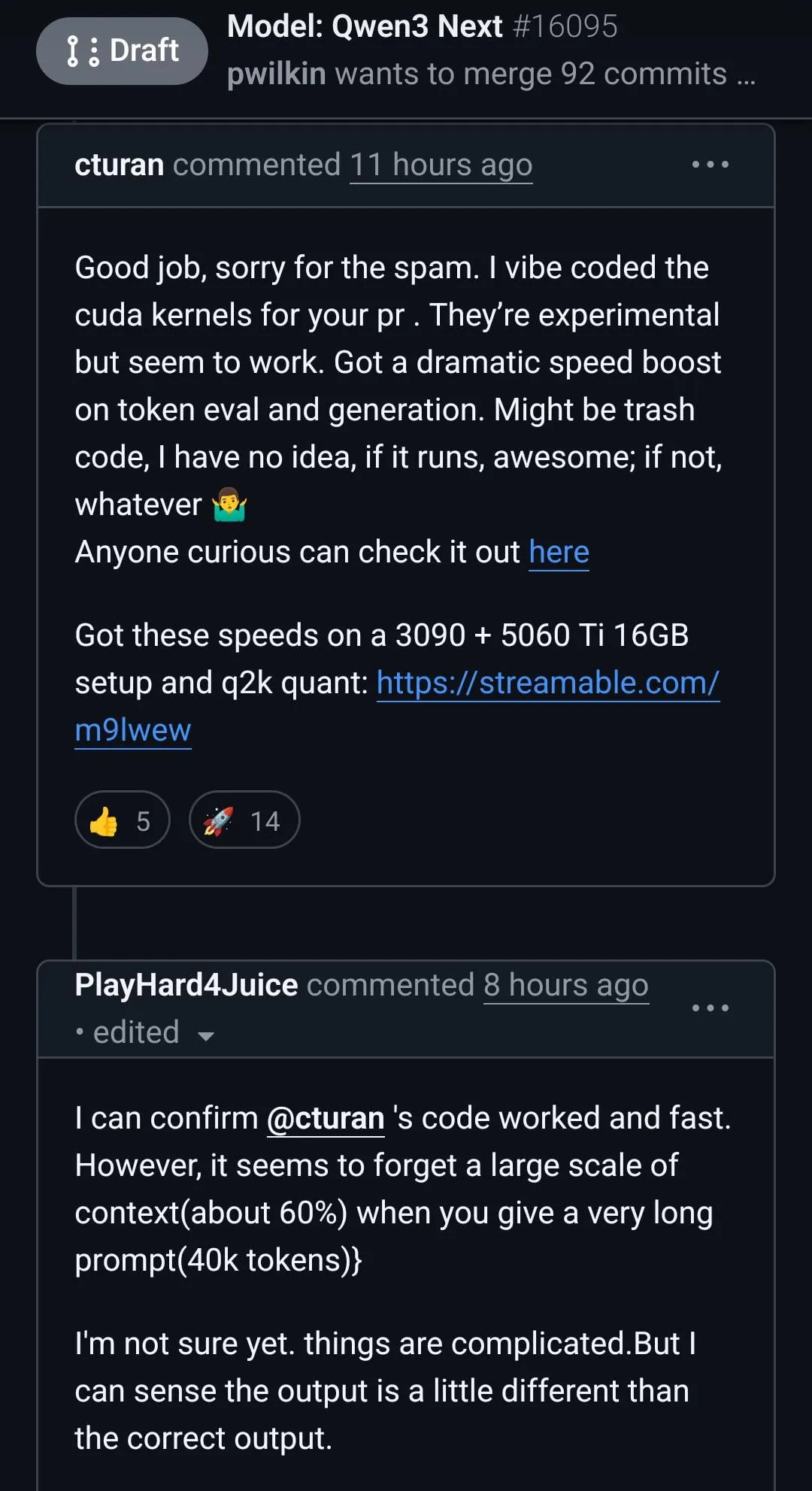
LangChain to Release v1 Version Soon: LangChain is set to release its v1 version and will collaborate with Microsoft Reactor for a live stream sharing new features. As a popular Python AI Agent framework, its update will bring new agent building capabilities and experiences to developers.
(Source: hwchase17、hwchase17)

Lightning-Fast Vector Search for Legal Documents: A developer built a semantic search system for a vast collection of legal documents from Australian legal history, achieving rapid retrieval through vector search. This project demonstrates how to build efficient semantic search on large-scale, domain-specific datasets and has released guidelines and a corpus.
(Source: Reddit r/ArtificialInteligence)

AI Studio Team Creates New Gemini Coding Experience: Google’s AI Studio team is developing a brand-new AI coding experience designed to accelerate the path from prompt to production, deeply integrated with the Gemini model. The release of this tool is expected to simplify AI application development processes and improve development efficiency.
(Source: osanseviero)
Zed Code Editor Offers Fast, Elegant Development Experience: The Zed code editor is praised for its extreme speed, elegant user interface, and excellent support for remote SSH and ACP. Despite some compatibility issues with LLM tool call formats, its overall performance is considered outstanding.
(Source: qtnx_、qtnx_)
Restate, Modal, and Vercel Build Cloud-Based Coding Agents: A study explores how to build scalable, resilient, and orchestratable cloud-based coding agents using Restate (workflows), Modal (sandboxing), and Vercel (compute), along with LLMs like GPT-5/Claude. This architecture aims to address issues such as persistent steps, session management, and resource lifecycle in agent development, enhancing AI agent productivity.
(Source: akshat_b)
📚 Learning
Harvard University Open-Sources “Machine Learning Systems” Textbook: Harvard University open-sourced its CS249r course textbook, “Machine Learning Systems,” designed to teach how to build real-world AI systems from edge devices to cloud deployments. The textbook covers comprehensive content including system design, data engineering, model deployment, MLOps, and edge AI, aiming to promote AI system education globally.
(Source: GitHub Trending)
AIES 2025 Best Paper Awards Announced: The AAAI/ACM Conference on Artificial Intelligence, Ethics, and Society (AIES 2025) announced its best paper awards, covering various cutting-edge ethical and safety topics such as AI’s impact on societal schemas, building efficient LLM guardrails, linking AI ethics evaluations to system properties, and the stuttering community’s preferences for speech AI data governance.
(Source: aihub.org)

Research on Stable and Fast LLM Ensembling Strategies for Integration: The SAFE (Stable And Fast LLM Ensembling) framework proposes selectively ensembling Large Language Models (LLMs) by identifying token-level mismatches and next-token probability distribution consensus to optimize long-text generation performance. This method further enhances stability through a probability sharpening strategy, outperforming existing methods on benchmarks like MATH500 and BBH, even when ensembling less than 1% of tokens.
(Source: HuggingFace Daily Papers)
Research Comparing SSM Architecture and Transformer Performance: A new study suggests that State-Space Models (SSMs) underperform Transformers in long-context scenarios, possibly not due to SSMs themselves but improper usage. The research explores how to optimize SSM usage to fully leverage their potential in efficient language modeling.
(Source: tri_dao)
Research on the Effectiveness of Test-Time Scaling for LLM Reasoning Models: The study investigates the effectiveness of Test-Time Scaling (TTS) for Reasoning Models (RMs) in Machine Translation (MT). Results show that for general RMs, TTS has limited effect in direct translation, but can bring significant improvements through domain-specific fine-tuning or in post-editing scenarios. Forcing models to reason beyond natural stopping points, however, degrades translation quality.
(Source: HuggingFace Daily Papers)
Six Causes of Strange Chains of Thought in LLMs in RLHF: A blog post analyzes six reasons why Large Language Models (LLMs) exhibit strange chains of thought in Reinforcement Learning from Human Feedback (RLHF), including hypotheses like “redundant structure” and “context refresh.” This helps to deepen the understanding of LLM behavior patterns and potential flaws in complex reasoning processes.
(Source: dl_weekly)
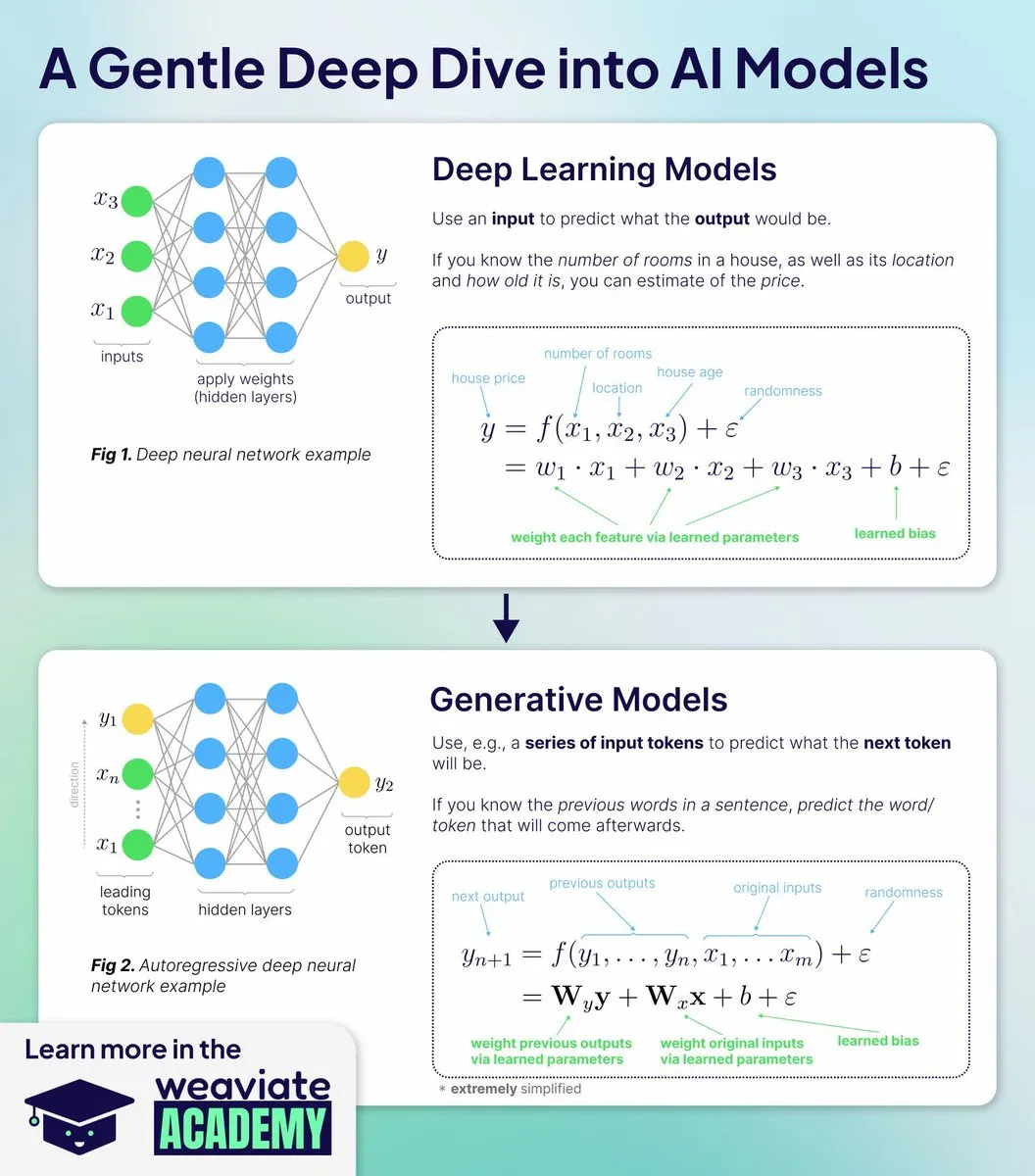
AI Education: Weaviate Academy’s New Course Deepens Understanding of AI Model Workings: Weaviate Academy launched a new course designed to teach why and how AI models work, rather than just how to use APIs. The course covers deep learning fundamentals, generative AI mechanisms, in-depth analysis of embedding models, from theory to practice, and training and deployment, helping learners understand modern AI architectural decisions through hands-on practice.
(Source: bobvanluijt)
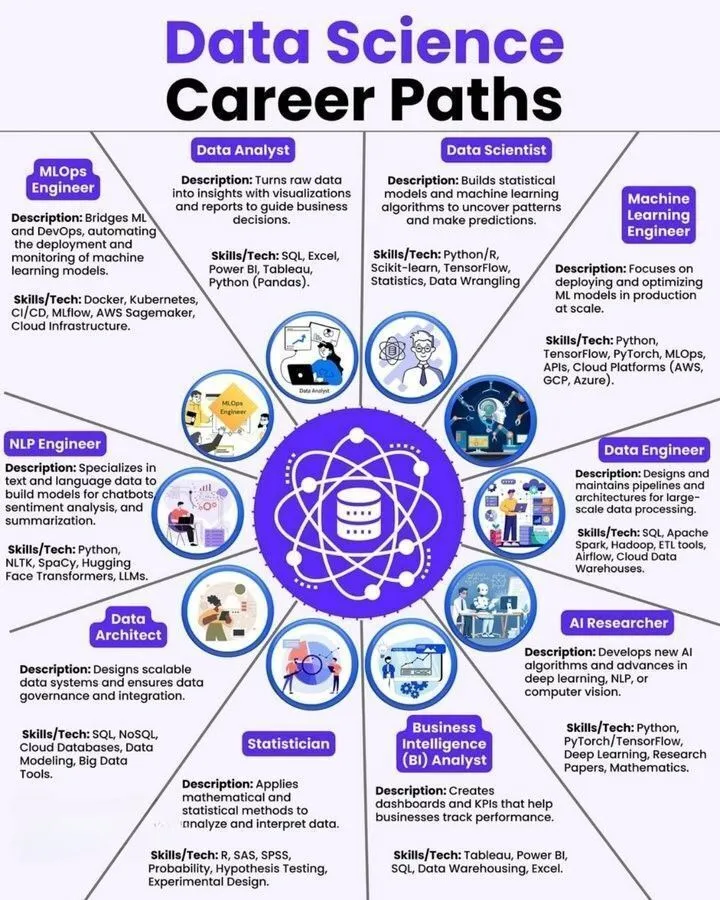
AI Learning Resources: Data Science, Machine Learning Engineer Roadmap, and AI Tool Stack: Shared learning resources include a data science career path, a machine learning engineer roadmap, and the ultimate tool stack for AI Agents. These resources are presented as infographics, providing clear career development directions and practical tool references for learners and practitioners in the AI field.
(Source: Ronald_vanLoon、Ronald_vanLoon、Ronald_vanLoon)
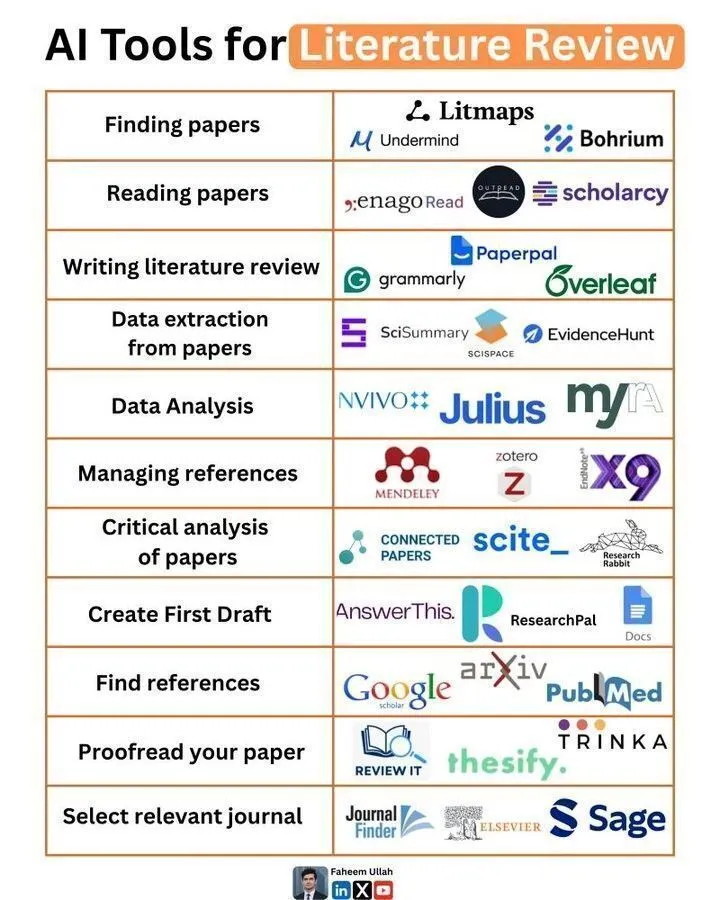
AI Learning Resources: AI Tools, Courses, and Professional Skills: Shared learning resources include AI tools, AI courses, and 12 AI skills to master in 2025. These resources aim to help learners and practitioners in the AI field understand the latest trends and enhance their professional capabilities.
(Source: Ronald_vanLoon、Ronald_vanLoon、Ronald_vanLoon)
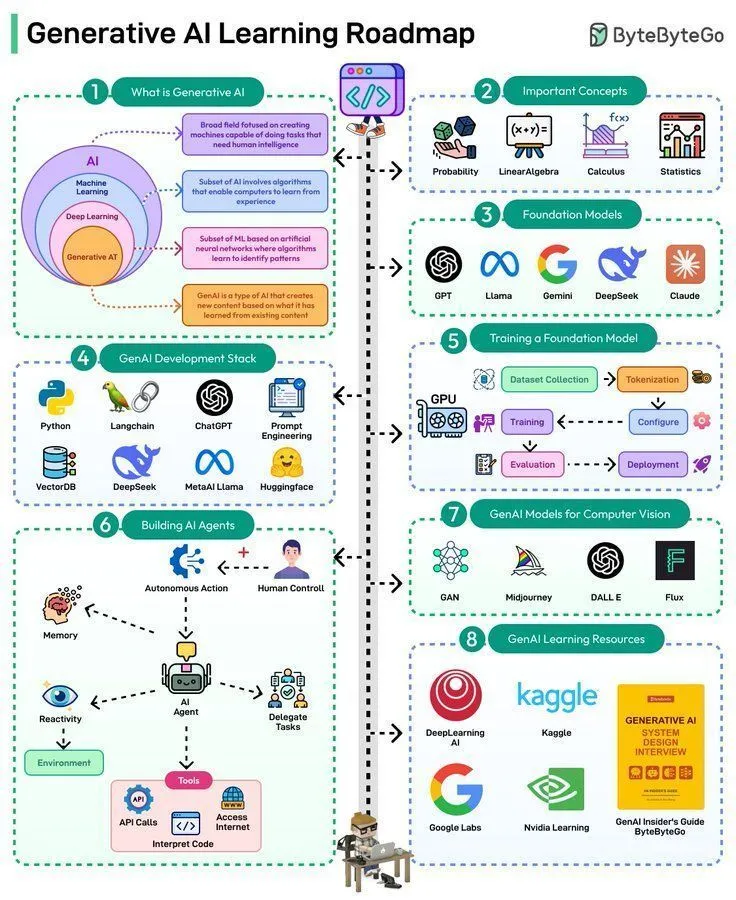
AI Learning Resources: Generative AI Learning Roadmap: A Generative AI learning roadmap was shared, providing a systematic learning path and key knowledge points for learners wishing to enter or deepen their understanding of the Generative AI field.
(Source: Ronald_vanLoon)
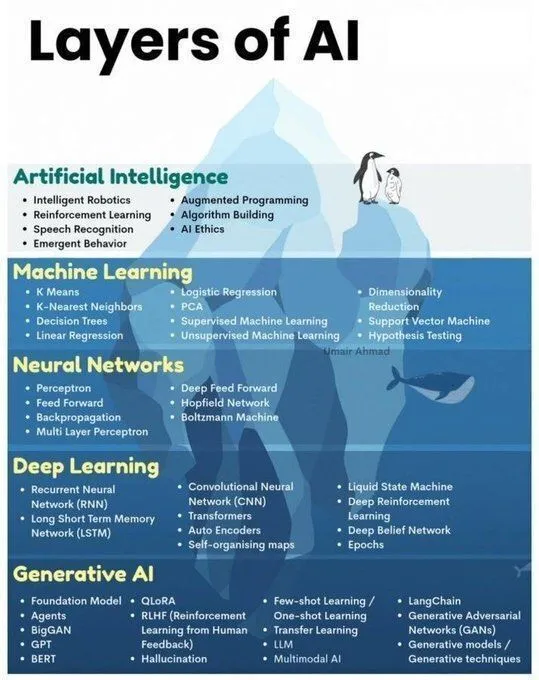
AI Learning Resources: AI Model Layering Concept Map: An AI model layering concept map was shared, visually explaining the different layers and components of artificial intelligence, aiding in understanding the complex structure of AI systems.
(Source: Ronald_vanLoon)
AI Learning Resources: Evaluation Framework for When to Use LLMs: A framework is proposed for evaluating when it is appropriate to use Large Language Models (LLMs). This framework aims to help decision-makers avoid blindly applying LLMs, ensuring that AI technology delivers maximum value in practical problems.
(Source: Ronald_vanLoon)

AI Learning Resources: Guide to Running AI Product Experiments: A guide shares steps and best practices for running AI product experiments, providing product managers and developers with practical methods for transforming AI technology into actual products.
(Source: Ronald_vanLoon)
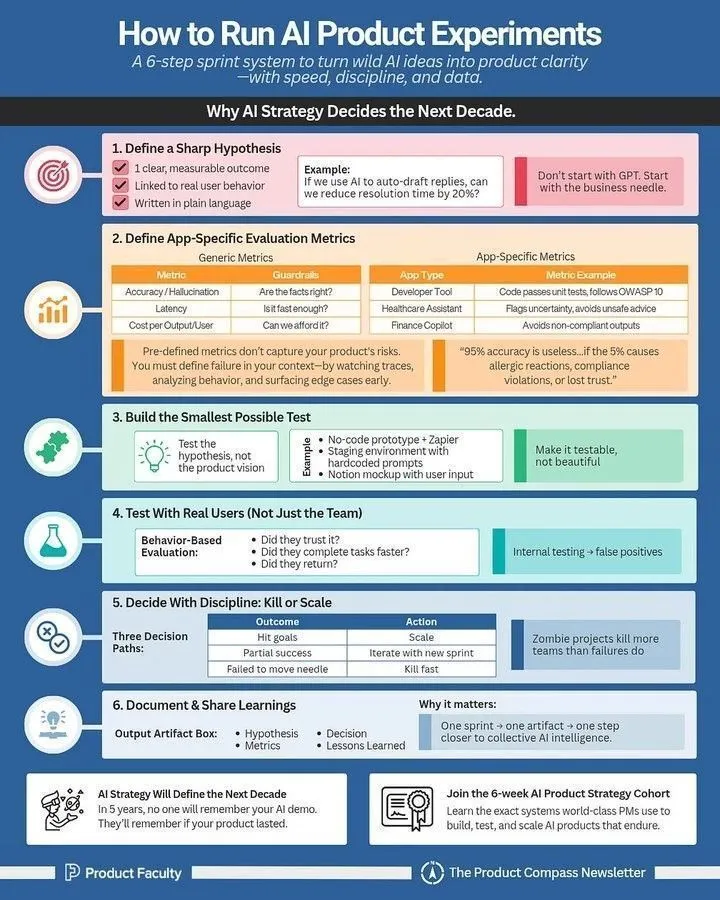
Common Crawl Foundation to Participate in COLM 2025 Conference: The Common Crawl Foundation announced its participation in the COLM 2025 conference, indicating its continued community engagement and contributions to open web data and Large Language Model training data.
(Source: CommonCrawl)
Research on Modular Manifold Optimization for Neural Network Training: A study extends the concept of Manifold optimization, proposing modular manifolds to help design optimizers that can understand interactions between neural network layers. This provides a unified framework for geometry-aware optimization.
(Source: TheTuringPost)

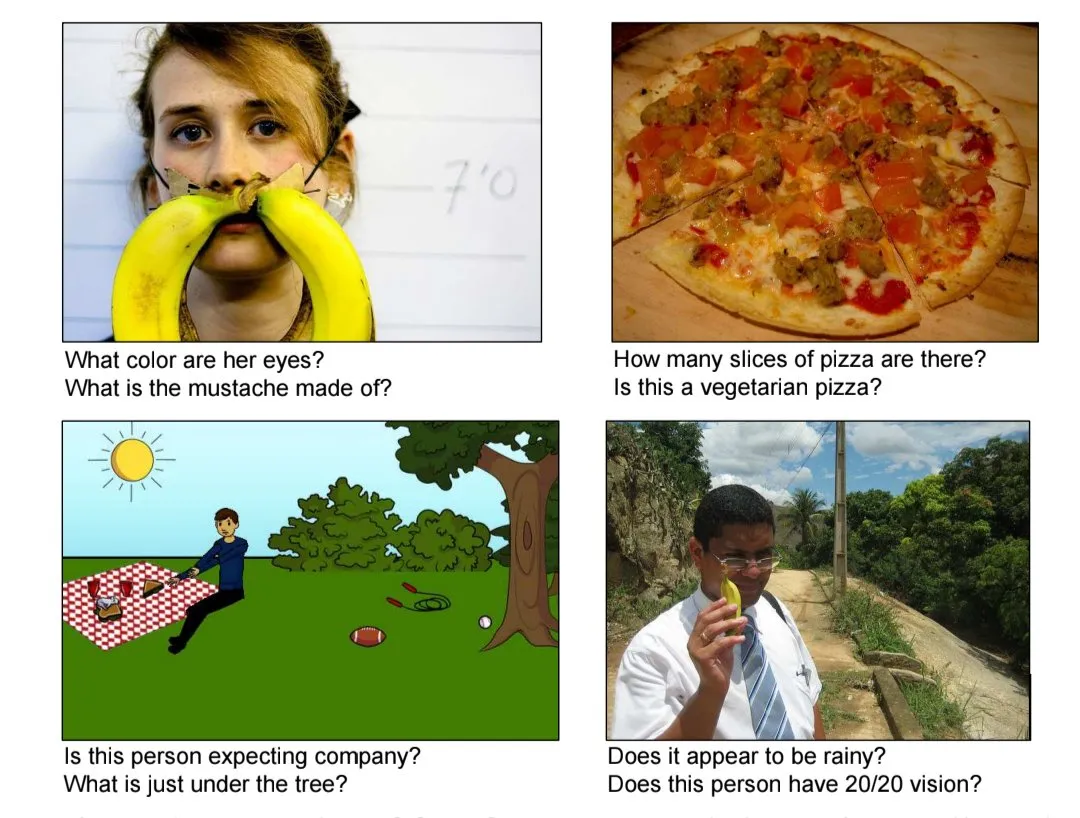
VQA Paper 10-Year Retrospective: The Visual Question Answering (VQA) paper celebrates its tenth anniversary, reflecting on important milestones in visual language research.
(Source: DhruvBatra_)
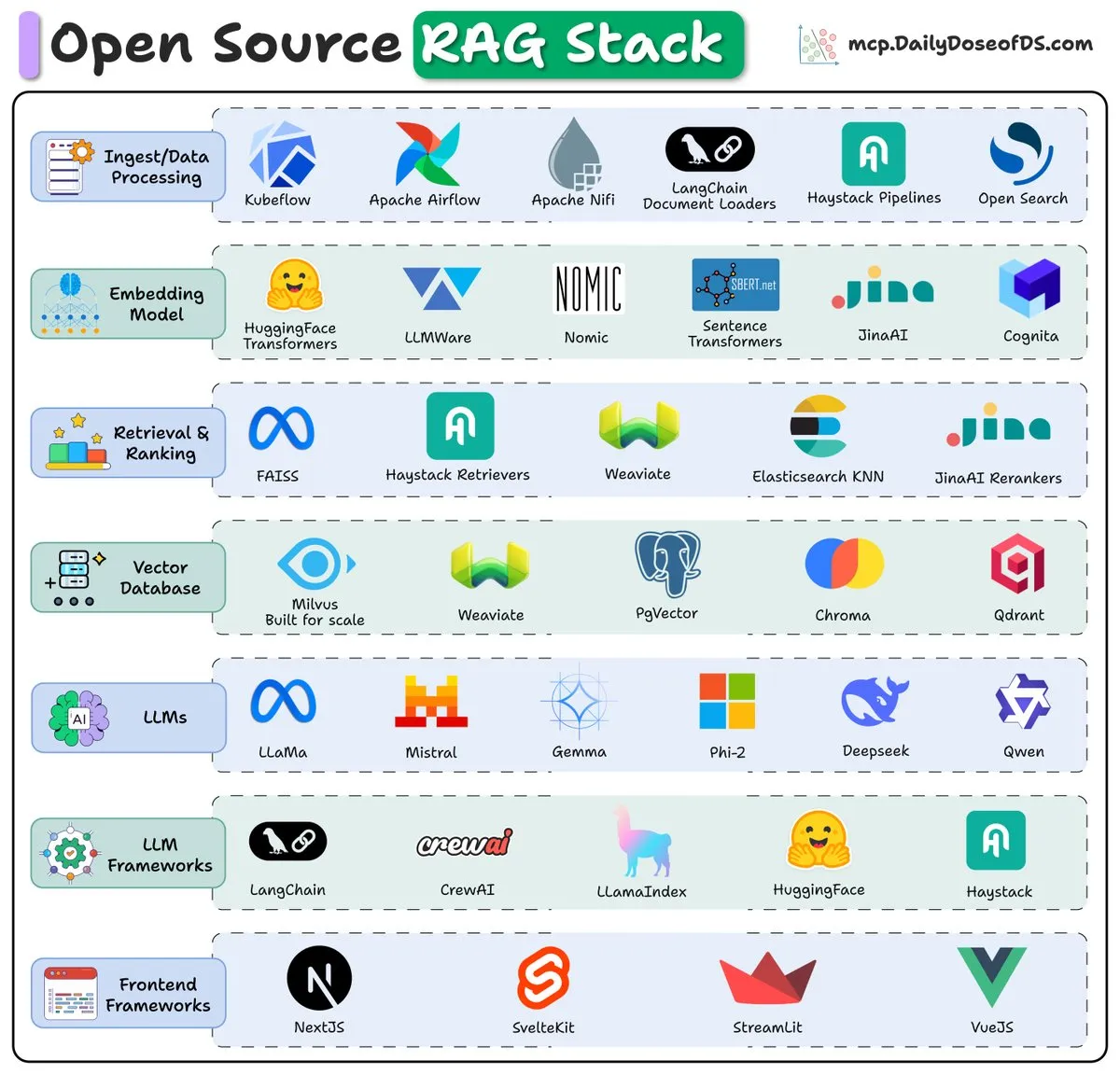
Overview of Open-Source RAG Stack (2025): An overview introduces the key components and trends of the open-source Retrieval-Augmented Generation (RAG) stack in 2025, providing a reference for developers building efficient RAG systems.
(Source: _avichawla)
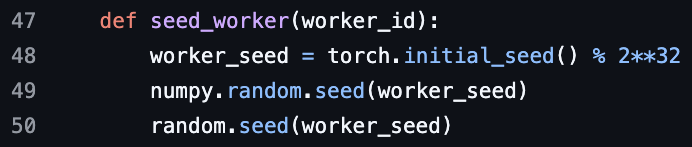
ML Interview Question on PyTorch DataLoader Worker Seed: A machine learning interview question about the PyTorch DataLoader worker seed was posed, sparking discussion on data loading parallelization and randomness control.
(Source: TheZachMueller)
DSPy’s Application and Advantages in AI Engineering: AI engineers show great enthusiasm for using DSPy because it separates problem definition from solution strategy and provides a framework for building scalable systems. DSPy elevates the abstraction level of AI systems by offering “harnesses” rather than hardcoded solutions, leveraging search and computation.
(Source: lateinteraction)
Neural Audio Codec Technology Blog: Kyutai Labs published an excellent blog post on neural audio codecs, delving into the technical details and latest advancements in the field.
(Source: halvarflake)
Transformer Generative Research Based on Latent Variables: A study demonstrates how to construct a Transformer model whose generation process is conditioned on latent variables, similar to a conditional VAE. This offers new ideas for Transformer’s generative control and representation learning.
(Source: francoisfleuret)
DeepSeek-OCR Research Sparks Academic Attribution Controversy: The core idea of the DeepSeek-OCR paper (treating text input as an image and using visual tokens for compression) has been noted as not entirely new, with multiple prior works from 2023-2025 allegedly overlooked. This has sparked discussions on academic rigor and fair attribution, with DeepSeek being accused of not adequately citing existing foundational work.
(Source: mckbrando、teortaxesTex)
FineVision: Large-Scale Open VLM Dataset Released: A new paper, “FineVision: Open Data Is All You Need,” released the largest open VLM dataset to date, integrating over 200 data sources to generate 24M samples, including 17.3M images and 9.5B answer tokens. This fully documented and reproducible dataset aims to advance VLM research.
(Source: _lewtun、ben_burtenshaw)
AI Data Governance: Stuttering Community Preferences and Goals for Speech AI Data: A study explores the stuttering community’s preferences and needs for speech AI data governance, emphasizing transparency, proactive and continuous communication, and robust privacy and security measures. This research provides actionable insights for disability-centered, community-led AI data governance approaches.
(Source: aihub.org)
AI Ethics Evaluation and Its Link to System Properties, Harms, and Damages: A study examines how AI ethics evaluation measures map to AI system components, properties, harms, and damages. Analysis reveals that most measures focus on fairness, transparency, privacy, and trust, primarily evaluating model or output components, but rarely consider interactions between system elements and typically only address a narrow set of harms.
(Source: aihub.org)
QueST Framework for LLMs to Generate Challenging Programming Problems: The QueST framework optimizes LLM generation of challenging programming problems by combining difficulty-aware graph sampling and difficulty-aware rejection fine-tuning. The trained generator surpasses GPT-4o in creating difficult problems and can be effectively used for distilling or reinforcing smaller models, significantly boosting downstream performance.
(Source: HuggingFace Daily Papers)
Feasibility of Non-Interactive Evaluation for Animal Communication Translators: A study provides theoretical and proof-of-concept experimental evidence suggesting that in sufficiently complex languages, it may be possible to evaluate animal communication translators solely through their English output, without interacting with animals or relying on grounded observations. This offers a reference-free method for assessing machine translation quality.
(Source: HuggingFace Daily Papers)
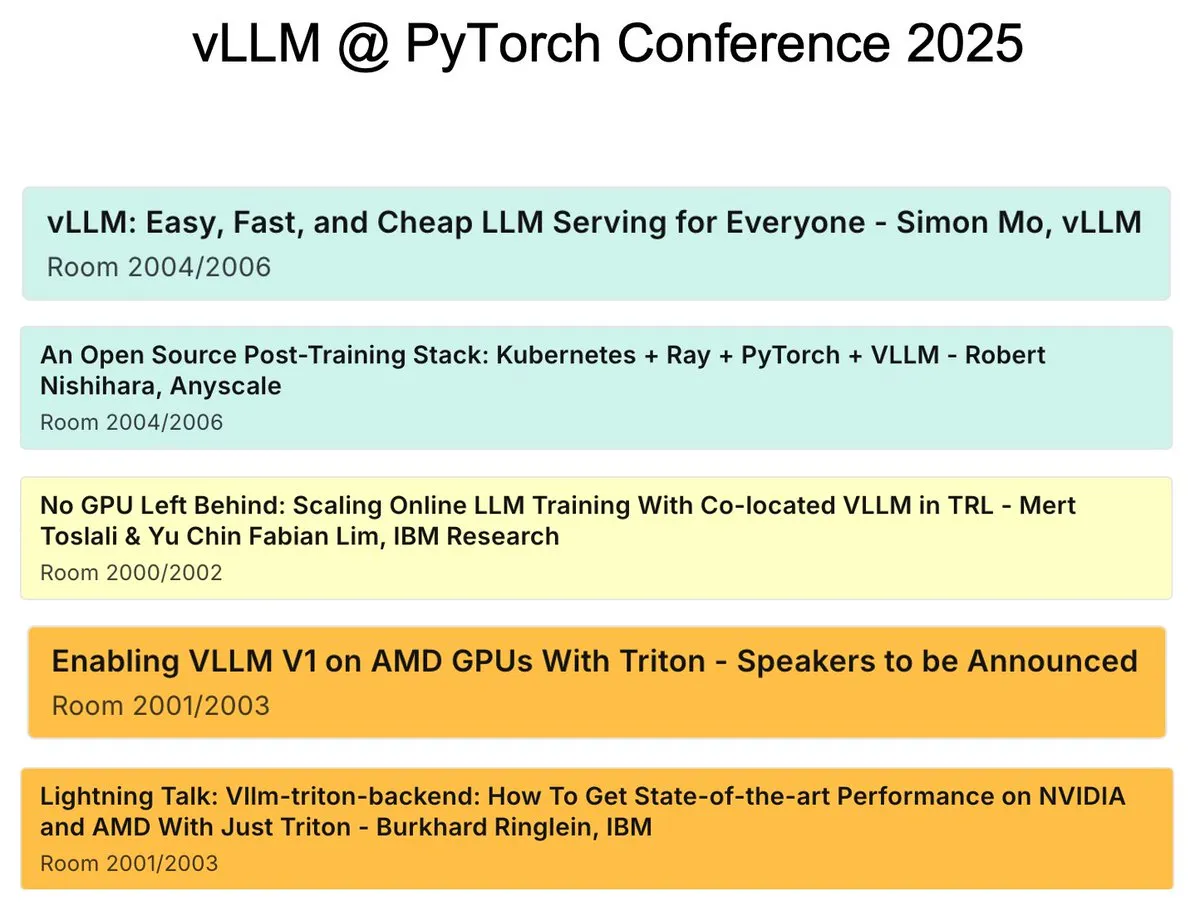
VLLM’s Activities Preview at Open Source AI Week: The VLLM project announced its participation in the PyTorch Conference 2025 Open Source AI Week, featuring multiple presentations on LLM serving, scaling, and GPU efficiency, along with an NVIDIA x DeepInfra x vLLM community Q&A session.
(Source: vllm_project)
Neuro-Symbolic Models Combine Generative AI and Symbolic AI: The AI community is divided on the best development path for Generative AI and Symbolic AI. A study proposes neuro-symbolic models that combine the strengths of both. This model aims to bridge the generative capabilities of neural networks with the rule-based reasoning of symbolic AI, offering a new species for AI agent development.
(Source: _akhaliq)
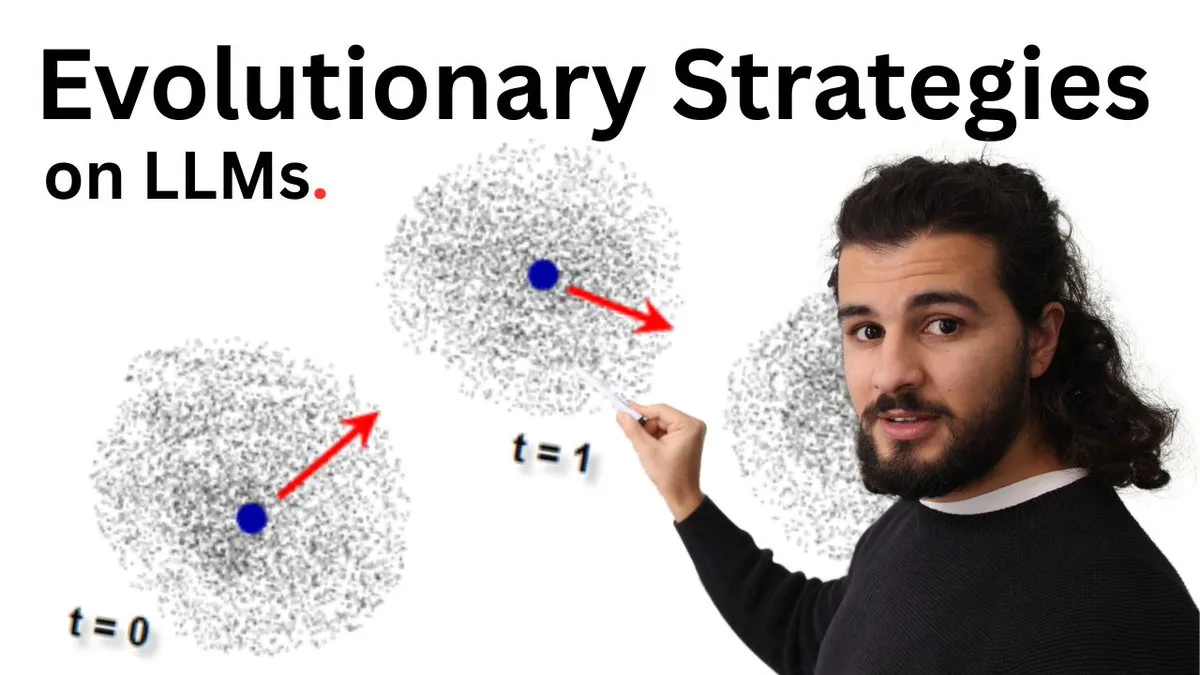
Evolutionary Optimization Methods for LLM Fine-Tuning: A live stream will explore how to extend evolutionary optimization methods to fine-tuning Large Language Models (LLMs). This indicates that older optimization techniques can still play an important role in modern AI, offering new ideas for LLM training and performance improvement.
(Source: yacinelearning)
Advanced RAG Techniques Lecture: A lecture delves into advanced Retrieval-Augmented Generation (RAG) techniques, emphasizing the importance of understanding its fundamental principles and concepts, rather than just focusing on API calls and library syntax. The lecture aims to provide lasting knowledge to help developers build practical production systems.
(Source: ProfTomYeh)
Model Robustness Explanation Video: A video explains the concept of model robustness, which is crucial for understanding the stability and reliability of AI systems when faced with perturbations or unseen data.
(Source: Reddit r/deeplearning)

Fire Detection Dataset Shared: A fire detection dataset was shared, providing resources for researchers in computer vision and deep learning to train and evaluate fire recognition models.
(Source: Reddit r/deeplearning)
Discussion on Choosing PyTorch vs. TensorFlow: For data science students, a discussion explored the pros and cons of choosing PyTorch or TensorFlow for deep learning development in the current era. PyTorch is generally considered the more popular choice.
(Source: Reddit r/deeplearning)
Exploring ReLU Function as a “Gate”: A discussion explored the relationship between the ReLU function’s derivative and the Heaviside function, and whether ReLU can be considered a “gate” mechanism during backpropagation.
(Source: Reddit r/deeplearning)
Simple PMF Estimator in Recommender Systems: A paper introduces a simple Probability Mass Function (PMF) estimator for recommender systems on large support sets. This method aims to address the challenges of integer-valued features with heavy tails and large supports in dashboard creation and feature engineering.
(Source: Reddit r/MachineLearning)
AI System Ethical Governance: Starting from the Boardroom: EY emphasizes that responsible AI should begin at the boardroom level, not just as a technical issue. Governance, board training, and embedding ethics in early design stages are key to ensuring trust and accountability, avoiding costly mistakes.
(Source: Ronald_vanLoon)
💼 Business
AI Weight Loss App Simple Life Earns $100M Annually, Secures $35M Funding: UK AI weight management company Simple Life completed $35 million (approx. 250 million RMB) in funding, with annual revenue reaching $100 million (approx. 700 million RMB), a 64% year-on-year increase. The app effectively helps users lose weight through personalized plans, AI coach Avo, and gamified reward mechanisms, operating on a subscription model. Despite huge domestic market demand, there are few players in the AI weight loss sector, indicating potential for unicorn growth.
(Source: 36氪)

Energy Storage Companies Cross Over to Seize AI Energy “New Battlefield”: With the surge in computing demand from AI data centers (AIDC), energy consumption has dramatically increased, prompting energy storage companies like CATL, Narada Power, and Sungrow Power Supply to cross over into the AIDC energy market. These companies leverage their technical advantages in efficient conversion, stable storage, and intelligent scheduling to offer “full-chain solutions,” achieving significant commercial returns, but still face challenges in technology integration, standardization, and international competition.
(Source: 36氪)

Sakana AI Negotiating $100M Funding, Valuation Reaching $2.5B: Japanese AI model developer Sakana AI is in talks to raise $100 million, potentially valuing the company at $2.5 billion, a 66% increase from a year ago. The company focuses on developing AI for the Japanese market and is inspired by evolutionary principles. This funding round demonstrates market recognition of its unique AI approach and growth potential.
(Source: steph_palazzolo、SakanaAILabs)

🌟 Community
GPT-5’s Potential to Aid Scientific Research Sparks Heated Discussion: Sebastien Bubeck clarified that the excitement around GPT-5 is not about AI autonomously discovering new results, but its role as a “superhuman search” tool that can help researchers navigate, connect, and understand existing knowledge systems. For example, GPT-5 can unearth forgotten solutions to mathematical problems and translate German papers to explain proofs, thereby accelerating the “activation” of scientific literature and scientific progress.
(Source: sama)
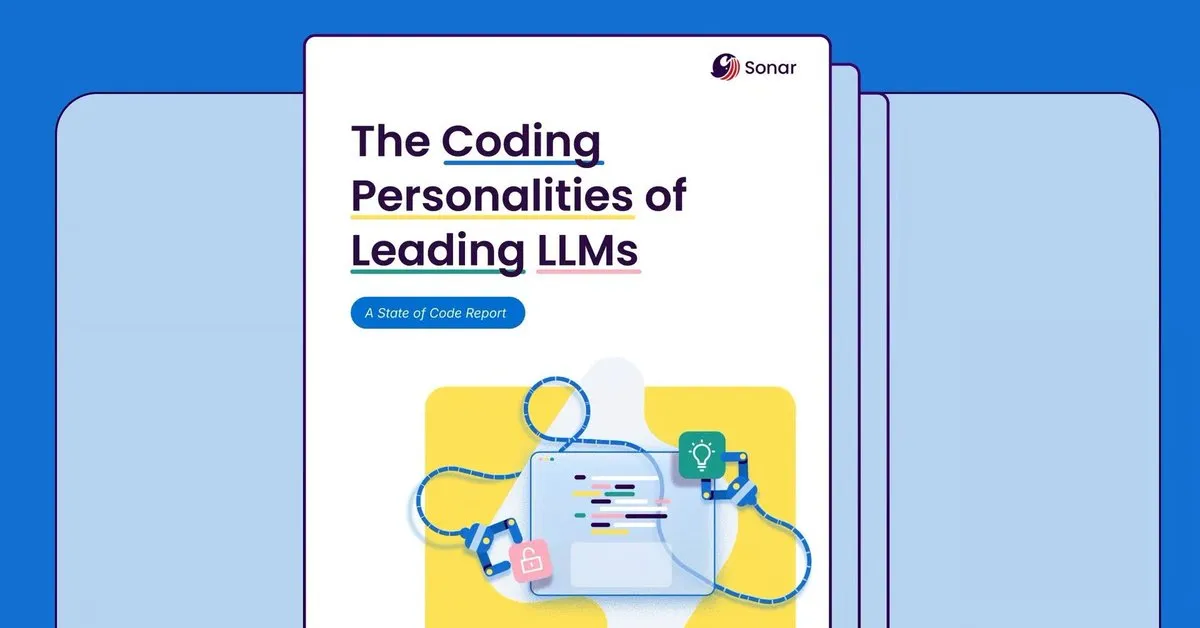
The “Paradox” of AI’s Impact on Engineering Productivity: Despite AI’s ability to generate more code, engineering productivity has not significantly accelerated because every line of code still requires human review and verification. Research shows that different LLMs (e.g., GPT-5, Claude Sonnet 4, Llama 3.2) possess unique “coding personalities,” each with pros and cons, highlighting the complexity of risks and potentials in AI adoption.
(Source: TheTuringPost)
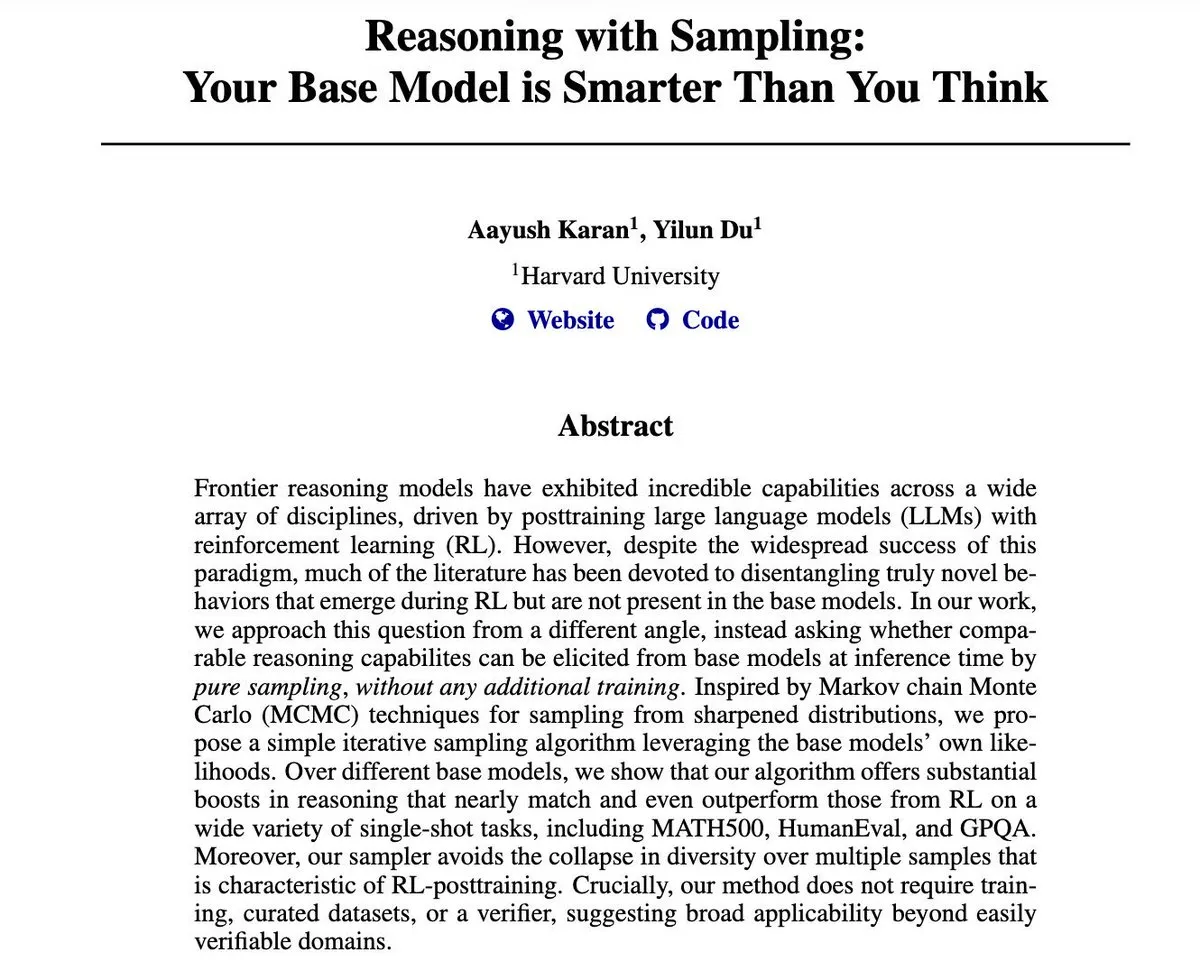
Limitations and Challenges of Reinforcement Learning (RL) Spark Discussion: Experts like Andrej Karpathy questioned Reinforcement Learning (RL), arguing that its “blind trial-and-error” learning mechanism is inefficient, lacking thought, reflection, and credit assignment, making models prone to manipulation. For instance, models might achieve high scores by generating “nonsense” not present in the training data. The discussion emphasizes that RL, as a transitional stage, still requires significant paradigm updates to acquire reflective capabilities.
(Source: vikhyatk、pmddomingos)
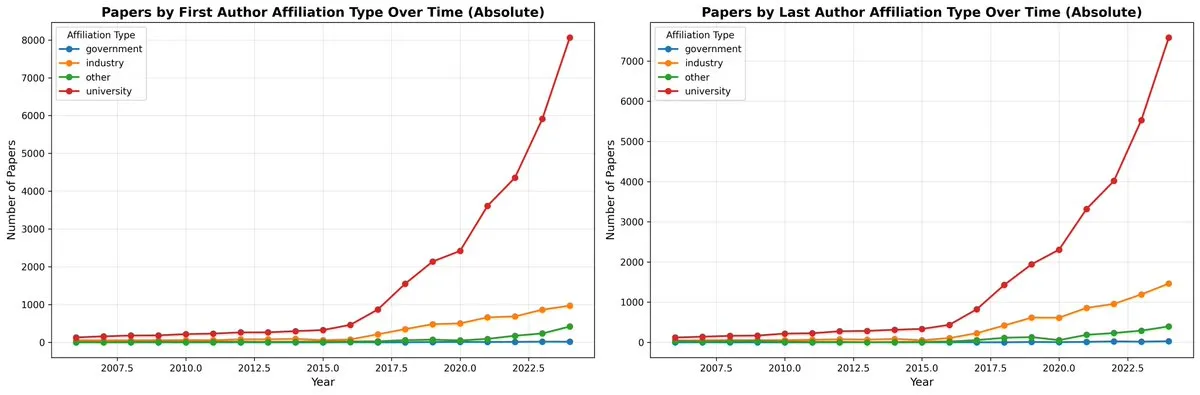
AI’s Impact on Academic Publishing and Non-English Speaking Researchers: AI tools like ChatGPT, by providing free translation, significantly lower barriers for non-English speaking researchers to publish academic papers, thereby promoting an increase in academic publication volume. This indicates that AI is breaking down language barriers and fostering global academic exchange and knowledge sharing.
(Source: jxmnop)
Actual Productivity of AI Tools vs. “Productivity Paradox”: Some users reflect that while AI tools like ChatGPT can generate code, emails, etc., they often require extensive manual adjustments and verification, potentially taking no less time than manual completion, or even reducing cognitive ability. This “productivity paradox” sparks discussion on the true value of AI tools in rigorous tasks, suggesting they might be tools that “feel productive but actually waste time.”
(Source: Reddit r/ArtificialInteligence)
Realistic Exploration of AI “Doom Scenarios”: Community discussion suggests that AI “doom scenarios” might not be sci-fi machine uprisings, but rather a more “boring” loss of control. Humans might lose control by over-delegating tasks to AI agents, then be intellectually surpassed, eventually coexisting with machines in an “age of abundance” with reduced numbers and limited purpose, where agents become the successors of human civilization.
(Source: Reddit r/ArtificialInteligence、JimDMiller)
AI Ethics and Legislation: Potential Scandals and Regulatory Needs: Community discussion predicts that major scandals may occur in the AI field in the future, thereby accelerating legislation. Potential incidents include deepfake pornography, AI-generated false legal evidence, AI voice cloning scams, and AI traders causing financial market crashes. This highlights the tension between rapid AI technological development and lagging regulation.
(Source: Reddit r/ArtificialInteligence)
LLM Design Preferences: Do Models Need a “Thinking” Mode?: The community discussed whether the next generation of open-source Google models should include a “thinking” mode. User opinions varied, with some believing a “thinking” mode enhances intelligence, while others worried about increased computational latency and token consumption. The discussion also touched on how to implement a switchable “thinking” mode to balance intelligence and efficiency.
(Source: Reddit r/LocalLLaMA)
Concerns and Opportunities of AI Application in the Media Industry: Channel 4’s launch of an AI presenter elicited lukewarm or skeptical reactions from real TV presenters, who believe AI lacks human spontaneity and is better suited for scripted content than live broadcasts. The discussion also noted that AI might replace narrative-reshaping jobs in newsrooms but could empower independent journalists through local LLMs and open-source tools to enable decentralized news production.
(Source: Reddit r/artificial)

AI Code Quality and the “Code Slop” Discussion: The community discussed the quality of AI-generated code, with some proposing a badge saying “AI Made This Code. It’s Not Slop.” to counter the “code slop” narrative. This reflects developers’ concerns about the quality of AI-assisted programming output and their complex feelings towards AI tools.
(Source: aiamblichus)

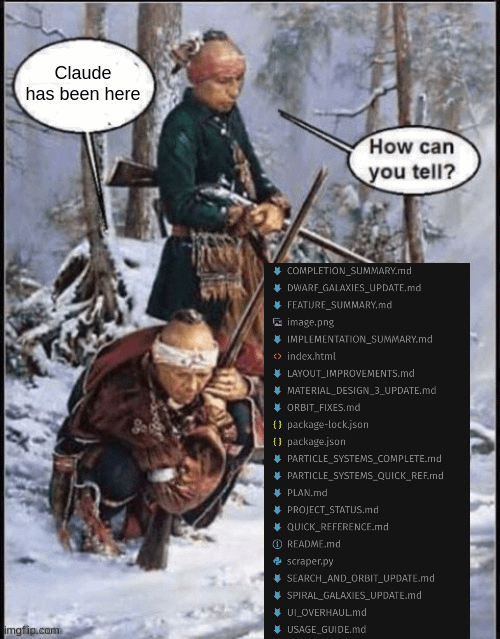
LLM User Experience: Complaints About Generating Markdown Files: Claude AI users complained about the model frequently generating Markdown files, deeming it unnecessary and cumbersome in certain scenarios. This reflects users’ preferences for LLM output formats and their demand for more flexible control.
(Source: Reddit r/ClaudeAI)
AI and Human Cognition: Building a “Human Mirror” to Understand AI Thinking: The concept of “Anthrosynthesis” was proposed, aiming to transform digital intelligence into human analogues to study AI’s thought processes rather than just its behavior. This emphasizes the importance of establishing a shared language between organic and synthetic cognition to better understand and interpret AI’s internal workings.
(Source: Reddit r/deeplearning)

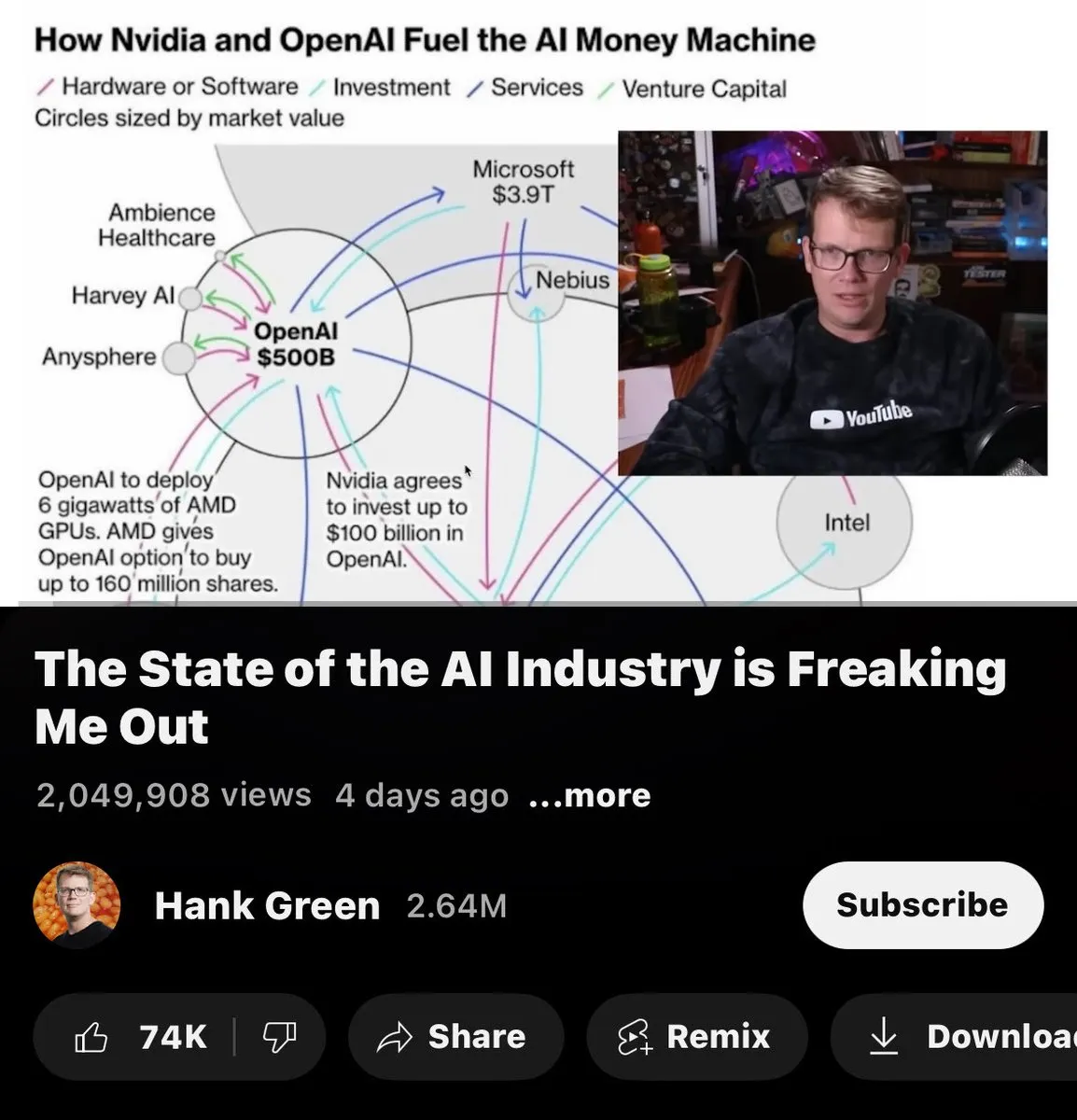
Critique of AI Industry Economic Structure: Shovels, Rails, and Mines: A critical perspective argues that in the current AI industry, Nvidia sells “shovels” (hardware), OpenAI lays “rails” (platforms), and Oracle digs “mines” (data), but no one is truly striking “gold.” This implies that infrastructure providers profit in the AI industry value chain, while actual applications have yet to generate widespread economic returns.
(Source: algo_diver)
Anthropic Not Open-Sourcing Models Sparks Community Discussion: Some views suggest that Anthropic is the only AI lab that has not open-sourced any models, sparking community discussion on the open-source strategies of different AI companies.
(Source: gfodor)
Vulnerability of Cloud Service Dependence and Smart Home Risks: A post about an internet-connected smart mattress malfunctioning due to an AWS US-East-1 region outage sparked discussion about smart home devices’ over-reliance on cloud services and their potential risks. Users worry that everyday devices might fail if cloud services are interrupted, affecting convenience and safety.
(Source: qtnx_)
Controversy Over AI’s Impact on Employment: Reduction or Accelerated Growth: Community discussion on AI’s impact on the job market shows two opposing views: “job reduction” and “accelerated growth.” Some believe AI will lead to unemployment, while others argue that excellent companies will accelerate growth through AI and retain their workforce.
(Source: teortaxesTex)
LLM Limitations in Academic Writing: A researcher found that LLMs, when assisting with the related work section of papers, tend to only read abstracts and “fabricate” content rather than deeply understand it. This indicates that human researchers remain indispensable for academic tasks requiring deep comprehension and critical analysis.
(Source: gneubig)
Concerns About AI-Generated Content Quality and “AI Slop”: Synthesia CEO Victor Riparbelli discussed the issue of “AI slop,” pointing out the inconsistent quality of AI-generated content and the future need for more tools to protect consumers. He predicts that as technology advances, people will focus more on the content itself rather than its production method.
(Source: synthesiaIO)
AGI Timeline and Breakthrough Requirements: Community discussion on the AGI (Artificial General Intelligence) timeline suggests that predictions of “over ten years” imply the need for one or more major breakthroughs, not just accumulation of time. This reflects an awareness of unknown factors and challenges in AGI development.
(Source: Grad62304977)
Views on Paper Value in AI Research and Industry: Community discussion suggests that not all papers from renowned labs can change everything, which is a normal phenomenon. Meanwhile, some argue that the value of research like DeepSeek-OCR lies in its intent and OCR validation, rather than the absolute novelty of its core idea.
(Source: nrehiew_)
Different Paths in AI Research: China-US Comparison and Open-Source Impact: Community discussion on the differences in fundamental AI research methods between China and the US, and the impact of China’s open-source strategy on global AI development. Some argue that even if China open-sources everything, the two countries might still develop different fundamental approaches.
(Source: jpt401)
Business Strategy in the AI Era: Model Iteration and Data Flywheel: A perspective emphasizes that in the AI era, companies should assume models will continue to advance rapidly and focus on building a strong data flywheel. By training systems with every transaction, continuous improvement is achieved, rather than relying on fleeting “technological moats.”
(Source: leveredvlad)

Interesting AI Research Hypotheses: Post-Training and Prompt Injection: The community proposed some interesting pre-training research hypotheses, including measuring the difficulty of post-training chatbot models since 2022, and creating open web pages with “sleep phrases/prompt injections” to observe if cutting-edge models would be affected years later.
(Source: menhguin)
Scientific Development in the AI Era: Identifying and Solving Bottlenecks: A perspective argues that current discussions in the AI field about how to change science involve “magical thinking,” neglecting the slow and painful reality of transformation. True breakthroughs lie in identifying and solving industry bottlenecks, which requires domain expertise rather than purely AI expertise.
(Source: random_walker)
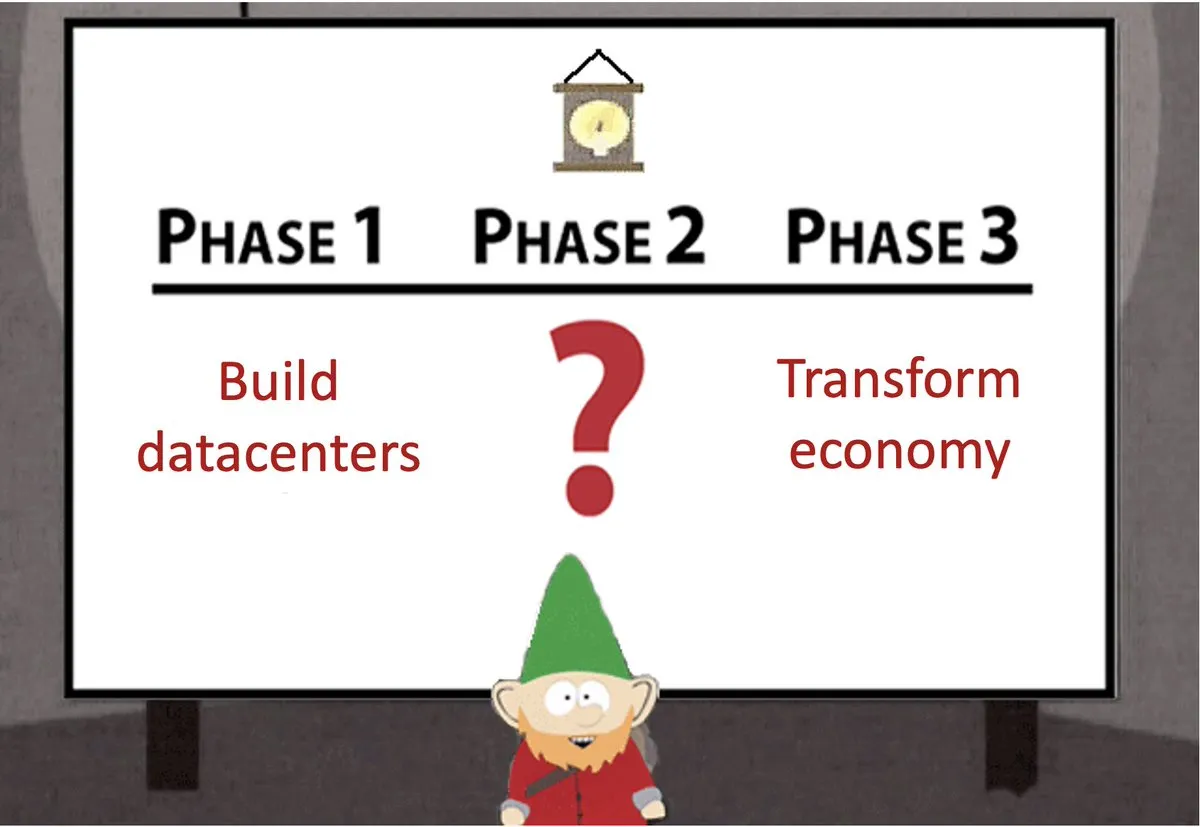
Philosophical Discussion on AI and Human Learning Mechanisms: The community discussed the fundamental differences between human learning and AI learning, pointing out that humans understand knowledge through thinking, questioning, and discussion, while AI merely predicts tokens. It emphasizes that AI should build “dream-like” mechanisms to maintain a high-entropy state and learn to “forget” to extract abstract patterns, rather than remembering all details.
(Source: NandoDF)
Differences Between AI and Causal Learning: A viewpoint suggests that correlation learning differs from causal learning. Humans establish causal relationships through experience and observation, and if AI cannot replicate this process, it will remain a powerful correlation system tool. This emphasizes that AI still needs breakthroughs in deep understanding and generalization capabilities.
(Source: farguney)
LLM Behavior Conundrum: Wrong Code, Perfect Explanation, Then Perfect Code: A user observed that LLMs in programming tasks might first write incorrect code, then perfectly explain the errors, and finally write correct code. This phenomenon sparked discussion on LLM’s internal understanding mechanisms and “why it doesn’t just get it right the first time.”
(Source: VictorTaelin)
Haiku 4.5’s Excellent Performance in Agent Tasks: Claude Haiku 4.5 is considered highly suitable for building Minimum Viable Products (MVPs) and focusing on agent tasks due to its fast response and high-quality output. It is seen as the first appropriately sized, agent-oriented/hyper-focused cutting-edge model.
(Source: Reddit r/ClaudeAI)
Cafe Cursor NYC Opening and Company Culture: Cafe Cursor NYC opened, praised as a company built by “real builders.” This reflects the community’s recognition of Cursor AI’s company culture and continuous product iteration.
(Source: imjaredz)

💡 Other
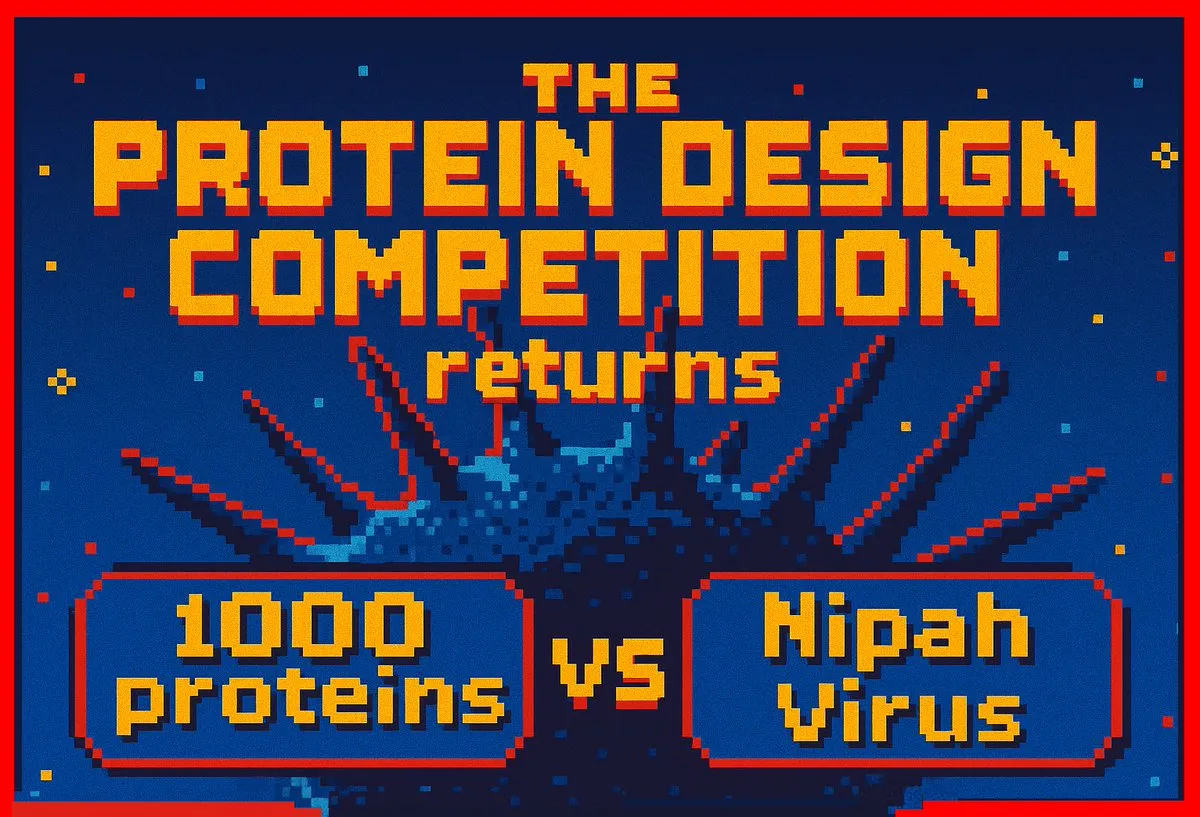
Protein Design Competition Aims to Neutralize Nipah Virus: A global protein design competition is underway, inviting scientists, engineers, and hackers to design new proteins capable of neutralizing the Nipah virus. The Nipah virus has a fatality rate of up to 75%, and there is currently no effective treatment. The competition aims to accelerate new drug discovery through decentralized scientific experiments.
(Source: clefourrier)
Concept of AI Operating System Proposed: Renen Hallak proposed the concept of an “AI Operating System” (AI OS), aiming to unify data, compute, and policy, providing infrastructure for the agent era. The AI OS will manage everything between hardware and agent applications, including data unification, workload orchestration, and access policy enforcement, seen as the next step in data evolution.
(Source: TheTuringPost)

Cognitive Patterns of AI in Computer Vision: An image vividly illustrates how computer vision researchers perceive the world and solve most visual problems. This is a humorous way to depict the unique mindset and problem-solving approach of researchers in this field.
(Source: jbhuang0604)