



🔥 Focus
TII Releases Falcon H1R 7B: Redefining the Boundaries of Inference Efficiency with Hybrid Architecture: The Technology Innovation Institute (TII) of Abu Dhabi has launched Falcon H1R 7B, an inference model utilizing a Mamba-Transformer hybrid architecture. Despite having only 7B parameters, its performance in mathematics, programming, and logical reasoning surpasses SOTA models (such as Qwen3-32B) that are 2-7 times its size. The model’s core breakthrough lies in the “3D Efficiency Limit”: using DeepConf technology for confidence filtering during inference, it significantly improves Token efficiency, achieving higher precision reasoning with fewer generations. This marks a shift in inference models from a pure parameter race toward a deep integration of architectural efficiency and Test-time Scaling (Source: HuggingFace Blog)

Claude Code and Opus 4.5: Software Engineering’s Leap from Craftsmanship to the Industrial Era: The community is buzzing about the paradigm shift brought by Claude Code paired with Opus 4.5. Senior developers believe this is not just simple code completion, but a “Gutenberg Moment” for software creation. Through Agentic workflows, software development is shifting from “hand-polishing” to an “industrial assembly line,” where a single person can execute the entire process from planning and coding to PR merging. While this “Vibe Coding” mode lowers the barrier to entry, it has also sparked deep discussions about the “loss of human Agency”: when code is no longer the bottleneck, a product’s taste, curiosity, and the ability to collaborate with AI will become core competencies (Source: gdb, gfodor, Suhail)
Sakana AI Agent Wins Programming Competition: A Milestone in Autonomous AI Scientific Discovery: Sakana AI’s ALE-Agent took first place in the AtCoder Heuristic Contest, defeating over 800 human contestants. Within 4 hours and using approximately $1,300 in reasoning credits, the agent autonomously discovered a heuristic algorithm called “Virtual Power” through parallel code generation, result analysis, and real-time iteration, outperforming benchmarks designed by human experts. This achievement proves that AI agents possess the potential to match top experts in long-range reasoning and original scientific discovery tasks, signaling the accelerated arrival of the “Autonomous Scientist” era (Source: SakanaAILabs)

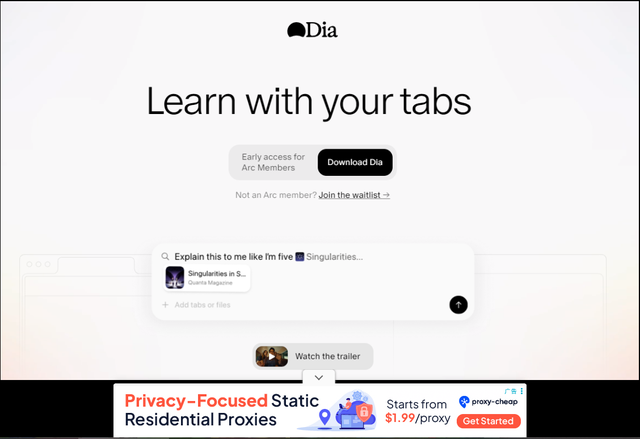
AI Browsers Reshape Traffic Gateways: Evolution from “Search Box” to “Execution Agent”: With The Browser Company launching Dia and the surge of Quark and 360 AI browsers in China, browsers are transforming from information windows into Agent hubs. Dia eliminates traditional tabs through full AI integration, focusing on cross-web automated collaboration; meanwhile, Quark focuses on specific scenarios like ID photos and long document summarization. The core logic of this transformation is evolving from “helping you find answers” to “directly helping you get things done.” Despite facing competition from giants and challenges in computing costs, the AI browser is emerging as the prototype of a new operating system for the Web era, attempting to end the traditional interaction era dominated by Chrome (Source: 36Kr, TheTuringPost)
🎯 Trends
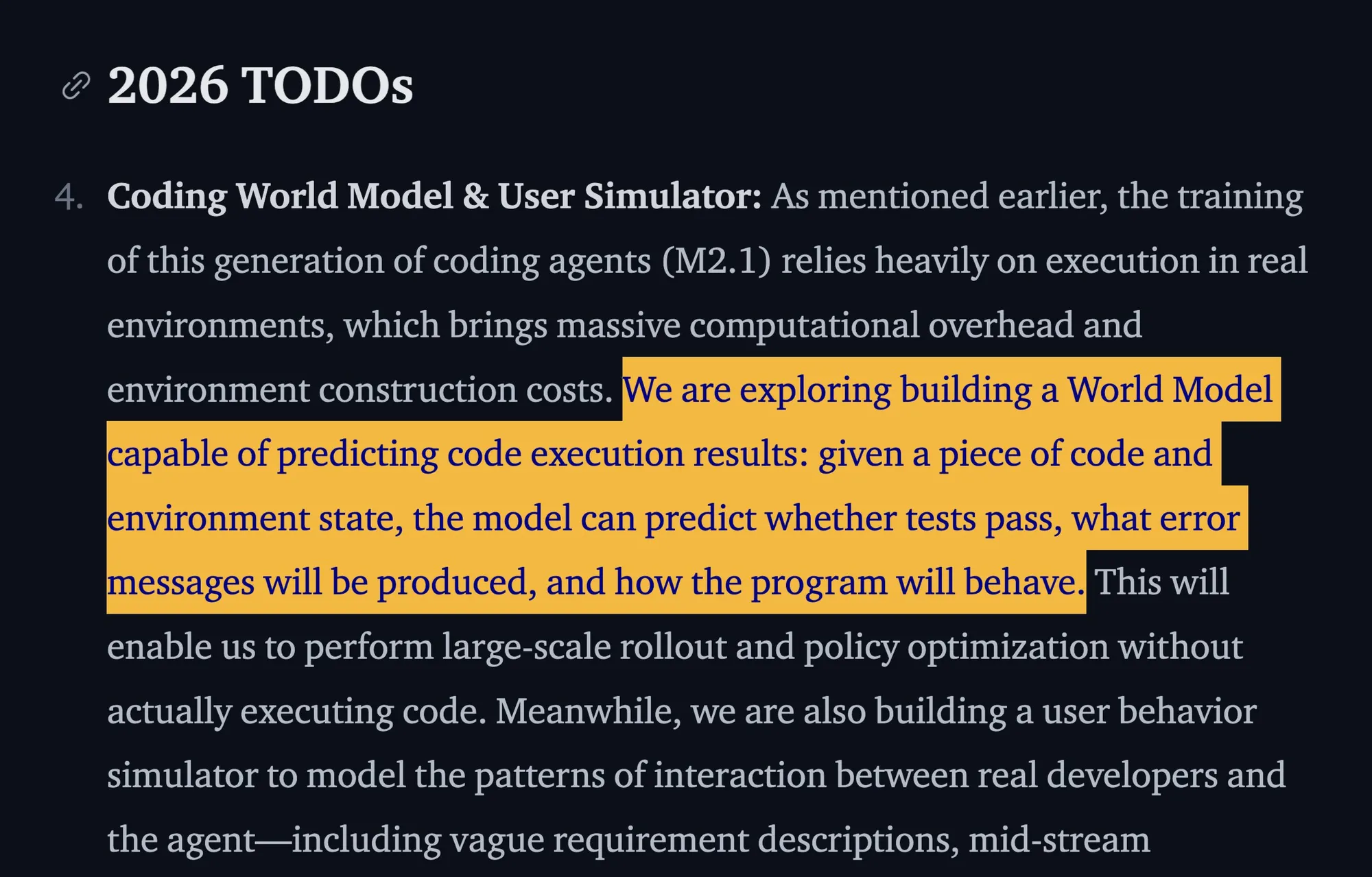
MiniMax Releases 2026 Technology Roadmap: Multilingual Multitask Coding and Open Research: MiniMax has publicly released its 2026 TODO list on Hugging Face, focusing on the evolution of the M2.1 model as its cognitive core. Plans include strengthening multilingual and multitask coding capabilities and enhancing the model’s interference-resistant reasoning in long-range tasks. This highly transparent R&D stance is rare among top AI labs and aims to attract developers to explore Agentic applications of lightweight models in local environments like home servers through an open ecosystem (Source: MiniMax_AI, iScienceLuvr)
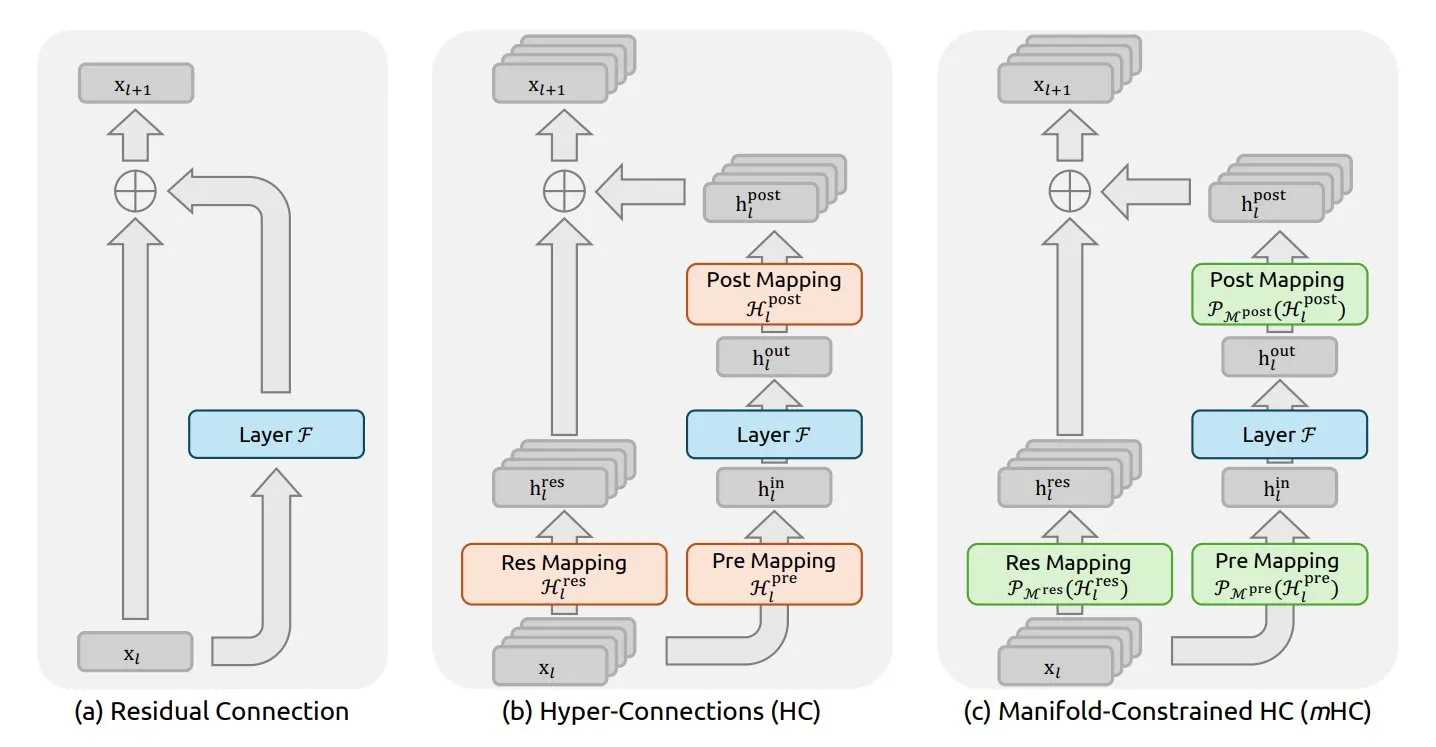
DeepSeek Proposes mHC Architecture: Fixing Hyper-Connection Instability: DeepSeek researchers published a paper solving the training instability of Hyper-Connections (HC) by introducing manifold-constrained Hyper-Connections (mHC). mHC follows a simple rule: information flow can be shared between streams without changing the overall signal strength. This improvement utilizes a matrix normalization algorithm from 1967, making residual connections more stable while maintaining expressivity. Although there is debate in the community regarding the mathematical rigor of its “manifold” definition, the empirical effectiveness of this technique in improving the training stability of ultra-large-scale models has garnered attention (Source: TheTuringPost, Reddit)
Nested Learning Paradigm: Unlocking Model Self-Modification and Continuous Learning: A study titled “Nested Learning” proposes that representing machine learning models as a set of nested multi-level optimization problems can naturally give rise to higher-order in-context learning capabilities. The research demonstrates self-modifying sequence models and continuous memory systems (the Hope model), which perform excellently in knowledge integration and long-context reasoning tasks. This paradigm suggests that existing deep learning is essentially learning by compressing context streams, while nested architectures may be the key to the continuous learning capabilities required for AGI (Source: HuggingFace Papers)
Trade-off Between Reasoning and Creativity: DCR Framework Prevents Model Thought Collapse: Addressing the issue where current LLMs over-optimize for correctness, leading to decreased semantic entropy and singular thought paths, researchers have proposed the Distributed Creative Reasoning (DCR) objective function. The framework analyzes how algorithms like STaR, GRPO, and DPO lead to diversity decay and provides recipes to ensure stable and diverse policies. This provides important guidance for developing models that can maintain rigorous logic while demonstrating creative solutions to complex problems (Source: HuggingFace Papers)
NeoVerse and MorphAny3D: New Heights in 4D World Models and 3D Morphing: NeoVerse achieves pose-independent 4D reconstruction and new trajectory video generation from monocular video, significantly enhancing the generalization capabilities of world models. Meanwhile, MorphAny3D utilizes Structured Latent (SLAT) feature fusion to solve challenges in semantic consistency and temporal smoothness during cross-category 3D morphing. These advances signal that AI’s ability to understand and generate complex physical world dynamics is rapidly evolving from static 3D to dynamic 4D (Source: HuggingFace Papers, MorphAny3D)
🧰 Tools
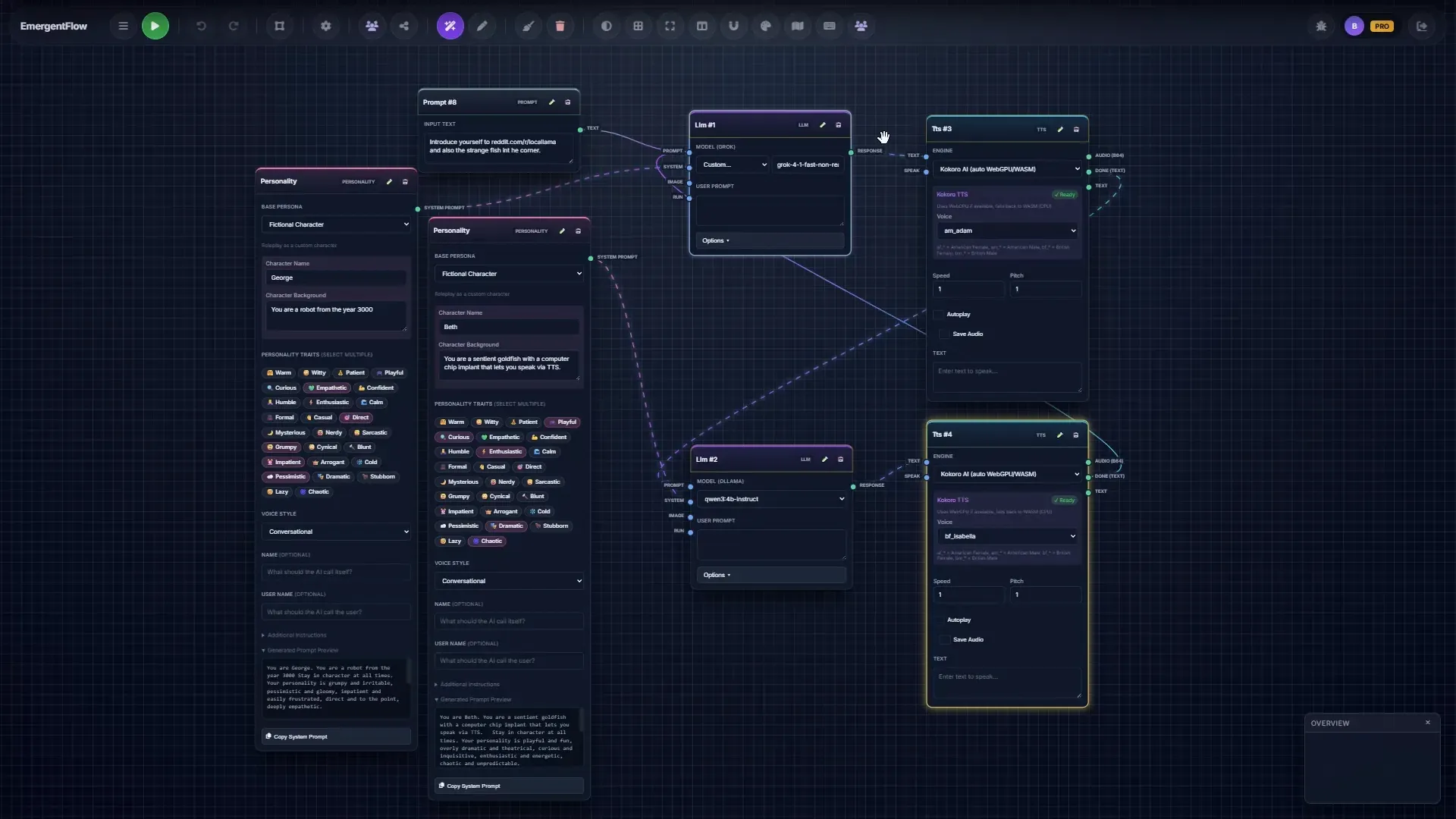
EmergentFlow: Browser-based Visual AI Workflow Engine: This is a visual node editor that runs entirely in the browser, supporting Ollama, LM Studio, and major cloud APIs. Users can build AI Agents and complex workflows directly by dragging and dropping nodes without installing Python environments or Docker. All API keys are stored locally, and the client communicates directly with providers, greatly lowering the barrier for hybrid scheduling between local models and cloud services (Source: Reddit)
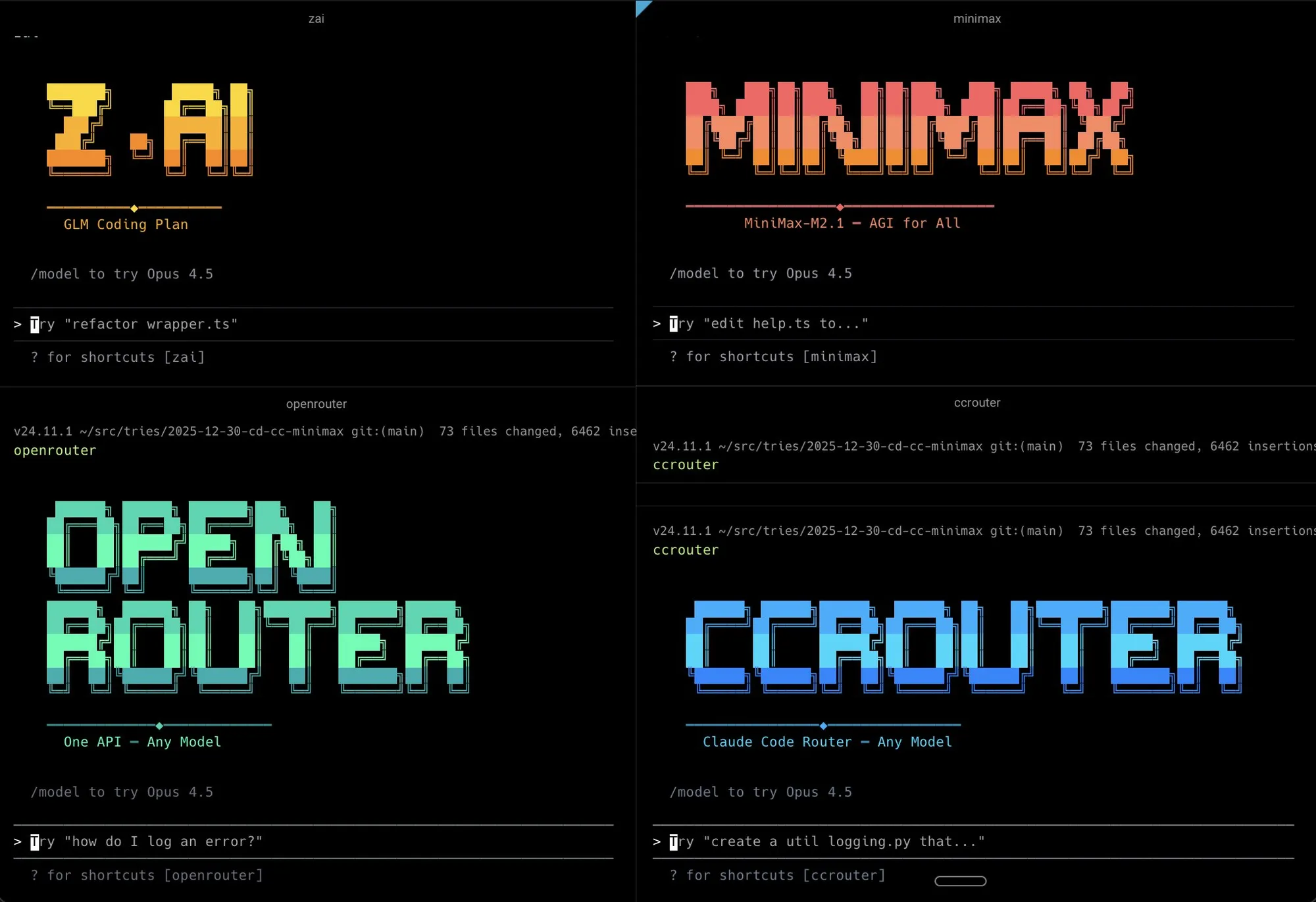
CC Mirror: A Customized Claude Code Mirror Tool for Chinese LLMs: To solve configuration difficulties, developers have launched CC Mirror, which supports running Zhipu GLM 4.7 and MiniMax M2.1 in an independent command-line program. The tool comes pre-configured with all necessary plugins and enhanced prompts, allowing developers to more easily use high-performance Chinese coding models within the Claude Code interaction framework for seamless cross-model collaborative development (Source: MiniMax__AI)
CartShame: A Chrome Extension Using LLM for Consumer Psychology Intervention: This is a highly creative Agent application that automatically converts shopping cart totals into “the number of hours a husband needs to work.” For example, a $300 order might be labeled as “15 hours of your husband’s life,” using this psychological suggestion to reduce impulsive spending. The tool demonstrates how AI can influence human behavioral decisions by restructuring data presentation (Source: Reddit)

Mawj and MLX Engine: AI Performance Leap on Apple Silicon: Mawj (Build 26) has integrated the MLX engine, significantly improving model management and operational efficiency on Apple Silicon. Through continuous batching technology, users can smoothly run multiple parallel OpenCode agents on chips like the M3 Ultra. This further drives the migration of high-performance AI development environments to personal workstations (Source: awnihannun)

📚 Learning
learn-claude-code: Understanding AI Agent Logic Through Hand-written Code: The trending GitHub project learn-claude-code demonstrates how to build a Claude Code-like Agent from scratch through 5 progressive versions (ranging from 50 to 550 lines of code). The core view is “Model as Agent,” meaning 80% of an Agent’s success depends on model capability and 20% on tool integration. The tutorial covers Bash integration, structured planning, sub-agent mechanisms, and Skills systems, making it an excellent resource for developers to understand modern Agent architecture (Source: GitHub)

CMU Professor Zico Kolter Releases “Introduction to Modern AI” Free Course: Carnegie Mellon University (CMU) will release a brand-new AI introductory course on January 26. The course focuses on “Modern AI,” requiring students to build and train a simple LLM chatbot from scratch using PyTorch without using pre-trained models. This “first principles” teaching method aims to help beginners see through the AI illusion and truly master the mathematical and engineering foundations behind large models (Source: Tim_Dettmers)
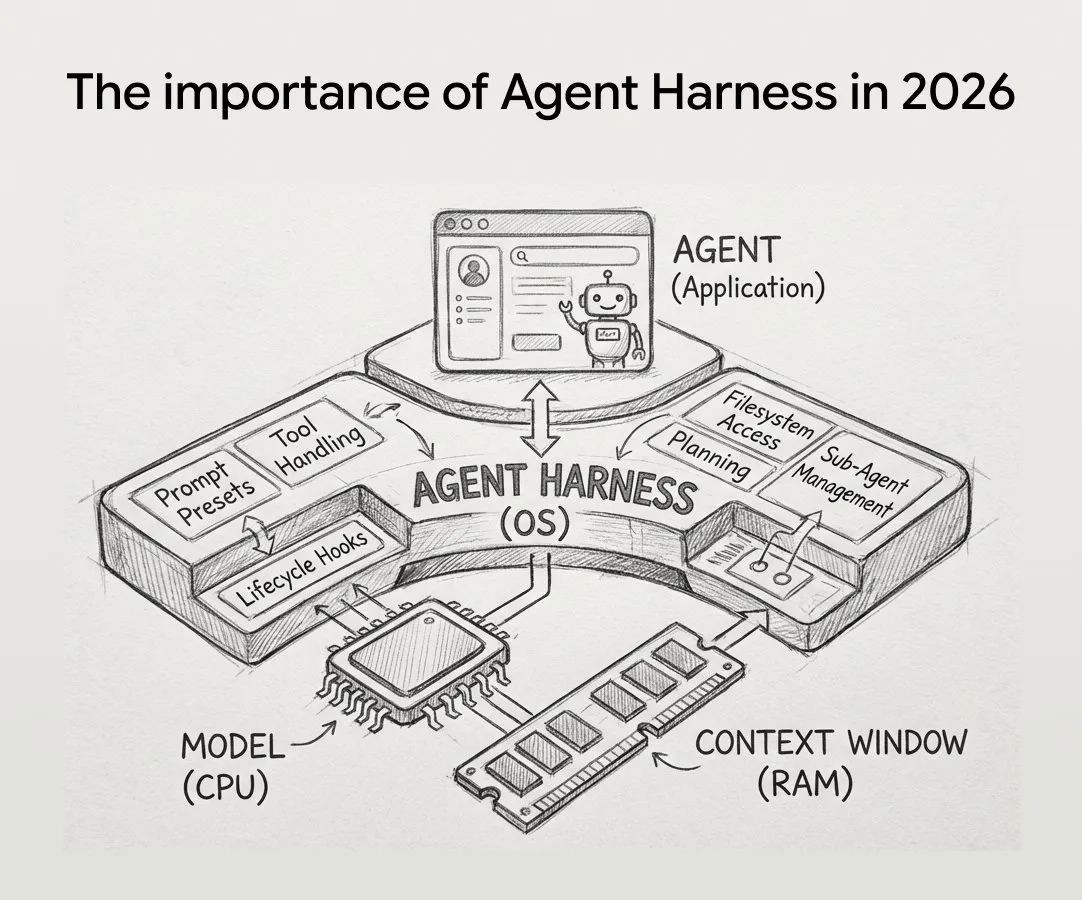
Agent Harness Concept: Key Infrastructure for Agent 2026: Experts point out that while 2025 is the year of the Agent, 2026 will be the year of the Agent Harness. A Harness is the infrastructure wrapped around an AI model, responsible for managing long-range tasks, prompt engineering, file system interaction, and deterministic code execution. Understanding Harness design decisions (such as built-in sub-agents and skill exposure methods) will be core to building efficient and reliable Agent applications (Source: Vtrivedy10)
💼 Business
AI-Driven Inflation Risks in 2026: New Concerns for Investors: As AI euphoria continues into early 2026, the market is beginning to focus on an overlooked risk: a surge in inflation driven by the tech investment boom. Massive investments in AI computing power and government stimulus plans could lead to global growth overheating, forcing central banks to end rate-cut cycles. Tight monetary policy could burst the AI bubble and increase project financing costs, thereby affecting the profit margins of tech giants (Source: Reddit)

Stripe Payment System Upgrade: Base44 Enables the Loop from Idea to Revenue: Stripe announced a major innovation in its payment process, where Base44 users can now experience a full checkout flow without setting up a formal account. More importantly, Base44 integrates Stripe’s product catalog and pricing models, allowing users to manage inventory and pricing directly through a chat interface. This “Chat-as-Commerce” model significantly shortens the path for AI applications to achieve commercial monetization (Source: MS_BASE44)
Mercedes-Benz Massive Price Cuts in China: Survival Pressure for Joint Venture Brands: Mercedes-Benz is offering discounts of up to 50% in the Chinese market (e.g., the EQB model), reflecting the extreme competitive pressure foreign brands face in China. While this market dynamic is not direct AI news, it reflects the efficiency of the “Made in China” supply chain and the intelligent transformation (such as the popularization of domestic smart driving systems) that is forcing traditional luxury brands to make aggressive price adjustments to maintain market share (Source: teortaxesTex)

🌟 Community
Claude + FreeTaxUSA: Practical Value of AI in Complex Tax Processing: The community shared a case of using Claude alongside FreeTaxUSA to complete complex tax filings. By scanning previous years’ tax returns and uploading screenshots of the filing process, the user had Claude act as an auditor. Claude not only formulated a detailed action plan but also caught several errors easily overlooked by humans. This proves that with “prior experience” and “real-time feedback,” AI has achieved high reliability in handling tasks with high professional and fault-tolerance requirements (Source: Reddit)
Brave SI vs GPT-5.2: The Battle Between Structured Intelligence and Compute Scale: A discussion on “Structured Intelligence (SI)” has erupted in the community. Brave SI demonstrated the ability to “instantly recognize structure” rather than using “brute-force calculation” when handling specific math problems, outperforming GPT-5.2 in speed and energy consumption. Supporters argue that intelligence should not rely solely on stacking computing power but should be achieved through recursion and structured interaction. This has sparked deep reflection on whether the “7 trillion compute bet” is heading in the wrong direction (Source: Reddit)

Grok Safety Controversy and “Aging Enzyme” AI Breakthrough: Grok is facing pressure from multiple governments due to its generation of sexualized images, refocusing the community on AI ethics and developer responsibility. Simultaneously, a Stanford team published research in Science using AI to screen targets to block the “aging enzyme” 15-PGDH, successfully regenerating cartilage in elderly mice. These contrasting discussions showcase the extreme nature of AI as a “double-edged sword”: it can be both a challenger to social ethics and a powerful tool for solving the problem of human aging (Source: Reddit, dotey)

The Price of Convenience: Degradation of Human Agency and Thinking Ability: The community has expressed concern over the “extreme convenience” brought by AI. When algorithms choose what we read, how we learn, and how we think, human “friction” disappears. Yet friction is the soil in which thinking is born. Over-reliance on AI summaries and instant answers may lead to the loss of the human ability to ask original questions and make independent judgments. This “boiling frog” psychological shift is considered the most underestimated social risk of 2026 (Source: Reddit)
💡 Others
Samsung Smart Fridge Integrates Gemini AI: Large Models for Everything: Samsung has integrated Google’s Gemini model into its Family Hub refrigerators, using AI Vision to identify all ingredients inside. This is not just a gimmick; it demonstrates the trend of LLMs entering the home appliance sector as “visual understanding engines.” AI refrigerators can now instantly generate recipes based on existing ingredients and manage health, marking the deep integration of AI from screen terminals into physical spaces (Source: Reddit)

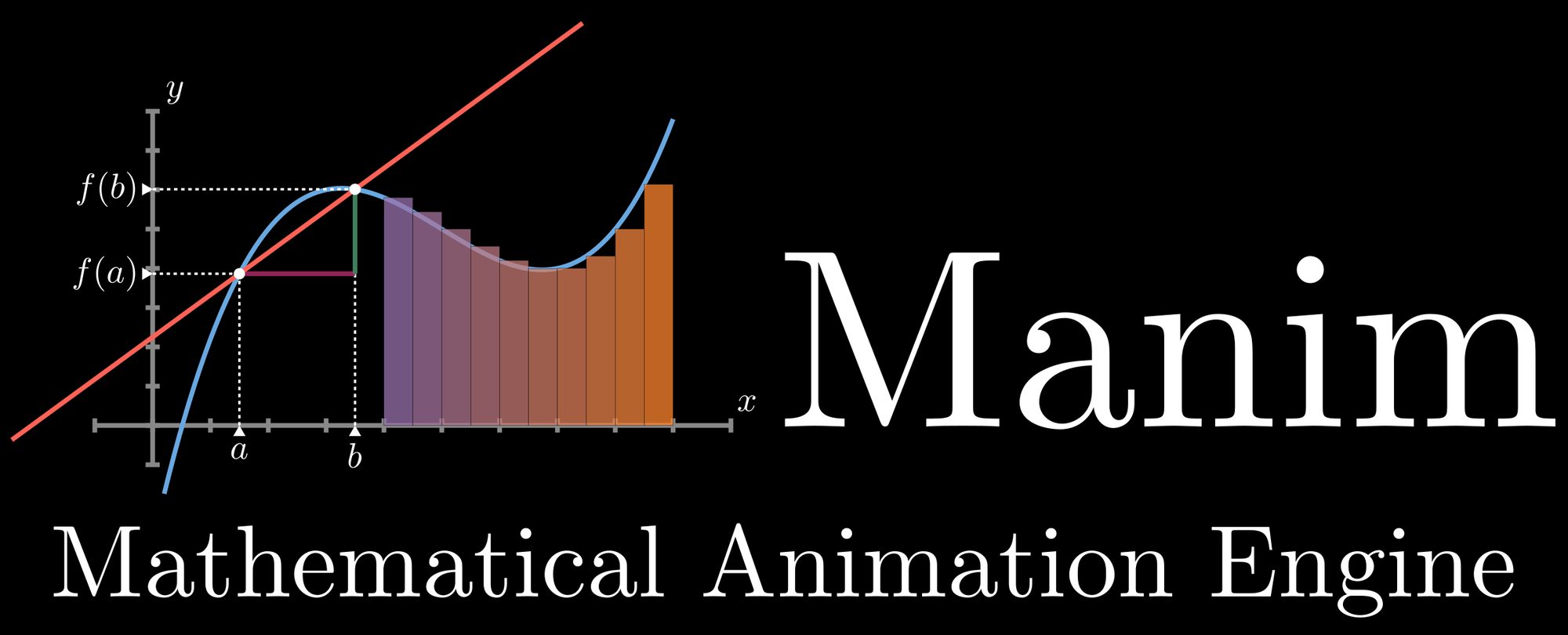
Manim Animation Engine: An AI Accelerator for Math Popularization: The Manim engine developed by 3b1b continues to trend on GitHub. As a core tool for creating math videos, it is now combining with AI generation technology to make the visualization of complex mathematical principles much simpler. This combination of “programmatic animation” and AI is reshaping the production efficiency of online education content, ensuring that high-quality scientific communication is no longer limited by expensive animation production costs (Source: GitHub)
Dyson Enters AgTech: High-Tech Strawberry Factories: Dyson showcased its high-tech strawberry factories built using robotics and AI technology. Through drone monitoring and precision robotic picking, it demonstrates the huge potential of AI in agricultural automation. This indicates that traditional home appliance giants are leveraging their expertise in motors and visual recognition to solve efficiency problems in the global food supply chain across industries (Source: Ronald_vanLoon)