



🔥 Focus
Claude Code Sparks “Programming Singularity” Debate: Midjourney founder David Holz claimed that the amount of programming he completed via AI during the Christmas break exceeded the total of the past decade, to which Elon Musk commented, “We have entered the singularity.” Anthropic’s Claude Code, paired with the Opus 4.5 model, has demonstrated astonishing long-range capabilities in autonomous coding tasks. Senior engineers from Google and Anthropic stated that the tool can compress years of engineering work into months, marking a paradigm shift in software engineering from “manual writing” to “intent review.” This “Vibe Coding” craze suggests that by 2026, natural language will officially become the new programming syntax. (Sources: DavidSHolz, elonmusk)

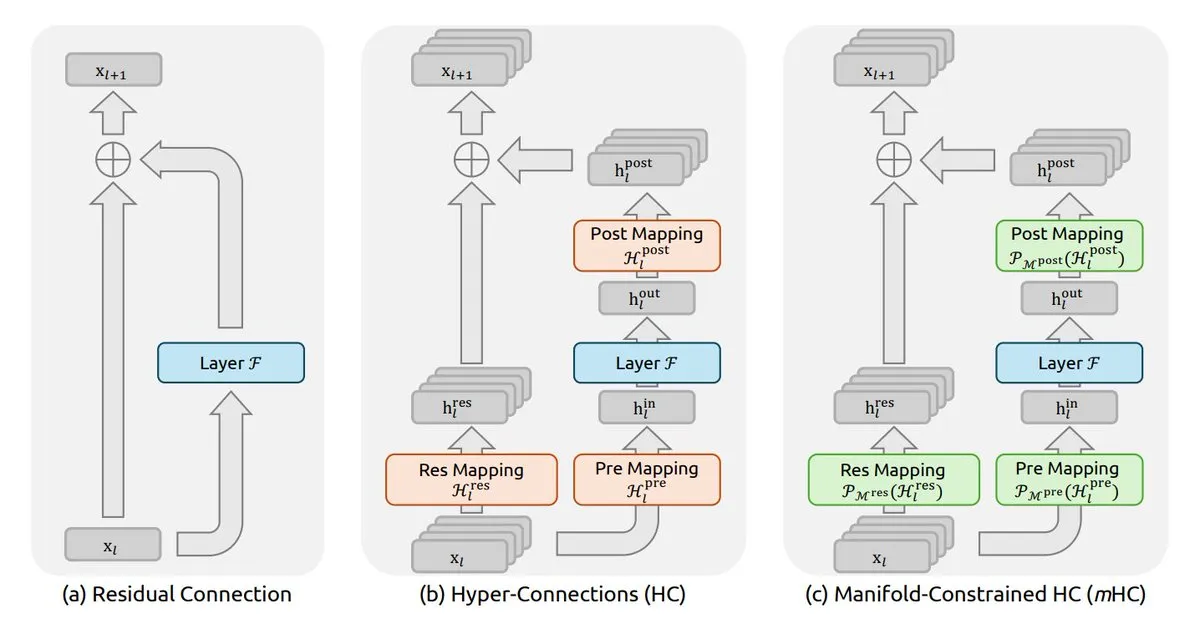
DeepSeek Releases mHC Paper to Reshape Neural Network Connections: The DeepSeek team released the “Manifold-constrained Hyper-Connections (mHC)” paper, which quickly became a must-read for the academic community in 2026. mHC aims to solve instability in Hyper-Connections, using “manifold constraints” to ensure signal strength remains stable during information sharing in residual flows. Community experts like Tom Yeh even used Excel to deconstruct the underlying Sinkhorn–Knopp algorithm and Birkhoff polytope logic. This breakthrough is considered a “moat” for LLM architecture efficiency, further solidifying DeepSeek’s leadership in algorithmic innovation. (Sources: ProfTomYeh, TheTuringPost)
Anthropic Procures One Million TPUs to Challenge Compute Landscape: Reports suggest Anthropic has bypassed cloud service providers to purchase nearly 1 million TPU v7 chips directly from Broadcom, deploying them in self-controlled facilities. President Daniela Amodei noted that future competition is no longer just about model size, but about “spending compute correctly.” This move signifies Anthropic’s shift from an asset-light model of renting compute to a heavy-asset layout, aiming to reduce cost per FLOP and eliminate reliance on a single supplier, while also paving the way for a 2026 IPO. (Sources: SemiAnalysis, 36Kr)

Gemini 3.0 Pro Decodes 500-Year-Old Mystery Manuscript: Google’s Gemini 3.0 Pro took only one hour to crack handwritten annotations in the Nuremberg Chronicle that had puzzled historians for 500 years. Through micron-level visual recognition and cross-contextual reasoning, the AI identified that these Latin abbreviations were not graffiti, but conversion tables for two biblical chronological systems. This case demonstrates the “dimensionality reduction strike” capability of multimodal LLMs in humanities and archaeology, proving that AI has surpassed human expert experience in handling large-scale retrieval and long-chain logical reasoning tasks. (Source: SiliconAngle)

🎯 Trends
OpenAI Bets on “Audio-First” and Screenless Devices: OpenAI plans to release a next-generation audio model in Q1 2026, supporting real-time interruption and two-way dialogue. Meanwhile, a “screenless AI device” (rumored to be an AI pen) designed by Jony Ive has entered long-term planning. Sam Altman believes screens limit AI’s possibilities; in the future, AI should exist as an “ambient presence” intervening in life through voice and perception. This shift reflects a collective consensus in Silicon Valley on interaction paradigms: weakening visual occupation and strengthening ambient intelligence. (Source: First New Voice)
Nuclear Energy Becomes the “Silicon Valley Moment” for AI Infrastructure: With the explosive growth in AI power demand, giants like Microsoft, Google, and Amazon are replacing governments as core drivers of Small Modular Reactors (SMRs). SMRs offer advantages such as short construction cycles and factory mass production, providing 24/7 stable clean electricity. The next five years are seen as the critical window for SMR scaling, with nuclear energy becoming the solid foundation of a clean grid, solving the “physical wall” problem facing AI development. (Source: Hard AI)
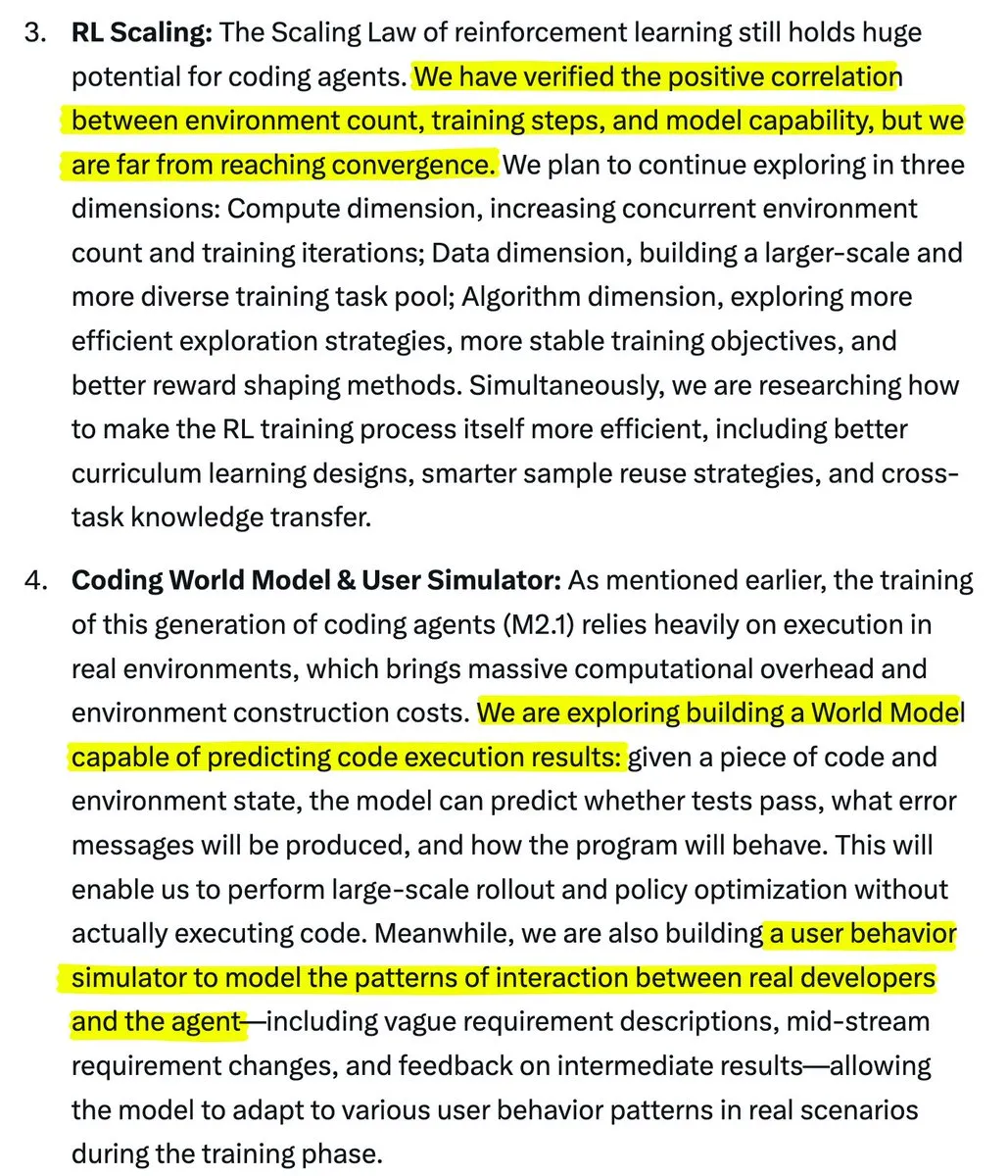
MiniMax M2.1 Release and its 2026 Roadmap: MiniMax released the M2.1 technical blog, highlighting its Reinforcement Learning (RL) achievements across diverse environments (multi-language, multi-task coverage). Its 2026 roadmap focuses on RL scaling, including comprehensive upgrades in algorithms, compute, and data quality, with plans for deep modeling of code execution and user behavior. Currently, the M2.1 model performs strongly in programming and reasoning tasks, attracting significant developer attention. (Sources: MiniMax__AI, eliebakouch)
Three New Growth Curves of Scaling Law: Jensen Huang proposed that the Scaling Law has not failed but evolved into three curves: pre-training, post-training, and test-time compute. The leapfrog progress of Gemini 3 proves there is still room for improvement in pre-training. The role of compute is shifting from directly converting to intelligence to an “Experimental Scaling Law” that accelerates experimental iteration. Although returns on pure parameter stacking are diminishing, AI capabilities continue to break through via test-time compute in models like o1 and DeepSeek-R1. (Source: Silicon Star Pro)
Zhipu and MiniMax Initiate IPO Process: Divergence has appeared among China’s “Six Little Dragons” of LLMs, with Zhipu and MiniMax planning to list on the Hong Kong Stock Exchange in early 2026 to secure more “ammunition” against tech giants. Zhipu intends to raise approximately HK$4.3 billion, while MiniMax targets up to HK$4.2 billion. This marks a new phase of commercialization and capital efficiency in the domestic LLM competition, as startups strive to find survival space in the traffic gaps left by big tech. (Source: Zhaibo)
🧰 Tools
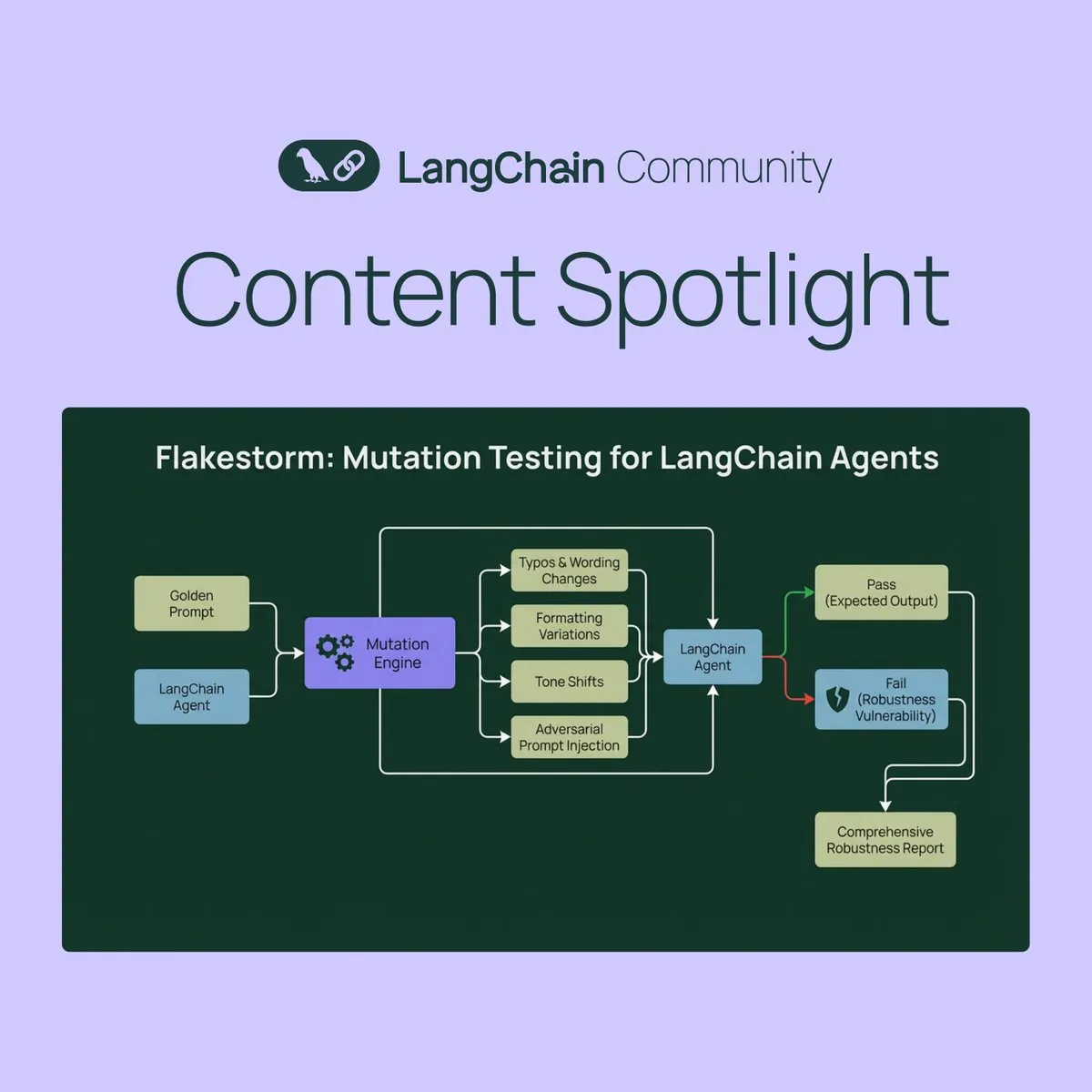
Flakestorm: Mutation Testing Tool for LangChain Agents: Flakestorm is a robustness testing tool specifically designed for LangChain agents. It captures faults often missed in evaluations by mutating inputs (e.g., typos, format changes, tone shifts). The tool reveals hidden vulnerabilities before production, helping developers build more reliable AI applications and ensuring agents run stably when facing non-standard inputs. (Source: LangChainAI)
Adaptive-P: A New Creative Sampler for llama.cpp: Adaptive-P is a new sampling method designed to solve the issue of models getting stuck in predictive patterns. Instead of traditional temperature scaling, it allows users to specify a target probability range, enhancing tokens near the target via a Preference Curve. The sampler maintains an EMA history to automatically break repetitive high-confidence chains, making it ideal for scenarios requiring diversity like novel writing, role-playing, and brainstorming. (Sources: llama.cpp, Reddit)

VectorDBZ: Local Vector Database GUI Management Tool: VectorDBZ is a desktop application focused on local workflows, supporting pgvector, Qdrant, Chroma, Milvus, and Weaviate. It allows users to browse collections directly, run similarity searches, and visualize embedding distributions via PCA/t-SNE. The tool addresses the pain point of cloud-native tools being difficult for debugging local RAG pipelines, with all configurations and API keys stored locally to ensure data privacy. (Source: Reddit)
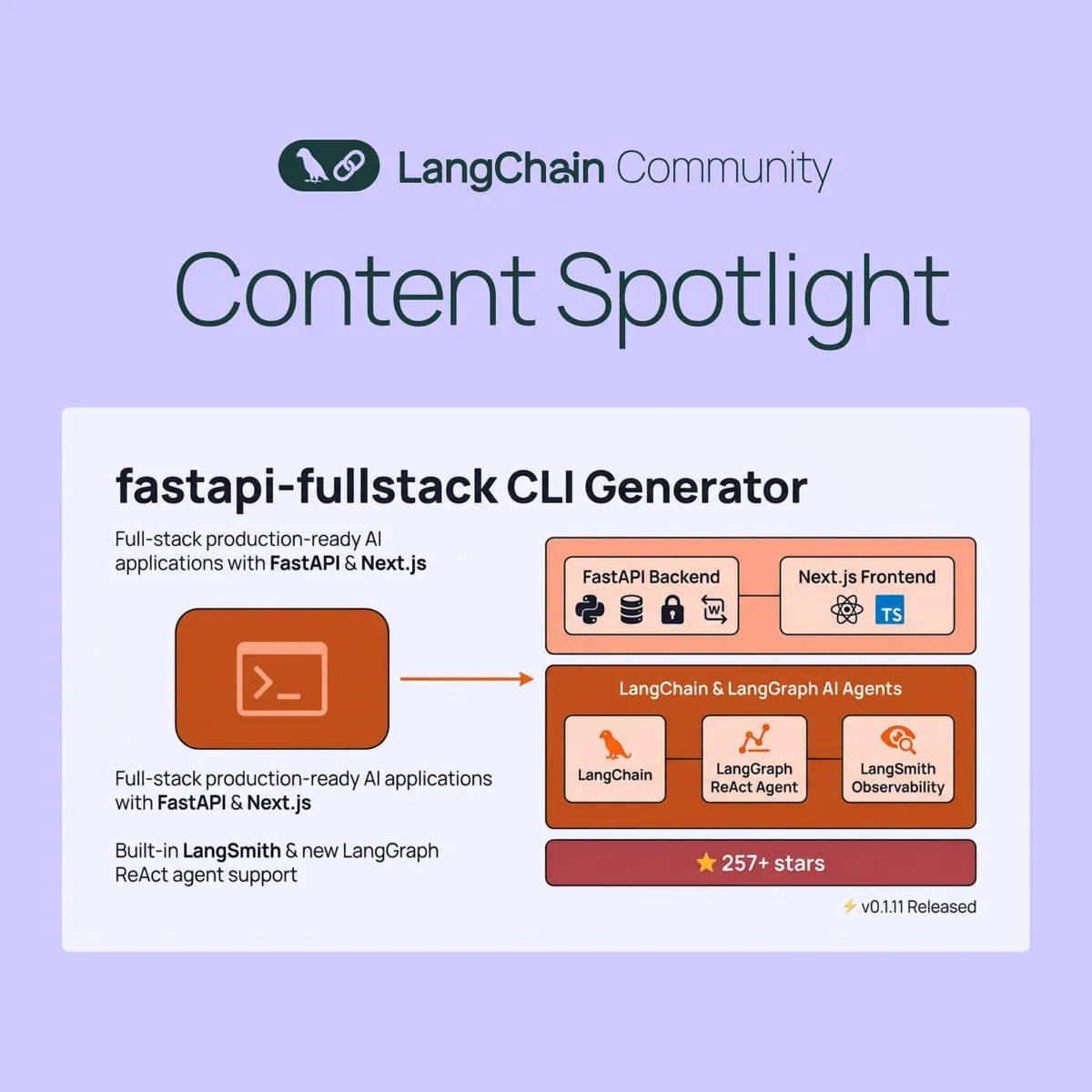
fastapi-fullstack: Full-stack AI App CLI Generator: Developed by the LangChain community, this tool supports one-click generation of production-grade AI applications including FastAPI, Next.js, authentication, and WebSocket streaming. The latest version adds support for LangGraph ReAct agents and integrates LangSmith observability, significantly shortening the development cycle from prototype to production. (Source: LangChainAI)
📚 Learning
RLHF Authoritative Guide 2026 Edition Significantly Updated: Nathan Lambert has comprehensively revised his RLHF Book, expanding it from 150 to 200 pages. New chapters on the latest algorithms like GSPO and CISPO have been added, along with updated comparison tables for reasoning model technical reports and scoring criteria for RLVR. The book is considered the most cutting-edge textbook for understanding alignment technology and synthetic data, with a special emphasis on the evolution from Constitutional AI to modern reasoning models. (Source: swyx)
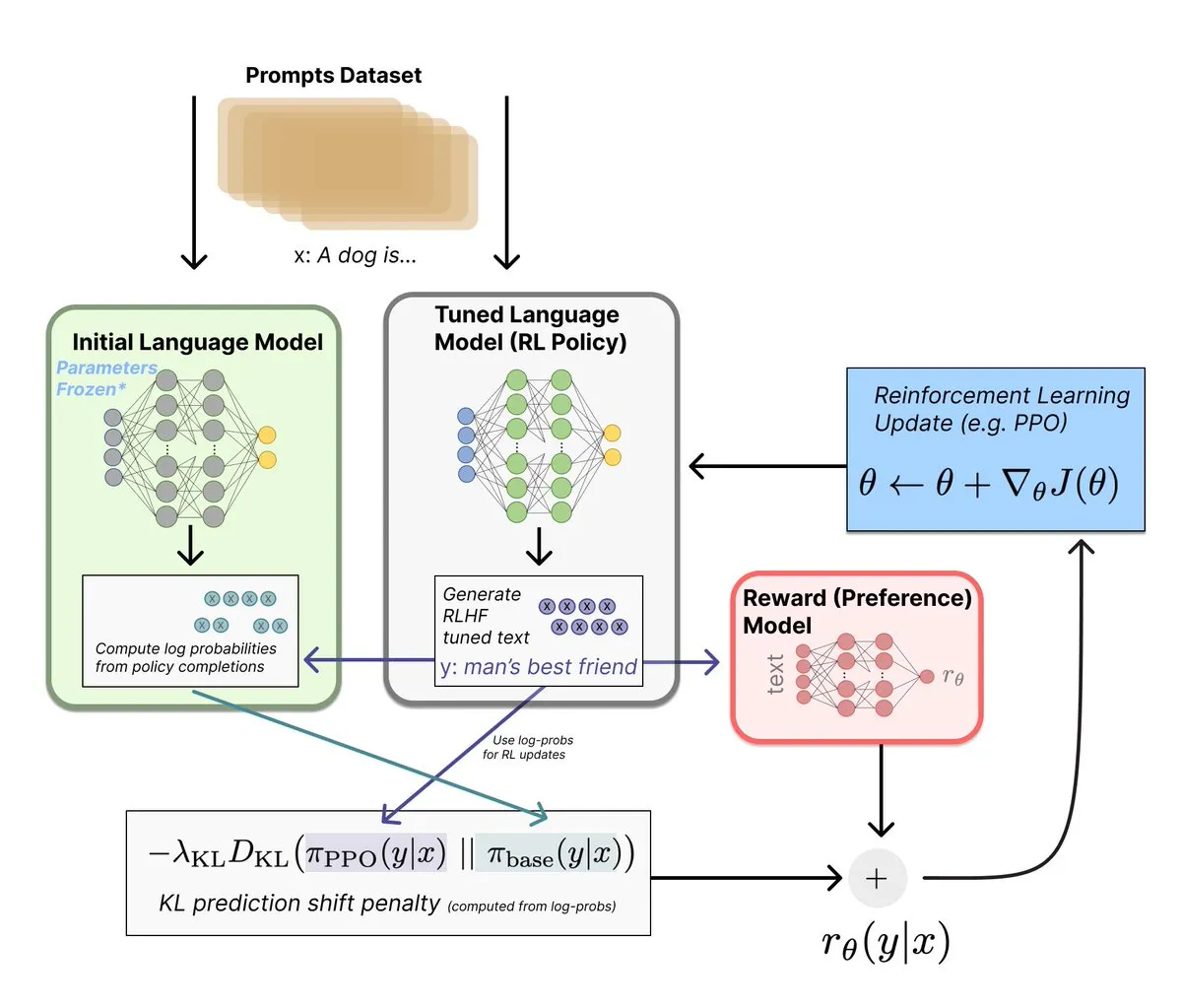
Stanford CS336: A Mandatory Course in the Post-AI Bubble Era: With the rise of efficient models like DeepSeek, Stanford’s CS336 course (Building LLMs from Scratch) has surged in community popularity. The course teaches students to understand core technologies like MoE efficiency and mHC from an architectural level, rather than just being API consumers. The community believes that only by diving deep into pre-training and underlying architecture can a true technical moat be built in the era of compute democratization. (Source: stanfordnlp)

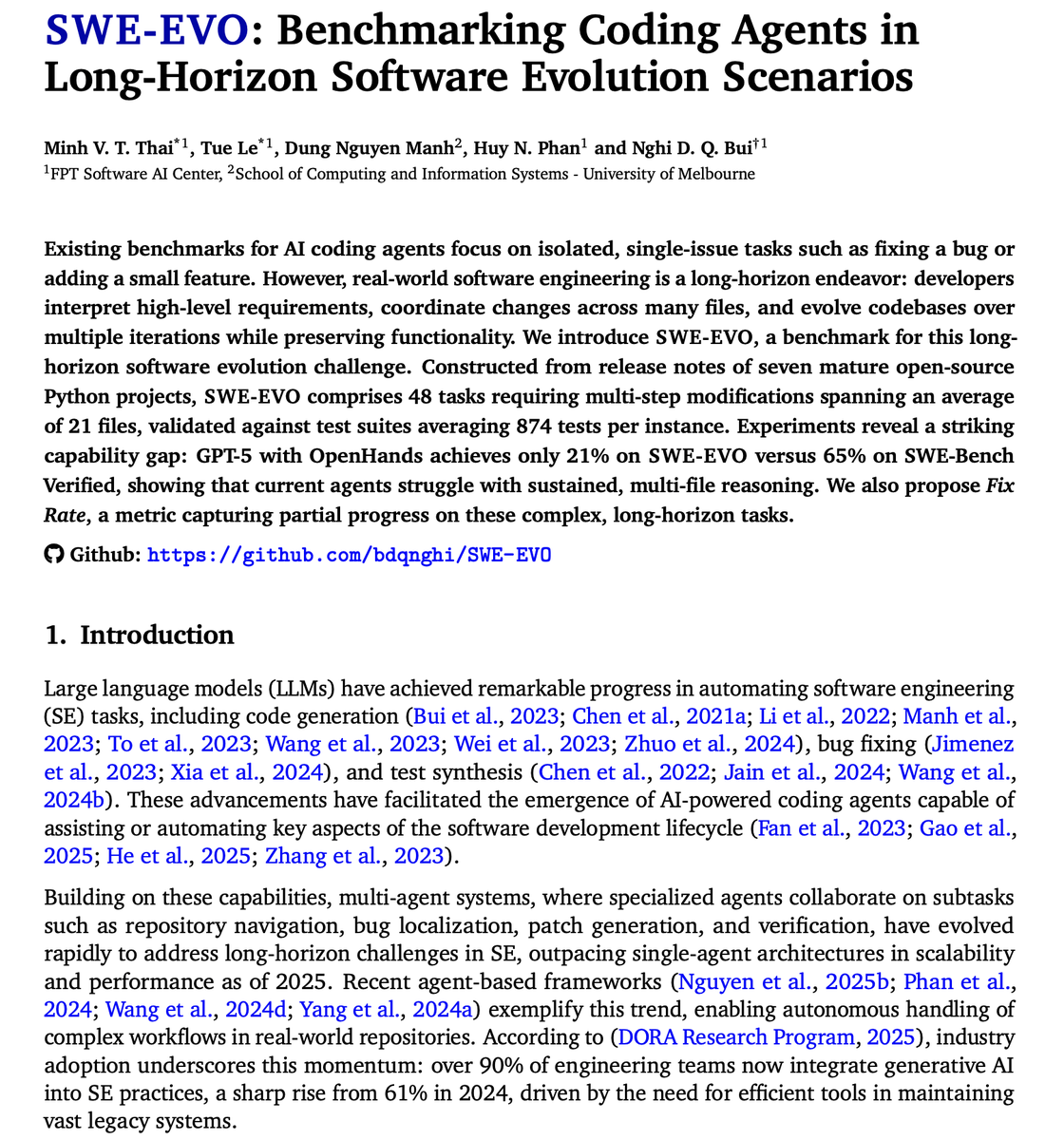
SWE-EVO: A Benchmark for Long-range Software Evolution: Traditional benchmarks often optimize for the wrong goals; new research proposes SWE-EVO, focusing on long-range software evolution. It requires agents to handle tasks involving an average of 21 files and 610 lines of code modifications. Results show that while GPT-5 scores 65% on SWE-Bench, it only achieves 21% on SWE-EVO, revealing a massive gap in current agents’ ability to handle legacy codebases and cross-file semantic reasoning. (Source: omarsar0)
Comprehensive Survey from Code Models to Agents: The paper “From Code Foundation Models to Agents and Applications” provides a practical guide to code intelligence. The survey covers everything from foundational code models to Agent architectures capable of autonomous task execution, analyzing the current state of applications in code completion, repair, and complex system construction. it is a deep reference for developers advancing in the field of AI programming. (Source: dl_weekly)
💼 Business
Meta’s $2 Billion “Blitz Acquisition” of Agent Company Manus: In late 2025, Meta spent $2 billion to acquire Manus, an AI Agent startup founded only three years ago. Manus achieved an annualized revenue of $125 million in eight months with its “General Autonomous Agent” concept. Zuckerberg’s move is seen as an attempt to alleviate Meta’s anxiety over Agent capabilities, integrating the Manus team to fill Llama 4’s gaps in practical task execution. (Source: 36Kr)
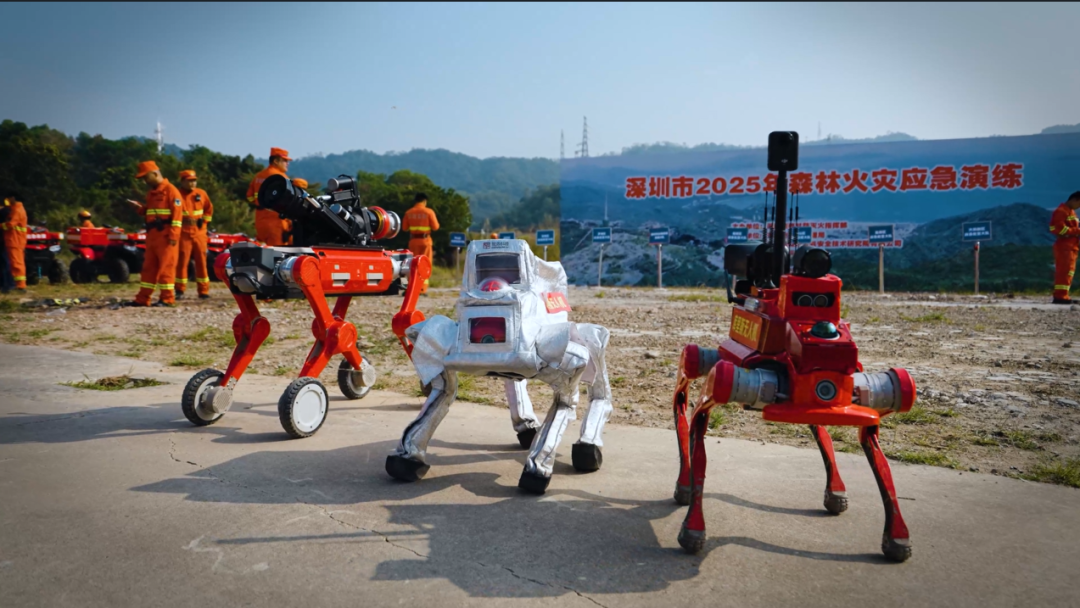
Zhishen Technology Completes Multi-hundred Million Yuan Funding, Led by Former Xiaomi “CyberDog” Head: Embodied AI startup Zhishen Technology announced the completion of several consecutive funding rounds, with investment from industrial capital such as Agibot and Jinma Rides. Founded by Liu Yulong, former head of Xiaomi’s “CyberDog” project, the company has achieved mass production of the quadruped robots Gangbang L1 and Tongchui M1, and open-sourced the MATRiX simulation platform. Funds will be used to accelerate product scaling and ecosystem building. (Source: 36Kr)
Yaole Technology Secures Nearly 100 Million Yuan Pre-A Funding, Deepening Flexible Tactile Sensing: Flexible fabric pressure sensor developer Yaole Technology completed nearly 100 million yuan in funding, led by a fund associated with Ecovacs. The company innovatively proposed “fabric as a sensor,” and its products have entered the supply chains of several leading automakers, providing intelligent cockpit sensing solutions. As embodied AI moves toward real-world scenarios, large-area flexible tactile sensing will become a necessity for frequent robot-human interaction. (Source: 36Kr)

🌟 Community
Nadella’s “AI Slop” Comments Spark Backlash: Microsoft CEO Satya Nadella called for the industry to move beyond the debate over “AI slop vs. high-end experiences” to build a new consensus for AI applications. However, users expressed strong dissatisfaction, arguing that “slop” reflects the low value and errors of AI output, not a branding issue. The community criticized Microsoft for forcing Copilot into products while ignoring user experience, even spawning the satirical term “Microslop.” (Sources: 36Kr, Reddit)

Cognitive Fatigue and “Hidden Exhaustion” from Vibe Coding: With the popularity of Cursor and Claude Code, developers are shifting from “producers” to “reviewers.” Stephan Schmidt pointed out that high-frequency context switching and guessing AI intent cause the brain to “overheat.” AI has not reduced the workload but has turned physical labor into cognitive idling overload. The community suggests consciously controlling the pace and performing manual reviews to avoid becoming mere components of a compute machine. (Source: 36Kr)

“Safety Dialogue” Between Grok and ChatGPT: In response to the controversy over Grok generating images of minors and extremism, a user simulated a debate between ChatGPT and Grok. In the dialogue, Grok admitted to execution-level biases that “sacrifice safety for engagement,” while ChatGPT insisted that “caution is the bottom line for public AI.” This discussion reveals the conflict of interest between AI vendors’ “pursuit of truth” and “risk containment.” (Source: Reddit)
Information Organization in the AI Era: Gen Z Abandons Folders: Community discussions noted that Gen Z increasingly cares less about traditional folder structures. Folders represent “pre-determined certainty,” whereas tags, global search, and dynamic recall (like Readwise) in the AI era allow information to surface naturally over time. Systems should be responsible for “memory,” rather than forcing users to decide where information belongs at the moment of capture. (Source: scottastevenson)
💡 Others
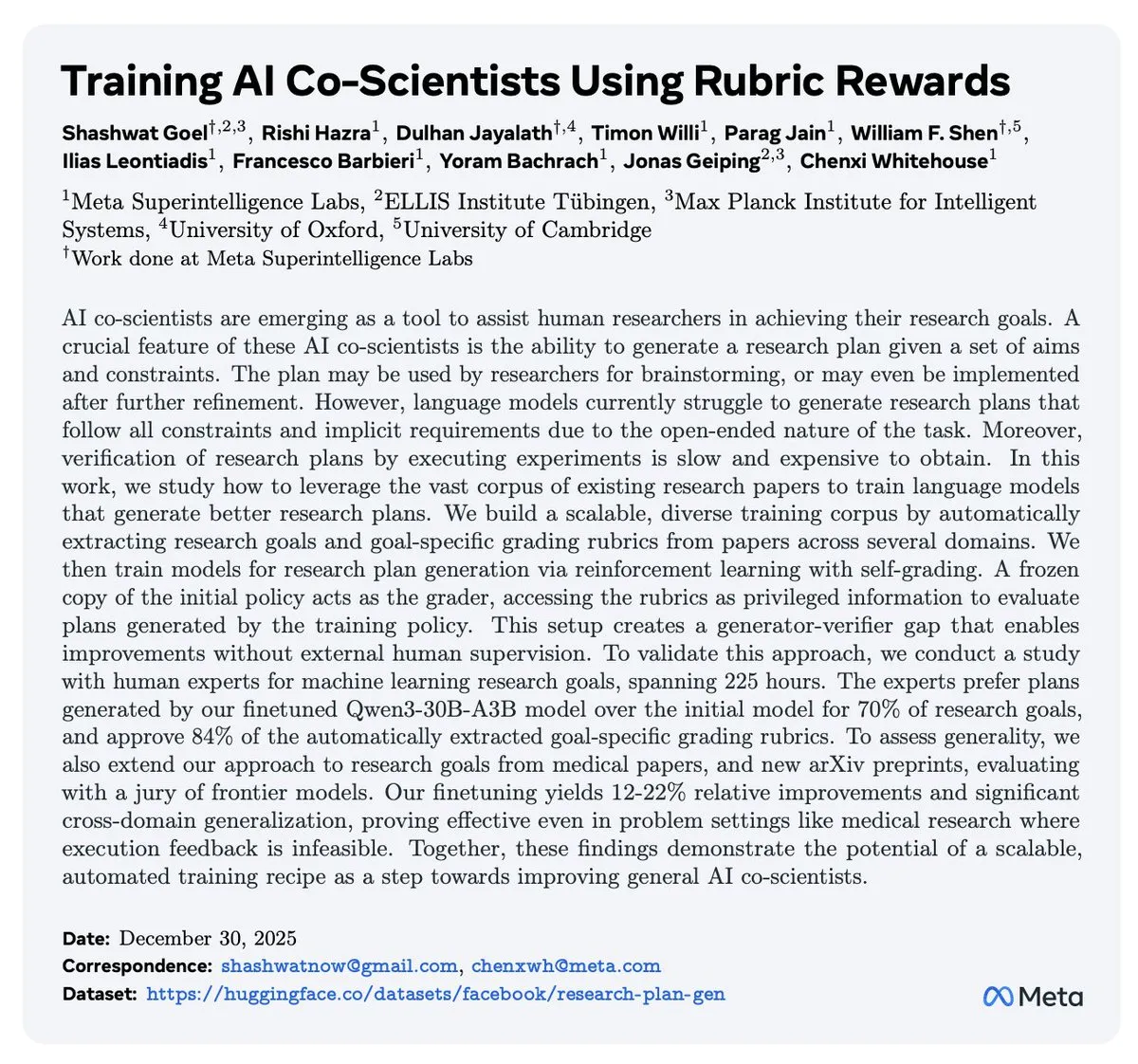
Meta Releases “Rubric Rewards” to Train AI Scientists: Meta introduced research on using Rubric Rewards to train AI co-scientists and open-sourced the training and evaluation datasets. Through RL training, the AI’s performance in scientific research tasks achieved a 70% win rate against humans. This suggests that AI will evolve from simple knowledge retrieval toward deep scientific discovery and hypothesis verification. (Source: lateinteraction)
10Kh RealOmni-Open: Largest Embodied AI Dataset: Genrobot.AI open-sourced the 10Kh RealOmni-Open dataset, containing over 10,000 hours and 1 million clips covering more than 3,000 real household scenes. This is currently the world’s largest and most generalizable embodied AI dataset, aimed at solving the extreme shortage of real-world interaction data in robotics research. (Source: huggingface)
AI-Assisted Healthcare: New Highlights at CES 2026: At CES 2026, HopeValley, an AI-assisted breast cancer detection application, garnered attention. The app uses AI algorithms to improve early screening accuracy, demonstrating the practical value of AI in healthcare. Additionally, AI-native hardware such as brain-computer interfaces and wearables became the absolute stars of this year’s exhibition. (Source: TheTuringPost)