
🔥 Focus
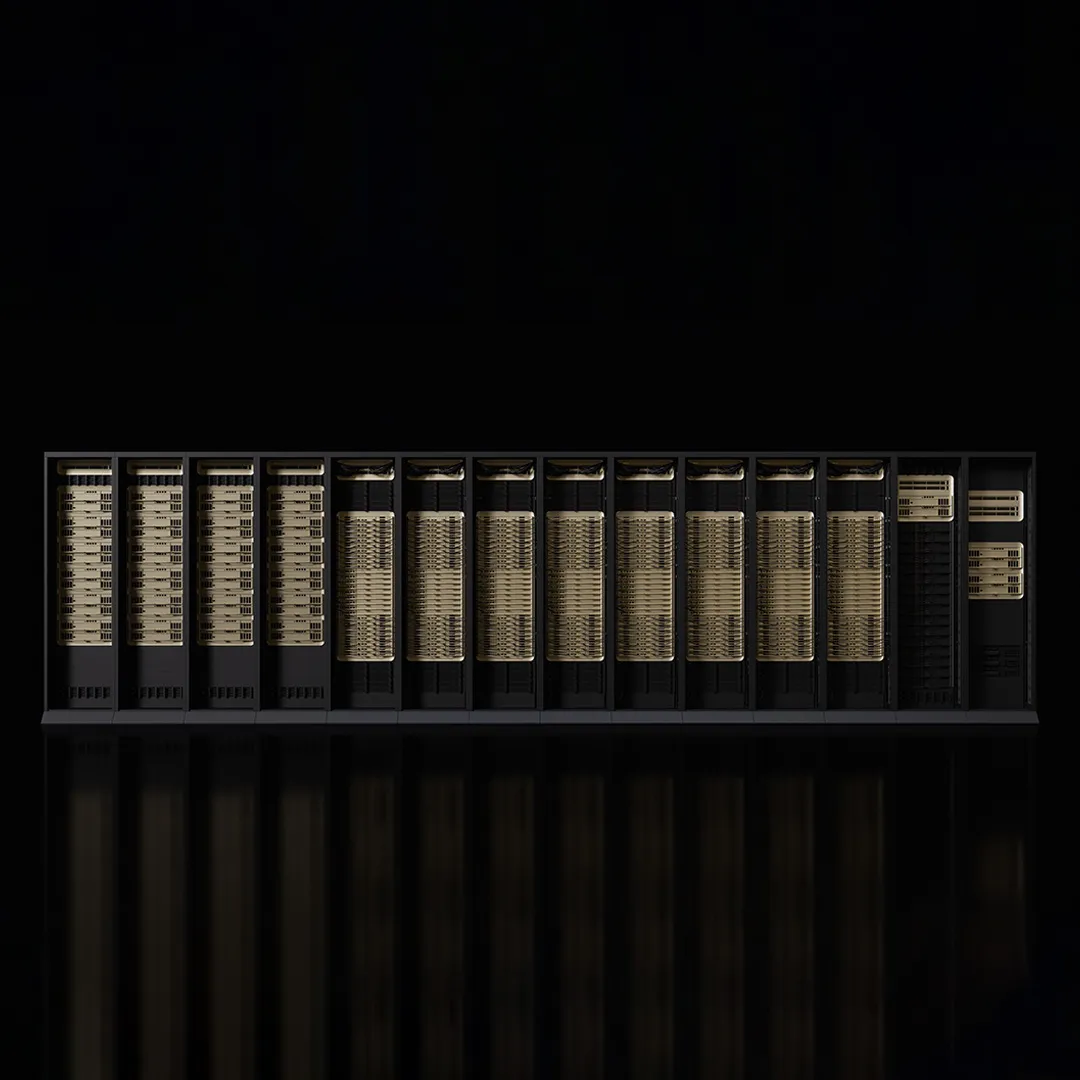
NVIDIA Releases Vera Rubin Architecture: Ushering in the Next Generation of AI Supercomputing: At CES 2026, Jensen Huang unveiled the brand-new Vera Rubin platform, featuring the self-developed Vera CPU (with custom Olympus cores) and the Rubin GPU. The system introduces a Transformer Engine, delivering a 5x boost in inference performance compared to Blackwell, and supports the first rack-scale confidential computing. The Rubin NVL72 system, with its 100% liquid-cooled and cable-less design, improves assembly and maintenance efficiency by 18x. Additionally, NVIDIA introduced an inference context memory storage platform specifically to address KV Cache storage bottlenecks in long-text applications, aiming to reduce Token costs for large MoE models to 1/10th of Blackwell’s. This marks a comprehensive evolution of AI infrastructure from “single-point computing power” to “systems engineering.” (Sources: NVIDIA, Zhidx, TheTuringPost)
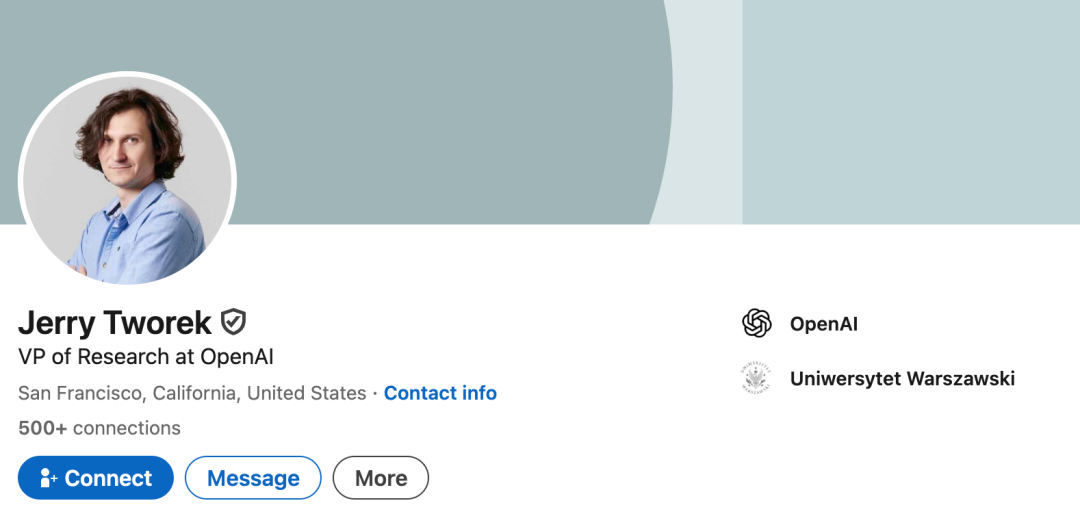
OpenAI Head of Reasoning Jerry Tworek Departs: Continuous Loss of Core Brains: Jerry Tworek, VP of Research at OpenAI and a core founder of the o1/o3 reasoning models and the Codex programming model, has announced his departure. During his nearly seven-year tenure at OpenAI, he led R&D efforts ranging from early robotics reinforcement learning to the reasoning mechanisms of GPT-4 and GPT-5. Tworek stated his departure is to “explore research that is difficult to conduct within OpenAI,” hinting at a rift between the idealistic research environment and product delivery pressures under high commercialization stress. As the leader of the o1 project, his departure marks another significant loss of core technical talent following Ilya Sutskever and John Schulman, sparking deep concerns in the community regarding OpenAI’s future research independence. (Sources: 36Kr, Liangziwei, The Verge)
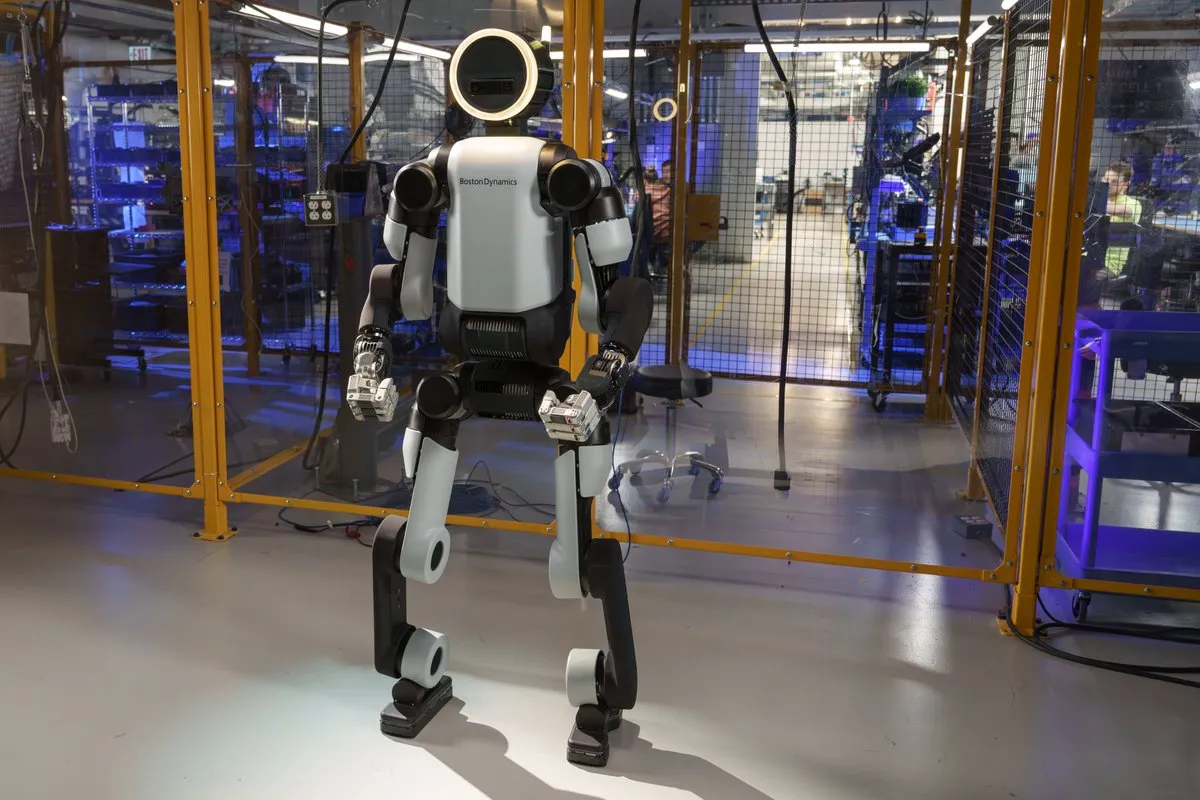
Google DeepMind Partners with Boston Dynamics: AI Brains Driving the Strongest Bodies: Google DeepMind has announced a research partnership with Boston Dynamics. This collaboration integrates Gemini Robotics’ Vision-Language Model (VLM) capabilities into the all-new fully electric Atlas humanoid robot. This means the world’s top AI reasoning algorithms will combine with the most advanced robotics hardware, pushing Embodied AI from simple pattern matching to “Physical AI” capable of physical common sense and autonomous complex task planning. This alliance is seen as a key move against the Tesla Optimus and NVIDIA Isaac ecosystems, signaling that humanoid robots are approaching a true “iPhone moment.” (Sources: GoogleDeepMind, HuggingFace)
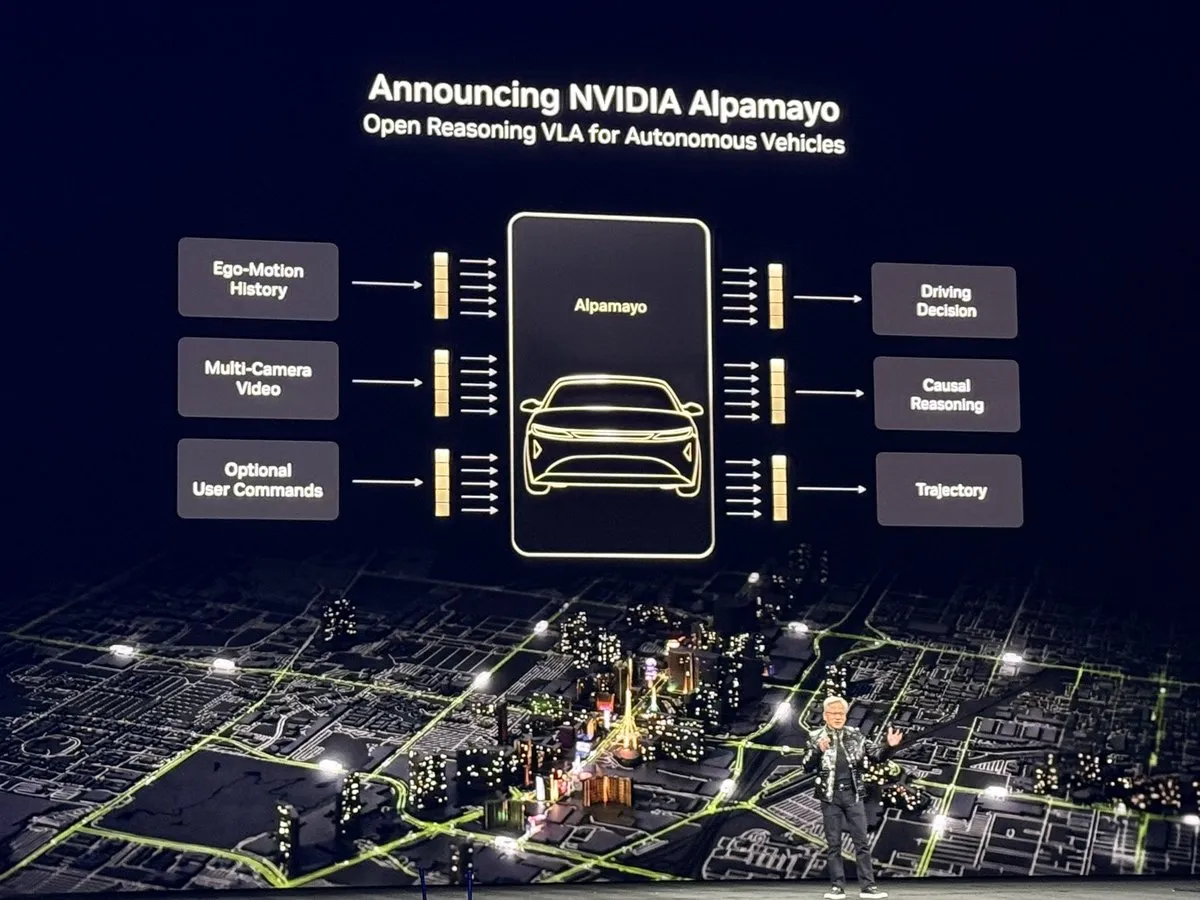
NVIDIA Open-Sources Alpamayo: The “ChatGPT Moment” for Autonomous Driving: NVIDIA open-sourced Alpamayo (10B parameters), the first reasoning-based autonomous driving model, at CES. Unlike traditional “perception-planning” pipelines, Alpamayo possesses Chain-of-Thought (CoT) capabilities, allowing it to understand complex road conditions and explain decision logic like a human driver (e.g., “slowing down because a pedestrian might cross”). The model is released alongside the AlpaSim simulation framework and 1,700 hours of real-world driving data. Jensen Huang called it the “ChatGPT moment for Physical AI,” aiming to break the monopoly of closed systems like Tesla FSD through an open-source ecosystem, enabling global automakers to accelerate L4 autonomous driving deployment based on a unified reasoning framework. (Sources: TheTuringPost, NVIDIA)
🎯 Trends
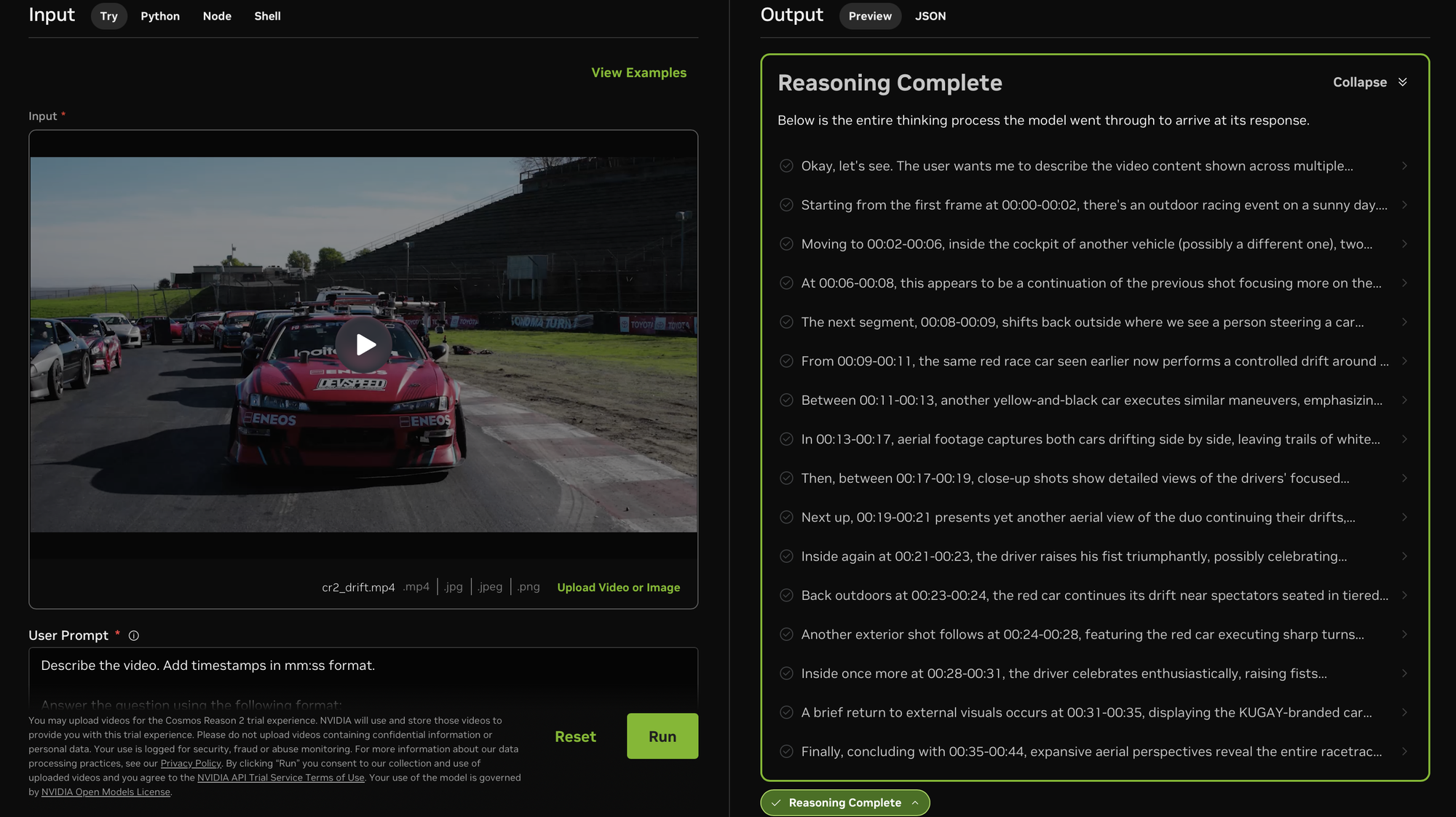
NVIDIA Cosmos Reason 2: Physical AI Reasoning Performance Reaches the Top: NVIDIA released Cosmos Reason 2, which topped multiple leaderboards including the Physical AI Bench. The model significantly improves spatio-temporal understanding and timestamp accuracy, supporting 2D/3D point localization and trajectory data output. Its context window has surged from 16K to 256K, enabling precise labeling and logical analysis for long videos. Salesforce has already integrated it into Agentforce for safety compliance analysis of Cobalt robots, demonstrating AI’s evolution from understanding language to understanding the laws of the physical world. (Source: HuggingFace)
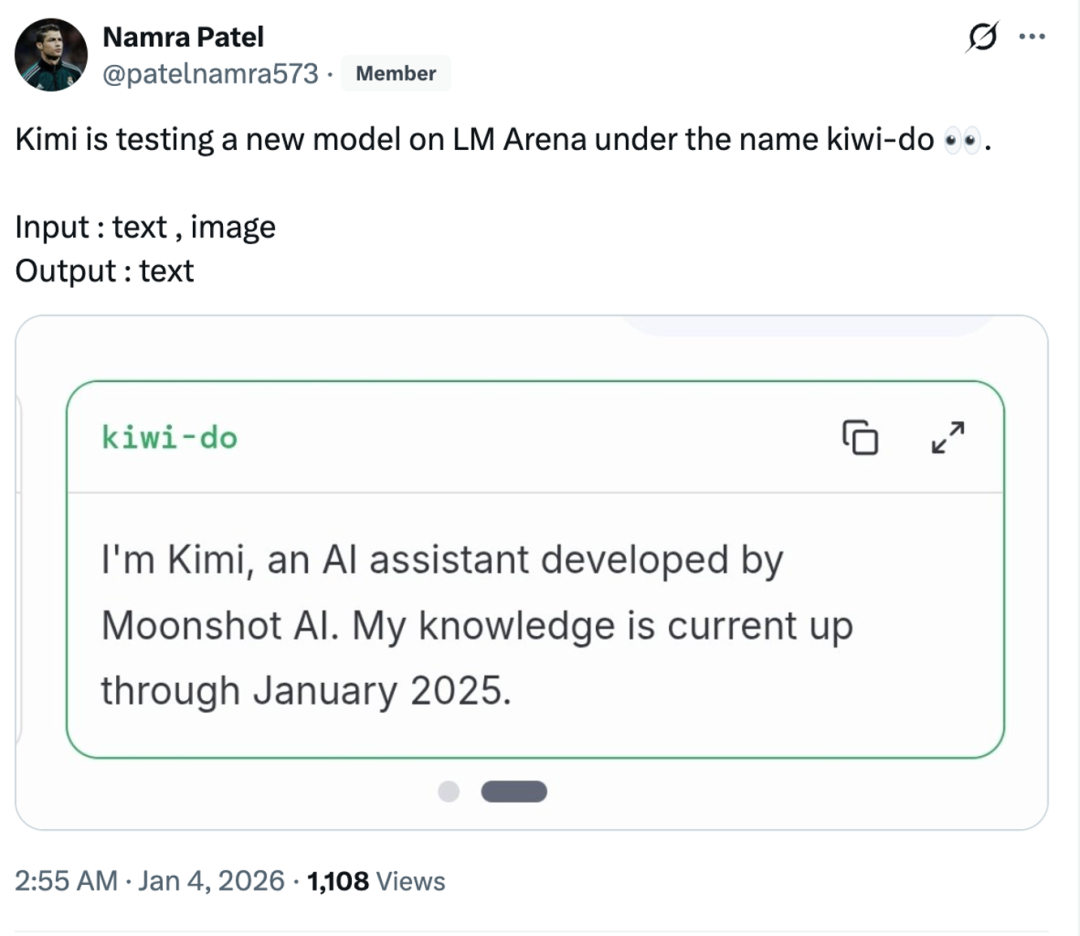
Mysterious Kimi Model “Kiwi-do” Appears in Arena: Stunning Multimodal Capabilities: A mysterious model codenamed “kiwi-do,” claiming to be Kimi, appeared on the LMSYS Chatbot Arena (LMArena). User tests show the model performs exceptionally well in SVG drawing (e.g., a pelican riding a bike) and Visual Physical Commonsense (VPCT) tasks, accurately reasoning based on physical laws. This is believed to be the upcoming K2-VL multimodal model from Moonshot AI. Yang Zhilin previously revealed the company has a cash reserve of 10 billion RMB and plans to launch a new generation of multimodal Agents in 2026 that support “thinking while collaborating.” (Source: 36Kr)
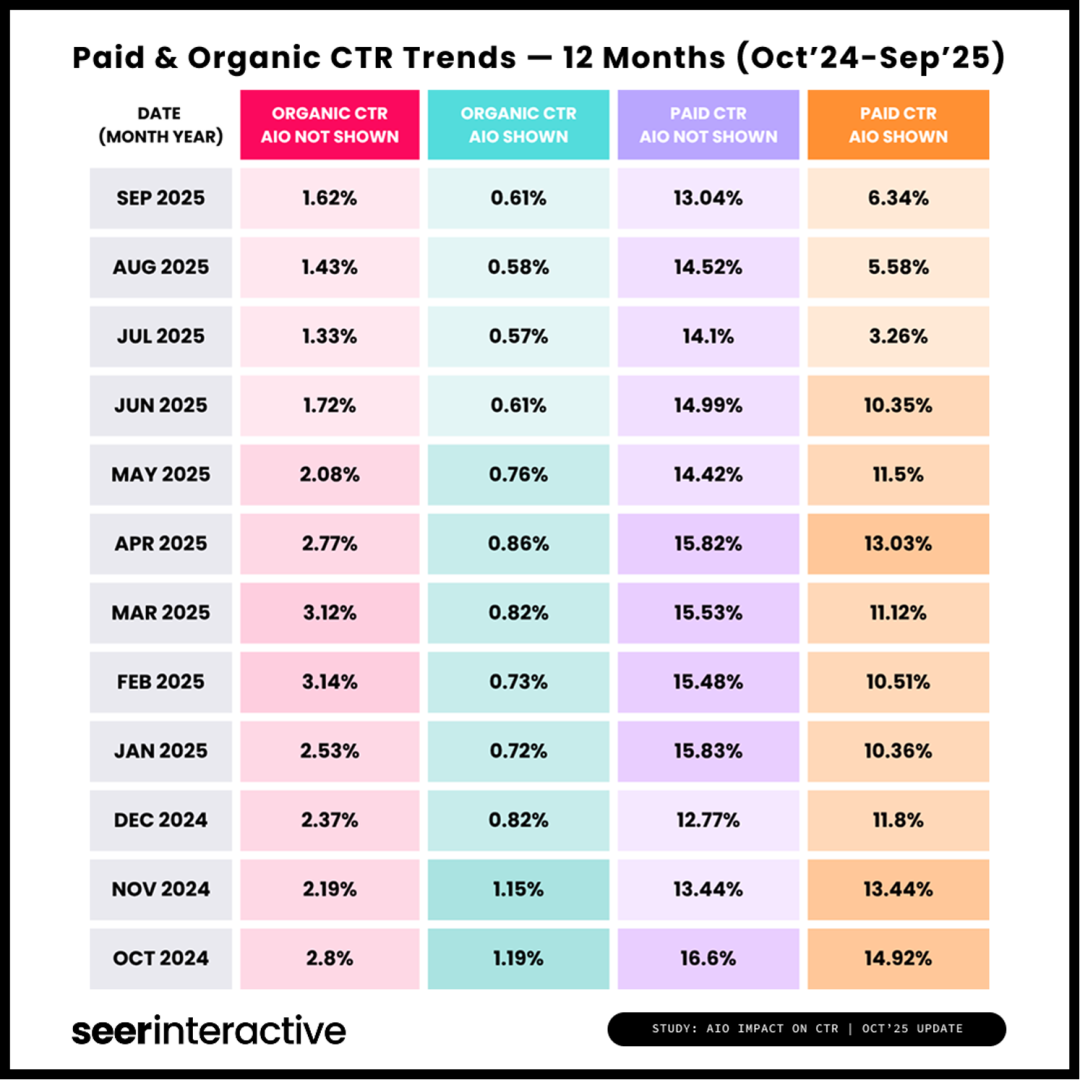
GEO: New Marketing Dividends and Gray Industries in the AI Search Era: As AI search tools like ChatGPT and Perplexity divert traffic from traditional search engines, Generative Engine Optimization (GEO) has become a new battlefield for brands. By deploying structured content to guide AI citations, the GEO market is expected to reach $12 billion by 2025. However, this field has spawned gray industries such as “data poisoning,” using low-cost tutorials and fake authoritative information to trick AI scrapers. OpenAI has also clearly signaled advertising intent, researching the prioritization of sponsored content in responses, marking a shift toward monetization under the pressure of massive losses. (Sources: 36Kr, Tech Planet)
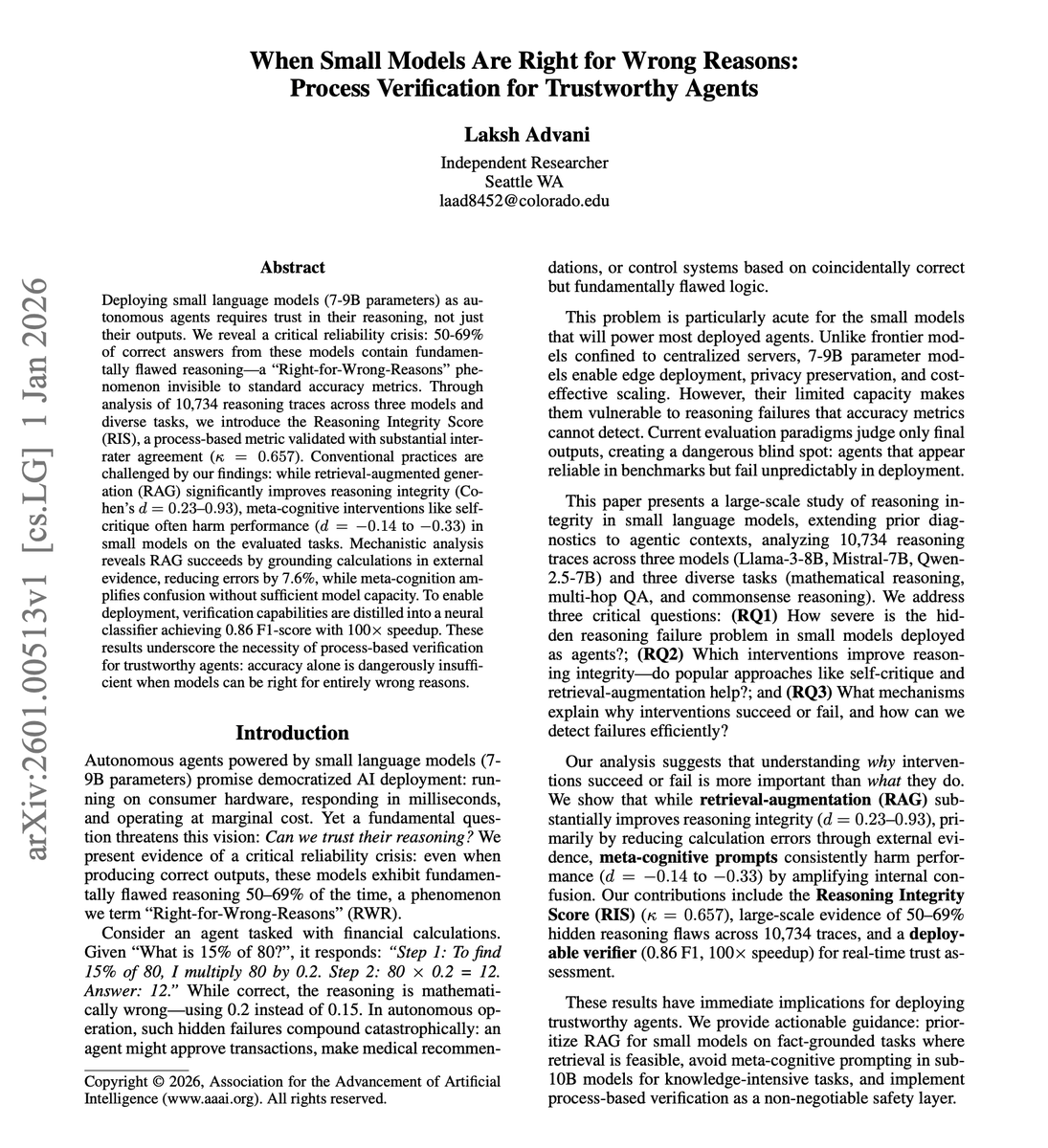
Small Model Reliability Crisis: 50-69% of Correct Answers Stem from Flawed Reasoning: Research shared by DAIR.AI reveals the “Right-for-Wrong-Reasons” phenomenon: small models with 7-9B parameters often provide correct answers in math and Q&A tasks despite broken logical reasoning chains. More surprisingly, Self-critique prompts can actually hurt performance, as small models tend to generate plausible but false justifications. The study suggests introducing Process-based Verification Scores (RIS) and RAG to enhance reasoning integrity rather than blindly trusting final outputs. (Source: dair_ai)
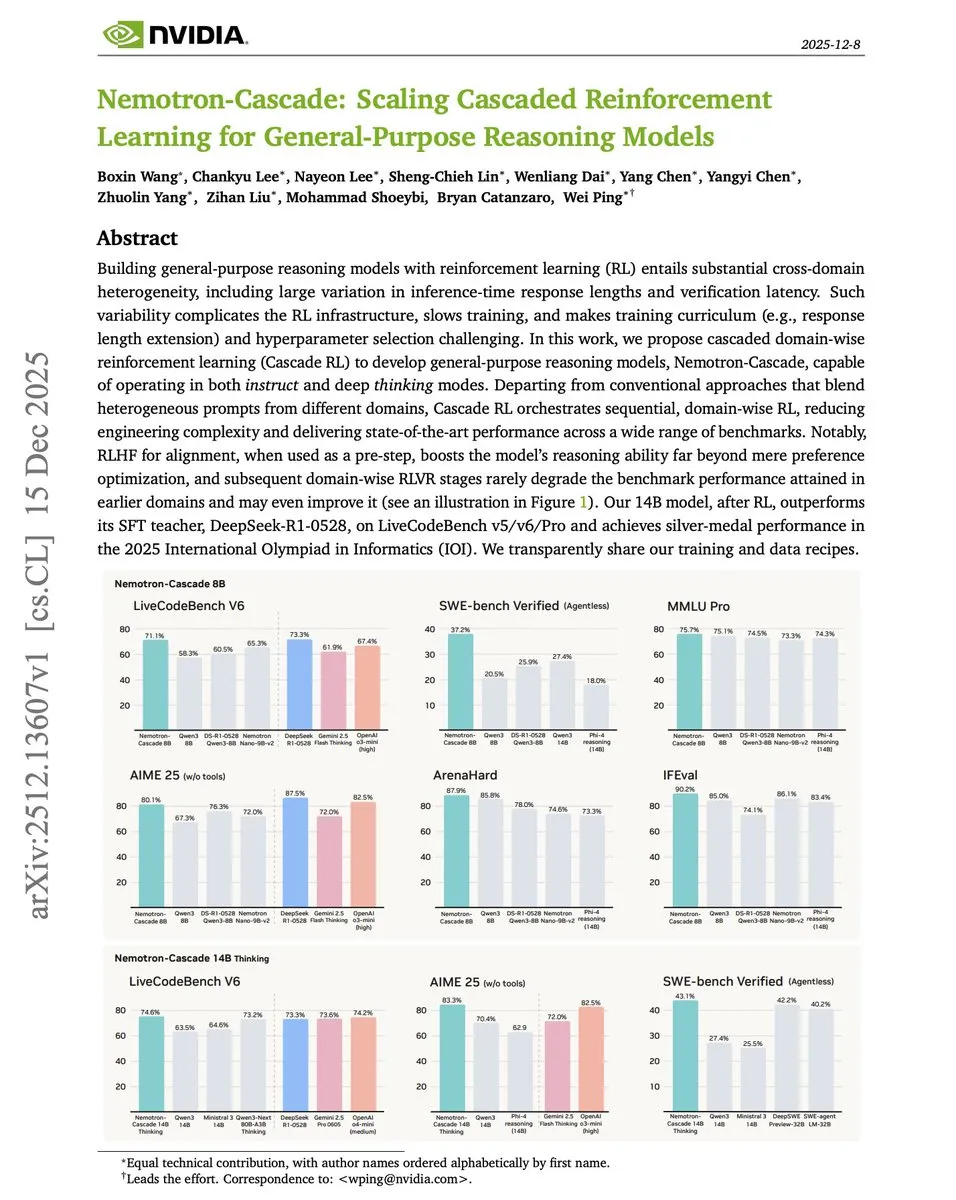
NVIDIA Cascade RL: Solving Multi-Domain Reasoning Training Challenges: To address conflicting training objectives across domains like math, code, and alignment, NVIDIA proposed the Cascade RL framework. This framework uses a sequential reinforcement learning mode, starting with RLHF alignment, followed by instruction following, math, code, and software engineering RL. Experiments show that the 14B Nemotron-Cascade model beat DeepSeek-R1-0528, which is 84x larger, on coding leaderboards. This method proves that sequential training not only prevents catastrophic forgetting but also raises the reasoning ceiling for subsequent tasks through prerequisite steps. (Source: omarsar0)
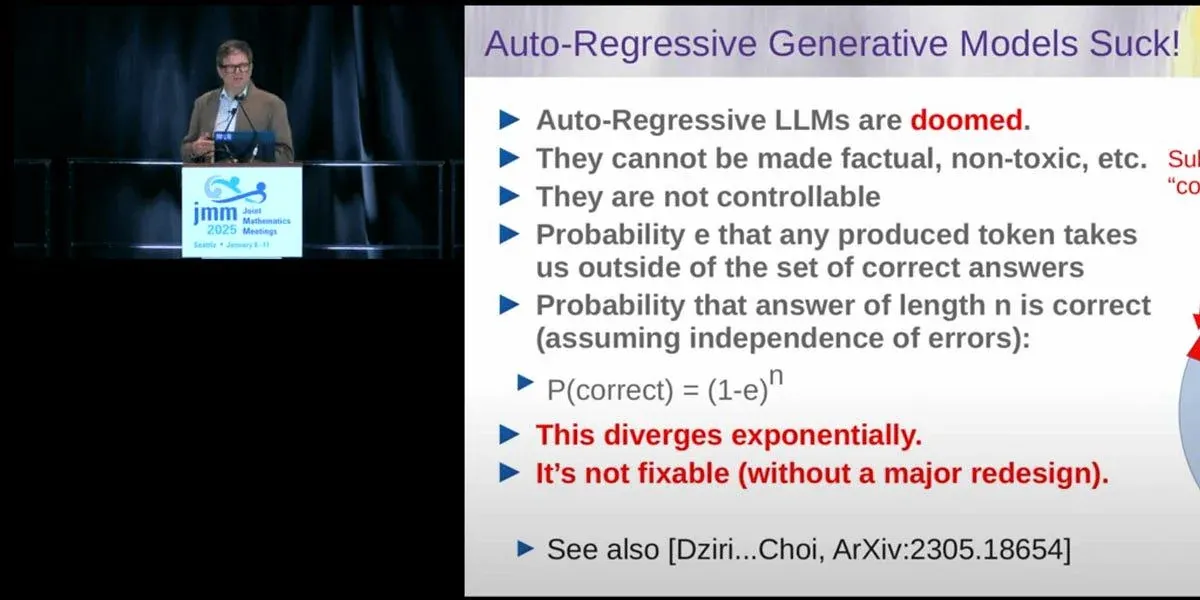
Post-Transformer Era: Three New Architectures Competing for Dominance: One of the inventors of the Transformer pointed out that the architecture is becoming a bottleneck for AI progress. In 2026, three major architectures will challenge it: 1. Text Diffusion, supporting full-sentence denoising to enhance planning; 2. Continuous Thought Machines, allowing models to autonomously decide thinking duration via neural synchronization; 3. Nested Learning, simulating the brain’s fast and slow thinking circuits. These architectures aim to solve the coupling bottlenecks of Transformers in reasoning, memory, and control. (Source: Reddit)
🧰 Tools
Claude Agent SDK: Enabling Advanced Agent Development: The developer community is buzzing about the Claude Agent SDK (formerly Claude Code SDK), considering it far beyond a simple programming assistant. The SDK allows for building complex Agents with multi-step reasoning, tool calling, and autonomous environment operation capabilities. At the AI Engineer conference, Thariq demonstrated how to use this SDK to build futuristic Agent orchestrators. Compared to IDEs like Cursor, the SDK provides developers with lower-level control, supporting the construction of highly customized automated workflows. (Sources: omarsar0, swyx)
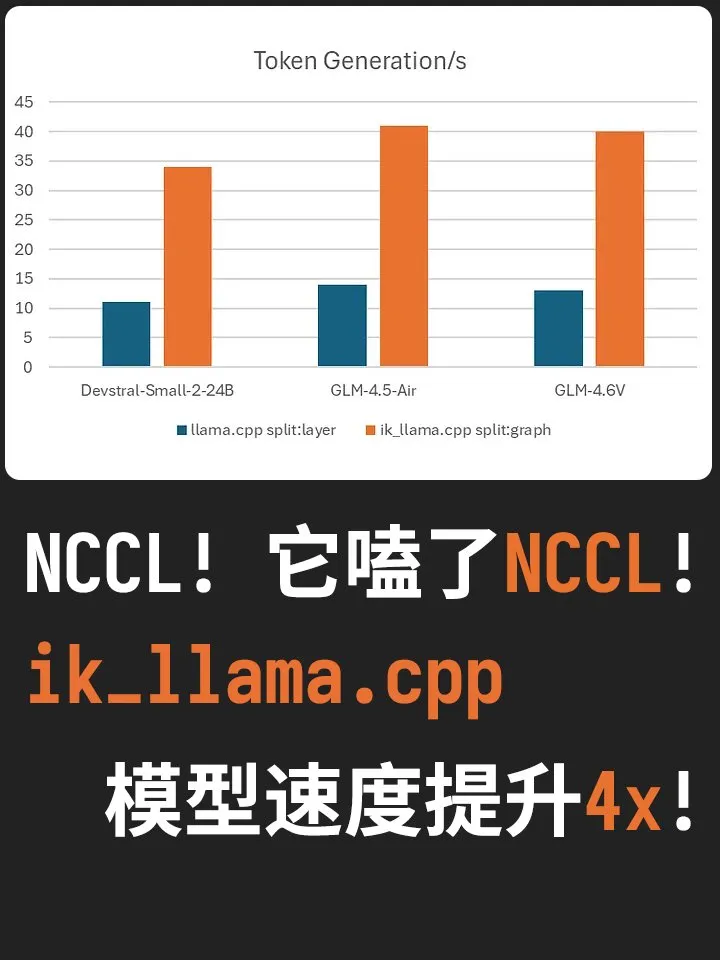
ik_llama.cpp: A Leap in Local Multi-GPU Inference Performance: ik_llama.cpp, a high-performance branch of llama.cpp, merged a major update achieving true Tensor Parallelism by integrating the NVIDIA NCCL library. In multi-GPU environments, this tool can boost local LLM generation speeds by 3 to 4 times, effectively eliminating pipeline bubbles. This breakthrough allows developers to run models with trillion-level parameters at high efficiency on consumer-grade hardware, significantly lowering the barrier for localized AI deployment. (Sources: karminski3, Reddit)
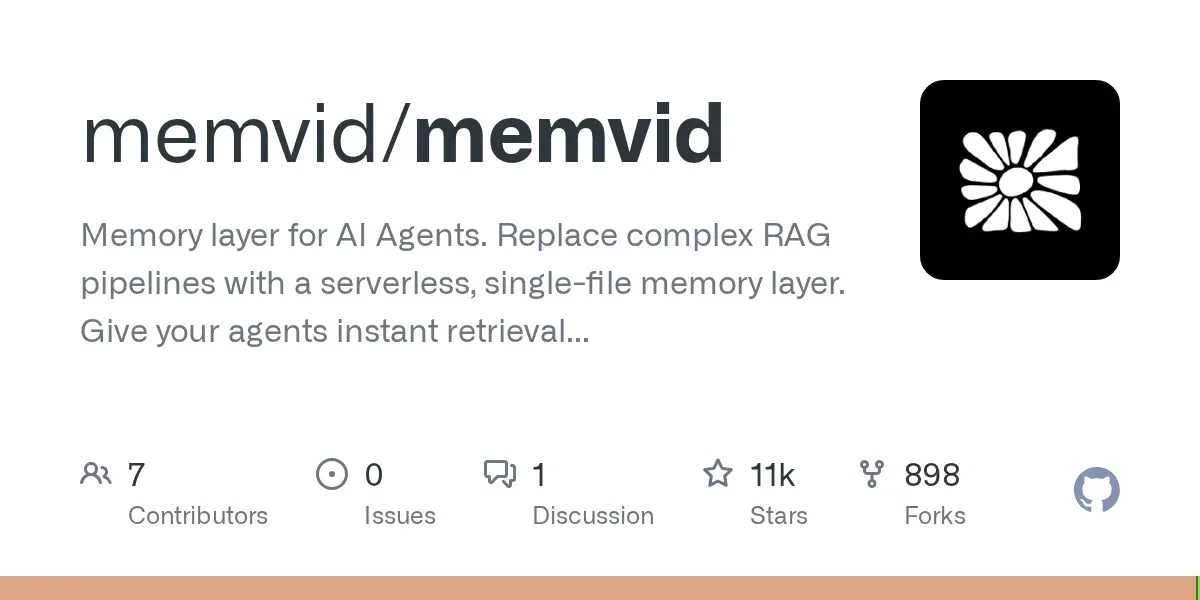
Memvid v2: Replacing Complex RAG Stacks with a Single File: The viral open-source project Memvid released v2, introducing the “Smart Frames” concept, which stores text embeddings within video frames for 100% memory portability. It can compress 50,000 documents into a 200MB file with retrieval latency under 17ms. Memvid aims to completely replace complex vector databases and RAG pipelines, allowing Agents to carry long-term memory like a USB drive, with seamless switching between models like GPT, Claude, and Llama. (Source: Reddit)
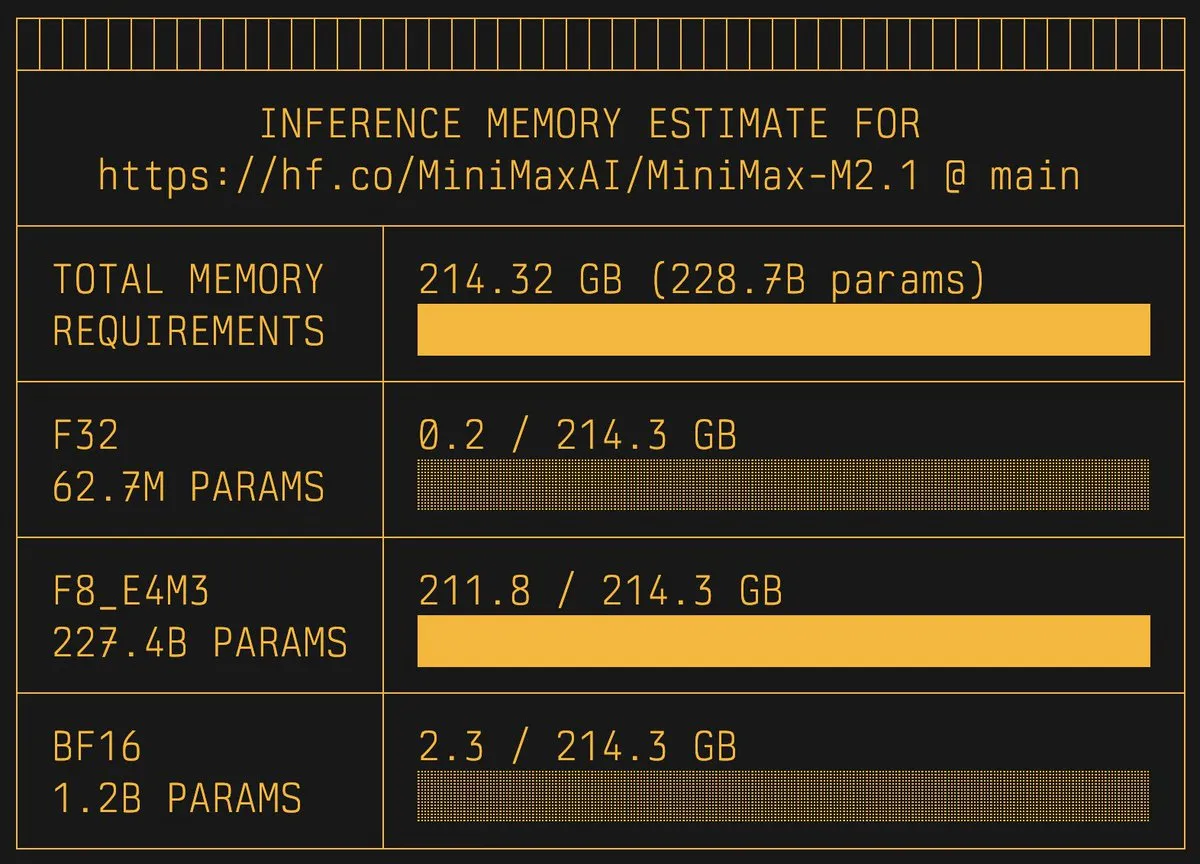
hf-mem: One-Click Estimation of HuggingFace Model VRAM Requirements: Developer Alvaro Bartolome launched hf-mem, a lightweight Python tool. Relying only on Safetensors metadata, it accurately estimates the VRAM required for inference without downloading the full model. Using the uvx hf-mem --model-id command, users can quickly determine if their hardware supports a specific model. In an era of exploding model parameters, this tool provides great convenience for local deployment, avoiding resource waste from blind downloads. (Source: huggingface)
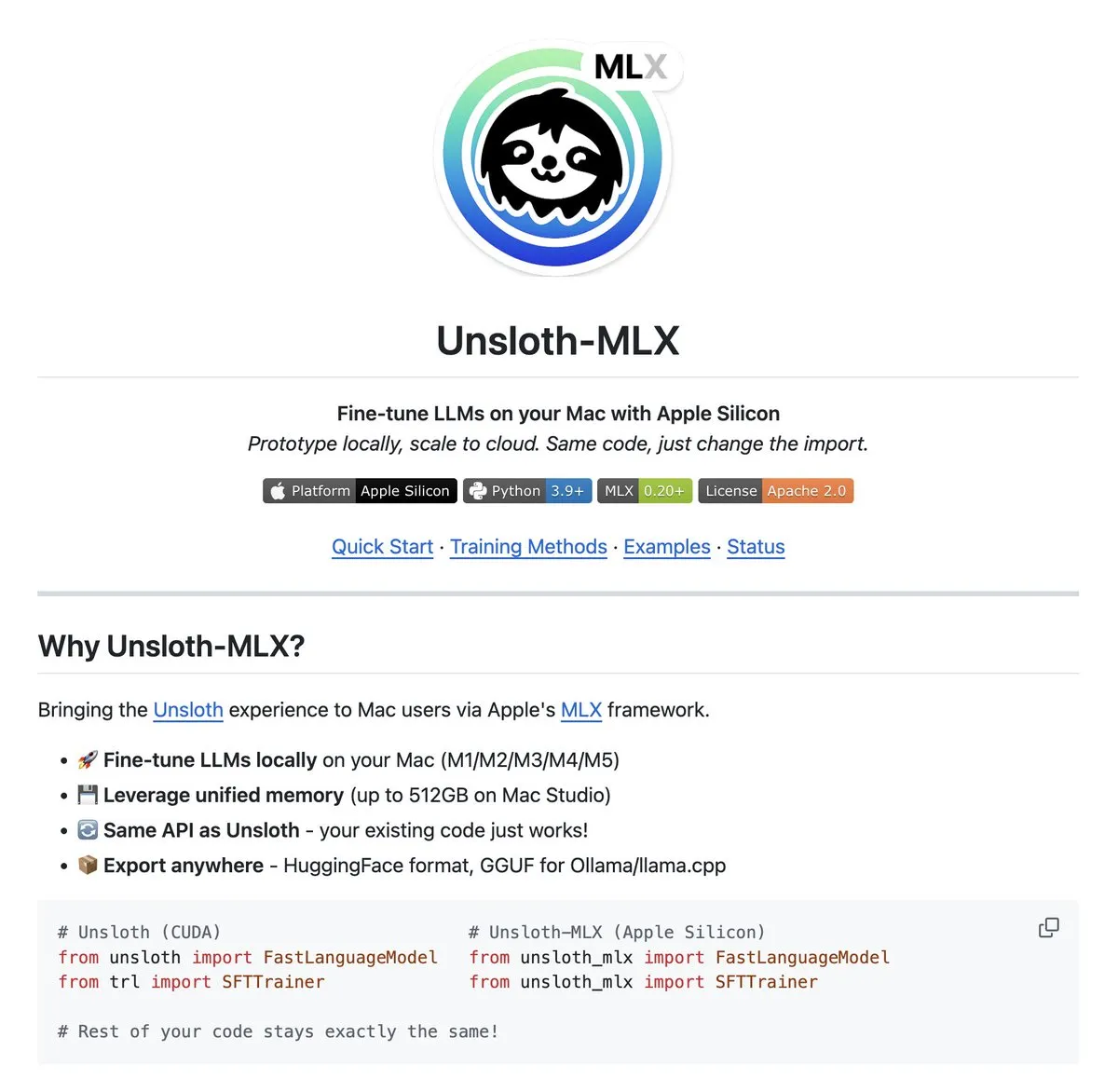
Unsloth-MLX: A Powerful Tool for Local Fine-Tuning on Mac: Developer Abdur Rahim released Unsloth-MLX, allowing users to fine-tune large models using the MLX framework on Apple Silicon Macs. The tool maintains an API consistent with Unsloth, supporting seamless migration from local prototyping to cloud GPUs. This is a major boon for Mac users who wish to train on private data locally while being limited by expensive cloud compute, further democratizing fine-tuning technology. (Source: awnihannun)
📚 Learning
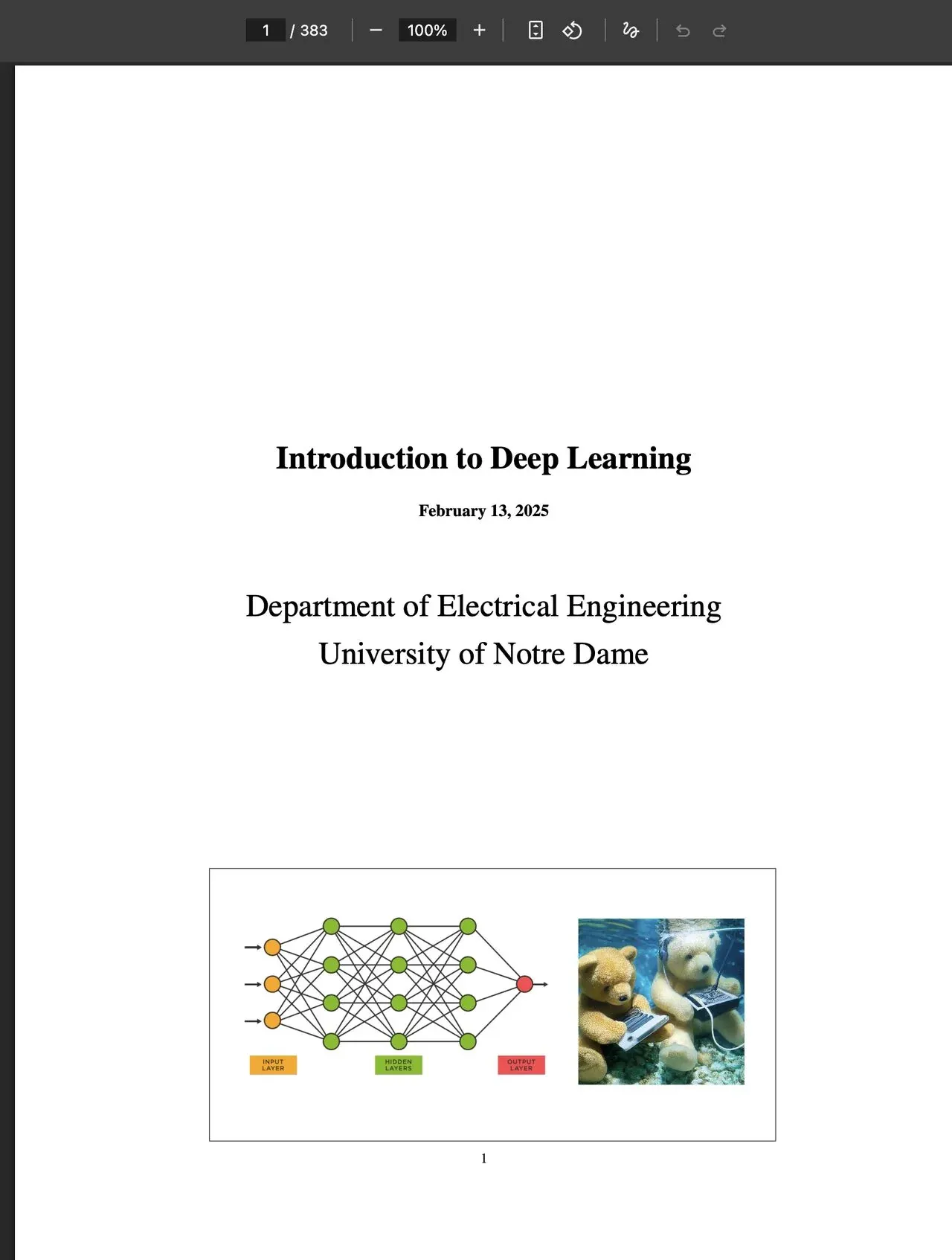
Deep Learning Encyclopedia: Deep Learning Book 2025 Released: The University of Notre Dame released the “Deep Learning Book 2025” lecture notes, spanning hundreds of pages. The book covers everything from basic perceptrons to the latest diffusion models, Transformer variants, and reinforcement learning frontiers. With detailed content, mathematical derivations, and intuitive diagrams, it is an excellent free resource for AI practitioners to systematically bridge technical gaps in 2026. (Source: Reddit)
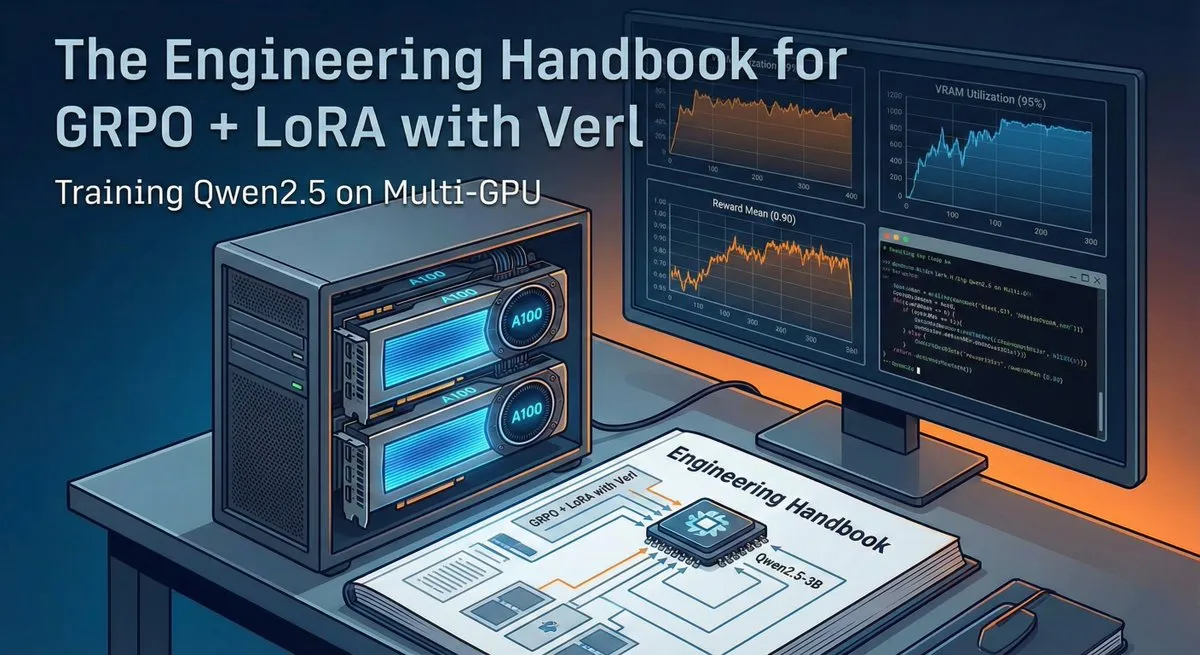
GRPO + LoRA Engineering Handbook: Building Industrial-Grade RL Loops from Scratch: Following the reinforcement learning craze sparked by DeepSeek-R1, Maxime Labonne shared the “GRPO + LoRA with Verl Engineering Handbook.” The guide details how to build stable RLVR pipelines in multi-GPU environments, including experiment tracking, debugging tips, and practical experience on maximizing A100 compute. It is currently the best practice tutorial for bringing DeepSeek-style reasoning to private models. (Source: maximelabonne)
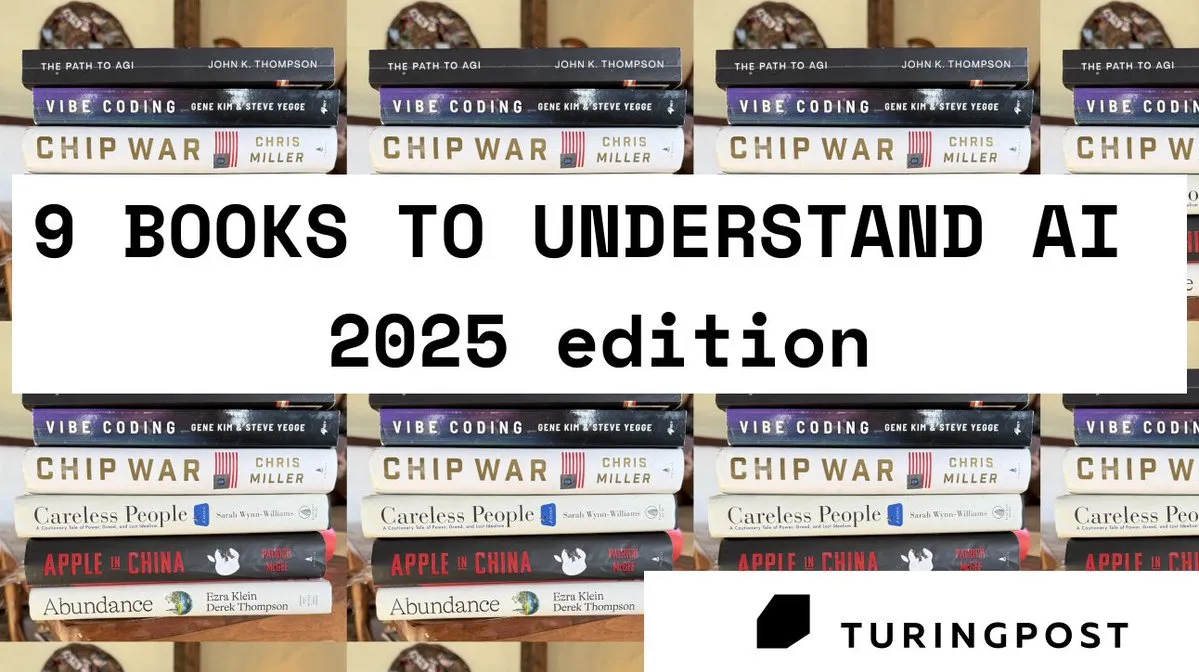
9 Books to Understand AI: The 2025/2026 Must-Read List: TheTuringPost recommended 9 books to help deeply understand AI trends, including Apple in China (supply chain perspective), The Thinking Machine (biography of Jensen Huang and NVIDIA), The Path to AGI, and Bill Gates’ Source Code. The list covers a full range of perspectives from low-level chip competition to high-level societal impact, suitable for readers wishing to maintain clear thinking amidst the technical frenzy. (Source: TheTuringPost)
💼 Business
Meta Acquires Manus AI: Heavy Bet on General-Purpose Agents: Meta announced the acquisition of AI Agent startup Manus AI, aiming to integrate its leading Agent capabilities into Meta’s consumer and business products. Manus was previously valued at approximately $500 million with a high revenue growth rate. This move shows that after missing the “Physical AI” lead, Zuckerberg is aggressively filling gaps in autonomous operational Agents through acquisitions. (Source: Reddit)
RayNeo Secures 1 Billion RMB Financing: China Mobile and China Unicom Bet on “Next-Gen Phones”: AR glasses leader RayNeo completed a new financing round of over 1 billion RMB, co-invested by funds under China Mobile and China Unicom. This is the first time carriers have collectively placed heavy bets on the smart glasses track, aiming to position the best carrier for AI large models. RayNeo will showcase its first eSIM AR glasses at CES, utilizing carrier edge computing to reduce terminal latency and accelerate the process of smart glasses replacing smartphones. (Source: 36Kr)
Zhipu AI Heads for Hong Kong IPO: Sprinting to be the “World’s First LLM Stock”: Zhipu AI has officially launched its Hong Kong IPO, with plans to list on January 8. As the leader of China’s “Six Little Tigers,” Zhipu completed multiple financing rounds in 2025, with a post-investment valuation exceeding 20 billion RMB. Giants like Alibaba, Tencent, and Meituan are among the shareholders. Zhipu’s listing is seen as a touchstone for the AI industry’s valuation and will directly influence the commercialization path of domestic LLM startups. (Source: 36Kr)
🌟 Community
Vibe Coding vs. Abstract Engineering: The Philosophical Debate of AI Programming: The community is engaged in a heated discussion over “Vibe Coding.” Andrej Karpathy and others argue that AI makes code cheap, and programming is evolving into an art similar to playing a musical instrument. However, scholars like Omar Khattab warn that relying solely on dialogue to generate 100,000 lines of low-level code without high-level abstraction will lead to a flood of unmaintainable “Slop Code.” The true future should involve developing higher-level programming languages where AI acts as a compiler rather than a simple code generator. (Sources: lateinteraction, gfodor)
Harvard Study: AI Tutors Double Learning Efficiency: A randomized controlled trial by Harvard University showed that students using AI tutors to learn physics achieved learning gains twice those of traditional classrooms in half the time. AI tutors provide “infinite patience” and “instant personalized feedback” that human teachers find difficult to achieve. Community discussions point out that while this is an opportunity for educational democratization, it may also exacerbate the digital divide: 87% of students in high-income countries have internet access, compared to only 6% in low-income countries. (Source: Reddit)
AI Legal Miracle: Winning an $8,000 Lawsuit with Claude’s Help: A user in a remote area shared their experience of using Claude Opus 4.5 to self-teach law and draft a complaint, ultimately winning an $8,000 civil case in court. They stated that the case law and statutes found by Claude were “rock solid” with zero hallucinations. This case has sparked discussion on whether AI will end the “information hegemony” of the legal profession, allowing ordinary people to obtain justice at low cost. (Source: Reddit)
💡 Others
LEGO Releases “Smart Bricks”: The Biggest Evolution in 50 Years: LEGO announced the launch of 2×4 Smart Bricks with built-in microcomputers, bringing building block models to life. Driven by sensors and AI, LEGO models can light up, make sounds, and respond to movements, such as a lightsaber humming when swung. This marks the traditional toy industry’s full embrace of AI hardware. (Source: robrombach)
Sodium-Ion Battery Mass Production in 2026: Eliminating Range Anxiety: CATL confirmed that sodium-ion batteries will enter the market on a large scale in 2026. They feature an energy density of 175 Wh/kg, support operation in extreme cold down to -40°C, and are extremely low-cost. The community believes this will accelerate the collapse of oil demand and provide core power for AI-driven cheap autonomous vehicle fleets. (Source: teortaxesTex)