



🔥 Focus
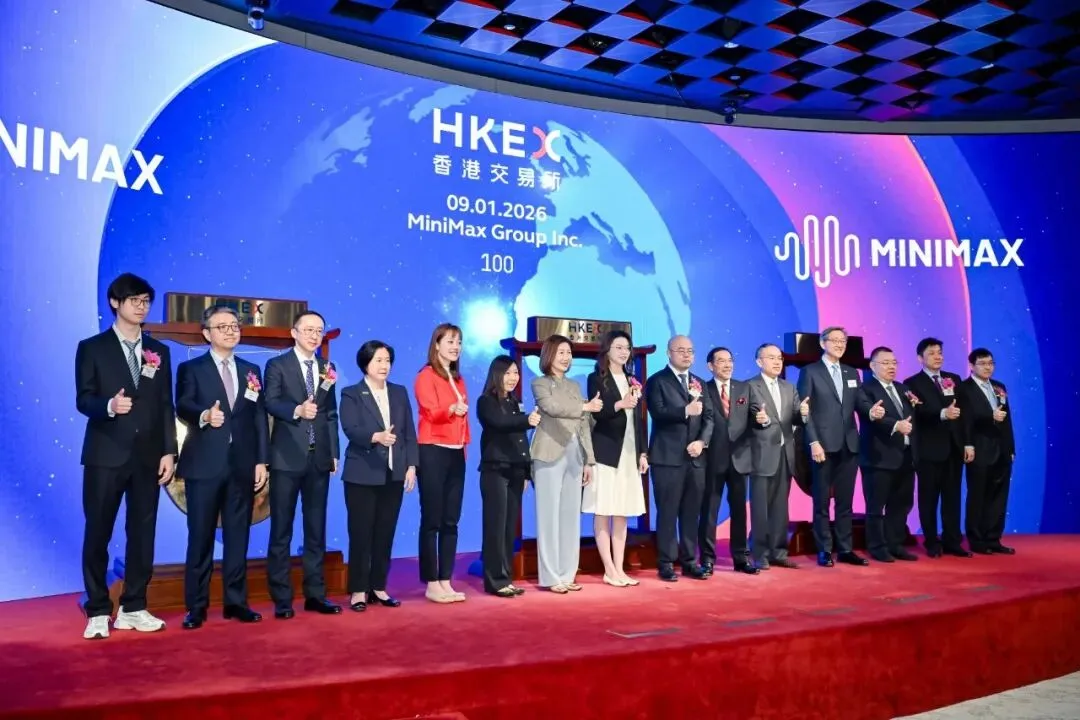
MiniMax vs. Zhipu HK IPO Duel: Consumer Model Wins First Round: At the start of 2026, Zhipu and MiniMax, two of the “Six Little Tigers” of large models, went public on the Hong Kong Stock Exchange. MiniMax’s stock price surged 109% on its first day, with its market capitalization exceeding $13.7 billion, outperforming Zhipu. Analysts point out that the market has higher expectations for MiniMax’s C-end (consumer) application models (such as Xingye and Hailuo), believing its global revenue-generating capability is stronger than traditional B-end (business) private deployment. This marks the entry of the large model competition into a capital harvest period, where the differentiation in business models—whether following the SenseTime-style B-end path or embracing the global C-end trend—has become the core logic determining valuation. (Source: 36Kr, bookwormengr)
DeepSeek V4 to be Released: Coding Capabilities Challenge GPT and Claude: DeepSeek is reportedly set to release its next-generation flagship model, V4, in February. Internal testing shows that V4 has achieved technical breakthroughs in handling ultra-long code prompts and data pattern analysis, with significantly improved logical rigor. Its code generation capabilities are expected to surpass GPT-5.2 and Claude Opus 4.5. DeepSeek’s recently published MHC (Manifold-constrained Hyper-connections) paper is seen as the technical foundation for V4, achieving more efficient performance leaps by solving instability during model scaling. This dynamic indicates that domestic models will engage in a head-on confrontation with top international levels in the vertical coding field. (Source: scaling01, LocalLLaMA)

Sakana AI Releases Digital Red Queen: Breakthrough in Self-Evolving Code: Sakana AI, in collaboration with MIT, has proposed a new method for making assembly code self-evolve using LLMs. This technology drives code toward natural selection and self-optimization through iterative battles in a Turing-complete adversarial environment called “Core War.” The agents produced by this dynamic objective function are more robust and versatile than those from static optimization. This breakthrough demonstrates the huge potential of AI in automated programming and adaptive systems, marking a paradigm shift from “static learning” to “evolutionary learning.” (Source: hardmaru, SakanaAILabs)
ChatGPT Health Officially Launched: AI Healthcare Enters the Era of Personal Health Management: OpenAI has released the ChatGPT Health feature, which supports syncing lab results and health app data. Based on a specially built health model, it can perform in-depth analysis of physical exam reports and provide recommendations. Although similar products already exist in China (such as Ant Group’s “Afu”), ChatGPT’s entry marks the official recognition of health management as a core application scenario by global AI giants. This is not just a competition of technology, but a comprehensive game involving data privacy, medical device connectivity, and personalized health guidance. (Source: op7418, artificial)

🎯 Trends
Anthropic Restricts Claude Subscriptions for Third-Party Apps, Sparking Controversy: Anthropic recently began restricting Claude Pro subscribers from using API credentials in third-party tools like OpenCode and Clawdbot. This move is seen as a means to protect its own ecosystem (such as Claude Code) and control costs. The community has reacted strongly, arguing that this weakens user choice and prompting some developers to switch to more open models like MiniMax or Zhipu GLM. This reflects the balancing act AI vendors face between an “open ecosystem” and a “closed business loop.” (Source: matanSF, MiniMax_AI)

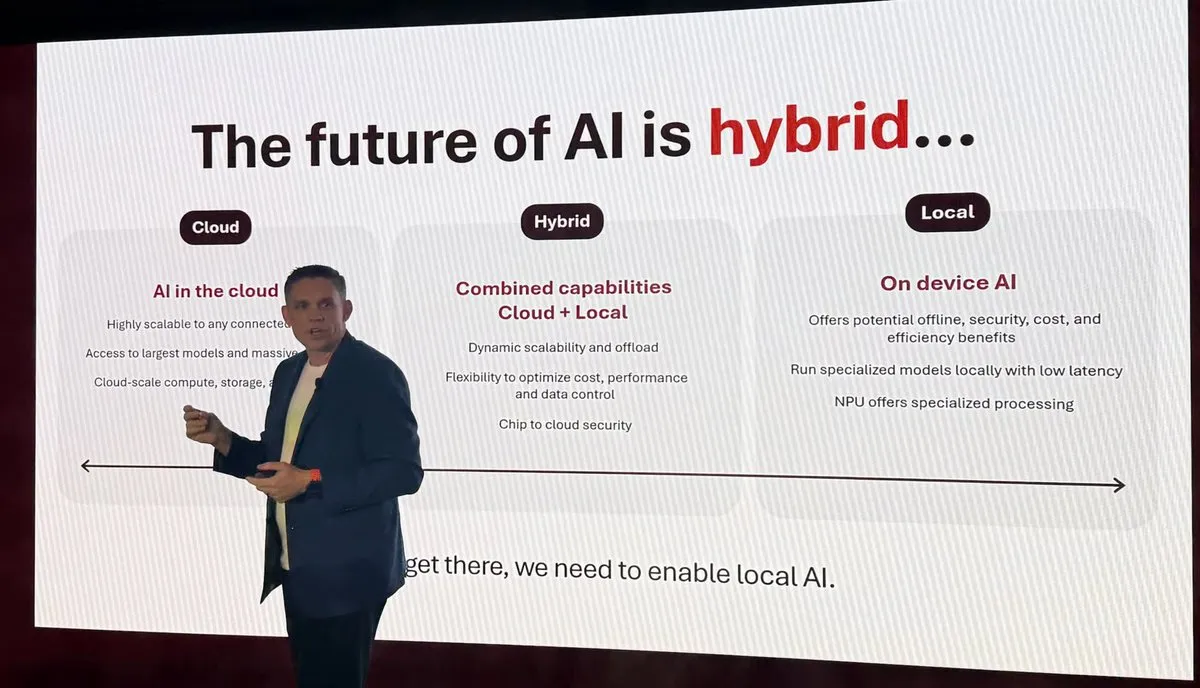
CES 2026 Chip Giants Layout: Decentralized AI Computing Trend Becomes Obvious: Qualcomm, NVIDIA, and AMD showcased vastly different visions for AI infrastructure at CES. Qualcomm emphasized edge-side, always-on local inference; AMD pursued heterogeneous continuity across cloud, PC, and edge; while NVIDIA viewed AI as an industrial system, focusing on centralized computing and physical robot simulation. This indicates that AI computing is being reorganized based on operating scenarios rather than a competition for a single “strongest chip,” with Hybrid AI (heavy cloud inference + local low-latency tasks) becoming the industry consensus. (Source: TheTuringPost)
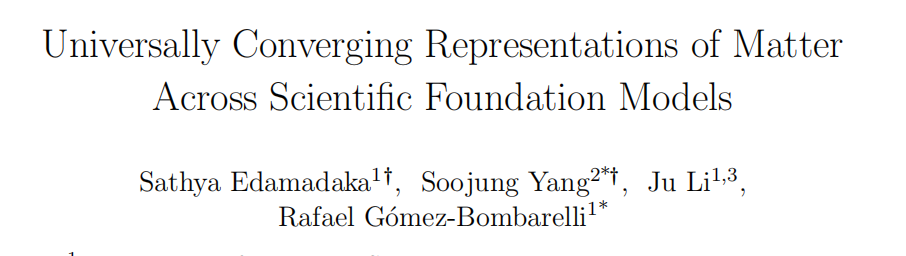
MIT Research Reveals Cognitive Convergence in Top Models: The Path to Truth is Clear: An MIT study found that despite differences in model architecture and training data, high-performance models tend to converge in their internal understanding of matter (such as molecular structures) as their performance improves. This means AI is collectively uncovering the objective underlying logic of the physical world. For developers, this suggests that in the future, small models can “copy the homework” of large models through “model distillation,” achieving high-performance scientific discovery capabilities without getting stuck in an endless computing power race. (Source: 36Kr)
Alibaba Cloud Initiates the First Year of AI Hardware Popularization: Large-Scale Implementation of Edge Agents: At the Tongyi Intelligent Hardware Exhibition, Alibaba Cloud showcased over 200 hardware products debuting at CES, including smart glasses, AI Pins, and robots. By providing full-size coverage of Tongyi models (0.5B-480B), Alibaba Cloud offers hardware manufacturers a low-power, high-intelligence “cloud-edge synergy” solution. This marks a collective shift in China’s hardware industry from “connected devices” to “independent thinking agents,” where AI is no longer a peripheral feature but the engine driving the core device experience. (Source: 36Kr)

🧰 Tools
Ralph for Claude Code: Autonomous AI Development Loop Tool: Ralph is an autonomous development loop tool based on Claude Code, featuring intelligent exit detection and rate limiting. It allows Claude Code to iteratively improve projects until completion, with built-in protection mechanisms to prevent infinite loops and API abuse. It supports JSON output, session continuity, and real-time monitoring via tmux. It standardizes the development process, enabling AI to truly “close the loop” on software engineering tasks. (Source: frankbria)
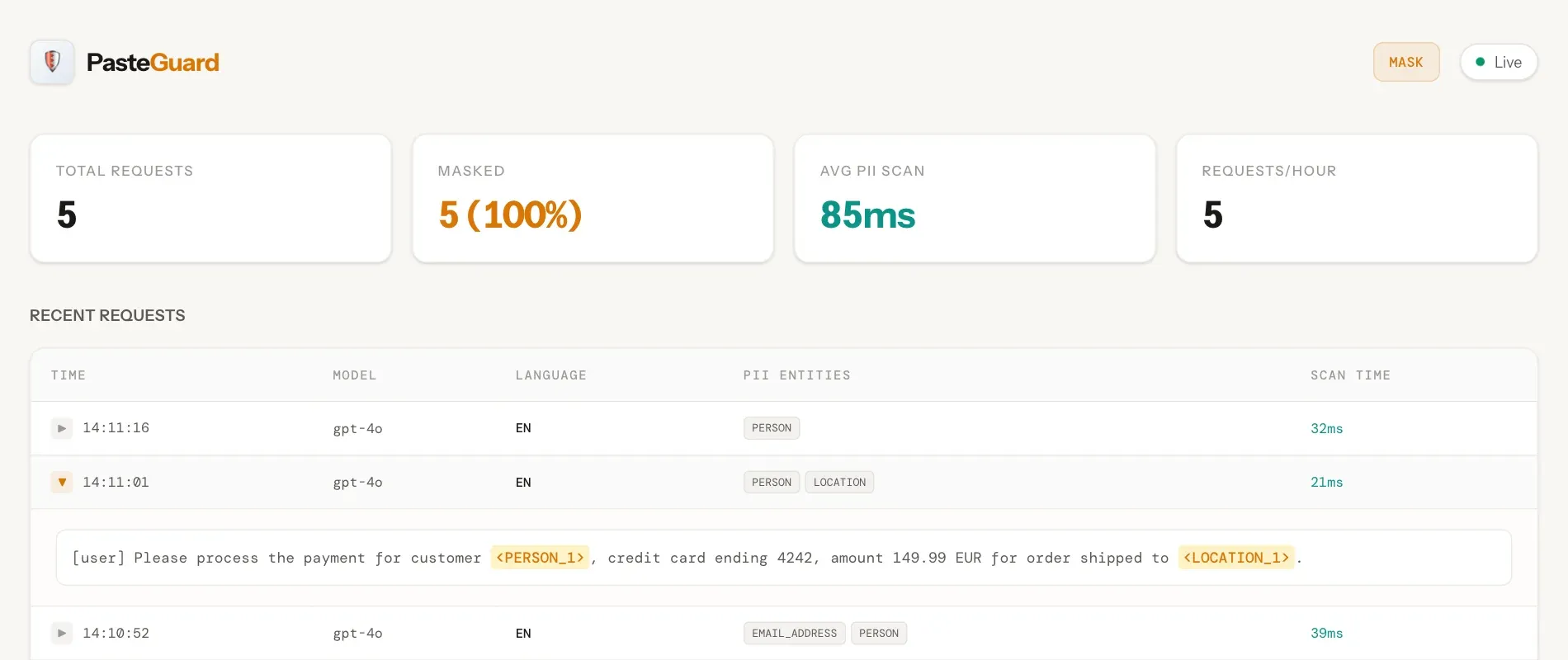
PasteGuard: Privacy Proxy Tool to Mask PII in Cloud LLM Data: This is a privacy proxy designed specifically for Open WebUI that automatically masks personal sensitive information (PII) such as names, emails, and phone numbers before sending data to cloud LLMs. It supports “Masking Mode” and “Routing Mode” (routing sensitive information to local Ollama for processing). Supporting 24 languages and utilizing Microsoft Presidio technology, it effectively addresses compliance and privacy concerns for enterprises using cloud AI. (Source: OpenWebUI)
Empirica: A Cognitive Framework Giving AI Agents “Self-Reflection” Capabilities: Empirica is an open-source cognitive framework for AI agents designed to solve problems like blind overconfidence and repetitive errors. It controls actions by tracking the agent’s knowledge gaps, persisting learning across sessions, and setting confidence thresholds. Its core CASCADE workflow implements pre-checks, gating, and learning measurement, allowing AI to perform meta-cognition like humans—evaluating “what I know” before execution. (Source: artificial)
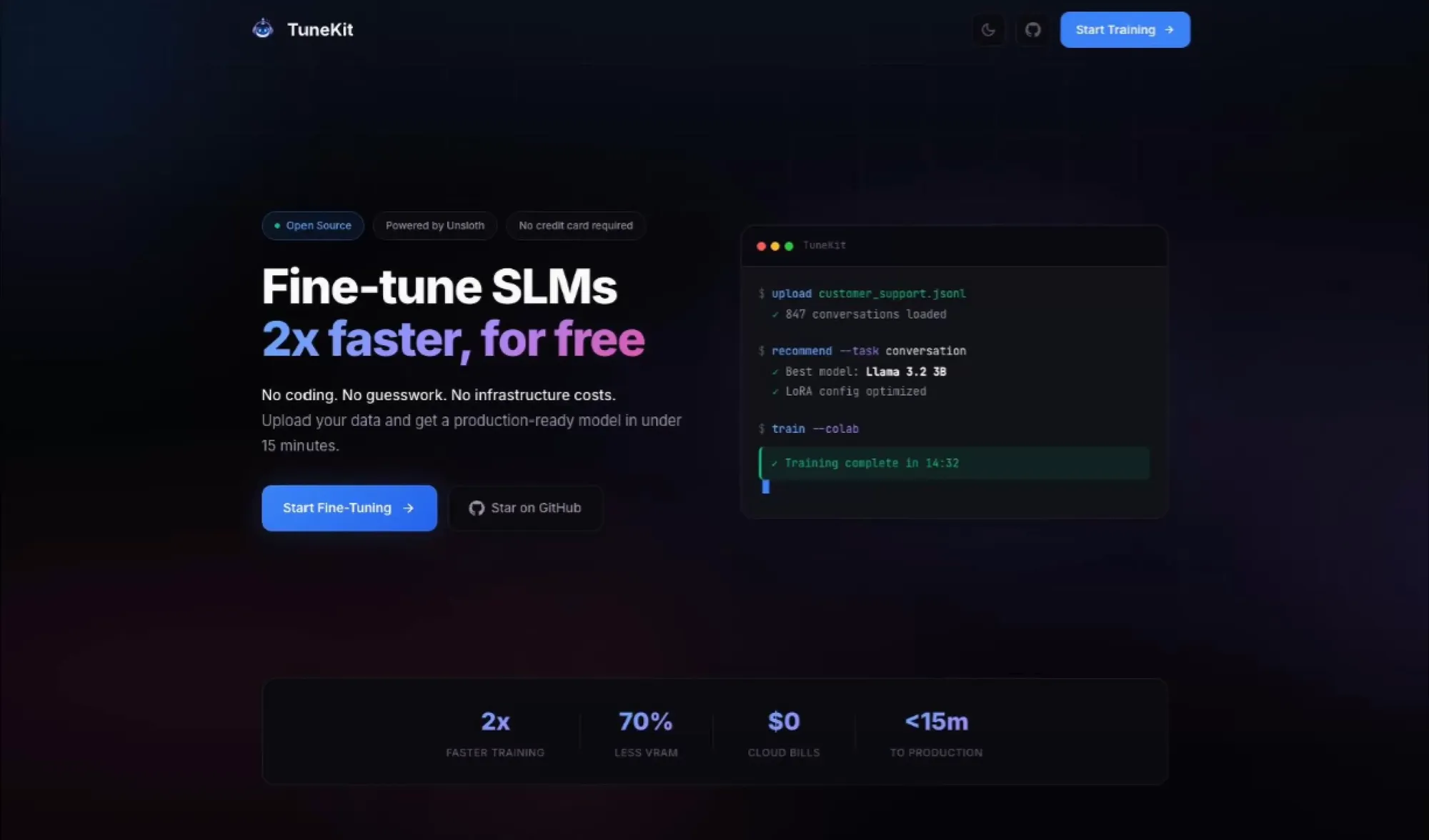
TuneKit: SLM Fine-Tuning Acceleration Tool: TuneKit aims to simplify the fine-tuning process for Small Language Models (SLMs). It supports free training on Colab and utilizes Unsloth AI to achieve a 2x speedup. Users only need to upload data to get a training notebook, without complex scripting or renting expensive GPUs. This provides developers with a low-threshold, high-efficiency SLM optimization path, especially suitable for lightweight model development in specific scenarios. (Source: deeplearning)
📚 Learning
2026 Modern AI Search and RAG System Roadmap: This roadmap details the key stages of evolution from simple “Vector DB + Prompt” to complex production systems, including semantic + hybrid retrieval, explicit reranking layers, Agentic RAG (multi-step query decomposition), and hallucination control. It emphasizes system design over a single framework, providing a practical guide for developers to build low-latency, low-cost AI search systems with permission controls in 2026. (Source: artificial)
DeepLearning.AI Releases “Build with Andrew”: Zero-Foundation AI Development Course: Andrew Ng’s new course aims to teach non-technical people how to build web applications using AI in 30 minutes. The course emphasizes “Vibe Coding”—describing ideas in natural language and having AI generate and iterate on the code. This marks the complete removal of software development barriers, where everyone can become a developer and turn ideas into runnable tools using AI. (Source: DeepLearning.AI)
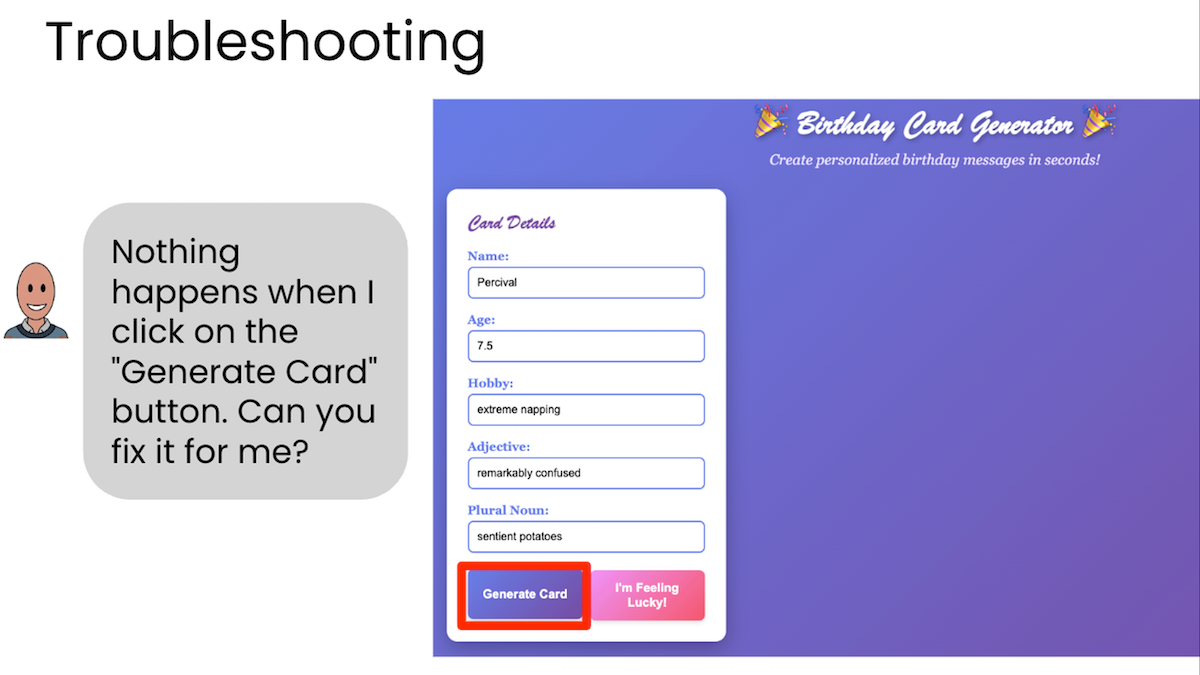
Cutting-edge Paper Roundup: GDPO, MHC, and Delethink: Several papers this week focus on the efficiency and stability of large model training. GDPO solves the signal collapse problem of GRPO in multi-reward settings; MHC improves the stability of large-scale model scaling through manifold constraints; and Delethink proposes a method for periodically truncating reasoning tokens, significantly reducing the computational cost of long-chain reasoning without changing the architecture. (Source: HuggingFace, MachineLearning)
💼 Business
a16z Establishes $1.776 Billion American Dynamism Fund II: Andreessen Horowitz (a16z) announced the formation of its second “American Dynamism” fund, totaling $1.776 billion. The fund aims to invest in technologies that align with U.S. national interests, including aerospace, defense, public safety, and core infrastructure. This reflects top VCs shifting the intersection of AI and hard tech toward national strategy and industrial restructuring. (Source: espricewright)

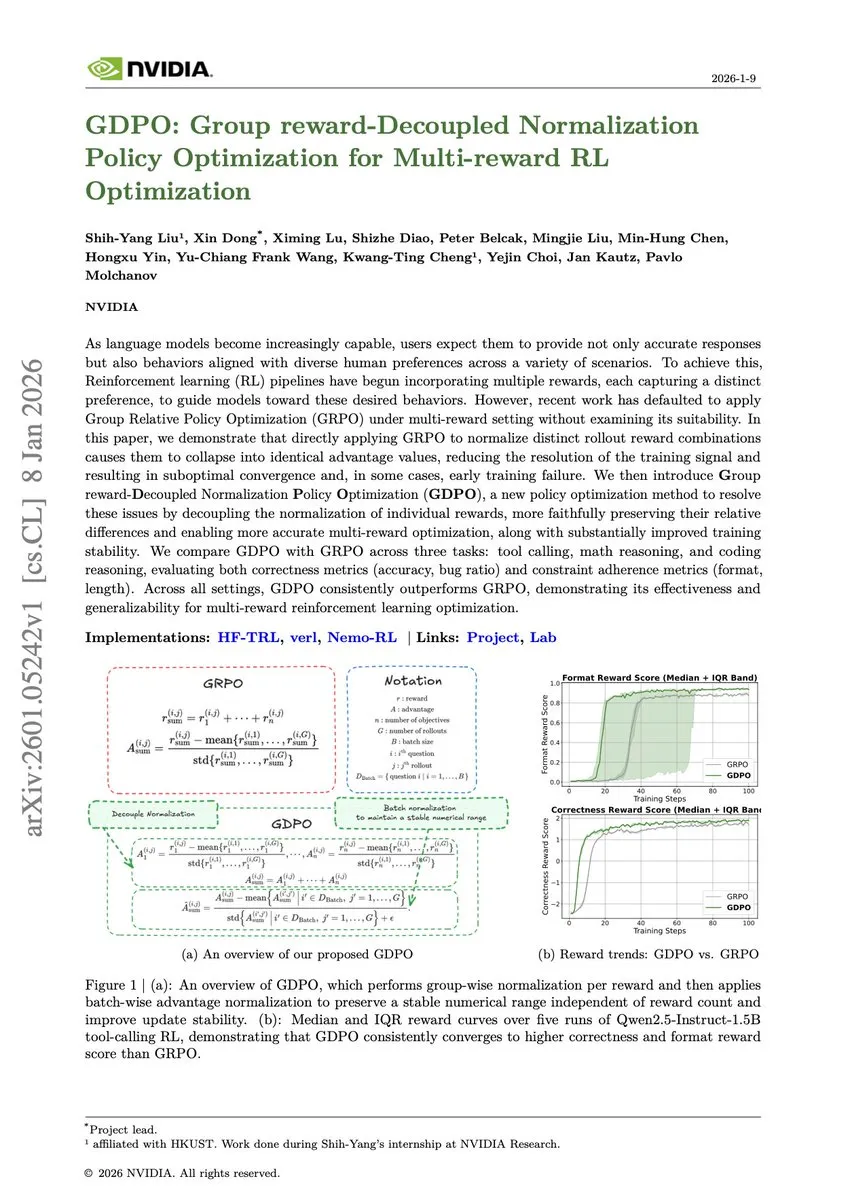
Rio Tinto and Glencore in Merger Talks to Create the World’s Largest Mining Giant: Global mining giants Rio Tinto and Glencore are in preliminary talks regarding a potential merger. If successful, it would create a company with a market value exceeding $200 billion. The core driver of the merger is to secure more copper resources to meet the surge in copper demand caused by the explosion of AI data centers and the energy transition. (Source: 36Kr)
Google AI Studio Sponsors Tailwind CSS Project: Google AI Studio announced it has become an official sponsor of the Tailwind CSS project. This move aims to strengthen the ecosystem integration between AI development tools and popular frontend frameworks, helping developers more efficiently use AI to generate interface code that meets modern UI standards. This shows that underlying model vendors are penetrating developer workflows by sponsoring core open-source projects. (Source: crystalsssup)

🌟 Community
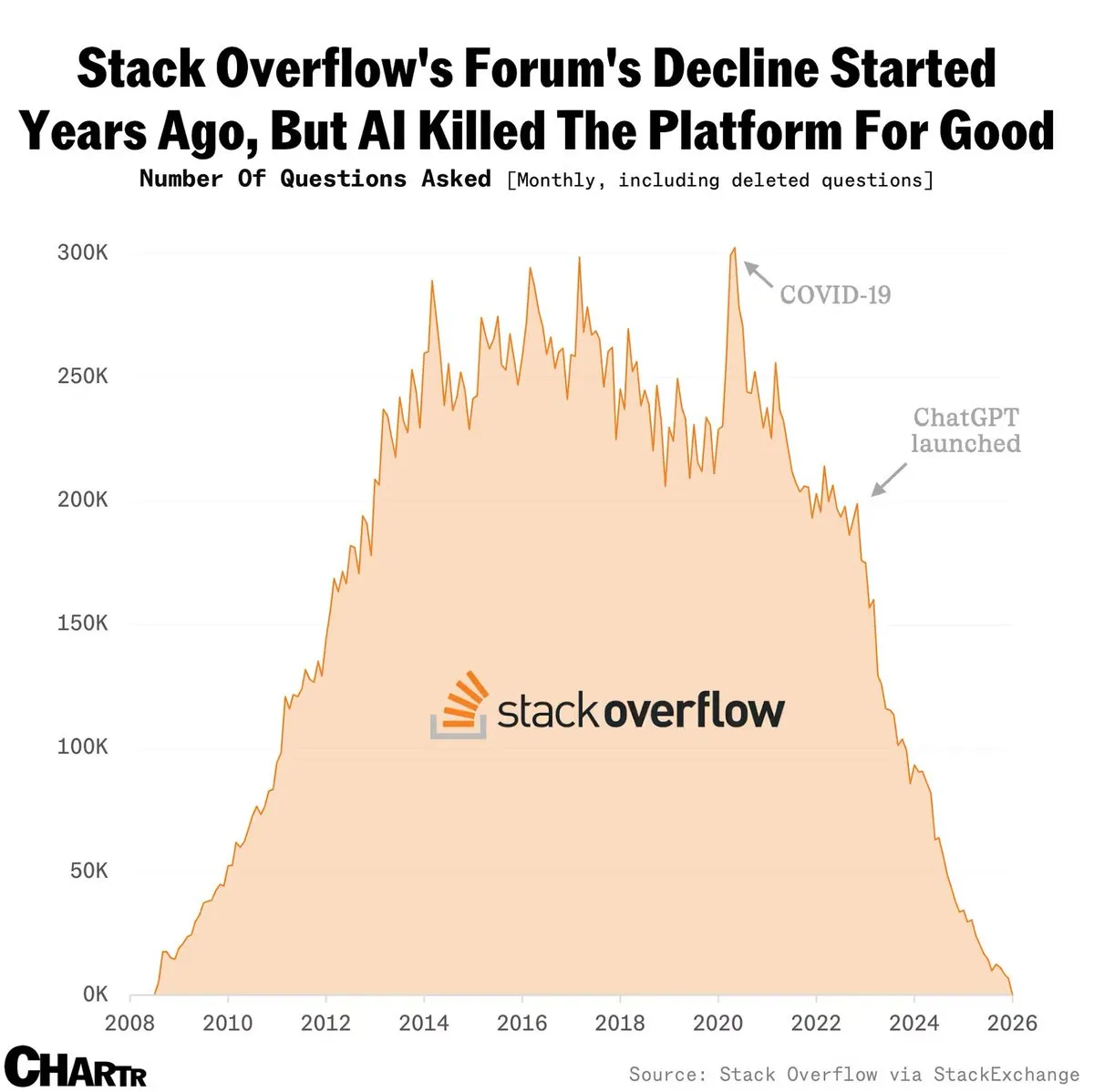
Stack Overflow Doubles Revenue by Licensing Data to AI Models: Despite a sharp drop in monthly questions after the release of ChatGPT, Stack Overflow doubled its annual revenue to $115 million by licensing its high-quality human answer database to AI labs. The community is calling this a “rebirth,” proving the premium value of high-quality human data in the AI era. However, some worry this model is unsustainable as the output of new knowledge slows down. (Source: BorisMPower)
Programmers Resonate on “Mental Fatigue” Caused by AI: On social media, many developers report that while AI has made them faster, it has also made them more mentally exhausted. The work mode has shifted from “solving one difficult problem” to “simultaneously supervising five half-finished products,” requiring frequent context switching, code reviews, and prompt adjustments. This shift in “cognitive load” has sparked deep discussions about the future role of programmers: are we code writers or AI supervisors? (Source: ArtificialInteligence)
Polarized Discussion on Vibe Coding: CRUD Apps or Deep Technical Vision?: The community is divided over “Vibe Coding.” One side believes it greatly improves the efficiency of writing CRUD (Create, Read, Update, Delete) and glue code; the other side fears it will lead to a “flood of low-level code,” arguing that true underlying systems (like databases and protocols) still require rigorous architectural design and trade-offs rather than casual natural language instructions. Is AI raising the level of abstraction or creating more unmaintainable “Slop”? (Source: lateinteraction)
💡 Others
Zhihu Releases AI Calendar and a Series of AI Feature Updates: Zhihu launched an “AI Calendar” that aggregates major releases and in-depth discussions in the AI field, and introduced the “Zhida” assistant in the comment section, supporting one-click summaries and instant Q&A. Additionally, Zhihu launched a 24-hour AI audio stream service. These moves show that content platforms are restructuring information acquisition efficiency through AI, attempting to preserve the value of serious discussion in the AI search era. (Source: ZhihuFrontier)

Terence Tao Collaborates with Math, Inc. to Advance Mathematical Formalization: Mathematician Terence Tao, as the first Veritas Fellow, is working on formalizing estimates in analytic number theory. The goal is to create a machine-checkable, living mathematical network where all downstream inferences automatically update when underlying estimates improve. This is seen as a major step toward transforming mathematical literature into modular software, potentially opening a new paradigm for mathematical research. (Source: jpt401)
Online Review Analysis Faces “Synthetic Slop” Pollution: Market research firms have found that about 60% of online reviews in 2026 are AI-generated “synthetic slop.” These reviews have perfect grammar but lack emotional fluctuation and detail. Analysts now prefer to look for reviews with typos, extreme emotions, or specific contexts as signals of “real humans.” This suggests that the value of the public web as a research sample is collapsing, with data collection shifting toward closed, high-friction communities. (Source: ArtificialInteligence)