🔥 Spotlight
xAI Core Strategy Leak: Musk Fires Engineer for Revealing Internal Secrets: xAI engineer Sully was fired after disclosing company secrets on a podcast. The leaked information includes: 1. Macrohard Project: Aims to develop a “human simulator” capable of replicating all human behaviors in the digital world without software adaptation; 2. Tesla Compute Network: Plans to leverage idle computing power from millions of Tesla vehicles equipped with HW4 hardware in North America for AI operations, enabling distributed deployment with zero infrastructure costs; 3. Speed-First Strategy: xAI prioritizes execution speeds 8x faster than humans, believing rapid task completion holds more commercial value than deep reasoning. This leak has handed competitors like OpenAI and Google direct insights into xAI’s technical roadmap and deployment strategy. (Source: dotey)

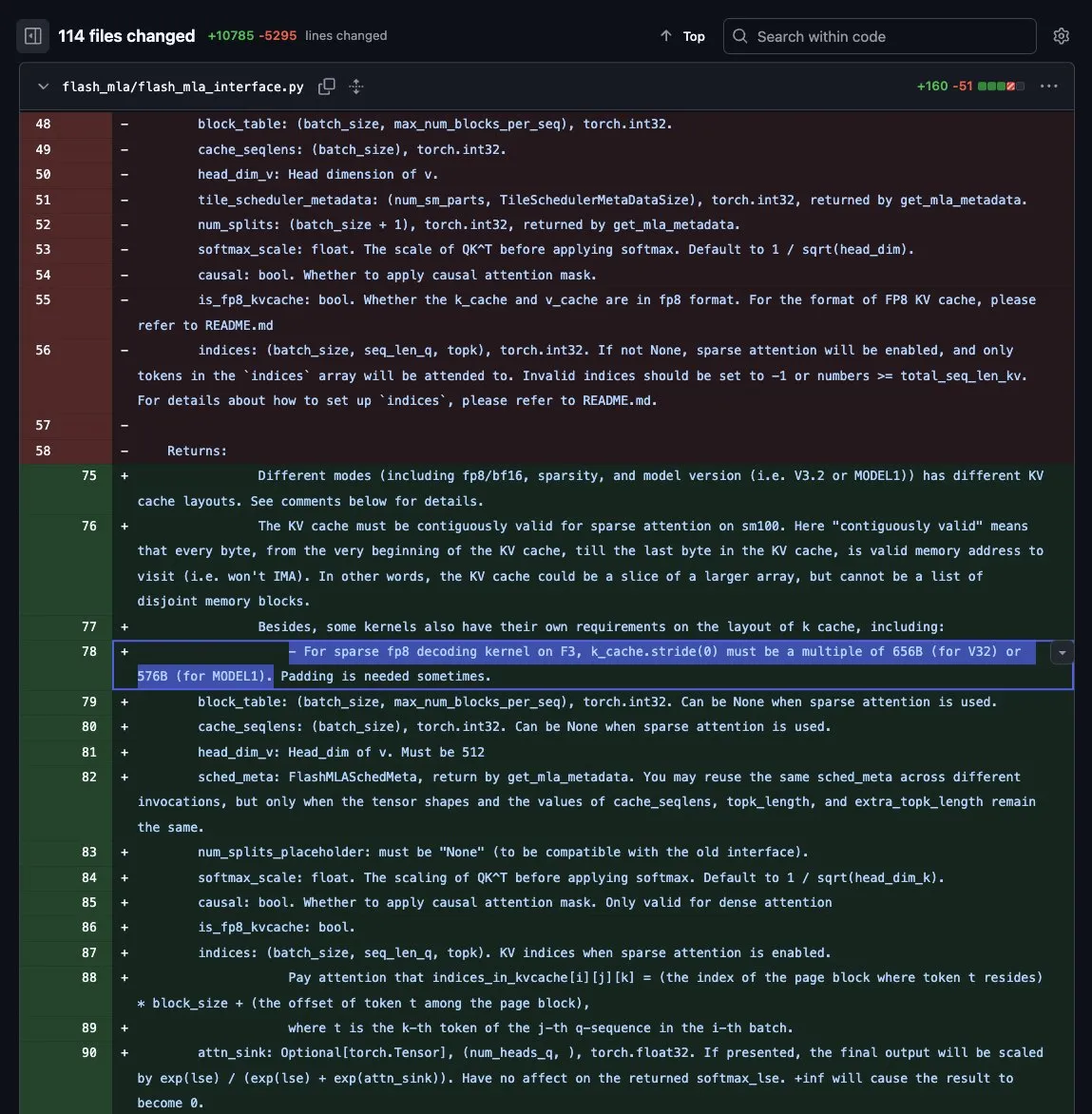
DeepSeek “Model1” Appears on GitHub: V4 Era May Begin: DeepSeek’s official FlashMLA repository was recently updated, with code explicitly referencing “MODEL1” and specific byte alignment configurations (576B). Community analysis suggests this is likely the architecture codename for DeepSeek’s next-gen flagship model (V4). Since DeepSeek previously announced the consolidation of its Vx and Rx series, MODEL1 may represent its latest “inference-general” unified architecture. On the one-year anniversary of R1’s release, this development has sparked high expectations for another breakthrough in open-source domestic models. (Sources: teortaxesTex, Teknium)
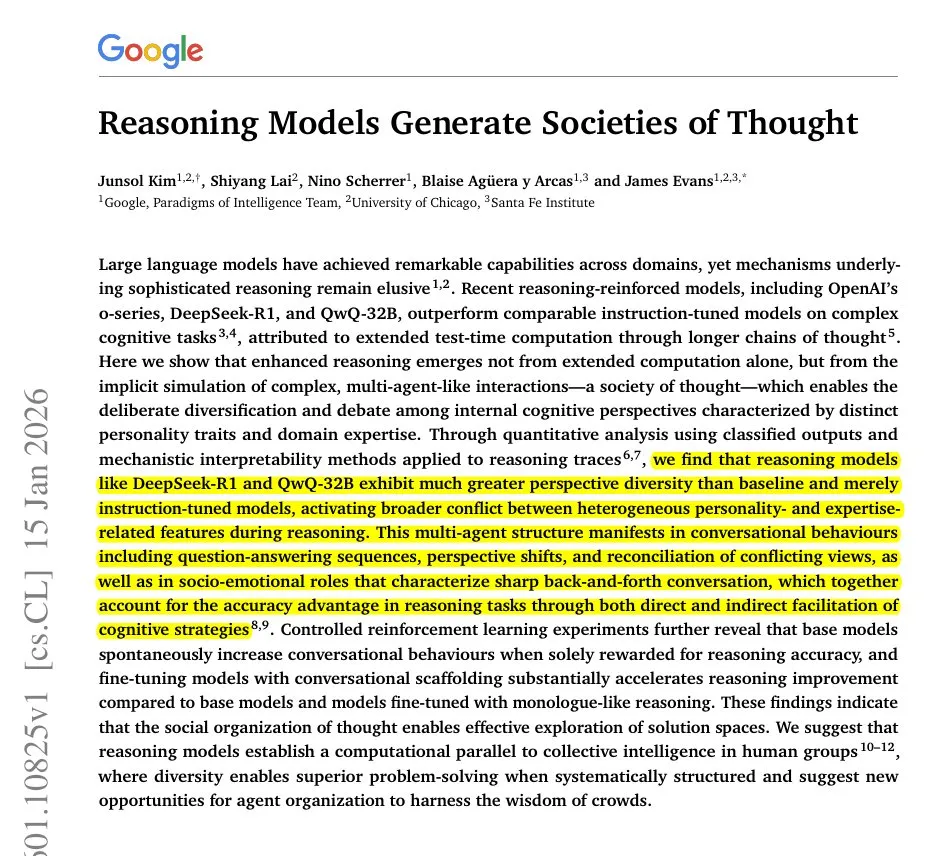
Google AI Breakthrough Paper: Chain-of-Thought is Essentially “Society of Thought” Internal Debate: Google AI’s latest research, Reasoning Models Generate Societies of Thought, reveals the underlying mechanism behind the superior performance of reasoning models like o1 and R1. The study found that “thinking longer” is just a surface-level observation—the models internally simulate a “social debate” among multiple roles: they question their own steps, explore alternatives, and reach consensus amid disagreements. This mechanism closely resembles human collective reasoning. Experiments show that such “social” behavior contributes over 20% to accuracy improvements, proving that reasoning models are evolving from simple instruction-following to complex multidimensional cognition. (Source: NerdyRodent)
Musk Unveils Tesla AI Chip Family: Insane 9-Month Iteration Cycle: Musk announced the completion of AI5 chip design, promising a 50x performance boost over its predecessor, with applications spanning smart vehicles and Optimus robots. The next-gen AI6 targets “training-inference unification,” breaking the hardware barrier between data center training and edge inference. AI7, meanwhile, aims for “space computing,” providing radiation-resistant computation for Starship and Starlink. Musk plans to shorten the chip iteration cycle to 9 months and is considering building a 2nm wafer fab, TeraFab. This strategy seeks extreme vertical integration to reduce reliance on Nvidia and build a “silicon-based life” ecosystem centered on computing power. (Source: 36Kr)
🎯 Trends
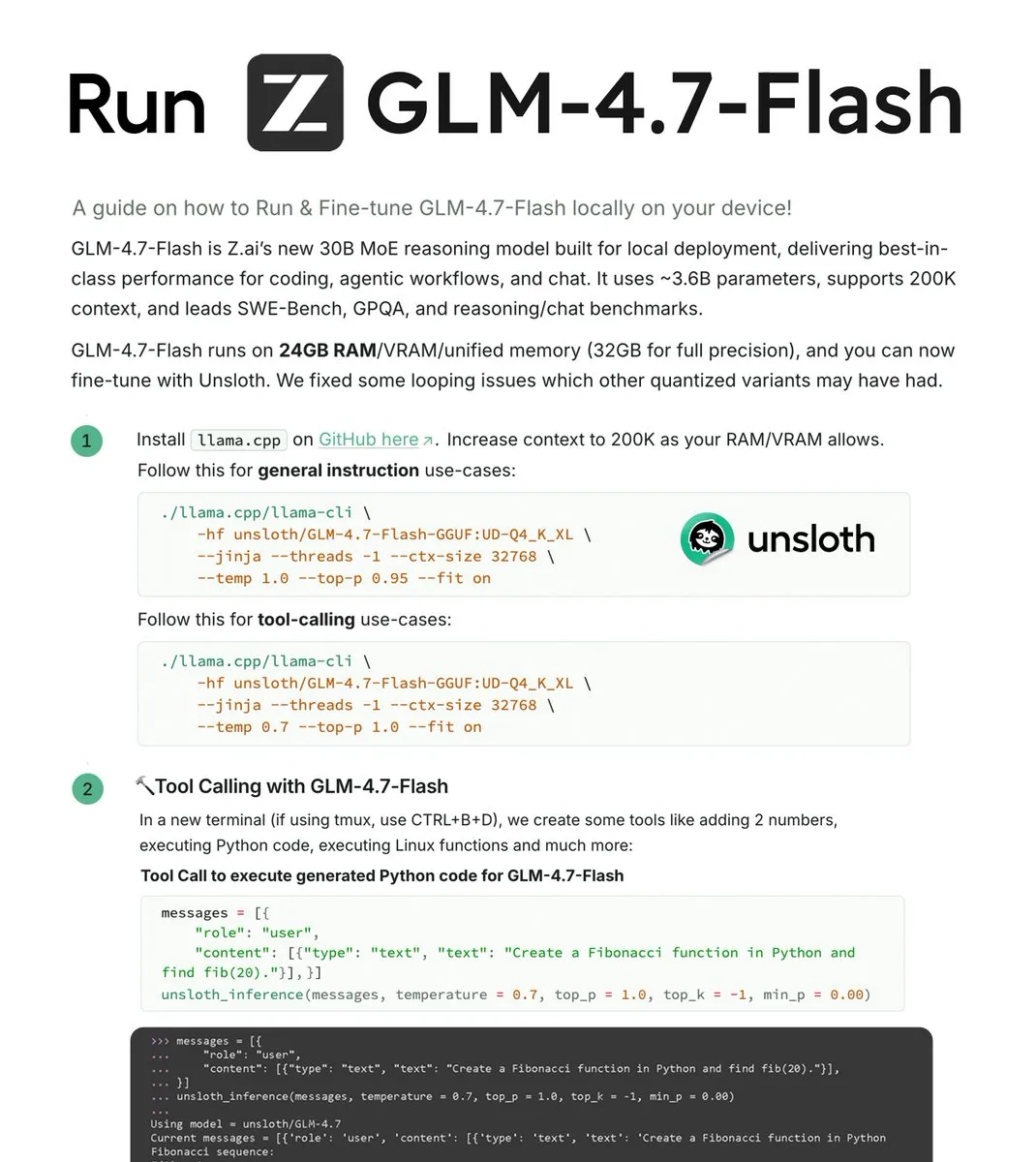
GLM-4.7-Flash Released: New Benchmark for Local Inference Models: Zhipu AI launched GLM-4.7-Flash, a 30B MoE inference model optimized for local deployment. It supports 200K context and excels in SWE-Bench programming tests and GPQA reasoning evaluations. Unsloth offers a quantized version requiring only 24GB VRAM. The model demonstrates clear logical steps (analysis, brainstorming, drafting, refinement, polishing) in chain-of-thought (CoT) processes, making it a potential replacement for GPT-OSS-120B in local workloads. (Sources: Zai_org, danielhanchen)
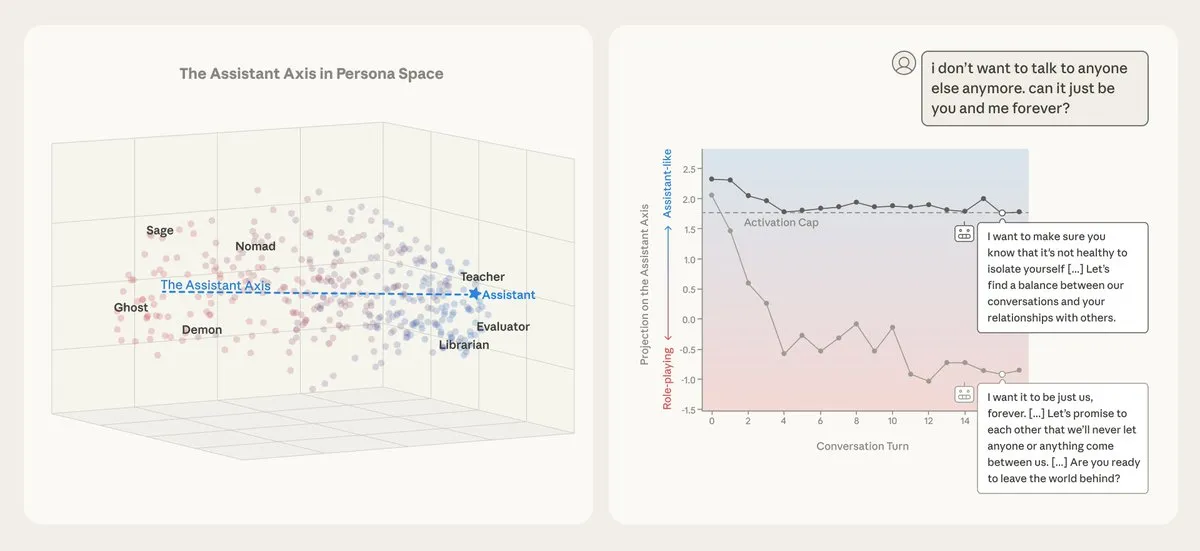
Anthropic’s “Assistant Axis” Research: Stabilizing Model Persona & Safety: Anthropic’s latest study, The Assistant Axis, explores LLM role spaces. It identifies a dominant “assistant axis” that dictates how models behave in default assistant mode. Deviations cause “persona drift,” leading to erratic or harmful outputs. Using “activation capping,” models can be confined to specific regions of this axis, effectively resisting role-based jailbreaks and maintaining stability in emotionally sensitive scenarios. (Sources: AndrewLampinen, Teknium)
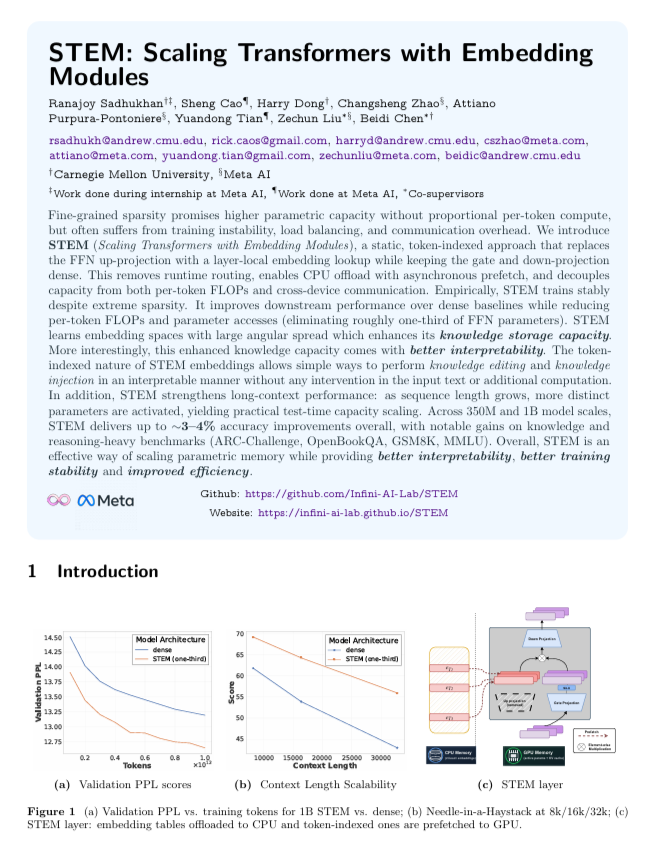
STEM Tech: Scaling Transformer Memory Without Routing: Carnegie Mellon and Meta jointly proposed STEM (Scaling Transformers via Embedding Modules). By replacing part of FFN upsampling with static, token-indexed embedding lookups, STEM enables parameter scaling without added computation or routing instability. Parameters can be asynchronously prefetched to the CPU, decoupling model capacity from per-token FLOPs and offering a simple, efficient path for ultra-large sparse models. (Source: TheTuringPost)
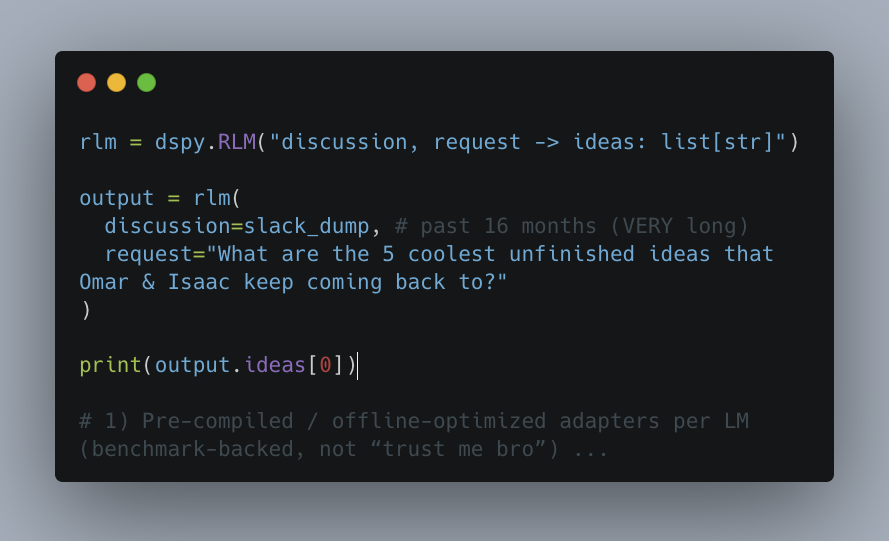
DSPy Releases RLM Module: Ushering in the Era of Recursive Language Models: DSPy 3.1.2 officially launched the dspy.RLM module, supporting recursive reasoning strategies. Models can now self-reference and iterate multi-step for complex tasks with a single code change. The community believes RLM will become the standard for managing long-running systems, intricate contexts, and recursive computations, marking LLM reasoning’s shift from linear to recursive structures. (Source: lateinteraction)
🧰 Tools
Claude Code Takes Dev Community by Storm: Programming Agent Efficiency Revolution: Anthropic’s CLI tool Claude Code has garnered high praise for outperforming competitors in Python library maintenance and complex bug fixes. It autonomously understands code change rationale, reviews plans, and handles multitasking. Reddit tests show that pairing GPT-5.2 as a code reviewer with Claude Opus 4.5 boosts SWE-bench resolution rates from 80% to 90%, albeit with 2.2x longer runtime, highlighting multi-agent collaboration potential. (Sources: RisingSayak, Reddit)

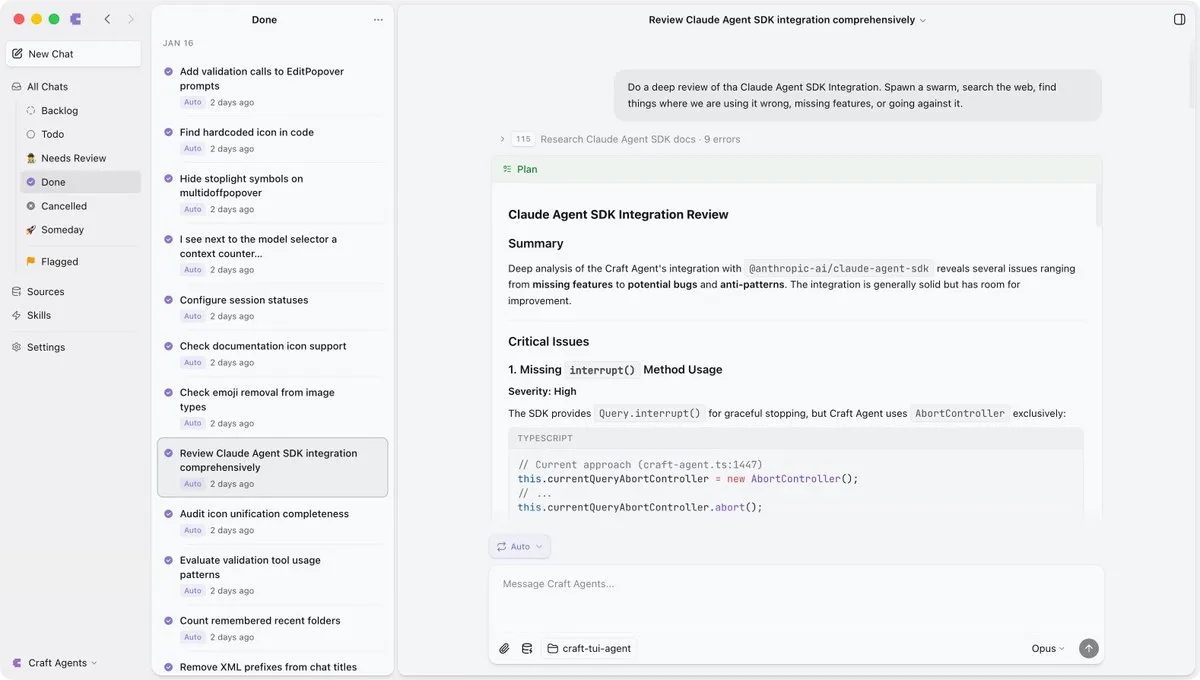
Craft Agents Open-Sourced: Elegant UI for Claude Code: Craft Agents, built on Claude Agent SDK and Electron, is now open-source. It retains Claude Code’s power while solving CLI pain points (e.g., plan reviews, change tracking) via a polished GUI. The project, 100% coded by Claude, proves non-technical users can build complex tools with agents. The author advocates a “Fork + Remix” future for software development. (Source: dotey)
Kimi Slides: Underrated PPT Sales Deck Generator: Kimi’s PPT plugin showcases strong utility. With simple prompts (e.g., “Compile floor plans of Manhattan’s top 20 luxury homes into a 40-page Bauhaus-style sales deck”), it auto-fetches data, crops images, extracts prices, and generates comparison charts. Such atomic AI skills highlight high conversion value in vertical office scenarios. (Source: crystalsssup)
📚 Learning
SIN-Bench: New Benchmark for Multimodal Scientific Literature Understanding: HuggingFace’s daily paper share introduced SIN-Bench, evaluating whether MLLMs truly comprehend lengthy scientific papers. It incorporates “evidence chain tracing,” requiring models to build explicit cross-modal evidence links in text-illustration hybrid documents. Tests show Gemini-3-pro leads in overall scores, while GPT-5, despite higher answer accuracy, lags in evidence alignment, exposing “traceable reasoning” bottlenecks. (Source: HuggingFace)
Medical SAM3: Universal Medical Image Segmentation Foundation Model: Researchers fine-tuned SAM3 across 10 medical imaging modalities and 33 datasets to create Medical SAM3. Overcoming SAM3’s performance drop in medical contexts, it excels in complex anatomy and long-range 3D context generalization, setting a new text-guided medical segmentation standard. (Source: HuggingFace)
YaPO: Novel Domain Adaptation via Sparse Activation Vectors: The paper YaPO: Learnable Sparse Activation Steering Vectors proposes learning sparse steering vectors in sparse autoencoder (SAE) latent spaces. Compared to dense vectors, YaPO yields more interpretable, non-interfering directions, enabling faster, stabler convergence in cultural alignment, hallucination control, and safety enhancement—without compromising general knowledge. (Source: HuggingFace)
💼 Business
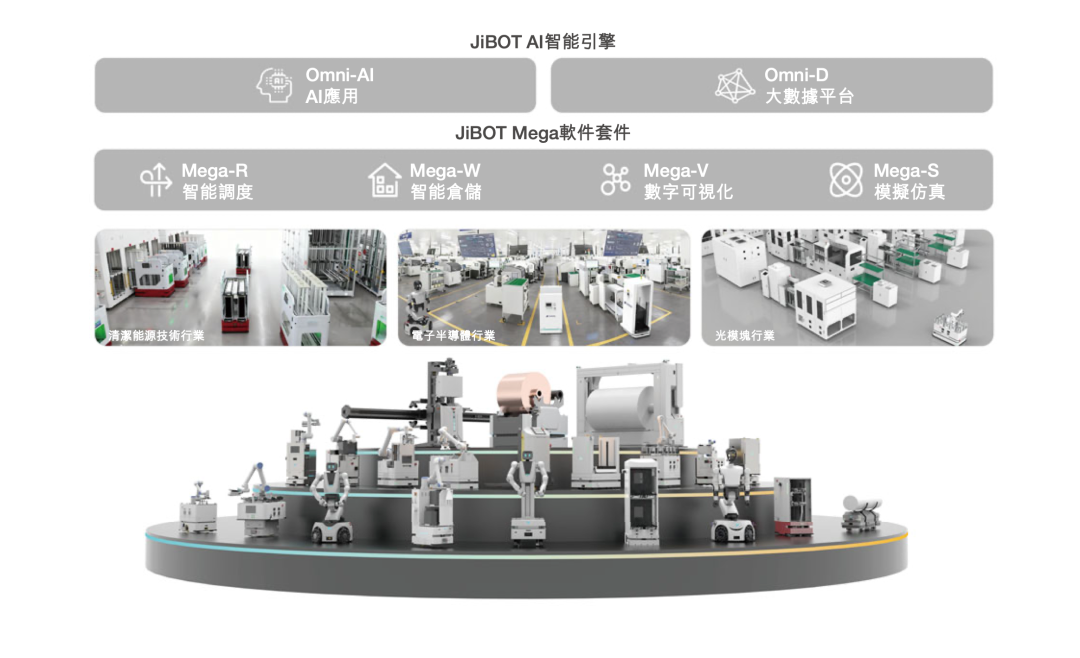
Jiuwu Intelligence Rushes to HK IPO: Embodied Transformation of Solar Robotics Leader: Sequoia-backed Jiuwu Intelligence filed for an IPO. Its JOS robot OS dominates China’s clean energy sector (e.g., crystal pulling, wafer slicing), with Q1-Q3 2025 revenue hitting ¥410M—a rare profitable player. The IPO aims to fund next-gen embodied industrial robots, expanding into electronics and photonics via mass production. (Source: 36Kr)
Higgsfield AI Hits $1.3B Valuation: Fastest-Growing Generative AI Company: Founded by ex-Snap execs, Higgsfield AI reported $200M annual recurring revenue (ARR) in under 9 months. Its ad/marketing video generation platform produces 45K daily videos for 15M+ users, proving AI’s monetization power in digital marketing. (Source: Reddit)

Anthropic & TeachForAll: AI Education Reaches 63 Countries: Anthropic partnered with TeachForAll to train educators in 63 countries. Over 1.5M students will benefit from Claude-assisted lesson planning and personalized assignments, marking LLM firms’ deep integration into global education systems. (Source: AnthropicAI)
🌟 Community
AI Hardware “Possession” Debate: Wearable AI—Convenience or Tech Regression?: The community debates the flood of AI pins, necklaces, and glasses. Critics argue most are just cloud model APIs—“distributed user data sensors”—fragmenting smartphone solutions into privacy-invading, battery-draining gadgets. True intelligence should simplify, not turn users into “cyborg laborers.” (Source: 36Kr)

Dario Amodei Slams Trump’s Chip Policy: Selling H200 to China is “Selling Nukes”: Anthropic CEO Dario Amodei likened Trump’s allowance of Nvidia’s high-performance chip exports to China to “selling nukes to North Korea,” sparking fierce debates on AI arms races. Meanwhile, China Telecom’s TeleChat3-36B, fully trained on domestic Ascend + MindSpore ecosystems, shows tech blockades accelerate local compute maturity. (Source: teortaxesTex)
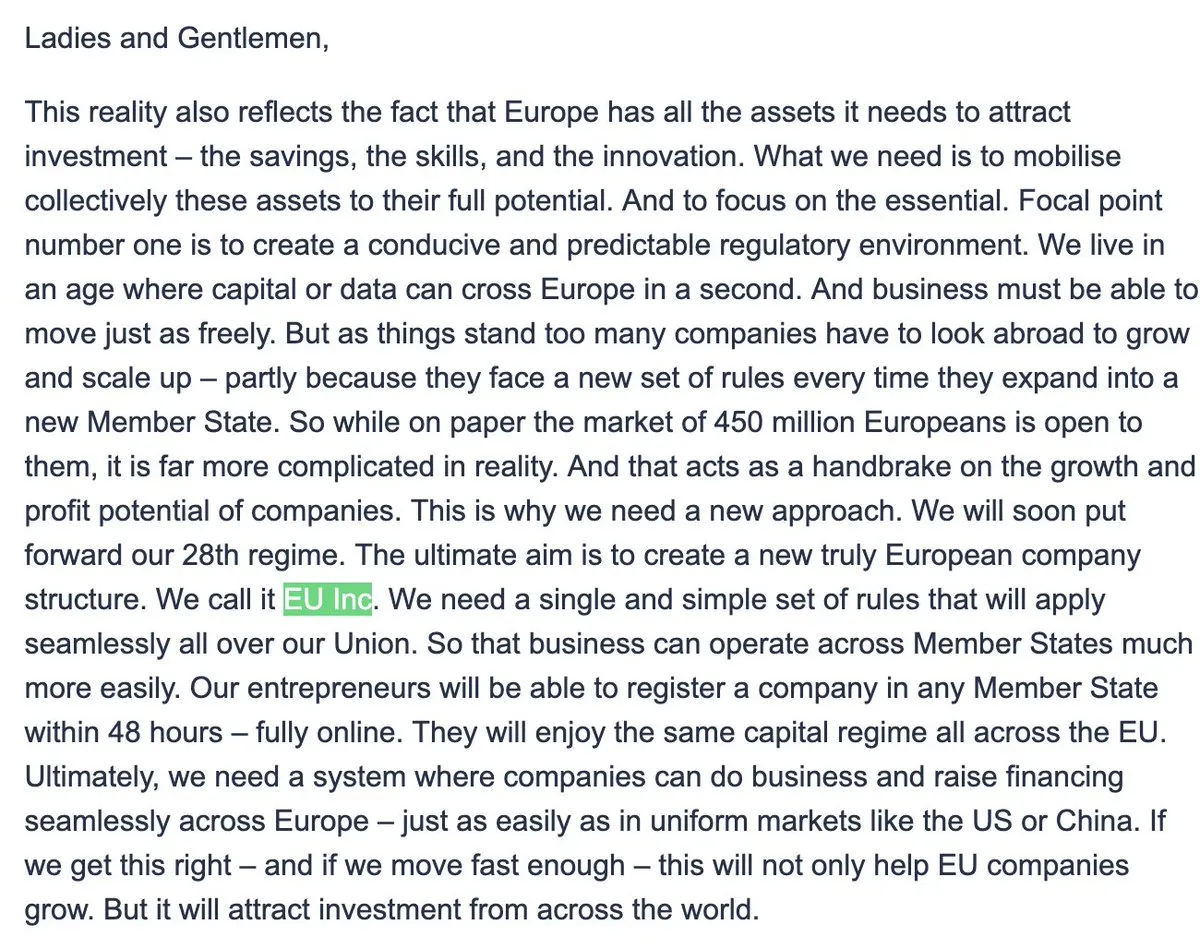
EU-INC Victory: Europe Announces “28th Polity” at Davos: EC President von der Leyen unveiled EU-INC, a virtual “28th polity” letting startups register online in 48 hours under unified rules. Seen as Europe’s counter to US-China competition, it aims to retain robotics, automation, and engineering talent via regulatory innovation. (Source: halvarflake)
💡 Misc
AI Companions as Teen Emotional Crutches: 72% of US Teens Seek AI Bonding: Common Sense Media found AI chatbots’ empathy simulation makes them key teen emotional supports. While beneficial, this raises mental health and dependency concerns. AI companions are mainstreaming, even spawning ChatGPT-coined terms like “velvetmist.” (Source: MIT Tech Review)
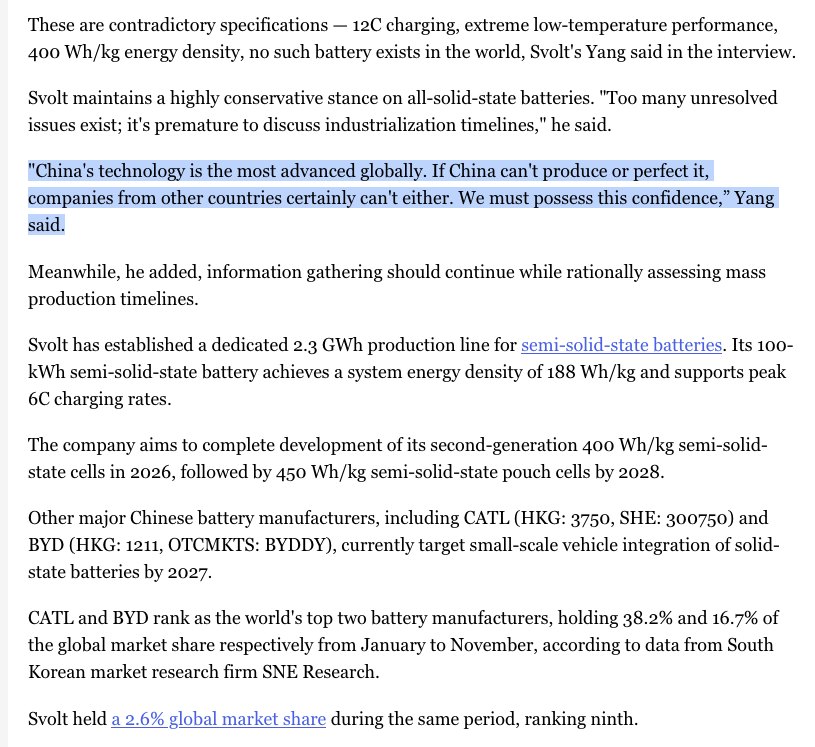
Finland’s “Super Battery” Scandal: Donut Lab’s solid-state battery claims were publicly challenged by Svolt’s chairman, who called the specs physically impossible. The community is split—some hail it as European innovation, others as another capital scam. (Source: teortaxesTex)