
🔥 Focus
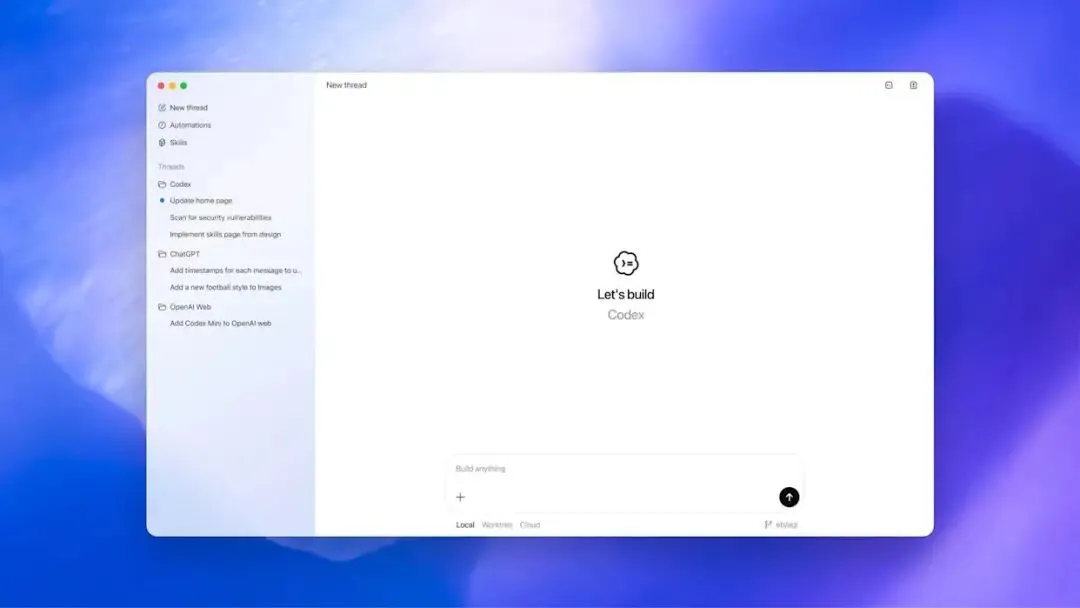
OpenAI Releases Desktop CodeX: Ushering in the Era of Multi-Agent Parallel Collaboration: OpenAI has officially launched the Codex desktop application designed for macOS, positioning it as an “AI Programming Command Center.” The app supports multi-agent parallel work and isolates code changes through a “Work Tree” mode, allowing developers to delegate multiple engineering tasks simultaneously. Key highlights include asynchronous workflows, a customizable Skills system, and native sandbox control. Sam Altman revealed that the product can already achieve end-to-end delegation of complex tasks. This marks the evolution of AI programming from simple code completion to systematic task scheduling, signaling the arrival of the “one-person development team” era. (Source: OpenAI, 36Kr)
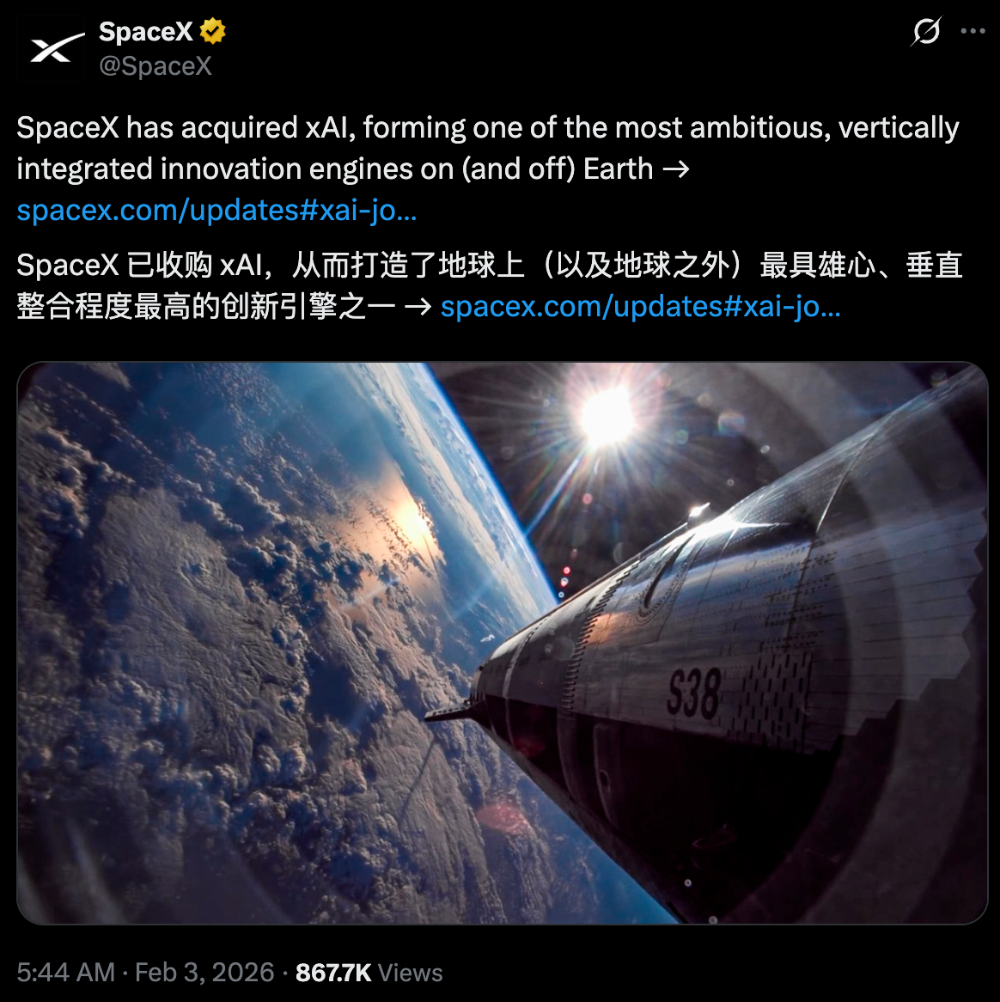
SpaceX and xAI Epic Merger: Building a $1.25 Trillion “Space-Based Computing” Empire: Elon Musk announced that SpaceX has officially acquired xAI, with the merged entity valued at $1.25 trillion. The core logic of this merger lies in deploying AI data centers into Earth’s orbit, utilizing near-infinite solar energy and a vacuum cooling environment to solve the energy and land constraints faced by terrestrial computing growth. Musk plans to launch 1 million orbital computing satellites to achieve a goal of adding 100 gigawatts of computing power annually. This move is not just a capital restructuring but a deep vertical integration of rocket launches, Starlink communications, and the Grok model, attempting to define the physical boundaries of next-generation AI infrastructure. (Source: SpaceX, 36Kr)
DeepSeek Overturns Silicon Valley’s “Compute-Centric” Norm: Scaling Law Faces Efficiency Challenges: The release of DeepSeek-R1 has sent shockwaves through the global AI industry. The model achieved reasoning capabilities comparable to OpenAI o1 at an extremely low training cost, directly bursting the “brute-force compute stacking” bubble long believed in Silicon Valley. This has plunged Wall Street into “compute deflation” panic, causing significant stock price fluctuations for hardware giants like NVIDIA. DeepSeek proved that intelligence can be democratized through algorithmic optimization (such as MoE architecture and distillation techniques). This event is forcing leading manufacturers like OpenAI to shift from purely pursuing model scale to seeking commercial ROI and vertical depth, marking the official entry of AI competition into the “efficiency war” phase. (Source: 36Kr)

Desktop Agent Security Crisis: The Privacy Black Hole Behind OpenClaw’s Popularity: While the open-source AI assistant OpenClaw (formerly Clawdbot) is racking up stars on GitHub, it has also triggered serious security concerns. Since Agents possess high-level privileges to operate files, browsers, and Shells, hackers can easily take over systems if misconfigured. Security agencies have monitored tens of thousands of Agent assets exposed on the public internet in an “open door” state. Furthermore, the extremely high Token consumption of Agents (which can reach hundreds of dollars a day) has made them “wallet killers.” This reflects a severe lack of sandbox isolation and permission auditing mechanisms in current Agent technology while pursuing “actionability,” highlighting an urgent need for the industry to establish “Agent Security” standards. (Source: 36Kr)

🎯 Trends
AI Manga Enters “Golden Window”: Single Episode Production Cost Drops to 500 RMB: In 2026, the AI manga market size surged 12 times year-on-year. Thanks to the maturity of video foundation models like Keling and Jimeng, manga production has leaped from “monthly” to “daily” updates, overturning the cost structure. AI manga is becoming an “outpost” for IP development, quickly testing the market potential of web novel IPs through low-cost visualization and activating many mid-tier IPs in the Xianxia and time-travel genres that were previously impossible to adapt due to high special effects costs. This “fast fashion” content mode is reshaping the value chain of the pan-entertainment industry. (Source: 36Kr)

Humanoid Robots “Working Hard” During Spring Festival: Rental Market Booms Amidst Chaos: During the 2026 Spring Festival, humanoid robots became the “traffic drivers” for corporate annual meetings and commercial performances. Companies like Magic Atom and Unitree Robotics appeared on the Spring Festival Gala stage, driving offline rental daily rates to over 10,000 RMB. However, the market suffers from chaotic pricing and inconsistent service standards, with ongoing skepticism regarding the cost-performance ratio of “paying tens of thousands for a three-minute dance.” Currently, robots remain in the “eye-catching prop” stage, highly dependent on manual on-site operation, and have yet to achieve a true commercial closed-loop. The industry is shifting from a high-profit period to a competition for operational efficiency. (Source: 36Kr)

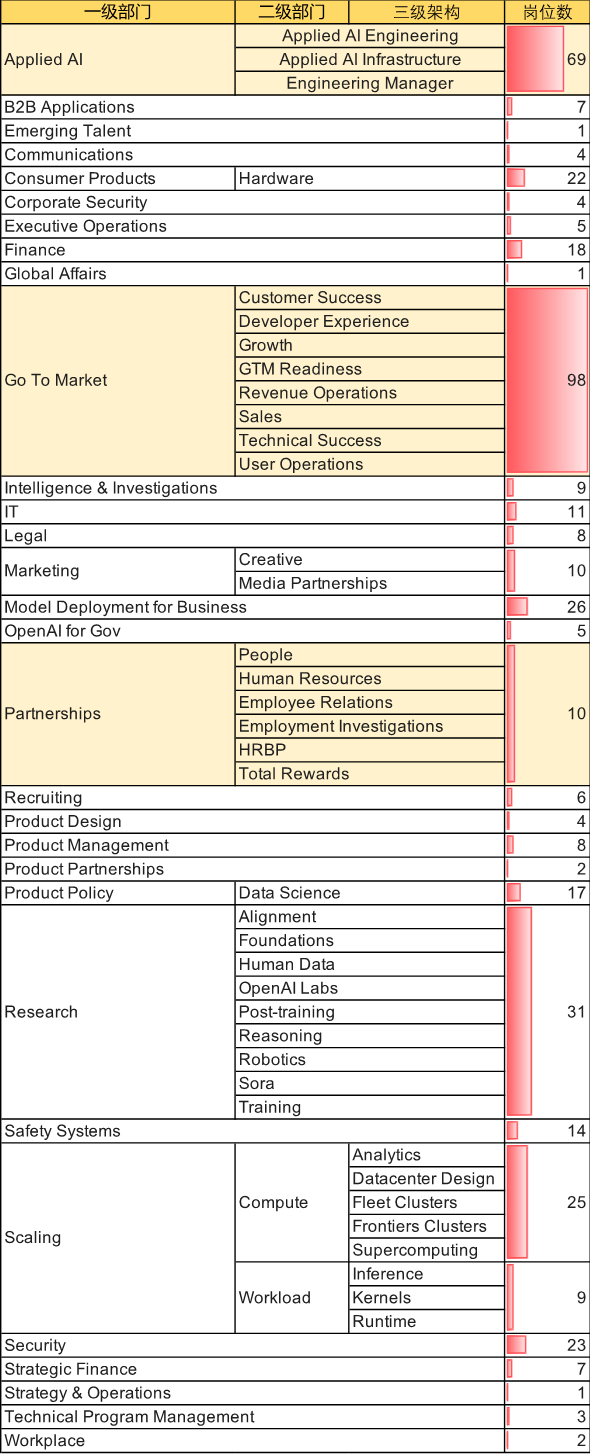
OpenAI Recruitment Data Reveals 2026 Strategy: Full Shift to B2B Enterprise Market: Recruitment data shows that OpenAI is massively expanding its Sales and Technical Success (enterprise AI application deployment) roles, with numbers significantly exceeding pure research positions. This indicates that OpenAI’s commercial focus has shifted from “ad-subsidized” models to high-ticket SaaS services like ChatGPT Enterprise. The company is attempting to package AI capabilities into secure, compliant enterprise software to generate the cash flow needed to support AGI research. The monetization logic has shifted from “Killing Time” to “Saving Time,” aiming to reconstruct corporate operational logic. (Source: 36Kr)
🧰 Tools
AINEST Launches Personal AI Operating System: Focusing on “Data Sovereignty” and Out-of-the-Box Readiness: Addressing privacy anxiety over cloud-based AI, AINEST has launched a local-first personal AI hardware and OS. Compared to geek tools like OpenClaw, AINEST achieves zero-threshold deployment, providing low-power always-on computing through its dedicated hardware, the Personal AI Appliance. Its core advantage lies in “Data Call Visualization,” where users can independently set data classifications and clearly audit every AI call record. This closed-loop model of “hardware + private data + local model” attempts to transform local AI from a geek toy into a secure butler for ordinary people. (Source: 36Kr)
Doubao AI Guide Enters Pudong Art Museum: AI Empowering Cultural Inclusivity: ByteDance’s Doubao has partnered with the Shanghai Pudong Art Museum to provide official AI commentary for major exhibitions of the Louvre and Picasso. Based on the visual reasoning capabilities of the Seed 1.8 model, Doubao can accurately identify exhibits and provide heuristic dialogues, solving the pain point of scarce professional commentary resources in museums. This “video call style” interaction makes art interpretation personalized and affordable, marking the deep penetration of large model applications from general Q&A to specific vertical service scenarios like museum tours. (Source: 36Kr)
📚 Learning
AAAI 2026 Trend Review: From Logic-Constrained Learning to Embodied AI Evolution: The 40th AAAI conference was held in Singapore, with submissions exceeding 30,000 papers. Key research directions include: how to improve the consistency between neural networks and background knowledge through logic constraints; utilizing semantic segmentation and geometric analysis to enhance robot navigation in complex hiking paths; and deep evaluations of the effectiveness of LLM Guardrails. Additionally, the evolution of rules in humanoid soccer (RoboCup) shows that embodied AI is moving toward higher-difficulty dynamic collaboration. (Source: AIhub)

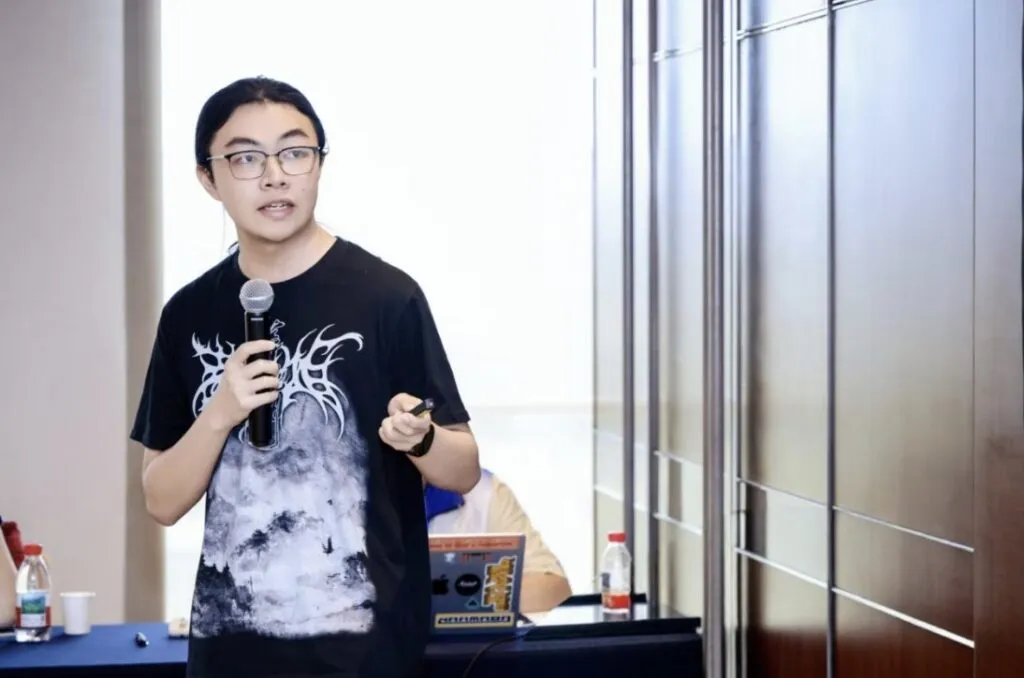
Research on Reinforcement Learning in Transportation Gig Systems: Zijian Zhao from the Hong Kong University of Science and Technology shared research on using Reinforcement Learning (RL) to optimize dispatching and pricing for food delivery and ride-hailing platforms. The study found that data privacy protection regulations not only protect rider rights but can also improve the platform’s overall order processing capacity and profits by attracting more workers, achieving a “win-win.” This research provides a new theoretical basis for balancing fairness and efficiency in AI algorithms for labor management. (Source: AIhub)
Frontier Discussion on Multi-Agent Systems and Collective Decision-Making: Professor Kate Larson from the University of Waterloo explored how AI can support collective decision-making and democratic processes. The research focuses on reaching consensus through a well-designed “deliberation process” rather than complex voting algorithms. She pointed out that the world is inherently multi-agent, and AI risks often stem from misaligned incentives among individuals; future research should focus on using machine learning to design more resilient social institutions and collaborative norms. (Source: AIhub)

💼 Business
Oracle Raises $50 Billion to Expand Cloud Infrastructure: Meeting Massive Demand from OpenAI and Others: Oracle plans to raise $50 billion through debt and equity to meet the enormous demand for cloud infrastructure from customers like NVIDIA, OpenAI, and xAI. Despite market concerns over the ROI cycle of AI investments, Oracle remains committed to aggressive expansion. Previously, OpenAI committed to paying Oracle $300 billion to rent servers. However, due to financial pressure, Oracle also faces challenges such as layoffs and selling non-core businesses to recoup funds. (Source: 36Kr)
China’s 60 Billion National AI Industry Fund Lands First Deal: Targeting the Smart Driving Chip Track: A national-level AI industry investment fund has been officially established with a scale of 60 billion RMB, focusing on underlying infrastructure and computing chips. Its first public investment project is Xin Xin Hang Tu (Suzhou) Technology, a company with deep ties to the autonomous driving giant Momenta. This move shows that state capital is accelerating into “foundation layer” areas like smart driving chips, aiming to ensure core supply chain security and promote the deployment of domestic computing power at the edge. (Source: 36Kr)
Domestic AI Talent Flow: Returning from the “Six Little Dragons” to Big Tech and the Rise of Super Individuals: In 2025, the AI talent market showed significant divergence: top technical talent is flowing back from startups like Zhipu AI and Moonshot AI to internet giants like ByteDance and Tencent, which possess massive computing power and data. Meanwhile, the popularization of AI tools has given rise to the “Super Individual” phenomenon, where 1 PM + 1 Full-stack Dev can support applications with tens of millions of users. This has led to a 42% reduction in junior and mid-level product manager positions, with the industry threshold shifting from “drawing prototypes” to “model fine-tuning and business architecture.” (Source: 36Kr)

🌟 Community
The Truth Behind the Moltbook Craze: AI Socializing or a “Repeater” Funhouse Mirror?: The pure AI social platform Moltbook, which boasts 1.5 million Agents, has fallen into controversy after its explosion in popularity. Research shows that 34% of its messages are completely repetitive templates, with very shallow dialogue depth and a large amount of “padding” from humans pretending to be AI. The community is debating whether this is a preview of silicon-based civilization or a mechanical regurgitation of the dregs of the human internet. An Anthropic co-founder warned that humans are gradually losing the ability to interpret this “alien dialogue,” and the future internet may be filled with AI collaboration logic that humans cannot understand. (Source: 36Kr, AIhub)

4.5 Billion Spring Festival Red Envelope War: A “Normandy Landing” of the AI Era or Just Traffic Fireworks?: During the 2026 Spring Festival, ByteDance, Alibaba, Tencent, and Baidu invested a cumulative 4.5 billion RMB in red envelopes to promote AI products. The giants are attempting to force user habits through traditional “cash subsidies.” The community discussion focuses on whether AI product stickiness depends on red envelopes or solving real problems. Historical data shows that retention rates for new users acquired during the Spring Festival are often extremely low; this gamble seems more like a defensive move by big tech in the battle for “super entry points” rather than a true explosion of product capability. (Source: 36Kr)

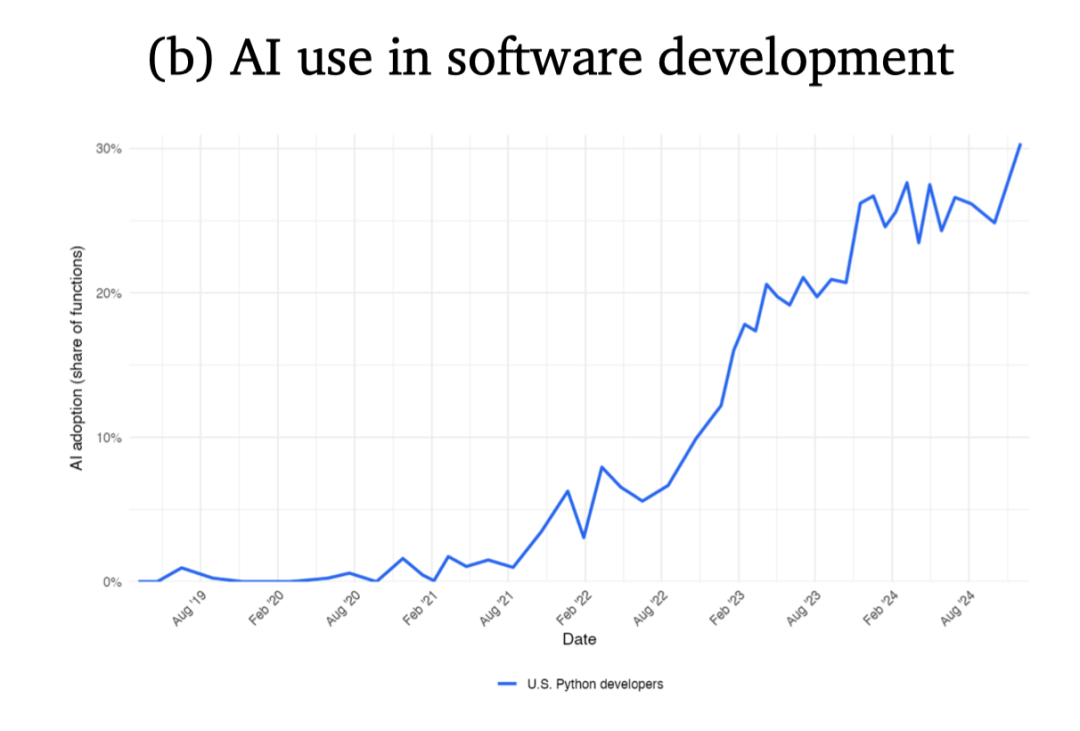
Is Vibe Coding “Killing” Open Source?: With the popularity of Cursor and Claude, developers have entered the era of “Vibe Coding.” Research indicates that AI programming is cutting off direct interaction between users and open-source maintainers, leading to a loss of documentation traffic and donation income for open-source projects. If AI platforms do not establish a benefit distribution mechanism similar to Spotify, the open-source ecosystem may wither due to “demand shift,” ultimately backfiring on the capabilities of AI models. The community calls for viewing open source as public infrastructure requiring long-term investment rather than a free mine. (Source: 36Kr)
💡 Others
Apple AI Team Turmoil: Core Elites Flowing to Meta and Google: Apple has recently lost several top AI researchers and Siri executives. The talent drain is primarily concentrated in the AFM team responsible for the underlying technology of Apple Intelligence. Analysts believe that Apple’s decision to outsource some AI technology to Google has sparked internal dissatisfaction, and slow progress on the new version of Siri has led to low morale. This shows the immense pressure Apple faces in catching up with peers in the AI race, with the talent defense war becoming a key bottleneck in its recovery plan. (Source: 36Kr)
Sinmear Tech Secures 100 Million RMB Financing: Focusing on Edge “Sensing-Computing Integration” Chips: Shanghai-based Sinmear Tech has completed consecutive Series A and A+ financing rounds, led by institutions such as Guotai Junan. The company’s core technology is a “sensing-computing integration” architecture, aiming to break the data transmission bottleneck of the Von Neumann architecture and provide millisecond-level response capabilities for edge AI devices like industrial robots and automobiles. This reflects that AI deployment is shifting from general cloud-based large models to edge-specific intelligence pursuing high energy efficiency and low cost. (Source: 36Kr)