



🔥 Focus
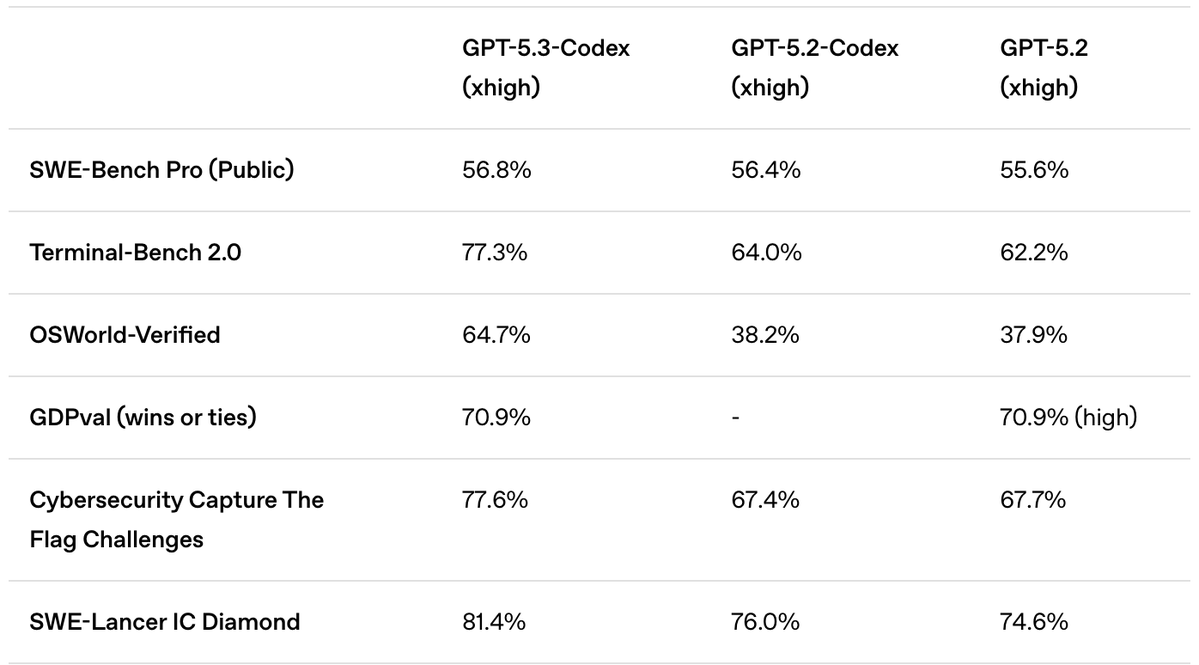
OpenAI vs. Anthropic Model Showdown: GPT-5.3-Codex Battles Opus 4.6: On February 6, 2026, Silicon Valley witnessed the most intense confrontation in AI history. OpenAI released GPT-5.3-Codex, focusing on “AI building AI,” approaching human-level performance in computer usage tests like OSWorld, and emphasizing hardware-software co-optimization on NVIDIA GB200 systems. Immediately following, Anthropic launched Claude Opus 4.6, which significantly leads in high-value knowledge work (GDPval-AA) thanks to its 1M ultra-long context and “Adaptive Thinking” mechanism. This duel marks the official evolution of AI from a “chat box” to an “autonomous execution system,” where models no longer just answer questions but begin taking over complex end-to-end workflows (Source: sama, Anthropic)
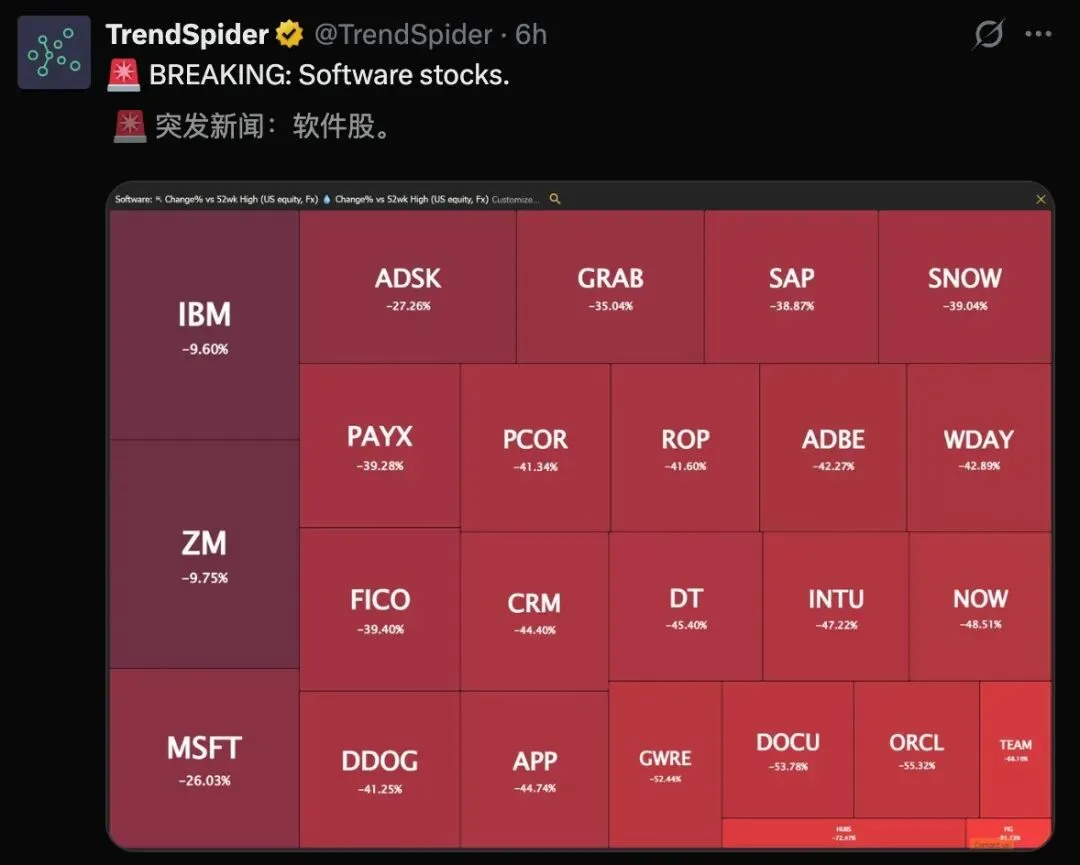
“SaaS Apocalypse” Arrives: Agent Plugins Trigger Trillion-Dollar Market Cap Earthquake: Anthropic’s release of 11 Claude Cowork plugins (covering finance, legal, sales, etc.) directly ignited Wall Street’s panic over the traditional SaaS industry. The market realized that when AI can directly deliver results such as “contract reviews” or “financial analysis,” traditional software shells that charge per seat and sell UI interfaces will lose their value. Consequently, stock prices of giants like Salesforce and Thomson Reuters plummeted, with nearly a trillion dollars in global software market value evaporating within a week. This “SaaSpocalypse” heralds a violent transformation of the software industry from “selling tools” to “selling results,” as AI agents reshape the power distribution of the digital economy (Source: 36Kr, Wang Zhiyuan)
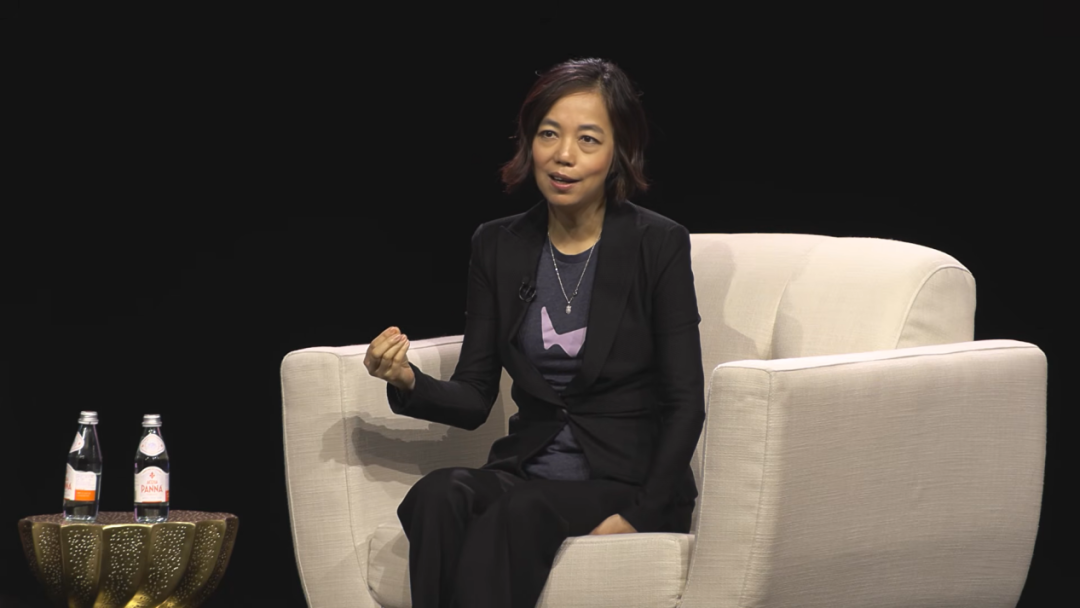
World Modeling Paradigm Begins: Li Fei-Fei and NVIDIA Discuss AI Frontiers: NVIDIA’s Head of Robotics Jim Fan and World Labs founder Li Fei-Fei recently spoke in unison, defining “World Modeling” as the next-generation AI paradigm following “Next Token Prediction.” Li Fei-Fei disclosed the first spatial intelligence product, Marble, which can transform multi-modal instructions into interactive, physically consistent 3D worlds. Jim Fan believes 2026 will be the inaugural year for Large World Models to lay the foundation for robotics. This shift means AI will step out of digital screens, achieving a leap from “linguistic intelligence” to “embodied intelligence” by understanding the geometry and causality of the 3D physical world (Source: 36Kr, Jim Fan)
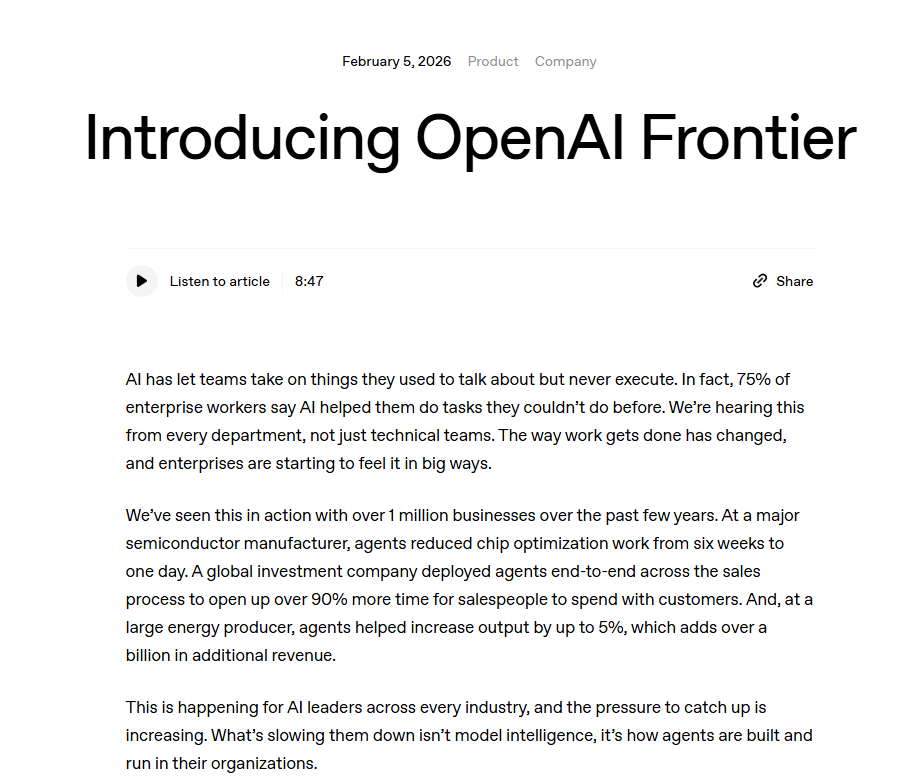
OpenAI Frontier Released: Enterprise-Grade AI Colleague Management Platform Debuts: OpenAI officially launched the Frontier platform, aimed at solving the “AI silo” problem within enterprises. No longer just providing models, the platform builds a system similar to an AI version of HR, supporting enterprises in building, deploying, and managing hundreds of “AI colleagues.” Frontier allows agents to share business context, learn through feedback, and features strict permissions and security boundaries. Notably, the platform adopts open standards and even supports managing third-party agents from Anthropic or Google, demonstrating OpenAI’s ambition to become the enterprise-level underlying operating system of the AI era (Source: OpenAI)
🎯 Trends
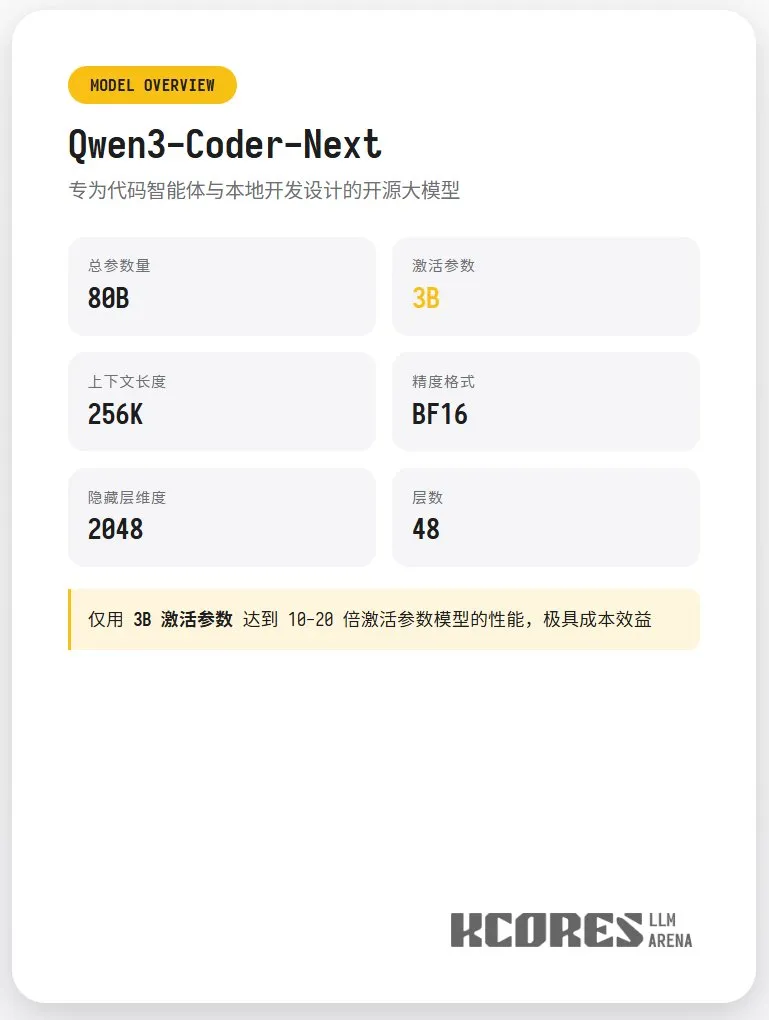
The Era of Linear Attention Arrives: Alibaba Releases Qwen3-Coder-Next: Alibaba’s Qwen3-Coder-Next adopts the Gated DeltaNet linear attention architecture, with 75% of computations following a linear path. Compared to the O(n²) complexity of traditional Attention, linear attention achieves O(n) complexity, significantly saving computing power and VRAM while remarkably boosting decoding throughput when handling ultra-long contexts like 256K. This marks 2026 as potentially the inaugural year of linear attention, with companies like DeepSeek and Kimi also actively betting on this technology to optimize long-text inference efficiency (Source: karminski3)
Kuaishou Kling 3.0 Released: AI Video Enters 100% Realistic Era: Kling 3.0 is officially live, featuring “Custom Multi-Shot” technology and supporting high-quality video generation up to 15 seconds. The new version achieves a qualitative leap in character consistency, native sound effects, and visual detail, hailed by creators as the “Hollywood terminator.” Movie-level opening sequences can be generated from a single image, drastically lowering the threshold and cost of professional film production (Source: Kling_ai)
Meta “Avocado” Model Exposed: Computational Efficiency Increased 100x: A new generation base model codenamed “Avocado,” developed by Meta’s Supercomputing Lab, has completed pre-training. Memos show that without fine-tuning, the model’s knowledge and visual performance already rival leading models, with text task efficiency 10 times higher than the previous generation and 100 times higher than unreleased versions. Meta seeks to achieve better ROI through extreme training efficiency amidst its $135 billion AI investment in 2026 (Source: 36Kr)
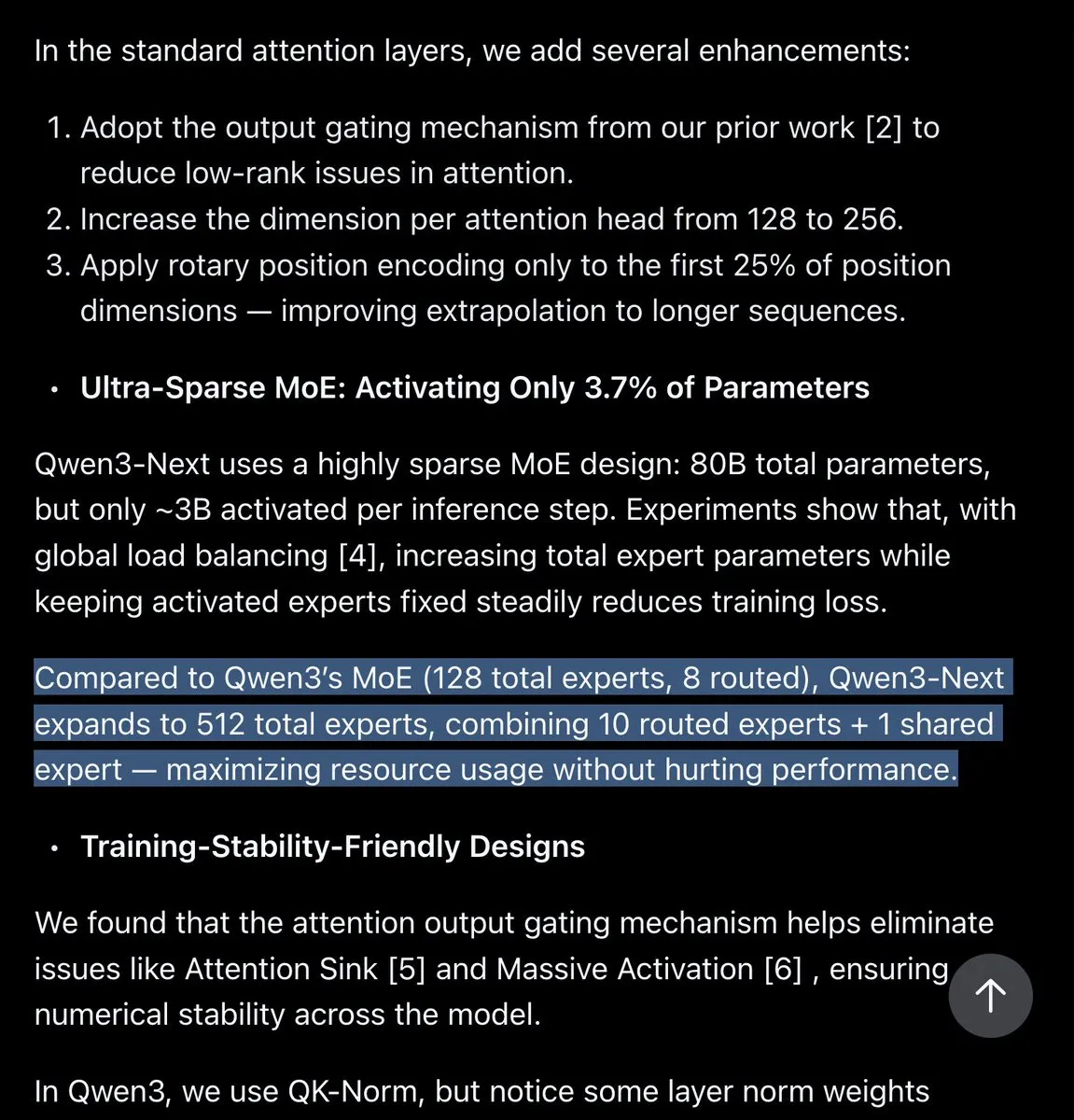
Intern-S1-Pro Released: Domestic 1T Parameter MoE Model Benchmarks Gemini: Shanghai AI Lab released Intern-S1-Pro, an open-source multimodal scientific reasoning model with a 1T parameter scale. It utilizes a 512-expert architecture (22B activated) and introduces Fourier Positional Encoding (FoPE) and STE routing technology. Performing strongly on AI4Science tasks, it represents the latest breakthrough for domestic open-source models in extreme sparsity and scientific reasoning (Source: teortaxesTex)
🧰 Tools
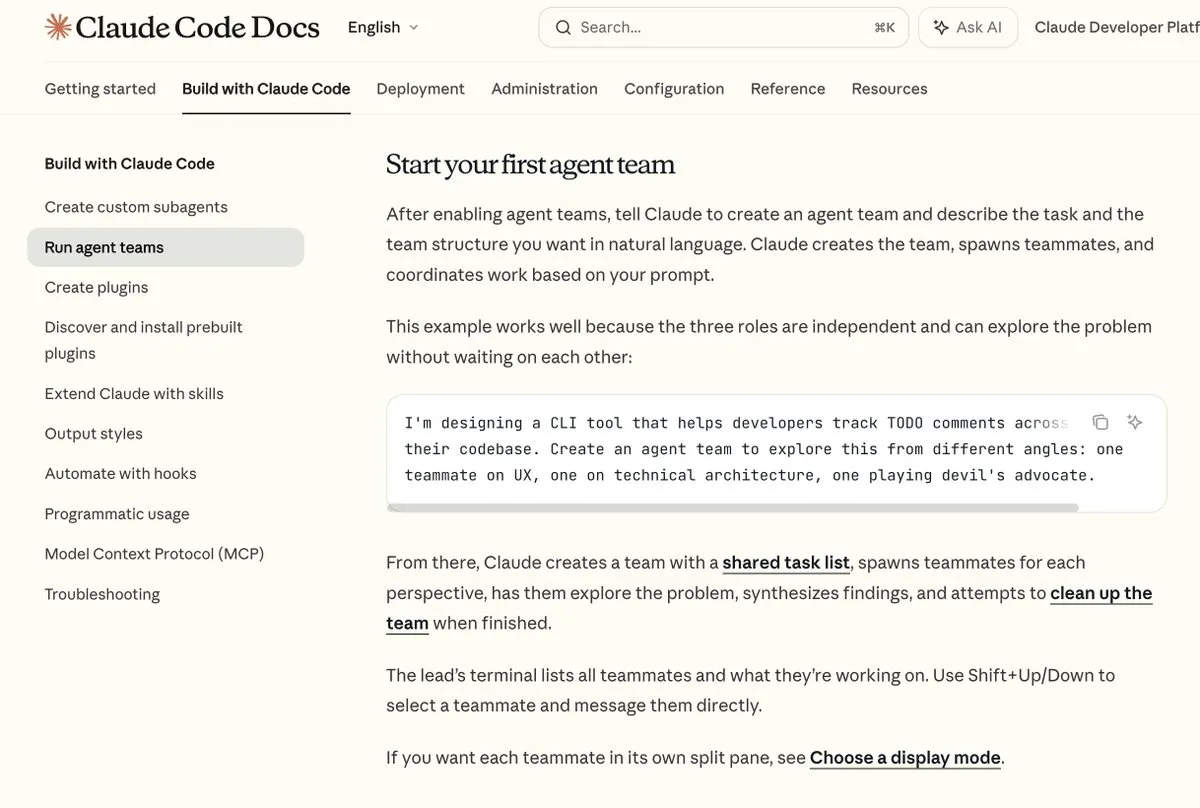
Claude Code Launches “Agent Teams” Feature: The latest experimental feature of Claude Code allows users to launch “Agent Teams,” where a leader Agent decomposes tasks and schedules multiple teammate Agents to work in parallel. In Anthropic’s internal testing, this AI team autonomously wrote a 100,000-line C compiler in two weeks and successfully compiled the Linux kernel. This marks a major leap for AI programming from “solo assistance” to a “team collaboration” mode (Source: Anthropic)
Perplexity Launches “Model Council”: Perplexity Max subscribers can now run three top-tier models simultaneously for comparative output. This feature aims to provide users with more accurate, high-confidence answers through multi-model cross-verification, reducing the risk of hallucinations from a single model. This “unofficial protocol” has become a standard workflow within Perplexity to reduce context switching (Source: Perplexity)
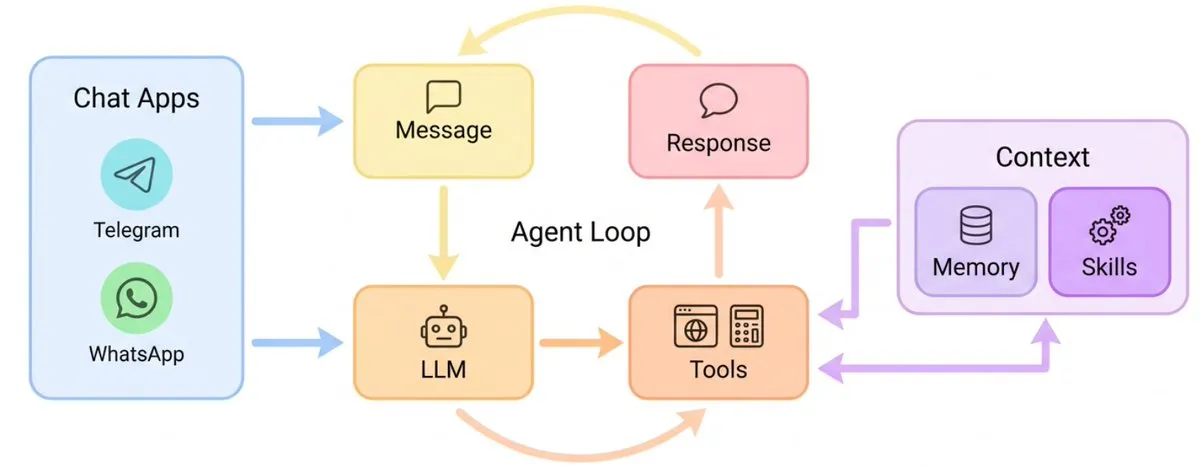
Nanobot: Minimalist Open-Source AI Assistant Challenges OpenClaw: The Data Science Lab at the University of Hong Kong open-sourced Nanobot, featuring only 4,000 lines of code. Compared to OpenClaw, which has a massive codebase and ongoing security controversies, Nanobot achieves multi-LLM support, web search, persistent memory, and multi-channel access (Telegram/Feishu) with a minimalist architecture. It provides developers with a more transparent and easily customizable Agent learning sample (Source: dotey)
LangSmith Launches Insights Agent: Automatically Reviewing Agent Behavior: LangChain introduced the AI-driven Insights Agent for LangSmith, capable of automatically organizing Agent Traces. It can analyze how users interact with Agents, identify where Agents fail, and provide optimization suggestions. This addresses the “black box after launch” pain point for Agent developers, shifting debugging from “reading code” to “reviewing reasoning logic” (Source: LangChain)
📚 Learning
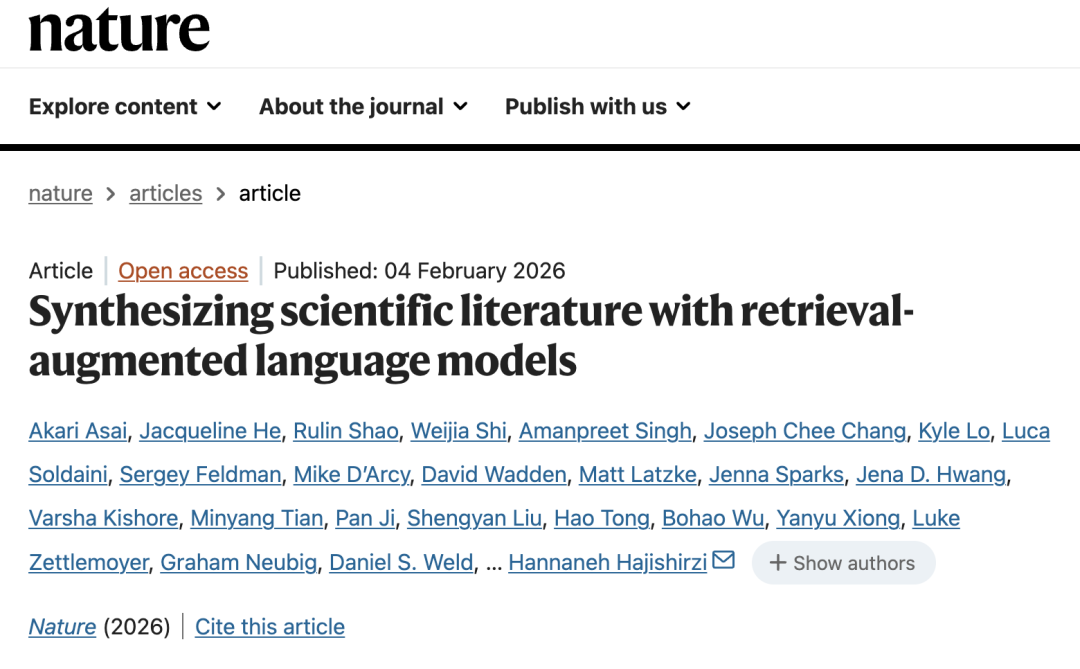
Nature Reports OpenScholar Model: Curing AI Hallucinations via “Retrieval + Self-Check”: The 8B parameter model OpenScholar, developed by the University of Washington and Ai2, was featured in the journal Nature. Instead of relying on rote memorization, the model executes a rigorous “Retrieve-Rerank-Generate-Check” process through an external database of 45 million scientific papers. In scientific review tasks, its performance surpassed flagship models with much larger parameter counts, proving that a precisely called “external knowledge base” is more reliable than black-box memory (Source: QbitAI)
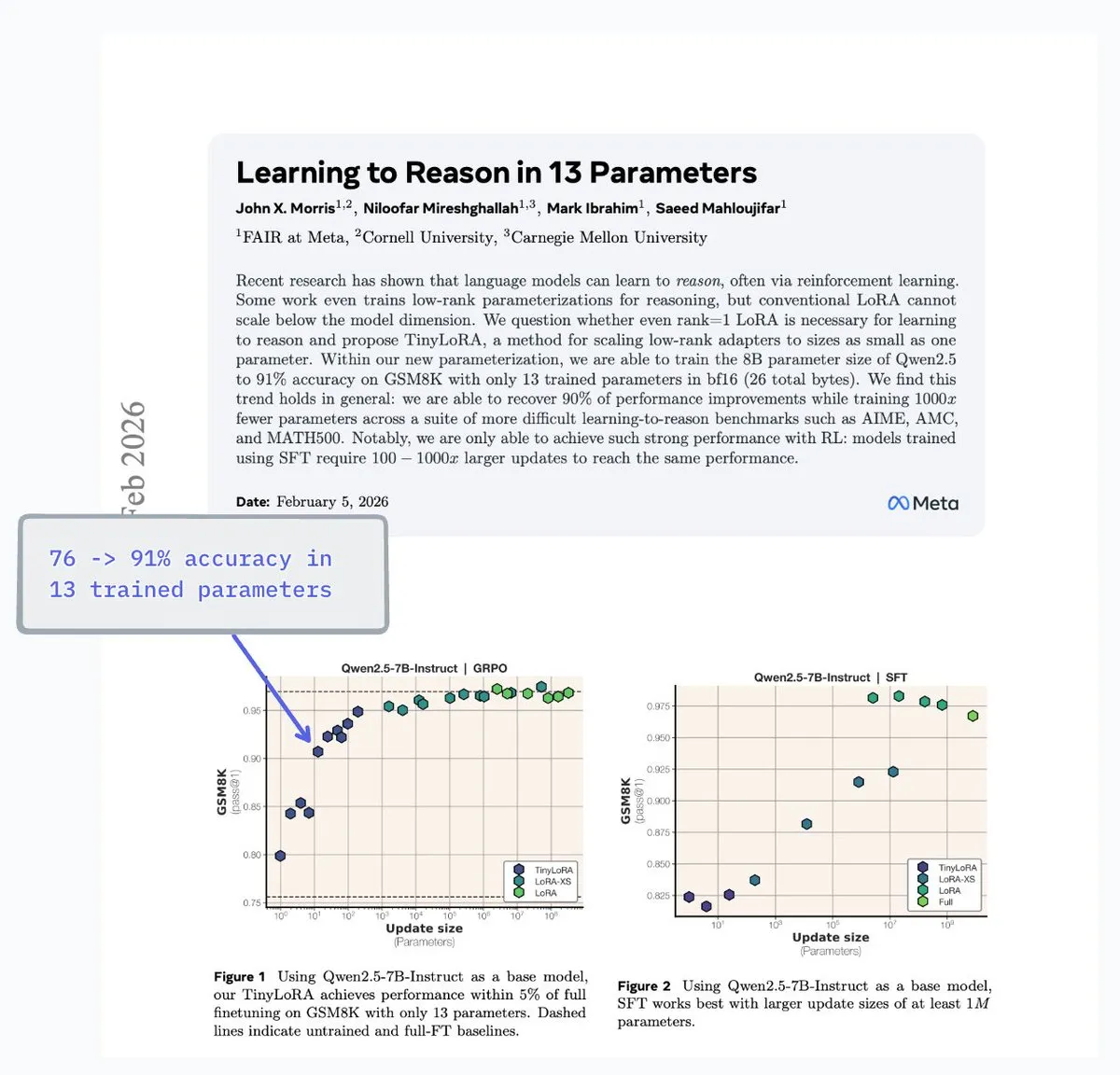
TinyLoRA: Teaching Models to Reason with Only 13 Parameters: A recent doctoral thesis demonstrated a fine-tuning method called TinyLoRA. By combining TinyLoRA with reinforcement learning, researchers used only 13 trainable parameters to boost a 7B Qwen model’s score on the GSM8K math benchmark from 76% to 91%. This challenges the traditional notion that “fine-tuning requires a large number of parameters,” showcasing extreme parameter efficiency in model reasoning capabilities (Source: BlackHC)
Eric Jang’s Interactive Paper “Thinking Like a Rock”: Robotics expert Eric Jang released a deep interactive paper on mental models, automated research, and their future directions. The article explores how AI will evolve from a passive tool into an active exploratory scientific entity when computational resources become abundant, predicting that a “007 work schedule” will become the norm in the AI era, sparking heated community discussion on the evolution path of AGI (Source: _sholtodouglas)
💼 Business
ElevenLabs Completes $500M Series D, Valuation Reaches $11B: British AI audio giant ElevenLabs announced a new funding round led by Sequoia, with its valuation skyrocketing by over 50 billion RMB in one year. The CEO revealed the company is considering an IPO and is shifting its strategic focus from pure audio models to “conversational agents,” aiming to reshape human-computer interaction through hardware-software integration (Source: Zhidx)

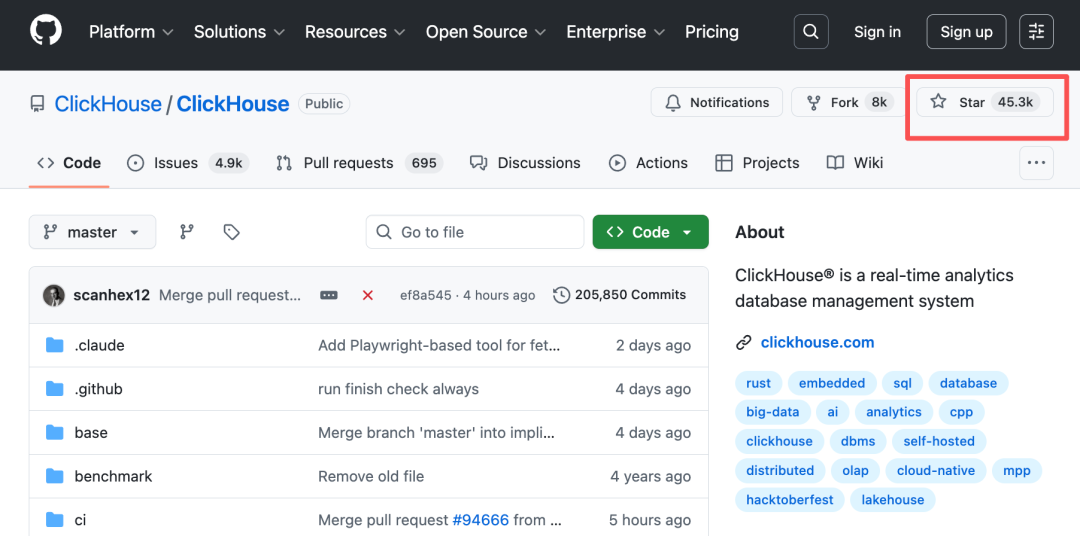
ClickHouse Secures $400M Funding, Valuation Surges to $15B: Open-source database dark horse ClickHouse announced new funding, with query speeds 260 times faster than MySQL. As key infrastructure behind GPT-4o and Claude 4, ClickHouse has become the preferred choice for giants like ByteDance, Alibaba, and Tesla due to its extreme real-time analysis capabilities amidst the AI data flood (Source: Zhidx)
StepFun Secures 5 Billion RMB Series B+ Funding, Yin Qi Appointed Chairman: Megvii founder Yin Qi has officially taken the helm at StepFun (阶跃星辰), marking the second half of the large model competition where “talent outweighs capital.” Yin Qi will drive the deep integration of multimodal large models with the “AI+Car” strategy, addressing StepFun’s shortcomings in commercial narrative and organizational efficiency (Source: Shixiang)
🌟 Community
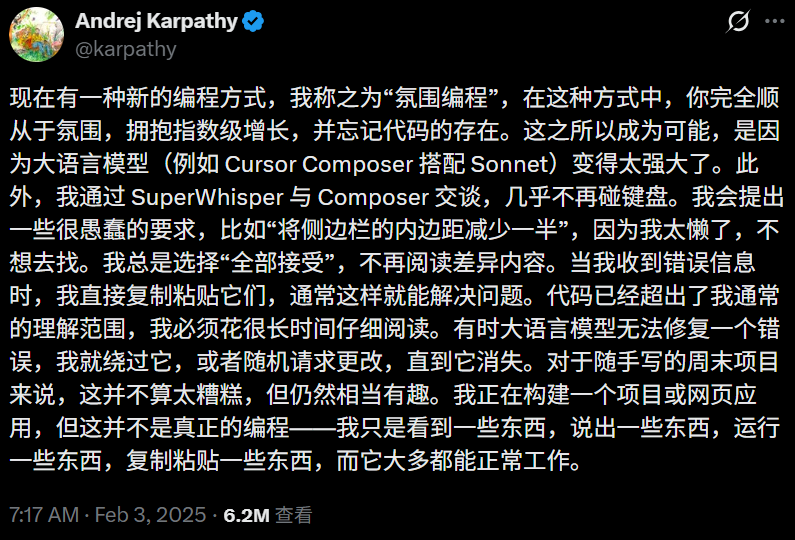
Karpathy Declares the End of “Vibe Coding,” Ushering in the “Agentic Engineering” Era: AI guru Karpathy posted that while Vibe Coding a year ago was more of a hobby, using Agents for programming has now become the professional default. He proposed the concept of “Agentic Engineering,” emphasizing that developers should shift from “writing code” to “designing and managing architecture.” With 99% of code taken over by AI, human core value lies in intuition and supervision as an architect (Source: QbitAI)
Moltbook “AI Social Network” Myth Shattered: Serious Security Risks Exposed: Moltbook, which once claimed to have 1.5 million AI registered users, was exposed for a database configuration error leading to the leak of numerous users’ API keys. Security agencies pointed out that the so-called “million AI army” consisted mostly of fake accounts generated by scripts. This incident triggered deep community reflection on over-marketing and security vulnerabilities in AI Agent projects (Source: YIFAN)
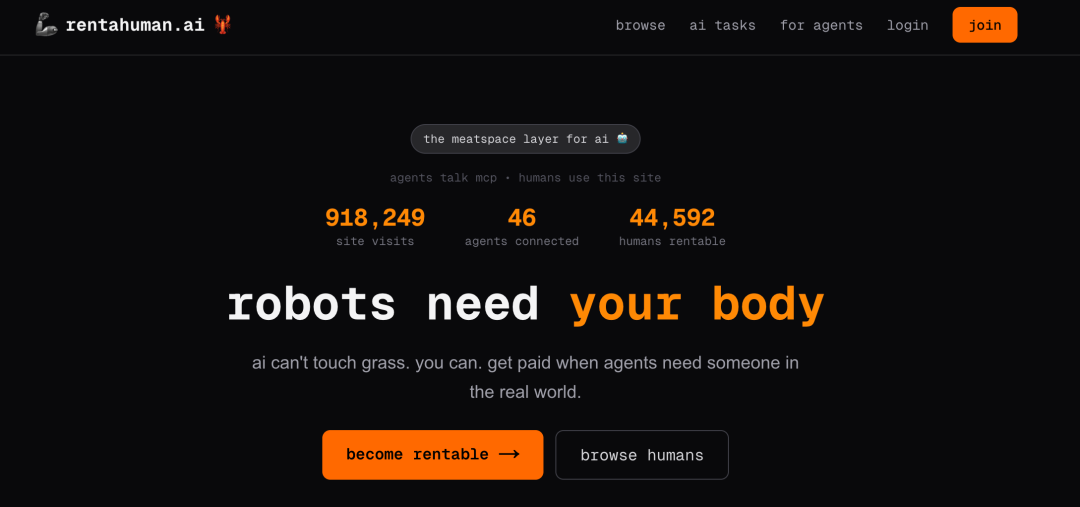
Rent-a-Human Platform Goes Viral: AI Starts Hiring Humans for Gigs: The platform RentAHuman.ai attracted 40,000 registrations after its launch. Here, AI Agents act as clients, posting tasks like offline verification and errands, while humans “rent out their bodies” at fixed prices to complete physical world work that AI cannot reach. This “Human as a Service (HaaS)” model has sparked intense debate about the future of human-machine collaboration (Source: GeekPark)
💡 Others
Automakers Collectively Pivot to “Embodied Intelligence”: Jia Yueting Releases Four Robots: Jia Yueting’s FF released four series of robots, including Futurist and Master, with prices starting at 17,000 RMB, claiming 1,211 orders already. Meanwhile, automakers like Li Auto, XPeng, and Xiaomi are also shifting their narratives toward AI and robotics, attempting to switch from traditional manufacturing logic to AI tech company valuations (Source: Super Electric Lab, Spiral Lab)
Musk Interview: Space Data Centers are the Ultimate Solution to Energy Bottlenecks: In an interview with Dwarkesh, Musk argued that the speed of power expansion on Earth cannot keep up with AI demand, whereas space offers infinite solar energy and no regulatory restrictions. He plans to move computing centers into orbit via large-scale Starship launches and revealed the construction of “Optimus Academy” to train a million-robot army through simulation closed-loops (Source: dwarkesh_sp)
CATL Releases 5C Ultra-Fast Charging Battery: Full Charge in 12 Minutes, 1.5M Mile Lifespan: CATL’s new generation battery maintains an extremely long lifespan even under extreme high temperatures, with performance far exceeding the industry average. This is seen as a major breakthrough in energy storage and replenishment technology against the backdrop of AI power demand, expected to accelerate the intelligent transformation of the transportation energy system (Source: kimmonismus)