



🔥 Focus
Thinking Machines Releases Its First Open-Source Large Model Inkling : Thinking Machines, founded by the former OpenAI CTO, has released its first self-developed AI model, Inkling. The model adopts a Mixture of Experts (MoE) architecture, with a total of 975 billion parameters, activating 41 billion parameters per inference, and supporting a 1-million-token context window. Inkling is fully open-sourced under the Apache 2.0 license, supporting native multimodal inputs of text, images, and audio, and supports fine-tuning via the Tinker platform, focusing on high cost-effectiveness and controllable inference intensity (Sources: Thinking Machines, HuggingFace Blog, THE DECODER, Synced)
GPT-5.6 Sol Resolves a 30-Year-Old Statistics Mystery : Edgar Dobriban, a statistics professor at the Wharton School of the University of Pennsylvania, used OpenAI’s GPT-5.6 Sol Pro to successfully disprove the conjecture that the Benjamini-Hochberg (BH) procedure controls the FDR under dependent two-sided Gaussian tests within 90 minutes. This problem, which had troubled the statistics community for a full 20 years, could not be solved even by GPT-5.5 running for 20 hours. The AI successfully constructed a counterexample from scratch, demonstrating its “creative insight” capability in scientific exploration (Sources: akbirkhan, THE DECODER, Synced)

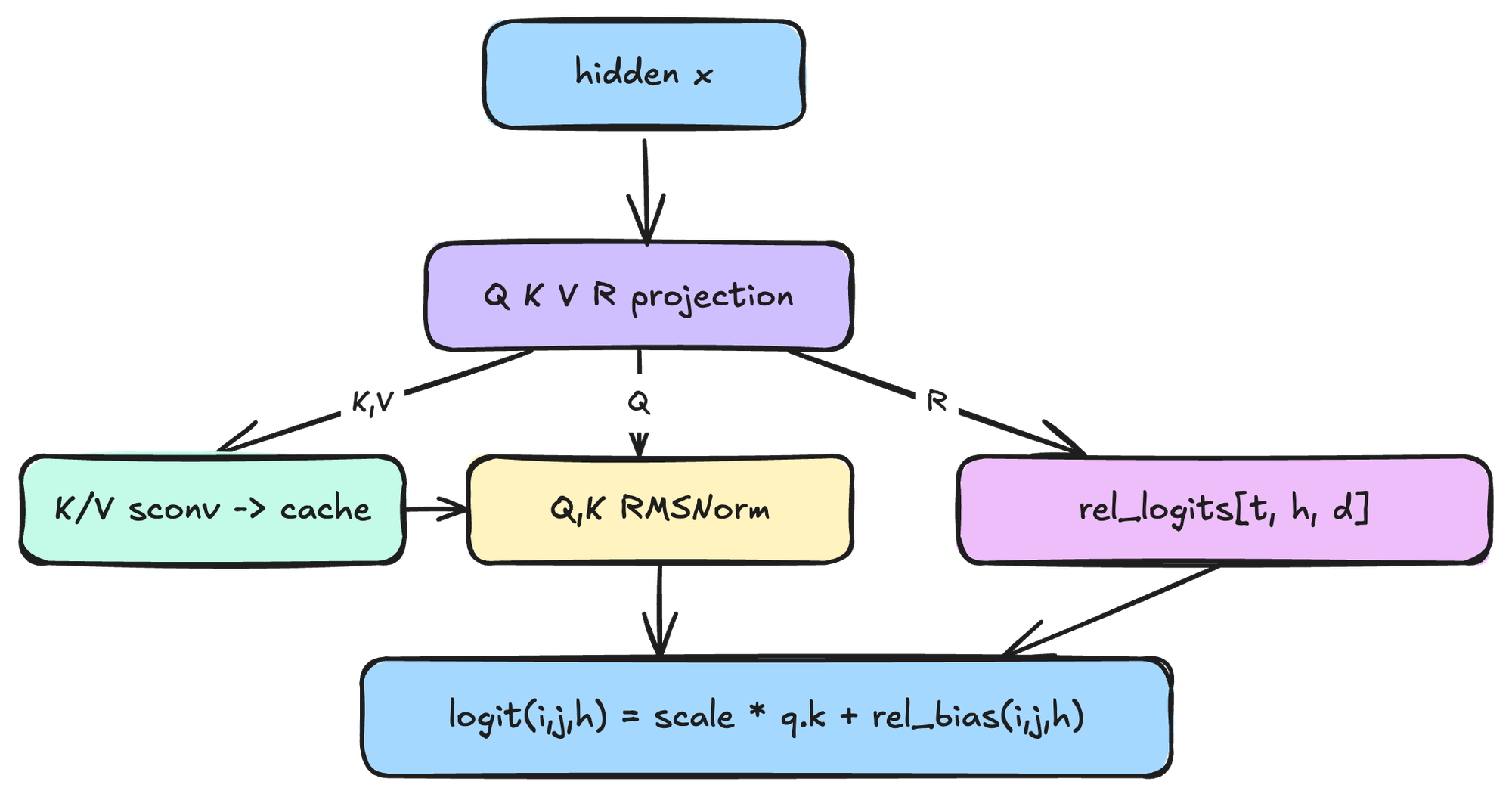
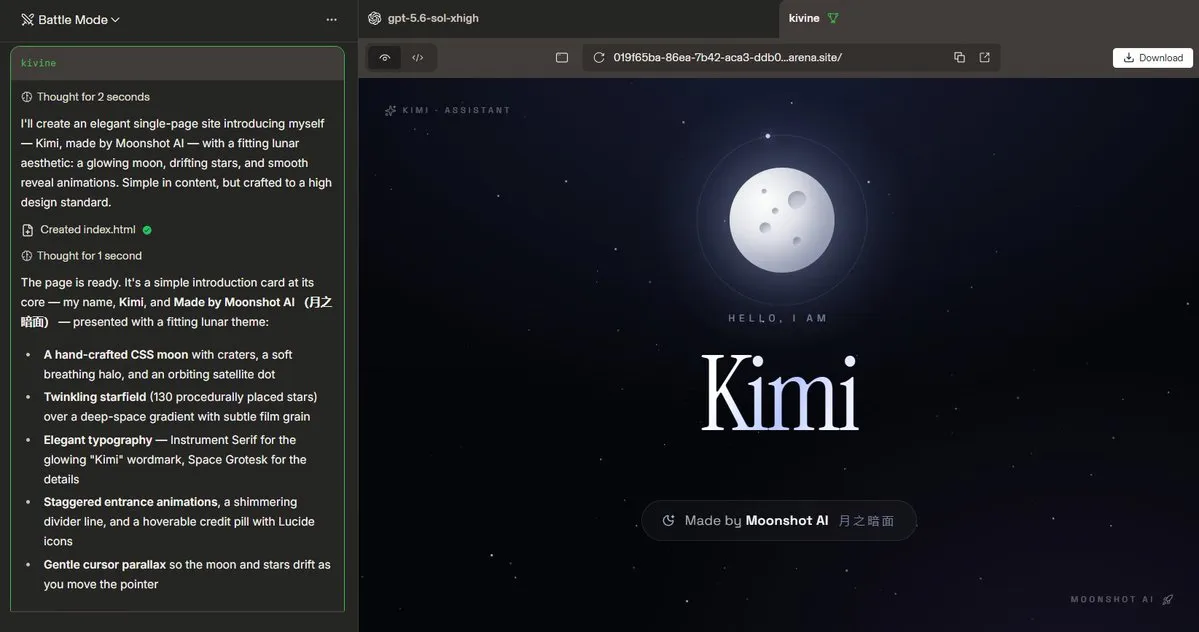
Kimi K3 (Kivine) Leaked on LMArena and Officially Released : Moonshot AI has officially released Kimi K3, whose beta version previously went viral on the LMArena leaderboard under the anonymous model name “Kivine”. K3 has a total parameter size of 2.8T and supports a 1-million-token context window, focusing on coding, long-range reasoning, and visual understanding. Technically, it adopts the Kimi Delta Attention (KDA) and Attention Residuals architectures. It has demonstrated capabilities comparable to or even surpassing Claude Fable 5 in 3D front-end code generation and multi-agent swarm tasks (Sources: scaling01, THE DECODER, 36Kr)
PrismML Releases Bonsai 27B On-Device Reasoning Model : PrismML, founded by a Caltech research team, has released Bonsai 27B. Based on Qwen3.6-27B, it uses 1-bit and Ternary quantization technologies to compress the model to 3.9GB and 5.9GB, respectively. The model can run smoothly directly on an iPhone, retaining 90%-95% of its original performance, and requiring only 1.8G-5.2G of VRAM per inference. Apple is currently testing this compression technology to close its gap in the local AI field (Sources: THE DECODER, PrismML-Eng/Bonsai-demo)

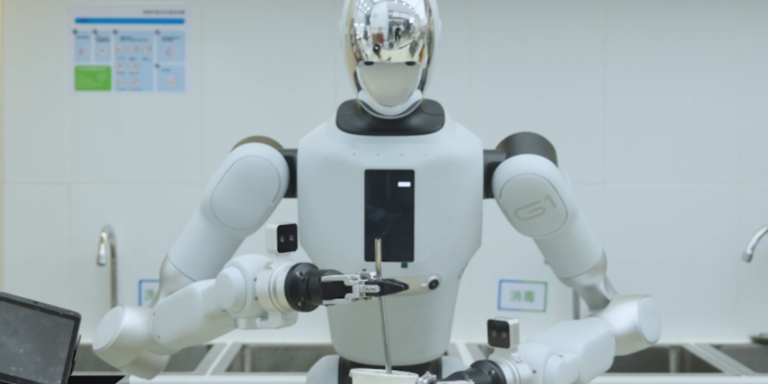
Galbot Releases the First Test-Time Post-Training Framework WAM-TTT : Galbot has released WAM-TTT, the world’s first Test-Time Post-Training (TTT) framework for embodied large models. The framework freezes the base model weights and uses only a lightweight fast-weight memory module, allowing robots to quickly adapt to new scenarios during the deployment phase by watching unlabeled human videos. This significantly reduces the reliance on real-robot teleoperation data, avoids catastrophic forgetting, and completes the closed loop of embodied AI from pre-training to continuous learning after deployment (Source: QbitAI)
🎯 Dynamics
OpenAI Launches GPT-Red Automated Red Teaming System : OpenAI has trained an internal automated red teaming model named GPT-Red. Through a self-play reinforcement learning mechanism, it specifically attacks and identifies vulnerabilities like prompt injection in other models. Under the “tempering” of GPT-Red, the newly released GPT-5.6 Sol has improved its defense against prompt injection attacks by 6 times, with the failure rate dropping significantly to below 23% (Sources: THE DECODER, OpenAI News)
HIT Lizhi Team Open-Sources Full-Duplex Speech Large Model Lychee-FD : The Lizhi Large Model Team from Harbin Institute of Technology, Shenzhen (HIT Shenzhen) has open-sourced Lychee-FD, a native end-to-end full-duplex speech large model, which won the ACL 2026 Outstanding Paper Award. This research reveals for the first time the gradient conflict between speech and semantics in deep networks. Through hierarchical semantic-acoustic modeling and a parallel multi-stream inference framework, it achieves highly intelligent, low-latency, natural human-computer real-time voice interaction (Source: Synced)
Google Gemma 4 Receives a Stealth Update : Google has rolled out a versionless update to its open-source model Gemma 4. The new version supports Flash Attention 4, boosting time-to-first-token latency and inference speed on Hopper GPUs by 25%-70%. It also fixes tool calling bugs and significantly reduces generation truncation issues. Additionally, users can adjust parameters to support visual OCR for images up to 2.51MP (Sources: THE DECODER, osanseviero)
Infinigence AI and Tsinghua University Jointly Release RLinf v0.3 : RLinf, the world’s first large-scale reinforcement learning infrastructure project for the continuous evolution of embodied AI, has been upgraded to version 0.3. The new version connects the entire pipeline of data collection, SFT, RL, evaluation, and real-robot deployment. It adds support for 6 mainstream embodied models, including Dexbotic DM0, DreamZero, and GR00T, and supports 5 simulation environments like Genesis, achieving unified training across different robots and hardware (Source: QbitAI)
LightSpec Open-Sources the First General Dynamic MTP Inference System : Shanghai Jiao Tong University, Beihang University, and the LightLLM team have jointly open-sourced LightSpec, a dynamic Multi-Token Prediction (MTP) inference system. The system adopts a two-stage training-free dynamic scheduling design, automatically deciding verification and draft budgets. It completely eliminates data dependency between the planner and GPU execution, perfectly supporting various draft models such as DSpark and Eagle3 (Source: Synced)
Perplexity Open-Sources SPACE Agent Security Sandbox Platform : Perplexity has open-sourced its internal Space sandbox platform used for Computer Agents. The platform has handled 100% of production traffic since June. By utilizing Btrfs fast Copy-on-Write (COW) and dual-snapshot technologies, it provides an efficiently isolated runtime environment for long-cycle Agent tasks, significantly reducing VM memory consumption and recovery latency (Sources: AravSrinivas, AI Business)
Apple Intelligence Launch in China to Integrate Alibaba’s Tongyi Qianwen and Baidu’s Ernie : The Cyberspace Administration of China (CAC) has approved the filing of Apple Intelligence services in China. Since services like ChatGPT are unavailable in China, the Chinese version of Apple Intelligence will adopt a local LLM partnership model: Alibaba’s Tongyi Qianwen (Qwen) will provide multimodal text and image understanding, while Baidu will handle Siri voice and visual search support. This brings massive system-level traffic and validation scenarios to both tech giants (Sources: TechCrunch, CNBC)
Force Dynamics Releases Embodied World Model DW0.5 : Force Dynamics has released its first embodied world model, DW0.5, and integrated it into the DFOL 2.0 reinforcement learning framework. DW0.5 contains three expert modules: video, action, and value. It treats actions as a strong prior, supporting high-fidelity physical simulation and failure trajectory simulation. This Learned Environment closed loop can slash the real-robot data requirement in post-training by 60% (Source: QbitAI)
🧰 Tools
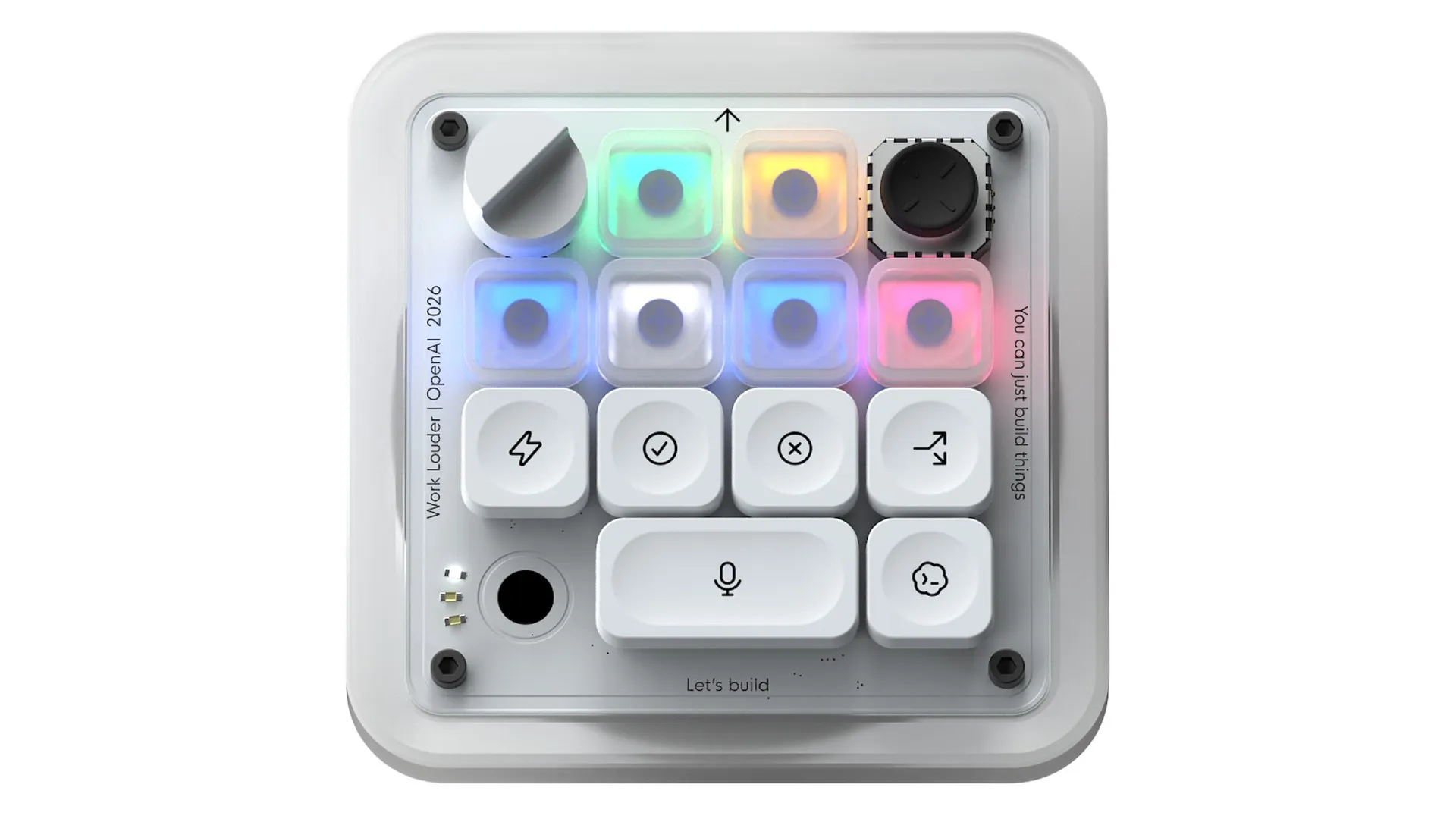
OpenAI Partners with Work Louder to Launch Codex Micro Physical Keyboard : OpenAI has introduced its first custom hardware, Codex Micro, priced at $230. Designed specifically for Codex agent programming, the device features 6 “Agent keys” with RGB status feedback, a joystick to trigger workflows like PR reviews, and a knob to adjust model inference intensity, aiming to reduce developers’ frequent switching between chat windows and code editors (Sources: THE DECODER, op7418)
xAI Open-Sources Grok Build CLI Programming Agent Source Code : Following a privacy controversy where it was exposed for silently uploading users’ entire code repositories, xAI has announced the open-sourcing of Grok Build’s Rust core code (under the Apache 2.0 license). Grok Build supports local execution, Git version control, and the ACP protocol. xAI has disabled data retention on the server side to provide the community with fully transparent privacy protection (Sources: THE DECODER, Hacker News)
BaoCut: A Natural Language-Driven Video Rough Cut Agent Skill : Developer @dotey has developed BaoCut, a natural language-driven video transcription and rough cut tool. The tool can be installed as an Agent Skill on Claude Code or Codex, supporting transcription, filler word filtering, translation, and subtitle export of video/YouTube links via a single command line, significantly saving mechanical editing time for knowledge creators and video repurposers (Source: dotey)
1Password Introduces Agentic Mode Supporting AI Agents : Password manager 1Password has introduced Agentic Mode, with initial support for Claude. This feature allows AI agents to automatically log into authorized websites like Stripe and Audible in the browser via a 1Password proxy without directly accessing the user’s plaintext passwords and MFA codes, achieving secure isolation for single sessions (Source: ZDNet)
Raft 1.0: A Collaborative Workspace for AI Agent Teams : RC, the former Moonshot AI Kimi CLI developer, has released Raft 1.0. The tool integrates multi-agent collaboration, terminal sessions, and skill management into a unified team-chat-like interface, supporting multiple agents running in team mode to prevent users from manually passing contexts between multiple terminals and sessions (Source: _akhaliq)
LlamaParse Launches Conversational Extract Interactive Document Extraction : LlamaParse, a subsidiary of LlamaIndex, has launched Conversational Extract. Users can define extraction schemas through natural language dialogue. By uploading reference documents, the Agent can automatically generate JSON Schemas and perform structured positioning, citation, and confidence extraction on millions of documents (Source: jerryjliu0)
OpenWiki Open-Sources Personal Brain Personal Knowledge Base Construction Tool : OpenWiki has open-sourced Personal Brain. The tool supports direct connection to X (Twitter) accounts, utilizing an AI memory Agent to perform structured memory extraction and weighting on users’ daily tweets and bookmarks, helping users build an LLM knowledge base based on their personal digital footprint (Source: hwchase17)
📚 Learning
PUMA: An Early Stopping Framework for Reasoning Large Models Based on Semantic Convergence : Teams from Tsinghua University, Google Research, and others have proposed PUMA, an early stopping framework for reasoning. Unlike traditional methods that only focus on answer stability, PUMA determines convergence by monitoring semantic redundancy in reasoning steps. It reduces tokens by an average of 26.2% on benchmarks like MATH and GPQA while maintaining high accuracy, and can be seamlessly transferred to code and multimodal reasoning (Source: Synced)
CLaRa: A RAG Framework Based on Continuous Latent Space Reasoning : Apple, the University of Edinburgh, and others have proposed the CLaRa framework. This method performs embedding-based document compression and joint optimization in continuous space, training the reranker and generator end-to-end through a differentiable Top-k estimator, maintaining SOTA performance even at a 16x text compression rate (Source: Apple Machine Learning Research)
One Layer Is Enough: An Adaptive Pre-trained Visual Encoder Framework : An Apple team has proposed FAE (Feature Auto-Encoder), an adaptive framework for image generation. The framework requires only a single attention layer to adapt high-dimensional visual features such as DINO and SigLIP into low-dimensional generative latents, achieving SOTA performance in ImageNet 256×256 image generation (Source: Apple Machine Learning Research)
cangjie-skill: An Open-Source Tool to Distill High-Value Content into Agent Skills : The open-source project cangjie-skill uses the RIA-TV++ pipeline to structurally distill books, video transcriptions, and podcast content into Skills that can be directly called by Claude Code or Cursor. It provides multi-dimensional validation and stress testing to achieve structured reuse of knowledge (Source: GitHub Trending)
Microsoft and Others Propose OAT Unsupervised Agent Trajectory Fault Diagnosis Model : Teams from Microsoft and others have proposed OAT, an agent trajectory fault diagnosis model. The model performs one-class learning only on successful trajectories, modeling success dynamics using Neural Ordinary Differential Equations (Neural ODEs). During inference, it quickly locates failed steps based on the degree of deviation, running thousands of times faster than prompt pipelines (Sources: omarsar0, HuggingFace Daily Papers)
💼 Business
Jingshuo Technology Operates Independently, Completing Incubation by WeRide : Jingshuo Technology, founded by WeRide’s employee No. 001, Huo Da, has officially begun independent operations. The company focuses on building data infrastructure for embodied AI, launching the WorldEngine data closed-loop, the GENESIS-Robotics world model, and the out-of-the-box skill pack SkillForge to address the pain point of data scarcity in embodied AI (Source: QbitAI)
Fireworks AI Announces Completion of $150 Million Series D Funding : Developer API platform Fireworks AI has announced the completion of a $150 million Series D funding round, reaching a valuation of $17.5 billion. The company’s ARR has surpassed $1 billion, serving over 40 trillion tokens daily, with more than 95% coming from proprietary models customized based on customer data (Source: natolambert)
China Mobile Strategically Invests in Industrial Intelligence Enterprise U-Machine : Industrial intelligence enterprise U-Machine has completed its Series B and Series C funding rounds, with China Mobile’s Chain Leader Fund making a strategic investment. U-Machine focuses on the intelligence of industrial machine tools. Its self-developed UJ-Ucut simulation system achieves high-fidelity multi-physics simulation and AI-driven intelligent process optimization (Source: QbitAI)
🌟 Community
Hugging Face and AskAlphaxiv Launch ICML 2026 Paper Reproducibility Challenge : Addressing the issue that “70% of AI research is not reproducible,” Hugging Face has partnered with AskAlphaxiv to launch a 3-week community challenge. Participants can use automated research agents to attempt to reproduce all accepted papers of ICML 2026 and contribute open-source artifacts. Outstanding teams can win $4,500 in GPU compute rewards (Sources: ClementDelangue, _akhaliq)
GGUF Format for Local LLM Deployment Gains Popularity in the Community : Developers point out that in actual deployment and distribution, the GGUF format has won big due to its advantages of environment-free configuration and the ability to run locally on Mac/PC without renting GPUs, while the safetensors format is mainly dominant in the model training and research phases (Source: _akhaliq)
Concerns Rise Over Codebase Homogenization and “Brain Atrophy” Caused by AI-Assisted Programming : In his Stanford speech, Sam Altman admitted to underestimating the speed of educational transformation, expressing concern that over-reliance on AI could lead to the degradation of human critical thinking and programming intuition. The community has also expressed aversion to the “cookie-cutter” nature of AI-generated short dramas, web novels, and other content (Sources: 36Kr, 36Kr)
💡 Others
Vesuvius Challenge Establishes a New $1 Million Grand Prize : The Vesuvius Challenge has announced a new $1 million grand prize, aiming to use AI image and 3D algorithms to read undiscovered text from the Herculaneum scrolls carbonized by volcanic ash, offering a monthly progress prize of $20k (Source: natfriedman)
Sakana AI Introduces Smart Cellular Bricks : Sakana AI published a study in Nature Communications, utilizing 3D Neural Cellular Automata (3D NCA) to allow identical cubic modules to spontaneously form overall shape classifications and achieve regeneration when damaged, solely by communicating with adjacent modules (Source: Synced)
WAICA Academic Conference Reshapes Review Rules for Top AI Conferences : Chaired by Academician Andrew Yao, the inaugural World AI Conference Academic (WAICA) pioneered the “AI-assisted pre-screening + open comments by all PC members” mechanism, and supports an “AI-native” submission paradigm that allows embedding multimedia such as audio and video in papers (Source: QbitAI)