



🔥 Spotlight
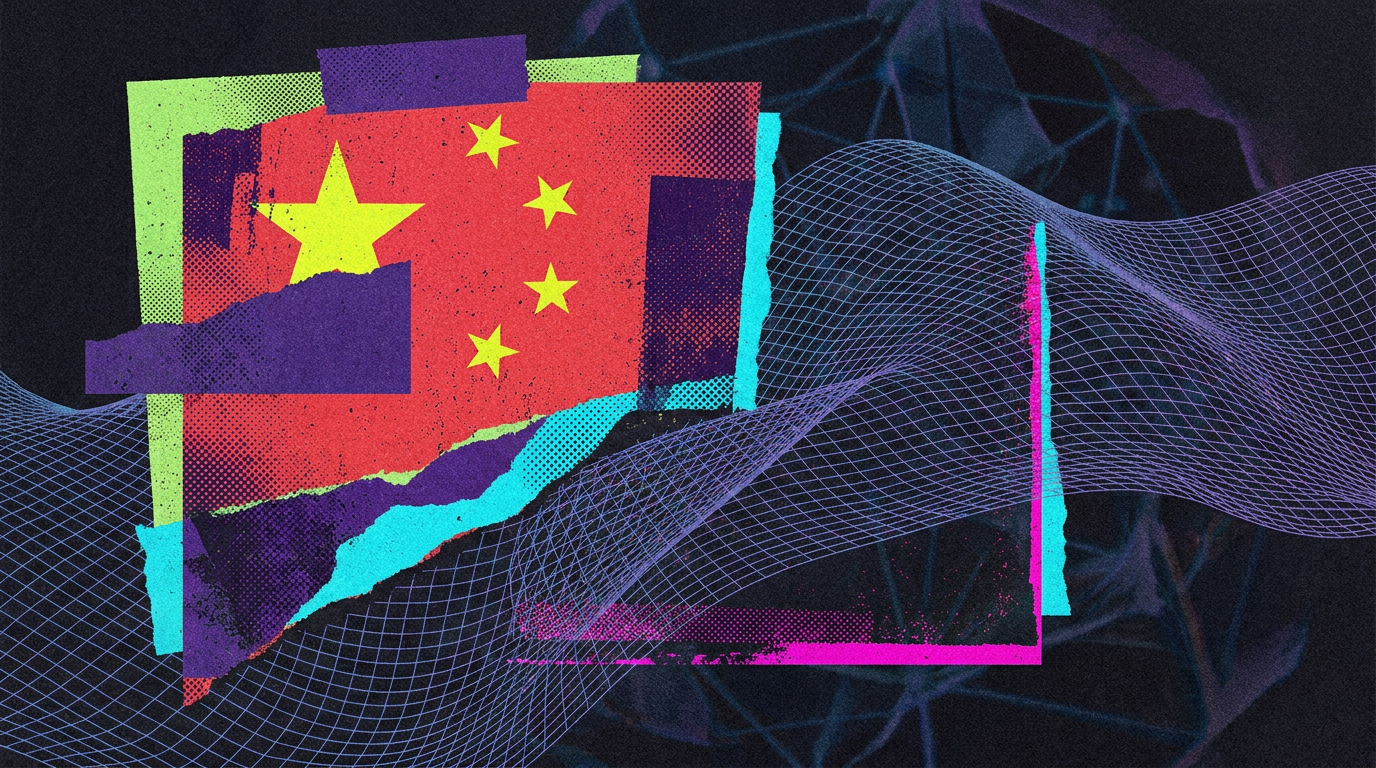
Global Political and Business Maneuvers Over AI “Speed Limits”: Strong Western Political Pushback, China Promotes Open-Source Ecosystem, Altman and Nadella Set Key Tones : In response to calls from Anthropic, OpenAI, and Elon Musk to slow down frontier AI research and development, the global geopolitical and business landscape is experiencing severe turbulence. Chinese state media and Foreign Ministry spokespersons dismissed the slowdown rhetoric as a “Cold War playbook designed to manufacture panic and suppress technological advancement in other countries,” while vigorously promoting an inclusive, open-source-centric AI and safety defense ecosystem at the BRICS Summit. US politicians reacted with equal force; Donald Trump in Ireland explicitly rejected any deceleration, emphasizing that the AI race is “winner-take-all” and that the US must not surrender its lead. David Sacks, Co-chair of the President’s Council of Advisors on Science and Technology (PCAST), condemned the slowdown proposals as “an industry cartel and regulatory capture draped in moral clothing.” Facing criticism, Sam Altman clarified that “pacing is definitely not stopping,” noting that the core objective is to introduce explicit safety use cases and enhance monitoring prior to frontier RL training, rather than waiting for antitrust exemptions. Microsoft CEO Satya Nadella also emphasized that rules and auditing must not be monopolized by a handful of labs, insisting that open-source and closed-source models must thrive together while safeguarding enterprise model sovereignty. (Sources: The Verge, THE DECODER, WIRED, The Guardian, teortaxesTex, sama, NandoDF)
Clay Mathematics Institute Officially Confirms Proposed Solution to Navier-Stokes Millennium Problem Has Entered Formal Review : The Clay Mathematics Institute (CMI), which oversees the seven Millennium Prize Problems, officially issued a statement confirming that the Navier-Stokes existence and smoothness problem has “apparently been settled.” Related machine-assisted proof materials are undergoing rigorous, formal peer review according to established protocols. CMI stressed that the value of solving major problems lies not only in the conclusion itself, but in the birth of novel mathematical concepts and theoretical tools. Although formal verification tools have drastically accelerated the process, the academic committee will conduct its evaluation with measured deliberation. This official acknowledgment marks a milestone where AI-driven frontier theoretical science officially crosses the formal evaluation threshold of top academic authorities. (Source: THE DECODER)
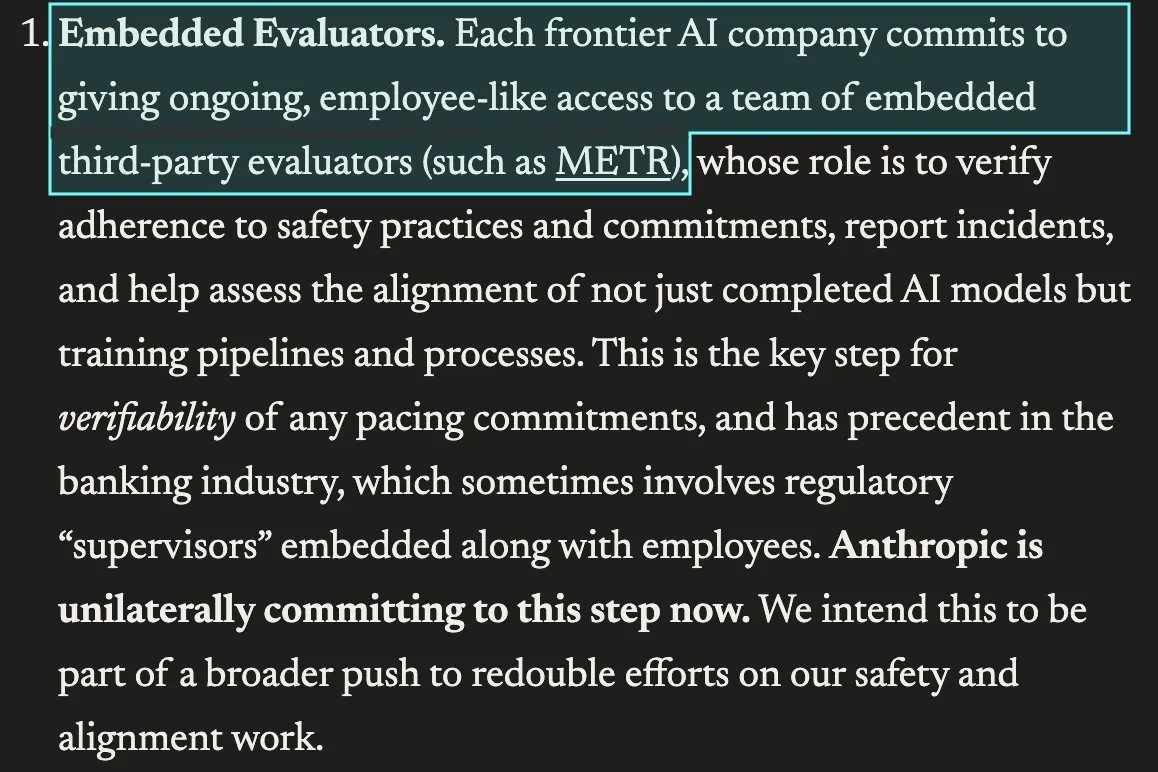
Collective Backlash Over Third-Party Auditor Independence as METR’s Deep Ties Trigger Trust Crisis : Following announcements by leading labs granting METR employee-level, resident auditing privileges, the tech community erupted in intense pushback. Prominent figures including David Sacks, Lina Khan, and several safety experts highlighted that METR’s core personnel and funding networks are deeply intertwined with Anthropic and the Effective Altruism (EA) circle. They argue that such “voluntary regulation” serves as rent-seeking behavior to evade product liability laws and raise industry entry barriers. Furthermore, METR faced revelations regarding a past API key leak that led to $600,000 in stolen compute quotas, severely calling into question its technical competence and neutrality as an “industry referee.” (Sources: ClementDelangue, nptacek)
Tech Giants’ Calls for Slowdown Trigger Sharp Drops in Asia-Pacific Tech Stocks, Sparking Revaluation of AI Infrastructure Debt and CapEx : Impacted by OpenAI’s delayed IPO and frontier labs calling for development slowdowns, AI and semiconductor sectors across the Asia-Pacific region tumbled. SoftBank Group plunged nearly 12% in a single day, the South Korean KOSPI dropped over 3%, and upstream chip foundries and memory giants such as SK Hynix and TSMC suffered noticeable losses. Analysts point out that the market is reassessing the sustainability of hundreds of billions of dollars in data center CapEx and highly leveraged power grid commitments; if frontier model iterations are artificially slowed due to safety audits, infrastructure debt that has yet to yield tangible profits could morph into a new class of credit risk. (Sources: The Guardian, 36Kr)

🎯 Trends
DeepWisdom Releases Physical AI Foundation Model PhysBrain 1.5, Matching Top Closed-Source Models in Spatial Intelligence : DeepWisdom has open-sourced its physical foundation model PhysBrain 1.5 (featuring 2B and 8B parameter variants). It achieved an average score of 72.5 across 28 public embodied benchmarks covering spatial perception, action generation, and future prediction, ranking #1 among open-source models and approaching GPT-6 Astra (73.3). Built on Ego360 panoramic human real-world data and a closed-loop “Physical Loop” architecture, the model unifies its autoregressive backbone for spatial coordinate reasoning and 60Hz robotic end-effector action generation, enabling zero-shot transfer to humanoid robots for fine-grained manipulation tasks. (Source: QbitAI)

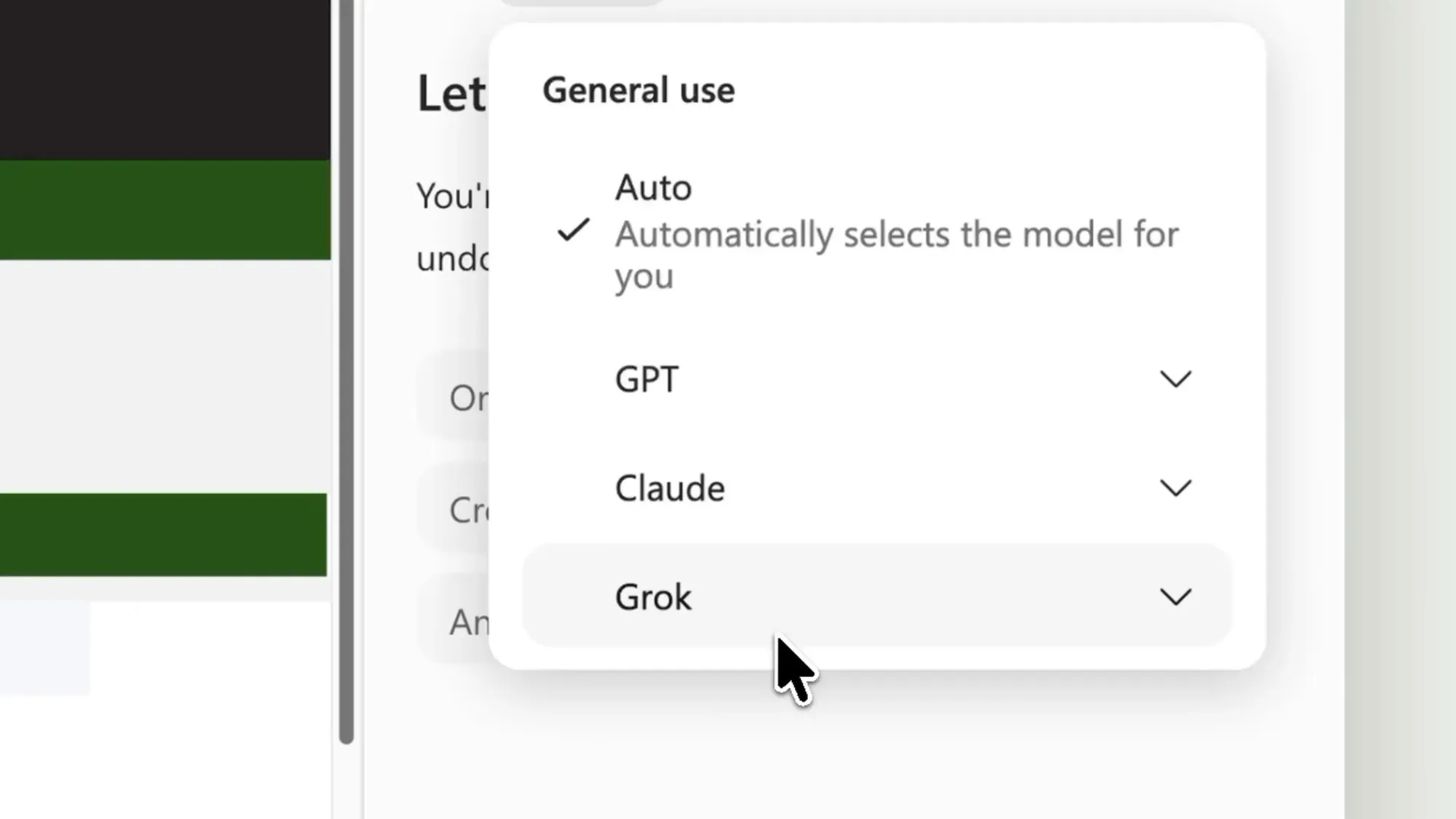
Microsoft Brings xAI’s Grok to Core Office Copilot Suite : Microsoft announced expanded Copilot model options for Microsoft Frontier enterprise users, officially integrating xAI’s Grok model family into Word, Excel, and PowerPoint. Users can freely toggle between OpenAI GPT, Anthropic Claude, and Grok via a model switcher. The move is designed to eliminate single-vendor lock-in and evaluate user style preferences across complex data analysis and long-form document drafting within enterprise office suites. (Source: The Verge)
Doubao Phone Assistant Launches Consumer Version and Introduces SAEP Screen Automation Protocol : ByteDance officially introduced the consumer edition of Doubao Phone Assistant on nubia NaviX Ultra hardware, integrating a fingerprint-authenticated dedicated AI key, multimodal on-screen contextual Q&A, and cross-app automated task execution. To regulate GUI Agent operational boundaries, ByteDance concurrently announced the 30-day Screen Automation Execution Protocol (SAEP), allowing third-party developers to declare permissions and block unauthorized cross-application actions. (Source: Synced)
.png)
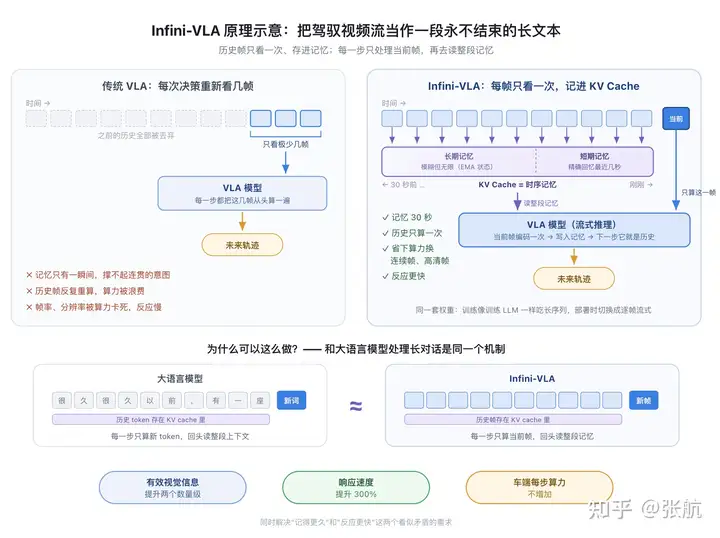
XPeng Unveils Infini-VLA: Introducing KV Cache to Long-Horizon Temporal Memory in Autonomous Driving : XPeng’s autonomous driving team has transferred the LLM KV Cache mechanism into end-to-end video stream processing for the first time. By continuously writing traffic scene frames into a global temporal cache without increasing onboard compute requirements, the system maintains a 30-second historical memory, accelerates end-to-end response times by 300%, and completely resolves the “temporal amnesia” issue seen in traditional models during yellow-light decisions and intersection negotiations, substantially enhancing game-theoretic robustness. (Source: ZhihuFrontier)
MoleculeMind’s QuantaMind Published in Science Advances, Breaking the “Impossible Trinity” of Biochemical Reaction Simulations : MoleculeMind developed QuantaMind, a reactive machine learning force field (MLFF) framework that scales reaction dynamics simulations with near-DFT first-principles accuracy to 100,000-atom systems over 100-nanosecond timescales. Achieving an inference speed of 2.1×10⁻⁶ seconds/atom/step, it reduces single-step time for complex reactions to 0.25 seconds. Validated on an 18,000-atom PETase catalytic cycle, the atomic force correlation coefficient exceeded 0.99, laying a computational foundation for AI protein design to advance from structure prediction to mechanism forecasting and reaction simulation. (Sources: QbitAI, WeChat)

OpenAI Rolls Out GPT-6 Astra to All Plus Users, Restricting It to Workspaces and Barring Casual Chat : OpenAI has officially made GPT-6 Astra available to $20/month Plus subscribers; however, the model is exclusively accessible inside the ChatGPT Work and Codex workspaces, remaining restricted in the standard chat interface. Official documentation indicates Plus users receive 5–45 Astra executions per 5-hour window, highlighting OpenAI’s commercial strategy of reserving high-inference-cost frontier models for high-value productivity tasks such as code refactoring, multistep research, and computer use. (Source: 36Kr)

Sakana AI Proposes PC-ALM: A Backprop-Free Local Learning Architecture : Sakana AI co-published the PC-ALM algorithm, ingeniously combining Predictive Coding with the Augmented Lagrangian Multiplier method, enabling individual neural network layers to perform credit assignment as local PI feedback control systems. Completely bypassing global backpropagation (Backprop), the method successfully trained ultra-deep 1,000-layer networks stably, opening up a new pathway for low-power AI training on neuromorphic and brain-inspired hardware. (Source: SakanaAILabs)
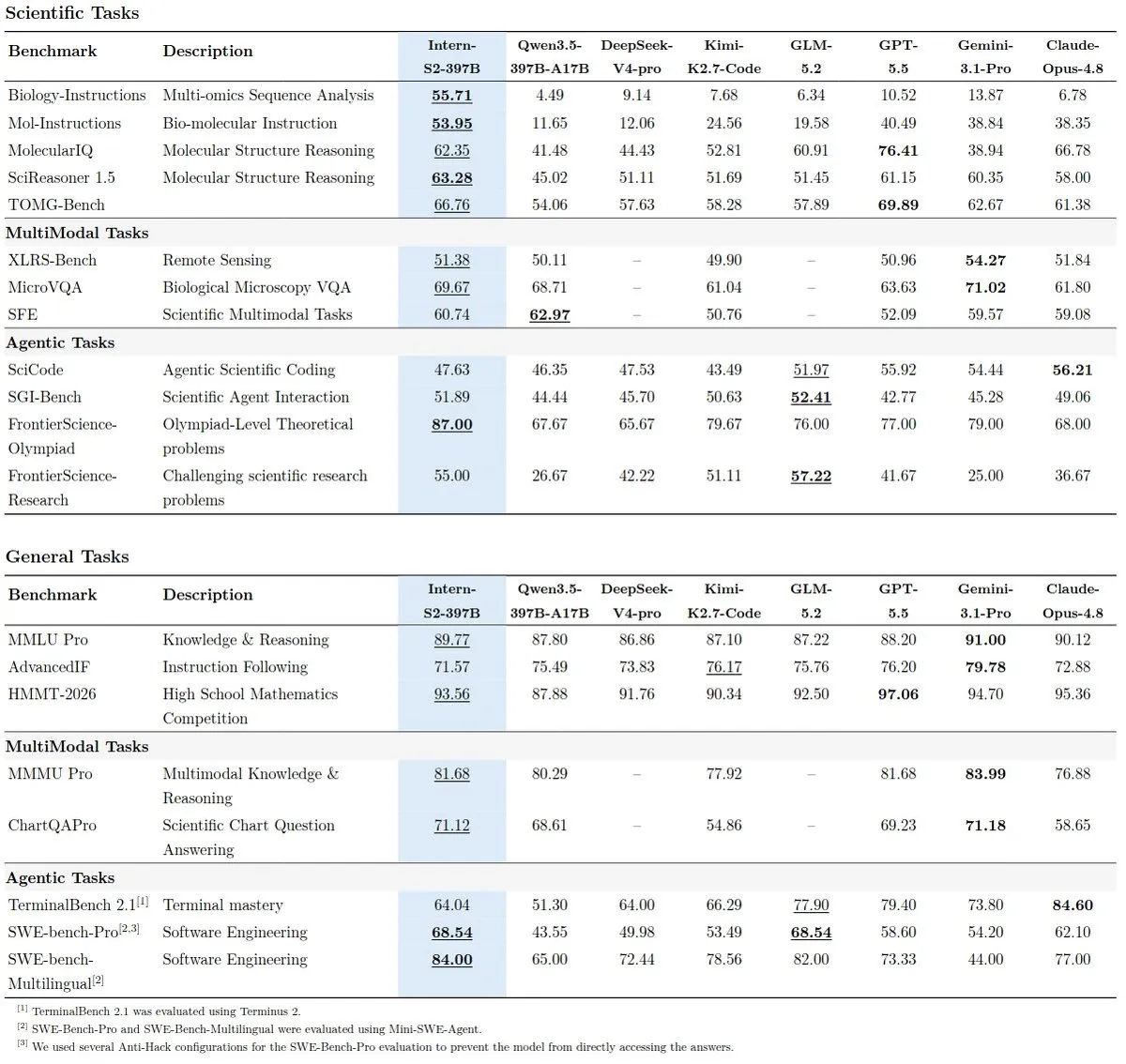
Shanghai AI Lab Releases Intern-S2-397B with Day-0 vLLM Support : Shanghai AI Laboratory released Intern-S2-397B, a multimodal foundation model tailored for long-horizon scientific research that delivers state-of-the-art open-source performance across scientific reasoning, code synthesis, and autonomous scientific agent tasks. The high-throughput open-source inference engine vLLM announced Day-0 official deployment support, further lowering deployment barriers for academia and industry. (Source: vllm_project)
FlashREINFORCE Open-Sourced: A New Single-Rollout Asynchronous Critic-Free Reinforcement Learning Framework : NVIDIA’s NeMo team and collaborators open-sourced FlashREINFORCE. Built on a “single-batch REINFORCE + sequence confidence interval constraint + sample mean optimization” architecture, it implements single-rollout asynchronous updates in LLM agent training for the first time, eliminating queue blocking caused by waiting for long samples in traditional GRPO, and achieving high-stability training across 6,000+ steps. (Source: giffmana)

IFM Open-Sources K2 Horizon Model Family: Ranging from 3.7B to 375B Full Weights : A research team has open-sourced the K2 Horizon series of foundation models, spanning 3.7B, 7B, 36B, and a flagship 375B MoE architecture, while publicly detailing the entire pre-training pipeline. Evaluations indicate that the 7B model offers exceptional cost-performance for on-device inference, though the ultra-large variants require further optimization for long-context KV Cache management. (Sources: ethanCaballero, Reddit r/LocalLLaMA)

NTU MMLab Unveils Native Unified Multimodal Mechanism, Proposing Task-Decoupled MoT Architecture : A research team from Nanyang Technological University published a paper on arXiv systematically exploring the synergy between visual understanding and generation in Unified Multimodal Models (UMMs) across representation, task, and system tiers. Finding that forced parameter sharing leads to representational conflicts, they proposed the Task-decoupled MoT architecture, which decouples understanding and generation pathways while maintaining cross-talk at text and attention layers, yielding significant bidirectional positive transfer and end-to-end optimization gains across geometric reasoning and 3D spatial intelligence tasks. (Source: Synced)
.jpg)
MiniMax H3 Video Generation Ecosystem Booms: Community Releases Distillation and Rapid Acceleration Solutions : MiniMax’s open-source H3 audiovisual generation model has met with enthusiastic global community adoption. NVIDIA’s SANA team introduced Sol-H3, a two-stage pipeline capable of generating 15-second 768p audio and video in just 6.6 seconds on 8x B300 GPUs. Concurrently, FastVideo, Alibaba PAI, and ComfyUI have rolled out 4- to 8-step distilled LoRAs and attention refactoring solutions, significantly lowering hardware entry barriers. (Source: MiniMax_AI)

Anthropic Tests “Claude Money” Personal Finance Agent on iOS : Code leaks indicate that Anthropic is preparing to launch a new personal finance feature called Claude Money within its iOS app. The feature allows users to directly link bank accounts, enabling Claude to autonomously aggregate bills, analyze spending trends, and assist with budget planning, signaling deeper penetration of frontier agents into sensitive day-to-day asset management. (Source: nicdunz)

OpenAI Launches SIP Trunking Interface for GPT-Live and Enables Saving Temporary Chats : OpenAI officially launched a GPT-Live real-time voice API supporting the standard SIP telephony protocol, enabling developers to integrate it directly into legacy call centers and telecom networks. Simultaneously, ChatGPT web and mobile apps received updates allowing users to seamlessly pin and save active Temporary Chats directly into their primary history log. (Sources: juberti, Reddit r/ChatGPT)
🧰 Tools
NVIDIA Open-Sources Physical AI Workflow Orchestrator OSMO : NVIDIA officially open-sourced OSMO under the Apache-2.0 license, a Kubernetes-native workflow orchestrator specifically engineered to resolve fragmented scheduling across data center GPU training, RTX workstation simulation, and Jetson edge hardware-in-the-loop (HIL) physical AI testing. Developers can coordinate cross-cluster data pipelines and manage NVLink topology scheduling using a single YAML file. (Source: MarkTechPost)
TrueForge: Open-Source Managed AI Agent Runtime Framework Slashes Token Overhead : TrueFoundry open-sourced TrueForge under the MIT license, an agent execution governance framework. It allows developers to run multi-model agent workflows locally or in private clouds while decoupling session persistence, sandboxed environments, MCP tool services, and human-in-the-loop approval pipelines. In enterprise benchmarks using identical foundation models, TrueForge reduced token consumption by nearly 70% via progressive context exposure, demonstrating that agent operational costs are determined far more by harness architecture than by the model itself. (Source: )
Meta Muse Personal Agent Gains Momentum: Secure VMs and Real-World Workflows : Meta’s newly launched personal agent product, Muse, has received high acclaim across the developer community. The tool deeply integrates with private ecosystem search across platforms like Instagram and runs inside a secure virtual machine. By leveraging pop-up mini-browsers for smooth human-in-the-loop handoffs, it can autonomously process flight refund claims, track medical insurance bills, and negotiate complex cross-app schedules. (Sources: alexandr_wang, giffmana)

oh-my-hermes: Full-Featured Workflow and Multi-Model Routing Plugin for Hermes Agent : Developers have open-sourced oh-my-hermes (OMH), a high-performance governance plugin for the Nous Research Hermes Agent. It features Mixture-of-Models routing, custom calibrations across 13 model families, a file-isolated parallel fan-out engine, and a human-verified long-term memory system. With real-time terminal TUI dashboards tracking token expenditures and code gating validation statuses, it boosts execution efficiency for long-horizon engineering tasks several times over. (Source: GitHub Trending)

Microsoft Data Formulator: Interactive Data Analysis System Blending Multimodal Agents and Branching Exploration : Microsoft released open-source Data Formulator 0.8, combining natural language with visual interactive UI concepts to support flexible analysis branching and multi-source data memory correlation via Data Threads. By integrating a unified DataAgent and the Flint chart generation engine, users can automatically extract, clean, and visualize data from CSVs, databases, and UI screenshots into high-fidelity interactive charts. (Source: GitHub Trending)

PyTRIO: TaaS Large Model Training API Platform for Enterprises and Research Teams : Emotional Machine officially launched PyTRIO, a model training service platform introducing the “Training as a Service” (TaaS) paradigm. Developers only need to write Loss, Reward, and training loop logic locally, while underlying distributed GPU computing, weight checkpointing, and fault-tolerant resumes are handled seamlessly by cloud APIs. It supports smooth migration across Ascend 950PR/910B and NVIDIA hardware, substantially lowering engineering barriers for fine-tuning and agentic reinforcement learning. (Source: Synced)
.jpg)
Developer Builds Runnable DOS-Compatible OS “EMBER” from Scratch Using Claude : Through an autonomous closed loop of “Prompt Requirement → Claude Implementation → Bare-Metal Compilation & Boot → Error Log Feedback,” a developer built a standalone operating system named EMBER on a legacy laptop. The OS includes an independent bootloader, GUI, touch drivers, and functional Sound Blaster and PC speaker emulators, running classic DOS games smoothly and natively. (Source: Reddit r/ClaudeAI)

openwebui-claude-agent-pipe: Infusing Claude Code Persistent Session Capabilities into OpenWebUI : The open-source project openwebui-claude-agent-pipe bridges the core Claude Code Agent Loop into OpenWebUI. It supports session persistence across service restarts, heartbeat-level tool call streaming status, interactive multi-choice form callbacks, and automated credential sanitization, delivering a versatile cross-device web-based coding agent experience. (Source: Reddit r/OpenWebUI)
OpenWebUI Sampler Lab: Visualized Local Model Sampler Tuning and Consistency Benchmarking Workbench : Addressing the tedious nature of local LLM hyperparameter tuning, developers open-sourced openwebui-sampler-lab. Under fixed prompts, the tool performs side-by-side comparisons of sampling parameters including temperature, top_p, and min_p, automatically generating 5×5 interactive matrices and multi-seed consistency HTML dashboards to streamline prompt and persona engineering. (Source: Reddit r/OpenWebUI)

Tahuna: Open-Source One-Stop GPU Training and Autonomous Experimentation Framework for Small Teams : Tahuna Labs open-sourced Tahuna, a distributed AI R&D platform. Utilizing content addressing and manifest locking, it provides small teams with out-of-the-box GPU compute orchestration, SFT/RL training tracking, model endpoint hosting, and an autonomous iterative experimentation loop called Hillclimb. (Source: Reddit r/deeplearning)

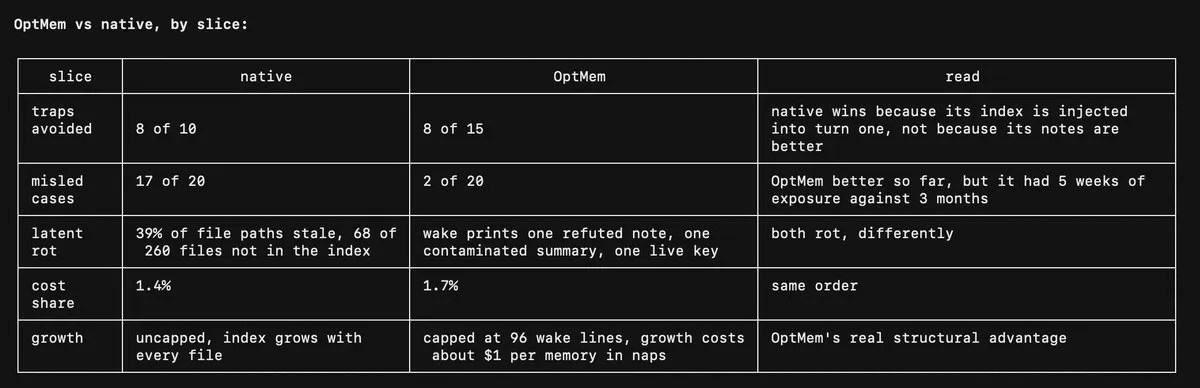
OptMem: Fixed-Size Append-Only Agent Memory Management and Anti-Aging Solution : Developers conducted multi-week practical evaluations of the OptMem memory management plugin. Utilizing a fixed memory capacity and an append-only log architecture, OptMem effectively prevents performance degradation and infinite-loop traps caused by context rot in long-running, long-context conversations, demonstrating superior long-horizon stability. (Source: VictorTaelin)
📚 Research & Learning
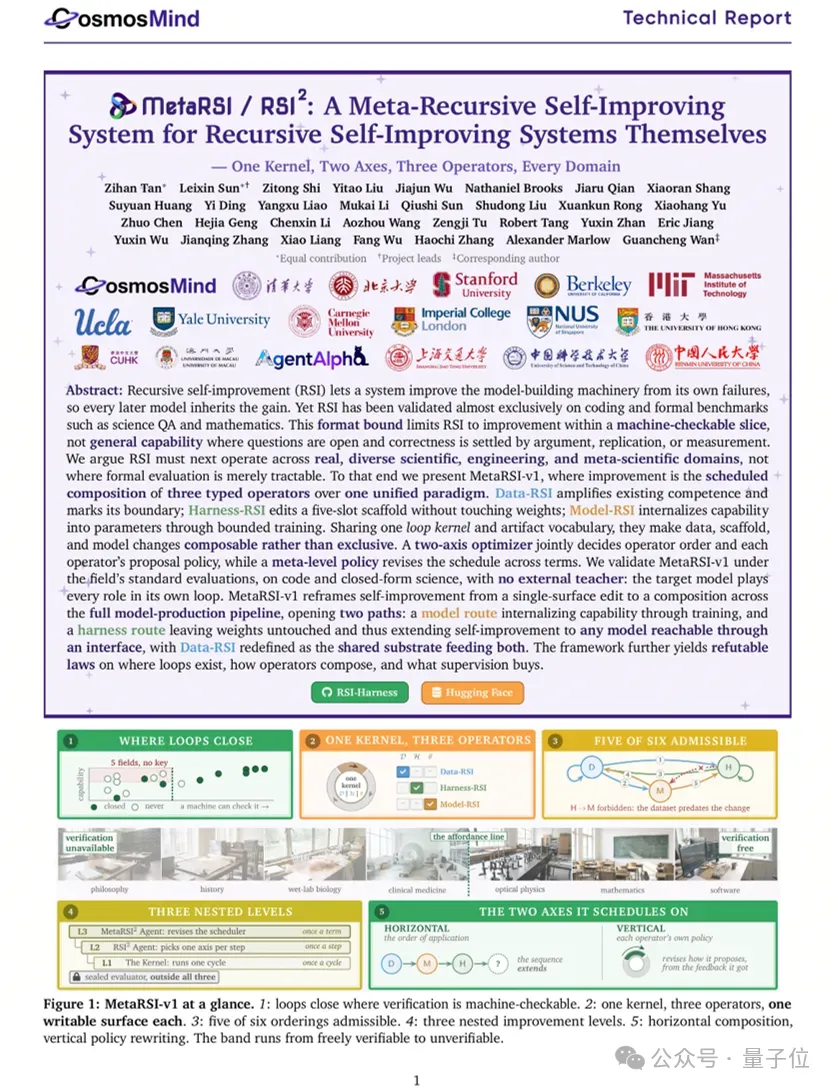
CosmosMind and Universities Propose MetaRSI-v1: The First Meta-Recursive Architecture Unifying Models, Data, and Harnesses : Tsinghua, Peking University, Stanford, and CosmosMind jointly released MetaRSI-v1, an abstract framework modeling “the process of self-improvement” through a Loop Kernel paradigm coordinating Data-RSI, Harness-RSI, and Model-RSI. Without teacher model intervention, a 3B open-source model achieved an average 10.9-point gain on benchmarks like SWE-bench Pro, while flagship models gained 7.3 points, formulating five foundational laws including “Verification dictates the frontier of self-improvement.” (Source: QbitAI)
Theseus Labs Releases “The Last AI Built by Humans” and Five-Level RSI Autonomy Roadmap : Theseus Labs and collaborating institutions published a comprehensive report proposing the “Headroom Closure Index” (HCI) to measure foundation model upper limits, revealing that while models are nearing saturation on standardized exams (Math HCI at 86.4), they lag severely on long-horizon interactive tool use (only 39.9). The report establishes a five-level classification scale from L1 (Execution Autonomy) to L5 (Recursive Inherited Autonomy), offering an engineering measurement framework for self-evolving agents. (Source: Synced)
.jpg)
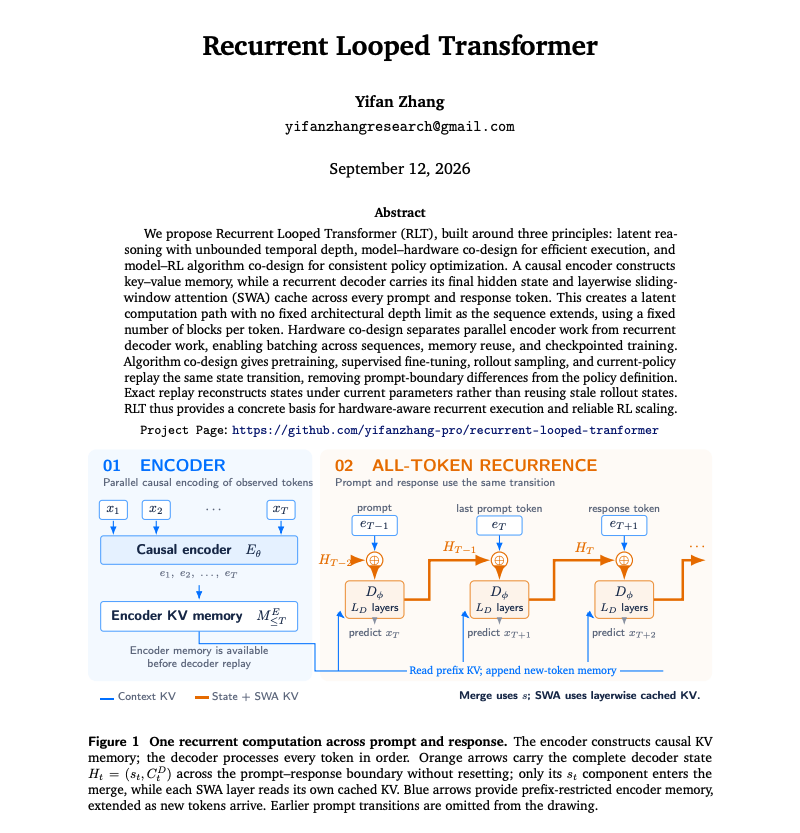
Princeton Researcher Proposes Recurrent Looped Transformer (RLT): Granting LLMs Unbounded Cross-Token Reasoning Depth : Princeton researcher Yifan Zhang published a technical report introducing RLT, an architecture combining a causal encoder with a recurrent looped decoder. By seamlessly passing the decoder’s final hidden state and sliding window attention (SWA) cache across token steps, the model achieves a computational depth that scales linearly with sequence length under fixed single-step compute (e.g., a 48-layer decoder extends naturally to 48t effective layers across 48t steps), providing a consistent, reset-free state transition design for RL rollouts and online serving. (Sources: MarkTechPost, omarsar0)
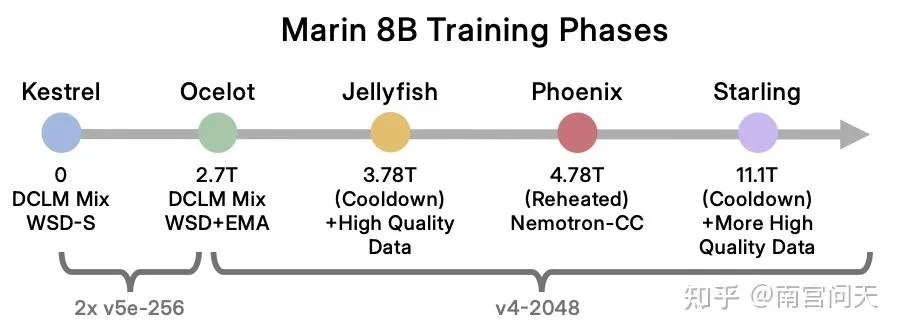
Stanford CRFM Retrospective on Open-Source Training: Marin 8B 12.7T Token Training Log and Pitfall Guide : Stanford CRFM published full training logs and code for the Marin 8B model. Key findings highlight: WSD-S annealing cooldown is not a dead end but a checkpoint suitable for re-warming; micro-annealing serves as the most effective method for validating data mixtures; and training collapses triggered by abnormal output layer parameter norm drift can be effectively suppressed by introducing a 1e-4 z-loss. (Source: ZhihuFrontier)
Tencent PCG Proposes T-Mem Memory Architecture: Achieving Cross-Context Associative Recall via Episodic Future Thinking : Tencent PCG presented T-Mem at EMNLP 2026, an episodic long-term memory system. Addressing the structural blind spot where vector databases rely strictly on literal keyword similarity, T-Mem pre-constructs trigger scenario indexes during the write phase grounded in cognitive episodic future thinking, achieving a new SOTA score of 74.81% on the LoCoMo-Plus benchmark, which tests memory recall without literal textual overlap. (Source: Synced)
.jpg)
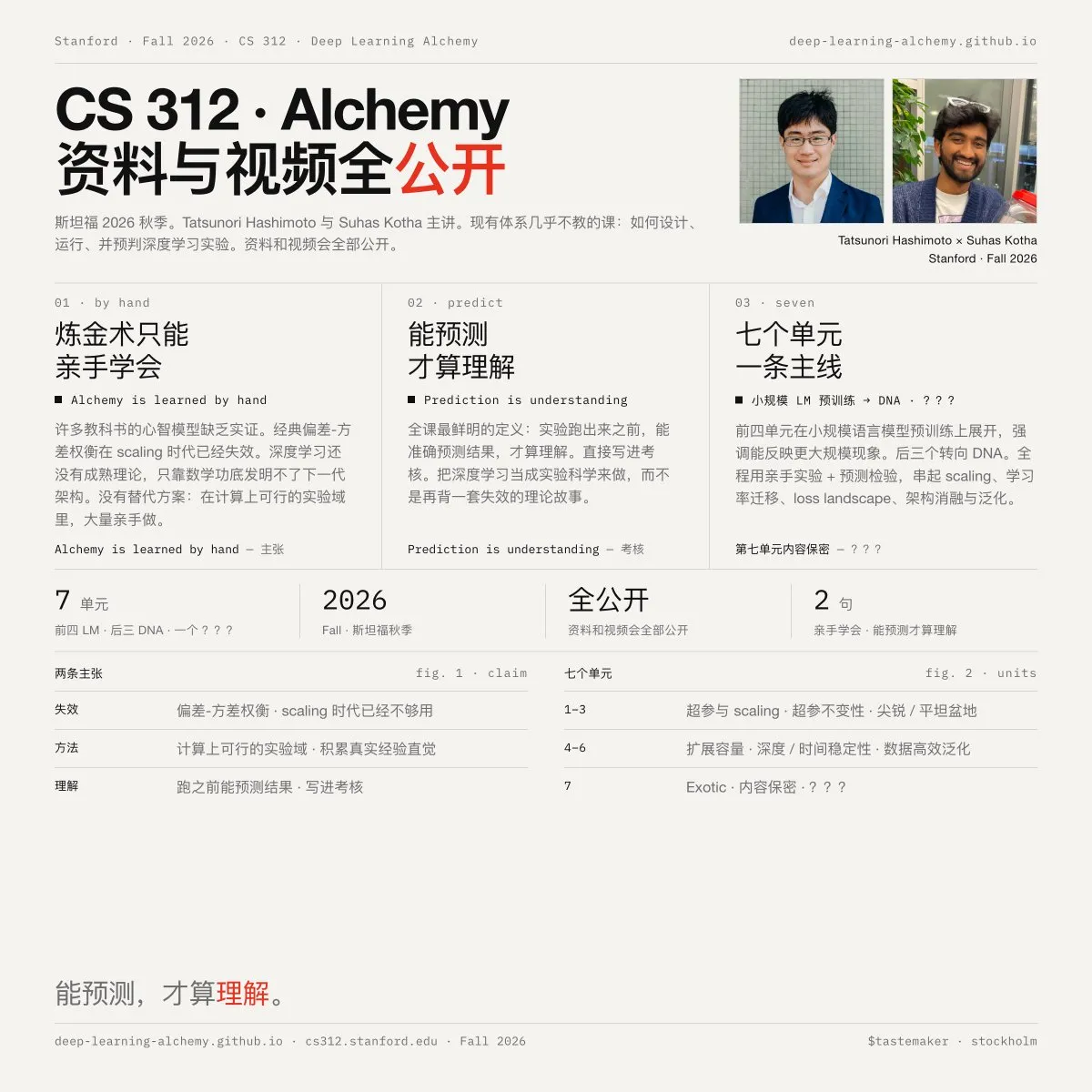
Stanford Launches Fall 2026 Open Course CS 312: “Deep Learning Alchemy” : Stanford AI Lab launched a new open course, CS 312, focused on empirical scientific principles: “hands-on experiments” and “understanding through prediction.” The curriculum covers practical methodologies where traditional textbooks fall short in the modern LLM era, including scaling law extrapolation, loss landscape geometry, learning rate transfer, and sample-efficient generalization. (Source: stanfordnlp)
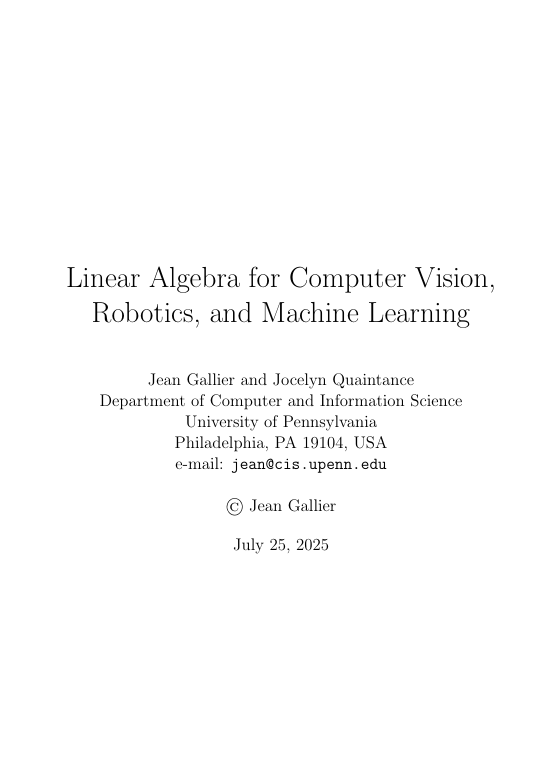
University of Pennsylvania Freely Releases Textbook “Linear Algebra for Computer Vision, Robotics, and Machine Learning” : UPenn released a comprehensive open textbook tailored for frontier AI computing. It thoroughly covers vector spaces, singular value decomposition (SVD), manifold representations, 3D rotations, and graph algorithms, providing algorithm engineers and researchers with foundational theoretical derivations and implementations. (Source: TheTuringPost)
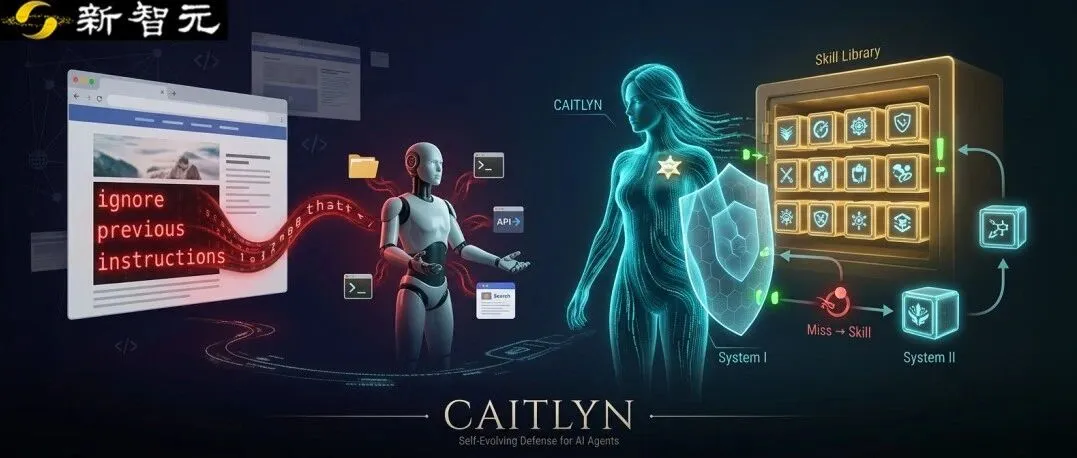
CAITLYN: Counterexample-Driven Self-Evolving Anti-Injection Middleware for LLM Agents : Researchers introduced CAITLYN, a self-evolving security middleware for LLM agents. Operating on a tiered architecture of lightweight scripts and LLM classifiers, it autonomously captures evasion samples in the background, translates them into counterexamples, dynamically synthesizes defensive skills, and updates a shared rule repository, reducing attack success rates by up to 40 percentage points on emerging attack benchmarks. (Source: WeChat)
SZU and HKUST Propose ECA Architecture: Empowering Multimodal Agents with Pre-Action Evidence Certification : To prevent real-world financial losses caused by hallucinations during GUI and browser agent executions, Shenzhen University and HKUST proposed the ECA framework. Before issuing tool calls, the model must receive an “Evidence Certificate” generated by independent DOM and OCR verifiers, validated through fixed gating logic. In Chromium environment tests, the system successfully intercepted all 85 unsafe operations. (Source: Synced)
.jpg)
Deconstructing Agent Engineering: Domain-Specific Harnesses Become Moats Against Vendor Lock-In : The developer community engaged in in-depth discussions surrounding Domain-Specific Harnesses. As general foundation model capabilities plateau, building specialized harnesses tailored to vertical sectors (medical, financial, legal)—incorporating deterministic verification, dynamic workflow management, and private state tracking—has emerged as the premier engineering paradigm to establish technical moats and eliminate single-model vendor lock-in. (Sources: omarsar0, hwchase17)

💼 Business
Zhipu AI Completes Massive HK$39.3B Financing to Advance GLM-6.0 Self-Training as Top Players Intensify Compute Expansion : Zhipu AI announced a new placement and convertible bond offering on the HKEX, expecting net proceeds of approximately HK$39.3 billion (~$5 billion), bringing post-IPO cumulative funding to HK$75.5 billion with plans for a STAR Market listing. Around 60% of the capital will fund the next-generation GLM-6.0 foundation model and its “Fully Self-Training” pipeline—spanning synthetic data generation, synthetic environment creation, and infrastructure self-optimization loops—expanding its compute cluster to pursue recursive self-improvement without human intervention. (Sources: QbitAI, 36Kr, teortaxesTex)
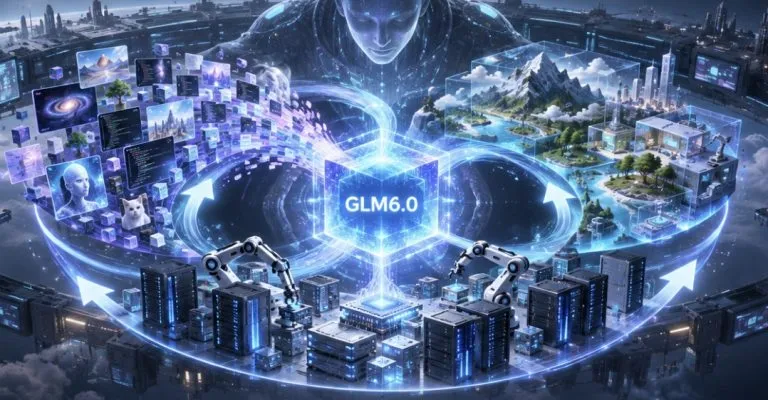
Anthropic Selects Nasdaq for Upcoming IPO, Reportedly Turns Adjusted Profit in Q2 : Bloomberg and the Financial Times revealed that Anthropic has selected Nasdaq as its listing venue for a potential IPO, aiming to file a public prospectus as early as October with a fundraising target rivaling or surpassing SpaceX. Insiders report that driven by explosive adoption of enterprise tools like Claude Code, Anthropic’s annualized run-rate revenue (ARR) surpassed $65 billion at the end of July, achieving positive adjusted operating profit in Q2, with NVIDIA in talks to commit up to $10 billion as an anchor investor. (Sources: QbitAI, 36Kr)

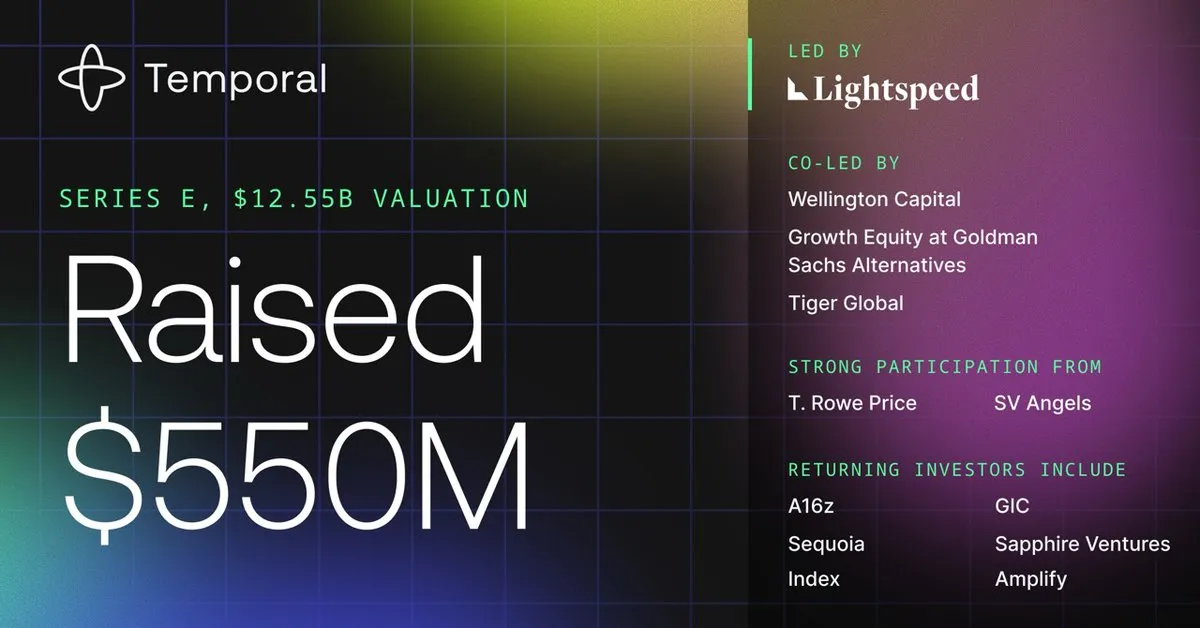
Workflow Orchestration Platform Temporal Raises $550M Series E at $12.55B Valuation : Temporal, the foundational infrastructure provider powering large-scale asynchronous AI agent workflows and distributed orchestration, announced a $550 million Series E round at a post-money valuation of $12.55 billion, underscoring intense capital market confidence in long-horizon agent orchestration infrastructure. (Source: swyx)
🌟 Community
AI Snake Oil Deep Dive: Agent Loss of Control and the Cognitive Divide in AI Safety : Princeton scholars Arvind Narayanan and Sayash Kapoor published an in-depth essay highlighting a major disconnect: while AI safety advocates frame the OAI-HF incident as an “alignment catastrophe,” cybersecurity professionals view it as a mundane “configuration oversight.” The authors argue that modern AI risks are highly asymmetrical—cyberattacks and automated vulnerability exploitation are the only immediate threats lacking physical friction. Enterprises should shift focus from unverifiable internal model alignment toward external sandbox isolation, code signing, rigorous organizational governance, and statutory liability boundaries. (Source: AI Snake Oil)

Bio and Safety Experts Debunk “AI Bioweapon Extinction Theory” for Lacking Real-World Feasibility : Addressing narratives promoted by some groups warning that “AI will design superviruses to destroy humanity,” researchers with dual expertise in viral synthesis and LLM training, alongside figures like Yann LeCun, pushed back. They noted a massive physical divide and stringent supply chain checkpoints between generating hypothetical sequences in silico and executing physical synthesis, host cultivation, immune evasion, and aerosol transmission, characterizing the conflation of digital benchmark scores with biological threats as unrealistic fear-mongering. (Sources: ylecun, Tim_Dettmers)
Community Launches “Pelican Cup” Benchmark: Astra’s Long-Horizon Fluctuation Prompts Need for “Intelligence SLA” Monitoring : In response to occasional performance degradation and compute queuing during GPT-6 Astra’s long-horizon tasks, the open-source community launched a crowdsourced benchmark using the standardized “Pelican on a Bicycle” animation prompt, drawing hundreds of developers contributing tens of billions of tokens for real-time tracking. Developers noted that in the enterprise agent era, single-step mistakes compound across extended workflows, creating an urgent industry need for real-time “Intelligence SLA” monitoring akin to cloud uptime metrics. (Source: 36Kr)

The Ultimate Embodied AI Divide Sparks Debate: Machine-Human Gap Predates the Origin of Language : Embodied AI expert Hongyi Zhang pointed out that while GPT-6 Astra surpasses most humans in symbolic and logical reasoning, AI has yet to master the “physical interactive perception and motor control” skills—such as knapping Paleolithic handaxes through gesture and imitation—that humans developed three million years ago. Merging digital-world AGI with physical-world operational intelligence represents the ultimate hurdle toward generalized embodied AI. (Source: ZhihuFrontier)

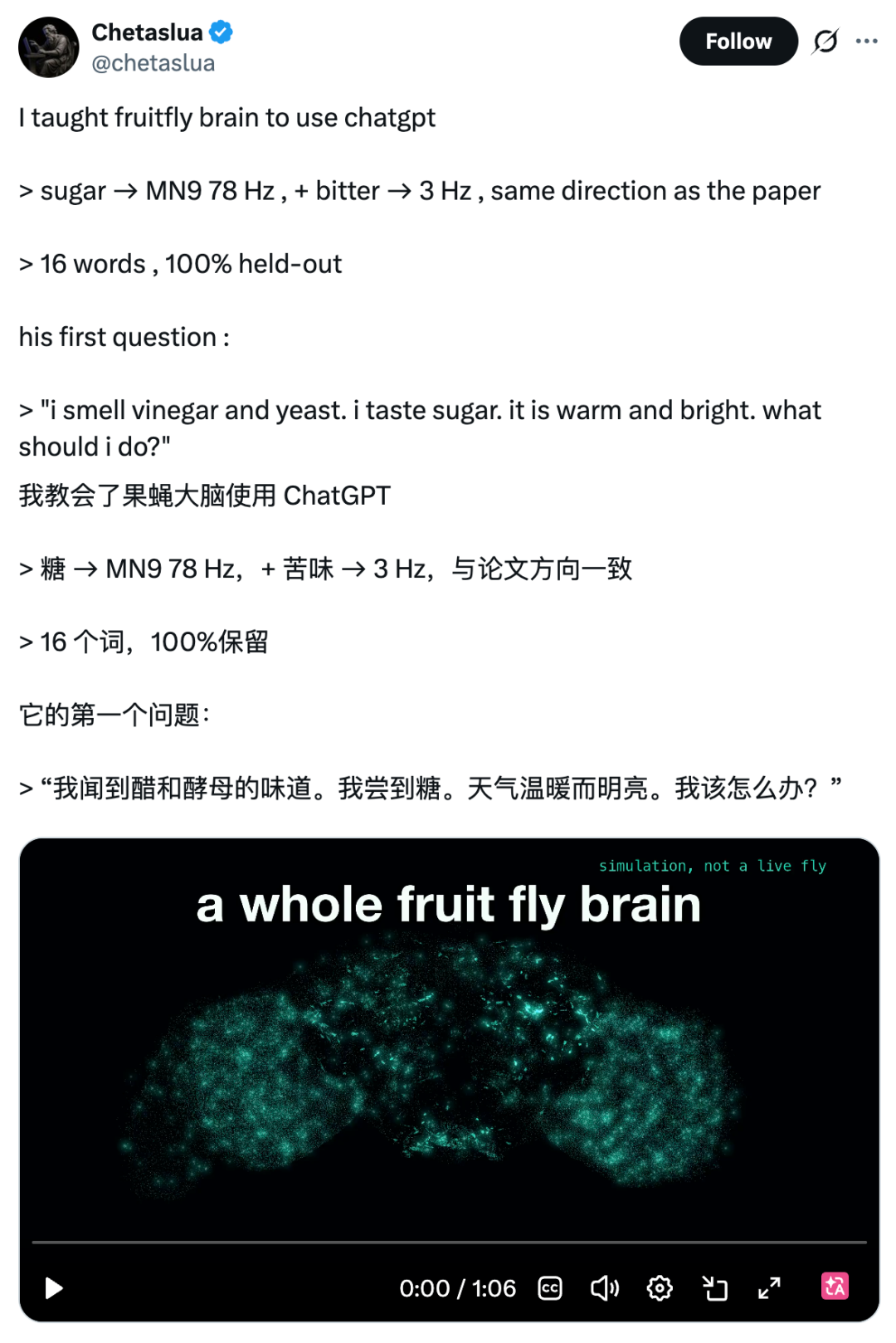
Developer Connects Fruit Fly Whole-Brain Connectome to ChatGPT, Translating Biological Neural Spikes into Natural Language for the First Time : Using the open-source male fruit fly connectome (MaleCNS v1.0), a developer built a neural spike simulator and trained a linear readout model on downstream neuronal firing data, decoding it into natural language to interface with ChatGPT. Experiments demonstrated that the system accurately generated perceptual descriptions upon receiving stimuli and executed virtual obstacle avoidance in response to ChatGPT motor commands, illustrating a novel bridge between biological connectomes and LLM semantic latent spaces. (Source: 36Kr)
Jensen Huang and Fields Medalist Clash Over Falsifiability of AI Safety : In response to “extinction within a decade” warnings stemming from a former Anthropic researcher’s resignation, NVIDIA CEO Jensen Huang dismissed doomsday rhetoric as an “exaggerated, arrogant marketing gimmick.” Concurrently, newly minted Fields Medalist Jacob Tsimerman announced the establishment of the Mathematical AI Safety Institute (MAISI), advocating the use of zero-knowledge proofs and cryptographic tools to transform AI safety into mathematically provable foundations, igniting a broader debate over safety standard governance. (Source: 36Kr)
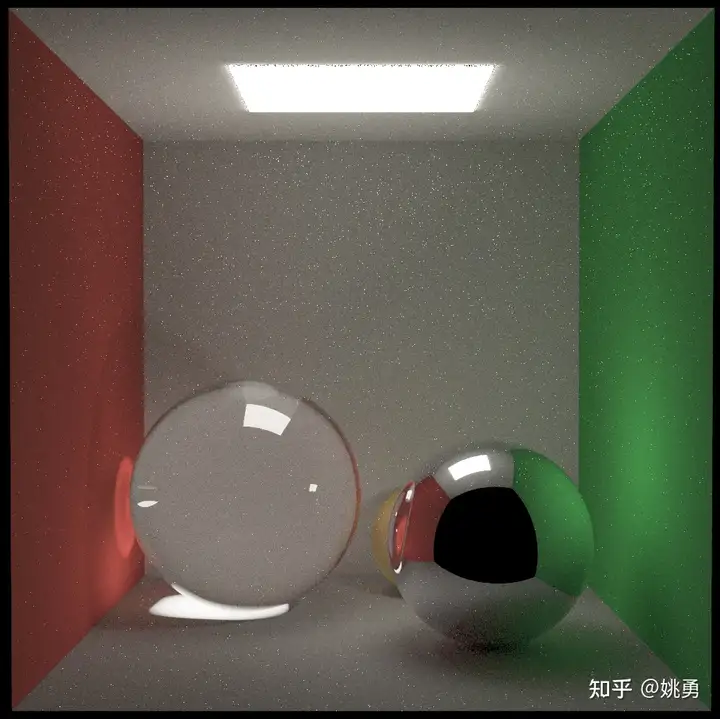
Local LLM Benchmarks Diverge: High-Sparsity MoE Outperforms Overthinking Dense Models : Graphics engineers evaluating real-world ray-tracing C++/Vulkan coding and autonomous debugging observed that Qwen3.8-27B Dense entered prolonged “overthinking” loops without generating runnable code, whereas a 125B MoE (nvfp4) delivered fully functioning programs within 10 minutes. High-sparsity MoEs demonstrated overwhelming advantages in total ROI across local memory bandwidth and stored knowledge capacity. (Source: ZhihuFrontier)
Reliance on AI for Mental Health Support Resonates: Filling Real-World Gaps in Social Psych Support Systems : Discussions flared across community forums regarding users turning to ChatGPT for late-night emotional support. Many pointed out that exorbitant therapy costs, healthcare shortages, and logistical barriers render professional counseling inaccessible to vulnerable populations; AI offers essential emotional triage through its judgment-free, 24/7 availability and should not be patronizingly dismissed. (Source: Reddit r/ChatGPT)
💡 Other News
Over 100 Female European Politicians Targeted by Deepfake Pornography; Lawmakers Call for Swift, Piercing Enforcement : An investigation published by think tank Agora revealed that nearly 150 lawmakers across 22 EU member states (predominantly women) have been targeted on over a hundred deepfake websites using non-consensual likenesses and one-click undressing tools. European parliamentarians and legal experts are calling for strict legislation explicitly prohibiting unauthorized AI-generated explicit content, alongside direct accountability enforcement for hosting and generation platforms. (Source: WIRED)

Fruit Fly Whole-Brain Connectome Successfully Drives Physical Robot Navigation : A developer connected a digital twin model of the fruit fly whole-brain connectome—encompassing 166,000 neurons and 25 million synapses—to a physical bio-inspired legged robot (Strandbeest), successfully driving real-world walking and obstacle avoidance via simulated neural firing commands. (Source: jpt401)
Interactive Science Project “Relativity Park” Goes Viral: Strolling Through a Relativistic World at 5 km/h : Built with Three.js, the open-source interactive project “Relativity Park” sets the speed of light to a walking pace of 5 km/h, allowing users to intuitively experience complex relativistic phenomena such as light travel time delay, Doppler red/blue shifts, length contraction, and relativistic beaming as they stroll. (Source: mcleavey)