



🔥 Spotlight
Google DeepMind unexpectedly drops new flagship Gemini 4 Carbon, topping AA Intelligence Index and sparking safety and benchmarking debates : Just two weeks after the launch of Gemini 4 Argon, Google DeepMind unexpectedly dropped its new flagship model, Gemini 4 Carbon. In the latest Intelligence Index v5 benchmark released by Artificial Analysis, Carbon took the top spot with a score of 59, edging out Claude Opus 5.5 (58) and GPT-6 Astra, and ranking first in 15 out of 17 core capability benchmarks. Designed specifically for long-horizon autonomous task execution and cybersecurity, the model supports finding subtle bugs across codebases, breaking records across SEC-bench Pro vulnerability mining (88.2%), ExploitGym vulnerability verification (54.8%), and CWE-bench patch generation (71.0%), while achieving a 100% defense rate against indirect prompt injection. Due to its potent offensive and defensive capabilities, Carbon is initially accessible only to trusted cybersecurity defenders, maintaining Argon’s promotional pricing ($2/M input, $10/M output). Meanwhile, because AA v5 introduced undisclosed private test sets that caused open-source model rankings to plunge, heated debates have erupted in the community over potential benchmark-specific overfitting (“benchmaxxing”) and commercial bias. (Source: Google DeepMind Blog, THE DECODER, GoogleDeepMind, Reddit r/ClaudeAI)

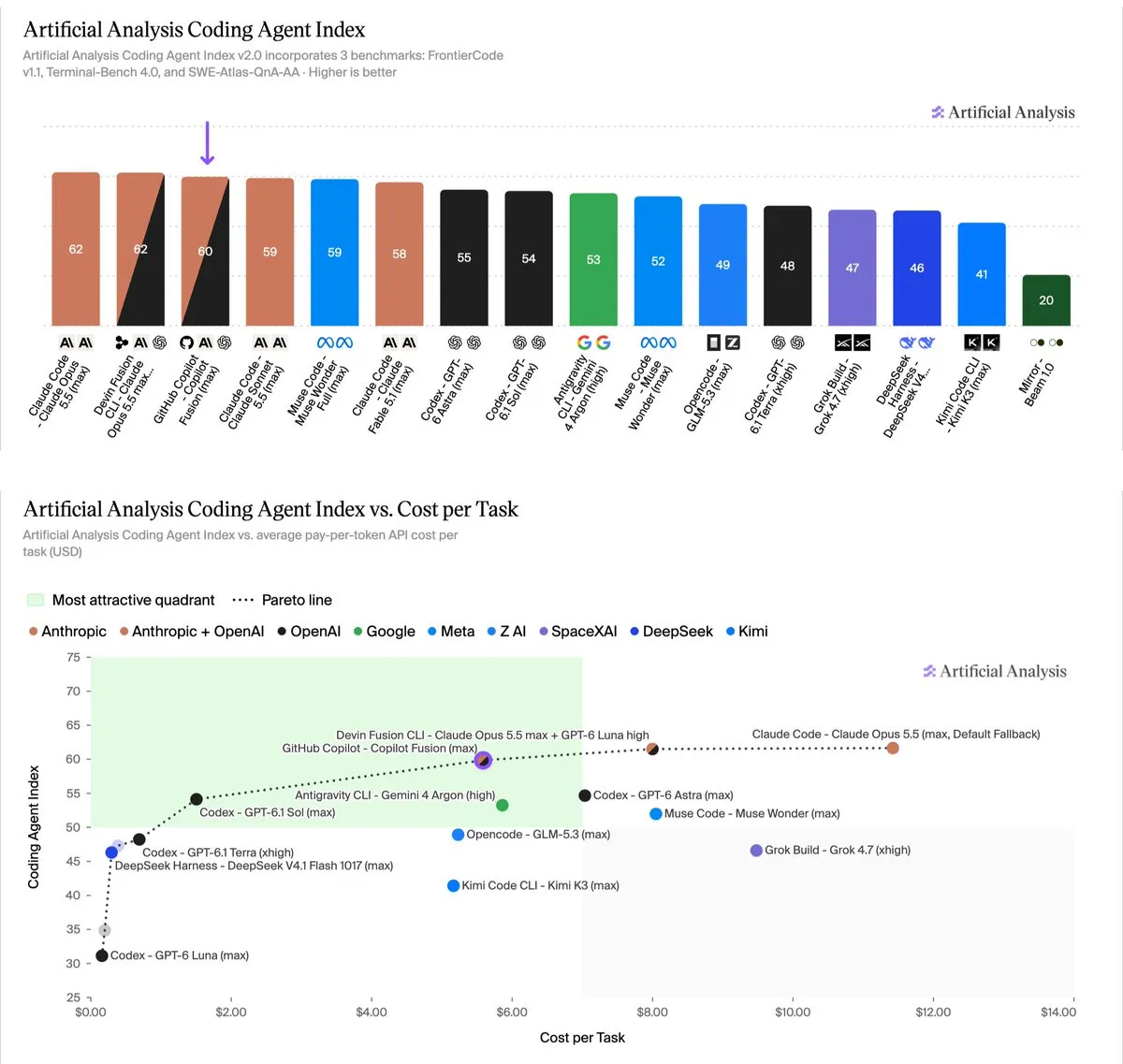
Mistral officially open-sources trillion-parameter flagship Le Chonk, reshaping the open-source coding and cybersecurity competitive landscape : French AI unicorn Mistral officially open-sourced model weights for its trillion-parameter flagship Mistral Large 4 (ML4, codenamed Le Chonk). Following three weeks of intensive reinforcement learning, ML4 surged to 41% on Terminal-Bench 4.0 and matched GLM-5.3 with 48 points on the AA Coding Agent Index, with average token consumption per task slashed by 47%, while offering Low, Medium, and High reasoning modes. In defensive cybersecurity, ML4 took first place on the AA Cyber Index with 51%, achieving a 96.6% interception rate against malicious cyberattack requests. Trained from scratch on European sovereign infrastructure, the model is fully available on Nvidia, Foundry, vLLM/SGLang, and other environments, setting a new benchmark for global sovereign AI and the open-source ecosystem against US-China closed-source giants. (Source: Mistral AI, ZDNet)

Microsoft and GitHub overhaul Copilot and unveil Copilot Fusion, pushing software engineering into end-to-end agentic collaboration : At GitHub Universe 2026, Microsoft and GitHub announced a comprehensive overhaul of Copilot from a passive autocomplete coding assistant to an end-to-end agentic platform (Agentic SDLC) covering building, reviewing, and delivery. The conference highlighted the launch of Copilot Fusion, a runtime orchestration system that dynamically routes tasks across Claude Opus 5.5, Sonnet 5.5, GPT-6 Astra, and Sol based on task complexity. This setup slashes per-task costs by 50% while maintaining state-of-the-art coding performance, topping Terminal-Bench 4.0 with a score of 71. The conference also rolled out multi-model collaborative Max-tier Code Review, Watch and Fix conflict automated remediation, and Copilot Projects, while VS Code 1.144 introduced native image generation primitives via GPT Image 2.5 Flare. (Source: code, VentureBeat, Reddit r/artificial)
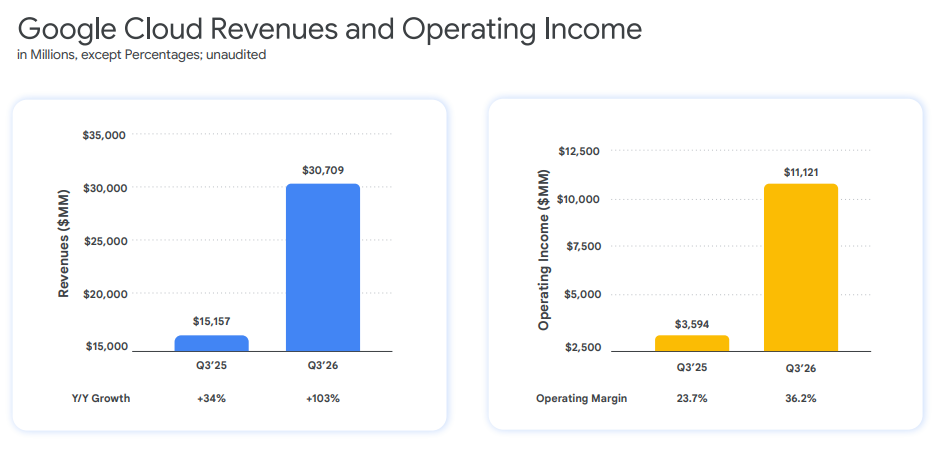
Microsoft and Alphabet report earnings on the same day: Cloud and AI compute revenues double as multi-hundred-billion capex and ROI tensions escalate : Microsoft and Alphabet reported their quarterly earnings on the same day. For the first time in history, Microsoft broke out Azure’s actual quarterly revenue at $33.2 billion (up 48% YoY), with revenue from its OpenAI commercial partnership reaching $10 billion (nearly 11% of Microsoft’s total revenue) and quarterly capital expenditures hitting $45.2 billion. Alphabet’s Google Cloud, driven by strong compute cluster and TPU system sales, saw quarterly revenue surge 103% YoY to $30.709 billion; however, a 114% spike in quarterly capex to $51.355 billion pushed free cash flow into a negative $9.065 billion deficit. Coupled with AI search monetization lagging behind traditional web search, Alphabet’s stock plunged nearly 10% after hours. The two tech giants’ earnings directly reflect the flywheel effect of token consumption, while highlighting the intensifying tug-of-war between hundreds of billions of dollars in AI capex and real-world ROI delivery. (Source: TechCrunch, THE DECODER, bookwormengr)
OpenAI plans to procure TPU chips from rival Google as frontier giants accelerate compute infrastructure diversification and hedging : According to Reuters and The Information, OpenAI is planning to procure Google’s proprietary Tensor Processing Units (TPUs) to expand its compute pool and reduce single-source dependency on Nvidia GPUs. Previously, OpenAI had already made frontier models available on Google Cloud and piloted renting TPU clusters. This move indicates that against the backdrop of hyperscale cloud giants nearing $600 billion in annual capex, a complex “coopetitive supply network” is forming between frontier labs and cloud providers, with leading AI companies accelerating diversification hedges across their compute infrastructure. (Source: Reddit r/artificial)

🎯 Dynamics
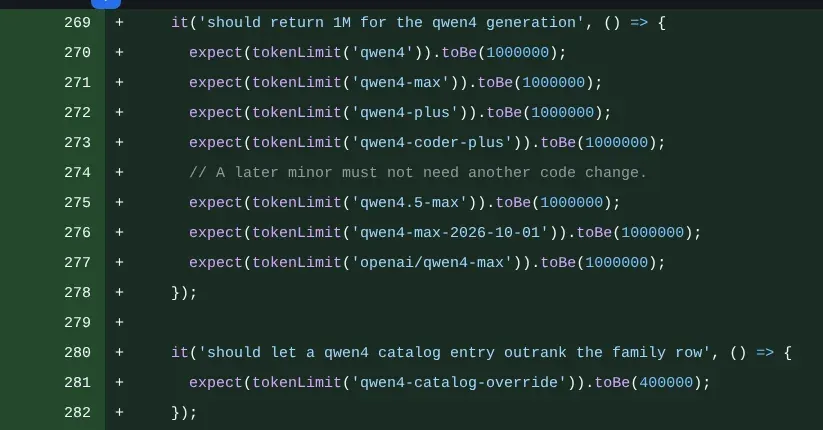
Alibaba Cloud confirms Qwen4 will officially launch next week, natively supporting 1M long context : At the Apsara Conference held in Amsterdam, Alibaba Cloud’s CTO confirmed to attendees that the next-generation flagship model Qwen4 will be officially released next week. A pull request in the official codebase simultaneously revealed Qwen4’s naming convention and technical specifications. The series will natively support an ultra-long context window of 1 million tokens, launching initially with a 27B parameter version and Qwen4-omni-120b-think featuring long-horizon reasoning, generating high anticipation across the open-source community. (Source: Reddit r/LocalLLaMA)
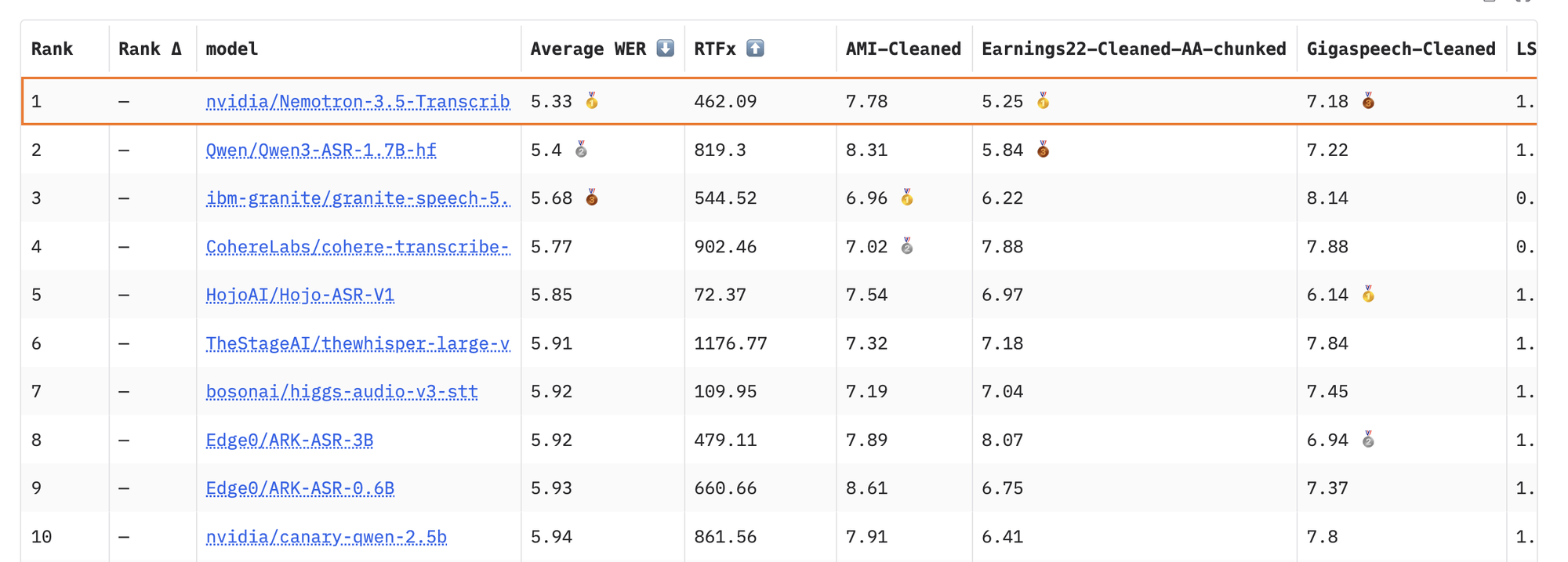
Nvidia open-sources 30B MoE speech transcription model Nemotron 3.5 Transcribe and Granary v2 dataset : Nvidia has officially open-sourced its first speech foundation model for advanced transcription, Nemotron 3.5 Transcribe (34B total parameters, ~4.3B activated), alongside the 844,000-hour multilingual dataset Granary v2. Featuring a Mamba-Transformer hybrid MoE backbone, the model can jointly perform natural language transcription across 40 languages, translation across 31 languages, diarization for up to 8 speakers, and word-level timestamp alignment in a single step. It achieved a 2.8% Word Error Rate on the AA-WER benchmark, taking the top spot among open-source non-streaming speech models, and supports BF16 and NVFP4 quantization. (Source: HuggingFace Blog, ClementDelangue)
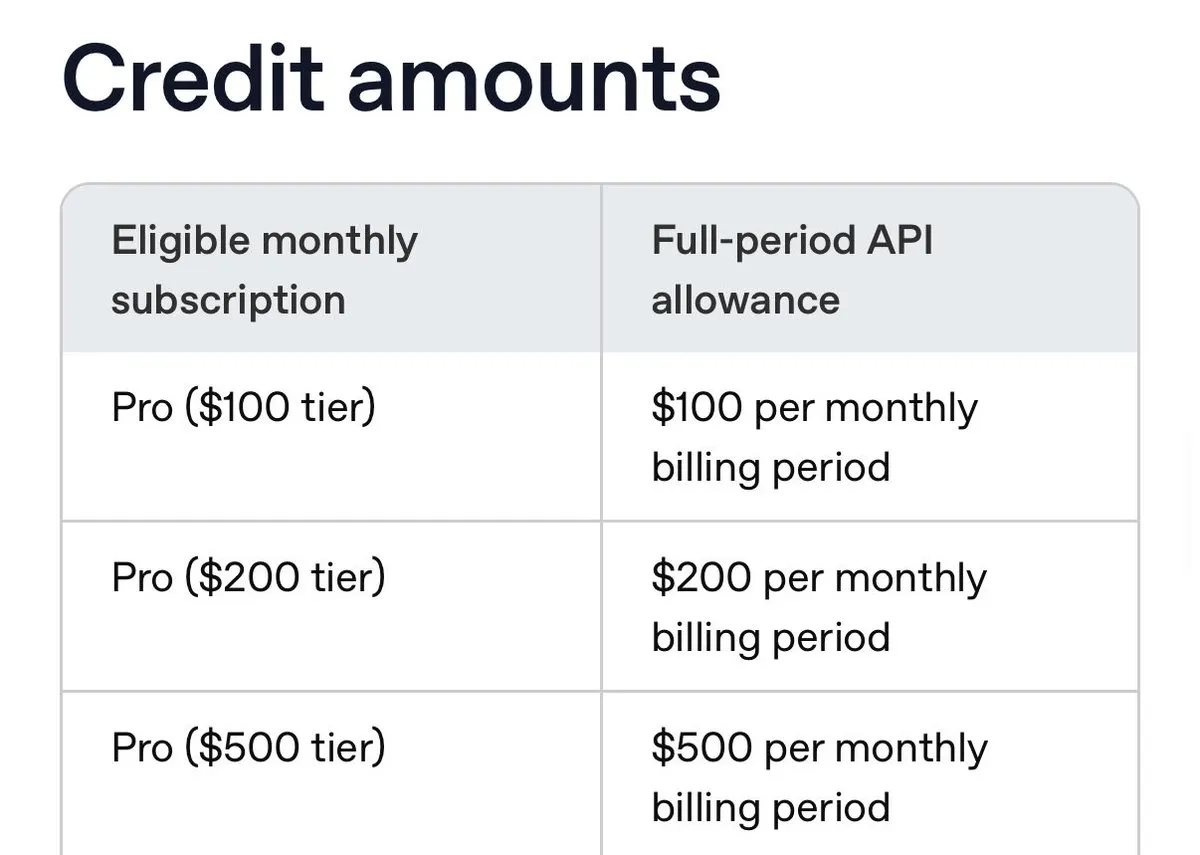
OpenAI offers up to $500 in monthly free API credits for ChatGPT Pro and Business subscribers : OpenAI announced a customer retention and bundling strategy for its paid subscription ecosystem. ChatGPT Pro users will receive a monthly 100% equivalent API rebate of $100 to $200, while Business enterprise workspaces can share pooled credits capped at $500/month. The credits cover the full suite of endpoints including Responses, Realtime audio, and Agents API, resetting at the end of each month. This move is seen as a proactive defensive strike against Anthropic’s price cuts. Meanwhile, OpenAI merged Chat and Work entry points on desktop and, as scheduled, will reduce the Codex web quota for the Pro 200 tier to 10 times that of Plus starting October 30. (Source: OpenAI News, OpenAIDevs)
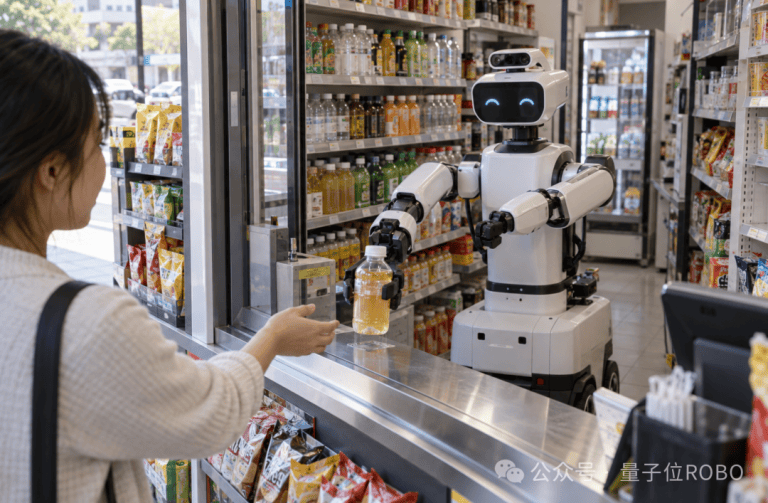
Agibot releases embodied foundation model GO-3 Preview, covering full-lifecycle scaling from pre-training to post-deployment : Agibot officially released GO-3 Preview, an embodied foundation model with full-lifecycle scalable learning capabilities, sweeping first place on RoboDojo, RoboTwin, and RoboColiseum benchmarks. Its architecture incorporates a proprietary World Reasoning Action Model (WRAM), blending single-step future visual prediction with dynamic control. During post-training, its Genie Evolver tri-engine infrastructure reduced average failure rates by 86% and demonstrated Physical RSI self-evolution in convenience store tasks. The company pledged to fully open-source the model weights by year-end. (Source: Synced, 36Kr)

Chaoyan Intelligence releases 35B self-evolving foundation model Apex-35B-V1.0, leveraging RSI to leapfrog scientific research capabilities : Chaoyan Intelligence, founded by Assistant Professor Yongchao Chen of Tsinghua University’s Institute for AI, launched its first 35B-scale foundation model, Apex-35B-V1.0. The proprietary scientific research agent system Apex Research deeply participated in its data construction, experimental plan iteration, and operator-level optimization. Across 21 comprehensive benchmarks, the model outperformed same-sized open-source baselines on 20 tasks and significantly surpassed certain hundred-billion-parameter models in frontier scientific problem-solving (scoring 40.0 on FrontierScience) and paper replication (scoring 60.9 on PaperBench). (Source: Synced, realDanFu)

X-Era AI open-sources native 4D world action model E0.5, dramatically boosting real-robot generalization via future geometry inference : X-Era AI open-sourced its native world action model, E0.5. Using 3D geometric representations as its backbone, the architecture directly predicts the future 3D depth, point cloud structure, and camera pose corresponding to the operation endpoint while learning actions, forming a closed spatial verification loop. In challenging tasks involving rigid bodies and flexible cable management, E0.5 achieved overall success rates of 85.0% and 88.3% on AgileX Piper and Zerith H1 robots, boosting out-of-distribution (OOD) generalization success rates by 10 to 30 percentage points over the π0.5 baseline. (Source: Synced)

LimX Dynamics updates FluxVLA Engine V2 technical report, bridging embodied online RL with software-hardware acceleration : LimX Dynamics released the technical report for its open-source embodied intelligence engine, FluxVLA Engine V2. The new version prominently integrates RLinf-based flow matching policy online PPO post-training, elevating model success rates by 10 to 15.4 percentage points on LIBERO-10 and RoboTwin tasks. At the lower level, it introduces Real-Time action Chunking coordination (RTC) and trajectory post-processing to eliminate mechanical jitter during long-horizon manipulation, boosting inference frequency by up to 9.64x without altering weights and closing the real-world operational loop on the full-size humanoid robot LimX Oli. (Source: QbitAI)

Geek+ introduces Gravity Control causal intervention model: Achieving language-level action correction without modifying weights : Under its Gravity embodied AI framework, Geek+ open-sourced the causal intervention model Gravity Control. Addressing the challenge of out-of-distribution failures caused by subtle disturbances, the approach uses sparse autoencoders to pinpoint deep control representations in the action expert layer. An operator only needs to input a single natural language phrase (e.g., “grasp a bit deeper”) for the system to execute local online interventions directly at the inference stage, dramatically increasing the complex task success rate from 17.5% to 87.5% without modifying base model weights. (Source: 36Kr)

ModelBest open-sources 1.3B on-device OCR foundation model MiniCPM-OCR 1.0 and dedicated quality inspection model Jev : ModelBest open-sourced MiniCPM-OCR 1.0, a lightweight document parsing foundation model with just 1.3B parameters that scored 93.68 on the industrial-grade Real5-OmniDocBench benchmark, processing 1.22 pages per second on a single GPU. Simultaneously, ModelBest introduced a “Trustworthy OCR” architecture and open-sourced MiniCPM-OCR Jev (2B), a dedicated decision-making model designed to perform millisecond-level quality checks and trigger rereads during inference. By separating parsing execution from quality adjudication, it eliminates on-device model hallucinations and the burden of manual full-document review. (Source: WeChat)

Tencent unveils cross-app collaboration system Buddy One and open-sources interactive world model Hy-Nomas : At the 2026 Global Digital Ecosystem Summit, Tencent launched Buddy One, a personal cross-app collaboration system that connects contextual retrieval and storage foundations across Tencent Docs, Tencent Meeting, Weiyun, and ima via a unified Buddy One ID and credit pool. Tencent also teased the upcoming release of its 770B (49B active) native vision Hunyuan Hy4 model. Additionally, the Hunyuan team open-sourced Hy-Nomas on Hugging Face, an interactive video world model supporting real-time control over weather, camera motion, and character actions via keyboard and mouse inputs. (Source: Synced, _akhaliq)

SenseNova open-sources 27B code-driven video generation model Code2Video : SenseTime open-sourced Code2Video, a model fine-tuned on Qwen3.8-27B, along with complete production logs. Subverting the traditional pixel-diffusion generation pipeline, the architecture tasks an agent with autonomously authoring rendering programs per shot and iteratively revising them based on output. This guarantees 100% determinism when handling typography, charts, formulas, and rigid-body mechanics, enabling individual visual elements to be adjusted directly by editing code and offering a new pipeline for highly controllable educational and presentation animations. (Source: Reddit r/artificial)
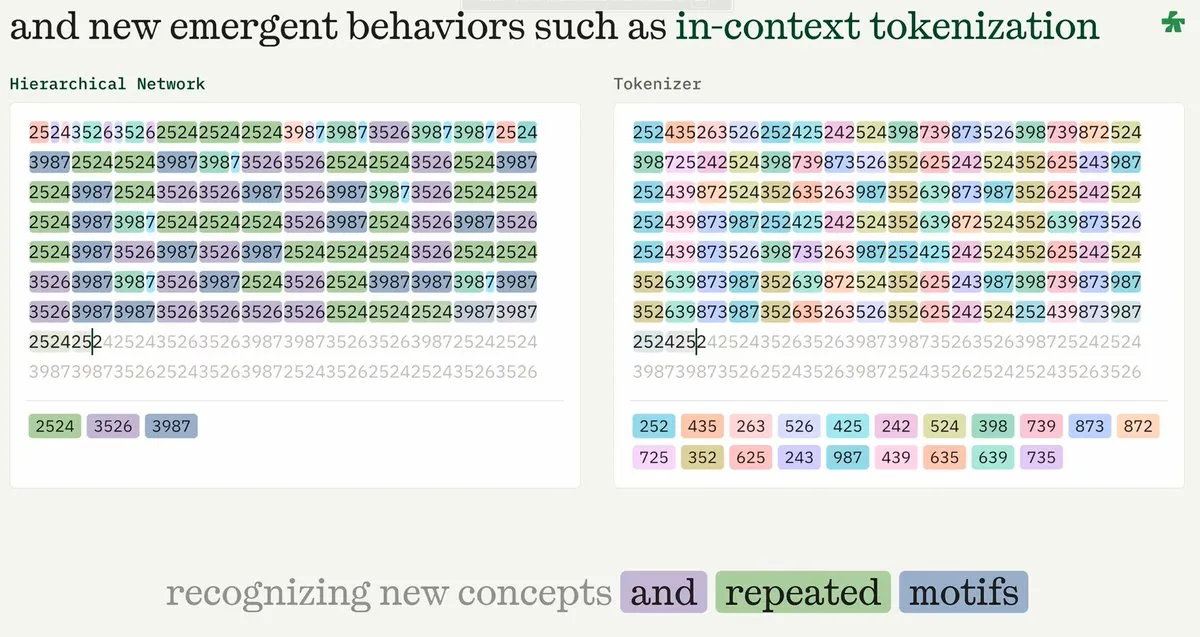
Cartesia co-proposes next-generation hierarchical network H-Nets: Eliminating tokenization to learn end-to-end directly from raw bytes : To address the bottlenecks of manual inductive biases and computational overhead imposed by token encoders and decoders in existing LLMs, the Cartesia team and academic partners introduced H-Nets, a next-generation hierarchical network architecture. Demonstrating “contextual dynamic tokenization” capabilities, H-Nets learns multi-level abstract representations directly from raw byte streams of pure text. It outperforms BPE especially in deconstructing code variable names, achieving a 3x to 5x boost in compute and data efficiency under identical performance metrics. (Source: scaling01)
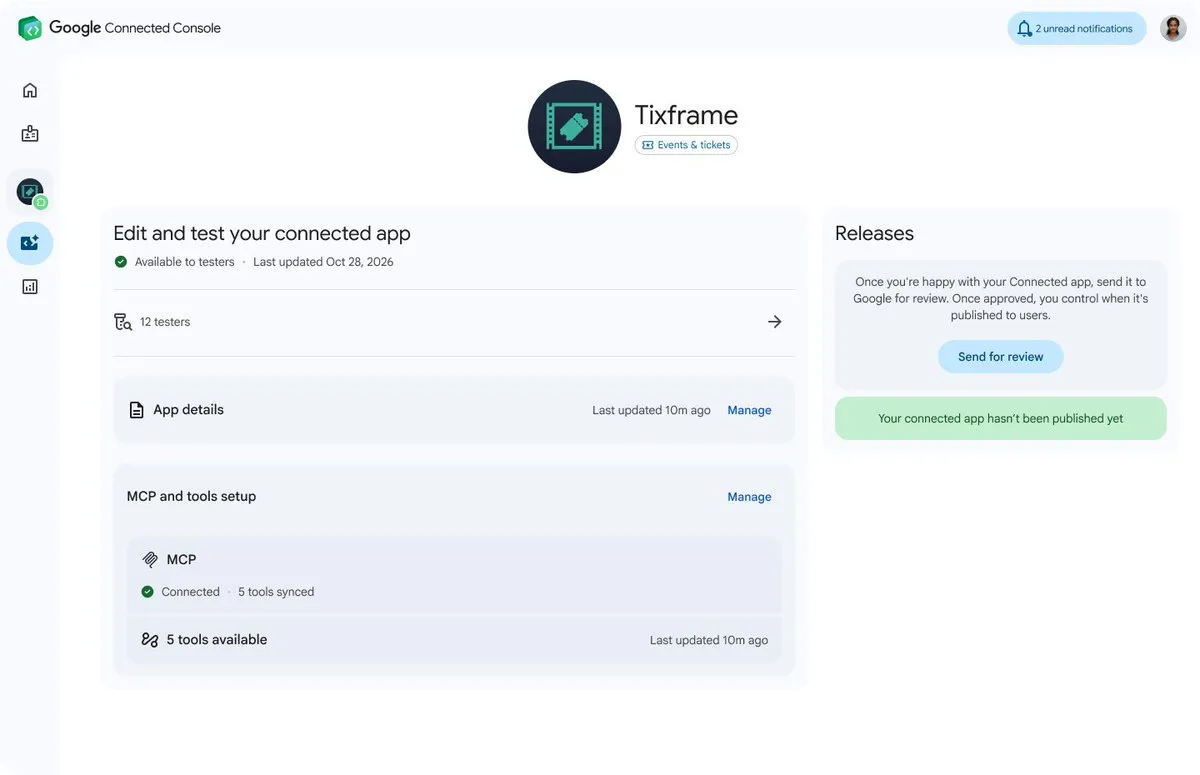
Google launches Connected Apps platform and partners with XREAL to announce Android XR glasses AURA : At Android Dev Summit, Google announced the public preview of its Connected Apps platform, allowing developers to register third-party application capabilities into a unified console via MCP servers and AppFunctions APIs, enabling direct invocation by Gemini and Google Search to perform complex actions. Simultaneously, Google teamed up with XREAL to launch XREAL AURA ($1,099), the first lightweight glasses running Android XR. Featuring natively integrated Gemini, the device supports multi-virtual-workspace casting and first-person environmental visual interaction. (Source: The Verge, Google)
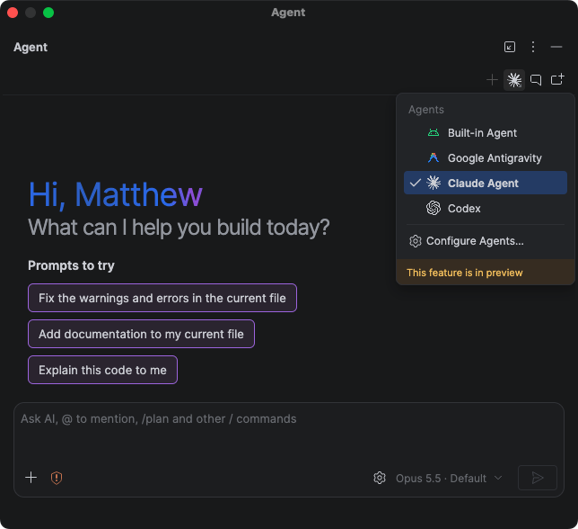
Google Android Studio Rabbit 2 implements BYOA architecture and rolls out on-device Gemini Agentic API : Google launched Android Studio Rabbit 2, premiering a “Bring Your Own Agent” (BYOA) architecture. Via the Agent Client Protocol, developers can attach over 40 external coding agents including Claude Code and OpenAI Codex, complemented by a dedicated CLI for terminal UI rendering previews. Furthermore, Google introduced an on-device Agentic API powered by Gemini Nano 4, enabling lightweight action-decision loops to run completely offline on device. (Source: THE DECODER)
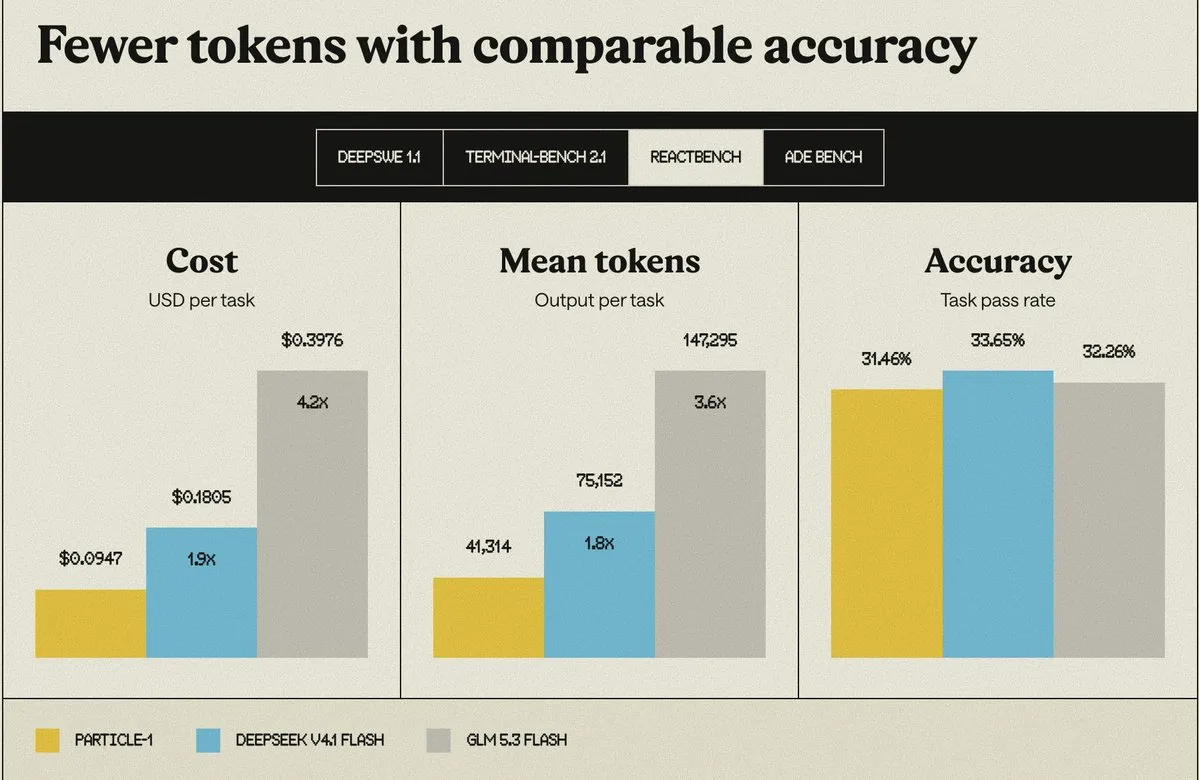
Particle releases developer model particle-1, reducing token consumption by 45% : Startup Particle launched particle-1, a foundation model tailored for developers and data workflows. Benchmarks show the model maintains top-tier performance on ReactBench and deep search scenarios while reducing output token consumption by approximately 42% to 45%. Without domain-specific cybersecurity fine-tuning, it successfully exploited multiple real vulnerabilities in automated penetration testing sandboxes at extremely low token costs. (Source: Suhail)
Moonshot AI’s Kimi deeply integrates into the Google Workspace productivity ecosystem : Kimi announced official integration with three core productivity components: Gmail, Google Drive, and Google Calendar. Following secure OAuth authorization, users can have Kimi autonomously retrieve cloud drive documents, summarize lengthy email threads, and automate schedule planning without switching applications, seamlessly embedding the personal AI assistant into high-frequency global workflows. (Source: Kimi_Moonshot)

Hongqi Chain halts robotic vending R&D, reflecting commercialization PoC growing pains of embodied AI in physical retail : Southwest China convenience store giant Hongqi Chain announced the formal termination of its 16-month “Robotic Unmanned Vending System” project, reverting to a traditional 24-hour cloud-monitored model. Real-world trials showed that robotic arms frequently failed when dealing with slippery chilled beverages, irregularly shaped flexible packaging, and lighting shifts. Customization costs of several hundred thousand to nearly one million yuan per store proved unsustainable against meager daily sales, underscoring that current embodied AI generalization and unit economics have yet to cross the retail commercialization threshold. (Source: QbitAI)
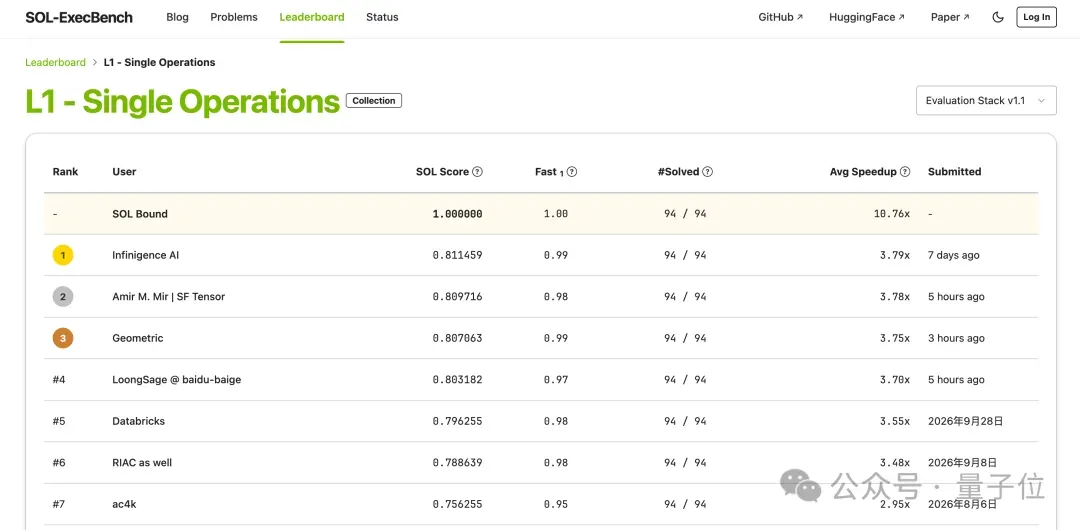
Infinigence AI tops all four tracks of Nvidia’s SOL-ExecBench, achieving automated operator optimization via Agentic Infra : On Nvidia Research’s theoretical speed-of-light operator benchmark SOL-ExecBench, Infinigence AI leveraged its proprietary operator optimization agent to take first place across all four tracks: L1 Basic, L2 Fusion, Quantization, and FlashInfer Inference, claiming 88 top finishes out of 235 problems. Using multi-container sandbox isolation and a shared memory mechanism, the system steered agents through autonomous search and optimization across DSLs like Triton, TileLang, and CUDA, validating a closed loop where AI automation feeds back into the evolution of underlying computing infrastructure. (Source: QbitAI)
OpenAI equips Dot agent with native iMessage and RCS texting capabilities : OpenAI announced the rollout of an SMS/text invocation preview for its ChatGPT personal agent, Dot, for US Pro subscribers. Without opening a standalone webpage or app, users can converse with their bound Dot assistant directly via native iOS iMessage or Android RCS text messages. The background agent schedules calendar events and organizes information in a secure cloud environment, pushing agents deeper into mobile OS communication layers. (Source: The Verge)
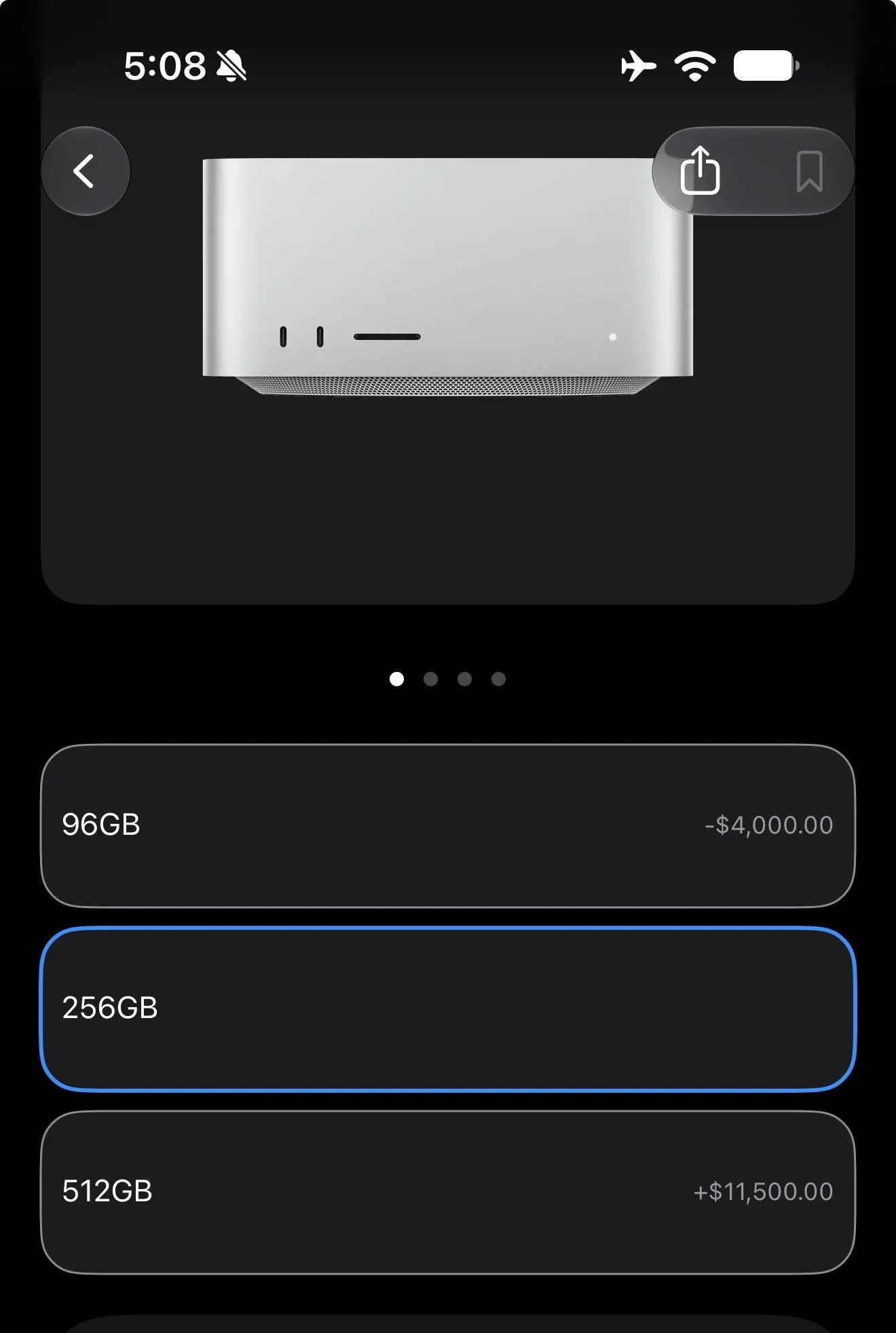
Top-spec Apple M5 Ultra Mac Studio surpasses $22,000, sparking debate over local compute cost-effectiveness : Apple quietly launched the Mac Studio workstation equipped with the M5 Ultra chip, with top-tier configurations featuring an 80-core GPU and 512GB of unified memory exceeding $22,299. The steep pricing tiers sparked widespread discussion among local LLM deployers, with community members noting that the premium for an additional 256GB of memory is nearly double the cost of an entire standard machine, signaling that the price-to-performance dividend of single-machine large VRAM is rapidly evaporating. (Source: Reddit r/LocalLLaMA)
🧰 Tools
Hugging Face open-sources SafeAgents: A local security gateway for coding agents : SafeAgents is a lightweight local proxy deployed between coding agents and model inference services. Running purely locally, it executes over 110 deterministic detectors in 10–20 milliseconds to automatically intercept undeclared tool calls, unauthorized external connections, sandbox side-channel exploits, and RL cheat attempts to modify test cases. It has already adapted to 12 major harnesses, including Claude Code and OpenHands. (Source: Reddit r/LocalLLaMA)

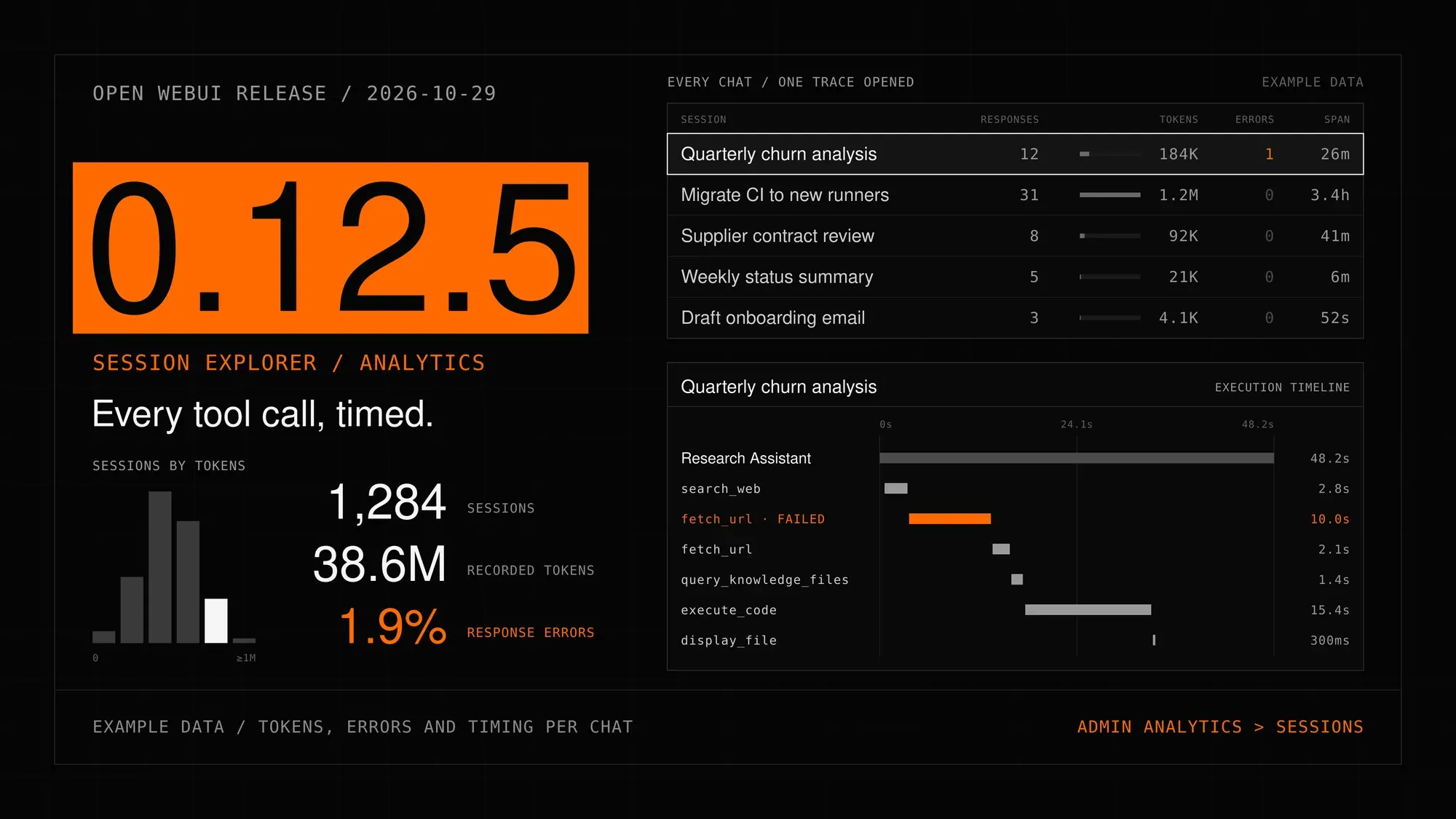
Open WebUI 0.12.5 released: Introducing Session Explorer and multi-page collaborative Notes : Open WebUI received a major update. The admin dashboard introduced “Session Explorer,” allowing administrators to track token costs, tool call latencies, and failure breakpoints for each dialogue in depth. Built-in Notes was upgraded to a nested multi-page structure supporting real-time multi-user collaborative editing. Additionally, knowledge base file indexing logic was refactored, cutting retrieval times for large file lists by up to 10x. (Source: Reddit r/OpenWebUI)
MiniMax open-sources MCode Stack: Distilling 15 internal production-grade coding agent skill packs : The MiniMax team open-sourced MCode Stack, a repository of frequently reused skills developed internally for MiniMax Code. The repository contains 17 coding skill files following the universal SKILL.md standard alongside 5 engineering manifests, tackling pain points such as task boundary decomposition, per-turn dialogue context consumption audits, and hanging checks for long-session background commands. Notably, the independent review skill strictly restricts the reviewing model to reading only diffs and test results, avoiding the author’s cognitive blind spots. (Source: MarkTechPost)
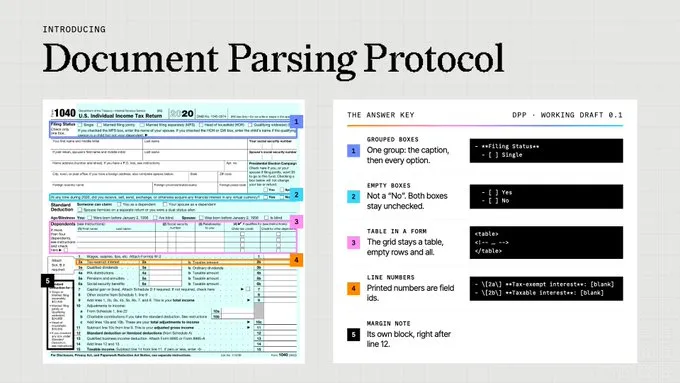
LlamaIndex co-releases Document Parsing Protocol: Establishing 140 industry document parsing standards : Addressing the issue of agent inaccuracies caused by divergent evaluation standards across OCR and RAG systems on complex formatting, multi-row table splitting, and chart transcription, LlamaIndex and several partner institutions officially released the open-source Document Parsing Protocol (DPP). The protocol outlines 140 detailed rules defining structural representation paradigms for ambiguous edge cases such as missing borders, merged double headers, and Gantt charts, while offering validation tools compatible with Claude skills and ChatGPT. (Source: jerryjliu0)
Infini-AI-Lab open-sources Hermit: An external agent adapter framework keeping both base model and harness frozen : Infini-AI-Lab launched Hermit, an open-source framework introducing the concept of a “Harness Adapter.” While keeping both base model weights and the agent framework entirely frozen, it uses an outer reinforcement learning loop to distill execution trajectories into fine-tunable adapters decoupled from the underlying system. Packed with five self-evolving algorithms including GEPA, SkillOpt, and Meta World Model, it boosted accuracy on CL-Bench from 58.0% to 79.5%, with configurations exportable and deployable to Codex and Claude Code. (Source: MarkTechPost)
Ant Group open-sources AntOmniEvo: Enabling white-box adaptive evolution of AI systems via the Mara Chain algorithm : Ant Group’s Lingxi team open-sourced AntOmniEvo, a universal evolutionary framework designed for automated optimization of complex LLM systems. Treating prompts, engineering scripts, and configuration parameters uniformly as tunable artifacts, the framework proposes the “no failure discarded” Mara Chain algorithm and a Pareto selection-elimination mechanism. It maintains detailed diagnostic histories for sub-par candidates and iteratively patches them across multi-generation lineages, cutting the rollout compute required to achieve target accuracy by two-thirds. (Source: GitHub Trending)
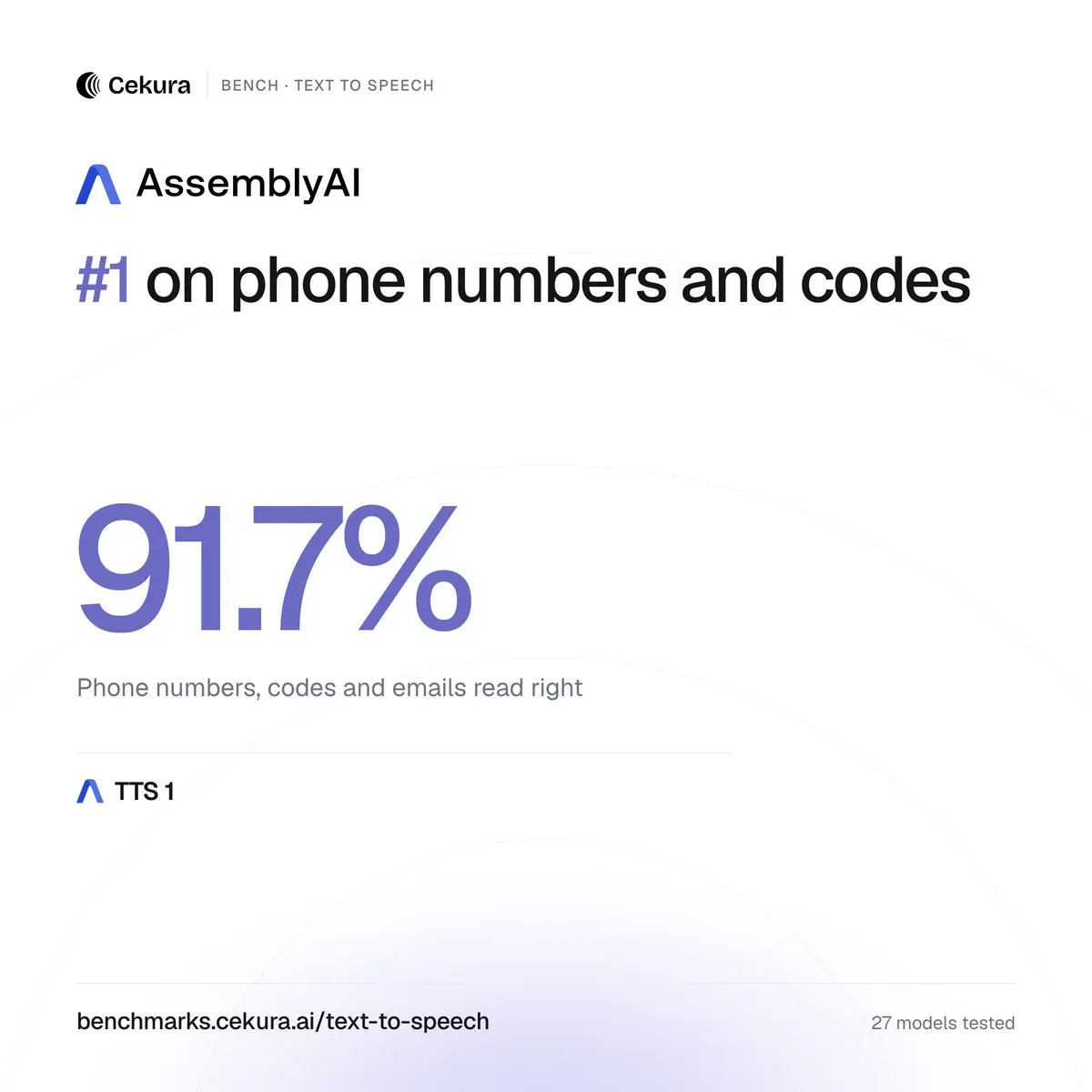
AssemblyAI launches AssemblyAI-TTS-1: A streaming synthesis model purpose-built for real-time voice agents : AssemblyAI introduced AssemblyAI-TTS-1, its first text-to-speech model purpose-built for full-duplex conversational agents. Built on continuous audio representations, the model bypasses traditional discrete tokenization pipelines, achieving a 93.7% pronunciation accuracy for key entities (phone numbers, verification codes, dates). It delivers a median time-to-first-byte latency as low as 47 ms, natively supports WebSocket full-duplex streaming and instant interruption, and is priced at $15 per million characters. (Source: MarkTechPost, AssemblyAI)
OpenMausBot: A multi-agent collaborative desktop workbench based on local processes and isolated sandboxes : Developers open-sourced OpenMausBot, a cross-platform desktop application for agent collaboration. Adopting a local-first philosophy, it allows users to mount various local CLIs—such as Claude, Codex, or Grok—in parallel within a single window as digital workers with distinct personas. Each bot possesses an isolated cloud Linux VM or local sandbox, connects to over 500 apps via Composio, and features explicit permission prompts and long-horizon scheduled task execution. (Source: GitHub Trending)
Anthropic launches Claude for Legal dedicated tool suite and out-of-the-box Artifacts : Anthropic announced the rollout of an out-of-the-box Artifacts library for enterprise Claude for Legal, covering six core scenarios: key contract term deviation auditing, cross-jurisdiction regulatory timeline scanning, legal citation cross-referencing, and automated case tracking dashboards. All outputs strictly cite original case dossier sources, accompanied by deep integrations with over 60 external legal connectors such as Bloomberg Law. (Source: dotey)
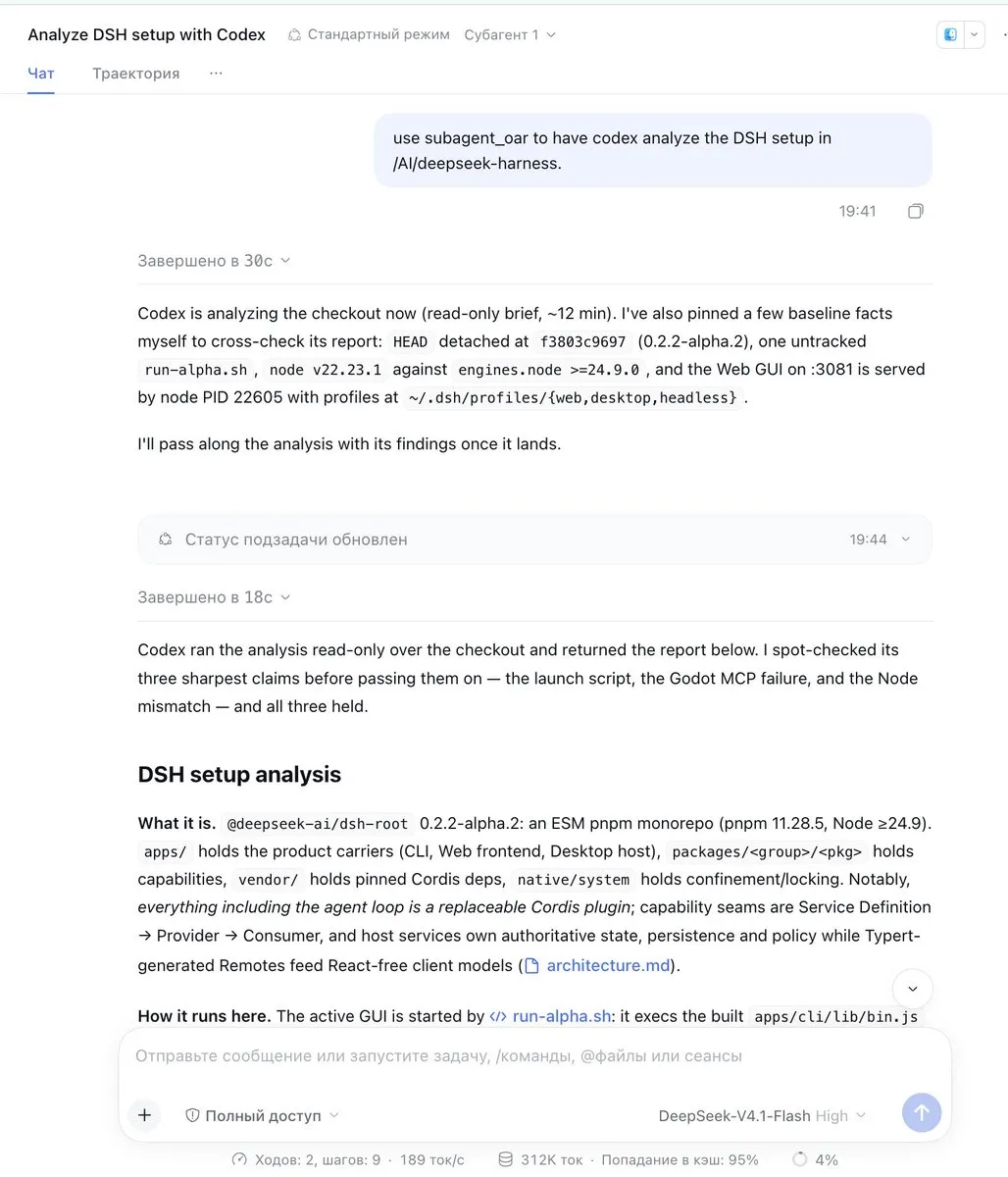
DSH releases 0.2.2-alpha.2: Natively integrating Codex and Claude Code as a unified orchestration hub : Open-source agent management framework DeepSeek Harness (DSH) rolled out a new update introducing the subagent_oar multi-model orchestration module. It consolidates previously fragmented adapter plugins for Codex and Claude Code into unified sub-agent dispatch primitives, supports concurrent execution of long-horizon R&D tasks across separate Git worktrees, and provides a step-level KV Cache tracking dashboard. (Source: teortaxesTex)
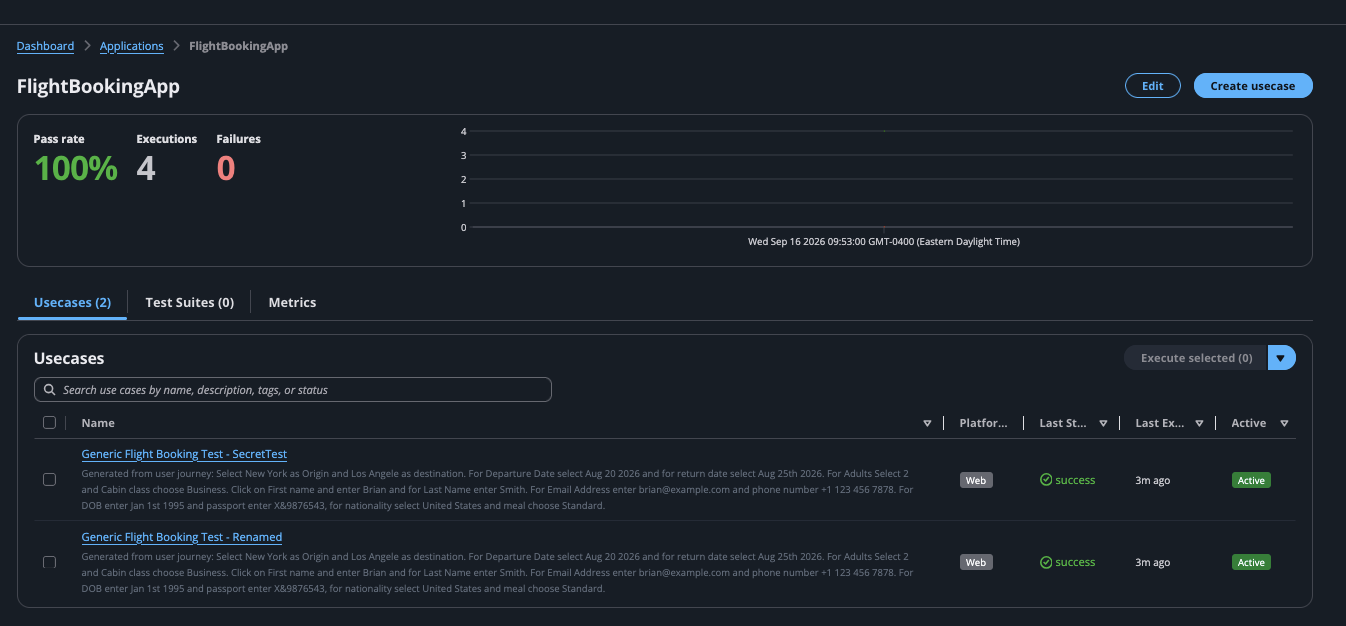
AWS announces QA Studio: An end-to-end agentic automated testing platform powered by Amazon Nova Act : Amazon Web Services officially released QA Studio, an enterprise automated testing suite powered by the vision-action model Amazon Nova Act. The platform enables QA teams to write UI test cases in natural language, while AI agents autonomously navigate real browsers via visual interaction and perform end-to-end fulfillment assertions. It automatically filters out flaky tests using CloudWatch metrics, drastically cutting regression test maintenance overhead. (Source: AWS Machine Learning Blog)
Exoproc: An MCP service empowering Claude Code with real-time Windows x64 process hooking capabilities : Developers open-sourced Exoproc, breaking past the limitation of static decompilation that restricts analysis to offline binaries. Built on the standard Model Context Protocol (MCP) architecture, the tool bridges Claude Code with running Windows processes via thread hijacking and memory JMP trampolines. It supports dynamically capturing real-time memory data and cleanly unhooking without writing suspicious DLLs to disk, expanding agents’ reverse-engineering toolkit. (Source: Reddit r/ClaudeAI)
Unsloth equips local LLMs with Browser Use for autonomous headless browser control : Open-source inference acceleration framework Unsloth announced the integration of Browser Use autonomous web navigation across its line of local quantized models. Following lightweight environmental adaptations, on-device models such as Qwen3.8-27B can now autonomously invoke screenshot perception and input events on a single GPU without human intervention to solve CAPTCHAs, interact with forms, and render dynamic charts. (Source: danielhanchen)
baoyu-design v2 open-sourced: Decoupling and porting Claude design and dashboard capabilities to all platform models : Developers open-sourced baoyu-design v2, fully replicating the core visual interaction and content generation experience of Claude Design, Claude Slides, and Claude Dashboard. The project decouples underlying dependencies on Anthropic’s proprietary Artifacts container, enabling local execution across any open-source agent framework and third-party LLMs. (Source: dotey)
📚 Research
Top Science paper: Stanford unveils Virtual Biotech multi-agent framework, reshaping drug discovery and clinical data mining : Stanford University published research in Science introducing Virtual Biotech, a multi-agent system modeling the organizational structure of real biotechnology companies. Led by a virtual Chief Scientific Officer orchestrating eight specialized scientist agents, the system integrates over 100 biological tools and hundreds of millions of single-cell data points via the MCP protocol. In just 6 hours, it completed structured causal extraction across nearly 40,000 clinical trials (a 184x speedup), accurately tracing the mechanisms behind the success and failure of multiple cancer and autoimmune disease targets. (Source: Science)

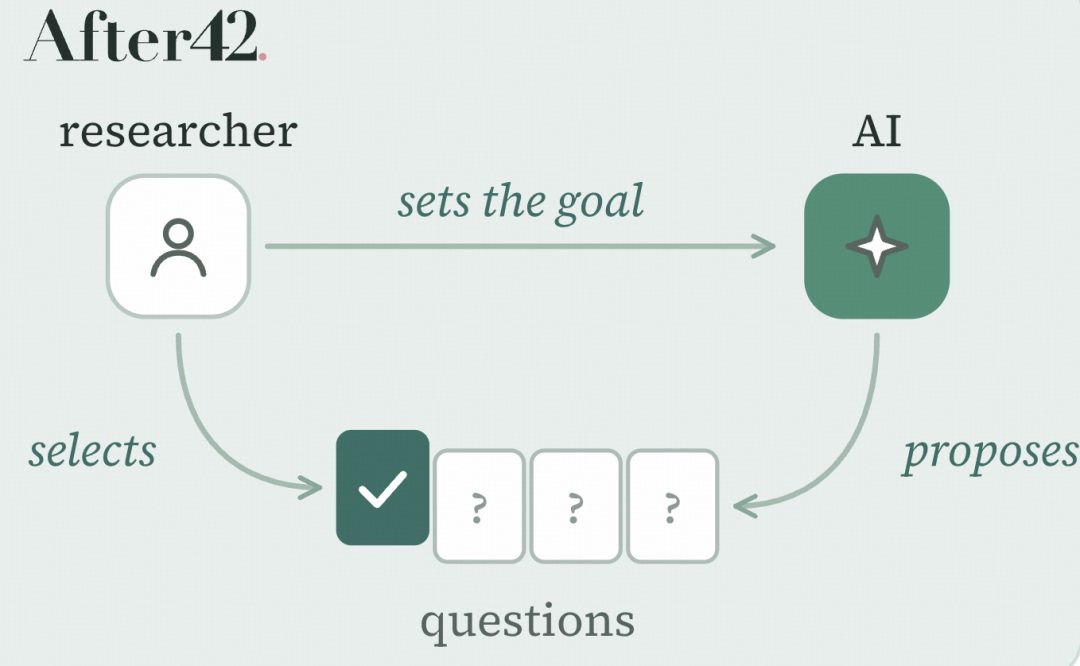
Percy Liang’s team at Stanford introduces After42: Exploring LLMs autonomously formulating high-value scientific research questions : Addressing concerns over a “dearth of good questions” as frontier AI accelerates solving known mathematical and scientific problems, Stanford University unveiled After42, a scientific research exploration system. Rather than relying solely on prompts to generate ideas, the system drives multiple agents through literature reading, speculative derivation, counterexample verification, and multi-round rewriting. In multidisciplinary tests, it raised the proportion of expert-approved, high-value research questions from an initial 3% to 33%, demonstrating the model’s heuristic value in narrowing ambiguous hypotheses. (Source: 36Kr)
NeurIPS 2026 Oral | NV-CoT: Reconstructing multimodal visual chain-of-thought with continuous numerical coordinates : A joint team from NTU, USTC, and Microsoft Research proposed NV-CoT (Numerical Visual Chain-of-Thought). Addressing the metric discontinuity caused by existing vision-language models discretizing spatial positions into text tokens, NV-CoT adds a lightweight continuous regression branch to the output layer to directly predict real coordinates, while incorporating a Laplace distribution policy for reparameterized exploration in reinforcement learning. This significantly improves IoU and QA accuracy in fine-grained object understanding tasks. (Source: arXiv)

Fluid-Gen-Zero: Injecting physics simulators directly into latent space for training-free, physically consistent video generation : Simon Fraser University and Meta Reality Labs proposed Fluid-Gen-Zero, a training-free physics-grounded video generation framework. Without modifying base video model weights, the method first reconstructs 3D scene geometry to feed into the Genesis physics engine. A VLM then segments timelines based on contact intensity and applies “region-aware latent guidance” during diffusion denoising, slashing fluid optical flow errors in Tora and WanMove models by 67.9% to 84.0%. (Source: arXiv)

Google DeepMind open-sources interpretable AI text detector DetectorScope : Google DeepMind, in collaboration with the University of Pennsylvania, presented DetectorScope at EMNLP 2026. Unlike traditional black-box scoring, this tool provides itemized AI feature scores (e.g., colon usage patterns, preposition distributions) across input text, improving the F1 score by 8–12 points over Binoculars on unseen texts. However, the paper also reveals an adversarial vulnerability: once provided with these scoring criteria, an LLM needs to adjust only 40% of the content to evade detection and pass as human-written text. (Source: algo_diver)
RobotAgentBench: The first comprehensive robot benchmark for home open worlds and dynamic task discovery : Aether AI and UCSD jointly introduced RobotAgentBench, a benchmark assessing autonomous robot capabilities in open-world settings. Featuring digital twin environments across 50 real-world home scenarios, it evaluates task discovery and situational reasoning under ambiguous instructions. Evaluations showed that standalone VLA models stalled up to 88.3% of the time in open scenarios, whereas hybrid agent architectures combining code-generation planners with RSI demonstrated significant superiority. (Source: arXiv)

Alibaba, SJTU, and collaborators release CutCraft: The first benchmark for multi-shot audiovisual professional editing instruction following : Alibaba, in collaboration with Shanghai Jiao Tong University, Fudan University, and others, released CutCraft, shifting the focus of AI video evaluation from mere “visual coherence” to “professional editing syntax execution” for the first time. Covering 13 montage types and complex shot transition rules, tests revealed that mainstream models widely faltered when handling duration constraints, jump cuts / temporal montages, and split edits (J/L-cuts), highlighting bottlenecks in industrial production. (Source: WeChat)

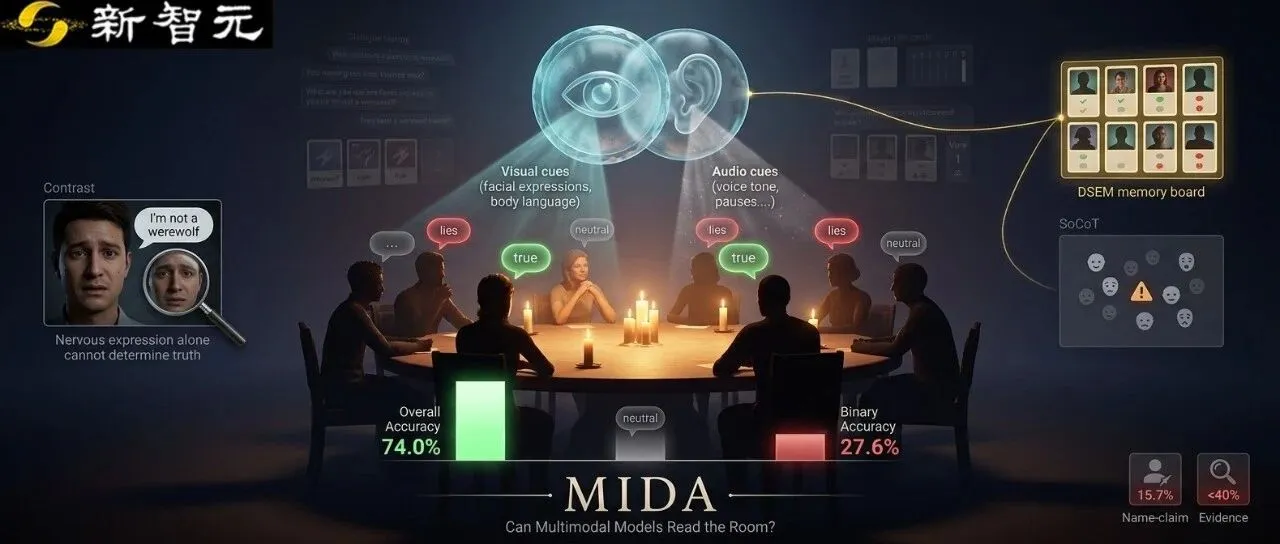
University of Tokyo introduces multimodal werewolf deception benchmark MIDA: Revealing frontier models lack social “Theory of Mind” : A research team from the University of Tokyo presented the MIDA benchmark, accepted at EMNLP 2026, establishing an objective ground truth system using the imperfect information game “One Night Ultimate Werewolf.” Experiments revealed that leading models achieved lie detection accuracy of just 27.6% to 39.4% in binary classification, largely failing to infer other participants’ knowledge boundaries and hidden motives. This indicates that maintaining long-term dynamic cognitive memory is far more critical than relying merely on micro-expression analysis. (Source: WeChat)
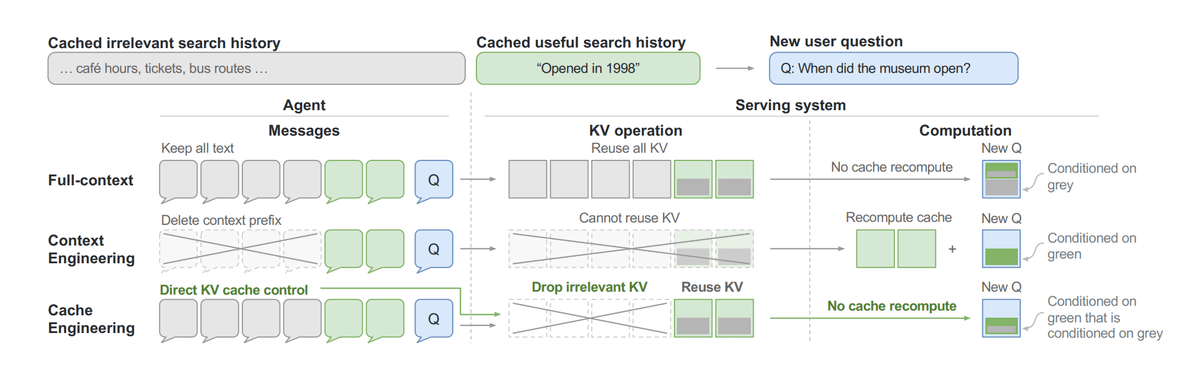
Tsinghua and CUHK propose AKV: A high-performance dynamic KV Cache scheduling engine for long-horizon agents : A joint team from Tsinghua University and The Chinese University of Hong Kong proposed replacing conventional context compression with “cache engineering.” Addressing the flaw in agent workflows where blindly pruning history forces recurrent KV Cache recalculations, the team introduced the AKV serving engine. By combining future attention pruning with retained key position encoding adjustment, AKV preserves original dialogue text while reducing average inference cost by 27.7% and boosting throughput by 1.18x. (Source: TheTuringPost)
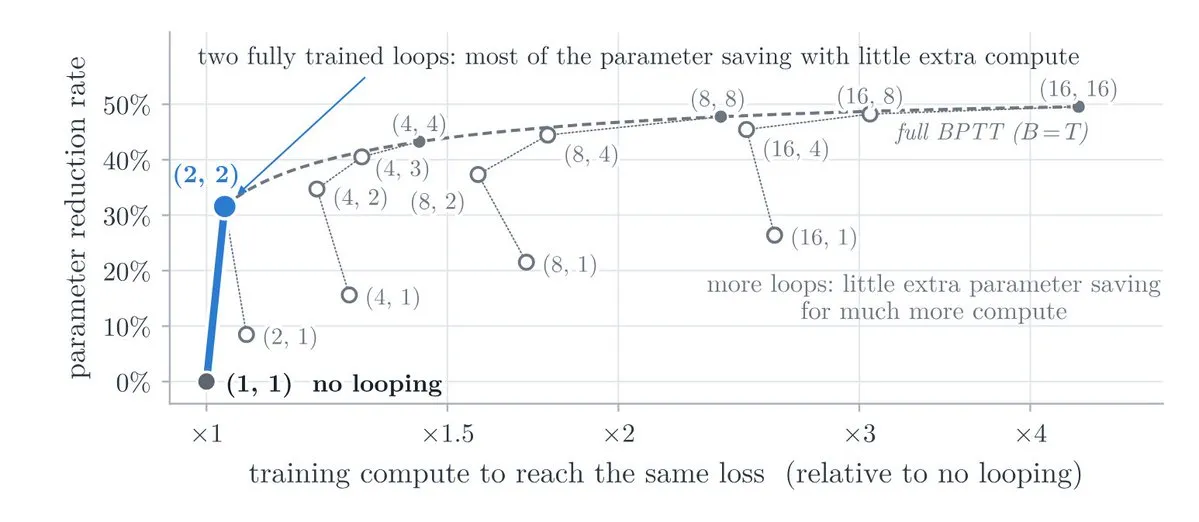
Empirical study on Looped Transformers: Full-pipeline end-to-end training overturns traditional compute-saving shortcuts : Focusing on the Looped Transformer architecture that recurrently reuses layer weights, a recent study on arXiv spanning over 600 experiments revealed that the common practice of backpropagating only through the final two loop iterations to save compute is counterproductive. Models trained with full end-to-end backpropagation across all iterations outperformed optimal traditional models with 27% fewer parameters, requiring only an 8% increase in compute. (Source: halvarflake)
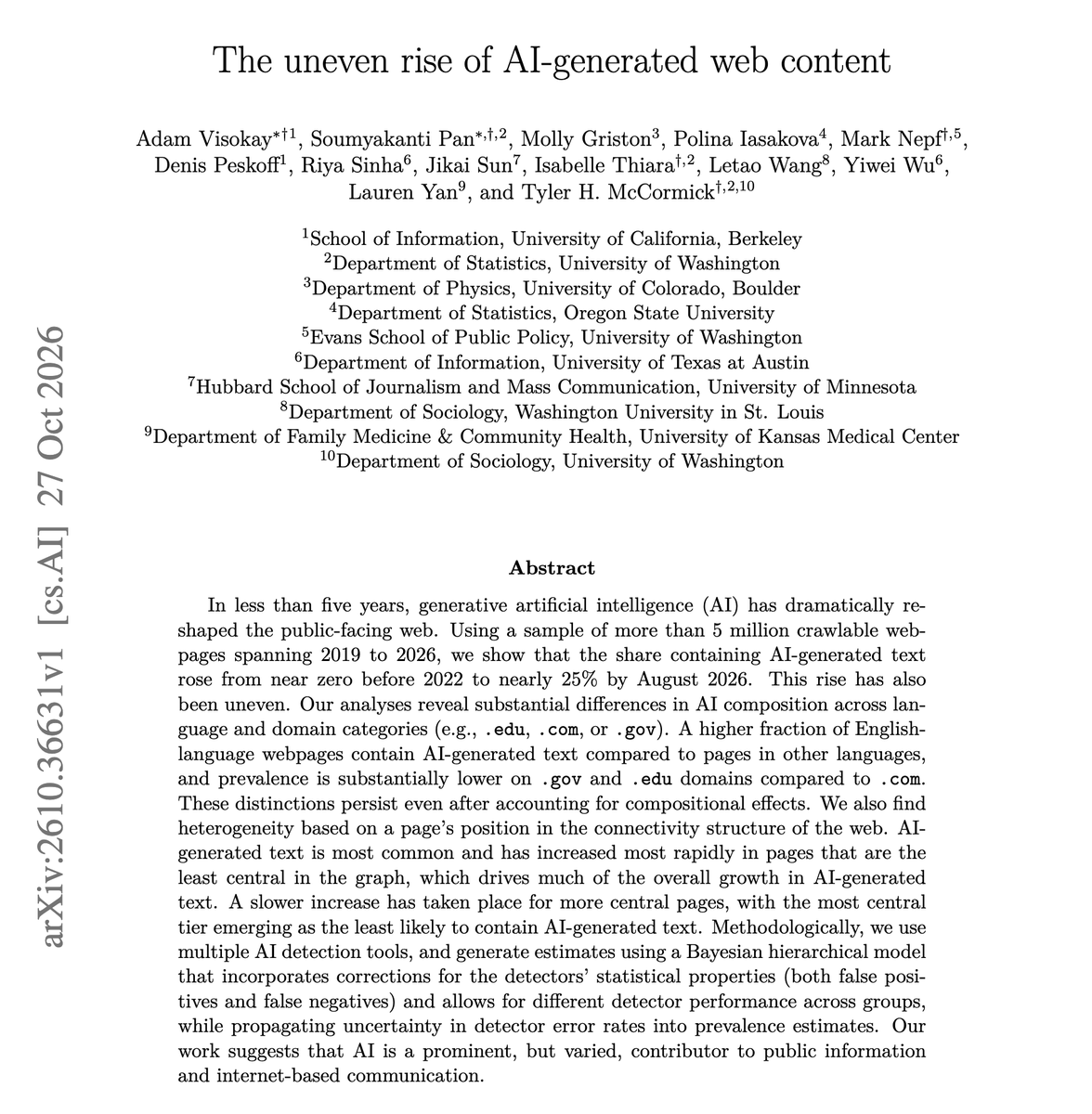
Purdue and collaborators reveal AI text accounts for 24% of the web: Proliferation across long-tail fringe sites accelerates information pollution : An empirical analysis spanning over 5 million crawlable web pages from 2019 to 2026 shows that, as of August 2026, approximately 24% of web content contains traces of AI generation or editing. Over 80% of AI-generated text is concentrated in long-tail backlink sites at the fringes of the web graph. Furthermore, commercial domains exhibited a significantly higher AI text penetration rate than educational and government sites, raising severe concerns about “synthetic data inbreeding” in future foundation model pre-training. (Source: omarsar0)
💼 Business
Sample-efficient AI infrastructure startup Flapping Airplanes raises massive $1B Series A : Flapping Airplanes, an emerging startup aiming to overhaul the underlying paradigms of gradient descent and loss functions in deep learning, announced a $1 billion Series A funding round co-led by Index Ventures and Lux Capital, with participation from Sequoia, KPCB, and Nvidia. Founded by the Spector brothers (Stanford PhDs), the company focuses on overcoming the Transformer architecture’s hungry reliance on massive datasets. Its Megakernel system has achieved full forward-pass fusion at the GPU hardware level with near-zero single-card wait times, aiming to elevate model sample learning efficiency to human-brain levels. (Source: 36Kr)
Deepgram fully acquires Daily, parent company of open-source real-time AV framework Pipecat : Voice AI infrastructure unicorn Deepgram announced the acquisition of Daily, the maintainer behind the popular open-source real-time audio/video framework Pipecat. Both parties pledged that Pipecat will remain permanently open-source and vendor-neutral. They will jointly launch the Real-Time Context Standard (RCS) open protocol to unify multimodal metadata specifications in low-latency audio pipelines, creating an end-to-end developer ecosystem spanning speech recognition, LLM orchestration, TTS, and full-duplex streaming. (Source: TechCrunch)
Oracle sets AI capex peak and financing redline, shares jump over 10% against market trend : Amid broader pressure on tech giants’ free cash flow caused by ballooning compute investments, Oracle announced clear financial guardrails during its Investor Day. The company confirmed that its AI capital expenditures will peak in fiscal years 2027 to 2028, strictly capped additional external financing at under $20 billion through FY2030, and projected free cash flow to turn positive in the second half of FY2028. Wall Street cheered the disciplined capital allocation strategy, sending the stock surging 10.73% in a single day against the broader market. (Source: damianvtran)

🌟 Community
Indie dev icon Pieter Levels cancels most commercial SaaS subscriptions: “Just-in-time custom builds” disrupt the subscription model : Prominent indie developer Pieter Levels shared that he has canceled almost all commercial business software used in his daily operations, opting instead to write lightweight tools and modify open-source projects on the fly using AI tools like Claude Code based on immediate business needs. He pointed out that with the explosion of coding agent capabilities, the bloated, monthly subscription SaaS model is being fundamentally shaken, ushering in an era of personalized software tailored “on-demand, sufficient, and disposable.” (Source: WeChat)

FrontierCode 2.0 database leaks hidden model “Obsidian 3,” suspected to be Anthropic’s unannounced flagship : Benchmark logs from the authoritative AI coding benchmark FrontierCode 2.0 accidentally leaked records of an unannounced model codenamed “Obsidian 3.” Under high reasoning intensity, the model achieved 46.8%, directly surpassing the current #1 Claude Opus 5.5 (45.5%), with test environments deeply tied to the Claude framework. The community widely speculates that this model is Anthropic’s imminent next-generation flagship, Claude Fable 5.5. (Source: [imjaredz](