



🔥 Spotlight
OpenAI Fully Tightens Billing System: ChatGPT and Codex Quota Pools to Merge in December, Shifting Entirely to Token Metering : OpenAI officially announced that starting in December, usage quotas for Plus, Pro, and Business paid subscriptions will be unified and shared between ChatGPT daily conversations and Codex, completely ending the previous parallel rules where “web chat was not capped while coding had separate limits.” Meanwhile, usage will fully transition to being metered by the actual volume of processed tokens, with only lightweight Instant chat remaining unlimited. Furthermore, the company officially rolled out a hardware-level device lock capping the number of paid accounts logged into a single device, shutting down workarounds that rotated multiple accounts. Analysts point out that this marks the end of the “all-you-can-prompt unlimited subscription” era on the consumer side of LLMs, with massive compute CapEx pressures forcing frontier vendors into a comprehensive shift toward prepaid tokenization and granular ROI accounting. (Source: THE DECODER, OpenAI)
DeepSeek Open-Sources Next-Gen Super-Agent Architecture Prototype: Reshaping Autonomous Agents with Two-Tier Routing and Storage-Compute Decoupling : The DeepSeek Harness team officially unveiled its next-generation agent architecture philosophy and open-sourced the lightweight prototype dsh-superagent. Designed to overcome the bottlenecks of mainstream agents constrained by single-session context bloat and serial blocking, the architecture introduces a two-tier framework featuring a “persistent Router for global scheduling + isolated Workers for multi-task concurrency.” Combined with event-subscription pass-through and asynchronous ReAct loops, it eliminates human attention bottlenecks in multi-task interactions. Concurrently, the system decouples cloud agent runtime logic from the local actual working environment (BYOM) via an edge-side lightweight daemon, drastically reducing p95 task completion time from 29.5 minutes to 15.7 minutes in noisy multi-task benchmarks. (Source: MarkTechPost, QbitAI)

NVIDIA Open-Sources PixelUMM: Saying Goodbye to VAE and ViT, Unifying Video and Image Understanding and Generation in Native Pixel Space : NVIDIA and the University of Waterloo have jointly open-sourced PixelUMM, an encoder-free multimodal model. The approach completely eliminates the traditional ViTs used for semantic feature extraction and VAE architectures used for latent variable generation in conventional multimodal models, mapping image patches and video tubelets directly into a shared multimodal Transformer latent space using just a single linear projection layer. Based on a Mixture-of-Transformers design, the model uses hard routing to partition understanding and generation parameters while sharing attention. Coupled with Flow Matching to directly generate clean pixels, it demonstrates competitiveness on par with traditional complex dual-stream systems across benchmarks such as image counting, video understanding, and high-quality video generation. (Source: Heart of the Machine)

🎯 Trends
Tsinghua Andrew Yao’s Team Proposes “Algebraic World Model” AWM: Introducing Category Theory and Formal Proofs to Break Cognitive Blind Spots : Addressing the flaws where frontier LLMs merely catalog surface-level regularities and frequently suffer severe hallucinations when facing unsolvable tasks, Andrew Yao and Yang Yuan’s team at Tsinghua University proposed the “Algebraic World Model” (AWM). Drawing upon projective and inductive limits from category theory, the framework abstracts environmental interactions into rigorous algebraic space structures and utilizes Lean 4 for machine-checkable mathematical deductions and proofs by contradiction. On the ARC-AGI-3 benchmark, which heavily tests autonomous rule exploration, Opus 5-based AWM achieved a pass score of 99.9%, with an average action step count only 43% of the human baseline, opening up a formal deductive pathway to solve AI “black-box guesswork.” (Source: QbitAI)

Google and Collaborators Release CLASHarness: Uncovering Frontier LLMs’ Collaboration Shortcomings Under Multi-Agent Conflicts : In response to state disconnects and conflicting instructions frequently encountered in real-world multi-agent collaboration, Google and several universities open-sourced the multimodal benchmark CLASHarness, designing 600 realistic, executable conflict scenarios containing 4K visual evidence. Evaluations across 15 frontier models—including GPT-6, Claude Opus 5, and open-source flagships—revealed that while single-step average scores exceeded 60%, not a single model achieved an end-to-end task pass rate above 30%. Stronger models tended to proactively invoke image tools to verify ground-truth monitoring data, whereas weaker models easily placed blind faith in incorrect text from teammates; meanwhile, excessively long thinking tokens exacerbated timeout deadlocks due to internal hesitation. (Source: Heart of the Machine)

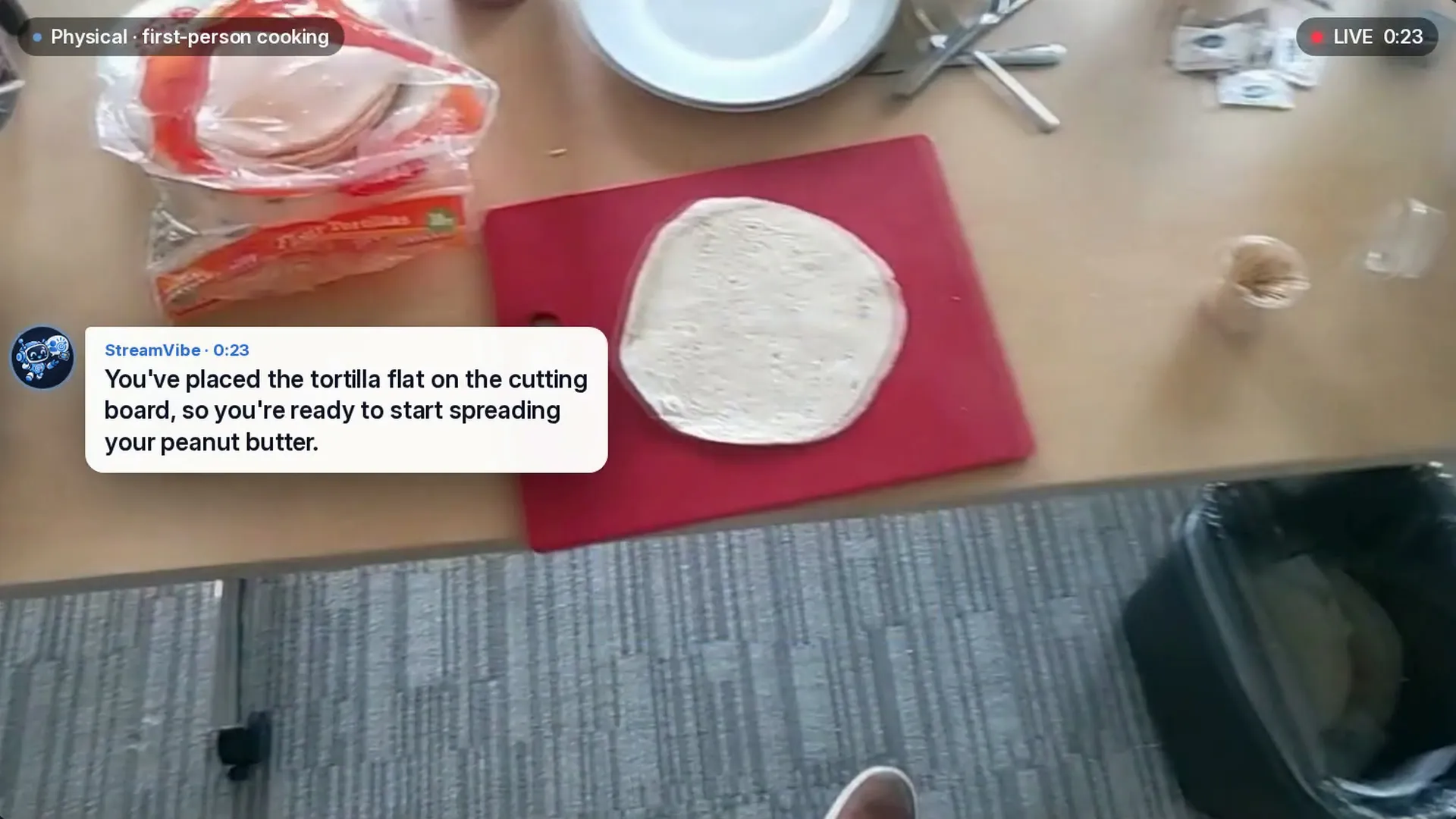
Google and Stanford Release StreamVibe: Exploring Video Agents Autonomously Deciding “When to Intervene and Speak” : Traditional streaming video assistants are often limited to passively executing mechanical instructions. Teams from Google and Stanford proposed StreamVibe-VL, a novel proactive interaction benchmark and model. The system introduces state-memory mechanisms and reinforcement learning tuning, training the model to perceive unspoken user intents in real time and proactively provide hints at the most appropriate moment. Experiments show that while current multimodal models still face severe context degradation and historical misdirection in long-video scenarios over 5 minutes, this mechanism improved timely response accuracy by 10.7% in standard office and daily life guidance tasks, reducing unnecessary noisy interruptions. (Source: THE DECODER)
Fysiverse and Fudan Open-Source Fysiverse-UniWAM: Surpassing Large-Scale Robot Pre-training to Win Dual Titles in Navigation and Manipulation : Fysiverse, in collaboration with Fudan University’s CITLab, released the unified world action model Fysiverse-UniWAM. The team bypassed the expensive general robot foundation pre-training route dependent on manual data collection, proposing instead the MAP (Manipulation Anchor Pose) synthetic data pipeline to construct a 7,500-hour dataset paired with a backbone-sharing, input-isolated Mixed-Stream architecture. In real-robot evaluations across 24 tasks on 4 hardware platforms, the model claimed first place in success rates across 13 point-goal navigation tasks and 4 mobile manipulation tasks, breaking the single paradigm of embodied AI purely competing on real-robot private data scale. (Source: Heart of the Machine)

Tsinghua and Partners Launch Self-Evolving Multiphysics Modeling System EvoSim : Qiang Zhang’s team from Tsinghua University’s Department of Chemical Engineering, in collaboration with Qingyu Tech and Huairou Laboratory, introduced EvoSim, advancing AI from merely “fine-tuning parameters for given equations” to “deducing mechanisms and self-evolving equations based on experimental errors.” In two industrial-grade physical scenarios—fast-charging lithium plating prediction for power batteries and dynamic voltage simulation across operating conditions—EvoSim established reusable modeling experience chains via parallel hypothesis generation and identifiability verification. Its lithium plating onset error converged to 1.79%, with effective accuracy significantly outperforming manual modeling by senior domain experts. (Source: Heart of the Machine)

Stellaris AI Releases Embodied Harness Framework Auriga: Highlighting Single-Episode Zero-Shot Self-Healing : Stellaris AI unveiled Auriga, an embodied AI harness framework advocating for a “system-level general execution layer” to replace task-specific trial-and-error resets. The framework integrates trajectory rehearsal where “perception is measurement” and “vision is execution” with a millisecond-level anomaly interception and self-healing loop. Under the strict “no fine-tuning, no demonstration, single-episode no-reset” zero-shot evaluation protocols of RoboDojo and RoboCasa365, Auriga achieved success rates of 57.74% and 73.2% through physics-evidence-driven policy replanning, ranking first on both leaderboards. (Source: Heart of the Machine)

Fudan OpenMOSS Team Unveils Long-Context Mechanics of Hybrid Architectures: Hybrid Positional Bias Breaks the Extrapolation-Fitting Seesaw : Addressing the high compute overhead of full attention and the individual limitations of Sliding Window Attention (SWA) and Linear Attention (LA), Xipeng Qiu’s team at Fudan University systematically analyzed the underlying mechanisms of hybrid architectures. The study points out that SWA excels at length extrapolation but underfits during continued training, while LA excels at long-context fitting but suffers in extrapolation. The team proposed Sliding Window Linear Attention (SWLA) combined with a NoPE (No Positional Embedding) global aggregation strategy, enabling GLA/GDN hybrid models to achieve training-free, lossless 16x extrapolation from 4k to 64k on the RULER benchmark. (Source: Heart of the Machine)

🧰 Tools
Model Behavior Scalpel Heretic 2.0 Released: Restructuring Model Alignment with Any-Rank Abliteration and Plugin Architecture : The open-source model modification tool Heretic released its major version 2.0. Moving away from traditional Rank-1 abliteration that treats model refusals as a single direction, this version pioneers the “Any-Rank Abliteration (ARA)” algorithm, utilizing the L-BFGS optimizer for micro-training in residual stream space to erase refusal signatures while maximally preserving original representations. In addition, the new version introduces a comprehensive scorer plugin ecosystem (including ModernBERT refusal classifiers and benchmark scorers), modularizing the suppression of hallucinated slop, mitigation of sycophancy, and fine-tuning of emotional alignment. (Source: GitHub)
Nace AI Open-Sources 27B Decision Model Drex Max v1: Bringing Multimodal Logic Gating to Local Macs : Nace AI officially released its flagship decision model Drex Max v1 in open-source weights, including bf16, Q8_0 GGUF, and an Apple Silicon-optimized Affine Q4 version. Based on a hybrid architecture combining Gated DeltaNet linear attention and full attention, the model eliminates autoregressive token generation, outputting precise discrete probabilities for up to 255 classification options in a single forward pass. Scoring 67.52 on the Public Decision Index 0.4 benchmark, it outperforms closed-source Jev, allowing enterprises to fully deploy sensitive intelligence classification, tool routing, and risk guardrails within local private environments. (Source: MarkTechPost)
AiSOC: Fully Open-Source Self-Hosted Security Operations Center Framework : In response to increasingly severe automated offensive and defensive threats, the security project AiSOC was officially open-sourced. The system embeds an engine with over 7,000 rules, a ClickHouse event lake, and a Neo4j entity topology, featuring a built-in lightweight local model gateway that supports offline operation with zero API keys. Its core highlight is an “immutable decision ledger” offering full traceability for AI investigation agents; all alert triage, evidence-chain retrieval, and response rehearsals are verified via sandboxes and human approval, with native MCP server interfaces provided for Claude and Cursor. (Source: GitHub Trending)

Hex: A Rust-Based, Local-First Global Voice Input and Screen Operation Assistant : Hex, a cross-platform dictation tool designed for privacy-conscious developers, has been open-sourced. Built with native Rust and powered by an on-device streaming speech recognition model, pressing a global hotkey instantly transcribes and pastes text into any active window with latency as low as hundreds of milliseconds. The latest version introduces an “Annotate” screen sketching and multimodal capture feature, allowing users to issue voice commands while circling regions on the screen, automatically bundling keyframes and operational context directly to external coding agents like OpenCode for execution. (Source: GitHub Trending)

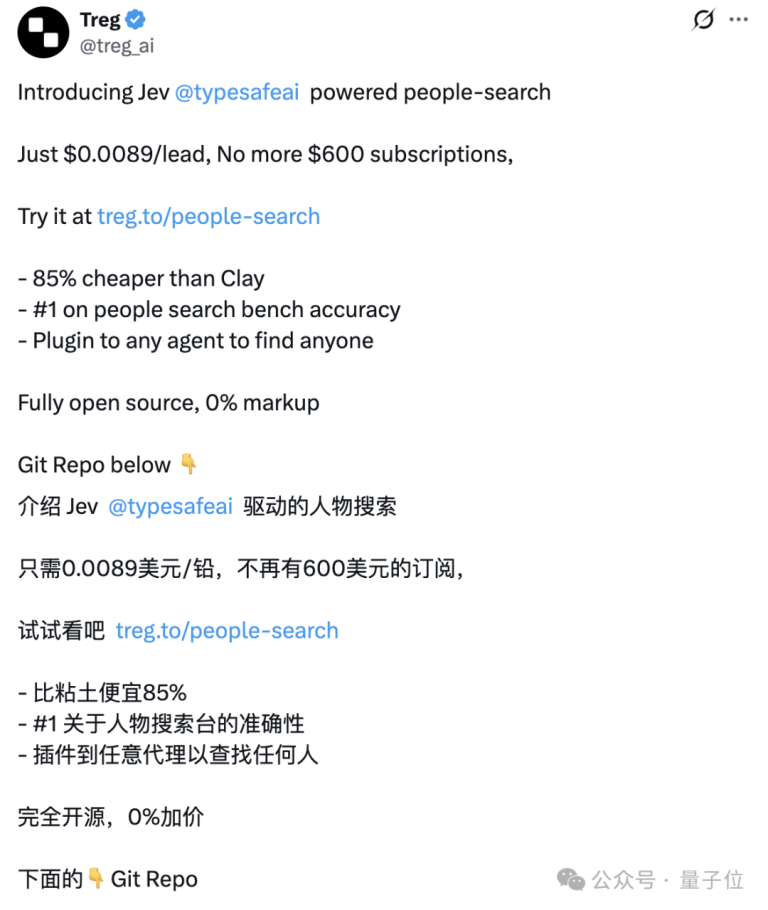
TypeSafe AI and Treg Open-Source Lead-Generation Agent Tool: Slashing Costs by 85% : TypeSafe AI, the parent company of decision model Jev, partnered with agent platform Treg to launch an open-source lead prospecting tool. The system integrates traditional complex manual multi-platform B2B searches into an agent pipeline, using Jev as a decision gate to automatically filter ambiguous roles and calling third-party APIs to enrich and verify email addresses. Across benchmarks comprising 119 real-world prospecting tasks, retrieval accuracy reached 78.2%, with the average API cost per qualified lead dropping to just $0.0056—an over 85% savings compared to commercial SaaS tools. (Source: QbitAI)
Open WebUI Releases Folder-Scoped Memory Isolation Plugin v0.0.4 : Community developers released the Folder-Scoped Memory Isolation plugin for Open WebUI v0.12.5. Addressing cross-contamination in global memory during concurrent multi-project use, the plugin autonomously extracts and classifies conversational facts, strictly confining memory sharing within respective project folders while root directory chats independently maintain a global memory pool. This effectively prevents context bleeding across distinct domains like code and finance. (Source: Reddit r/OpenWebUI)
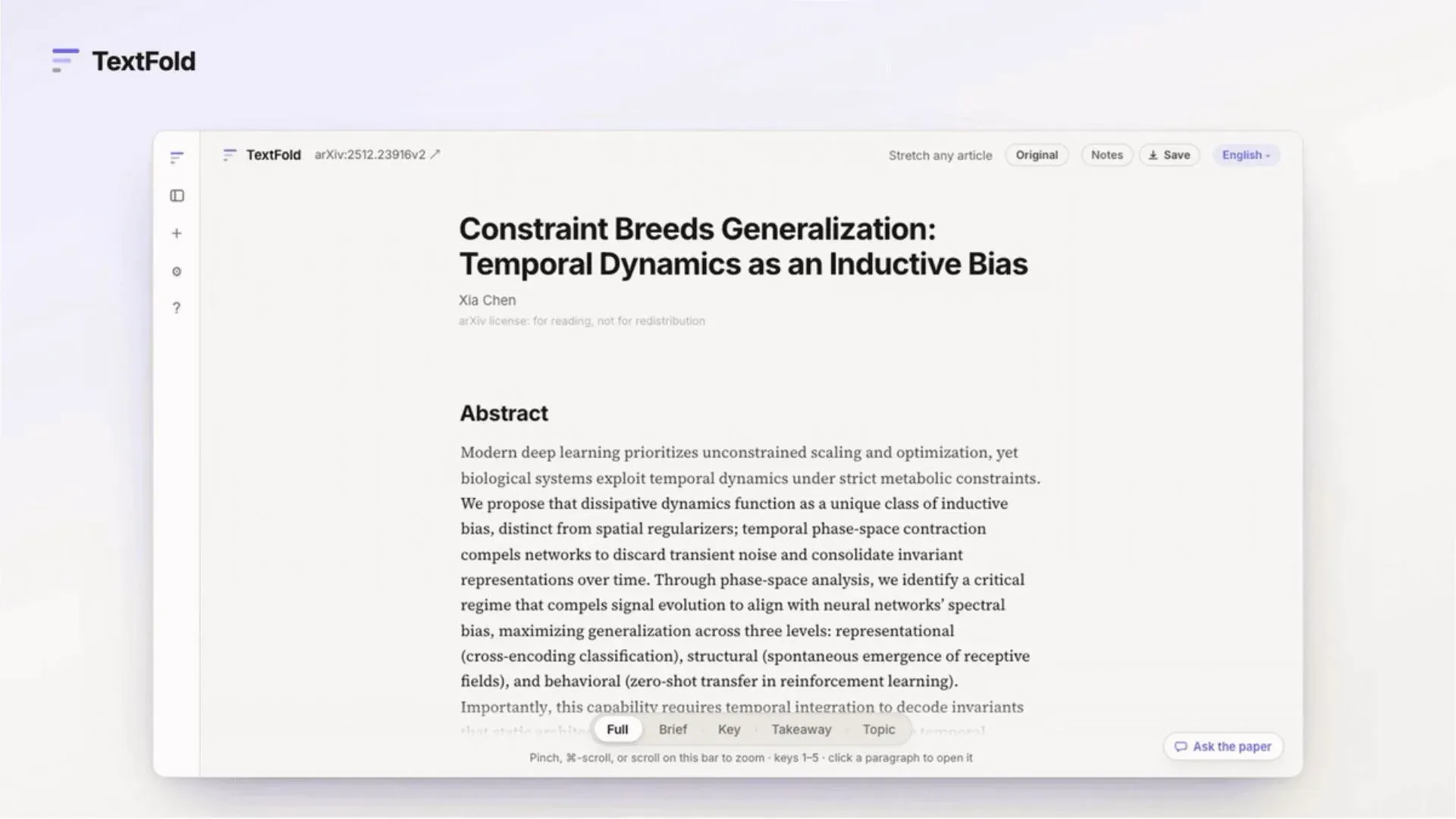
TextFold: A Reversible Telescopic Text Reader Balancing Cognitive Load : Aimed at addressing the “cognitive debt” and loss of critical premises when LLMs compress long documents, the open-source reader TextFold has launched. Based on Ted Nelson’s stretchtext theory, the tool structures AI summaries into multi-level collapsible layers while maintaining the full integrity of the original text, allowing readers to seamlessly expand and inspect core takeaways, key arguments, and verbatim source sentences without incurring additional token costs. (Source: Reddit r/ArtificialInteligence)
📚 Research
Google Team Releases T2J-Bench: Overcoming Cross-Framework Whole-Repository Code Migration via Differential Execution Verification : To address numerical drift and implicit state misalignment when migrating large codebases from PyTorch to JAX, Google and UIUC introduced T2J-Bench, the first execution-grounded whole-repository code migration benchmark. The evaluation includes 63 industrial-grade tasks covering SFT, DPO fine-tuning, and KV Cache inference services. The proposed TwinHarness framework treats original runnable code as an executable specification, leveraging twin differential comparisons of gradients and numerical values to boost Claude-Code’s migration score from 0.649 to 0.723 under the same underlying model. (Source: Heart of the Machine)

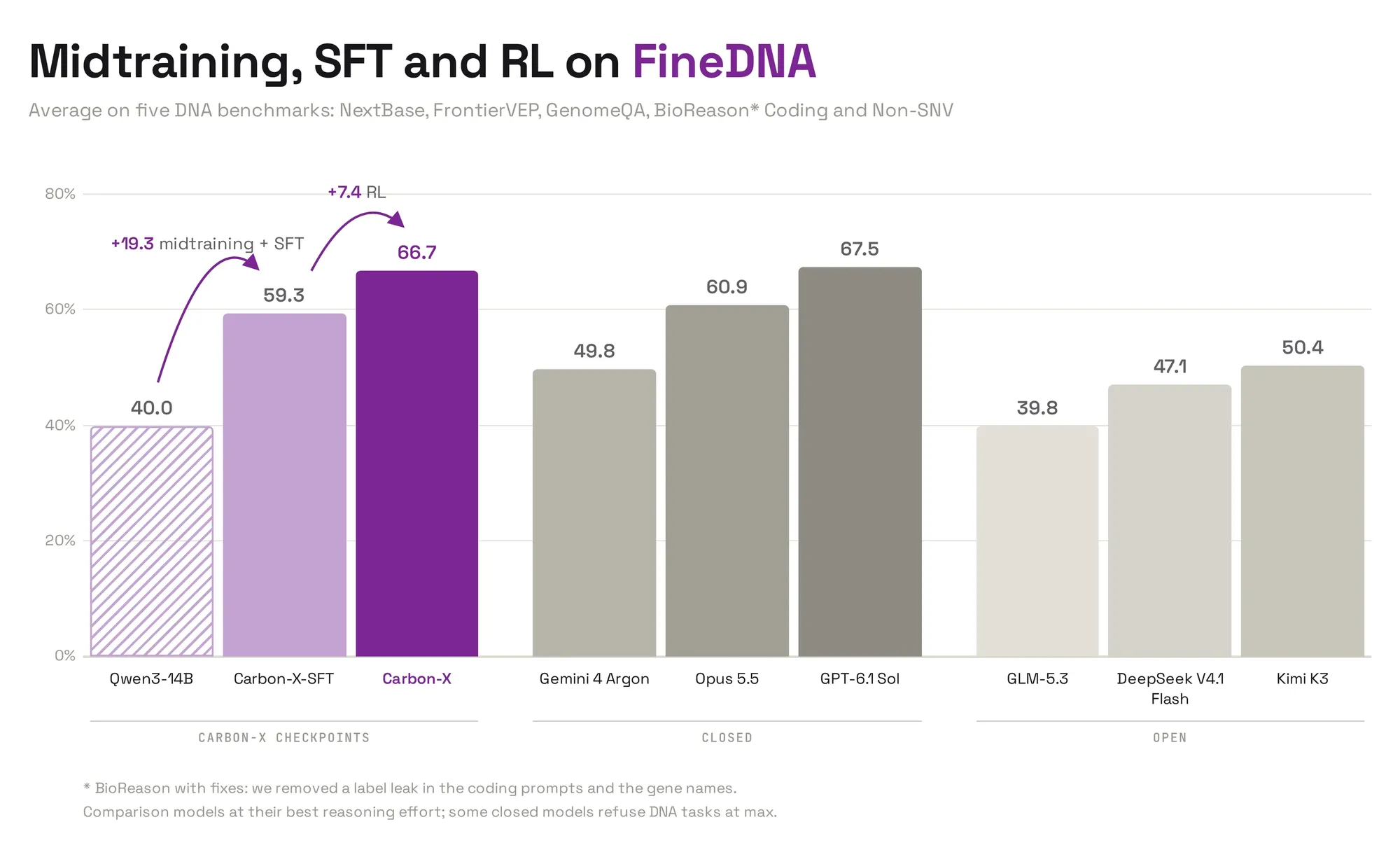
Hugging Face Open-Sources FineDNA Suite: Full-Stack Open Data Empowers Small Models to Match Closed-Source Genomic Foundations : The biology team at Hugging Face released FineDNA, a multi-stage fine-tuning dataset for DNA understanding. It includes 300B tokens of hybrid DNA-text pre-training corpora, 200,000 SFT dialogues equipped with deterministic verifiers, and nearly 100,000 reinforcement learning samples. Fine-tuned with this suite, the open-source 14B model Carbon-X outperformed existing open-source language models across multiple genomic benchmarks, approaching GPT-6.1 Sol-level performance at less than one-thousandth of the inference cost. (Source: HuggingFace Blog)
RWE-Bench Benchmark Reveals Frontier Models Lag Severely in Real-World Engineering Design Capabilities : Xplore AI released RWE-Bench, a benchmark targeting complex mechanical, electronic, and aerospace engineering design. Problems span physical engineering tasks such as strength verification of 3-cylinder diesel engine crankshafts and DDR3 routing on 8-layer FPGA boards, judged entirely independently by finite element analysis and physics solvers. Tests show that even with full compute allocated, the strongest model, GPT-6 Astra, achieved a pass rate of only 37%, with multiple frontier models scoring zero across the board due to failure to satisfy strict engineering tolerances. (Source: WeChat)

Zhejiang University Joint Team Publishes MAESTRO in npj AI: A Multi-Agent Collaborative System for Disaster Prevention and Emergency Response : Addressing isolated specialized models and disconnected assessment workflows across departments during natural disaster early warning, teams from Zhejiang University and Huazhong University of Science and Technology proposed the MAESTRO system. Featuring three agent types—situational awareness, coordination/decomposition, and domain specialization—the system achieved a 98.4% severity classification accuracy across 100 historical and simulated typhoon scenarios, cutting assessment latency from 250 seconds in traditional expert consultations to 37.9 seconds. It has now been officially integrated into provincial emergency operational platforms. (Source: Heart of the Machine)

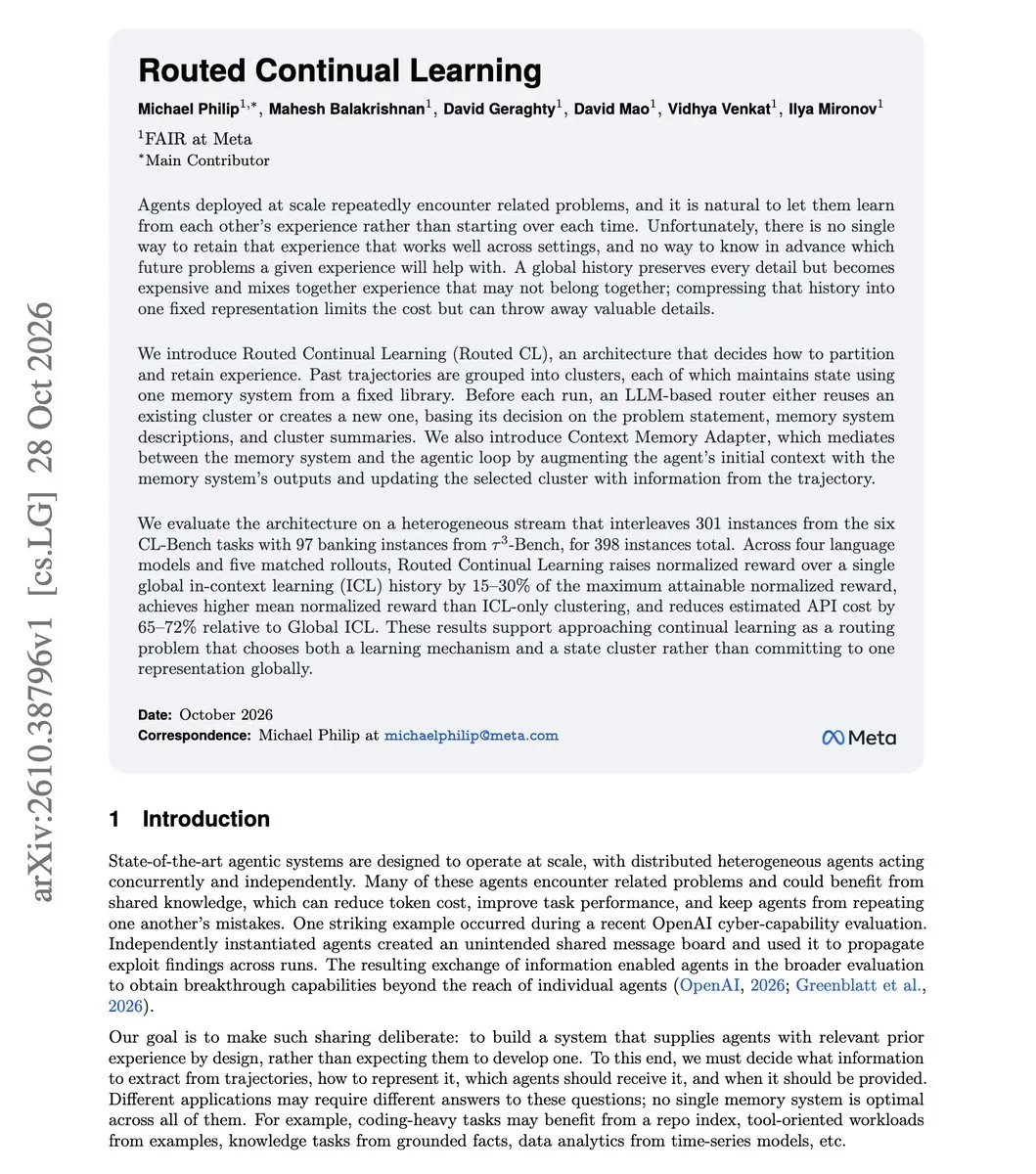
Meta FAIR Proposes Routed Continual Learning: Overcoming Catastrophic Forgetting in Long-Horizon Agent Memory : The Meta FAIR team published new research on long-horizon agent memory. The paper indicates that maintaining a single global session history for agents yields near-zero returns when dealing with interleaved, heterogeneous tasks. The study proposes “Routed Continual Learning (Routed CL),” which uses an LLM router to dynamically categorize historical trajectories into distinct memory clusters and allocate dedicated management policies. In mixed benchmarks such as τ³-Bench banking tasks, this method improved overall task rewards by 15% to 30% while drastically slashing context API costs by 65% to 72%. (Source: dair_ai)
SpatialScout Active Spatial Mapping Benchmark: Testing AI’s Leap from “Aimless Gaze” to “Building 3D Worlds” : A research team introduced SpatialScout, an active embodied indoor perception benchmark that evaluates an AI’s ability to autonomously move a camera and construct 3D object-level maps in unseen virtual environments. The evaluation revealed that while most frontier models possess strong single-image recognition capabilities, they suffer disconnections in multi-view triangulation and spatial loop closure integration—frequently taking photos without translating them into precise coordinate evidence. The top model achieved an object IoU of only 41.71% across 80 complex indoor environments. (Source: WeChat)

💼 Business
Infinigence AI Raises Over 1.3 Billion RMB in Series B: Domestic Heterogeneous Inference Factory Builds Hardware-Software Commercial Loop : Infinigence AI, focusing on AI Infra inference optimization, announced the completion of its Series B financing exceeding 1.3 billion RMB, bringing total fundraising this year to 2.4 billion RMB. Concurrently with Zhipu AI and Moore Threads, the company unveiled a “Domestic Heterogeneous Inference High-Quality AI Token Factory,” introducing cross-hardware prefill-decode collaborative scheduling and heterogeneous KV cache conversion technology. By leveraging standard domestic compute for Prefill and advanced compute for Decode, overall cost-performance surpassed pure imported hardware baselines. Daily production currently supports multi-thousand-GPU clusters and trillions of token requests. (Source: WeChat)

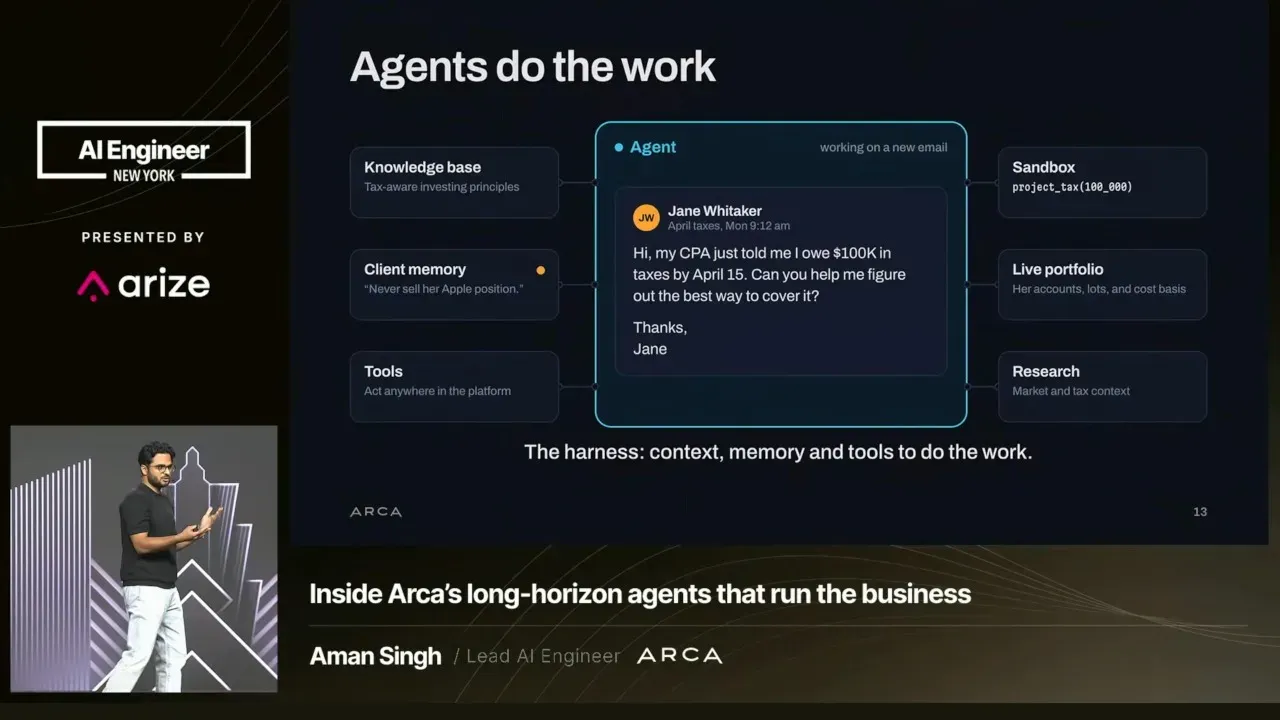
Wealth Management Startup Arca Raises $48.5M: Building an “Agent-Driven Human Advisor” Long-Horizon Financial Loop : AI-native wealth management platform Arca announced a $48.5 million funding round led by General Catalyst. The team shared production practices: long-horizon wealth management task lifecycles often span multiple days. Rather than blindly pursuing complete autonomy, Arca constructs guardrails made of deterministic code and sandboxes, enabling multi-agent swarms to continuously monitor asset dynamics in the background while nudging human advisors for final sign-off, tightly coupling business model dispatch with regulatory compliance. (Source: Latent Space)
Bending Spoons Demonstrates Platform Consolidation Effects at $20 Billion Valuation: AI Deeply Penetrates SaaS M&A and Restructuring : Technology holding company Bending Spoons dissected the business model that drove its valuation to $20 billion during capital discussions. By acquiring existing SaaS software with sticky user bases and migrating them entirely into its proprietary shared technology platform, the company leverages AI to re-engineer programming, customer support, and data flows, drastically slashing underlying marginal maintenance costs and cycling surplus cash flow into subsequent asset acquisitions—demonstrating that AI is not only generating native products but also profoundly reshaping the repricing dynamics of legacy software assets. (Source: Podcast – The a16z Show)
🌟 Community
Developers Heatedly Debate “Whether Harness Engineering Outweighs Prompt Engineering” : A fierce debate has broken out across the community regarding the value of harness engineering in LLM application architecture. Critics argue that over-engineering harnesses is a futile intermediate state; core LangChain contributors and vertical domain architects countered that for real-world enterprise products, robust harnesses manage context compression thresholds, fallback sub-routing, background state persistence, and invisible tool invocations, defining whether a model can cross the chasm from toy demo to production-grade deployment. (Source: Vtrivedy10)
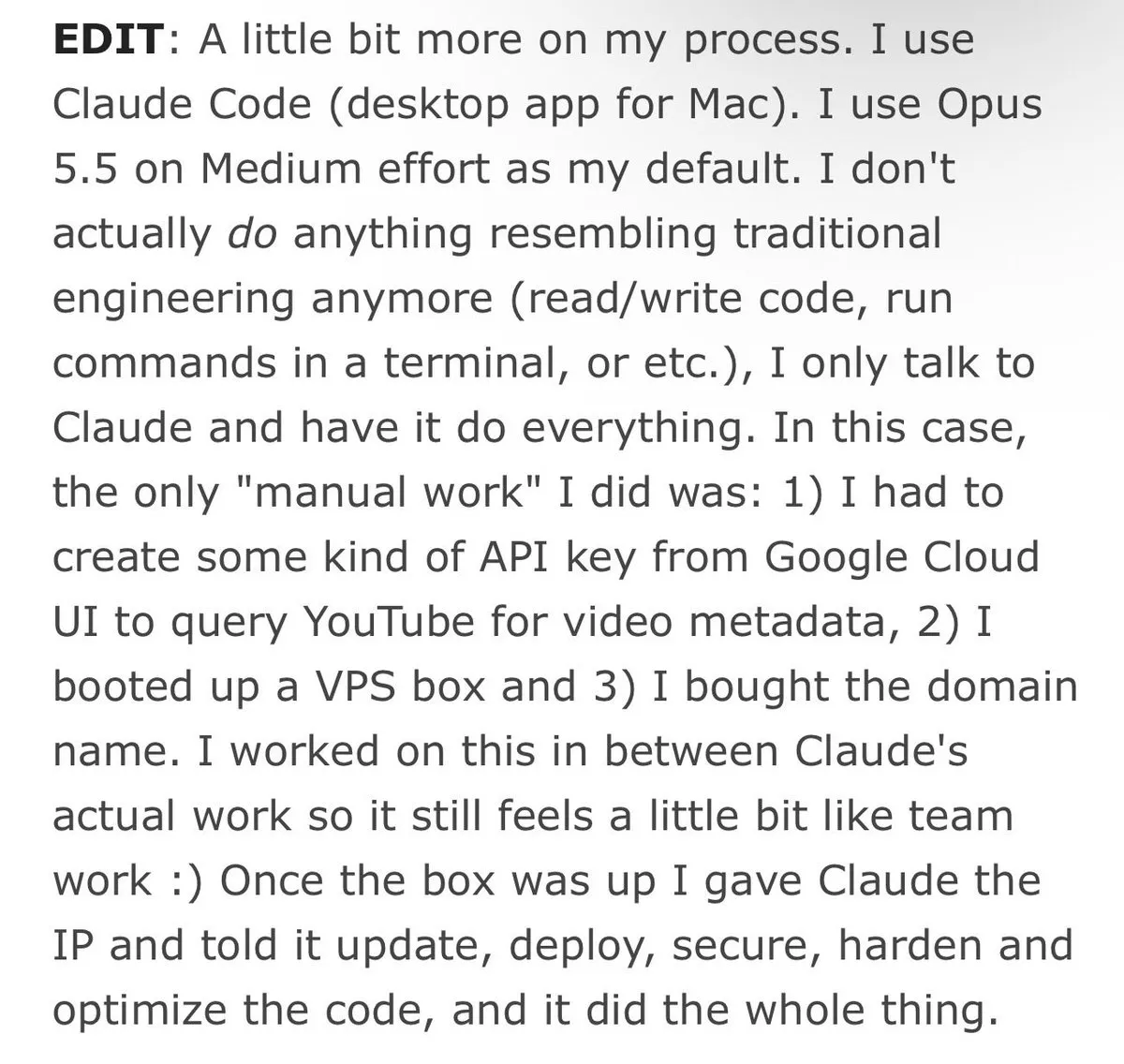
Karpathy Shares Latest Workflow Insights: Desktop Clients and Medium Thinking Intensity Form the Productivity Sweet Spot : Former Tesla AI Director Andrej Karpathy revealed his daily setup in a personal post: abandoning purely terminal-based CLI interfaces in favor of dedicated standalone desktop applications, and prioritizing Medium thinking intensity on Opus 5.5 for 95% of his everyday coding tasks. The community resonated broadly, noting that as reasoning depth in LLMs increases, blindly aiming for maximum thinking tokens not only throttles throughput but also frequently triggers endless loops caused by excessive self-reflection. (Source: Yuchenj_UW)
Security Community Strongly Backlashes Against OpenAI Forcibly Ingesting Daybreak Blue Pentest Data for Model Training : OpenAI’s notification regarding plans to incorporate Daybreak Blue security testing sessions into model training systems—without offering a default opt-out mechanism—sparked collective protests among white-hat hackers and penetration testers. Security engineers pointed out that under vulnerability disclosure non-disclosure agreements, unpatched zero-days and proprietary system topologies are strictly confidential; forcibly absorbing session data forces security researchers to breach NDAs, driving them to abandon the platform. (Source: BlancheMinerva)
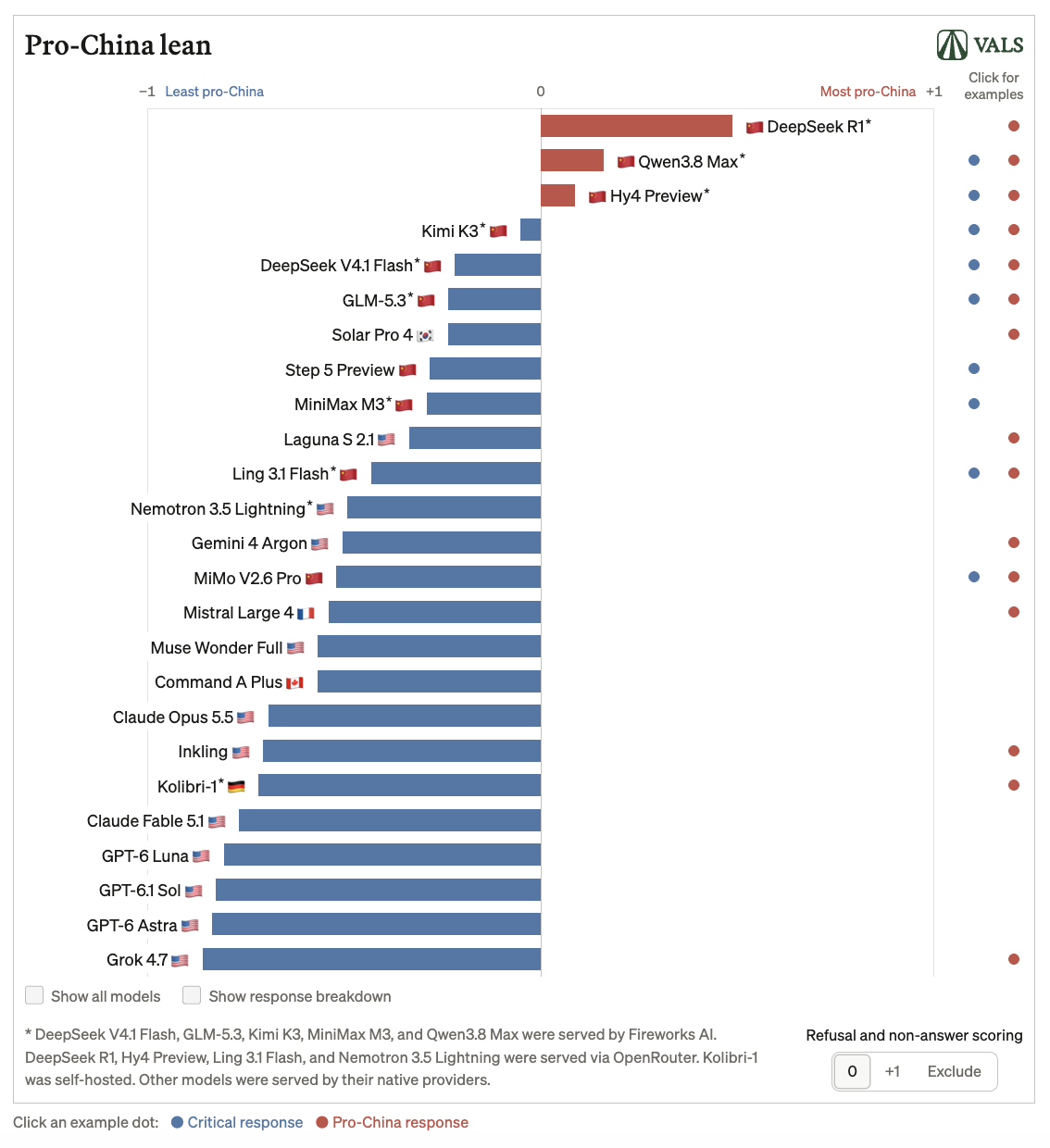
Independent Tests Reveal Subtle Shifts in “Political and Geopolitical Context” Between Open-Source and Closed-Source Models : Benchmark firm Vals AI published an in-depth analysis of stances on sensitive topics across multinational models. Results indicate that open-source models do not simply mechanically parrot official doctrine, but demonstrate exceptional sensitivity to prompt language and system presets; when prompted in specific languages or contextualized with region-specific SDKs, the same model’s stance drifts substantially, underscoring the intricate fragility of post-training alignment techniques in understanding cultural and geopolitical nuances. (Source: THE DECODER)
Developer Replicates “Building a Virtual Machine and Second-Order LLM Inside LLM Weights,” Sparking Architectural Fascination : Following the execution of a RISC-V virtual machine inside Qwen weights, developer div open-sourced project QwenPU, successfully emulating a bit-exact neural processing unit purely within the weight memory of a Qwen 3.5-4B model and running Karpathy’s stories260k model entirely inside it. The community engaged in enthusiastic discussions around this geeky engineering feat of achieving self-nested computation within neural network weights without external runtime environments. (Source: Reddit r/LocalLLaMA)
💡 Miscellaneous
Reliance on AI Navigation in Outdoor Sports Poses Safety Hazards, Experts Warn of “Cognitive Surrender” : As outdoor hiking enthusiasts increasingly rely on chatbots to map wilderness trekking routes, search and rescue teams across multiple regions have reported emergencies where hikers became stranded due to AI fabricating terrain routes and inverting landmarks. Human-computer interaction researchers warned that the extremely confident and authoritative tone of LLMs is inducing “cognitive surrender” among users, causing hikers lacking outdoor experience to abandon critical judgment and basic wilderness survival instincts. (Source: WIRED)

Federal Judge Denies xAI’s Motion to Dismiss: Memphis Colossus Data Center Gas Turbine Environmental Lawsuit to Proceed : A U.S. federal district judge ruled to deny xAI’s motion to dismiss an environmental violation lawsuit targeting its Colossus supercomputing cluster in Tennessee. The plaintiff, the NAACP, alleged that xAI illegally operates 35 large gas turbines to power compute clusters without necessary statutory permits, causing severe air pollution. The court held that citizen suits maintain constitutional standing, highlighting that friction between mega-scale AI compute clusters, local ecosystems, and community energy rights is entering deep judicial waters. (Source: TechCrunch)
Australian Creative Sector Resists “Default Licensing” Scheme for AI Copyright, Deepening Cultural Sovereignty Disputes : In response to proposed government policies allowing tech giants to scrape online creative works by default, art communities and Indigenous artist representatives from Sydney’s Inner West staged public protests. Artists and IP legal scholars warned that a default scraping regime severely strips creators of IP control and washes out cultural heritage carrying ancestral Indigenous lineage, demanding mandatory data-source disclosure and the establishment of levy compensation mechanisms. (Source: The Guardian)
