



🔥 Spotlight
European AI Leader Mistral AI Closes €3B Series D Funding, Valuation Surpasses €21B : French AI startup Mistral AI announced the completion of a €3 billion (approx. 23.4 billion RMB) Series D funding round, setting a new historical record for a single equity financing round by a European tech company. This round was co-led by Samsung Electronics, Scaleup Europe Fund, and PSG Equity, with participation from ASML, NVIDIA, BlackRock, and others. The capital will be used to expand frontier model training and inference compute clusters, build proprietary data center infrastructure, and expand top scientist teams across Paris, London, Zurich, Warsaw, and various locations in the United States. French President Emmanuel Macron extended his congratulations, calling it a crucial milestone in Europe’s joint effort to build a sovereign, open-source AI “third path.” (Sources: Mistral AI, THE DECODER, arthurmensch, ClementDelangue)

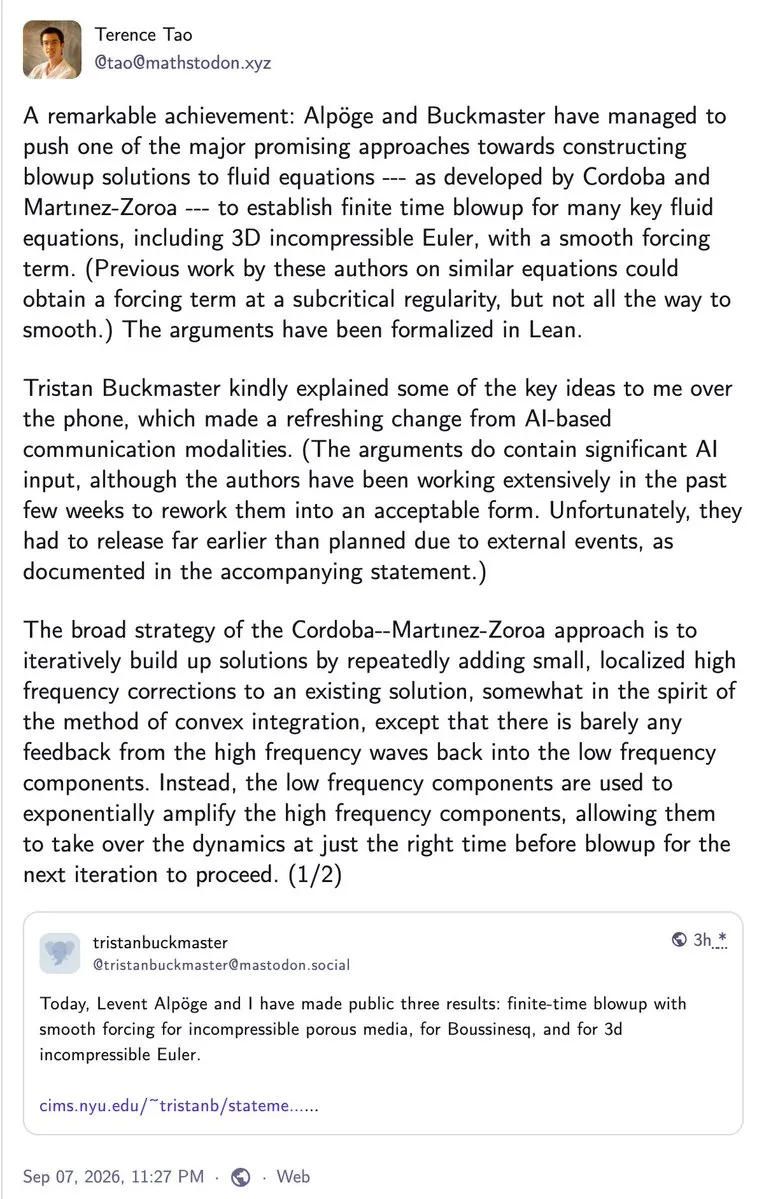
Mathematicians Crack Fluid Equation Blow-Up with LLMs, Sparking Academic and Ethics Dispute with OpenAI : NYU mathematician Tristan Buckmaster and collaborator Levent Alpöge (Anthropic employee) published a paper announcing that, using models such as Claude and Codex, they completed a proof of finite-time blow-up for 3D incompressible Navier-Stokes/Euler equations under smooth forcing within one month, complete with Lean 4 formal verification. However, Buckmaster accused OpenAI (Sébastien Bubeck’s team) of launching a compute blitz to replicate their work after learning about the progress, attempting to forcibly remove Alpöge from co-authorship in a joint release, and issuing career threats. Terence Tao highly praised the mathematical breakthrough, while Bubeck publicly refuted the allegations as false. The incident has ignited intense discussions across academia regarding intellectual property ownership in closed-source LLM-assisted research and big tech’s academic ethics. (Sources: 36Kr, dotey, kimmonismus, akbirkhan)
Google DeepMind Releases AlphaGenome Atlas, Mapping 9 Billion Single-Base Variations in the Human Genome : Google DeepMind officially released AlphaGenome Atlas, using AI to predict the molecular consequences of all 9 billion possible single-nucleotide variants in the human genome. The milestone includes a 1 PB dataset of predictions and standardized AVI (Actionable Variant Impact) scores, enabling researchers to rapidly evaluate the impact of mutations in both non-coding and coding regions on diseases and phenotypes with a single metric. It is now fully open to the global research community. (Sources: Google DeepMind, IEEE Spectrum)

NeurIPS Triggers Review Trust Crisis After AI Detector False Positives Desk-Reject 178 Papers : The NeurIPS 2026 Position Paper Track used commercial detection tool Pangram to directly desk-reject 178 papers (18.4% of total submissions) without providing human verification or an appeals channel. Subsequent backtests by independent researchers on past publications by the three track chairs revealed that the detector gave them AI probability scores between 24% and 69%, highlighting significant bias against the rigorous writing styles of non-native English scholars and sparking severe backlash across academia against “using black-box AI to judge human academic integrity.” (Source: Reddit r/MachineLearning)
🎯 Trends
DeepSeek Launches Native Multimodal Beta for V4.1 Flash, Achieving 400 t/s Generation Throughput : DeepSeek has opened a limited-time closed beta for its intermediate preview version deepseek-v4.1-flash-expires-on-0910. The company disclosed that this version adopts a brand-new model architecture with native multimodal vision capabilities, delivering multi-fold improvements over its predecessor in long-context retrieval and SVG code generation, while achieving an average decoding speed of 350–400 tokens/s at extremely low API costs. Community tests show it is exceptionally sharp in image spatial reasoning and multi-step agent orchestration. (Sources: Synced, op7418, teortaxesTex)
.jpg)
ModelBest Open-Sources MiniCPM5-2B On-Device General Agent Model and Training Recipe : ModelBest released MiniCPM5-2B, a 2.52B parameter on-device dense model natively supporting core agent capabilities such as tool calling, code generation, and deep search, achieving leading on-device performance on the Artificial Analysis workflow benchmark. The team simultaneously open-sourced its proprietary Meshy reinforcement learning framework, the JustRL II algorithm, and the UltraData-SFT-Agent dataset containing 500,000 samples. (Sources: Synced, MarkTechPost)
.jpg)
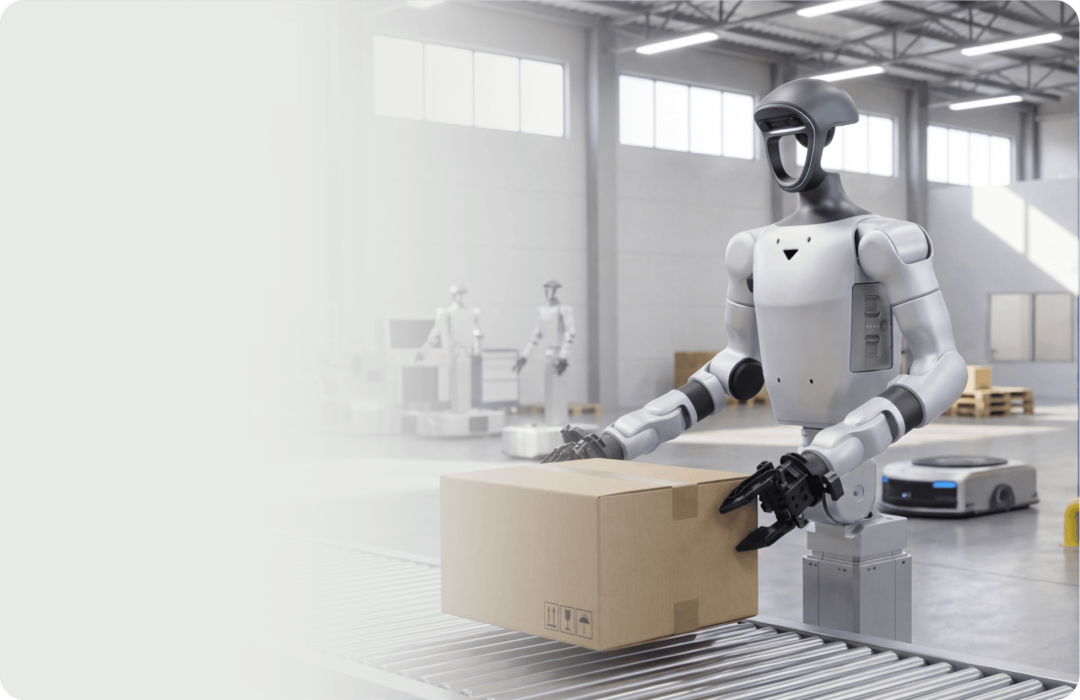
XPeng Launches Automated Mass Production Line for Humanoid Robots and Unifies Universal VLA 2.0 Architecture : He Xiaopeng announced the completion of the world’s first fully automated production line for general-purpose humanoid robots, realizing “robots building robots” with units autonomously rolling off the line into factory operations. Powered by XPeng’s full-stack proprietary Turing AI chip (with three chips per robot delivering up to 2,250 TOPS) and the “Fuyao” Supercomputing Center, XPeng has evolved its autonomous driving XNGP system into a unified VLA 2.0 model architecture bridging both automotive and embodied robotic control. (Sources: jpt401, bookwormengr)

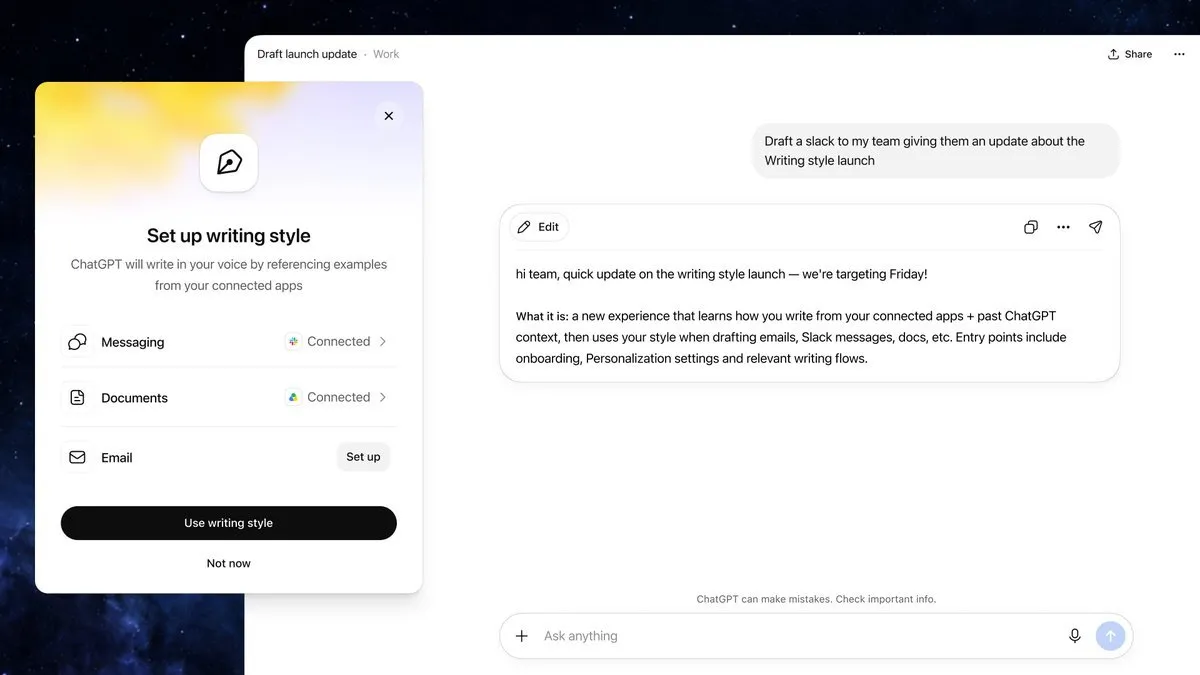
OpenAI Launches Personalized Writing Style Learning for ChatGPT Work : OpenAI introduced a personalized tone and style adaptation module within the ChatGPT Work ecosystem. After users connect daily workplace tools such as Gmail, Google Drive, and Slack, the model automatically learns user vocabulary habits, custom email sign-offs, and formatting preferences, allowing AI-drafted text to blend naturally with personal styles and eliminating rigid outputs in enterprise-grade agents. (Sources: kimmonismus, gdb)
Inclusion AI Open-Sources 6B Text-to-Image and Editing Model LLaDA-Image : Inclusion AI launched LLaDA-Image, a 6B DiT model built on a full diffusion architecture. Over 90% of its pre-training samples utilize pure image local-mask inpainting tasks to construct visual priors, while image-text pairs are reserved exclusively for late-stage language alignment. The model ranks among the top open-source tiers in bilingual Chinese/English evaluations, and the team has open-sourced distilled Turbo weights for 2–4 step inference alongside Day-0 SGLang support. (Source: Synced)
.jpg)
Cambricon Becomes Top-Tier Platinum Member of the PyTorch Foundation : Cambricon has officially secured a seat on the PyTorch Foundation Governing Board, becoming one of the first Chinese AI chip vendors to join the decision-making tier of the open-source community. Practicing the “Upstream First” principle, Cambricon has contributed code to seven major PyTorch core modules and delivered Day-0 support for domestic LLMs in the vLLM ecosystem, accelerating hardware-software decoupling and native development experiences. (Source: WeChat)

Huawei’s openJiuwen Platform Introduces WorkSwarm Persistent Session Mechanism : Huawei’s open-source AI Agent platform openJiuwen introduced the Persist Session capability within its WorkSwarm workplace agent. By decoupling low-level Raw Work Logs from background consolidation mechanisms, it successfully achieved zero-drift continuity in complex contexts and role-responsibility relationships across a 189-turn Feishu group chat and 200-turn long-horizon development tasks. (Source: Synced)
.jpg)
Xiaomi Quietly Launches Invite-Only Beta for Desktop Agent MiMo Desktop : Xiaomi launched a limited closed beta for its desktop agent MiMo Desktop, supporting full-screen visual perception, automated keyboard and mouse control, cross-application coordination, and reusable workflow “record and replay.” Users can drag Office assets, archives, and multimedia files directly into the system, allowing the on-device system powered by the new-generation MiMo LLM to autonomously execute complex workflows. (Sources: teortaxesTex, bookwormengr)
SemiAnalysis and Google Co-Release InferenceX, the First Public TPU Inference Benchmark : Semiconductor research firm SemiAnalysis partnered with Google to release InferenceX, the first continuous public benchmark tailored for the Google TPU computing stack. Data shows that across various long-sequence inference scenarios on mainstream frontier LLMs, Google TPUs deliver up to 50% more tokens per dollar compared to NVIDIA B200/B300. (Sources: dylan522p, woosuk_k)
Jiyuan Lvdong Releases Agent-Native Model NeoHorse : Founded by Yunhe Wang, former head of Huawei Noah’s Ark Lab, Jiyuan Lvdong released its first agent model NeoHorse (4B/9B). By leveraging curriculum learning built on multi-model routing and error-correction trajectories accumulated via its Routing Harness, the model significantly enhances tool invocation and environment feedback self-healing capabilities without increasing base parameter sizes. (Source: QbitAI)

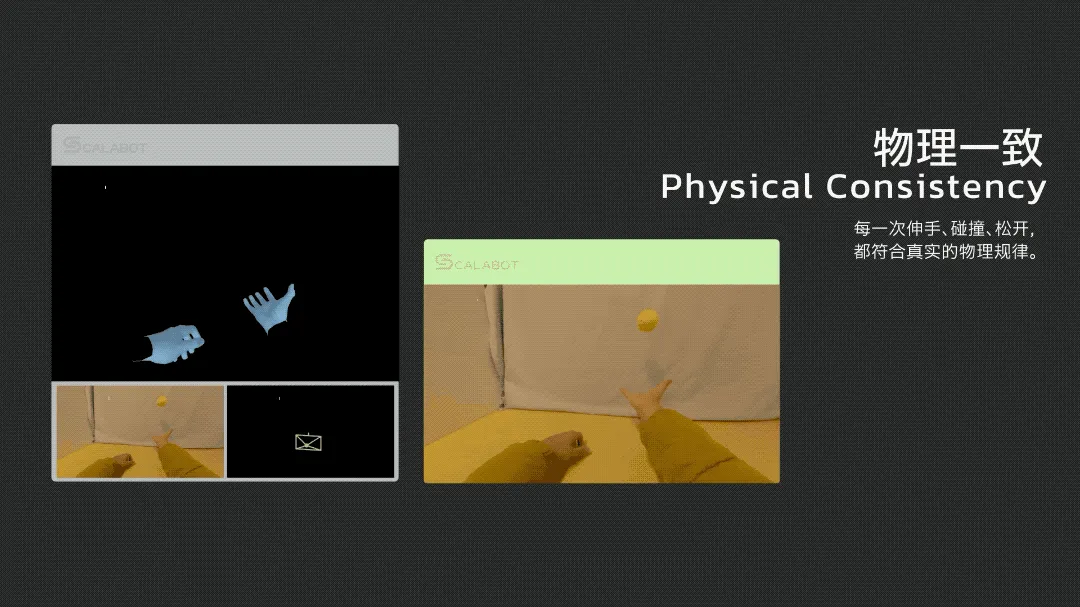
Scalabot Releases HERON-World Model, the First Multi-Agent Interactive World Model : Scalabot unveiled HERON-World Model, utilizing a hybrid architecture combining Mixture-of-Transformers (MoT, separating visual and language parameters) and Mixture-of-Experts (MoE). It can not only simulate physical dynamics based on individual robot actions, but also model interactions and causal states among multiple agents in complex collaborative scenarios. (Source: 36Kr)
🧰 Tools
OpenAI Launches Public Beta of ChatGPT Sites: Generate Interactive Websites from a Single Prompt : OpenAI rolled out the ChatGPT Sites feature to paid subscribers. Without writing frontend code, users can generate full-fledged websites featuring complex interactions, fluid physics engines, or online store logic within ten minutes using just natural language descriptions or sketches, with support for sidebar circle-to-annotate iterative editing. (Source: WeChat)

ManyCore Releases 3D Generative Model Lux3D with Cross-Platform SDK and MCP Support : ManyCore Tech launched the spatial generation model Lux3D, offering both Fast and Standard editions, emphasizing high-precision PBR physical material baking and mesh topology. The model provides Python/TS/Java SDKs and MCP interfaces, allowing seamless integration into agent workflows like GPT-6 Astra for automated 3D asset rendering and export. (Source: 36Kr)

Reducto Releases Single-Pass Document Parsing Model r-1 : Reducto introduced a novel document parsing model, r-1, consolidating traditional OCR, layout analysis, table extraction, and localization alignment into a single full-page scan. It reduces error rates by 20% compared to previous agent pipelines while slashing complex document processing costs to 1 cent per page. (Source: MarkTechPost)
Jenny: Open-Source Desktop Agent Harness with Sandbox Rollback and Local IDE Support : An independent developer open-sourced Jenny, an Electron-based local model harness tool. Designed for private LLM deployment, it features a built-in interactive IDE, conversation state checkpoints, and secondary confirmation mechanisms for dangerous shell commands. It supports llama.cpp, vLLM, and various OpenAI-compatible endpoints, ensuring high safety while enabling small models to perform rapid tool calls. (Source: Reddit r/LocalLLaMA)
Open QuizUI: Interactive AI Quiz and Educational Plugin for Open WebUI : A developer created Open QuizUI, a dedicated quiz plugin for the Open WebUI ecosystem. It supports automatic generation and parsing of multiple-choice questions with explanations via model tool calls or plain text prompts, featuring LaTeX math formula rendering, a full-screen focus mode, quiz statistics review, and standalone single-file HTML export and sharing. (Source: Reddit r/OpenWebUI)
AstraBlender: Cloud-Based Blender Modeling and Rendering Driven by Mobile Prompts : Developers open-sourced AstraBlender, a lightweight integration tool. By deploying headless Blender on cloud instances and streaming a virtual desktop, users can instruct models to generate 3D geometry, adjust materials, and run rendering tasks directly from ChatGPT on mobile devices without requiring local GPUs or terminal environments. (Source: Reddit r/artificial)

Embedflow: Zero-Downtime Migration Tool for Large-Scale Vector Database Upgrades : A research team open-sourced the Embedflow migration framework, tackling the pain point of month-long full re-encoding when upgrading embedding models in billion-scale vector databases. The solution retrieves candidate sets using the source index and applies lightweight re-ranking with the new model, achieving a seamless, instant vector database transition while preserving top-K retrieval accuracy. (Source: Reddit r/MachineLearning)
📚 Research & Learning
Tsinghua and ByteDance Seed Propose SMELT: Looped Transformers Demonstrate Scaling Advantages Under Strict Budgets : Addressing debates over the performance gains of recurrent layer architectures, teams from Tsinghua and ByteDance Seed strictly aligned FLOPs, parameter counts, and KV cache in their paper. They proved that the SMELT recipe—looping the middle 50% of layers twice—achieves better scaling law fits and benchmark gains in code and long-context tasks across various model scales. (Source: Synced)
.jpg)
EMNLP 2026: Shifting Text World Model Training Objectives Toward Behavioral Consistency with BehR : Research by Dalian University of Technology, Microsoft, and other institutions revealed that predicted text closer to ground-truth can paradoxically lead to severe agent decision errors (metric inversion). The paper proposes the BehR reward, using action score margins from a frozen reference agent as reinforcement learning signals to slash the false positive rate in offline evaluation of weak agents from 42.5% to 9.5%. (Source: Synced)
.jpg)
Study Reveals Internal Spatial Workspace ‘S-Space’ in Multimodal Models : An analysis by the MirroS team discovered a low-dimensional continuous subspace, S-Space, within the intermediate activation layers of VLMs. This space linearly encodes 3D coordinates of objects and causally influences spatial question answering, though models still require external deterministic programs when handling coupled reference frames and viewpoint rotations. (Source: Synced)
.jpg)
HKUST and Collaborators Publish Comprehensive 259-Paper Survey: From Content Generation to Continuous Artifact Construction and Delivery : Teams from HKUST (Guangzhou), Zhejiang University, and other institutions systematically reviewed the technical landscape of Agentic Artifact Creation. Starting from a three-tier architecture of artifact representation, construction strategy, and runtime verification, they proposed four design guidelines and evaluation frameworks for deliverable digital assets. (Source: WeChat)

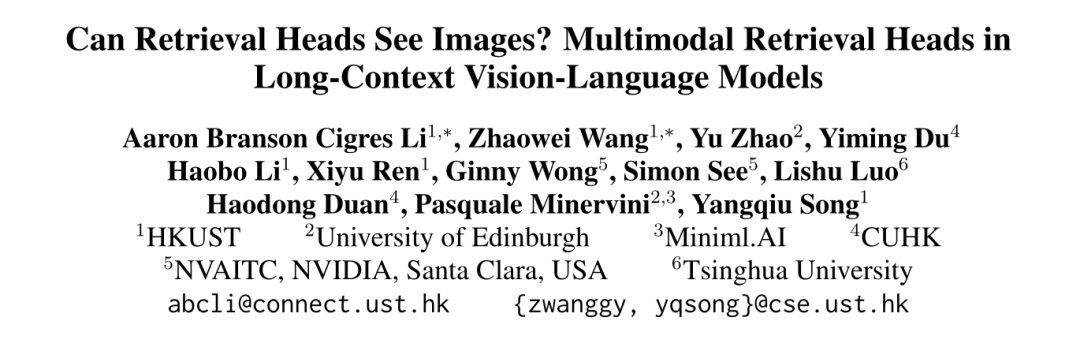
EMNLP 2026: Locating Multimodal Retrieval Heads (MMRetHeads) in Long-Context Vision-Language Models : A paper reveals that vision-language models rely on specific attention heads to locate evidence in long-document QA. Masking these high-scoring retrieval heads causes a cliff-like drop in complex chart QA accuracy. An unsupervised reranker built on this mechanism significantly improves retrieval recall on the MMDocIR benchmark. (Source: 36Kr)
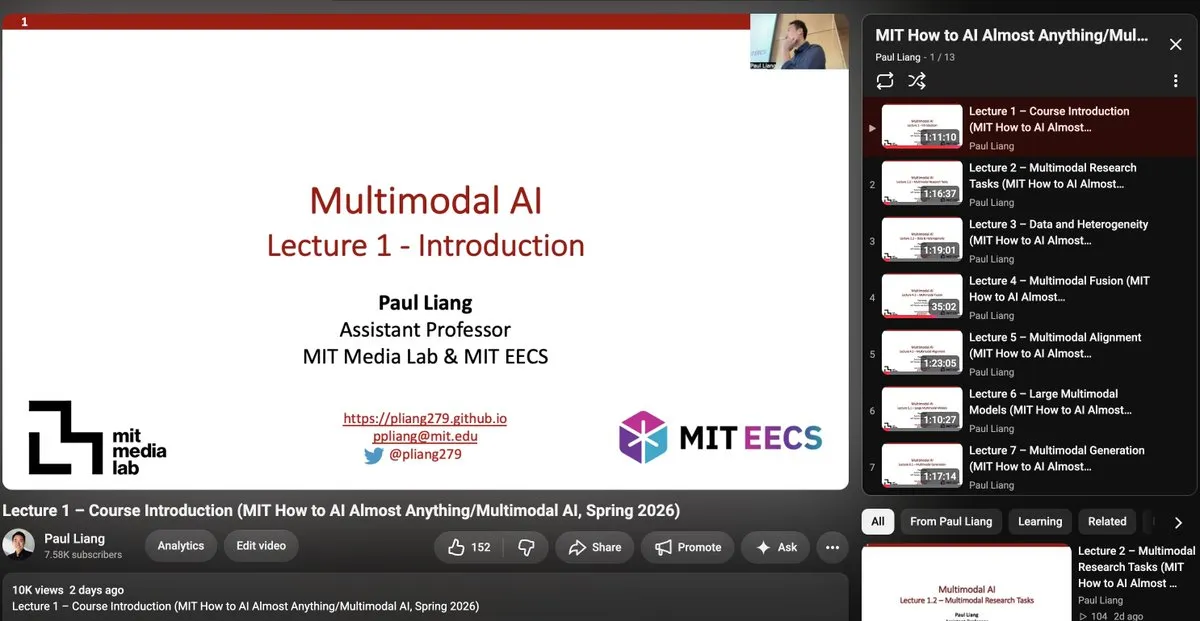
MIT Releases Complete Course Videos and Lecture Notes for Spring 2026 Multimodal AI : MIT Professor Paul Liang has made the full set of lecture videos and notes for his latest Spring 2026 course, “How to AI (Almost) Anything,” publicly available. The curriculum systematically covers multimodal agents, complex reasoning mechanisms, self-evolving AI, and frontier joint representations of tactile, olfactory, and other sensor data with LLMs. (Source: rsalakhu)
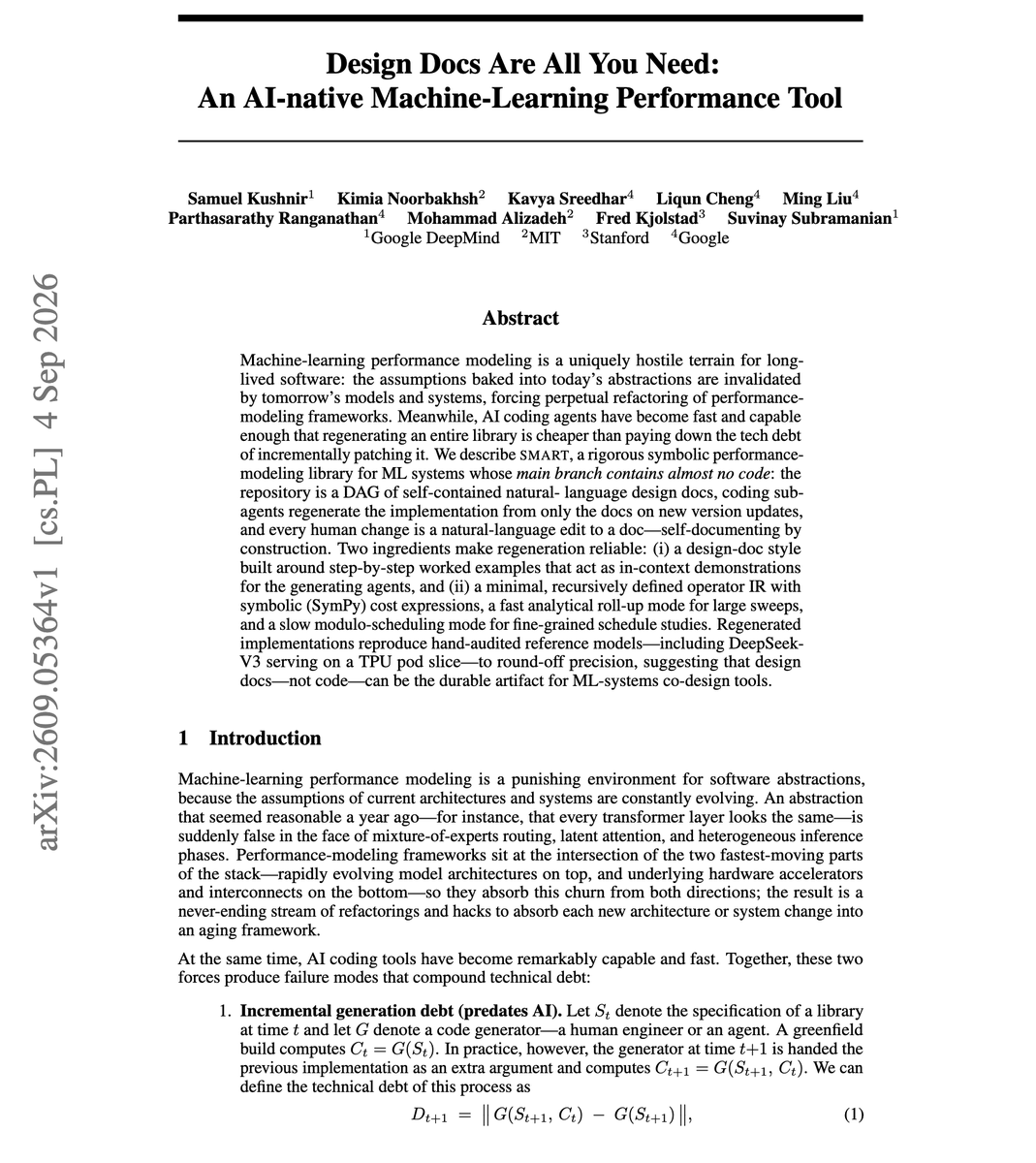
DeepMind and MIT Propose Design-Doc-Centric AI-Native Software Refactoring Paradigm : Google DeepMind and MIT published “Design Docs Are All You Need,” exploring a new development paradigm where main branches store zero business code, keeping only natural language design documents and formal operator IRs. Coding agents regenerate the entire codebase from documents during each release iteration to prevent software rot. (Source: omarsar0)
LLM-Guided Program Evolution Breaks Records on Packomania Circle Packing Benchmark : Independent researchers proposed an LLM-guided program search evolution framework that allows models to autonomously modify and optimize algorithms based on feedback from independent verifier scores. On the renowned Packomania geometric packing benchmark, spending just $27 in tokens set 10 new world records for N between 101 and 114. (Source: Reddit r/MachineLearning)
💼 Business
Physical AI Company DeepControl Closes Hundreds of Millions of RMB in Series B+ Funding : DeepControl completed a new Series B+ financing round of hundreds of millions of RMB, led by CATL, with follow-on investments from Aramco Ventures, Taiping Innovation, and others. The funding will accelerate the scaled deployment of its PhyAI engine in industrial liquid cooling intelligent control and compute-power coordinated infrastructure. (Source: QbitAI)

Tianji Intelligence Raises 1 Billion RMB in Series B/B+ Rounds to Scale Embodied Robot Production : Guangdong Tianji Intelligence announced the completion of a 1 billion RMB financing round, bringing its post-money valuation close to 10 billion RMB. Co-led by GL Ventures and Meituan Strategic Investment, with participation from Tencent and Gaorong Ventures, the company holds orders for over 10,000 robots, and the proceeds will be focused on advancing standardized mass production of force-controlled dual arms and core components. (Source: 36Kr)
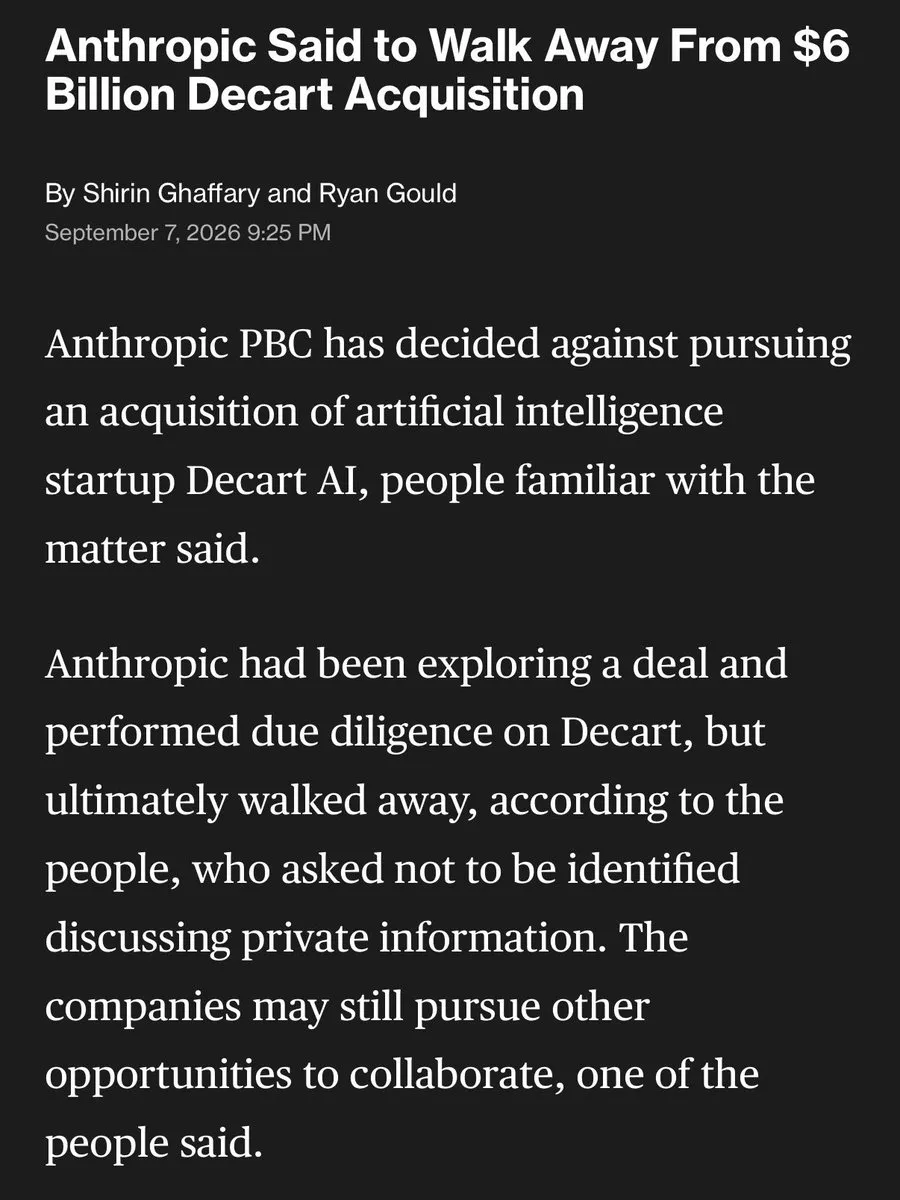
Anthropic Reportedly Abandons ~$6B Acquisition Talks for Israeli Inference Startup Decart AI : Industry sources reveal that Anthropic has officially abandoned acquisition talks for Israeli AI startup Decart. Decart’s next-generation inference decoding architecture reportedly achieves an 8x boost in token throughput. With NVIDIA previously offering an acquisition bid of approximately $8 billion, Anthropic’s withdrawal highlights diverging strategies among frontier LLM makers regarding compute infrastructure M&A. (Sources: teortaxesTex, typedfemale)
🌟 Community
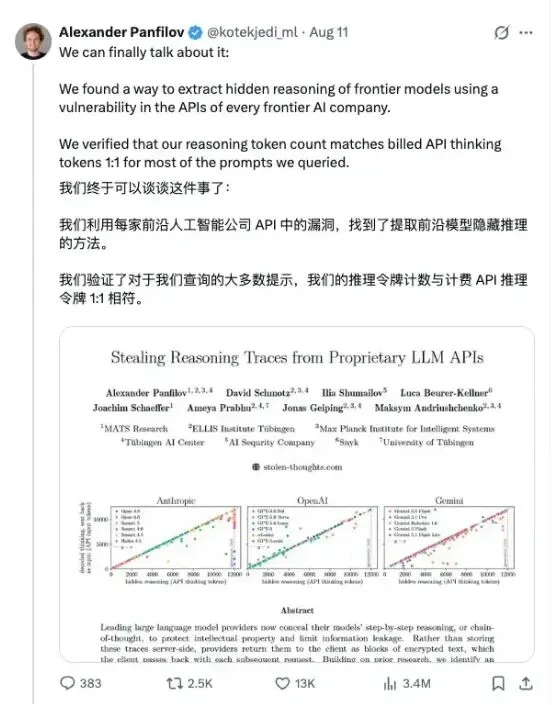
Former DeepMind Researcher Discloses Replay and Leak Vulnerabilities in Proprietary Models’ Encrypted Chain-of-Thought : Security research shows that encrypted reasoning data chunks returned by frontier APIs can be replayed across models and sessions into lightweight models for direct decoding, resulting in leaks of hidden passwords, API keys, and sensitive data. In prefilling experiments, researchers also observed significant style drift in open models like Kimi when influenced by prefix prompts, sparking in-depth discussions on model distillation and safety defenses. (Source: 36Kr)
Anthropic Labs’ Internal Mechanism Revealed: 20-Person Squads, Two Weeks to Decide Project Fate : Media reports detailed the operational inner workings of Anthropic’s internal incubator, Labs: the team maintains a size of around 20 people and tolerates a 70%–80% project elimination rate, evaluating prototypes every two weeks. Once a project team exceeds 4 people, it “graduates” into an independent product line—a process that has birthed core products such as Claude Code, MCP, and Claude Design. (Source: Synced)
.jpg)
DeepSeek Sparks Discussion with Hiring Drive for 150 Backend and Agent Elastic Computing Engineers : DeepSeek announced 150 senior job openings, all focused on server-side development and the DSec production-grade sandbox platform. Community discussions suggest that the center of gravity in LLM competition is rapidly shifting from standalone algorithmic research to low-level OS tuning, RPC communications, and large-scale parallel agent evaluation infrastructure. (Source: 36Kr)

GPT-6 Astra’s Performance in Autonomous Exploration and 3D Generation Sparks Debate Over Compute and AGI Boundaries : Developers have recently been heavily using GPT-6 Astra for Blender scripting, autonomous exploration in Factorio, and scene reverse-engineering, showcasing impressive tool calling and spatial closed-loop capabilities. However, this has also caused rapid quota exhaustion and frequent official resets. The community is actively debating the exponential compute consumption of Computer Use and pointing out that models still lack continuous learning mechanisms in zero-prior tasks. (Sources: QbitAI, Plinz, Reddit r/ArtificialInteligence)

Claude’s Verbose Output and Watermarking Spark Disputes Over Software Asset Sovereignty : The developer community has expressed polarized reactions to the latest Claude updates. Many users complain about replies cluttered with redundant terminology and are seeking ASD-STE100 prompt patches; meanwhile, Anthropic’s expansion of statistical text watermarking into code has sparked enterprise compliance concerns regarding third parties embedding non-auditable attribution tags into private core codebases. (Sources: Reddit r/ClaudeAI, kimmonismus)

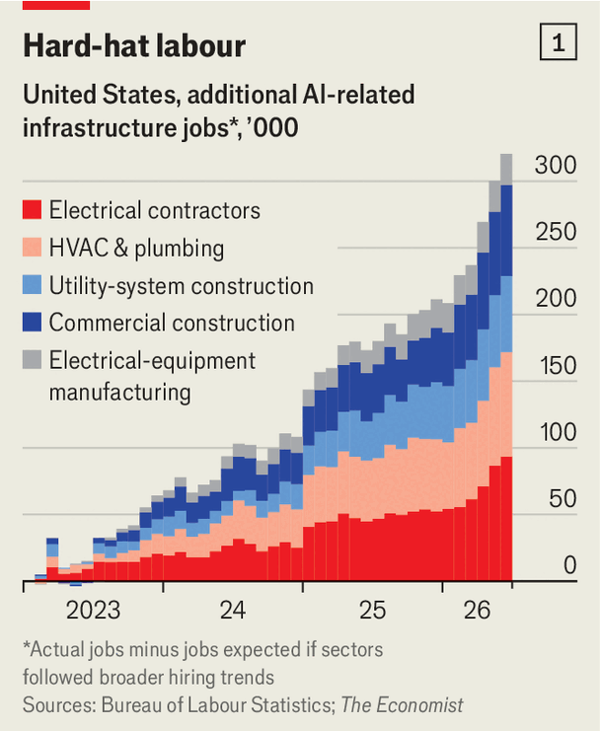
The Economist’s Employment Report Sparks Backlash: AI Job Boom Masks Increased Squeeze on Rank-and-File Workers : An article by The Economist argued that AI has created over one million new jobs in the US, thereby staving off an unemployment crisis, but this view met pushback among industry professionals. Workers revealed that management often uses “AI efficiency” as a pretext for layoffs while demanding multi-fold productivity from remaining staff, turning “AI enablement” into a new excuse for labor intensification in the workplace. (Sources: saranormous, Reddit r/artificial)
💡 Other News
University of Edinburgh Proposes Ultrafast Magnetic Field Pulse Technology, Potentially Slashing AI Memory Energy Use by Two Orders of Magnitude : A research team at the University of Edinburgh published findings in Advanced Materials, showing that controlling magnetic memory states via ultrafast magnetic field pulses can theoretically reduce data center memory and storage switching energy by up to 100x, offering a new physical pathway to overcome power and thermal bottlenecks in AI computing infrastructure. (Source: TechRadar)

UK Health Officials Warn Public Mistrust in Palantir Could Impact NHS Data Research : UK health officials expressed concern over the trend of citizens opting out of data sharing on the NHS data platform, noting that data security concerns surrounding AI and defense contractor Palantir could jeopardize medical AI model training and long-term public health research programs. (Source: The Guardian)

OpenAI and Anthropic Employees Refute Allegations of “Models Stealing Private User Sessions” : In response to concerns sparked by the fluid equation dispute over whether frontier labs secretly spy on private user Codex/Claude sessions to scoop research findings, several researchers from frontier labs clarified that tech companies enforce extremely strict data access controls on user conversations. Directly accessing specific user logs constitutes a severe violation warranting immediate termination, and they urged the community to view coincidences and public academic spillovers rationally. (Sources: willdepue, _sholtodouglas)